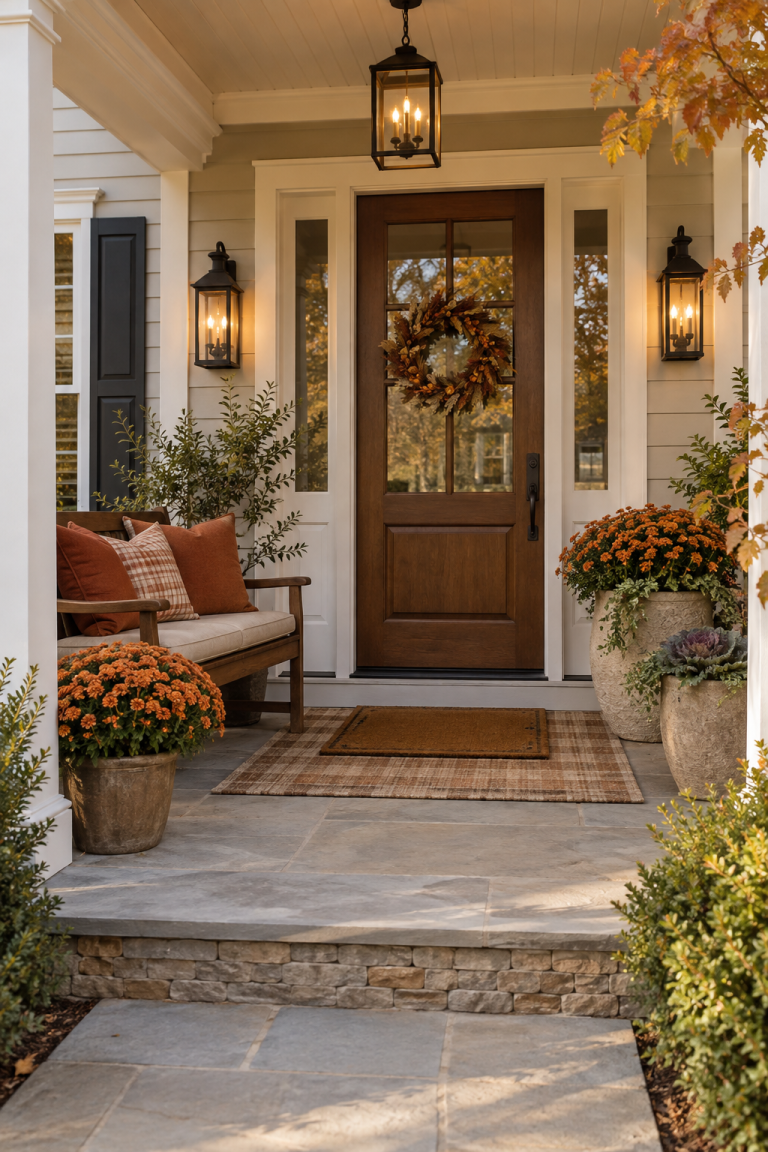
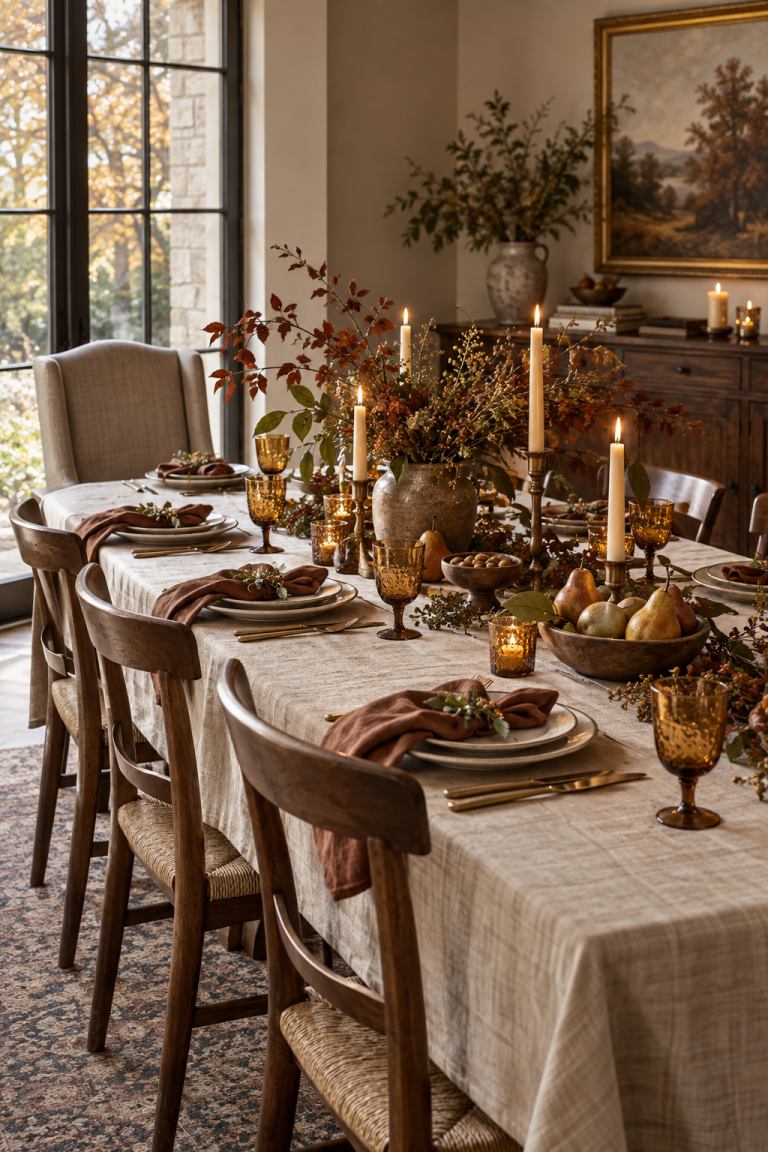
Cooler weather does not have to end patio season. With comfortable seating, weather-aware textiles and layered lighting, an outdoor area can become one of the most inviting places at home. These 29 cozy fall patio ideas include compact layouts, renter-friendly upgrades, entertaining zones and practical ways to protect furnishings while capturing autumn’s warmth.
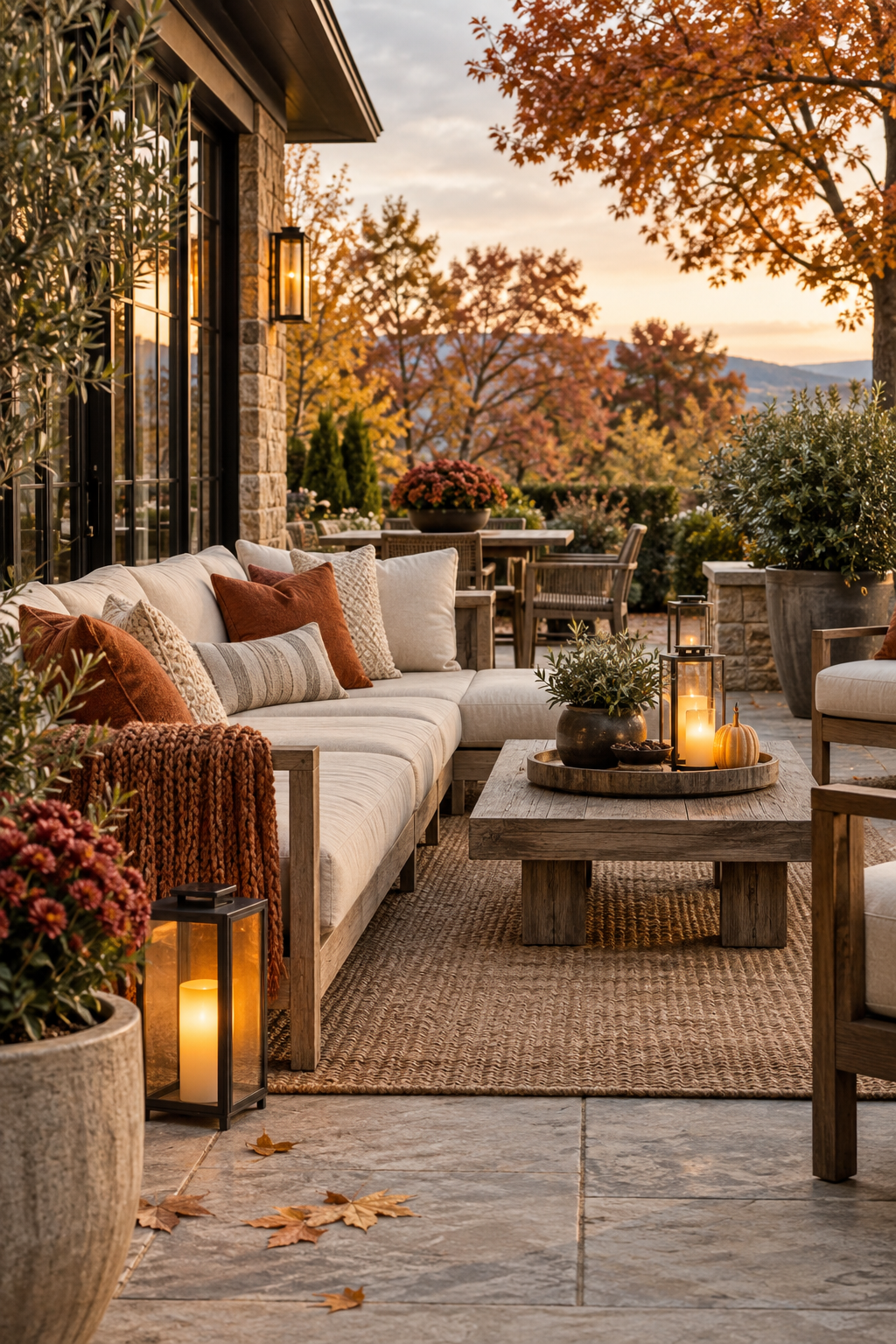
1. Start with a Warm Neutral Foundation
Build the patio around taupe, cream and natural wood, then add rust and olive accents. A restrained palette helps mixed outdoor furniture feel connected and allows changing foliage to stand out. Choose materials rated for exterior use so the calm appearance remains practical through damp mornings and strong sun.
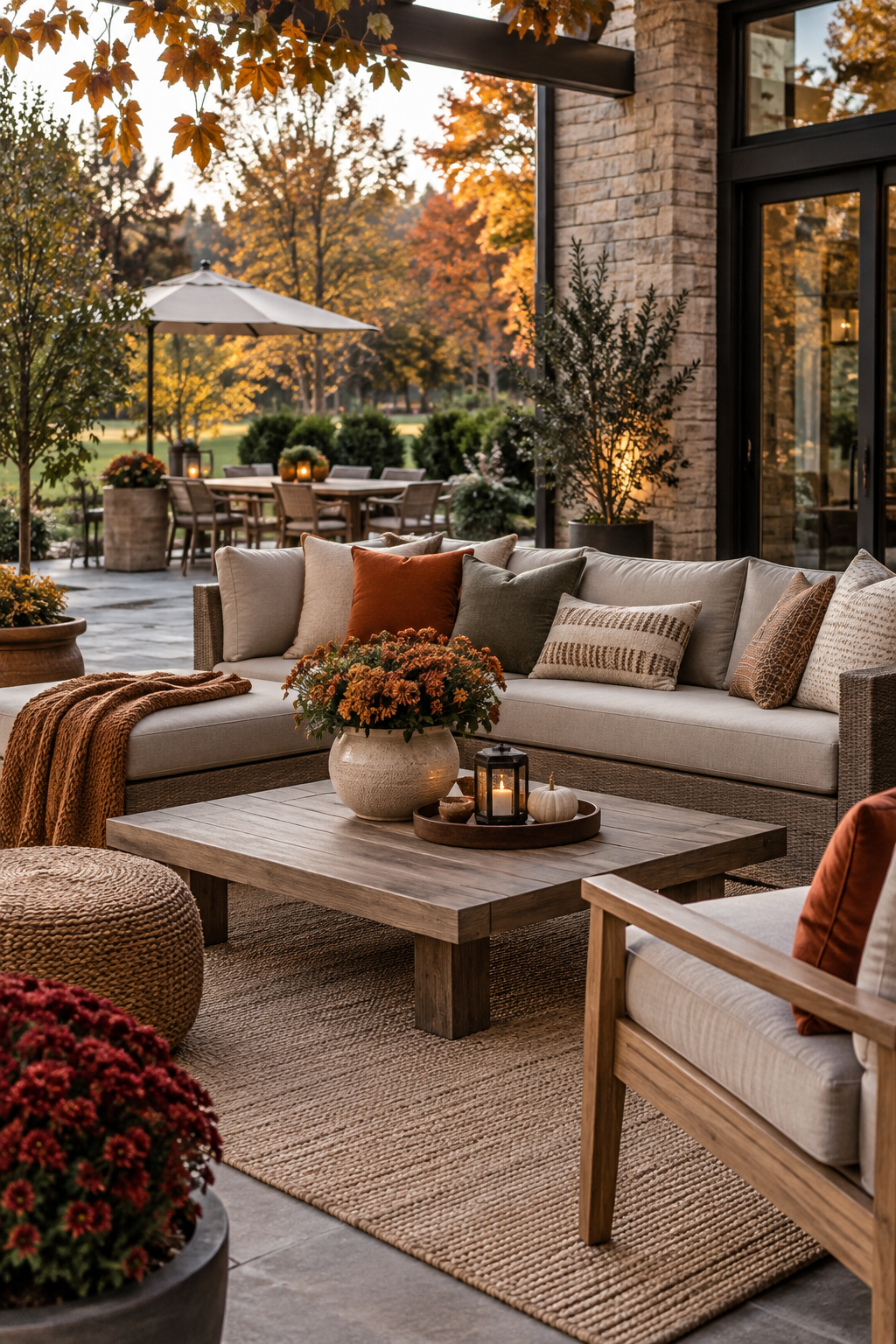
2. Arrange Seating for Conversation
Angle chairs toward one another instead of lining every piece against the perimeter. A compact conversation circle feels more welcoming and keeps drinks within reach. Preserve the route from the house to the yard, grill or steps, and test the arrangement with every chair pulled out.
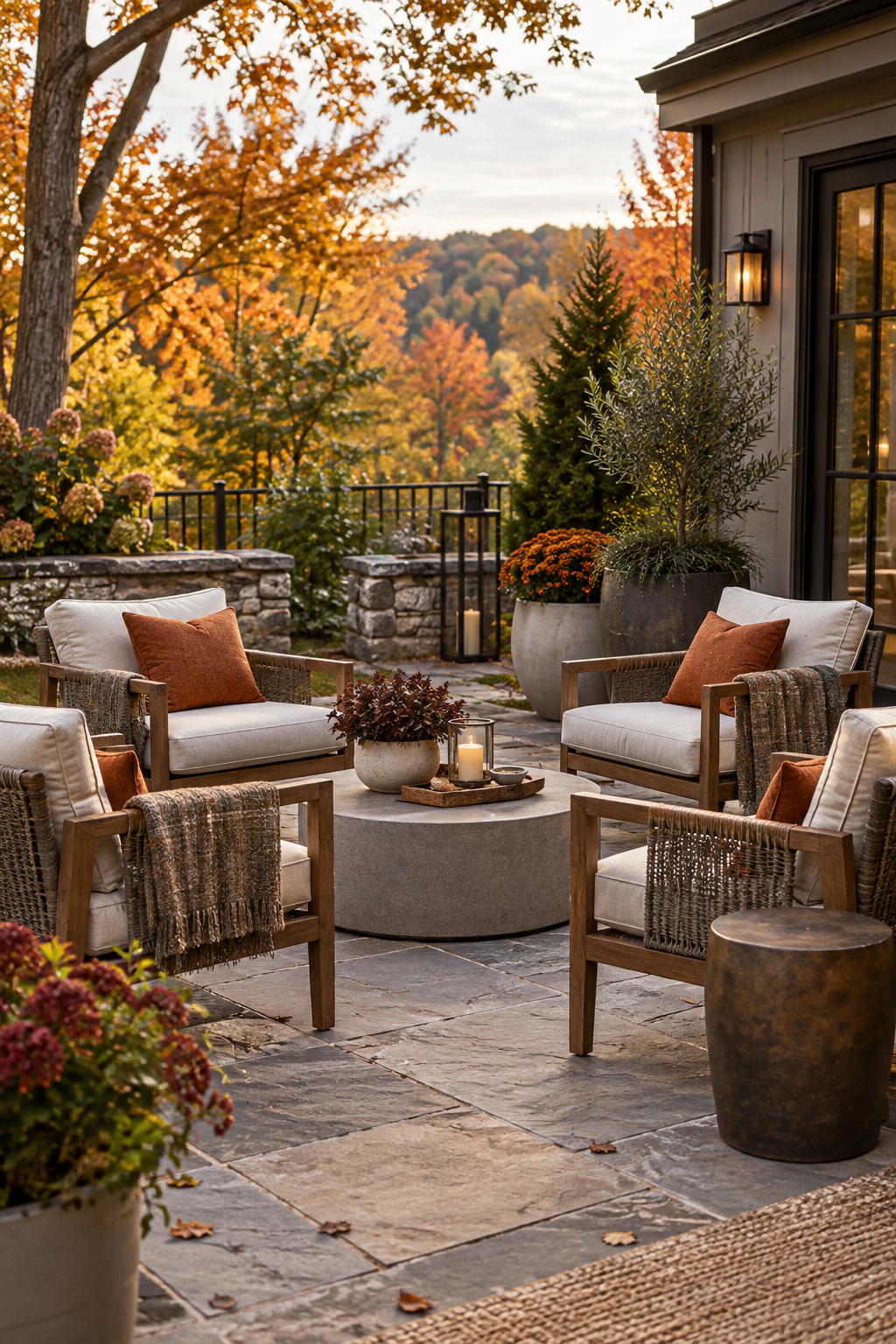
3. Use a Bistro Set on a Small Patio
A round café table and two lightweight chairs provide dining space without dominating a tiny terrace. Folding pieces offer flexibility when more floor area is needed. Keep the centerpiece minimal and confirm that chair legs remain stable on deck boards, pavers or outdoor rugs.
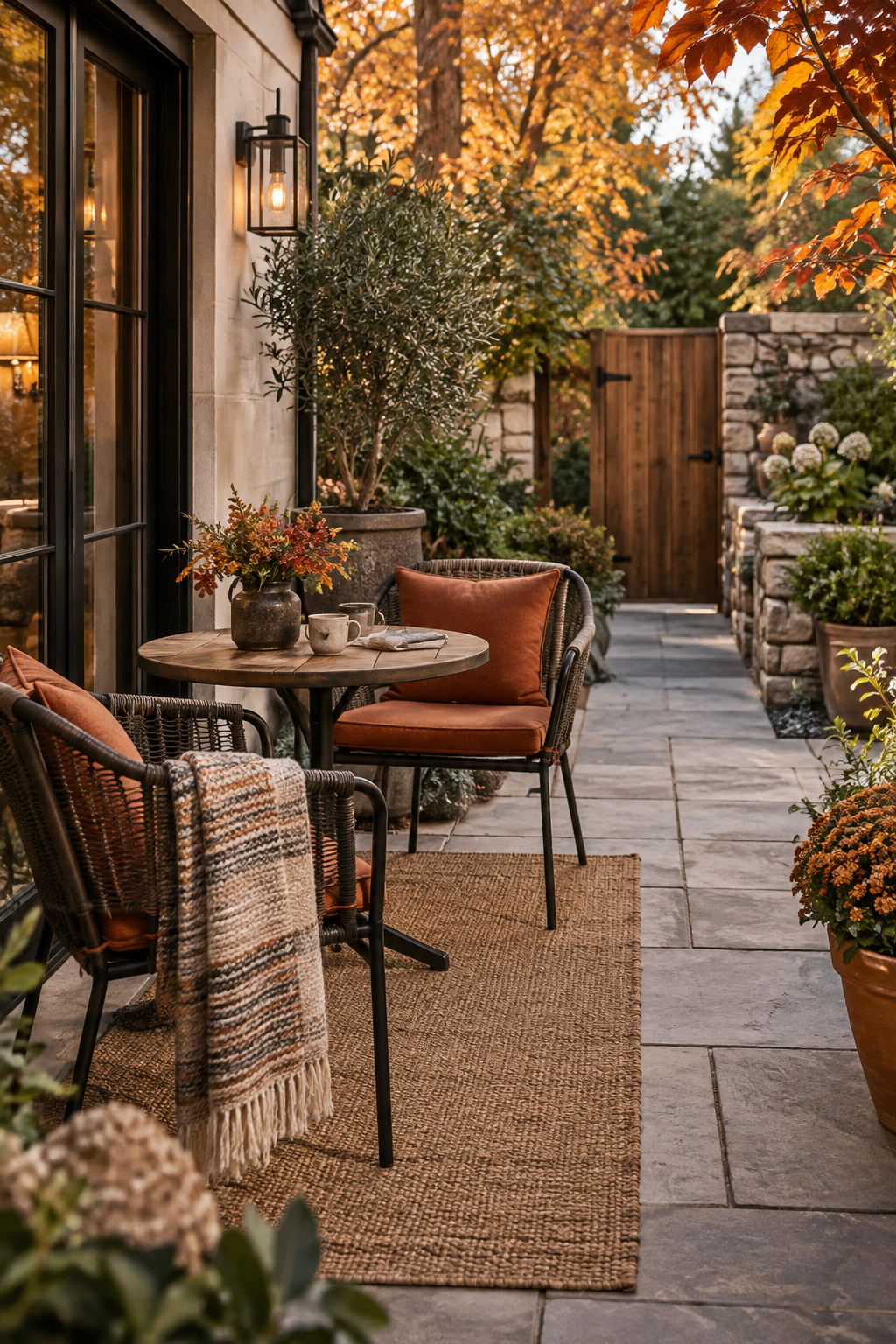
4. Layer Weather-Rated Lighting
Combine approved overhead or string lighting with battery lanterns at table and floor height. Several gentle light sources create depth without excessive brightness. Use products rated for the patio’s exposure, secure cords and fixtures, and follow all manufacturer and electrical safety guidance.
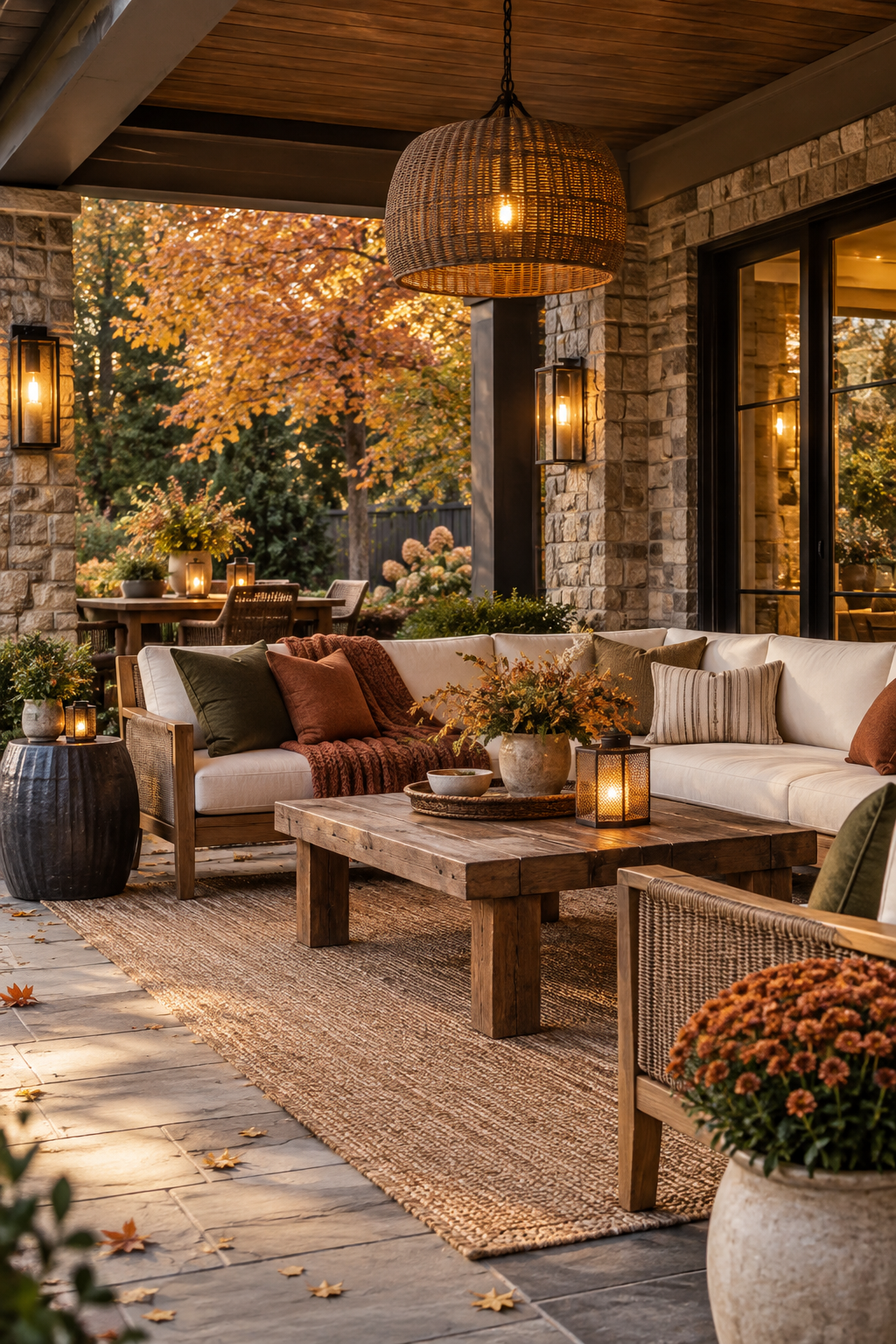
5. Add Weather-Resistant Autumn Textiles
Use outdoor cushions in rust, oatmeal and olive, plus one washable throw that can be brought inside after use. Performance fabric resists moisture better than indoor upholstery but still needs care. Store textiles when heavy rain, frost or wind is expected to preserve color and shape.
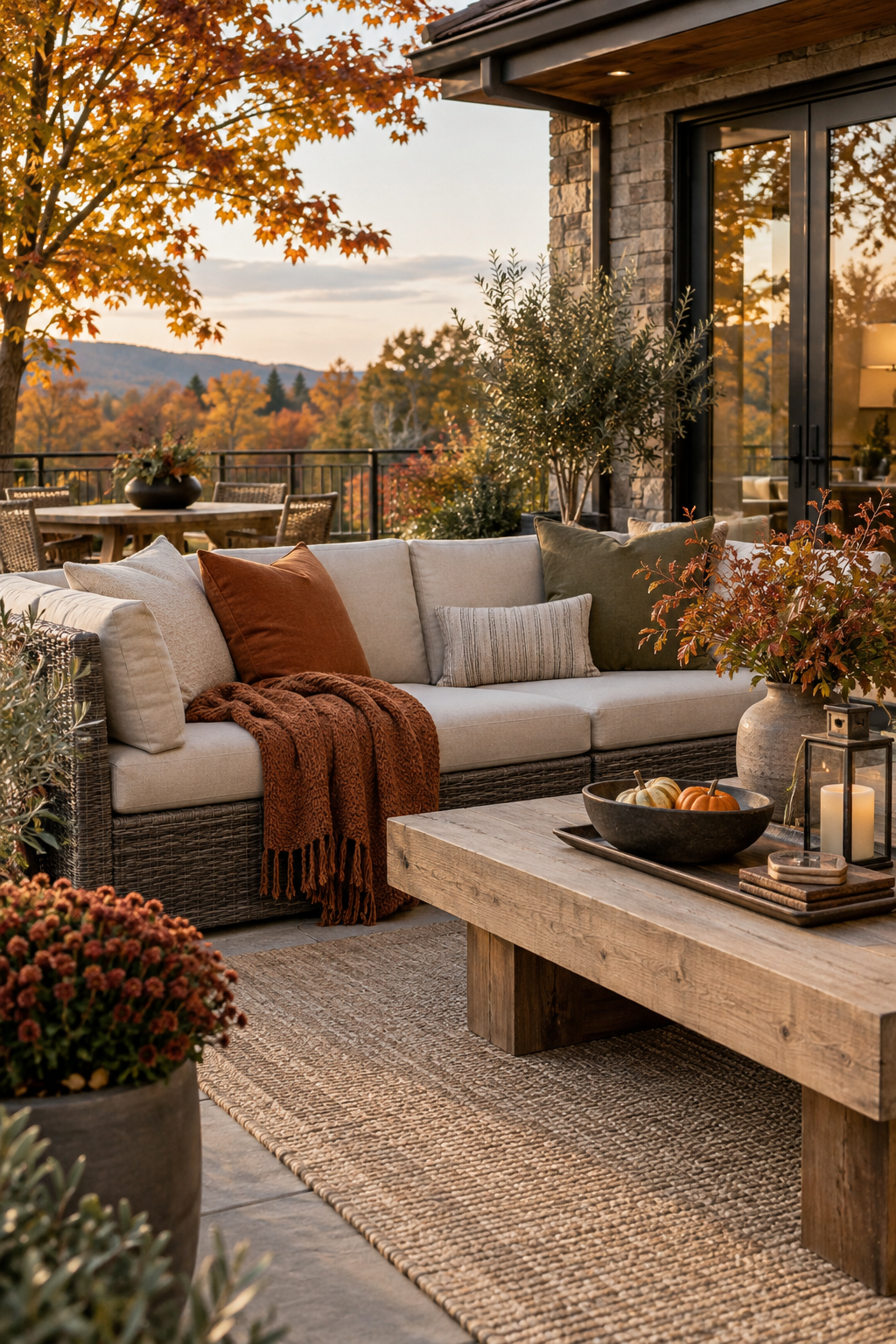
6. Ground the Seating with an Outdoor Rug
A low-pile rug in faded terracotta or cream defines the lounge and softens hard paving. Choose a breathable product intended for outdoor use and keep drainage paths open beneath it. Flatten curled edges and allow both the rug and surface to dry fully after rain.
7. Create Privacy with Tall Planters
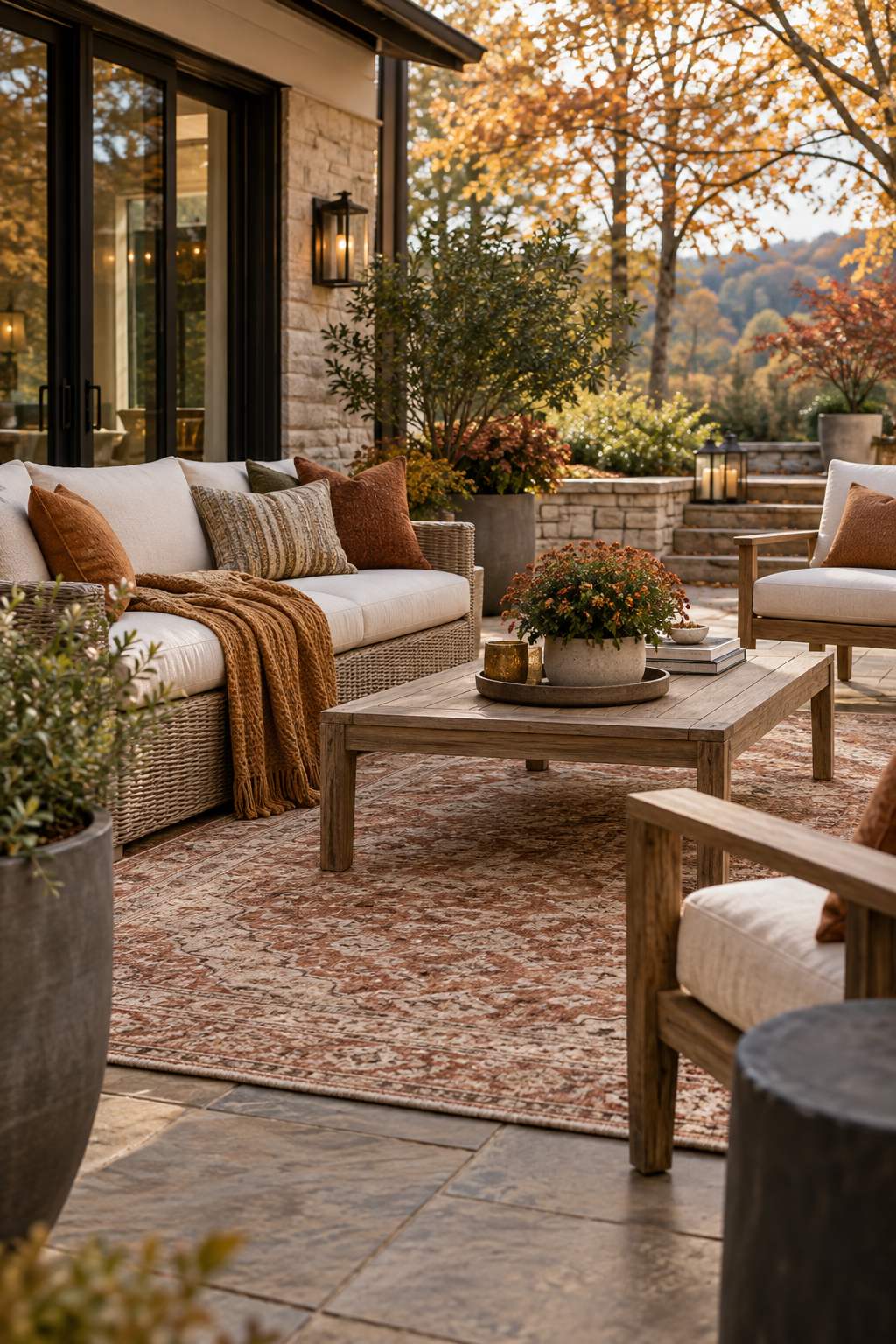
Group substantial containers with ornamental grasses, compact evergreens or seasonal foliage along the exposed edge. Varying heights create a natural screen without enclosing the entire patio. Use stable, weather-suitable pots and confirm the structure can support their saturated weight, especially on balconies or raised decks.
8. Reduce Wind with a Sheltered Layout
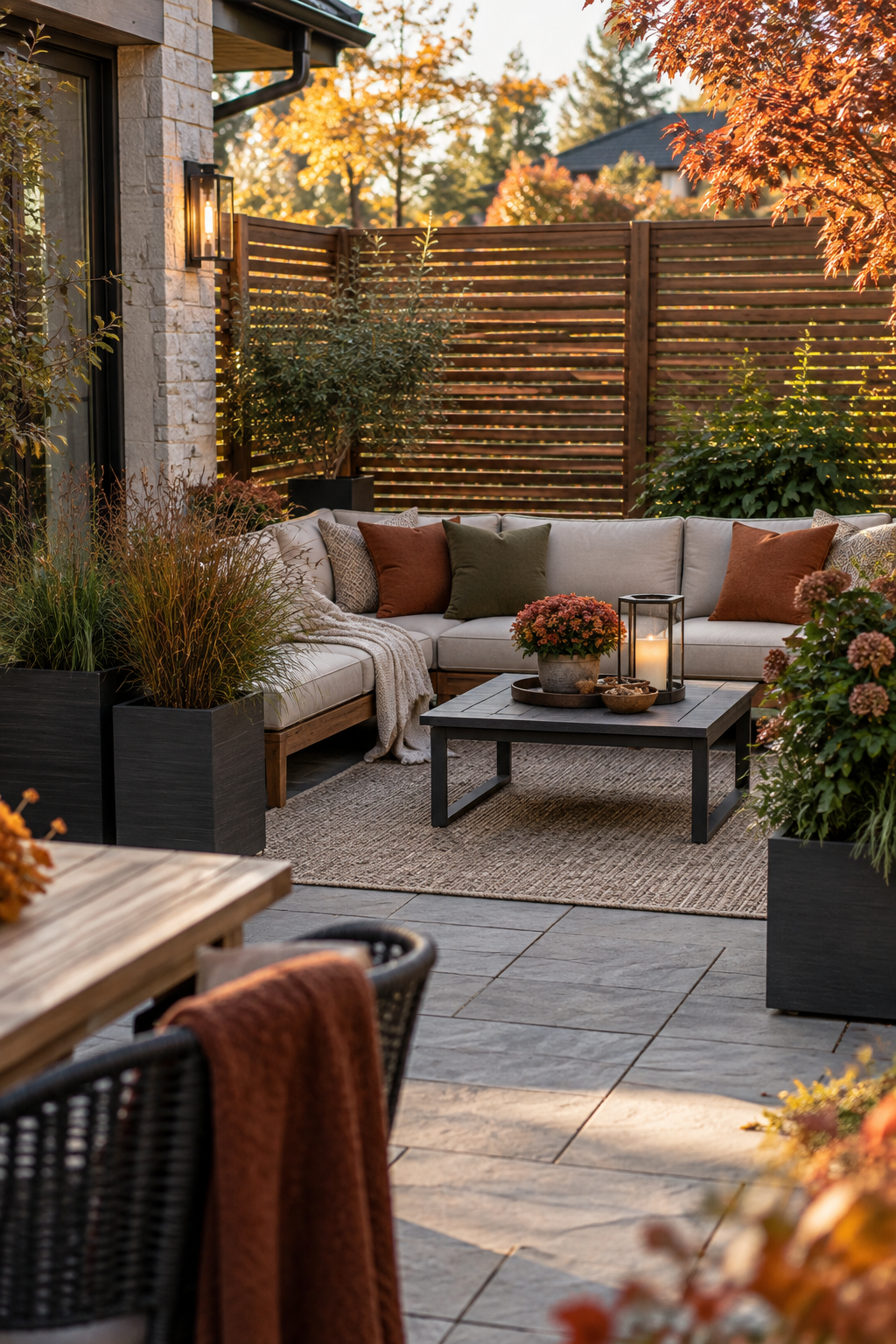
Place seating near an appropriate wall, freestanding screen or dense planting where air movement is less direct. Never block required exits or ventilation. Heavy planters and secured furniture are safer than lightweight seasonal displays, and loose cushions should be stored before strong weather arrives.
9. Build an Outdoor Reading Nook
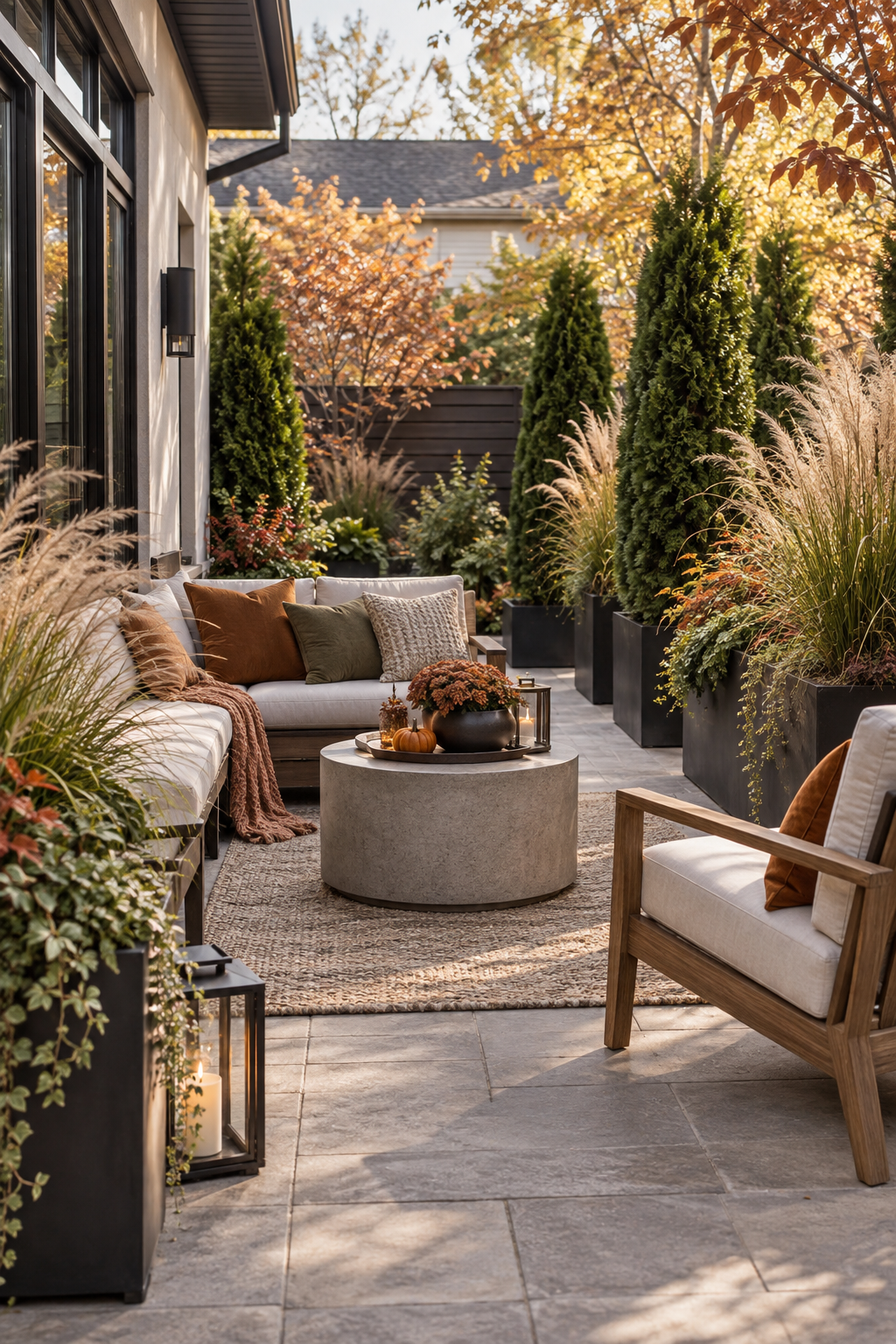
Choose one supportive chair, a weatherproof side table and a focused battery lantern. A cushion and lap throw make the corner comfortable without requiring a complete furniture set. Position the seat to enjoy changing foliage while avoiding glare, dripping rooflines and busy walkways.
10. Keep the Coffee Table Functional
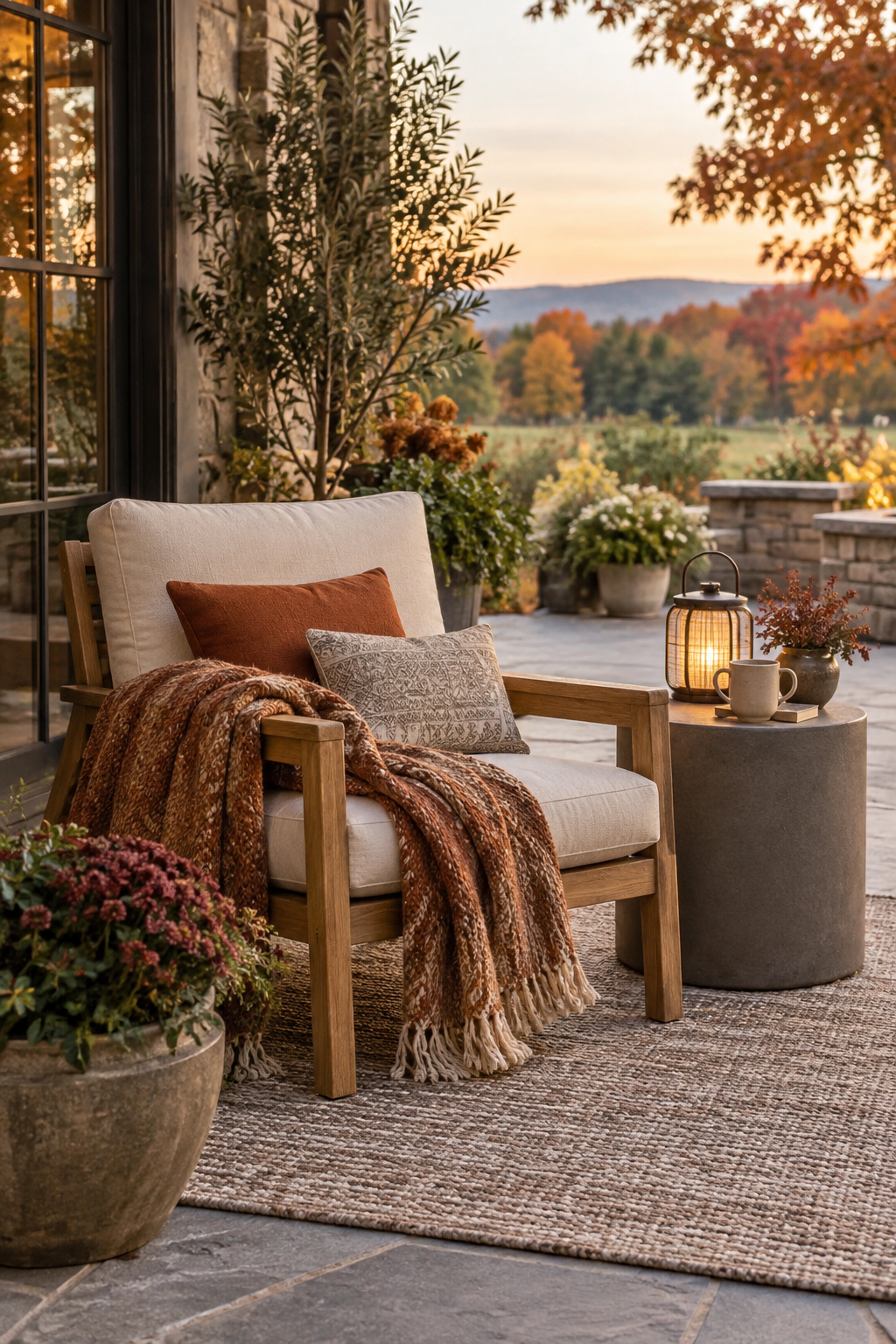
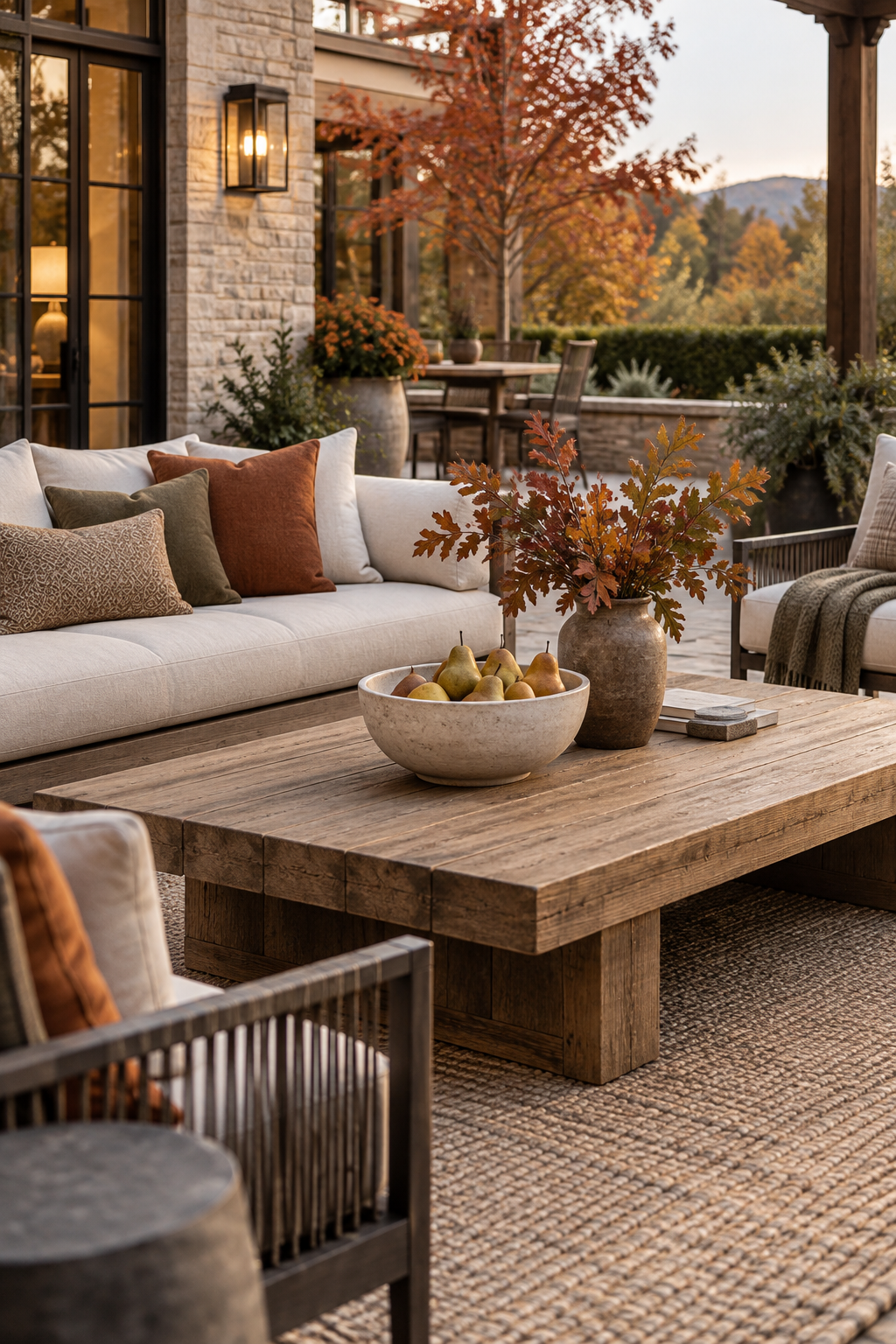
Style a shallow ceramic bowl with pears, clipped branches or pinecones, leaving most of the surface available for drinks. Low arrangements preserve views across the seating area. Bring delicate items indoors during poor weather and avoid materials that shed, stain or attract pests.
11. Plant a Long-Lasting Autumn Container
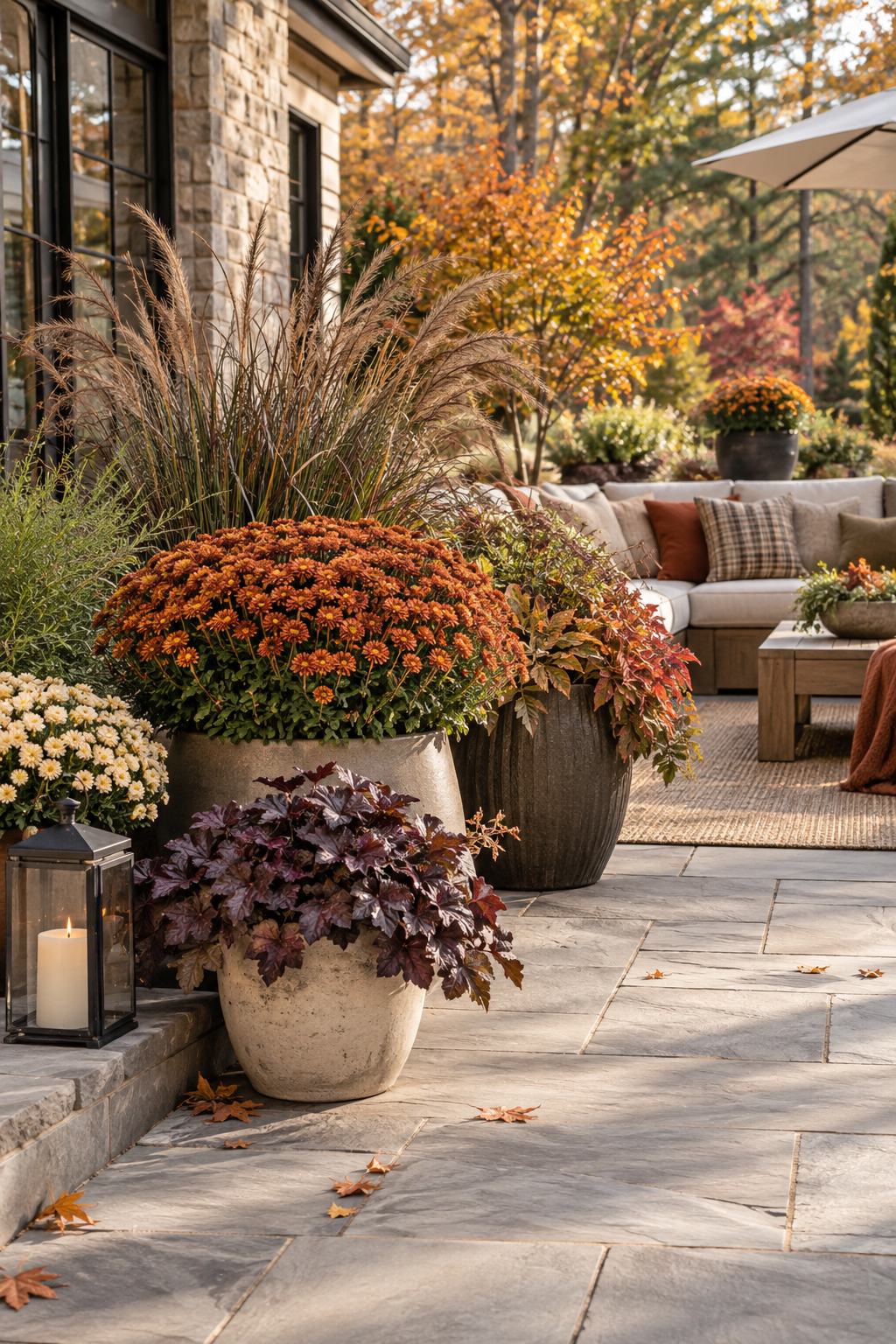
Combine ornamental grasses, heuchera and climate-appropriate seasonal flowers with compatible light and water needs. Layer height, foliage color and trailing texture rather than relying on blooms alone. Check local guidance for plant suitability and use containers with clear drainage holes.
12. Decorate without Pumpkins
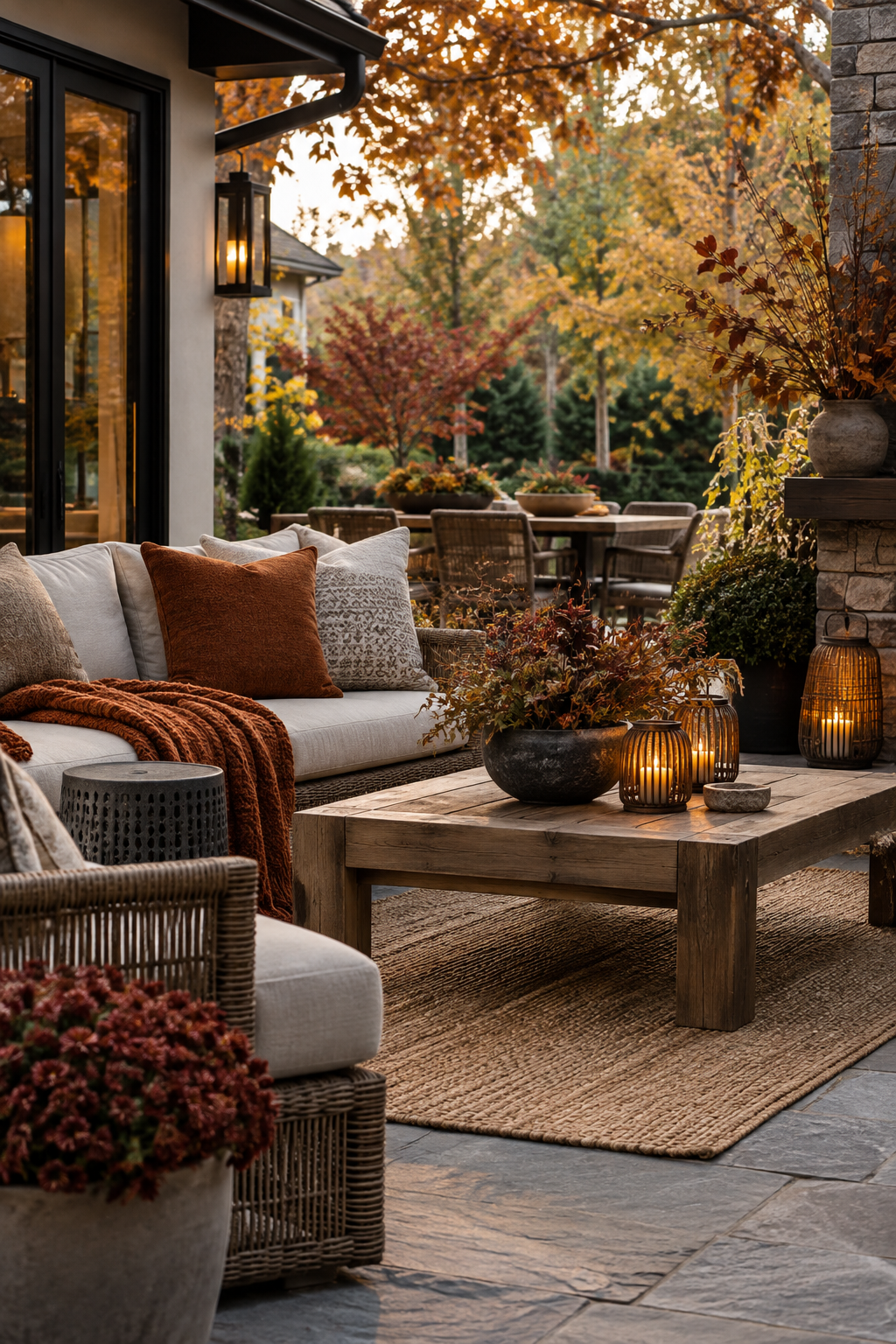
Use branches, foliage, warm lanterns, woven texture and earthy ceramics for a subtler seasonal look. These materials transition naturally from early fall into winter and reduce storage. Repeat a few colors and shapes instead of introducing a different autumn symbol in every corner.
13. Give a Modern Patio Autumn Warmth
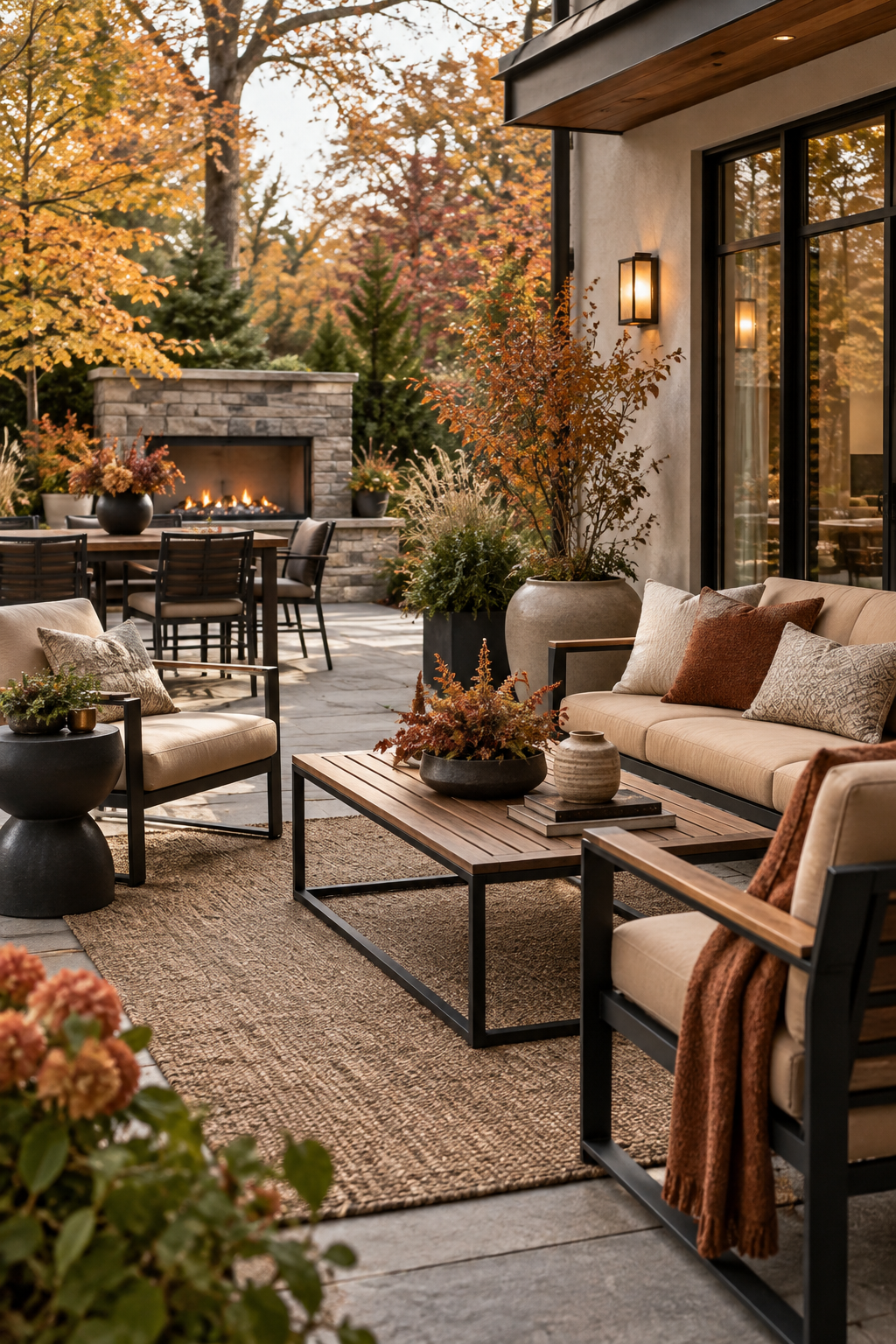
Soften black metal and straight lines with camel cushions, warm wood and rounded planters. One rust accent can establish the season while maintaining a clean contemporary character. Keep accessories large and limited so the patio still feels spacious.
14. Refine Farmhouse Patio Style
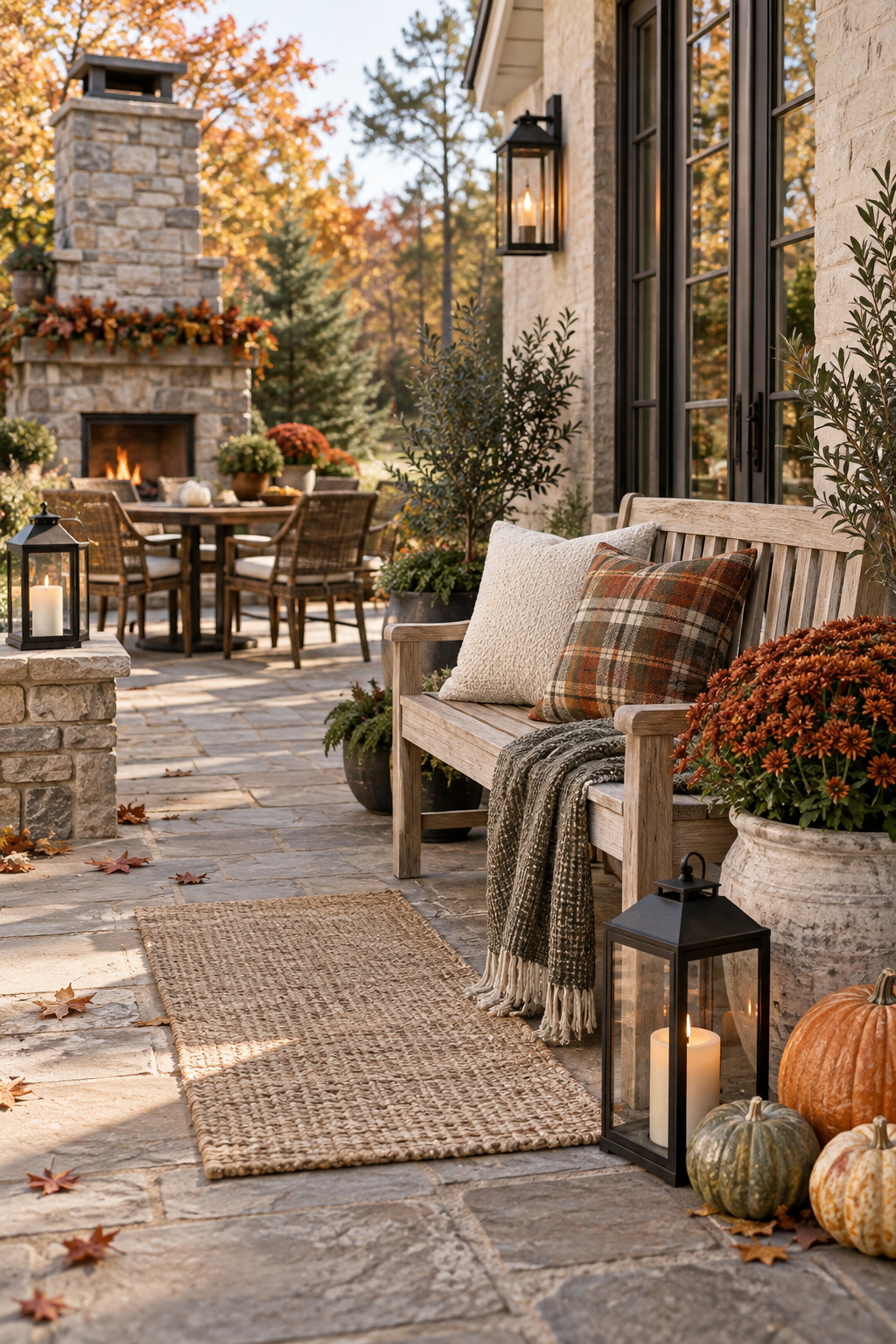
Combine a light wood bench, black lanterns and a restrained woven stripe. Skip signs and fragile novelty decor in favor of useful objects with simple silhouettes. Galvanized or ceramic planters can add character when they are stable, properly drained and appropriate for outdoor exposure.
15. Try Warm Minimalist Outdoor Decor
Select two comfortable chairs, one generous planter and a well-positioned light. Minimalism feels cozy when materials have visible texture and the seating orientation supports a real activity. Leave negative space around the grouping so the landscape and architecture remain part of the composition.

16. Create a Moody Autumn Patio
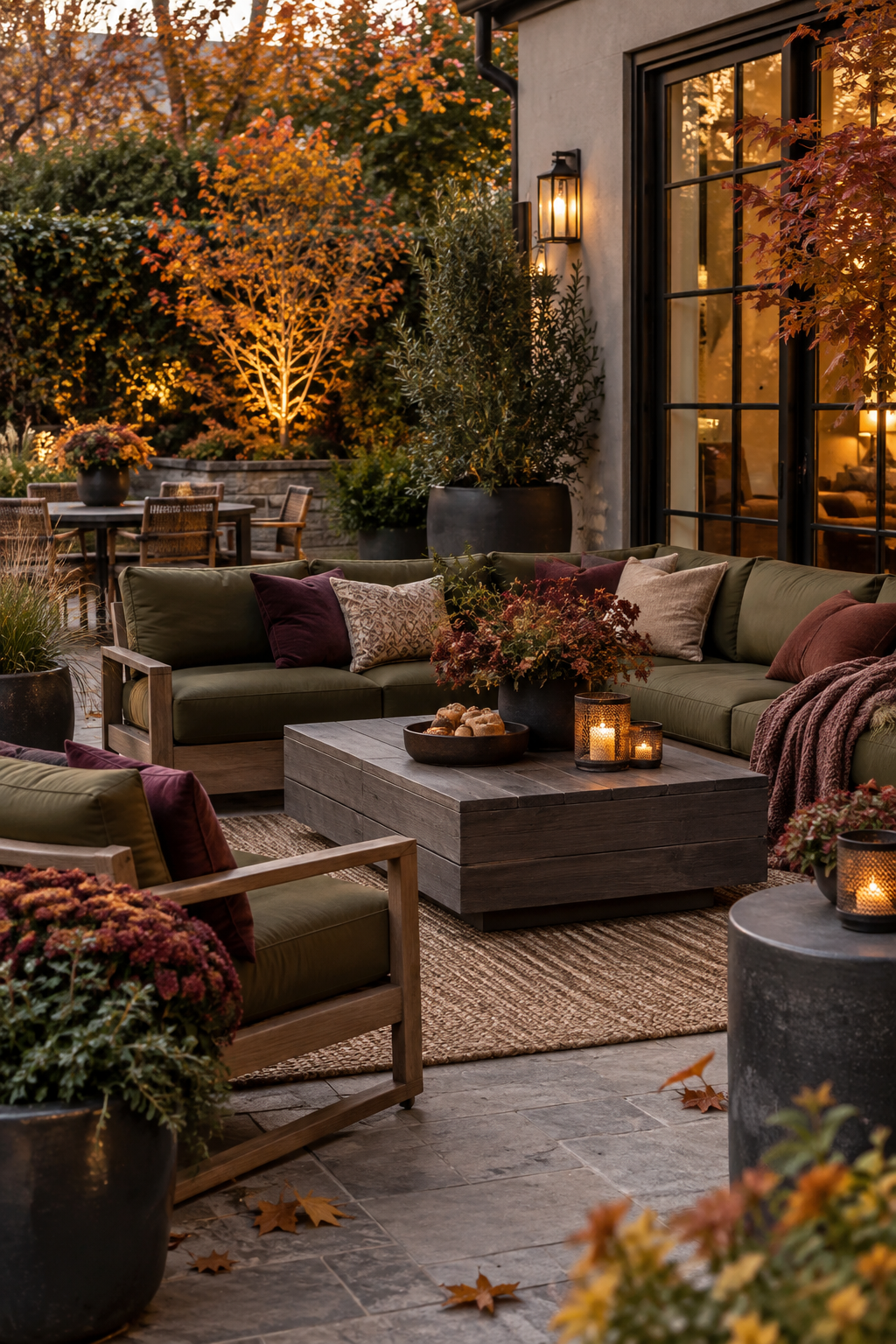
Deep olive, plum and charcoal make a sheltered patio feel intimate at dusk. Balance dark upholstery with pale cushions and sufficient task lighting near steps and doors. Reflective metal or glass can add dimension, but secure lightweight objects before windy conditions.
17. Make the Patio Renter-Friendly
Use freestanding screens, heavy planters, portable lighting and landlord-approved removable additions. Interlocking deck tiles may improve a plain surface where permitted, but they must not trap water or obstruct drainage. Keep all original components and follow lease or building rules.
18. Refresh the Patio on a Budget
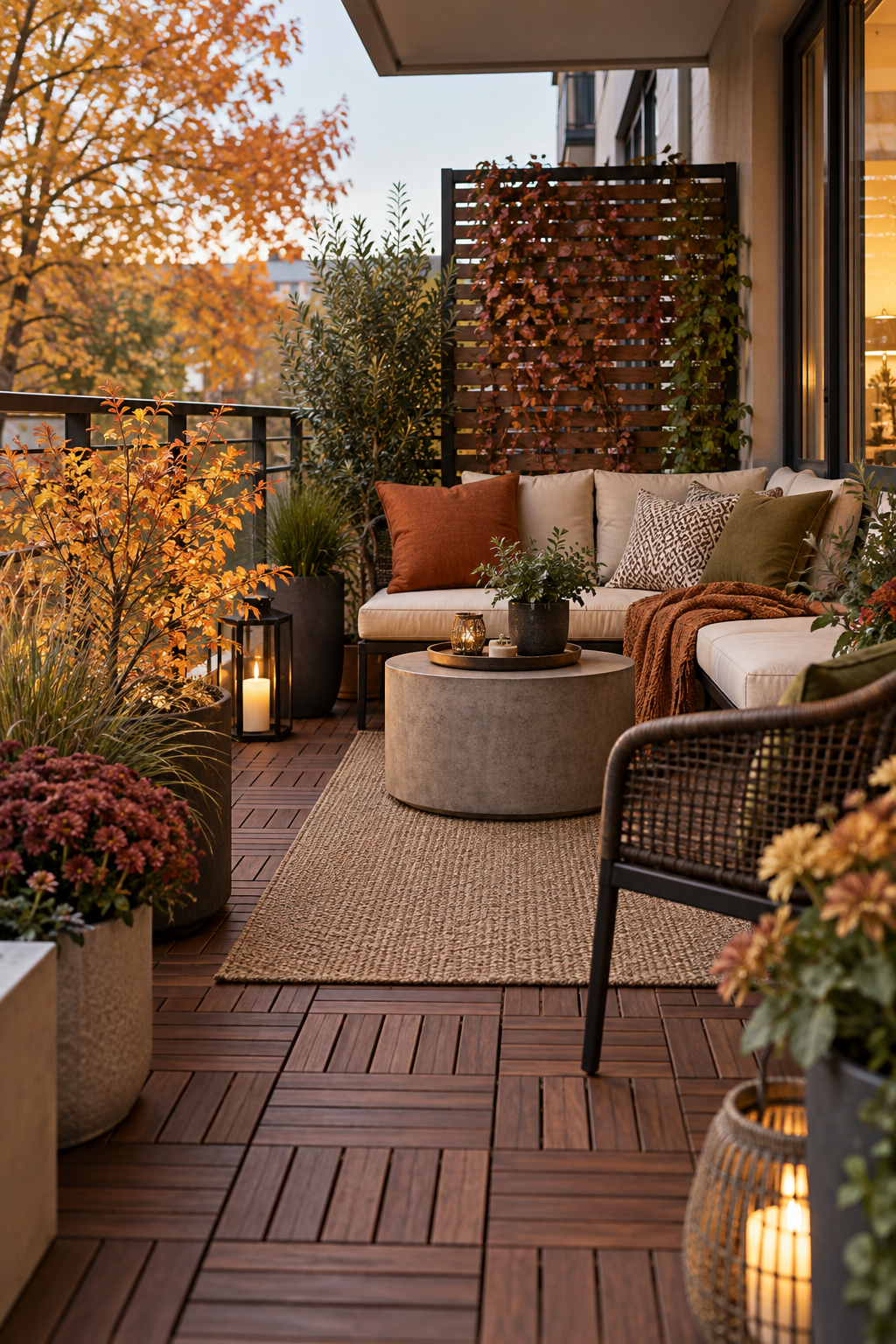
Clean the paving and furniture before buying anything. Rearrange existing seating, reuse outdoor cushions and add one thrifted weather-suitable vessel or lantern. A focused palette and a cleared layout usually create more impact than several inexpensive seasonal decorations.
19. Maximize a Tiny Townhouse Patio
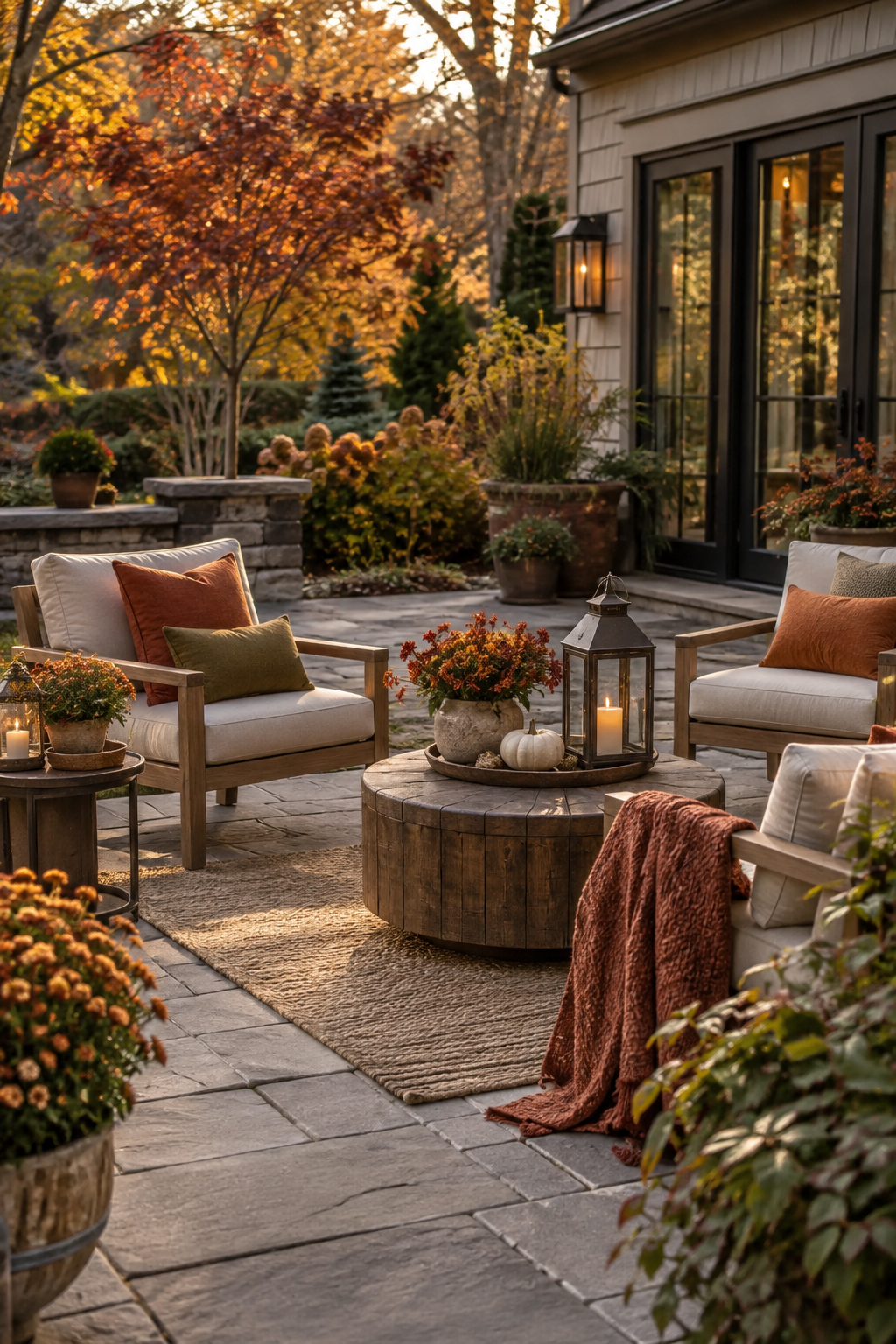
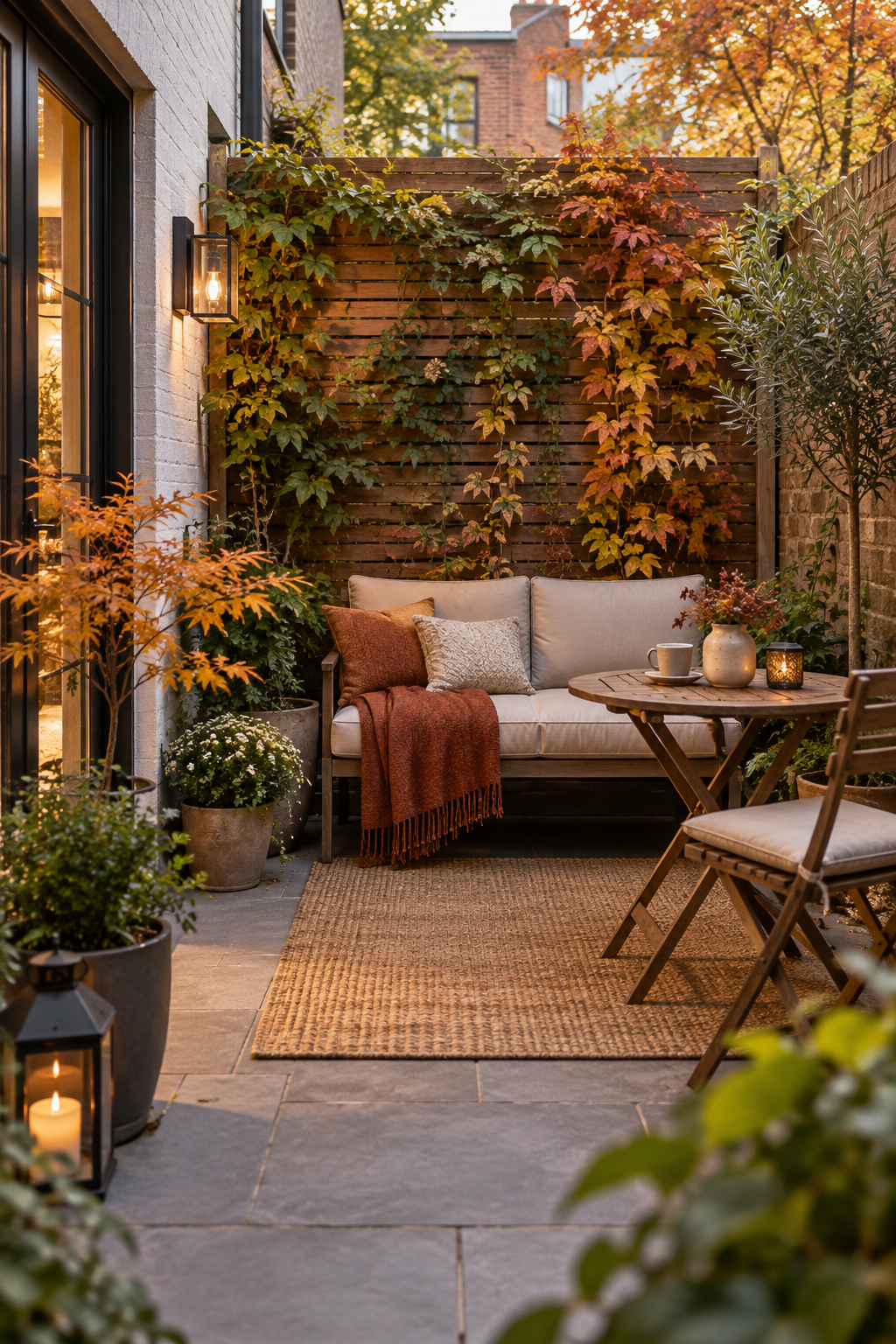
Choose a compact loveseat, folding table and vertical planting instead of multiple floor containers. Furniture with raised legs keeps more paving visible and makes the area feel larger. Measure door swing and utility access before finalizing the layout.
20. Create an Outdoor Dining Zone
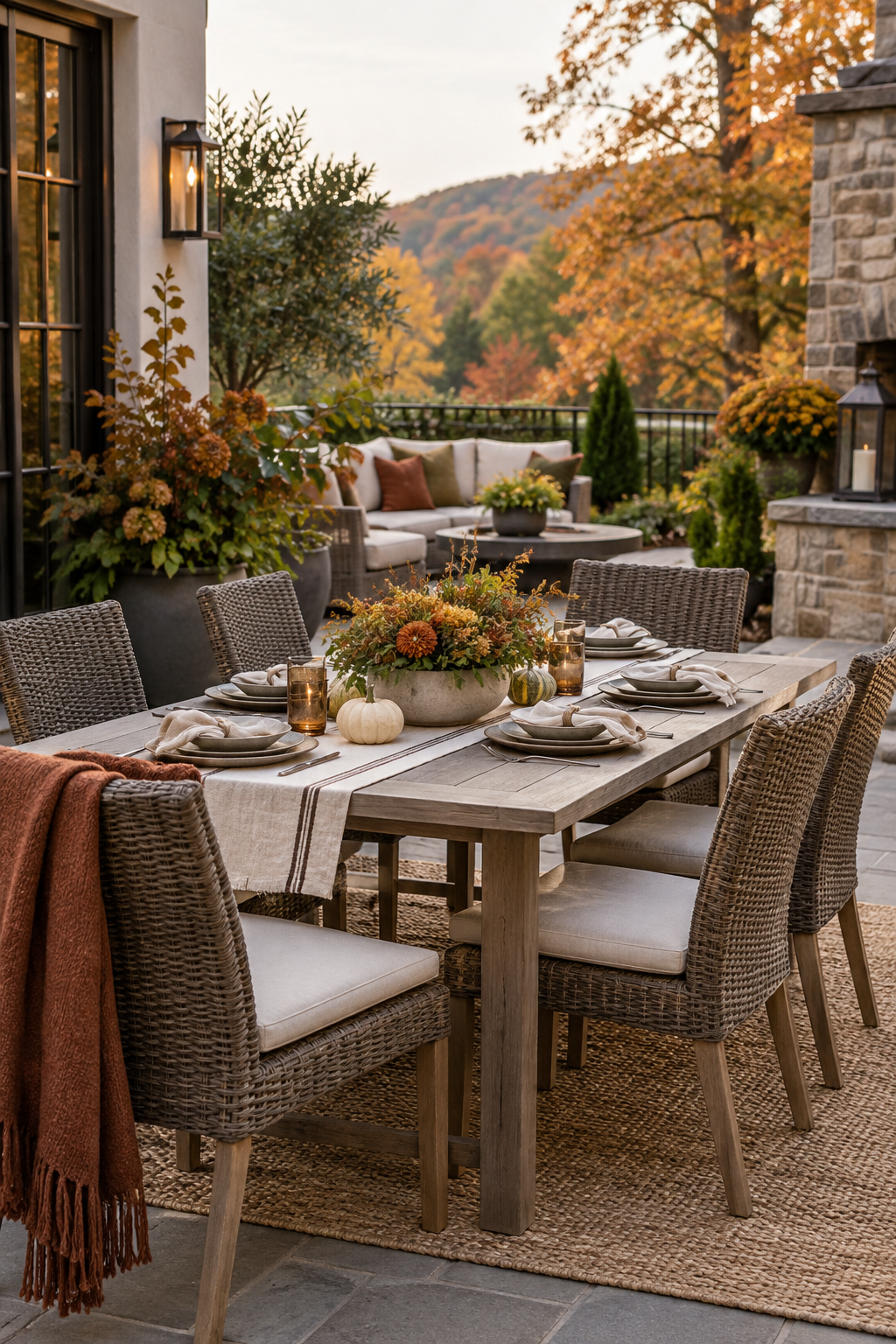
Place a weatherproof table where it has stable footing and practical access to the kitchen. Use low, wind-resistant centerpieces and washable napkins during meals. Leave adequate clearance behind chairs and keep serving paths away from heaters, steps and delicate plantings.
21. Set Up the Patio for Autumn Brunch
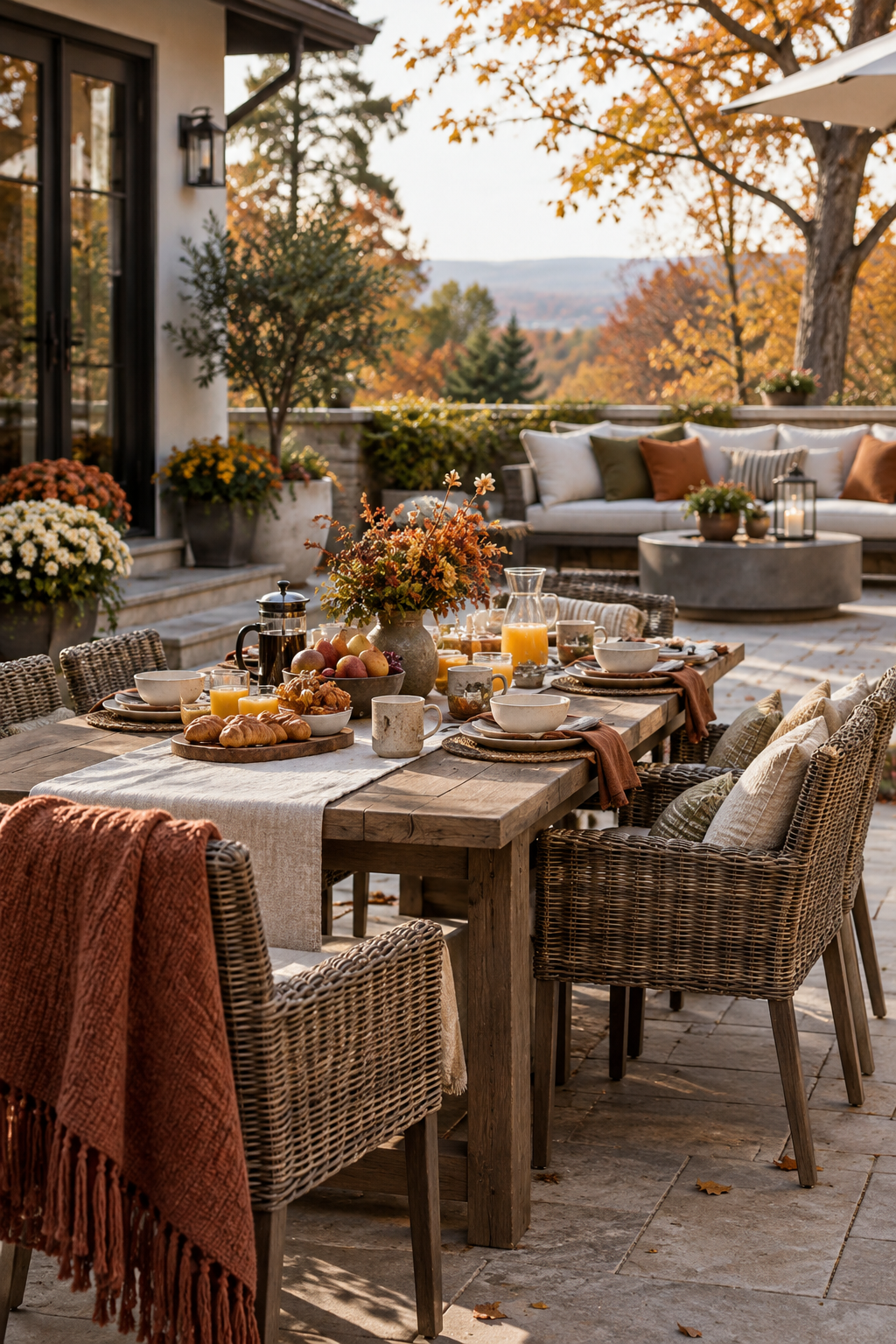
Morning sunlight, warm drinks and simple serving pieces can turn the patio into an easy gathering space. Stage food close to the house and protect it from insects and weather. Use a side table or cart so the dining surface remains comfortable rather than crowded.
22. Design a Safe Fire-Pit Gathering Area
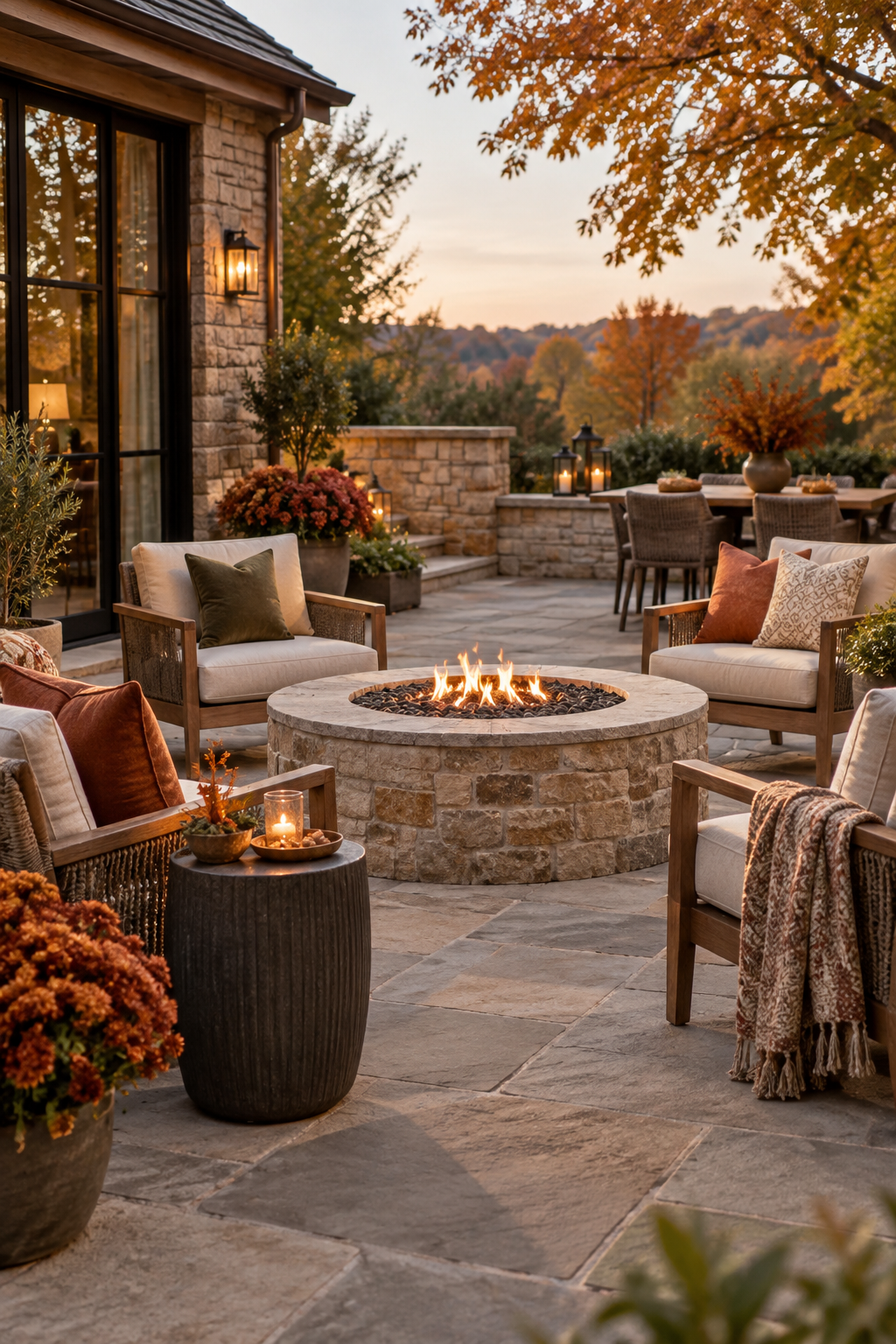
Use only an approved fire feature installed and operated according to local codes, manufacturer clearances and surface requirements. Keep combustible textiles, roofs, branches and furnishings at the required distance. Never prioritize a photograph over ventilation, supervision or fire safety.
23. Make the Patio Cozy without Fire
Layer clothing and washable throws, block wind appropriately and consider a correctly positioned outdoor-rated electric heater where permitted. Follow all clearance, power and weather instructions. Warm lighting and insulated seat cushions can create comfort even when a heat source is unnecessary.
24. Prepare the Patio for Rain
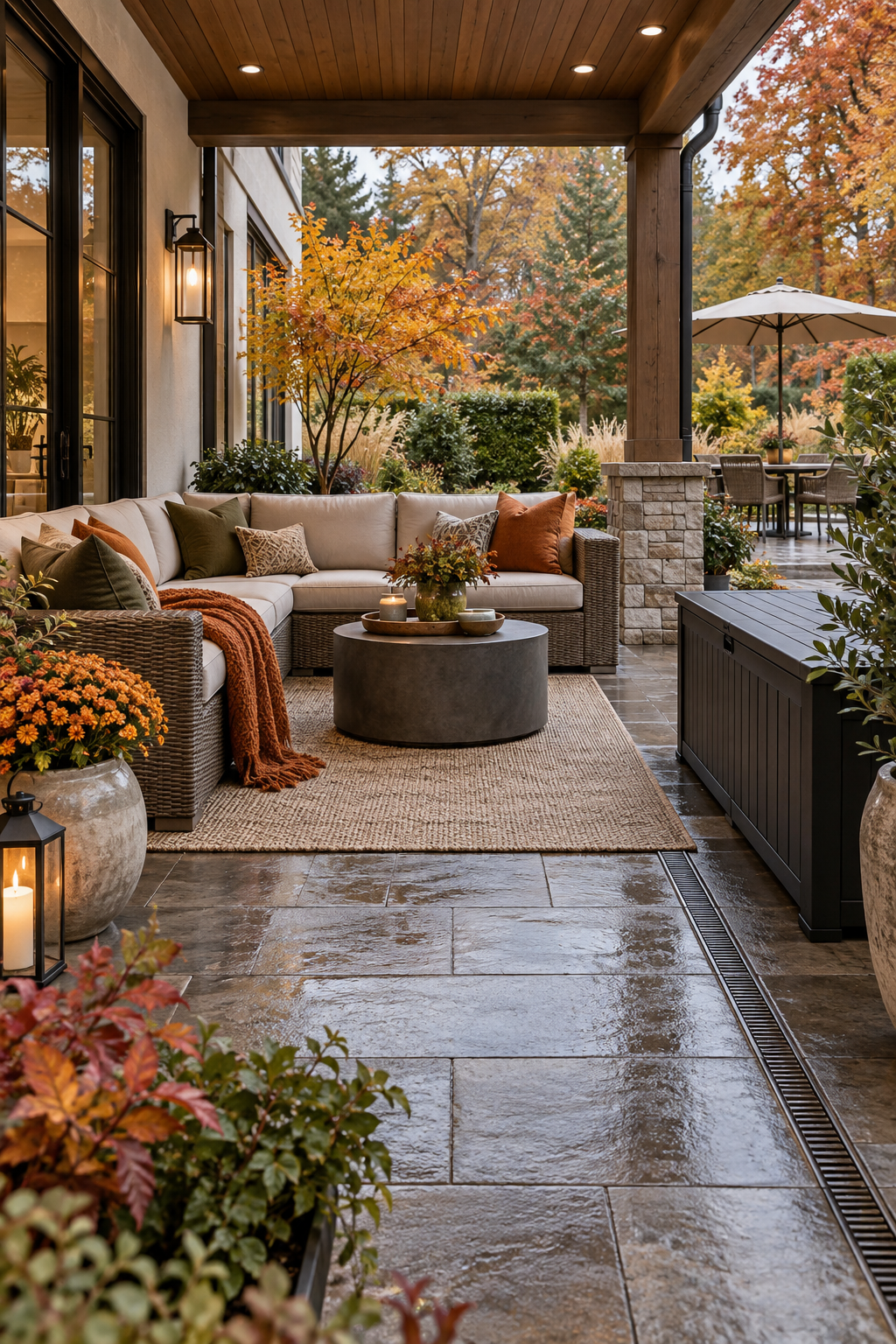
Use quick-dry cushions, covered storage and furniture feet that do not trap water. Keep drains, scuppers and gaps completely open. After rain, separate damp textiles and allow surfaces to dry before covering them to prevent odor, staining and material damage.
25. Make the Space Family-Friendly
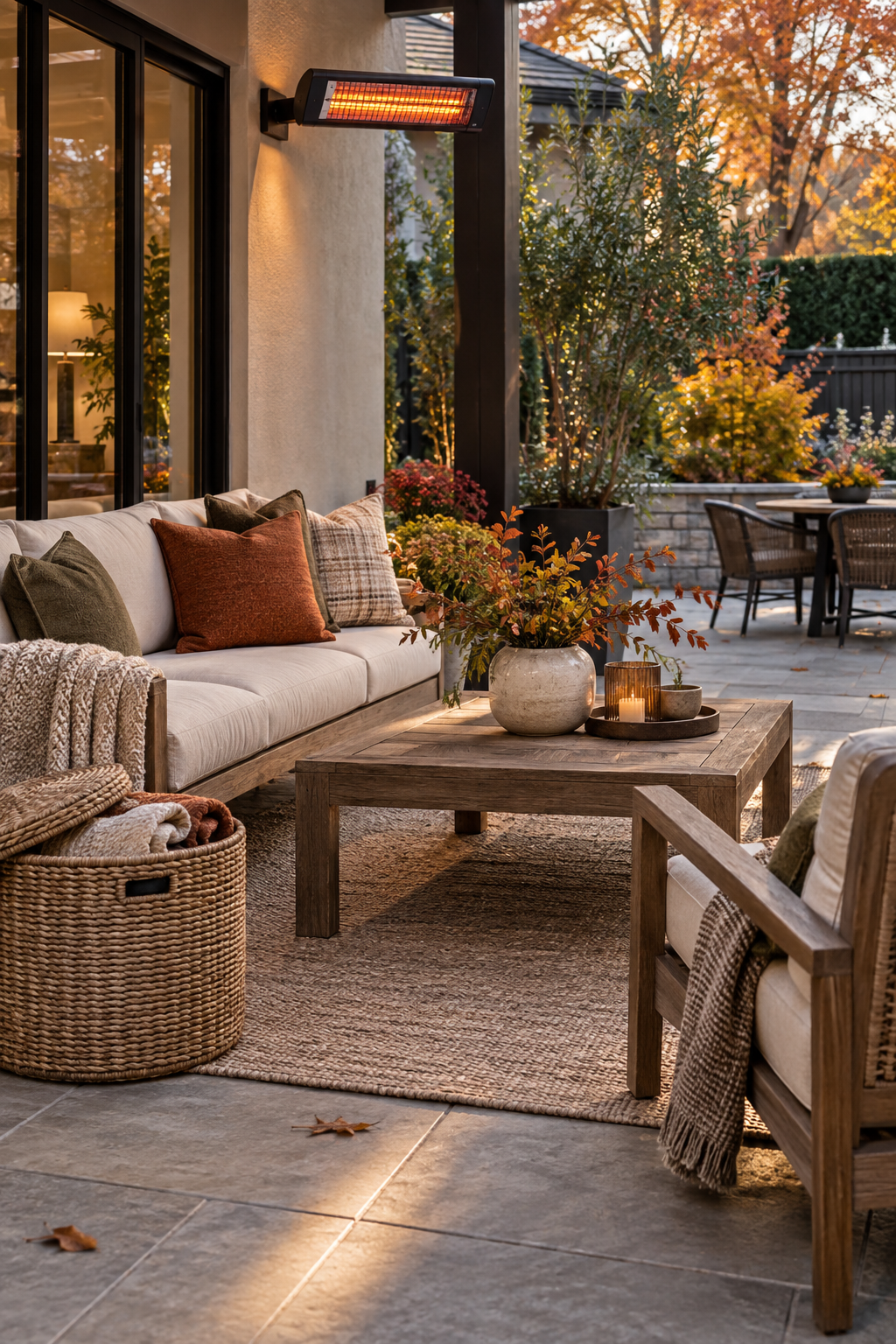
Choose washable cushions, rounded tables and stable containers that cannot tip easily. Keep cords, tools and small decorative pieces out of active routes. A generous open area lets the patio support play, snacks and conversation without requiring constant rearrangement.
26. Plan a Pet-Friendly Patio
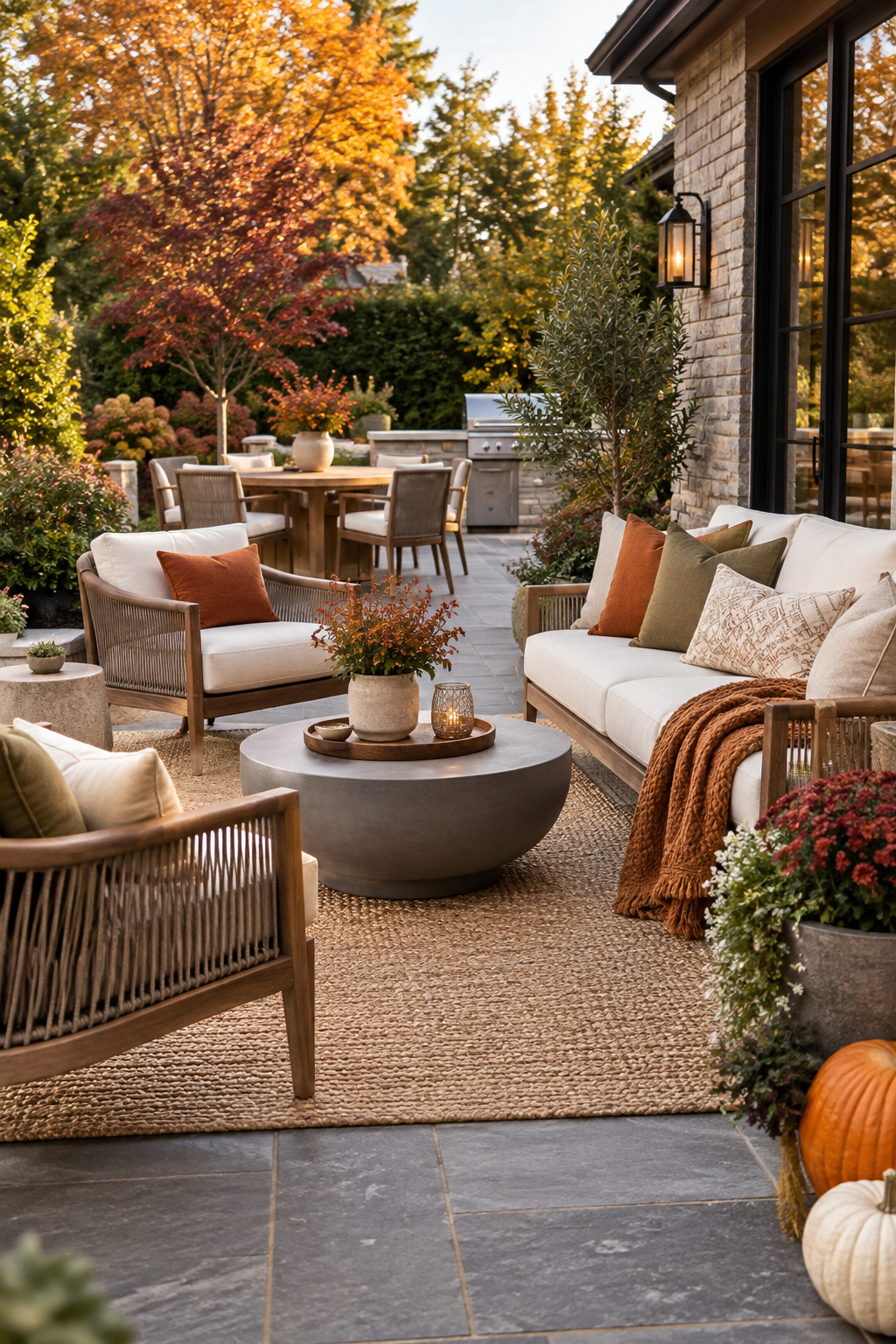
Maintain secure boundaries, shaded resting space and a clear water location. Research every plant and product for the specific animals in the home, since decorative foliage and pest controls may be unsafe. Avoid loose fabric, fragile objects and exposed cords near active pets.
27. Transition the Patio into Winter
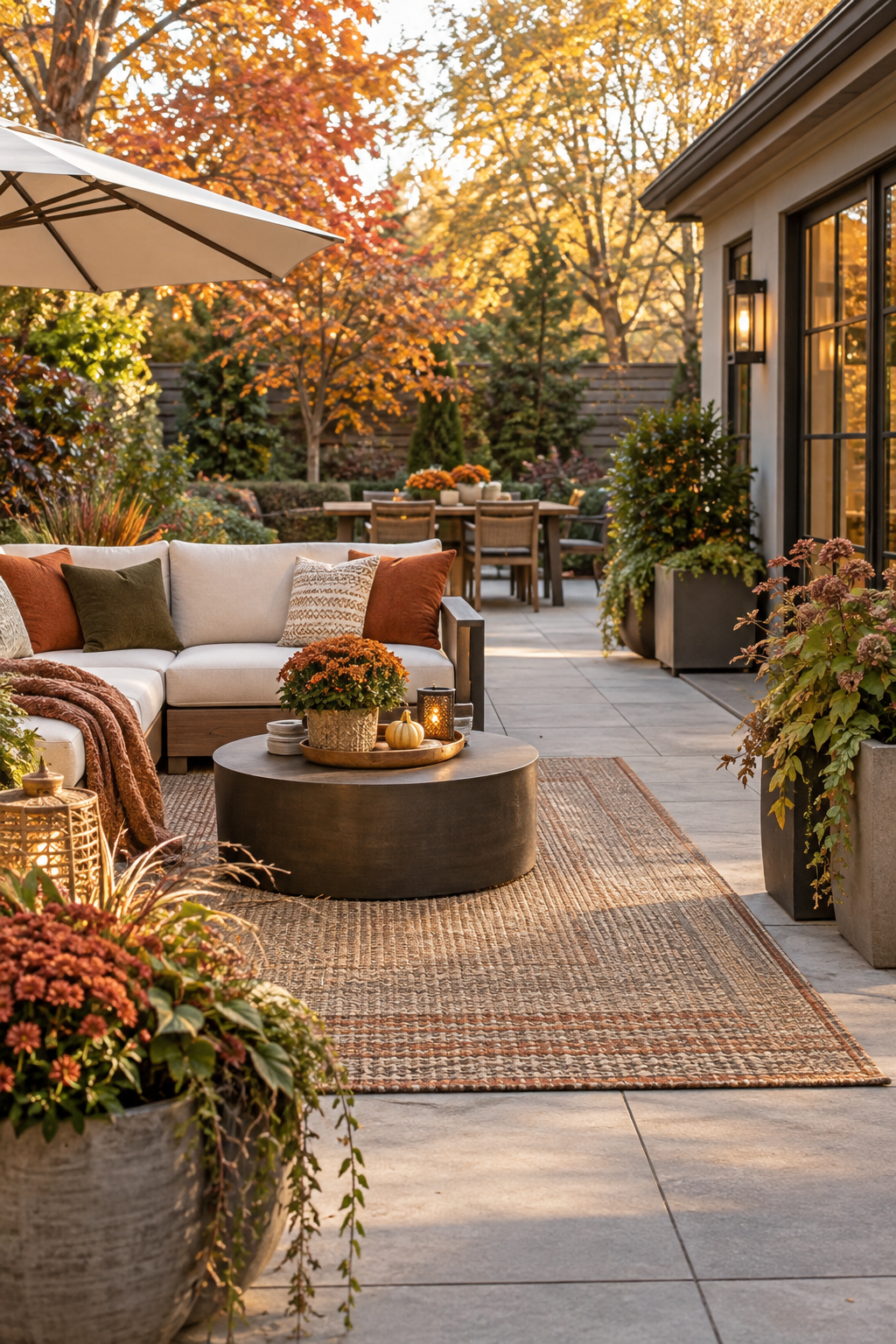
Keep cream textiles, evergreens, charcoal planters and warm weatherproof lights as the foundation. Remove delicate seasonal flowers and store vulnerable pieces before frost. A few durable materials can extend the outdoor room visually even when weather limits daily use.
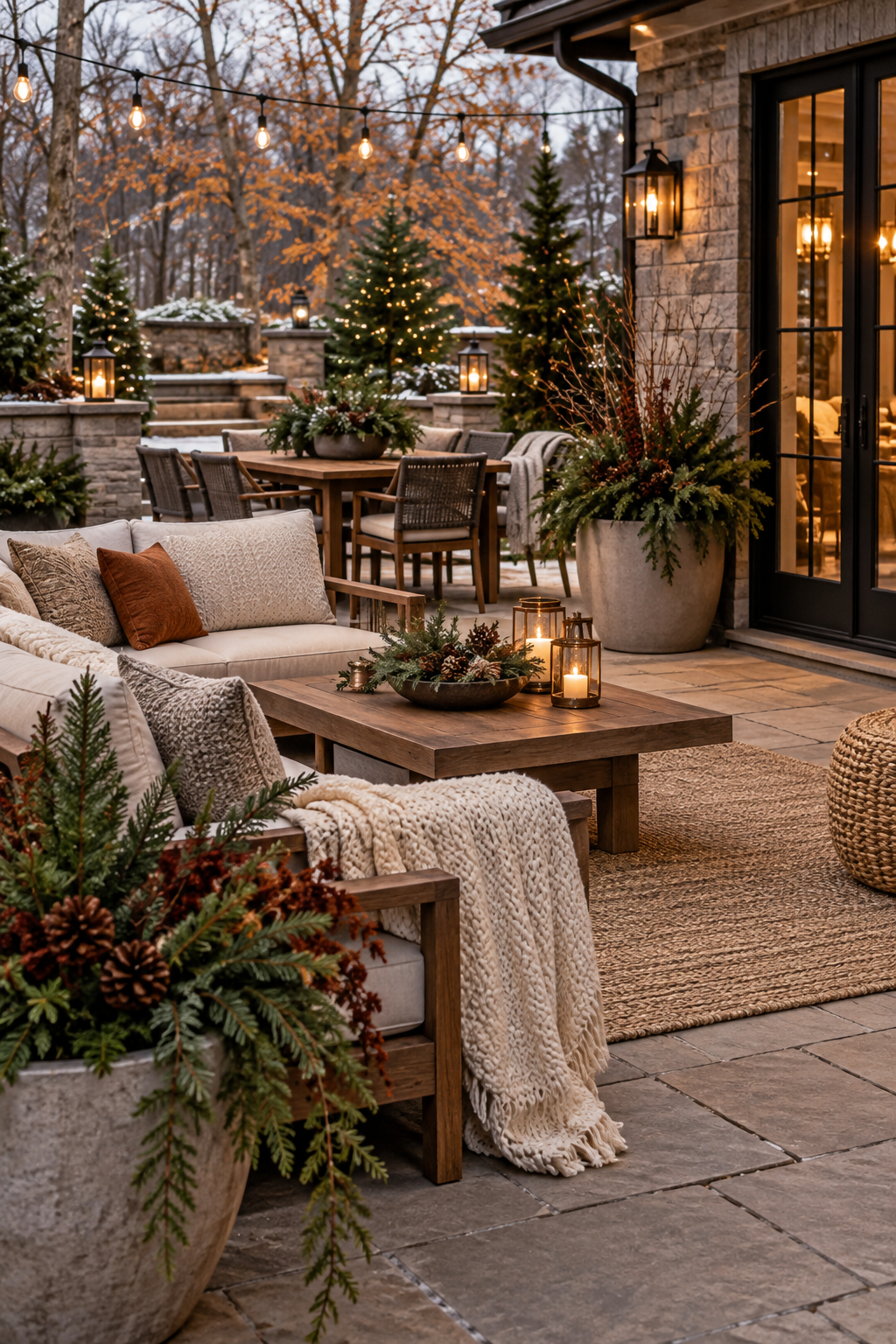
28. Add Storage That Protects Textiles
Use a weather-resistant deck box or indoor storage zone for cushions, throws and portable lights. Never store damp fabric in a closed container. Select a box that does not block drainage or exits, and secure lightweight lids according to the manufacturer’s instructions.

29. Edit the Finished Patio for Comfort
Sit in each chair, walk every route and remove anything that feels unstable, crowded or difficult to maintain. Check the space in daylight and after dark. The most successful fall patio looks warm while remaining safe, weather-aware and ready for everyday use.
How to Make a Patio Cozy for Fall
Begin with maintenance rather than decoration. Sweep the surface, clean furniture, inspect fasteners and confirm that drainage remains open. Evaluate exposure to rain, wind and falling leaves. A patio that functions well in changing weather provides a better foundation than any collection of seasonal accessories.
Arrange seating around the activity you want to encourage. Face chairs toward one another for conversation, give a reading seat its own light and keep the dining route connected to the kitchen. Measure clearances with people seated. Outdoor rooms feel comfortable when movement is effortless.
Use a limited palette to connect mismatched pieces. Cream, rust and olive work naturally with wood, black metal and stone. Repeat the colors in cushions, planters and a rug, choosing exterior-rated materials throughout. Store or cover vulnerable textiles rather than expecting them to withstand every condition.
Build lighting at several heights. Fixed fixtures should be properly rated and installed, while battery lanterns can add portable ambience. Illuminate doors, steps and level changes clearly. Decorative glow should supplement safe visibility, not replace it.
Add plants that suit the local climate and the patio’s actual light. Foliage offers longer seasonal value than short-lived blooms, and substantial planters can contribute privacy or wind protection. Confirm structural weight limits for raised spaces and keep saucers or drainage from damaging the surface.
Finish with a weather routine. Decide where cushions go before rain, how leaves will be cleared and which pieces must be stored before frost. The easier the routine, the more often the patio will be used. A cozy outdoor room succeeds when it remains inviting after the styled photograph is taken.
Frequently Asked Questions
How can I make my patio cozy for fall?
Arrange comfortable seating for conversation, add weather-resistant cushions, use a properly sized outdoor rug and layer approved lighting. Keep textiles dry and protect clear walking paths.
What colors work for fall patio decor?
Cream, oatmeal, rust, olive, caramel and charcoal pair naturally with wood, stone and metal. Use a light neutral as the base and repeat one or two deeper accents.
How do I decorate a small patio for autumn?
Choose a bistro set or compact loveseat, use vertical planting and limit decor to one focal grouping. Folding furniture and storage pieces provide flexibility without blocking the door or pathway.
What can I use instead of pumpkins outdoors?
Use autumn foliage, branches, ornamental grasses, amber-toned lanterns, woven textures and earthy ceramic planters. Select items that tolerate the patio’s exposure and secure them against wind.
How can renters update a patio?
Try freestanding screens, portable lighting, planters, outdoor rugs and removable additions approved by the lease. Do not obstruct drainage or make structural and electrical modifications without permission.
How do I protect patio cushions in fall?
Bring them indoors or place fully dry cushions in a weather-resistant storage box before rain and frost. Follow care labels and never seal damp fabric in an enclosed container.
Can I use an indoor rug or throw on a covered patio?
Outdoor-rated products are safer choices because covered spaces still experience moisture and temperature changes. An indoor throw may be used temporarily if it is taken inside immediately afterward and kept completely dry.
How do I heat a patio safely?
Use only approved outdoor heating or fire products where local rules permit. Follow the manufacturer’s installation, fuel, power, ventilation and clearance requirements, and never leave a heat source unattended.