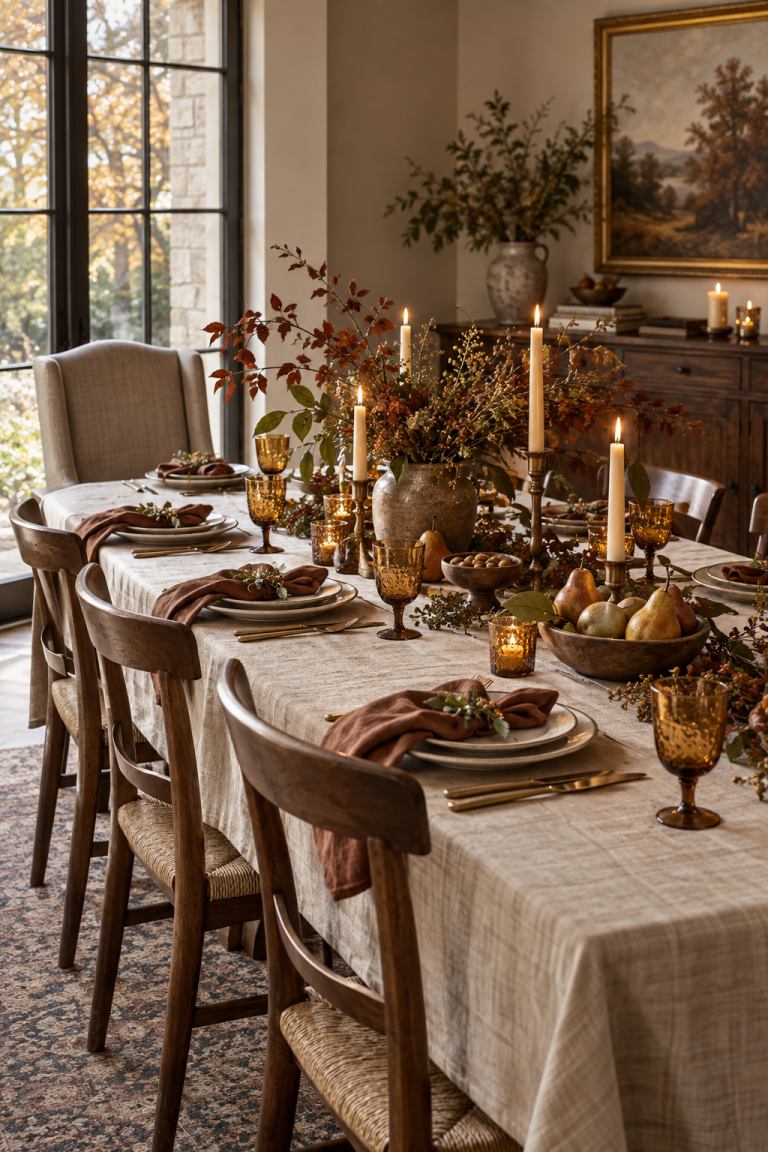
A thoughtfully designed reading corner turns a forgotten part of the home into a place you genuinely want to use. The best cozy fall reading nook ideas combine supportive seating, focused light, reachable books and a small amount of seasonal texture. They do not require a dedicated library or an expensive renovation. A window corner, bedroom wall, stair landing or unused alcove can become a comfortable retreat with the right priorities.
The ideas below cover small spaces, renters, modest budgets and several decorating styles. Use them as a practical checklist rather than a shopping list. Start with comfort and light, then add autumn color through pieces that can remain useful after the season changes.
1. Build the Nook Around a Warm Neutral Palette
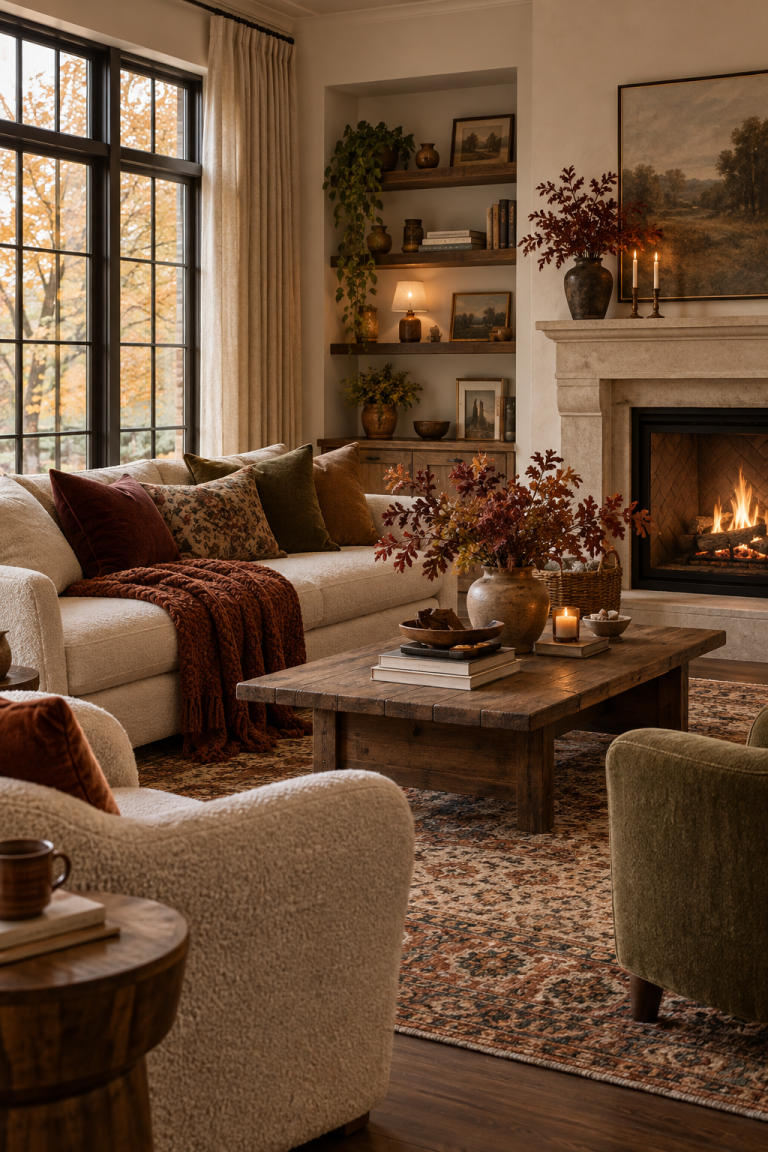
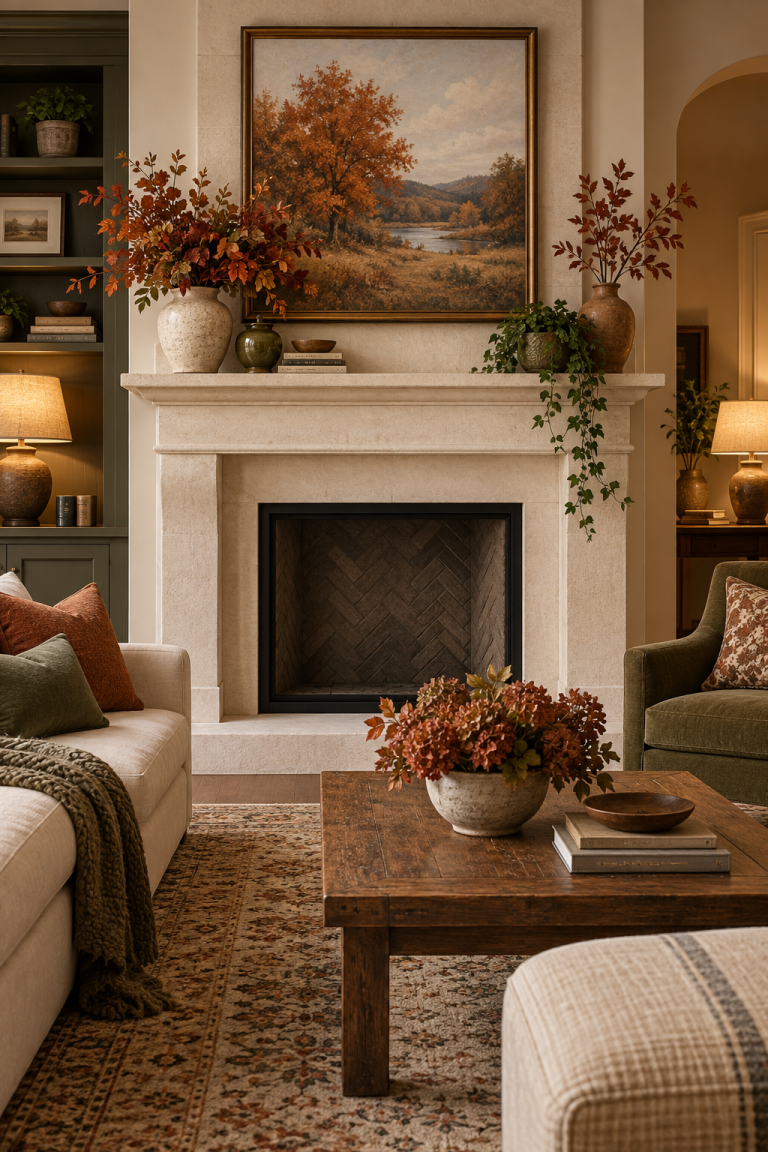
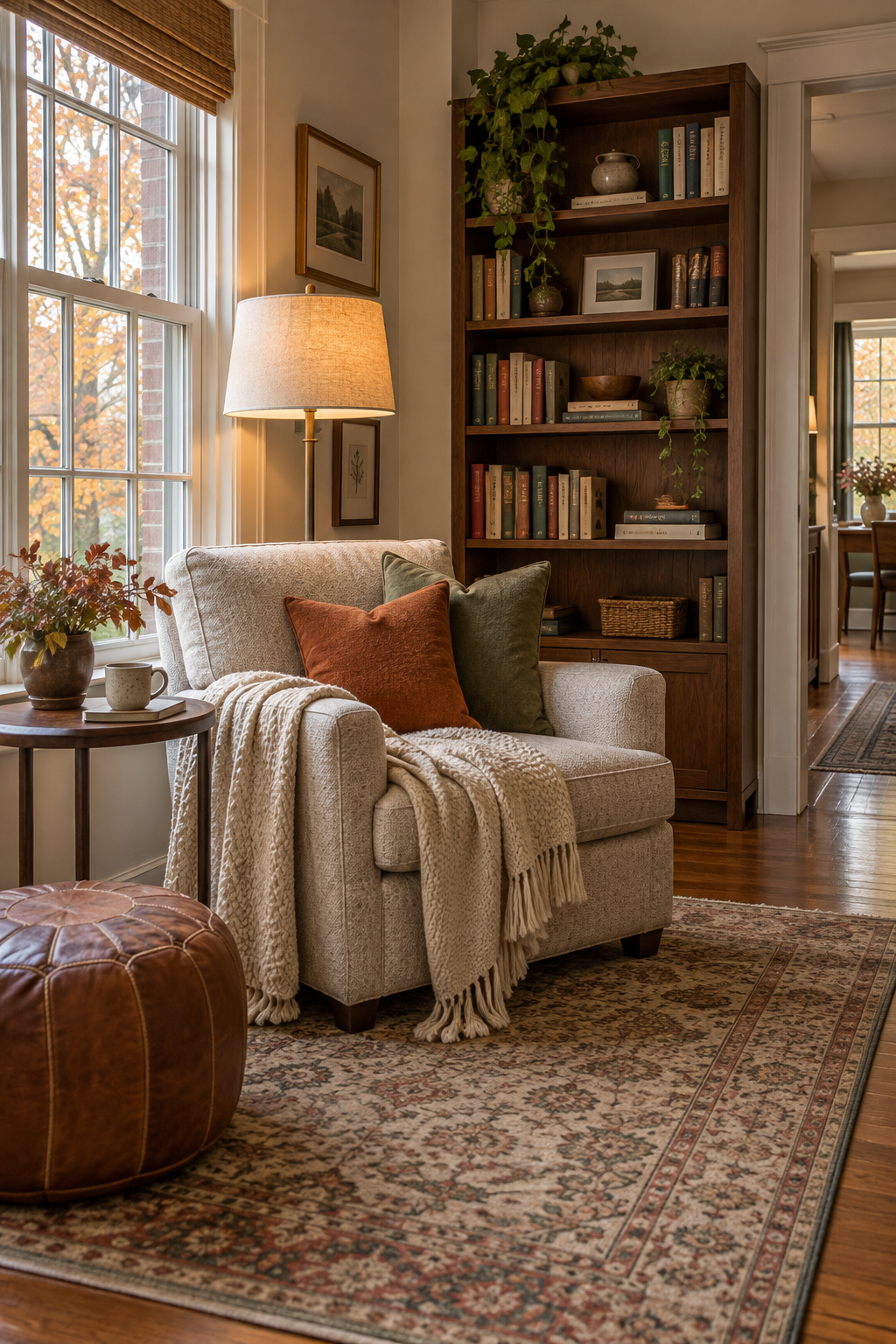
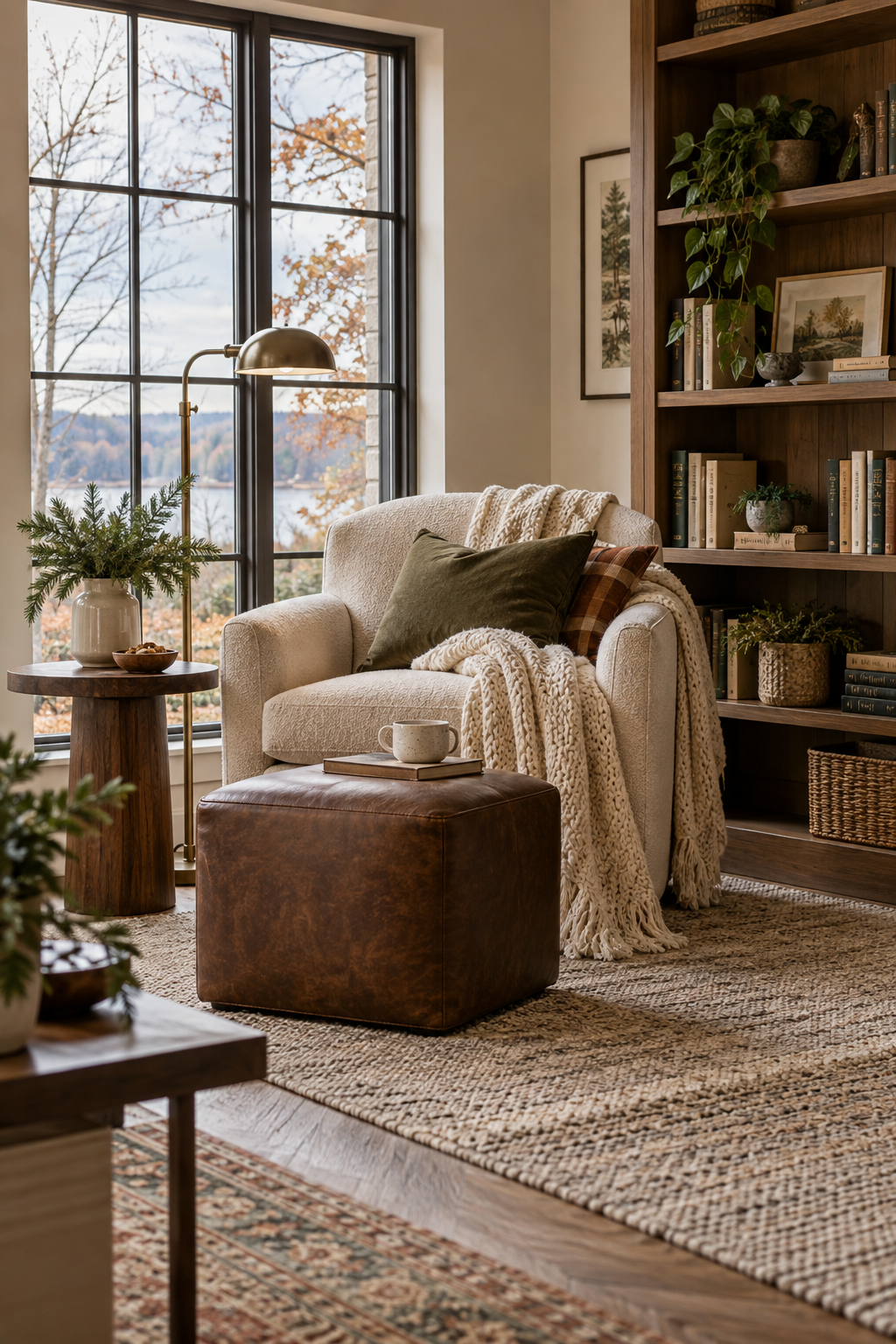
Begin with cream, oatmeal, walnut and camel, then add rust or muted olive in smaller amounts. A limited palette makes a compact corner feel calmer and helps books, furniture and textiles look connected. Keep the largest surfaces light when the nook receives little daylight. Deeper autumn color can appear through one pillow, a throw or a framed landscape, so the setting feels seasonal without becoming themed.
2. Choose a Chair That Supports Long Reading Sessions
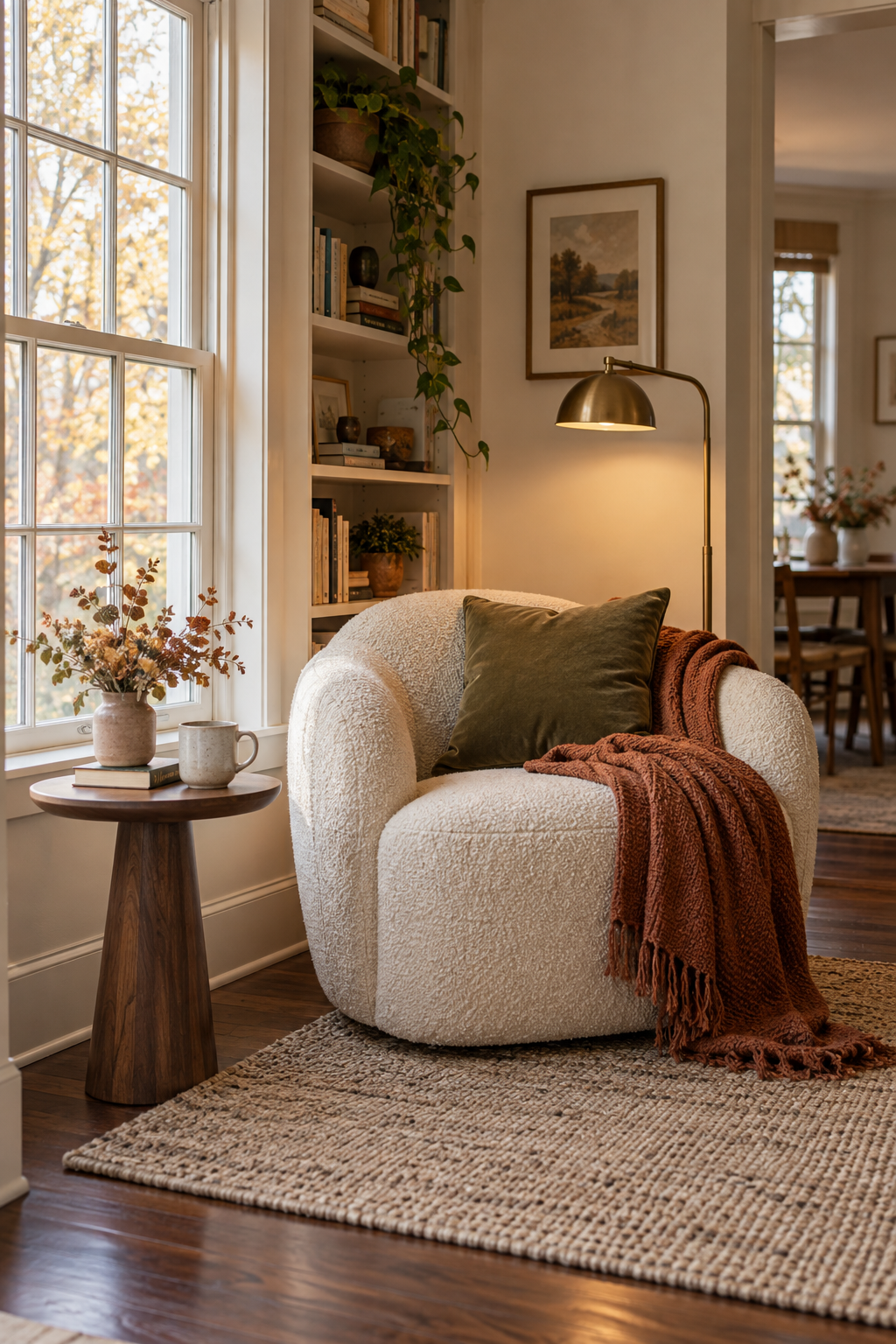
Comfort is more important than a dramatic silhouette. Look for a seat that supports your back, allows your feet to rest naturally and provides enough depth without forcing you to slouch. Test the chair with the posture you actually use when reading. A small lumbar pillow can improve an attractive chair that is slightly too deep, while a stable ottoman helps shorter readers maintain a relaxed position.
3. Turn a Window Seat into an Autumn Retreat
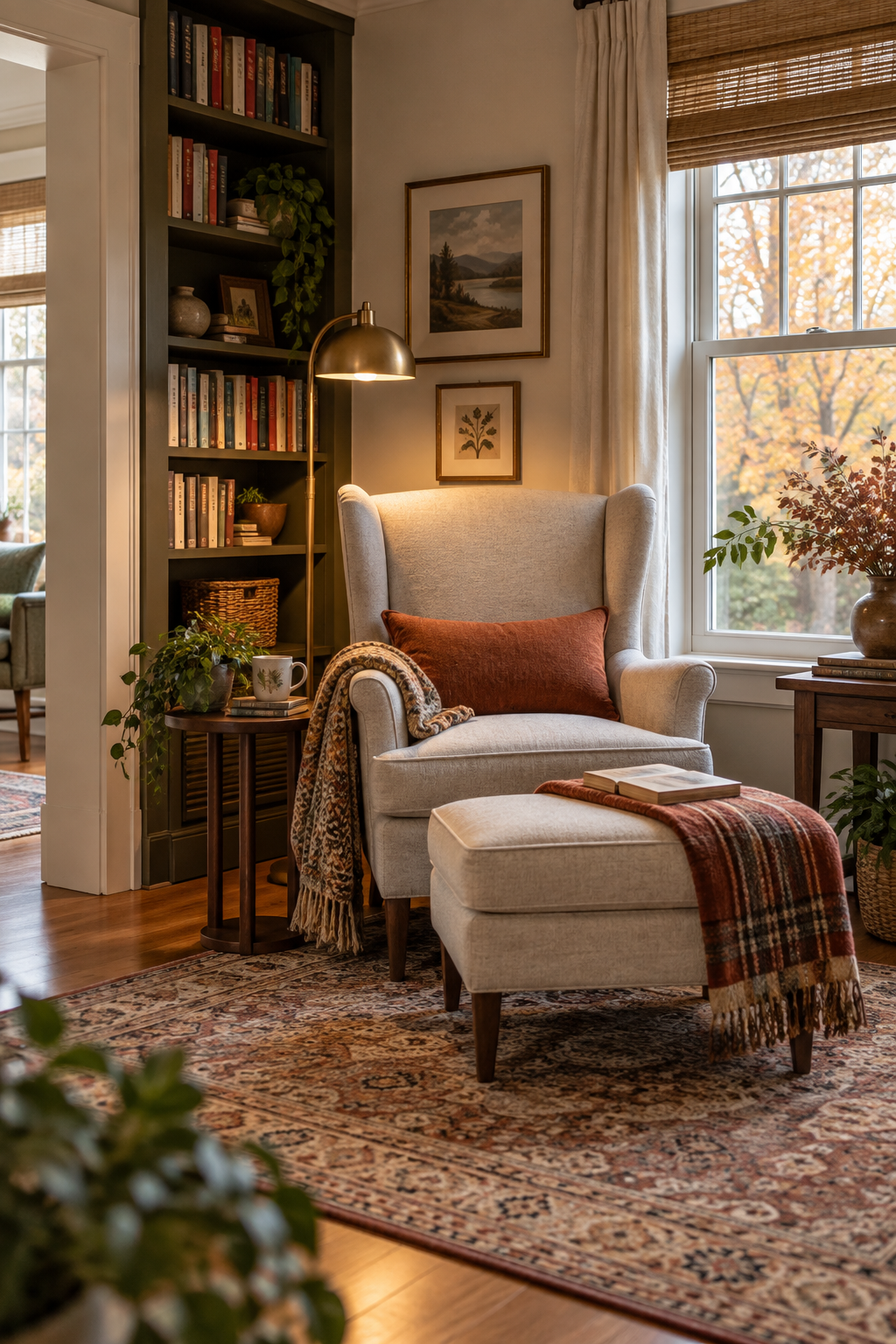
A window seat offers daylight, a view and a naturally defined boundary. Add a firm cushion thick enough for comfort, then support the back with two or three pillows rather than an unstable pile. Use lined curtains or a shade to control glare and drafts. Built-in drawers below the seat can hold blankets and rarely used books, keeping the visible surface calm and ready for everyday use.
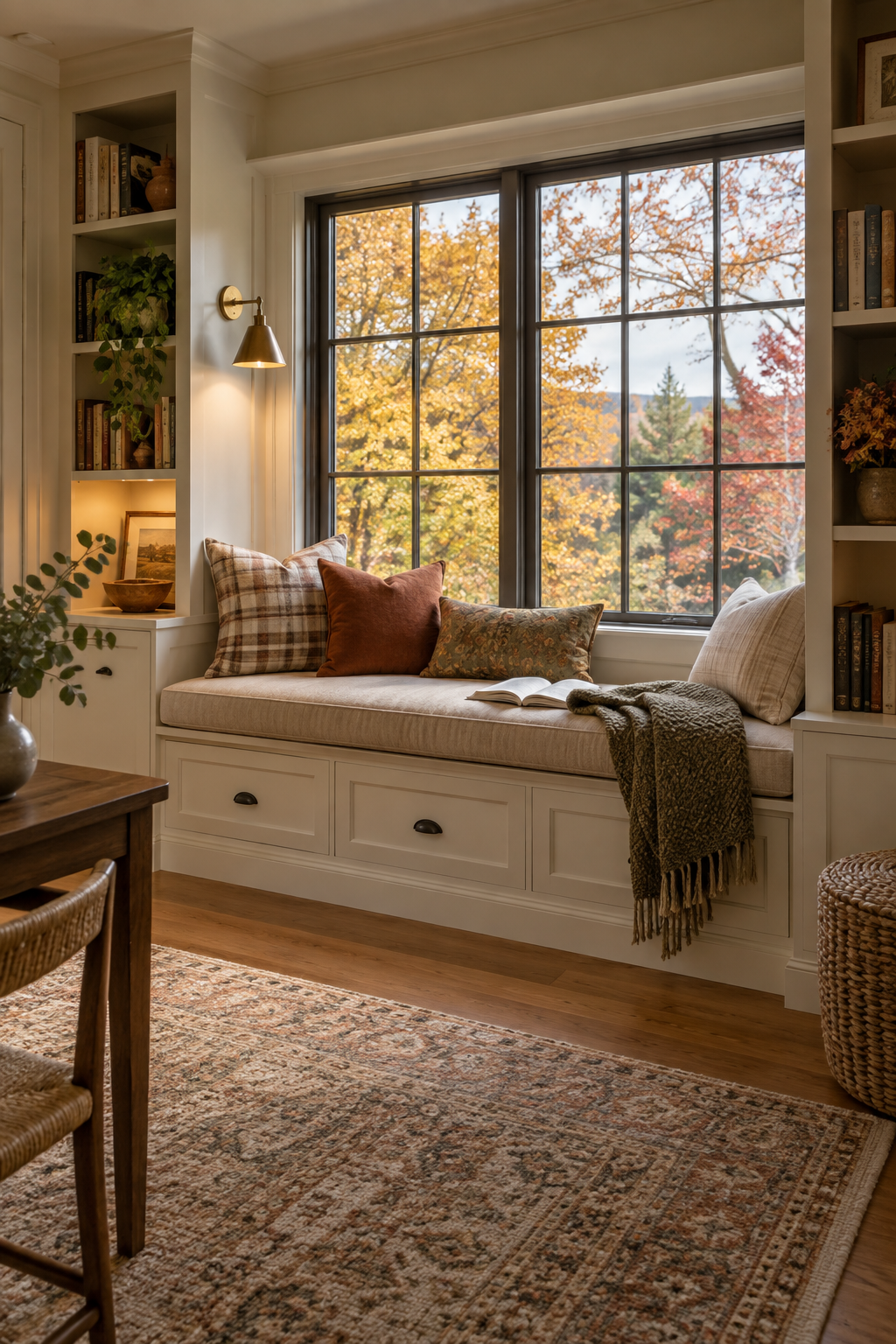
4. Claim a Small Apartment Corner
You need only enough space for a compact chair, a light and a place to set a book. Choose furniture with visible legs to preserve a sense of floor area, and use a narrow drink table instead of a large end table. A tall, shallow bookcase can take advantage of vertical space. Measure door swings and walking routes first so the new corner does not make the room harder to navigate.
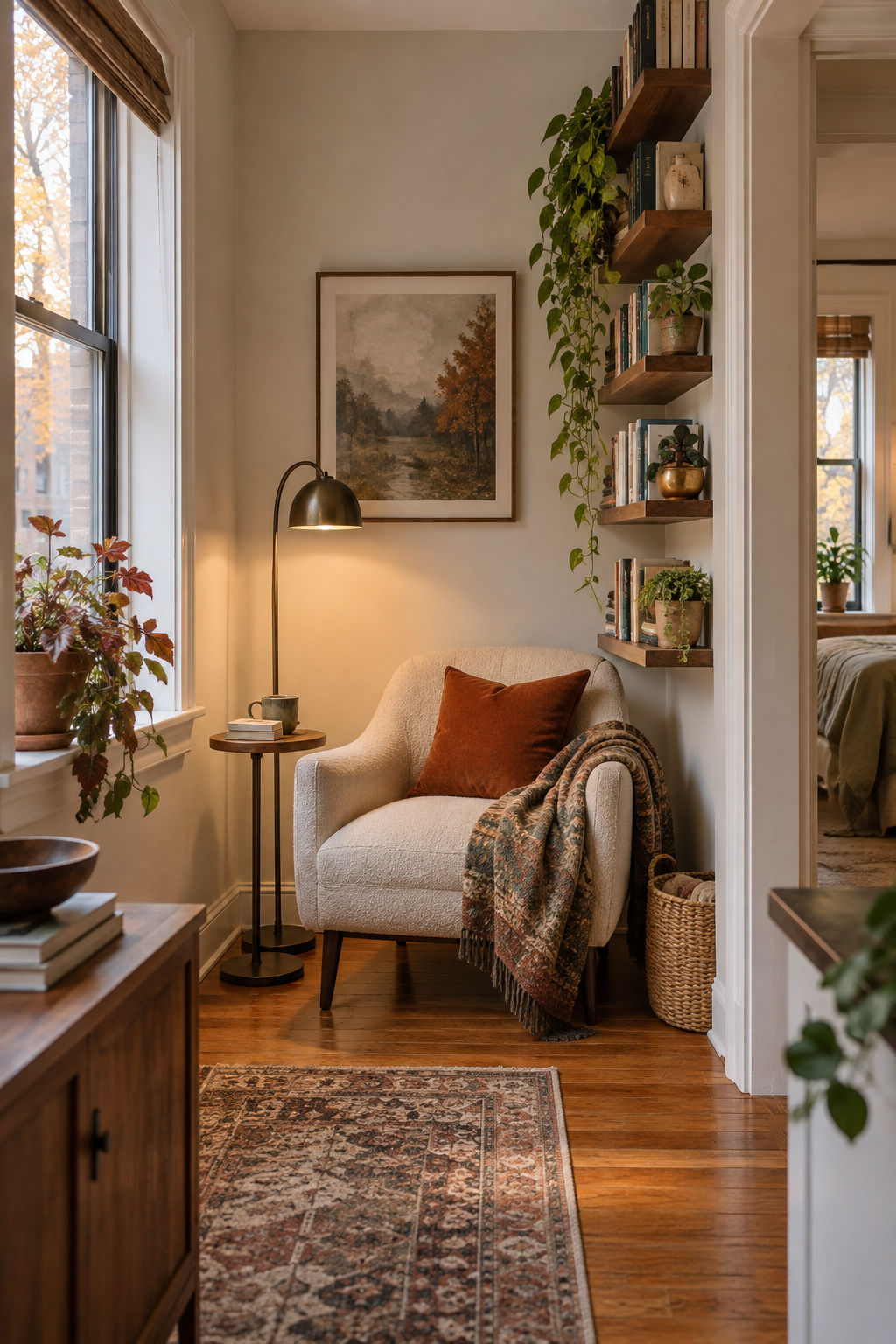
5. Position a Floor Lamp for Focused Light
Place a shaded floor lamp slightly behind and beside the reader so the page is illuminated without the bulb shining directly into the eyes. The exact side depends on your preferred sitting position and whether your hand casts a shadow. Select a stable base that cannot tip easily, use the recommended bulb and route the cord along the wall rather than across a walkway. Warm light adds atmosphere, but clarity must come first.
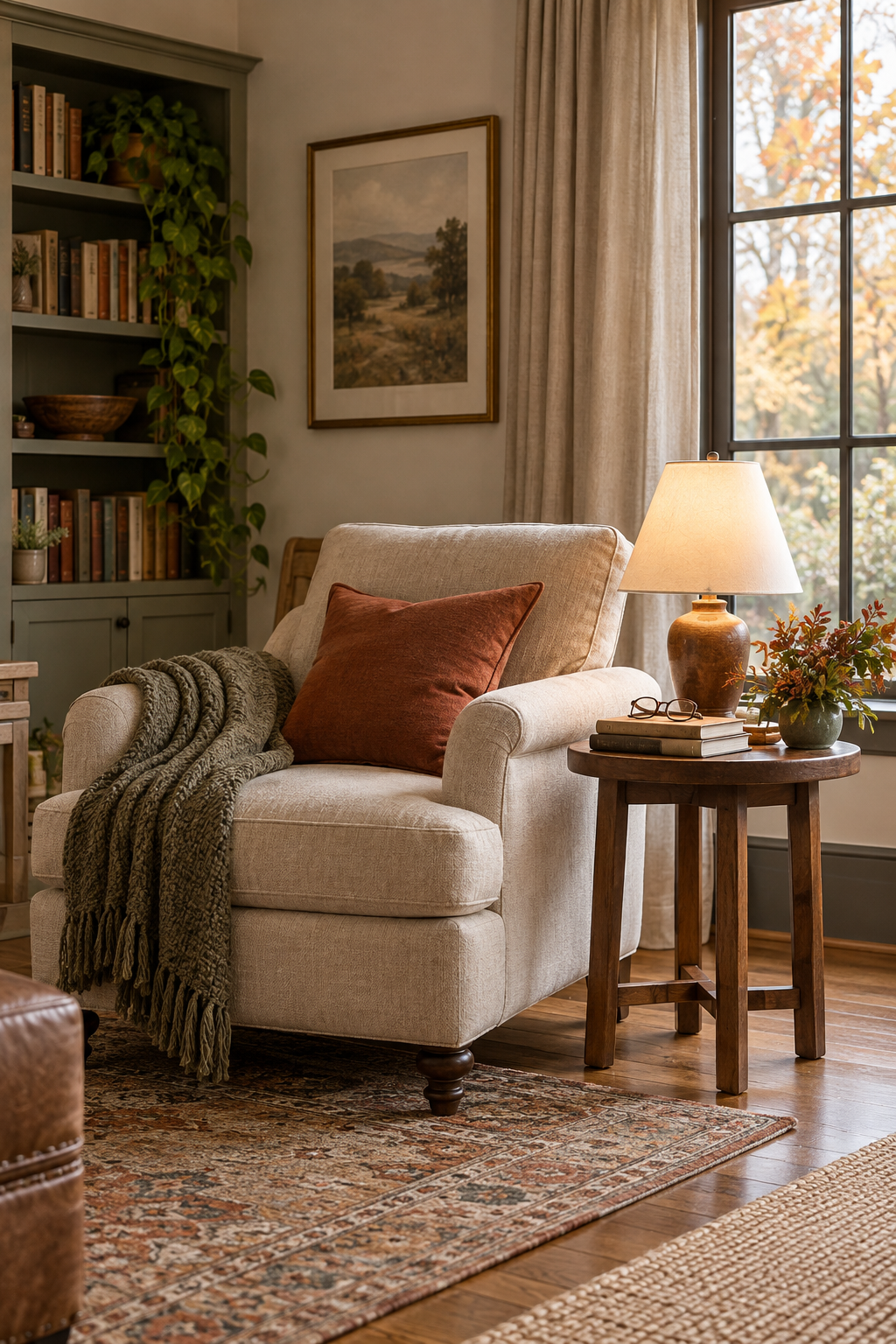
6. Use a Task Lamp in a Tight Space
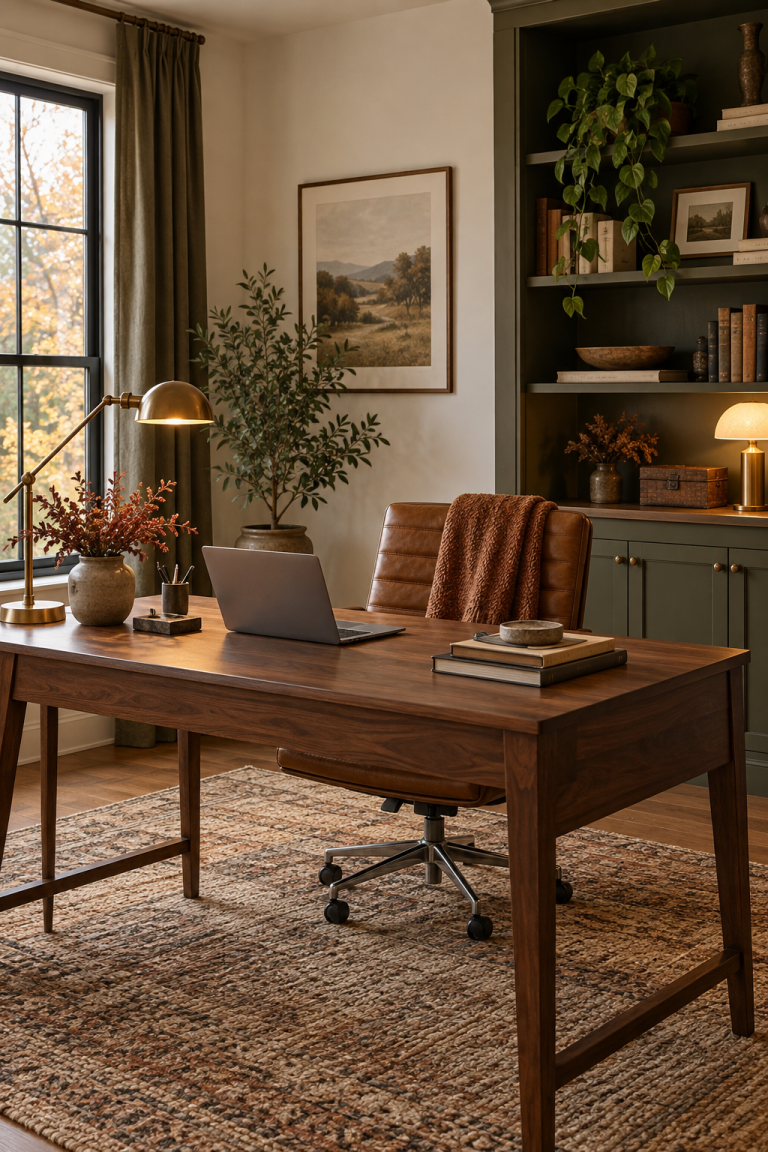
When a floor lamp takes too much room, a compact table lamp or properly installed wall light can provide focused illumination. Choose an adjustable shade and a sturdy table large enough for the lamp base. Keep fabric, paper and dry branches away from hot bulbs, and follow the fixture’s clearance instructions. Plug-in wall lamps can be useful for renters when the mounting method is approved for the property.
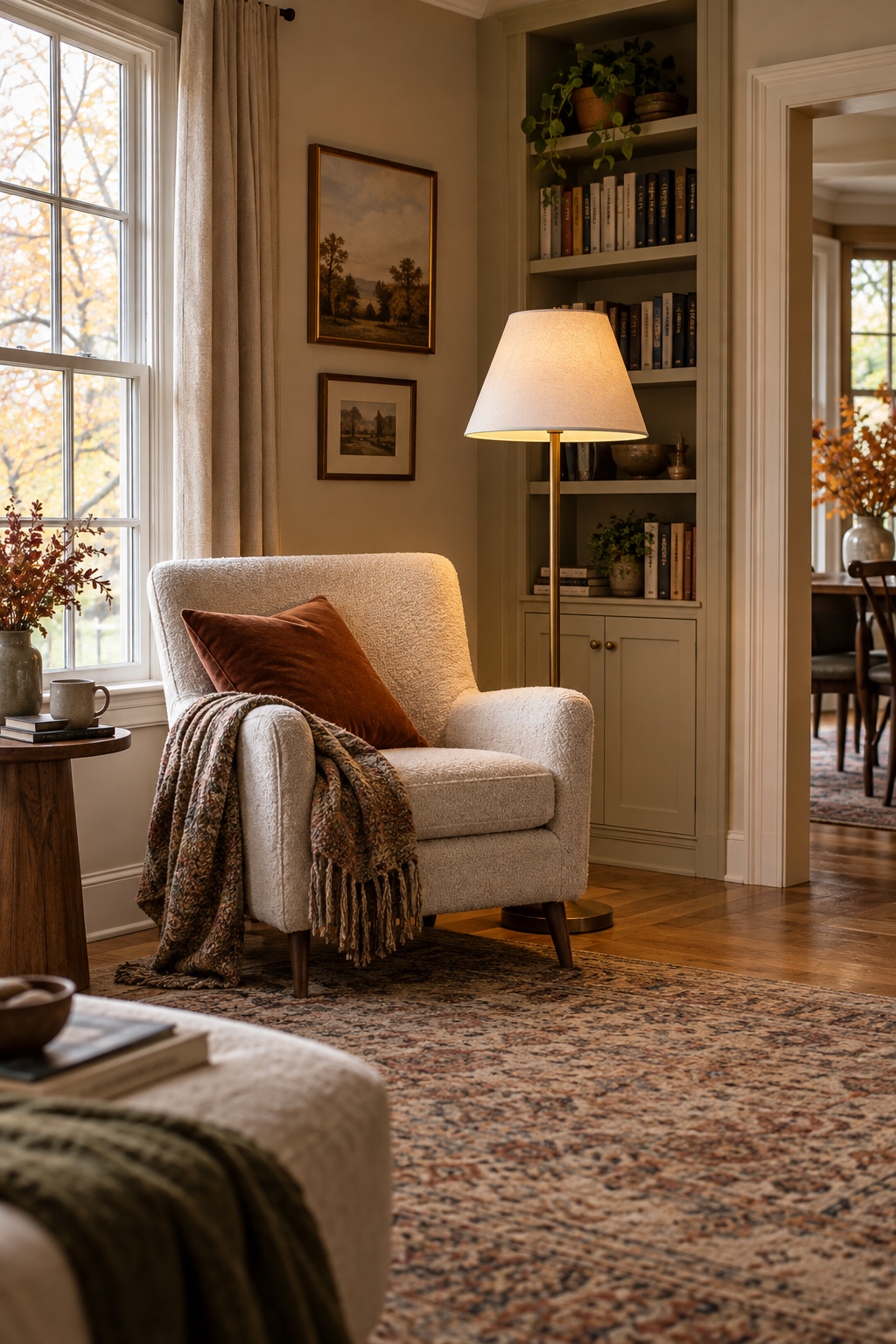
7. Add a Small but Useful Side Table
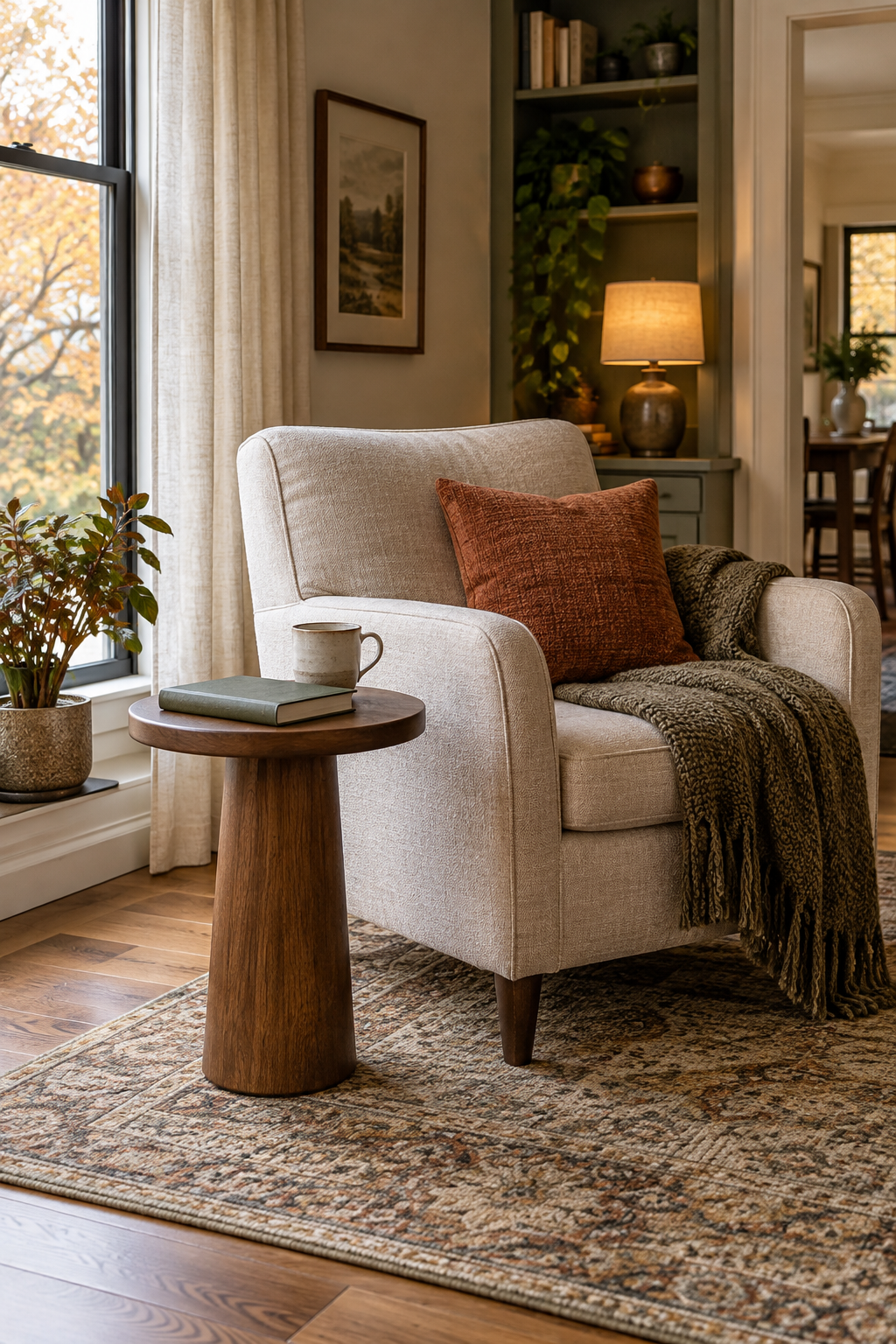
The ideal table holds a mug, glasses, phone and current book without crowding the chair. Its surface should be easy to reach while seated and stable enough that a small bump will not spill a drink. Round tables soften a tight circulation path, while a slim C-table can tuck close to the seat. Avoid filling the top with decor; one useful clear area makes the nook feel more luxurious.
8. Anchor the Corner with a Low-Pile Rug
A rug visually separates a reading nook from the rest of a bedroom or living room. Choose a low-pile style that allows the chair and table to sit steadily. At minimum, place the front chair legs on the rug so the arrangement looks intentional. Secure edges with an appropriate rug pad, especially near a doorway. Vintage-inspired rust, olive and faded blue patterns provide autumn depth without relying on novelty motifs.
9. Keep One Soft Throw Within Reach
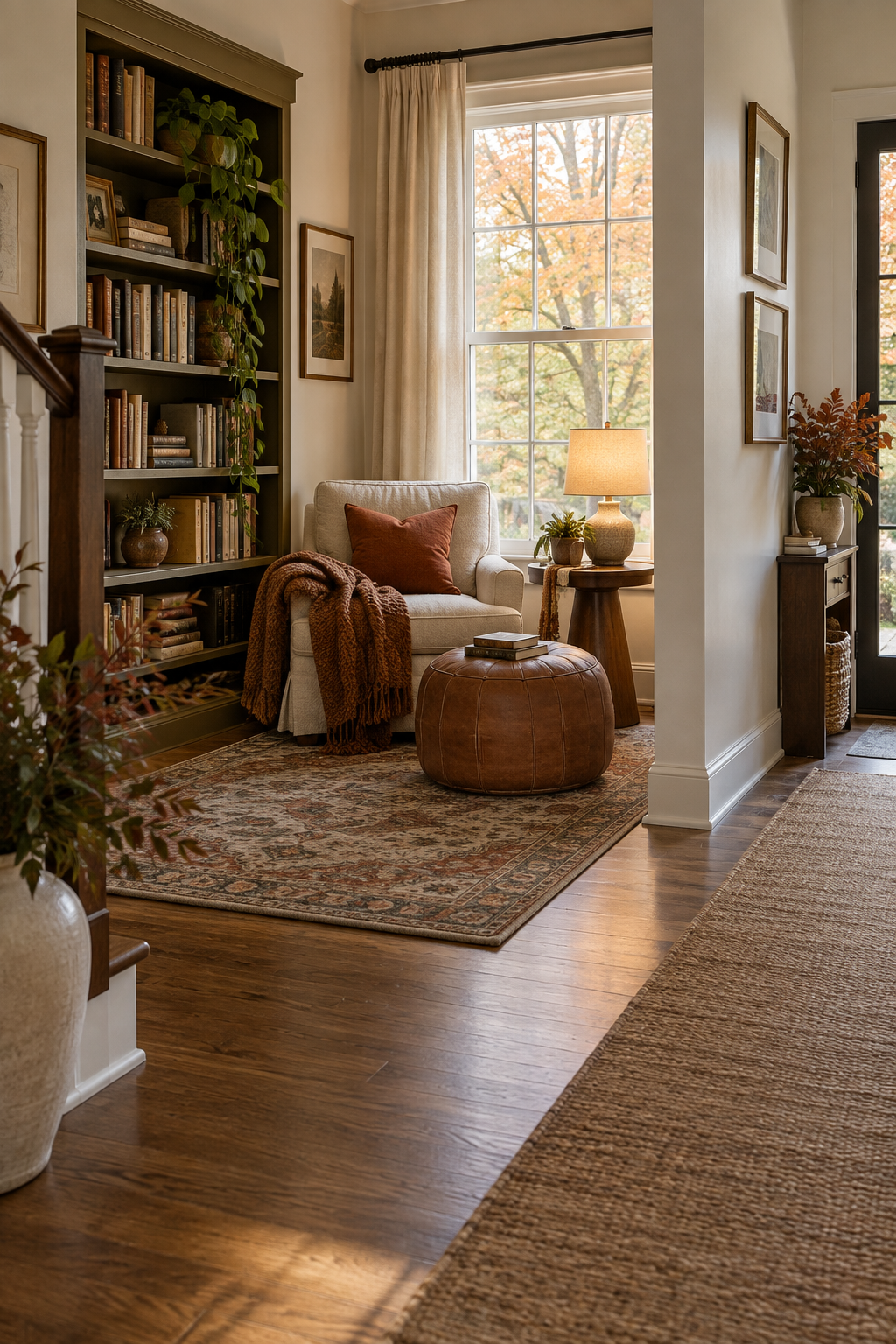
A washable throw adds warmth, texture and immediate seasonal character. Wool blends, cotton knits and brushed fabrics can all work, depending on temperature and care needs. Fold the throw over one arm or store it in a nearby basket rather than covering the whole chair. Check that fringe and excess fabric do not trail into a walkway or sit near a heater. One generous layer usually looks better than several competing blankets.
10. Layer Pillows for Support, Not Just Style
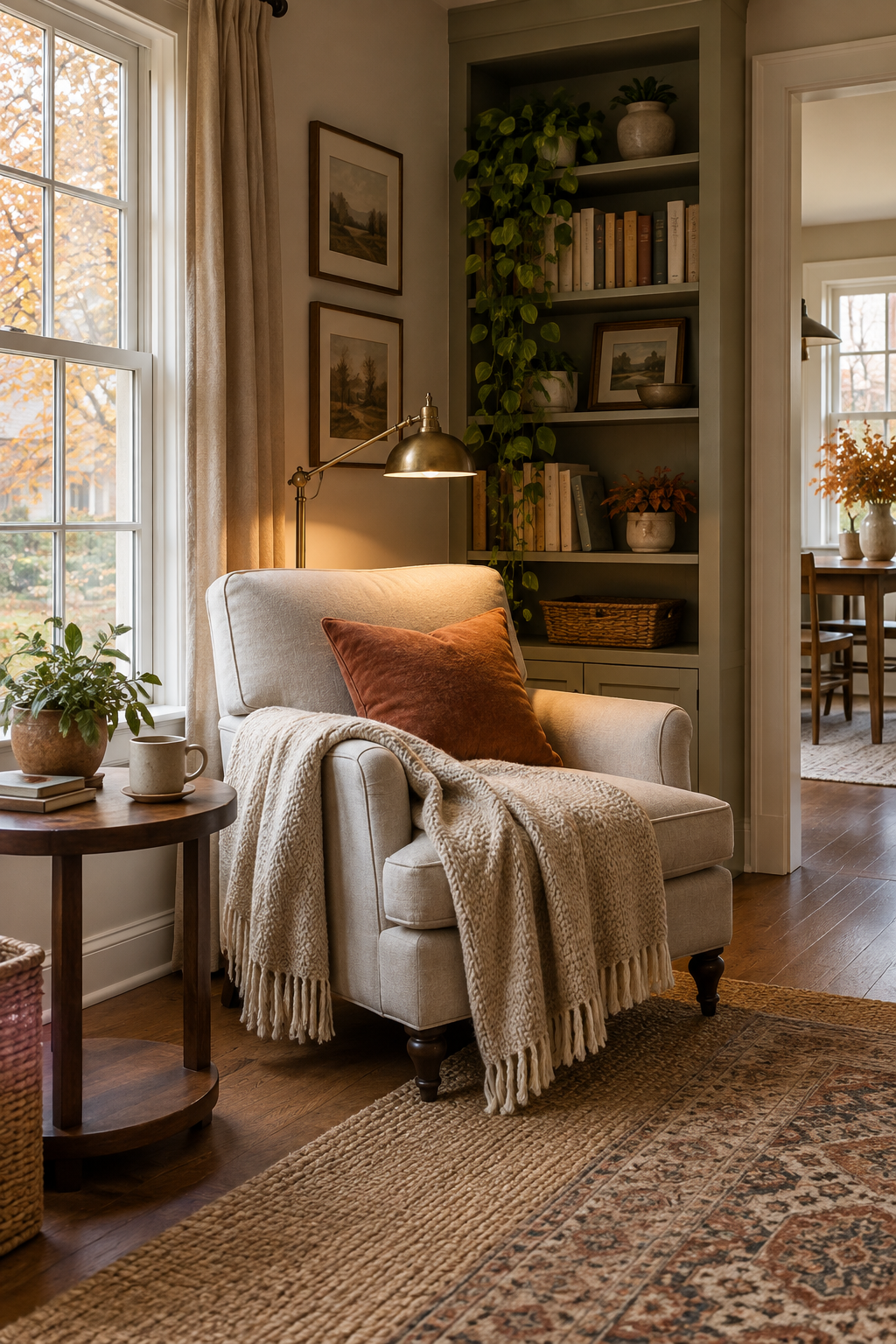
Use pillows to solve a comfort problem. A lumbar cushion can support the lower back, while a medium square pillow can reduce the depth of an oversized chair. Limit the combination to two or three pieces so there is still room to sit. Mix texture rather than busy patterns: linen, velvet and a small woven stripe create interest. Removable covers make it easy to wash or rotate colors after fall.
11. Store Current Reads at Arm’s Reach
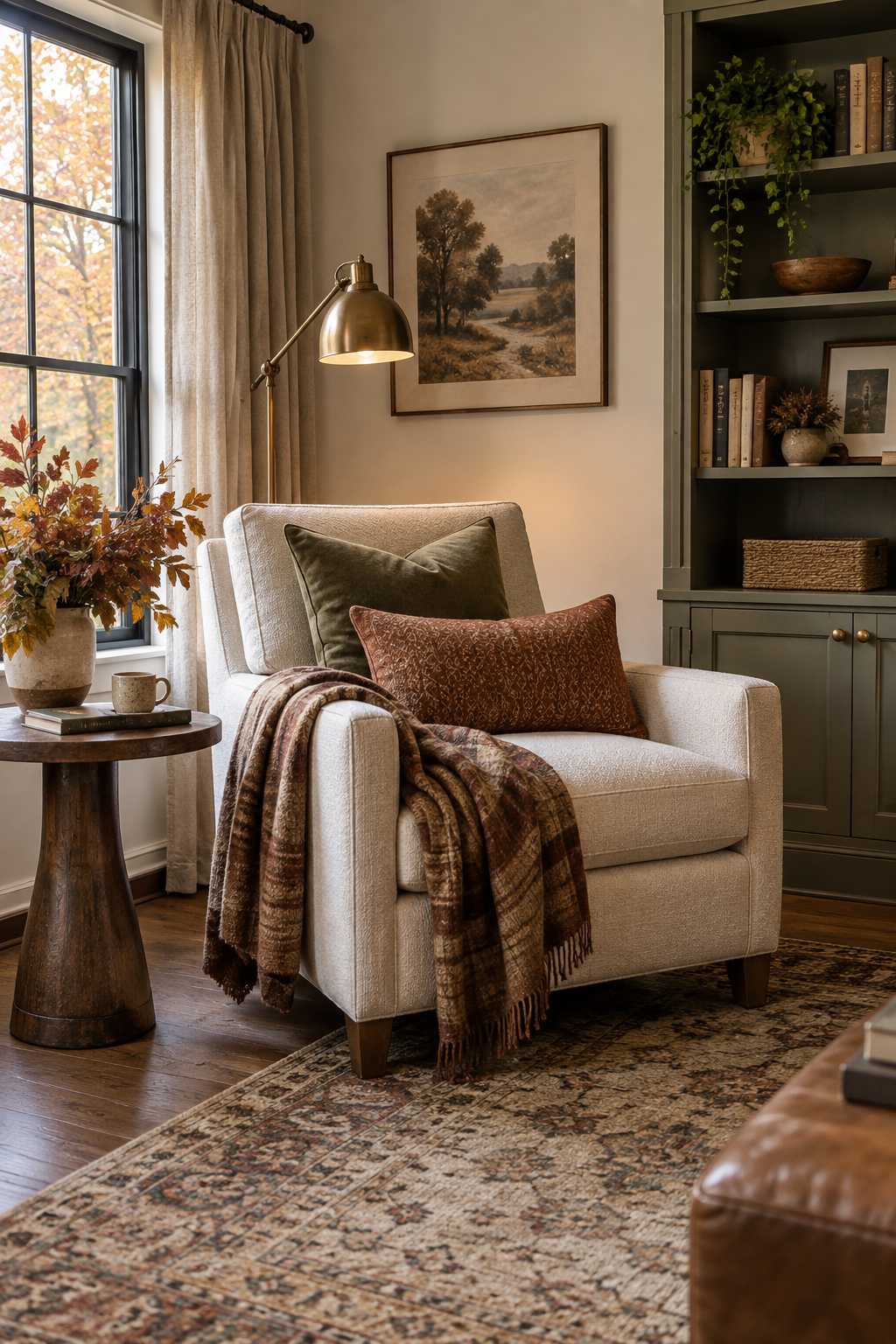
Keep the books you are actively reading on a low shelf, in a stable basket or on the lower tier of a side table. The goal is convenience, not displaying an entire collection beside the chair. Place heavier books low and avoid stacking them where they can slide. A small “to read next” group prevents visual clutter and makes the nook feel purposeful. Return finished books during a simple weekly reset.
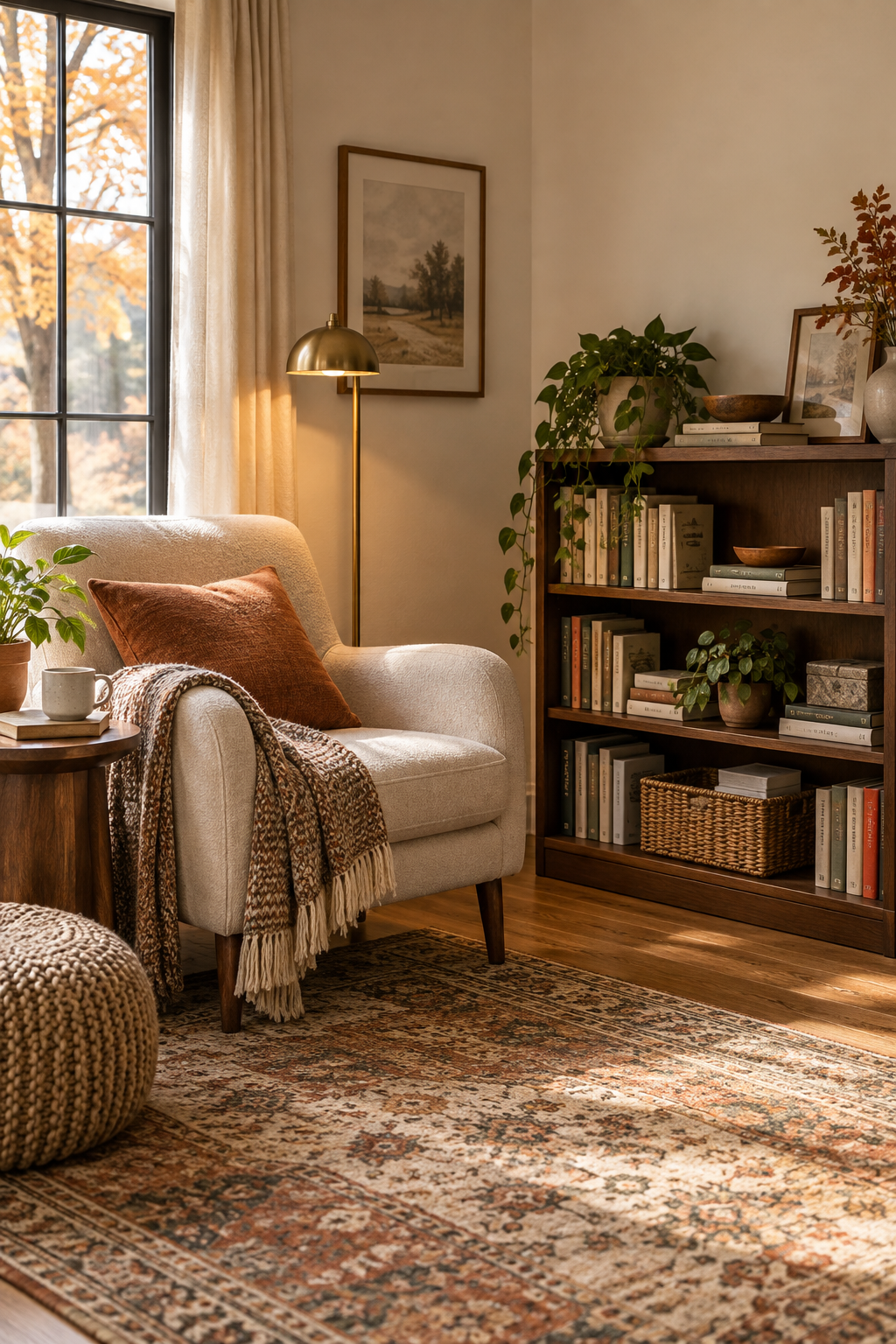
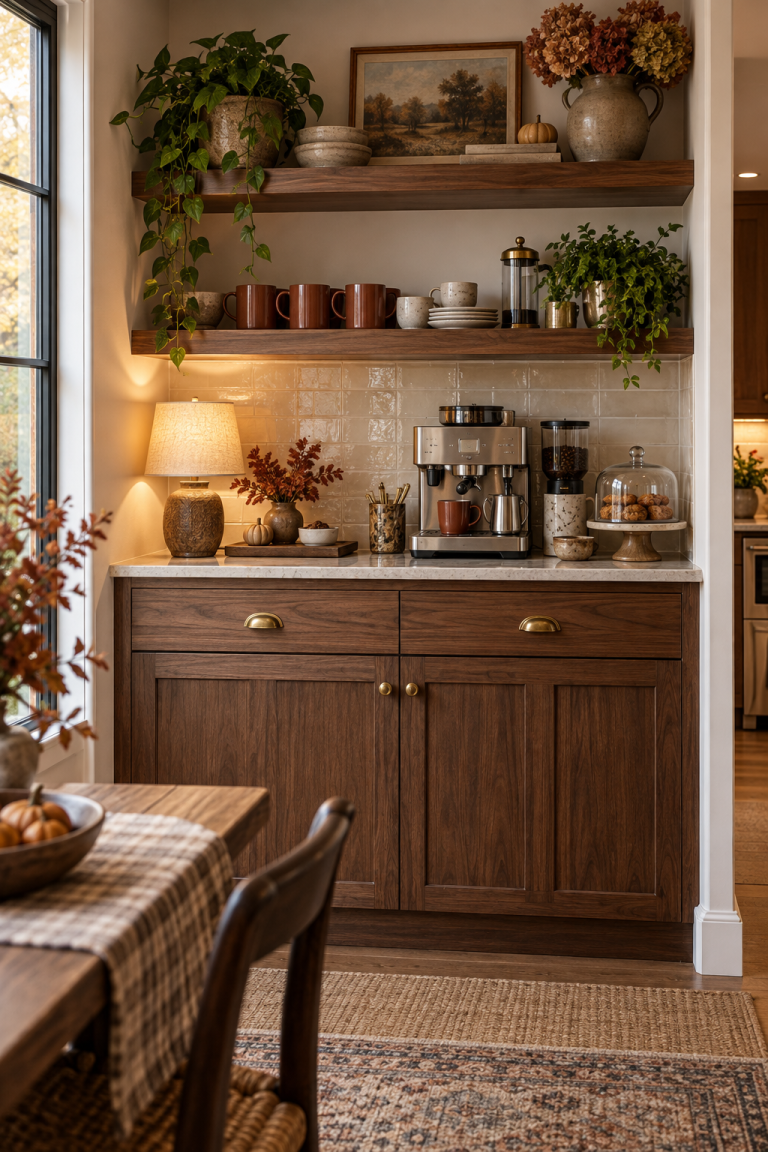
12. Style Floating Shelves with Breathing Room
Floating shelves can turn an empty wall into useful storage, but they should be properly anchored for the expected weight. Arrange books in small vertical groups supported by reliable bookends, leaving open space between them. Add one framed print or ceramic vessel rather than many tiny objects. Keep frequently handled books on the lowest shelf and avoid placing heavy or breakable items above the reader’s head.
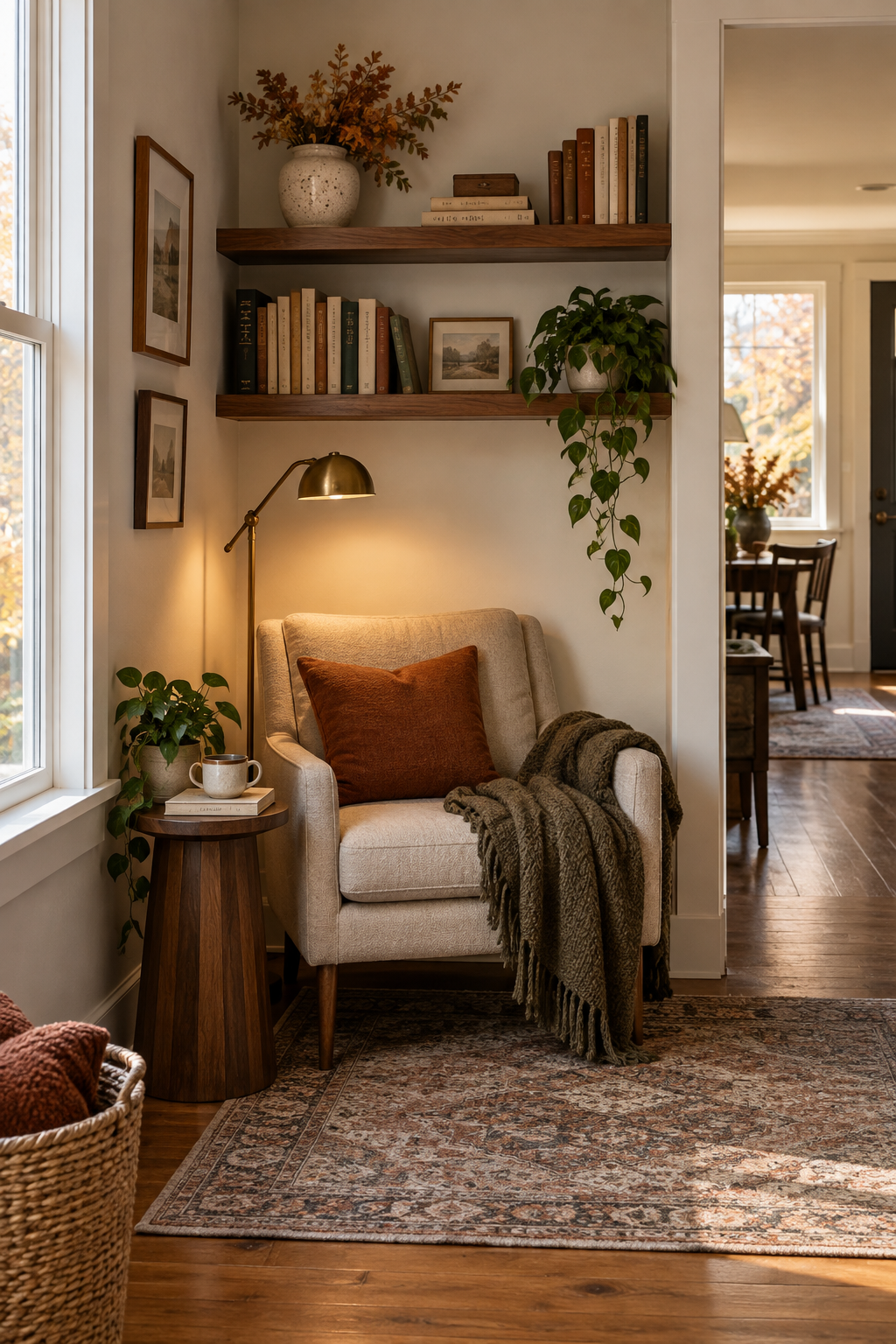
13. Create a Built-In Library Alcove
A built-in nook can combine a bench, shelves and closed storage in one efficient footprint. Plan seat height, cushion depth, lighting and ventilation before concentrating on trim details. Drawers below can hide blankets and games, while shallow shelves keep books visible. If the alcove is part of a renovation, use qualified professionals for structural, electrical and window-related work. The result should feel comfortable first and architectural second.
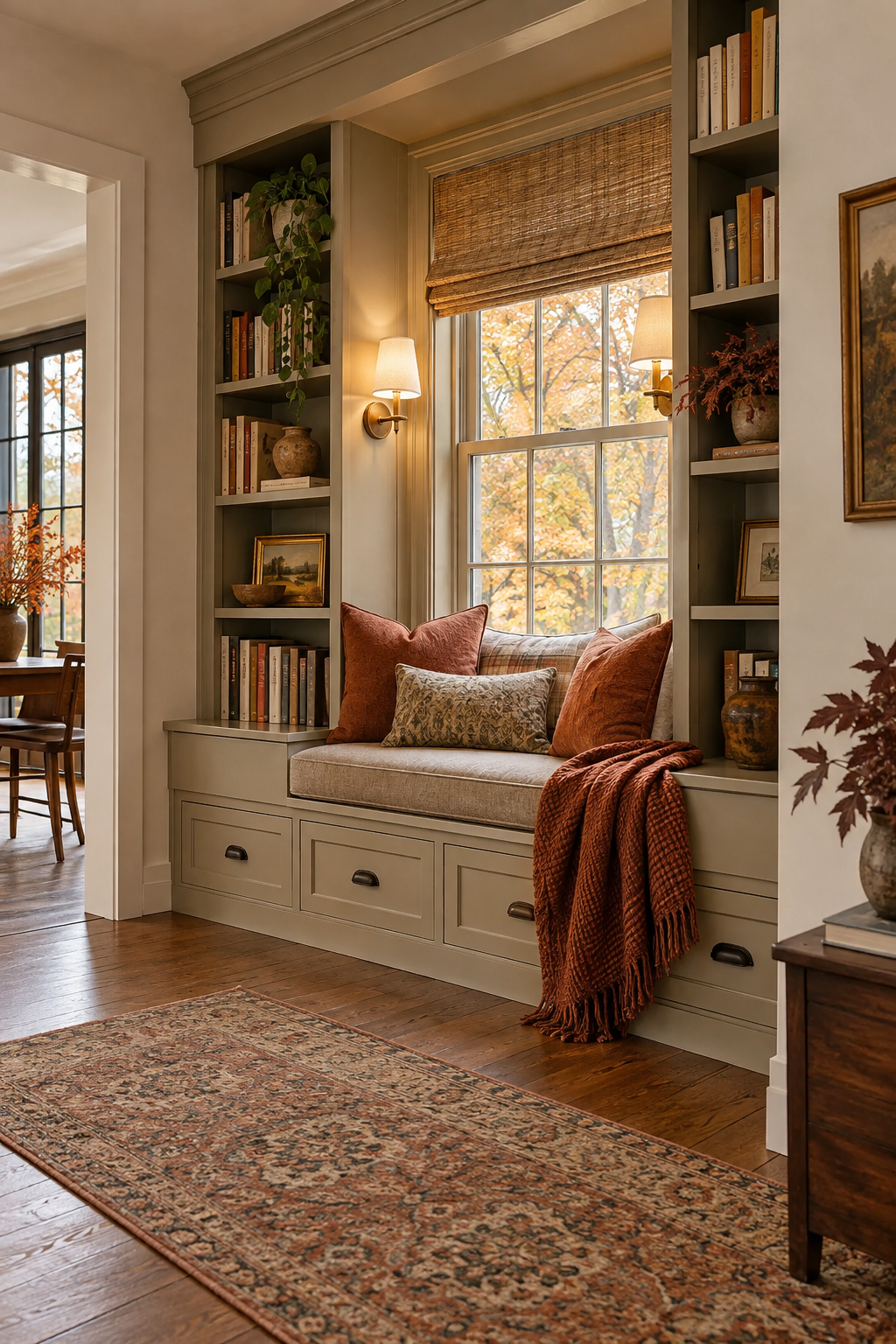
14. Make a Bedroom Reading Nook
Place the chair far enough from the bed that both areas remain easy to use. A small rug and directional lamp will define the nook without adding a divider. Match one material or color from the bed, such as walnut or oatmeal linen, to make the corner feel integrated. Closed storage is especially helpful in a bedroom because it limits visual activity and supports a calmer environment before sleep.
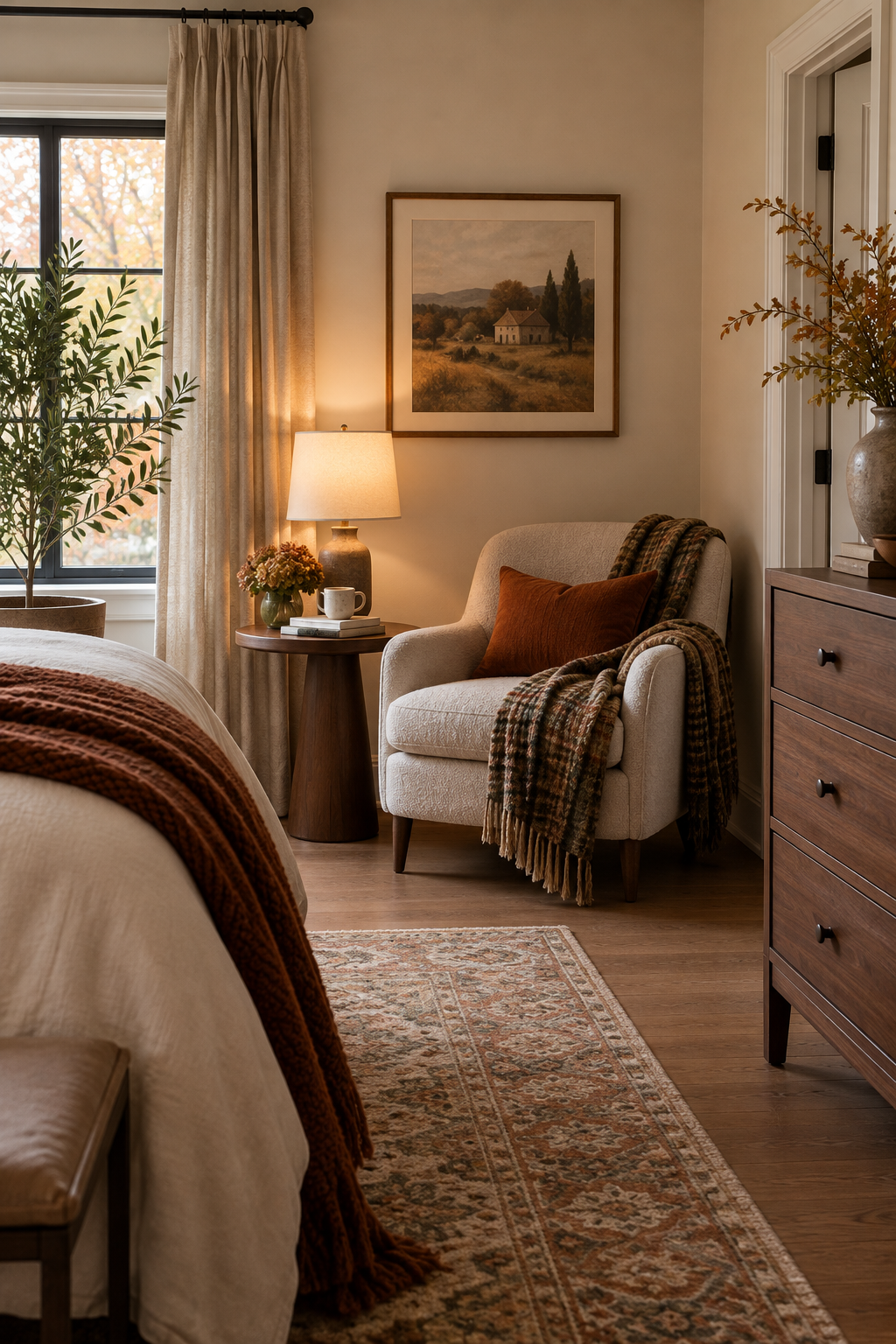
15. Define a Reading Zone in the Living Room
Angle a chair toward a window or bookcase while keeping it connected to the larger seating plan. The corner should feel private enough for reading but not like an unrelated furniture island. Repeat the living room’s wood tone or metal finish, then distinguish the nook with a smaller rug and lamp. Preserve the main conversation area and keep traffic flowing behind or beside the chair rather than through it.
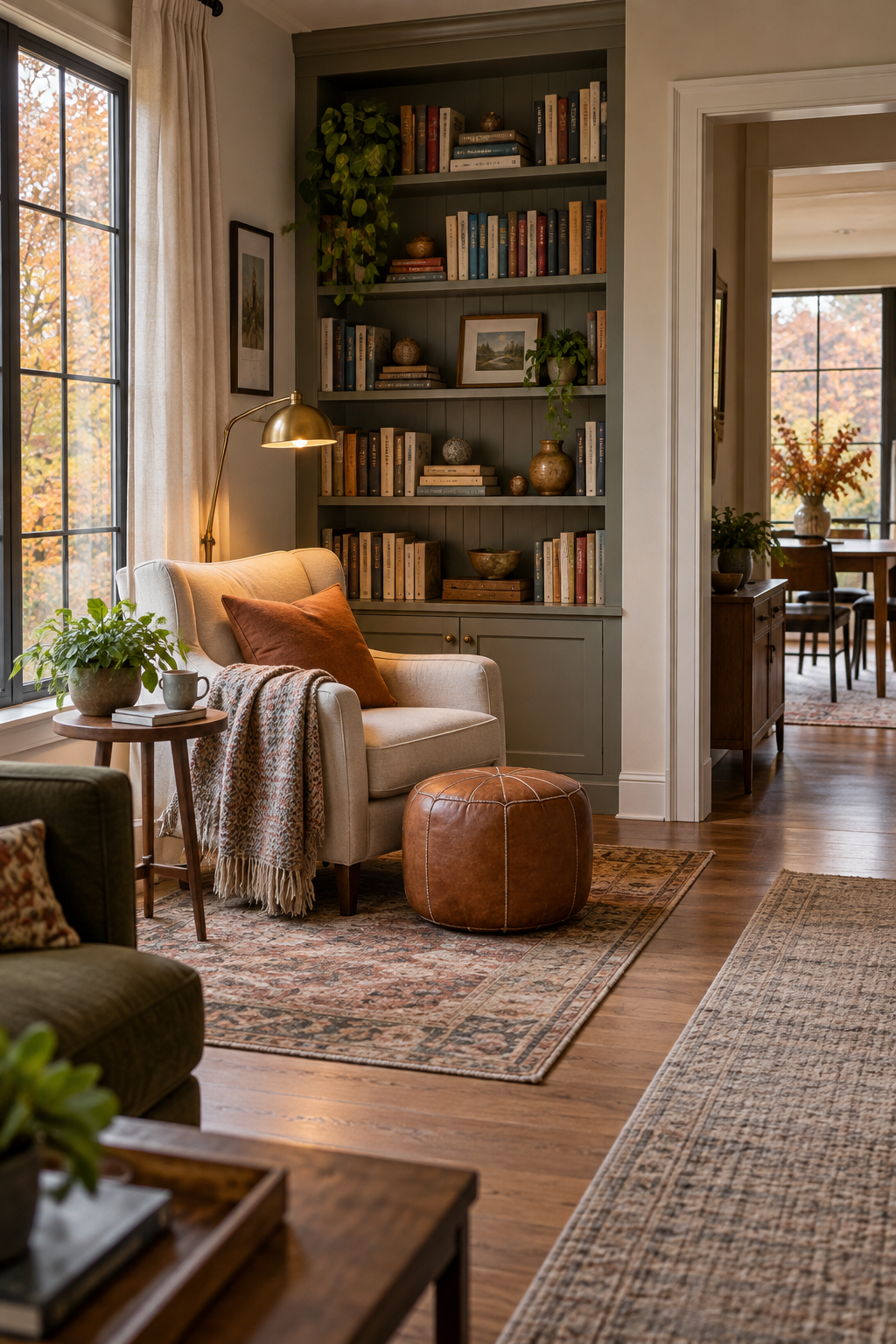
16. Use the Low Space in an Attic
An attic can become an intimate reading retreat when the furniture respects the sloped ceiling. Place low book storage beneath the shortest wall and position the chair where standing clearance is comfortable. Confirm that the floor, temperature control, ventilation and electrical service are suitable before treating the space as a regular room. Soft textiles improve acoustics, while a focused lamp compensates for limited natural light.
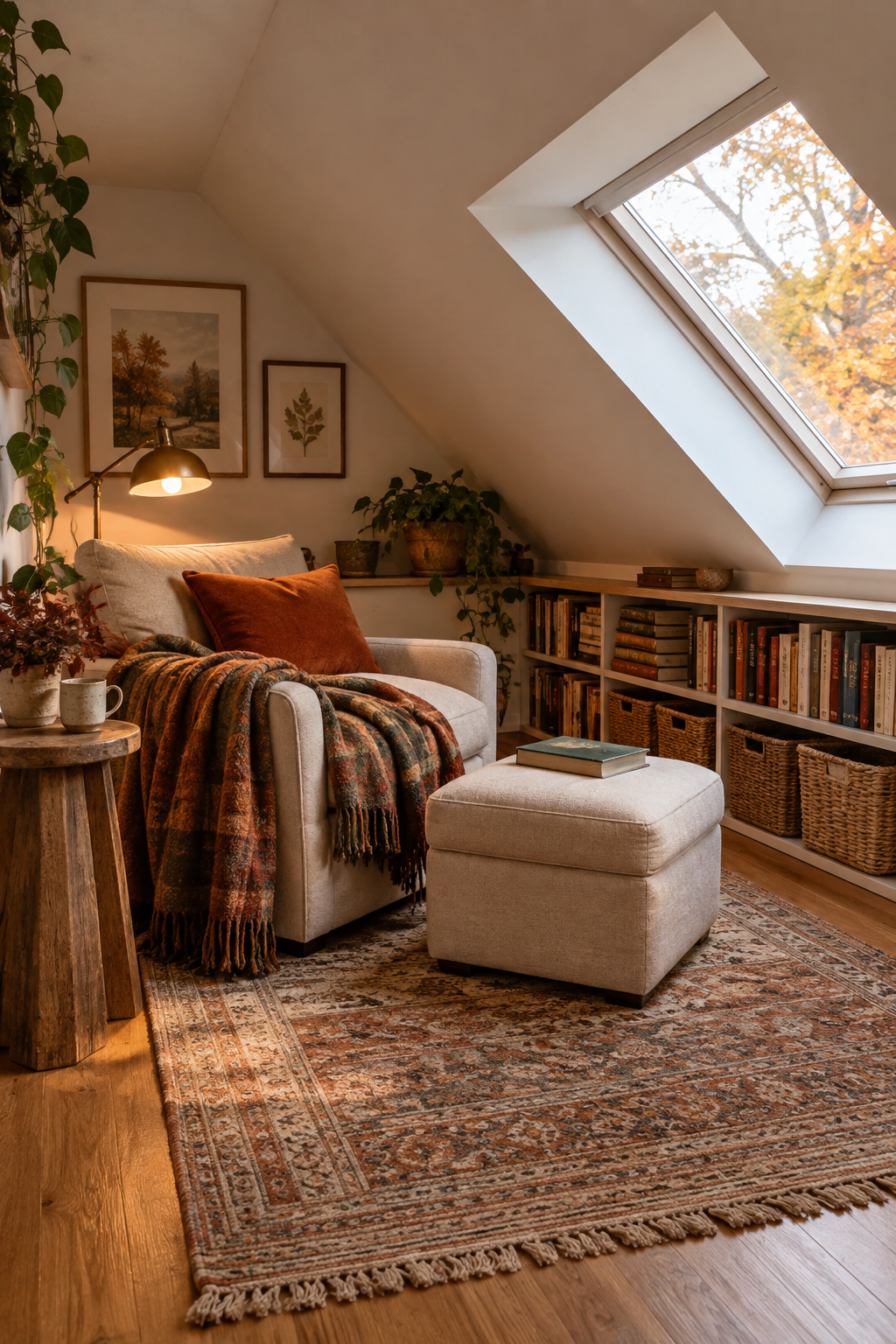
17. Transform the Area under the Stairs
An under-stairs alcove can hold a bench or compact chair, but it must not obstruct access, utilities or the stair structure. Use reachable shelves rather than deep cubbies where books disappear. Provide adequate light and keep the entrance open. If construction, wiring or alterations are required, check local requirements and consult qualified professionals. A tailored cushion and walnut trim can make the unusual geometry feel deliberate.
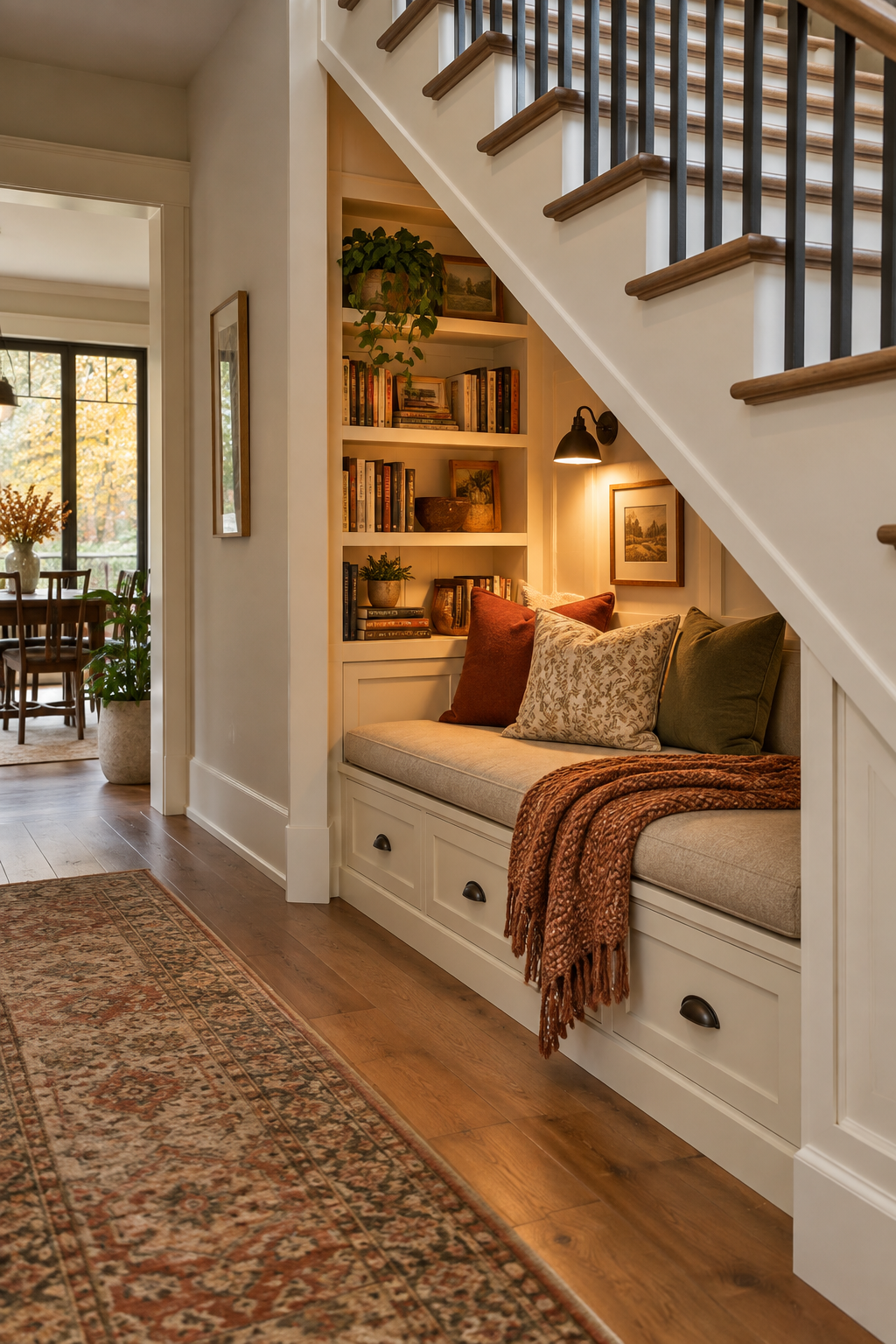
18. Make the Nook Renter-Friendly
Build the arrangement from freestanding pieces: a comfortable chair, slim bookcase, portable table, plug-in lamp and framed art. Use only landlord-approved mounting methods and avoid modifications to wiring, walls or trim without permission. Protect the floor with a suitable rug pad and route cords safely. A coordinated palette gives movable furniture a custom appearance, and every piece can travel to a future home.
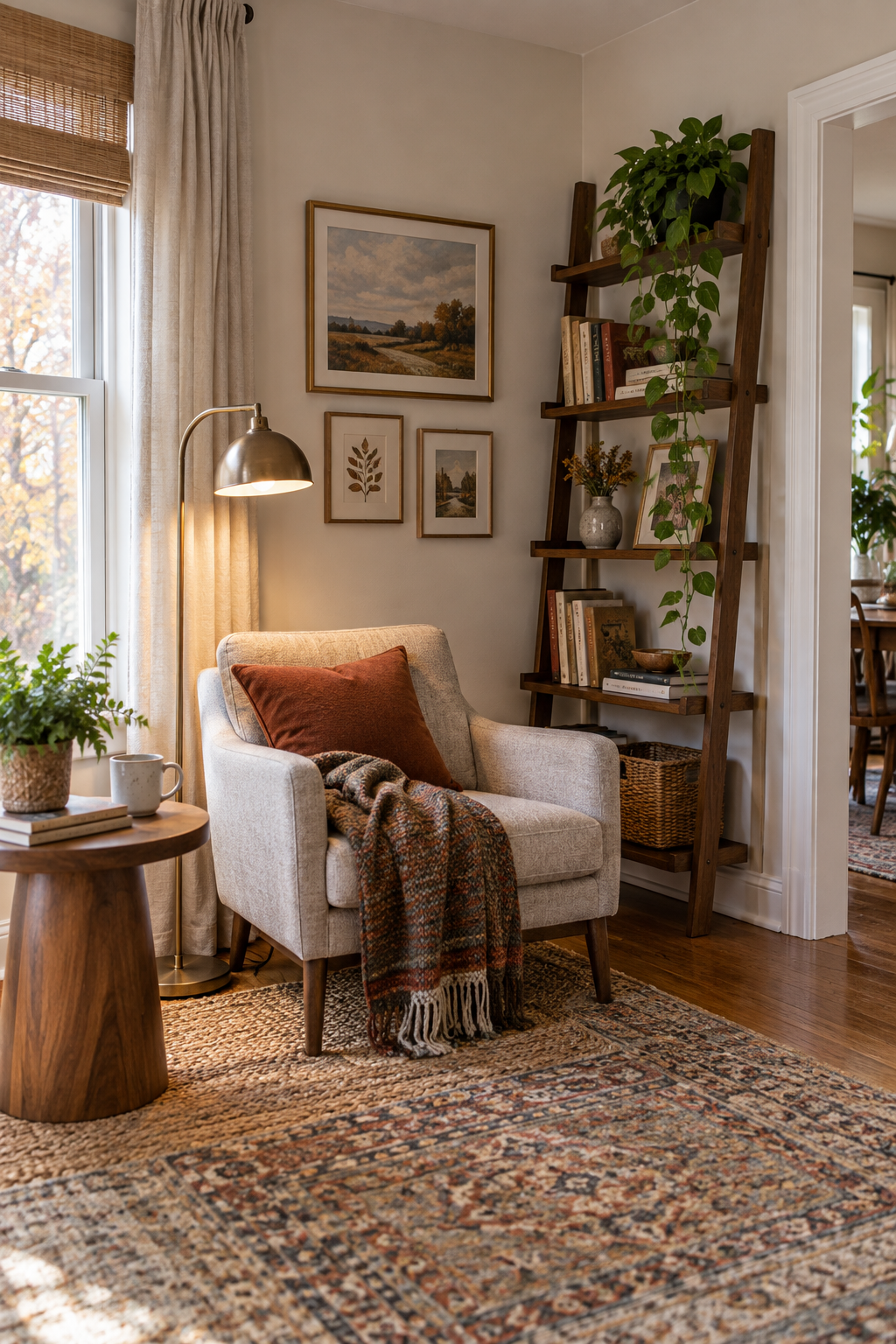
19. Refresh a Reading Corner on a Budget
Start by relocating a chair, lamp and small table you already own. Clean upholstery, tighten hardware and edit the nearby shelves before buying decor. A thrifted wood table, secondhand landscape print or new pillow cover may be enough to create an autumn mood. Spend first on any comfort or lighting problem that prevents you from using the nook; styling cannot compensate for an uncomfortable seat or dim page.
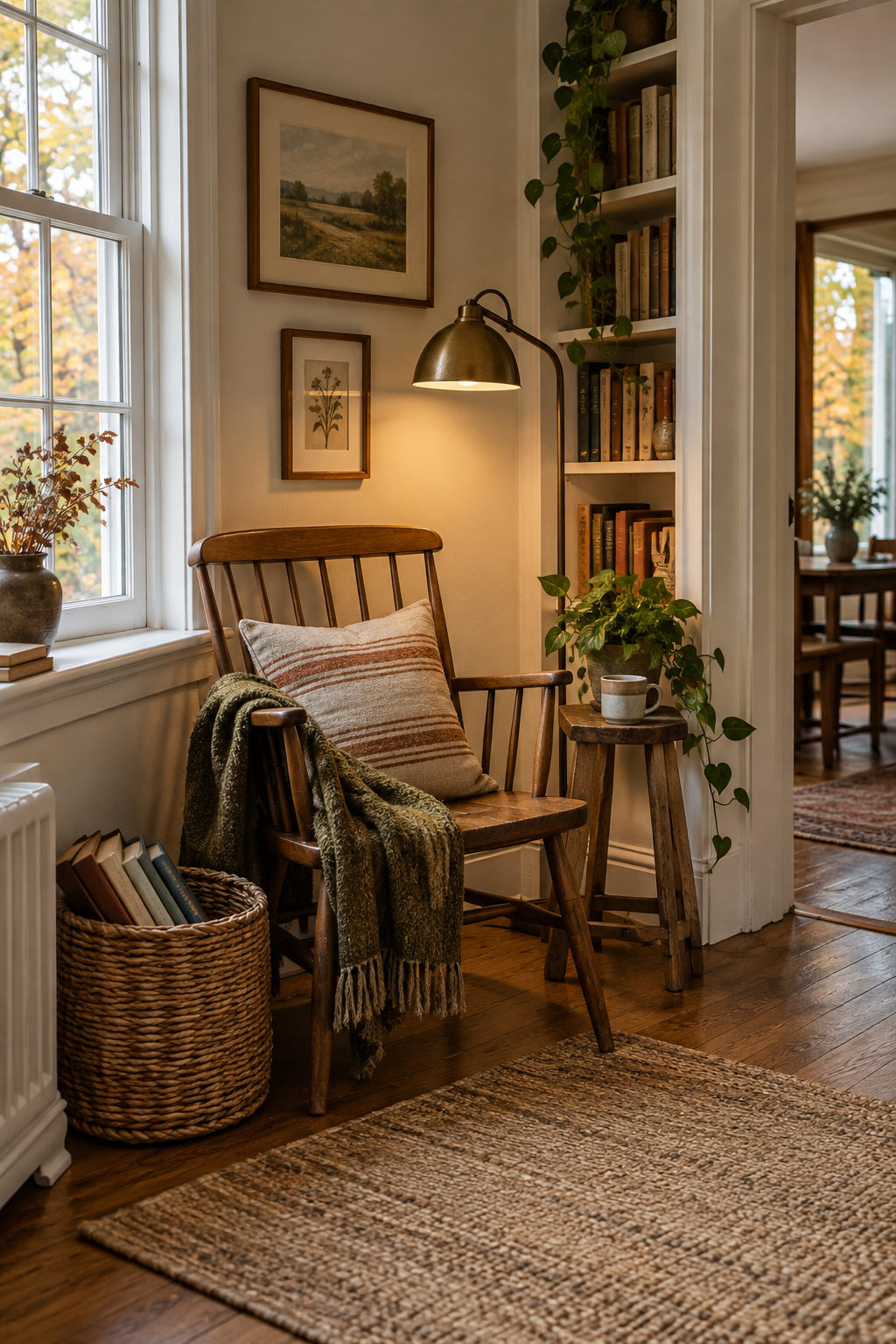
20. Try Warm Minimalism
Keep the corner to its essential functions: one chair, one light, one small table and accessible books. Warm minimalism depends on material quality and proportion rather than decorative quantity. Combine a textured cream chair with walnut and a muted olive accent, then leave clear wall and floor space around the group. Conceal charging cables and extra blankets so the nook remains restful while everything needed is still nearby.
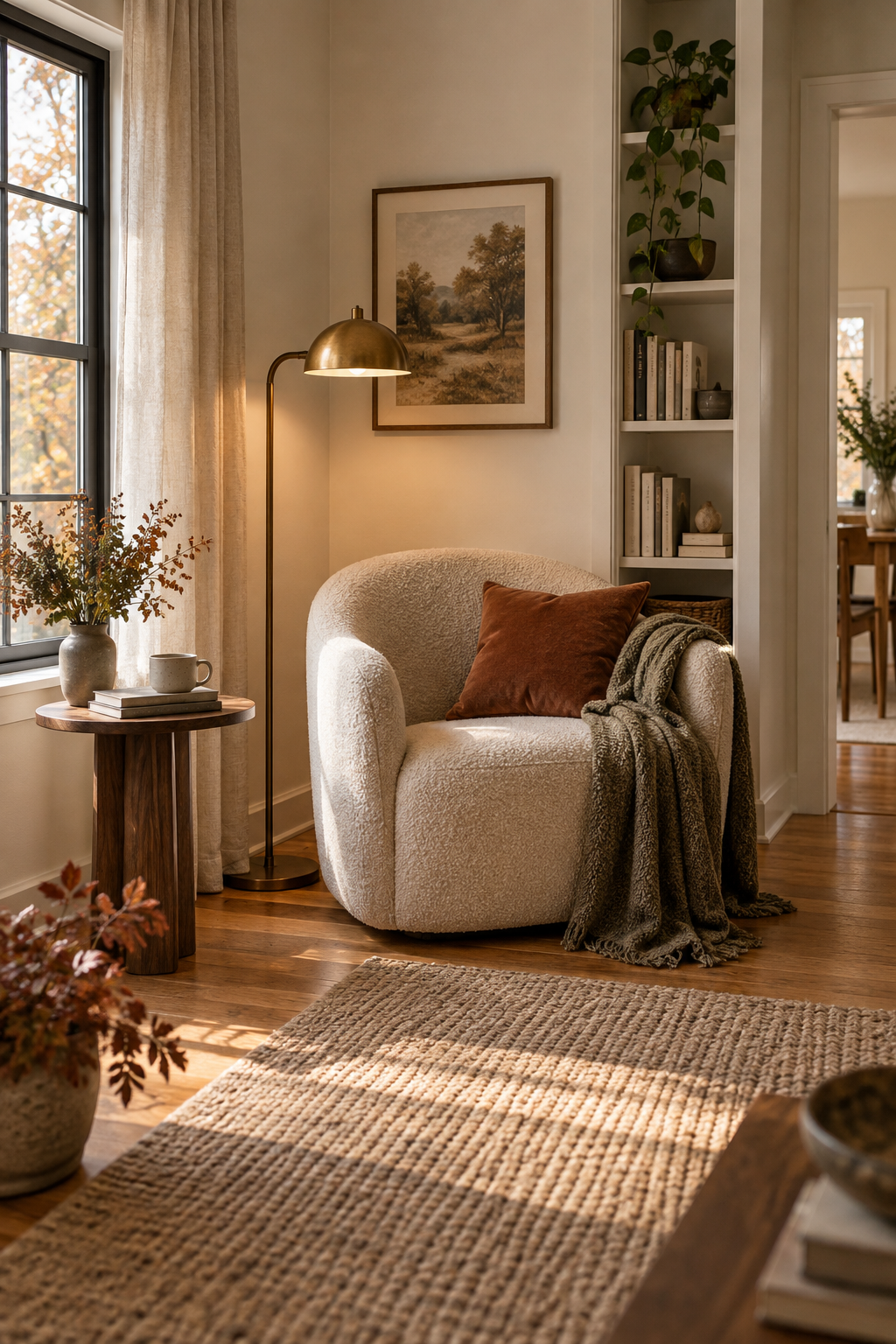
21. Give a Modern Nook Autumn Warmth
Pair clean lines and black metal with camel upholstery, walnut shelves and one rust textile. Rounded shapes can soften a modern chair and prevent a small corner from feeling severe. Choose a lamp with a simple adjustable shade, and let book spines provide much of the color. The autumn update should feel like an extension of the room’s architecture rather than a separate seasonal display.
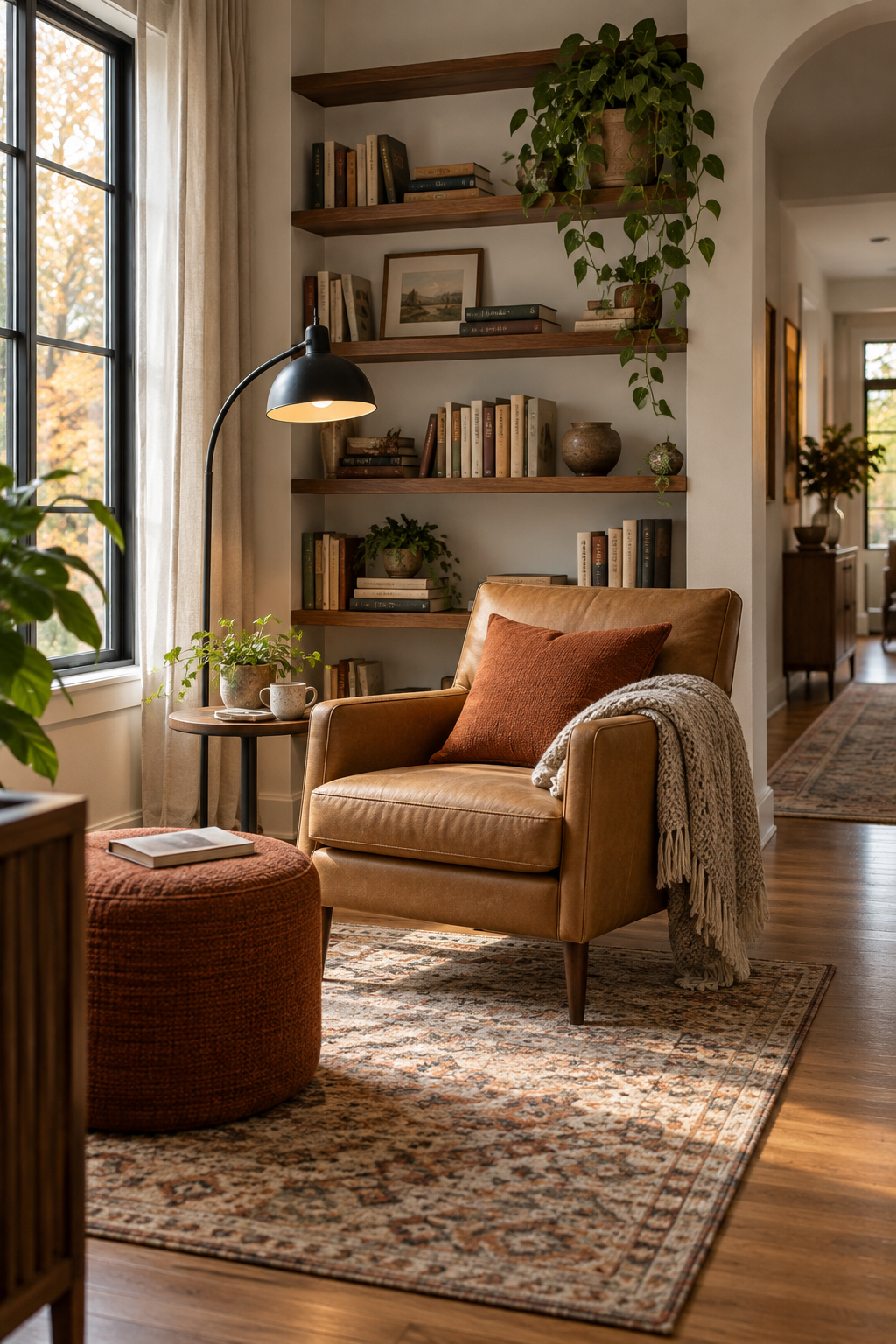
22. Refine Farmhouse Reading Nook Style
Use honest materials such as oak, linen, woven wool and aged metal, then limit overtly rustic accessories. A vintage landscape, restrained plaid pillow and small ceramic crock provide character without turning the corner into a theme. Avoid stacks of signs and miniature decorations that compete with the books. A comfortable linen chair and focused lamp give the style a practical foundation suitable for everyday reading.
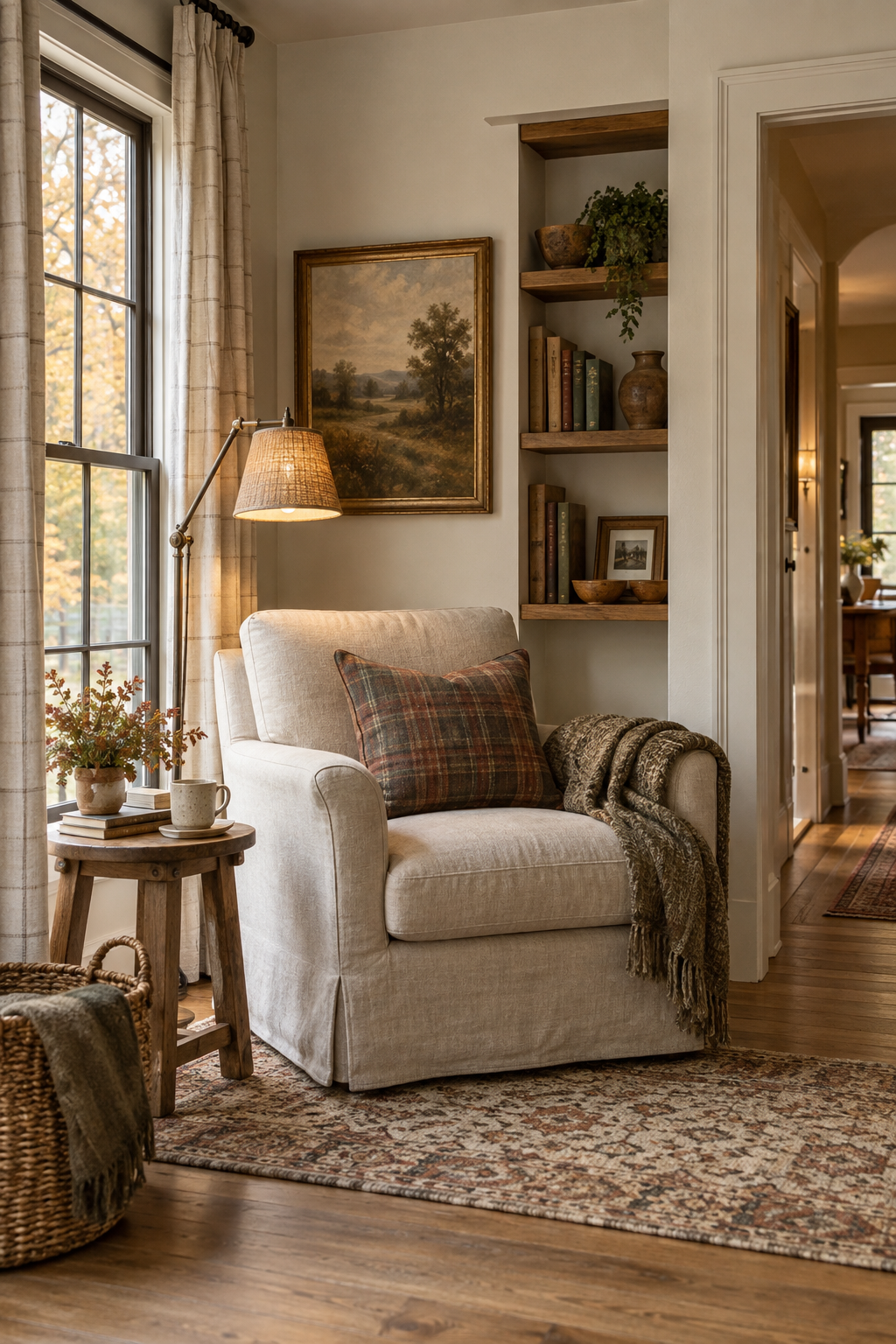
23. Build a Moody Autumn Library Corner
Deep olive walls, plum upholstery and dark walnut create a cocooning atmosphere. Balance those rich finishes with excellent task lighting and a few pale textiles so the page remains easy to read. Use matte surfaces to reduce glare and allow brass or amber glass to add controlled warmth. In a small room, paint the bookcase and wall in a similar tone to reduce visual fragmentation.
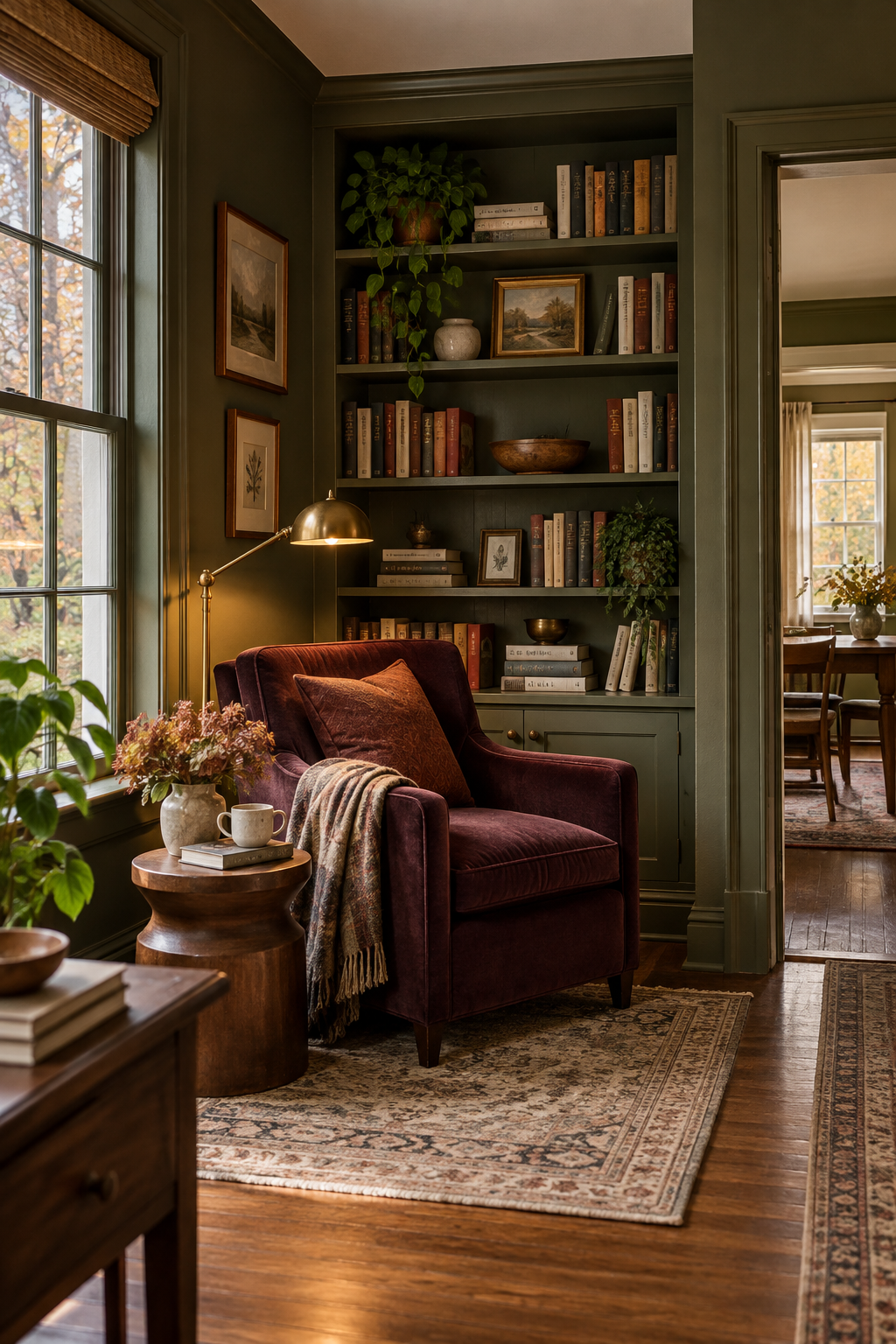
24. Decorate for Fall without Pumpkins
Suggest the season through color, texture and natural form. Rust linen, amber glass, pears, dried seed heads and a landscape print can communicate autumn more subtly than themed accessories. Keep natural material clean and away from heat sources, and remove it if it sheds or deteriorates. This approach also transitions easily into late fall because the functional furniture and core palette never need to change.
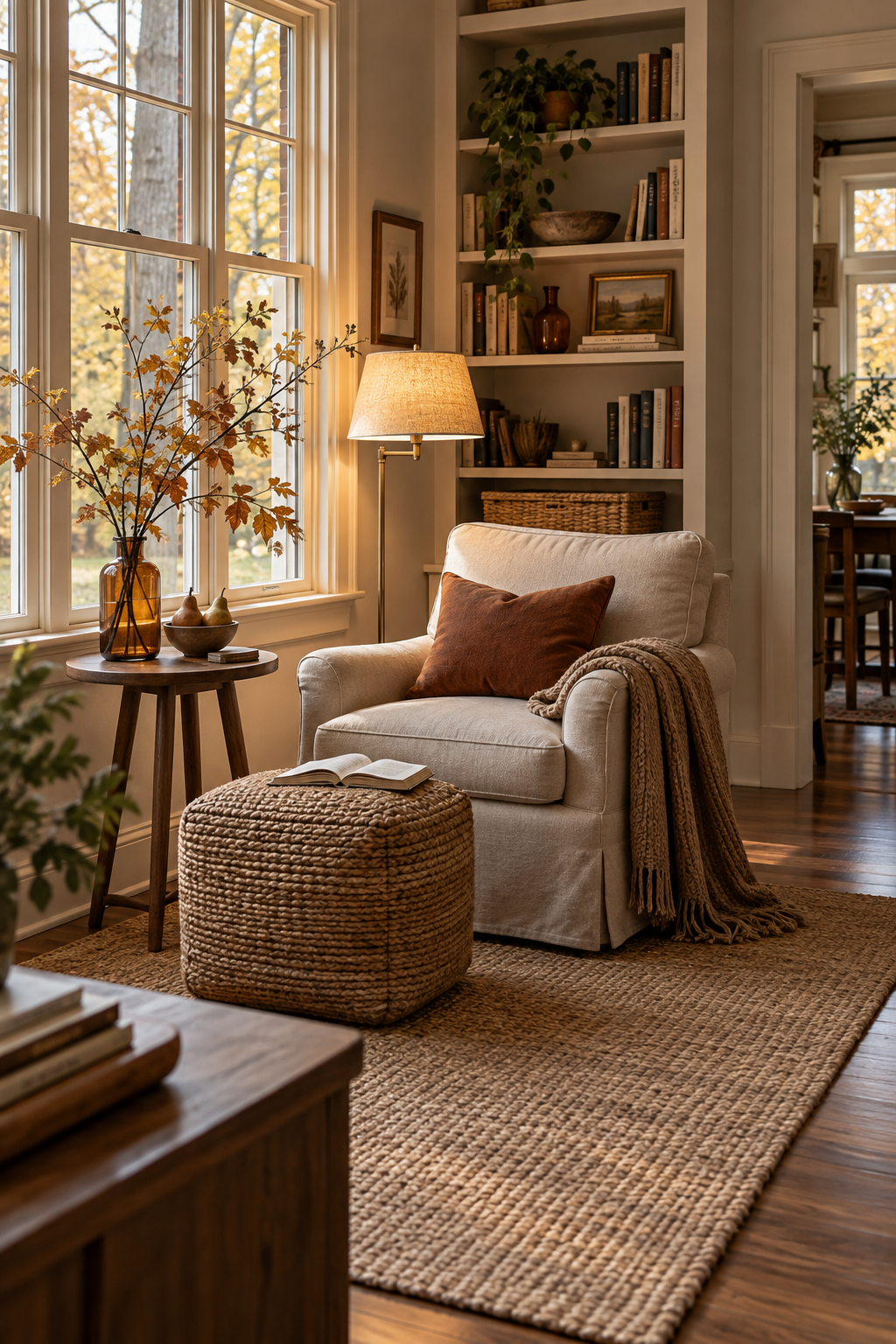
25. Add a Simple Tea or Coffee Tray
A warm drink makes a reading ritual feel complete, but the setup should remain stable and easy to clean. Use a small washable tray on a solid table, leaving space between the cup and books. Avoid balancing drinks on an ottoman or chair arm. Keep electrical warmers and cords out of the nook unless they can be used according to their instructions without creating heat, spill or tripping hazards.
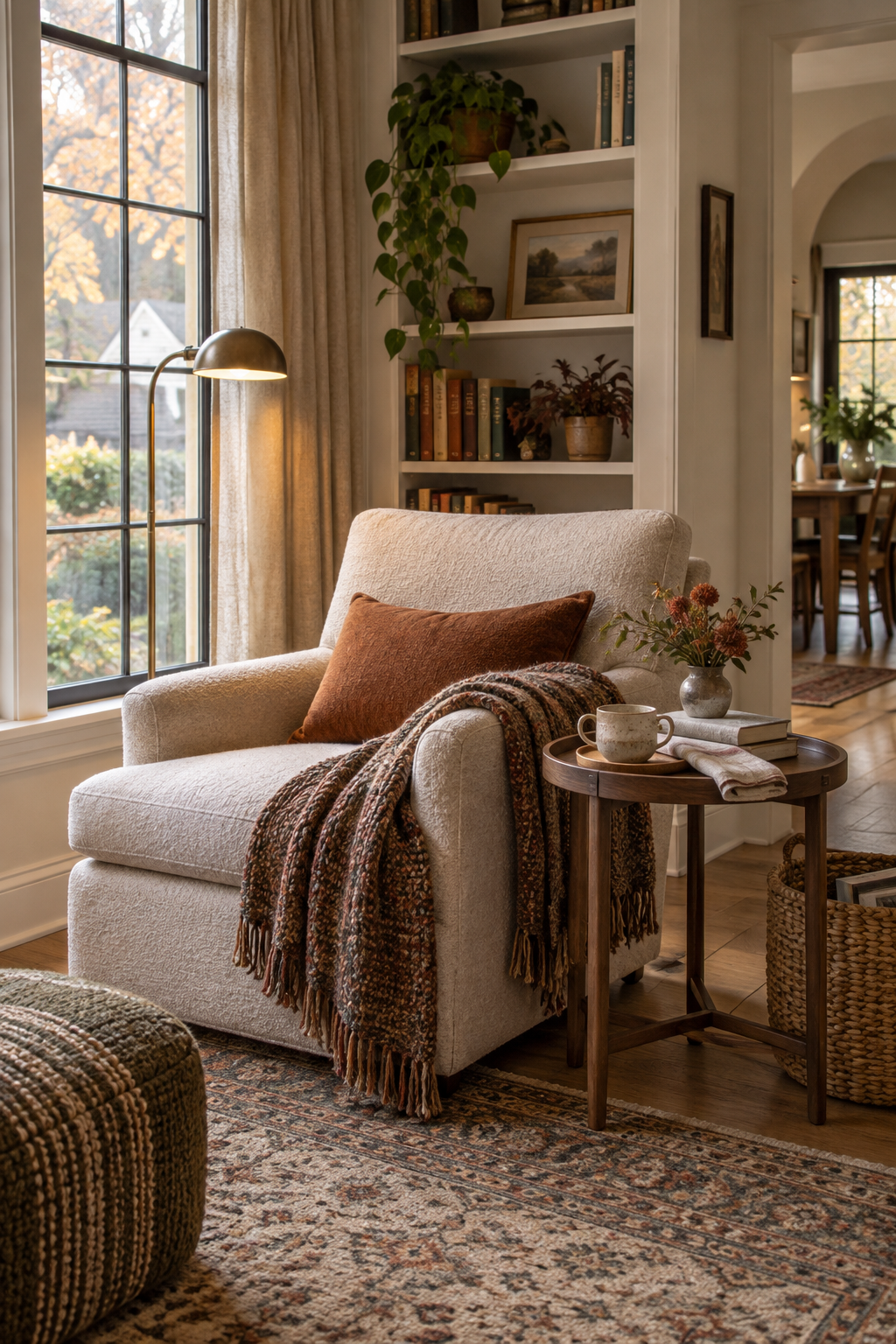
26. Create a Family Reading Corner
Combine an adult chair with a low cushioned bench, floor cushion or child-sized seat, depending on age and supervision needs. Put durable books in reachable bins and reserve higher shelves for delicate volumes. Choose washable textiles and maintain a clear exit path. Good lighting should reach every seat. A shared palette of rust, cream and olive helps furniture of different sizes feel like one intentional arrangement.
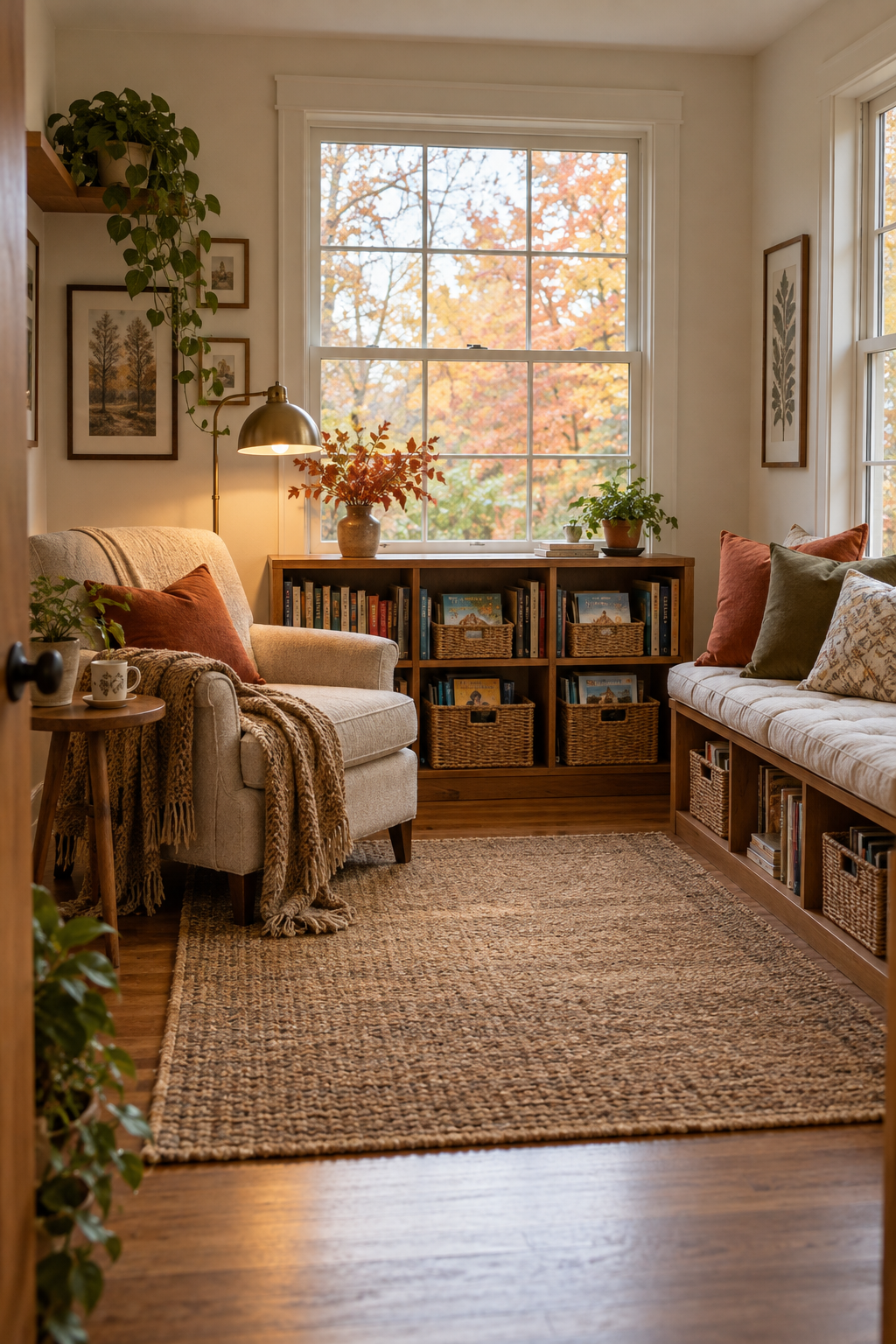
27. Transition the Nook from Fall to Winter
Retain the chair, lamp, rug and walnut pieces, then replace rust accents gradually with forest green, charcoal or deeper cream. An evergreen branch can substitute for autumn foliage if it remains away from heat and does not shed into the seating area. Keeping the foundation neutral reduces seasonal storage and lets the nook evolve through small textile and botanical changes.
28. Edit the Finished Nook for Real Life
Sit down with a book and notice what interrupts the experience. Can you reach the light switch, set down a drink and support your feet without moving decor? Is the page bright enough at night? Remove anything that blocks those actions. Check that shelves are secure, cords are controlled and the pathway is open. The most beautiful reading nook is the one that invites regular use without preparation.
How to Plan a Cozy Fall Reading Nook
Choose the location by observing your routine. A picturesque corner will not work if it is noisy, too cold or crossed by constant foot traffic. Look for a place with useful daylight, access to an outlet and enough room to approach the chair comfortably. Measure the floor area, wall width, window clearance and nearby door swings before selecting furniture.
Prioritize the chair next. Note seat height, depth, back support and arm position. If possible, test it for more than a few seconds with a book in hand. Add an ottoman only when there is sufficient clearance. In a tiny nook, a supportive chair with a small lumbar cushion is usually more useful than an oversized recliner that dominates the room.
Plan lighting in layers. Daylight is pleasant but changes throughout the day, so the nook still needs dependable task light. A shaded adjustable fixture should illuminate the page without producing harsh glare. Keep cords against the wall, use bulbs within the fixture’s rating and do not drape fabric over lamps. Ambient room light can soften contrast after dark.
Add storage according to reading habits. A person who reads one book at a time needs a table or basket, not a wall of shelves. A collector may benefit from a properly anchored bookcase and a small rotating group near the chair. Store heavy volumes low, protect books from excessive sun or moisture and leave enough empty shelf space for easy retrieval.
Introduce autumn through useful objects. A washable throw, pillow cover, rug and warm-toned art can create the entire seasonal effect. Choose two accent colors already related to the room, such as rust and olive, and repeat them sparingly. Natural branches or fruit should be kept clean, stable and away from bulbs, heaters and delicate books.
Finally, test the nook at the time you expect to use it. Evening readers may discover glare or deep shadows that are invisible during the day. Morning readers may need a shade to control direct sun. Make one change at a time, then live with it. A calm, comfortable reading corner grows from solving practical details rather than adding more decoration.
Frequently Asked Questions
What does every cozy reading nook need?
At minimum, provide a supportive seat, focused reading light, a stable surface and a convenient place for the current book. A throw, pillow and rug are optional layers that add warmth and define the zone.
How can I make a reading nook cozy on a budget?
Rearrange furniture you already own, clean the chair, relocate a lamp and edit nearby shelves. Add one thrifted table, pillow cover or framed print only after comfort and lighting are solved.
Where can I put a reading nook in a small home?
Consider a bedroom corner, window area, living room edge, stair landing or shallow alcove. Preserve door swings and walking paths, and select furniture scaled to the measured space.
What is the best lighting for a reading nook?
Use an adjustable shaded lamp that directs light onto the page without exposing the reader to the bare bulb. Combine it with ambient room light to reduce harsh contrast at night.
How do I make a reading nook feel like fall without clutter?
Use a focused palette such as cream, walnut, rust and olive through a throw, pillow and art. Keep seasonal objects few, large enough to read visually and outside the functional area.
Can renters create a built-in look?
Yes. Group a freestanding chair, tall bookcase, rug and plug-in lamp in a coordinated palette. Follow rental rules for anchoring and wall mounting, and avoid unapproved electrical or structural changes.
How many pillows should a reading chair have?
Usually one lumbar pillow and one medium accent pillow are enough. The pillows should improve support without reducing the usable seat or requiring removal every time you sit down.
How can I keep a reading nook organized?
Limit nearby books to current and upcoming reads, give blankets one basket or drawer and keep the table mostly clear. Reset the corner weekly by returning finished books and removing empty cups.