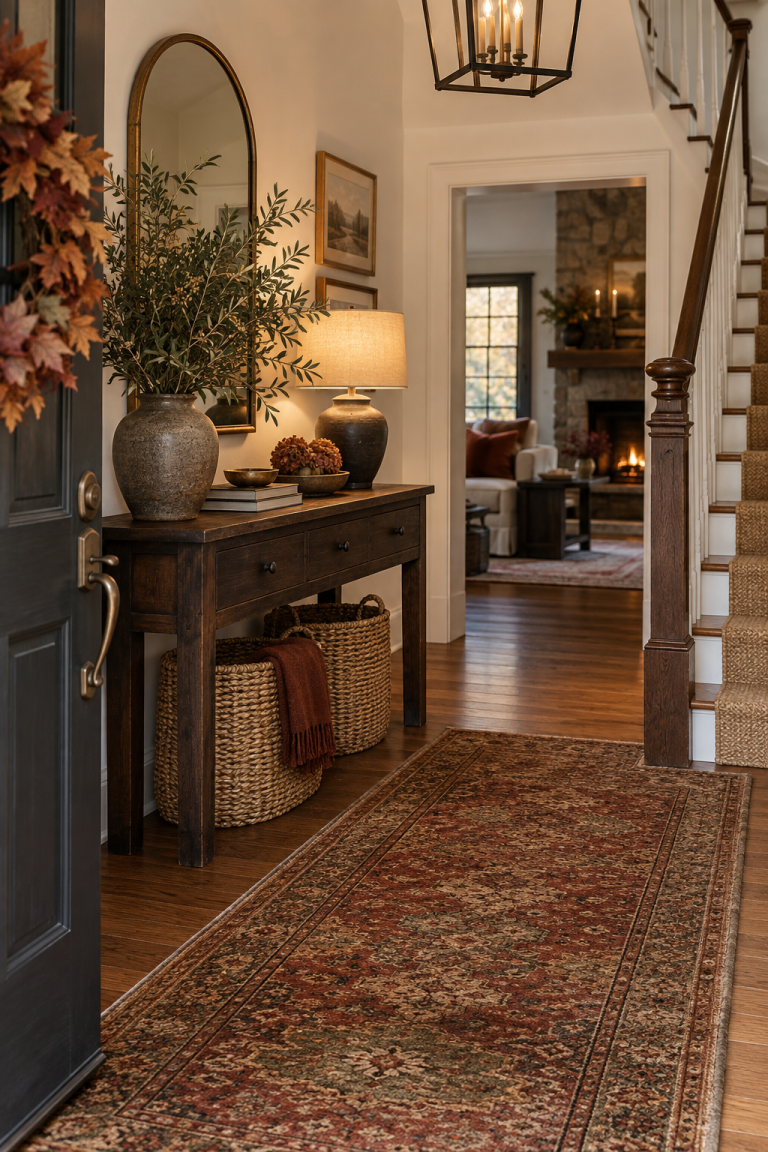
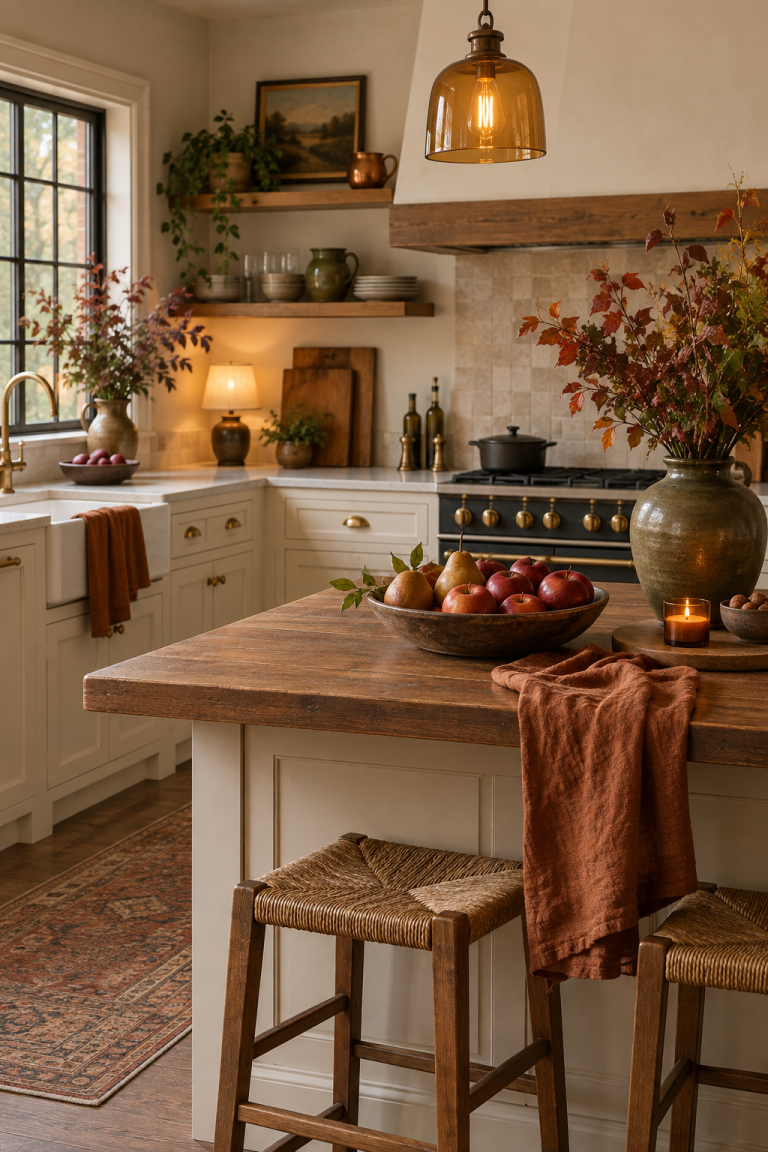
A fall dining room should feel welcoming before anyone places a serving dish on the table. Warm light, comfortable seating and a focused palette can create that atmosphere without filling the room with seasonal clutter. These 28 cozy fall dining room ideas cover complete rooms, compact dining nooks, renter-friendly updates and practical hosting details that remain useful from early autumn through Thanksgiving.
1. Begin with a Warm Neutral Foundation
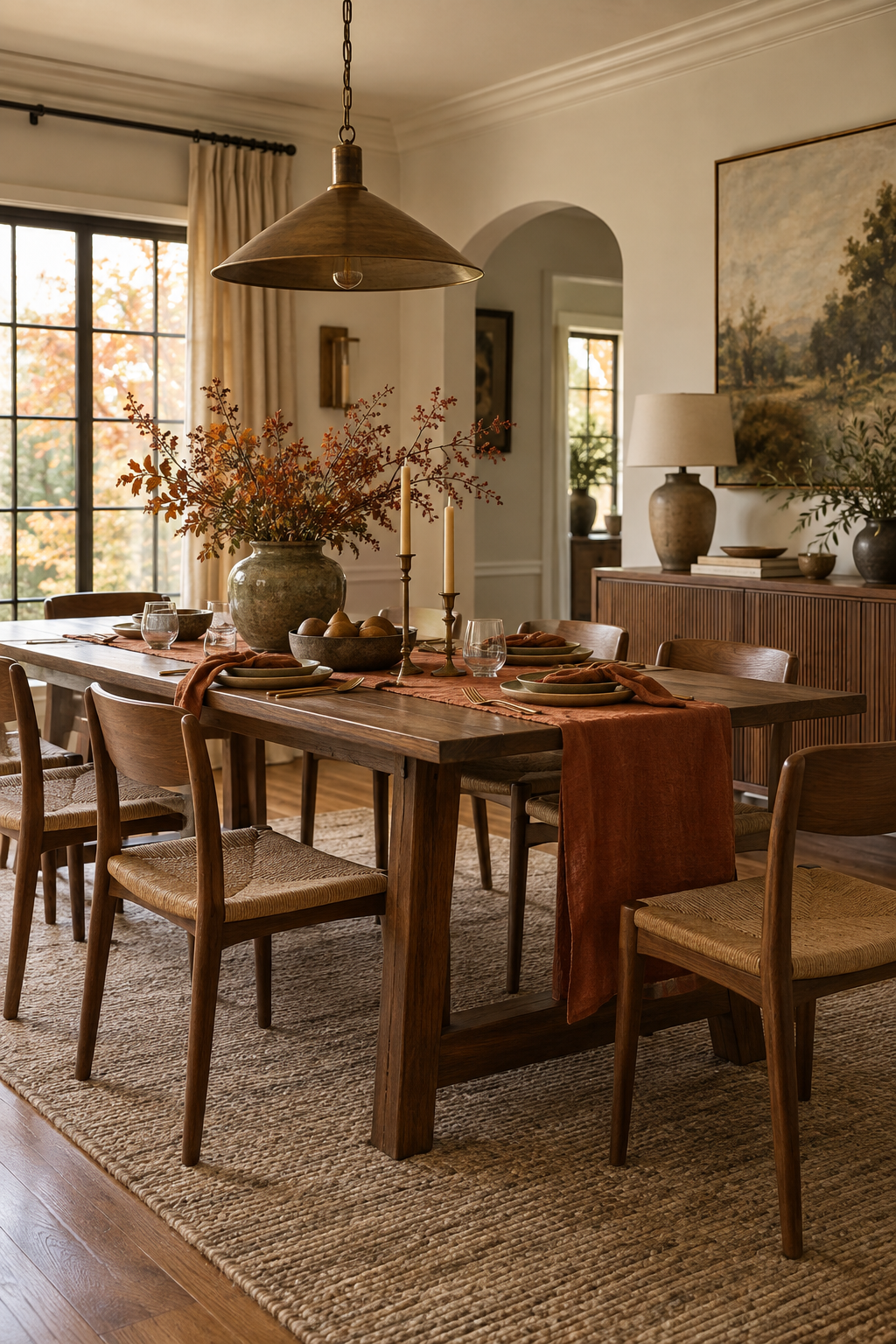
Use cream, oatmeal and natural wood across the room, then introduce rust and olive in smaller amounts. A calm foundation keeps the dining area visually open and allows food, flowers and guests to become the focus. Repeat each accent color at least twice so the palette feels planned rather than accidental.
2. Let the Wood Table Stay Visible
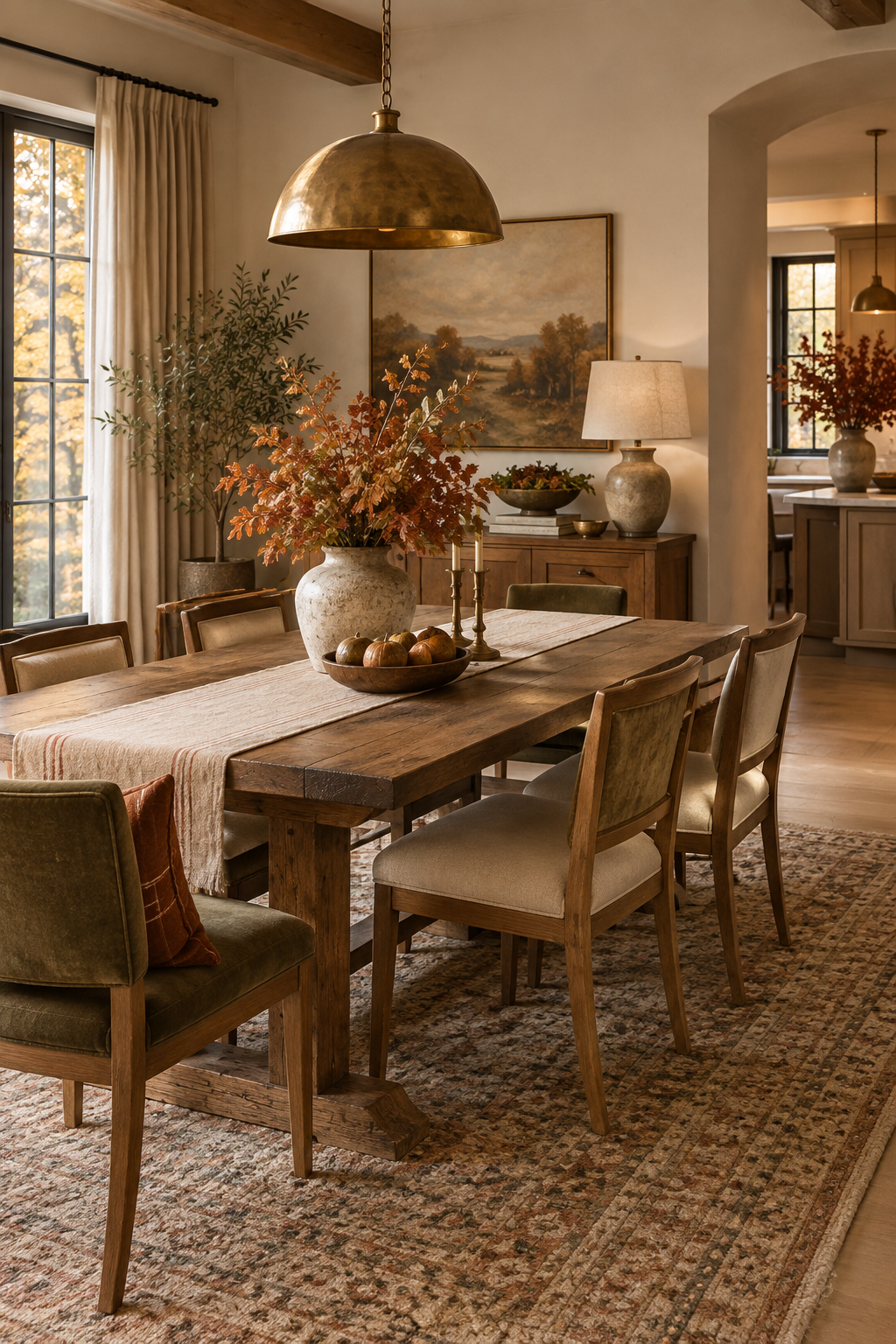
An attractive dining table already provides seasonal warmth through its grain and color. Instead of covering it completely, use a compact centerpiece or a short runner. Protect vulnerable finishes with suitable pads during meals, but let enough wood remain visible to give the room a grounded, natural character.
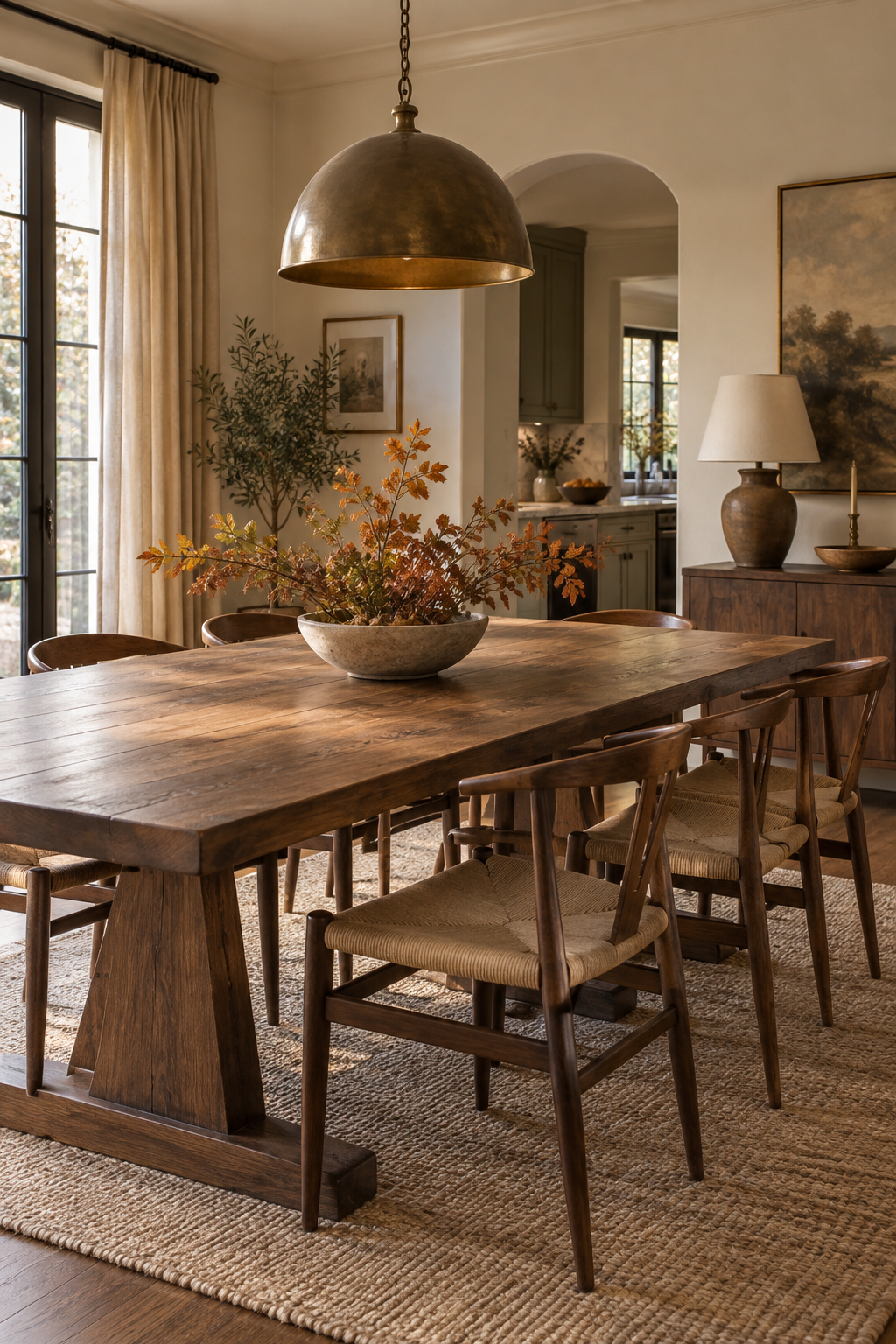
3. Layer Dining Room Lighting
Combine the central pendant with a shaded buffet lamp or wall light. Multiple sources reduce harsh shadows and make evening meals feel more intimate. Choose compatible bulb temperatures, add dimming only where fixtures support it and use flameless candles when a soft tabletop glow is desired.
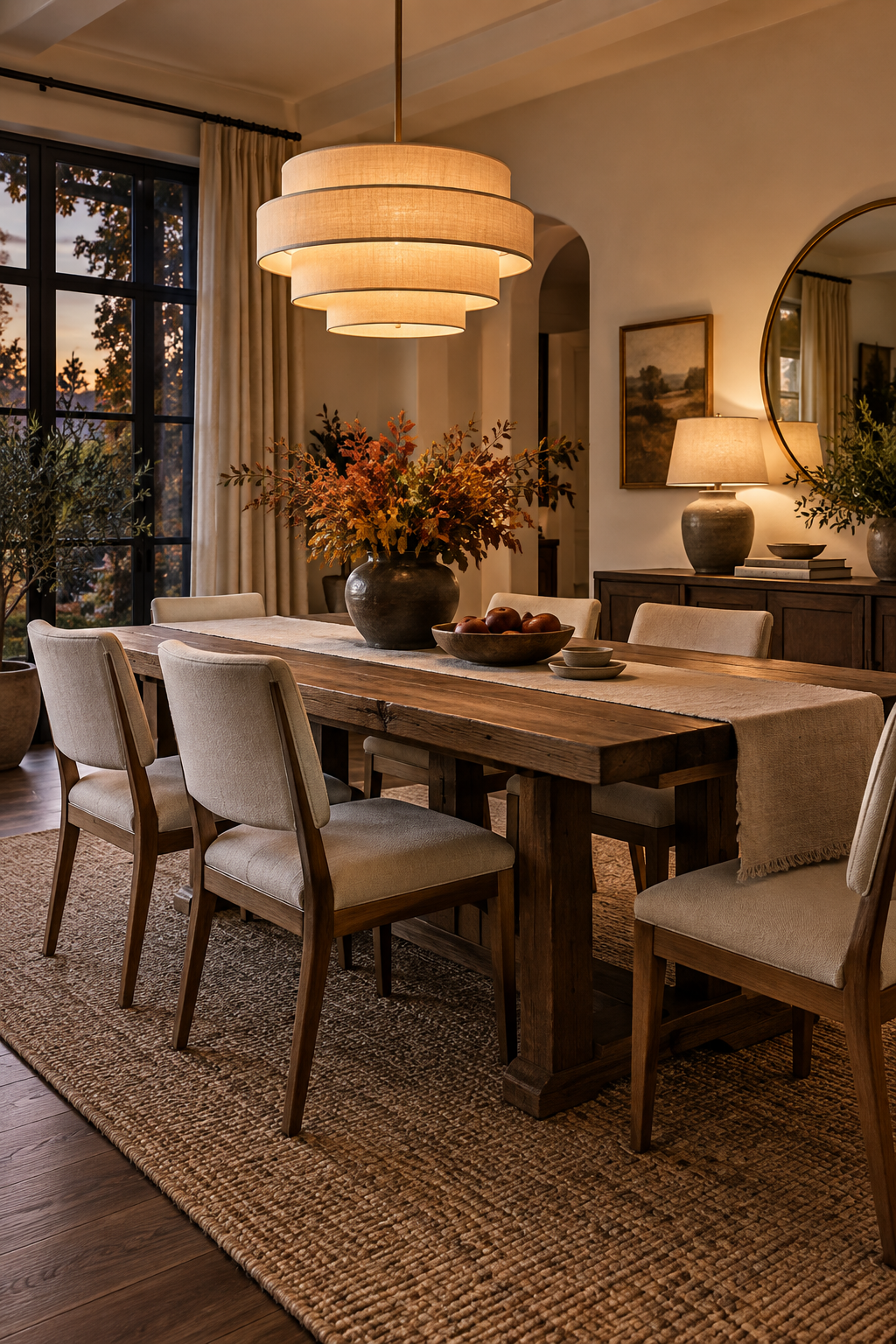
4. Choose a Round Table for a Small Room
A round table removes sharp corners from narrow circulation paths and helps conversation flow. A pedestal base can provide more flexible legroom, while armless chairs tuck in neatly. Keep the centerpiece low and compact so the entire surface remains useful for everyday meals.
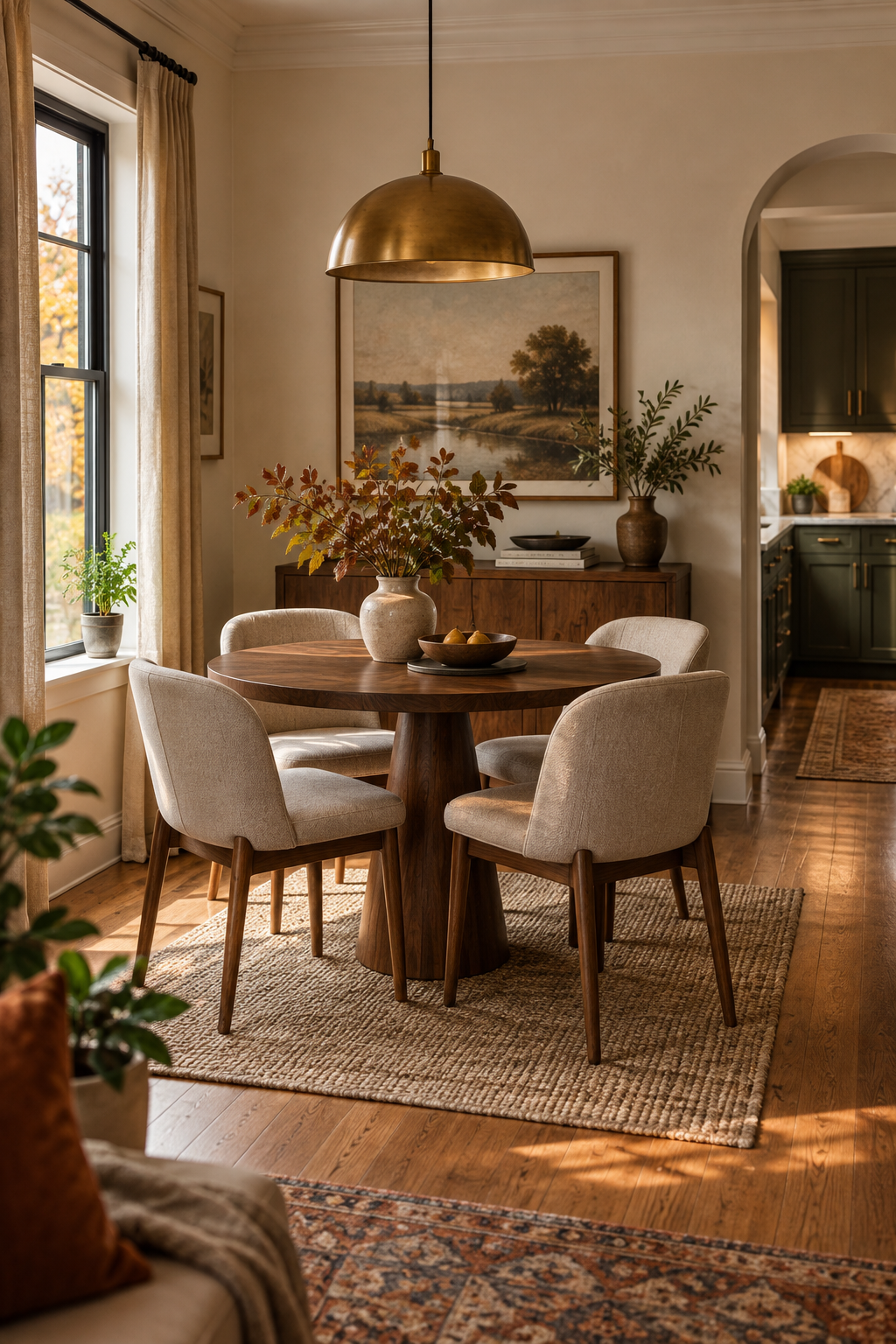
5. Use a Bench in a Narrow Dining Space
Place a streamlined bench along a wall where pulling out several chairs would consume too much room. Add a thin washable cushion for comfort and keep the opposite side open with lightweight chairs. Measure the table height carefully so everyone can sit naturally without knees touching the apron.
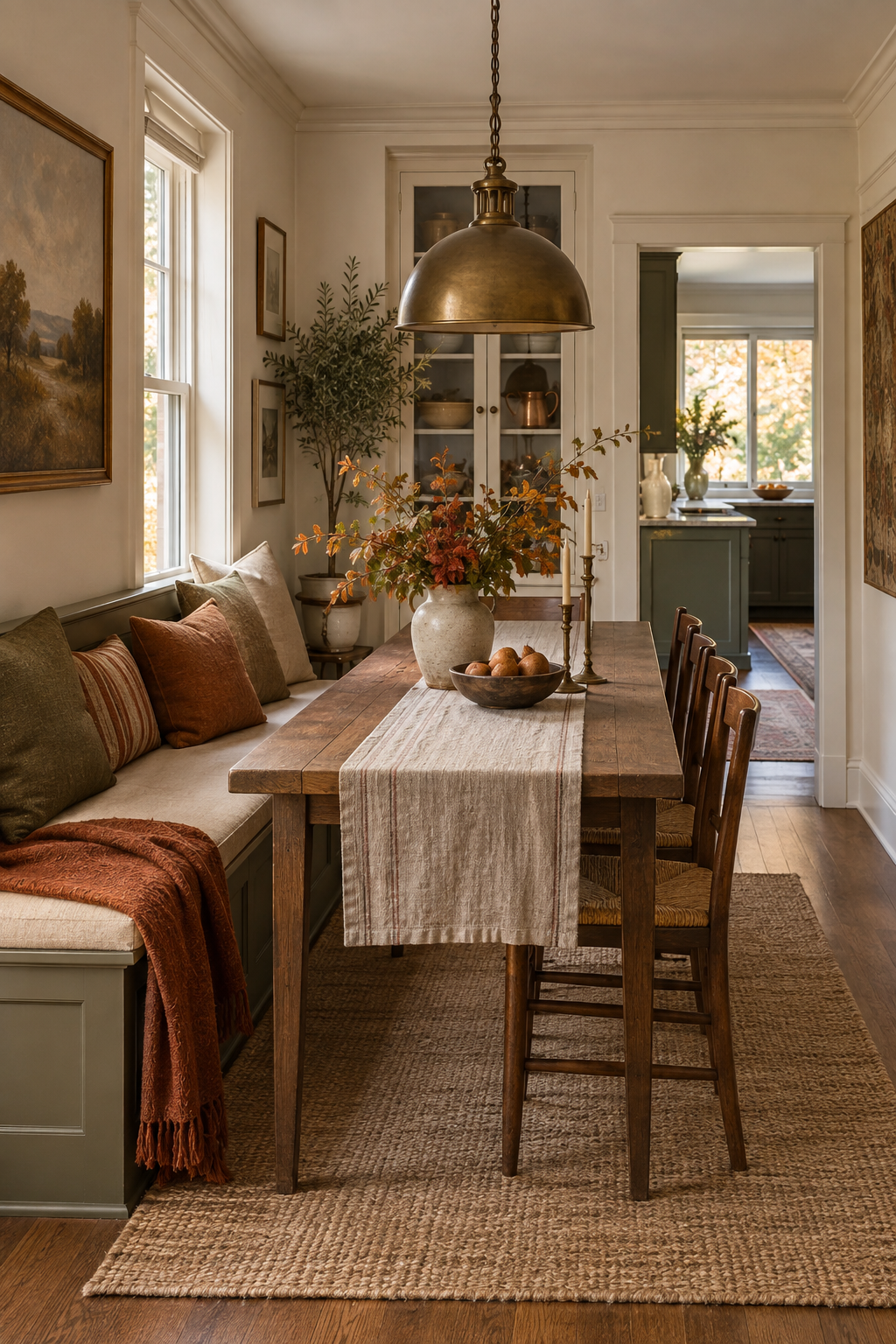
6. Connect an Open-Plan Dining Area
Repeat the living room’s wood tone, rug color or olive accent in the dining zone. Related finishes make the open space feel cohesive without requiring matching furniture sets. Define the dining area with lighting and table placement while maintaining a generous path between the kitchen, table and sofa.
7. Ground the Table with a Practical Rug
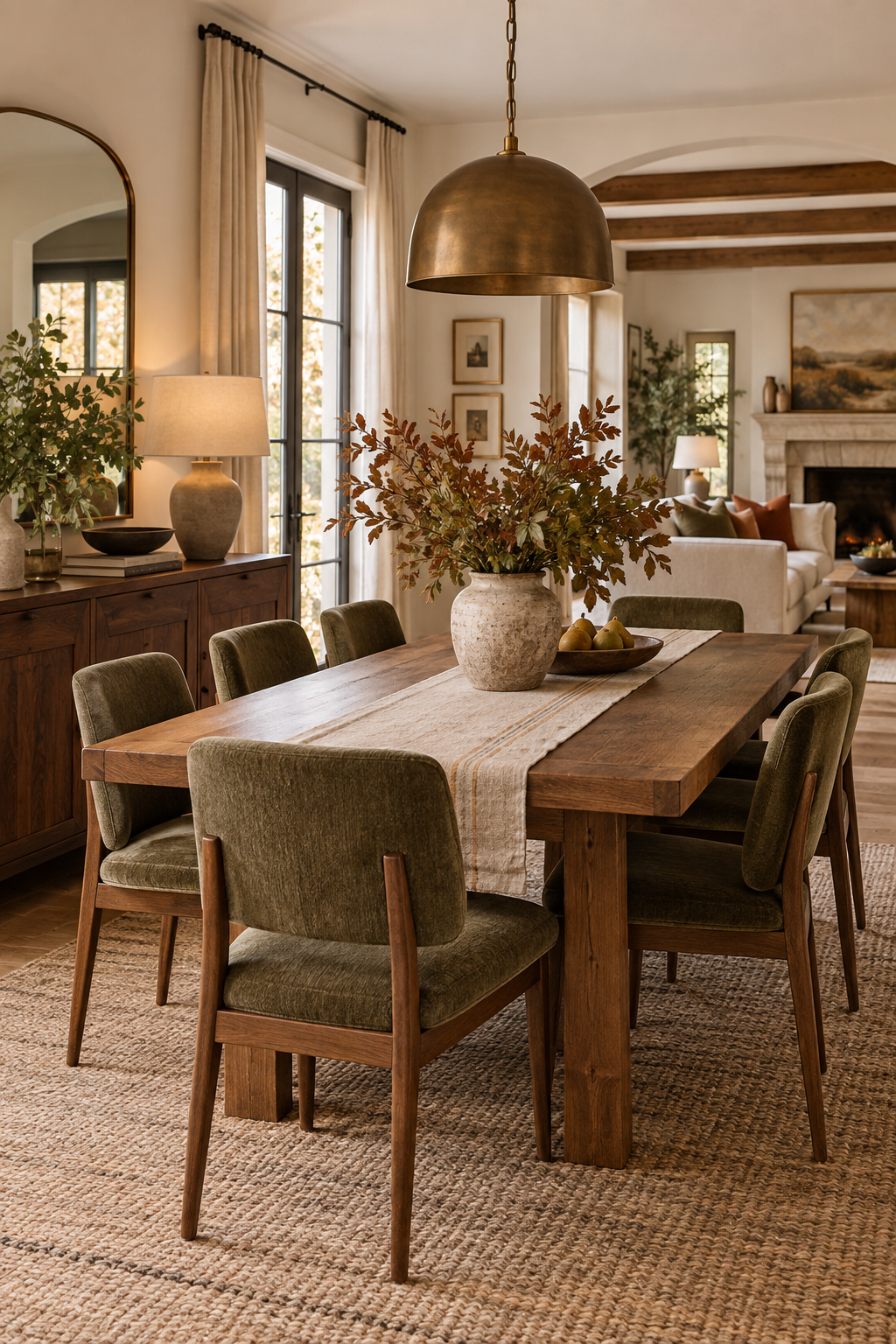
Choose a low-pile rug large enough for chair legs to remain on it when seats are pulled out. Faded rust, cream or olive patterns can conceal minor wear and add warmth. Use an appropriate pad, confirm that edges lie flat and select a material suited to frequent cleaning.
8. Soften the Windows with Warm Curtains
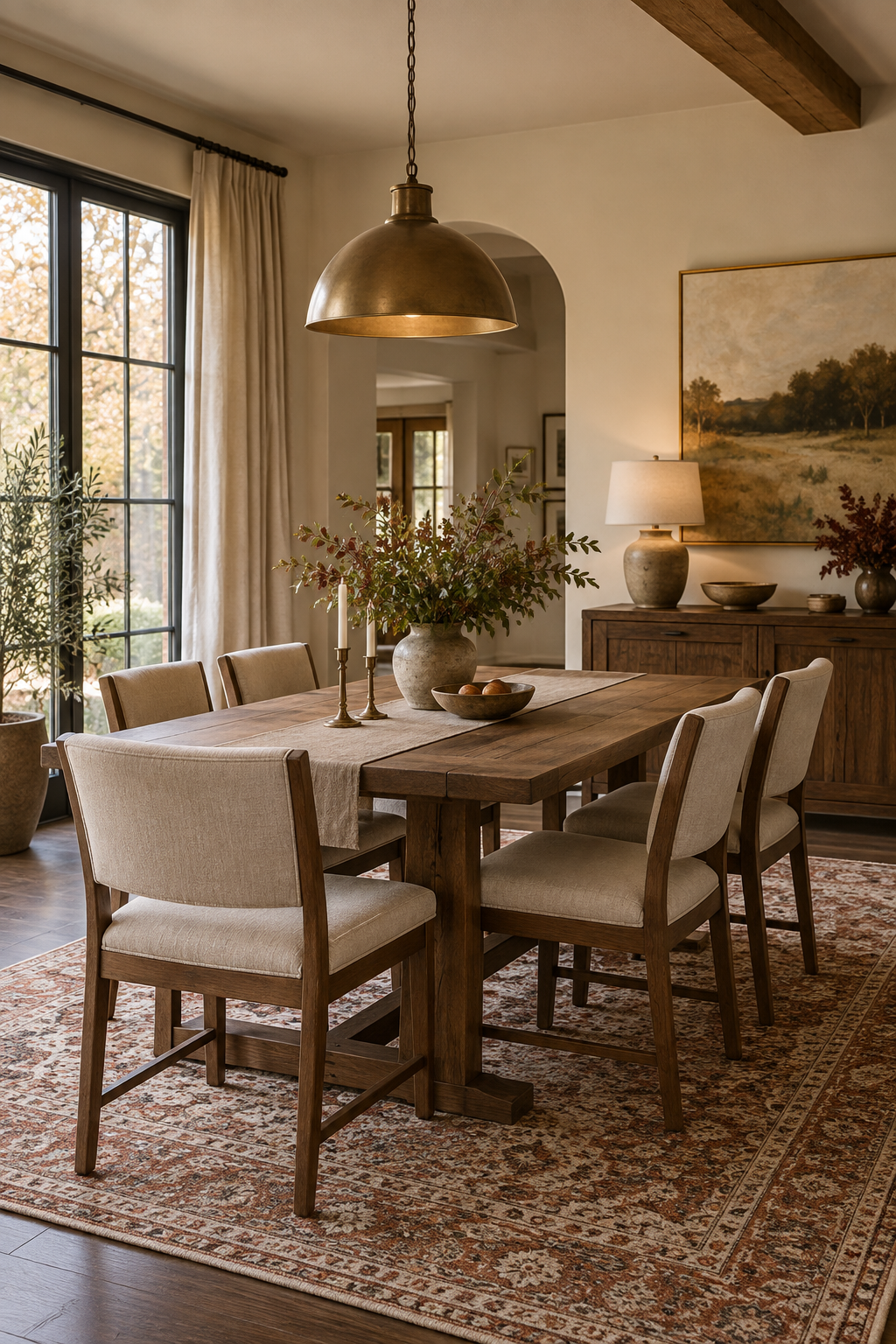
Taupe, mushroom or oatmeal curtains filter bright autumn light without making the room dark. Hang panels high and wide when the architecture allows so the glass stays exposed during the day. Washable or easily vacuumed fabric is valuable near a table where food and dust are part of daily life.
9. Make Dining Chairs More Comfortable
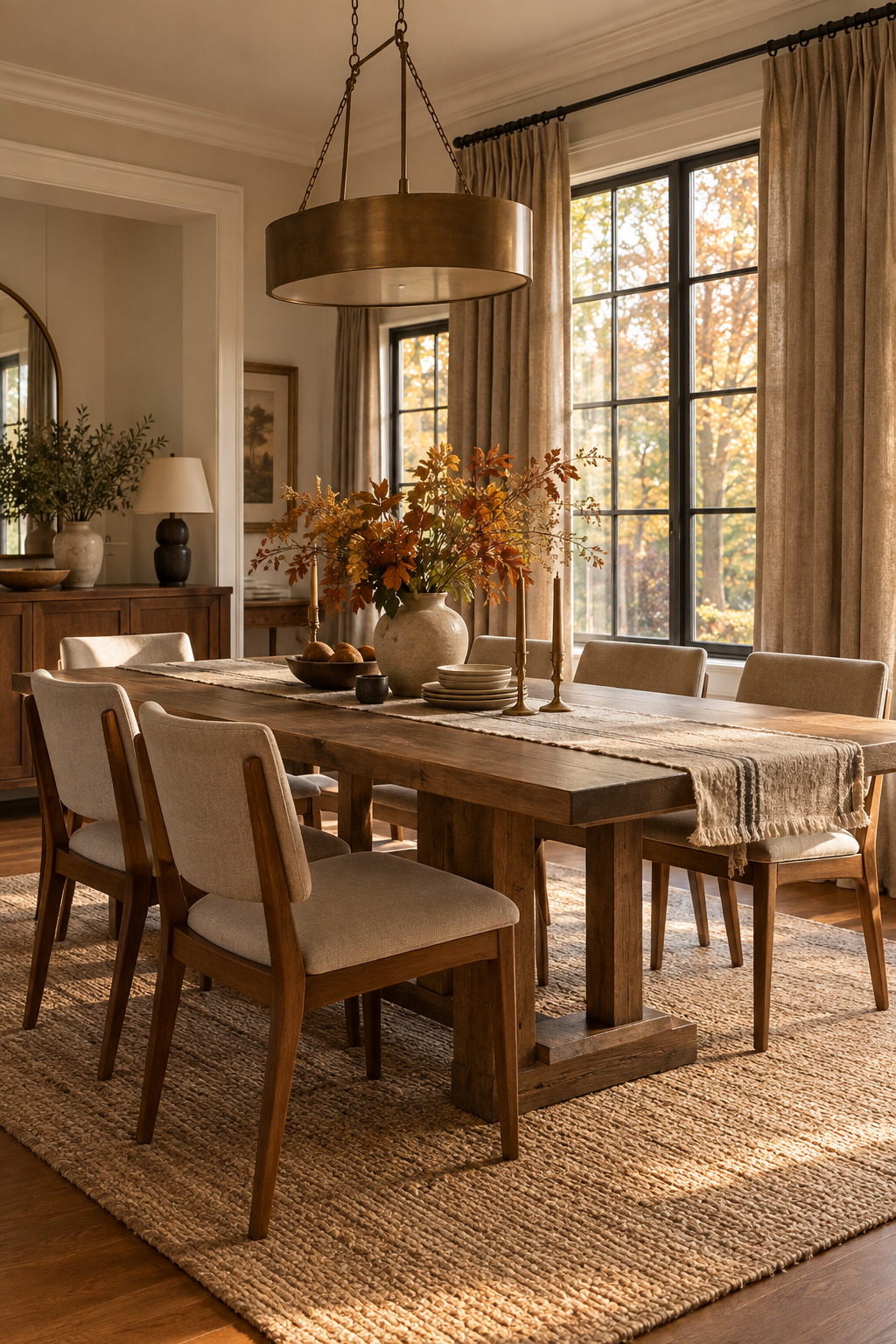
Add fitted seat cushions in a durable neutral fabric rather than draping bulky throws over every chair. One rust-toned end chair can carry the fall palette while the remaining seats stay quiet. Secure every cushion so it does not slip when guests sit or stand.
10. Keep the Centerpiece below Eye Level
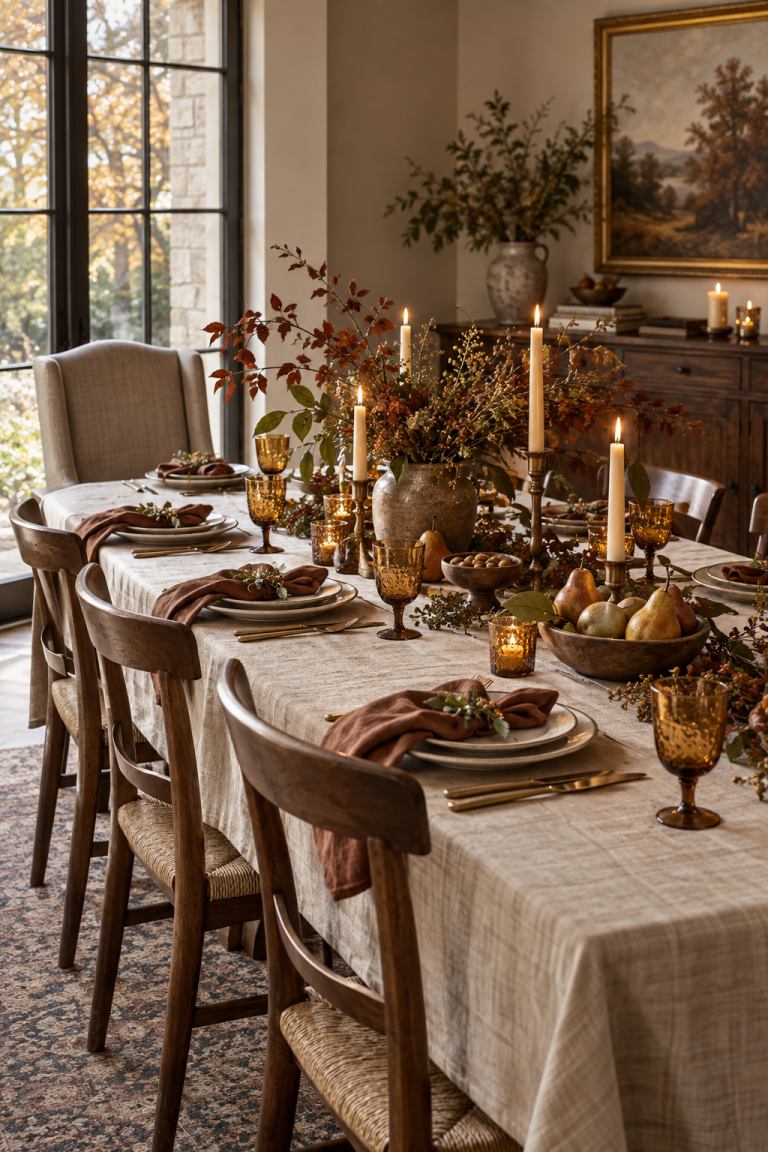
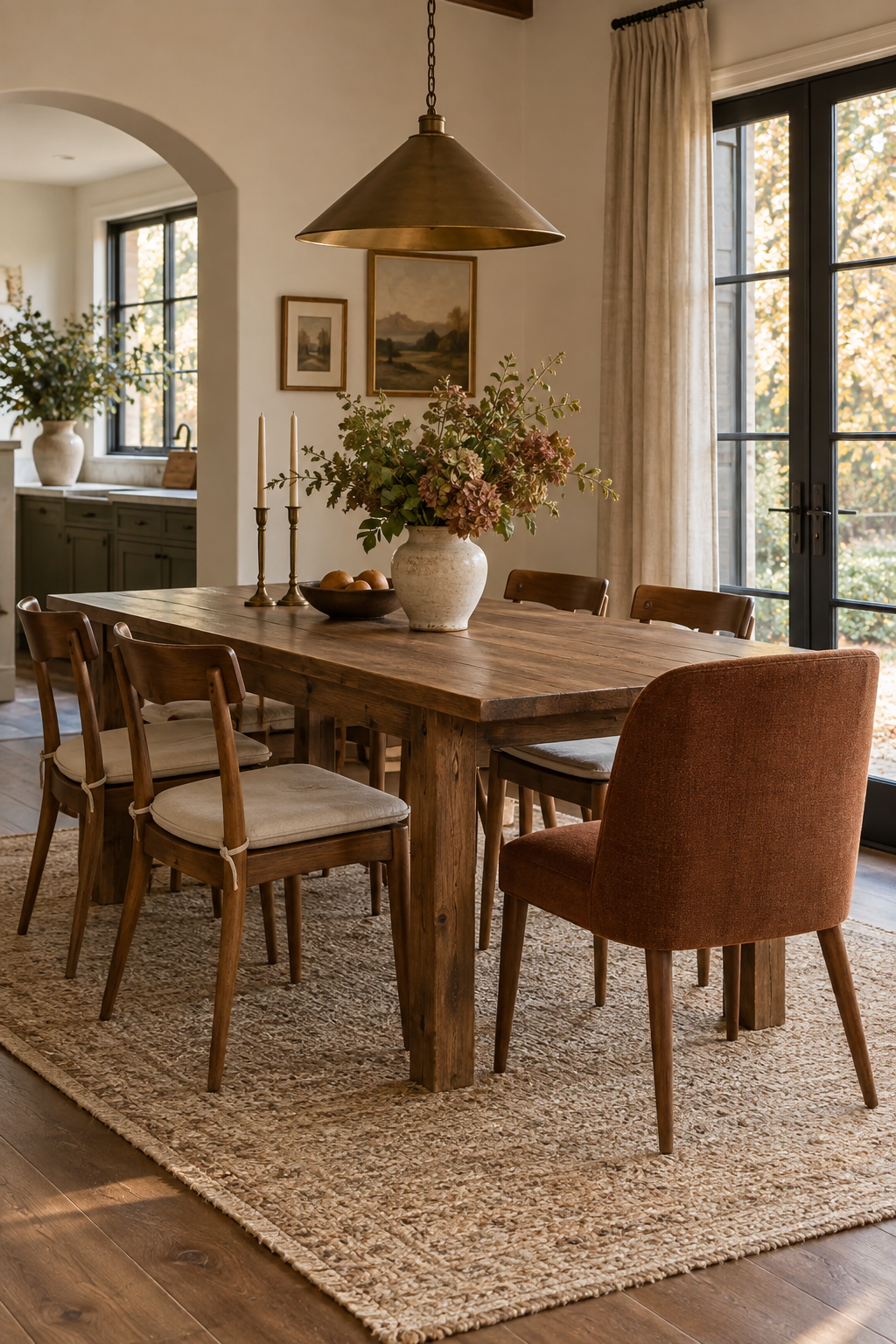
A low ceramic bowl filled with pears, foliage or seasonal branches adds color without blocking conversation. Use an oval or elongated arrangement on a rectangular table and a round composition on a circular one. Leave enough clear space for serving dishes and hands to move safely.
11. Use a Linen Runner Sparingly
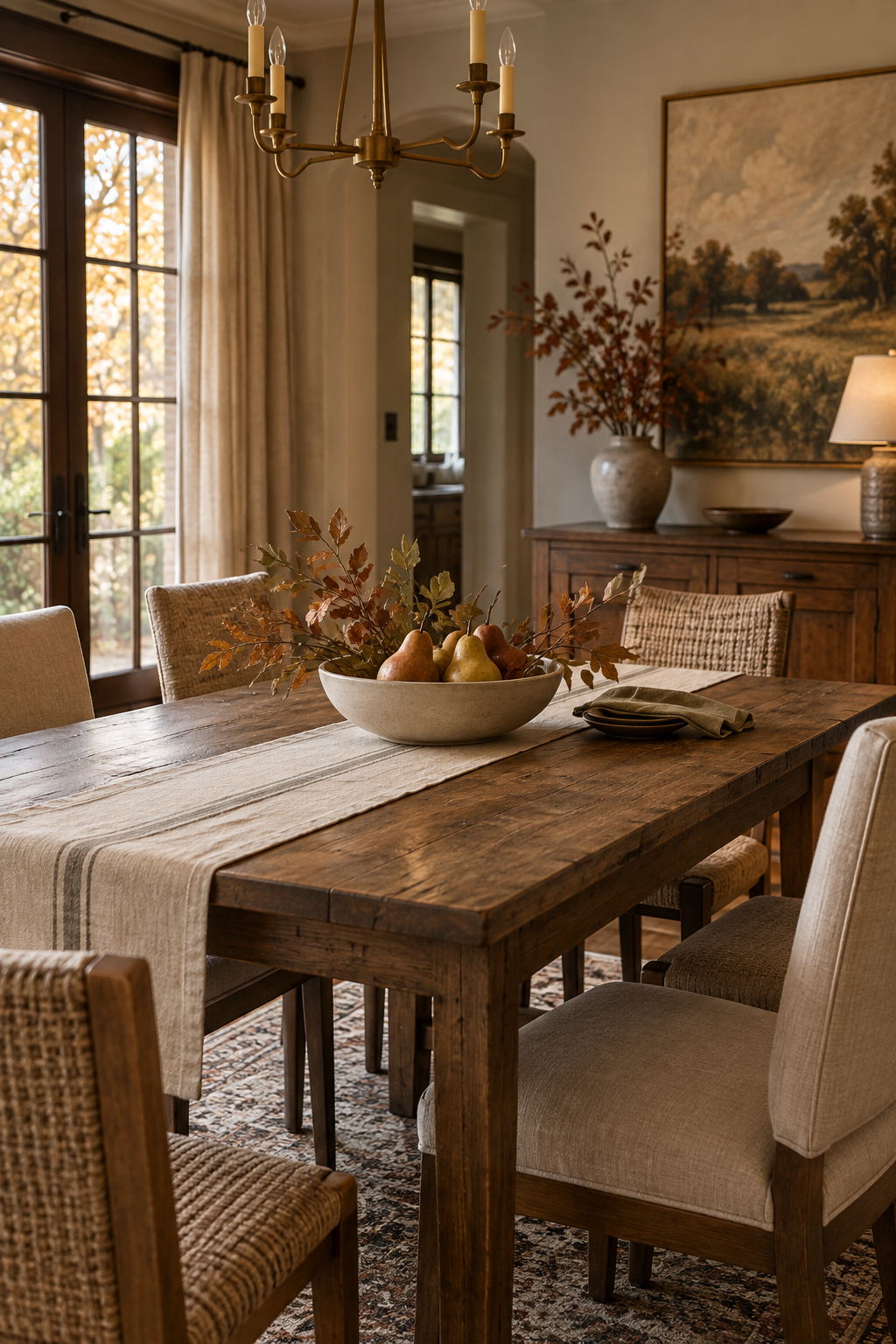
A rust, flax or olive runner can introduce soft texture while leaving the table edges visible. Select a width proportional to the surface and avoid heavy fringe where it may catch on chairs. For a compact table, a folded square of linen beneath the centerpiece may work better than a full-length runner.
12. Layer Simple Autumn Place Settings
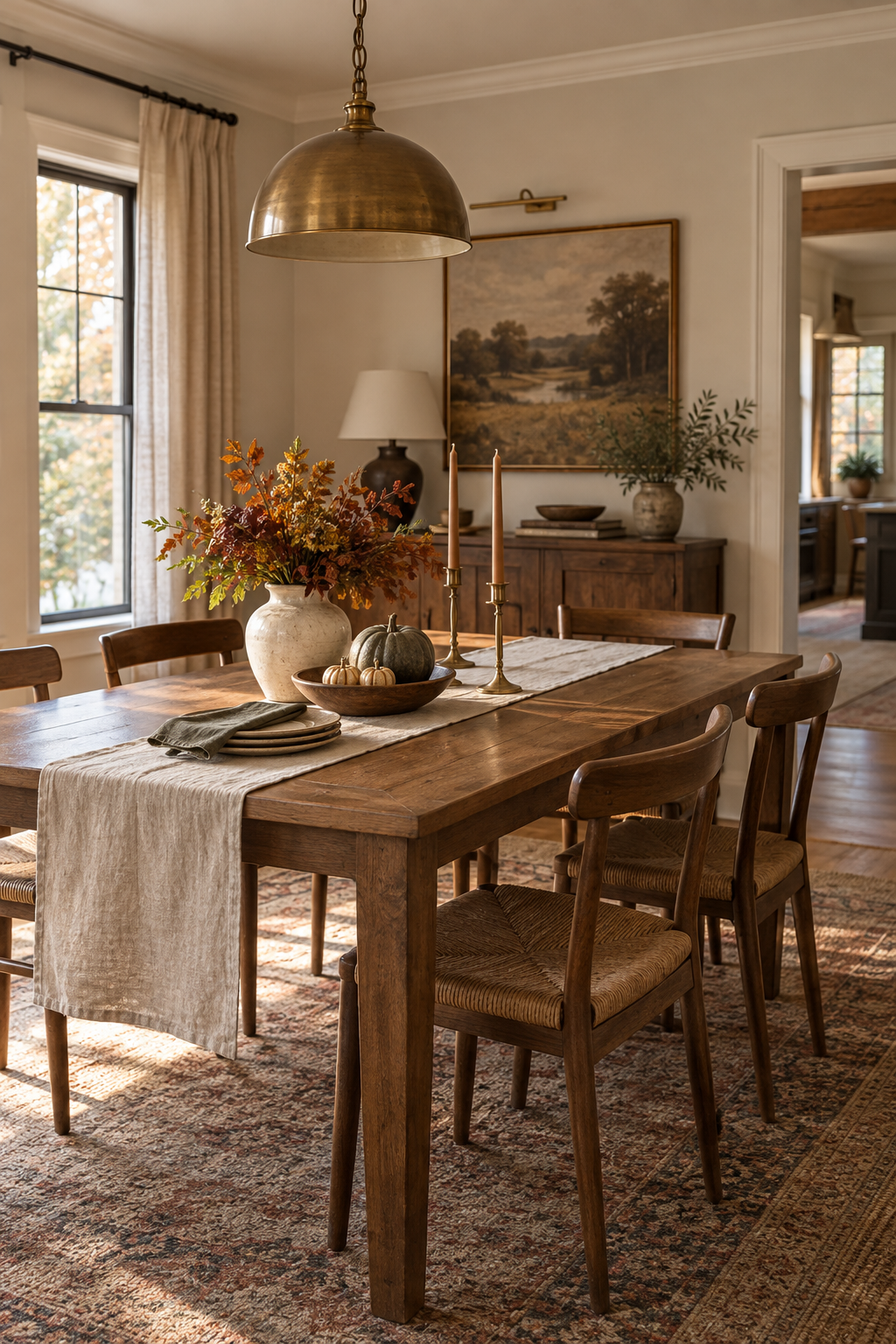
Start with everyday stoneware, then add a linen napkin in one accent color. A small leaf or tied herb sprig can provide a temporary natural detail, but it should never interfere with the plate or glassware. Consistent spacing makes modest settings look more polished than extra accessories do.
13. Style the Sideboard with Restraint
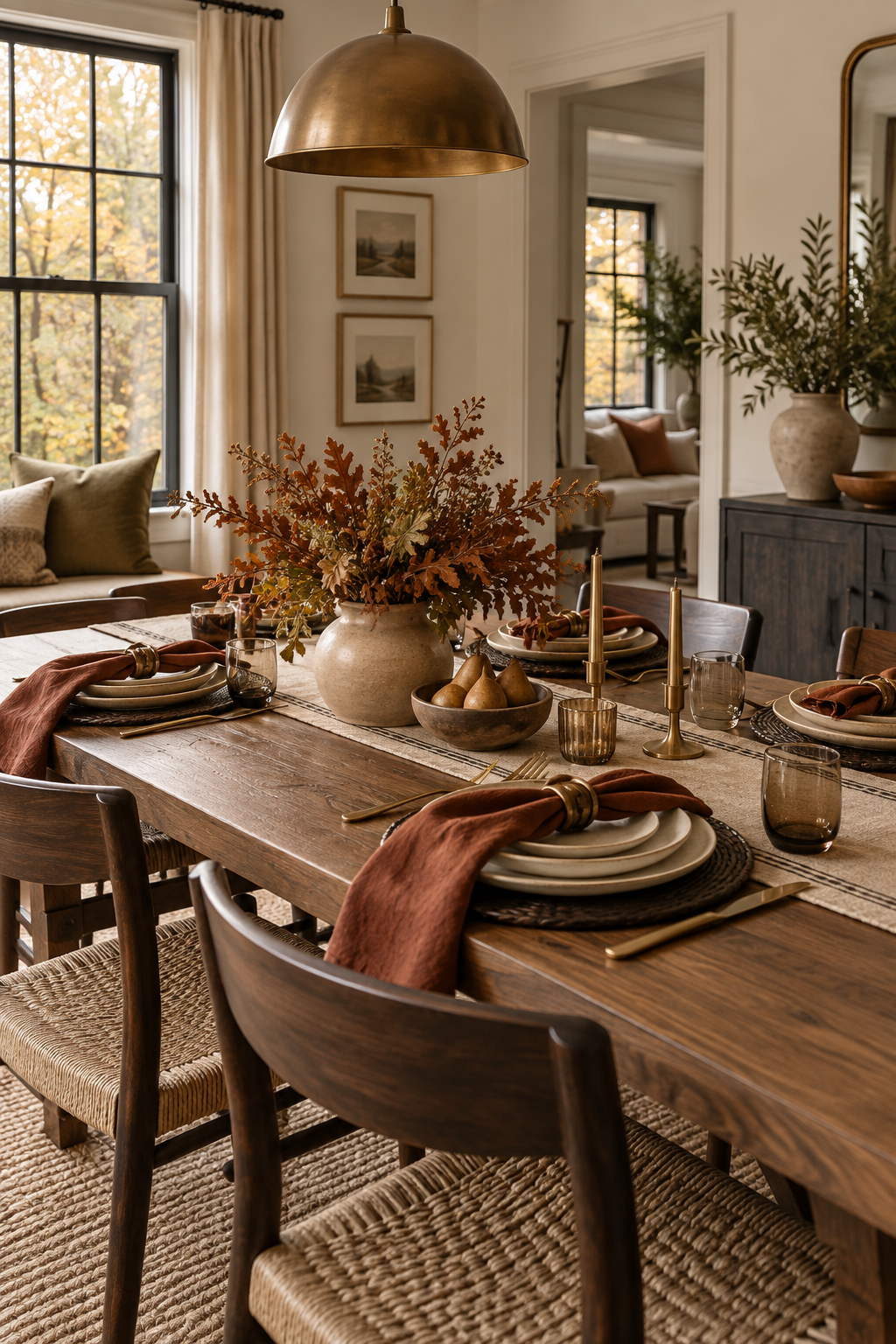
Anchor one end with a lamp and balance it with framed art or a branch arrangement. Keep the center mostly clear so the surface can hold drinks or serving pieces during a meal. Hide cords and store backup table linens inside rather than stacking them as permanent decoration.
14. Add Autumn Art to the Walls
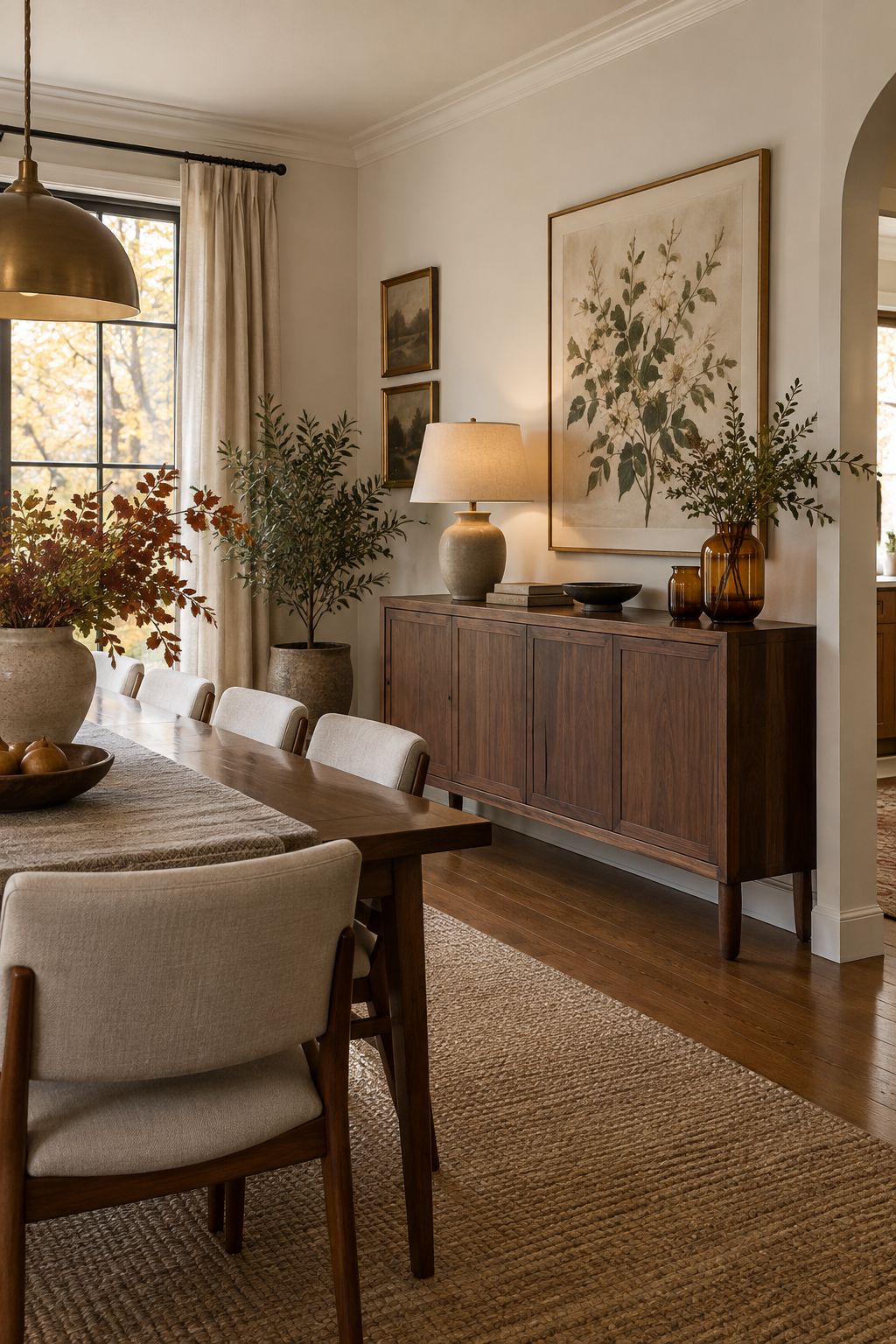
Choose a landscape, botanical print or abstract piece that contains muted rust, ochre or olive. Art creates seasonal atmosphere without occupying the table. Hang the center near seated eye level and leave enough visual space around the frame so the room does not feel crowded.
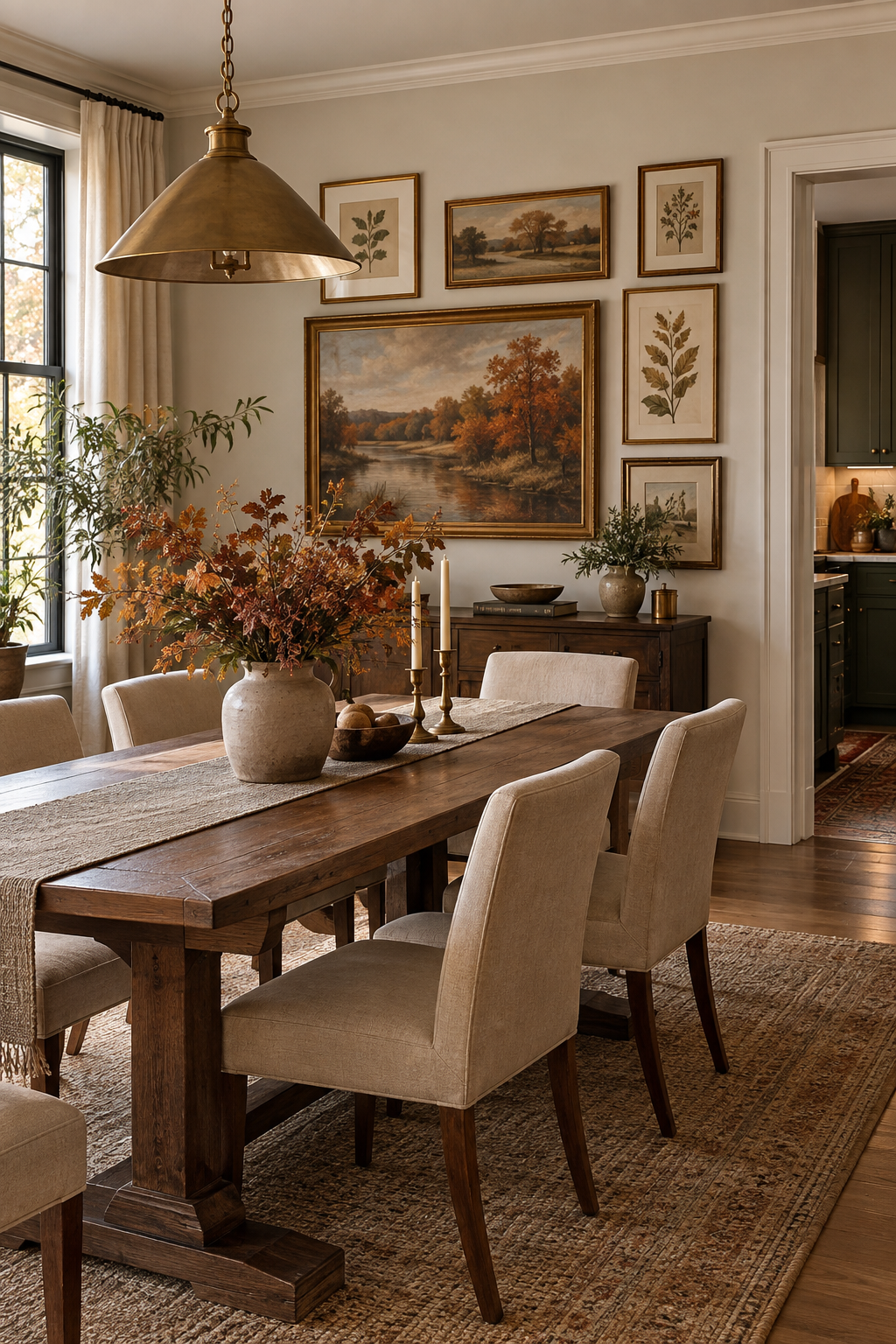
15. Make the Update Renter-Friendly
Rely on portable lighting, textiles and framed art instead of paint or built-ins. Use hanging hardware approved for the wall material and object weight, testing removable products in an inconspicuous area. Store original fixtures safely if the lease permits temporary swaps and reinstall them before moving.
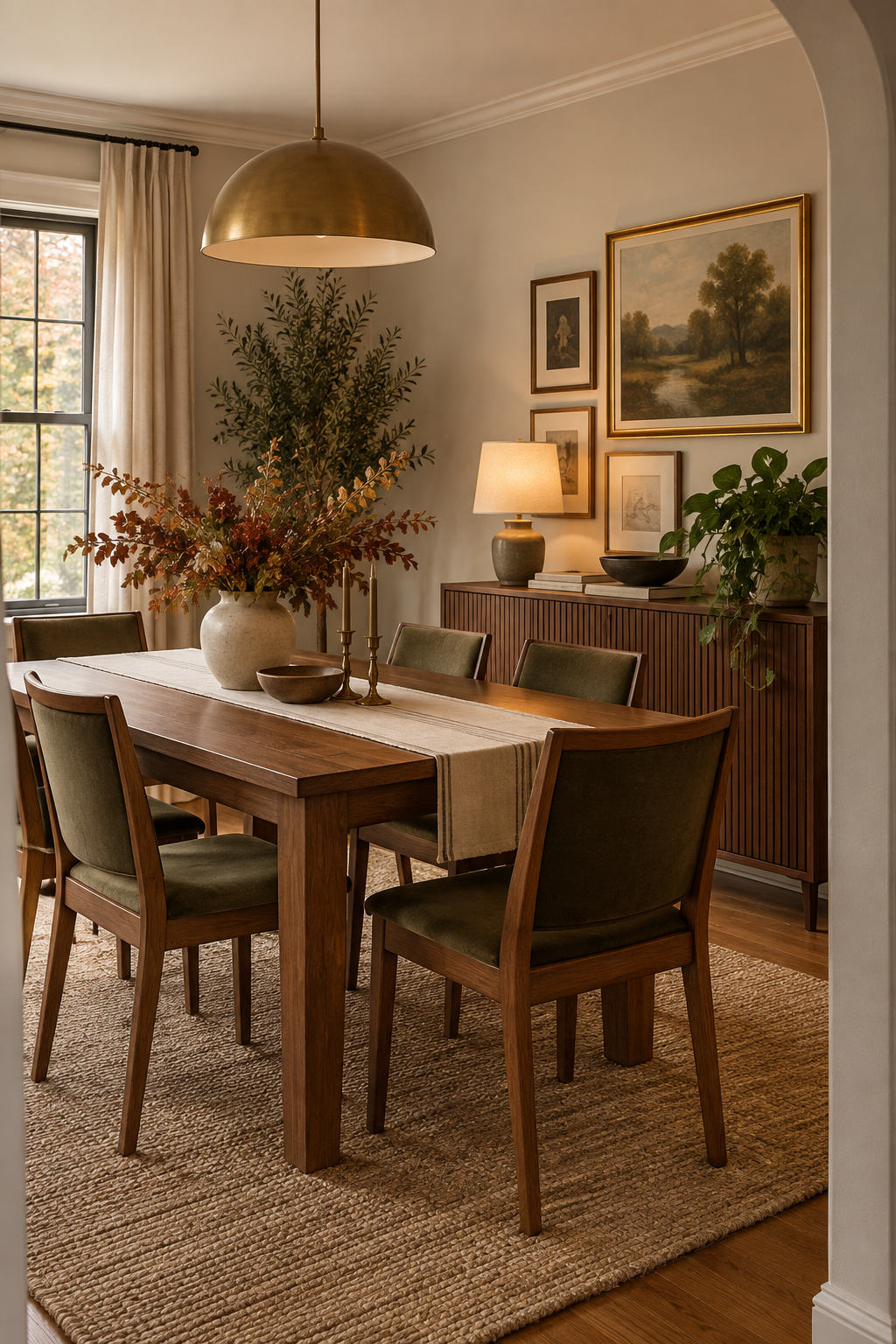
16. Refresh the Dining Room on a Budget
Move a lamp from another room, gather warm-spined books beneath a vase and reuse existing napkins in a new palette. Thrifted wood frames, ceramic bowls and amber glass can add character, but buy only pieces that have a specific location and can work beyond one season.
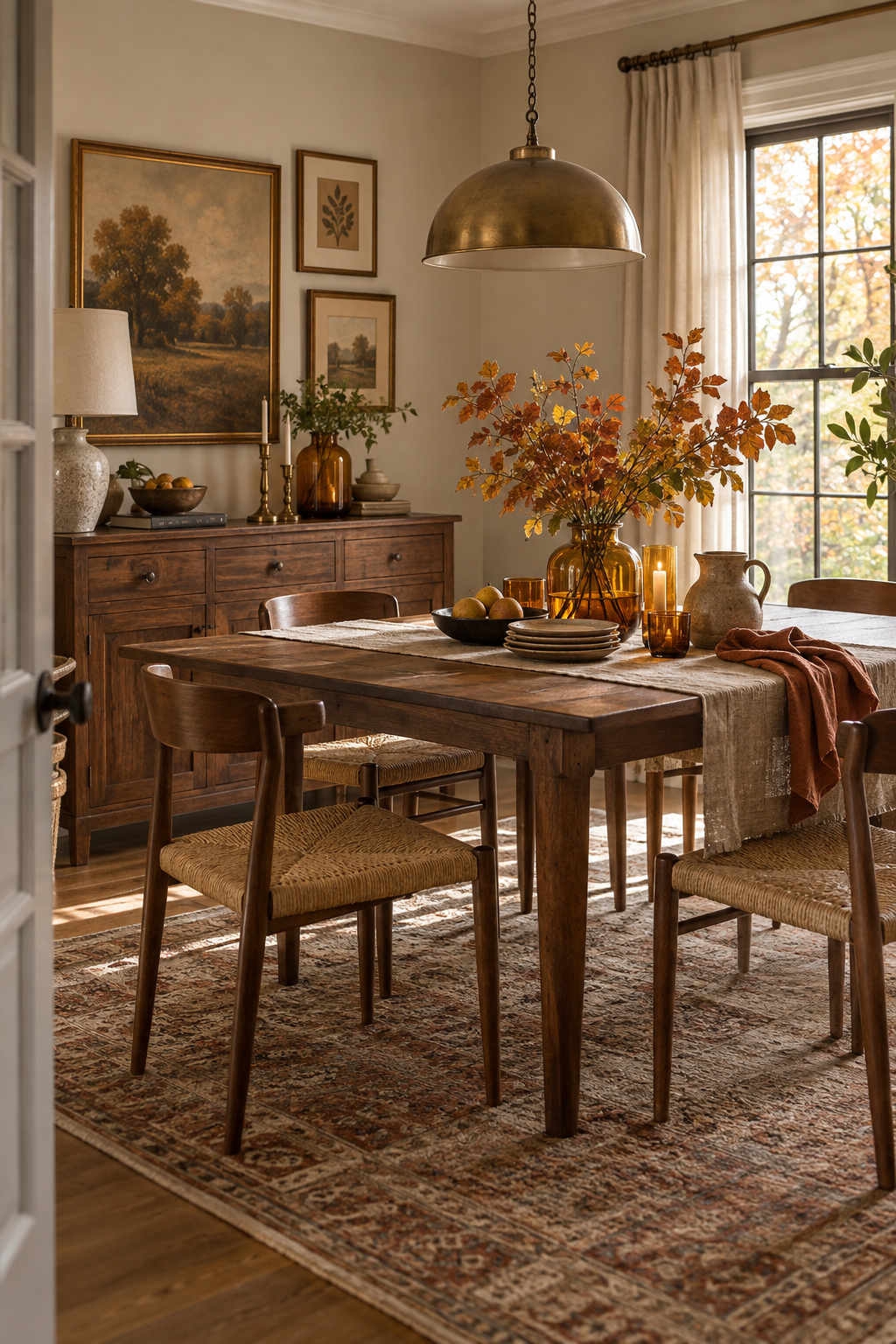
17. Create a Warm Minimalist Dining Room
Choose a strong table, comfortable chairs, one sculptural light and a single natural arrangement. Warm minimalism comes from material quality and generous negative space rather than a lack of personality. Use linen, wood and matte ceramics to add tactile depth while keeping the room easy to reset.
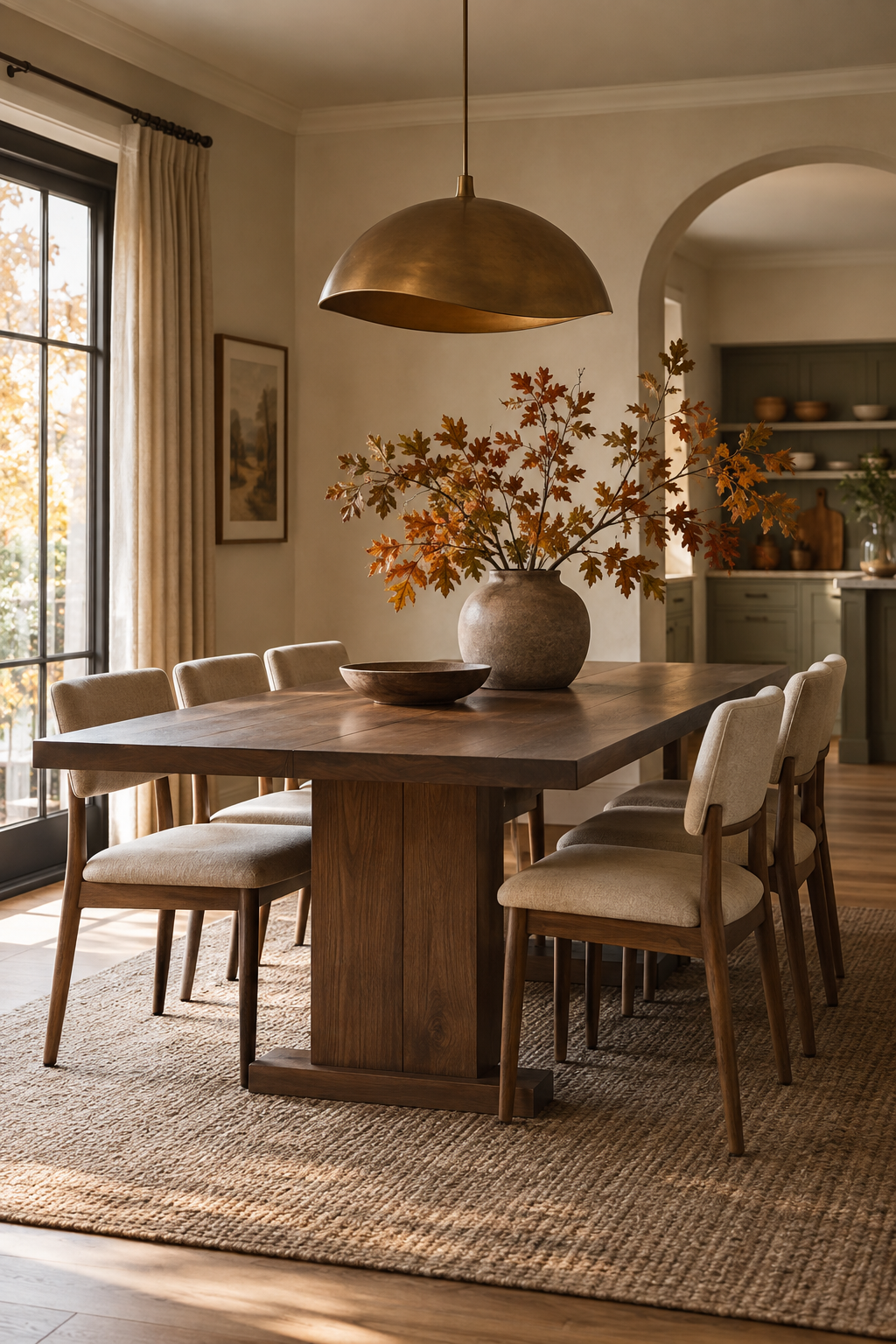
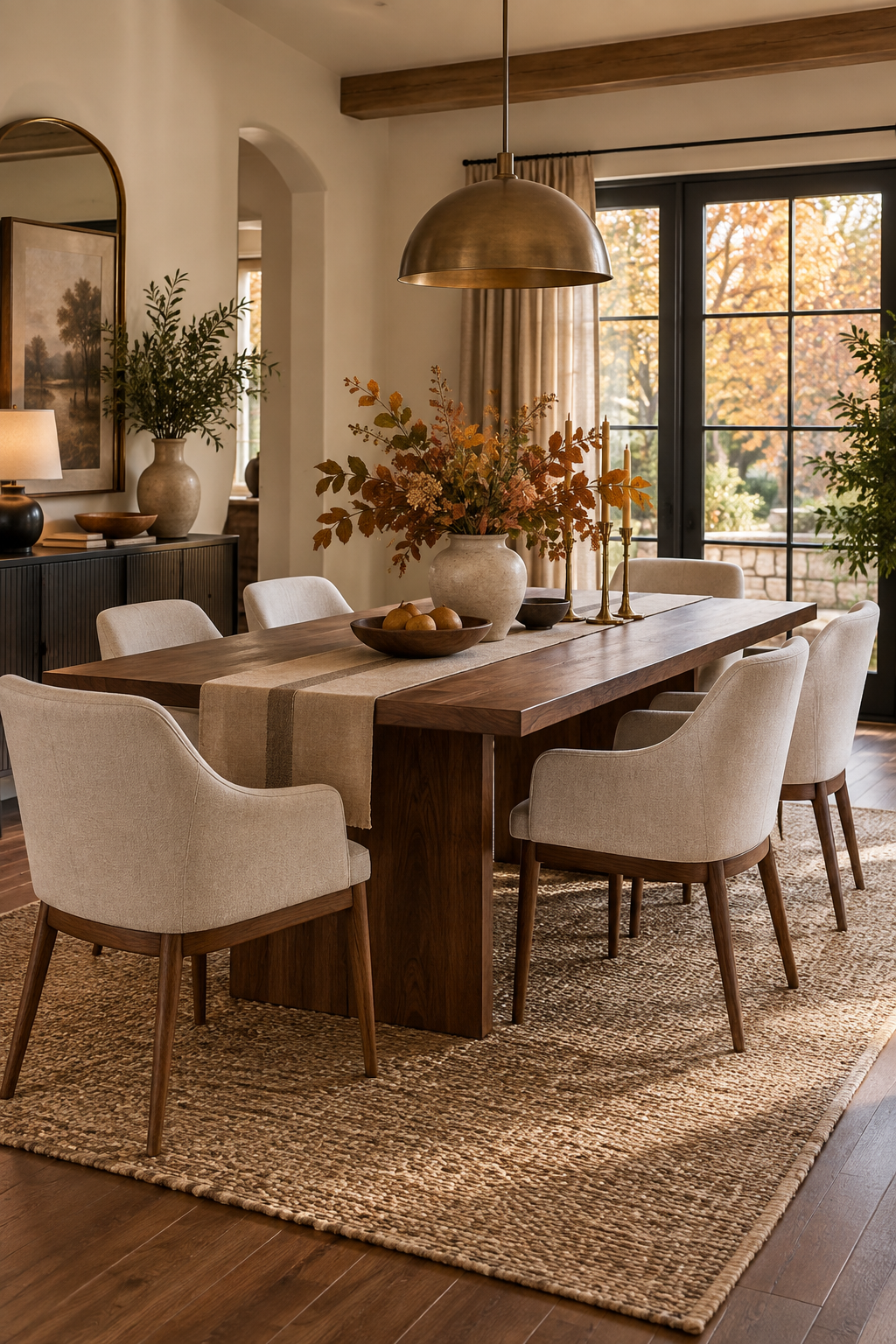
18. Give Modern Style an Autumn Mood
Pair black or bronze lines with camel upholstery, walnut and cream. One rust-toned artwork or bowl introduces the season while preserving a contemporary character. Rounded lighting and ceramics can soften angular furniture without adding extra visual noise.
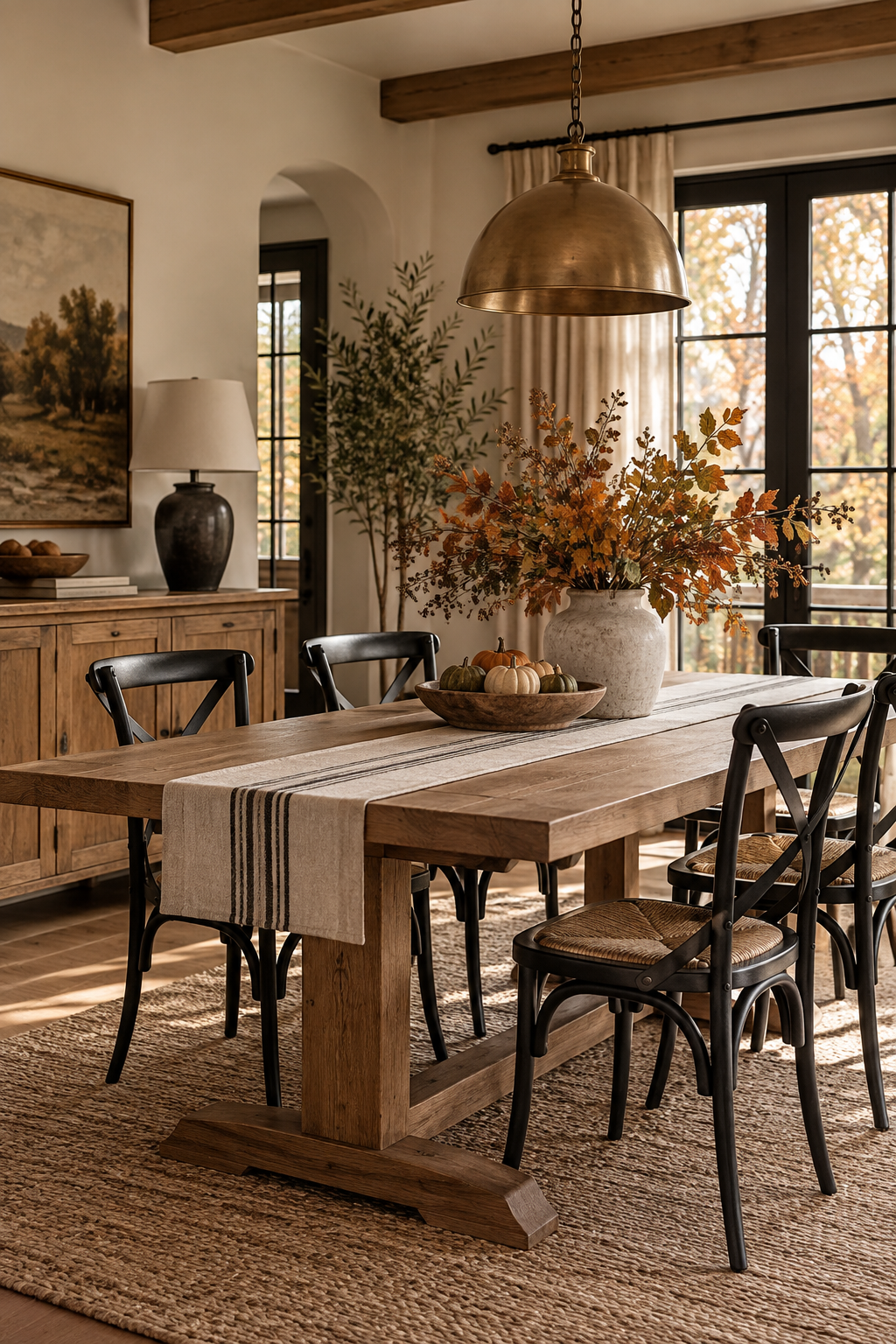
19. Refine Farmhouse Fall Decor
Use light wood, black metal and a restrained woven stripe instead of signs and novelty pieces. A vintage landscape or practical stoneware can add rural character without turning the room into a theme. Closed storage keeps everyday supplies from competing with the textured finishes.
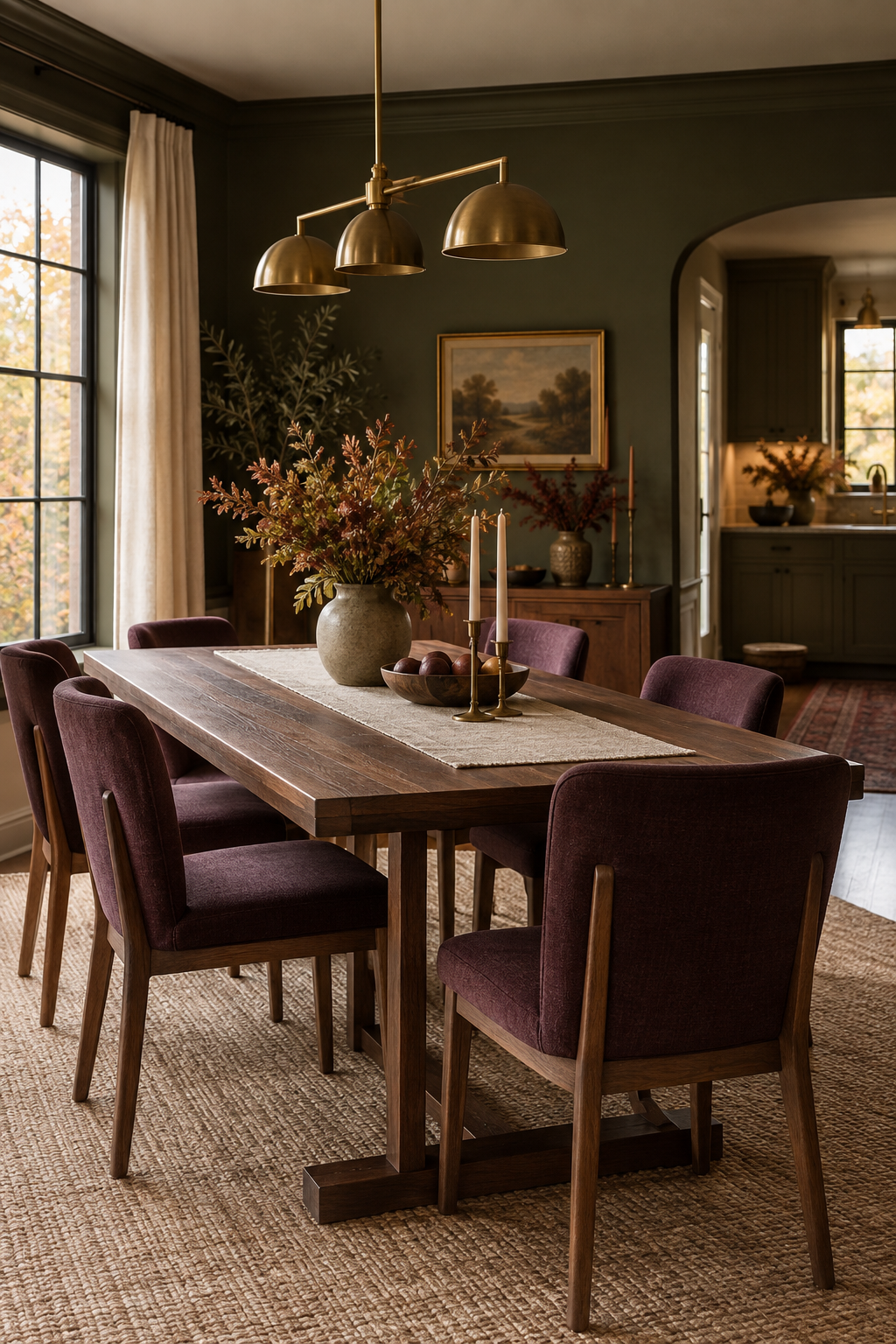
20. Build a Moody Autumn Dining Room
Deep olive, chocolate or plum walls make evening meals feel intimate when balanced by effective lighting. Use pale linen and reflective glass or aged brass to keep the table readable. Test paint or removable color samples throughout the day before committing to a dark surround.
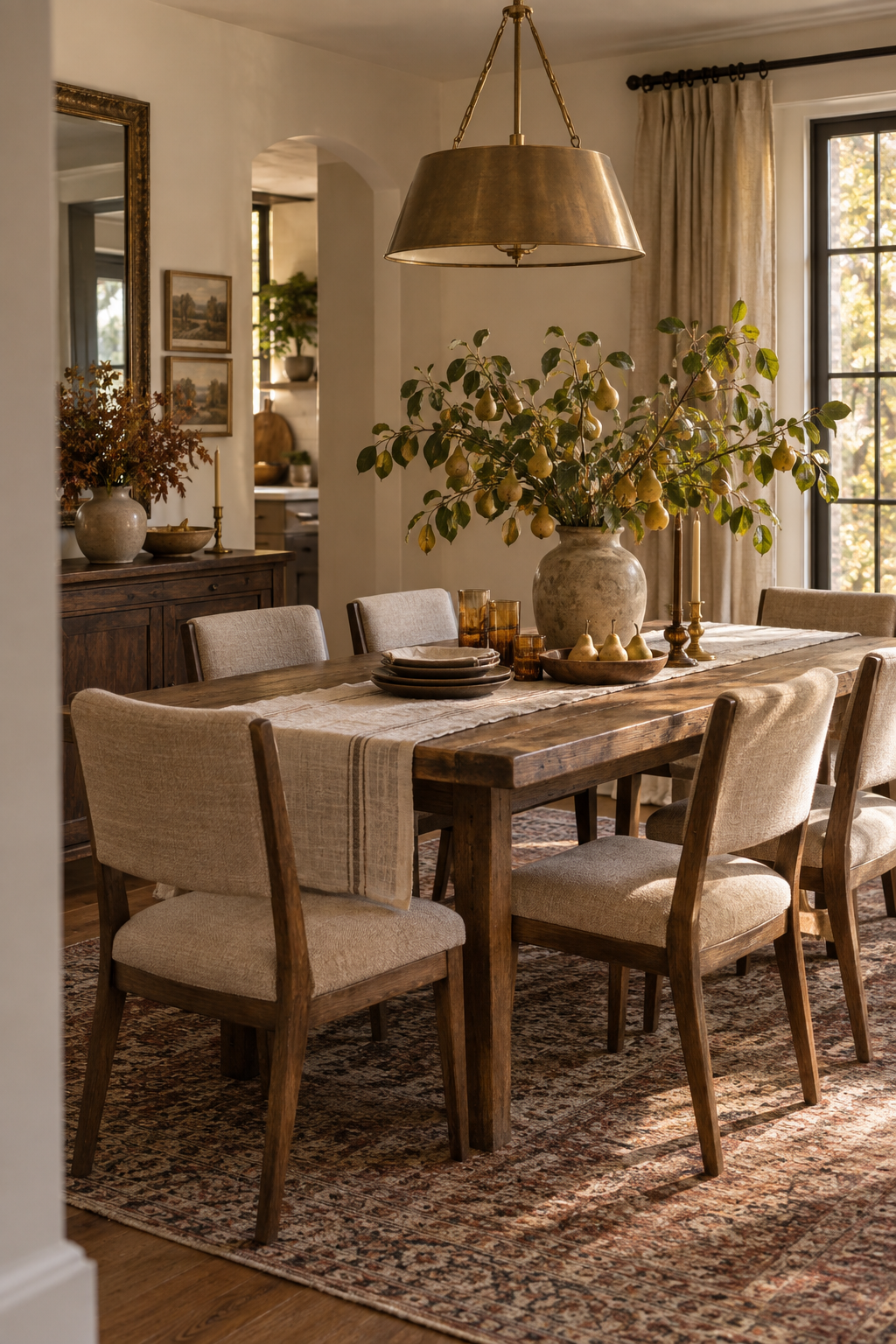
21. Decorate for Fall without Pumpkins
Pears, branches, amber glass, warm wood and woven linens provide a quieter seasonal vocabulary. These elements transition naturally into late autumn and require less storage than themed objects. Repeat two or three materials throughout the room instead of placing a different symbol on every surface.
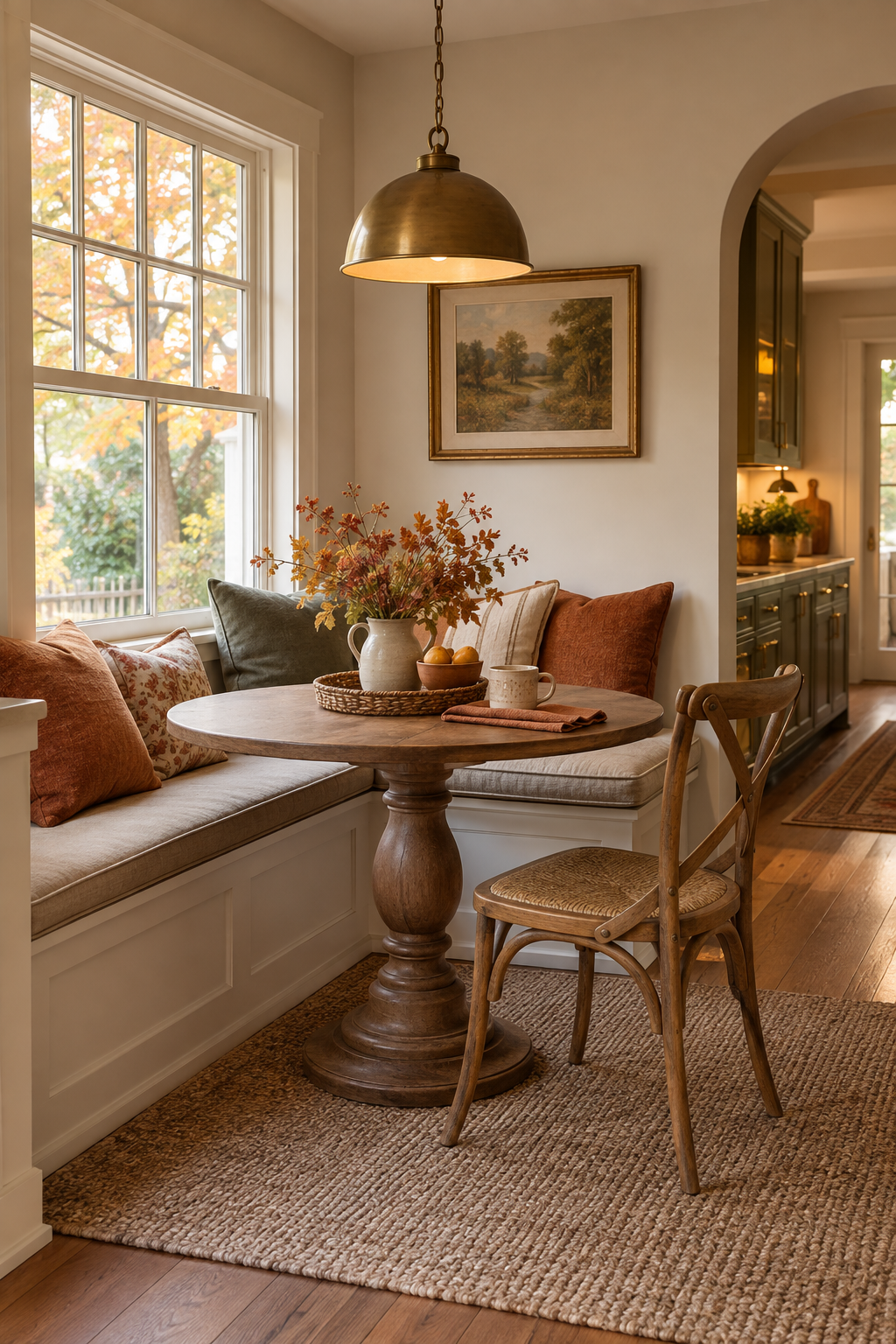
22. Turn a Breakfast Nook into a Cozy Retreat
Add supportive cushions to a built-in bench, install a focused pendant and keep the table easy to enter from both sides. A round pedestal table often suits a tight nook. Limit styling to one bowl or vase so the space remains practical for coffee, homework and casual meals.
23. Prepare the Room for Hosting
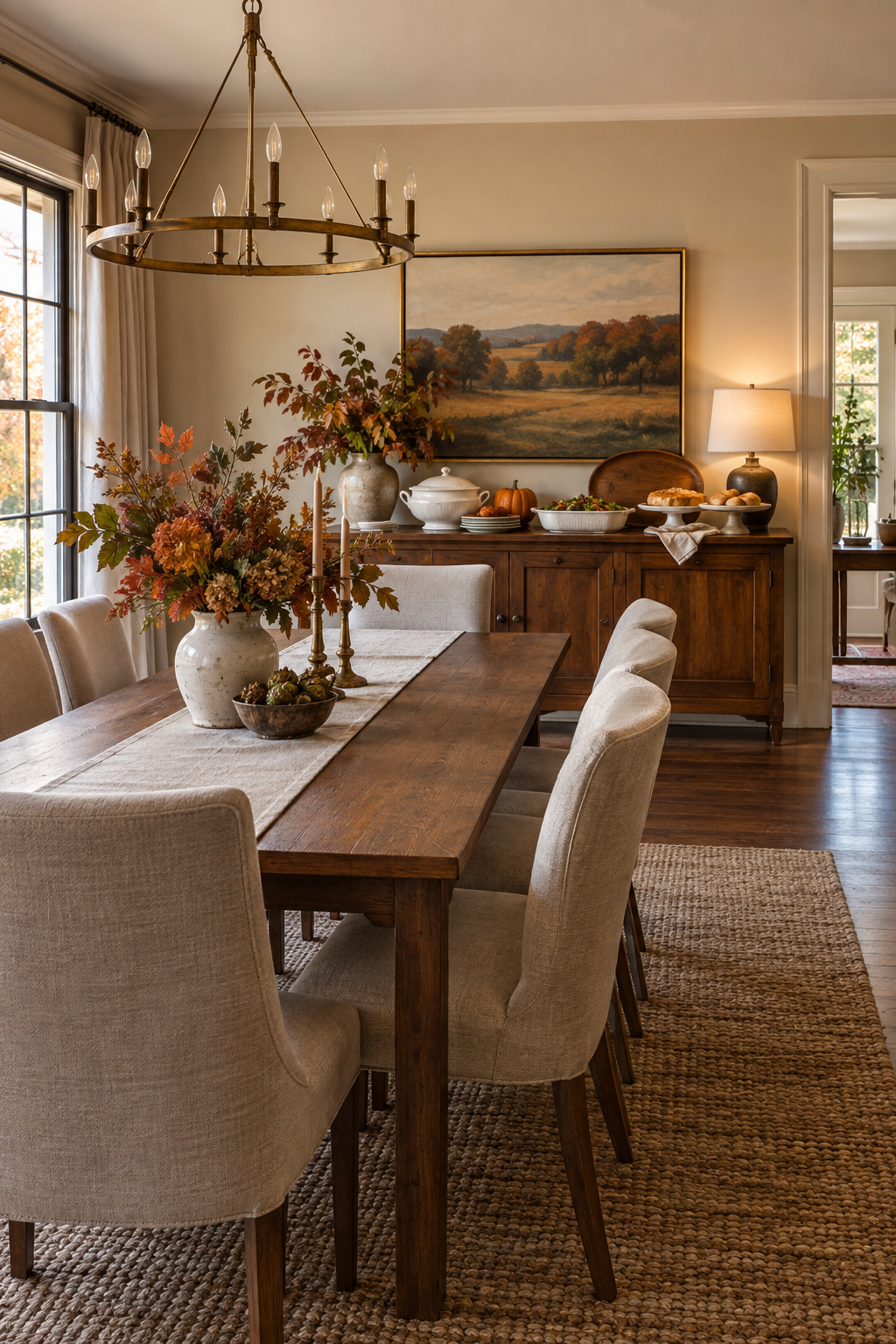
Move serving pieces to the sideboard and decide where guests can place coats, bags and drinks before they arrive. Keep the table center flexible rather than fully decorated. Check that every chair can slide out comfortably and that the route from the kitchen remains unobstructed.
24. Make Fall Decor Family-Friendly
Use washable linens, stable vessels and a low centerpiece with rounded edges. Keep fragile objects and cords away from small hands and active pathways. A bowl of real fruit or a sturdy wooden object delivers seasonal color while supporting normal family routines.
25. Transition the Room to Thanksgiving
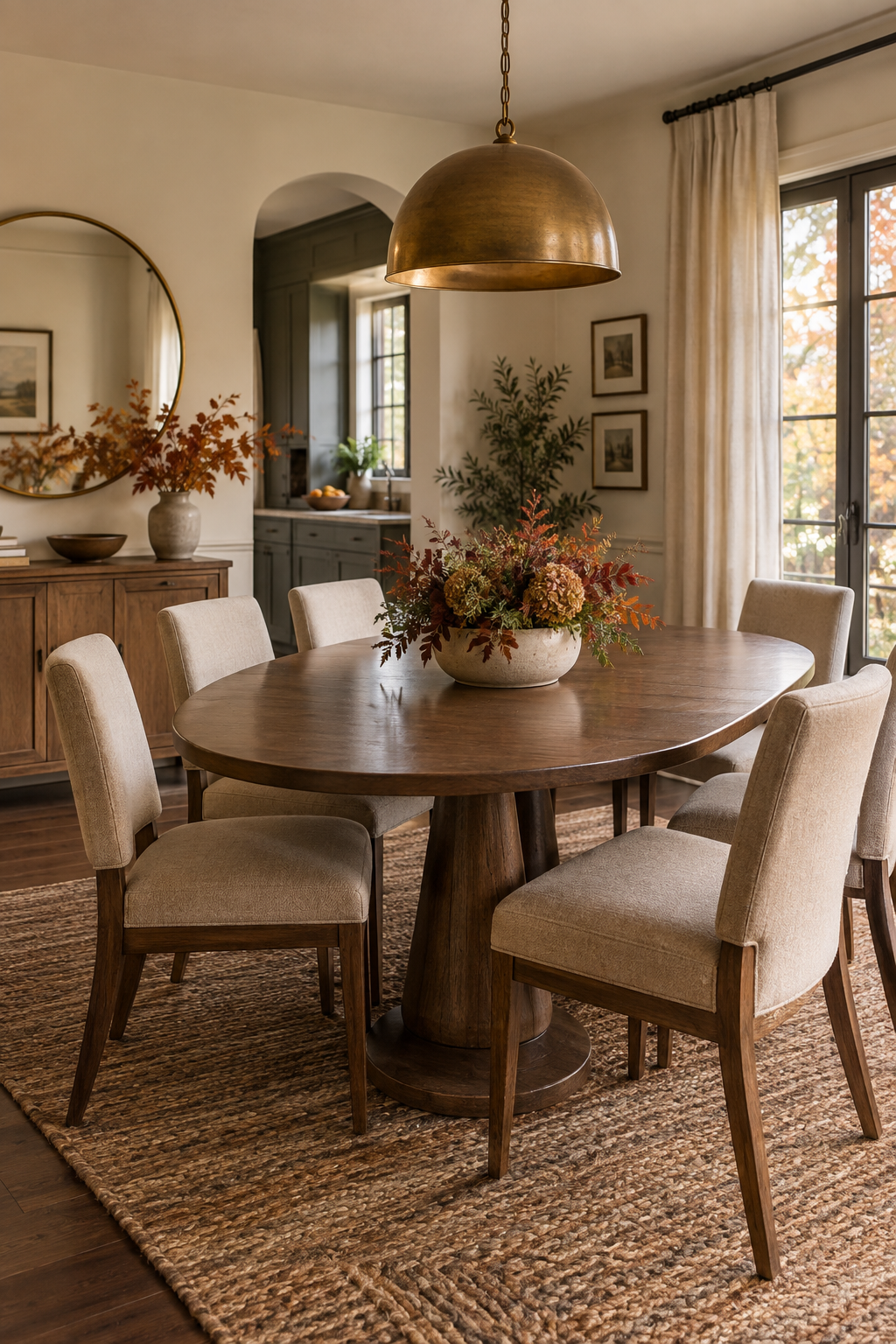
Keep the permanent foundation neutral, then add coordinated napkins, flameless candles and a low natural centerpiece for the holiday. Stage food on the sideboard to protect conversation space. Because only a few elements change, the dining room can return to everyday fall style quickly.
26. Carry the Palette into Early Winter
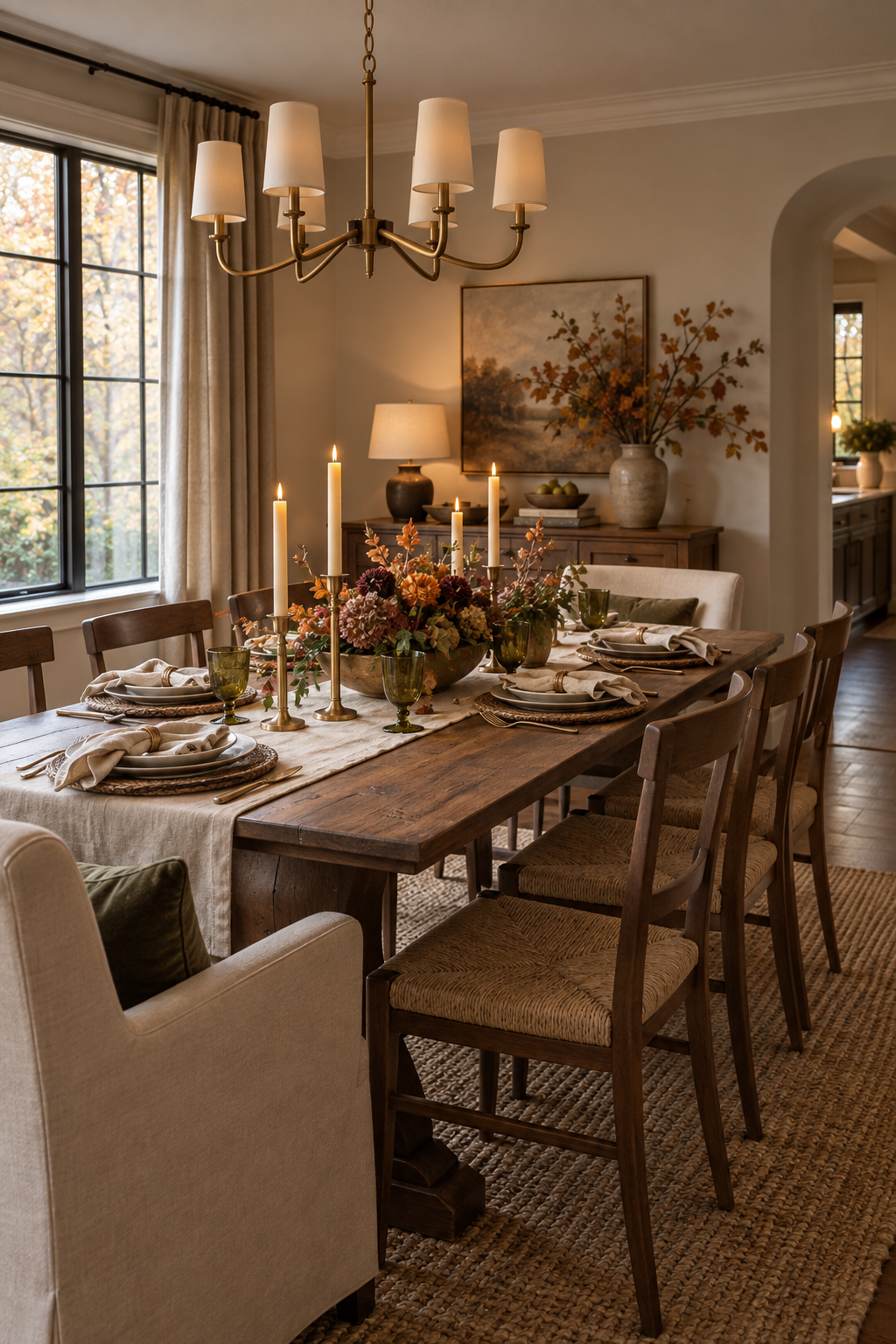
Walnut, cream, olive and aged brass remain useful after autumn. Remove overt harvest details and introduce a few evergreen clippings or deeper textiles when winter begins. This gradual transition reduces storage and prevents the room from feeling abruptly redecorated.
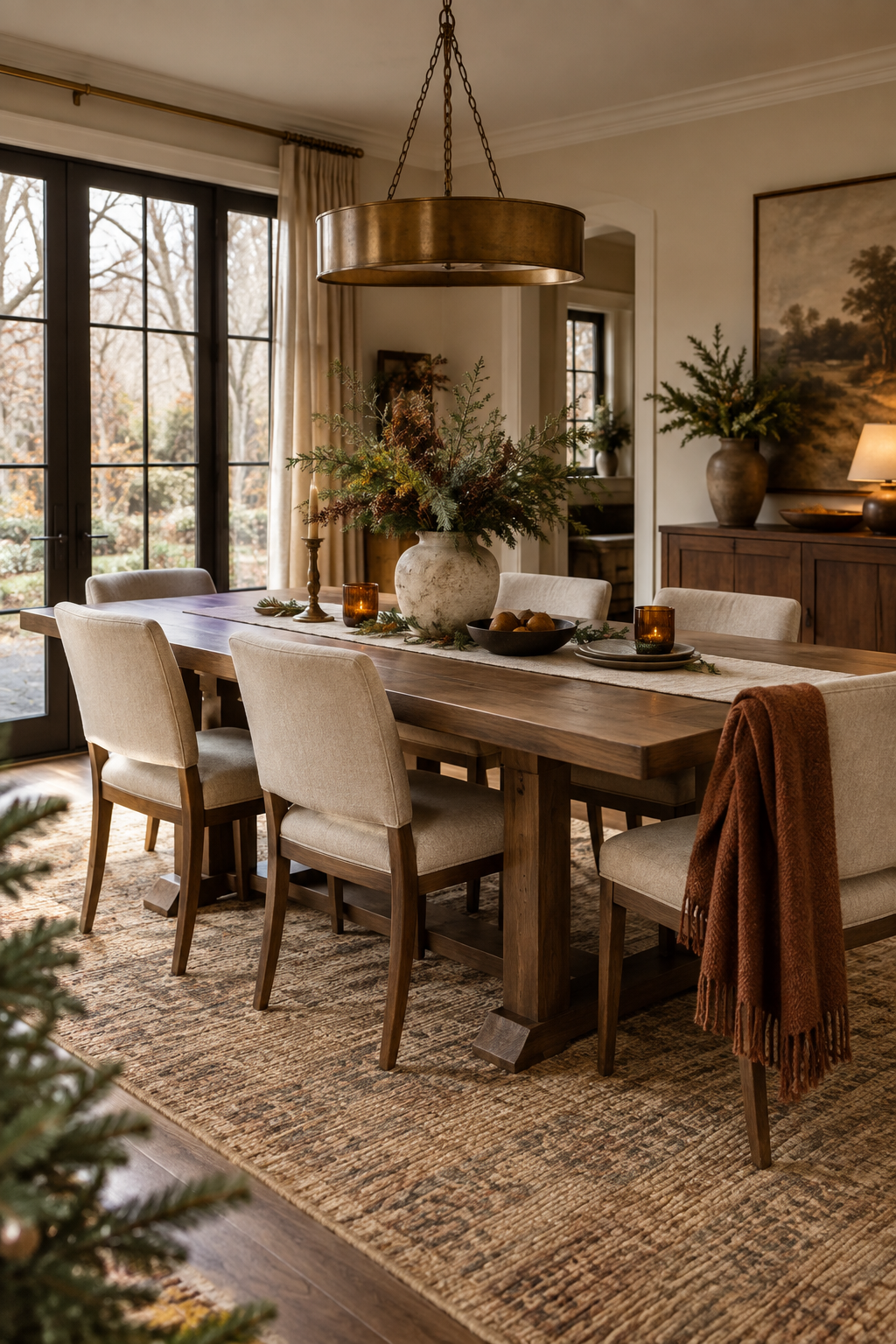
27. Create a Dining Zone without a Separate Room
Use a pendant, rug or wall art to define the table inside a living room or kitchen. Furniture does not need to match, but similar wood undertones help the zone connect with its surroundings. Preserve the main route through the home and avoid placing chair backs against doors or cabinets.
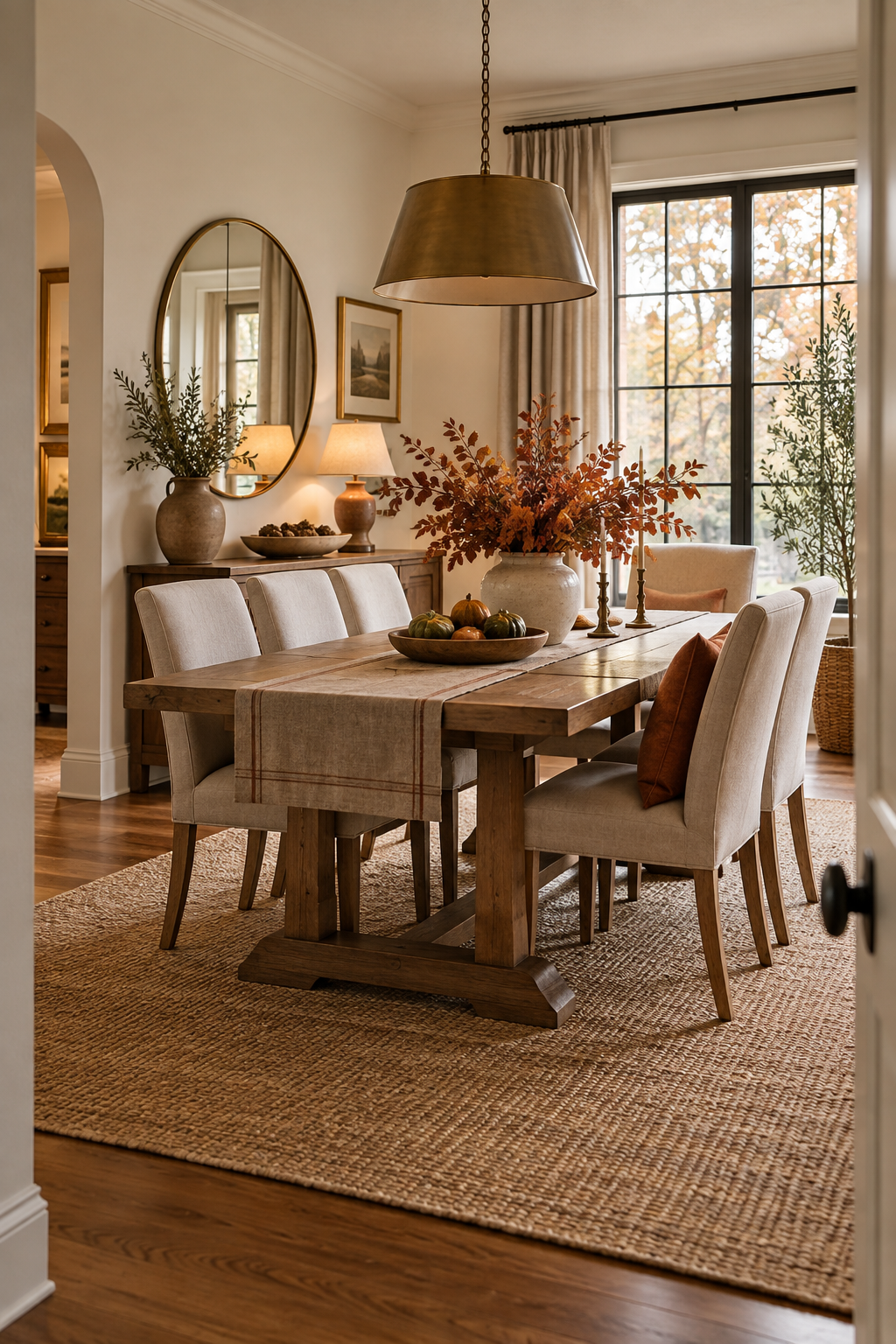
28. Edit the Finished Room for Comfort
Sit in every chair, look across the table and remove anything that blocks faces, light or serving space. Walk the route from the kitchen with an empty tray to identify tight corners. The strongest fall dining room feels warm in photographs and works smoothly during an actual meal.
How to Decorate a Dining Room for Fall
Begin by evaluating how the room is used. An everyday breakfast table needs more open space than a formal room used occasionally, while an open-plan dining zone must also support circulation between other areas. Measure the table, chair clearance and storage before adding seasonal pieces. Function provides the structure that makes decorative choices look composed.
Select a limited palette based on existing finishes. Cream, rust and olive work well with walnut, while camel, oatmeal and aged brass suit both traditional and modern spaces. Repeat colors through napkins, art, upholstery and a rug instead of buying a complete themed collection. Controlled repetition creates a more expensive and enduring result.
Improve lighting before styling the table. Clean shades and bulbs, confirm the pendant hangs at a comfortable height and add a sideboard lamp if the room feels flat after sunset. Use compatible warm bulbs and flameless tabletop lights. Guests should see both their food and one another without glare or deep shadows.
Build the seasonal focal point at a practical height. Centerpieces should preserve sightlines and leave room for serving. A low bowl, several small vessels or a branch arrangement placed on the sideboard can be more effective than one large display. Natural materials add movement, but avoid anything that sheds heavily near food.
Use textiles to improve comfort and acoustics. Curtains, a properly sized rug and fitted seat cushions can soften a hard room while carrying the palette. Choose washable or easy-care fabrics and keep chair legs stable. Do not add layers that catch under seats or create trip hazards along the table perimeter.
Finally, plan for change. Store holiday-specific napkins, flameless candles and serving pieces together so the room can transition to Thanksgiving in minutes. Keep the foundational wood, linen and olive accents through winter. A flexible dining room saves money, requires less storage and remains inviting long after the first autumn gathering.
Frequently Asked Questions
What colors make a dining room feel cozy for fall?
Cream, oatmeal, rust, olive, caramel, walnut and muted plum create warmth without overwhelming the room. Use lighter tones across large surfaces and reserve deeper colors for textiles, art and smaller accents.
How do I decorate a small dining room for autumn?
Choose a round or narrow table, keep the centerpiece low and define the area with lighting rather than bulky decor. Preserve chair clearance and the main walking path before adding any seasonal objects.
What can I use instead of pumpkins?
Try pears, branches, amber glass, wooden bowls, botanical art and woven linen. These choices communicate autumn subtly and transition more easily into winter.
How can I make a fall dining room look expensive?
Limit the palette, use consistent spacing and leave part of the table and sideboard clear. Good lighting, fitted textiles and a few substantial natural materials look more polished than many small novelty pieces.
Should I put a rug under the dining table?
A rug can define the dining zone and reduce echo if it is large enough for pulled-out chairs. Choose low pile, use a suitable pad and select a material that can handle frequent cleaning.
How high should a fall centerpiece be?
Keep most tabletop arrangements below seated eye level so guests can see one another. A tall, airy arrangement can work when its narrow stems and branches do not interrupt conversation or serving.
How can renters create a cozy fall dining room?
Use portable lamps, curtains, rugs, cushions and framed art. Follow lease rules and use only mounting products rated for the wall and object weight. Avoid permanent electrical or structural changes.
How do I transition fall dining decor to Thanksgiving?
Maintain a neutral base and add only coordinated napkins, flameless candles and a natural centerpiece. Use the sideboard for serving so the table remains comfortable for guests.