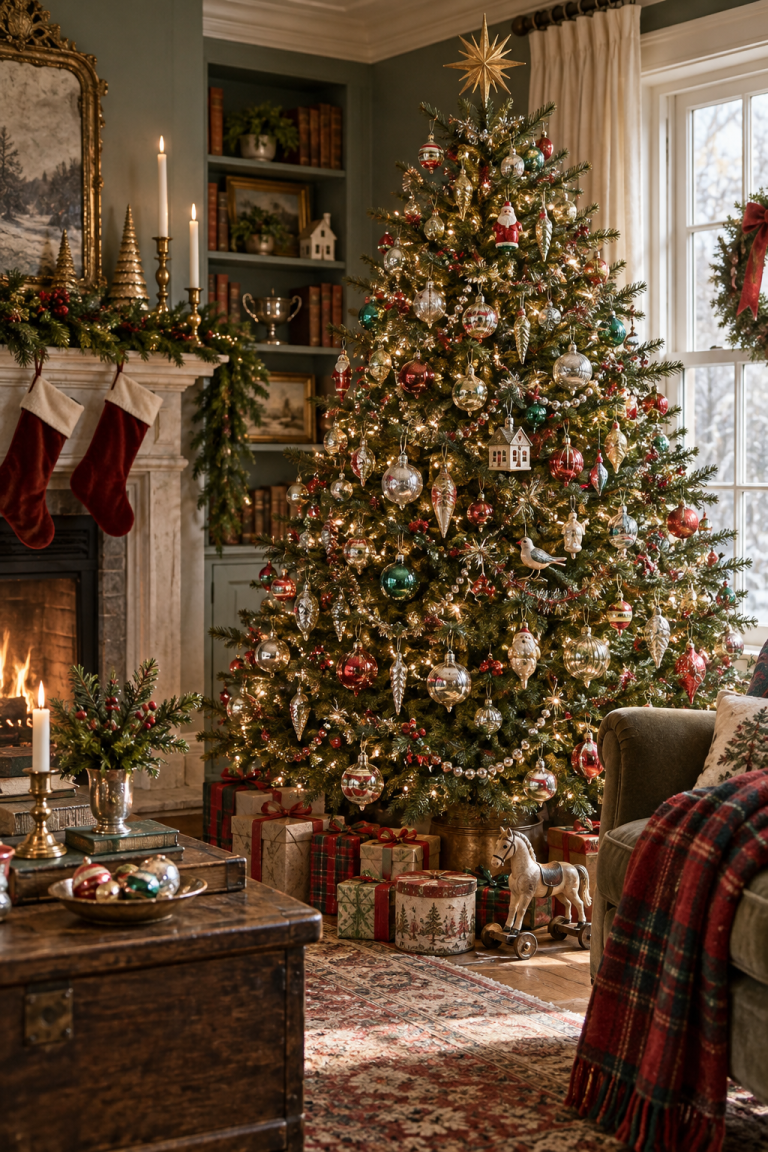
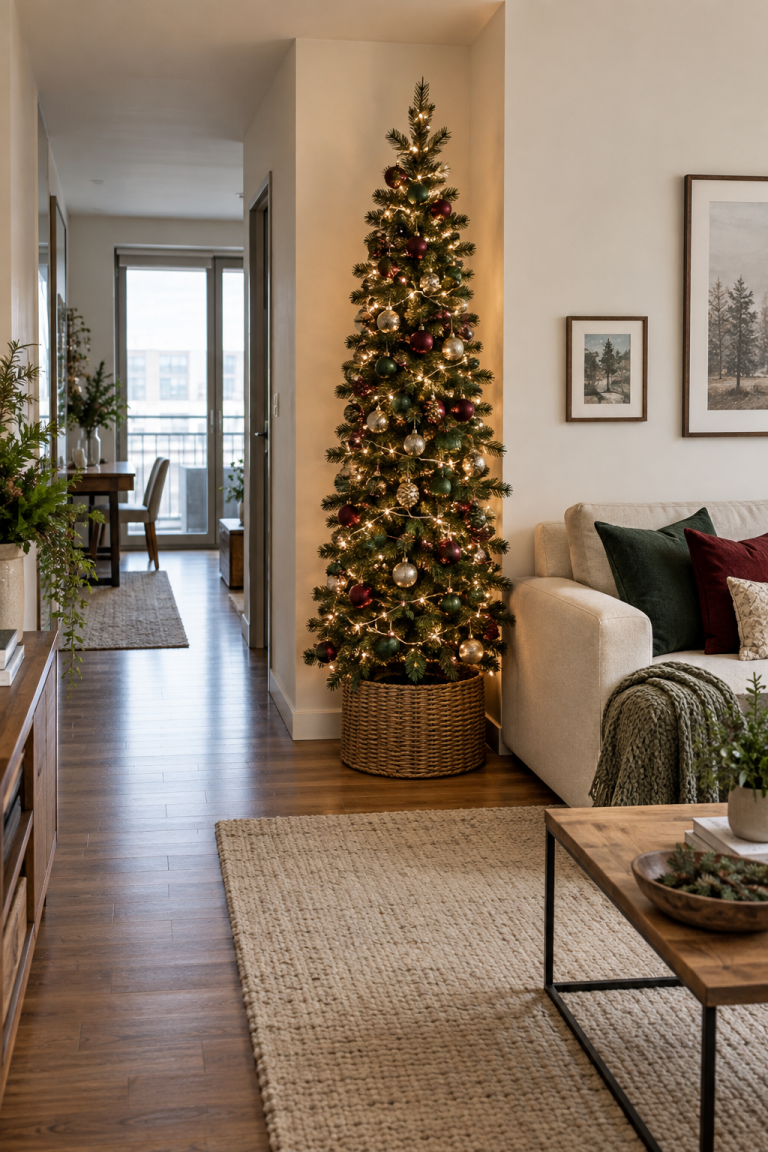
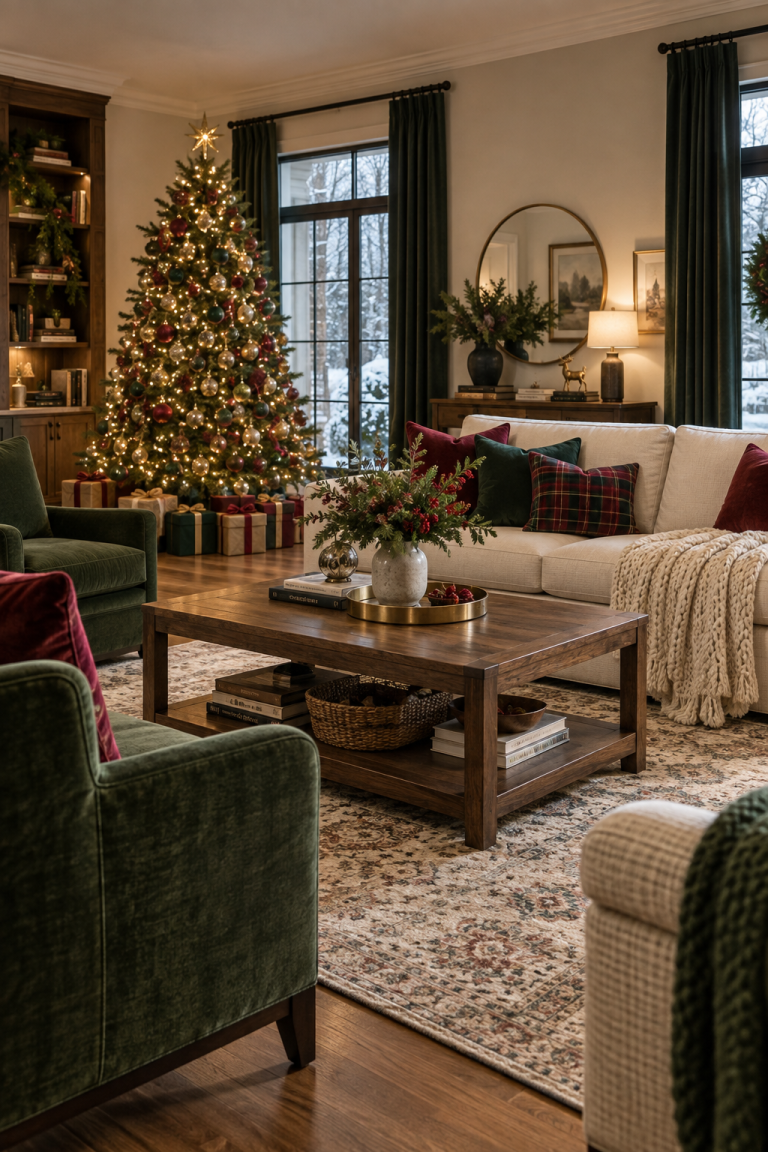
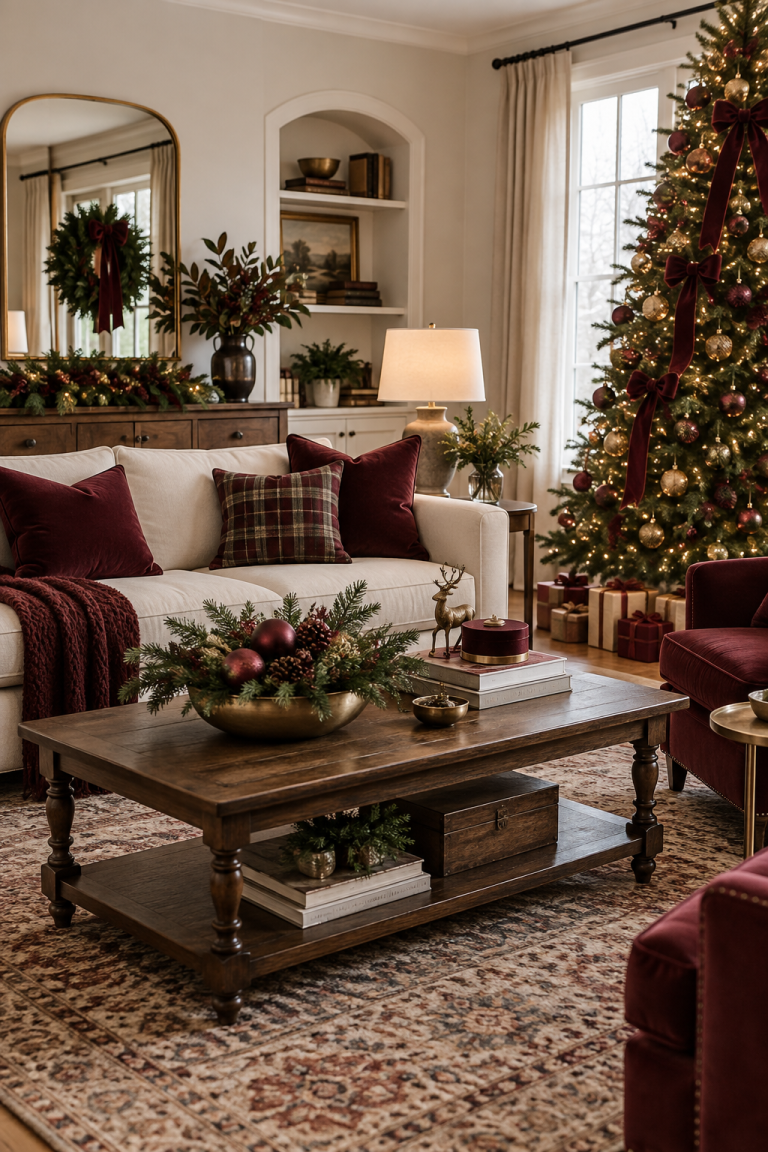
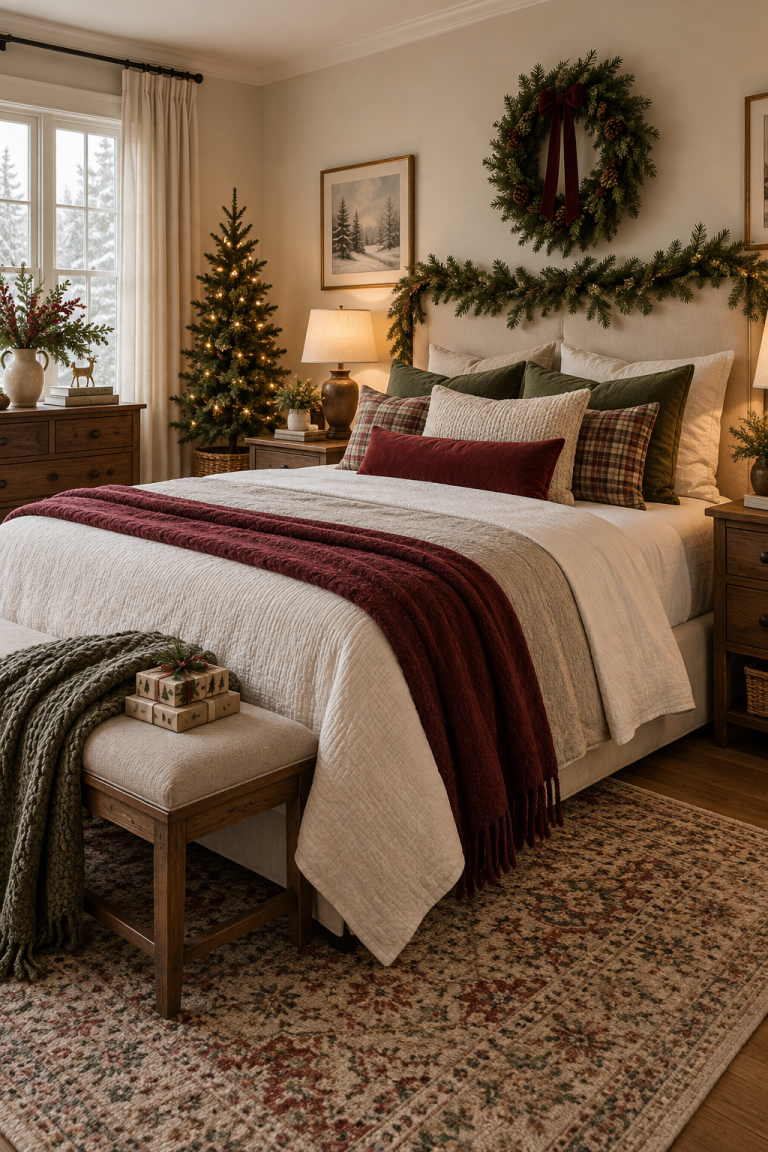
Natural Christmas decor brings the season home without relying on glitter, novelty signs or a crowded color scheme. Evergreen branches, honest wood grain, soft linen and warm neutral colors create rooms that feel festive, peaceful and connected to winter outdoors. The approach works in traditional houses, modern apartments and small rented spaces because it is based on texture, proportion and repetition rather than a specific architectural style.
These 29 natural Christmas decor ideas balance beauty with real-life function. You will find simple ways to style a tree, mantel, table, entryway and bedroom while keeping walking paths, heat sources and daily routines in mind. Use the whole palette throughout your home, or choose a few ideas for one calm seasonal focal point.
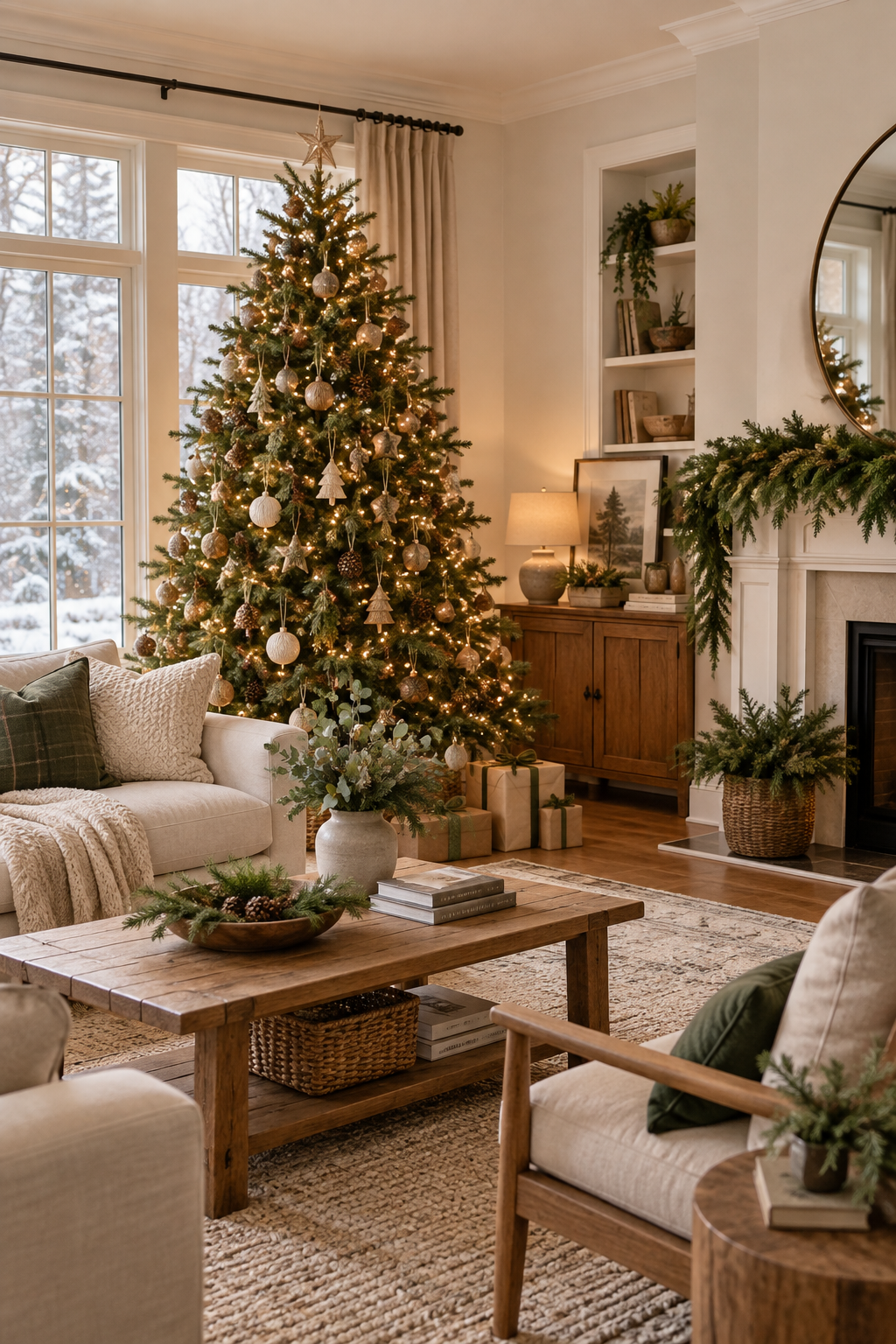
1. Build a Calm Natural Christmas Palette
Begin with three or four colors that already suit your home: warm white, oatmeal, walnut and deep evergreen make a dependable foundation. Add small amounts of bronze, aged brass or muted brown when the room needs contrast. Repeating the same palette on the tree, mantel and nearby textiles helps different decorations feel intentional. Before buying anything, remove a few everyday accessories so greenery and wood can command attention without creating visual clutter.
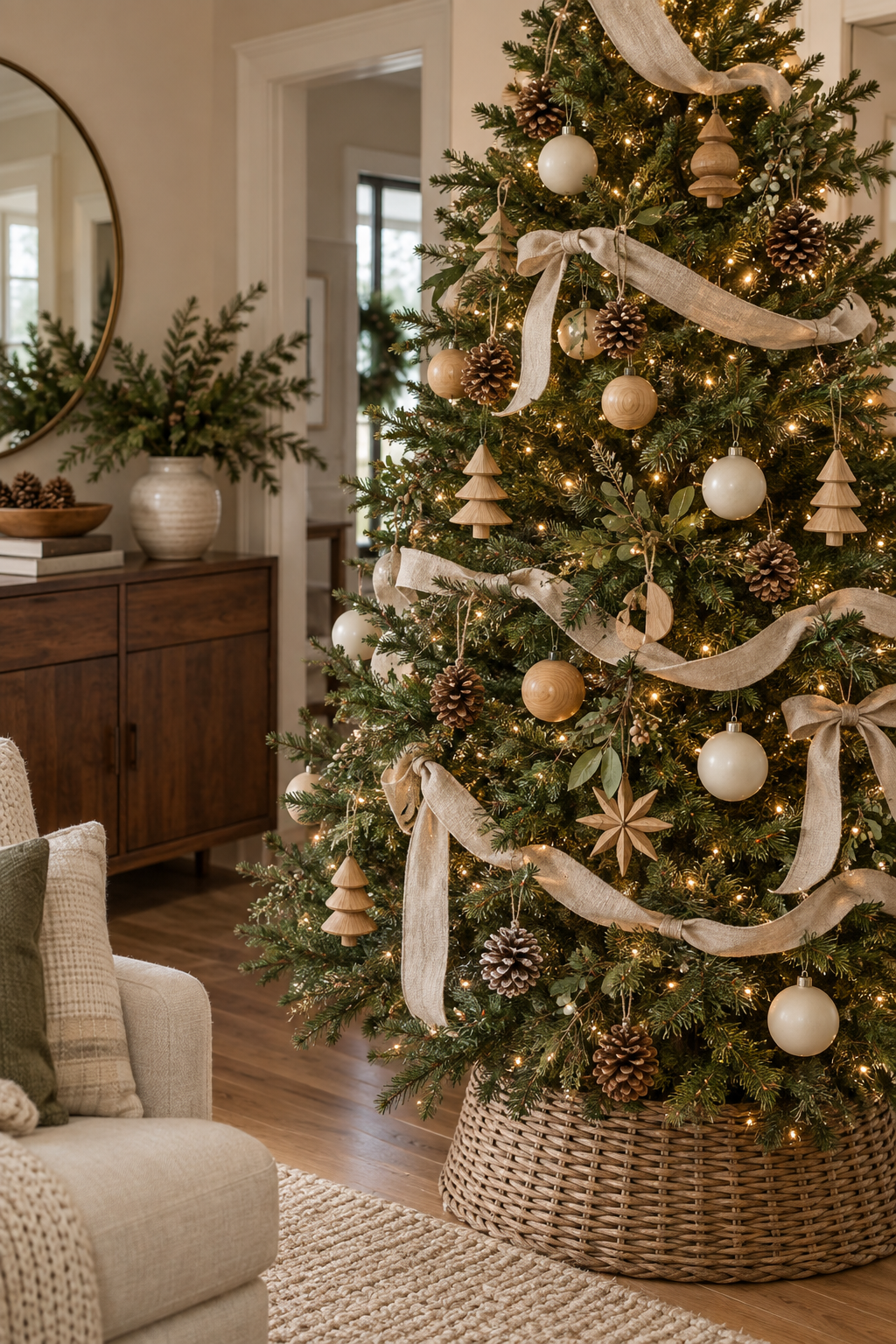
2. Decorate the Tree with Wood and Linen
Choose simple wooden ornaments, matte baubles, pinecones and softly tied linen ribbon for a tree that feels layered but unforced. Vary ornament size while keeping the colors restrained, then place the most detailed pieces near eye level. Warm white LED lights bring out the texture of bark and fabric. If young children or pets share the room, reserve fragile ornaments for upper branches and secure the tree according to its manufacturer’s directions.
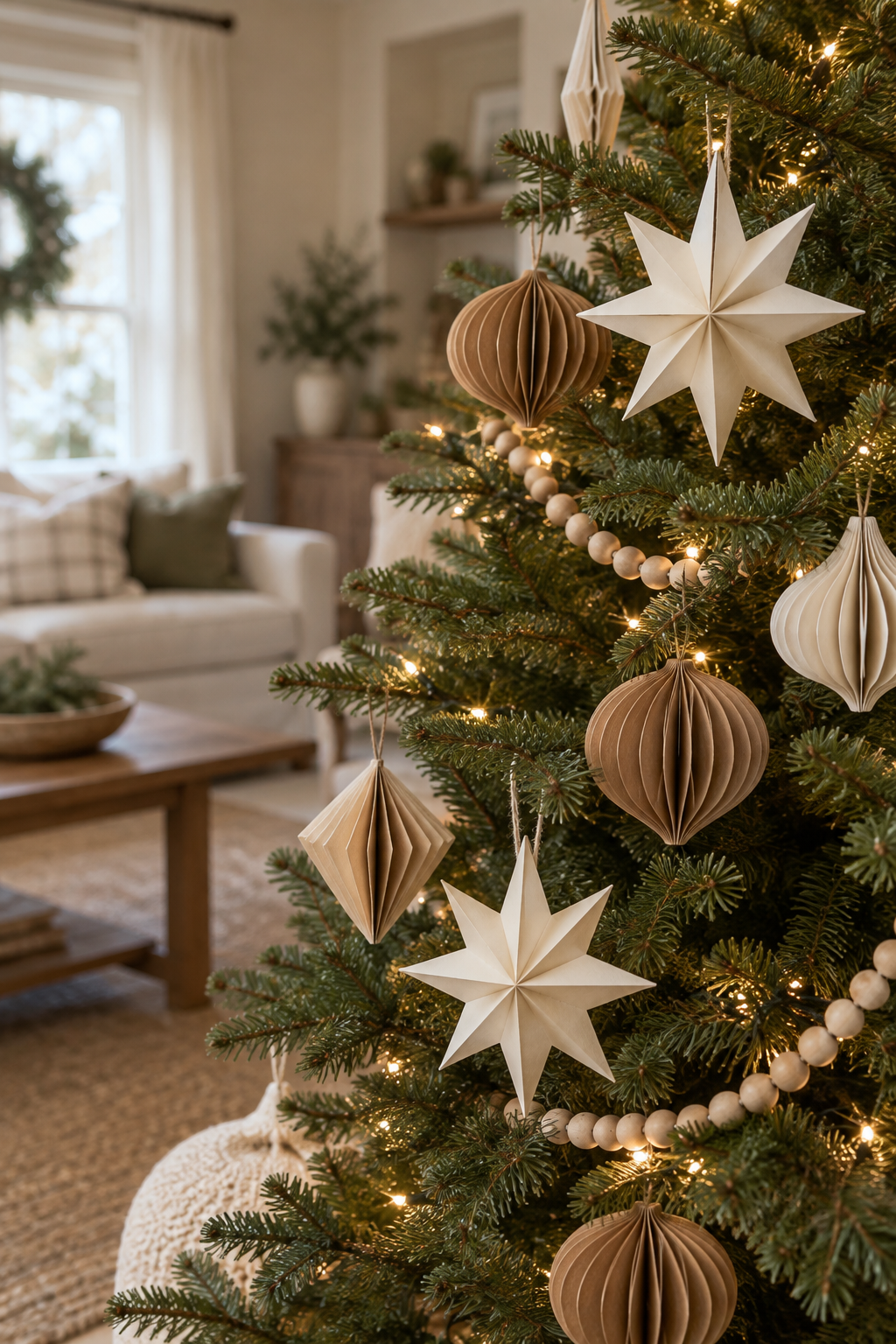
3. Add Handmade Paper Ornaments
Folded stars, pleated circles and simple paper houses add dimension without introducing shiny finishes. Kraft paper feels rustic, while ivory or recycled cotton paper creates a quieter Scandinavian look. Make a small collection in two shapes rather than covering the tree with many unrelated designs. Keep paper decorations away from open flames and hot bulbs; modern cool-running LED lights are the safer, more energy-conscious companion for this lightweight material.
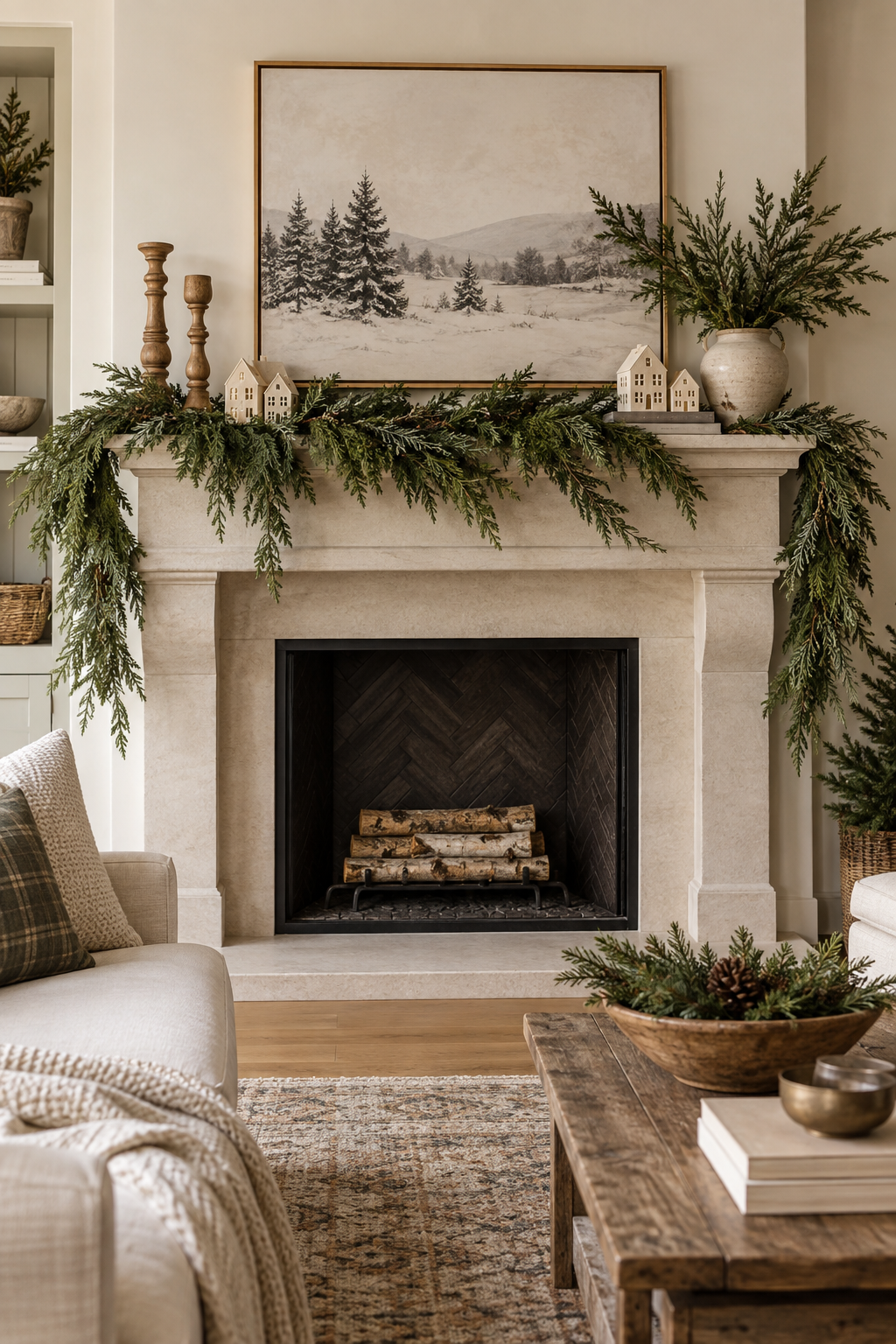
4. Drape a Loose Evergreen Mantel Garland
A relaxed garland looks more natural when its branches vary slightly in length and direction. Combine realistic faux cedar with a few responsibly sourced fresh clippings, or use one material consistently for easier care. Anchor the arrangement securely and leave generous clearance around the fireplace opening, vents and hot surfaces. Wood candlesticks, unglazed ceramic houses and one framed winter print can complete the mantel without competing with the foliage.
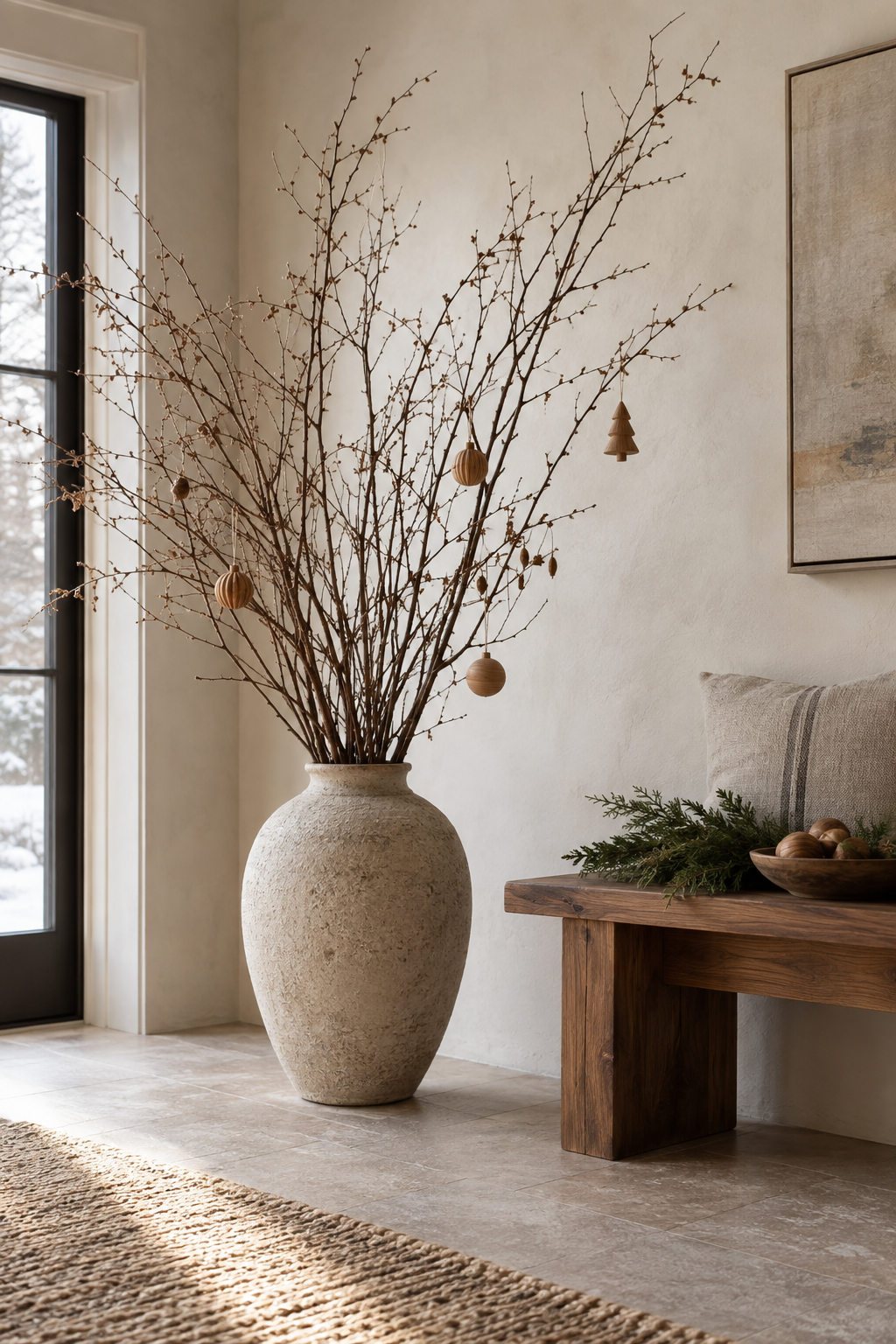
5. Display Sculptural Winter Branches
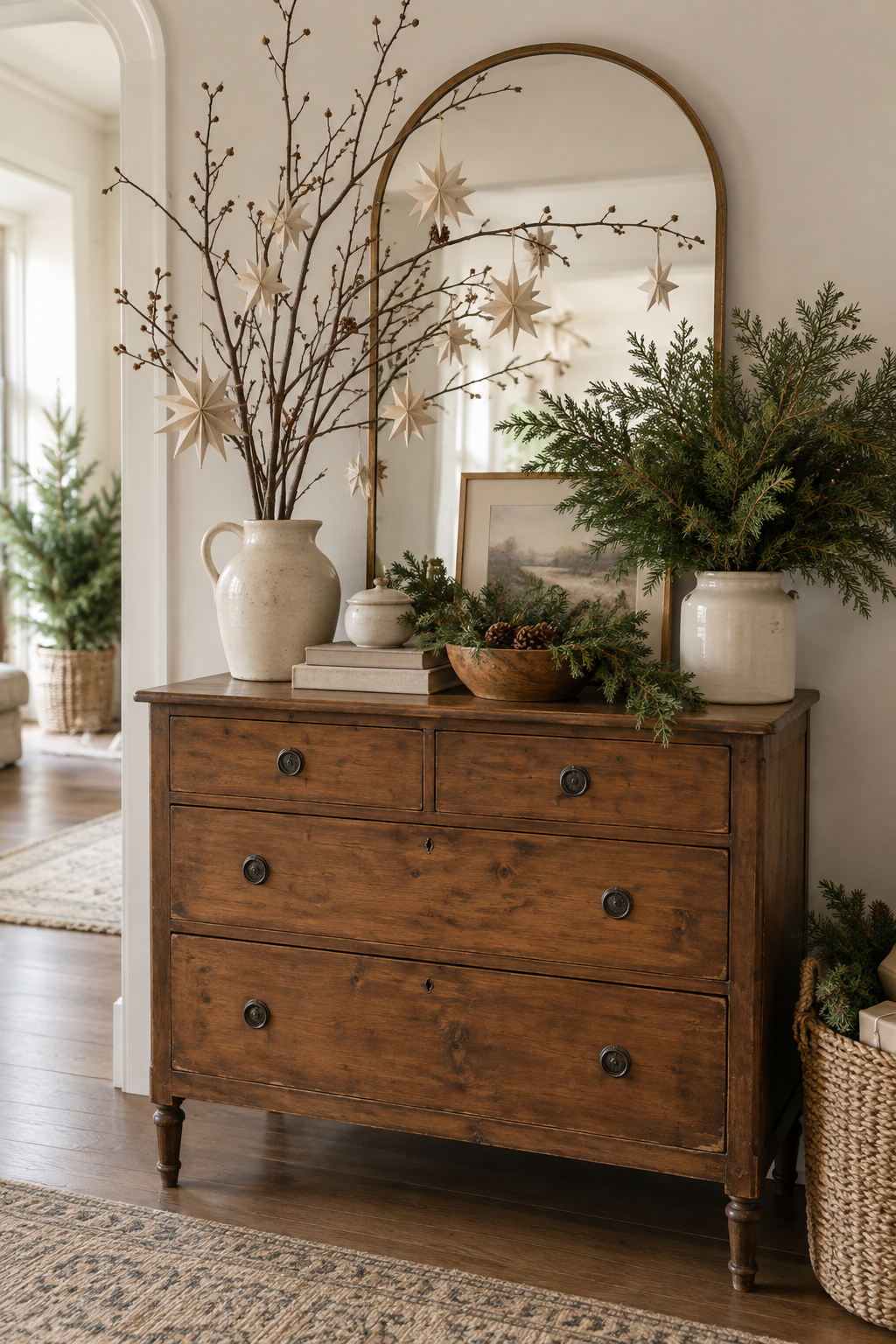
Bare branches offer height and an elegant winter silhouette when a full floral arrangement would feel too busy. Place a few clean, dry stems in a weighted stoneware vessel and let negative space remain between them. Tiny wooden ornaments or paper stars can turn the arrangement into a subtle seasonal tree. Check that the vase cannot tip and position long branches away from walkways, doors, ceiling fans and delicate wall finishes.
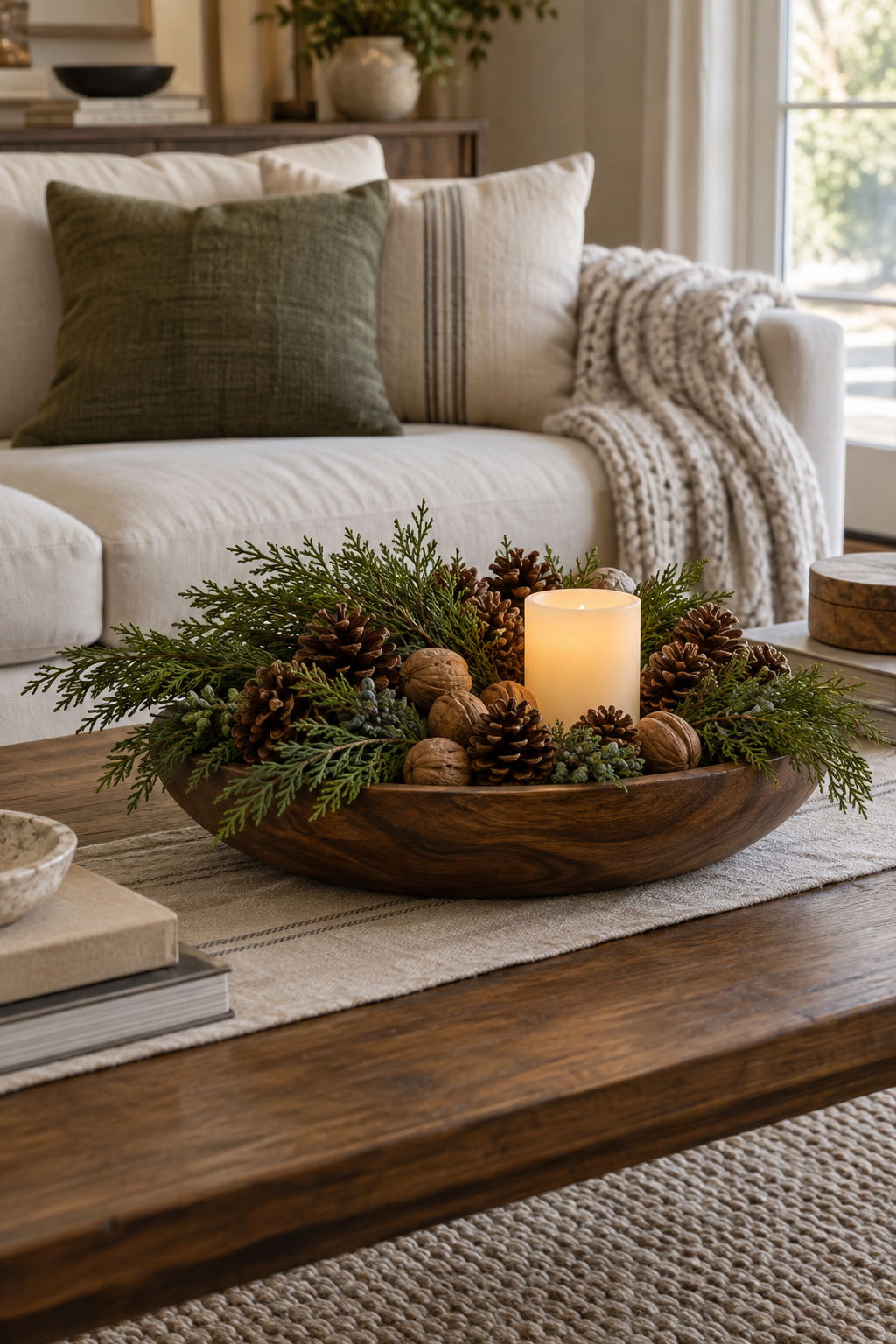
6. Create a Low Coffee Table Centerpiece
Keep the centerpiece low enough for conversation and compact enough to leave room for cups and books. A shallow wood bowl filled with pinecones, walnuts and short evergreen clippings provides varied texture in one contained form. Add a flameless candle for a warm evening glow without placing a flame near dry plant material. A linen runner or wool coaster beneath the bowl protects the surface and visually connects it to nearby neutral textiles.
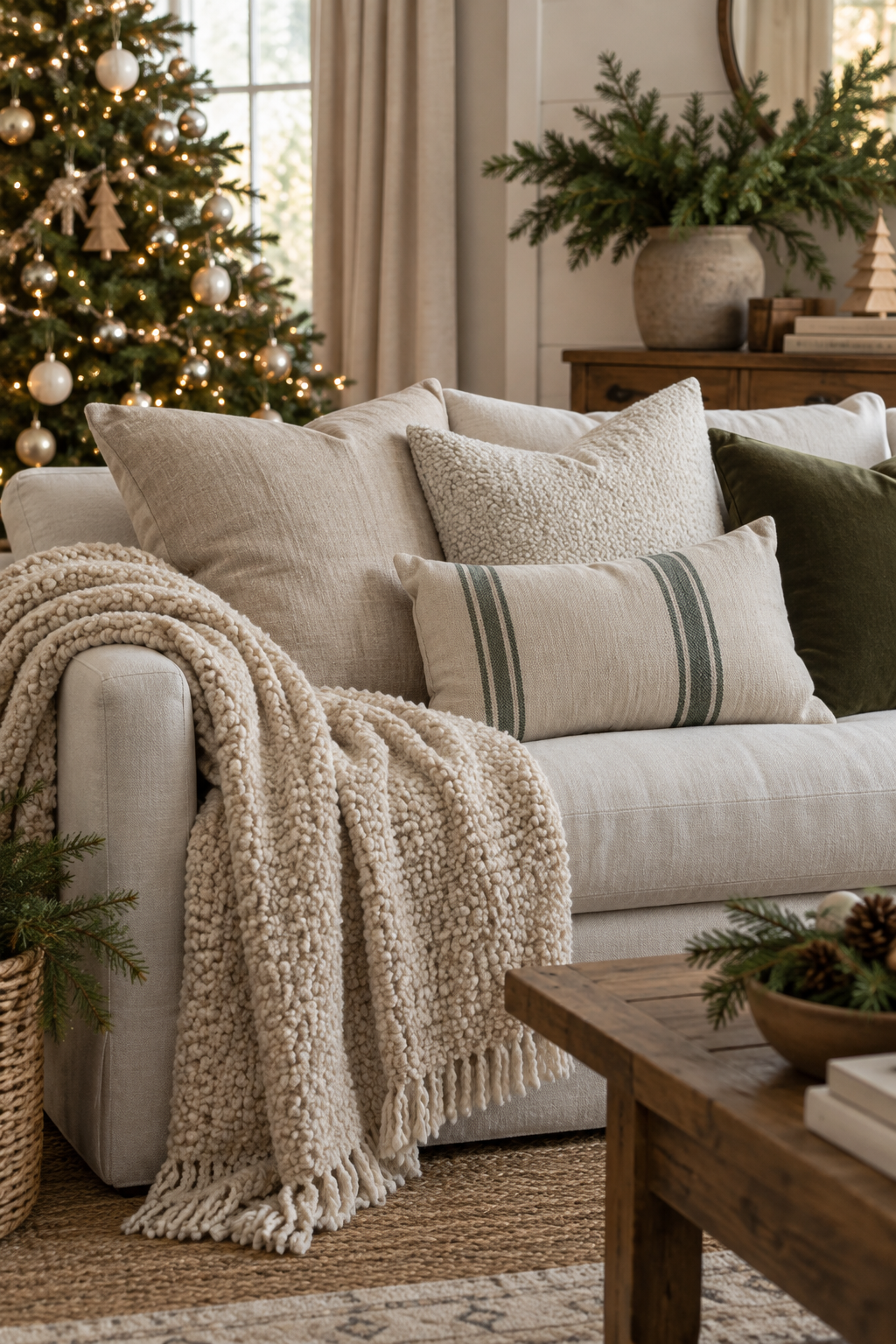
7. Layer Oatmeal and Wool Textiles
Seasonal comfort does not require pillows printed with holiday messages. Mix oatmeal linen, nubby wool, brushed cotton and a restrained evergreen stripe instead. Two pillow covers and one folded throw are often enough to shift a sofa toward winter while preserving comfortable seating. Choose washable covers in busy households, avoid loose fringe around curious pets, and store the textiles together after the season so the palette is easy to repeat next year.
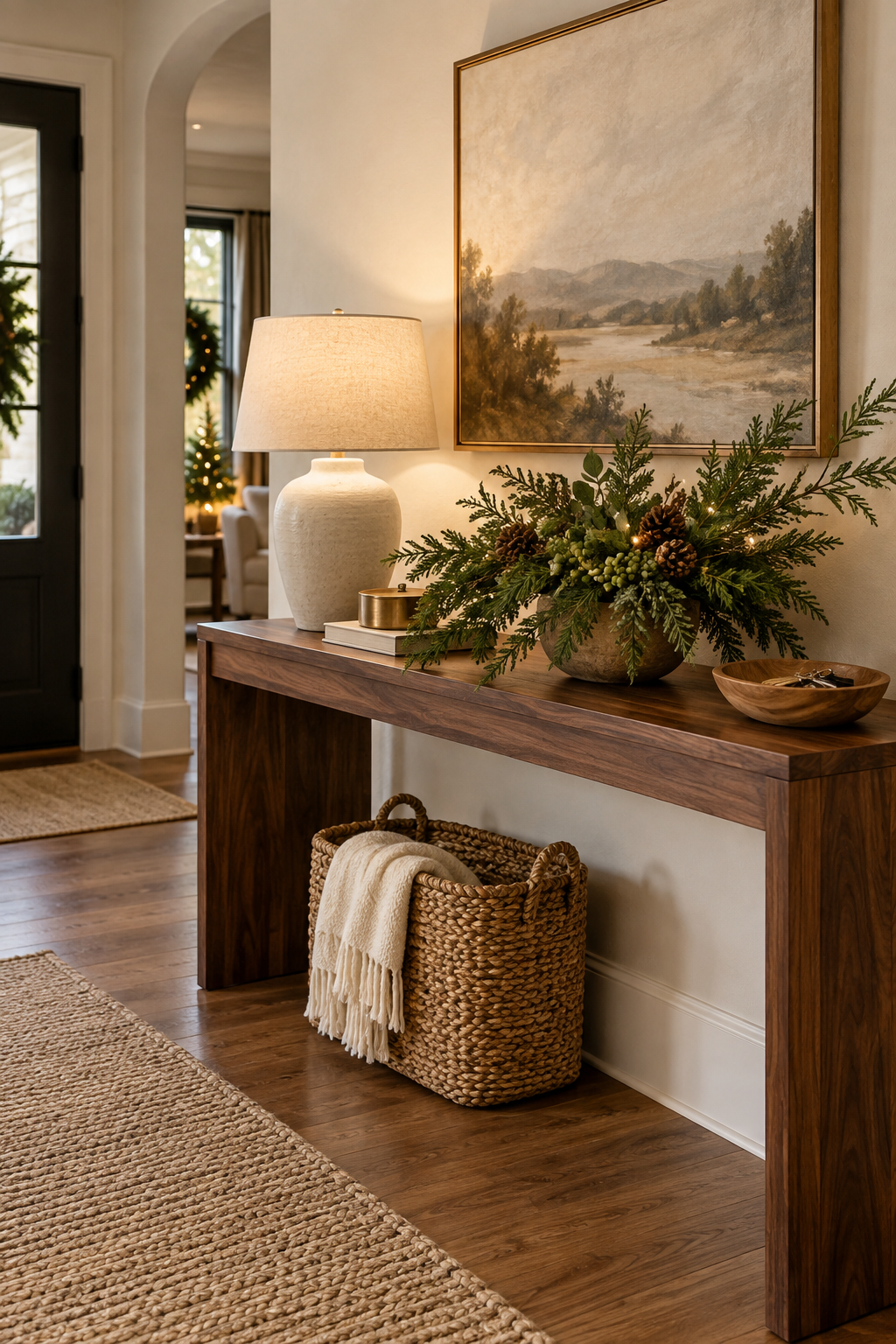
8. Highlight a Wood Console with Greenery
Let a console’s natural grain become part of the display rather than hiding it beneath layers of decor. Run a short asymmetrical branch arrangement across one side, then balance it with a ceramic lamp or framed art on the other. A bowl for keys keeps an entry console useful through the holidays. Battery-operated lights can add sparkle, but conceal the battery box and check that cords or trailing stems cannot snag coats and bags.
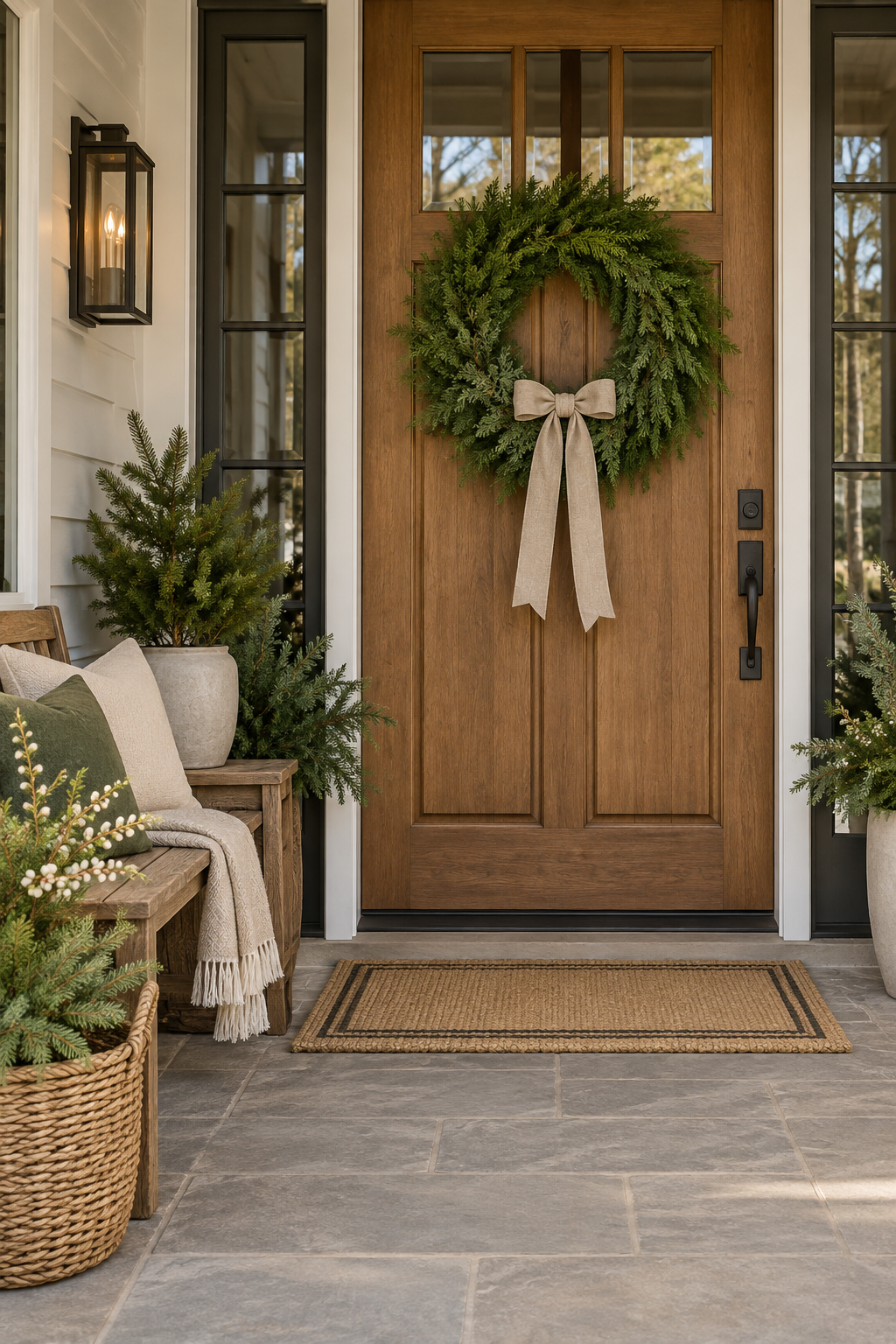
9. Welcome Guests with a Cedar Wreath
A simple cedar, pine or mixed-evergreen wreath sets the tone before guests enter. Select a size that leaves the door viewer, handle and house number clear, then finish it with a linen or velvet ribbon in taupe, brown or forest green. Use an approved hanger that will not damage the door. If the wreath is fresh, monitor shedding and moisture; move it away from strong sun or indoor heat to extend its useful life.
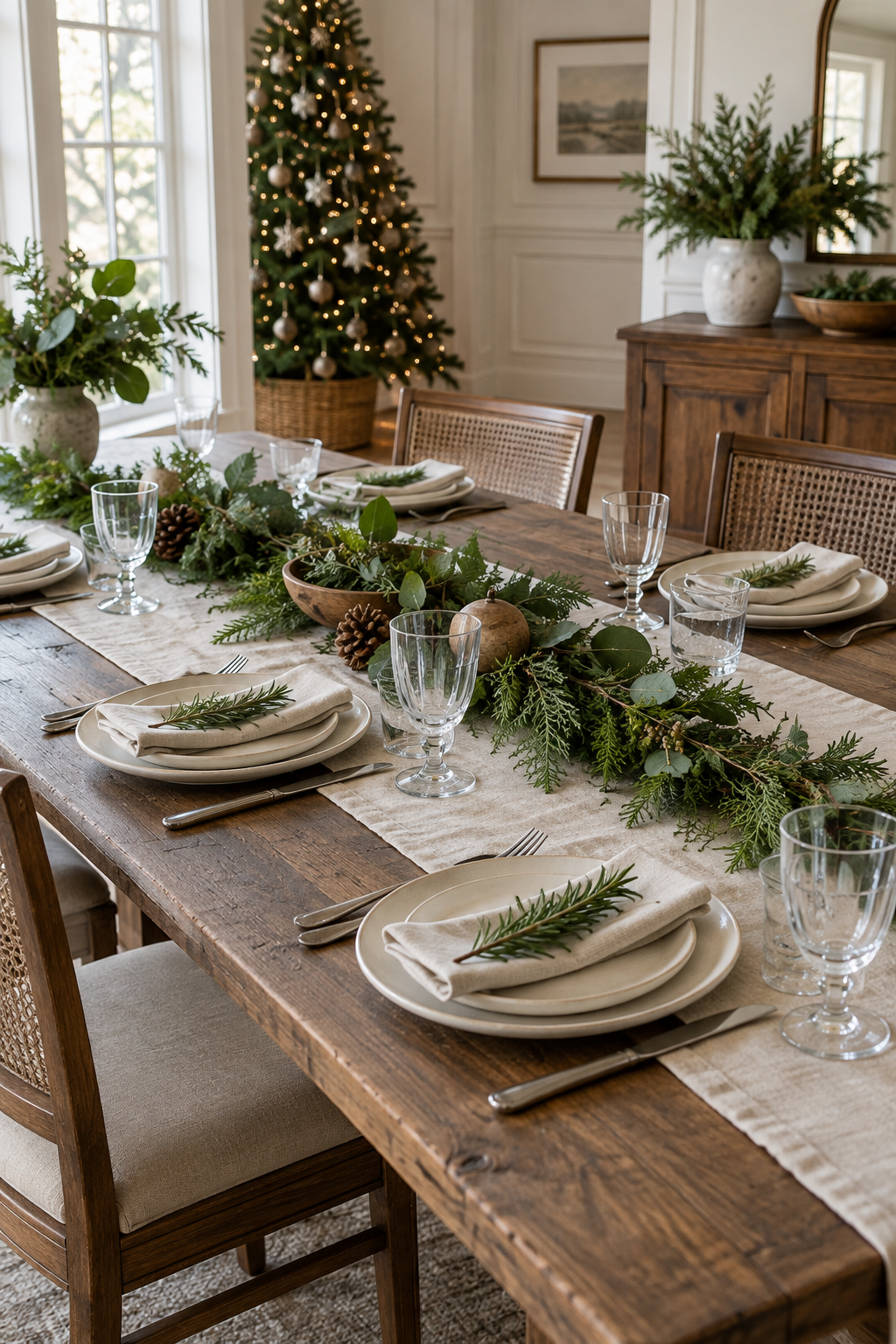
10. Set a Relaxed Linen Christmas Table
Start with a washed-linen runner or individual neutral napkins so the wood table remains visible. Everyday cream dishes, clear glassware and simple flatware can look celebratory when each place receives a rosemary or cedar sprig. Use food-safe, non-toxic plant material and remove anything that may shed onto a plate. Leave the center low and uncluttered, giving serving dishes and elbows enough space for an enjoyable meal rather than a purely photographic arrangement.
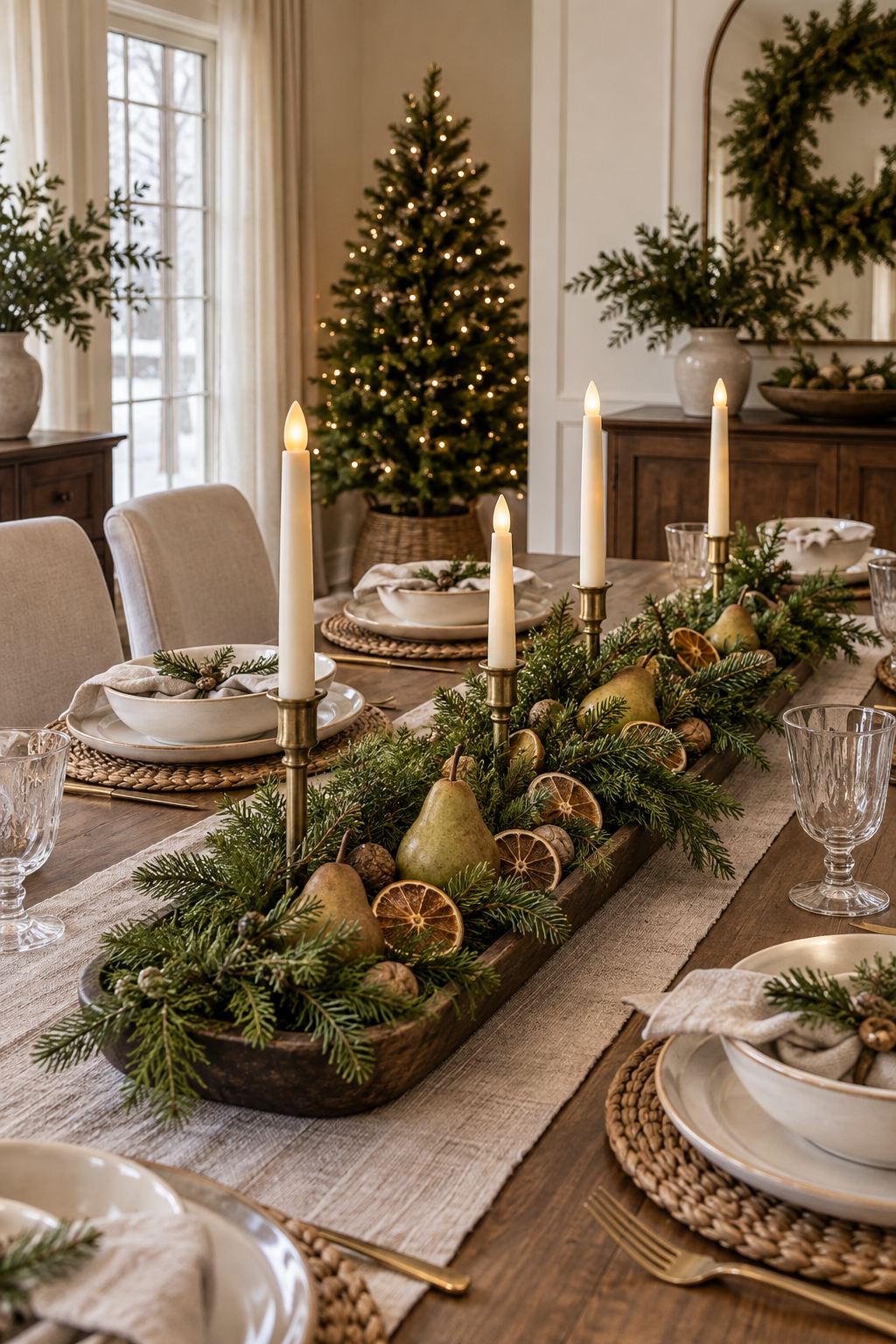
11. Make a Low Greenery Centerpiece
Arrange short evergreen cuttings down the center of the table, allowing their irregular shapes to create movement. Add pears, dried citrus or unshelled nuts for muted natural color, and repeat the fruit in a nearby bowl for continuity. Keep the design below eye level and use flameless tapers when foliage is present. A narrow tray beneath loose elements makes the centerpiece easy to lift away when dinner requires more serving space.
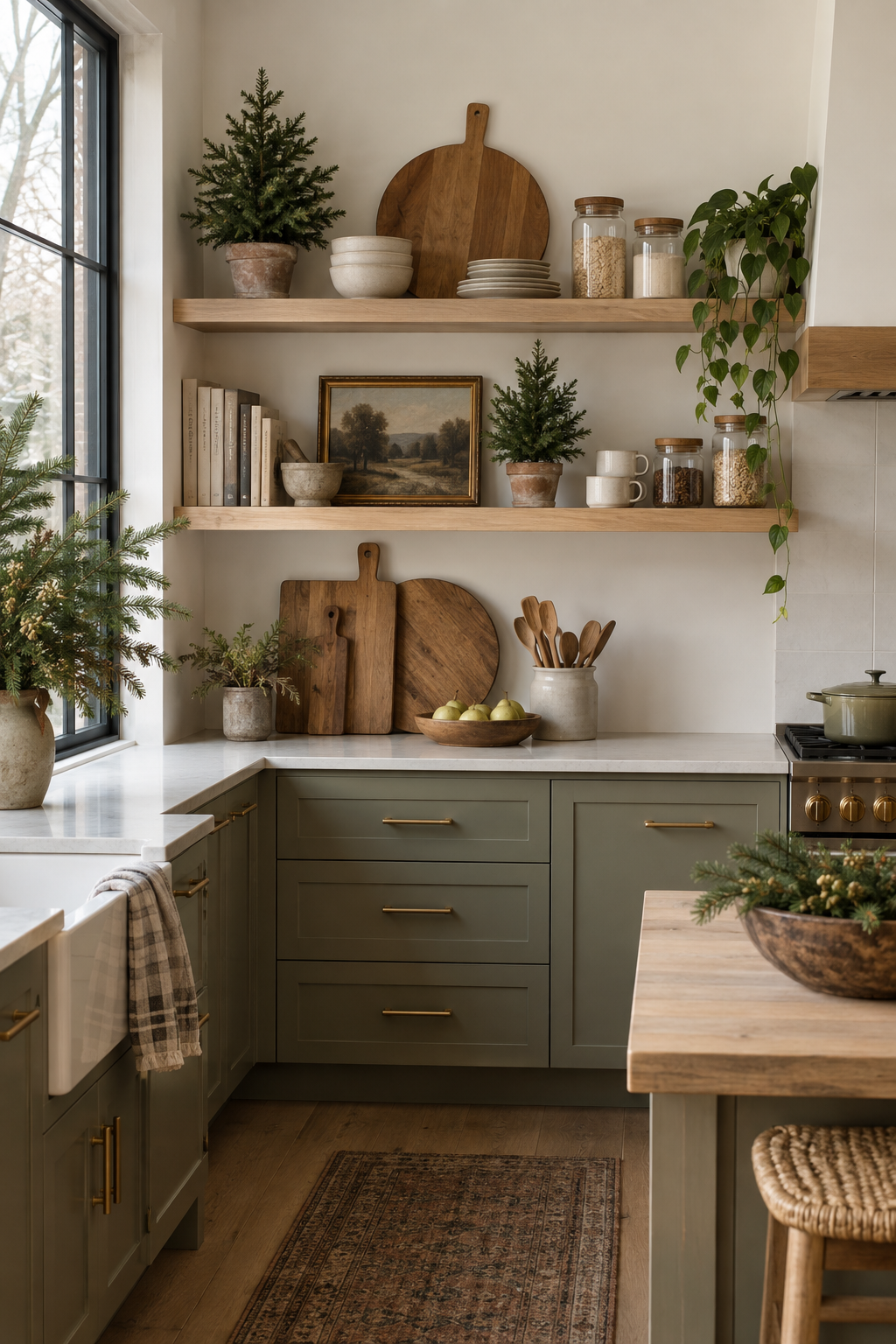
12. Style Kitchen Shelves with Mini Trees
Small potted evergreens or high-quality faux trees bring Christmas into the kitchen without sacrificing counters. Group one or two among wood boards, cream pottery and jars already in use. Do not crowd frequently reached shelves or place foliage above the stove, toaster or sink. Repeating the same simple container—aged terracotta, woven fiber or matte stoneware—keeps the shelves cohesive and makes the seasonal addition feel integrated rather than temporarily stacked.
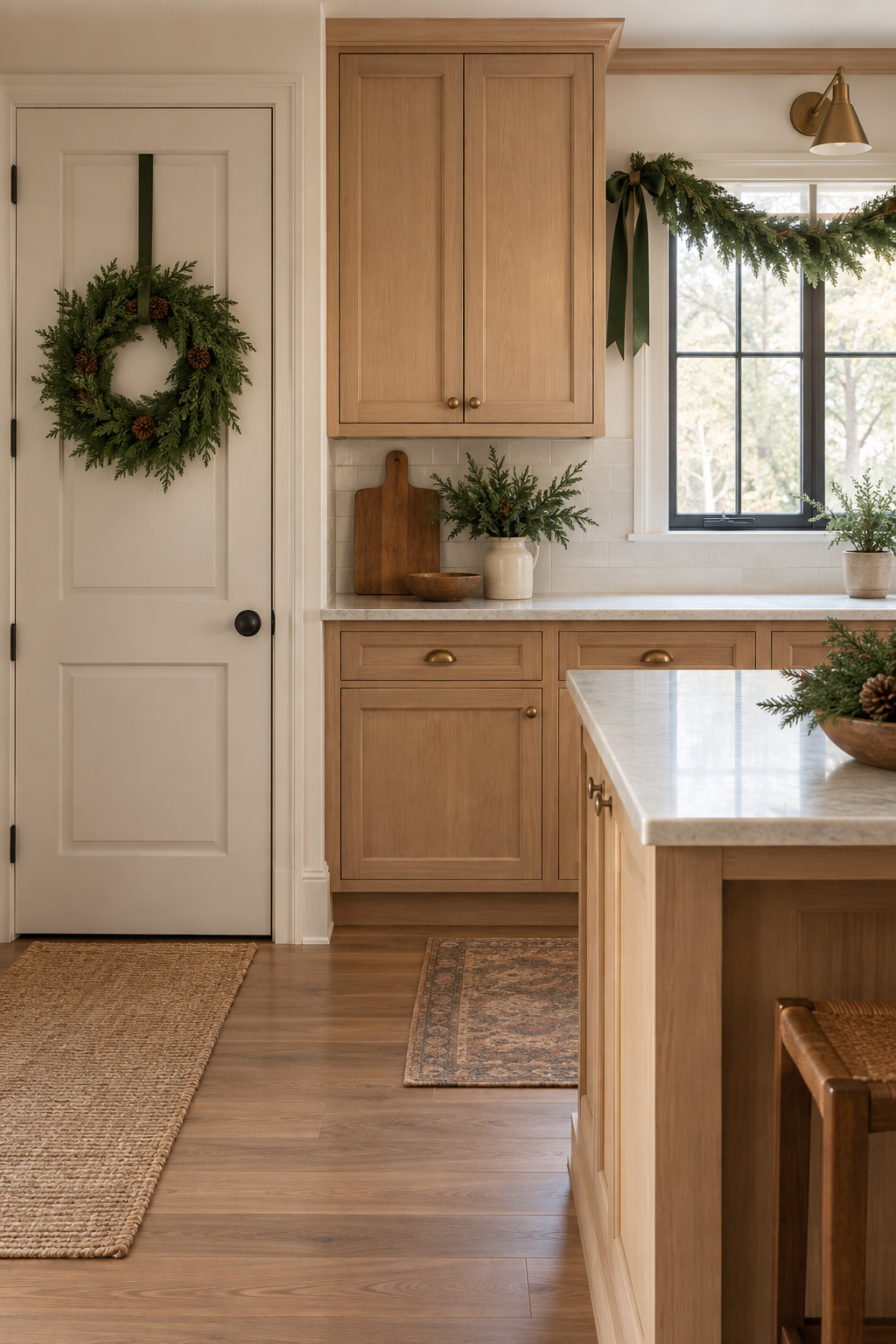
13. Add Greenery to the Kitchen Carefully
A small wreath on a pantry door or a short swag above a window can provide more impact than scattered countertop ornaments. Keep work zones clear and choose locations away from heat, grease, steam and food-preparation surfaces. If you decorate cabinet fronts, use lightweight pieces and removable attachments approved for the finish. One thoughtful green accent is usually enough in a hardworking room where cleanliness and easy movement matter most.
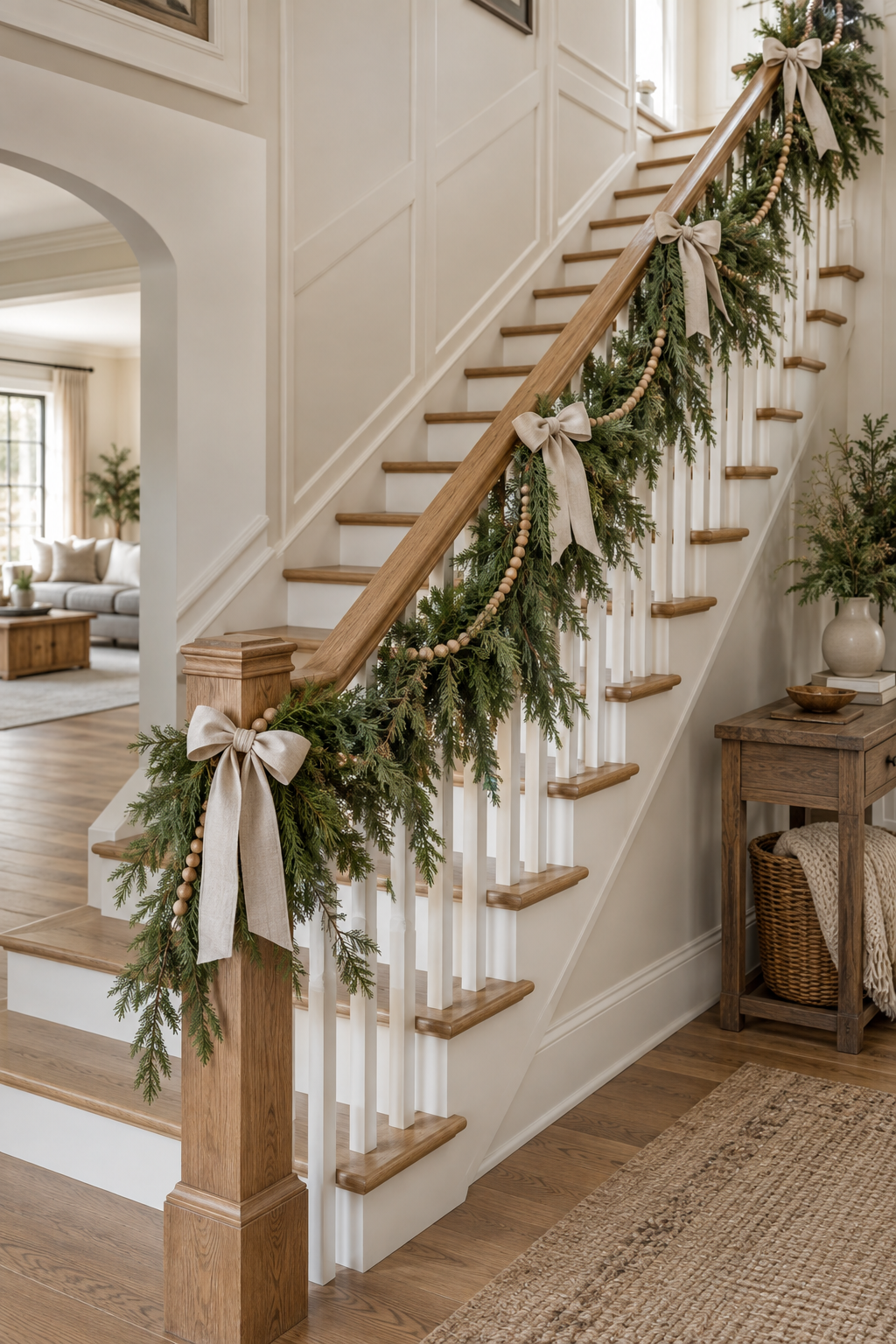
14. Wrap the Banister with an Airy Garland
Follow the line of the rail with a loose garland, allowing small sections of wood to remain visible. Linen bows, wood beads or dried seed heads can add rhythm at widely spaced intervals. Attach everything firmly to the outside of the banister so the handrail remains fully graspable. Avoid loose wire, low-hanging branches and ornaments near stair treads, particularly in homes with children, older guests or pets.
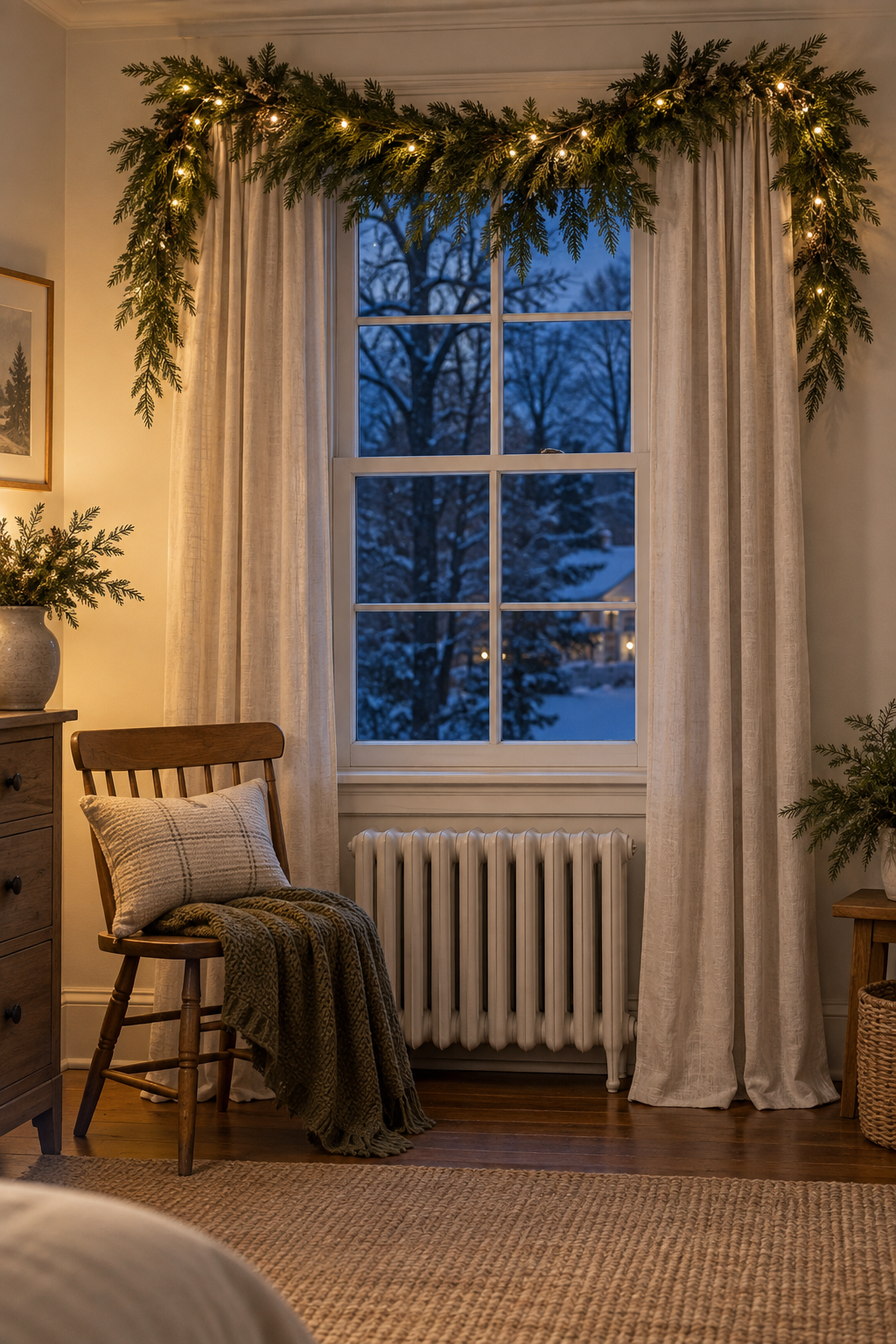
15. Frame a Window with Simple Greenery
A short evergreen swag above a window emphasizes winter views without covering daylight. Secure it to appropriate supports and keep foliage clear of blinds, curtain hardware and heating equipment. During the evening, a strand of warm LED lights gives the window a gentle glow from indoors and outside. In a small room, this single elevated feature can replace several tabletop decorations and keep precious surfaces free.
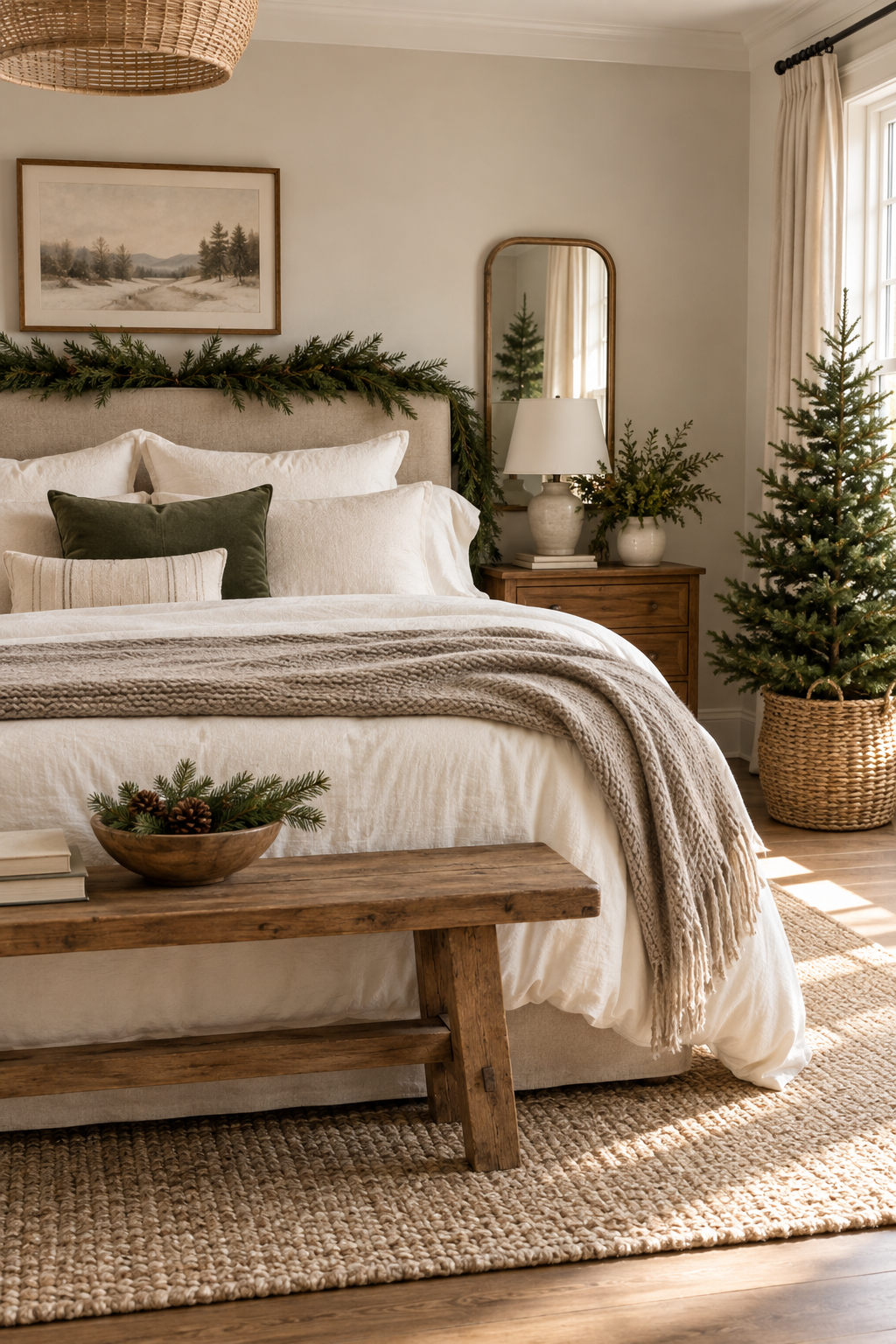
16. Give the Bedroom a Quiet Seasonal Layer
Choose one calm focal point, such as a small unlit tree in a basket, an evergreen wreath or a cedar branch in pottery. Add flannel sheets, an oatmeal throw and one deep-green cushion to make the room feel winter-ready. Avoid bright flashing lights and cluttered bedside displays that interfere with rest. Natural Christmas bedroom decor works best when it supports the room’s peaceful purpose rather than turning it into another entertaining space.
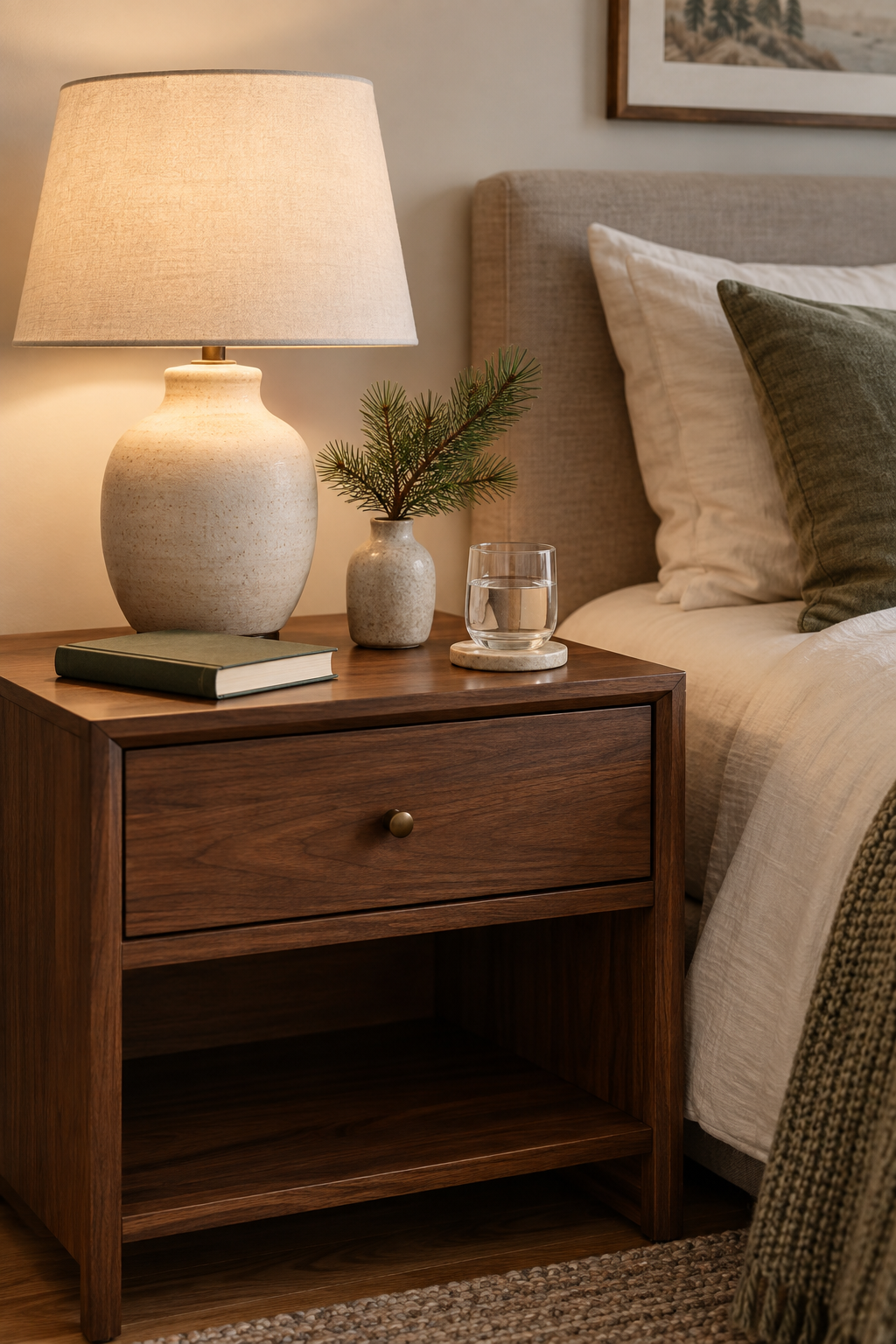
17. Style a Simple Holiday Nightstand
Preserve space for a lamp, water and a book, then add only one seasonal detail. A tiny pine clipping in a narrow stoneware vase or a single wooden tree creates enough atmosphere. Use faux greenery if sap, needles or watering would be inconvenient. Keeping the surface disciplined makes cleaning easier and reduces the chance of knocking decor over in the dark, while still carrying the home’s natural palette into a private room.
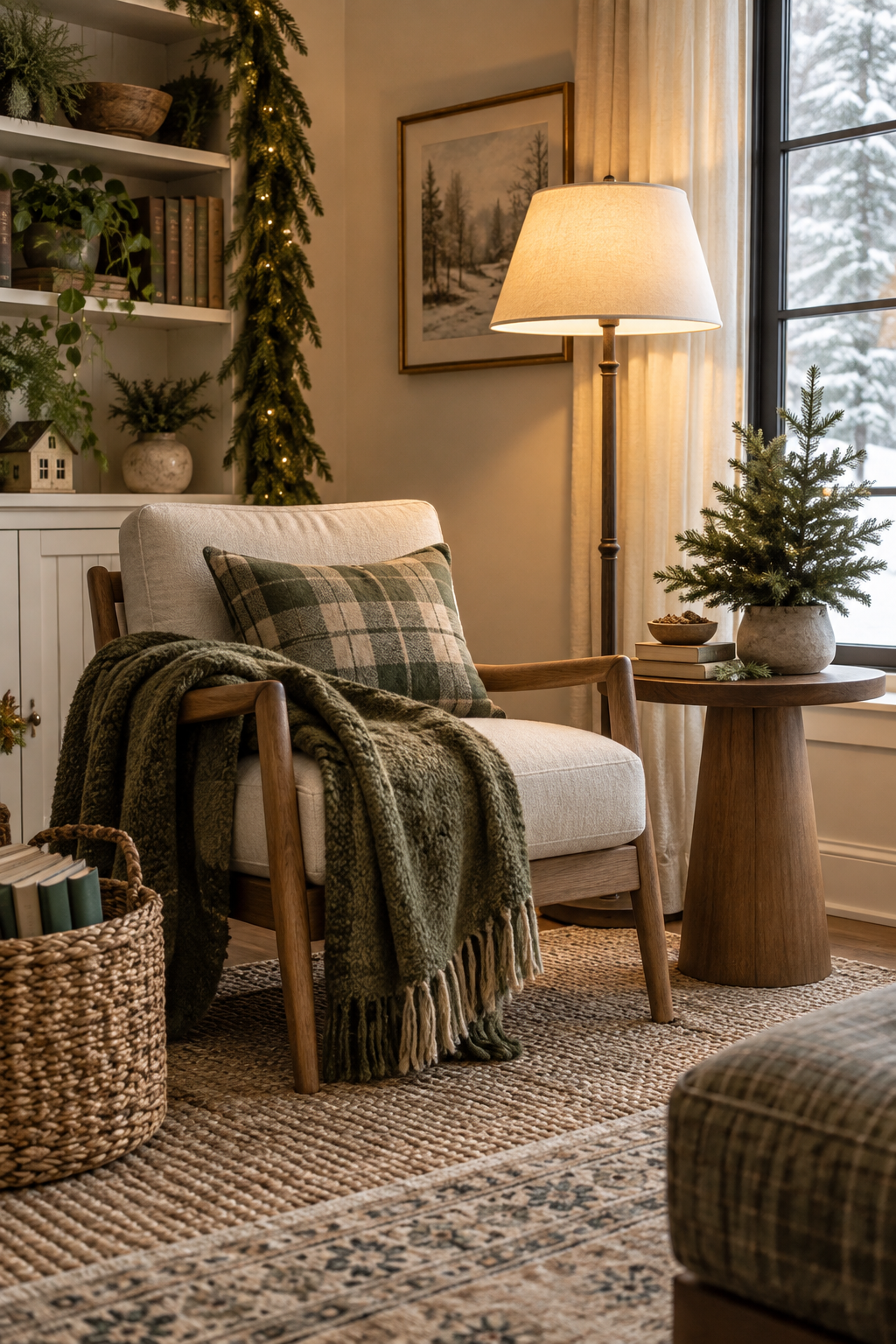
18. Warm a Reading Nook for Christmas
Layer a supportive chair with a wool throw, add a shaded floor lamp and place a tiny tree or evergreen clipping on a stable side table. A woven basket can hold current books without becoming an overflowing storage spot. Keep the lamp cord out of the walking path and choose a table that comfortably supports a warm drink. The result should remain a functional reading corner first, with seasonal materials enriching rather than overwhelming it.
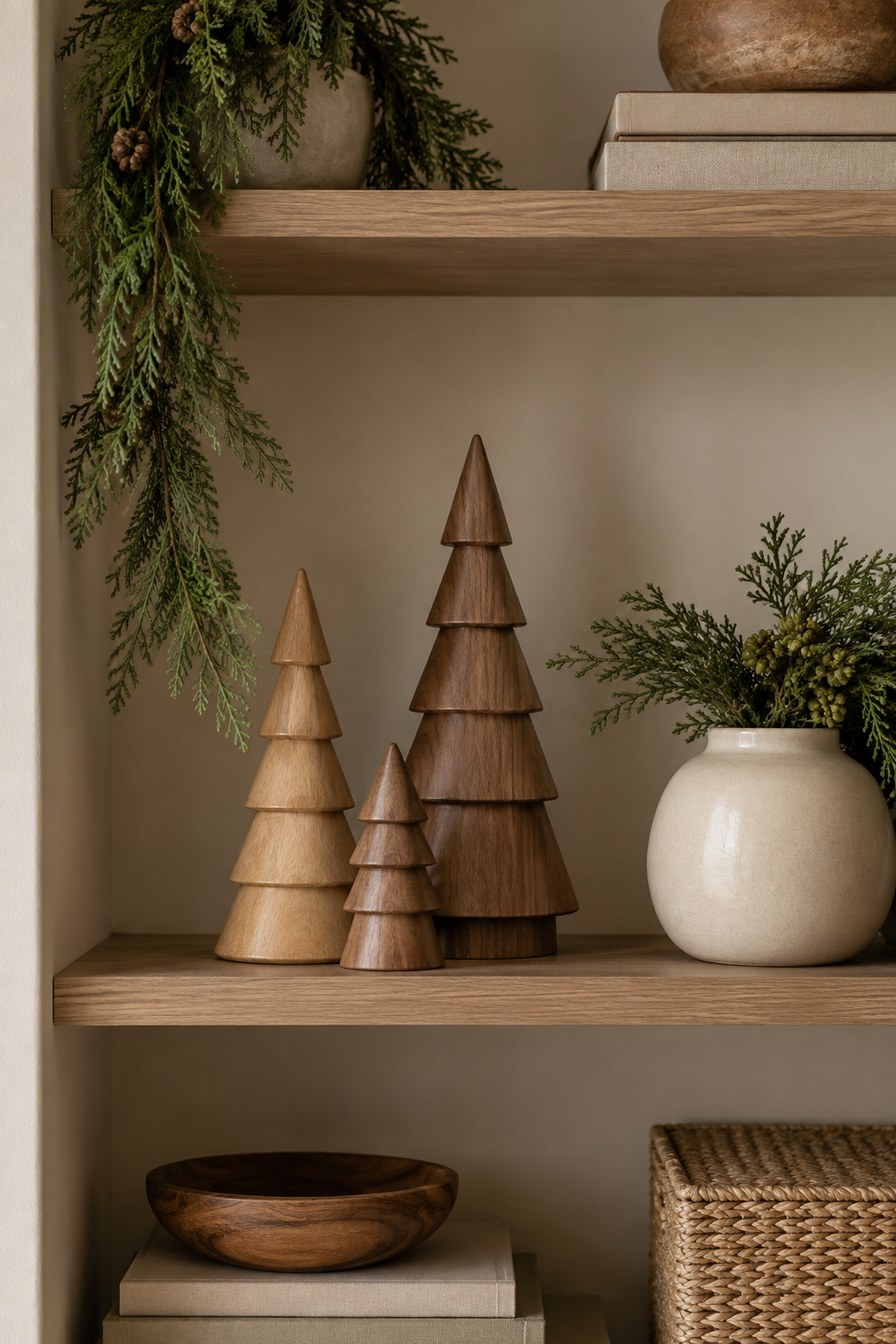
19. Group Turned Wood Trees
Wooden tree silhouettes provide a lasting alternative to disposable seasonal figurines. Arrange three in different heights, ideally made from the same or closely related wood tones. Give the group breathing room on a shelf, sideboard or deep windowsill and let the grain supply the ornament. Combining smooth and lightly carved surfaces adds interest, but too many finishes can weaken the calm effect. Choose stable bases and avoid narrow ledges.
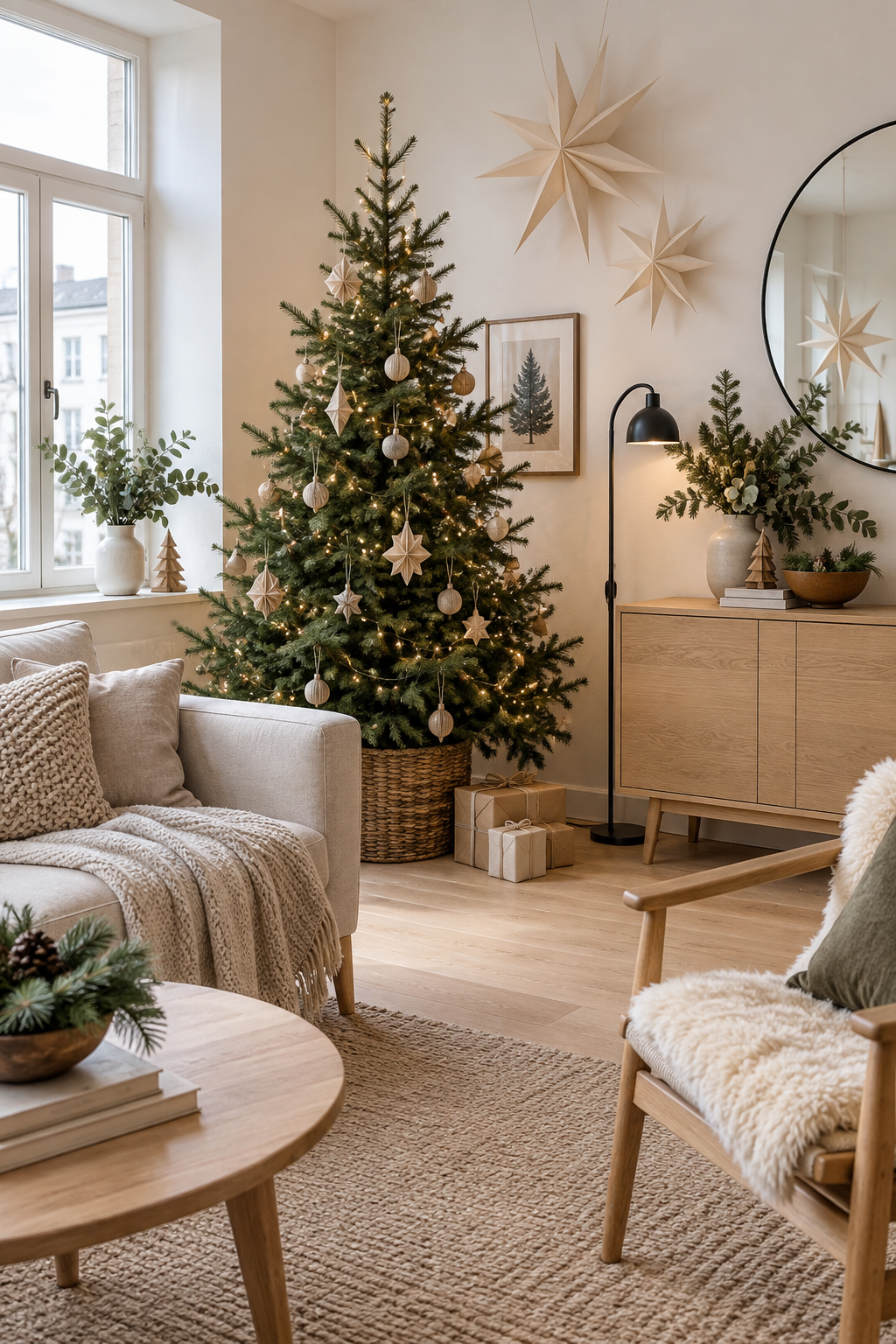
20. Try a Scandinavian Natural Look
Use pale wood, warm white, soft gray and evergreen for an airy interpretation of Christmas. Paper stars, simple candleholders, restrained greenery and handcrafted ornaments introduce tradition without heavy decoration. Include one darker note—perhaps black iron, walnut or deep green—to keep the pale scheme from looking washed out. Emphasize useful objects and open space, a combination that makes this approach particularly effective in compact apartments.
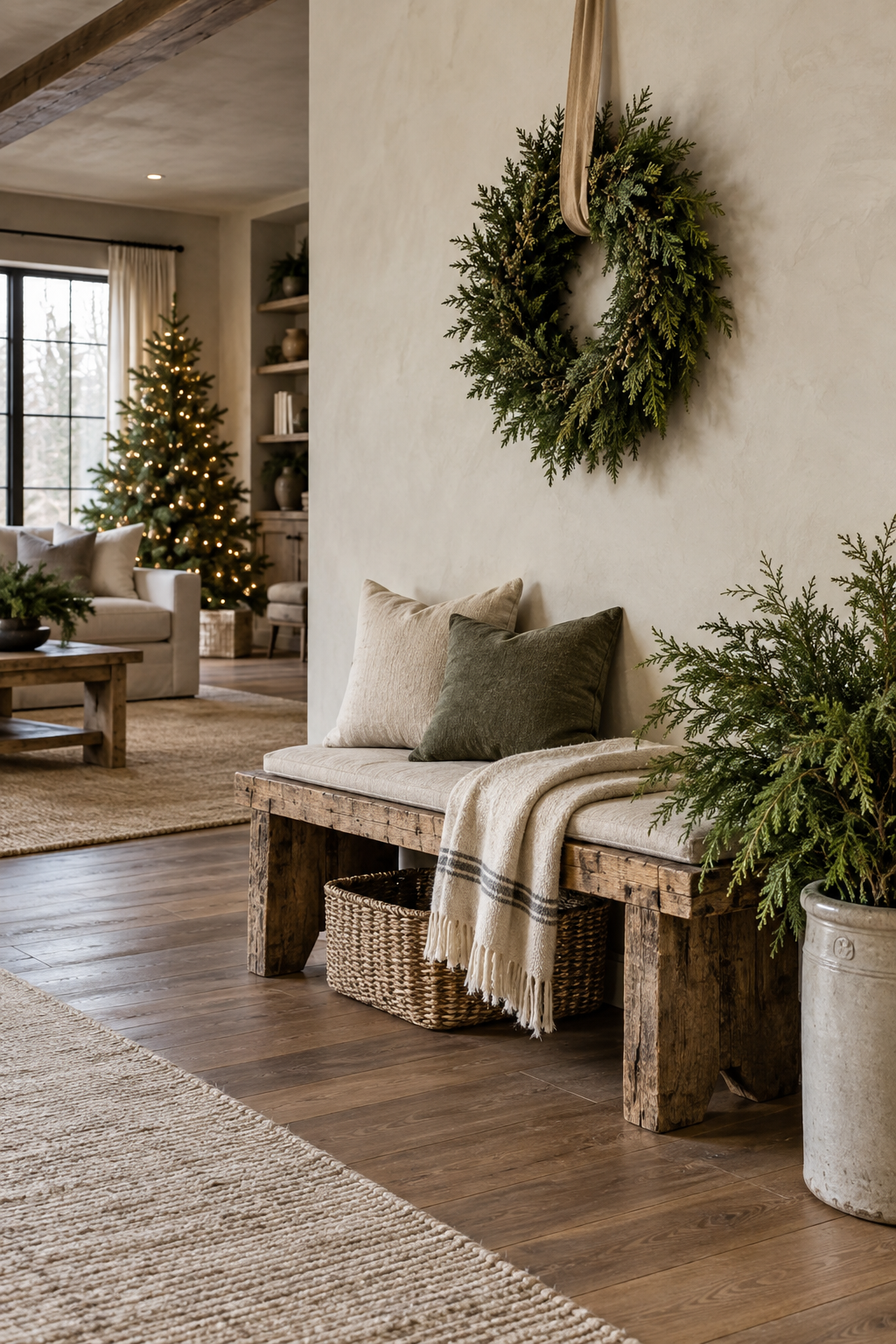
21. Refine Rustic Christmas Style
Pair one or two weathered elements with cleaner contemporary pieces. A reclaimed wood bench, stone crock or vintage basket gains sophistication beside tailored linen and a simple evergreen wreath. Avoid filling every surface with distressed signs and themed accessories. The contrast between timeworn texture and uncluttered styling creates character while allowing a rustic room to feel current. Inspect old pieces for splinters, unstable joints or finishes that could transfer.
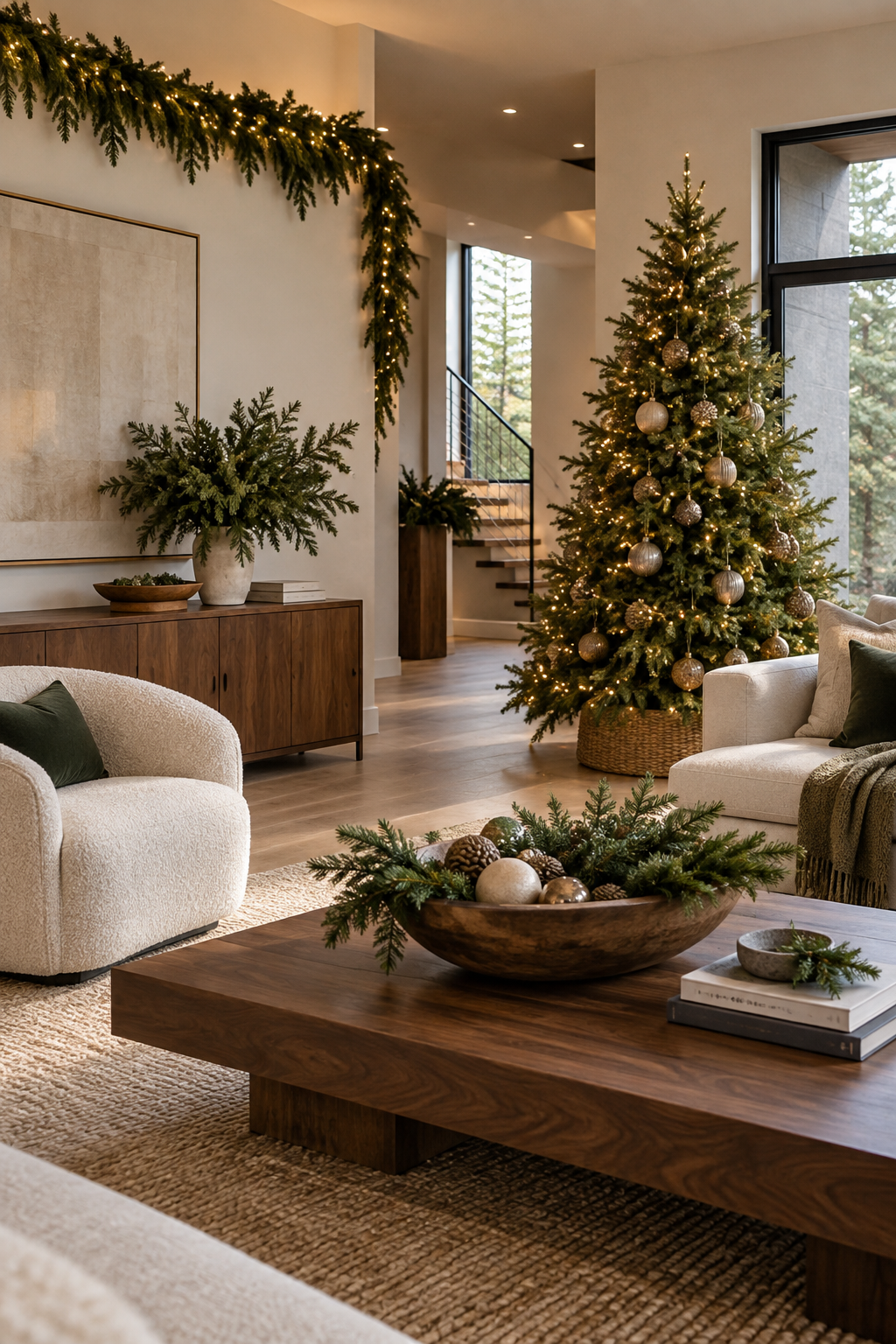
22. Make Modern Rooms Feel Festive
In a modern interior, favor strong silhouettes and fewer, larger gestures. A sculptural evergreen tree, one generous garland and a substantial wood bowl can communicate the season more effectively than dozens of small items. Match ribbon and ornament tones to existing upholstery, then use warm light to soften crisp architecture. Preserving clear surfaces and visible lines ensures natural texture adds warmth without changing the room’s essential contemporary character.
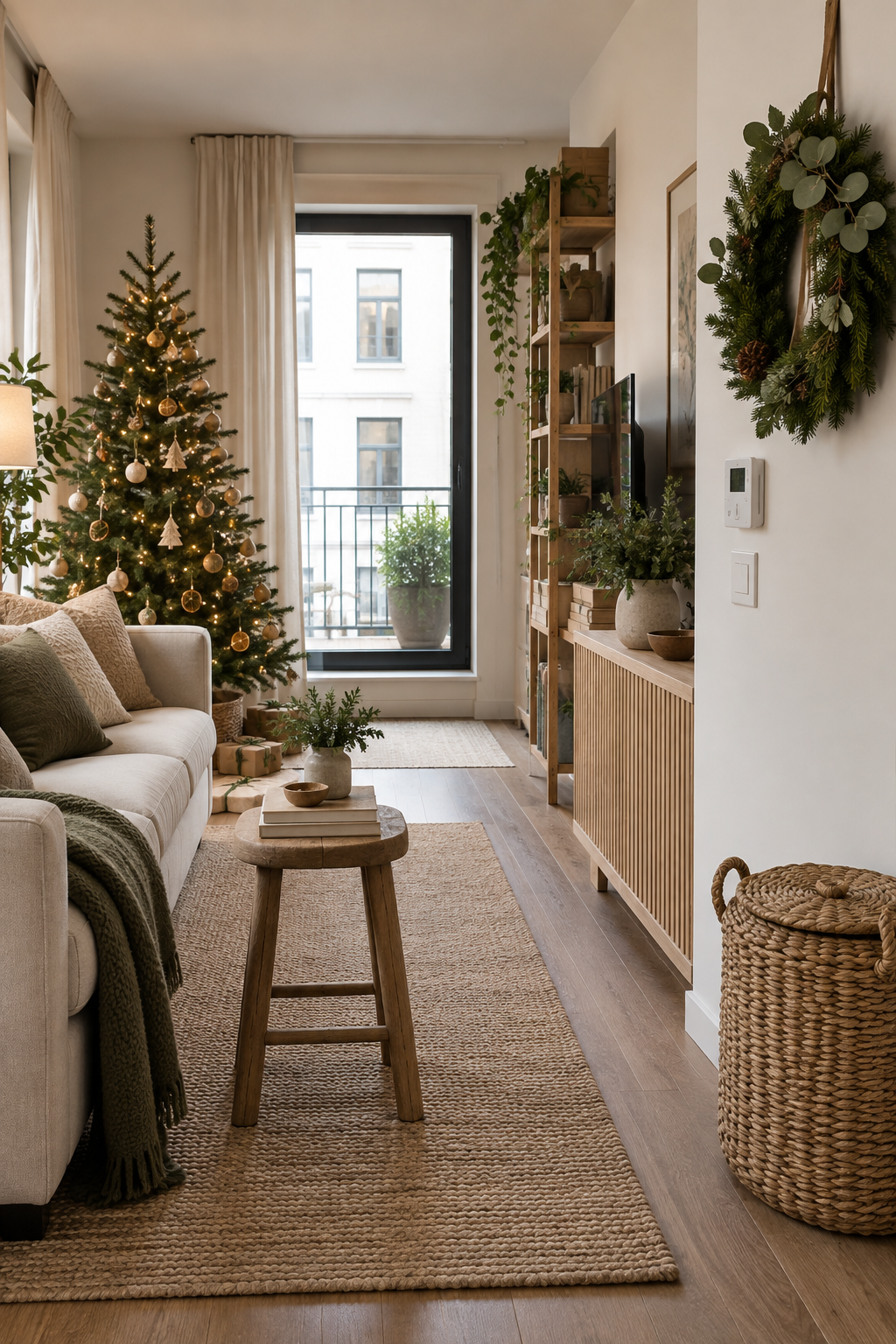
23. Adapt Natural Decor to a Small Apartment
Select a slim tree, tabletop tree or substantial wall wreath as the main focal point. Decorate vertically with a window swag or one high shelf rather than using valuable floor space. A lidded basket can store blankets now and ornaments later, while a wood stool can act as a plant stand or extra seat. Maintain clear paths to doors, windows and heating controls, and confirm rental rules before attaching decorations.
24. Create a Budget-Friendly Natural Display
Shop your home before purchasing seasonal pieces. Gather an existing wood bowl, neutral books, glass jars and cream pottery, then add responsibly collected fallen branches or inexpensive grocery-store greenery. Handmade paper ornaments create volume for very little cost. Thrifted baskets and candlesticks can extend the look when they are stable and clean. Limiting the display to one surface often produces a stronger result than spreading a small budget thinly across every room.

25. Wrap Gifts in Kraft Paper and Cotton Ribbon
Use kraft or recycled paper as a consistent base, then distinguish gifts with cotton ribbon, twine, paper labels and small botanical illustrations. A short rosemary sprig may be added immediately before gifting, but avoid placing fresh greenery on packages weeks in advance. Skip plastic glitter and bulky disposable toppers. The restrained wrapping becomes part of the room’s decor beneath the tree and is easier to coordinate, store and recycle after opening.
26. Use Dried Citrus as a Warm Accent
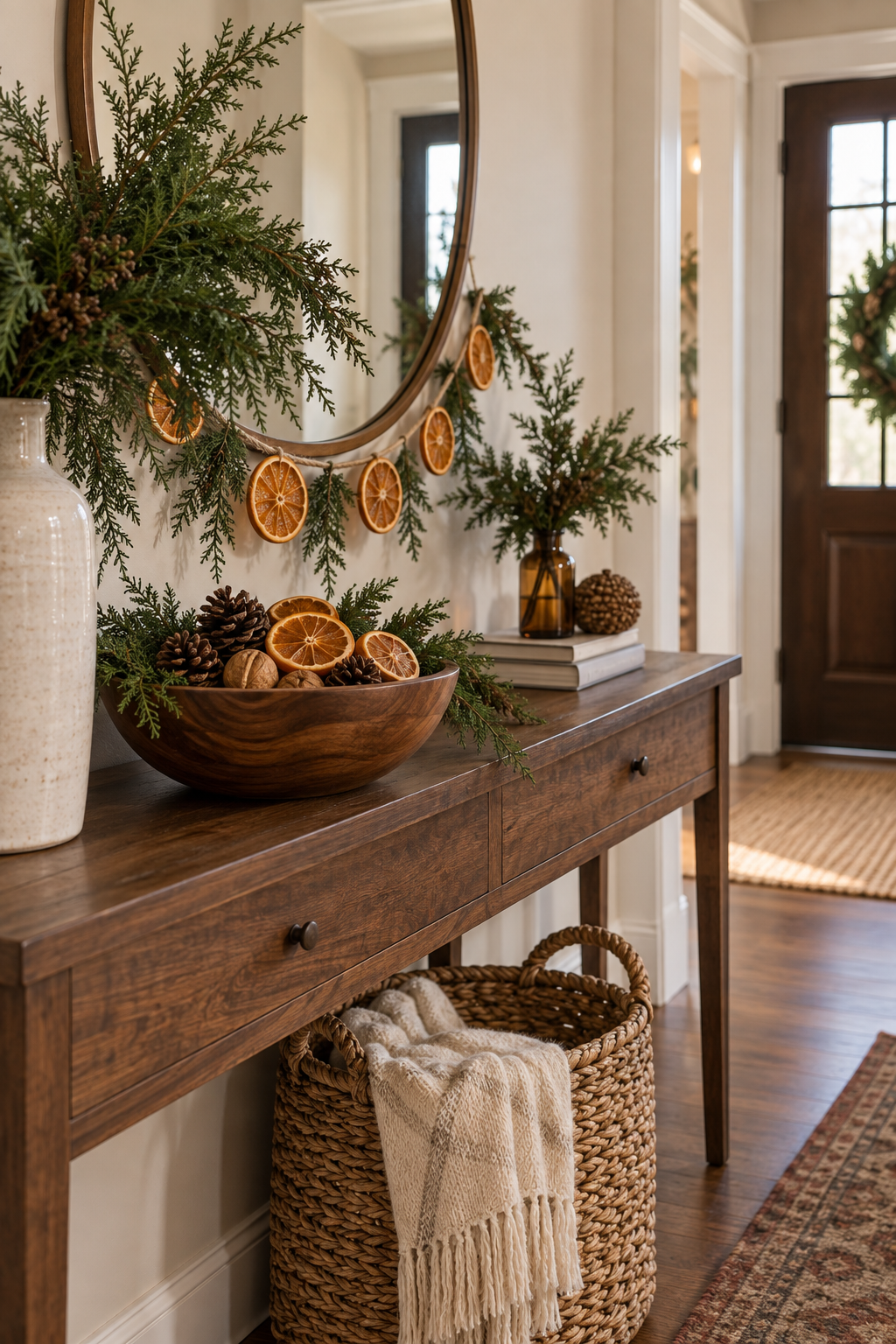
Dried orange slices introduce amber color that complements walnut, cedar and cream. String a modest garland, tie a few slices onto wrapped gifts or layer them in a bowl with pinecones. Ensure pieces are fully dried to discourage mold, and treat them as decoration rather than food. Keep them away from flames, pets and damp areas. A little citrus goes far, so repeat it selectively instead of adding it to every arrangement.
27. Hang Neutral Stockings with Natural Texture
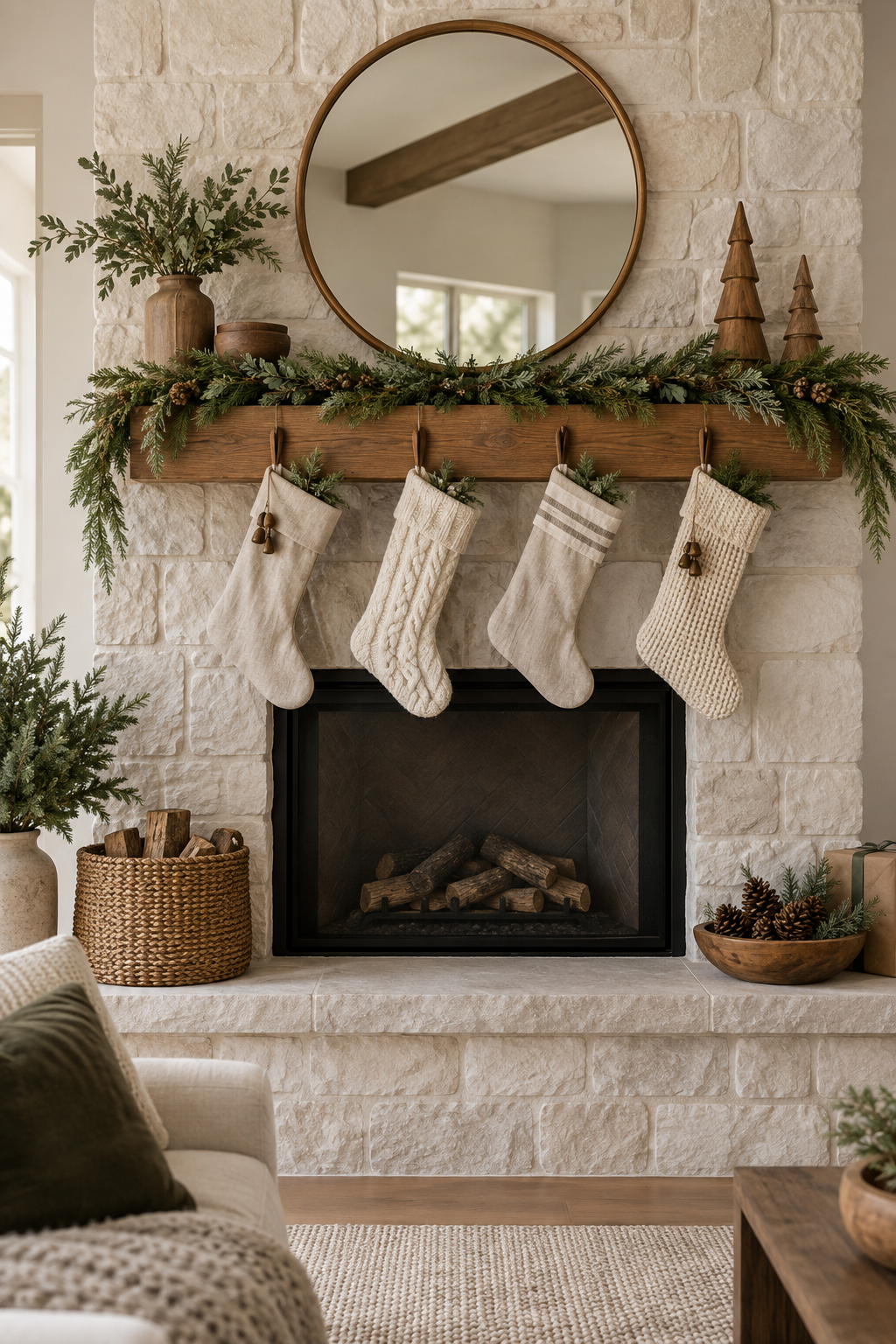
Choose stockings in linen, wool, cotton knit or a subtle woven stripe. Consistent shapes in slightly varied neutral tones give each person an individual stocking while maintaining the palette. Hang them from securely installed hooks or a freestanding holder designed for the purpose. Never place fabric stockings where they could contact flame, sparks or hot fireplace surfaces. A short greenery accent above the group can visually connect them without adding personalized clutter.
28. Choose Reusable Seasonal Materials
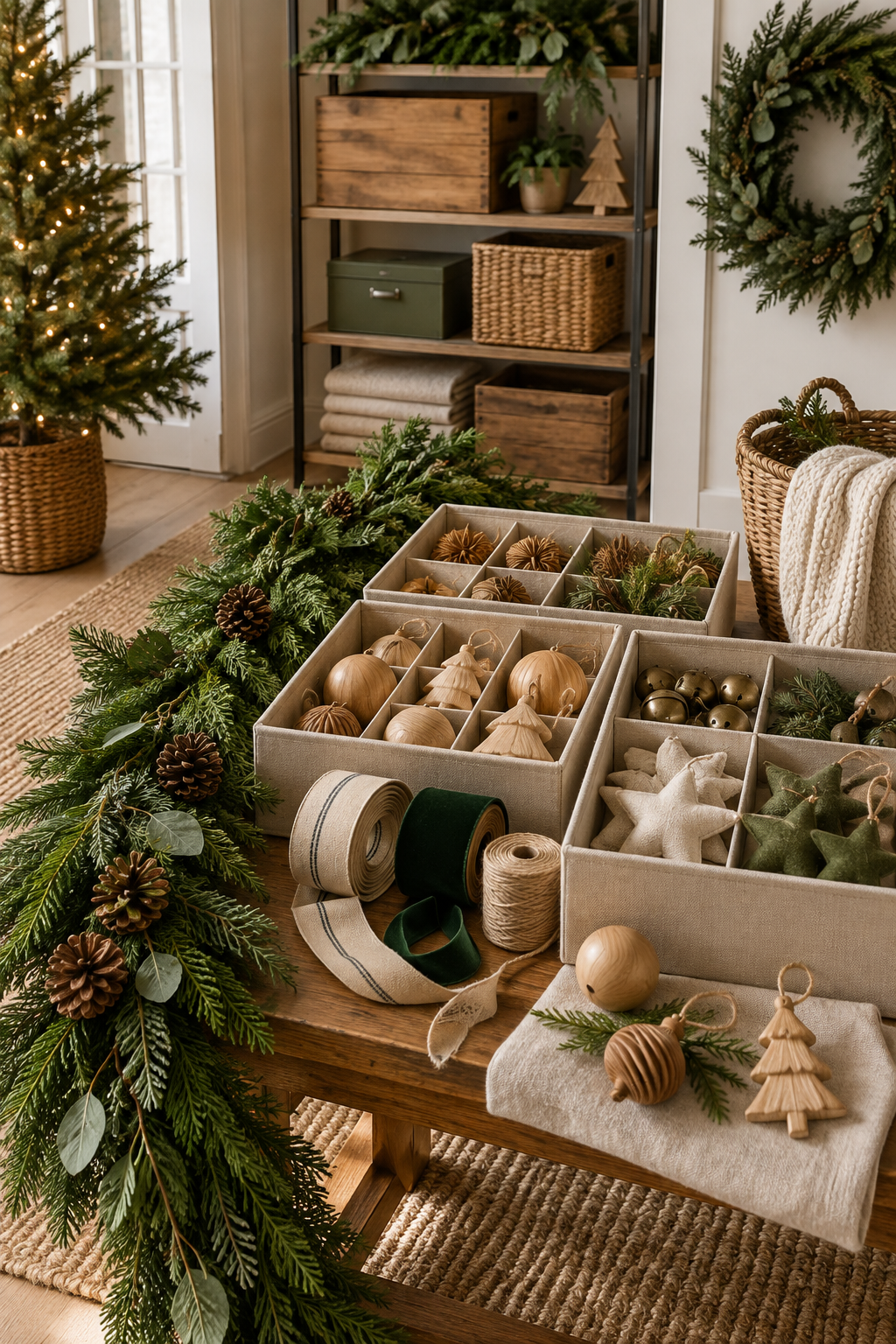
Prioritize ornaments and textiles that can return year after year: solid wood, durable fabric, metal, glass and well-made faux greenery. Buy fewer pieces with a clear role, repair simple damage and store delicate items in divided boxes. Natural style is not defined by constantly purchasing new natural-looking products. Its most convincing expression comes from familiar materials, evolving family objects and a thoughtful collection that becomes more meaningful with repeated use.
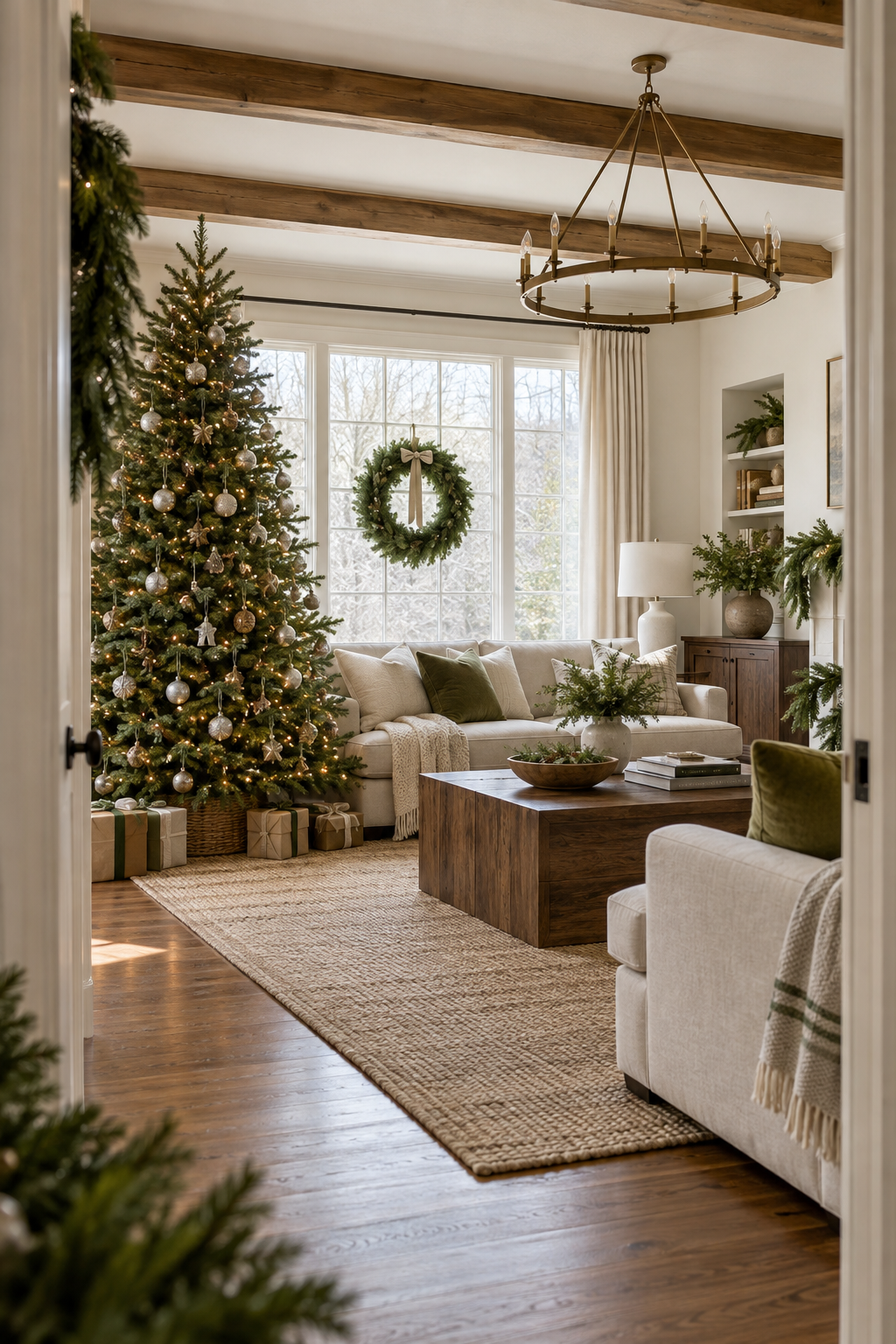
29. Edit the Finished Christmas Room
Photograph the room from the doorway and review the image for crowded surfaces, uneven visual weight and blocked circulation. Remove one item from every overly busy group, repeat the dominant green or wood tone where the arrangement feels disconnected, and conceal visible packaging or cords. Check attachments, water fresh greenery as appropriate and keep dry foliage away from heat. Editing turns a collection of attractive pieces into a calm, cohesive Christmas home.
Plan Your Natural Christmas Decor
Start by choosing one leading material—evergreen, wood or linen—and repeat it in three visible locations. Establish a consistent warm-neutral palette, measure the tree and main surfaces, and decide where everyday objects must remain accessible. Decorate the most important focal point first, then stop periodically and view the room from its entrance. This prevents smaller accessories from consuming the budget before the essential layers are complete.
Fresh greenery should be sourced responsibly, checked for pests and kept appropriately hydrated. Place all plant material away from fireplaces, radiators, cooking equipment and open flames. Use cool-running, safety-certified LED lights and follow their indoor or outdoor rating. Secure trees, garlands and tall branches, preserve clear exits and handrails, and favor flameless candles wherever dried natural materials appear.
For a house-wide result, distribute the palette rather than duplicating an elaborate display in every room. The living room might hold the full tree, the entry a wreath, the dining room a low garland and the bedroom one small evergreen accent. This creates continuity while preserving storage space, cleaning time and the quiet character that makes natural Christmas decor so appealing.
Frequently Asked Questions
What colors work best for natural Christmas decor?
Warm white, oatmeal, tan, walnut, forest green and muted brown form a versatile base. A little aged brass, black or dried-orange color can provide contrast without making the palette feel busy.
Can natural Christmas decor work without a real tree?
Yes. A realistic faux tree combined with wood ornaments, paper details, linen ribbon and a few fresh clippings can create the same organic impression with less maintenance.
How can I keep neutral Christmas decor from looking bland?
Vary texture and scale. Combine smooth pottery, rough bark, woven baskets, nubby wool and airy foliage, then include one deeper value such as walnut or evergreen for visual definition.
What is the safest way to decorate with fresh greenery?
Keep it hydrated where possible, inspect it regularly and remove it when dry. Maintain generous clearance from heat, flame, electrical equipment, exits and frequently touched surfaces.
Is natural Christmas decor suitable for small spaces?
It is especially effective in small homes because one wreath, slim tree or branch arrangement can provide strong seasonal impact. Use vertical surfaces and preserve clear walking and storage areas.
How do I make natural Christmas decor feel elegant?
Limit the palette, repeat materials, use fewer pieces at a larger scale and leave negative space around each arrangement. Tailored linen and warm lighting can refine rustic wood and greenery.
Which natural decorations can be reused?
Wood ornaments, fabric ribbon, neutral stockings, metal candleholders, woven baskets, paper stars stored flat and quality faux garlands can all return for many seasons with careful storage.
When should I remove fresh Christmas greenery?
Remove it as soon as it becomes brittle, discolored or excessively shed-prone. Indoor heat and local plant varieties affect timing, so condition is a better guide than a fixed date.
Related Reading
- Cozy Christmas living room ideas for an elegant holiday home
- Burgundy Christmas decor ideas for a rich seasonal palette
- Vintage Christmas decor ideas for a nostalgic holiday home
- Warm minimalist home decor ideas that still feel cozy
Natural Christmas decor feels memorable because it supports the atmosphere of the season instead of competing with it. Begin with greenery, wood and warm neutrals, add light with restraint, and protect the practical function of every room. The final home will feel festive in photographs, comfortable in daily life and adaptable enough to welcome back year after year.