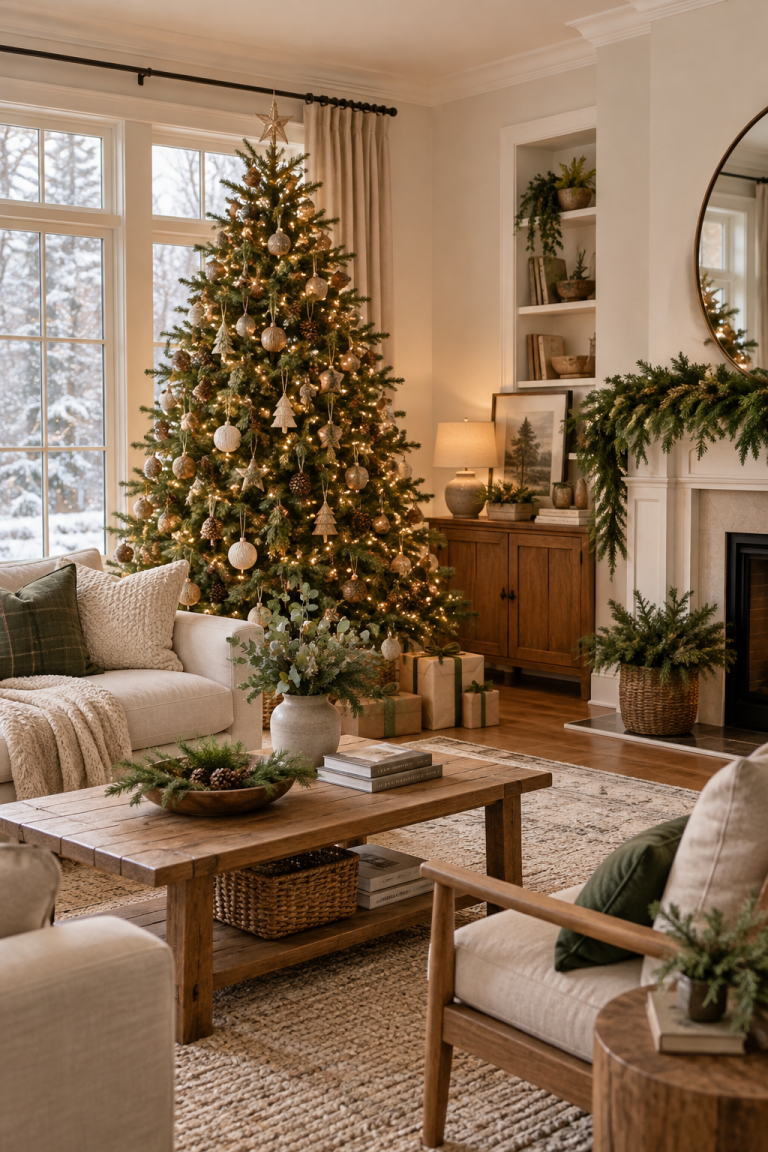
The living room often carries the emotional center of Christmas: it is where the tree glows, guests settle in, and quiet winter evenings become memorable. Yet a festive room does not need to be crowded, expensive, or covered in novelty decorations. The most inviting Christmas living rooms balance warmth with breathing room, repeat a focused palette, and make everyday comfort part of the design.
These 31 Christmas living room ideas range from traditional greenery and candlelight-inspired illumination to small-space layouts and refined modern schemes. Each one can be adapted to your architecture, budget, and existing furniture. The goal is an elegant holiday home that still feels comfortable enough for real life.
1. Build a Warm and Elegant Christmas Palette
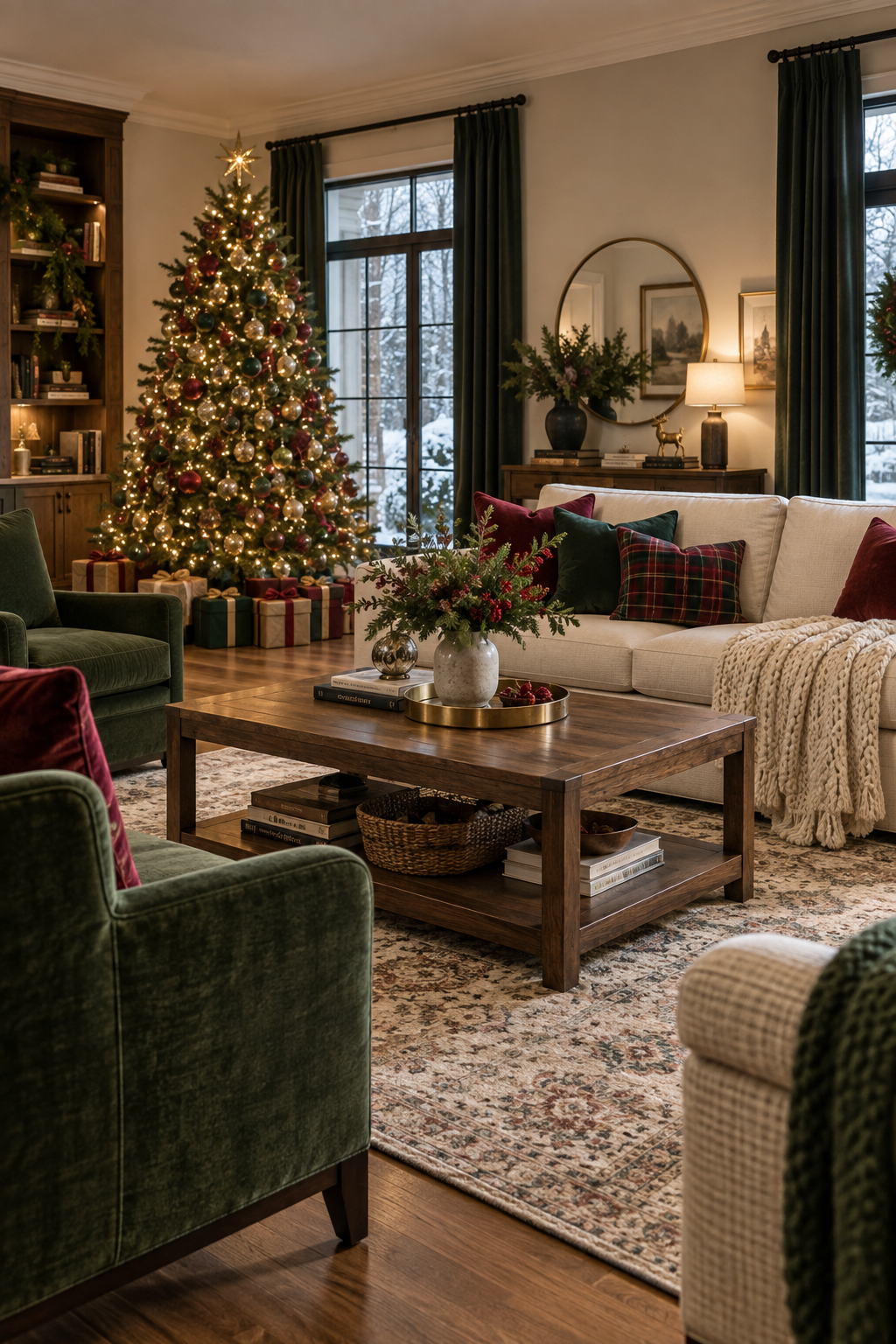
Begin with two neutrals and one accent color already present in your room. Warm white, natural wood, and burgundy feel classic; cream, walnut, and forest green look quieter; while ivory, brass, and muted red create polished warmth. Repeat the accent in only a few visible places, such as ribbon, cushions, and ornaments. This disciplined palette helps old and new decorations work together and keeps the room from feeling visually busy.
2. Choose a Tree That Fits the Room
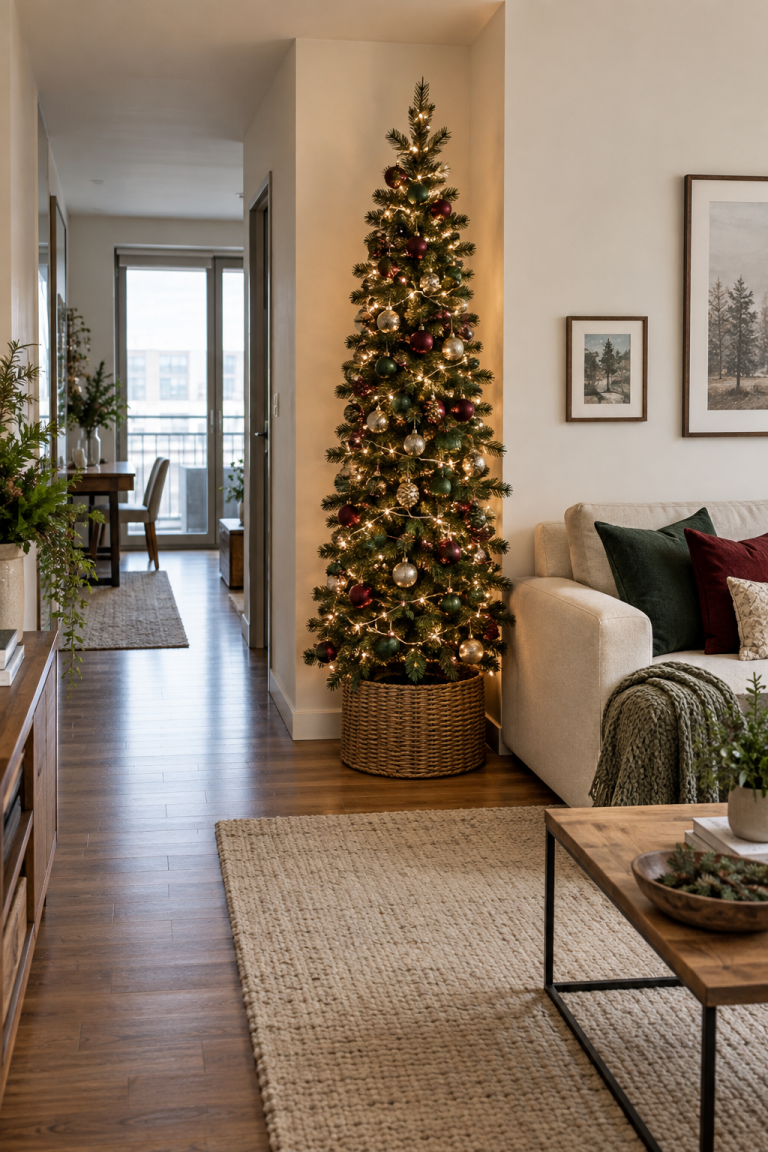
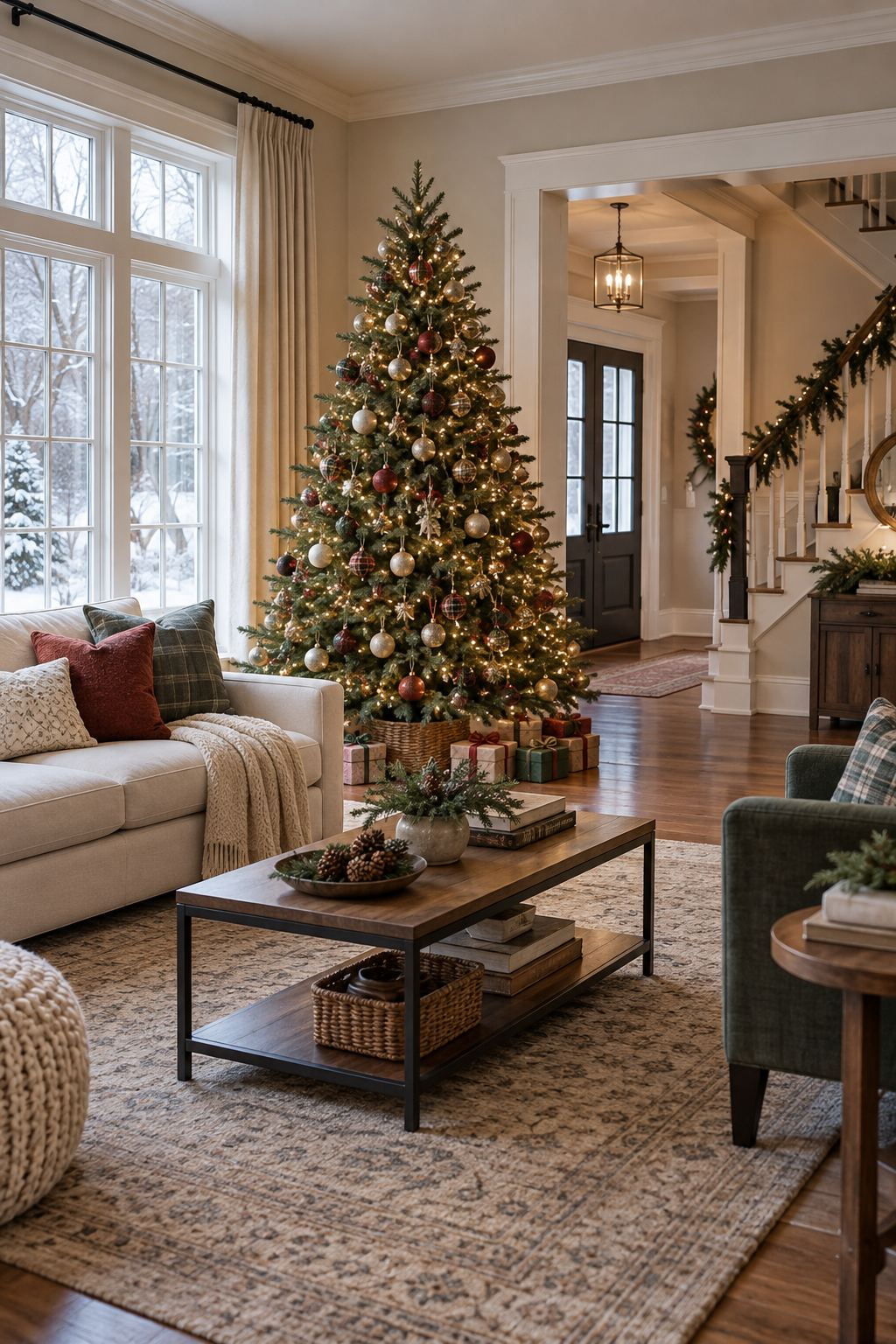
Measure ceiling height, floor width, and the route people use before selecting a tree. A slim tree can feel abundant in a compact living room when its branches remain visible instead of being overloaded. Leave space around vents, curtains, doors, and heat sources. Position the tree where it can be enjoyed from the main seating area without interrupting conversation or forcing furniture into an awkward arrangement.
3. Layer the Tree with Soft Warm Lights
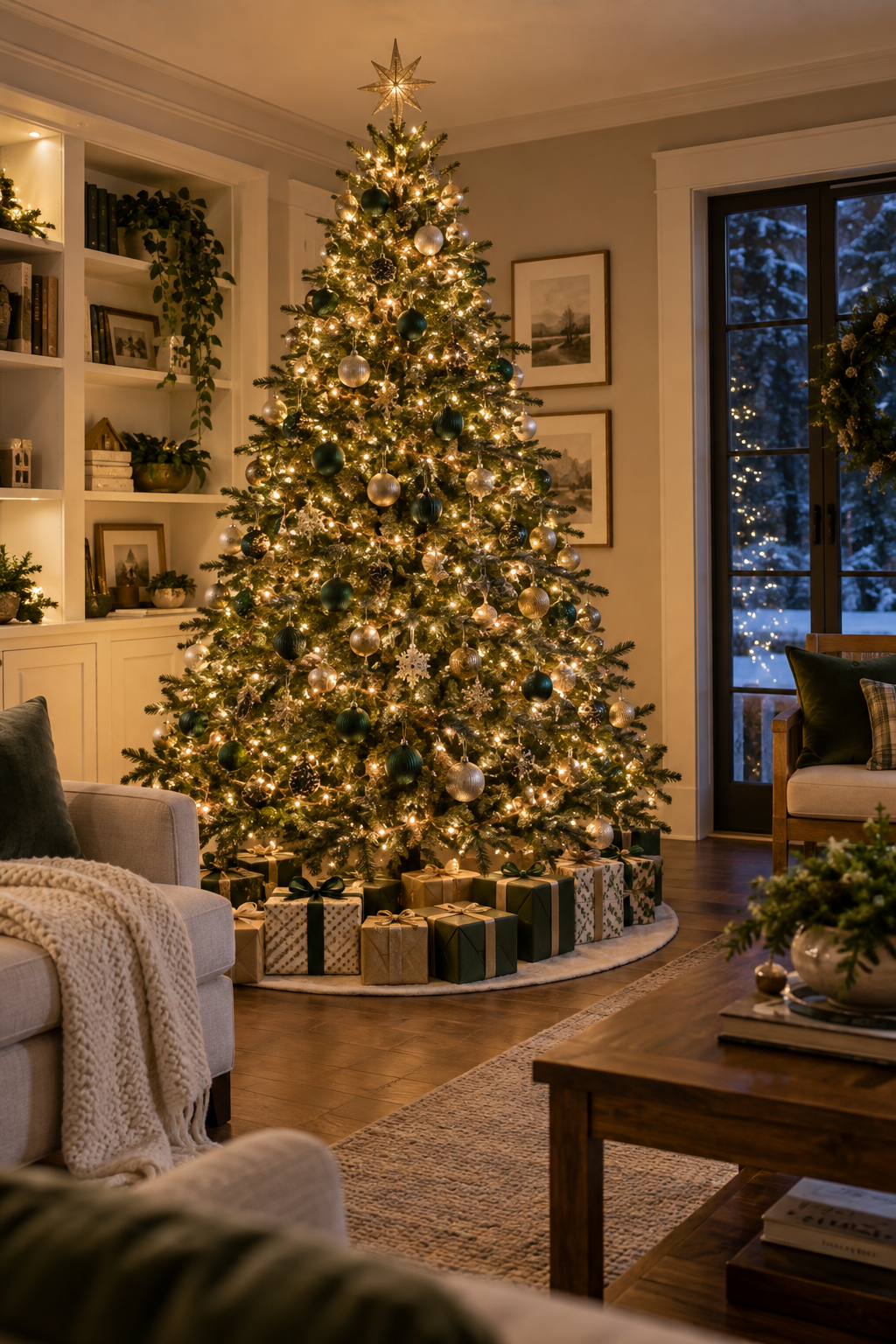
Warm-white lights give ornaments depth and create a gentle evening atmosphere. Work from the trunk outward so some bulbs glow behind the branches while others define the silhouette. Use lights and extension cords rated for their intended location, inspect them for damage, and avoid overloading outlets. A smart plug or built-in timer makes the daily ritual effortless and prevents the tree from staying illuminated unnecessarily overnight.
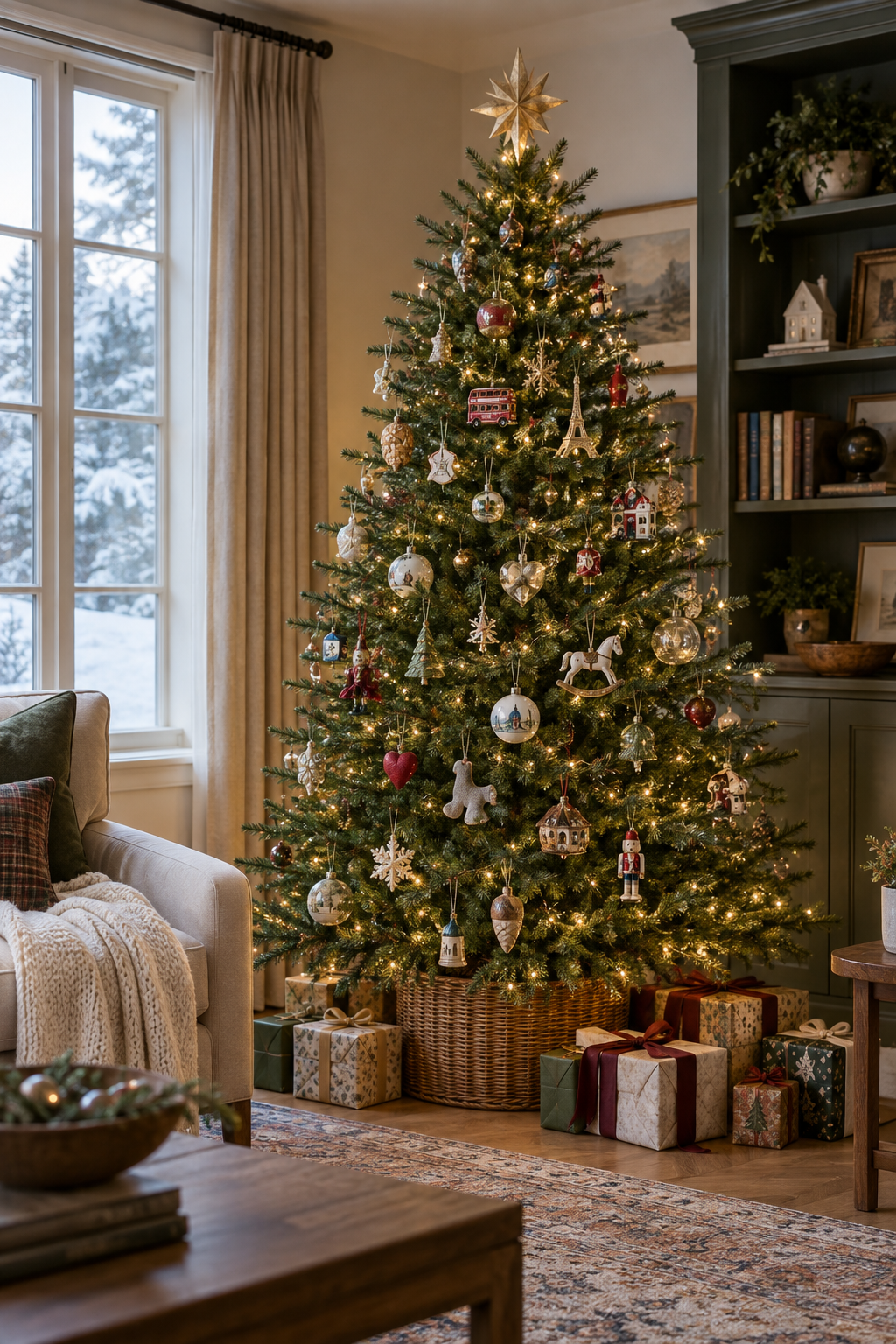
4. Decorate with Collected Ornaments
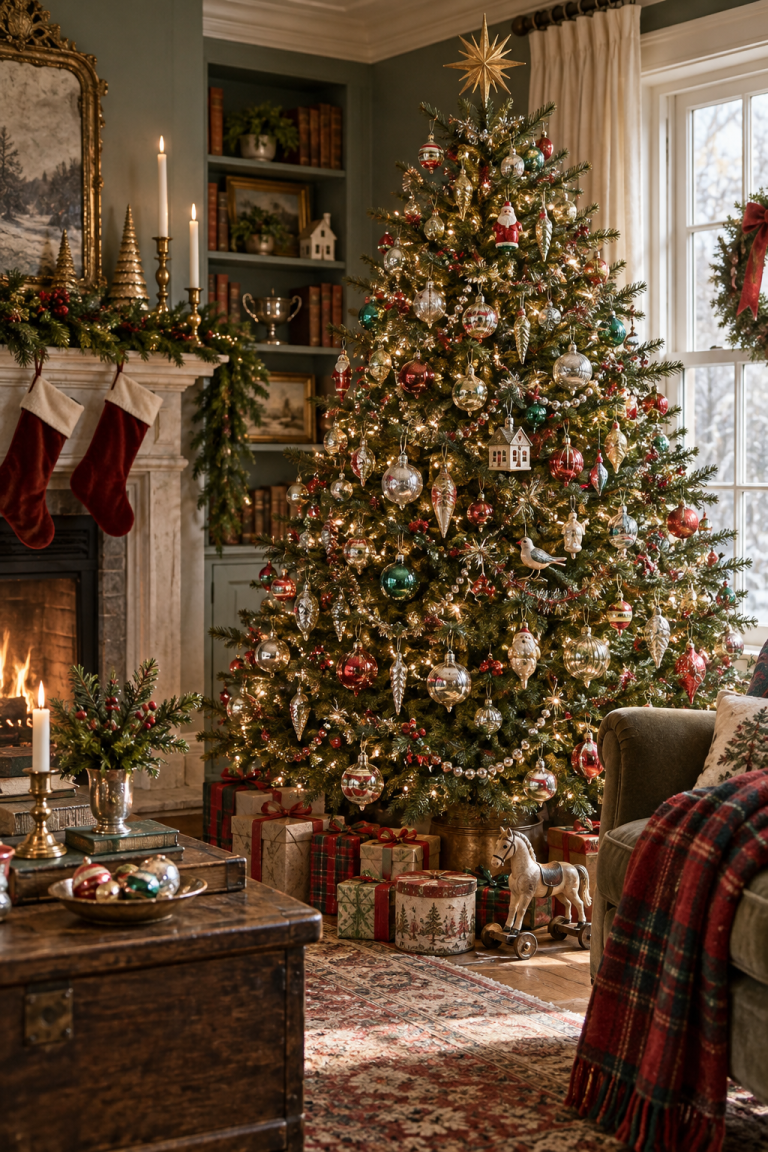
A tree feels personal when it tells a story. Combine heirloom ornaments, handmade pieces, travel finds, and a limited set of simple filler baubles. Hang sentimental designs at eye level and use quieter ornaments to connect the color palette. Leaving small gaps between pieces lets each ornament register clearly. If children or pets share the room, keep fragile decorations higher and choose soft, shatter-resistant pieces near the lower branches.
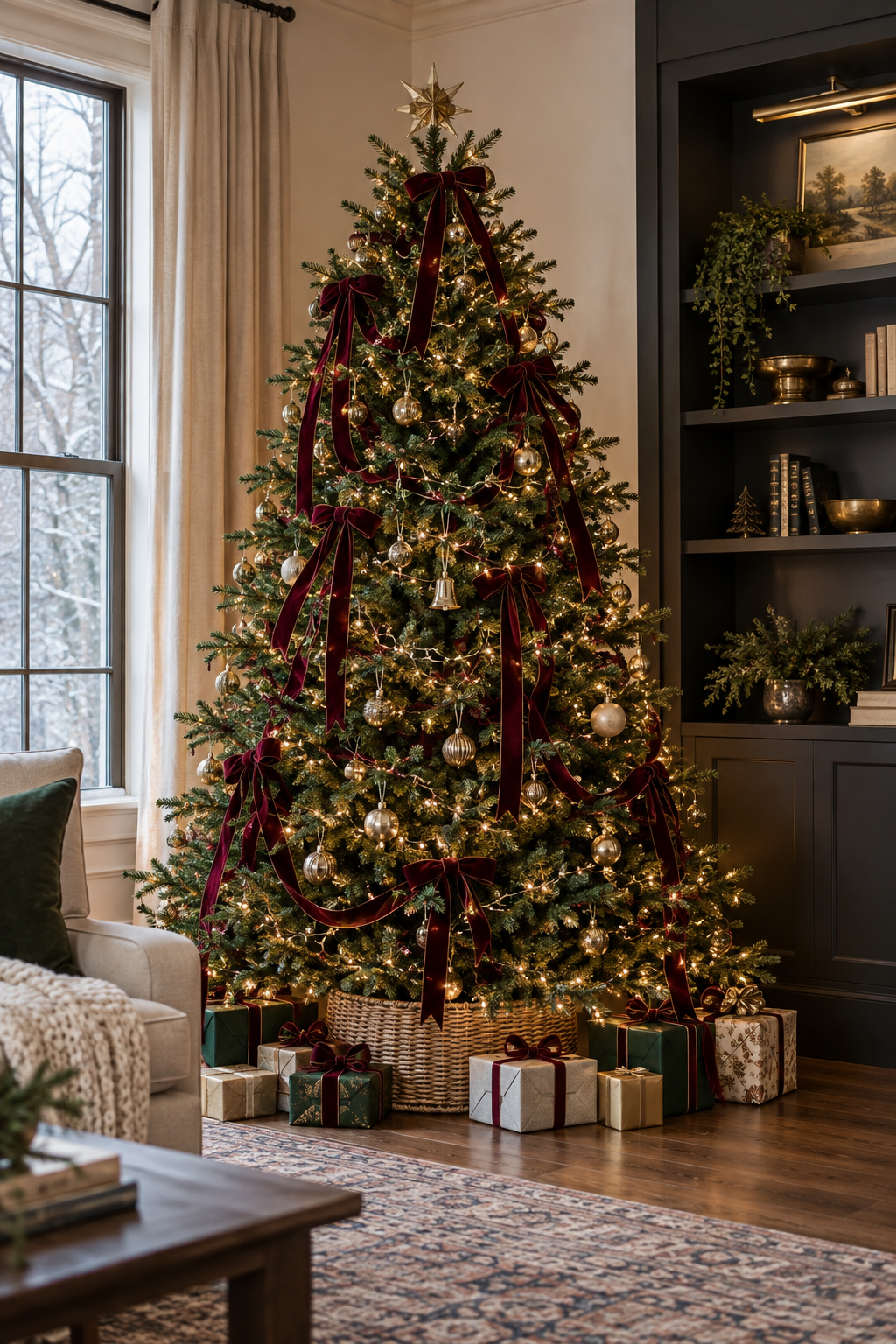
5. Finish the Tree with Velvet Ribbon
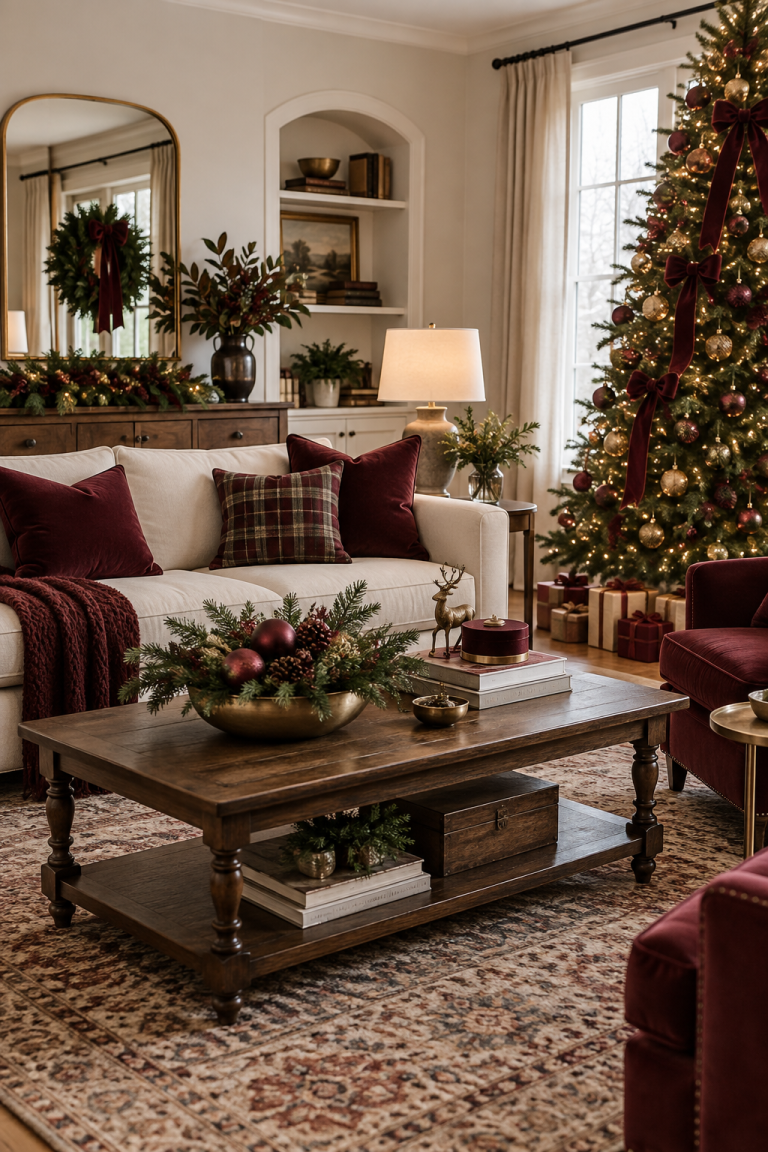
Velvet ribbon introduces rich texture without requiring dozens of extra ornaments. Tuck broad sections loosely between branches or tie understated bows at natural intervals. Burgundy, moss, tobacco, or warm taupe can make a neutral tree feel luxurious, while narrow ivory ribbon brightens a darker scheme. Wired edges are easiest to shape and reuse. Keep trailing ends short enough that they cannot be pulled or caught underfoot.
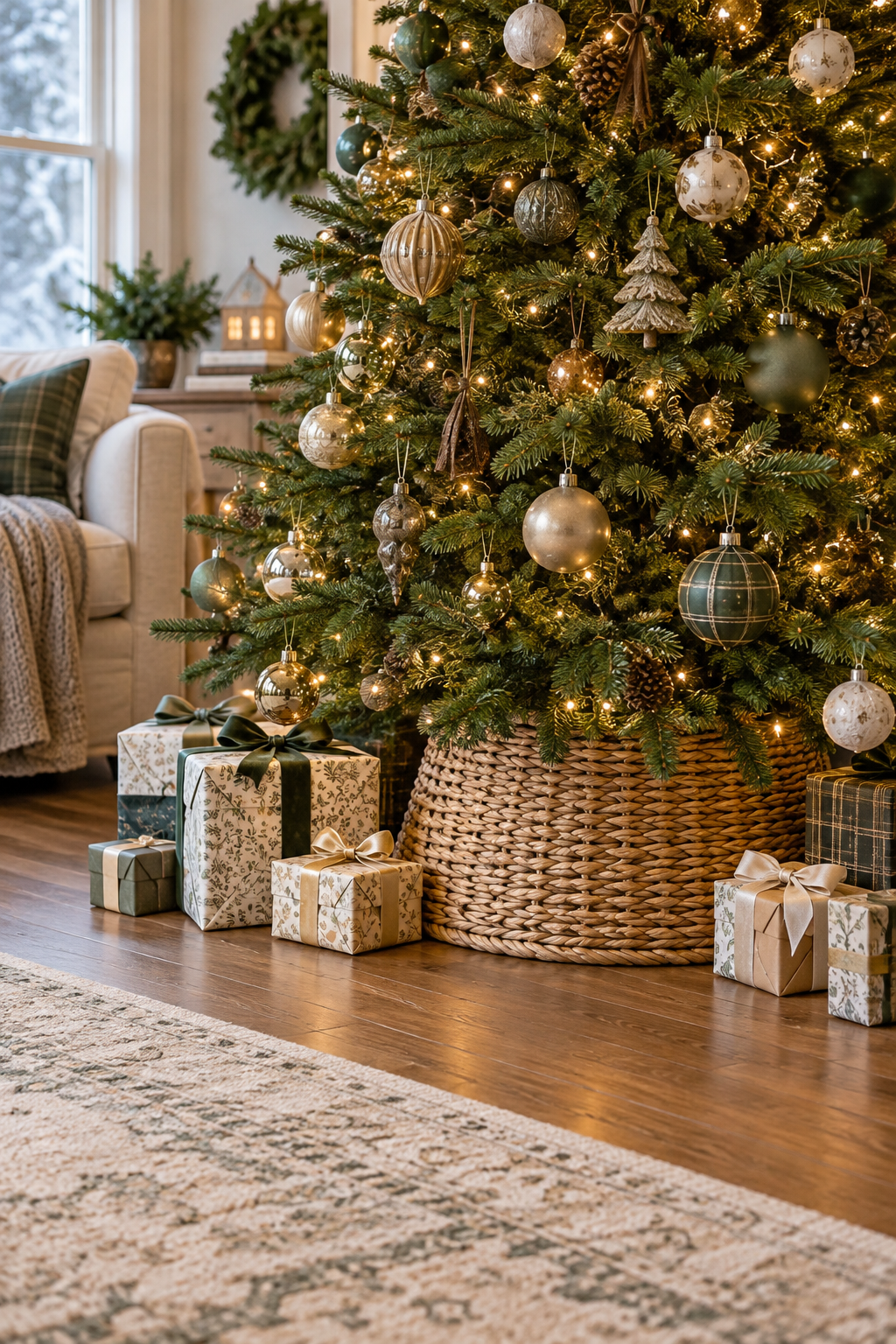
6. Use a Tailored Tree Skirt or Basket Collar
The base of the tree is visually important because it connects the display to the floor and nearby furniture. A quilted skirt softens a traditional room, a woven collar adds natural texture, and a simple linen wrap suits modern interiors. Select a proportion that conceals the stand without entering the walking path. For a real tree, retain easy access to the water reservoir and protect the floor from moisture.
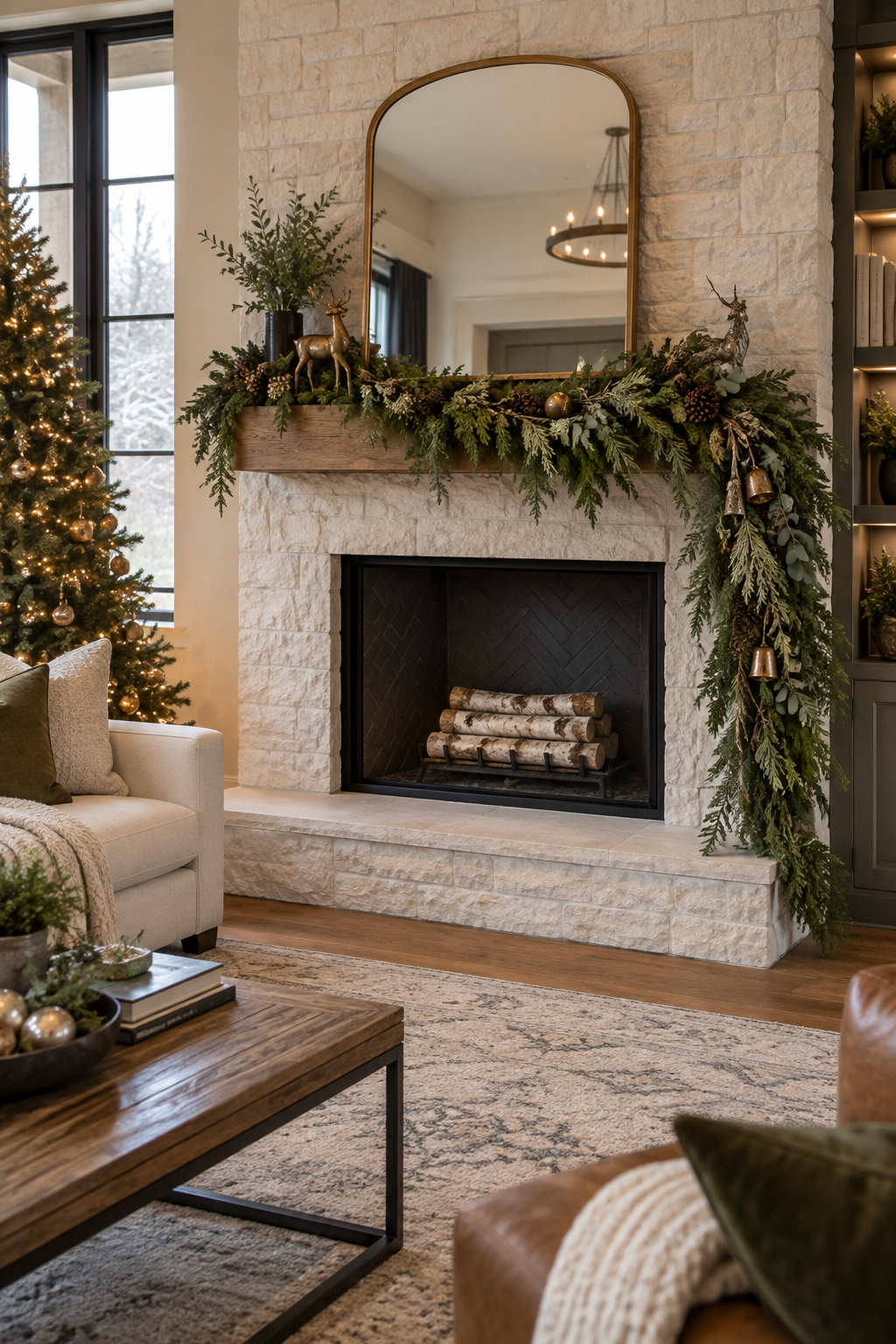
7. Frame the Fireplace with Asymmetrical Greenery
An asymmetrical garland creates movement and looks less formal than a perfectly mirrored mantel. Let greenery rise at one end and taper across the shelf, then balance the composition with stockings or a grouped arrangement below. Use flame-resistant materials and secure every element carefully. If the fireplace operates, follow manufacturer clearance guidance and keep greenery, ribbon, paper, and textiles well away from heat and sparks.
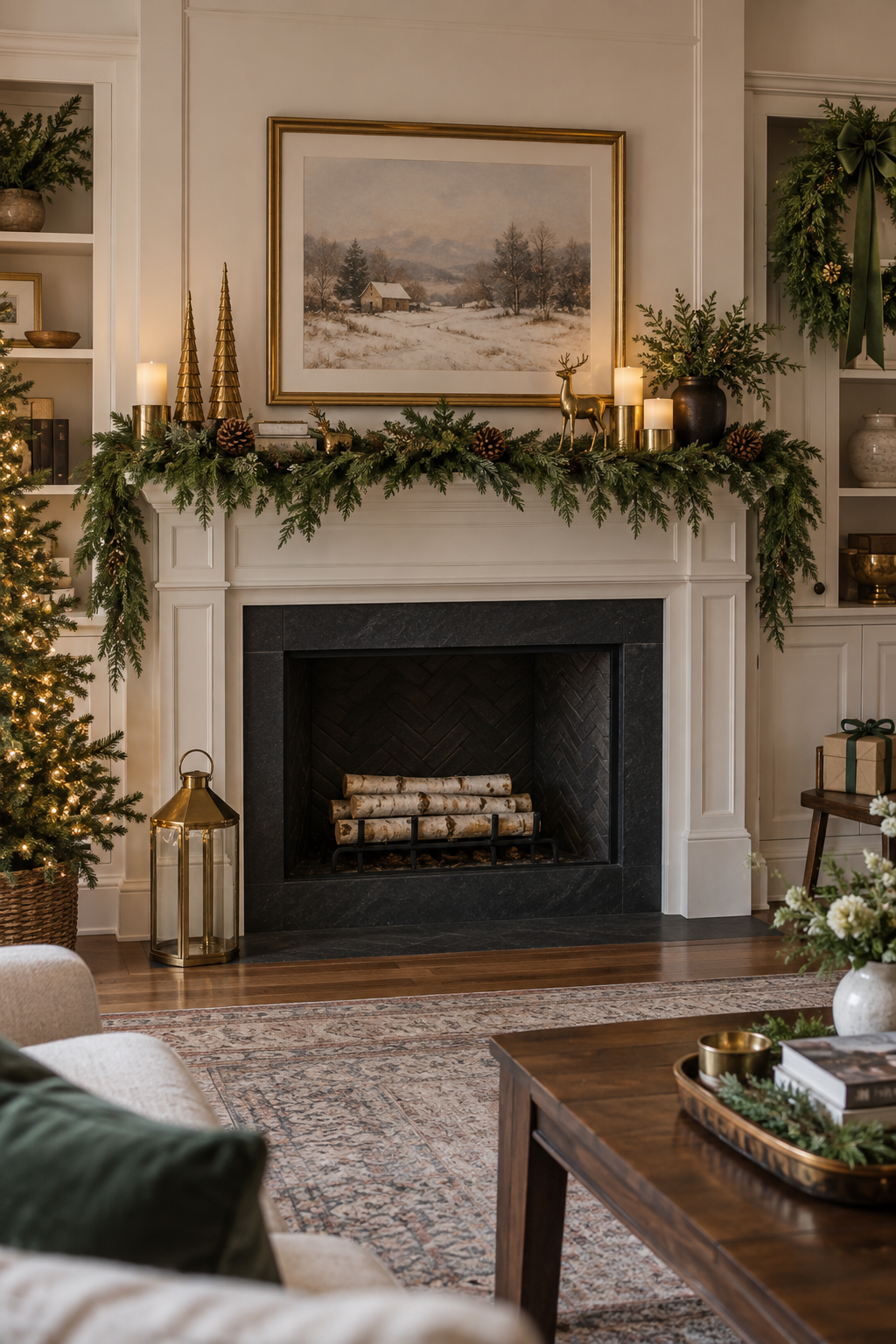
8. Style a Balanced Christmas Mantel
Choose one focal point—art, a mirror, or a restrained wreath—then build lower layers around it. Candle-style LED lights, small brass objects, and clipped evergreen branches create depth without filling every inch. Vary heights but leave negative space so the display feels architectural. Repeat one material from the tree, such as velvet ribbon or aged metal, to make the fireplace and tree feel intentionally connected.
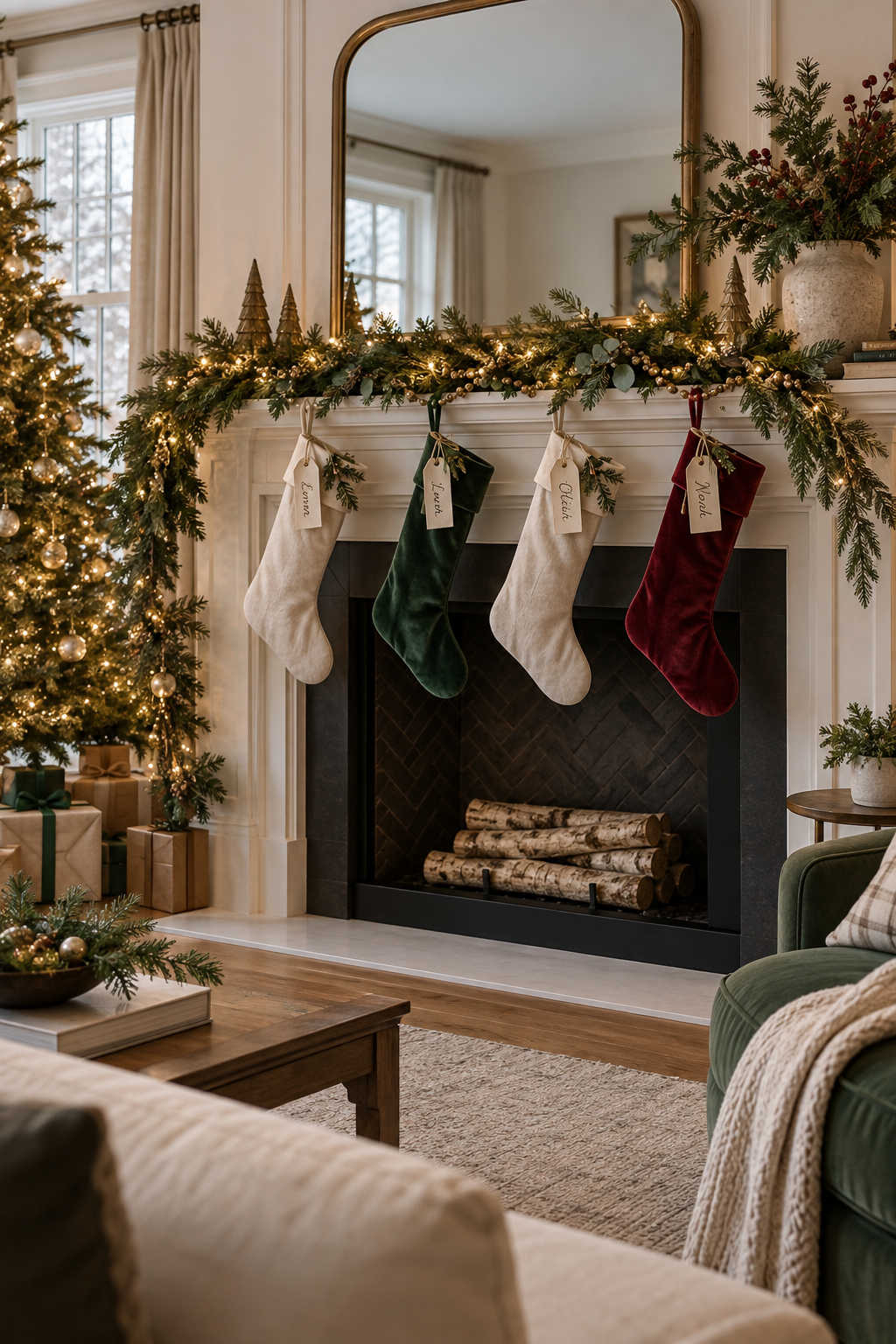
9. Hang Stockings with Refined Details
Stockings can be playful and still support an elegant room. Choose a shared fabric family—knit wool, linen, quilted cotton, or velvet—then personalize each with a small tag or subtle embroidery. Use secure hooks designed for the mantel rather than unstable heavy holders near an edge. When the fireplace is in use, relocate stockings completely; even fabrics that look distant from the opening can be exposed to dangerous heat.
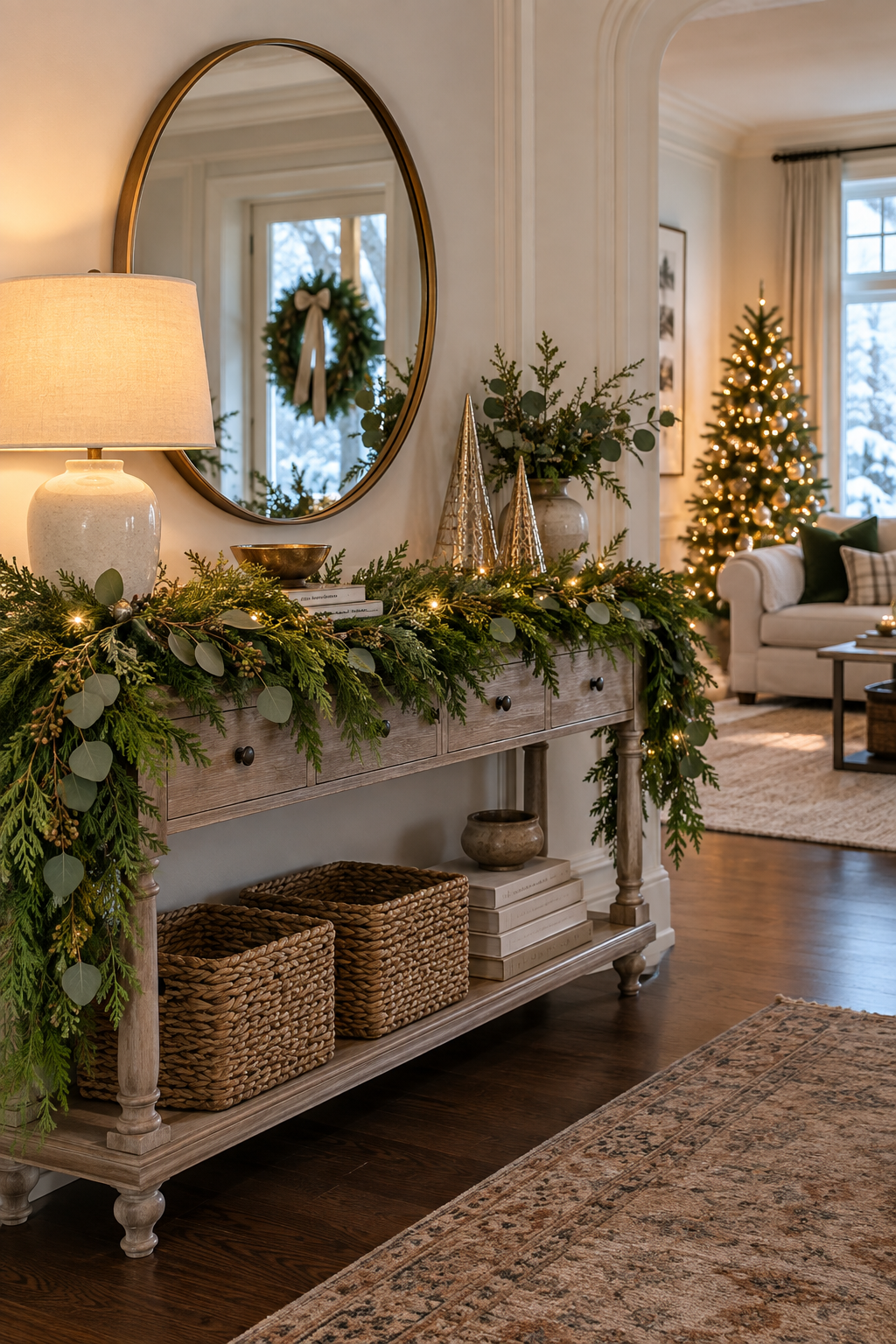
10. Add a Natural Greenery Garland
A garland brings color, scent, and an organic silhouette to a living room. Mix cedar, pine, eucalyptus, or realistic faux stems so the greenery has tonal variation. Place it across a console, bookcase, doorway, or nonworking mantel and secure it at several points. Fresh material needs occasional misting and should be replaced when dry. Keep all greenery away from open flames, hot bulbs, radiators, and curious pets.
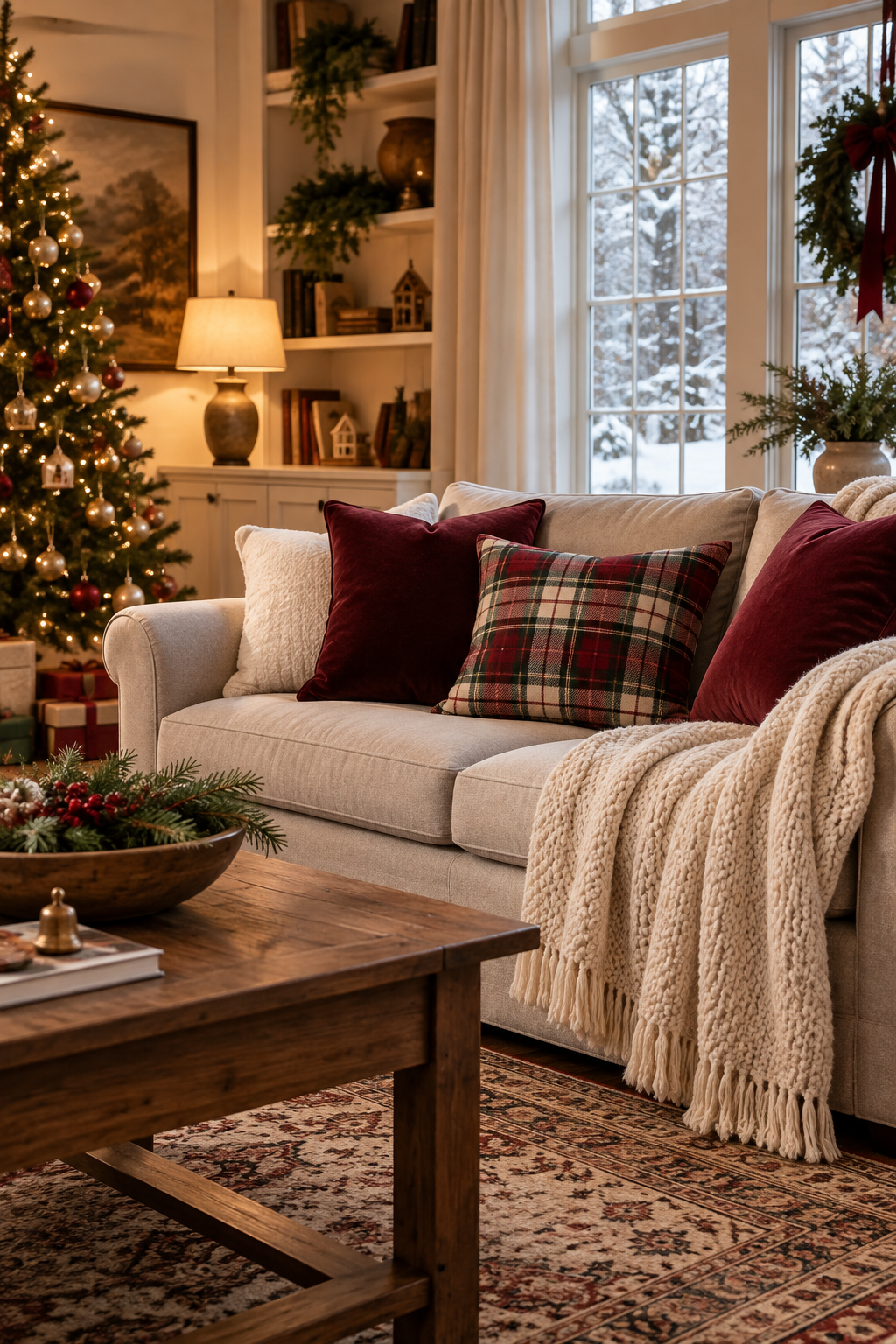
11. Create a Cozy Christmas Sofa
Refresh the sofa with just a few seasonal layers rather than replacing every cushion. Pair a solid velvet pillow with a subtle plaid or woven design, then add one generous wool-blend throw. Preserve enough clear seat space for people to relax. Repeating the tree’s accent color in a single cushion establishes a visual link, while cream or oatmeal textiles prevent deep holiday shades from making the seating area feel too heavy.
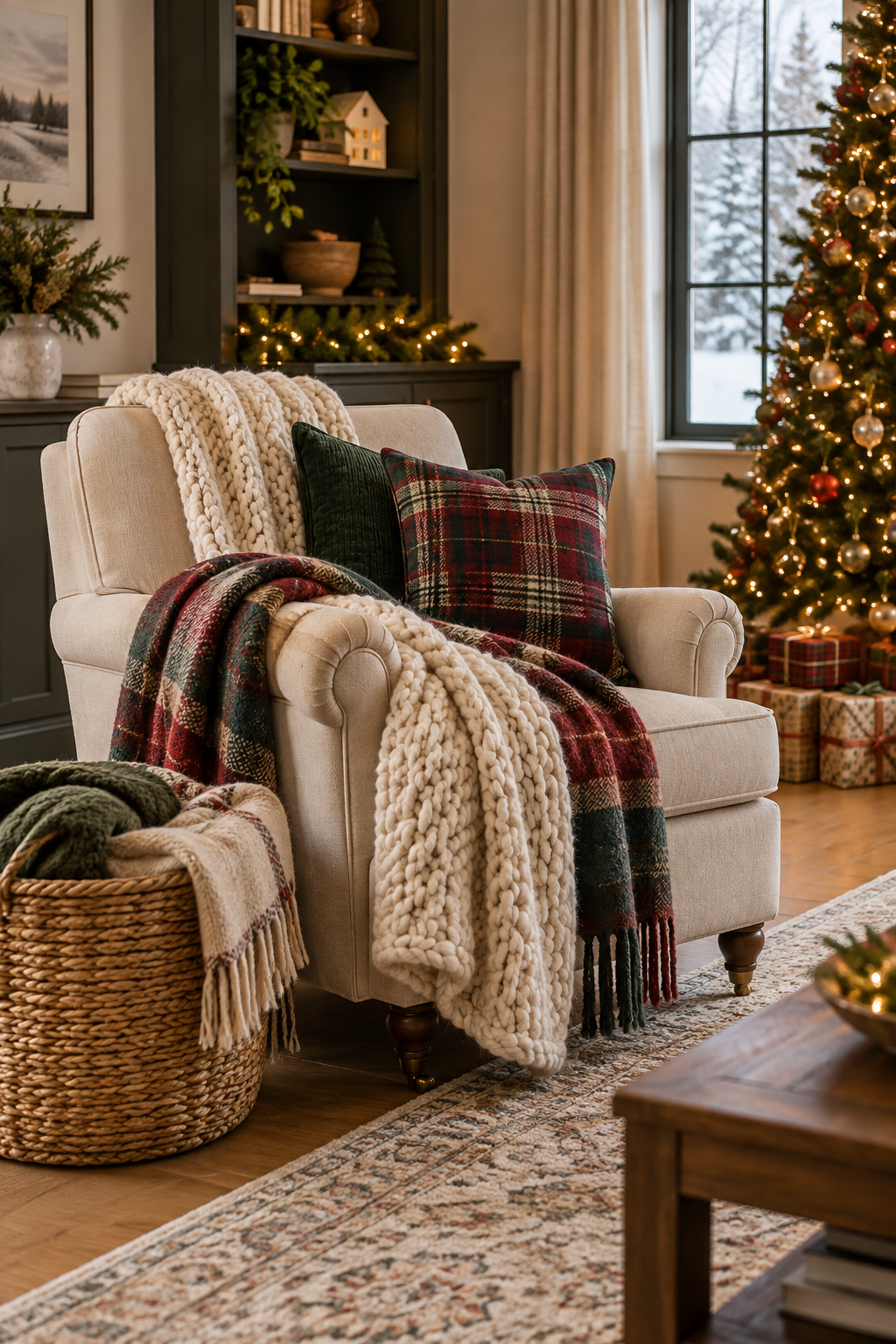
12. Layer Throws for Winter Texture
Texture often creates more warmth than pattern. Combine one soft knit, one brushed wool look, and the smoother upholstery already in the room. Drape a throw over a chair arm or fold it inside a basket instead of covering every surface. Choose washable or easy-care textiles for busy homes. Long fringe should not trail across floors, and blankets should remain clear of portable heaters, fireplaces, and candles.
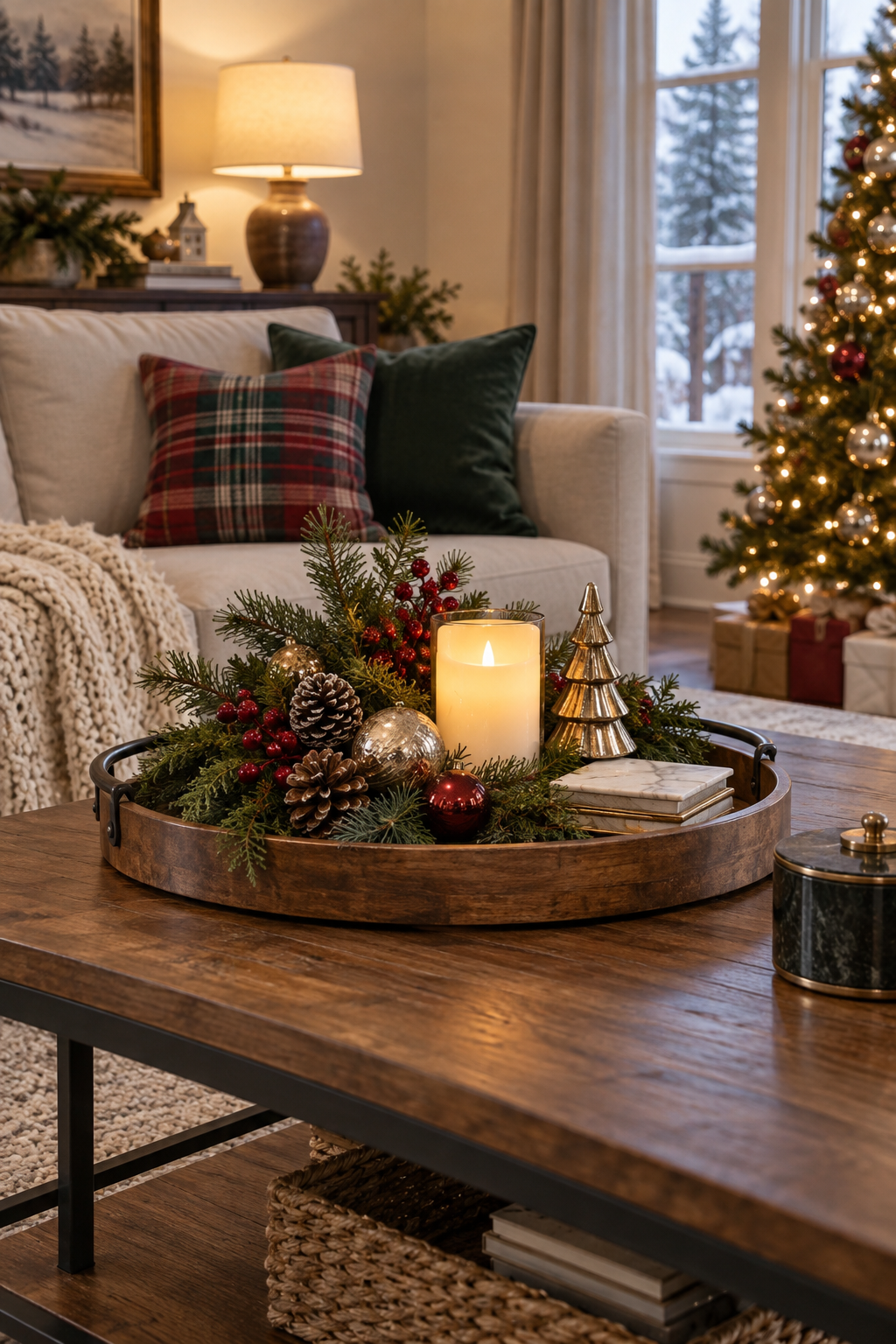
13. Arrange a Holiday Coffee Table Centerpiece
Use a tray to keep the coffee table festive but functional. A low bowl of ornaments, a short vase of greenery, and one battery-operated candle create a compact arrangement that can move when snacks or games appear. Keep the centerpiece below sightlines so conversation remains easy. Avoid loose berries, sharp picks, and breakable decorations in households with young children or pets, and leave clear space for everyday drinks.
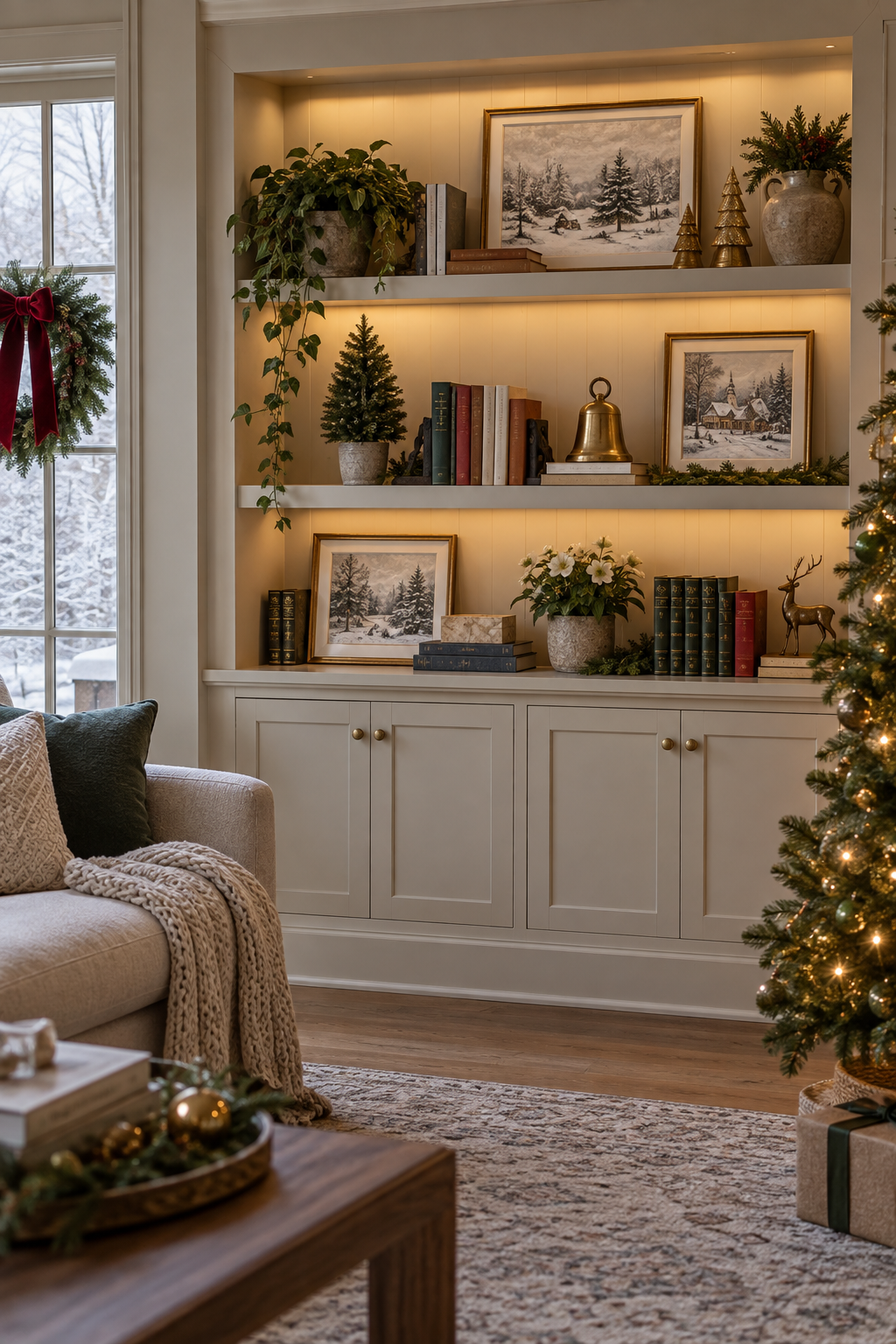
14. Style Built-In Shelves for Christmas
Edit before adding. Remove a few everyday accessories, retain favorite books and art, then introduce small holiday moments at alternating heights. A miniature tree, a brass bell, framed winter artwork, or one ceramic house is usually enough per shelf section. Repeat materials instead of identical objects. Never block ventilation or crowd electrical equipment, and keep heavy pieces on lower shelves where they cannot fall easily.
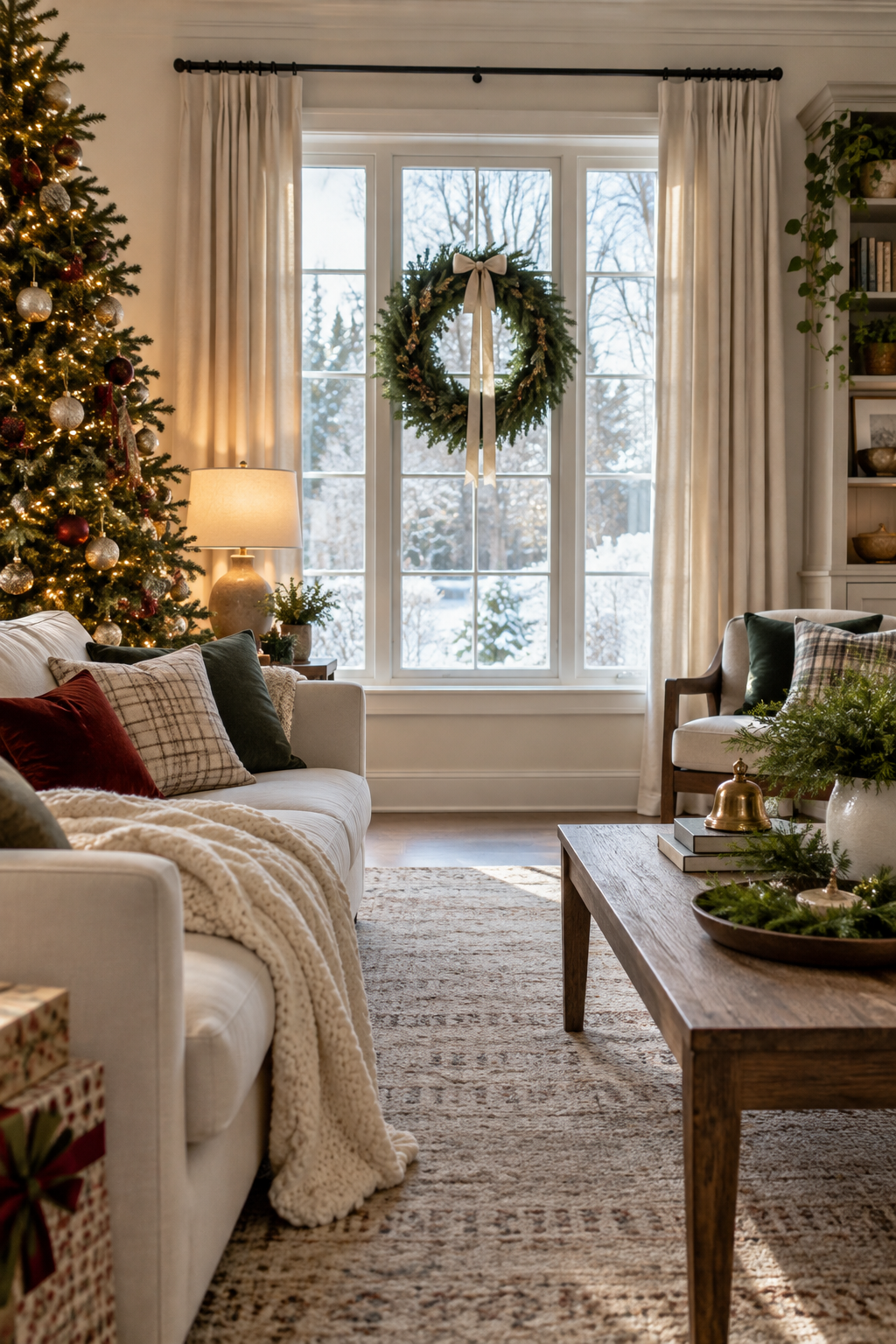
15. Dress the Windows with Subtle Greenery
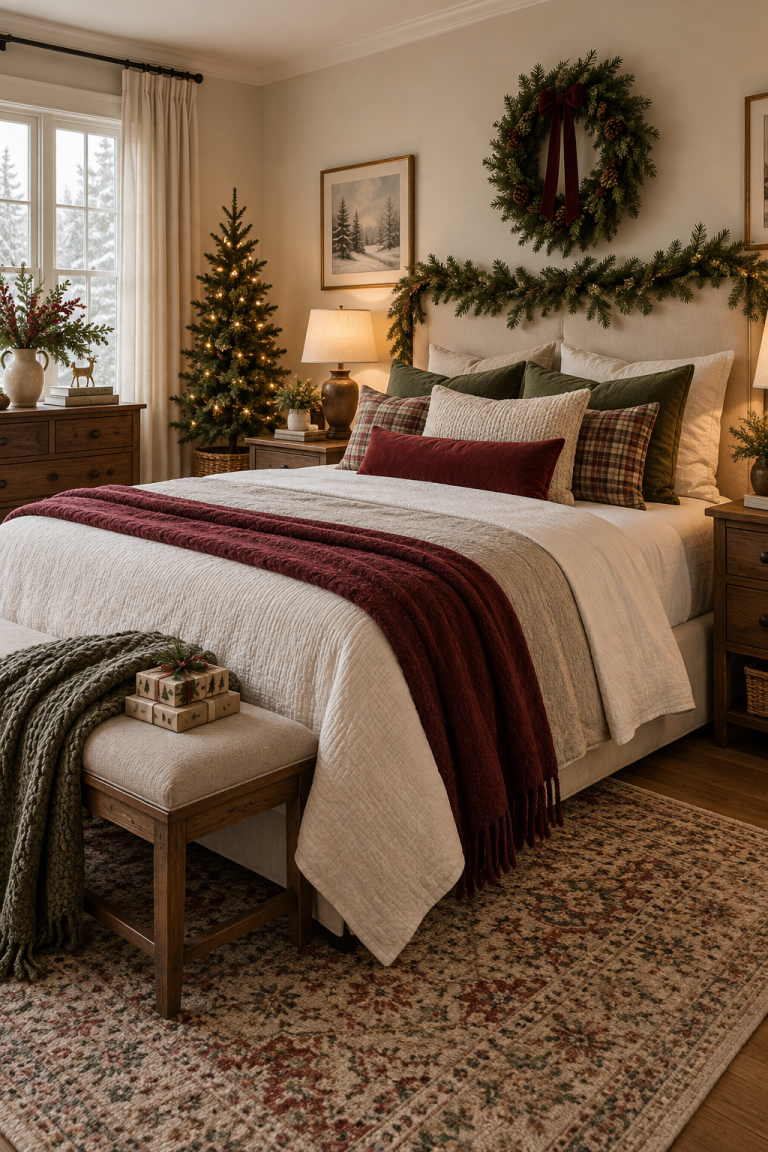
Windows can carry Christmas character without sacrificing daylight. Suspend a simple wreath from a secure hook, lay a lightweight garland along a sturdy rod only if it is rated for the added weight, or place clipped evergreen stems in small vessels on a deep sill. Keep decorations clear of blinds, curtain movement, heaters, and condensation. At night, the silhouette adds festive curb appeal from outside as well.
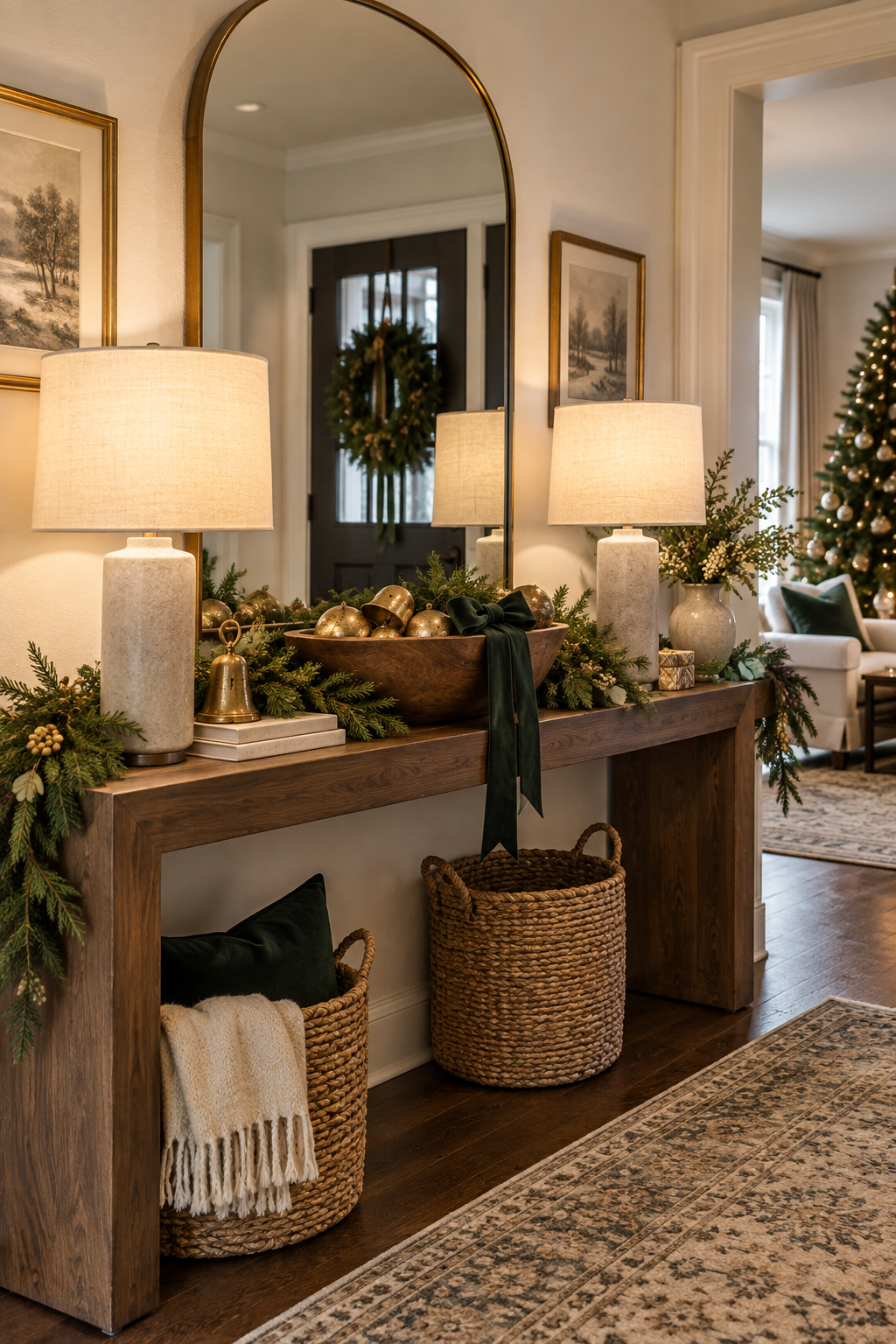
16. Create an Elegant Christmas Console
A console is ideal for a layered holiday vignette because it does not compete with seating. Start with a mirror or artwork, add a pair of lamps, then vary a few objects through the center. A bowl of walnuts, folded ribbon, greenery, and brass bells can feel seasonal without becoming themed clutter. Conceal cords, anchor tall objects, and maintain access to drawers, switches, and the walkway beside the table.
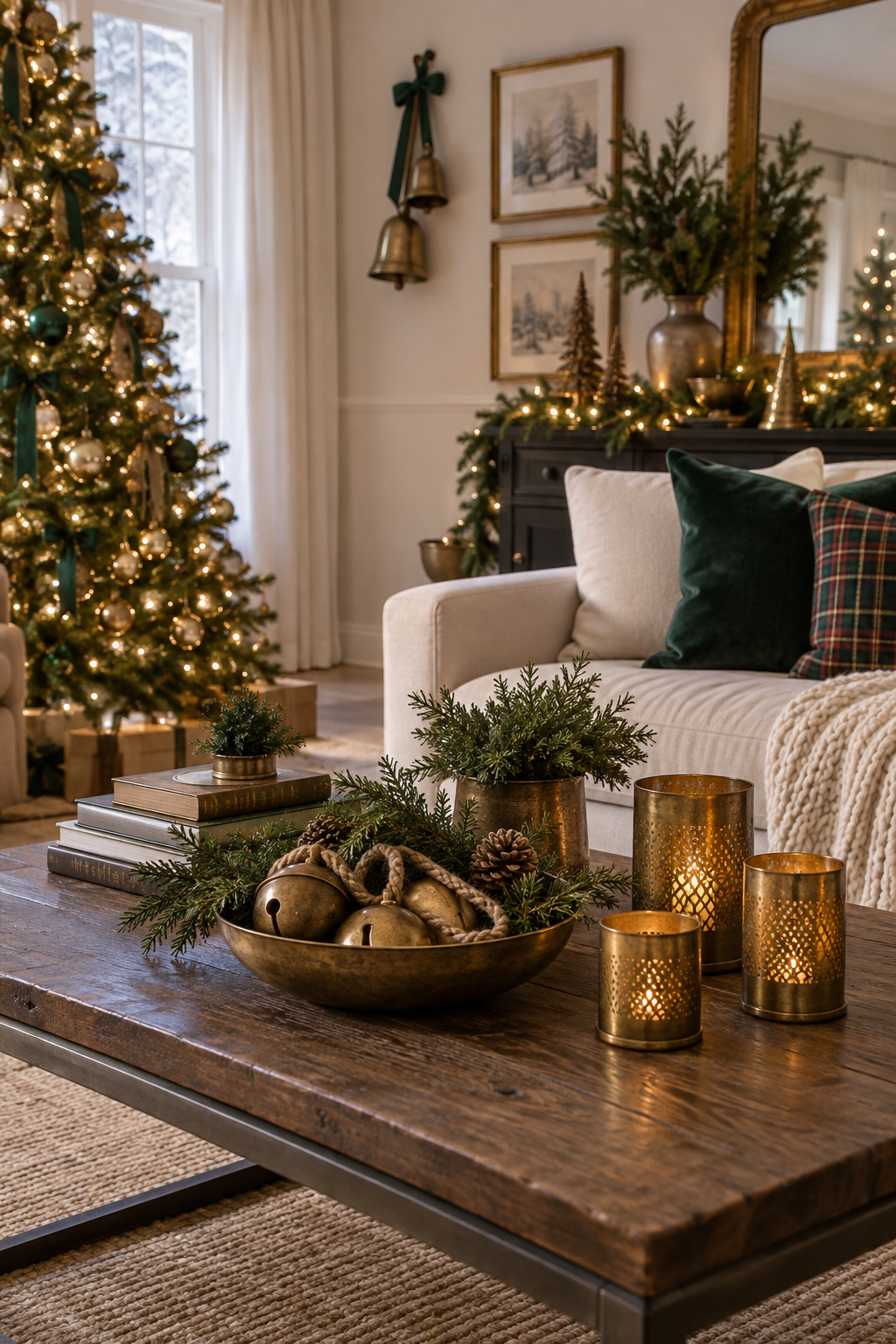
17. Bring in Brass and Aged Metal Accents
Warm metal catches tree light beautifully and makes humble natural materials feel refined. Use brass-finish bells, small frames, candleholders with flameless candles, or an aged-metal tray. Mix no more than two metal finishes in one view for cohesion. Antique pieces do not need to match perfectly; their patina adds depth. Place heavy objects on stable surfaces and add felt pads to protect wood furniture from scratches.
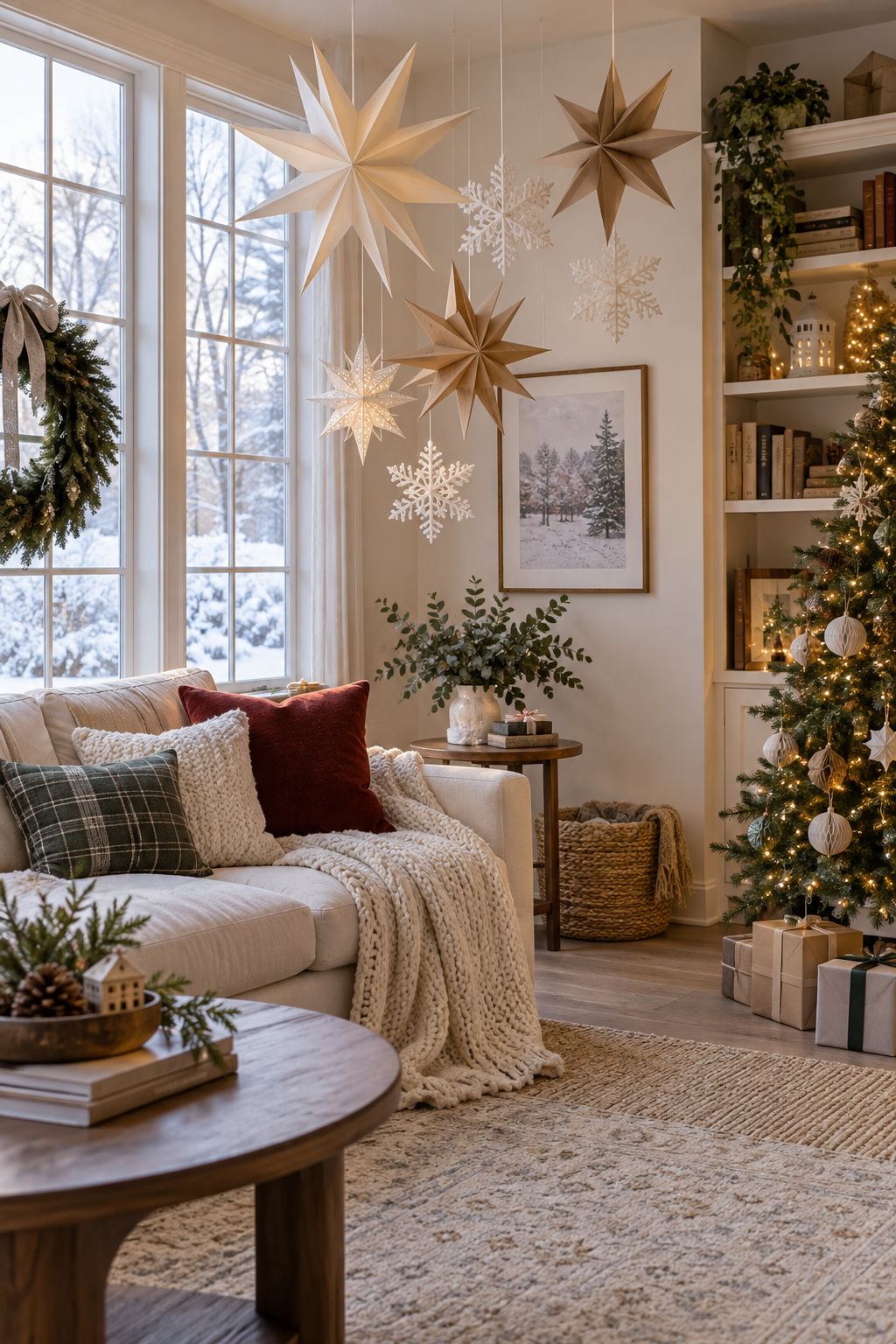
18. Decorate with Paper Stars and Snowflakes
Paper decorations offer scale with very little visual weight. Hang a few dimensional stars in a window, above a console, or in an empty corner where they will not interfere with movement. A restricted palette of ivory, kraft, and soft gold keeps the look sophisticated. Use secure, removable hanging methods appropriate for the surface, and keep paper well away from fireplaces, hot light fixtures, candles, and cooking areas.
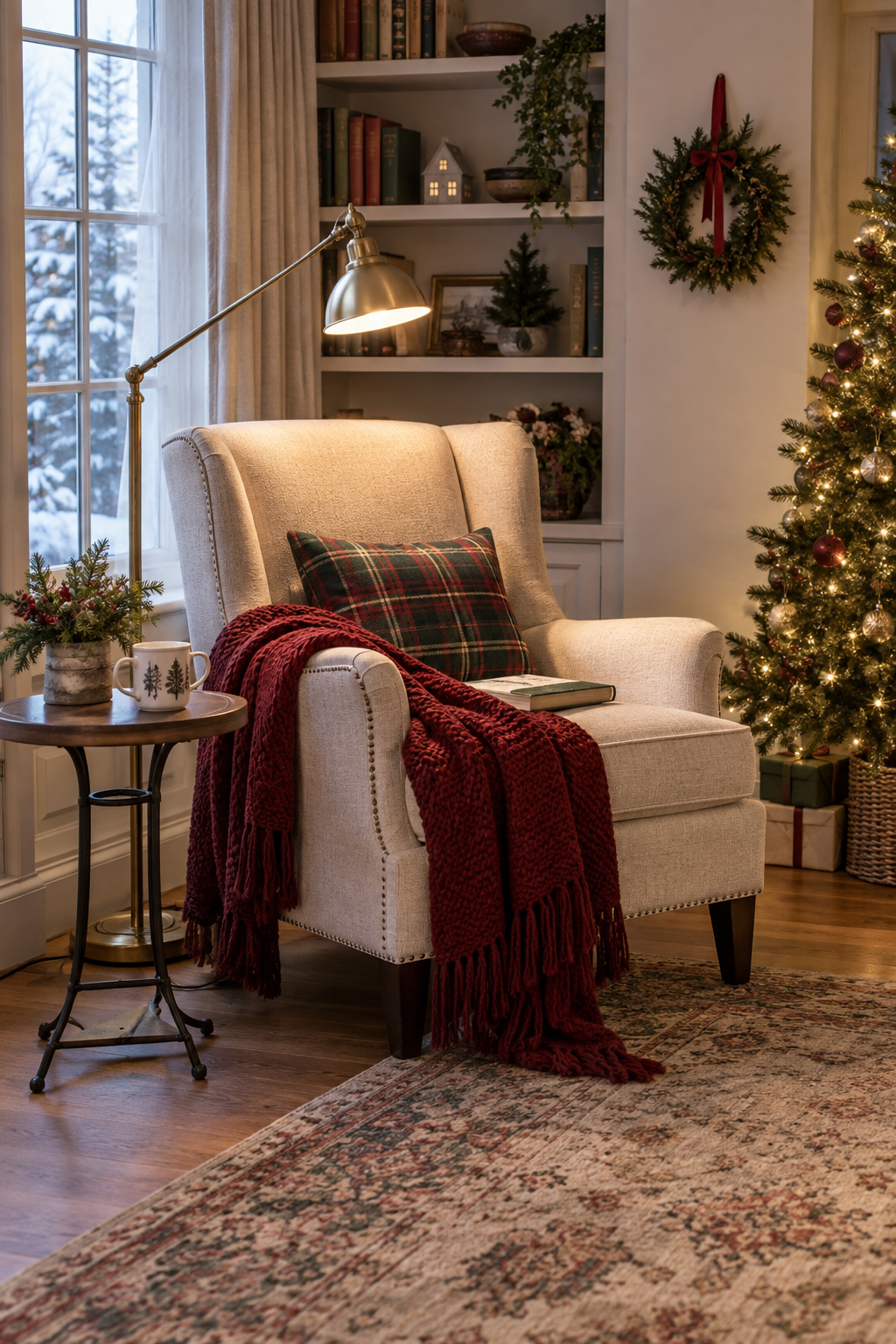
19. Add a Quiet Christmas Reading Corner
Turn an existing armchair into a seasonal retreat with a supportive cushion, a warm throw, and a nearby table for a book or mug. Add a floor lamp with comfortable task lighting and a small bowl of pinecones or a miniature wreath. Do not crowd the chair with decor; comfort is the point. Route lamp cords along a wall and preserve a clear path between the chair and the rest of the room.
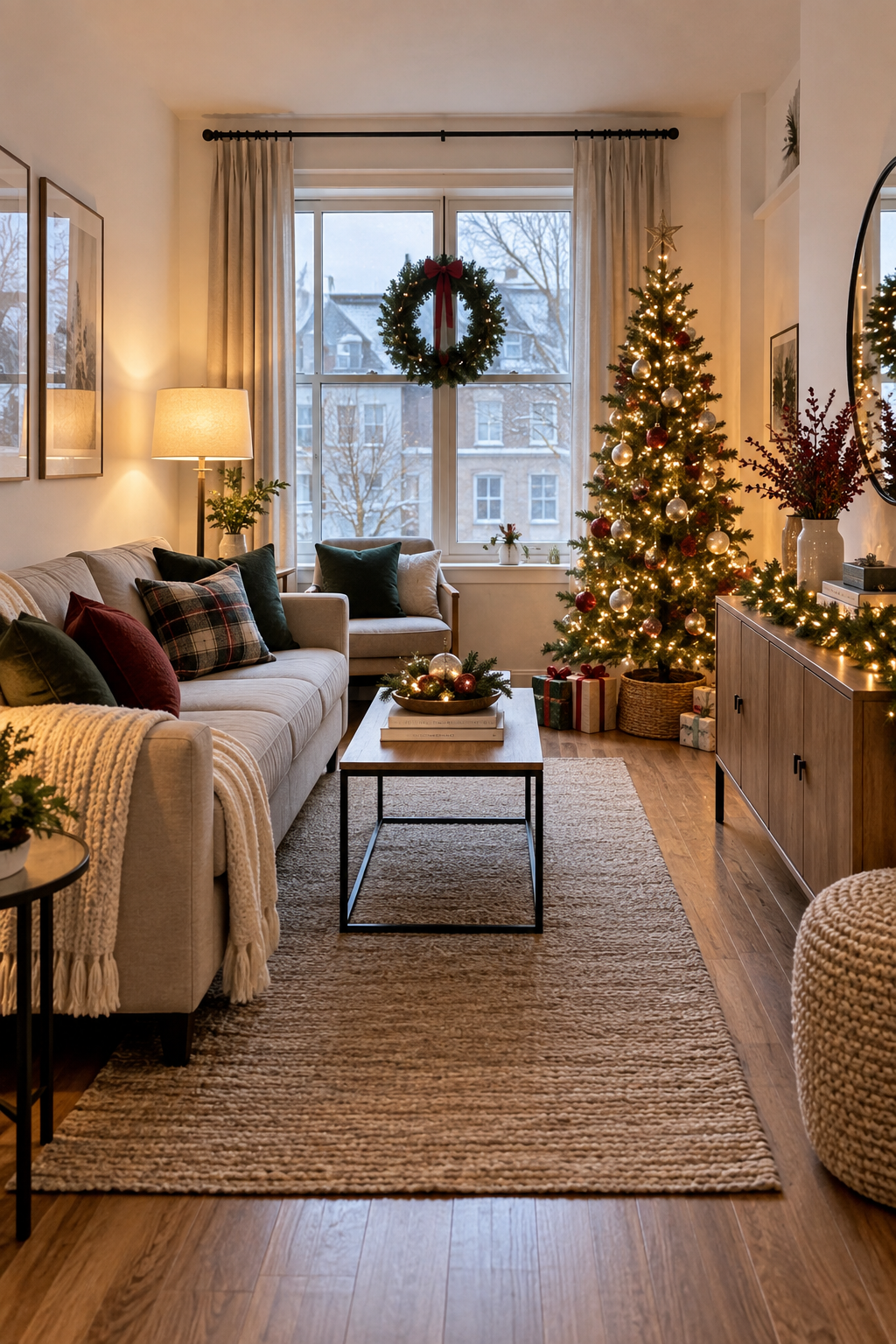
20. Make a Small Living Room Feel Festive
In a compact room, concentrate Christmas decor in two strong zones rather than scattering it everywhere. A slim tree and a decorated console can provide enough impact. Use vertical space, reflective ornaments, and warm light to create atmosphere without consuming valuable surfaces. Replace some everyday decor instead of layering over it, and ensure the arrangement does not reduce safe circulation or block doors, windows, storage, or heating vents.
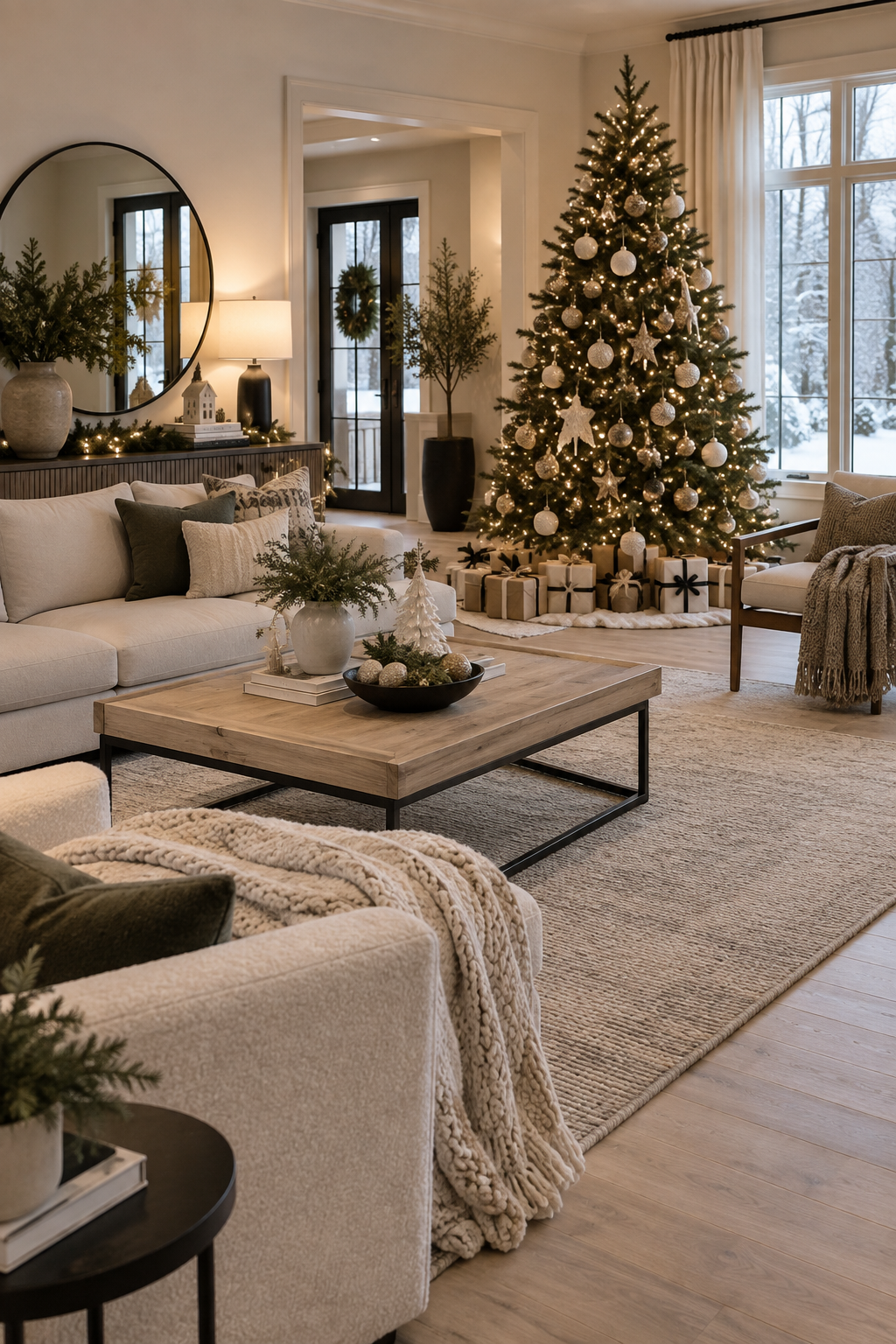
21. Try a Modern Neutral Christmas Scheme
For a calmer look, combine ivory, mushroom, pale wood, and a small amount of matte black or aged brass. Let texture provide interest through boucle, linen, paper, and natural branches. A neutral scheme still needs contrast, so include several dark anchors rather than making every object beige. Warm lighting prevents the palette from appearing cold, while generous negative space allows the architecture and tree shape to remain visible.
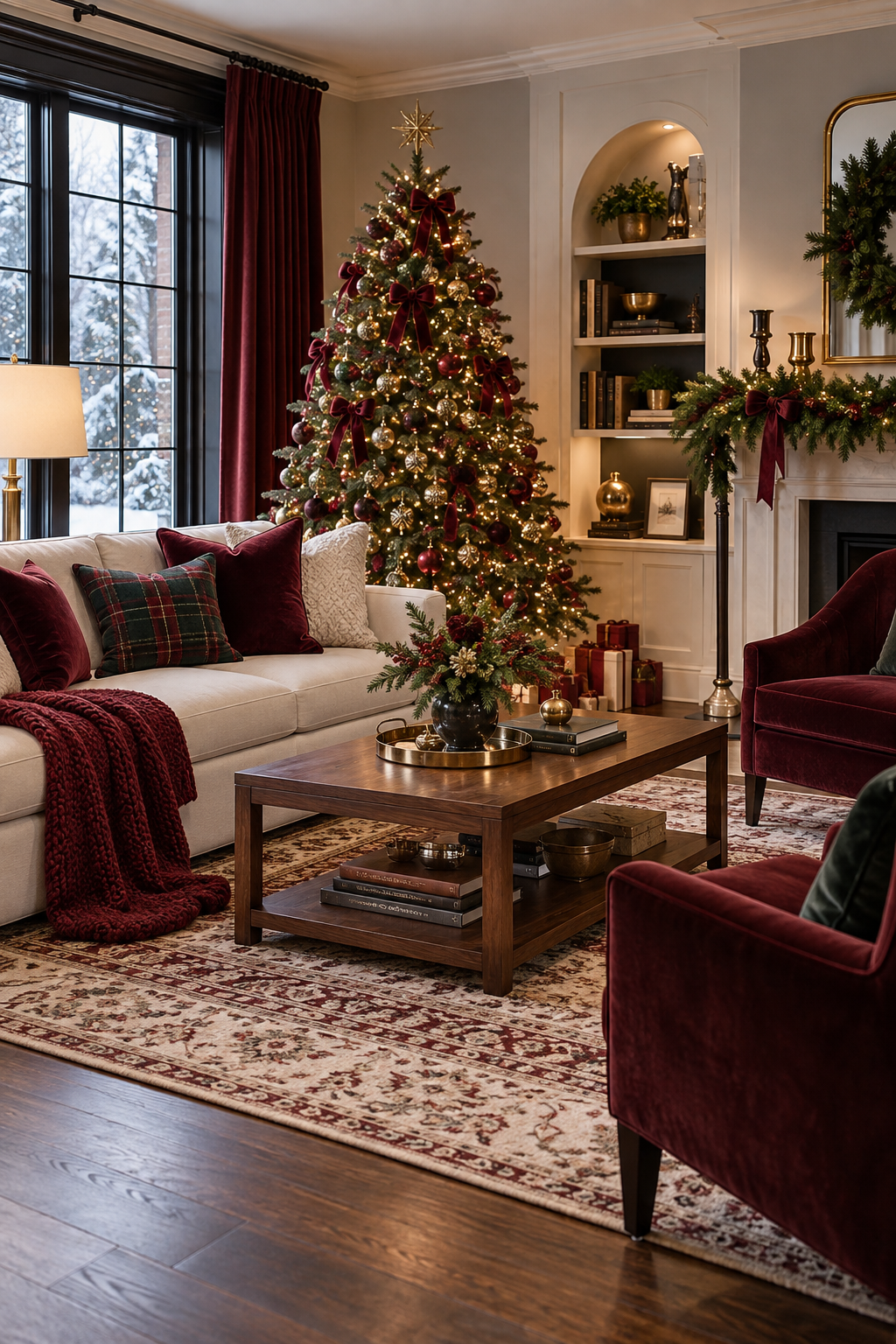
22. Use Burgundy for Sophisticated Holiday Color
Burgundy has the familiarity of Christmas red but feels deeper and more tailored. Introduce it through velvet bows, a cushion, several glass ornaments, or a single throw. Pair it with forest green, walnut, warm white, and touches of brass. Because the color is visually strong, repeat it at three different heights and stop there. This measured approach creates richness without turning the room into a solid field of red.
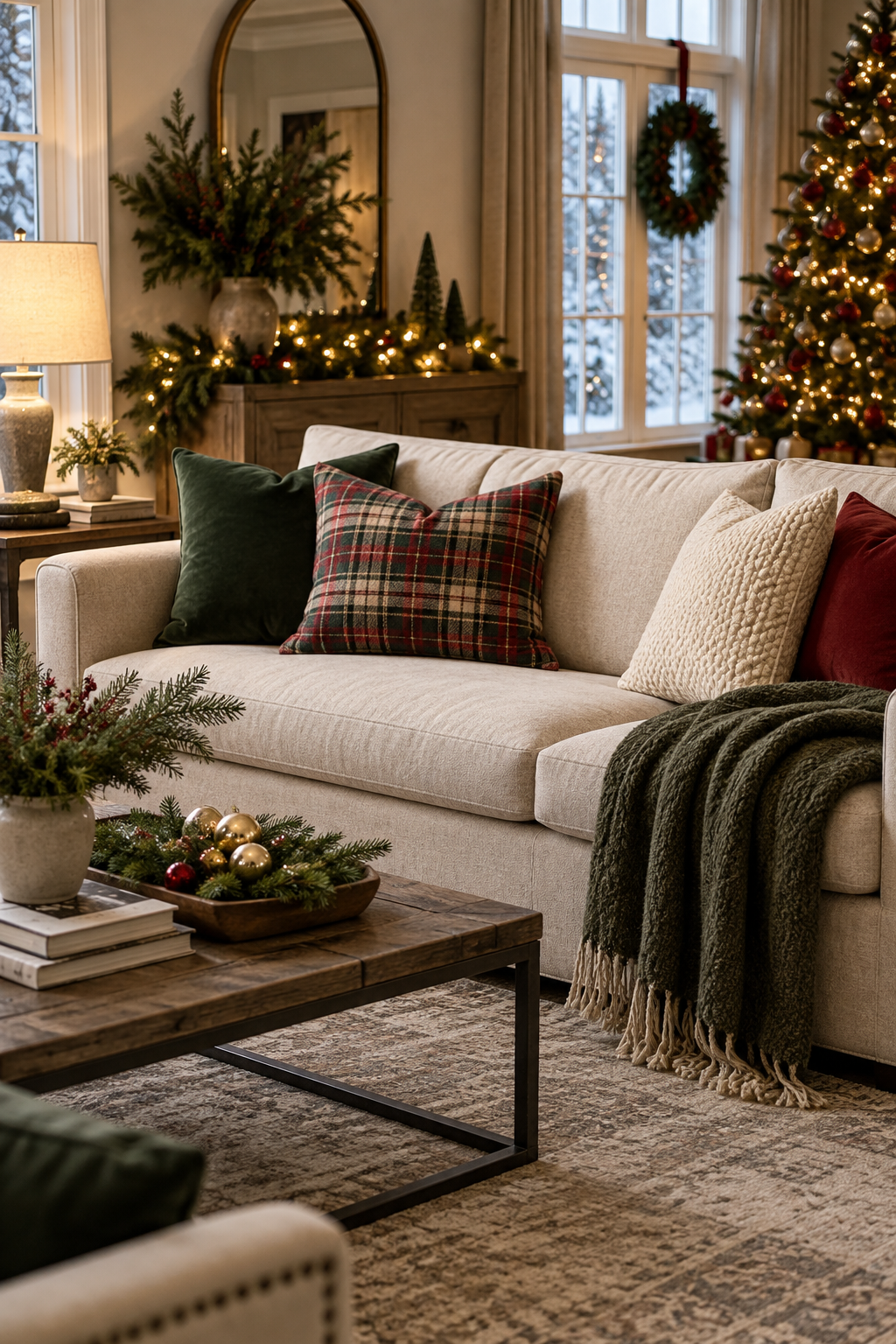
23. Blend Plaid with Solid Textures
Plaid brings heritage character, but it is most effective in controlled doses. Choose one plaid whose colors relate to the room, then pair it with solid velvet, wool, or linen. A single cushion, folded throw, or ribbon detail may be enough. Avoid using several competing tartans in the same sightline. The resulting balance feels cozy and familiar while allowing wood grain, greenery, and treasured decorations to stand out.
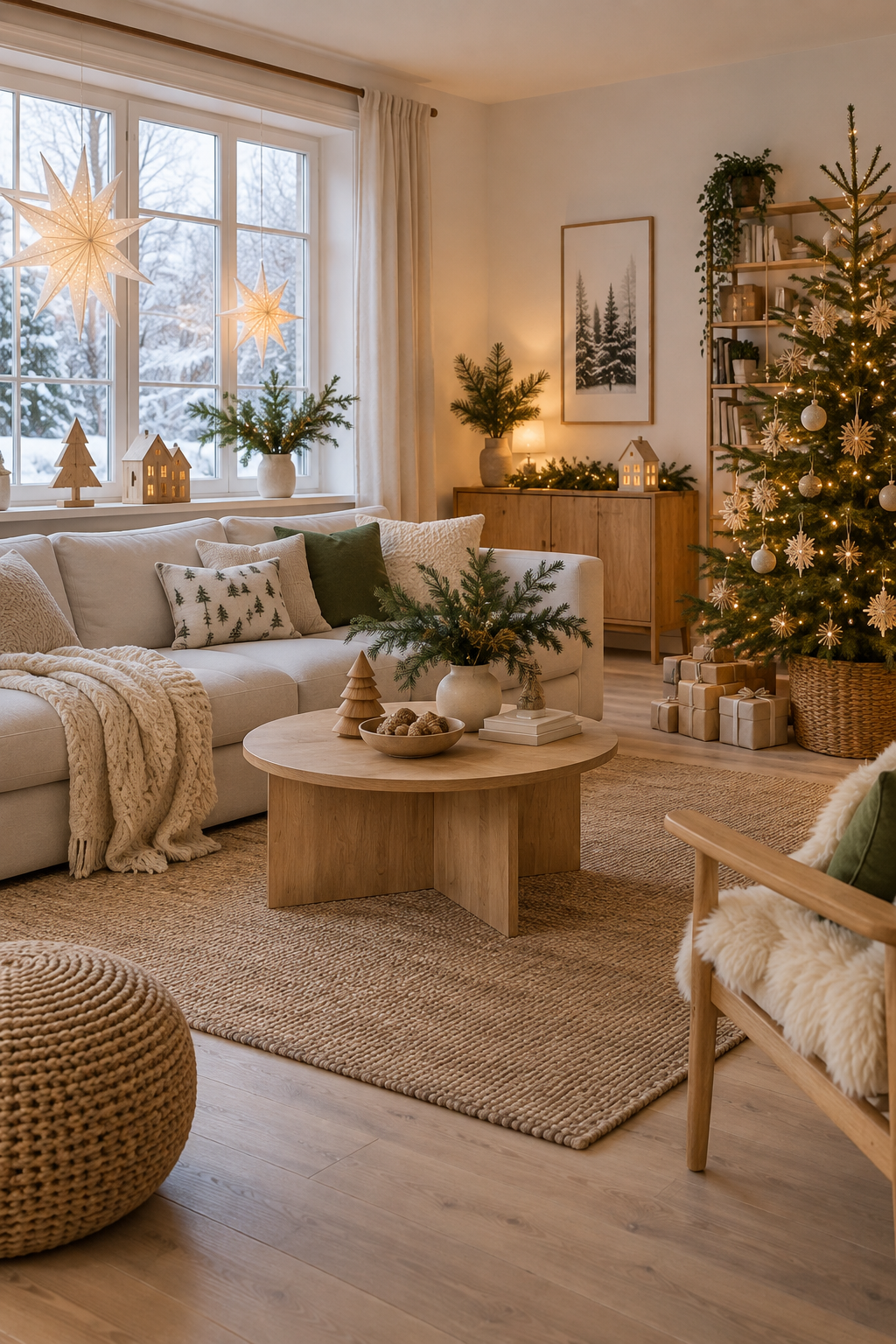
24. Create a Scandinavian-Inspired Christmas Living Room
Combine pale wood, warm white textiles, simple greenery, and handmade paper or straw ornaments for a light Scandinavian mood. The look depends on craftsmanship and calm composition rather than an absence of decoration. Use repeated natural shapes and soft pools of light, leaving tabletops partly clear. Add black or dark brown accents for definition. Keep real candlelight out of reach or use realistic LED alternatives for an equally gentle glow.
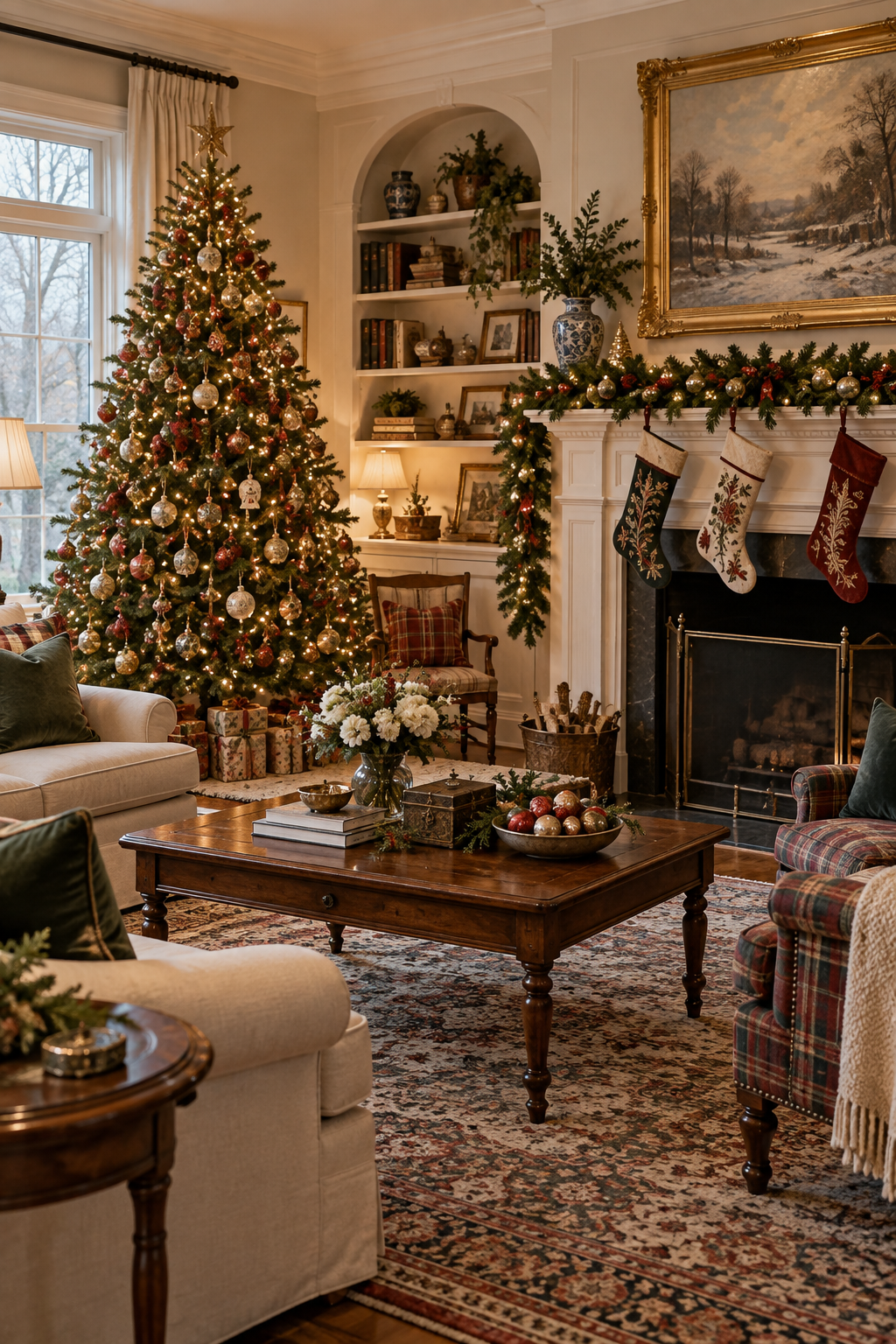
25. Give a Traditional Room a Collected Holiday Look
Traditional rooms welcome layered pattern and history. Work with the existing rug, artwork, and upholstery by drawing two or three colors from them for the holiday palette. Add classic greenery, red or burgundy ribbon, brass details, and ornaments gathered over time. The secret is editing: repeat shapes and colors while giving important pieces space. A collected room should feel evolved and personal, not like every seasonal object arrived at once.
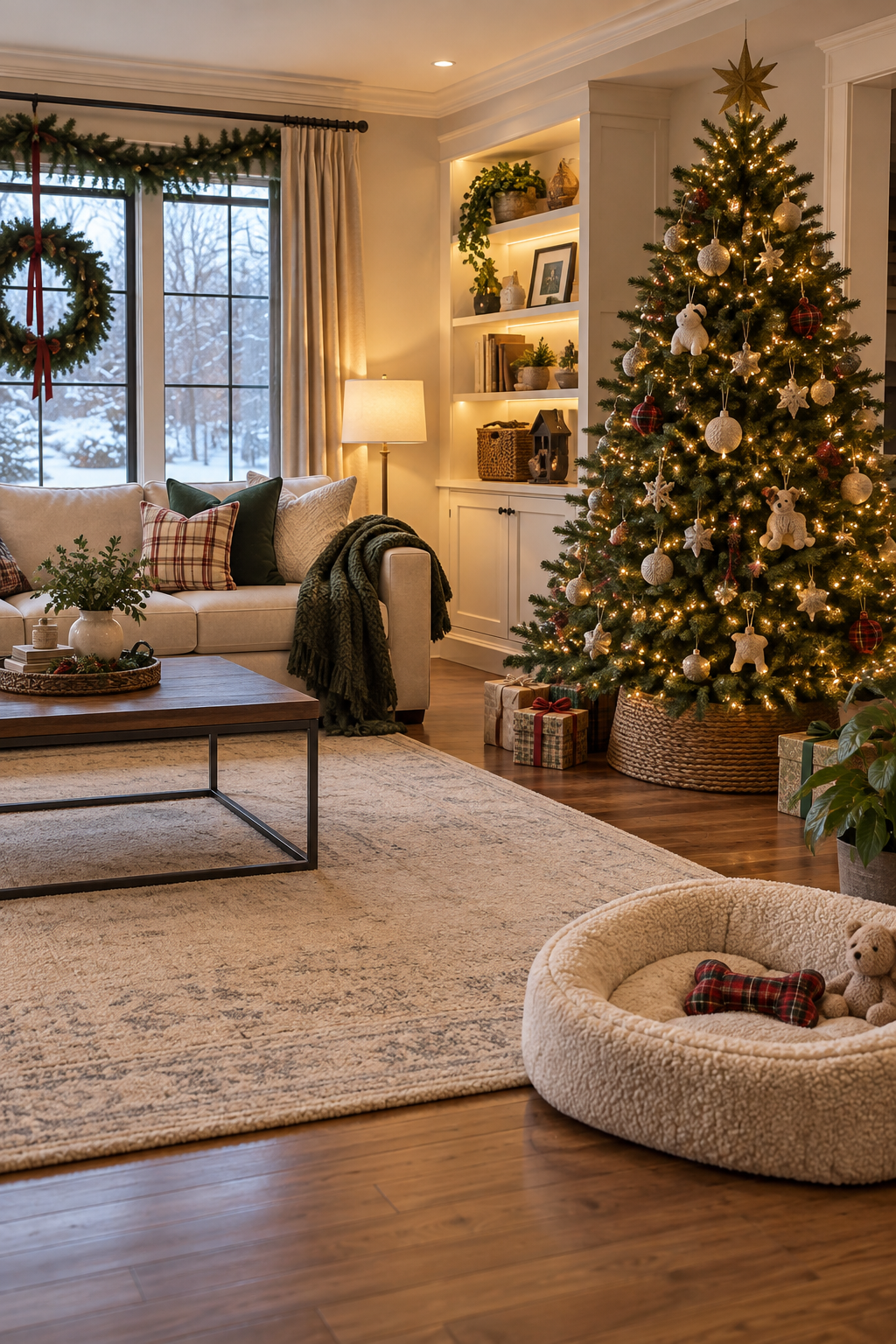
26. Design a Pet-Friendly Christmas Living Room
Stabilize the tree, protect accessible cords, and place delicate ornaments above tail and paw height. Avoid decorations that resemble chew toys, edible garlands, loose tinsel, and plants that may be unsafe for animals. Use sturdy baskets and washable throws for seasonal texture. Since each pet behaves differently, supervise new arrangements and ask a veterinarian about questionable plants or materials. Elegant design is successful only when everyone in the home can use it safely.
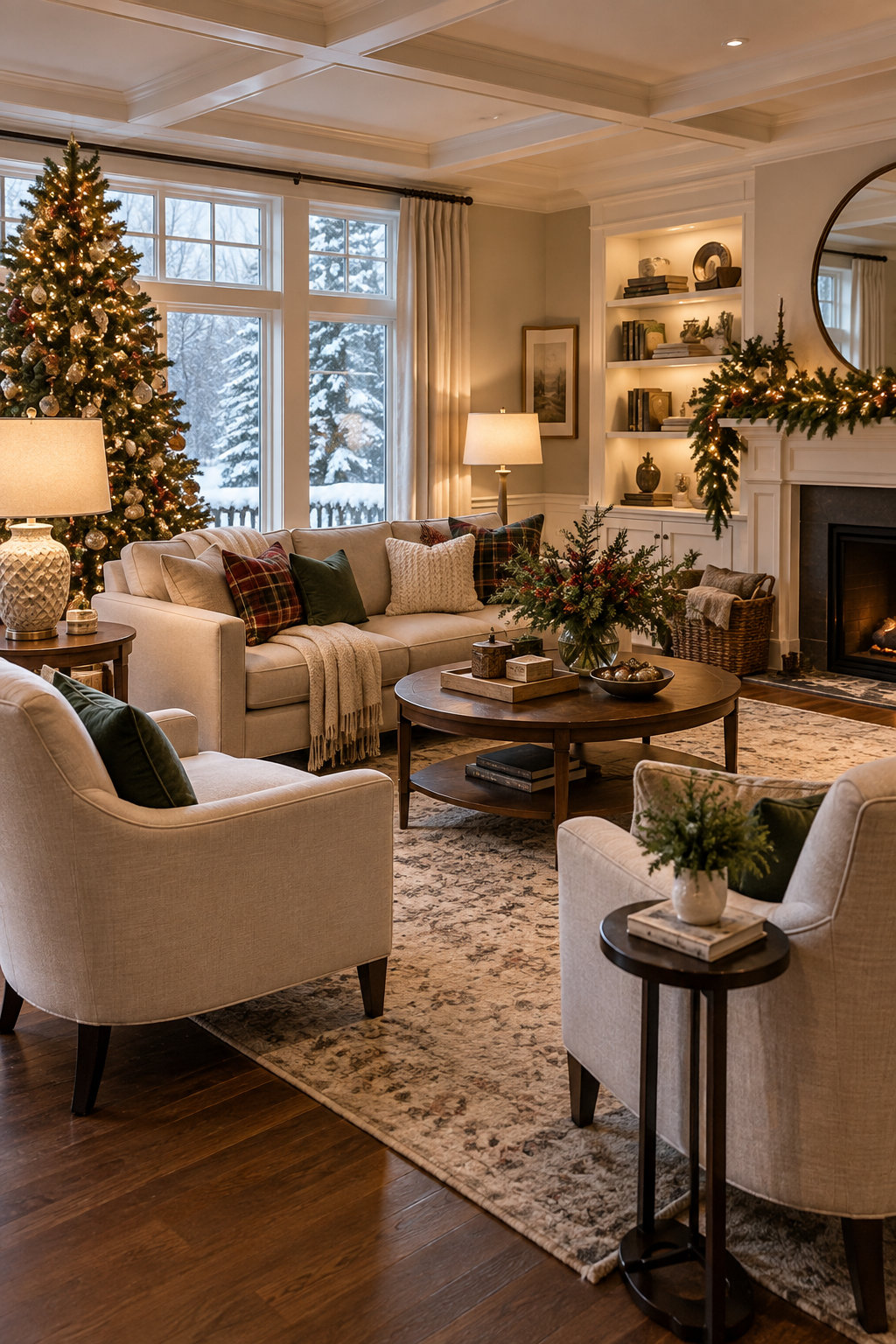
27. Make the Room Guest-Ready for Holiday Gatherings
Test the room from a guest’s perspective. Provide a clear entrance, enough places to set a drink, and seating that supports conversation rather than facing only the television. Move fragile decor away from table edges and store excess cushions before company arrives. Soft lighting at several heights is more flattering than one bright ceiling fixture. Keep blankets within reach and leave one surface free for serving or shared activities.
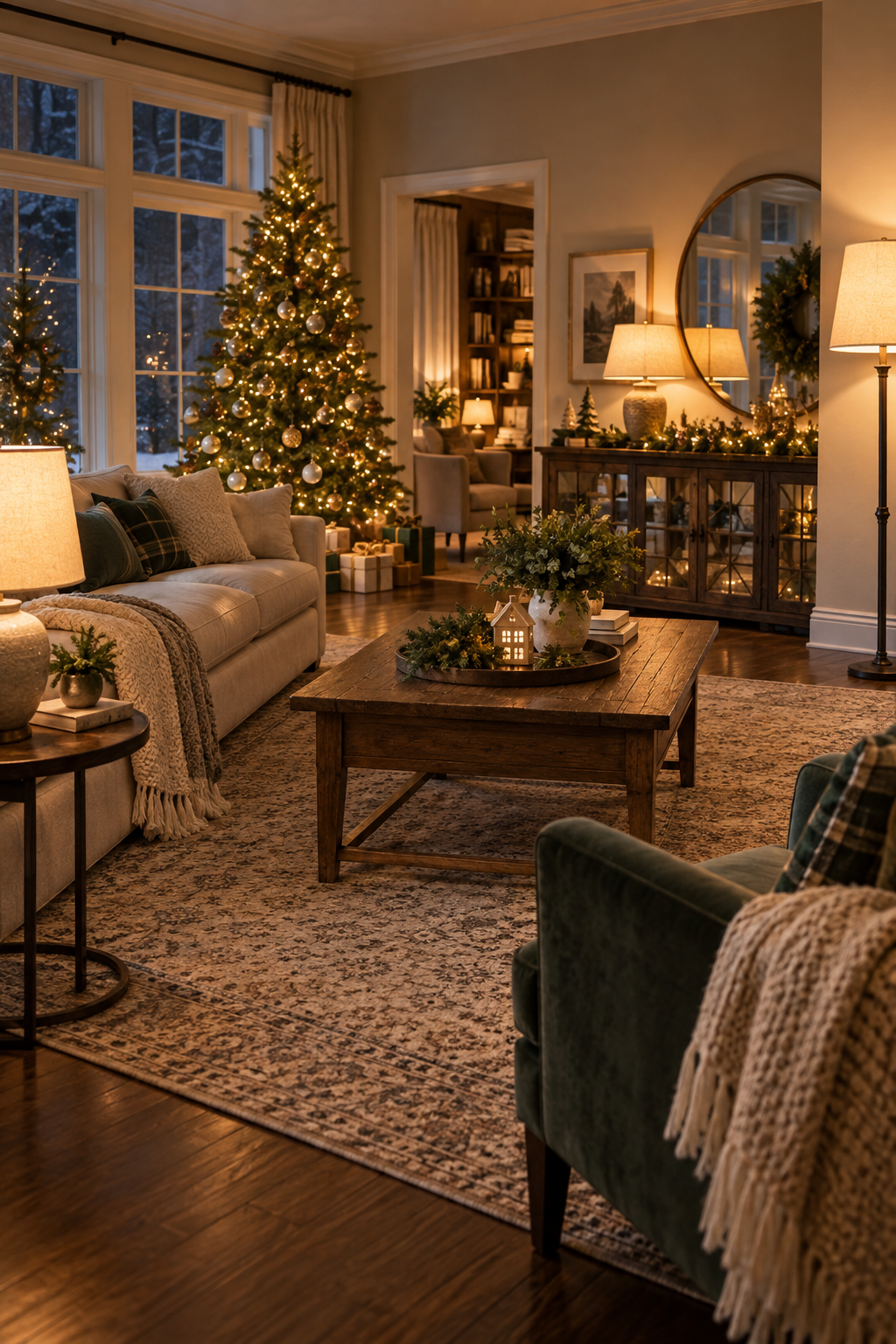
28. Use Warm Lighting Beyond the Tree
The tree should not be the room’s only evening light. Switch on table and floor lamps, add a small cordless lamp to a shelf, and use flameless candles for a gentle shimmer. Bulbs with similar warm color temperatures produce a cohesive atmosphere. Avoid hiding fixtures behind flammable greenery or fabric, and keep cords secure. Layered illumination makes the living room feel welcoming even before every holiday decoration is in place.
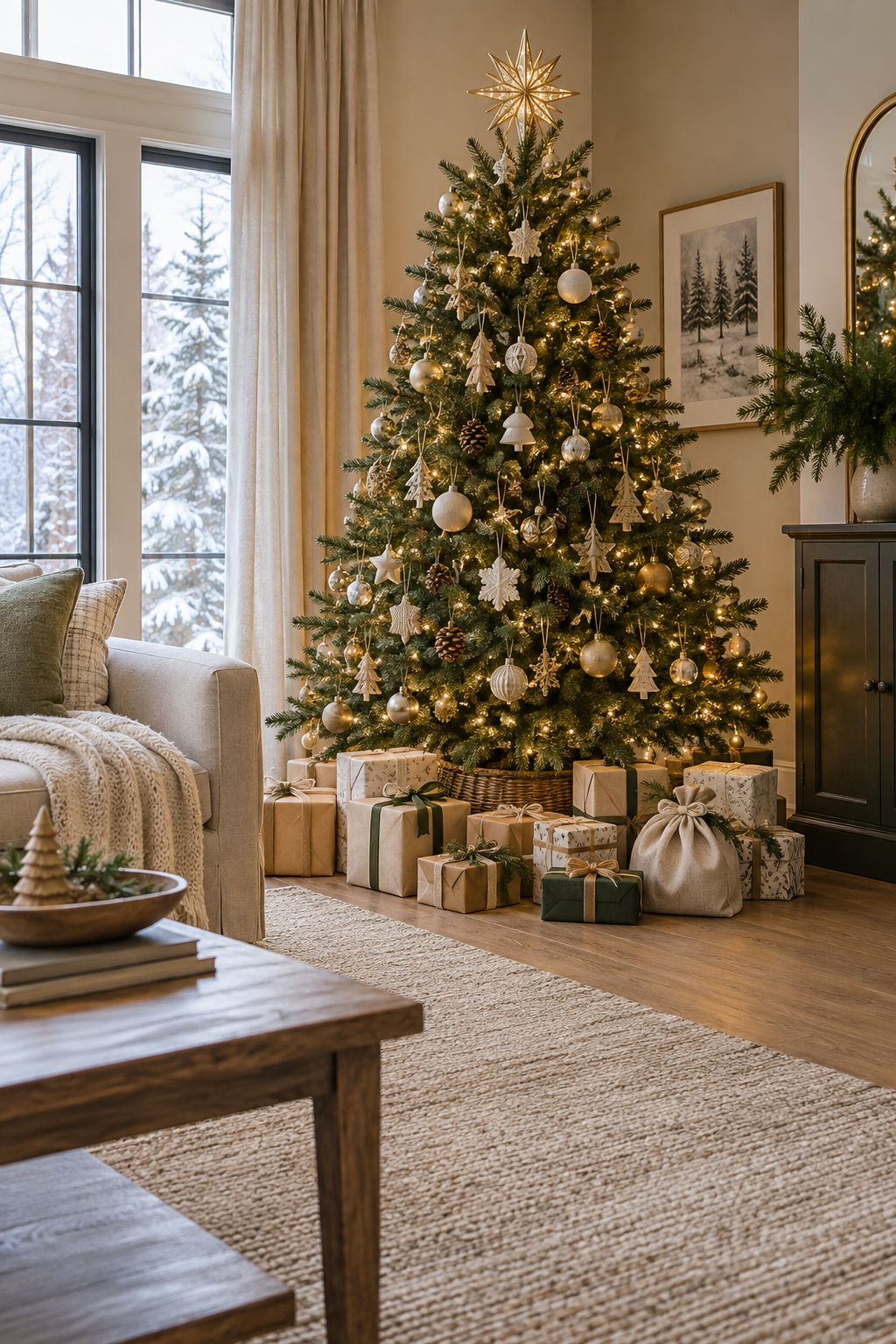
29. Display Wrapped Gifts as Part of the Decor
Coordinate gift wrap loosely with the room using kraft paper, warm white paper, fabric ribbon, and simple botanical tags. Variation keeps the display personal; not every package must match. Arrange only a few gifts beneath the tree at first so the base remains tidy and accessible. Keep food gifts, ribbons, and small detachable embellishments away from pets and children. Reusable boxes and fabric wraps can reduce waste while looking especially polished.
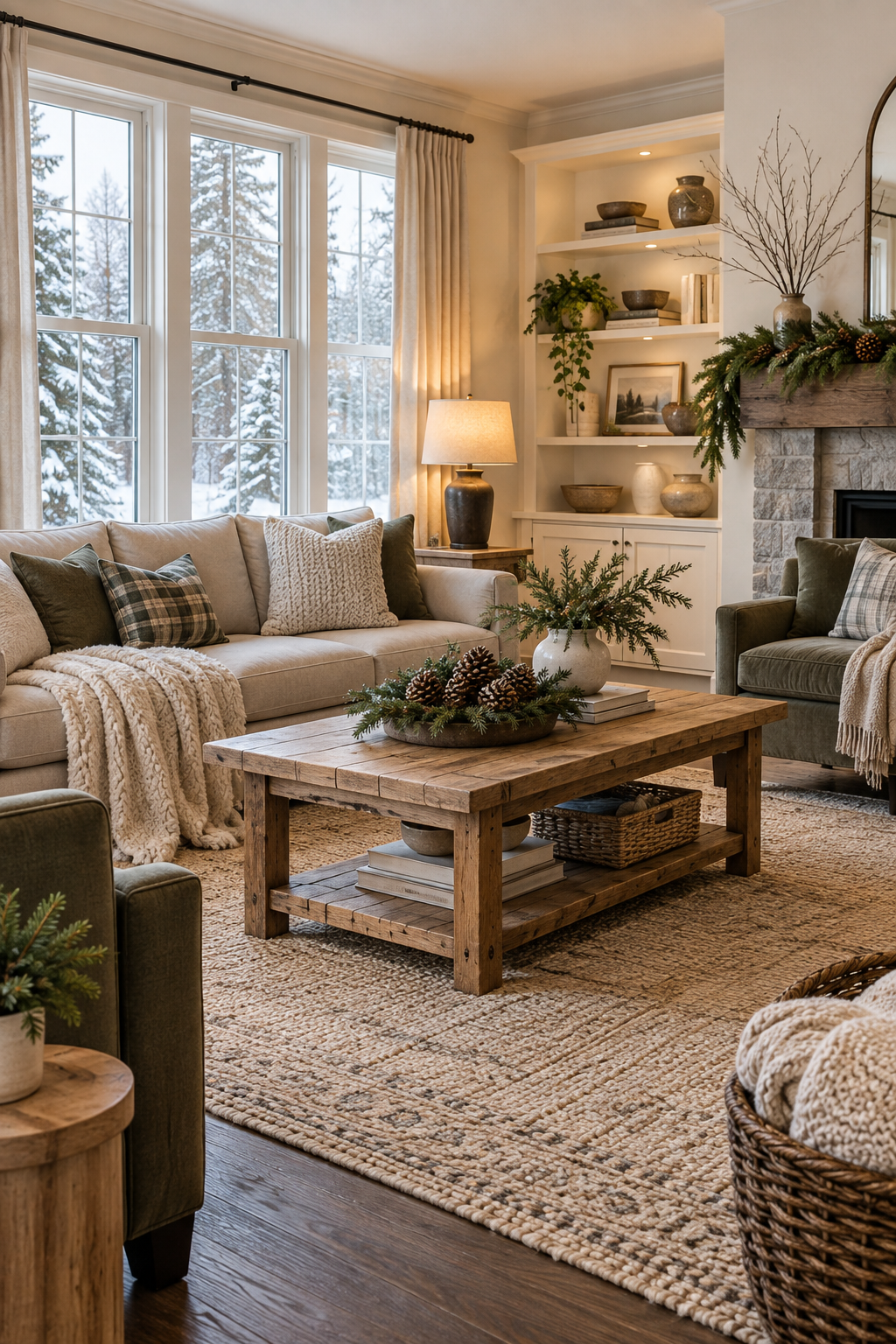
30. Transition the Decor Through Winter
Make post-holiday editing easier by building the room in layers. After Christmas, remove stockings, overtly festive ornaments, and gift wrap while keeping plain greenery, pinecones, warm throws, and winter artwork. Burgundy accents can shift to brown or charcoal, and a simple branch arrangement can replace the tree. This approach extends the value of seasonal pieces and prevents the living room from feeling suddenly bare in January.
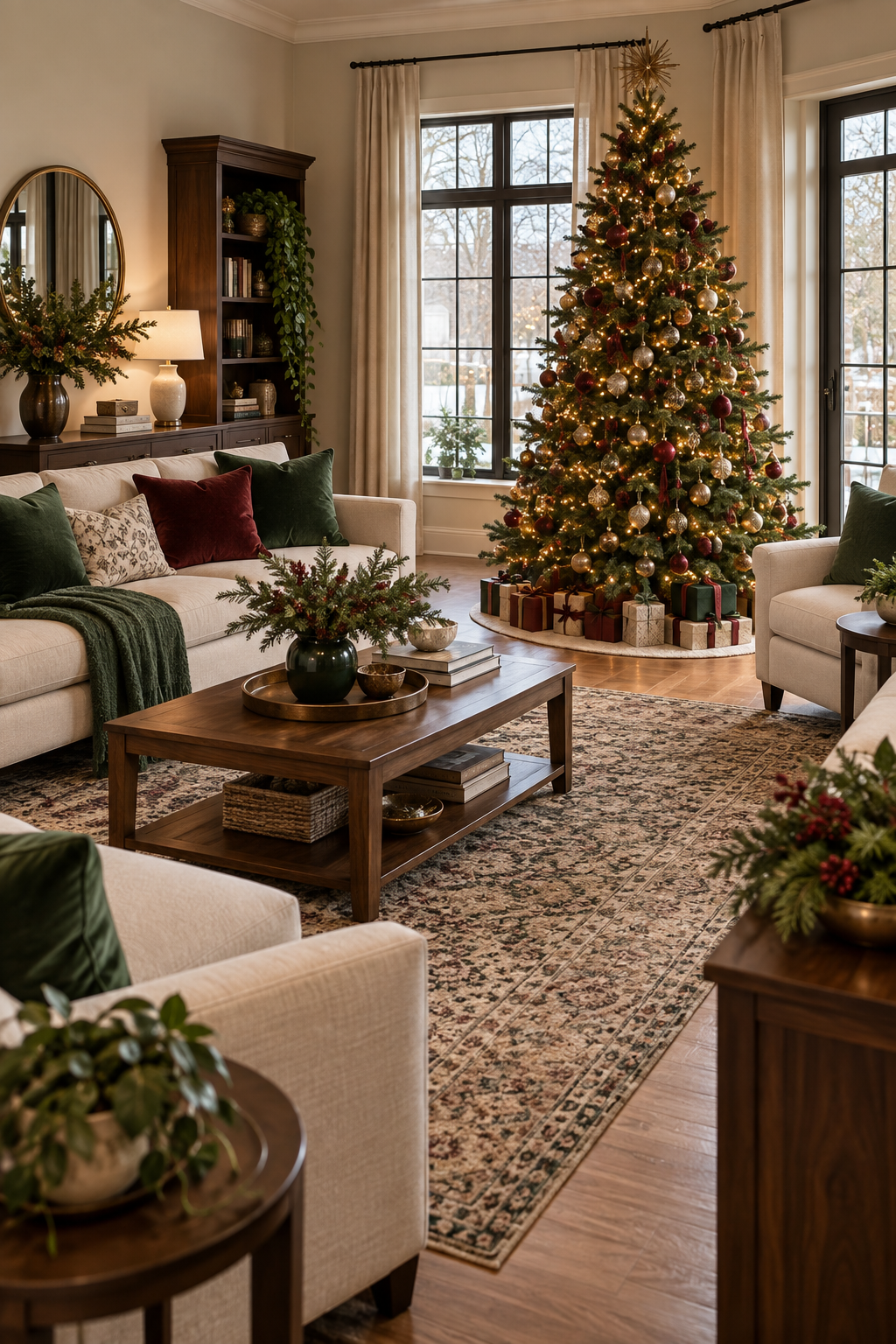
31. Edit the Finished Room for Comfort and Safety
Complete the room with a practical final check. Sit in every chair, walk every route, open doors and curtains, and view the space in daylight and after dark. Remove decorations that block sightlines, create unstable stacks, snag clothing, or compete with the focal point. Confirm tree stability, fireplace clearance, cord condition, and outlet load. Thoughtful editing is what turns a collection of Christmas decorations into a cozy, elegant living room.
How to Plan a Cohesive Christmas Living Room
Photograph the room before decorating, then identify its permanent colors, strongest focal point, and busiest walking routes. Select a palette that complements the existing upholstery and rug rather than fighting them. Assign each major surface a purpose: the tree provides glow, the mantel or console carries greenery, and textiles bring comfort. This prevents every area from trying to be the star.
Set out all decorations before placing them and sort by color, material, and emotional value. Begin with lighting and large greenery, continue with tree ornaments, and finish with small accessories. Stop periodically and take another photograph; a camera reveals crowding that the eye quickly accepts. Store unused items instead of forcing them into the room. A meaningful piece will look better next year than it does squeezed into an already complete arrangement.
Plan safety at the same time as style. Verify product instructions, use appropriate electrical equipment, avoid open flames near combustible materials, and keep exits and heating sources unobstructed. Homes with children or pets may need softer ornaments, secured furniture, and fewer decorations at floor level. Finally, choose a storage system while decorating: label containers by zone and photograph finished vignettes if you want to recreate them.
Frequently Asked Questions
How can I make my living room look Christmassy without clutter?
Focus on the tree plus one secondary zone, such as the mantel or console. Repeat a limited color palette and replace everyday accessories rather than piling seasonal decor around them.
What Christmas colors look elegant in a living room?
Warm white, forest green, burgundy, walnut, and brass create a timeless combination. Neutral rooms also suit ivory, mushroom, pale wood, and restrained black accents.
How do I decorate a small living room for Christmas?
Choose a slim tree, decorate vertically, use a tray for small objects, and retain clear walking routes. Two concentrated festive areas usually look stronger than many scattered accents.
Where should a Christmas tree go in a living room?
Place it where it is visible from the main seating area but clear of doors, vents, curtains, fireplaces, and traffic paths. Measure the full footprint before moving furniture.
How can I make inexpensive Christmas decor look sophisticated?
Use fewer items, repeat materials, and add natural greenery, paper stars, ribbon, and warm lighting. Consistent color and careful spacing matter more than the price of individual decorations.
Can I mix traditional and modern Christmas decor?
Yes. Connect the styles through a shared palette or material. For example, display heirloom ornaments on a simply lit tree and pair classic greenery with clean-lined furniture.
How many Christmas pillows should I use?
Use enough to introduce color while preserving comfortable seating. On an average sofa, one or two seasonal cushions combined with existing neutral pillows are often sufficient.
How do I keep Christmas decor safe around a fireplace?
Follow the fireplace manufacturer’s clearance requirements and local safety guidance. Remove stockings when the fire is operating, secure decor, and keep greenery, paper, ribbon, and textiles away from heat and sparks.
Related Reading
- Cozy Christmas bedroom ideas for a restful holiday retreat
- Natural Christmas decor ideas with greenery and warm neutrals
- Burgundy Christmas decor ideas for a rich, sophisticated home
- Small apartment Christmas decor ideas that save space
- Vintage Christmas decor ideas for a nostalgic holiday home
An elegant Christmas living room is not defined by the number of decorations it contains. It comes from a clear palette, comfortable furniture, meaningful details, warm light, and enough empty space for people to gather. Choose the ideas that support your home and traditions, edit with confidence, and let the room feel lived in throughout the season.