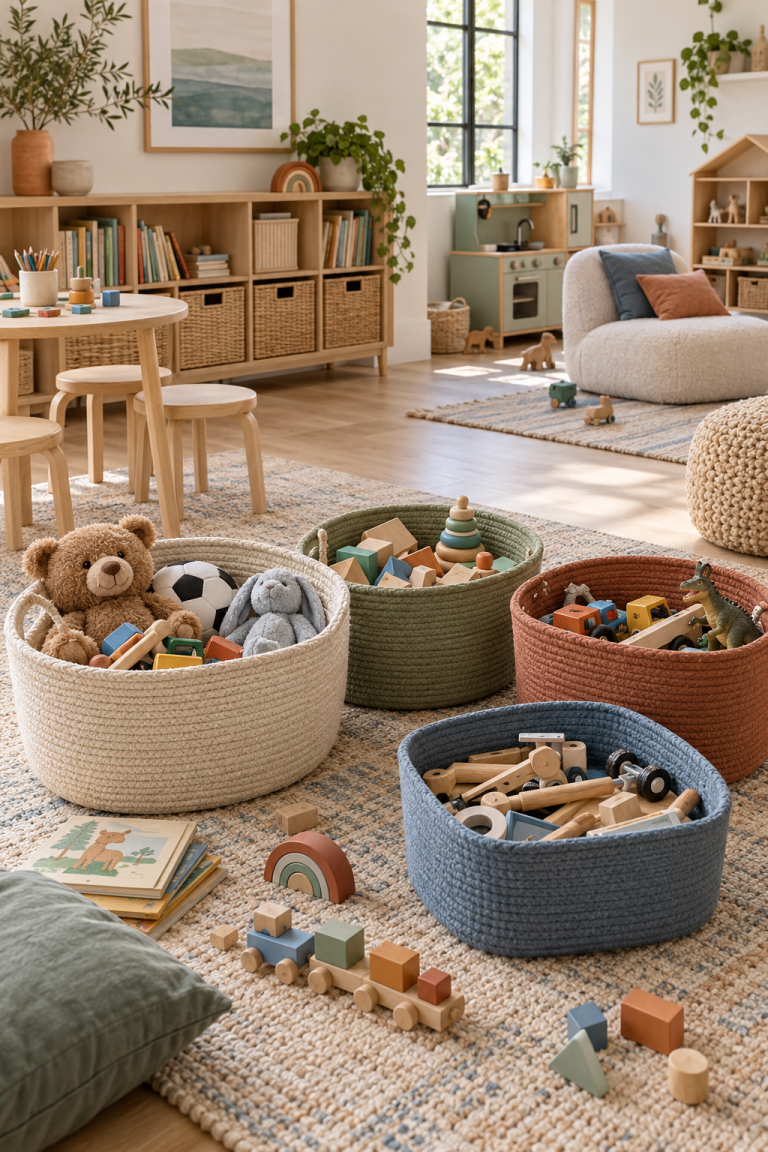
A screen-free playroom works best when the room offers children something more compelling than passive entertainment: materials they can transform, space they can move through and cozy places where they can concentrate. The goal is not perfection or a rigid ban. It is an environment that makes imaginative, social and physical play the easiest choice.
These screen-free playroom ideas combine open-ended toys, books, art, movement and practical storage in a polished family space. Every zone should suit the child’s age and abilities, with anchored furniture, supervised equipment and enough breathing room for interests to change.
1. Create an Open-Ended Building Zone
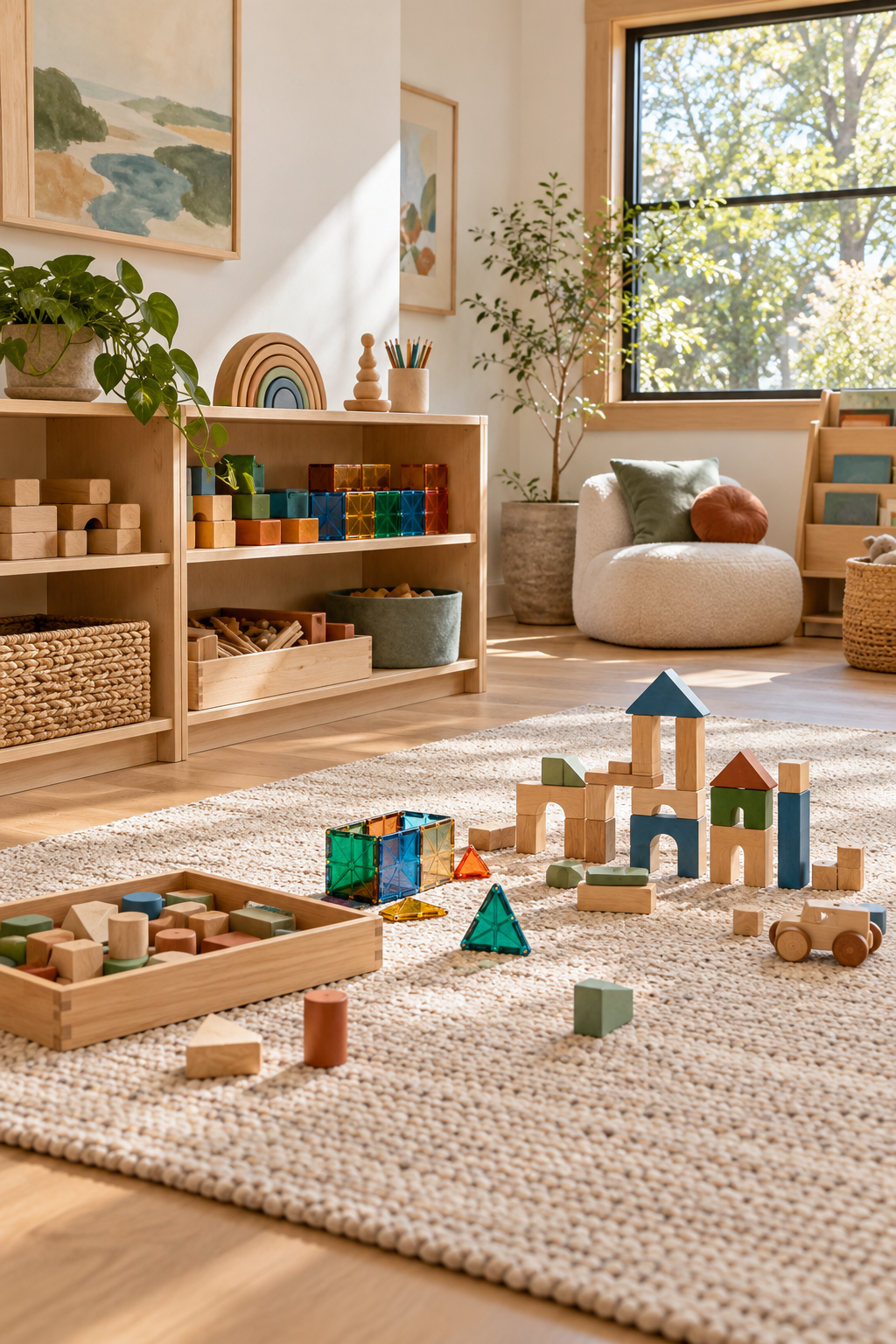
Create an Open-Ended Building Zone gives the room a clear invitation rather than another pile of toys. Keep the setup simple enough that a child can begin without waiting for an adult to explain it. Arrange only the materials required for the experience, then leave enough open space for children to reinterpret them.
Use warm white, pale oak, soft sage, muted blue and restrained terracotta so the environment feels lively without becoming overstimulating. Natural baskets, low shelving and washable textiles help the activity belong within the rest of the home. This approach invites longer imaginative play and richer storytelling.
Watch how the zone is actually used for a week. If pieces migrate, adjust the container or move the activity closer to where play naturally happens. Safety comes first: follow equipment installation guidance, supervise active play and keep cords, unstable furniture and age-inappropriate parts out of reach.
2. Design a Cozy Book Nook
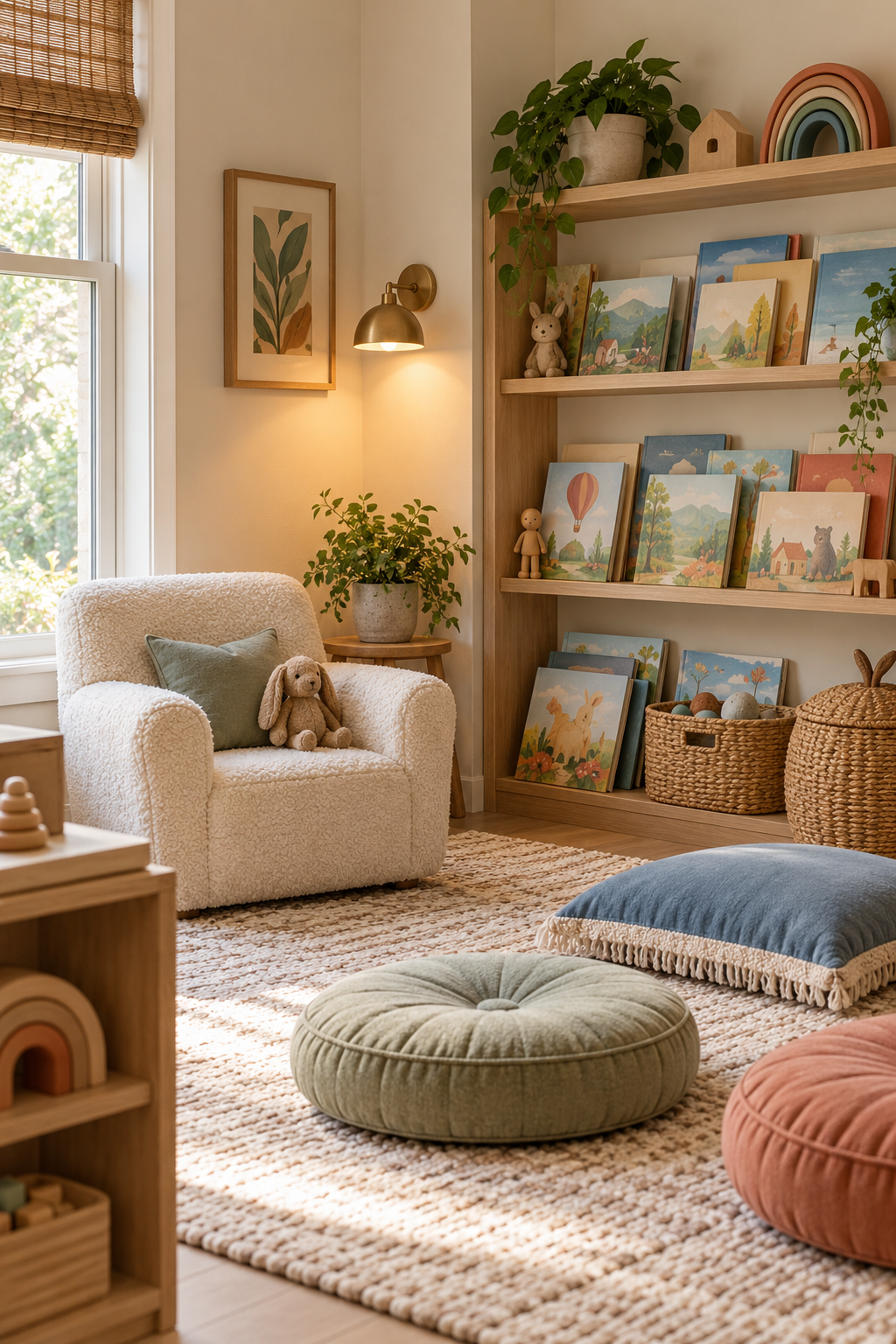
Design a Cozy Book Nook gives the room a clear invitation rather than another pile of toys. Offer a small edited selection and rotate materials when attention fades. Arrange only the materials required for the experience, then leave enough open space for children to reinterpret them.
Use warm white, pale oak, soft sage, muted blue and restrained terracotta so the environment feels lively without becoming overstimulating. Natural baskets, low shelving and washable textiles help the activity belong within the rest of the home. This approach supports concentration without filling the room with visual noise.
Watch how the zone is actually used for a week. If pieces migrate, adjust the container or move the activity closer to where play naturally happens. Safety comes first: follow equipment installation guidance, supervise active play and keep cords, unstable furniture and age-inappropriate parts out of reach.
3. Add a Child-Size Art Studio
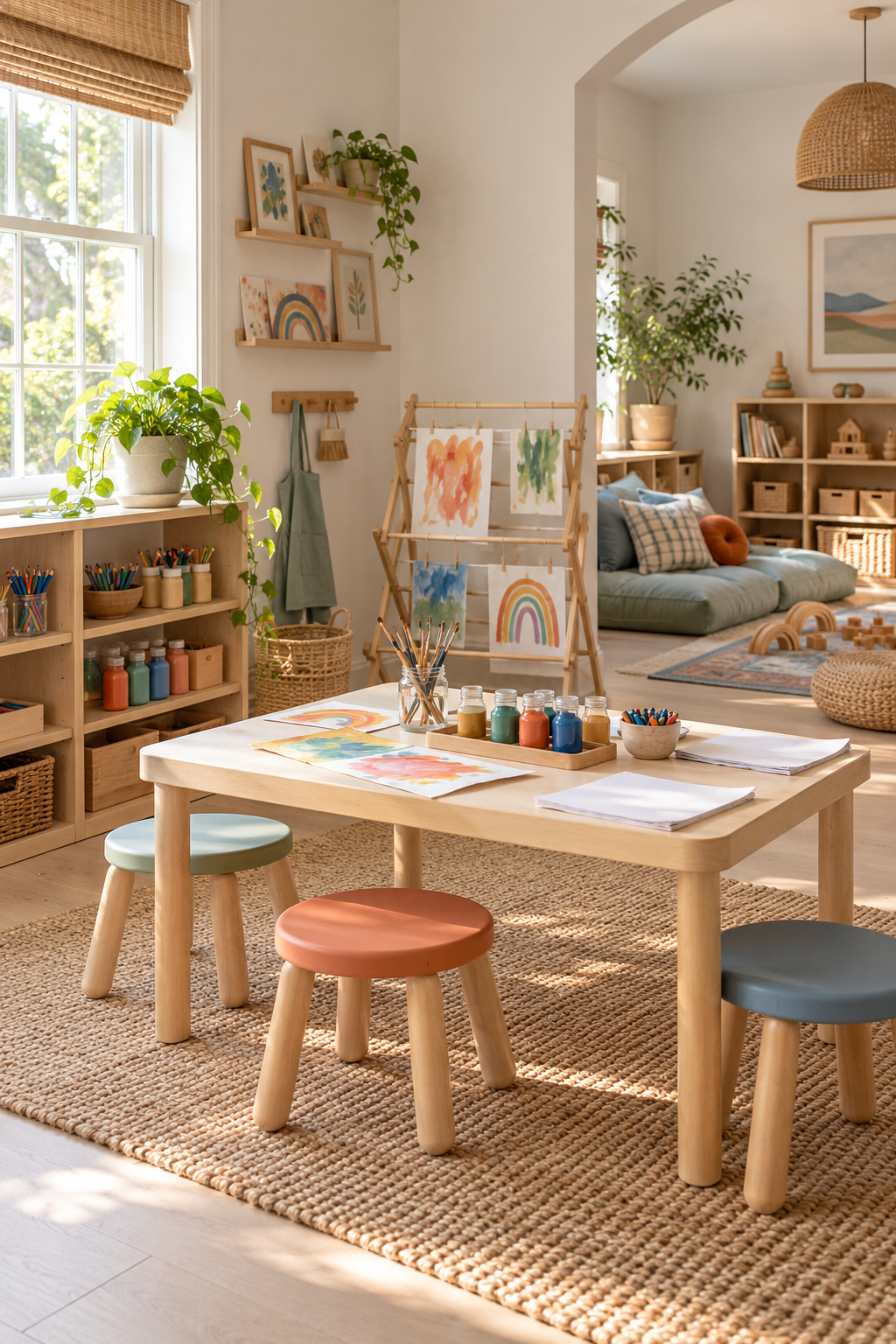
Add a Child-Size Art Studio gives the room a clear invitation rather than another pile of toys. Place the activity at child height while keeping tiny pieces appropriate for the youngest visitor. Arrange only the materials required for the experience, then leave enough open space for children to reinterpret them.
Use warm white, pale oak, soft sage, muted blue and restrained terracotta so the environment feels lively without becoming overstimulating. Natural baskets, low shelving and washable textiles help the activity belong within the rest of the home. This approach encourages children to make choices and care for shared materials.
Watch how the zone is actually used for a week. If pieces migrate, adjust the container or move the activity closer to where play naturally happens. Safety comes first: follow equipment installation guidance, supervise active play and keep cords, unstable furniture and age-inappropriate parts out of reach.
4. Set Up a Simple Pretend Kitchen
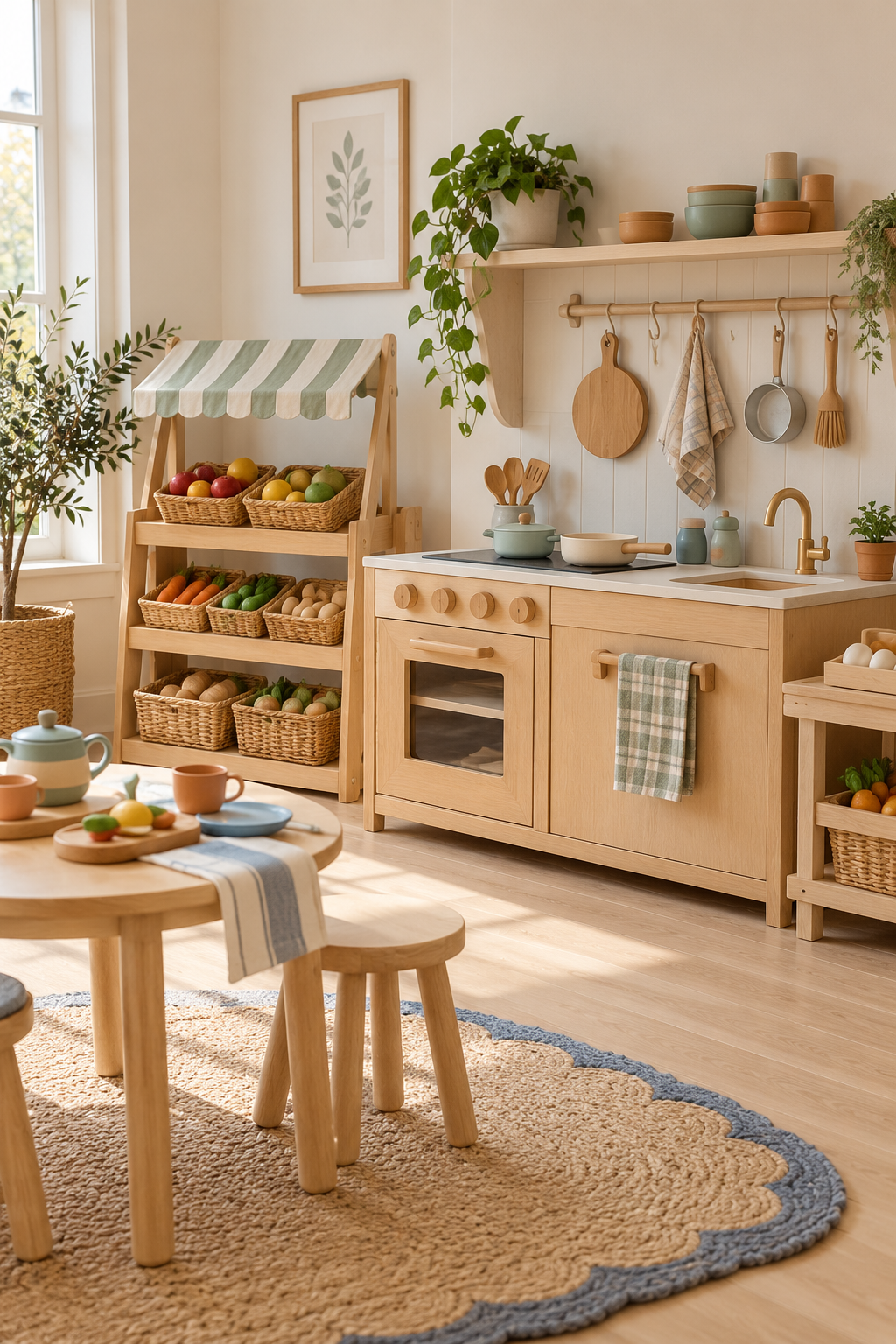
Set Up a Simple Pretend Kitchen gives the room a clear invitation rather than another pile of toys. Use durable washable materials and test that the full activity can be reset in a few minutes. Arrange only the materials required for the experience, then leave enough open space for children to reinterpret them.
Use warm white, pale oak, soft sage, muted blue and restrained terracotta so the environment feels lively without becoming overstimulating. Natural baskets, low shelving and washable textiles help the activity belong within the rest of the home. This approach builds movement, problem-solving and confidence through everyday play.
Watch how the zone is actually used for a week. If pieces migrate, adjust the container or move the activity closer to where play naturally happens. Safety comes first: follow equipment installation guidance, supervise active play and keep cords, unstable furniture and age-inappropriate parts out of reach.
5. Build a Dress-Up and Role-Play Corner
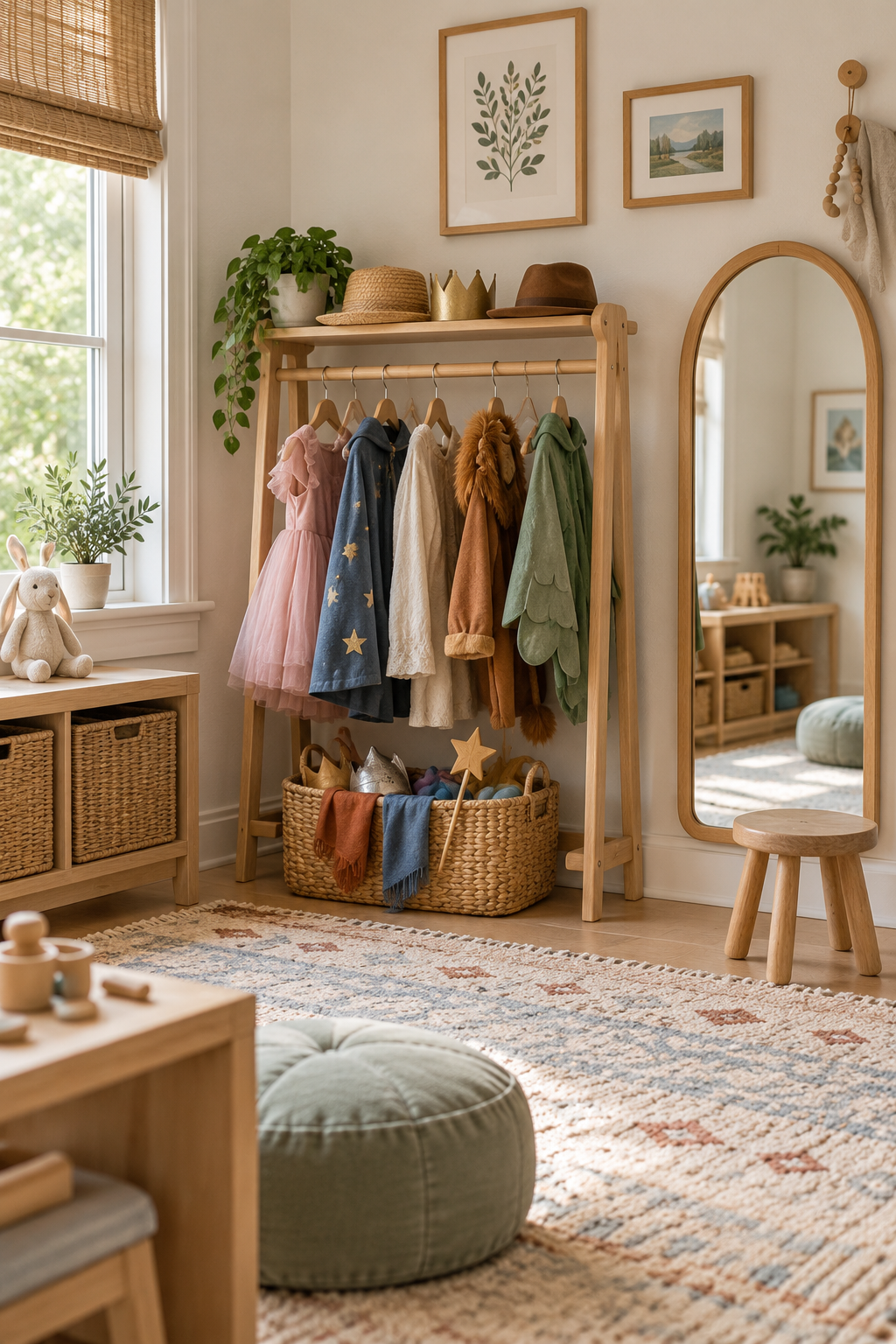
Build a Dress-Up and Role-Play Corner gives the room a clear invitation rather than another pile of toys. Protect clear circulation paths and anchor any furniture or equipment that could tip. Arrange only the materials required for the experience, then leave enough open space for children to reinterpret them.
Use warm white, pale oak, soft sage, muted blue and restrained terracotta so the environment feels lively without becoming overstimulating. Natural baskets, low shelving and washable textiles help the activity belong within the rest of the home. This approach keeps the room flexible for siblings, friends and changing interests.
Watch how the zone is actually used for a week. If pieces migrate, adjust the container or move the activity closer to where play naturally happens. Safety comes first: follow equipment installation guidance, supervise active play and keep cords, unstable furniture and age-inappropriate parts out of reach.
6. Create a Movement-Friendly Open Floor
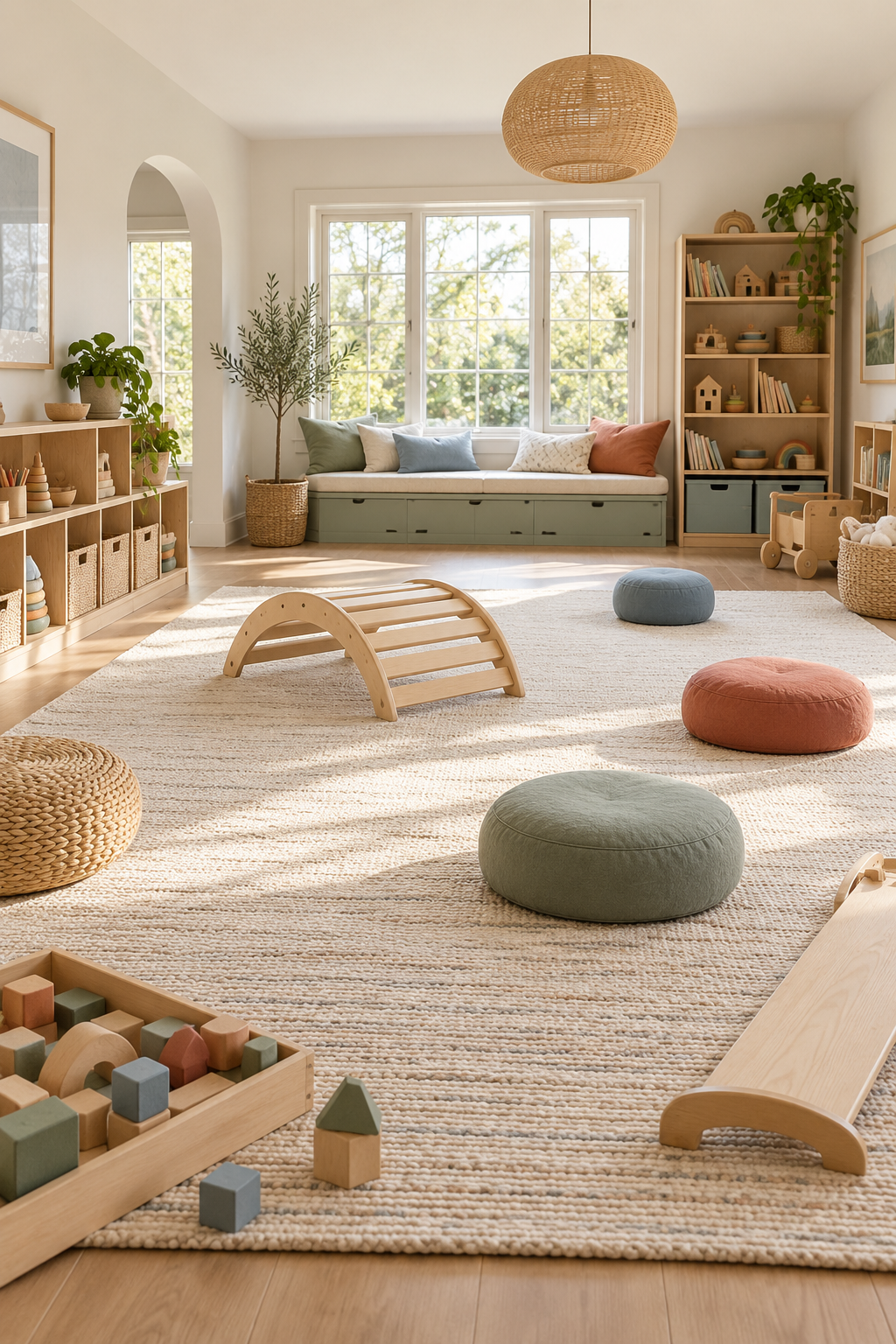
Create a Movement-Friendly Open Floor gives the room a clear invitation rather than another pile of toys. Keep the setup simple enough that a child can begin without waiting for an adult to explain it. Arrange only the materials required for the experience, then leave enough open space for children to reinterpret them.
Use warm white, pale oak, soft sage, muted blue and restrained terracotta so the environment feels lively without becoming overstimulating. Natural baskets, low shelving and washable textiles help the activity belong within the rest of the home. This approach invites longer imaginative play and richer storytelling.
Watch how the zone is actually used for a week. If pieces migrate, adjust the container or move the activity closer to where play naturally happens. Safety comes first: follow equipment installation guidance, supervise active play and keep cords, unstable furniture and age-inappropriate parts out of reach.
7. Install a Low Climbing Arch
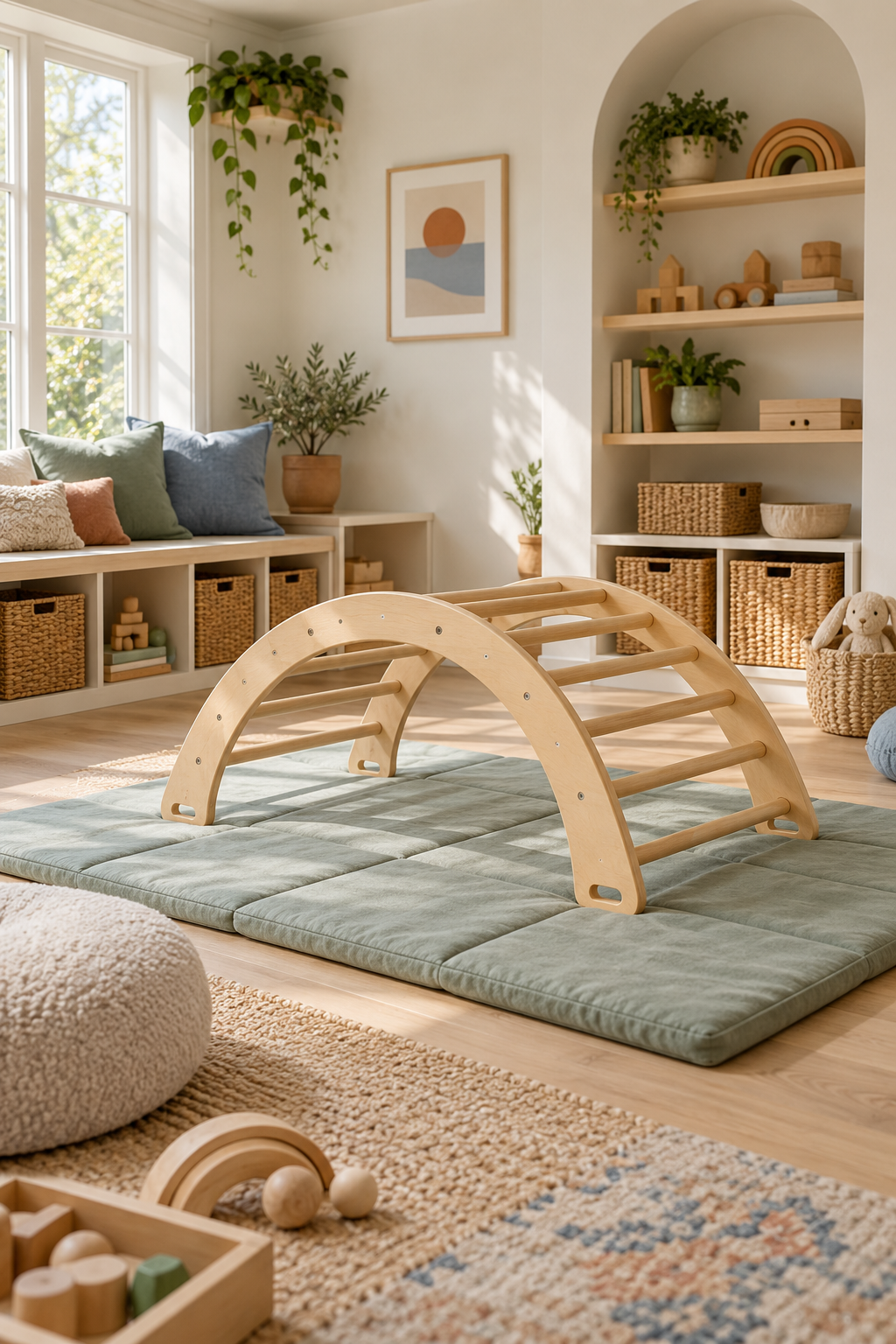
Install a Low Climbing Arch gives the room a clear invitation rather than another pile of toys. Offer a small edited selection and rotate materials when attention fades. Arrange only the materials required for the experience, then leave enough open space for children to reinterpret them.
Use warm white, pale oak, soft sage, muted blue and restrained terracotta so the environment feels lively without becoming overstimulating. Natural baskets, low shelving and washable textiles help the activity belong within the rest of the home. This approach supports concentration without filling the room with visual noise.
Watch how the zone is actually used for a week. If pieces migrate, adjust the container or move the activity closer to where play naturally happens. Safety comes first: follow equipment installation guidance, supervise active play and keep cords, unstable furniture and age-inappropriate parts out of reach.
8. Add a Soft Tumbling Mat
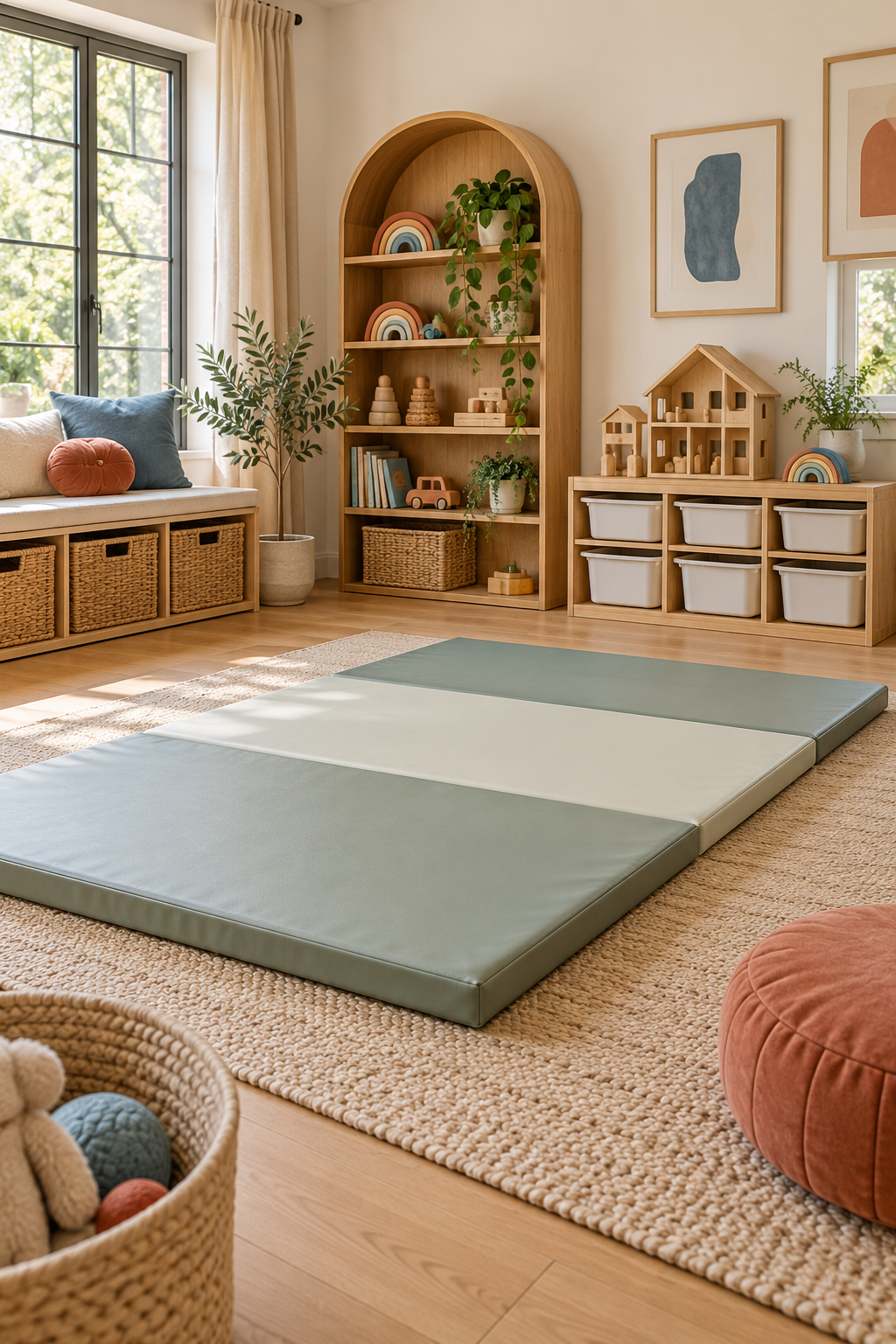
Add a Soft Tumbling Mat gives the room a clear invitation rather than another pile of toys. Place the activity at child height while keeping tiny pieces appropriate for the youngest visitor. Arrange only the materials required for the experience, then leave enough open space for children to reinterpret them.
Use warm white, pale oak, soft sage, muted blue and restrained terracotta so the environment feels lively without becoming overstimulating. Natural baskets, low shelving and washable textiles help the activity belong within the rest of the home. This approach encourages children to make choices and care for shared materials.
Watch how the zone is actually used for a week. If pieces migrate, adjust the container or move the activity closer to where play naturally happens. Safety comes first: follow equipment installation guidance, supervise active play and keep cords, unstable furniture and age-inappropriate parts out of reach.
9. Hang a Secure Indoor Swing
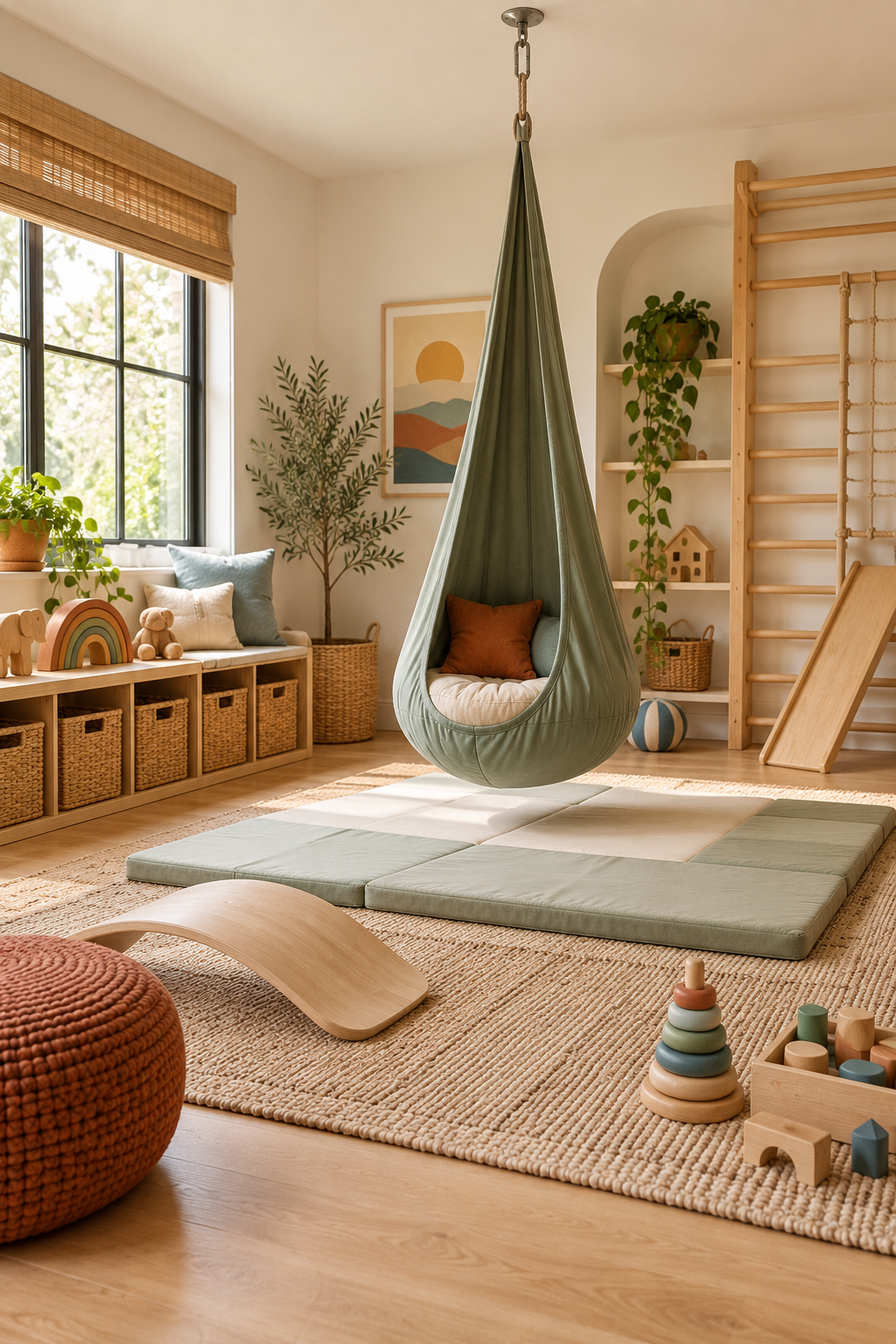
Hang a Secure Indoor Swing gives the room a clear invitation rather than another pile of toys. Use durable washable materials and test that the full activity can be reset in a few minutes. Arrange only the materials required for the experience, then leave enough open space for children to reinterpret them.
Use warm white, pale oak, soft sage, muted blue and restrained terracotta so the environment feels lively without becoming overstimulating. Natural baskets, low shelving and washable textiles help the activity belong within the rest of the home. This approach builds movement, problem-solving and confidence through everyday play.
Watch how the zone is actually used for a week. If pieces migrate, adjust the container or move the activity closer to where play naturally happens. Safety comes first: follow equipment installation guidance, supervise active play and keep cords, unstable furniture and age-inappropriate parts out of reach.
10. Create a Music and Rhythm Shelf
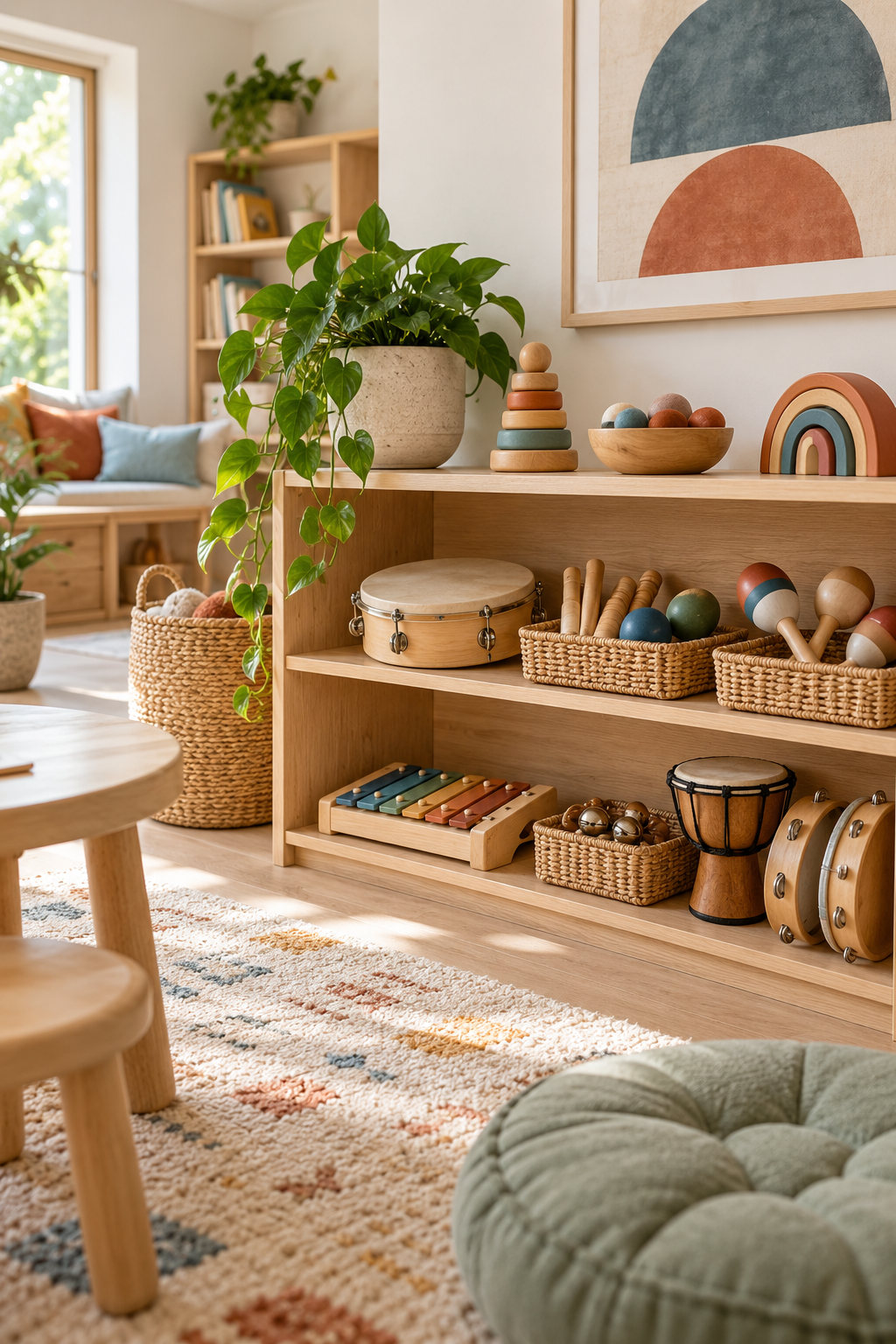
Create a Music and Rhythm Shelf gives the room a clear invitation rather than another pile of toys. Protect clear circulation paths and anchor any furniture or equipment that could tip. Arrange only the materials required for the experience, then leave enough open space for children to reinterpret them.
Use warm white, pale oak, soft sage, muted blue and restrained terracotta so the environment feels lively without becoming overstimulating. Natural baskets, low shelving and washable textiles help the activity belong within the rest of the home. This approach keeps the room flexible for siblings, friends and changing interests.
Watch how the zone is actually used for a week. If pieces migrate, adjust the container or move the activity closer to where play naturally happens. Safety comes first: follow equipment installation guidance, supervise active play and keep cords, unstable furniture and age-inappropriate parts out of reach.
11. Set Up a Puppet-Theater Corner
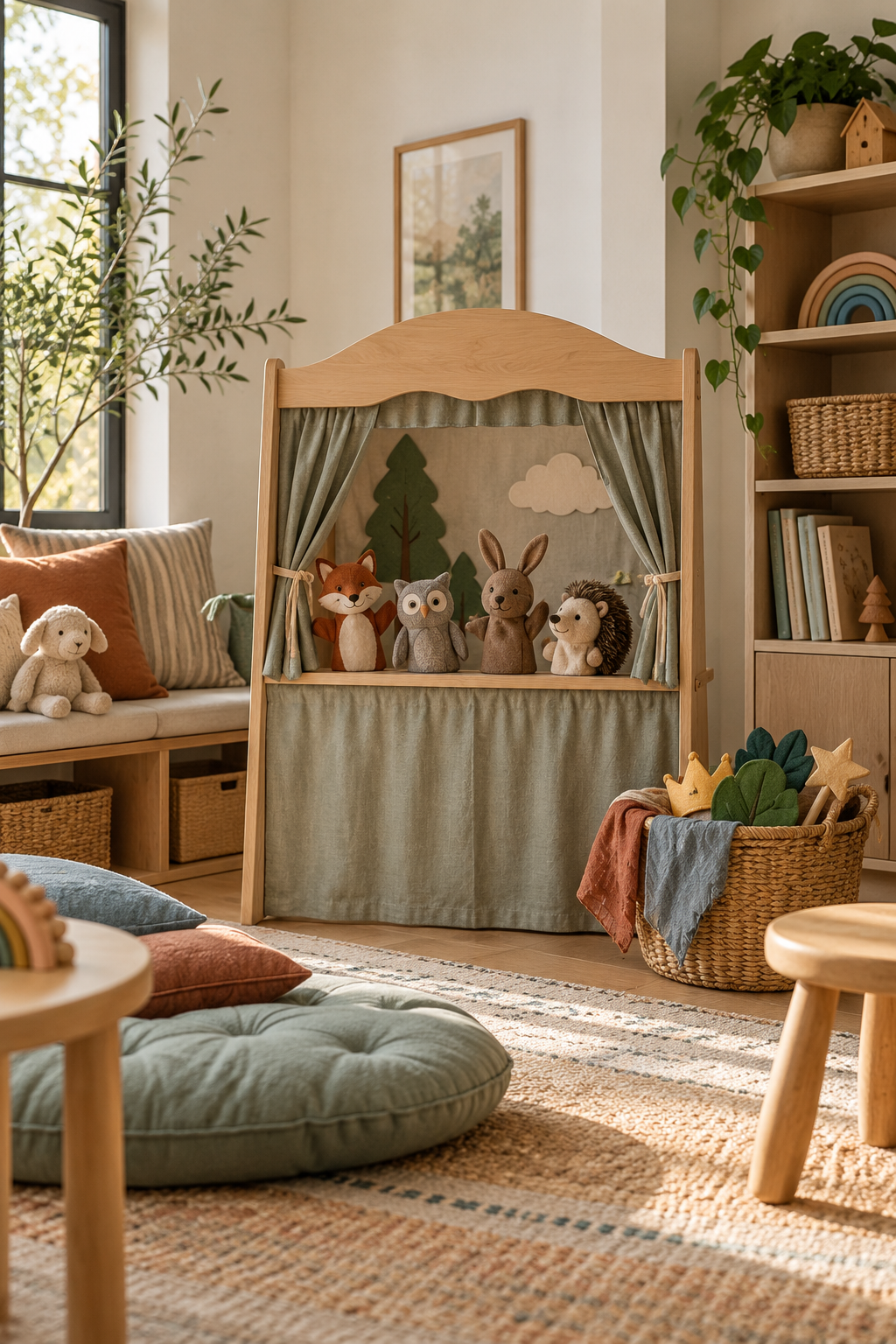
Set Up a Puppet-Theater Corner gives the room a clear invitation rather than another pile of toys. Keep the setup simple enough that a child can begin without waiting for an adult to explain it. Arrange only the materials required for the experience, then leave enough open space for children to reinterpret them.
Use warm white, pale oak, soft sage, muted blue and restrained terracotta so the environment feels lively without becoming overstimulating. Natural baskets, low shelving and washable textiles help the activity belong within the rest of the home. This approach invites longer imaginative play and richer storytelling.
Watch how the zone is actually used for a week. If pieces migrate, adjust the container or move the activity closer to where play naturally happens. Safety comes first: follow equipment installation guidance, supervise active play and keep cords, unstable furniture and age-inappropriate parts out of reach.
12. Build a Small-World Play Table
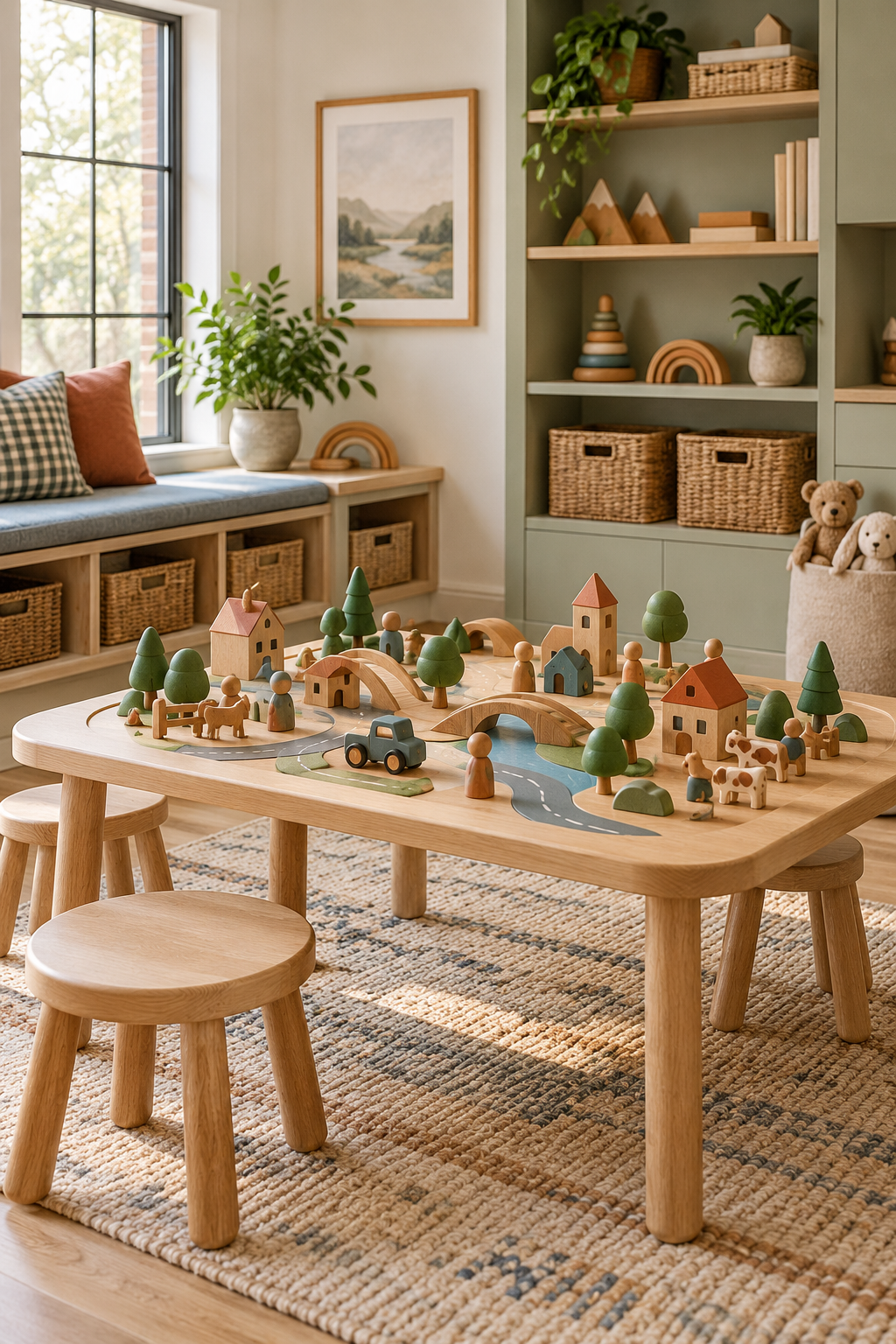
Build a Small-World Play Table gives the room a clear invitation rather than another pile of toys. Offer a small edited selection and rotate materials when attention fades. Arrange only the materials required for the experience, then leave enough open space for children to reinterpret them.
Use warm white, pale oak, soft sage, muted blue and restrained terracotta so the environment feels lively without becoming overstimulating. Natural baskets, low shelving and washable textiles help the activity belong within the rest of the home. This approach supports concentration without filling the room with visual noise.
Watch how the zone is actually used for a week. If pieces migrate, adjust the container or move the activity closer to where play naturally happens. Safety comes first: follow equipment installation guidance, supervise active play and keep cords, unstable furniture and age-inappropriate parts out of reach.
13. Create a Nature Discovery Station
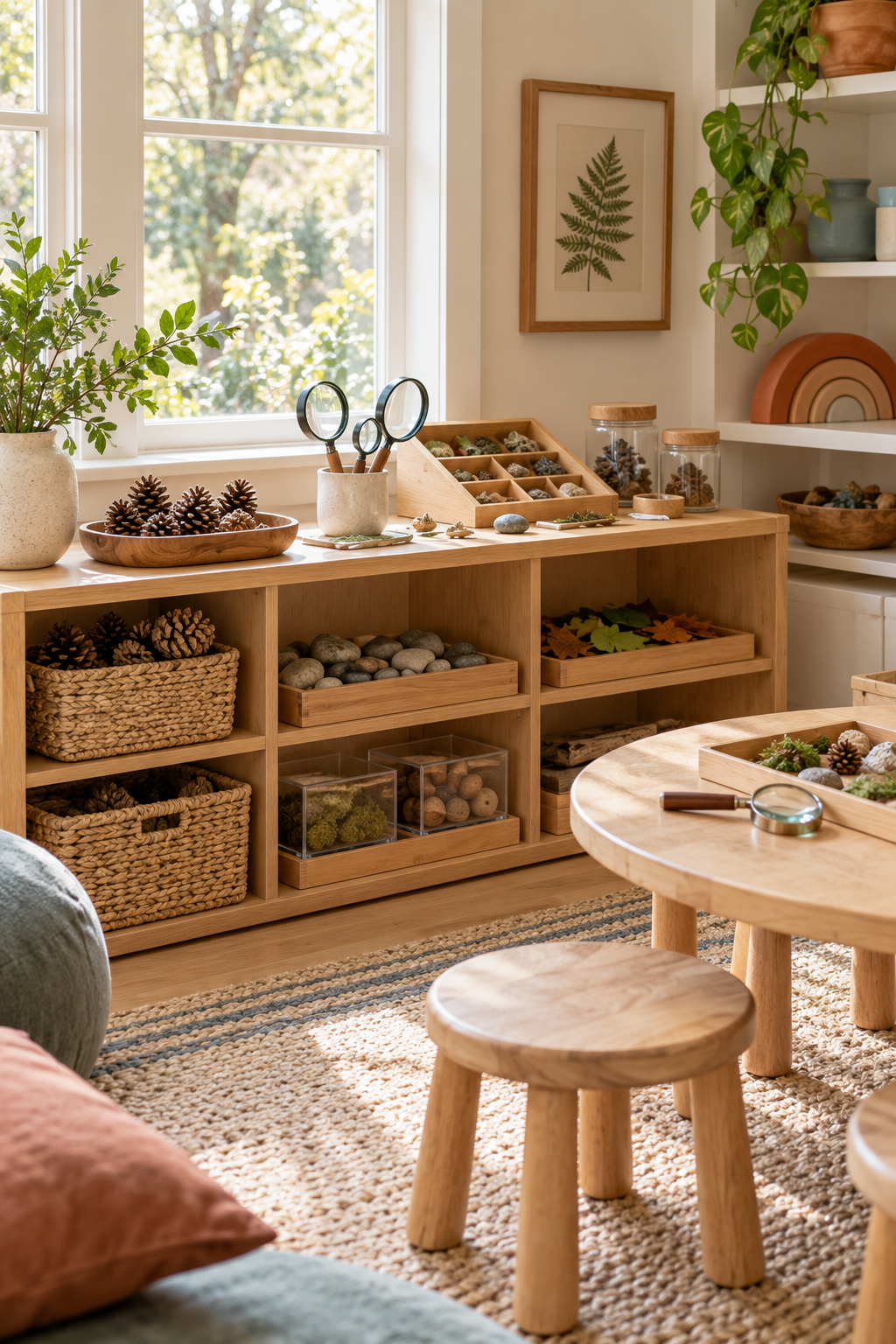
Create a Nature Discovery Station gives the room a clear invitation rather than another pile of toys. Place the activity at child height while keeping tiny pieces appropriate for the youngest visitor. Arrange only the materials required for the experience, then leave enough open space for children to reinterpret them.
Use warm white, pale oak, soft sage, muted blue and restrained terracotta so the environment feels lively without becoming overstimulating. Natural baskets, low shelving and washable textiles help the activity belong within the rest of the home. This approach encourages children to make choices and care for shared materials.
Watch how the zone is actually used for a week. If pieces migrate, adjust the container or move the activity closer to where play naturally happens. Safety comes first: follow equipment installation guidance, supervise active play and keep cords, unstable furniture and age-inappropriate parts out of reach.
14. Add a Puzzle and Strategy Shelf
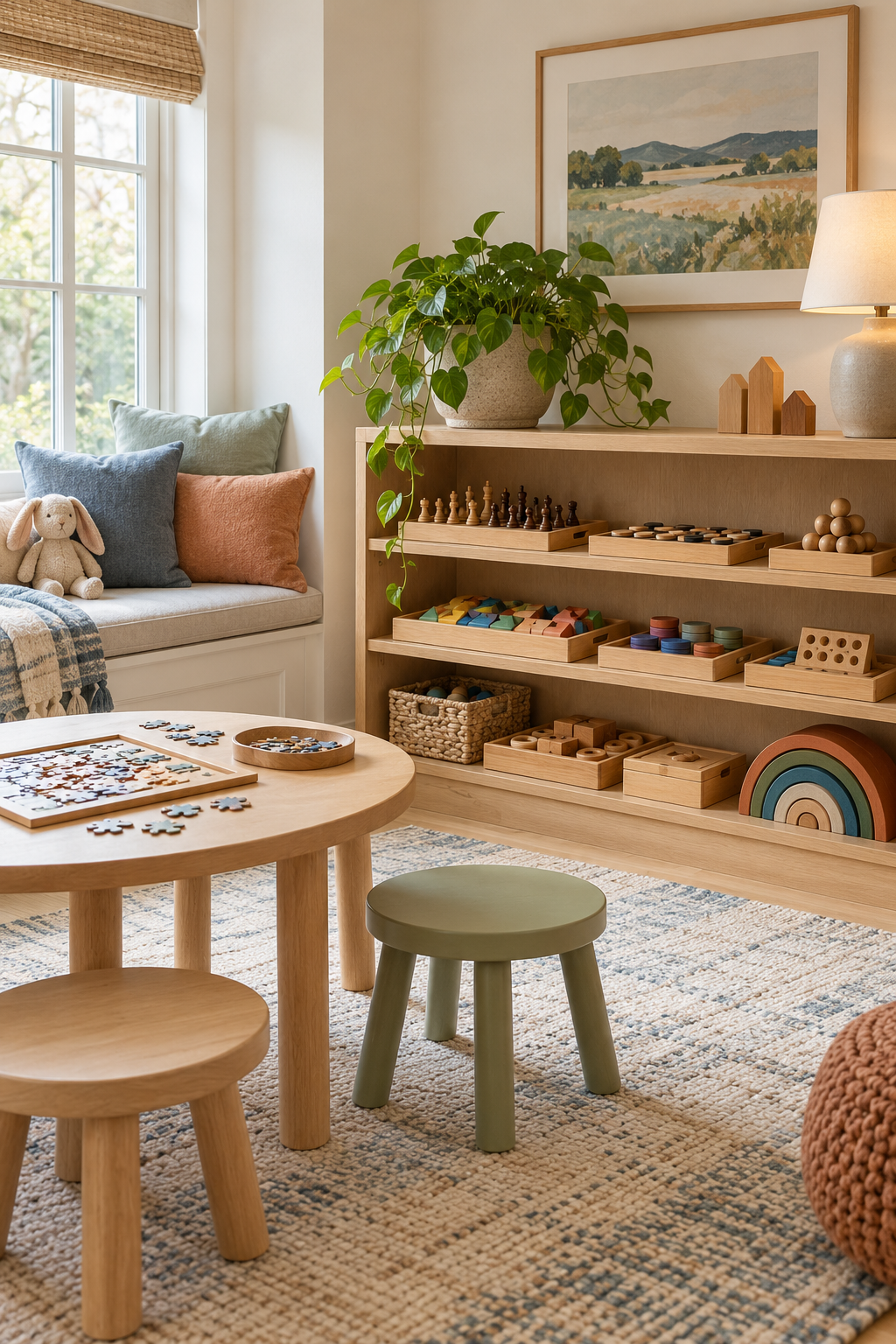
Add a Puzzle and Strategy Shelf gives the room a clear invitation rather than another pile of toys. Use durable washable materials and test that the full activity can be reset in a few minutes. Arrange only the materials required for the experience, then leave enough open space for children to reinterpret them.
Use warm white, pale oak, soft sage, muted blue and restrained terracotta so the environment feels lively without becoming overstimulating. Natural baskets, low shelving and washable textiles help the activity belong within the rest of the home. This approach builds movement, problem-solving and confidence through everyday play.
Watch how the zone is actually used for a week. If pieces migrate, adjust the container or move the activity closer to where play naturally happens. Safety comes first: follow equipment installation guidance, supervise active play and keep cords, unstable furniture and age-inappropriate parts out of reach.
15. Design a Calm Sensory Corner
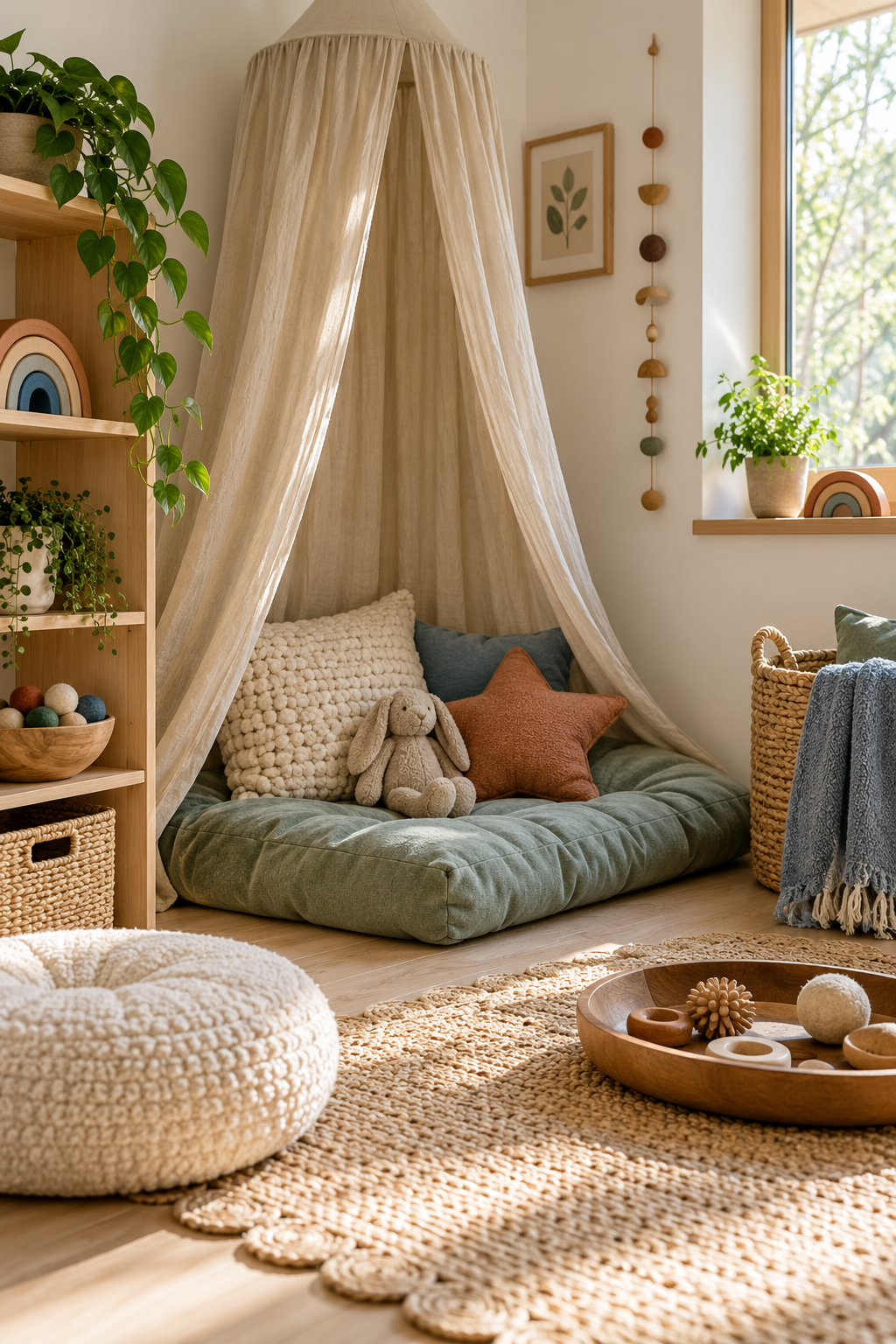
Design a Calm Sensory Corner gives the room a clear invitation rather than another pile of toys. Protect clear circulation paths and anchor any furniture or equipment that could tip. Arrange only the materials required for the experience, then leave enough open space for children to reinterpret them.
Use warm white, pale oak, soft sage, muted blue and restrained terracotta so the environment feels lively without becoming overstimulating. Natural baskets, low shelving and washable textiles help the activity belong within the rest of the home. This approach keeps the room flexible for siblings, friends and changing interests.
Watch how the zone is actually used for a week. If pieces migrate, adjust the container or move the activity closer to where play naturally happens. Safety comes first: follow equipment installation guidance, supervise active play and keep cords, unstable furniture and age-inappropriate parts out of reach.
16. Create a Loose-Parts Play Collection
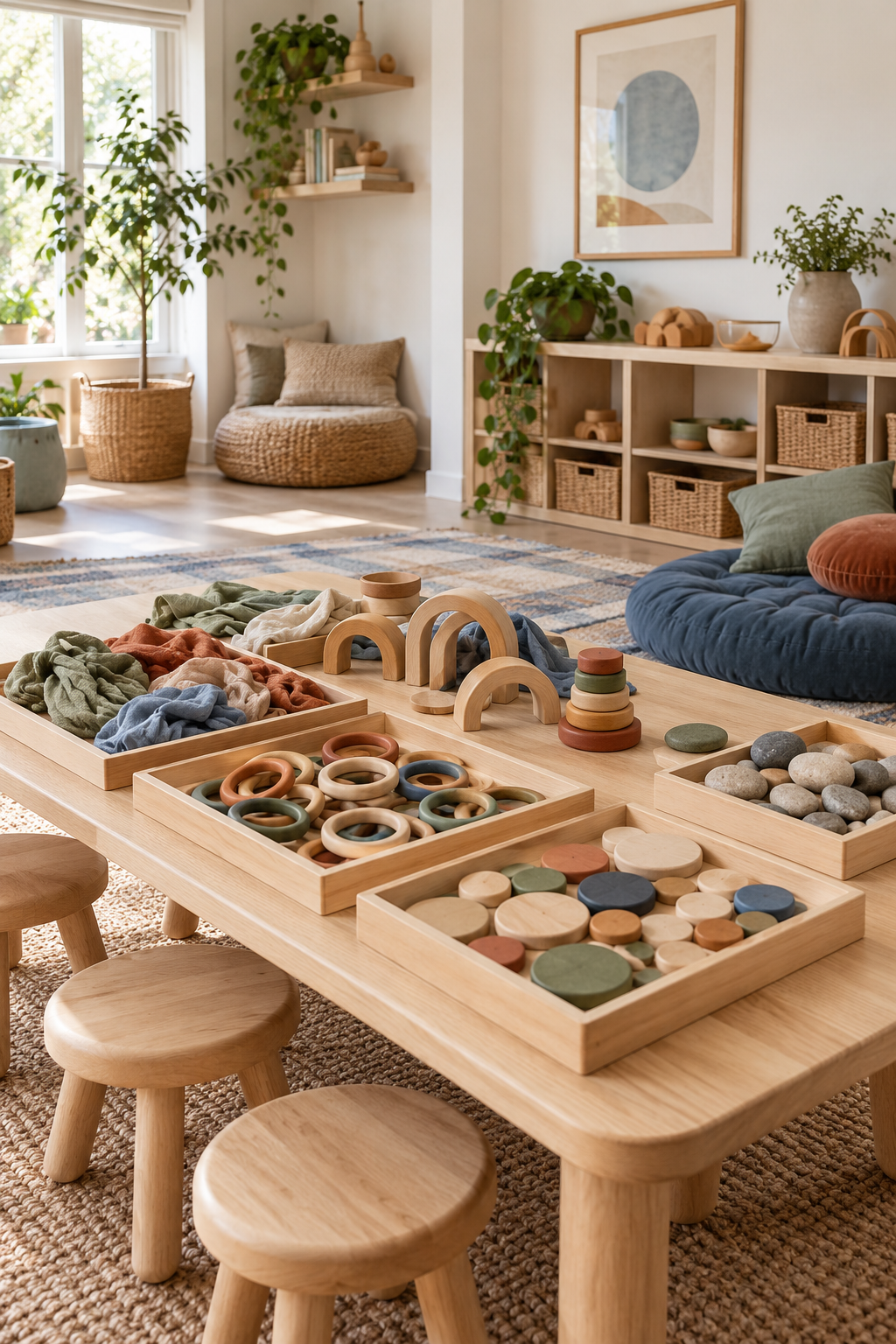
Create a Loose-Parts Play Collection gives the room a clear invitation rather than another pile of toys. Keep the setup simple enough that a child can begin without waiting for an adult to explain it. Arrange only the materials required for the experience, then leave enough open space for children to reinterpret them.
Use warm white, pale oak, soft sage, muted blue and restrained terracotta so the environment feels lively without becoming overstimulating. Natural baskets, low shelving and washable textiles help the activity belong within the rest of the home. This approach invites longer imaginative play and richer storytelling.
Watch how the zone is actually used for a week. If pieces migrate, adjust the container or move the activity closer to where play naturally happens. Safety comes first: follow equipment installation guidance, supervise active play and keep cords, unstable furniture and age-inappropriate parts out of reach.
17. Add a Chalkboard Creativity Wall
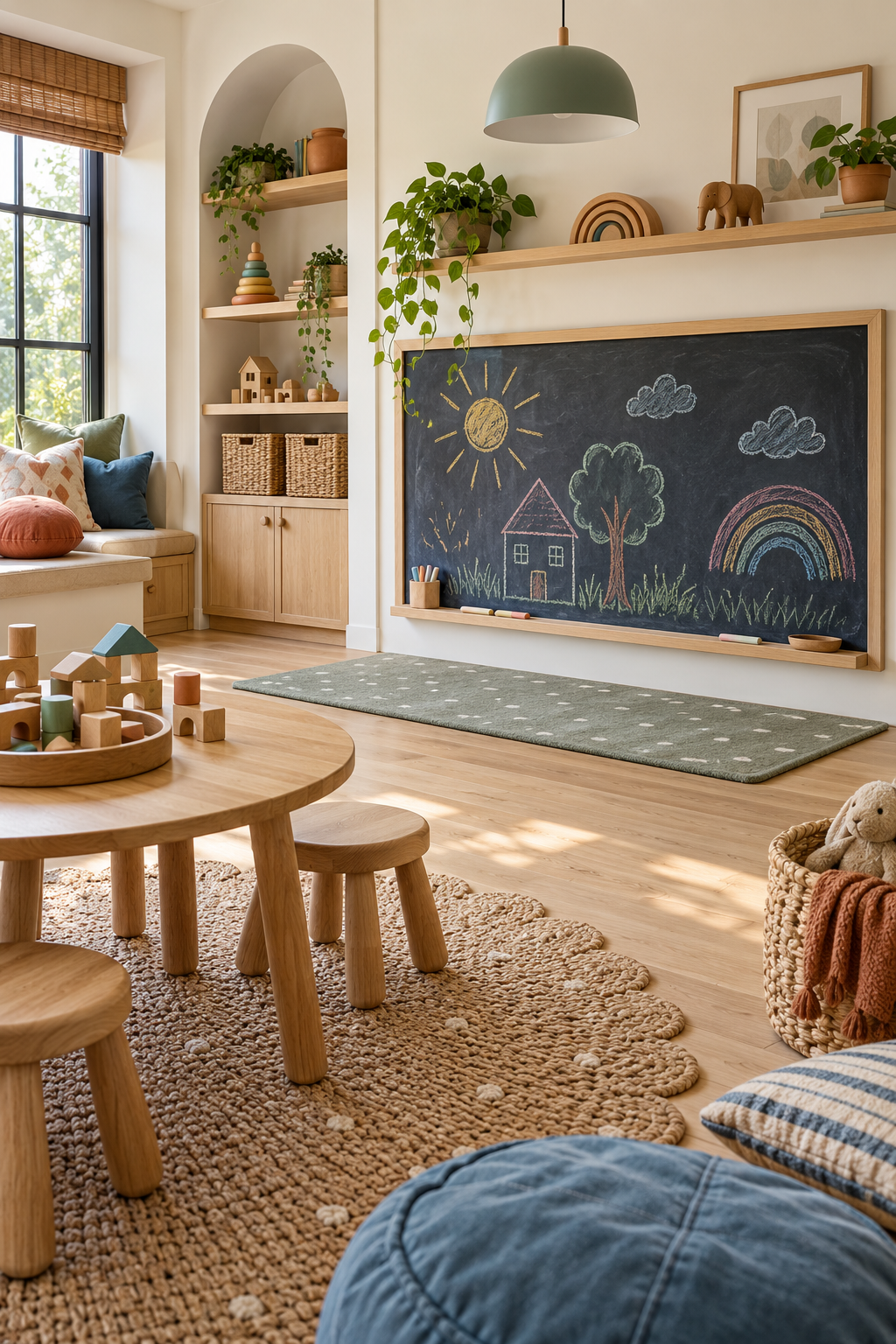
Add a Chalkboard Creativity Wall gives the room a clear invitation rather than another pile of toys. Offer a small edited selection and rotate materials when attention fades. Arrange only the materials required for the experience, then leave enough open space for children to reinterpret them.
Use warm white, pale oak, soft sage, muted blue and restrained terracotta so the environment feels lively without becoming overstimulating. Natural baskets, low shelving and washable textiles help the activity belong within the rest of the home. This approach supports concentration without filling the room with visual noise.
Watch how the zone is actually used for a week. If pieces migrate, adjust the container or move the activity closer to where play naturally happens. Safety comes first: follow equipment installation guidance, supervise active play and keep cords, unstable furniture and age-inappropriate parts out of reach.
18. Set Up a Simple Maker Bench
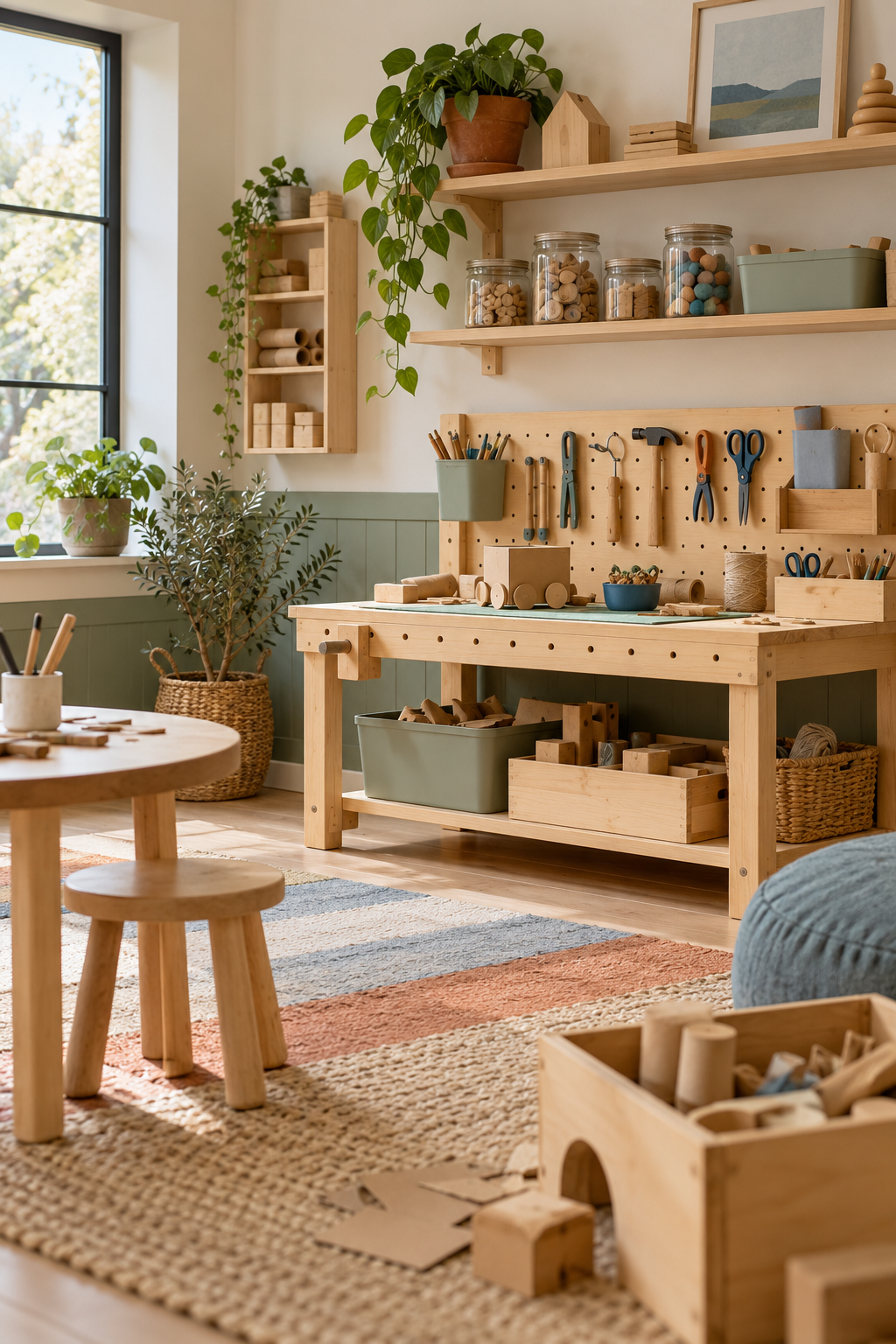
Set Up a Simple Maker Bench gives the room a clear invitation rather than another pile of toys. Place the activity at child height while keeping tiny pieces appropriate for the youngest visitor. Arrange only the materials required for the experience, then leave enough open space for children to reinterpret them.
Use warm white, pale oak, soft sage, muted blue and restrained terracotta so the environment feels lively without becoming overstimulating. Natural baskets, low shelving and washable textiles help the activity belong within the rest of the home. This approach encourages children to make choices and care for shared materials.
Watch how the zone is actually used for a week. If pieces migrate, adjust the container or move the activity closer to where play naturally happens. Safety comes first: follow equipment installation guidance, supervise active play and keep cords, unstable furniture and age-inappropriate parts out of reach.
19. Create a Board-Game Cabinet
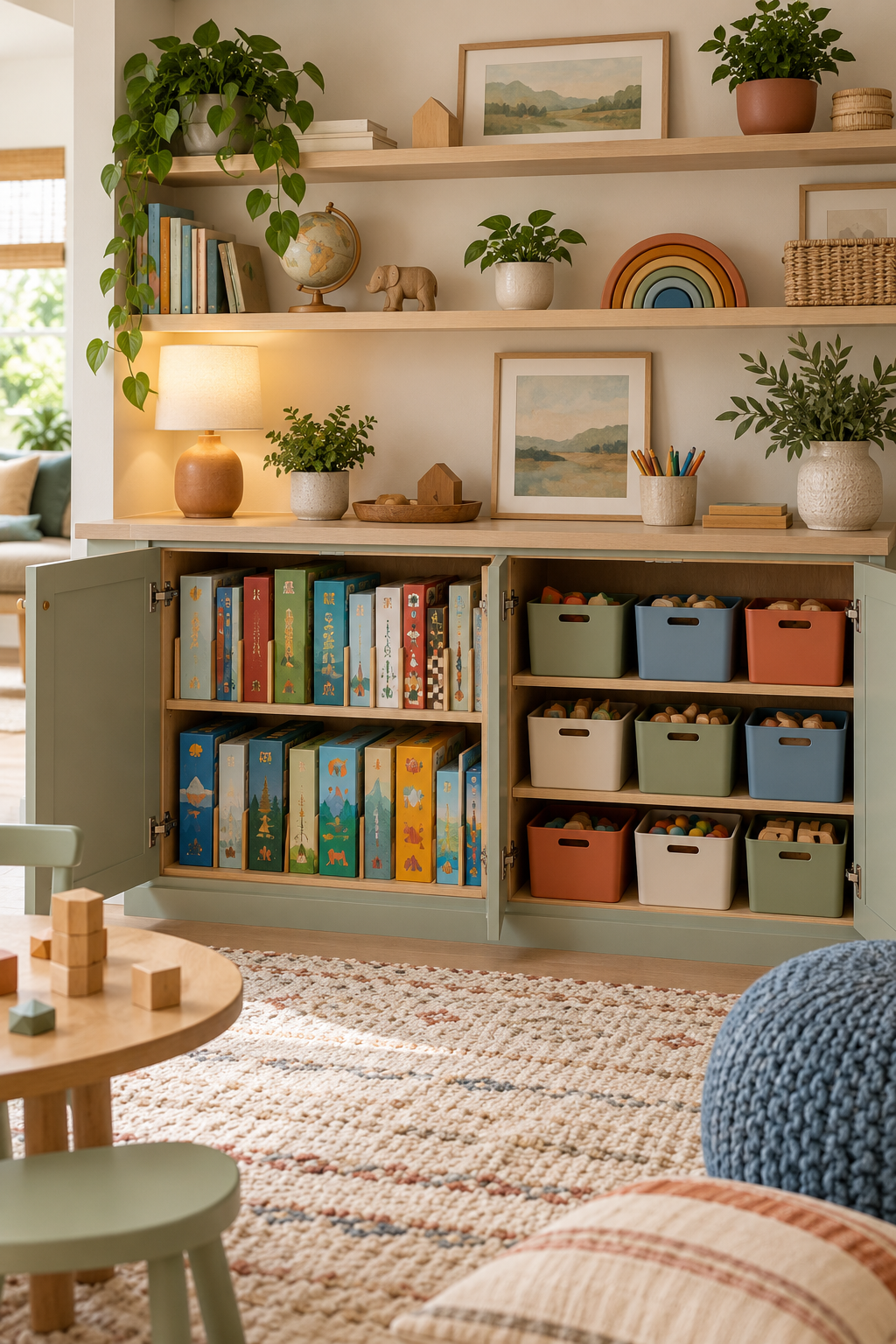
Create a Board-Game Cabinet gives the room a clear invitation rather than another pile of toys. Use durable washable materials and test that the full activity can be reset in a few minutes. Arrange only the materials required for the experience, then leave enough open space for children to reinterpret them.
Use warm white, pale oak, soft sage, muted blue and restrained terracotta so the environment feels lively without becoming overstimulating. Natural baskets, low shelving and washable textiles help the activity belong within the rest of the home. This approach builds movement, problem-solving and confidence through everyday play.
Watch how the zone is actually used for a week. If pieces migrate, adjust the container or move the activity closer to where play naturally happens. Safety comes first: follow equipment installation guidance, supervise active play and keep cords, unstable furniture and age-inappropriate parts out of reach.
20. Build a Construction and Train Zone
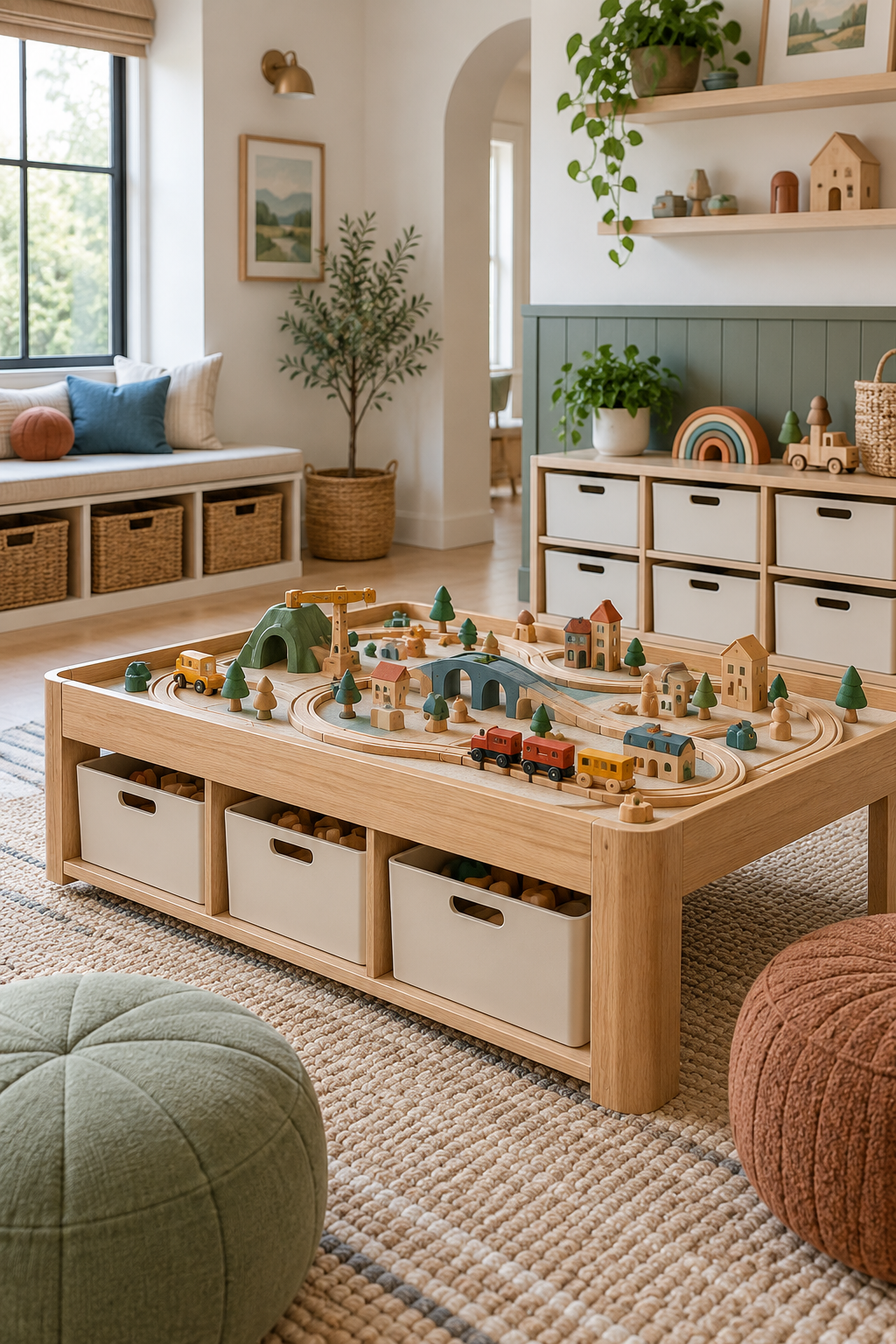
Build a Construction and Train Zone gives the room a clear invitation rather than another pile of toys. Protect clear circulation paths and anchor any furniture or equipment that could tip. Arrange only the materials required for the experience, then leave enough open space for children to reinterpret them.
Use warm white, pale oak, soft sage, muted blue and restrained terracotta so the environment feels lively without becoming overstimulating. Natural baskets, low shelving and washable textiles help the activity belong within the rest of the home. This approach keeps the room flexible for siblings, friends and changing interests.
Watch how the zone is actually used for a week. If pieces migrate, adjust the container or move the activity closer to where play naturally happens. Safety comes first: follow equipment installation guidance, supervise active play and keep cords, unstable furniture and age-inappropriate parts out of reach.
21. Add a Reading Tent or Canopy
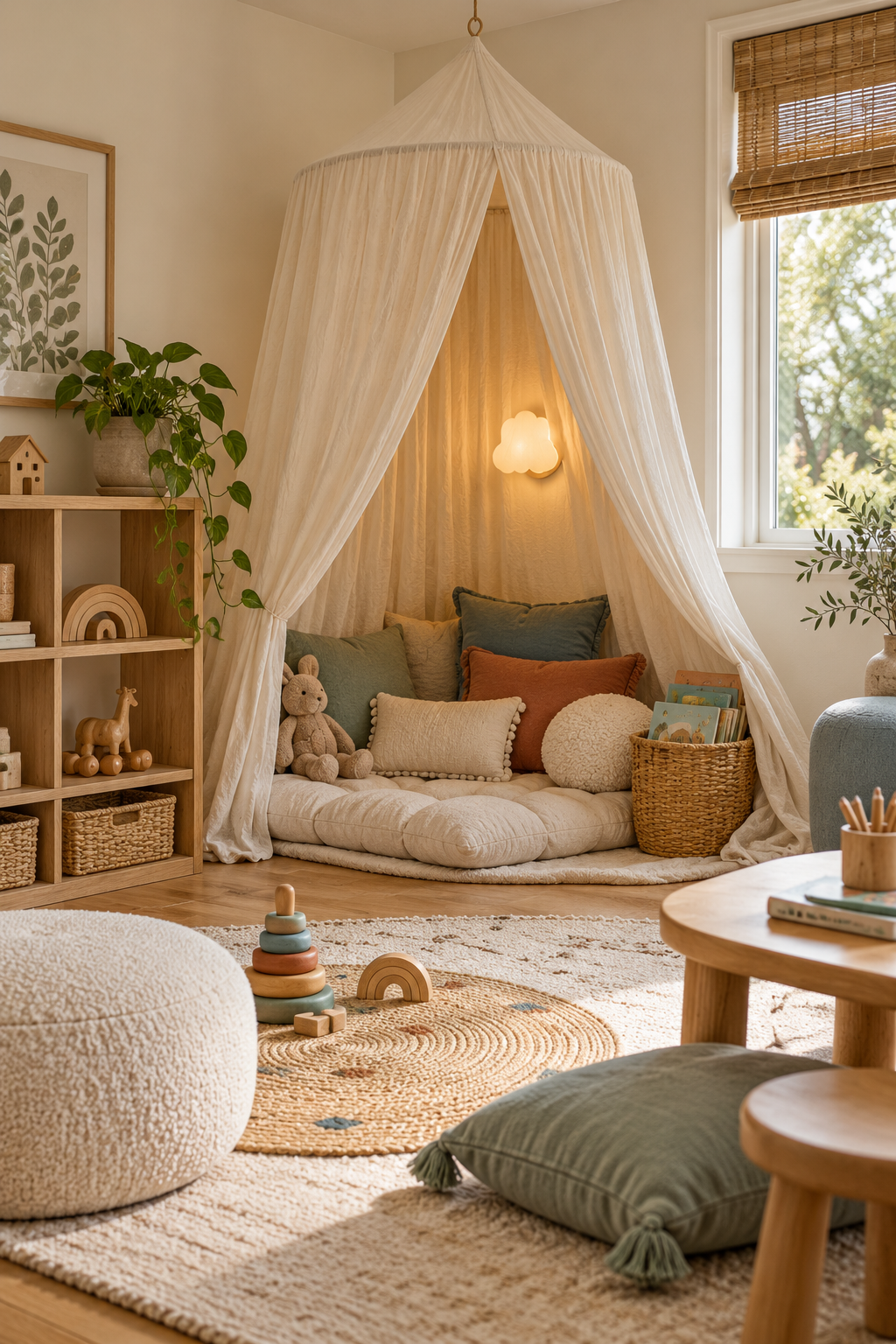
Add a Reading Tent or Canopy gives the room a clear invitation rather than another pile of toys. Keep the setup simple enough that a child can begin without waiting for an adult to explain it. Arrange only the materials required for the experience, then leave enough open space for children to reinterpret them.
Use warm white, pale oak, soft sage, muted blue and restrained terracotta so the environment feels lively without becoming overstimulating. Natural baskets, low shelving and washable textiles help the activity belong within the rest of the home. This approach invites longer imaginative play and richer storytelling.
Watch how the zone is actually used for a week. If pieces migrate, adjust the container or move the activity closer to where play naturally happens. Safety comes first: follow equipment installation guidance, supervise active play and keep cords, unstable furniture and age-inappropriate parts out of reach.
22. Create a Dance and Movement Basket
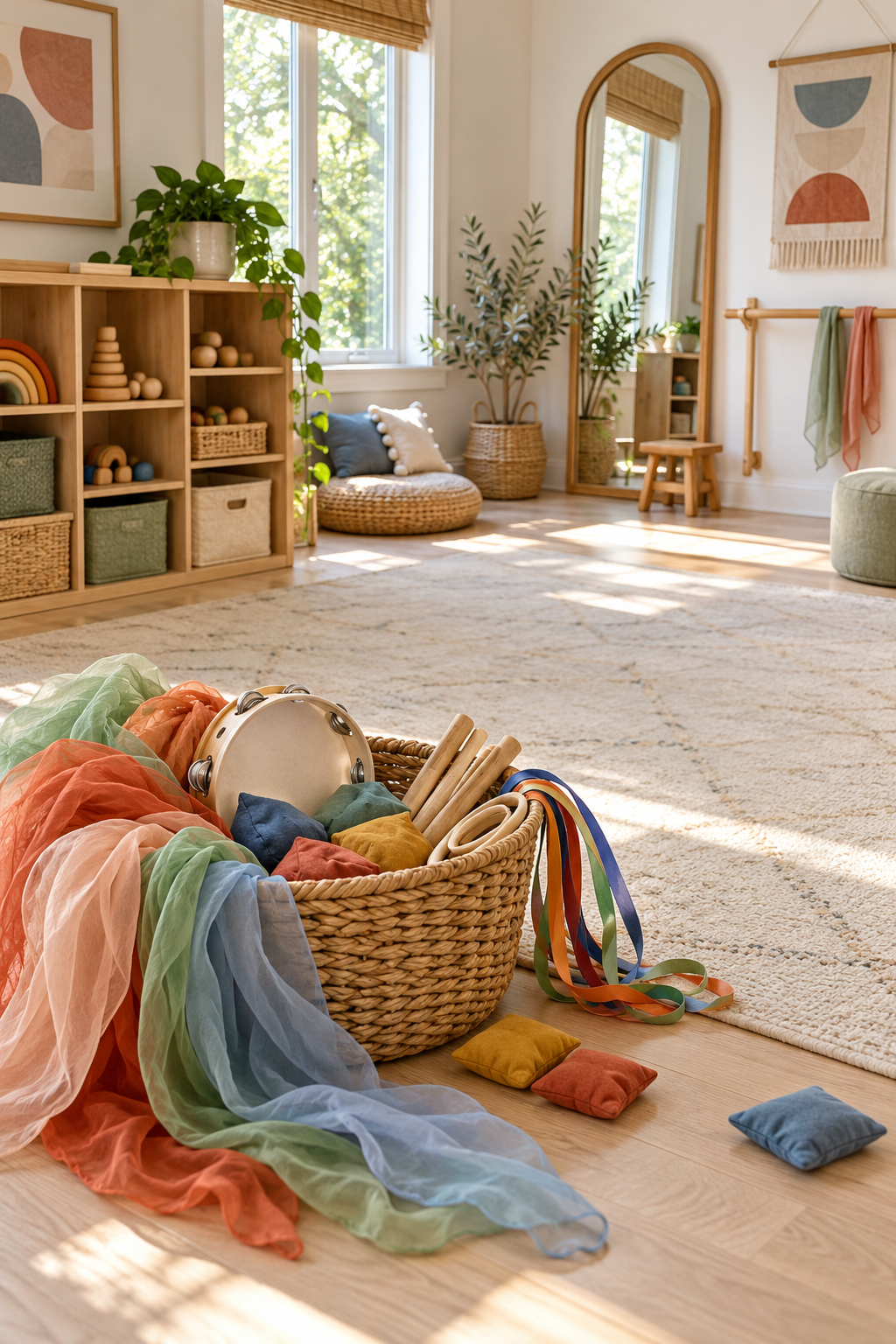
Create a Dance and Movement Basket gives the room a clear invitation rather than another pile of toys. Offer a small edited selection and rotate materials when attention fades. Arrange only the materials required for the experience, then leave enough open space for children to reinterpret them.
Use warm white, pale oak, soft sage, muted blue and restrained terracotta so the environment feels lively without becoming overstimulating. Natural baskets, low shelving and washable textiles help the activity belong within the rest of the home. This approach supports concentration without filling the room with visual noise.
Watch how the zone is actually used for a week. If pieces migrate, adjust the container or move the activity closer to where play naturally happens. Safety comes first: follow equipment installation guidance, supervise active play and keep cords, unstable furniture and age-inappropriate parts out of reach.
23. Set Up a Gardening Play Station
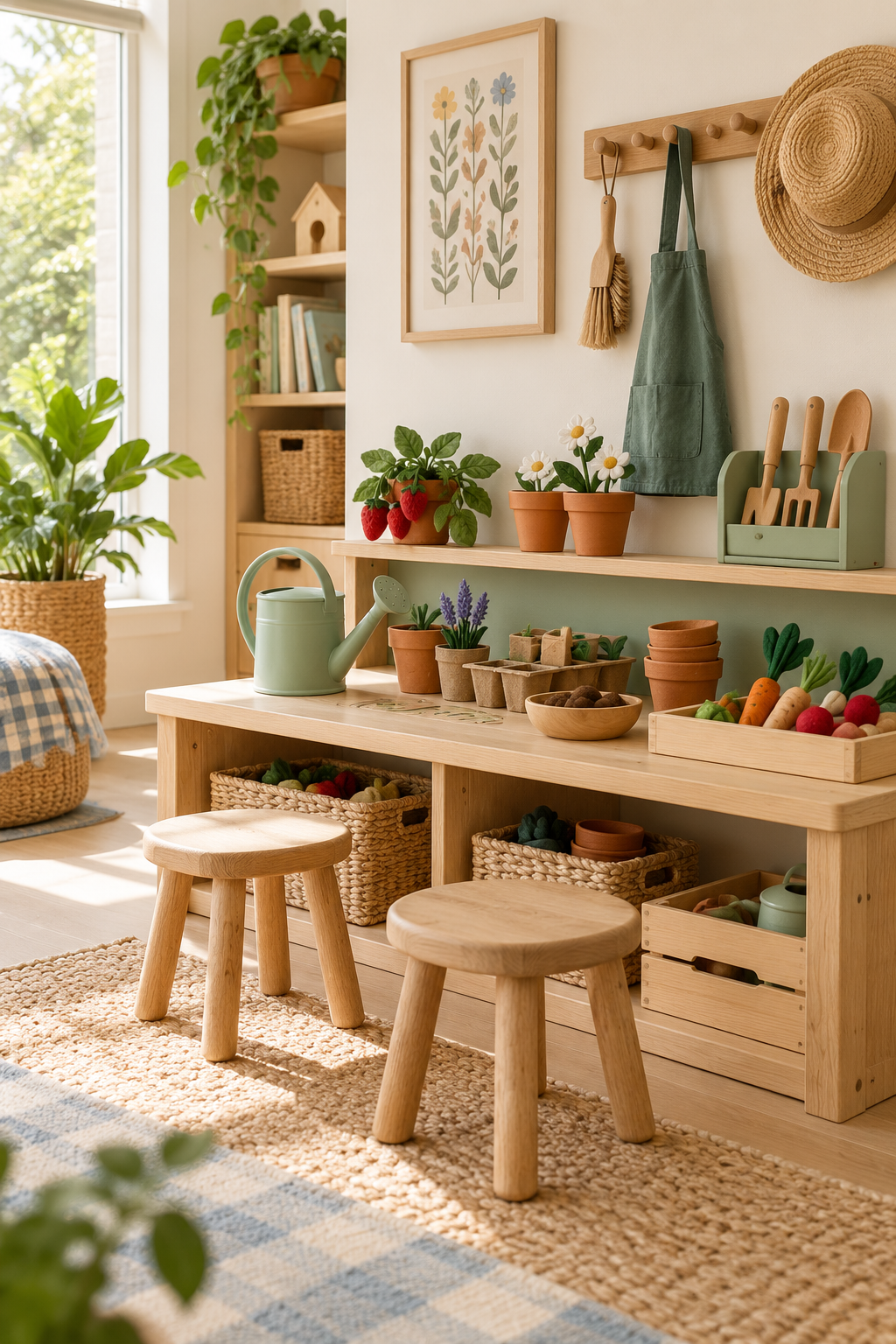
Set Up a Gardening Play Station gives the room a clear invitation rather than another pile of toys. Place the activity at child height while keeping tiny pieces appropriate for the youngest visitor. Arrange only the materials required for the experience, then leave enough open space for children to reinterpret them.
Use warm white, pale oak, soft sage, muted blue and restrained terracotta so the environment feels lively without becoming overstimulating. Natural baskets, low shelving and washable textiles help the activity belong within the rest of the home. This approach encourages children to make choices and care for shared materials.
Watch how the zone is actually used for a week. If pieces migrate, adjust the container or move the activity closer to where play naturally happens. Safety comes first: follow equipment installation guidance, supervise active play and keep cords, unstable furniture and age-inappropriate parts out of reach.
24. Add a Rotating Invitation-to-Play Tray
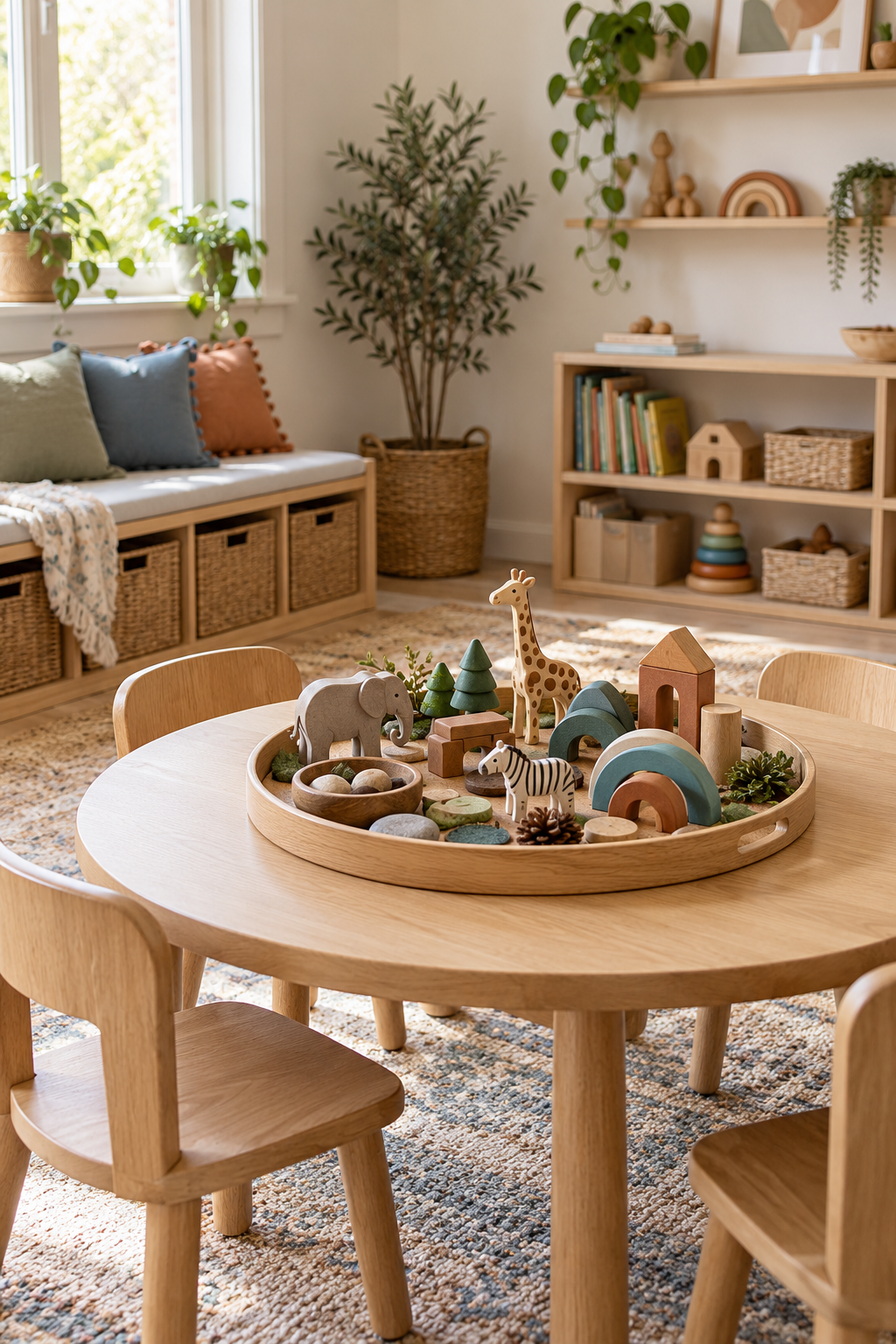
Add a Rotating Invitation-to-Play Tray gives the room a clear invitation rather than another pile of toys. Use durable washable materials and test that the full activity can be reset in a few minutes. Arrange only the materials required for the experience, then leave enough open space for children to reinterpret them.
Use warm white, pale oak, soft sage, muted blue and restrained terracotta so the environment feels lively without becoming overstimulating. Natural baskets, low shelving and washable textiles help the activity belong within the rest of the home. This approach builds movement, problem-solving and confidence through everyday play.
Watch how the zone is actually used for a week. If pieces migrate, adjust the container or move the activity closer to where play naturally happens. Safety comes first: follow equipment installation guidance, supervise active play and keep cords, unstable furniture and age-inappropriate parts out of reach.
25. Use Rugs to Define Activity Zones
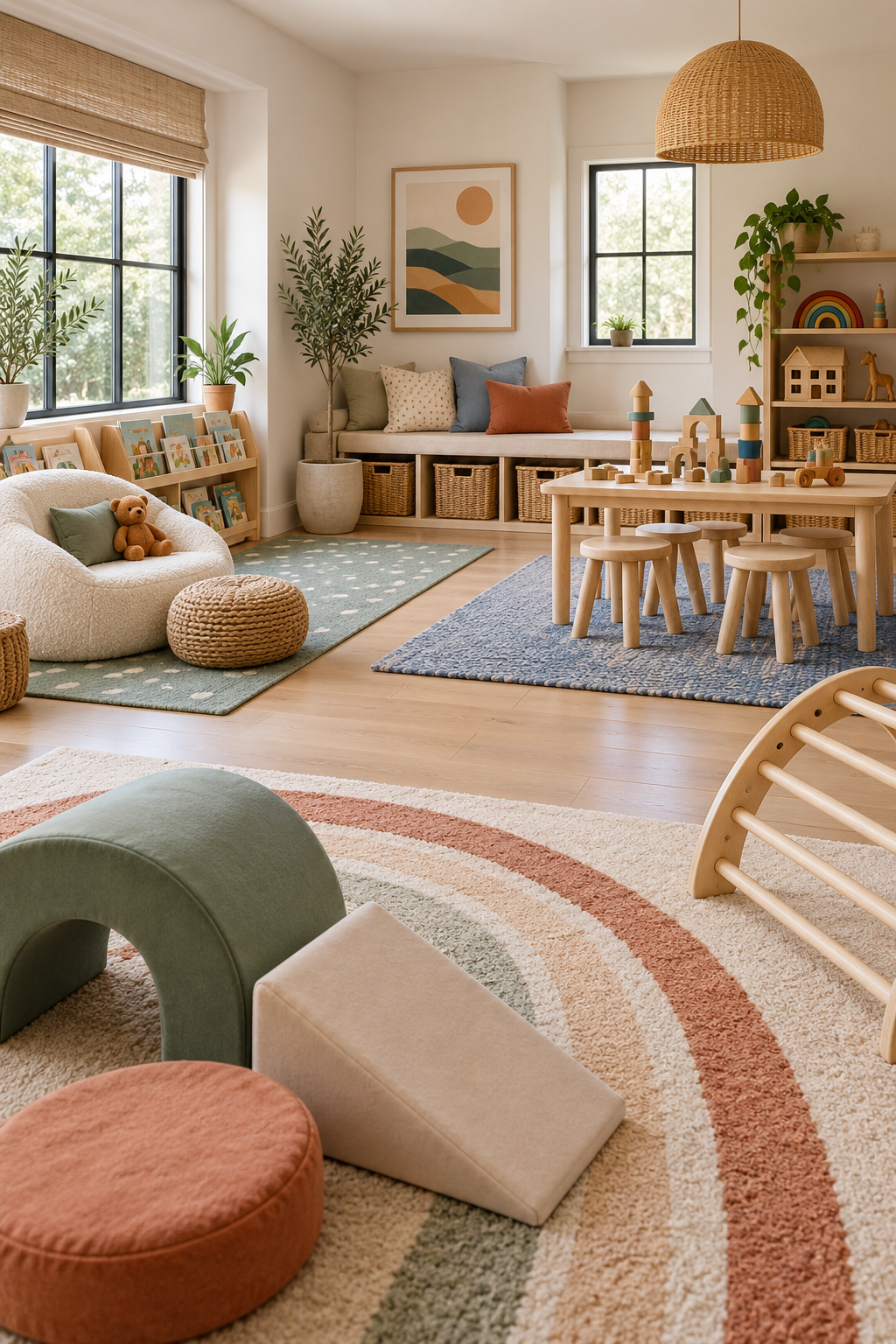
Use Rugs to Define Activity Zones gives the room a clear invitation rather than another pile of toys. Protect clear circulation paths and anchor any furniture or equipment that could tip. Arrange only the materials required for the experience, then leave enough open space for children to reinterpret them.
Use warm white, pale oak, soft sage, muted blue and restrained terracotta so the environment feels lively without becoming overstimulating. Natural baskets, low shelving and washable textiles help the activity belong within the rest of the home. This approach keeps the room flexible for siblings, friends and changing interests.
Watch how the zone is actually used for a week. If pieces migrate, adjust the container or move the activity closer to where play naturally happens. Safety comes first: follow equipment installation guidance, supervise active play and keep cords, unstable furniture and age-inappropriate parts out of reach.
26. Keep Materials Visible but Limited
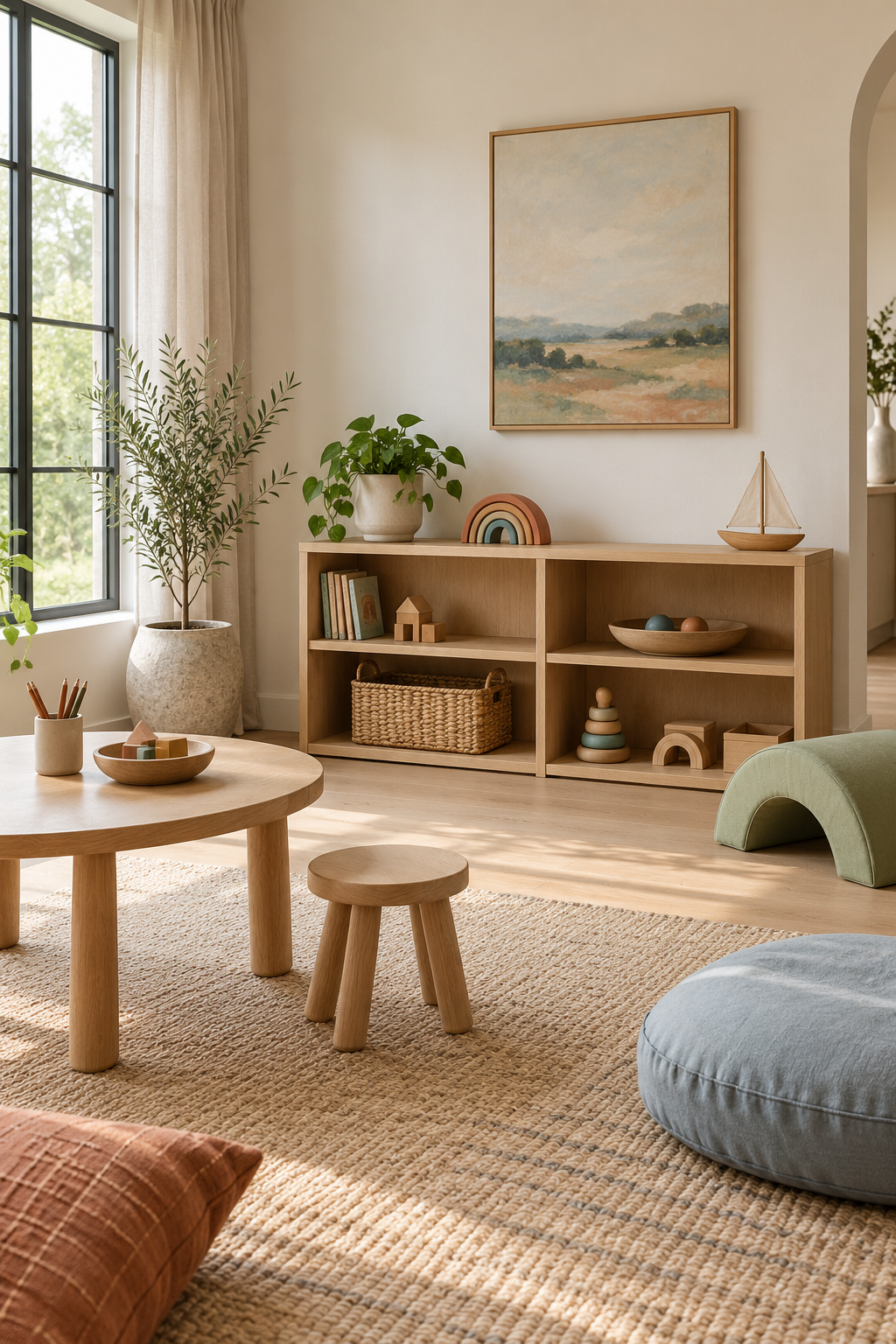
Keep Materials Visible but Limited gives the room a clear invitation rather than another pile of toys. Keep the setup simple enough that a child can begin without waiting for an adult to explain it. Arrange only the materials required for the experience, then leave enough open space for children to reinterpret them.
Use warm white, pale oak, soft sage, muted blue and restrained terracotta so the environment feels lively without becoming overstimulating. Natural baskets, low shelving and washable textiles help the activity belong within the rest of the home. This approach invites longer imaginative play and richer storytelling.
Watch how the zone is actually used for a week. If pieces migrate, adjust the container or move the activity closer to where play naturally happens. Safety comes first: follow equipment installation guidance, supervise active play and keep cords, unstable furniture and age-inappropriate parts out of reach.
27. Choose Furniture Children Can Move
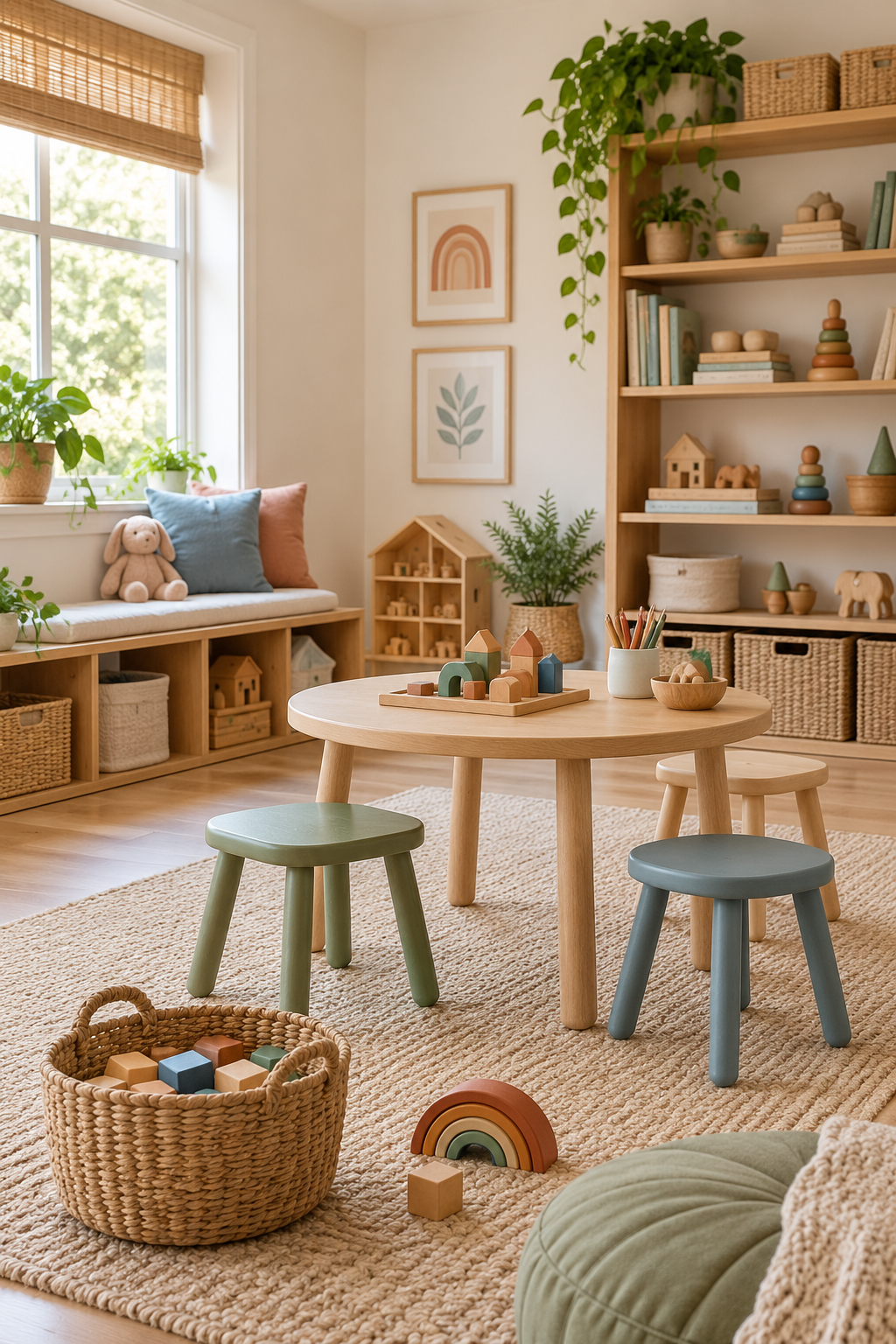
Choose Furniture Children Can Move gives the room a clear invitation rather than another pile of toys. Offer a small edited selection and rotate materials when attention fades. Arrange only the materials required for the experience, then leave enough open space for children to reinterpret them.
Use warm white, pale oak, soft sage, muted blue and restrained terracotta so the environment feels lively without becoming overstimulating. Natural baskets, low shelving and washable textiles help the activity belong within the rest of the home. This approach supports concentration without filling the room with visual noise.
Watch how the zone is actually used for a week. If pieces migrate, adjust the container or move the activity closer to where play naturally happens. Safety comes first: follow equipment installation guidance, supervise active play and keep cords, unstable furniture and age-inappropriate parts out of reach.
28. Display Current Creations with Pride
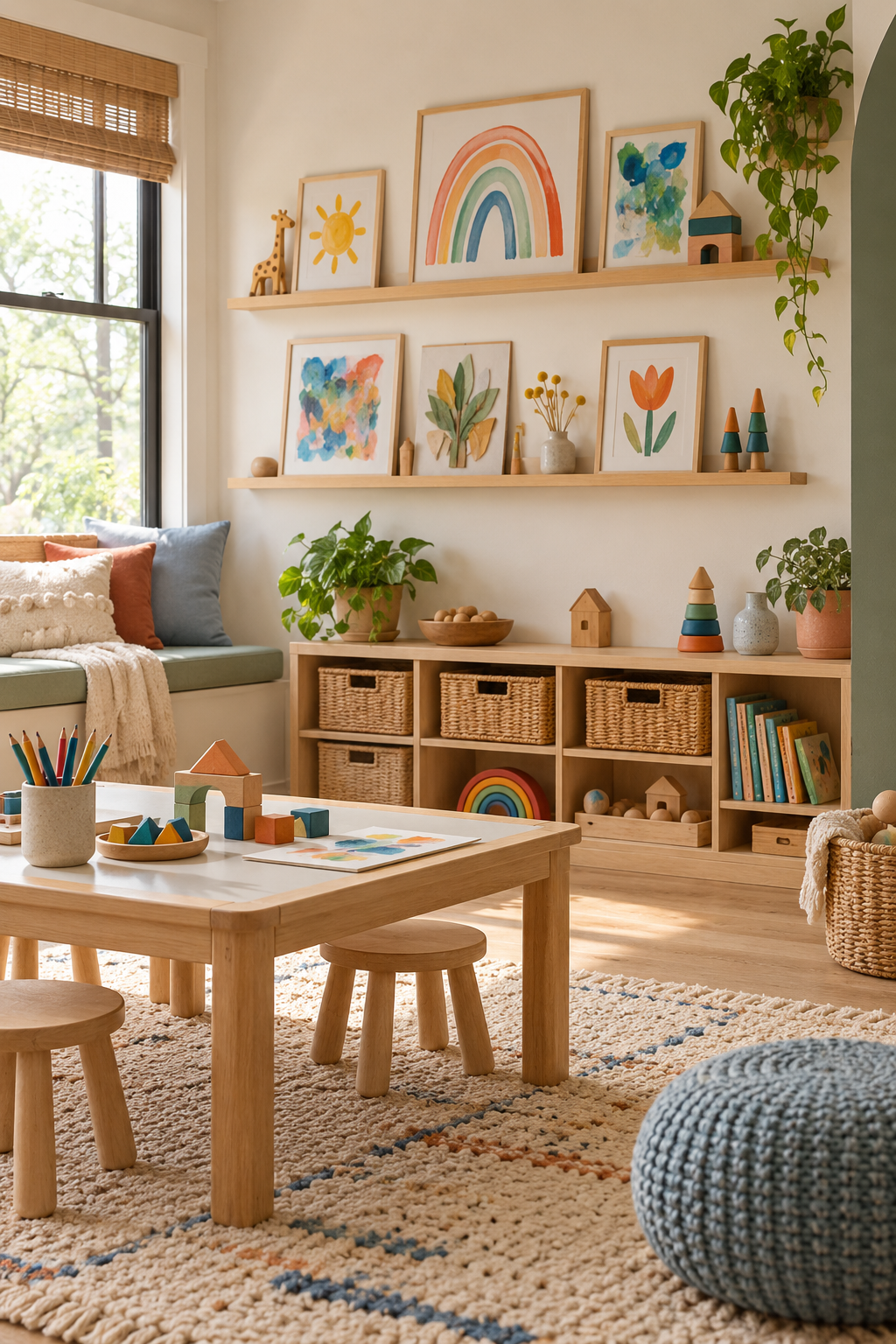
Display Current Creations with Pride gives the room a clear invitation rather than another pile of toys. Place the activity at child height while keeping tiny pieces appropriate for the youngest visitor. Arrange only the materials required for the experience, then leave enough open space for children to reinterpret them.
Use warm white, pale oak, soft sage, muted blue and restrained terracotta so the environment feels lively without becoming overstimulating. Natural baskets, low shelving and washable textiles help the activity belong within the rest of the home. This approach encourages children to make choices and care for shared materials.
Watch how the zone is actually used for a week. If pieces migrate, adjust the container or move the activity closer to where play naturally happens. Safety comes first: follow equipment installation guidance, supervise active play and keep cords, unstable furniture and age-inappropriate parts out of reach.
29. Store Screens Outside the Playroom
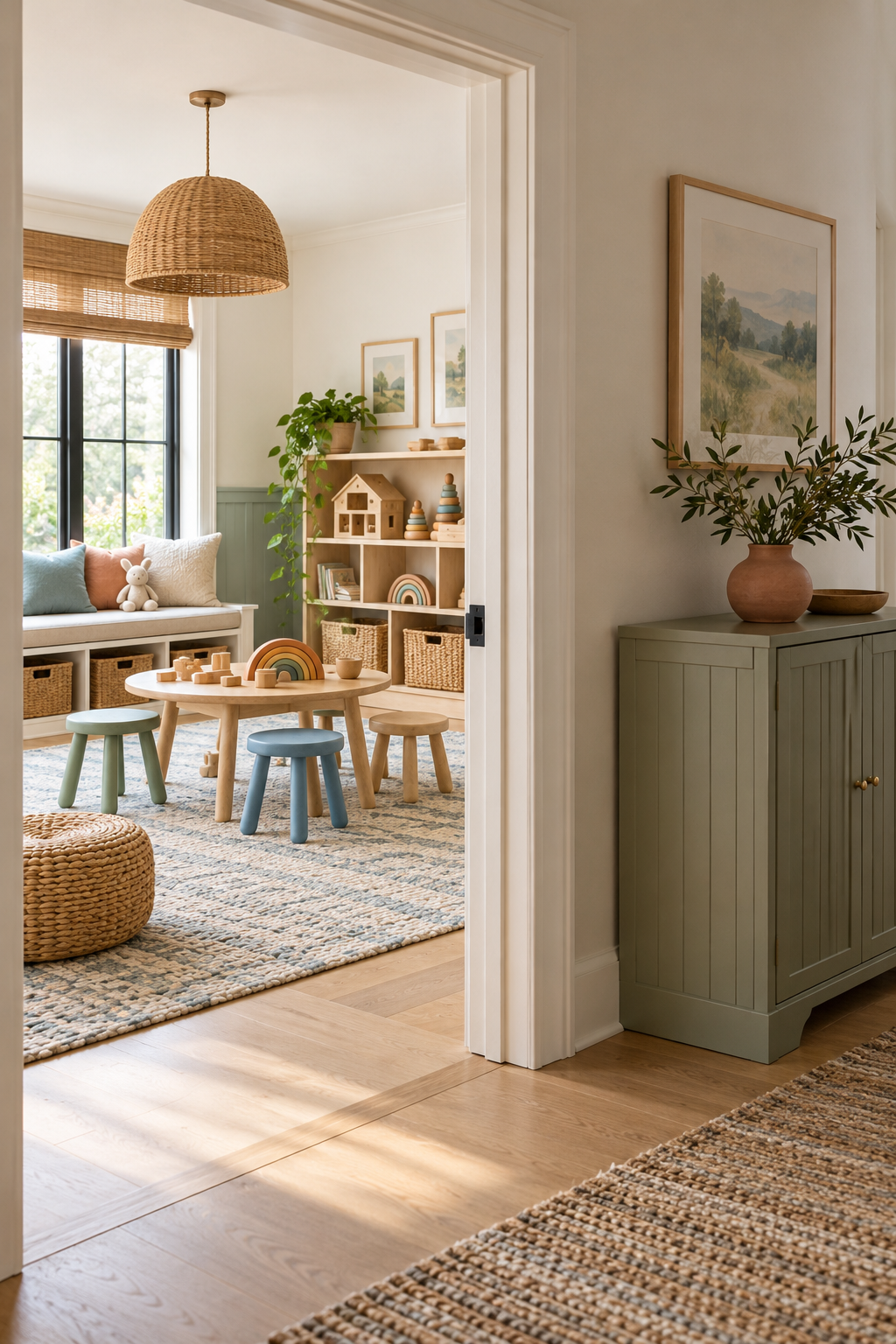
Store Screens Outside the Playroom gives the room a clear invitation rather than another pile of toys. Use durable washable materials and test that the full activity can be reset in a few minutes. Arrange only the materials required for the experience, then leave enough open space for children to reinterpret them.
Use warm white, pale oak, soft sage, muted blue and restrained terracotta so the environment feels lively without becoming overstimulating. Natural baskets, low shelving and washable textiles help the activity belong within the rest of the home. This approach builds movement, problem-solving and confidence through everyday play.
Watch how the zone is actually used for a week. If pieces migrate, adjust the container or move the activity closer to where play naturally happens. Safety comes first: follow equipment installation guidance, supervise active play and keep cords, unstable furniture and age-inappropriate parts out of reach.
30. Finish with a Child-Led Daily Reset
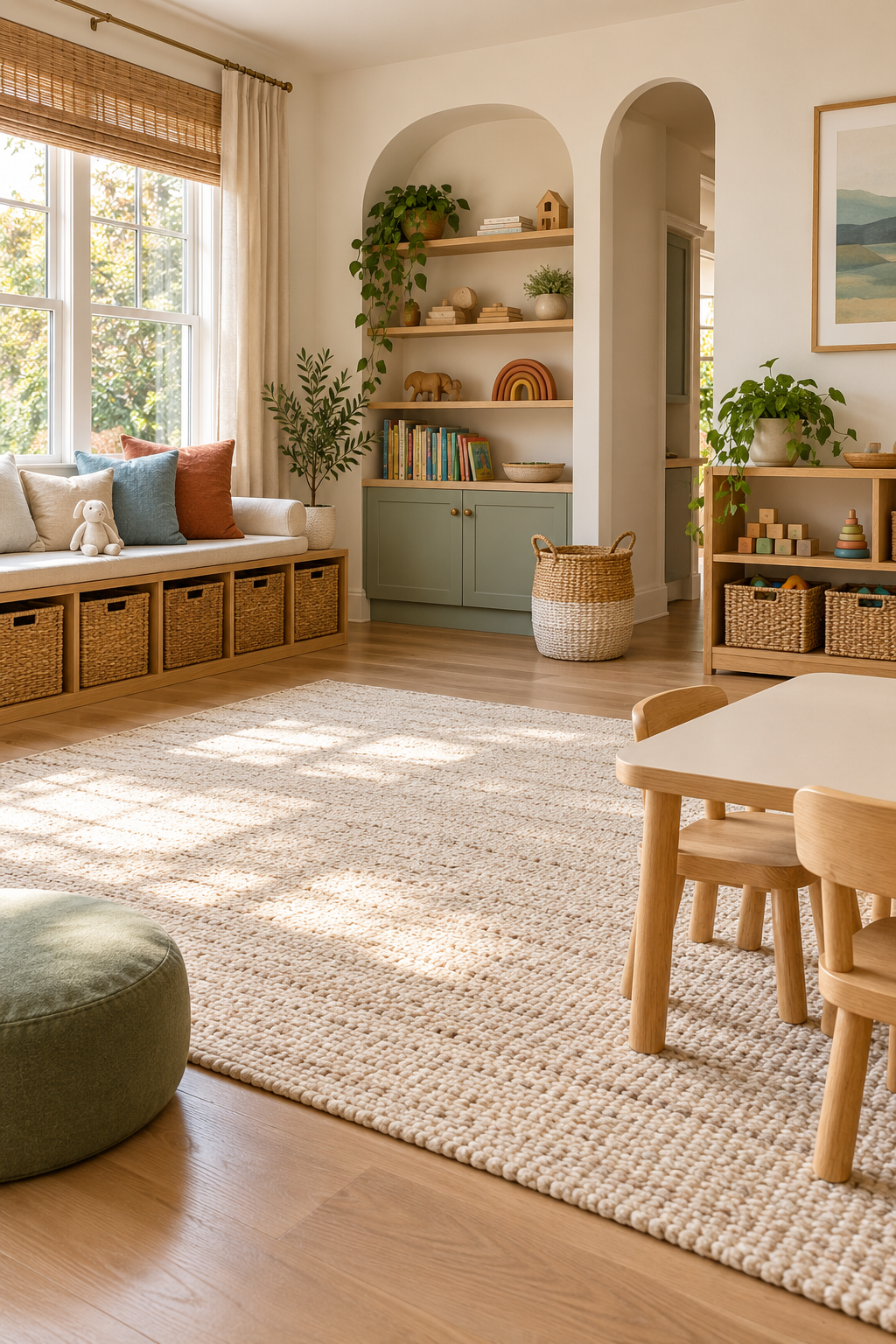
Finish with a Child-Led Daily Reset gives the room a clear invitation rather than another pile of toys. Protect clear circulation paths and anchor any furniture or equipment that could tip. Arrange only the materials required for the experience, then leave enough open space for children to reinterpret them.
Use warm white, pale oak, soft sage, muted blue and restrained terracotta so the environment feels lively without becoming overstimulating. Natural baskets, low shelving and washable textiles help the activity belong within the rest of the home. This approach keeps the room flexible for siblings, friends and changing interests.
Watch how the zone is actually used for a week. If pieces migrate, adjust the container or move the activity closer to where play naturally happens. Safety comes first: follow equipment installation guidance, supervise active play and keep cords, unstable furniture and age-inappropriate parts out of reach.
How to Keep Screen-Free Play Inviting
Keep a few strong choices visible, store the rest, and refresh one zone at a time. Children often play more deeply when shelves are calm and the central floor remains open. Join play when invited, but leave room for boredom to become invention. A predictable daily reset protects complete sets and makes tomorrow’s choices obvious.