A well-planned cleaning station makes routine care faster while keeping products controlled, easy to inventory and safely out of reach. The goal is not to collect dozens of homemade formulas. It is to create a calm, dependable system for the products you already trust, with clear separation between tools, refills and items that need extra caution.
These non-toxic cleaning station ideas focus on lower-fragrance choices, reusable tools, thoughtful storage and realistic habits. “Non-toxic” is not a universal safety guarantee, so always follow manufacturer directions, preserve original safety information, avoid mixing products and choose storage based on the most vulnerable person or pet in your home.
1. Choose a Secure Home for the Cleaning Station
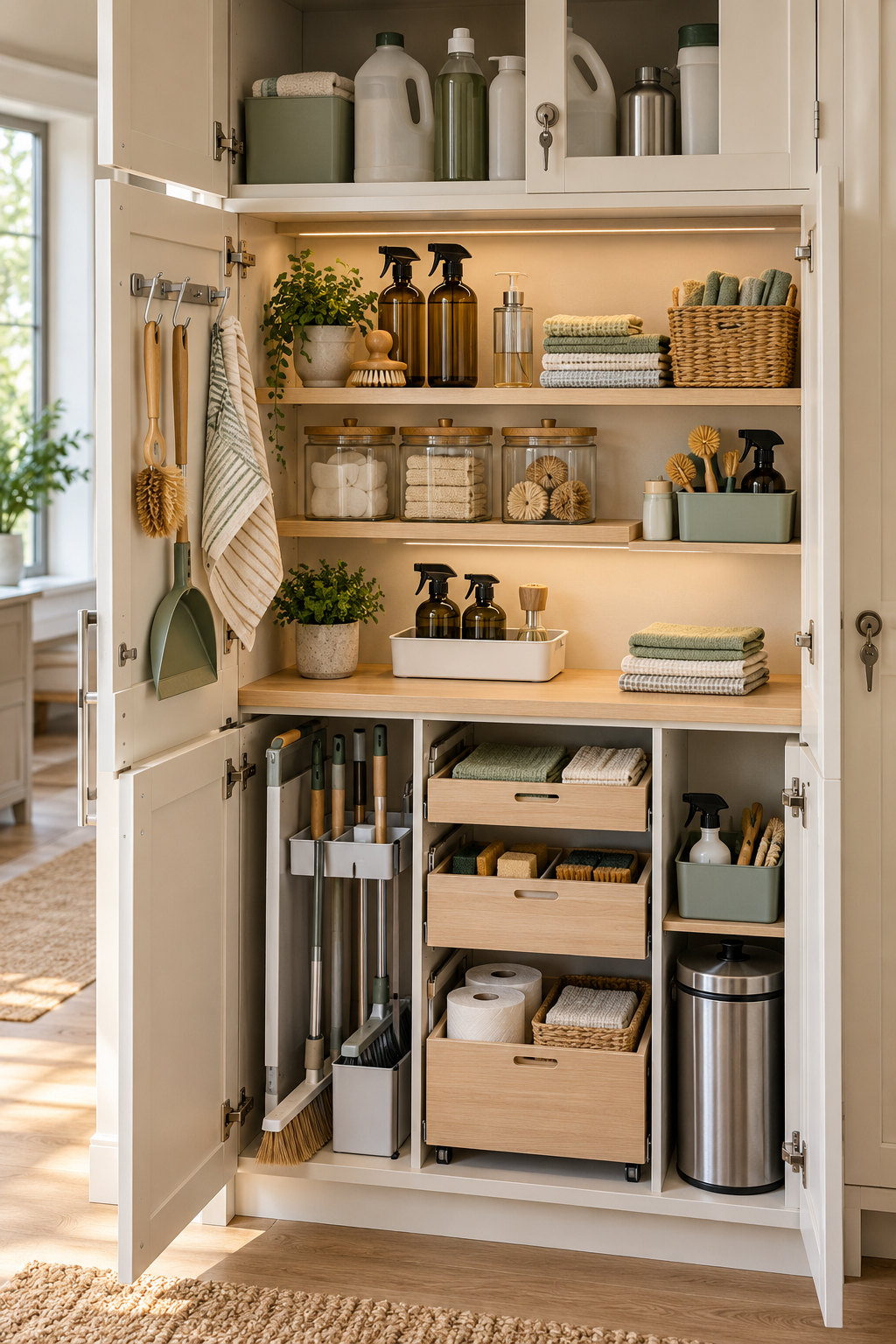
Choose a Secure Home for the Cleaning Station creates a defined place for one part of the routine, which reduces searching and discourages duplicate purchases. Measure the shelf before buying containers, then group supplies by task rather than bottle shape. Keep frequently used items visible to adults, but never trade secure storage for convenience.
For a polished look, use warm white shelving, pale oak, amber glass and soft sage accents. Containers should serve a practical purpose: catch drips, separate damp textiles, protect refills or make a complete task portable. Avoid decanting anything when doing so would remove essential directions or create confusion about the contents.
Build the habit around a clear reset. Return every product after use, let wet tools dry before enclosing them and move empty packages to the shopping list immediately. Never combine cleaners, and check surface compatibility before using acidic, alkaline or abrasive products. This small discipline keeps the station attractive while supporting safer everyday cleaning.
2. Start with a Small Core Product Collection
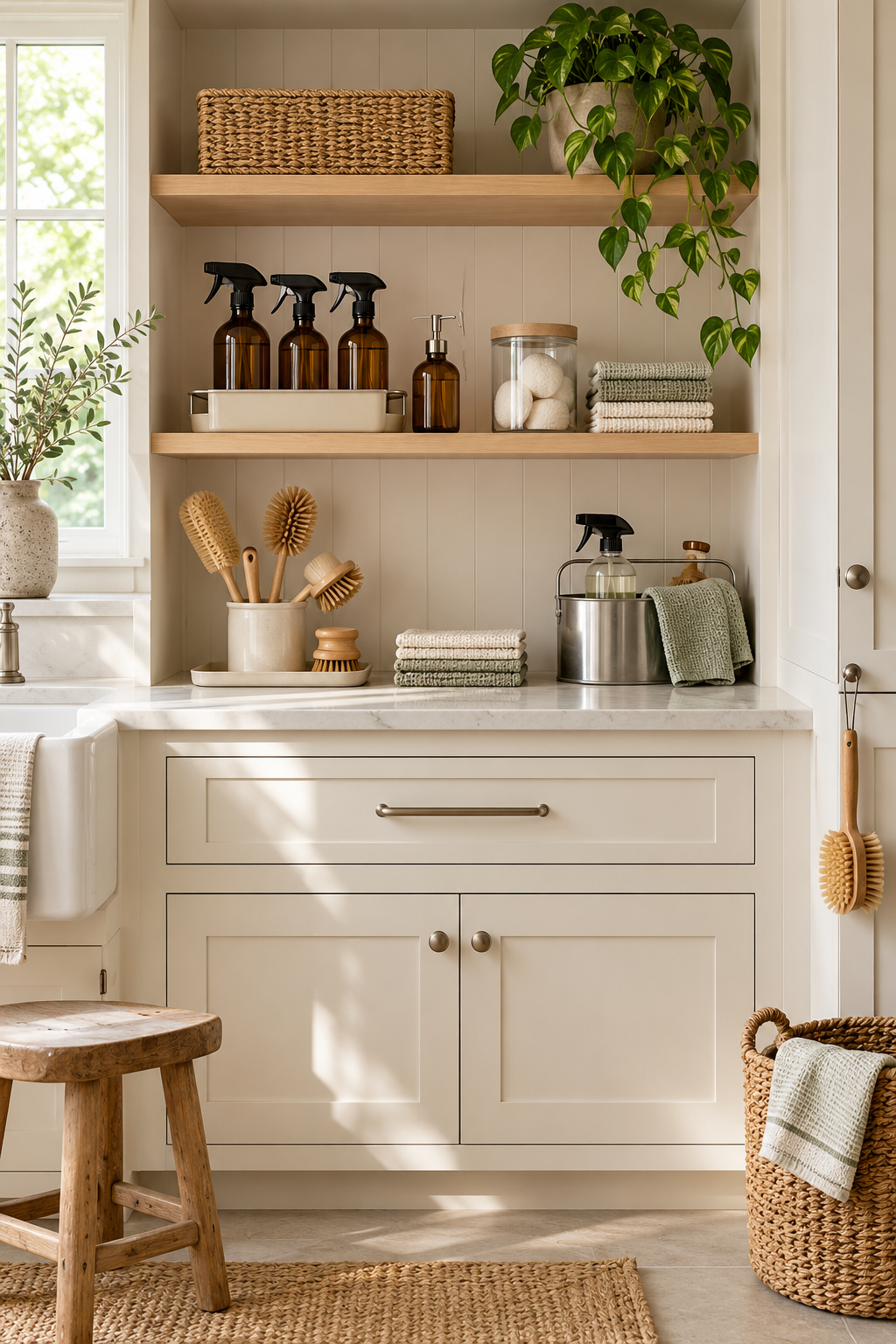
Start with a Small Core Product Collection creates a defined place for one part of the routine, which reduces searching and discourages duplicate purchases. Keep manufacturer instructions and ingredient information available even when a secondary container is used. Keep frequently used items visible to adults, but never trade secure storage for convenience.
For a polished look, use simple wire baskets, washable cotton cloths and restrained neutral colors. Containers should serve a practical purpose: catch drips, separate damp textiles, protect refills or make a complete task portable. Avoid decanting anything when doing so would remove essential directions or create confusion about the contents.
Build the habit around a clear reset. Return every product after use, let wet tools dry before enclosing them and move empty packages to the shopping list immediately. Never combine cleaners, and check surface compatibility before using acidic, alkaline or abrasive products. This small discipline keeps the station attractive while supporting safer everyday cleaning.
3. Use Amber Glass Spray Bottles
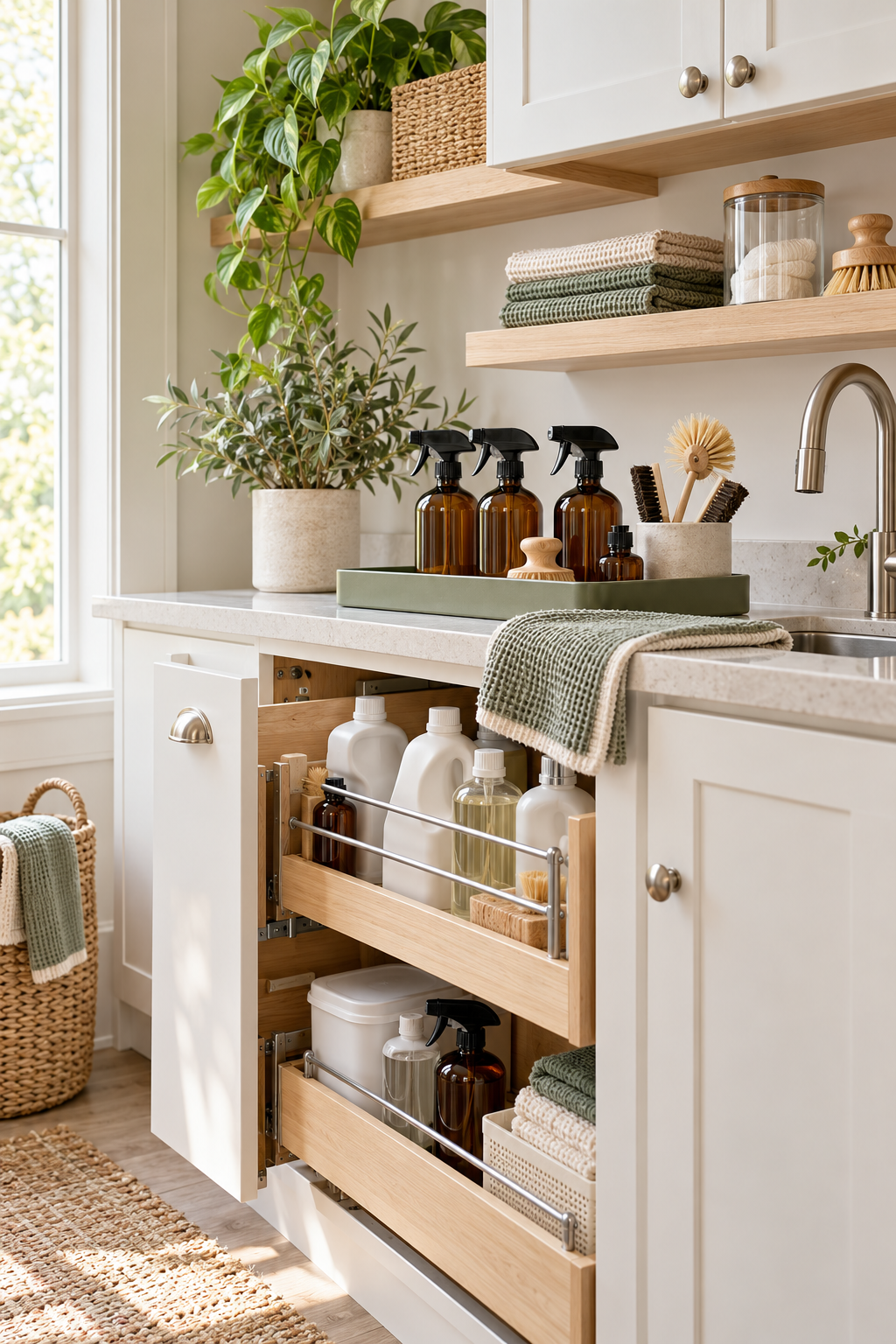
Use Amber Glass Spray Bottles creates a defined place for one part of the routine, which reduces searching and discourages duplicate purchases. Choose wipeable, moisture-resistant materials and leave enough space to remove one item without knocking over another. Keep frequently used items visible to adults, but never trade secure storage for convenience.
For a polished look, use closed cabinetry balanced by one tidy, easy-to-reach working shelf. Containers should serve a practical purpose: catch drips, separate damp textiles, protect refills or make a complete task portable. Avoid decanting anything when doing so would remove essential directions or create confusion about the contents.
Build the habit around a clear reset. Return every product after use, let wet tools dry before enclosing them and move empty packages to the shopping list immediately. Never combine cleaners, and check surface compatibility before using acidic, alkaline or abrasive products. This small discipline keeps the station attractive while supporting safer everyday cleaning.
4. Add Waterproof Labels without Recipe Claims
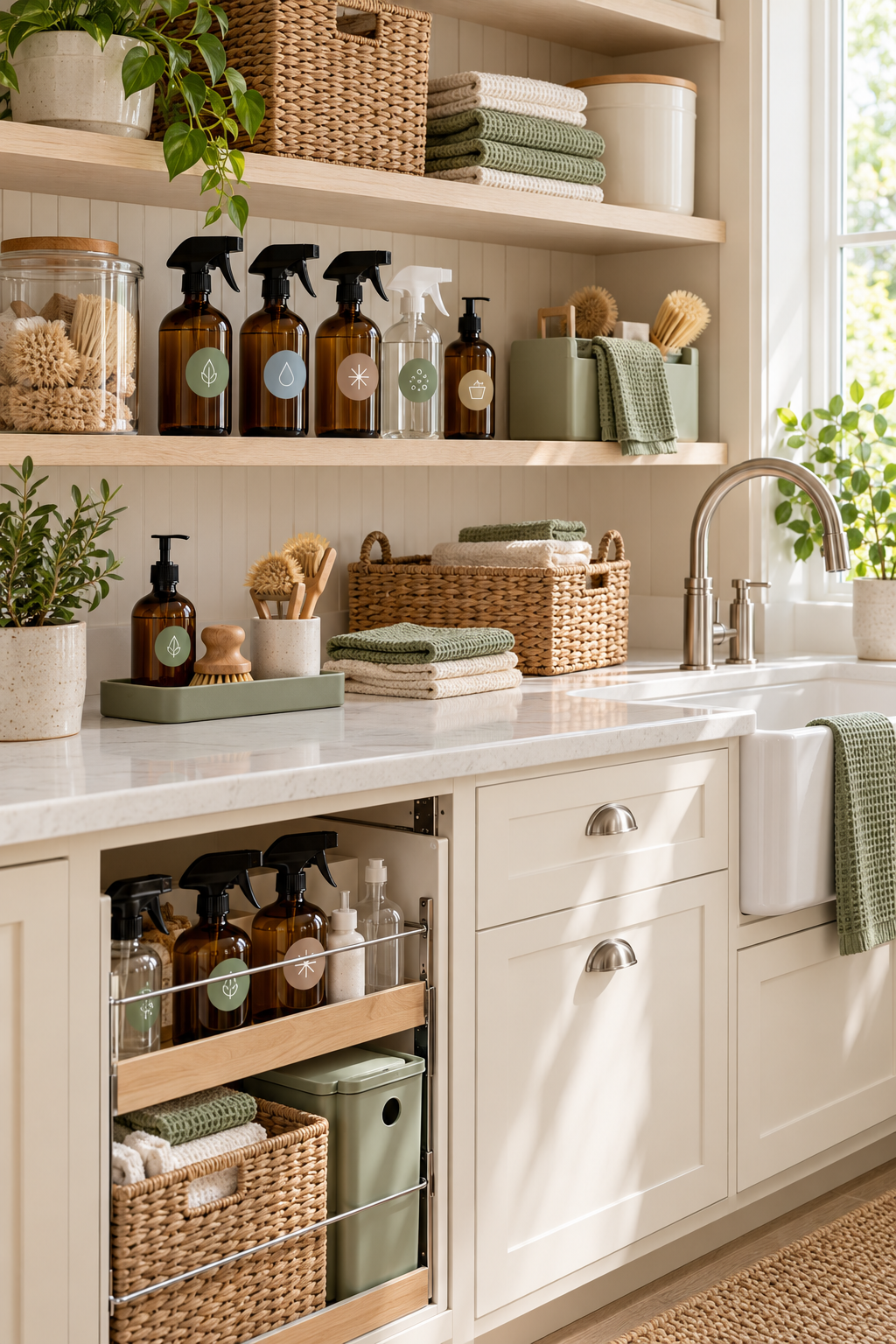
Add Waterproof Labels without Recipe Claims creates a defined place for one part of the routine, which reduces searching and discourages duplicate purchases. Store the heaviest bottles low but behind a child-resistant lock, and secure tall shelving to the wall. Keep frequently used items visible to adults, but never trade secure storage for convenience.
For a polished look, use natural textures used only where they can remain dry and easy to clean. Containers should serve a practical purpose: catch drips, separate damp textiles, protect refills or make a complete task portable. Avoid decanting anything when doing so would remove essential directions or create confusion about the contents.
Build the habit around a clear reset. Return every product after use, let wet tools dry before enclosing them and move empty packages to the shopping list immediately. Never combine cleaners, and check surface compatibility before using acidic, alkaline or abrasive products. This small discipline keeps the station attractive while supporting safer everyday cleaning.
5. Create a Portable Everyday Cleaning Caddy
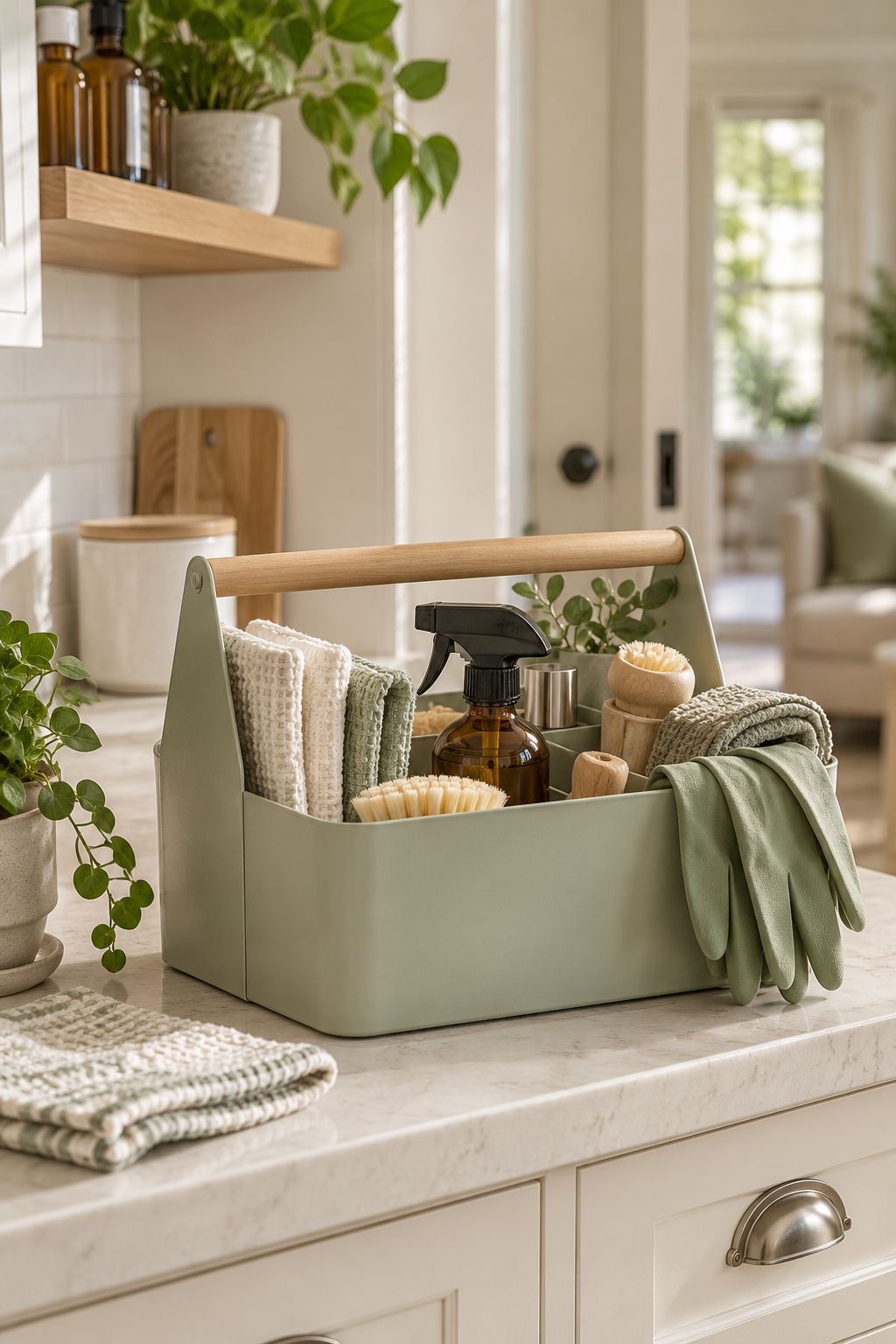
Create a Portable Everyday Cleaning Caddy creates a defined place for one part of the routine, which reduces searching and discourages duplicate purchases. Review expiration dates and damaged packaging during a quick monthly inventory. Keep frequently used items visible to adults, but never trade secure storage for convenience.
For a polished look, use a compact palette that makes leaks, low stock and misplaced tools easy to notice. Containers should serve a practical purpose: catch drips, separate damp textiles, protect refills or make a complete task portable. Avoid decanting anything when doing so would remove essential directions or create confusion about the contents.
Build the habit around a clear reset. Return every product after use, let wet tools dry before enclosing them and move empty packages to the shopping list immediately. Never combine cleaners, and check surface compatibility before using acidic, alkaline or abrasive products. This small discipline keeps the station attractive while supporting safer everyday cleaning.
6. Separate Kitchen and Bathroom Tools
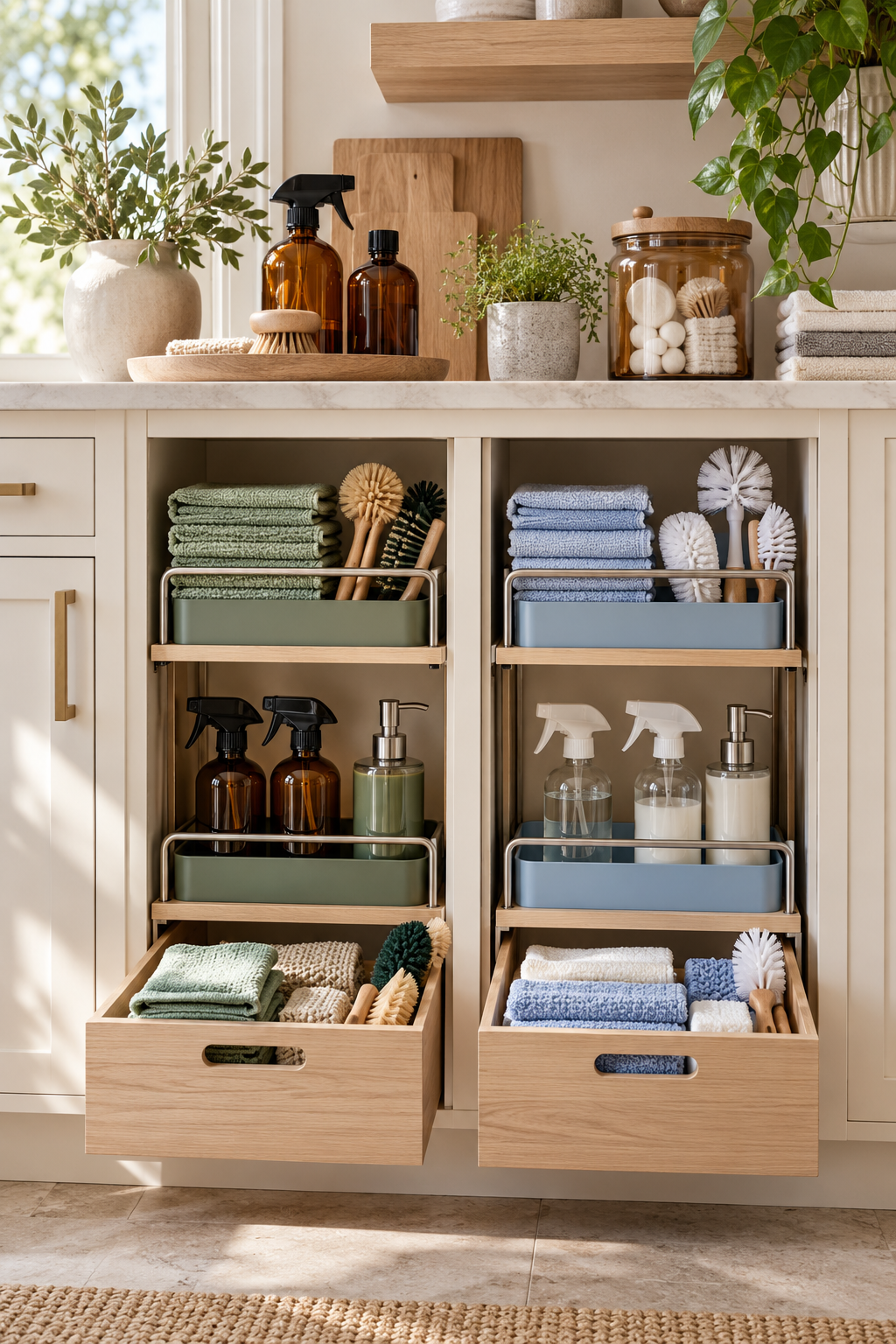
Separate Kitchen and Bathroom Tools creates a defined place for one part of the routine, which reduces searching and discourages duplicate purchases. Measure the shelf before buying containers, then group supplies by task rather than bottle shape. Keep frequently used items visible to adults, but never trade secure storage for convenience.
For a polished look, use warm white shelving, pale oak, amber glass and soft sage accents. Containers should serve a practical purpose: catch drips, separate damp textiles, protect refills or make a complete task portable. Avoid decanting anything when doing so would remove essential directions or create confusion about the contents.
Build the habit around a clear reset. Return every product after use, let wet tools dry before enclosing them and move empty packages to the shopping list immediately. Never combine cleaners, and check surface compatibility before using acidic, alkaline or abrasive products. This small discipline keeps the station attractive while supporting safer everyday cleaning.
7. Store Concentrates on a High Shelf
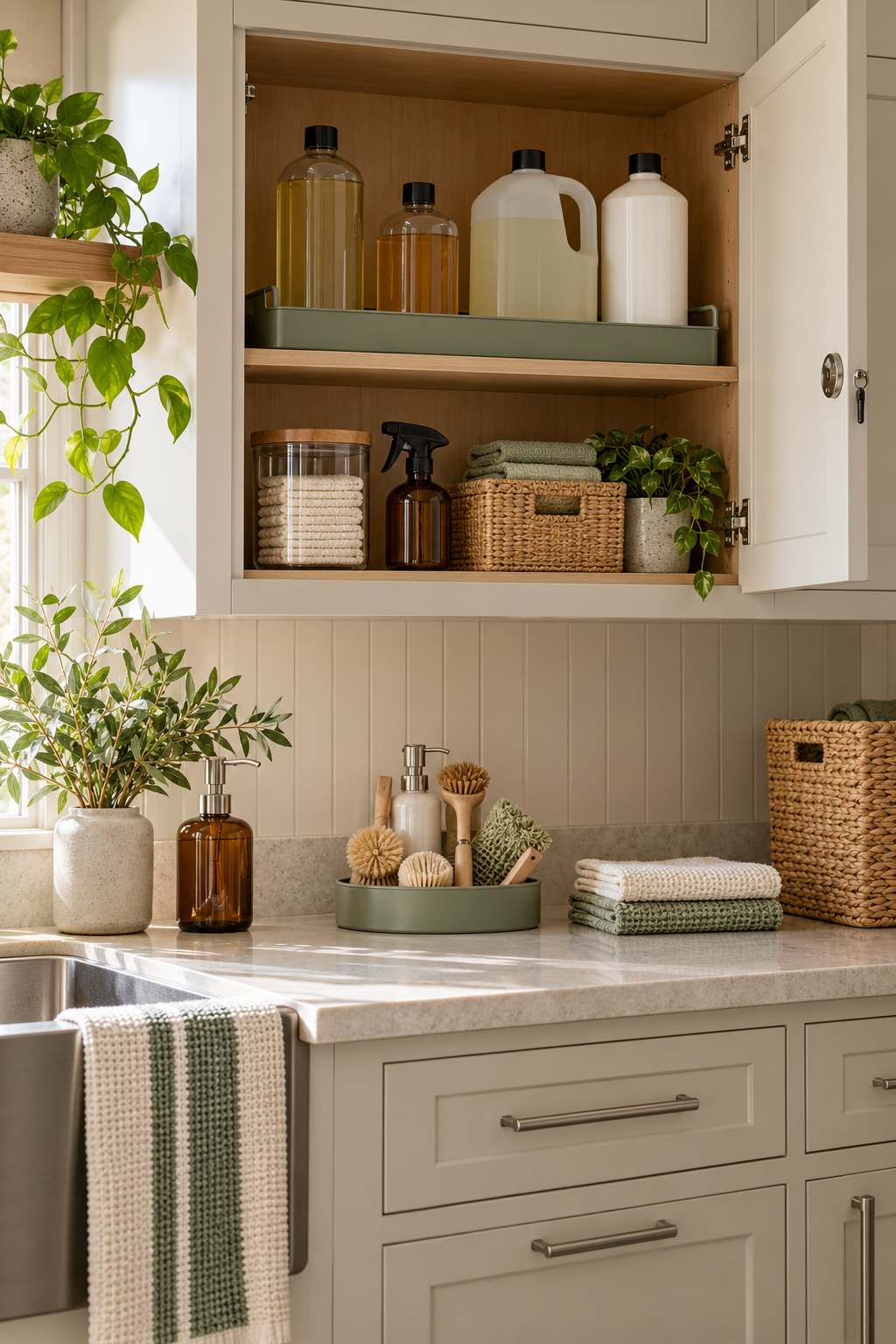
Store Concentrates on a High Shelf creates a defined place for one part of the routine, which reduces searching and discourages duplicate purchases. Keep manufacturer instructions and ingredient information available even when a secondary container is used. Keep frequently used items visible to adults, but never trade secure storage for convenience.
For a polished look, use simple wire baskets, washable cotton cloths and restrained neutral colors. Containers should serve a practical purpose: catch drips, separate damp textiles, protect refills or make a complete task portable. Avoid decanting anything when doing so would remove essential directions or create confusion about the contents.
Build the habit around a clear reset. Return every product after use, let wet tools dry before enclosing them and move empty packages to the shopping list immediately. Never combine cleaners, and check surface compatibility before using acidic, alkaline or abrasive products. This small discipline keeps the station attractive while supporting safer everyday cleaning.
8. Keep Refillable Products in One Zone
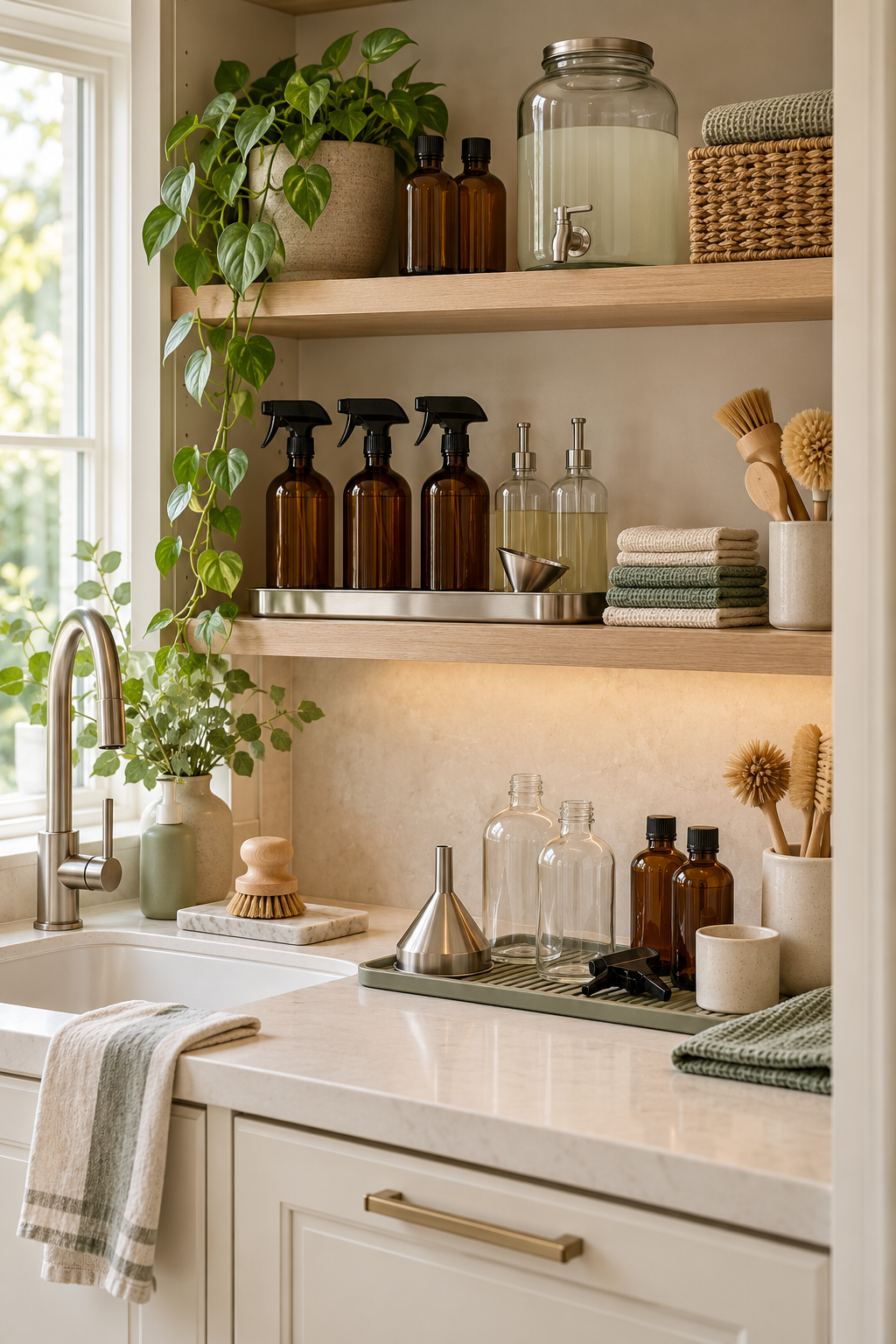
Keep Refillable Products in One Zone creates a defined place for one part of the routine, which reduces searching and discourages duplicate purchases. Choose wipeable, moisture-resistant materials and leave enough space to remove one item without knocking over another. Keep frequently used items visible to adults, but never trade secure storage for convenience.
For a polished look, use closed cabinetry balanced by one tidy, easy-to-reach working shelf. Containers should serve a practical purpose: catch drips, separate damp textiles, protect refills or make a complete task portable. Avoid decanting anything when doing so would remove essential directions or create confusion about the contents.
Build the habit around a clear reset. Return every product after use, let wet tools dry before enclosing them and move empty packages to the shopping list immediately. Never combine cleaners, and check surface compatibility before using acidic, alkaline or abrasive products. This small discipline keeps the station attractive while supporting safer everyday cleaning.
9. Add a Washable Shelf Liner
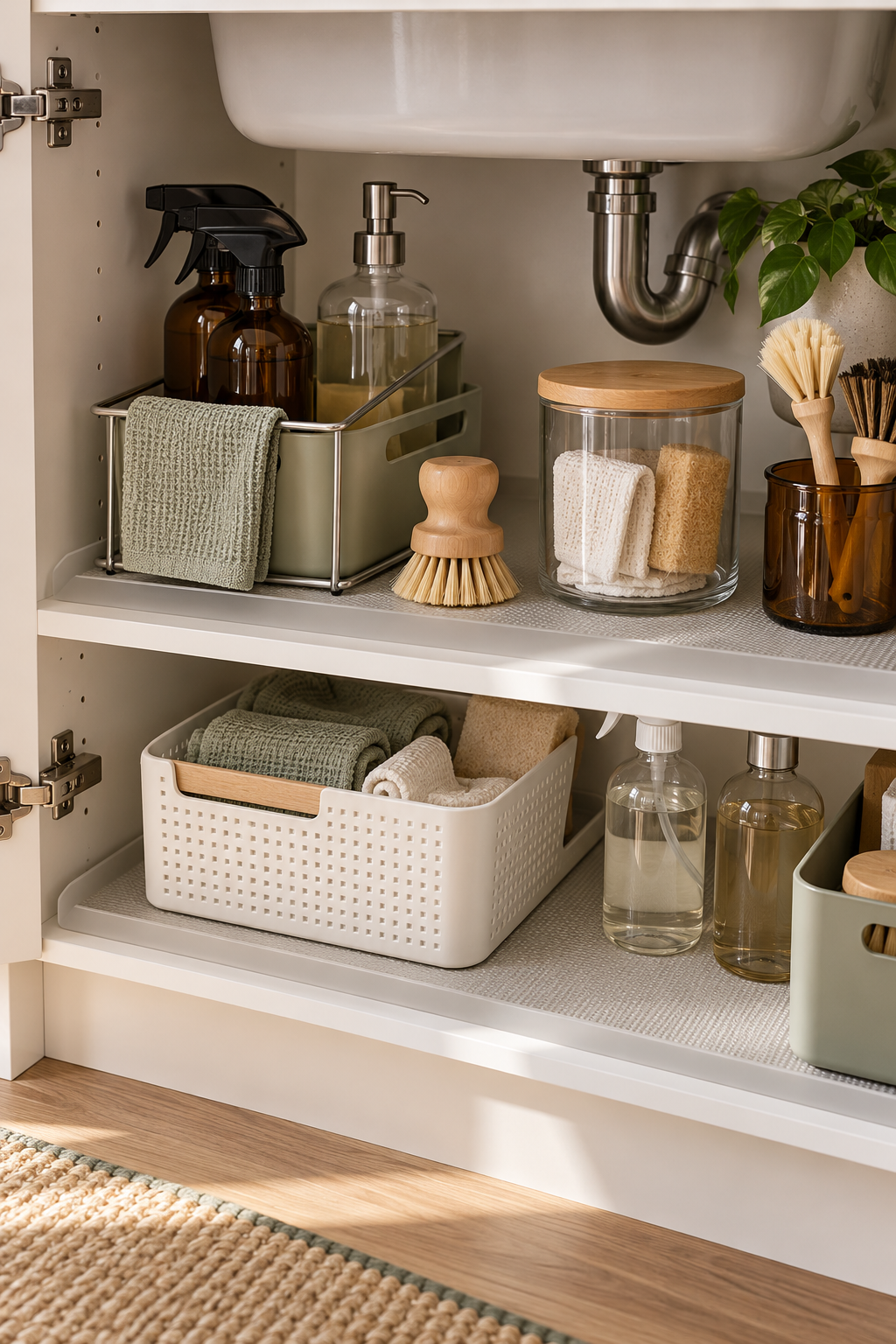
Add a Washable Shelf Liner creates a defined place for one part of the routine, which reduces searching and discourages duplicate purchases. Store the heaviest bottles low but behind a child-resistant lock, and secure tall shelving to the wall. Keep frequently used items visible to adults, but never trade secure storage for convenience.
For a polished look, use natural textures used only where they can remain dry and easy to clean. Containers should serve a practical purpose: catch drips, separate damp textiles, protect refills or make a complete task portable. Avoid decanting anything when doing so would remove essential directions or create confusion about the contents.
Build the habit around a clear reset. Return every product after use, let wet tools dry before enclosing them and move empty packages to the shopping list immediately. Never combine cleaners, and check surface compatibility before using acidic, alkaline or abrasive products. This small discipline keeps the station attractive while supporting safer everyday cleaning.
10. Use Ventilated Baskets for Cloths
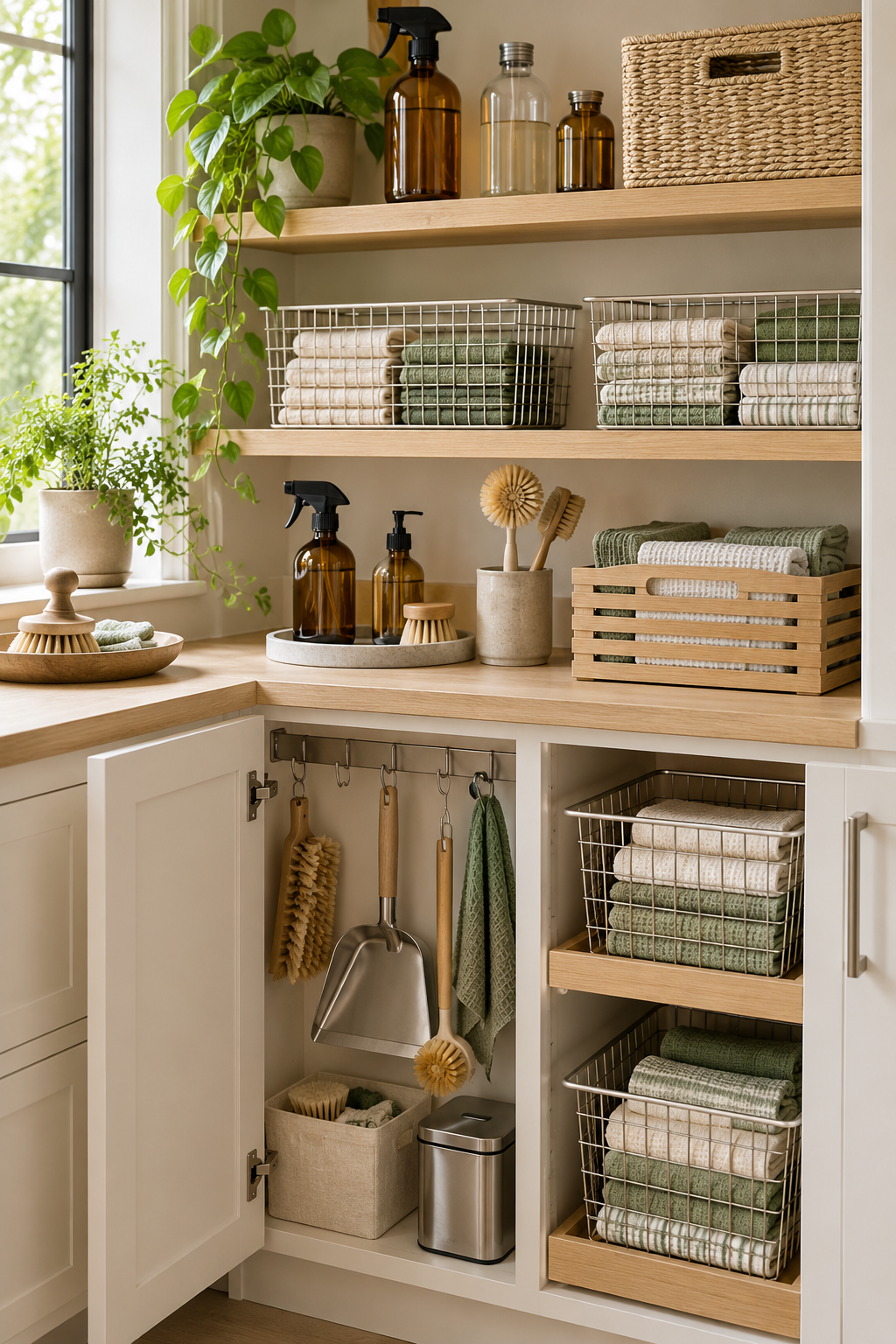
Use Ventilated Baskets for Cloths creates a defined place for one part of the routine, which reduces searching and discourages duplicate purchases. Review expiration dates and damaged packaging during a quick monthly inventory. Keep frequently used items visible to adults, but never trade secure storage for convenience.
For a polished look, use a compact palette that makes leaks, low stock and misplaced tools easy to notice. Containers should serve a practical purpose: catch drips, separate damp textiles, protect refills or make a complete task portable. Avoid decanting anything when doing so would remove essential directions or create confusion about the contents.
Build the habit around a clear reset. Return every product after use, let wet tools dry before enclosing them and move empty packages to the shopping list immediately. Never combine cleaners, and check surface compatibility before using acidic, alkaline or abrasive products. This small discipline keeps the station attractive while supporting safer everyday cleaning.
11. Fold Microfiber Cloths by Task
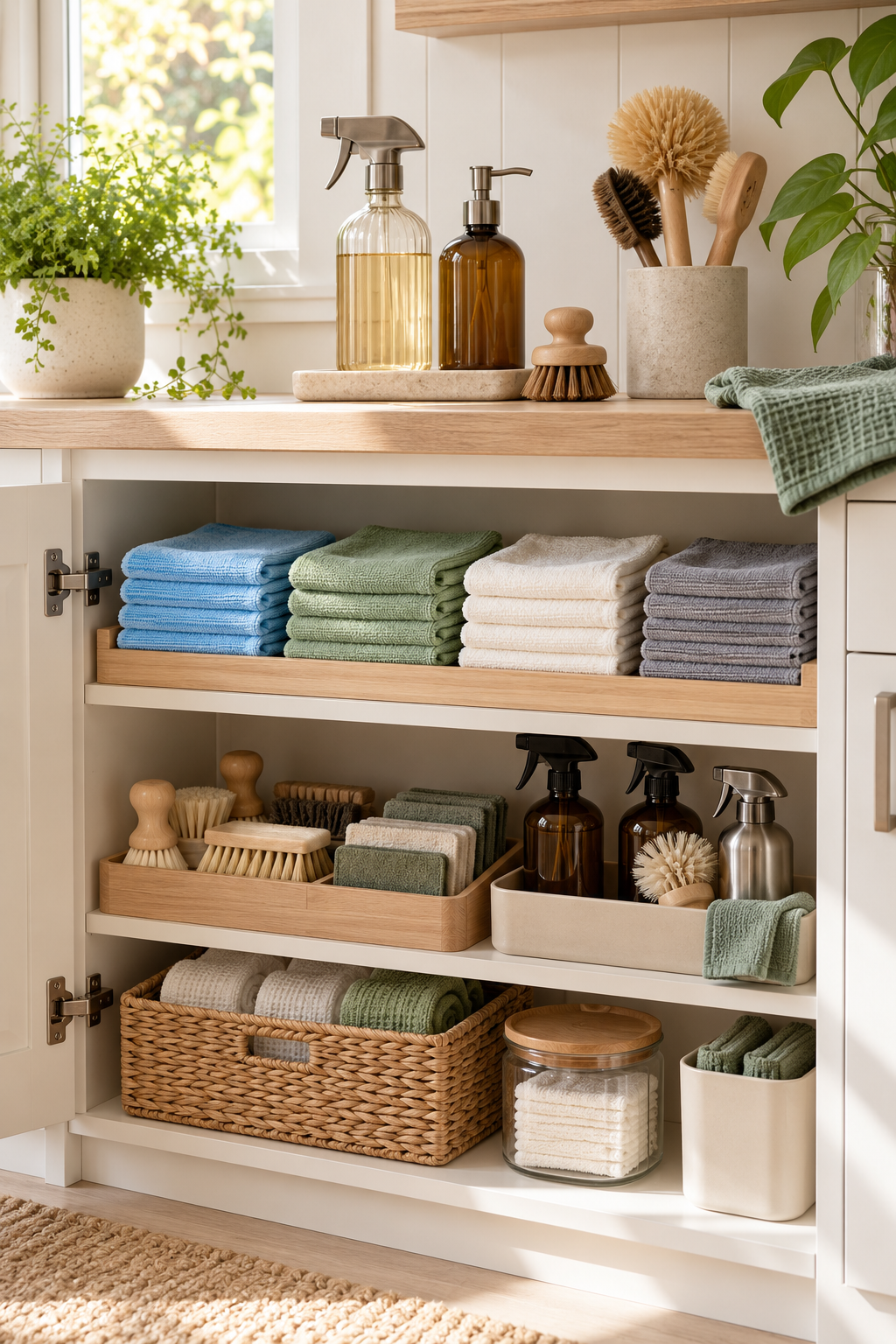
Fold Microfiber Cloths by Task creates a defined place for one part of the routine, which reduces searching and discourages duplicate purchases. Measure the shelf before buying containers, then group supplies by task rather than bottle shape. Keep frequently used items visible to adults, but never trade secure storage for convenience.
For a polished look, use warm white shelving, pale oak, amber glass and soft sage accents. Containers should serve a practical purpose: catch drips, separate damp textiles, protect refills or make a complete task portable. Avoid decanting anything when doing so would remove essential directions or create confusion about the contents.
Build the habit around a clear reset. Return every product after use, let wet tools dry before enclosing them and move empty packages to the shopping list immediately. Never combine cleaners, and check surface compatibility before using acidic, alkaline or abrasive products. This small discipline keeps the station attractive while supporting safer everyday cleaning.
12. Create a Dedicated Scrub-Brush Rail
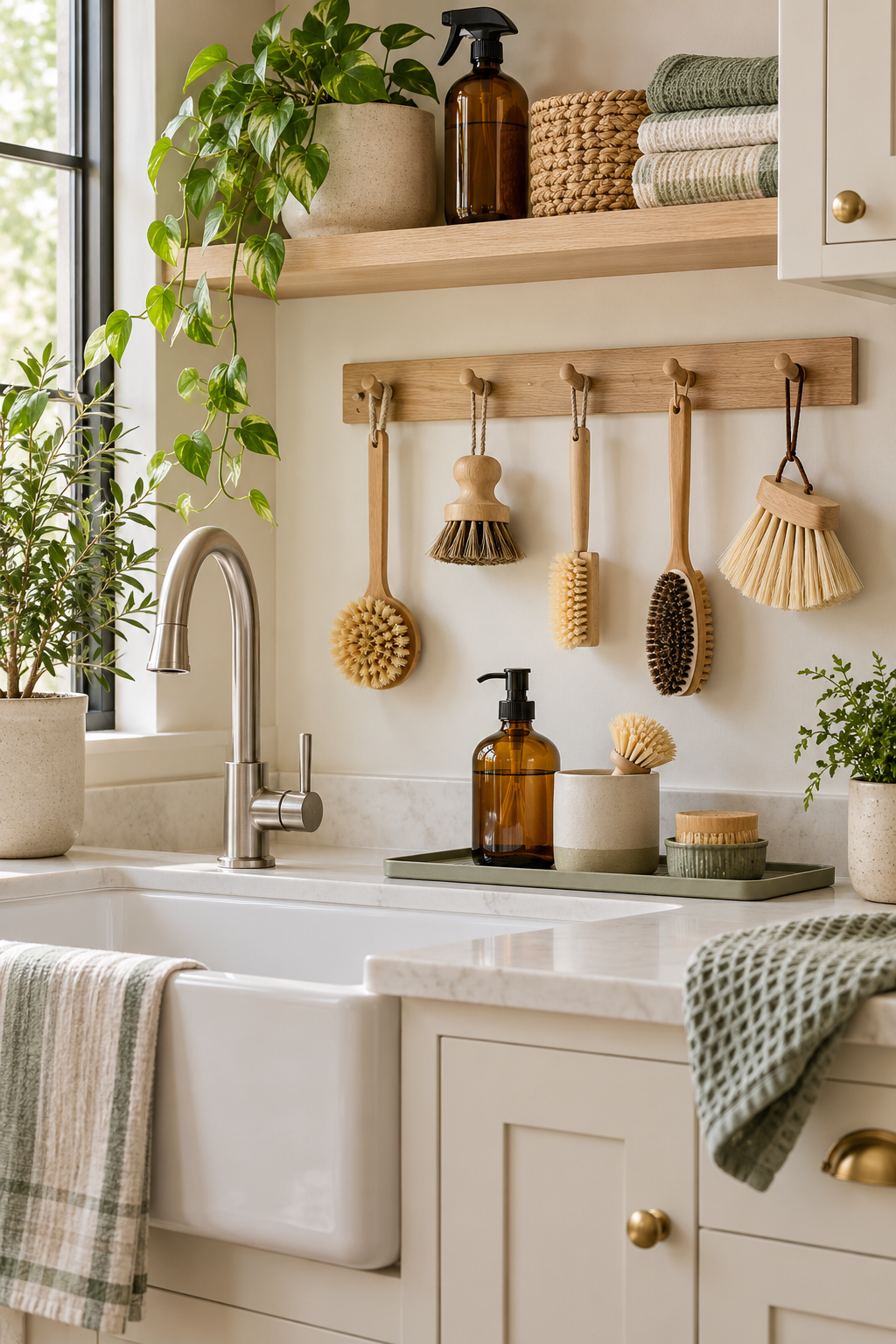
Create a Dedicated Scrub-Brush Rail creates a defined place for one part of the routine, which reduces searching and discourages duplicate purchases. Keep manufacturer instructions and ingredient information available even when a secondary container is used. Keep frequently used items visible to adults, but never trade secure storage for convenience.
For a polished look, use simple wire baskets, washable cotton cloths and restrained neutral colors. Containers should serve a practical purpose: catch drips, separate damp textiles, protect refills or make a complete task portable. Avoid decanting anything when doing so would remove essential directions or create confusion about the contents.
Build the habit around a clear reset. Return every product after use, let wet tools dry before enclosing them and move empty packages to the shopping list immediately. Never combine cleaners, and check surface compatibility before using acidic, alkaline or abrasive products. This small discipline keeps the station attractive while supporting safer everyday cleaning.
13. Store Baking Soda in a Sealed Container
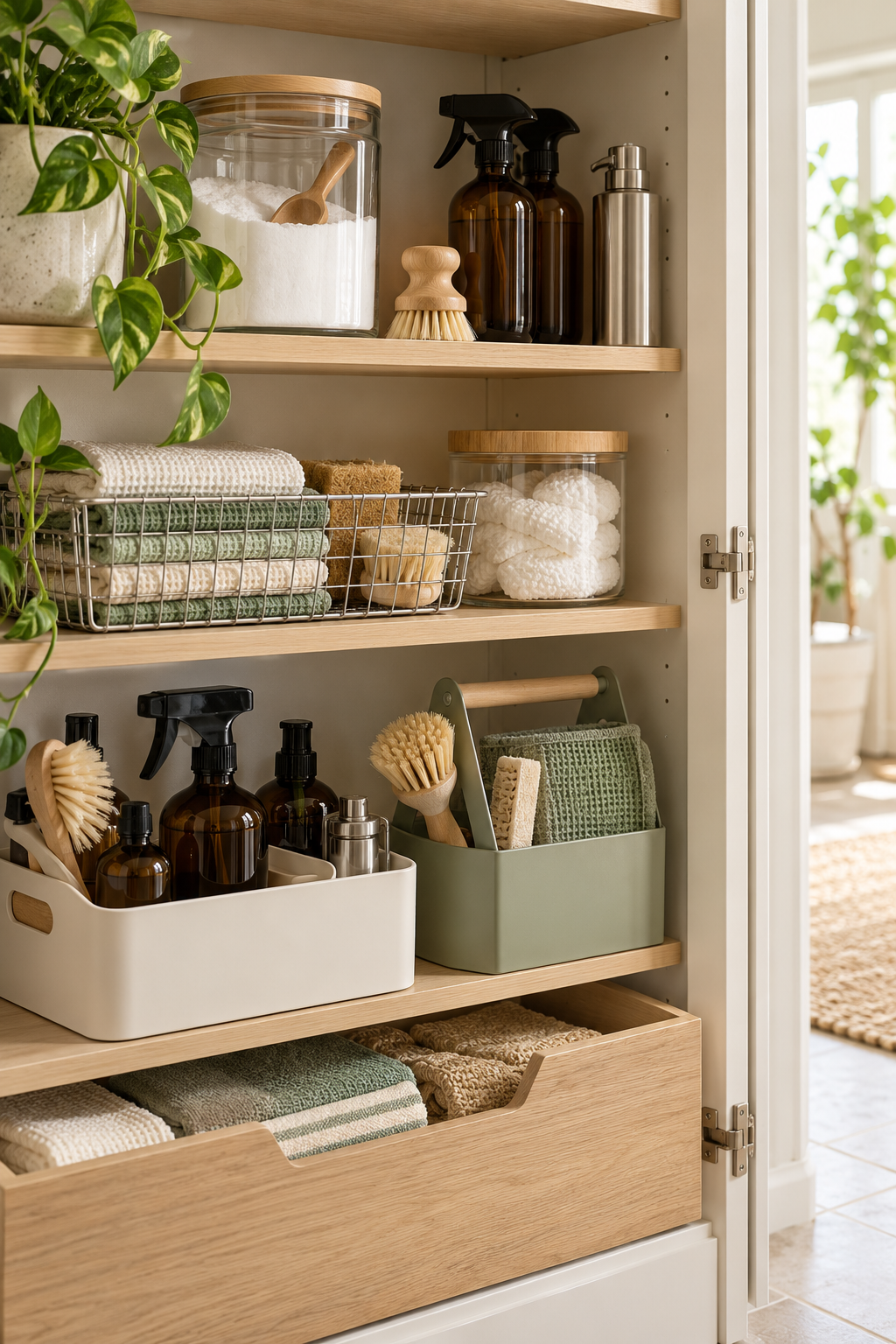
Store Baking Soda in a Sealed Container creates a defined place for one part of the routine, which reduces searching and discourages duplicate purchases. Choose wipeable, moisture-resistant materials and leave enough space to remove one item without knocking over another. Keep frequently used items visible to adults, but never trade secure storage for convenience.
For a polished look, use closed cabinetry balanced by one tidy, easy-to-reach working shelf. Containers should serve a practical purpose: catch drips, separate damp textiles, protect refills or make a complete task portable. Avoid decanting anything when doing so would remove essential directions or create confusion about the contents.
Build the habit around a clear reset. Return every product after use, let wet tools dry before enclosing them and move empty packages to the shopping list immediately. Never combine cleaners, and check surface compatibility before using acidic, alkaline or abrasive products. This small discipline keeps the station attractive while supporting safer everyday cleaning.
14. Keep Vinegar Away from Natural Stone Supplies
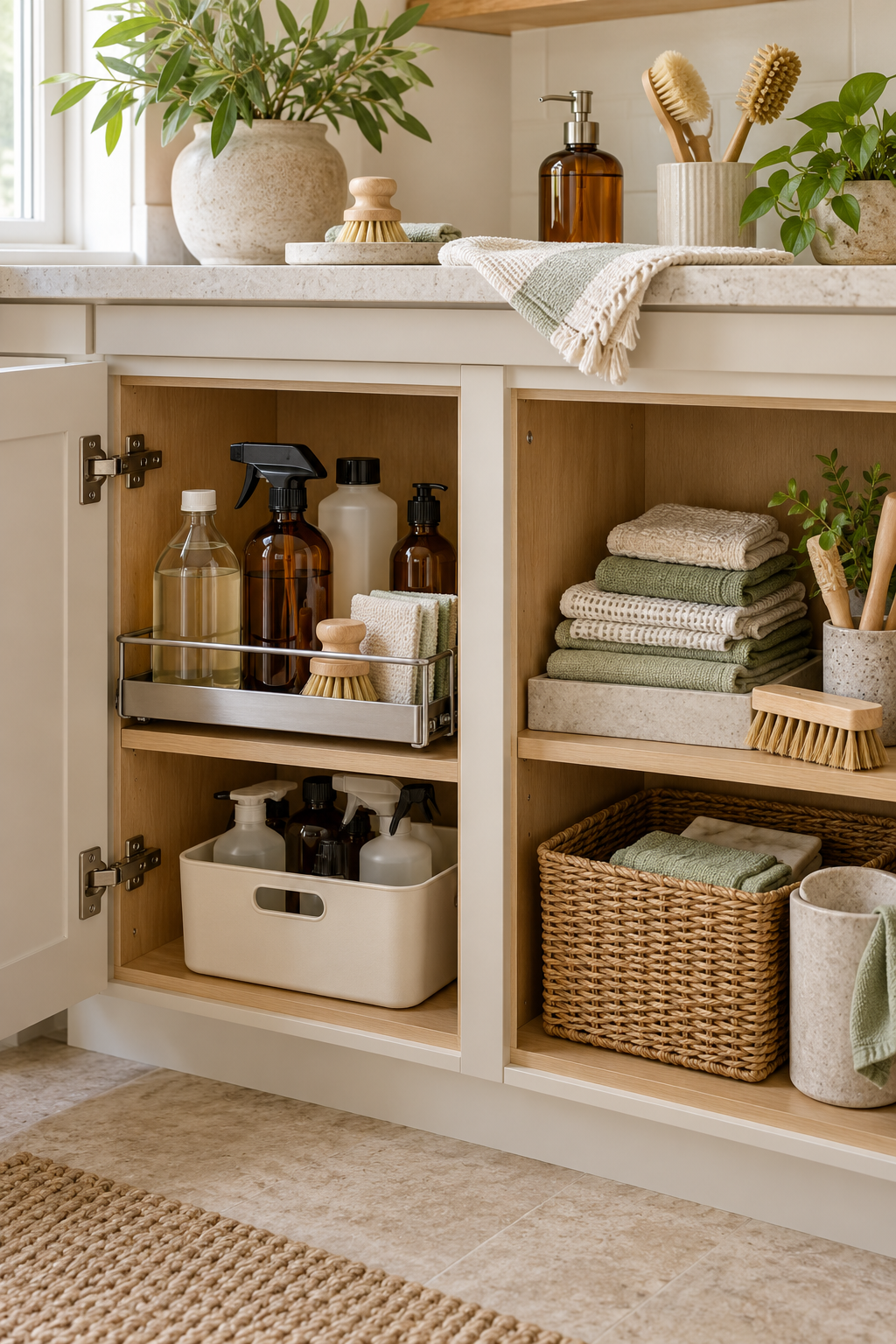
Keep Vinegar Away from Natural Stone Supplies creates a defined place for one part of the routine, which reduces searching and discourages duplicate purchases. Store the heaviest bottles low but behind a child-resistant lock, and secure tall shelving to the wall. Keep frequently used items visible to adults, but never trade secure storage for convenience.
For a polished look, use natural textures used only where they can remain dry and easy to clean. Containers should serve a practical purpose: catch drips, separate damp textiles, protect refills or make a complete task portable. Avoid decanting anything when doing so would remove essential directions or create confusion about the contents.
Build the habit around a clear reset. Return every product after use, let wet tools dry before enclosing them and move empty packages to the shopping list immediately. Never combine cleaners, and check surface compatibility before using acidic, alkaline or abrasive products. This small discipline keeps the station attractive while supporting safer everyday cleaning.
15. Build a Simple Floor-Care Section
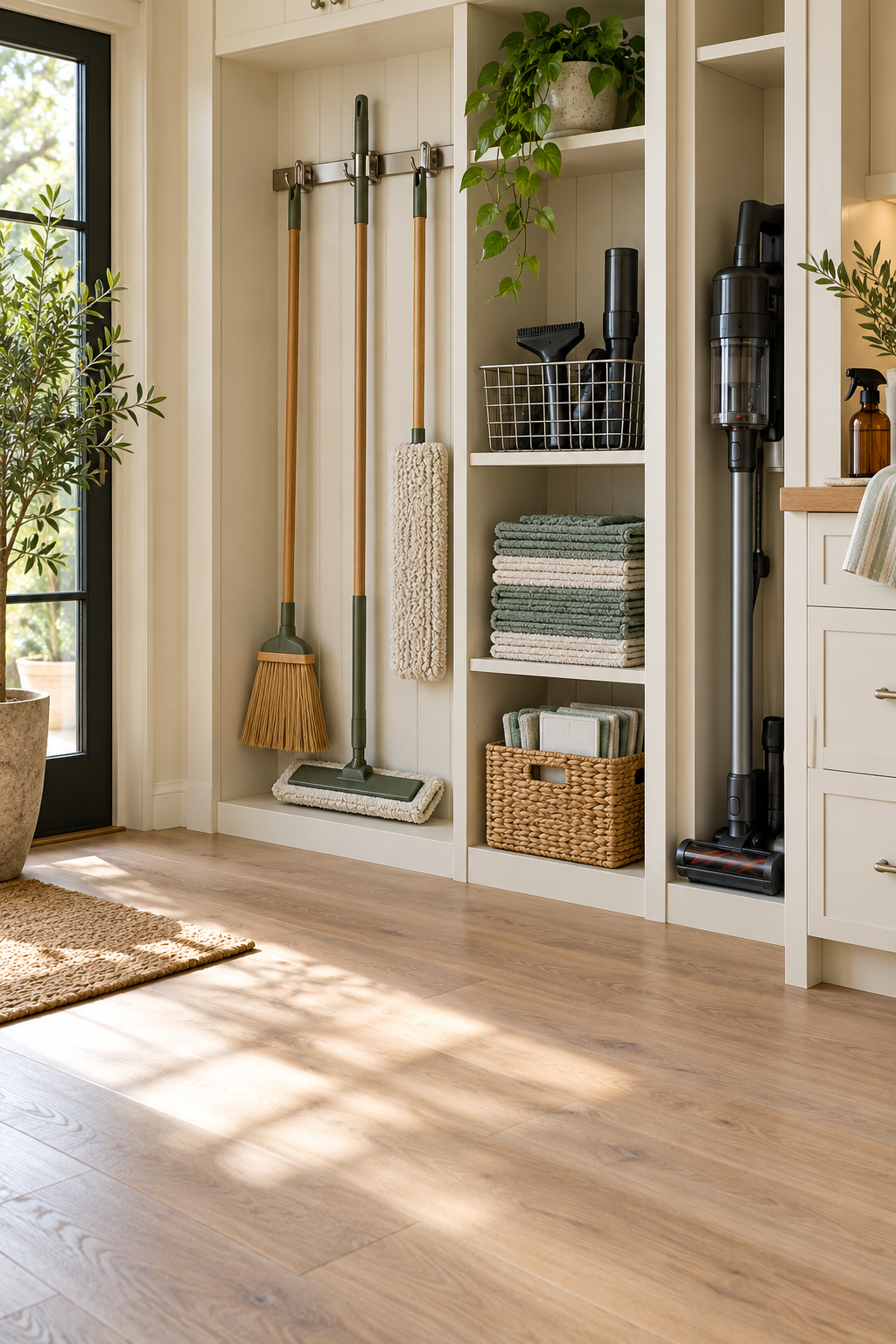
Build a Simple Floor-Care Section creates a defined place for one part of the routine, which reduces searching and discourages duplicate purchases. Review expiration dates and damaged packaging during a quick monthly inventory. Keep frequently used items visible to adults, but never trade secure storage for convenience.
For a polished look, use a compact palette that makes leaks, low stock and misplaced tools easy to notice. Containers should serve a practical purpose: catch drips, separate damp textiles, protect refills or make a complete task portable. Avoid decanting anything when doing so would remove essential directions or create confusion about the contents.
Build the habit around a clear reset. Return every product after use, let wet tools dry before enclosing them and move empty packages to the shopping list immediately. Never combine cleaners, and check surface compatibility before using acidic, alkaline or abrasive products. This small discipline keeps the station attractive while supporting safer everyday cleaning.
16. Create a Laundry Stain-Care Tray
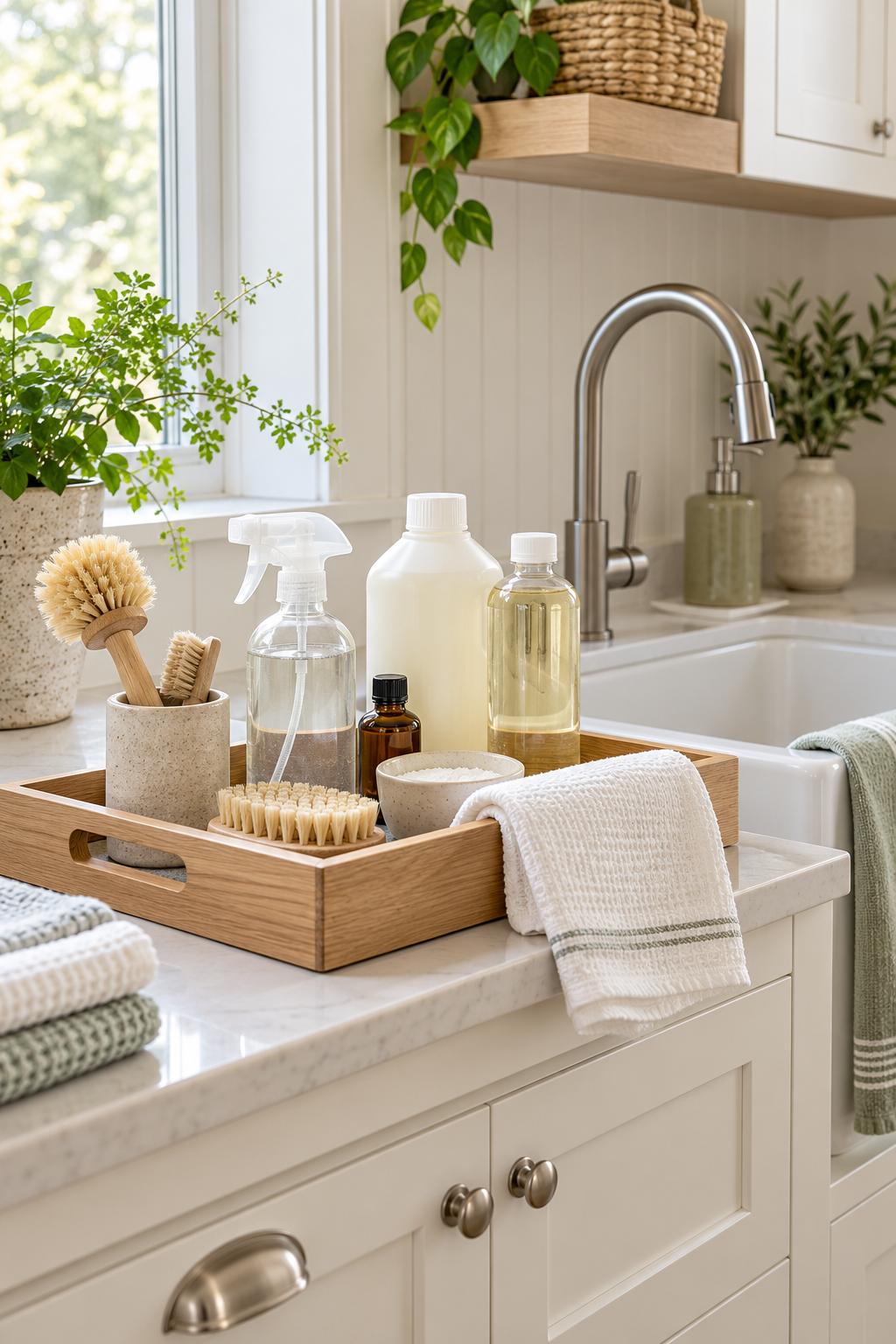
Create a Laundry Stain-Care Tray creates a defined place for one part of the routine, which reduces searching and discourages duplicate purchases. Measure the shelf before buying containers, then group supplies by task rather than bottle shape. Keep frequently used items visible to adults, but never trade secure storage for convenience.
For a polished look, use warm white shelving, pale oak, amber glass and soft sage accents. Containers should serve a practical purpose: catch drips, separate damp textiles, protect refills or make a complete task portable. Avoid decanting anything when doing so would remove essential directions or create confusion about the contents.
Build the habit around a clear reset. Return every product after use, let wet tools dry before enclosing them and move empty packages to the shopping list immediately. Never combine cleaners, and check surface compatibility before using acidic, alkaline or abrasive products. This small discipline keeps the station attractive while supporting safer everyday cleaning.
17. Add a Clearly Marked Used-Cloth Bin
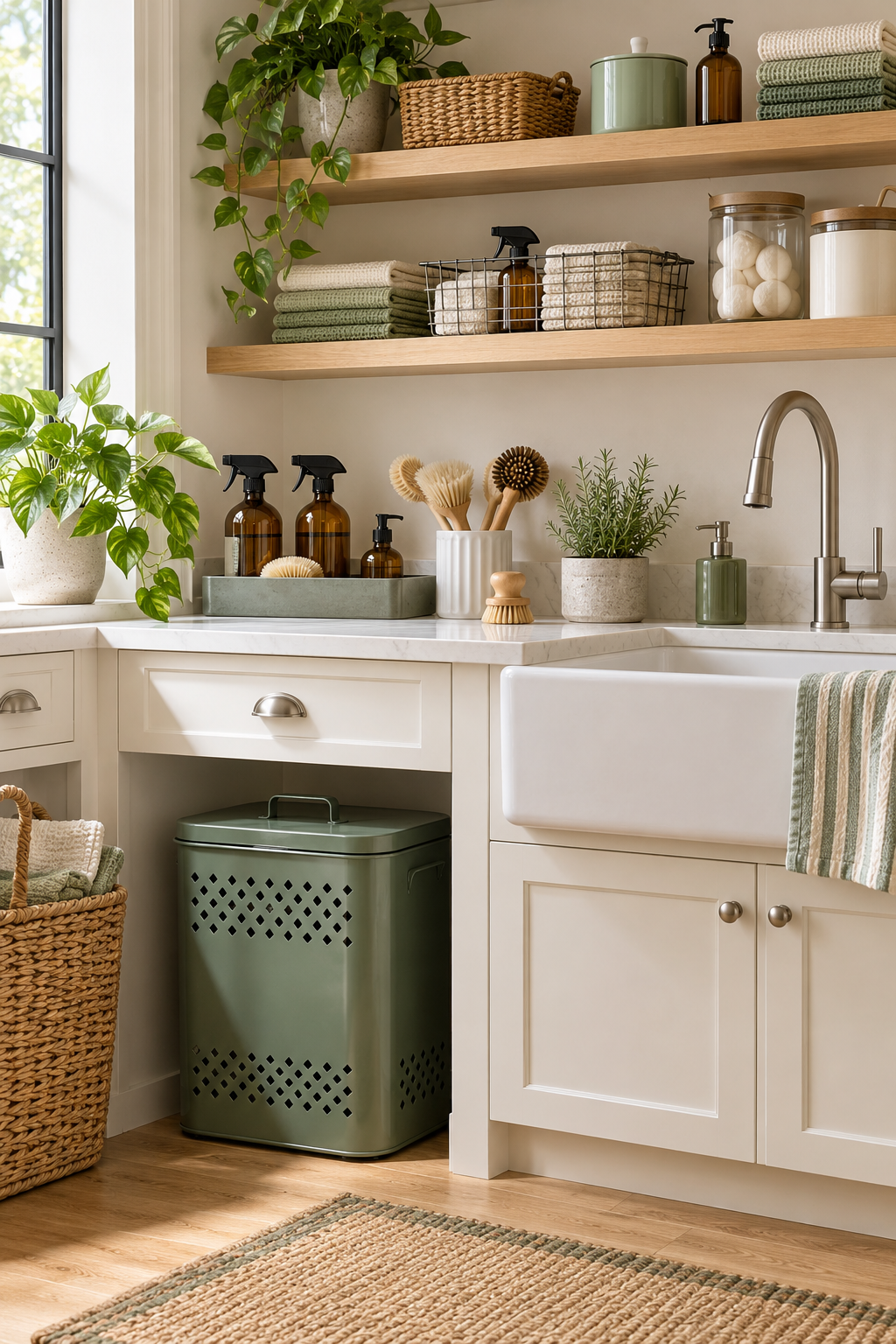
Add a Clearly Marked Used-Cloth Bin creates a defined place for one part of the routine, which reduces searching and discourages duplicate purchases. Keep manufacturer instructions and ingredient information available even when a secondary container is used. Keep frequently used items visible to adults, but never trade secure storage for convenience.
For a polished look, use simple wire baskets, washable cotton cloths and restrained neutral colors. Containers should serve a practical purpose: catch drips, separate damp textiles, protect refills or make a complete task portable. Avoid decanting anything when doing so would remove essential directions or create confusion about the contents.
Build the habit around a clear reset. Return every product after use, let wet tools dry before enclosing them and move empty packages to the shopping list immediately. Never combine cleaners, and check surface compatibility before using acidic, alkaline or abrasive products. This small discipline keeps the station attractive while supporting safer everyday cleaning.
18. Keep Gloves Easy to Reach
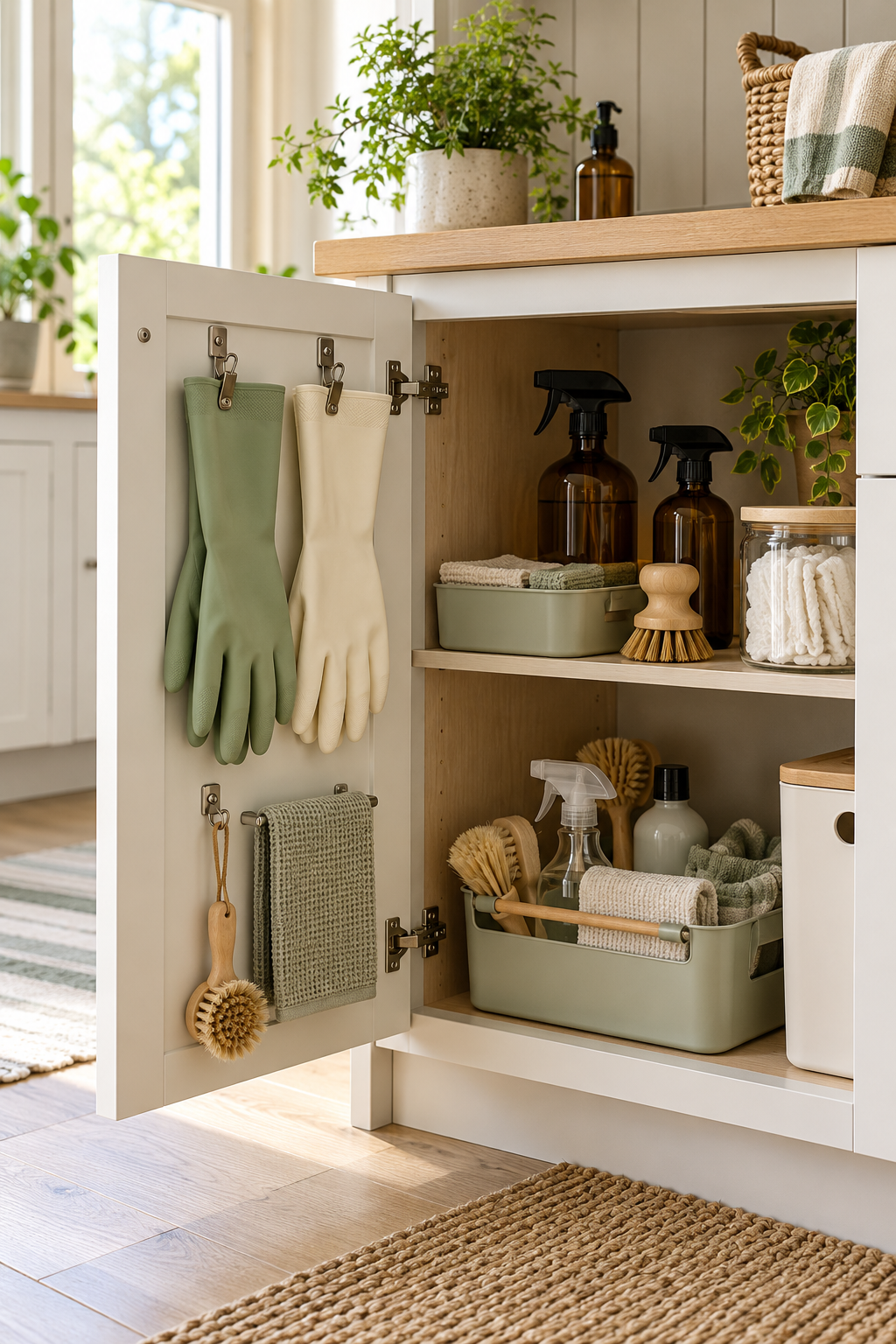
Keep Gloves Easy to Reach creates a defined place for one part of the routine, which reduces searching and discourages duplicate purchases. Choose wipeable, moisture-resistant materials and leave enough space to remove one item without knocking over another. Keep frequently used items visible to adults, but never trade secure storage for convenience.
For a polished look, use closed cabinetry balanced by one tidy, easy-to-reach working shelf. Containers should serve a practical purpose: catch drips, separate damp textiles, protect refills or make a complete task portable. Avoid decanting anything when doing so would remove essential directions or create confusion about the contents.
Build the habit around a clear reset. Return every product after use, let wet tools dry before enclosing them and move empty packages to the shopping list immediately. Never combine cleaners, and check surface compatibility before using acidic, alkaline or abrasive products. This small discipline keeps the station attractive while supporting safer everyday cleaning.
19. Use a Turntable for Small Bottles
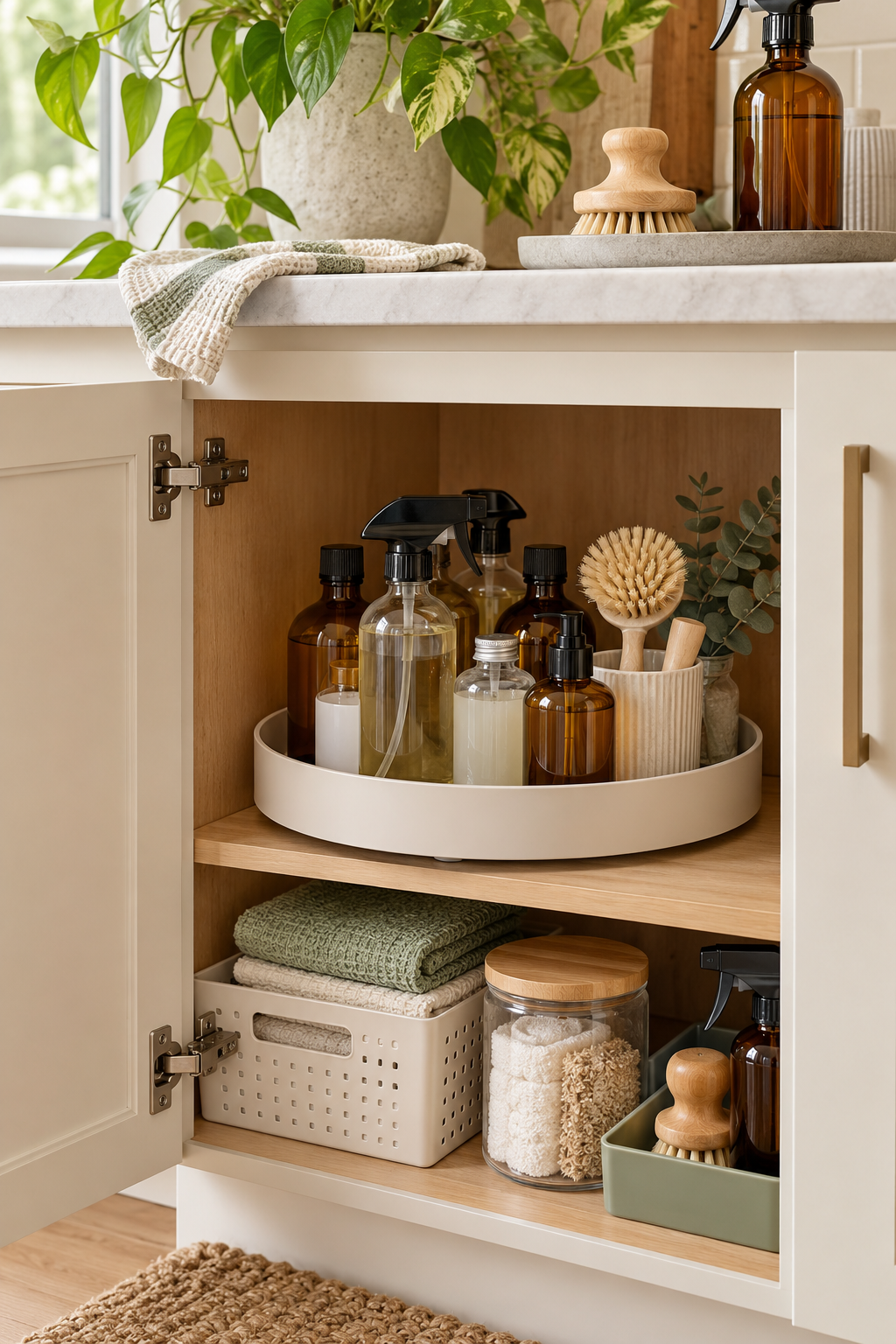
Use a Turntable for Small Bottles creates a defined place for one part of the routine, which reduces searching and discourages duplicate purchases. Store the heaviest bottles low but behind a child-resistant lock, and secure tall shelving to the wall. Keep frequently used items visible to adults, but never trade secure storage for convenience.
For a polished look, use natural textures used only where they can remain dry and easy to clean. Containers should serve a practical purpose: catch drips, separate damp textiles, protect refills or make a complete task portable. Avoid decanting anything when doing so would remove essential directions or create confusion about the contents.
Build the habit around a clear reset. Return every product after use, let wet tools dry before enclosing them and move empty packages to the shopping list immediately. Never combine cleaners, and check surface compatibility before using acidic, alkaline or abrasive products. This small discipline keeps the station attractive while supporting safer everyday cleaning.
20. Add a Door-Mounted Organizer
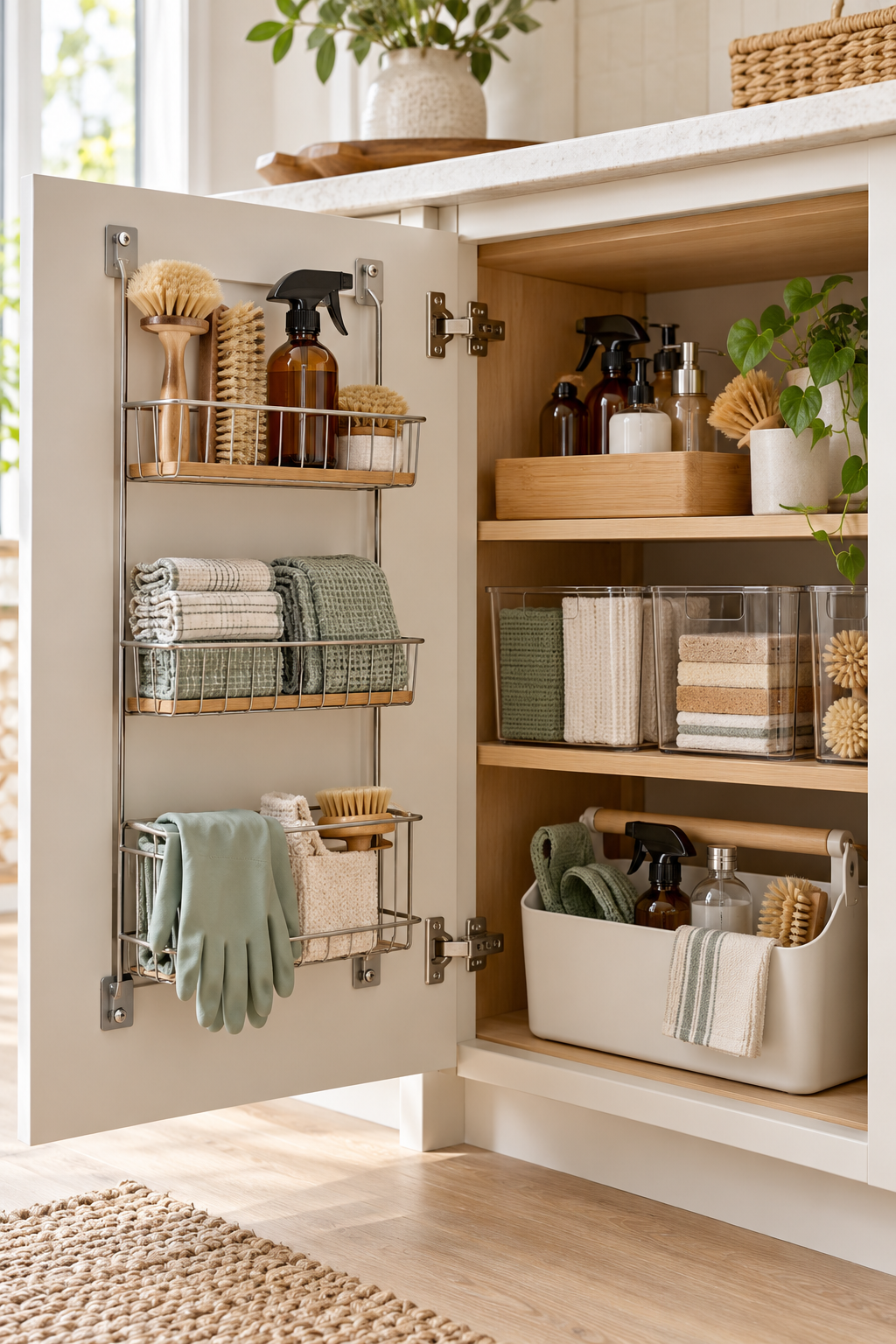
Add a Door-Mounted Organizer creates a defined place for one part of the routine, which reduces searching and discourages duplicate purchases. Review expiration dates and damaged packaging during a quick monthly inventory. Keep frequently used items visible to adults, but never trade secure storage for convenience.
For a polished look, use a compact palette that makes leaks, low stock and misplaced tools easy to notice. Containers should serve a practical purpose: catch drips, separate damp textiles, protect refills or make a complete task portable. Avoid decanting anything when doing so would remove essential directions or create confusion about the contents.
Build the habit around a clear reset. Return every product after use, let wet tools dry before enclosing them and move empty packages to the shopping list immediately. Never combine cleaners, and check surface compatibility before using acidic, alkaline or abrasive products. This small discipline keeps the station attractive while supporting safer everyday cleaning.
21. Design a Compact Under-Sink Station
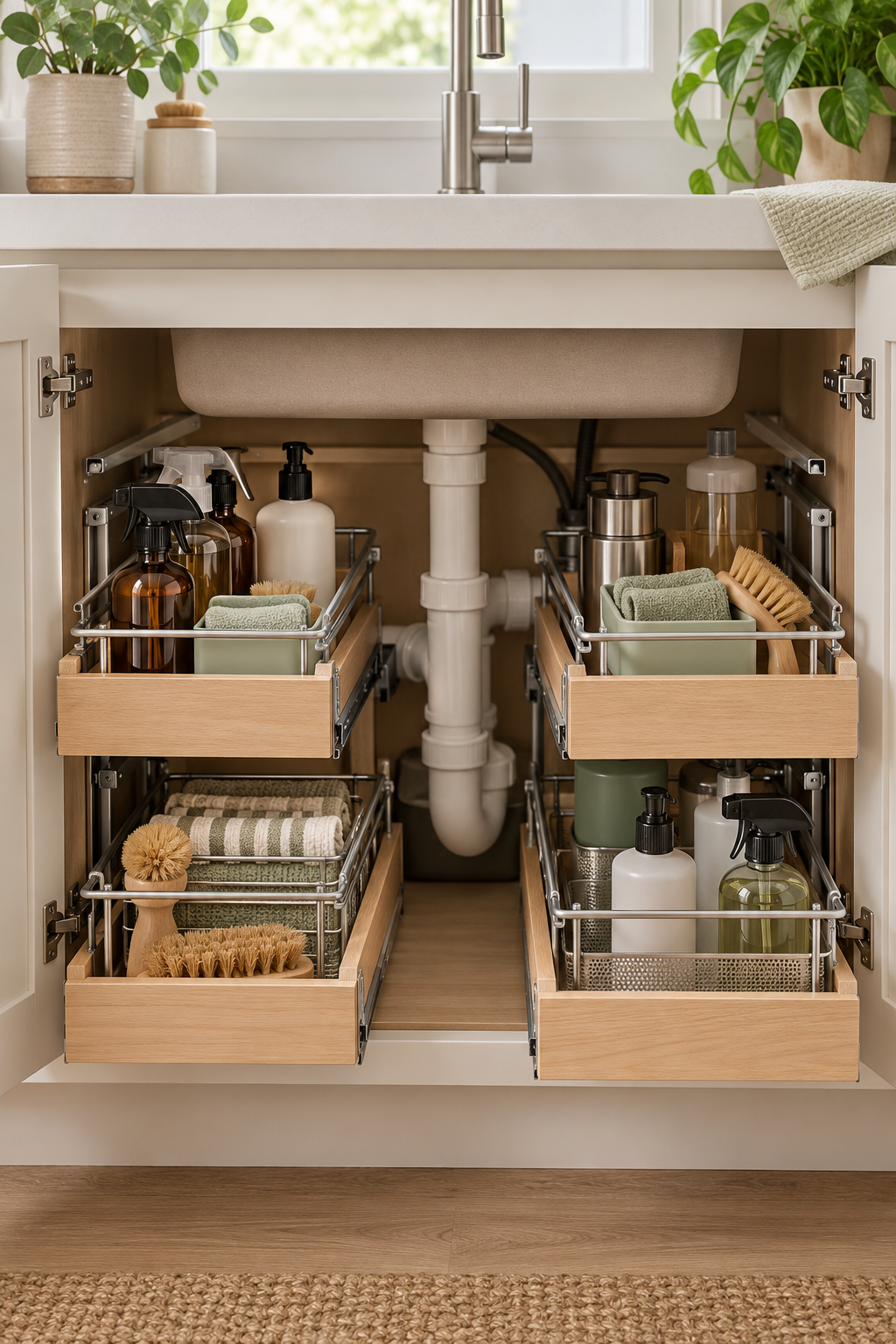
Design a Compact Under-Sink Station creates a defined place for one part of the routine, which reduces searching and discourages duplicate purchases. Measure the shelf before buying containers, then group supplies by task rather than bottle shape. Keep frequently used items visible to adults, but never trade secure storage for convenience.
For a polished look, use warm white shelving, pale oak, amber glass and soft sage accents. Containers should serve a practical purpose: catch drips, separate damp textiles, protect refills or make a complete task portable. Avoid decanting anything when doing so would remove essential directions or create confusion about the contents.
Build the habit around a clear reset. Return every product after use, let wet tools dry before enclosing them and move empty packages to the shopping list immediately. Never combine cleaners, and check surface compatibility before using acidic, alkaline or abrasive products. This small discipline keeps the station attractive while supporting safer everyday cleaning.
22. Create a Utility-Closet Cleaning Wall
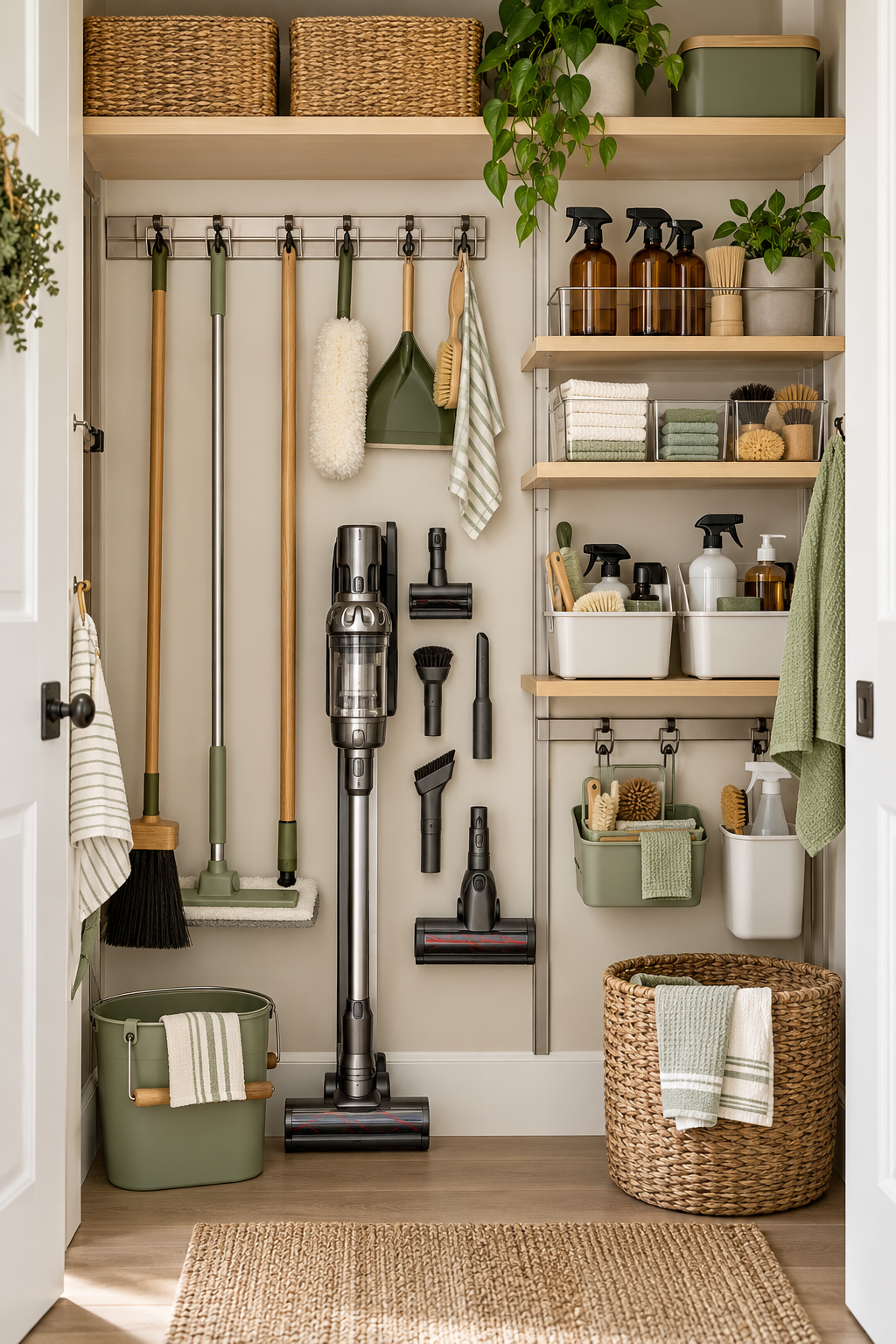
Create a Utility-Closet Cleaning Wall creates a defined place for one part of the routine, which reduces searching and discourages duplicate purchases. Keep manufacturer instructions and ingredient information available even when a secondary container is used. Keep frequently used items visible to adults, but never trade secure storage for convenience.
For a polished look, use simple wire baskets, washable cotton cloths and restrained neutral colors. Containers should serve a practical purpose: catch drips, separate damp textiles, protect refills or make a complete task portable. Avoid decanting anything when doing so would remove essential directions or create confusion about the contents.
Build the habit around a clear reset. Return every product after use, let wet tools dry before enclosing them and move empty packages to the shopping list immediately. Never combine cleaners, and check surface compatibility before using acidic, alkaline or abrasive products. This small discipline keeps the station attractive while supporting safer everyday cleaning.
23. Make a Pet-Safe Cleanup Caddy
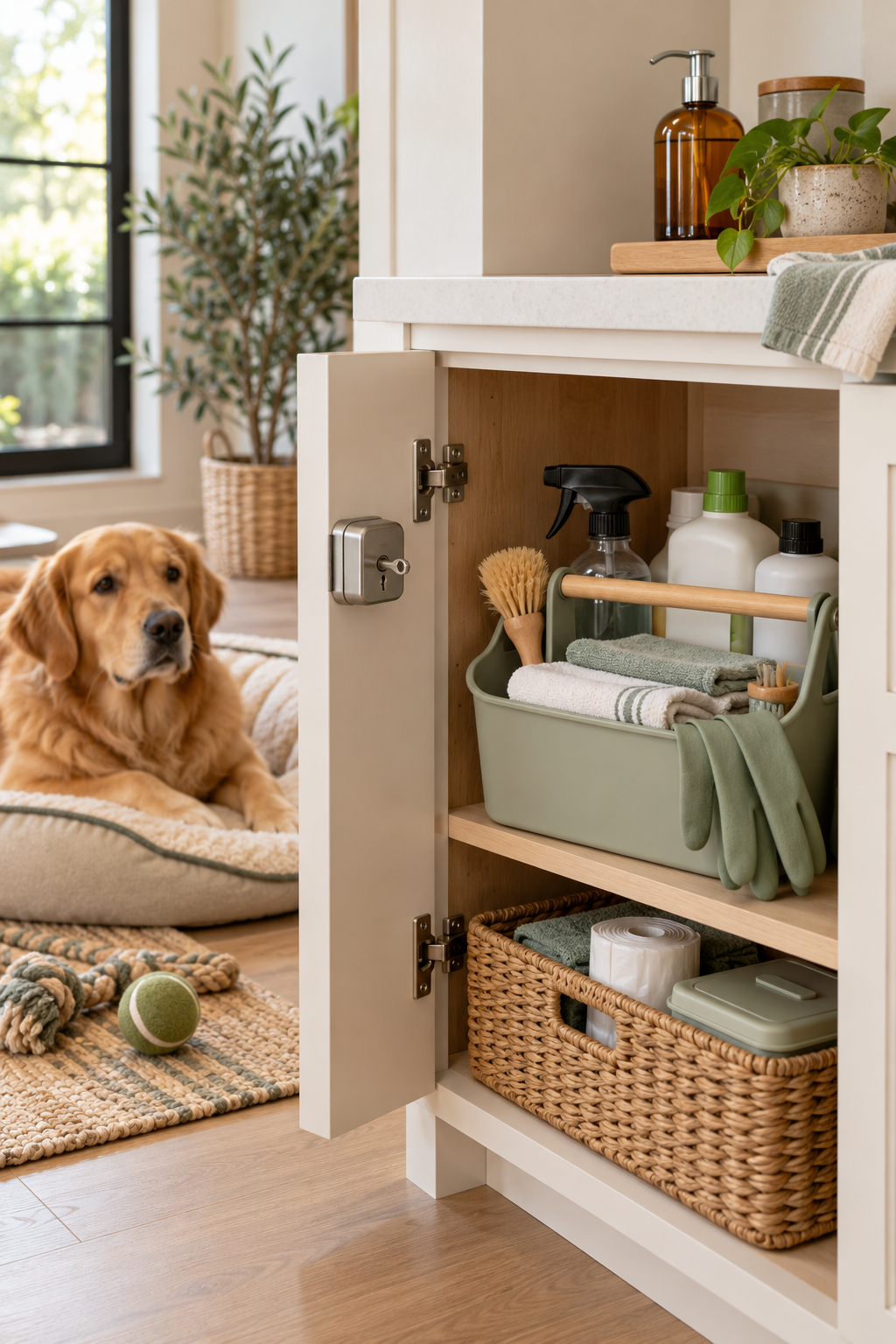
Make a Pet-Safe Cleanup Caddy creates a defined place for one part of the routine, which reduces searching and discourages duplicate purchases. Choose wipeable, moisture-resistant materials and leave enough space to remove one item without knocking over another. Keep frequently used items visible to adults, but never trade secure storage for convenience.
For a polished look, use closed cabinetry balanced by one tidy, easy-to-reach working shelf. Containers should serve a practical purpose: catch drips, separate damp textiles, protect refills or make a complete task portable. Avoid decanting anything when doing so would remove essential directions or create confusion about the contents.
Build the habit around a clear reset. Return every product after use, let wet tools dry before enclosing them and move empty packages to the shopping list immediately. Never combine cleaners, and check surface compatibility before using acidic, alkaline or abrasive products. This small discipline keeps the station attractive while supporting safer everyday cleaning.
24. Set Up a Child-Safe Locking System
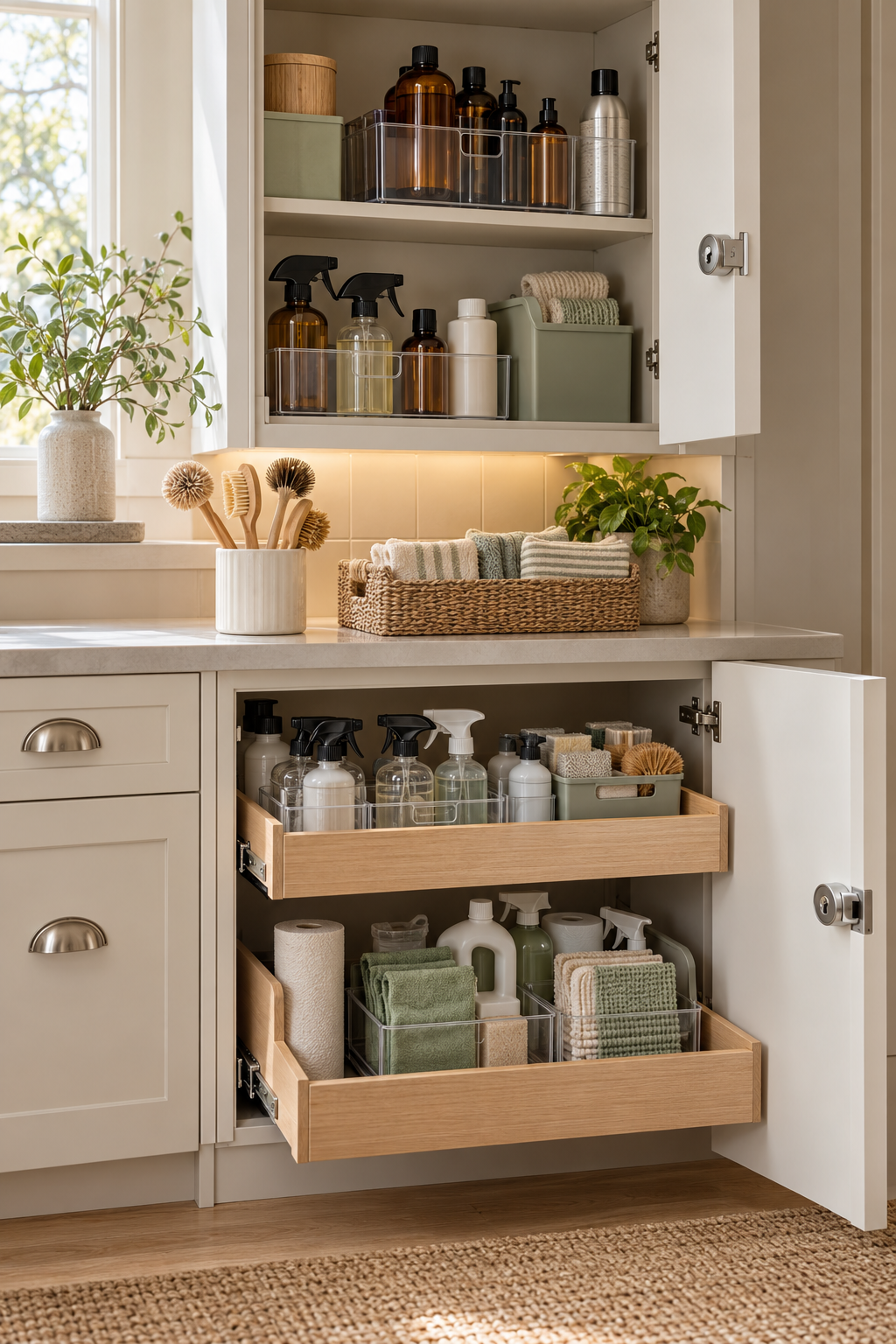
Set Up a Child-Safe Locking System creates a defined place for one part of the routine, which reduces searching and discourages duplicate purchases. Store the heaviest bottles low but behind a child-resistant lock, and secure tall shelving to the wall. Keep frequently used items visible to adults, but never trade secure storage for convenience.
For a polished look, use natural textures used only where they can remain dry and easy to clean. Containers should serve a practical purpose: catch drips, separate damp textiles, protect refills or make a complete task portable. Avoid decanting anything when doing so would remove essential directions or create confusion about the contents.
Build the habit around a clear reset. Return every product after use, let wet tools dry before enclosing them and move empty packages to the shopping list immediately. Never combine cleaners, and check surface compatibility before using acidic, alkaline or abrasive products. This small discipline keeps the station attractive while supporting safer everyday cleaning.
25. Add a Refill and Shopping List Area
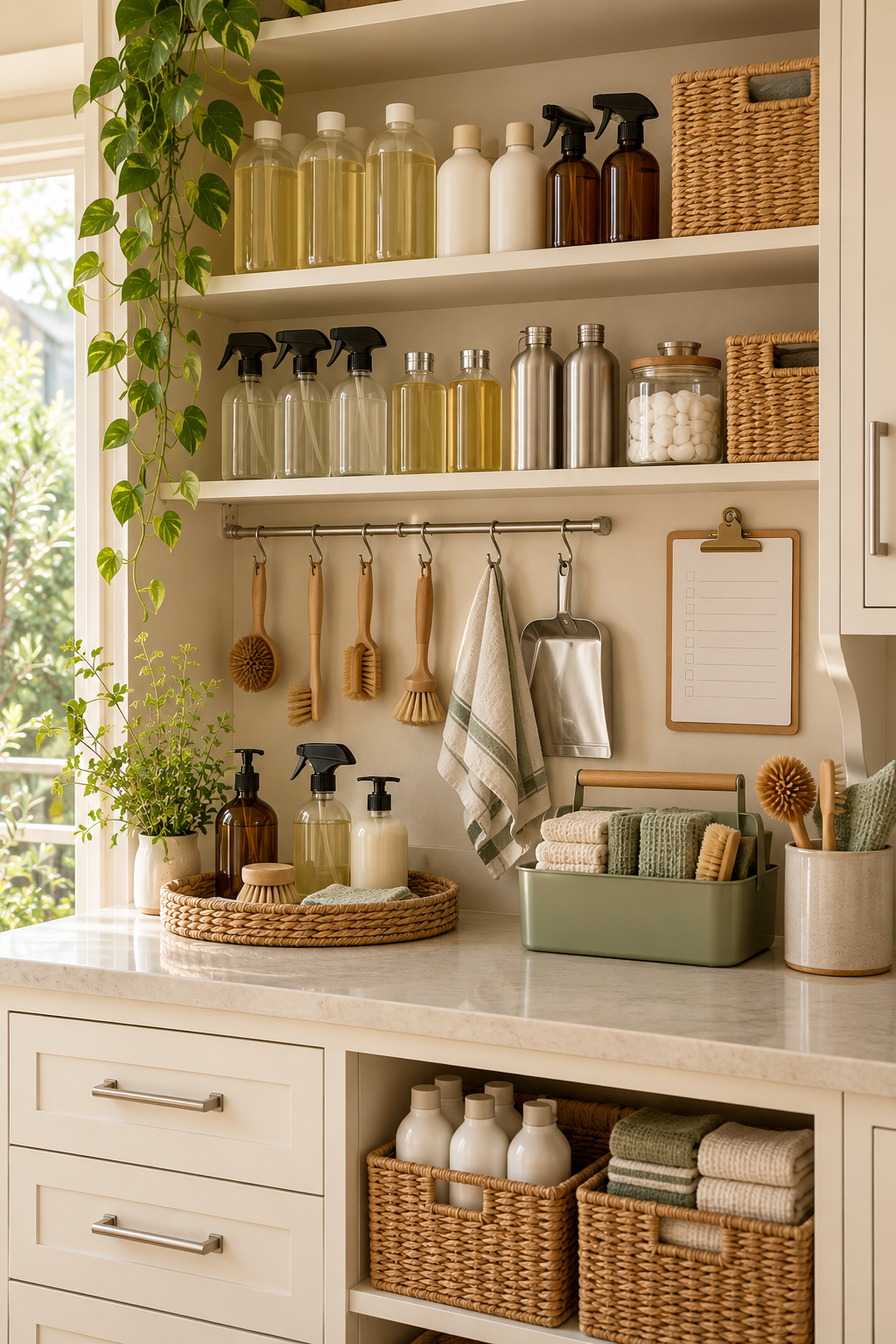
Add a Refill and Shopping List Area creates a defined place for one part of the routine, which reduces searching and discourages duplicate purchases. Review expiration dates and damaged packaging during a quick monthly inventory. Keep frequently used items visible to adults, but never trade secure storage for convenience.
For a polished look, use a compact palette that makes leaks, low stock and misplaced tools easy to notice. Containers should serve a practical purpose: catch drips, separate damp textiles, protect refills or make a complete task portable. Avoid decanting anything when doing so would remove essential directions or create confusion about the contents.
Build the habit around a clear reset. Return every product after use, let wet tools dry before enclosing them and move empty packages to the shopping list immediately. Never combine cleaners, and check surface compatibility before using acidic, alkaline or abrasive products. This small discipline keeps the station attractive while supporting safer everyday cleaning.
26. Create a Weekly Cleaning Basket
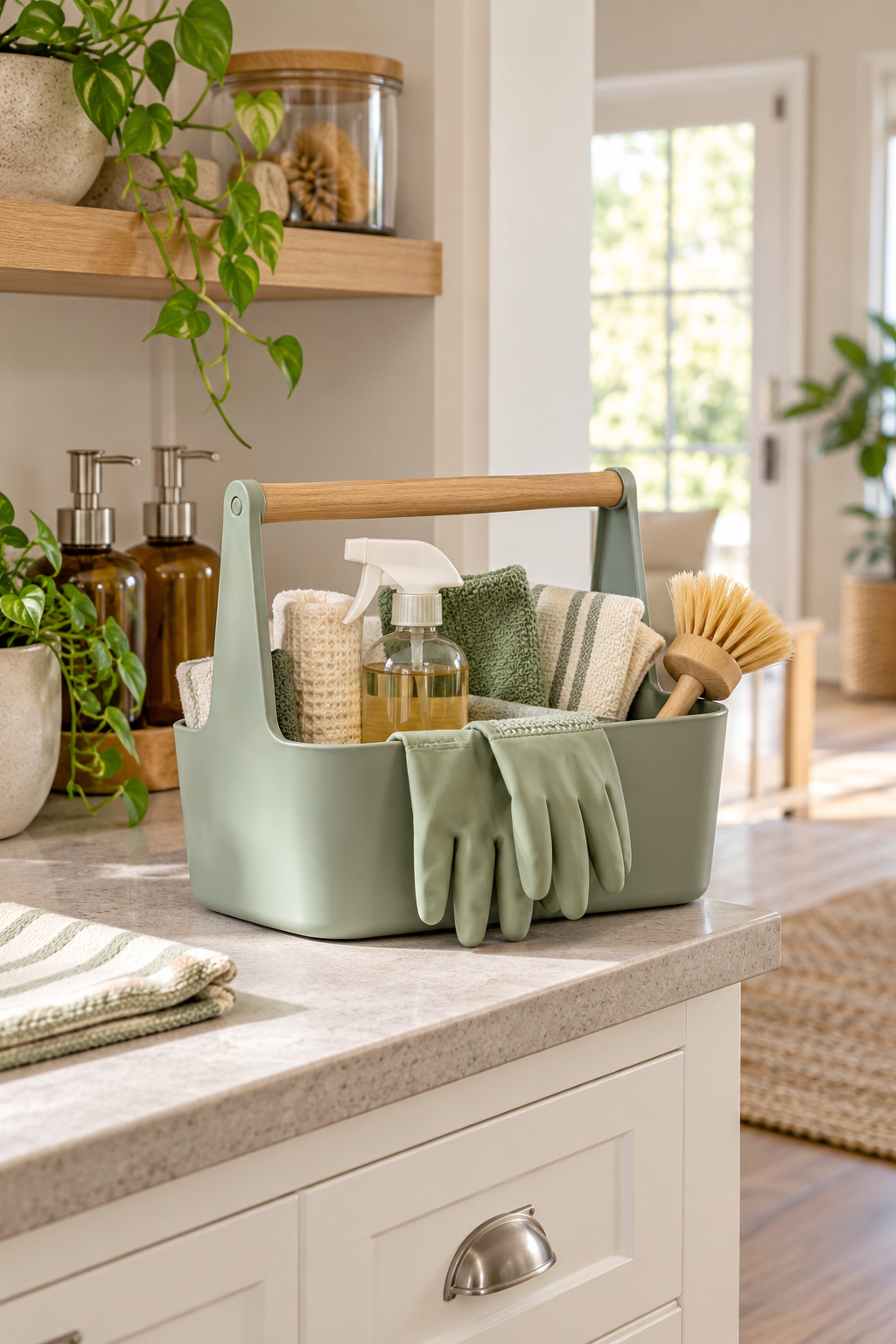
Create a Weekly Cleaning Basket creates a defined place for one part of the routine, which reduces searching and discourages duplicate purchases. Measure the shelf before buying containers, then group supplies by task rather than bottle shape. Keep frequently used items visible to adults, but never trade secure storage for convenience.
For a polished look, use warm white shelving, pale oak, amber glass and soft sage accents. Containers should serve a practical purpose: catch drips, separate damp textiles, protect refills or make a complete task portable. Avoid decanting anything when doing so would remove essential directions or create confusion about the contents.
Build the habit around a clear reset. Return every product after use, let wet tools dry before enclosing them and move empty packages to the shopping list immediately. Never combine cleaners, and check surface compatibility before using acidic, alkaline or abrasive products. This small discipline keeps the station attractive while supporting safer everyday cleaning.
27. Finish with a Five-Minute Station Reset
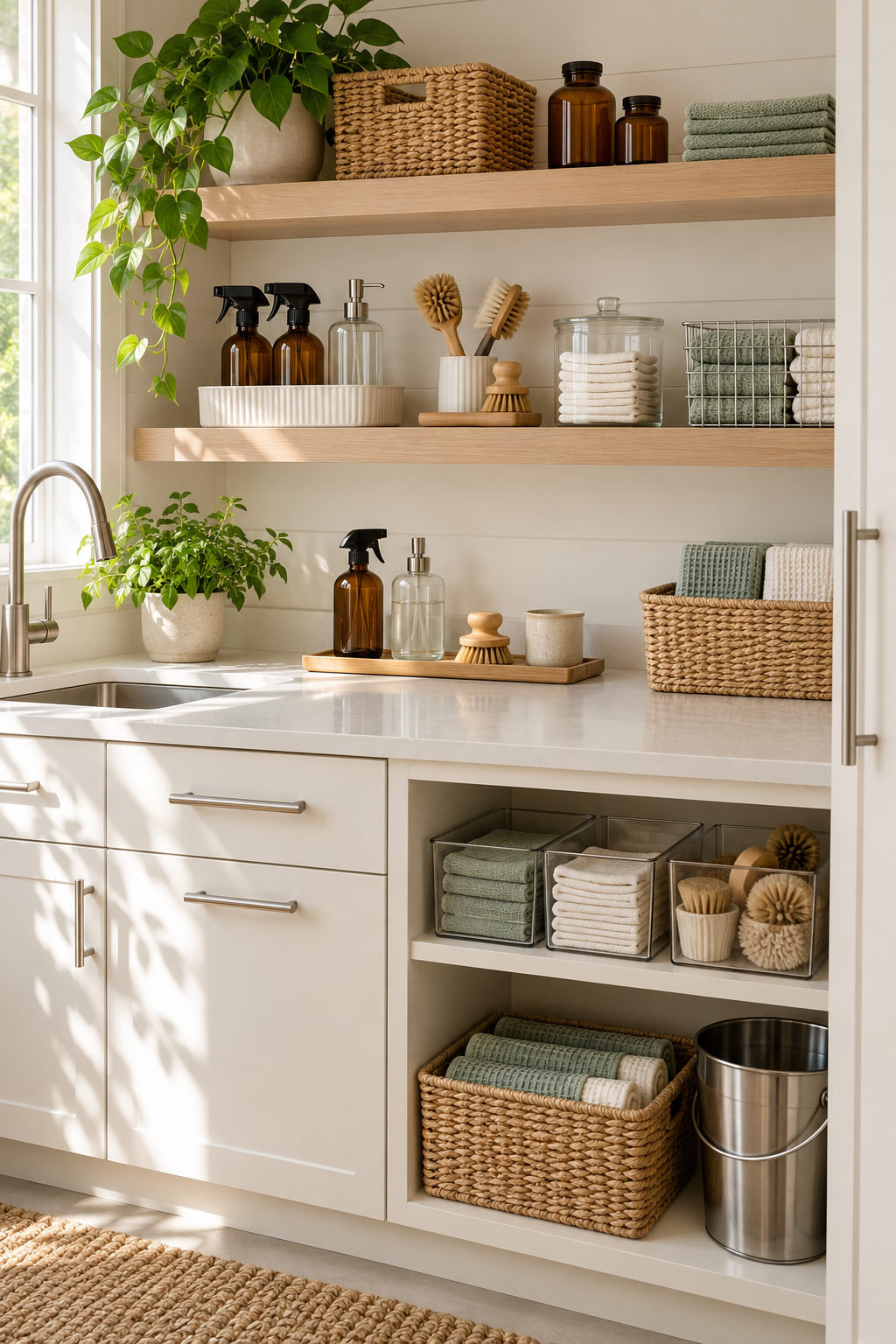
Finish with a Five-Minute Station Reset creates a defined place for one part of the routine, which reduces searching and discourages duplicate purchases. Keep manufacturer instructions and ingredient information available even when a secondary container is used. Keep frequently used items visible to adults, but never trade secure storage for convenience.
For a polished look, use simple wire baskets, washable cotton cloths and restrained neutral colors. Containers should serve a practical purpose: catch drips, separate damp textiles, protect refills or make a complete task portable. Avoid decanting anything when doing so would remove essential directions or create confusion about the contents.
Build the habit around a clear reset. Return every product after use, let wet tools dry before enclosing them and move empty packages to the shopping list immediately. Never combine cleaners, and check surface compatibility before using acidic, alkaline or abrasive products. This small discipline keeps the station attractive while supporting safer everyday cleaning.
How to Maintain a Naturally Fresh Cleaning Station
A five-minute weekly check is more useful than a complicated system. Empty the used-cloth bin, rinse and dry tools, wipe drips from trays and confirm that caps and spray heads are working. Refill only what is low, and keep enough open space to see each category clearly.
Treat every cleaning product with respect, including plant-based and fragrance-free options. Keep products in their original containers whenever safety information could be lost, follow ventilation guidance, wear protection when directed and contact the manufacturer or a poison-control service if exposure occurs. A thoughtful station supports good decisions; it does not replace label instructions.