The most effective playrooms make it easy for children to find what they need and just as easy to put it away. Toy storage should support independent play, protect small pieces and leave enough open floor for building, movement and imagination.
These toy organization ideas combine child-friendly access with a polished home aesthetic. The systems are flexible enough for changing interests, realistic about daily mess and designed to avoid turning every wall into a crowded display.
1. Sort Toys by How Children Actually Play
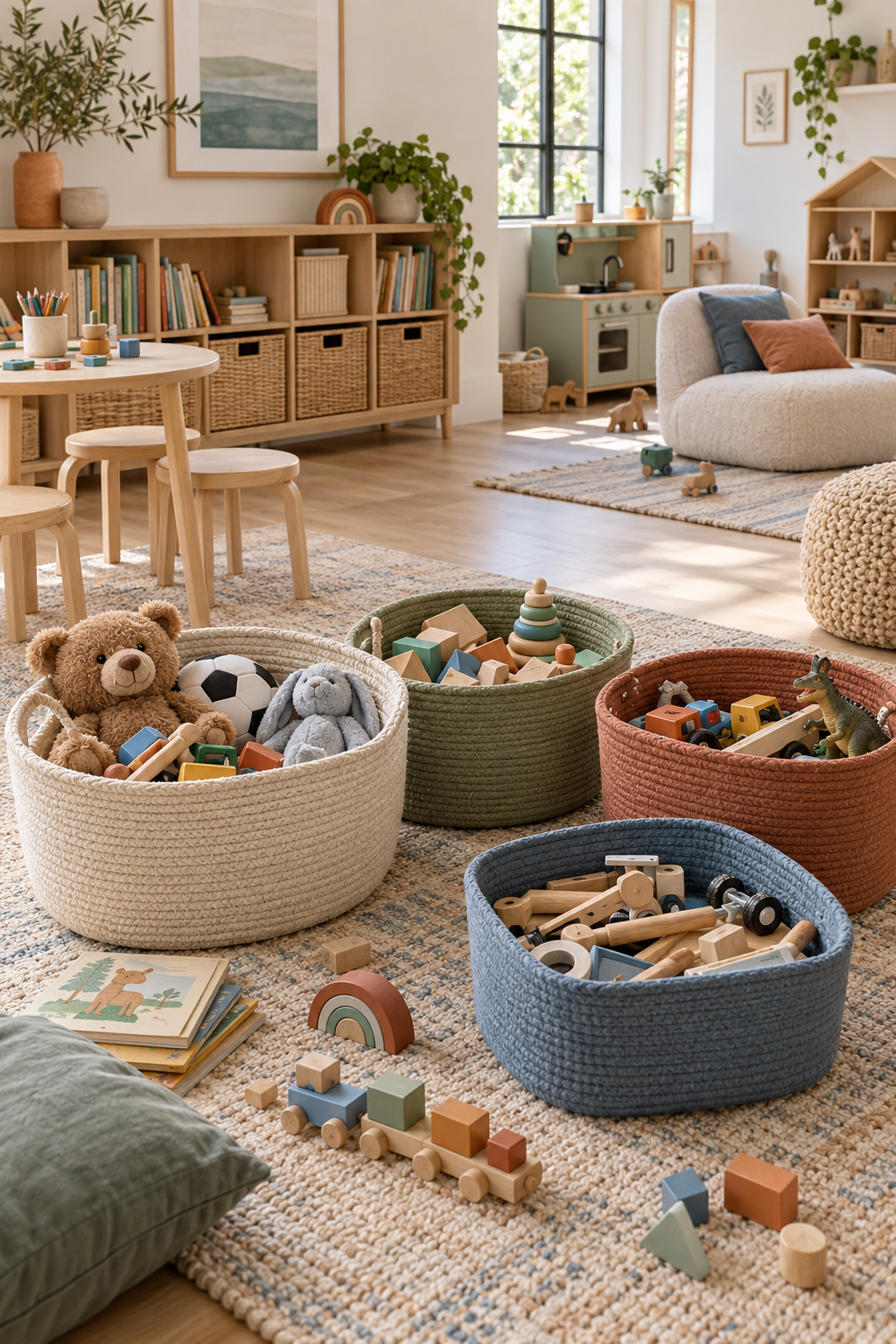
Sort Toys by How Children Actually Play works best when it follows the way children naturally use the room. Observe one week of play before assigning permanent categories. Select durable containers and furniture with smooth edges, then test whether a child can reach, lift and return each item without creating another pile.
Repeat a restrained palette of warm white, pale oak, soft sage, muted blue and terracotta accents. Pair woven baskets and washable textiles with a few clear containers only where seeing small pieces matters. The result supports independent cleanup without constant adult direction, while still feeling warm, creative and lived-in.
2. Create Low Open Shelves for Everyday Favorites
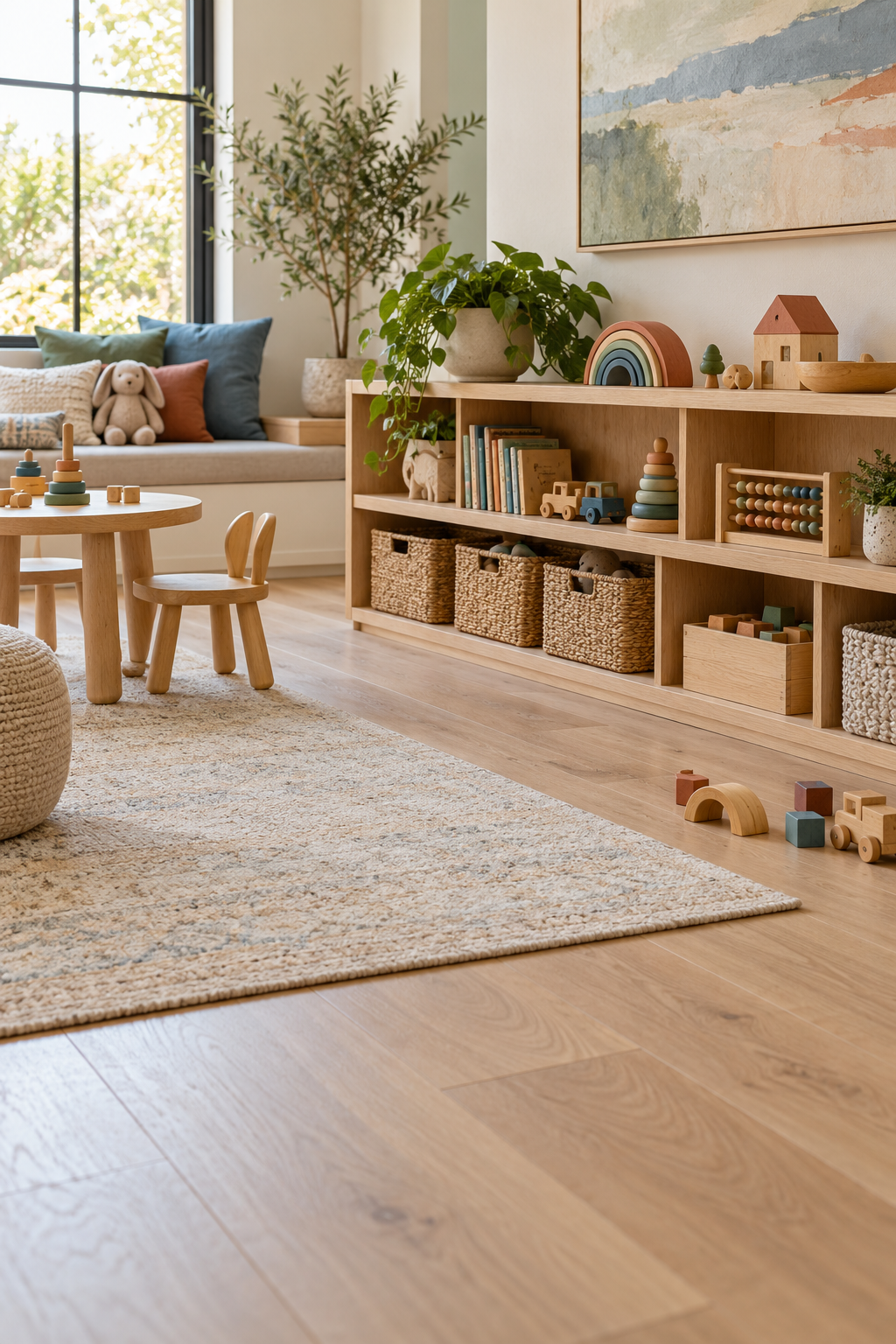
Create Low Open Shelves for Everyday Favorites works best when it follows the way children naturally use the room. Keep daily favorites between knee and shoulder height for the child using them. Select durable containers and furniture with smooth edges, then test whether a child can reach, lift and return each item without creating another pile.
Repeat a restrained palette of warm white, pale oak, soft sage, muted blue and terracotta accents. Pair woven baskets and washable textiles with a few clear containers only where seeing small pieces matters. The result keeps tiny parts together while making the main activity inviting, while still feeling warm, creative and lived-in.
3. Use Picture Labels for Pre-Readers
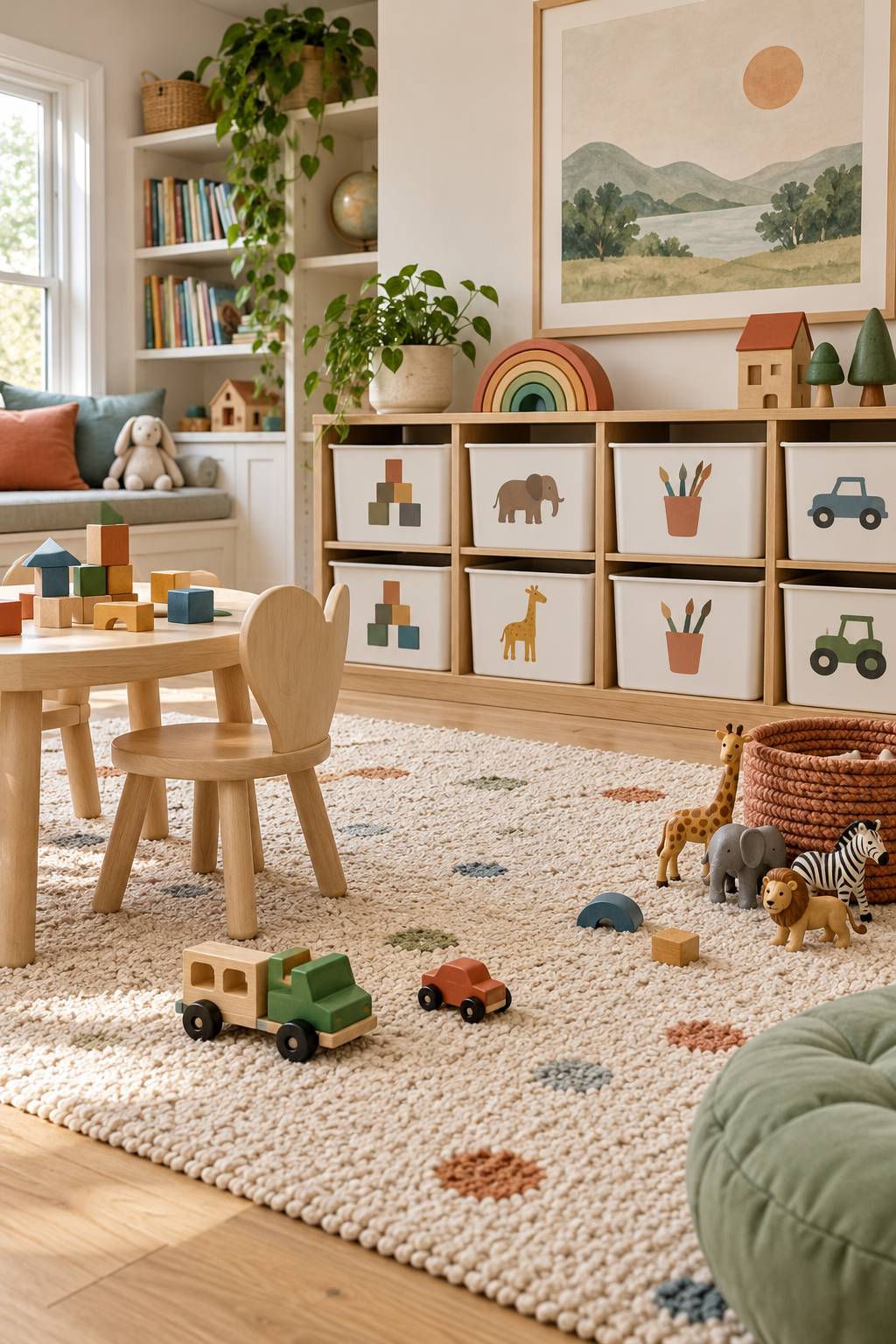
Use Picture Labels for Pre-Readers works best when it follows the way children naturally use the room. Choose rounded, stable furniture and anchor tall units securely. Select durable containers and furniture with smooth edges, then test whether a child can reach, lift and return each item without creating another pile.
Repeat a restrained palette of warm white, pale oak, soft sage, muted blue and terracotta accents. Pair woven baskets and washable textiles with a few clear containers only where seeing small pieces matters. The result reduces overstimulation and preserves useful open floor space, while still feeling warm, creative and lived-in.
4. Rotate Toys to Reduce Visual Clutter
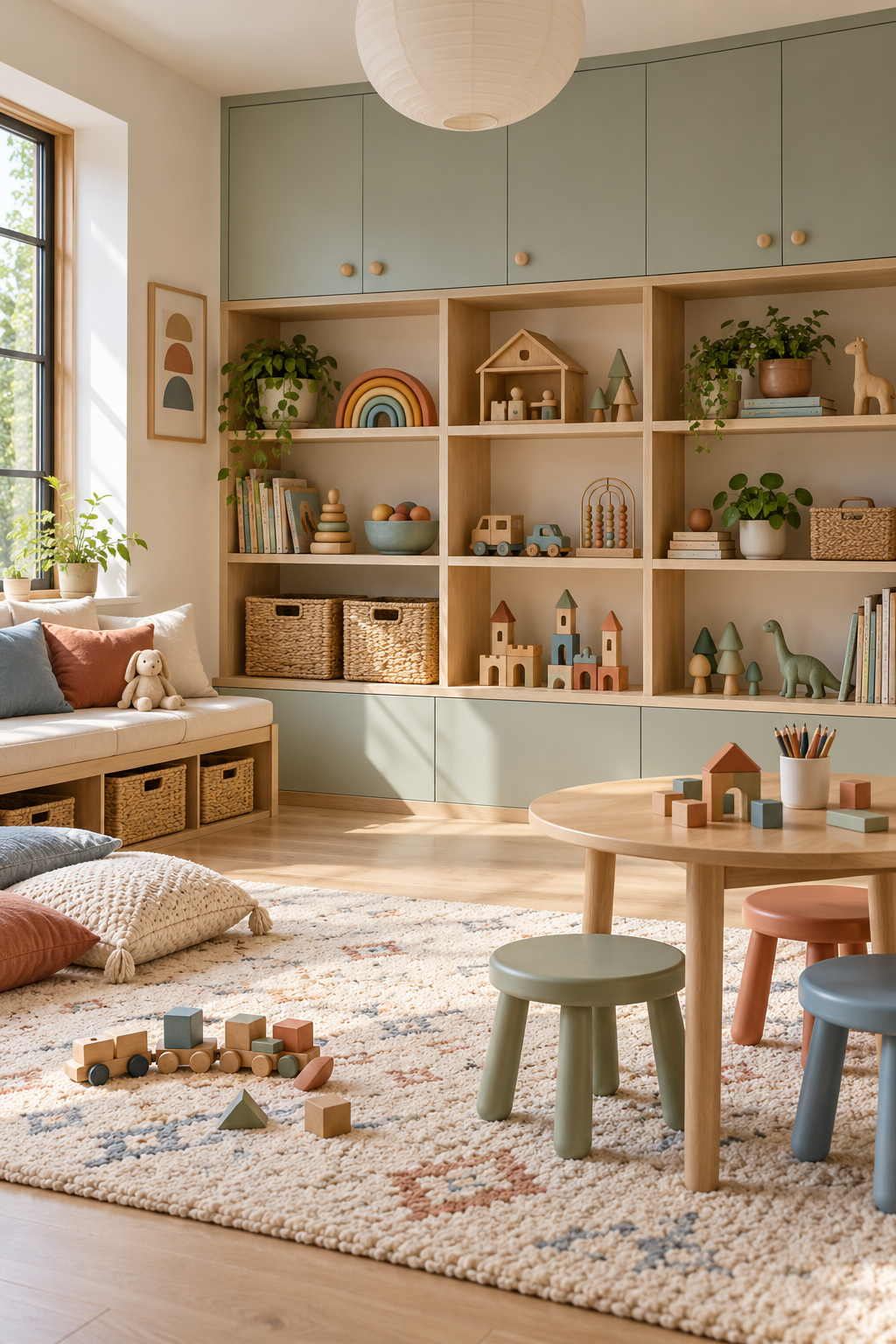
Rotate Toys to Reduce Visual Clutter works best when it follows the way children naturally use the room. Limit each container to one clear category so cleanup decisions stay simple. Select durable containers and furniture with smooth edges, then test whether a child can reach, lift and return each item without creating another pile.
Repeat a restrained palette of warm white, pale oak, soft sage, muted blue and terracotta accents. Pair woven baskets and washable textiles with a few clear containers only where seeing small pieces matters. The result lets the room adapt as favorite toys and developmental stages change, while still feeling warm, creative and lived-in.
5. Choose Baskets Children Can Carry
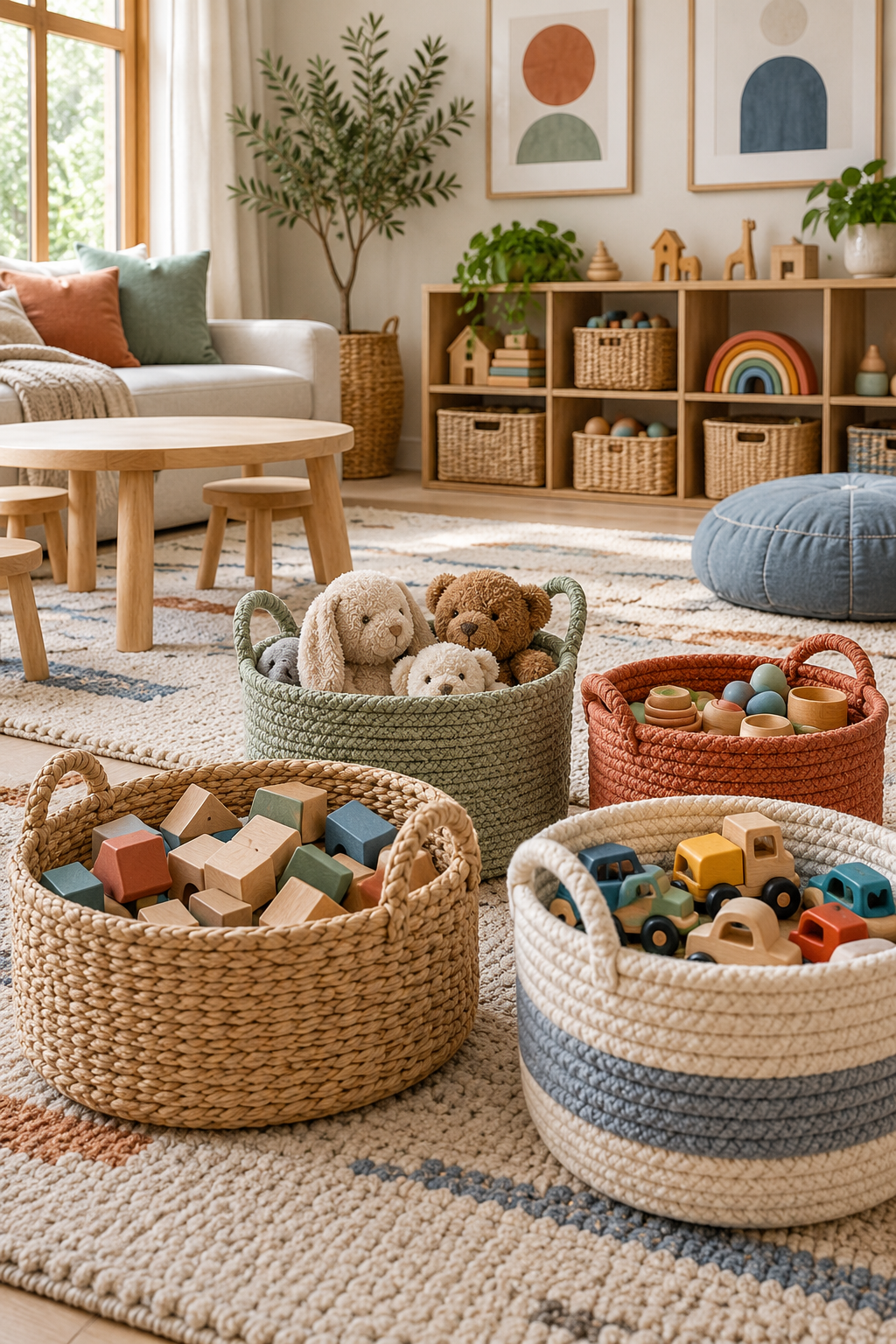
Choose Baskets Children Can Carry works best when it follows the way children naturally use the room. Leave breathing room rather than filling every basket to the top. Select durable containers and furniture with smooth edges, then test whether a child can reach, lift and return each item without creating another pile.
Repeat a restrained palette of warm white, pale oak, soft sage, muted blue and terracotta accents. Pair woven baskets and washable textiles with a few clear containers only where seeing small pieces matters. The result makes the storage feel intentional within the rest of the home, while still feeling warm, creative and lived-in.
6. Build a Dedicated Block Station
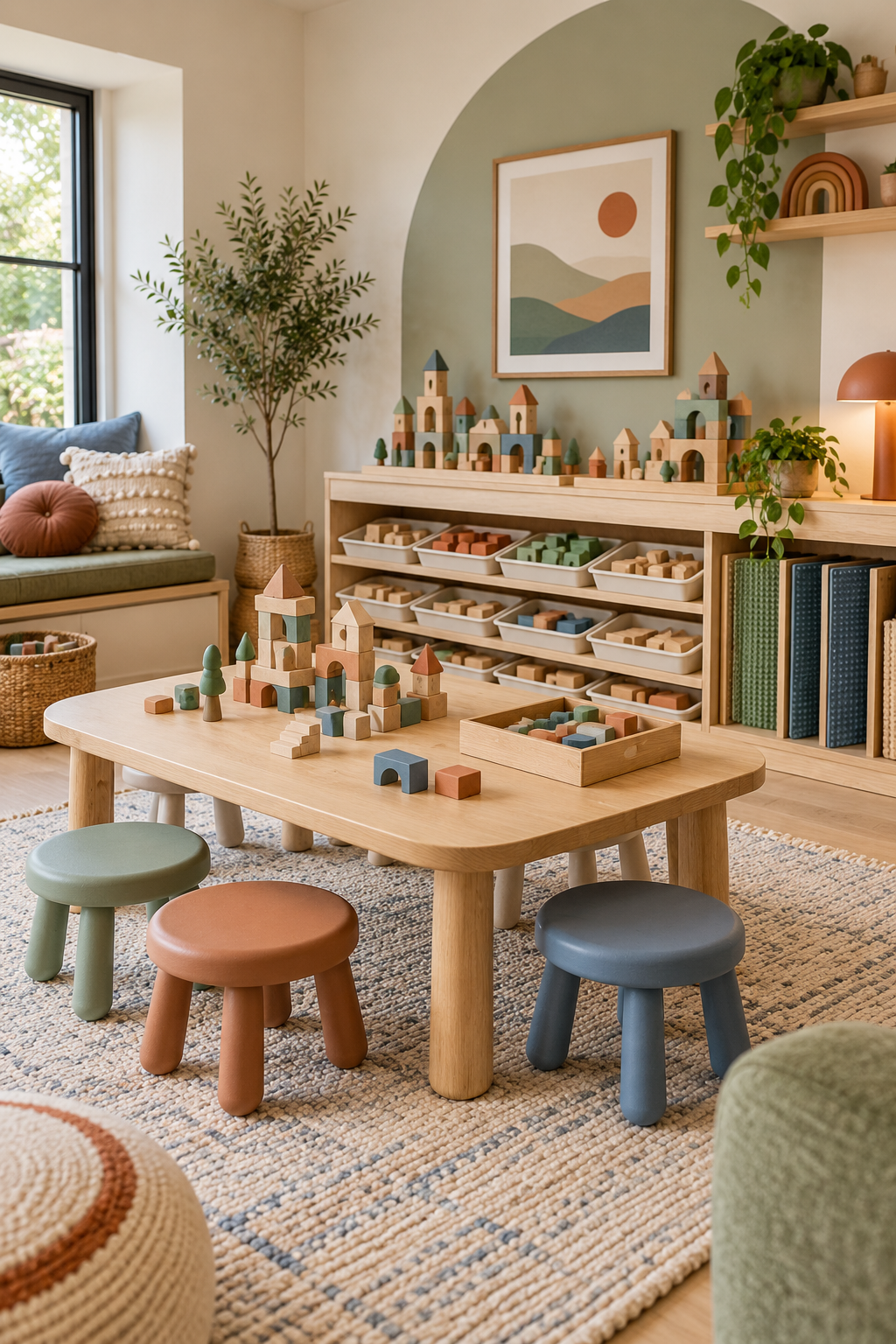
Build a Dedicated Block Station works best when it follows the way children naturally use the room. Observe one week of play before assigning permanent categories. Select durable containers and furniture with smooth edges, then test whether a child can reach, lift and return each item without creating another pile.
Repeat a restrained palette of warm white, pale oak, soft sage, muted blue and terracotta accents. Pair woven baskets and washable textiles with a few clear containers only where seeing small pieces matters. The result supports independent cleanup without constant adult direction, while still feeling warm, creative and lived-in.
7. Create a Calm Reading Corner
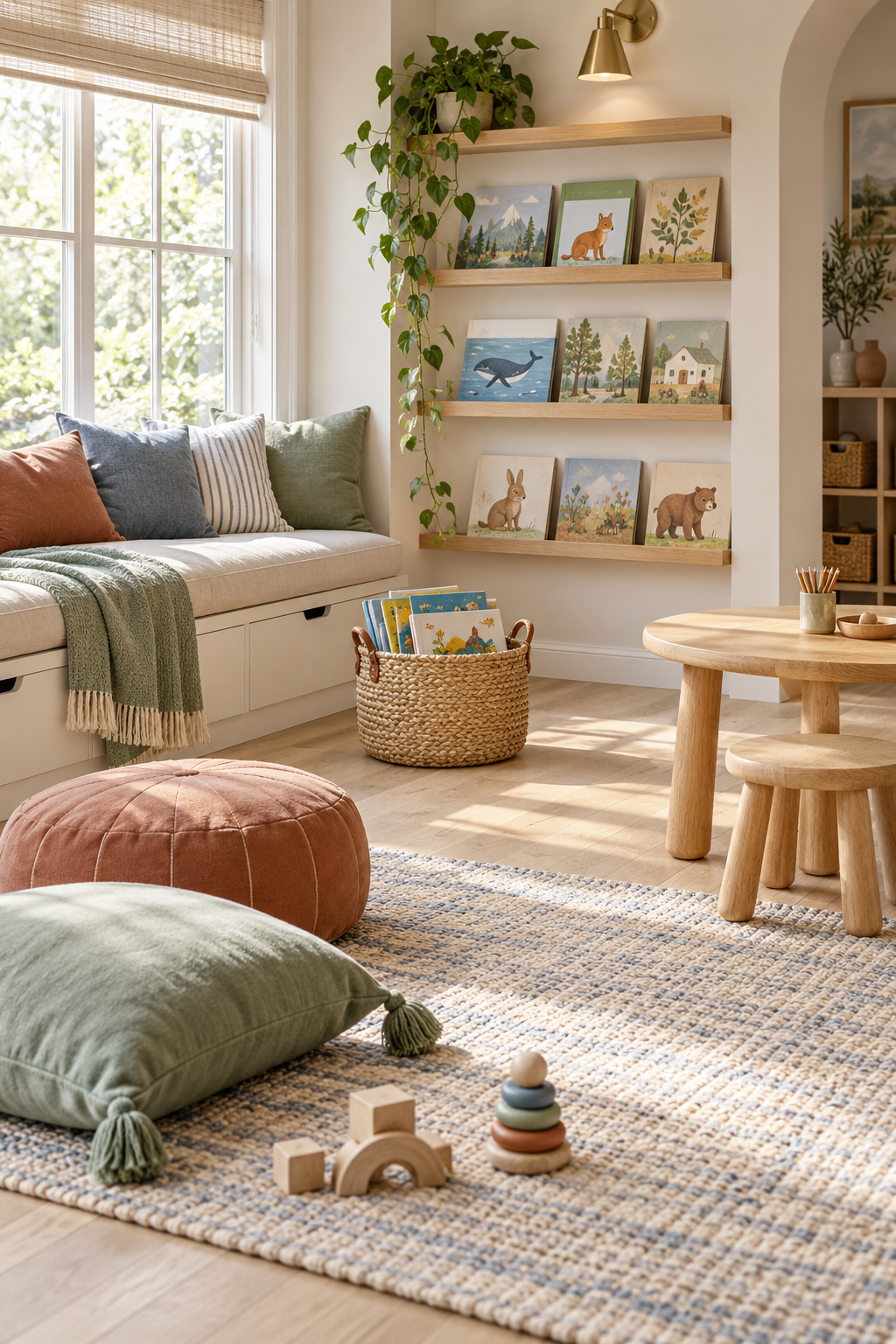
Create a Calm Reading Corner works best when it follows the way children naturally use the room. Keep daily favorites between knee and shoulder height for the child using them. Select durable containers and furniture with smooth edges, then test whether a child can reach, lift and return each item without creating another pile.
Repeat a restrained palette of warm white, pale oak, soft sage, muted blue and terracotta accents. Pair woven baskets and washable textiles with a few clear containers only where seeing small pieces matters. The result keeps tiny parts together while making the main activity inviting, while still feeling warm, creative and lived-in.
8. Store Art Supplies in a Mobile Cart
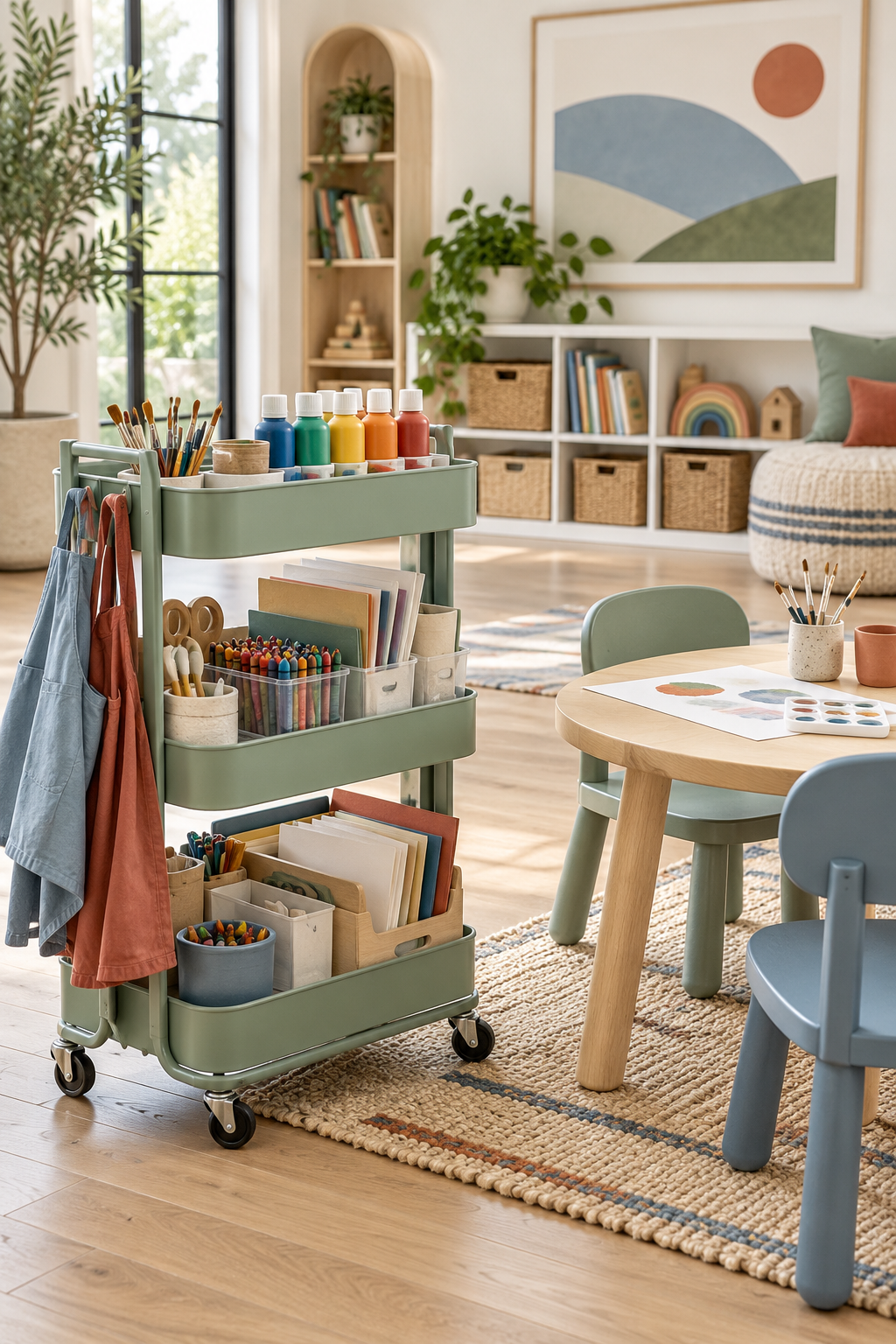
Store Art Supplies in a Mobile Cart works best when it follows the way children naturally use the room. Choose rounded, stable furniture and anchor tall units securely. Select durable containers and furniture with smooth edges, then test whether a child can reach, lift and return each item without creating another pile.
Repeat a restrained palette of warm white, pale oak, soft sage, muted blue and terracotta accents. Pair woven baskets and washable textiles with a few clear containers only where seeing small pieces matters. The result reduces overstimulation and preserves useful open floor space, while still feeling warm, creative and lived-in.
9. Use Clear Drawers for Small Craft Pieces
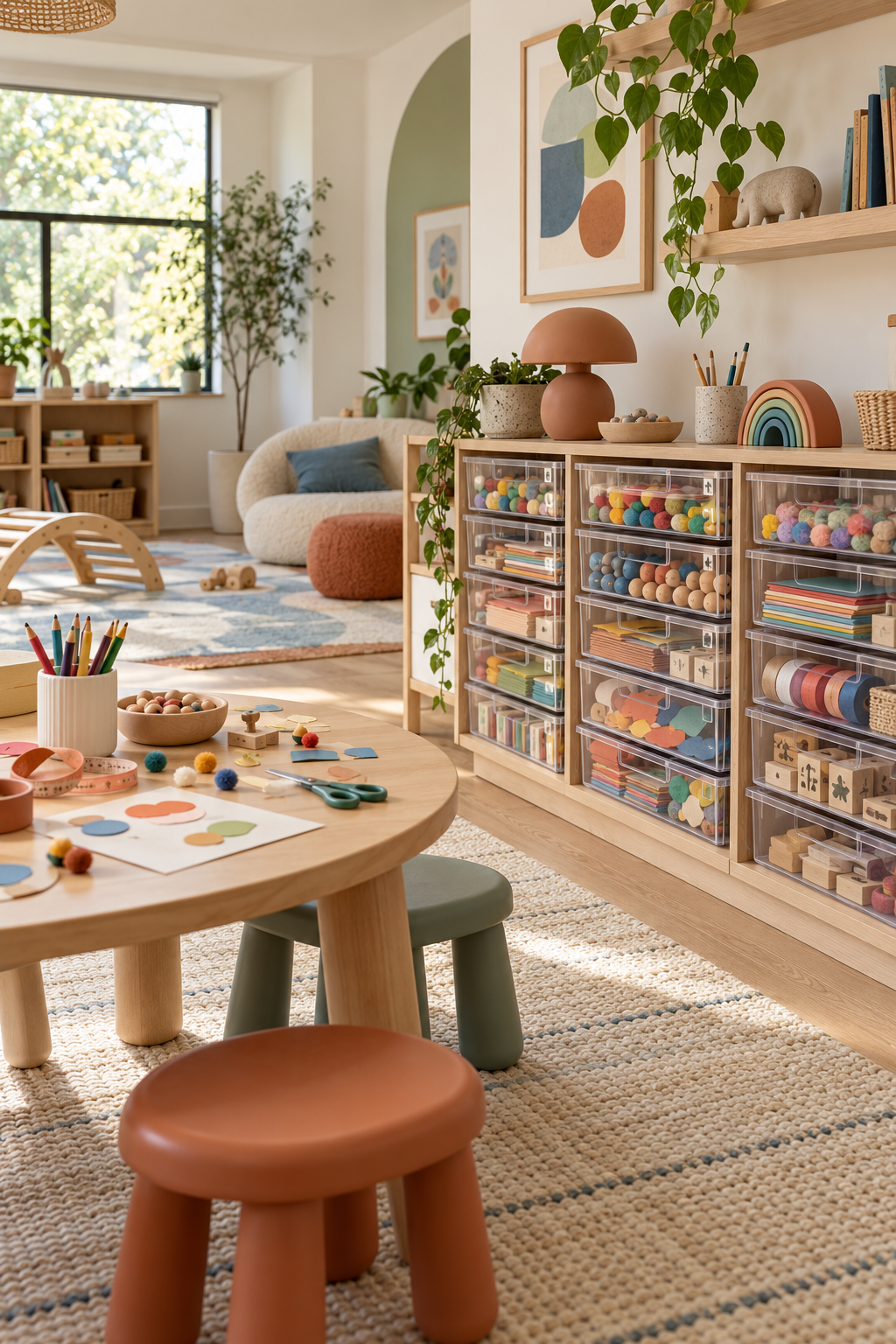
Use Clear Drawers for Small Craft Pieces works best when it follows the way children naturally use the room. Limit each container to one clear category so cleanup decisions stay simple. Select durable containers and furniture with smooth edges, then test whether a child can reach, lift and return each item without creating another pile.
Repeat a restrained palette of warm white, pale oak, soft sage, muted blue and terracotta accents. Pair woven baskets and washable textiles with a few clear containers only where seeing small pieces matters. The result lets the room adapt as favorite toys and developmental stages change, while still feeling warm, creative and lived-in.
10. Add a Dress-Up Rail at Child Height
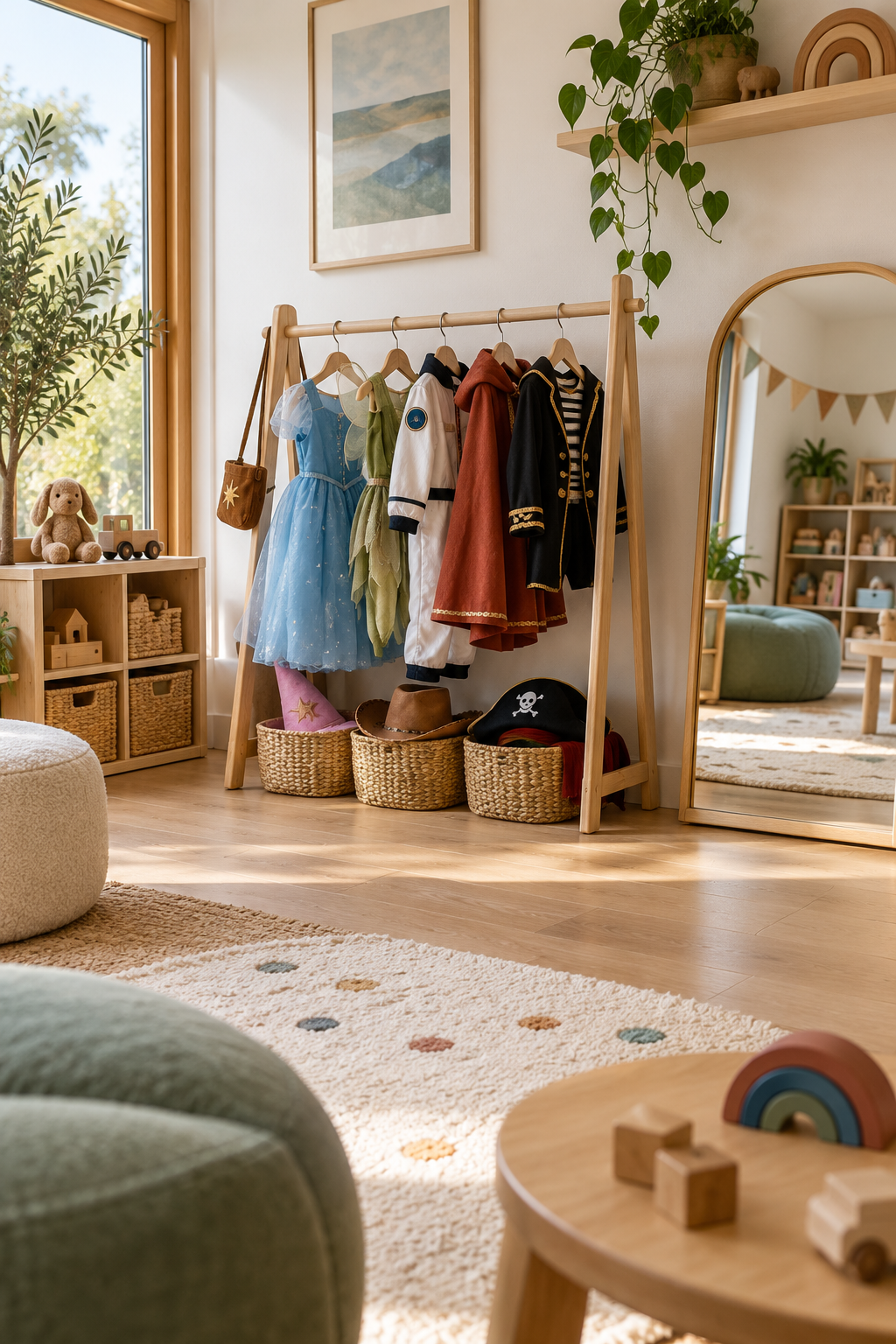
Add a Dress-Up Rail at Child Height works best when it follows the way children naturally use the room. Leave breathing room rather than filling every basket to the top. Select durable containers and furniture with smooth edges, then test whether a child can reach, lift and return each item without creating another pile.
Repeat a restrained palette of warm white, pale oak, soft sage, muted blue and terracotta accents. Pair woven baskets and washable textiles with a few clear containers only where seeing small pieces matters. The result makes the storage feel intentional within the rest of the home, while still feeling warm, creative and lived-in.
11. Hang Costumes on Easy Hooks
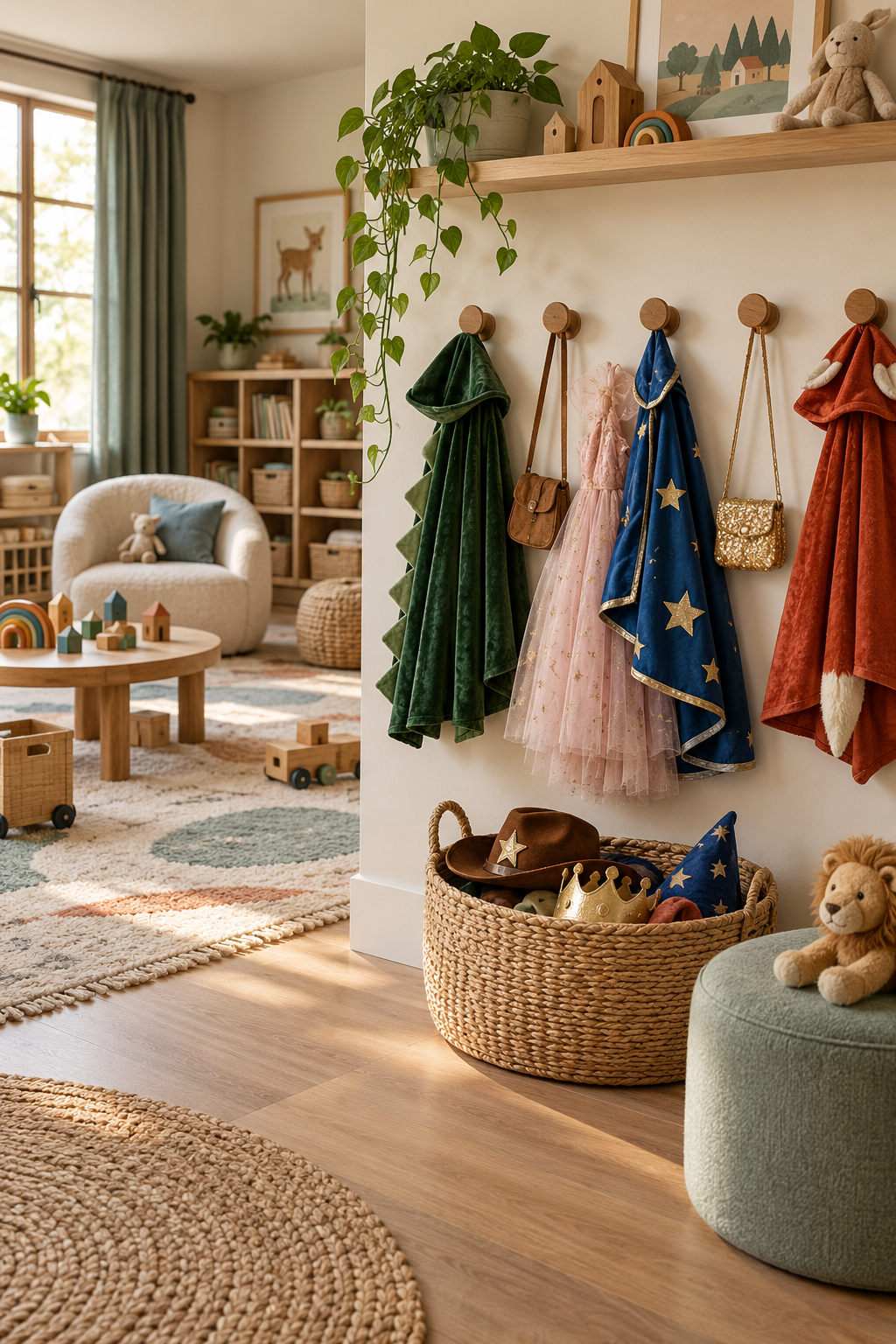
Hang Costumes on Easy Hooks works best when it follows the way children naturally use the room. Observe one week of play before assigning permanent categories. Select durable containers and furniture with smooth edges, then test whether a child can reach, lift and return each item without creating another pile.
Repeat a restrained palette of warm white, pale oak, soft sage, muted blue and terracotta accents. Pair woven baskets and washable textiles with a few clear containers only where seeing small pieces matters. The result supports independent cleanup without constant adult direction, while still feeling warm, creative and lived-in.
12. Give Dolls and Figures Their Own Homes
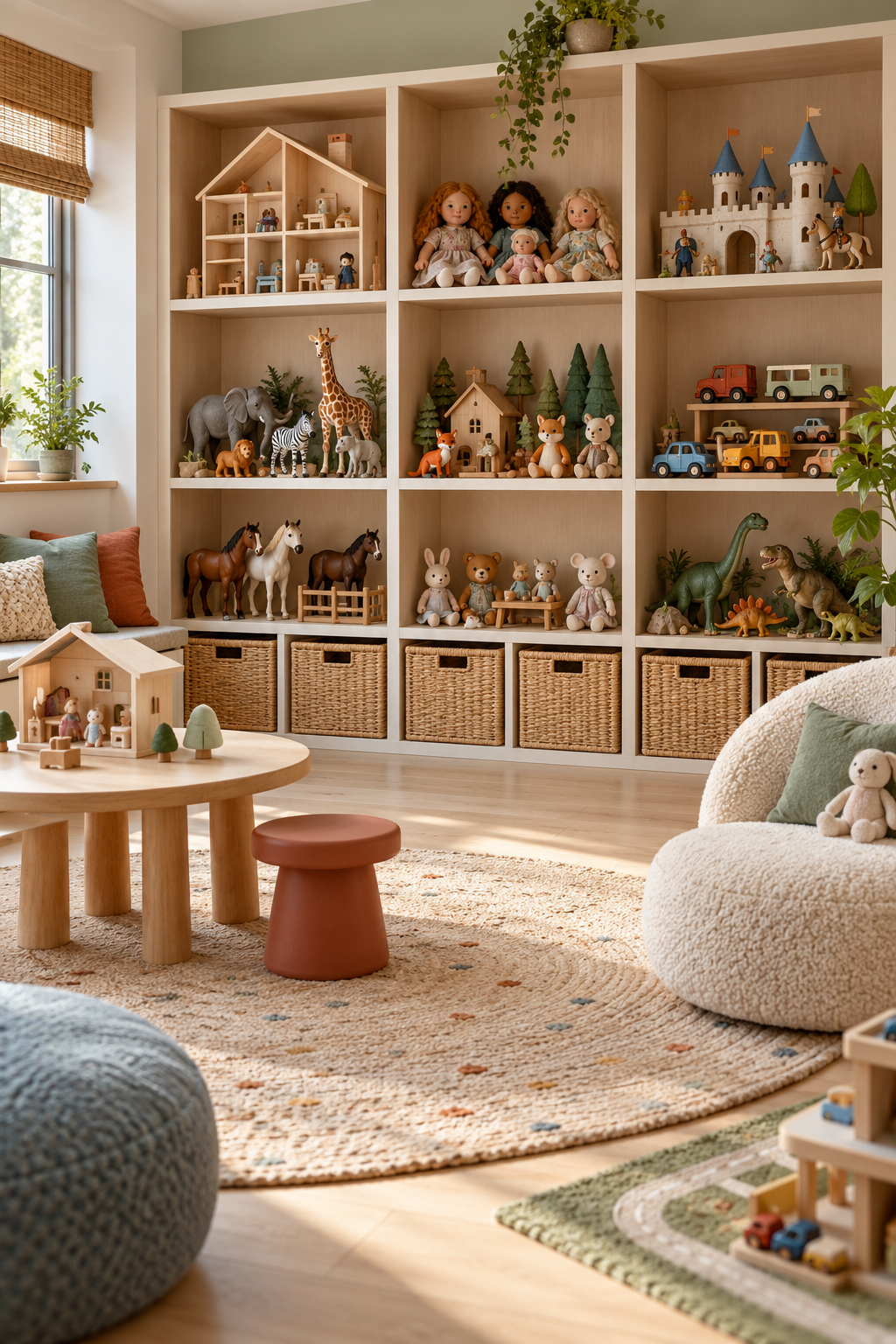
Give Dolls and Figures Their Own Homes works best when it follows the way children naturally use the room. Keep daily favorites between knee and shoulder height for the child using them. Select durable containers and furniture with smooth edges, then test whether a child can reach, lift and return each item without creating another pile.
Repeat a restrained palette of warm white, pale oak, soft sage, muted blue and terracotta accents. Pair woven baskets and washable textiles with a few clear containers only where seeing small pieces matters. The result keeps tiny parts together while making the main activity inviting, while still feeling warm, creative and lived-in.
13. Organize Toy Cars in Slim Wall Shelves
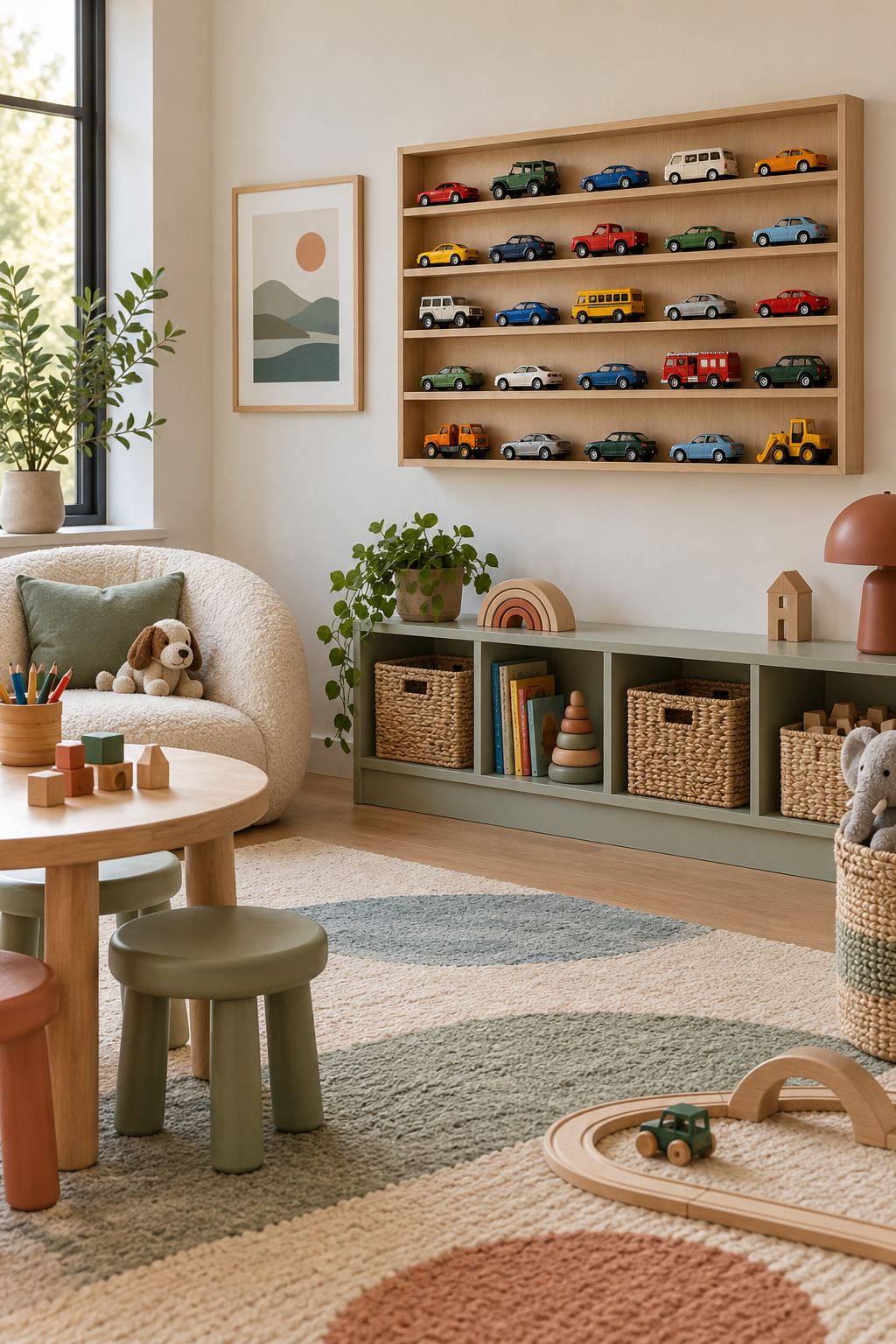
Organize Toy Cars in Slim Wall Shelves works best when it follows the way children naturally use the room. Choose rounded, stable furniture and anchor tall units securely. Select durable containers and furniture with smooth edges, then test whether a child can reach, lift and return each item without creating another pile.
Repeat a restrained palette of warm white, pale oak, soft sage, muted blue and terracotta accents. Pair woven baskets and washable textiles with a few clear containers only where seeing small pieces matters. The result reduces overstimulation and preserves useful open floor space, while still feeling warm, creative and lived-in.
14. Use Deep Drawers for Building Sets
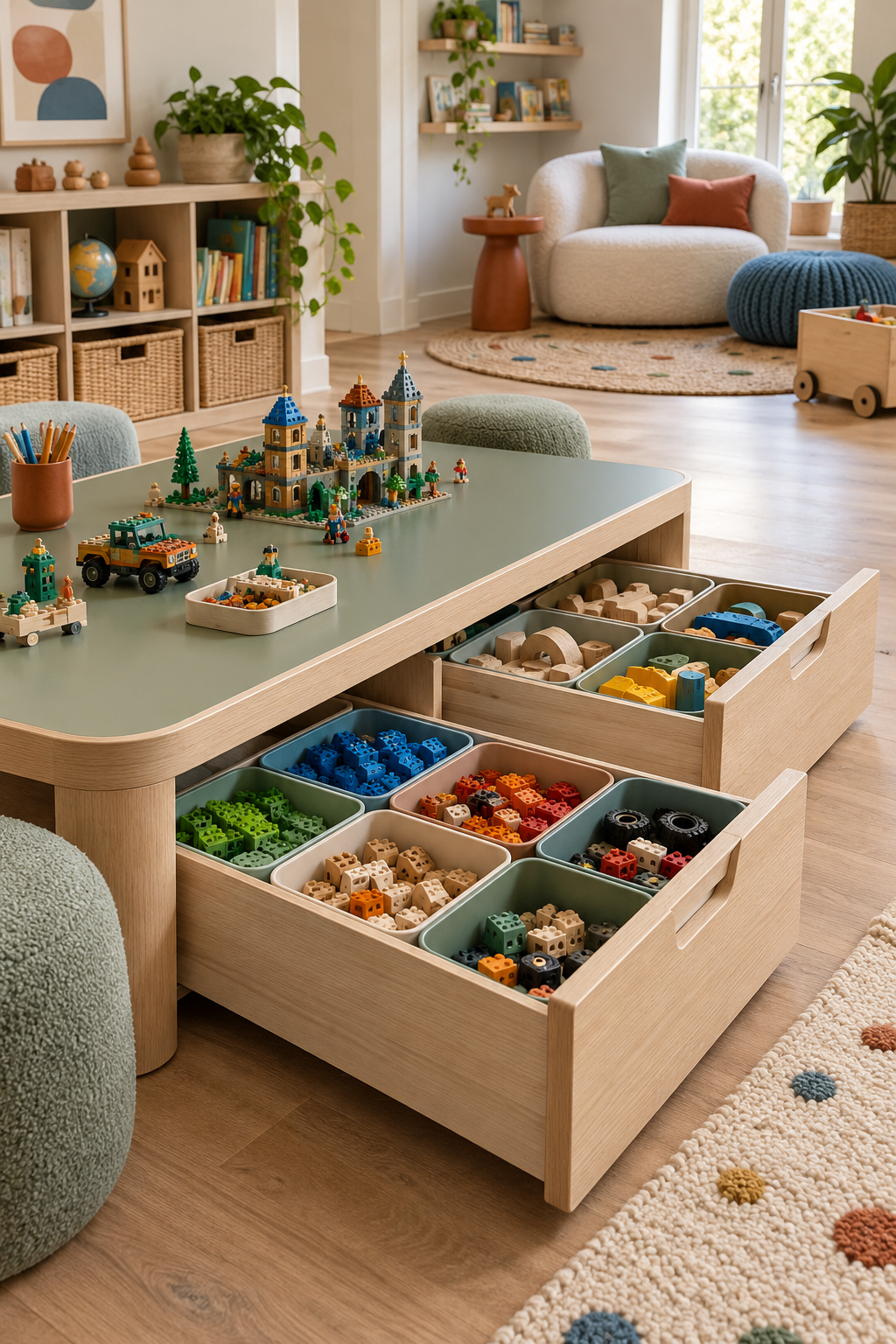
Use Deep Drawers for Building Sets works best when it follows the way children naturally use the room. Limit each container to one clear category so cleanup decisions stay simple. Select durable containers and furniture with smooth edges, then test whether a child can reach, lift and return each item without creating another pile.
Repeat a restrained palette of warm white, pale oak, soft sage, muted blue and terracotta accents. Pair woven baskets and washable textiles with a few clear containers only where seeing small pieces matters. The result lets the room adapt as favorite toys and developmental stages change, while still feeling warm, creative and lived-in.
15. Create Puzzle Storage That Protects Pieces
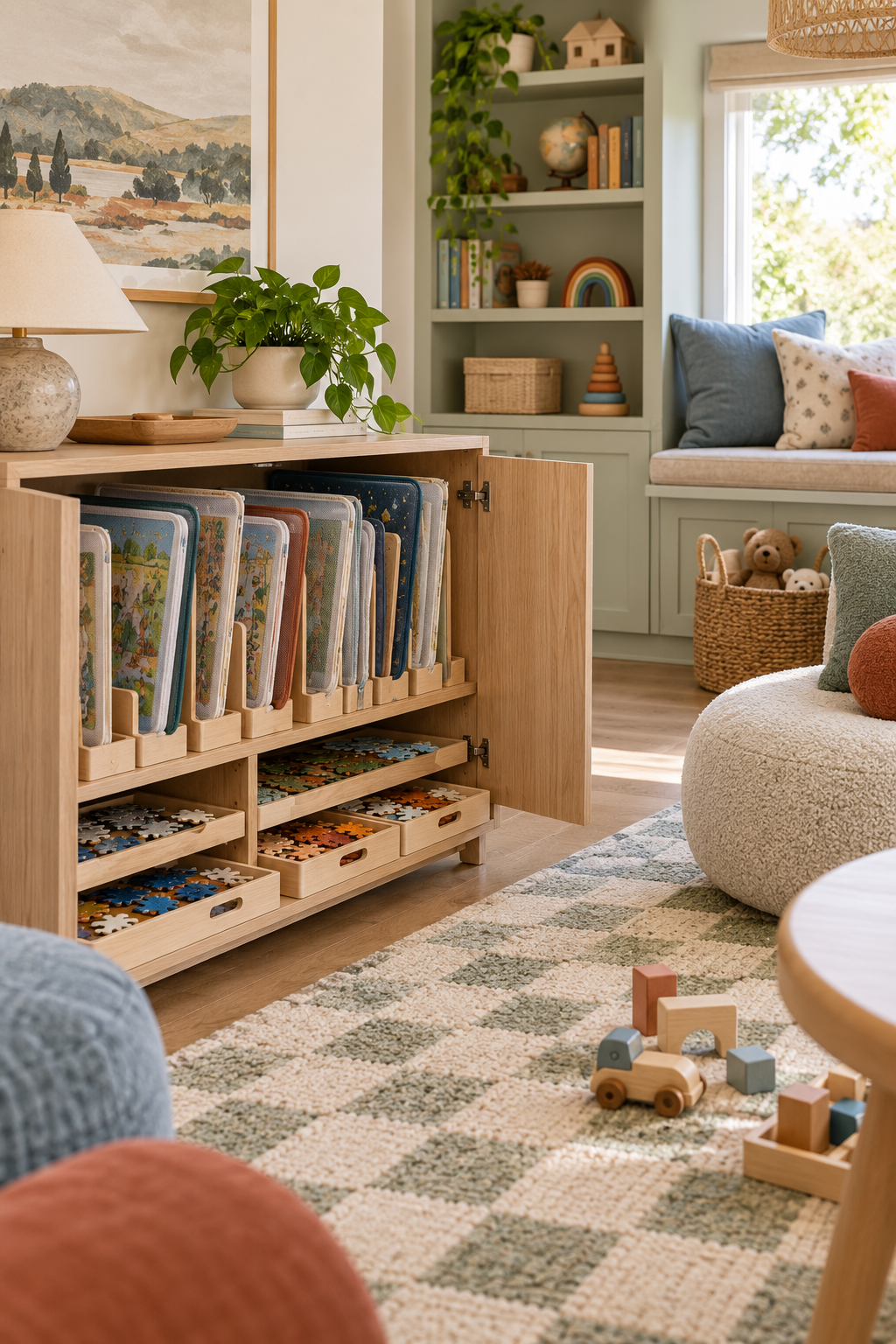
Create Puzzle Storage That Protects Pieces works best when it follows the way children naturally use the room. Leave breathing room rather than filling every basket to the top. Select durable containers and furniture with smooth edges, then test whether a child can reach, lift and return each item without creating another pile.
Repeat a restrained palette of warm white, pale oak, soft sage, muted blue and terracotta accents. Pair woven baskets and washable textiles with a few clear containers only where seeing small pieces matters. The result makes the storage feel intentional within the rest of the home, while still feeling warm, creative and lived-in.
16. File Board Games Vertically
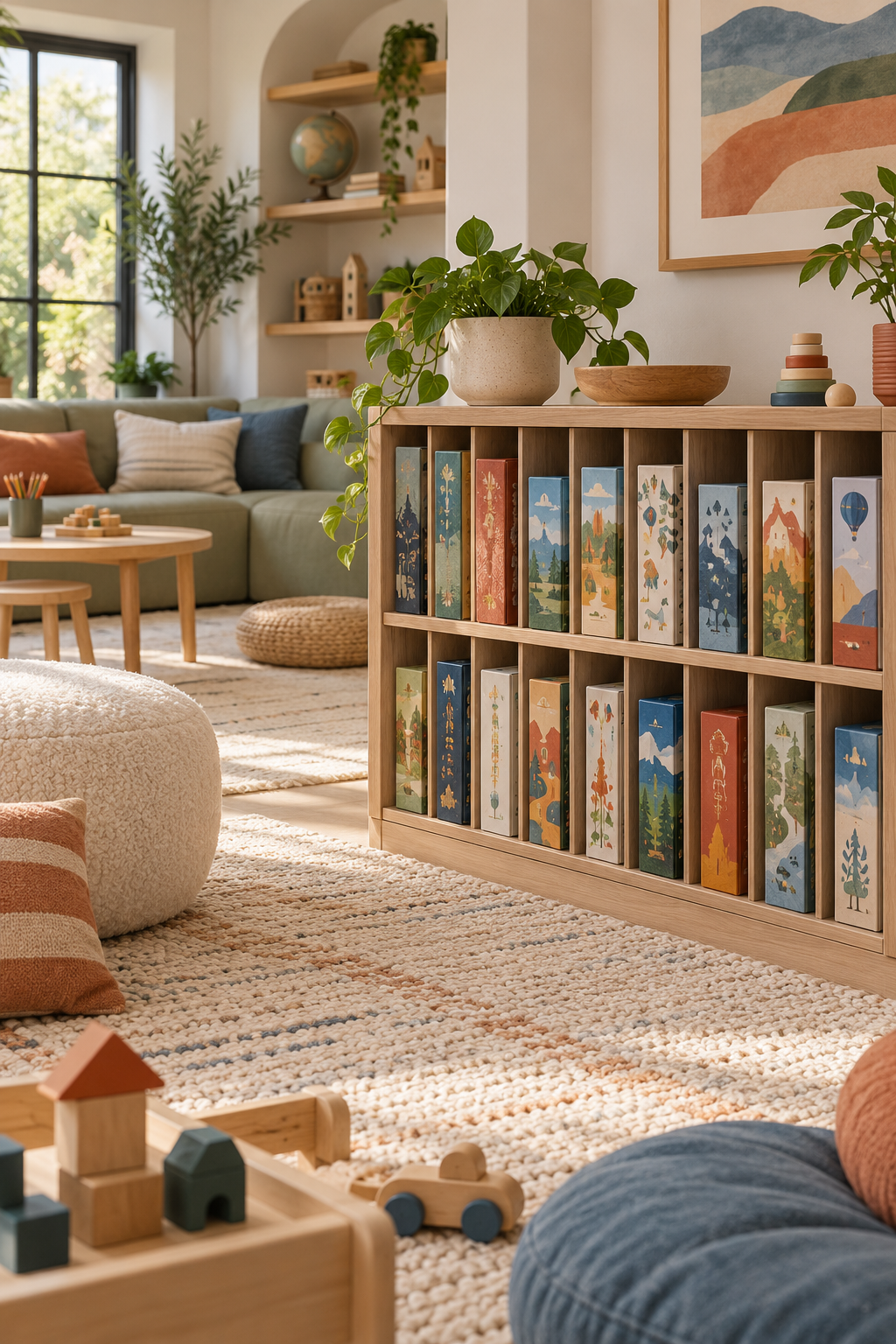
File Board Games Vertically works best when it follows the way children naturally use the room. Observe one week of play before assigning permanent categories. Select durable containers and furniture with smooth edges, then test whether a child can reach, lift and return each item without creating another pile.
Repeat a restrained palette of warm white, pale oak, soft sage, muted blue and terracotta accents. Pair woven baskets and washable textiles with a few clear containers only where seeing small pieces matters. The result supports independent cleanup without constant adult direction, while still feeling warm, creative and lived-in.
17. Add a Soft-Toy Hammock
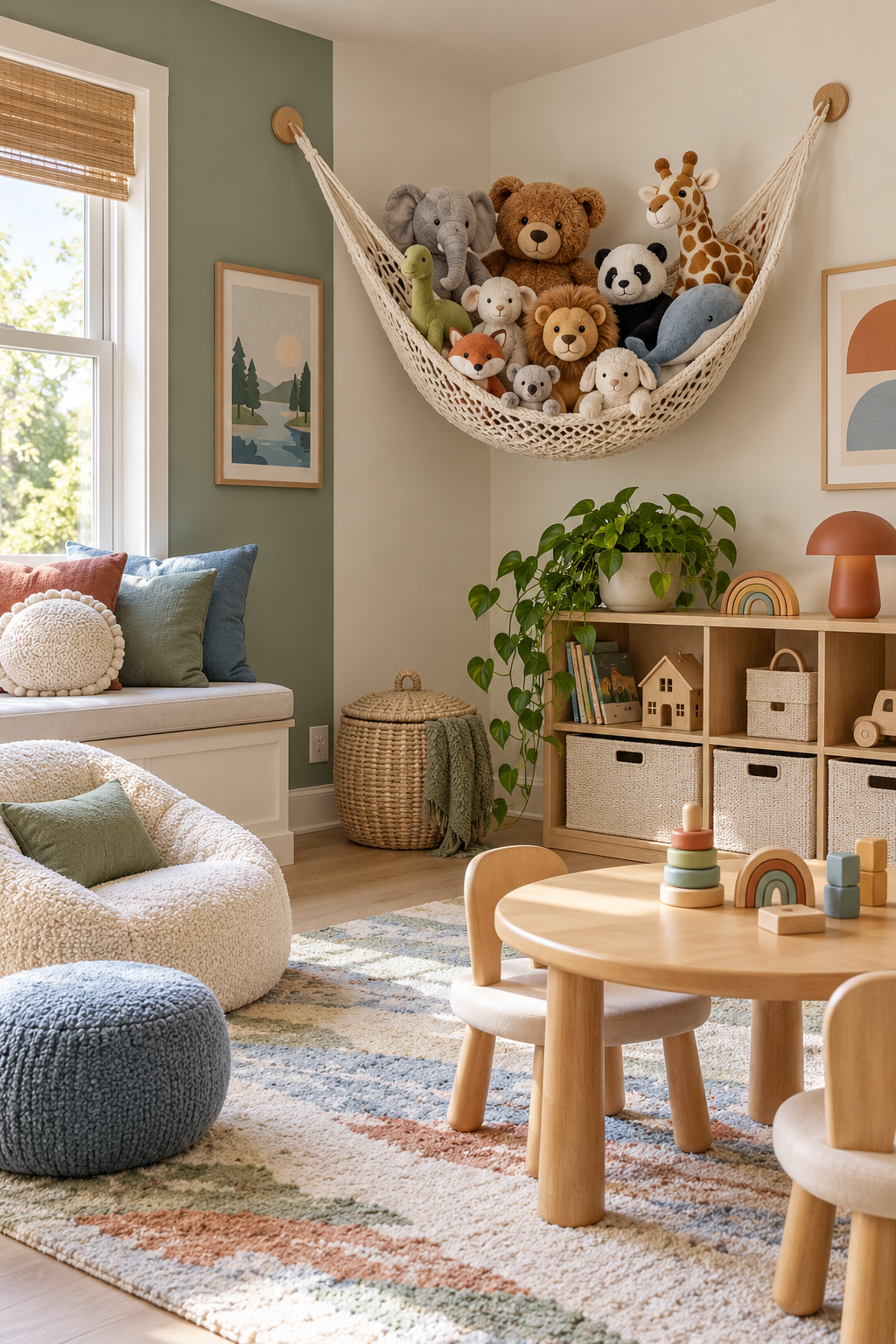
Add a Soft-Toy Hammock works best when it follows the way children naturally use the room. Keep daily favorites between knee and shoulder height for the child using them. Select durable containers and furniture with smooth edges, then test whether a child can reach, lift and return each item without creating another pile.
Repeat a restrained palette of warm white, pale oak, soft sage, muted blue and terracotta accents. Pair woven baskets and washable textiles with a few clear containers only where seeing small pieces matters. The result keeps tiny parts together while making the main activity inviting, while still feeling warm, creative and lived-in.
18. Use Under-Bench Storage for Bulky Toys
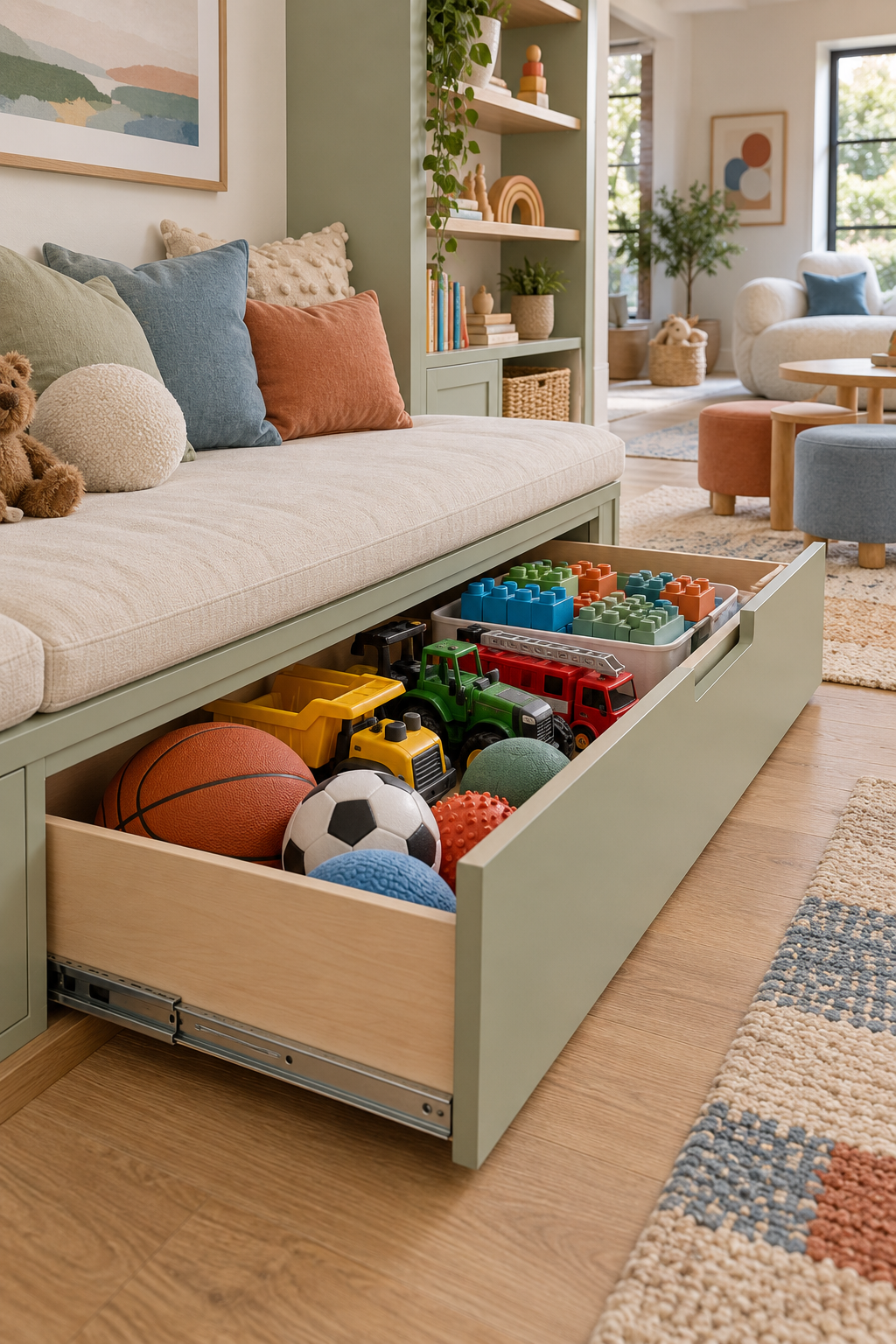
Use Under-Bench Storage for Bulky Toys works best when it follows the way children naturally use the room. Choose rounded, stable furniture and anchor tall units securely. Select durable containers and furniture with smooth edges, then test whether a child can reach, lift and return each item without creating another pile.
Repeat a restrained palette of warm white, pale oak, soft sage, muted blue and terracotta accents. Pair woven baskets and washable textiles with a few clear containers only where seeing small pieces matters. The result reduces overstimulation and preserves useful open floor space, while still feeling warm, creative and lived-in.
19. Build a Window Seat with Hidden Storage
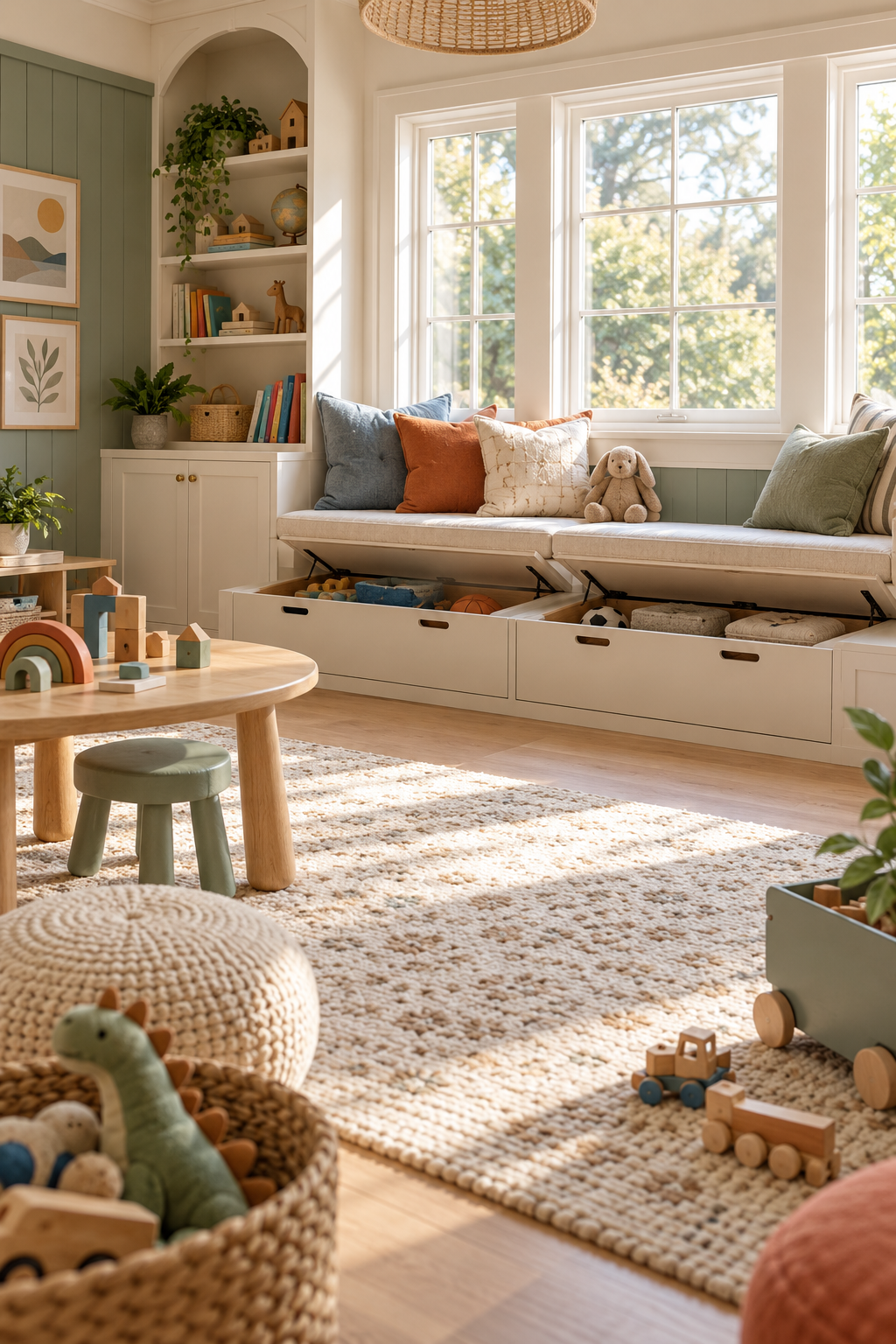
Build a Window Seat with Hidden Storage works best when it follows the way children naturally use the room. Limit each container to one clear category so cleanup decisions stay simple. Select durable containers and furniture with smooth edges, then test whether a child can reach, lift and return each item without creating another pile.
Repeat a restrained palette of warm white, pale oak, soft sage, muted blue and terracotta accents. Pair woven baskets and washable textiles with a few clear containers only where seeing small pieces matters. The result lets the room adapt as favorite toys and developmental stages change, while still feeling warm, creative and lived-in.
20. Turn an Awkward Corner into a Toy Nook
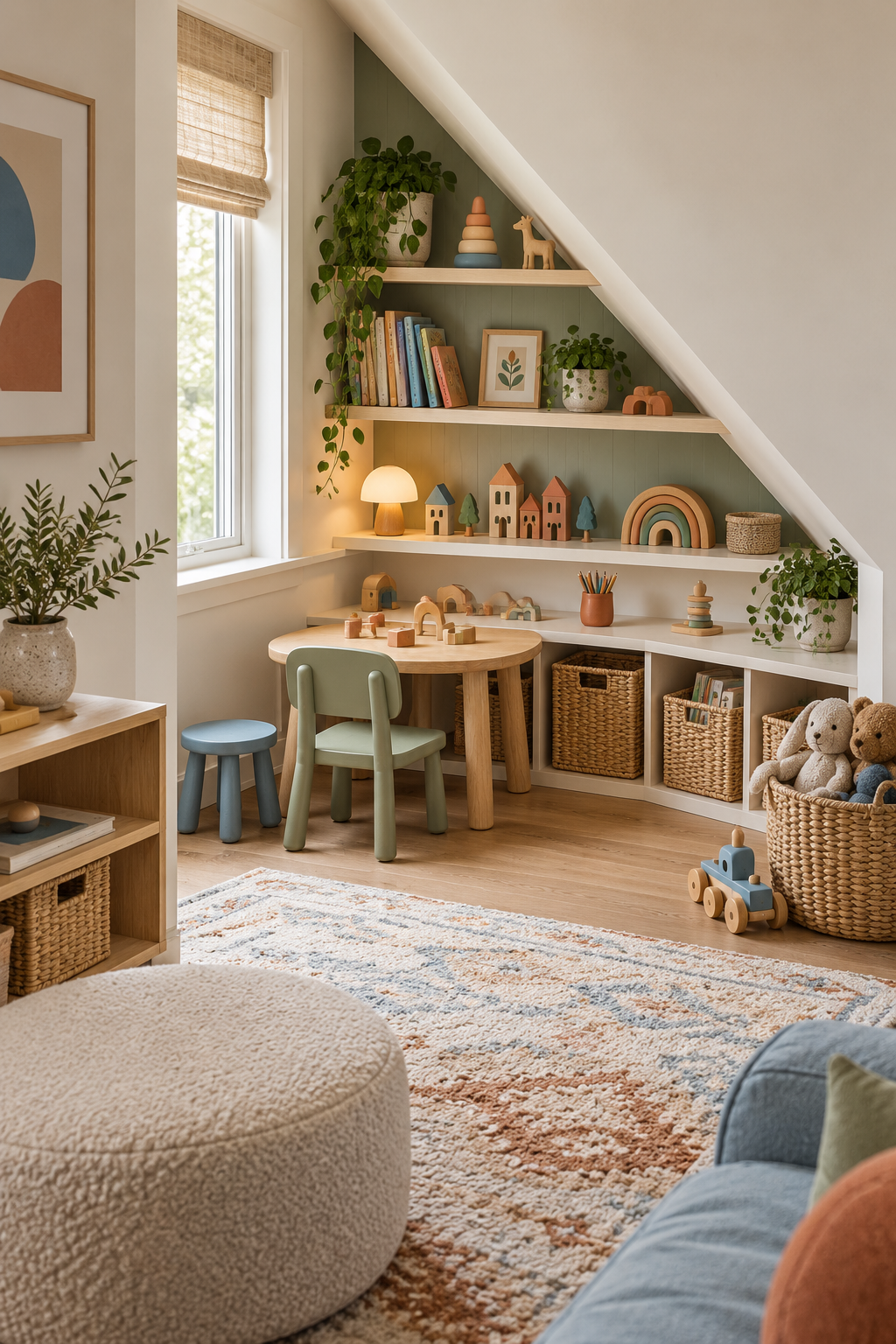
Turn an Awkward Corner into a Toy Nook works best when it follows the way children naturally use the room. Leave breathing room rather than filling every basket to the top. Select durable containers and furniture with smooth edges, then test whether a child can reach, lift and return each item without creating another pile.
Repeat a restrained palette of warm white, pale oak, soft sage, muted blue and terracotta accents. Pair woven baskets and washable textiles with a few clear containers only where seeing small pieces matters. The result makes the storage feel intentional within the rest of the home, while still feeling warm, creative and lived-in.
21. Create Activity Zones with Rugs
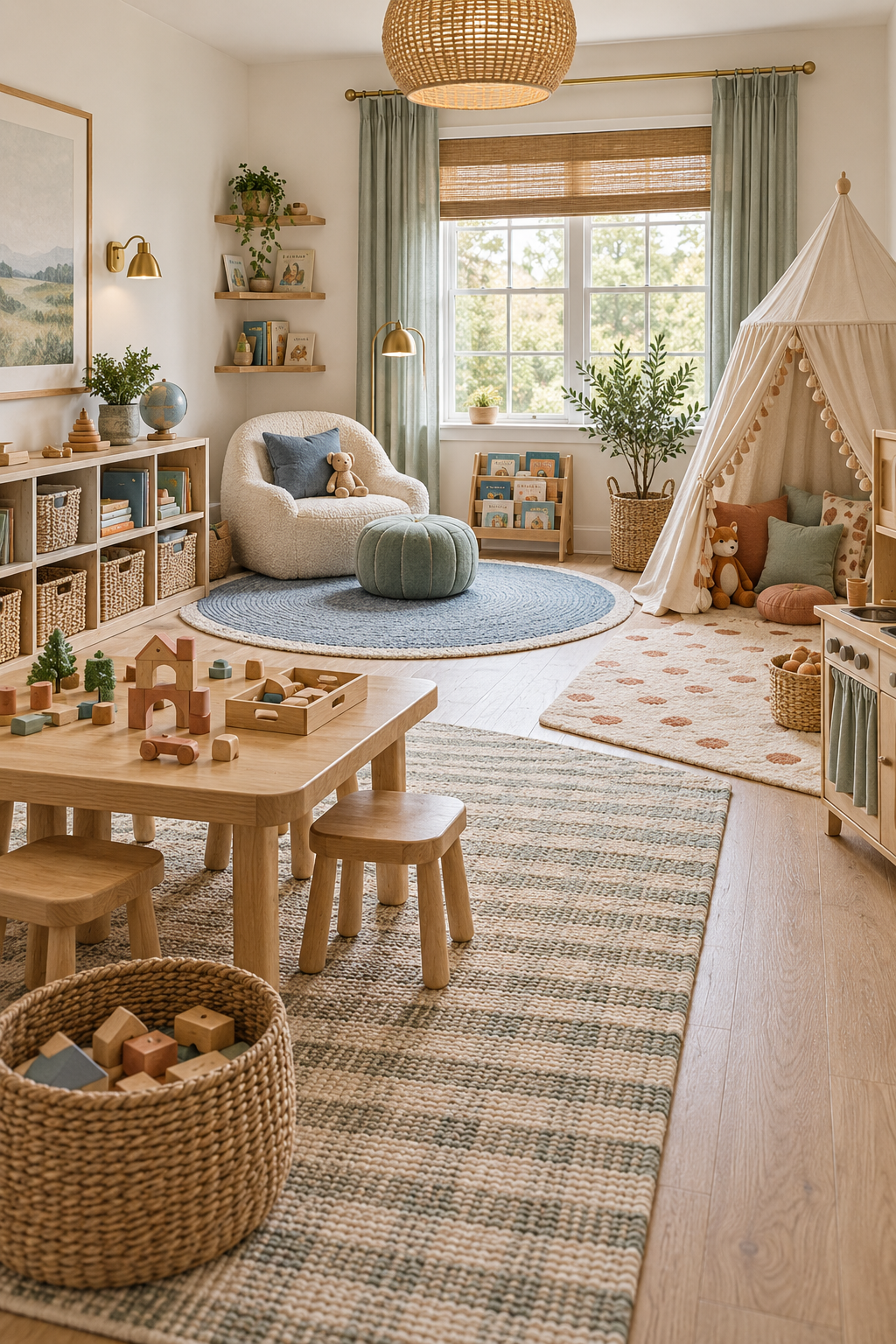
Create Activity Zones with Rugs works best when it follows the way children naturally use the room. Observe one week of play before assigning permanent categories. Select durable containers and furniture with smooth edges, then test whether a child can reach, lift and return each item without creating another pile.
Repeat a restrained palette of warm white, pale oak, soft sage, muted blue and terracotta accents. Pair woven baskets and washable textiles with a few clear containers only where seeing small pieces matters. The result supports independent cleanup without constant adult direction, while still feeling warm, creative and lived-in.
22. Use Color Carefully instead of Everywhere
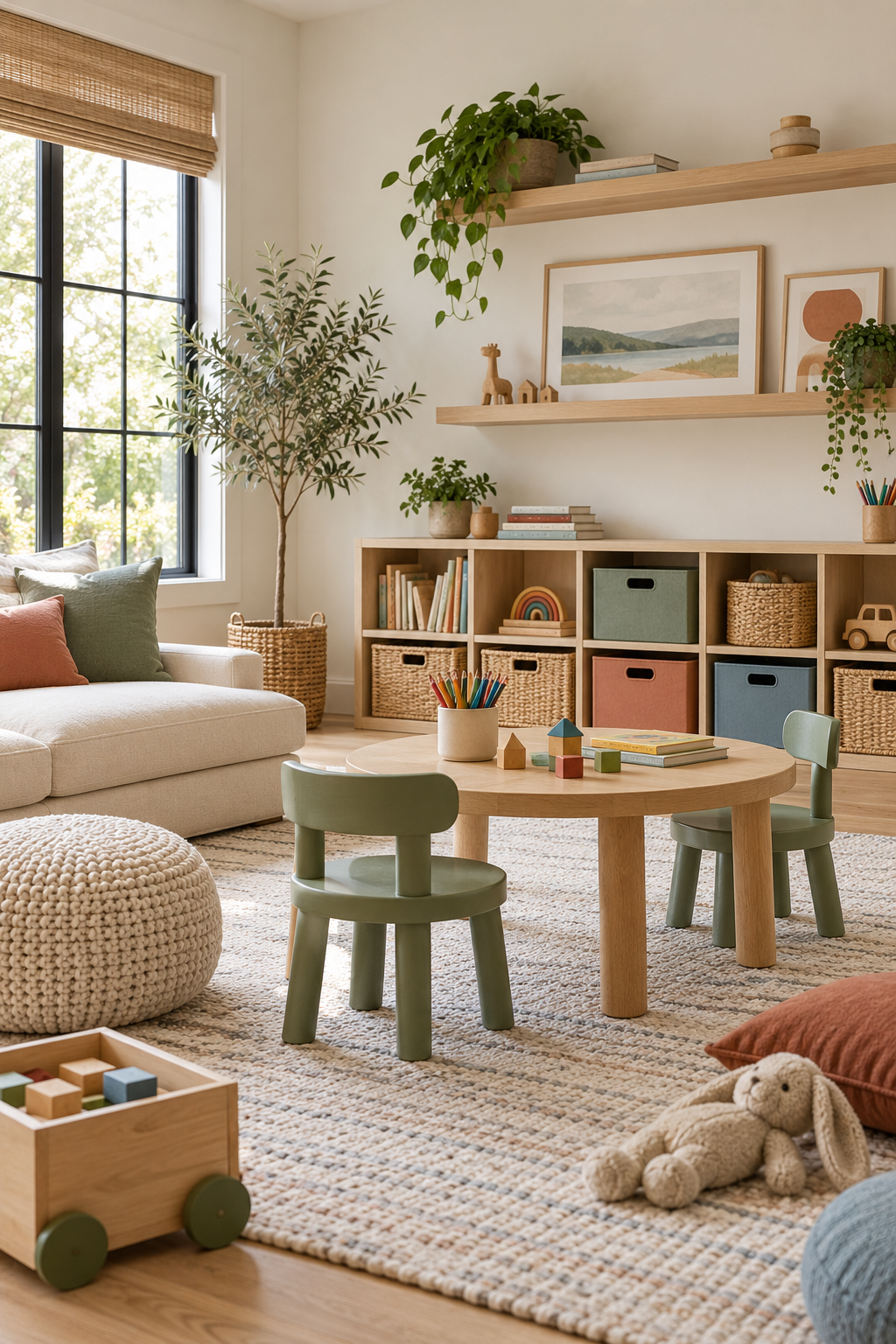
Use Color Carefully instead of Everywhere works best when it follows the way children naturally use the room. Keep daily favorites between knee and shoulder height for the child using them. Select durable containers and furniture with smooth edges, then test whether a child can reach, lift and return each item without creating another pile.
Repeat a restrained palette of warm white, pale oak, soft sage, muted blue and terracotta accents. Pair woven baskets and washable textiles with a few clear containers only where seeing small pieces matters. The result keeps tiny parts together while making the main activity inviting, while still feeling warm, creative and lived-in.
23. Hide Visual Noise behind Cabinet Doors
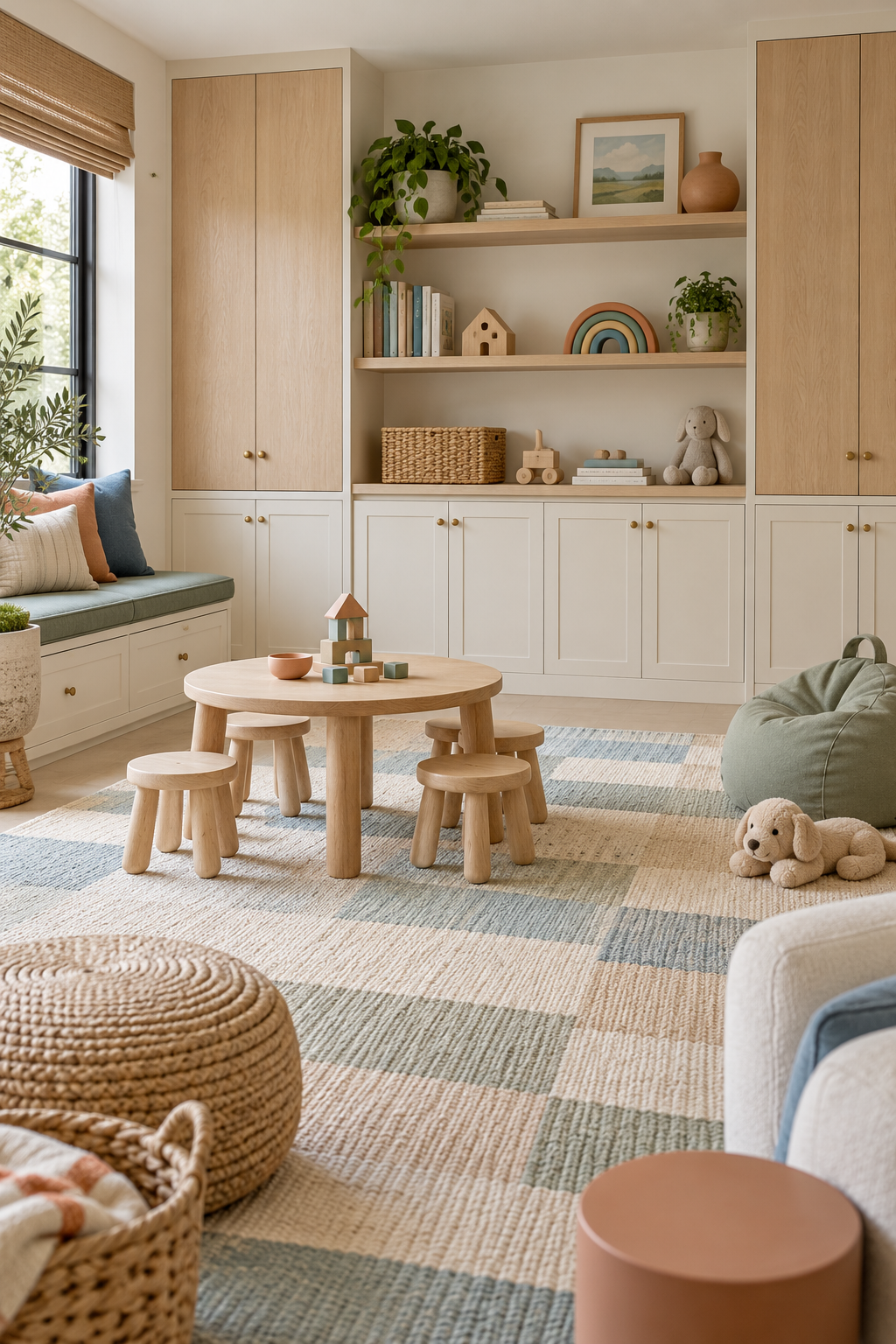
Hide Visual Noise behind Cabinet Doors works best when it follows the way children naturally use the room. Choose rounded, stable furniture and anchor tall units securely. Select durable containers and furniture with smooth edges, then test whether a child can reach, lift and return each item without creating another pile.
Repeat a restrained palette of warm white, pale oak, soft sage, muted blue and terracotta accents. Pair woven baskets and washable textiles with a few clear containers only where seeing small pieces matters. The result reduces overstimulation and preserves useful open floor space, while still feeling warm, creative and lived-in.
24. Keep a Donation Basket within Reach
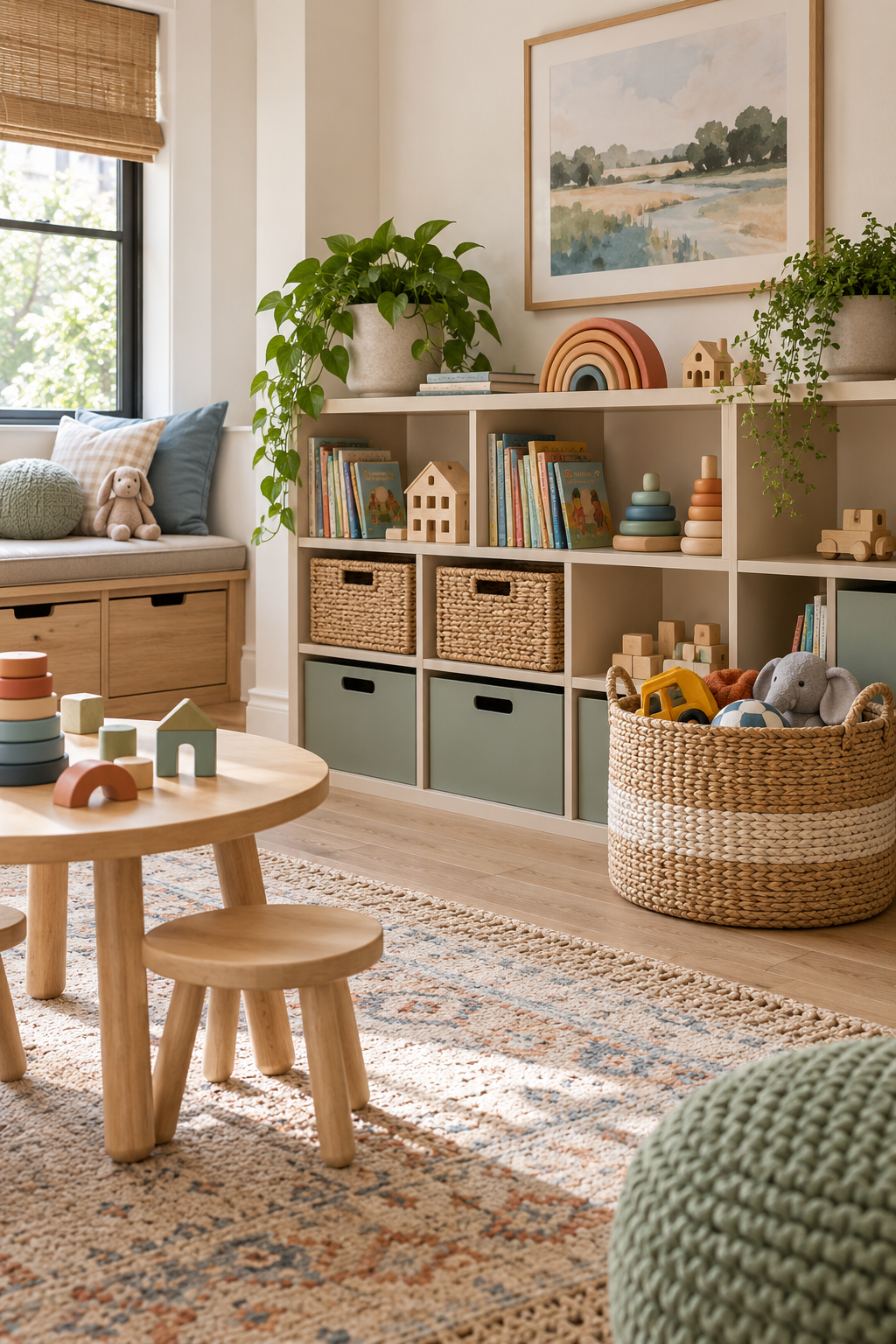
Keep a Donation Basket within Reach works best when it follows the way children naturally use the room. Limit each container to one clear category so cleanup decisions stay simple. Select durable containers and furniture with smooth edges, then test whether a child can reach, lift and return each item without creating another pile.
Repeat a restrained palette of warm white, pale oak, soft sage, muted blue and terracotta accents. Pair woven baskets and washable textiles with a few clear containers only where seeing small pieces matters. The result lets the room adapt as favorite toys and developmental stages change, while still feeling warm, creative and lived-in.
25. Store Active Toys near the Exit
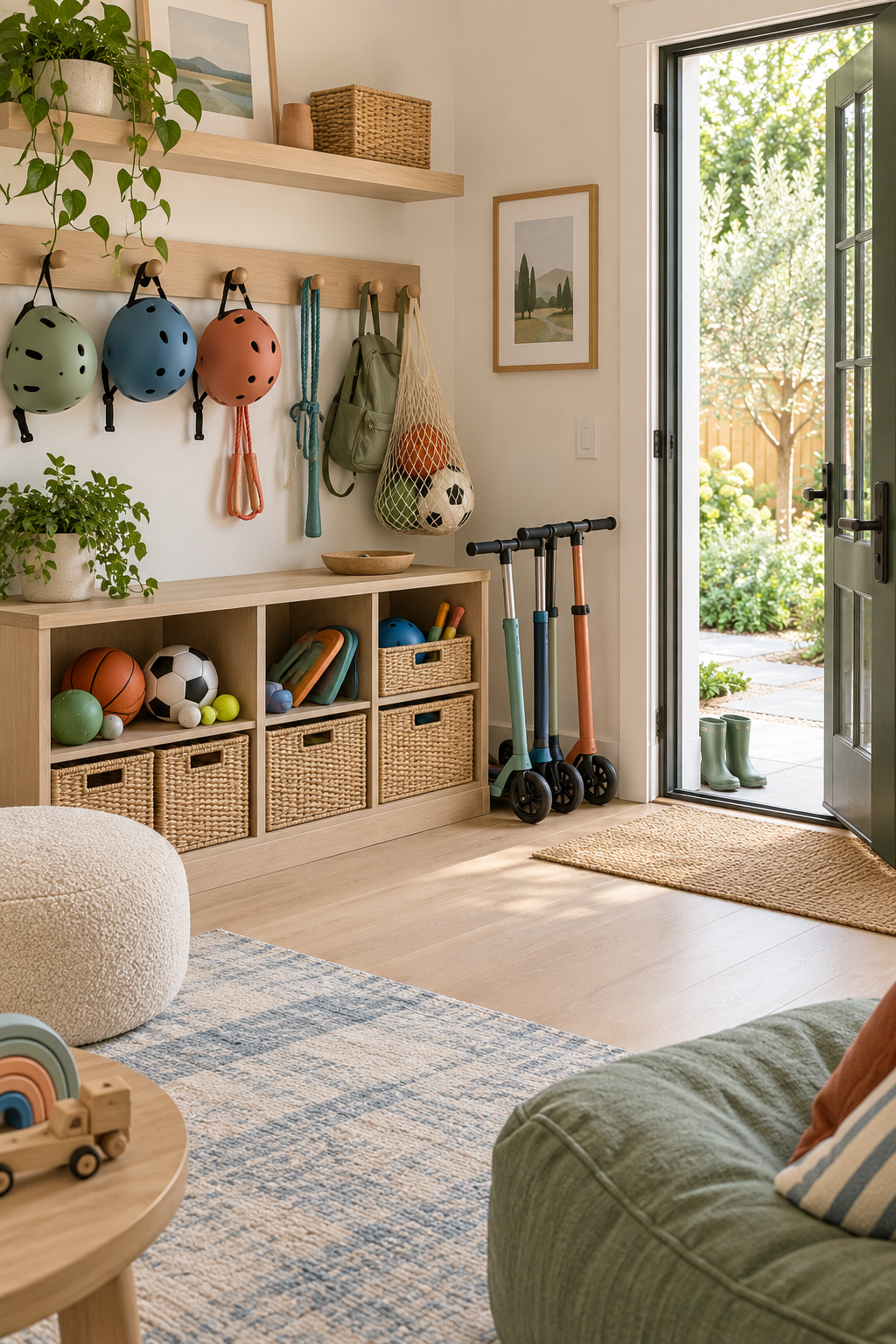
Store Active Toys near the Exit works best when it follows the way children naturally use the room. Leave breathing room rather than filling every basket to the top. Select durable containers and furniture with smooth edges, then test whether a child can reach, lift and return each item without creating another pile.
Repeat a restrained palette of warm white, pale oak, soft sage, muted blue and terracotta accents. Pair woven baskets and washable textiles with a few clear containers only where seeing small pieces matters. The result makes the storage feel intentional within the rest of the home, while still feeling warm, creative and lived-in.
26. Create a Homework and Quiet-Play Shelf
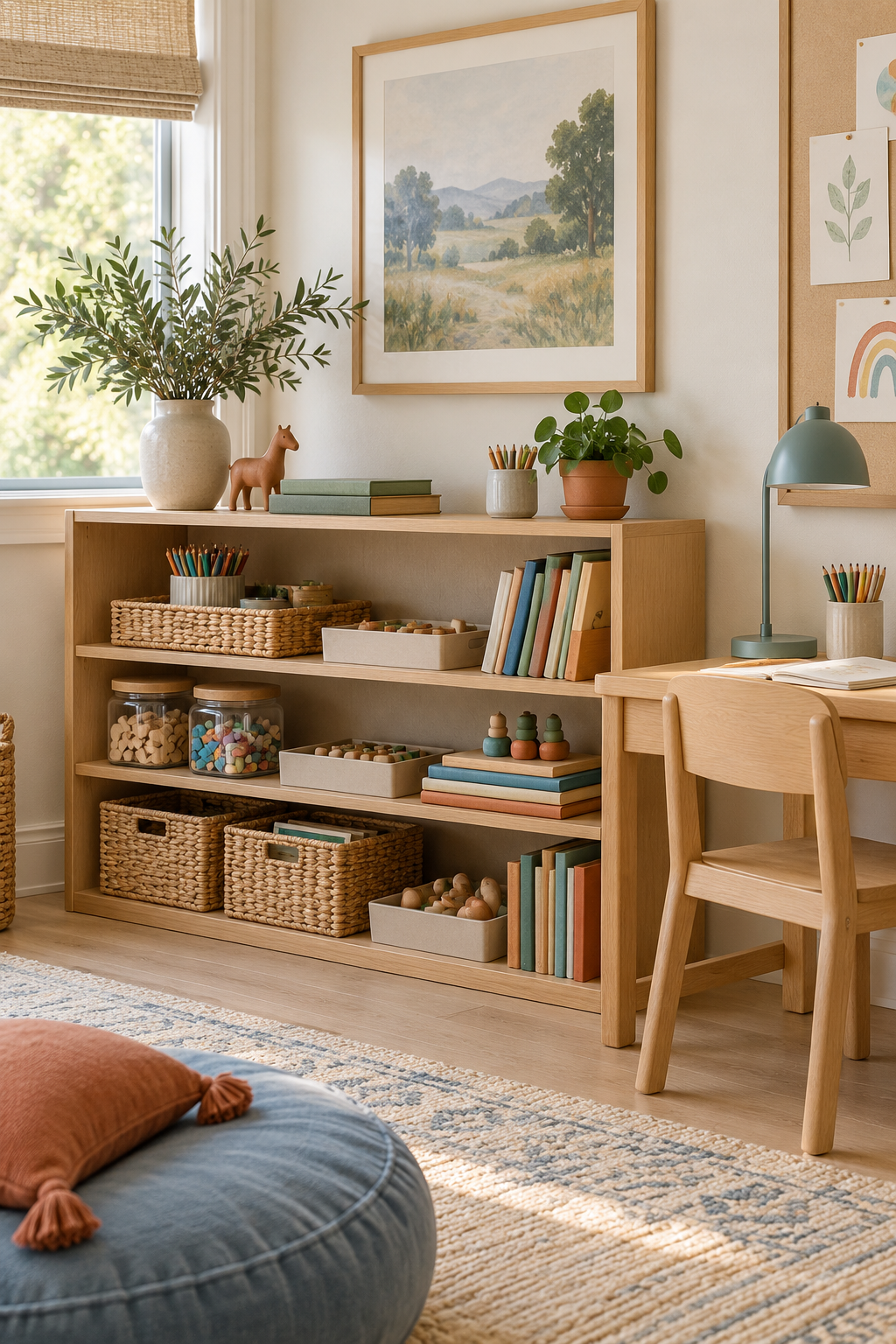
Create a Homework and Quiet-Play Shelf works best when it follows the way children naturally use the room. Observe one week of play before assigning permanent categories. Select durable containers and furniture with smooth edges, then test whether a child can reach, lift and return each item without creating another pile.
Repeat a restrained palette of warm white, pale oak, soft sage, muted blue and terracotta accents. Pair woven baskets and washable textiles with a few clear containers only where seeing small pieces matters. The result supports independent cleanup without constant adult direction, while still feeling warm, creative and lived-in.
27. Add a Display Ledge for Current Creations
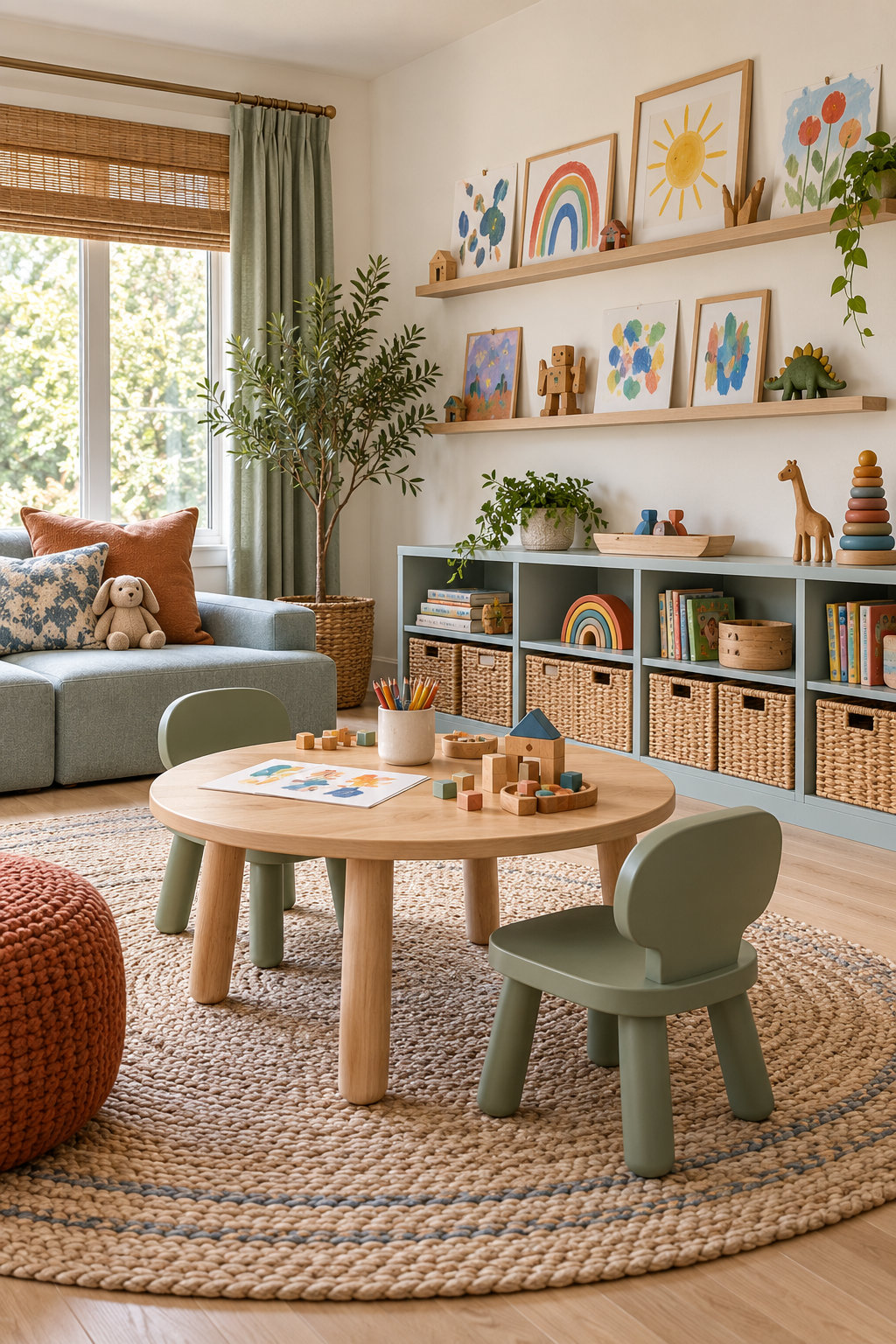
Add a Display Ledge for Current Creations works best when it follows the way children naturally use the room. Keep daily favorites between knee and shoulder height for the child using them. Select durable containers and furniture with smooth edges, then test whether a child can reach, lift and return each item without creating another pile.
Repeat a restrained palette of warm white, pale oak, soft sage, muted blue and terracotta accents. Pair woven baskets and washable textiles with a few clear containers only where seeing small pieces matters. The result keeps tiny parts together while making the main activity inviting, while still feeling warm, creative and lived-in.
28. Use Furniture That Grows with the Child
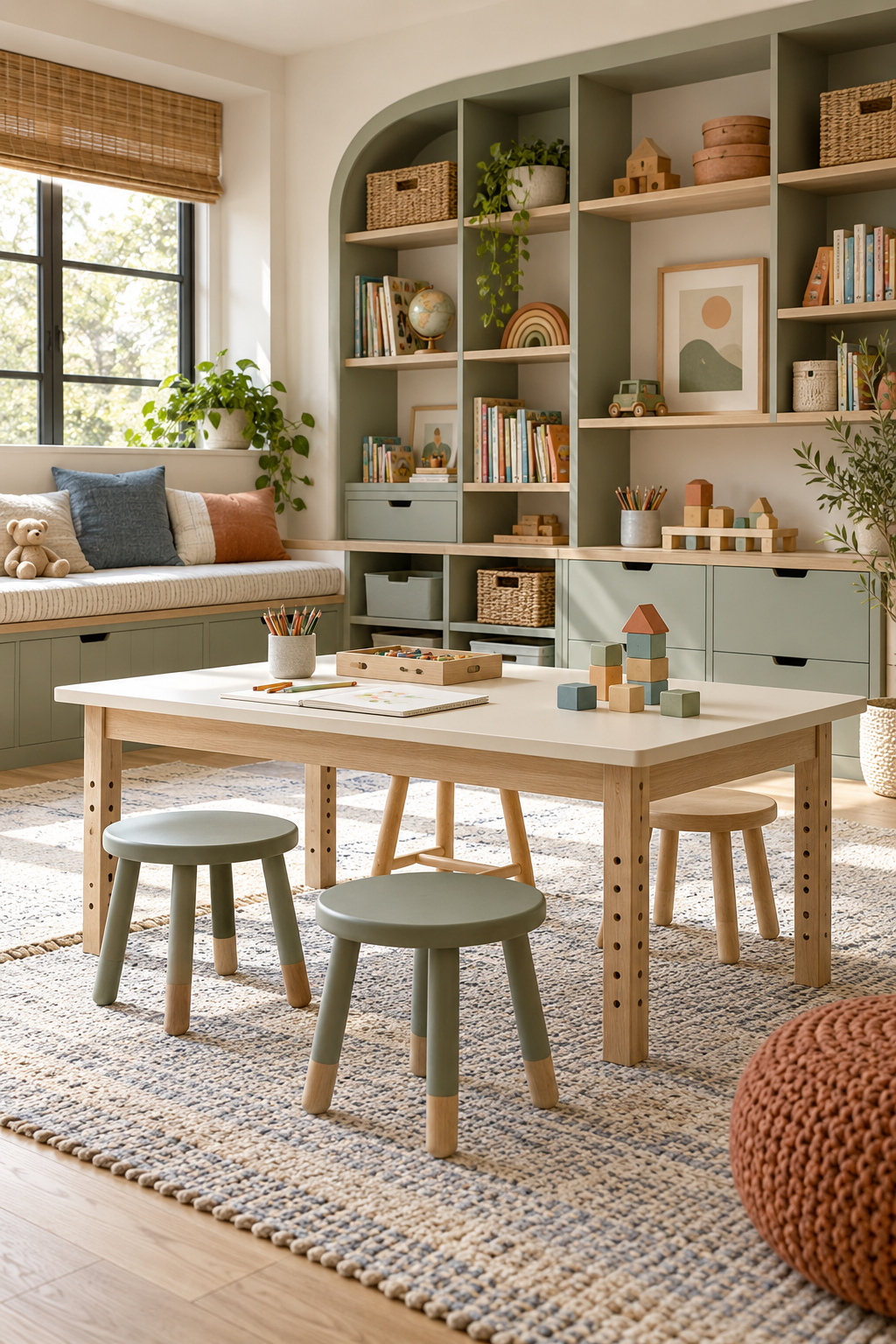
Use Furniture That Grows with the Child works best when it follows the way children naturally use the room. Choose rounded, stable furniture and anchor tall units securely. Select durable containers and furniture with smooth edges, then test whether a child can reach, lift and return each item without creating another pile.
Repeat a restrained palette of warm white, pale oak, soft sage, muted blue and terracotta accents. Pair woven baskets and washable textiles with a few clear containers only where seeing small pieces matters. The result reduces overstimulation and preserves useful open floor space, while still feeling warm, creative and lived-in.
29. Leave Open Floor Space for Imaginative Play
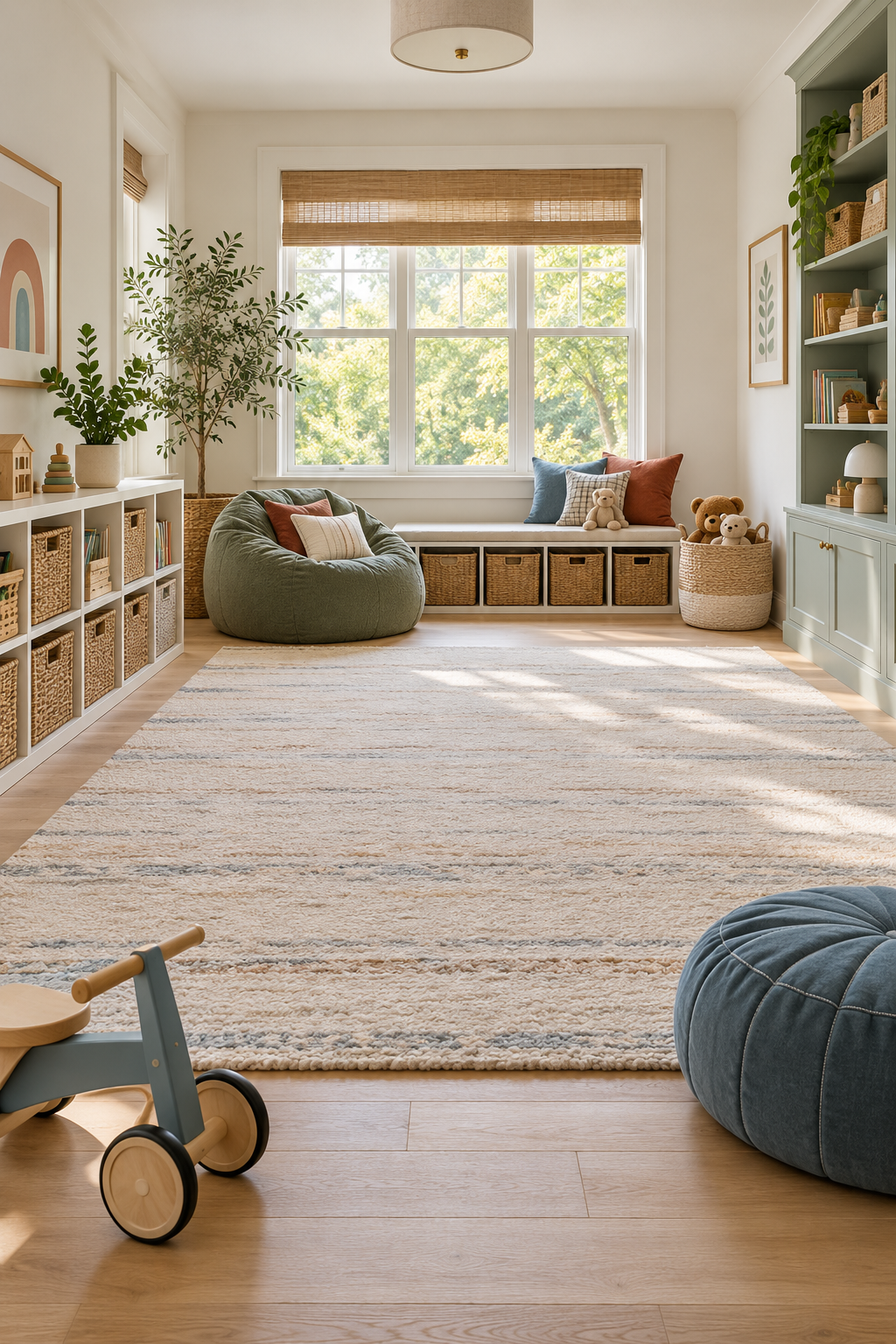
Leave Open Floor Space for Imaginative Play works best when it follows the way children naturally use the room. Limit each container to one clear category so cleanup decisions stay simple. Select durable containers and furniture with smooth edges, then test whether a child can reach, lift and return each item without creating another pile.
Repeat a restrained palette of warm white, pale oak, soft sage, muted blue and terracotta accents. Pair woven baskets and washable textiles with a few clear containers only where seeing small pieces matters. The result lets the room adapt as favorite toys and developmental stages change, while still feeling warm, creative and lived-in.
30. Finish with a Ten-Minute Family Reset
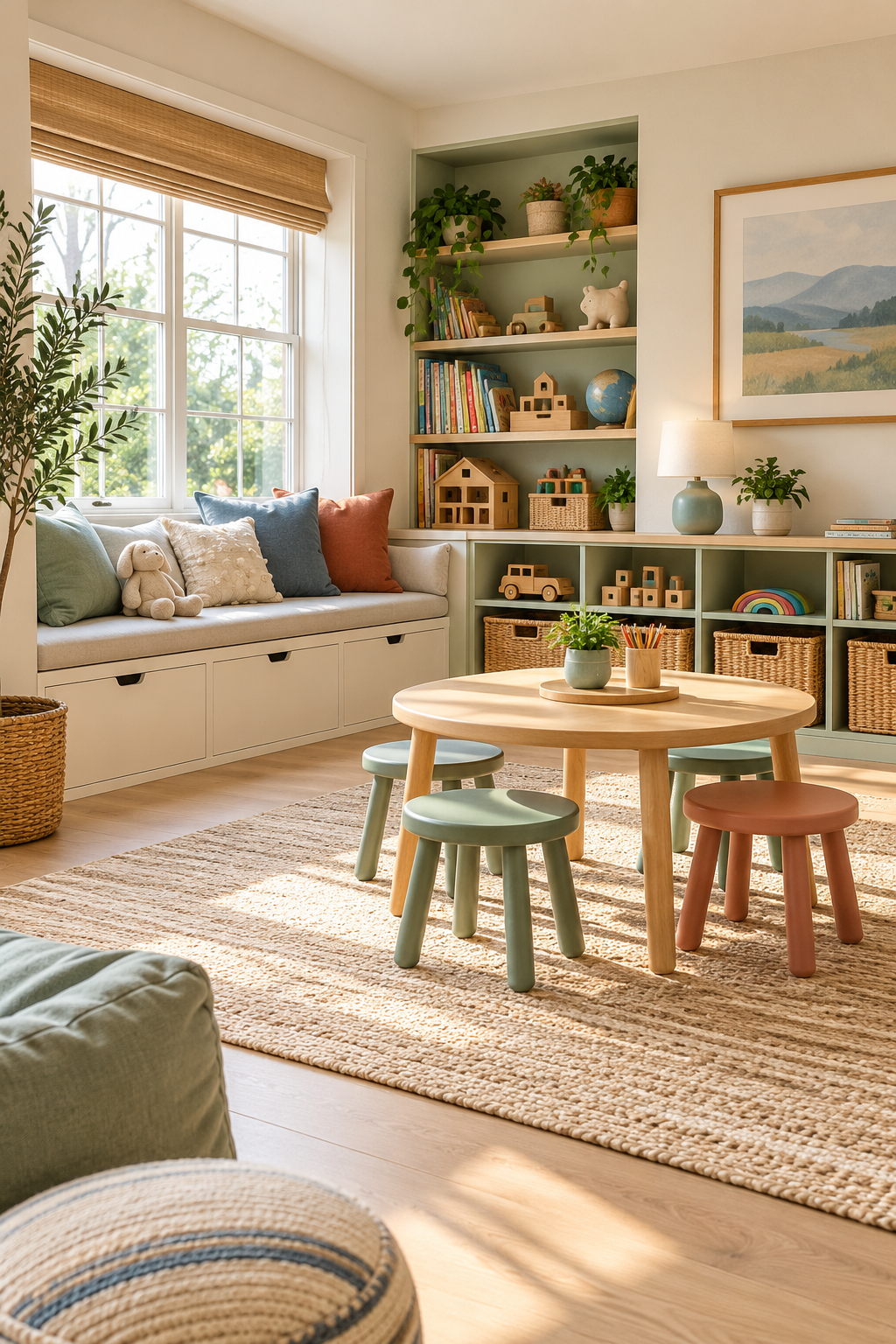
Finish with a Ten-Minute Family Reset works best when it follows the way children naturally use the room. Leave breathing room rather than filling every basket to the top. Select durable containers and furniture with smooth edges, then test whether a child can reach, lift and return each item without creating another pile.
Repeat a restrained palette of warm white, pale oak, soft sage, muted blue and terracotta accents. Pair woven baskets and washable textiles with a few clear containers only where seeing small pieces matters. The result makes the storage feel intentional within the rest of the home, while still feeling warm, creative and lived-in.
How to Keep a Playroom Organized
Use a short daily reset and a deeper monthly edit. Return complete sets to their zones, move broken pieces out immediately and rotate a small portion of stored toys when interest fades. Children are more likely to help when every object has one obvious home.
Safety matters more than styling. Anchor storage, keep heavy items low and place tiny parts according to the youngest child who enters the room. A beautiful playroom is successful when it invites play, not when it stays untouched.