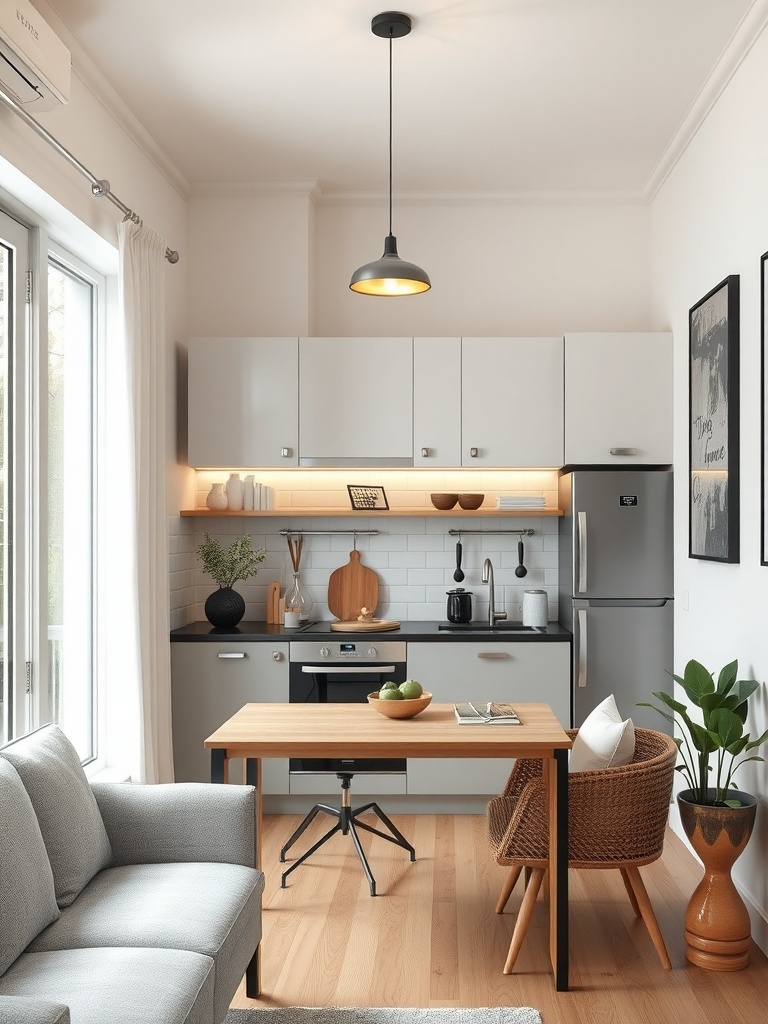
A small dining nook can turn an overlooked corner into one of the most useful and welcoming places in a home. The best compact dining spaces combine correctly scaled furniture, comfortable circulation and enough visual definition to feel intentional without closing in the room.
These small dining nook ideas cover apartments, open-plan homes, awkward corners and multipurpose rooms. Start with the layout and daily seating needs, then add lighting, color and storage that support the way the space will actually be used.
1. Fit a Round Pedestal Table into a Tight Corner
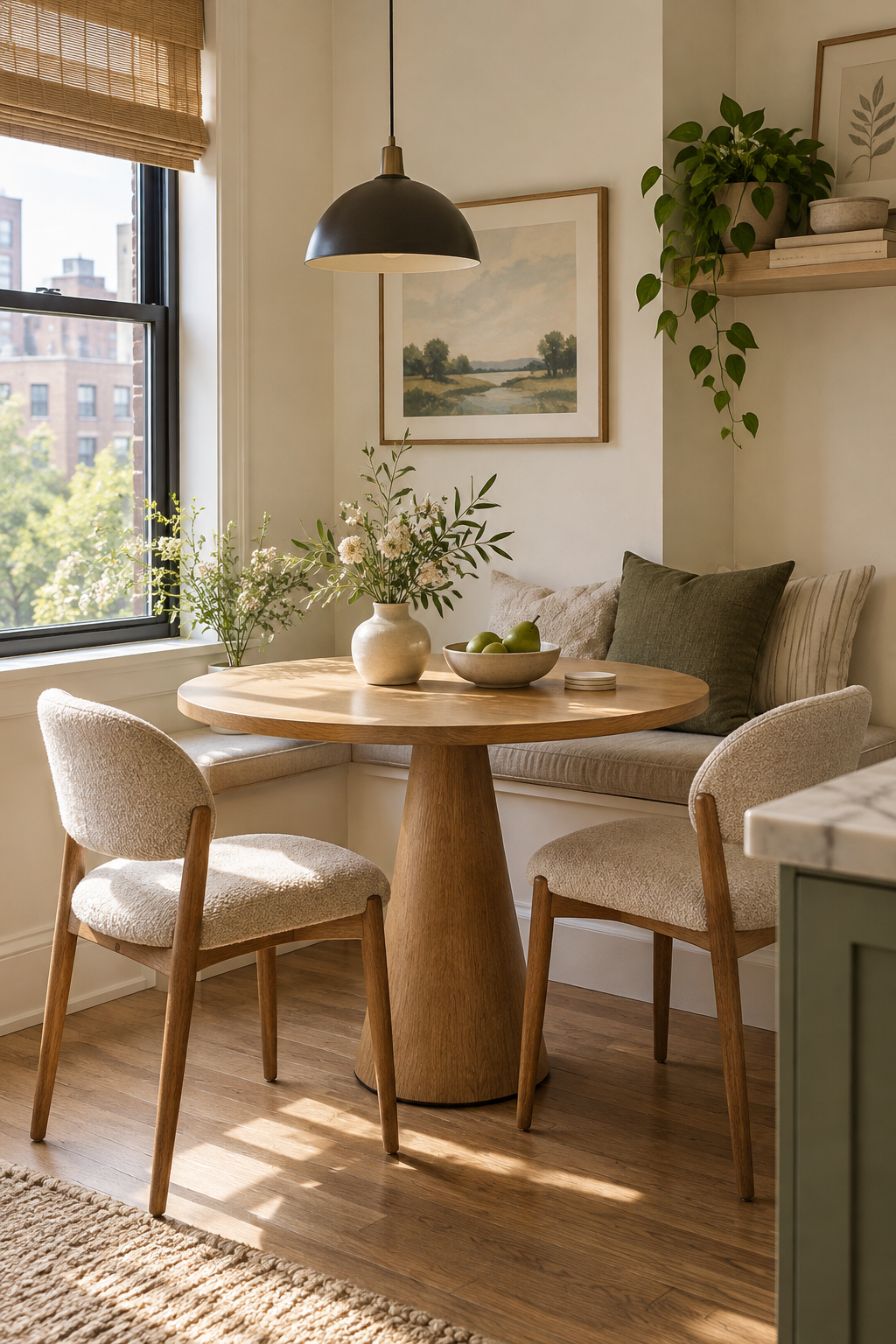
Start with fit a Round Pedestal Table into a Tight Corner as the focal decision for this area. Consider the room from the doorway and check the scale against nearby furniture, windows and walking paths. Build the look with natural wood, woven upholstery, linen, ceramic and softly aged metal; repeating only two or three finishes keeps the composition cohesive and lets the featured detail remain clear.
Keep the palette grounded in warm oak, cream, soft taupe, muted green and small accents of black. Vary height and texture rather than adding unnecessary objects, and make sure chairs, doors, drawers and everyday routines still work comfortably. Finish by viewing the arrangement in daylight and evening light, then remove one competing accessory if the scene feels busy. This practical edit helps the idea look collected, photogenic and realistic in an everyday home.
2. Build a Banquette beneath a Window
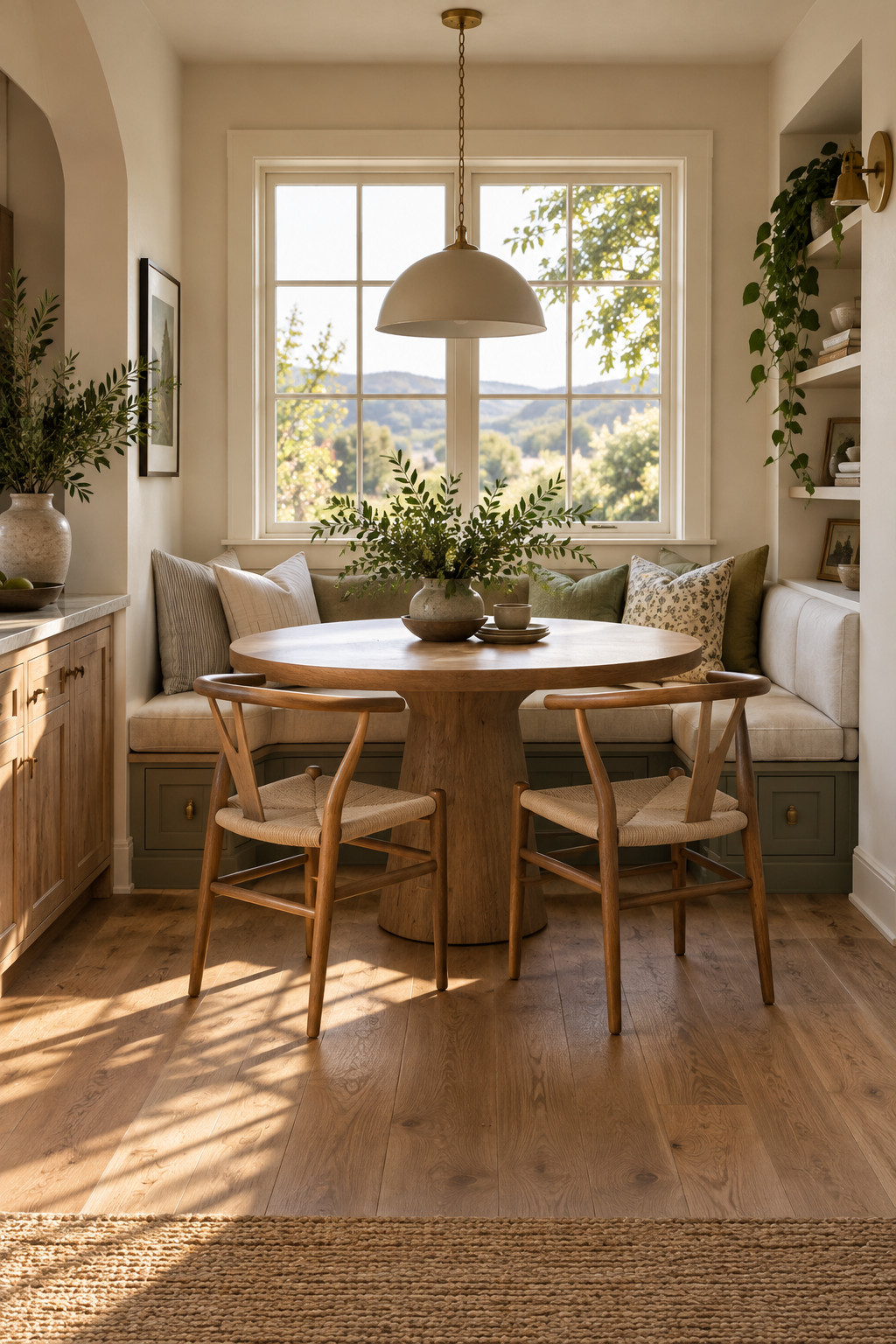
Create build a Banquette beneath a Window as the focal decision for this area. Consider the room from the doorway and check the scale against nearby furniture, windows and walking paths. Build the look with natural wood, woven upholstery, linen, ceramic and softly aged metal; repeating only two or three finishes keeps the composition cohesive and lets the featured detail remain clear.
Keep the palette grounded in warm oak, cream, soft taupe, muted green and small accents of black. Vary height and texture rather than adding unnecessary objects, and make sure chairs, doors, drawers and everyday routines still work comfortably. Finish by viewing the arrangement in daylight and evening light, then remove one competing accessory if the scene feels busy. This practical edit helps the idea look collected, photogenic and realistic in an everyday home.
3. Use a Slim Bench against the Wall
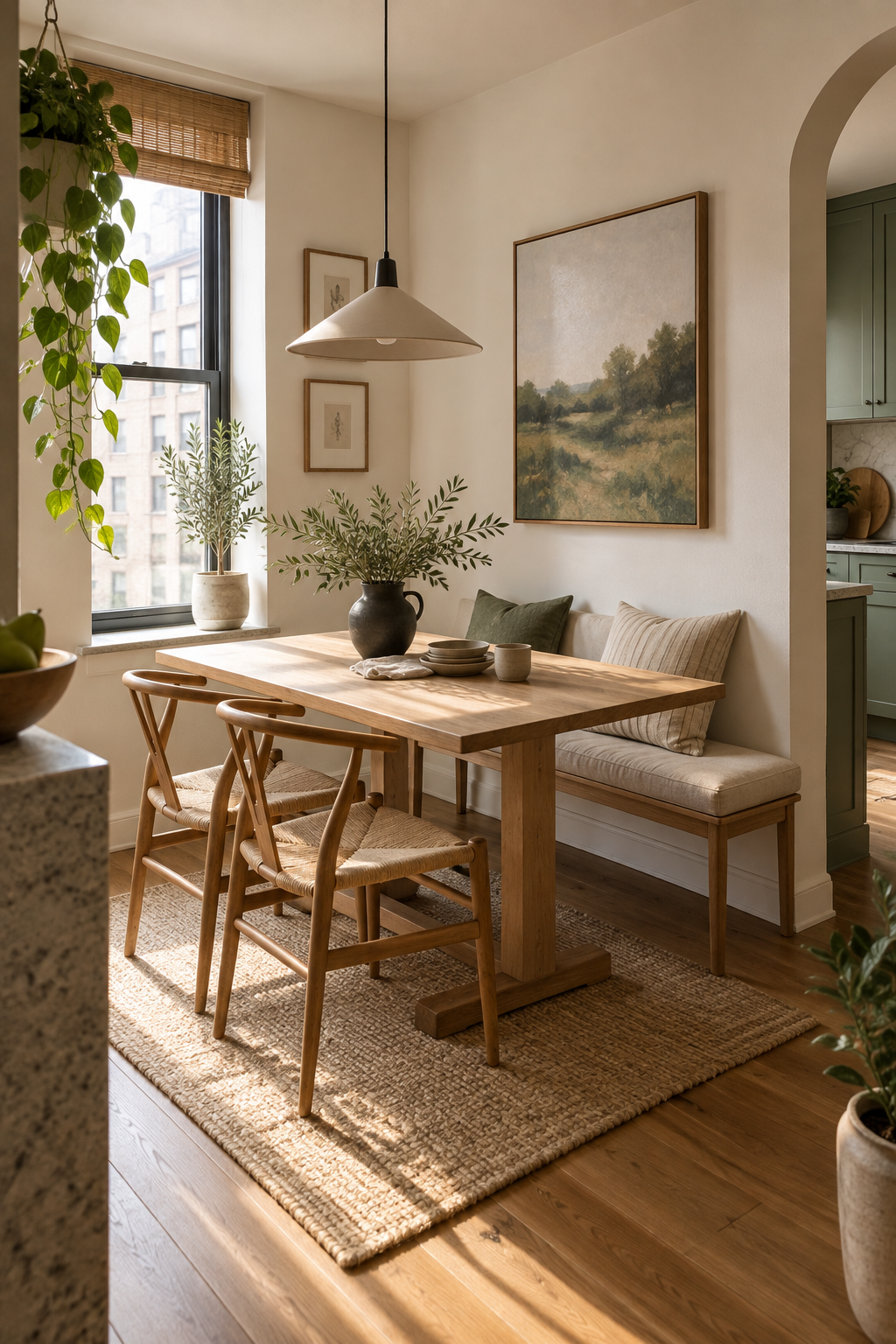
Use use a Slim Bench against the Wall as the focal decision for this area. Consider the room from the doorway and check the scale against nearby furniture, windows and walking paths. Build the look with natural wood, woven upholstery, linen, ceramic and softly aged metal; repeating only two or three finishes keeps the composition cohesive and lets the featured detail remain clear.
Keep the palette grounded in warm oak, cream, soft taupe, muted green and small accents of black. Vary height and texture rather than adding unnecessary objects, and make sure chairs, doors, drawers and everyday routines still work comfortably. Finish by viewing the arrangement in daylight and evening light, then remove one competing accessory if the scene feels busy. This practical edit helps the idea look collected, photogenic and realistic in an everyday home.
4. Choose an Extendable Table for Flexible Seating
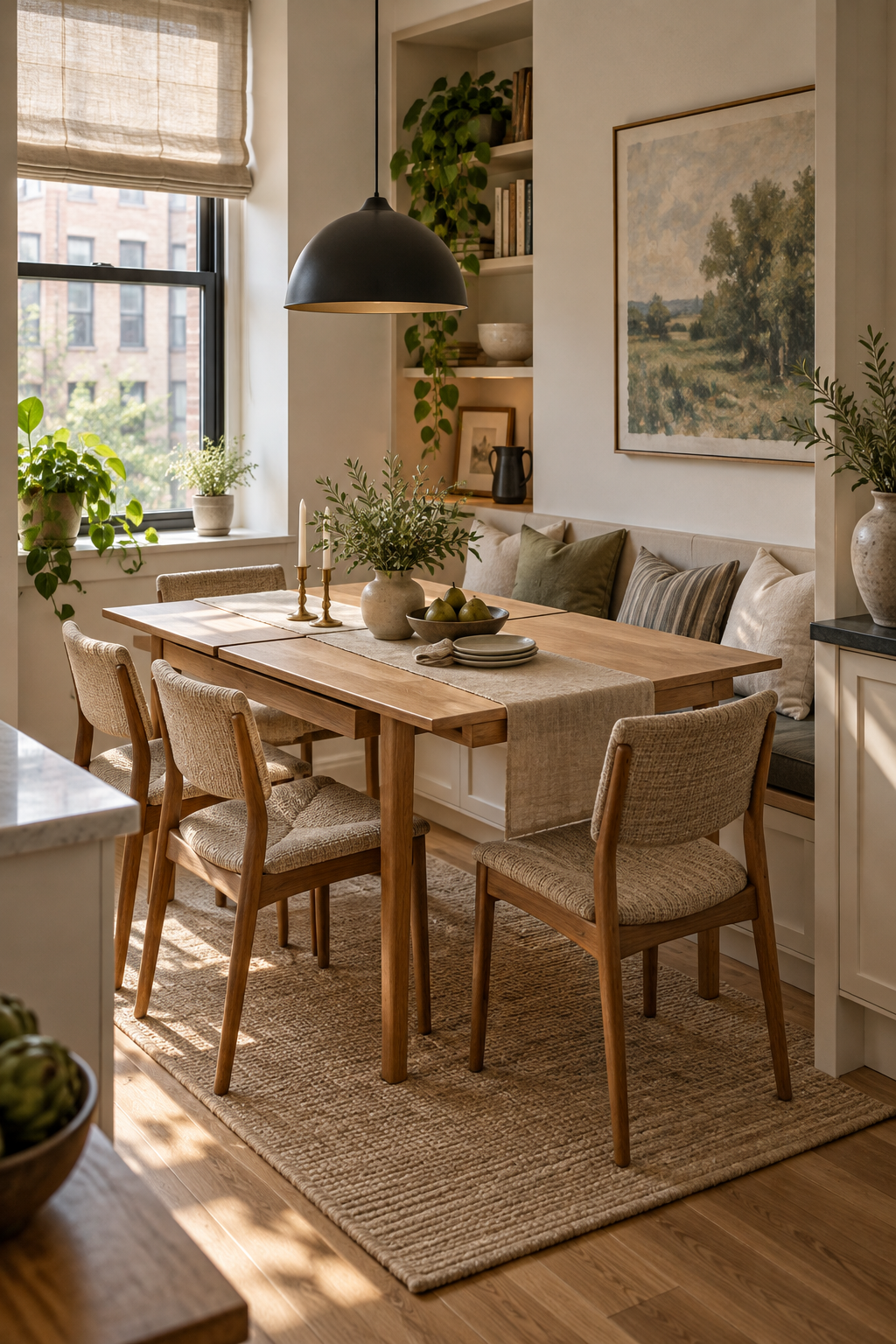
Layer choose an Extendable Table for Flexible Seating as the focal decision for this area. Consider the room from the doorway and check the scale against nearby furniture, windows and walking paths. Build the look with natural wood, woven upholstery, linen, ceramic and softly aged metal; repeating only two or three finishes keeps the composition cohesive and lets the featured detail remain clear.
Keep the palette grounded in warm oak, cream, soft taupe, muted green and small accents of black. Vary height and texture rather than adding unnecessary objects, and make sure chairs, doors, drawers and everyday routines still work comfortably. Finish by viewing the arrangement in daylight and evening light, then remove one competing accessory if the scene feels busy. This practical edit helps the idea look collected, photogenic and realistic in an everyday home.
5. Create a Breakfast Nook beside the Kitchen
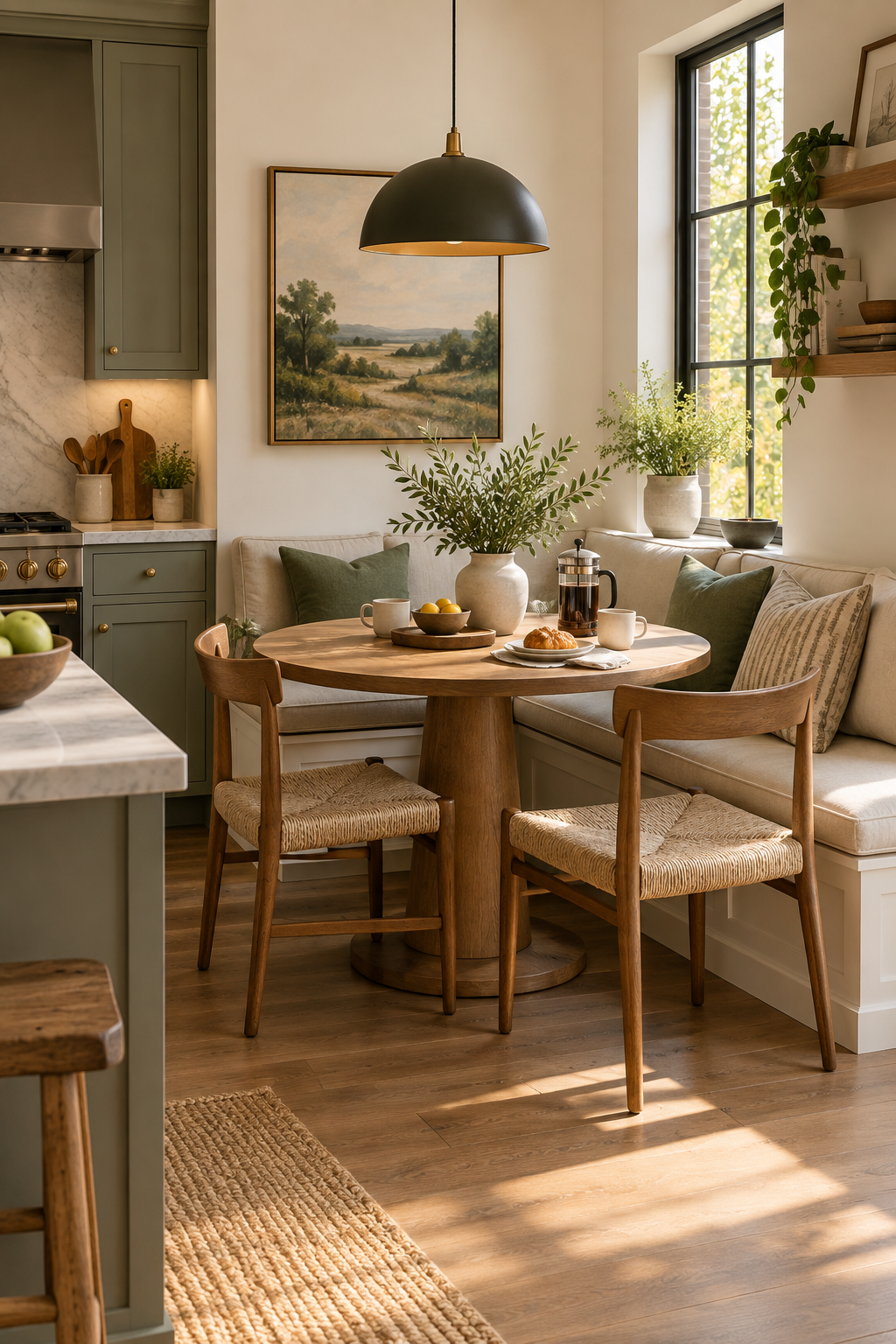
Choose create a Breakfast Nook beside the Kitchen as the focal decision for this area. Consider the room from the doorway and check the scale against nearby furniture, windows and walking paths. Build the look with natural wood, woven upholstery, linen, ceramic and softly aged metal; repeating only two or three finishes keeps the composition cohesive and lets the featured detail remain clear.
Keep the palette grounded in warm oak, cream, soft taupe, muted green and small accents of black. Vary height and texture rather than adding unnecessary objects, and make sure chairs, doors, drawers and everyday routines still work comfortably. Finish by viewing the arrangement in daylight and evening light, then remove one competing accessory if the scene feels busy. This practical edit helps the idea look collected, photogenic and realistic in an everyday home.
6. Float a Tiny Table behind the Sofa
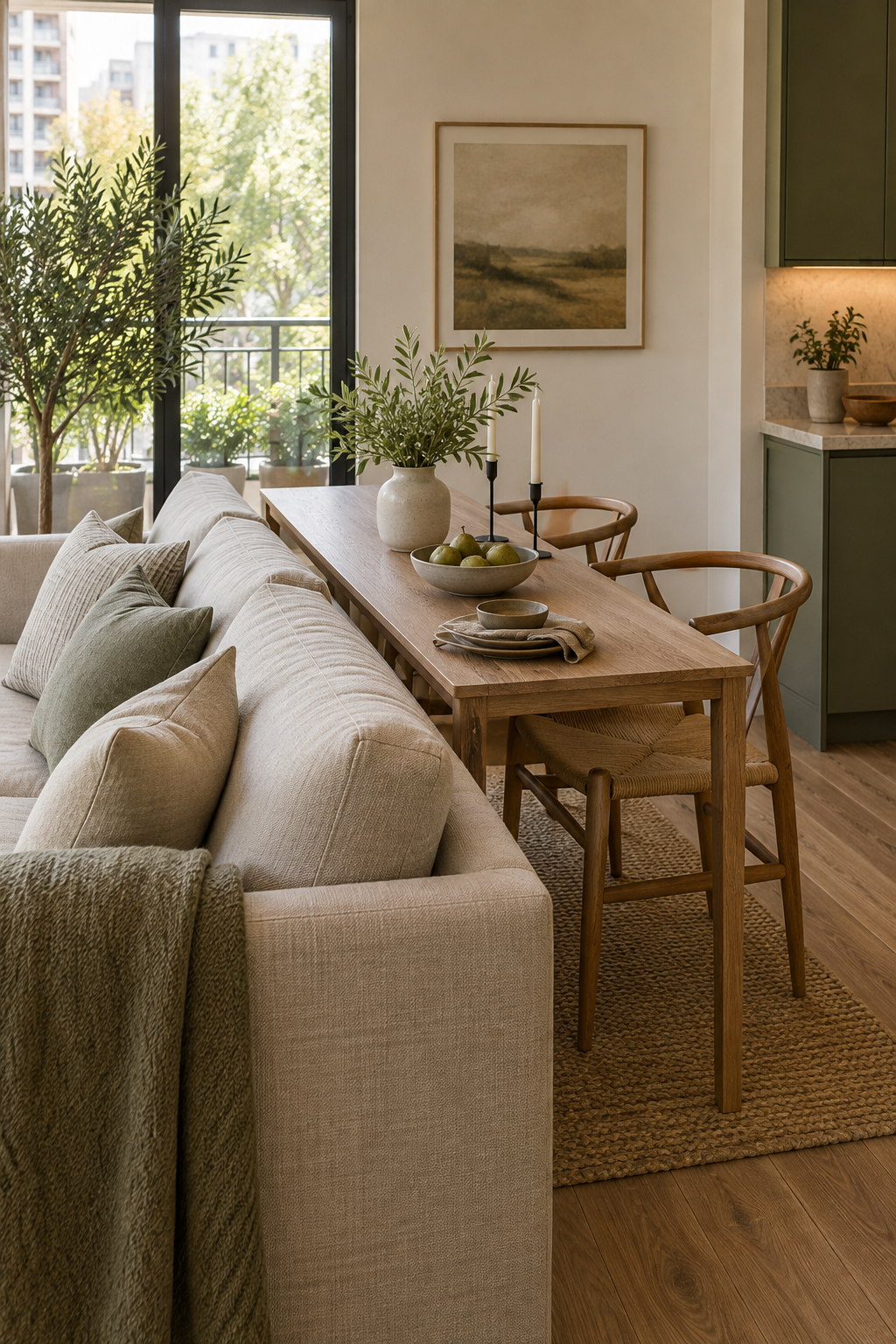
Bring in float a Tiny Table behind the Sofa as the focal decision for this area. Consider the room from the doorway and check the scale against nearby furniture, windows and walking paths. Build the look with natural wood, woven upholstery, linen, ceramic and softly aged metal; repeating only two or three finishes keeps the composition cohesive and lets the featured detail remain clear.
Keep the palette grounded in warm oak, cream, soft taupe, muted green and small accents of black. Vary height and texture rather than adding unnecessary objects, and make sure chairs, doors, drawers and everyday routines still work comfortably. Finish by viewing the arrangement in daylight and evening light, then remove one competing accessory if the scene feels busy. This practical edit helps the idea look collected, photogenic and realistic in an everyday home.
7. Add a Corner Bench with Hidden Storage
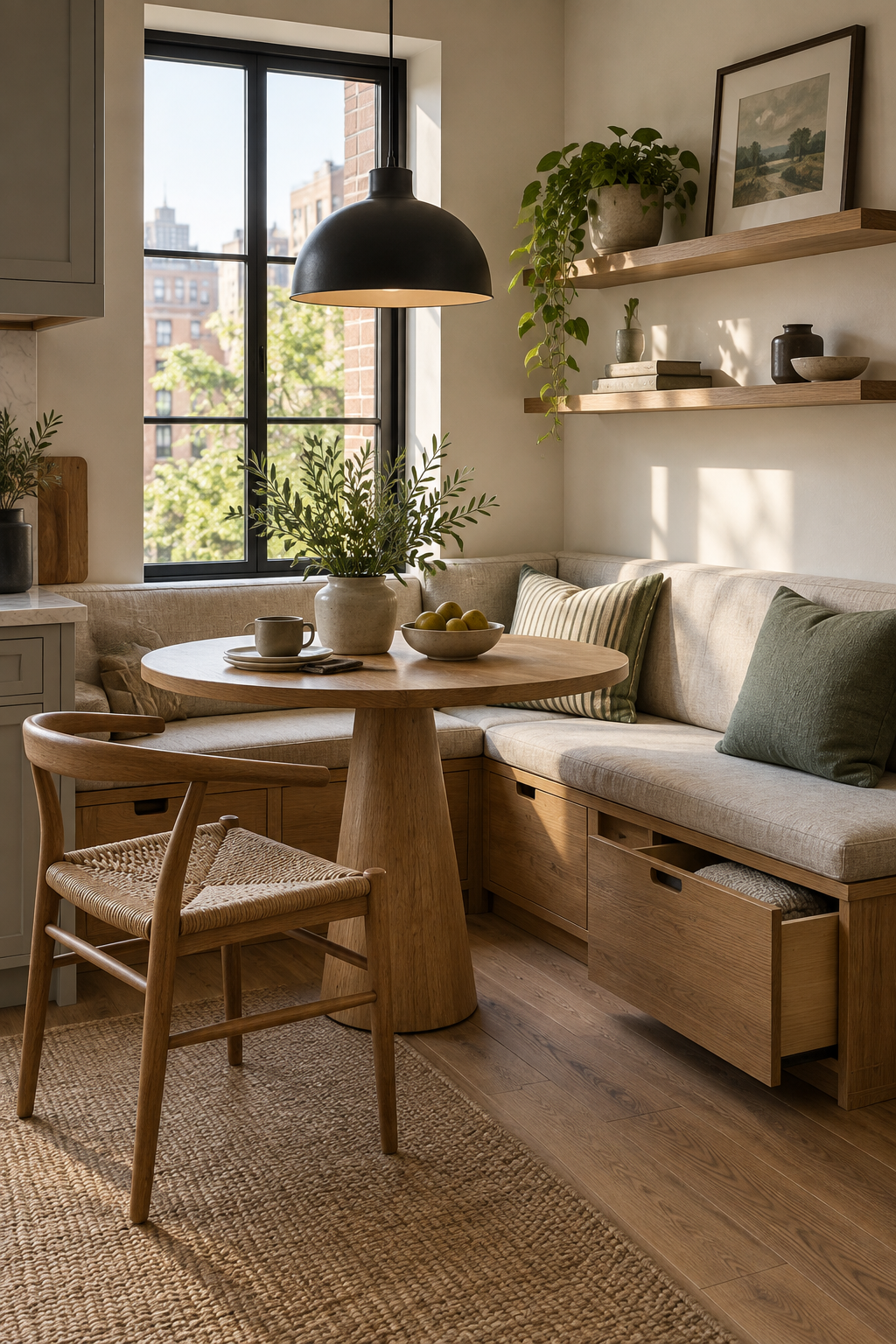
Define the room with add a Corner Bench with Hidden Storage as the focal decision for this area. Consider the room from the doorway and check the scale against nearby furniture, windows and walking paths. Build the look with natural wood, woven upholstery, linen, ceramic and softly aged metal; repeating only two or three finishes keeps the composition cohesive and lets the featured detail remain clear.
Keep the palette grounded in warm oak, cream, soft taupe, muted green and small accents of black. Vary height and texture rather than adding unnecessary objects, and make sure chairs, doors, drawers and everyday routines still work comfortably. Finish by viewing the arrangement in daylight and evening light, then remove one competing accessory if the scene feels busy. This practical edit helps the idea look collected, photogenic and realistic in an everyday home.
8. Use Café Chairs to Keep the Layout Light
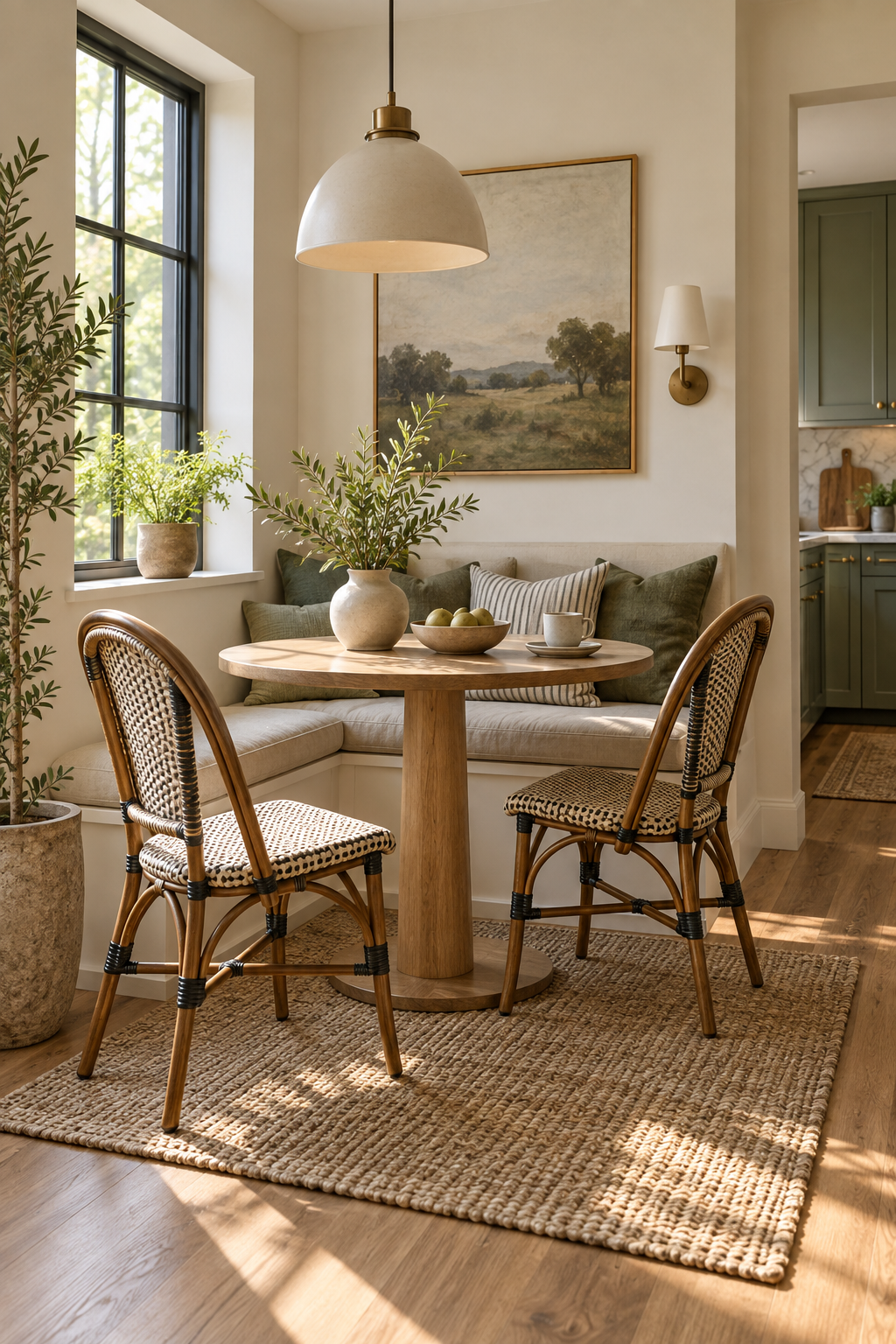
Balance use Café Chairs to Keep the Layout Light as the focal decision for this area. Consider the room from the doorway and check the scale against nearby furniture, windows and walking paths. Build the look with natural wood, woven upholstery, linen, ceramic and softly aged metal; repeating only two or three finishes keeps the composition cohesive and lets the featured detail remain clear.
Keep the palette grounded in warm oak, cream, soft taupe, muted green and small accents of black. Vary height and texture rather than adding unnecessary objects, and make sure chairs, doors, drawers and everyday routines still work comfortably. Finish by viewing the arrangement in daylight and evening light, then remove one competing accessory if the scene feels busy. This practical edit helps the idea look collected, photogenic and realistic in an everyday home.
9. Define the Nook with a Pendant Light
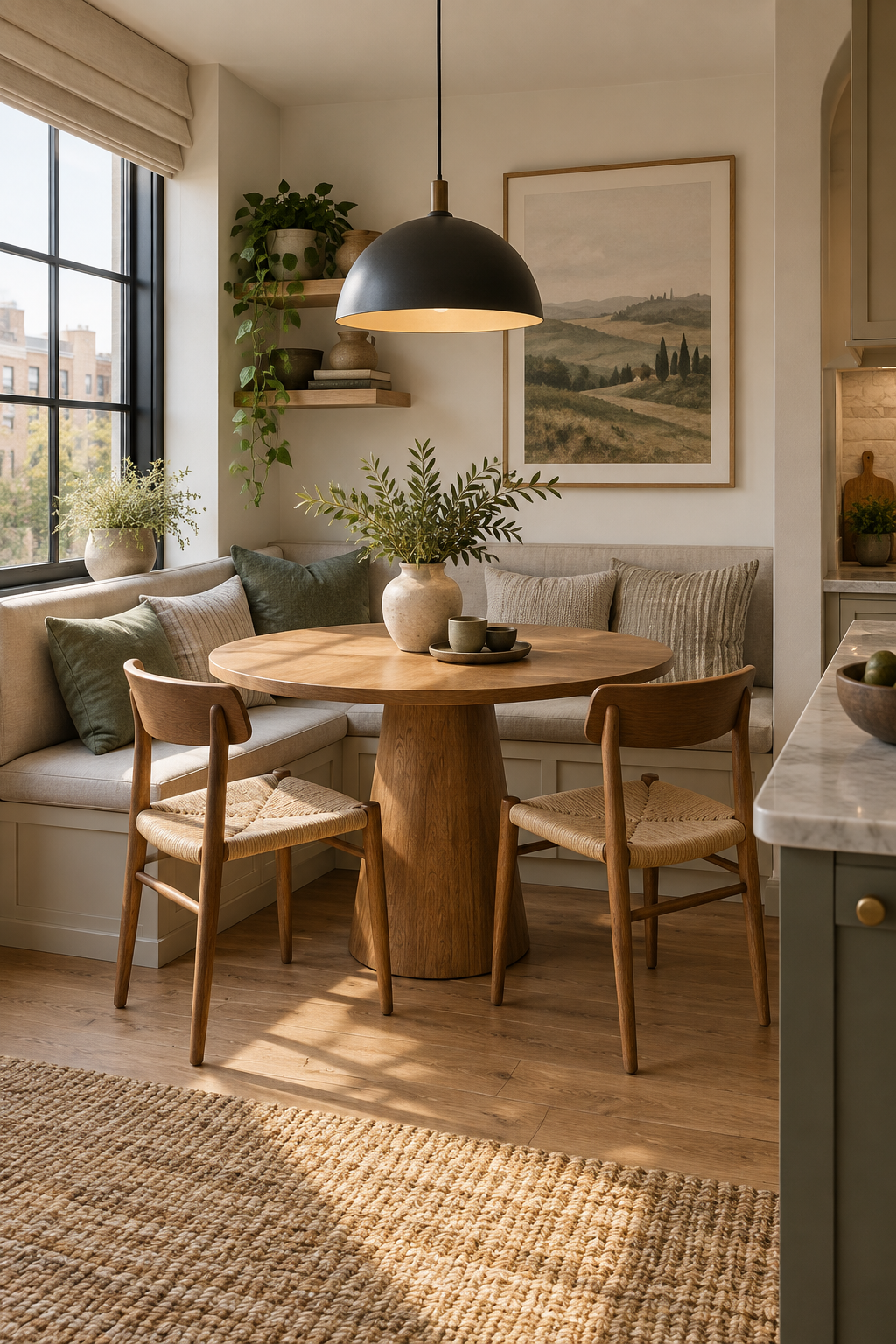
Highlight define the Nook with a Pendant Light as the focal decision for this area. Consider the room from the doorway and check the scale against nearby furniture, windows and walking paths. Build the look with natural wood, woven upholstery, linen, ceramic and softly aged metal; repeating only two or three finishes keeps the composition cohesive and lets the featured detail remain clear.
Keep the palette grounded in warm oak, cream, soft taupe, muted green and small accents of black. Vary height and texture rather than adding unnecessary objects, and make sure chairs, doors, drawers and everyday routines still work comfortably. Finish by viewing the arrangement in daylight and evening light, then remove one competing accessory if the scene feels busy. This practical edit helps the idea look collected, photogenic and realistic in an everyday home.
10. Try a Wall-Mounted Drop-Leaf Table
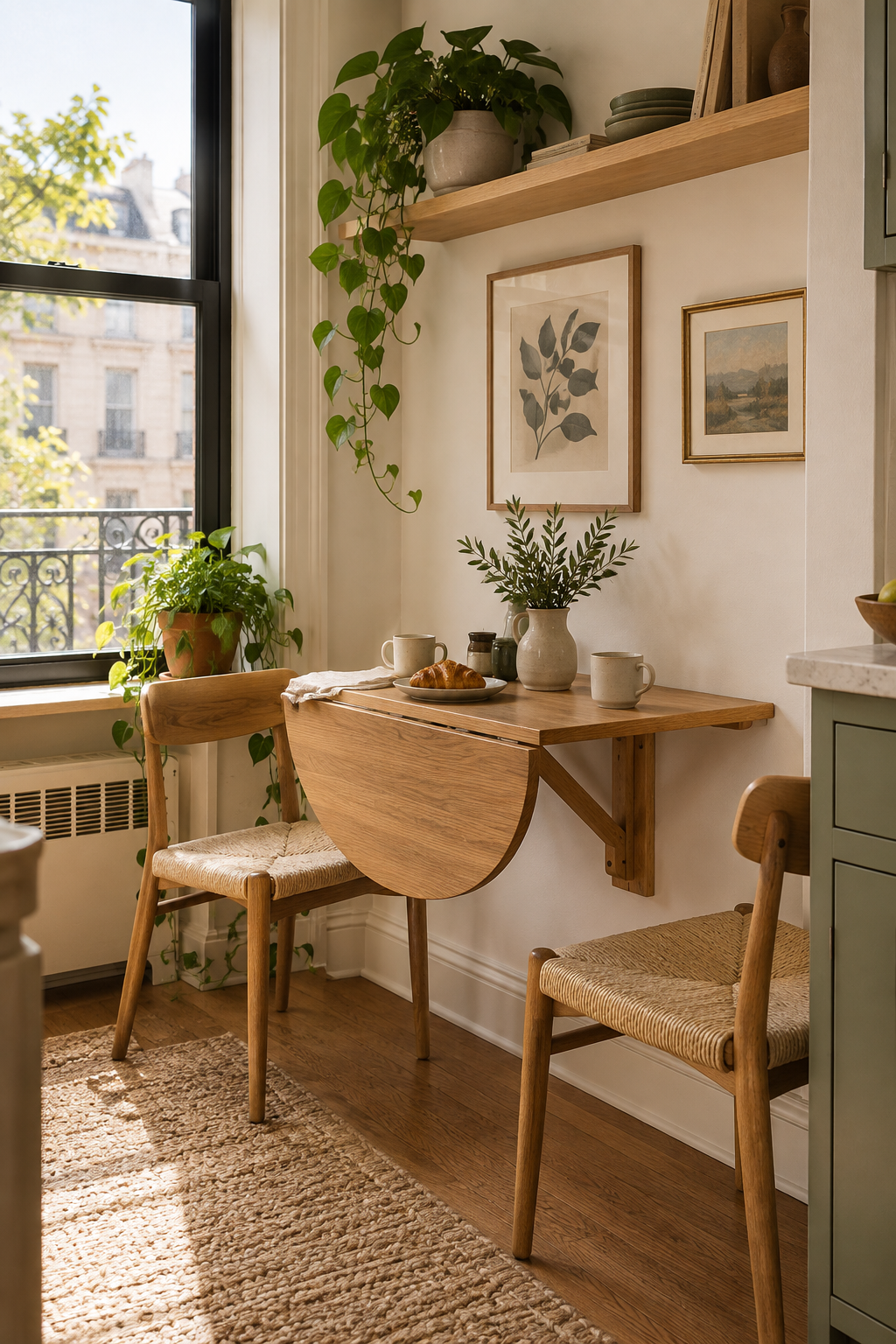
Refresh the space with try a Wall-Mounted Drop-Leaf Table as the focal decision for this area. Consider the room from the doorway and check the scale against nearby furniture, windows and walking paths. Build the look with natural wood, woven upholstery, linen, ceramic and softly aged metal; repeating only two or three finishes keeps the composition cohesive and lets the featured detail remain clear.
Keep the palette grounded in warm oak, cream, soft taupe, muted green and small accents of black. Vary height and texture rather than adding unnecessary objects, and make sure chairs, doors, drawers and everyday routines still work comfortably. Finish by viewing the arrangement in daylight and evening light, then remove one competing accessory if the scene feels busy. This practical edit helps the idea look collected, photogenic and realistic in an everyday home.
11. Turn a Bay Window into a Dining Nook
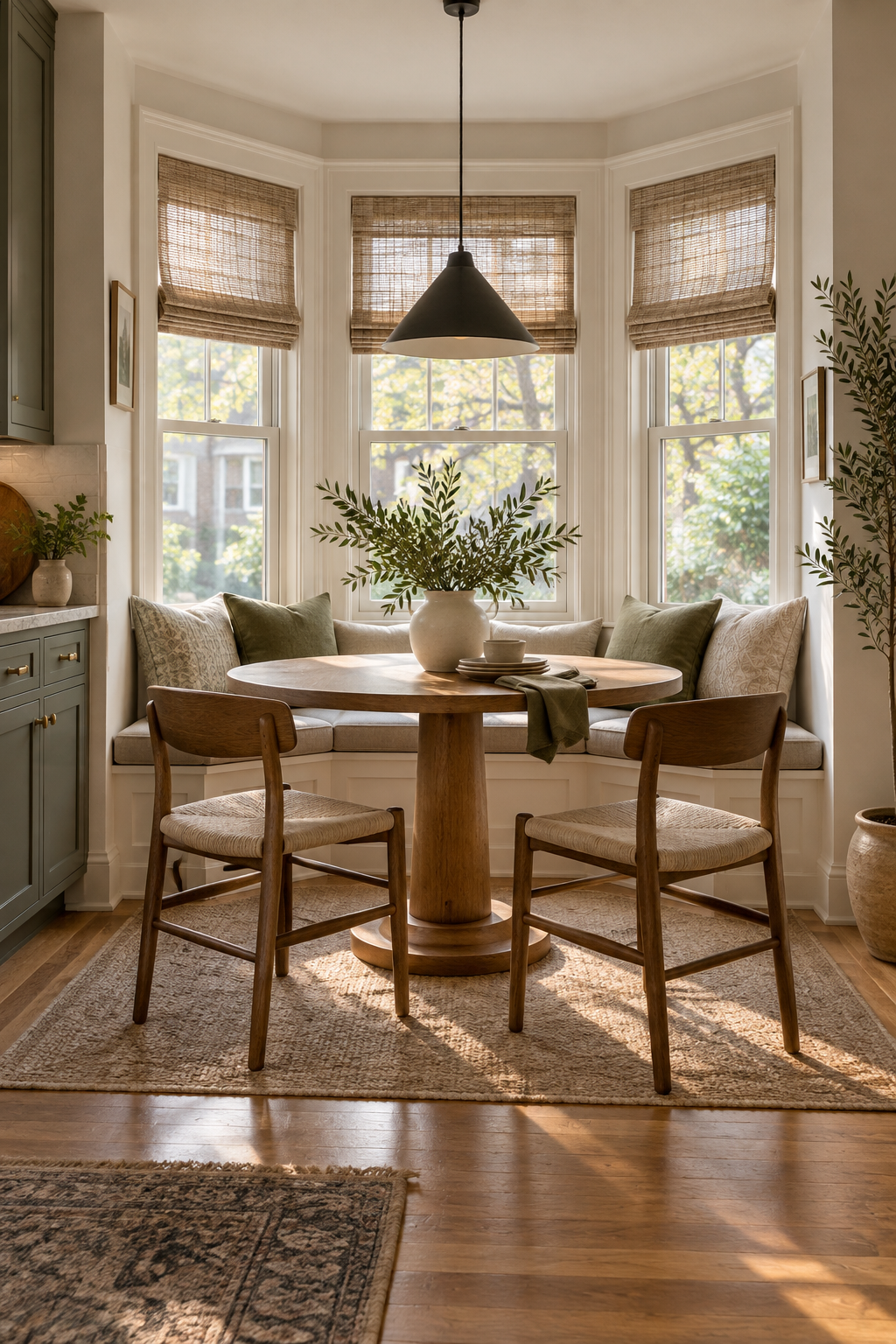
Build around turn a Bay Window into a Dining Nook as the focal decision for this area. Consider the room from the doorway and check the scale against nearby furniture, windows and walking paths. Build the look with natural wood, woven upholstery, linen, ceramic and softly aged metal; repeating only two or three finishes keeps the composition cohesive and lets the featured detail remain clear.
Keep the palette grounded in warm oak, cream, soft taupe, muted green and small accents of black. Vary height and texture rather than adding unnecessary objects, and make sure chairs, doors, drawers and everyday routines still work comfortably. Finish by viewing the arrangement in daylight and evening light, then remove one competing accessory if the scene feels busy. This practical edit helps the idea look collected, photogenic and realistic in an everyday home.
12. Choose an Oval Table for Easier Circulation
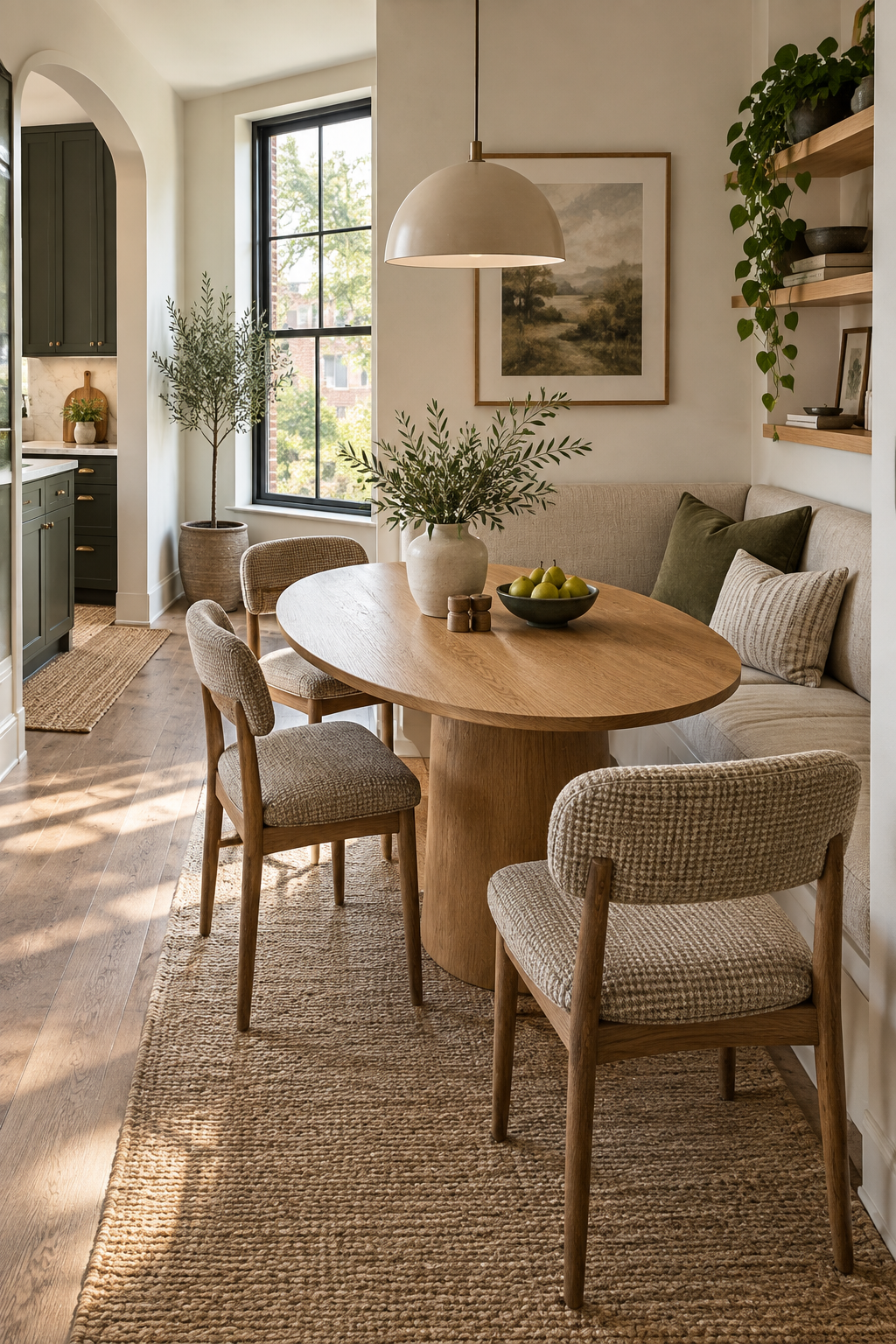
Try choose an Oval Table for Easier Circulation as the focal decision for this area. Consider the room from the doorway and check the scale against nearby furniture, windows and walking paths. Build the look with natural wood, woven upholstery, linen, ceramic and softly aged metal; repeating only two or three finishes keeps the composition cohesive and lets the featured detail remain clear.
Keep the palette grounded in warm oak, cream, soft taupe, muted green and small accents of black. Vary height and texture rather than adding unnecessary objects, and make sure chairs, doors, drawers and everyday routines still work comfortably. Finish by viewing the arrangement in daylight and evening light, then remove one competing accessory if the scene feels busy. This practical edit helps the idea look collected, photogenic and realistic in an everyday home.
13. Add Cushions to a Simple Built-In Bench
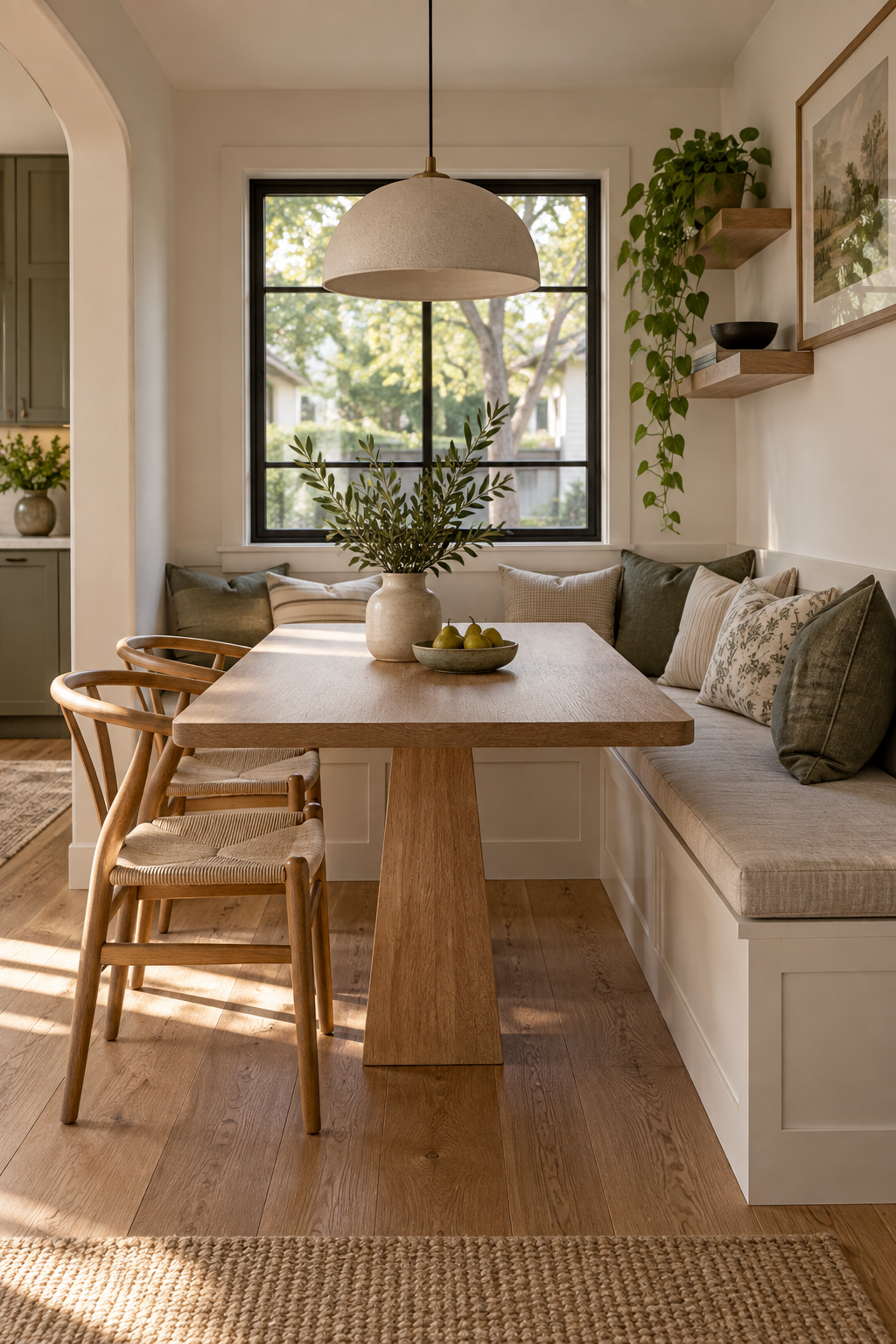
Make room for add Cushions to a Simple Built-In Bench as the focal decision for this area. Consider the room from the doorway and check the scale against nearby furniture, windows and walking paths. Build the look with natural wood, woven upholstery, linen, ceramic and softly aged metal; repeating only two or three finishes keeps the composition cohesive and lets the featured detail remain clear.
Keep the palette grounded in warm oak, cream, soft taupe, muted green and small accents of black. Vary height and texture rather than adding unnecessary objects, and make sure chairs, doors, drawers and everyday routines still work comfortably. Finish by viewing the arrangement in daylight and evening light, then remove one competing accessory if the scene feels busy. This practical edit helps the idea look collected, photogenic and realistic in an everyday home.
14. Use a Rug to Zone an Open-Plan Nook
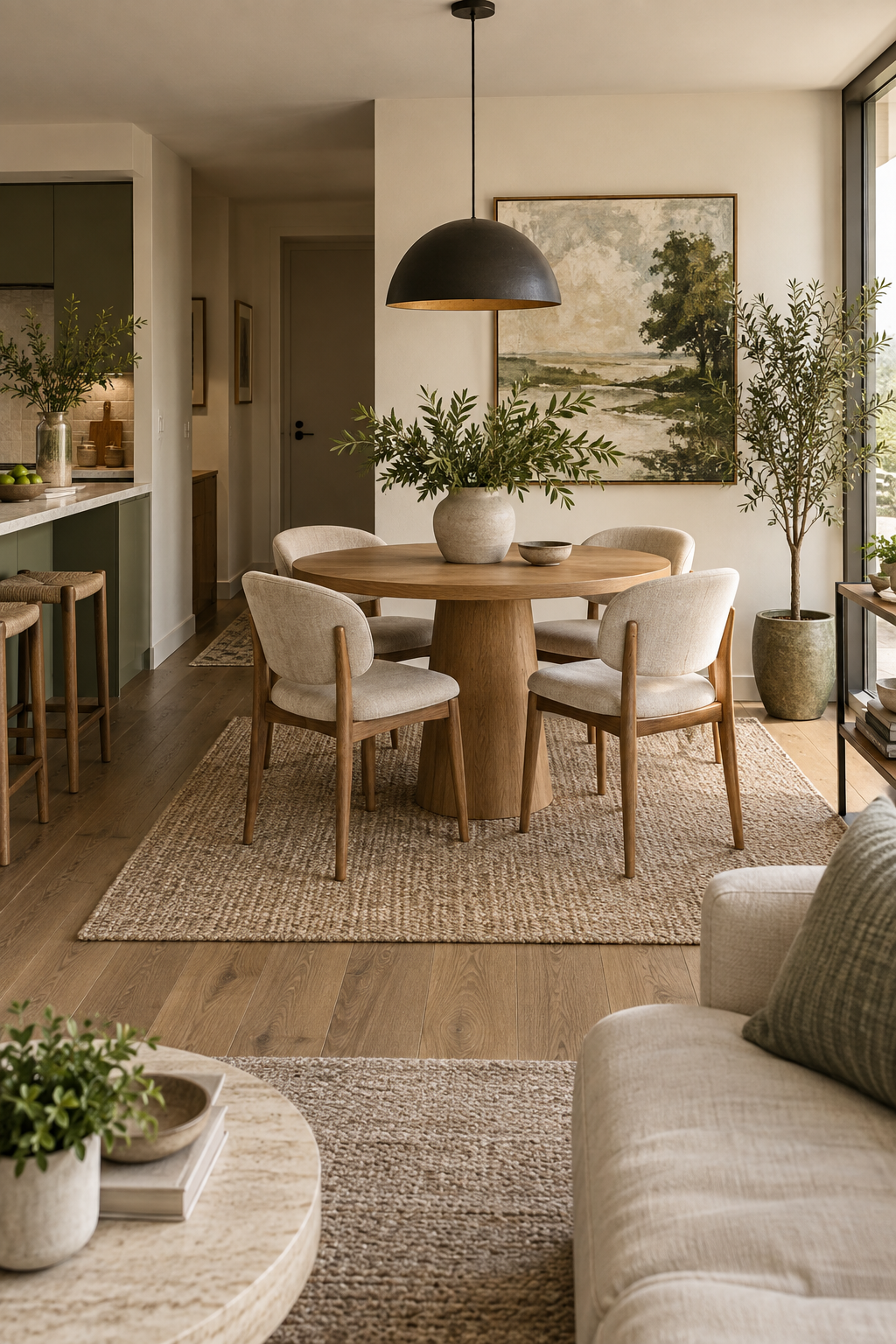
Style use a Rug to Zone an Open-Plan Nook as the focal decision for this area. Consider the room from the doorway and check the scale against nearby furniture, windows and walking paths. Build the look with natural wood, woven upholstery, linen, ceramic and softly aged metal; repeating only two or three finishes keeps the composition cohesive and lets the featured detail remain clear.
Keep the palette grounded in warm oak, cream, soft taupe, muted green and small accents of black. Vary height and texture rather than adding unnecessary objects, and make sure chairs, doors, drawers and everyday routines still work comfortably. Finish by viewing the arrangement in daylight and evening light, then remove one competing accessory if the scene feels busy. This practical edit helps the idea look collected, photogenic and realistic in an everyday home.
15. Create a Two-Person Bistro Corner
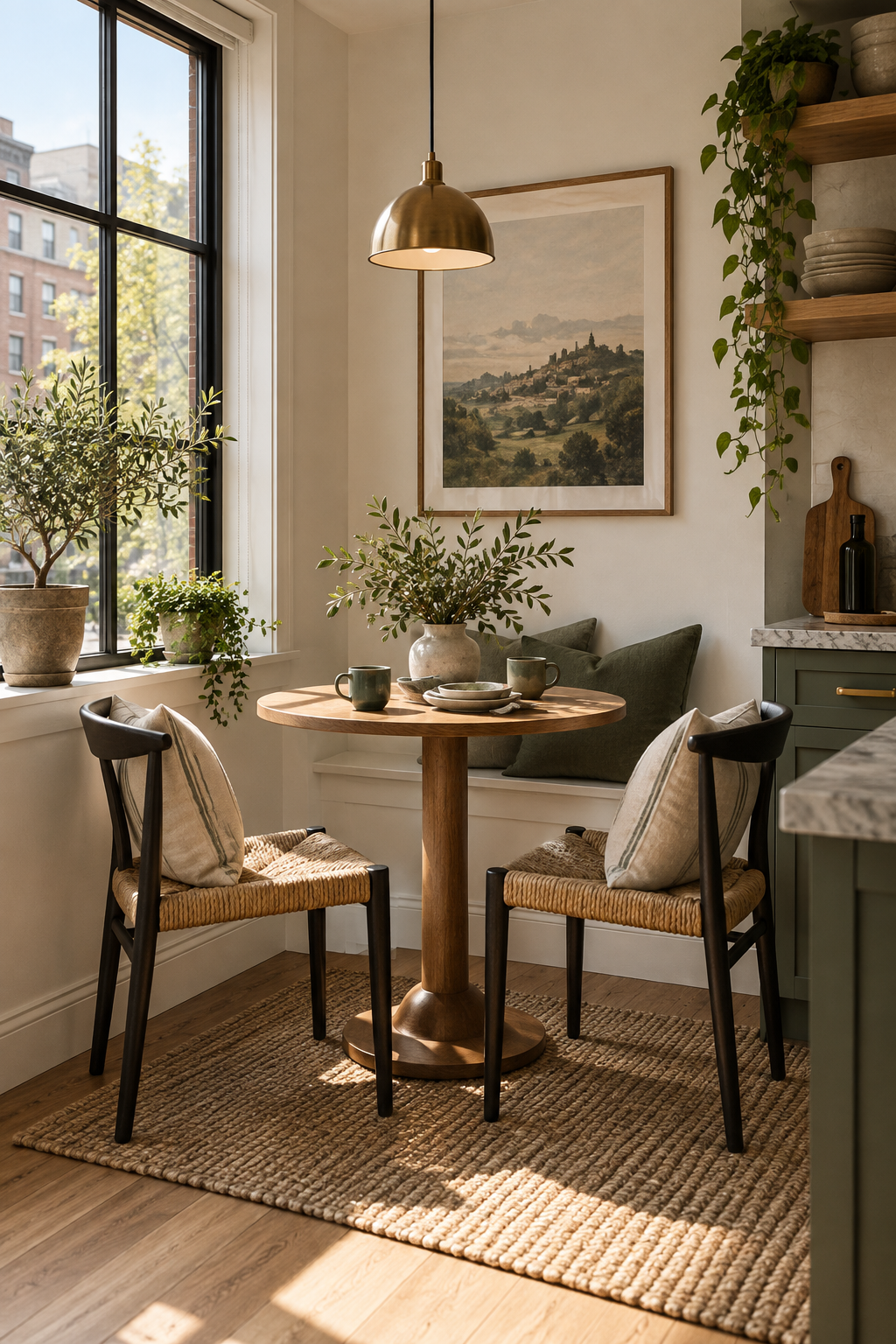
Add warmth through create a Two-Person Bistro Corner as the focal decision for this area. Consider the room from the doorway and check the scale against nearby furniture, windows and walking paths. Build the look with natural wood, woven upholstery, linen, ceramic and softly aged metal; repeating only two or three finishes keeps the composition cohesive and lets the featured detail remain clear.
Keep the palette grounded in warm oak, cream, soft taupe, muted green and small accents of black. Vary height and texture rather than adding unnecessary objects, and make sure chairs, doors, drawers and everyday routines still work comfortably. Finish by viewing the arrangement in daylight and evening light, then remove one competing accessory if the scene feels busy. This practical edit helps the idea look collected, photogenic and realistic in an everyday home.
16. Mix a Bench with Two Dining Chairs
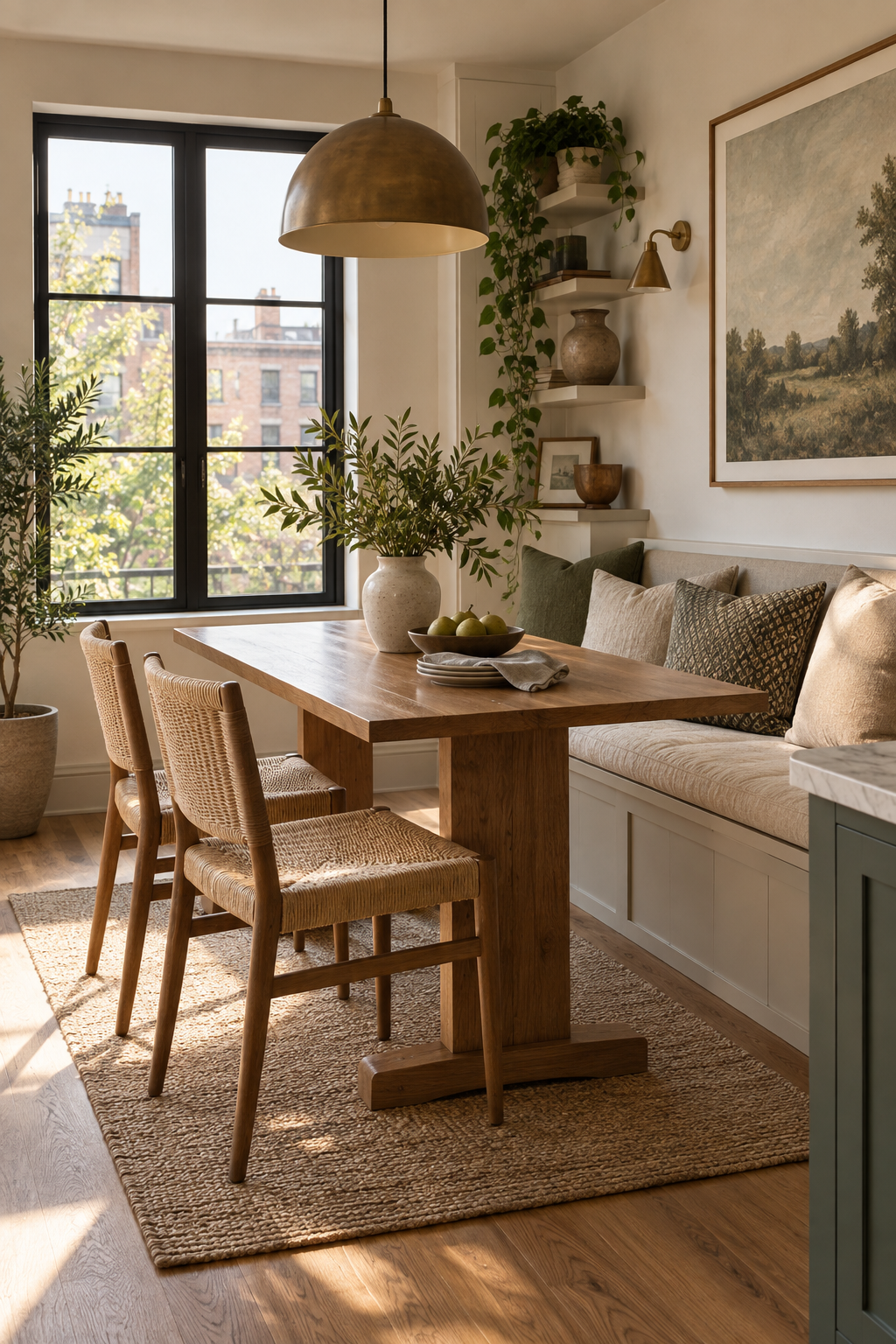
Plan mix a Bench with Two Dining Chairs as the focal decision for this area. Consider the room from the doorway and check the scale against nearby furniture, windows and walking paths. Build the look with natural wood, woven upholstery, linen, ceramic and softly aged metal; repeating only two or three finishes keeps the composition cohesive and lets the featured detail remain clear.
Keep the palette grounded in warm oak, cream, soft taupe, muted green and small accents of black. Vary height and texture rather than adding unnecessary objects, and make sure chairs, doors, drawers and everyday routines still work comfortably. Finish by viewing the arrangement in daylight and evening light, then remove one competing accessory if the scene feels busy. This practical edit helps the idea look collected, photogenic and realistic in an everyday home.
17. Use Vertical Shelving beside the Table
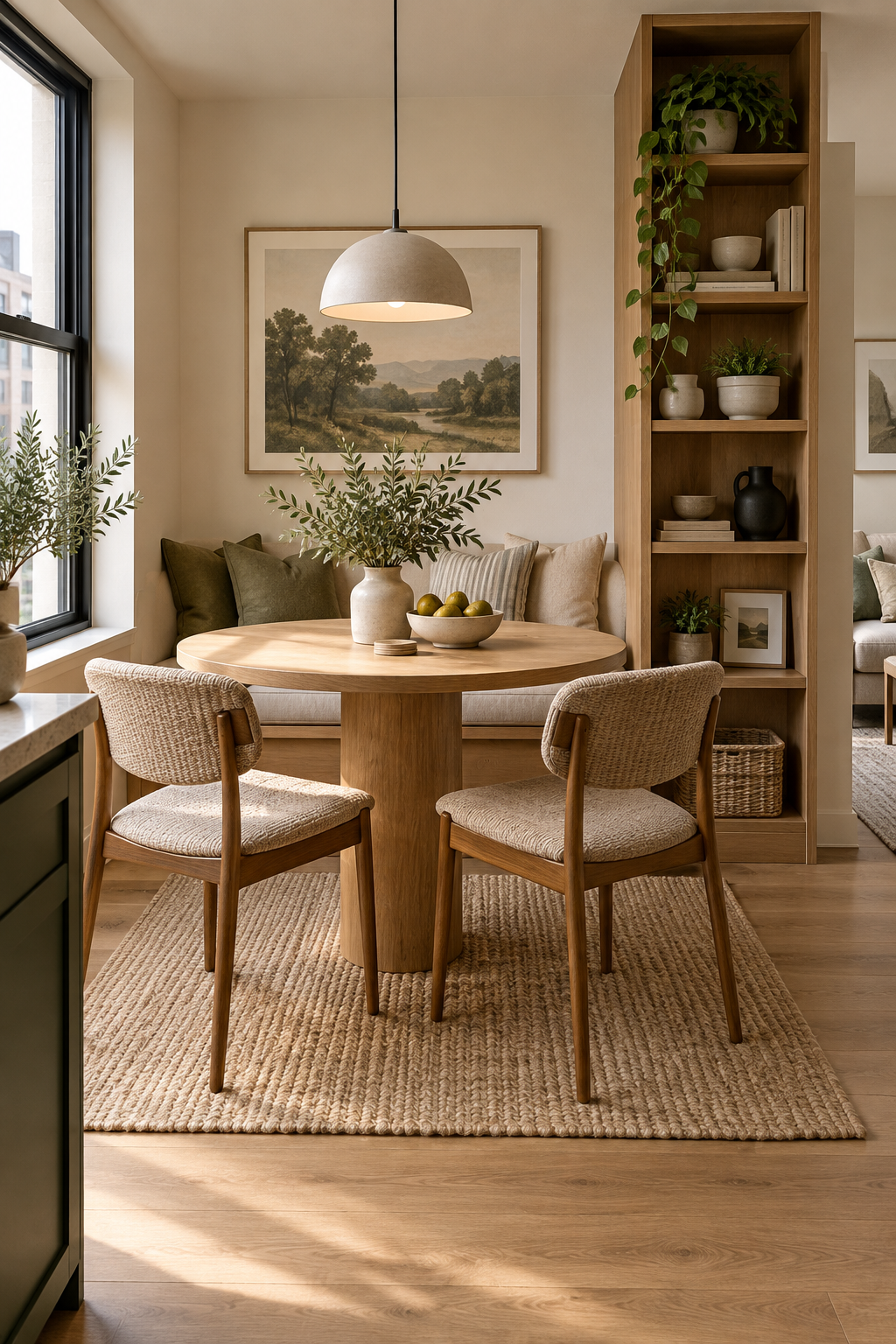
Give the room character with use Vertical Shelving beside the Table as the focal decision for this area. Consider the room from the doorway and check the scale against nearby furniture, windows and walking paths. Build the look with natural wood, woven upholstery, linen, ceramic and softly aged metal; repeating only two or three finishes keeps the composition cohesive and lets the featured detail remain clear.
Keep the palette grounded in warm oak, cream, soft taupe, muted green and small accents of black. Vary height and texture rather than adding unnecessary objects, and make sure chairs, doors, drawers and everyday routines still work comfortably. Finish by viewing the arrangement in daylight and evening light, then remove one competing accessory if the scene feels busy. This practical edit helps the idea look collected, photogenic and realistic in an everyday home.
18. Place a Dining Nook under the Stairs
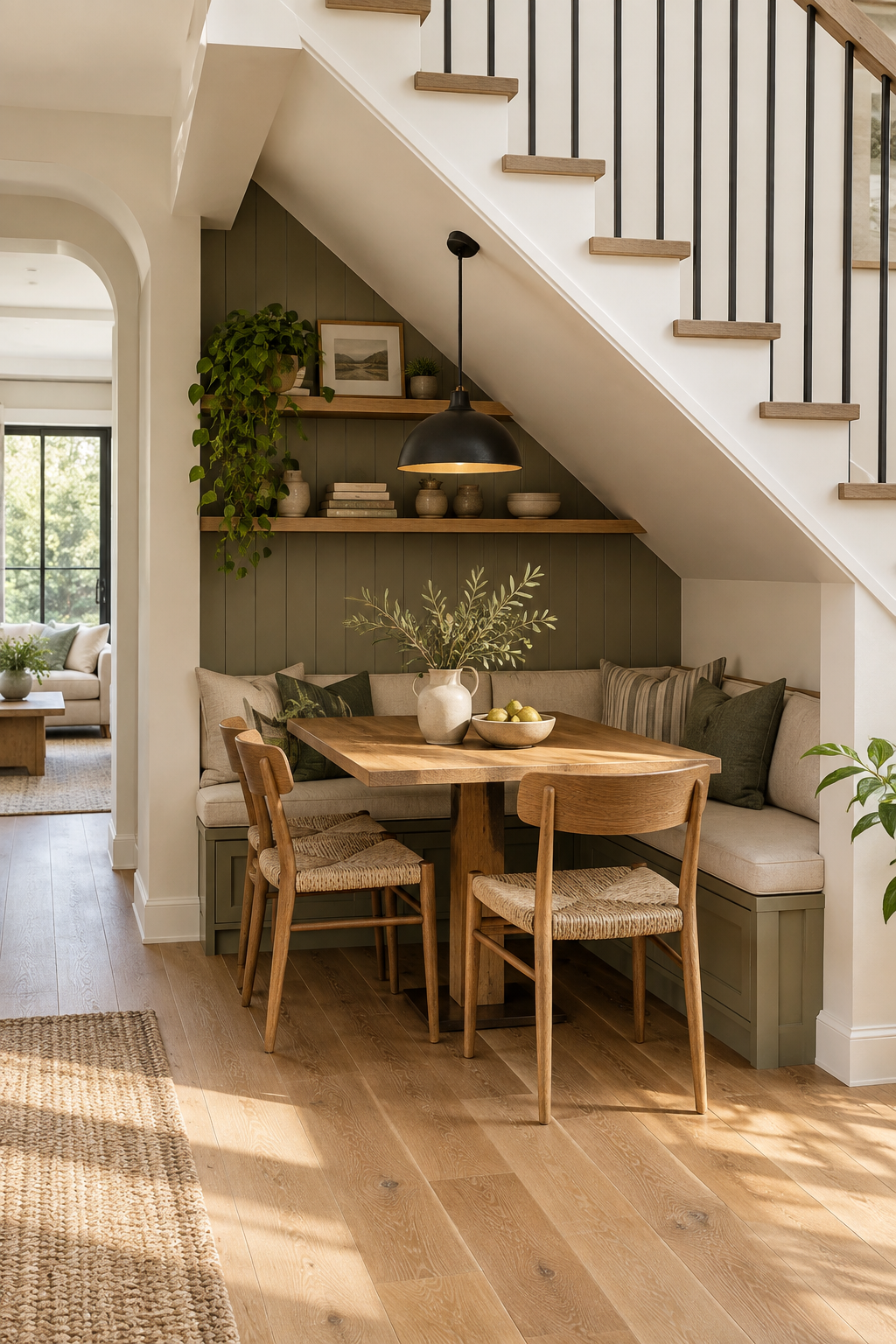
Introduce place a Dining Nook under the Stairs as the focal decision for this area. Consider the room from the doorway and check the scale against nearby furniture, windows and walking paths. Build the look with natural wood, woven upholstery, linen, ceramic and softly aged metal; repeating only two or three finishes keeps the composition cohesive and lets the featured detail remain clear.
Keep the palette grounded in warm oak, cream, soft taupe, muted green and small accents of black. Vary height and texture rather than adding unnecessary objects, and make sure chairs, doors, drawers and everyday routines still work comfortably. Finish by viewing the arrangement in daylight and evening light, then remove one competing accessory if the scene feels busy. This practical edit helps the idea look collected, photogenic and realistic in an everyday home.
19. Add a Mirror to Open the Corner
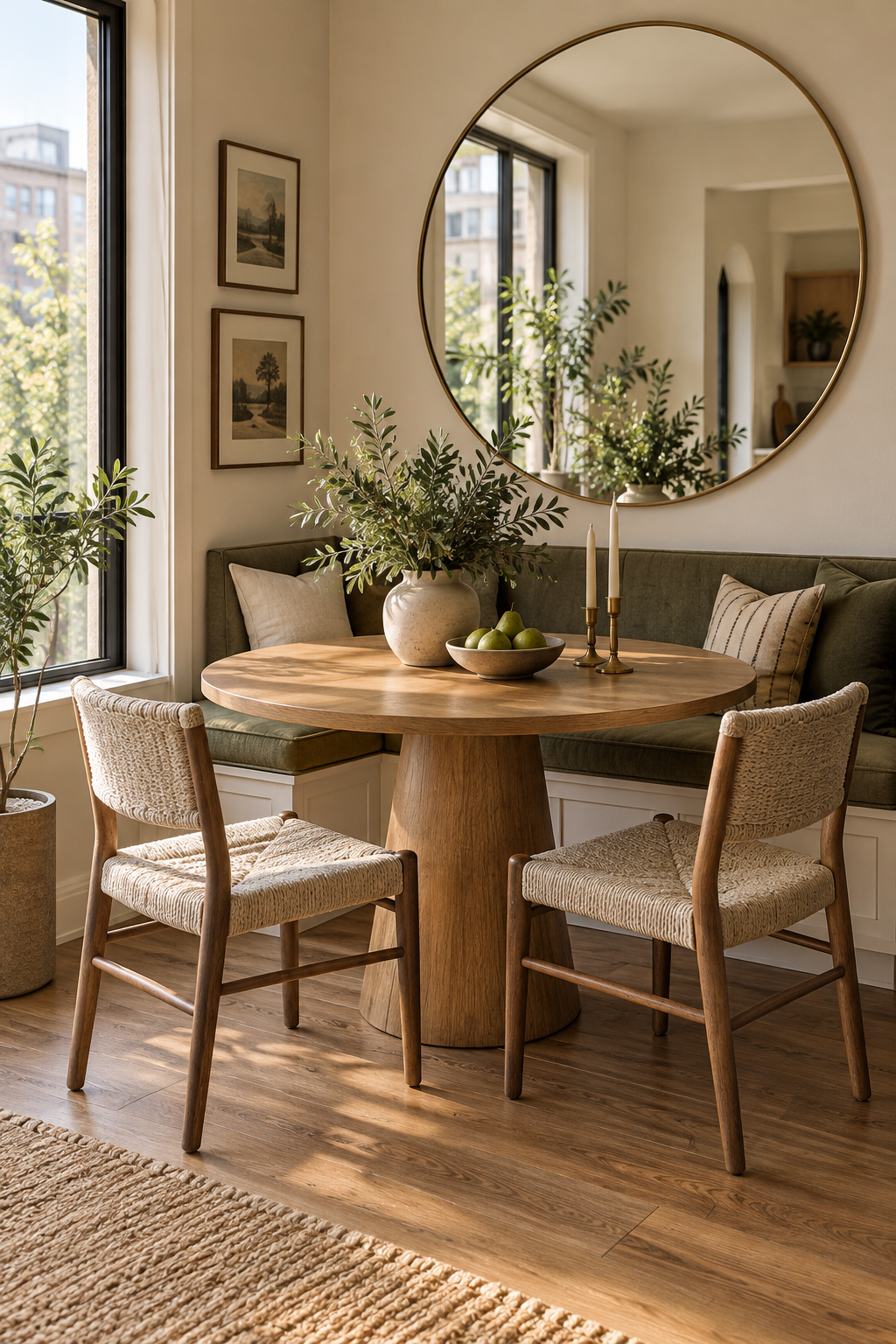
Keep the result practical with add a Mirror to Open the Corner as the focal decision for this area. Consider the room from the doorway and check the scale against nearby furniture, windows and walking paths. Build the look with natural wood, woven upholstery, linen, ceramic and softly aged metal; repeating only two or three finishes keeps the composition cohesive and lets the featured detail remain clear.
Keep the palette grounded in warm oak, cream, soft taupe, muted green and small accents of black. Vary height and texture rather than adding unnecessary objects, and make sure chairs, doors, drawers and everyday routines still work comfortably. Finish by viewing the arrangement in daylight and evening light, then remove one competing accessory if the scene feels busy. This practical edit helps the idea look collected, photogenic and realistic in an everyday home.
20. Choose Transparent Chairs for Visual Space
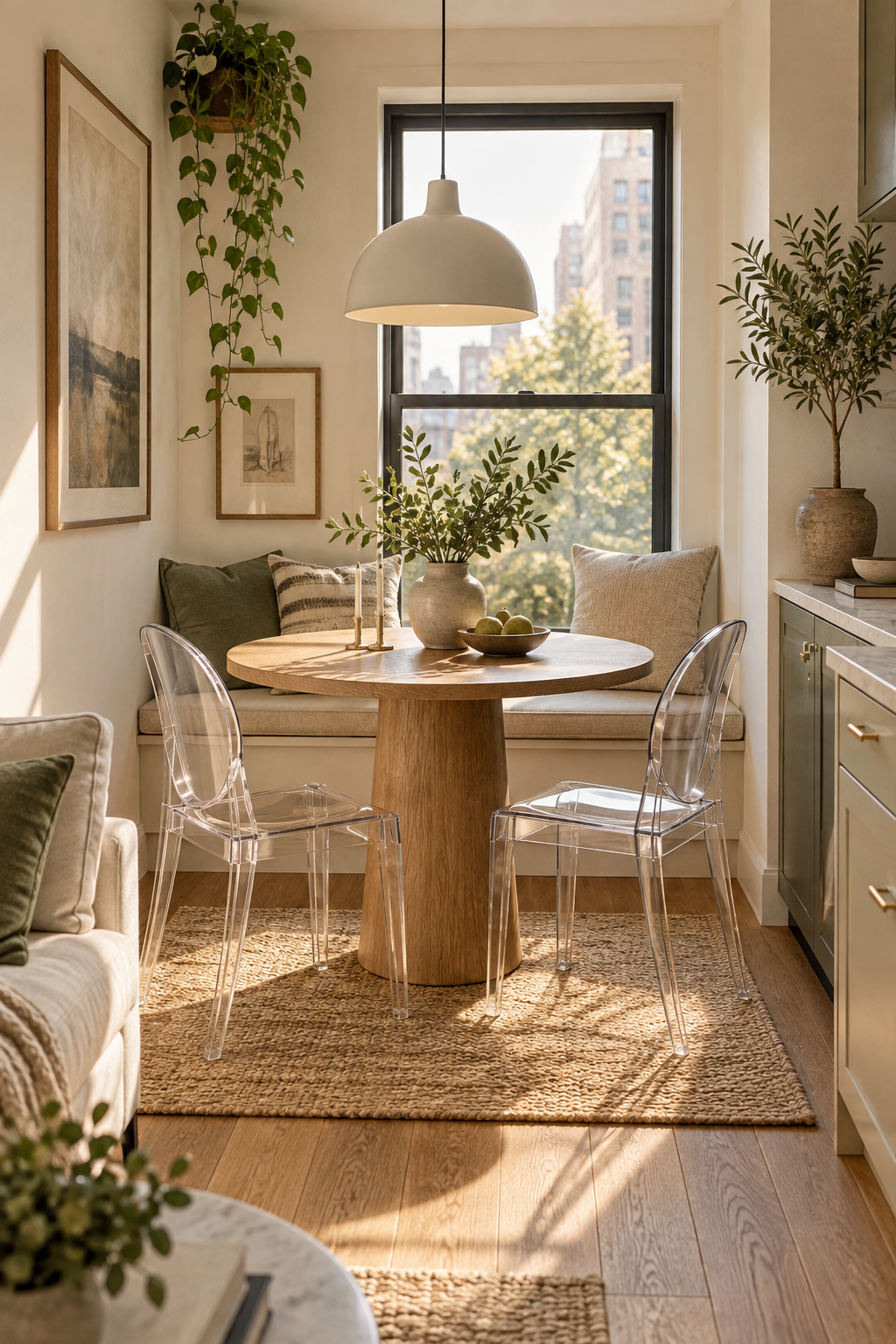
Finish with choose Transparent Chairs for Visual Space as the focal decision for this area. Consider the room from the doorway and check the scale against nearby furniture, windows and walking paths. Build the look with natural wood, woven upholstery, linen, ceramic and softly aged metal; repeating only two or three finishes keeps the composition cohesive and lets the featured detail remain clear.
Keep the palette grounded in warm oak, cream, soft taupe, muted green and small accents of black. Vary height and texture rather than adding unnecessary objects, and make sure chairs, doors, drawers and everyday routines still work comfortably. Finish by viewing the arrangement in daylight and evening light, then remove one competing accessory if the scene feels busy. This practical edit helps the idea look collected, photogenic and realistic in an everyday home.
21. Create a Coastal Dining Nook with Pale Wood
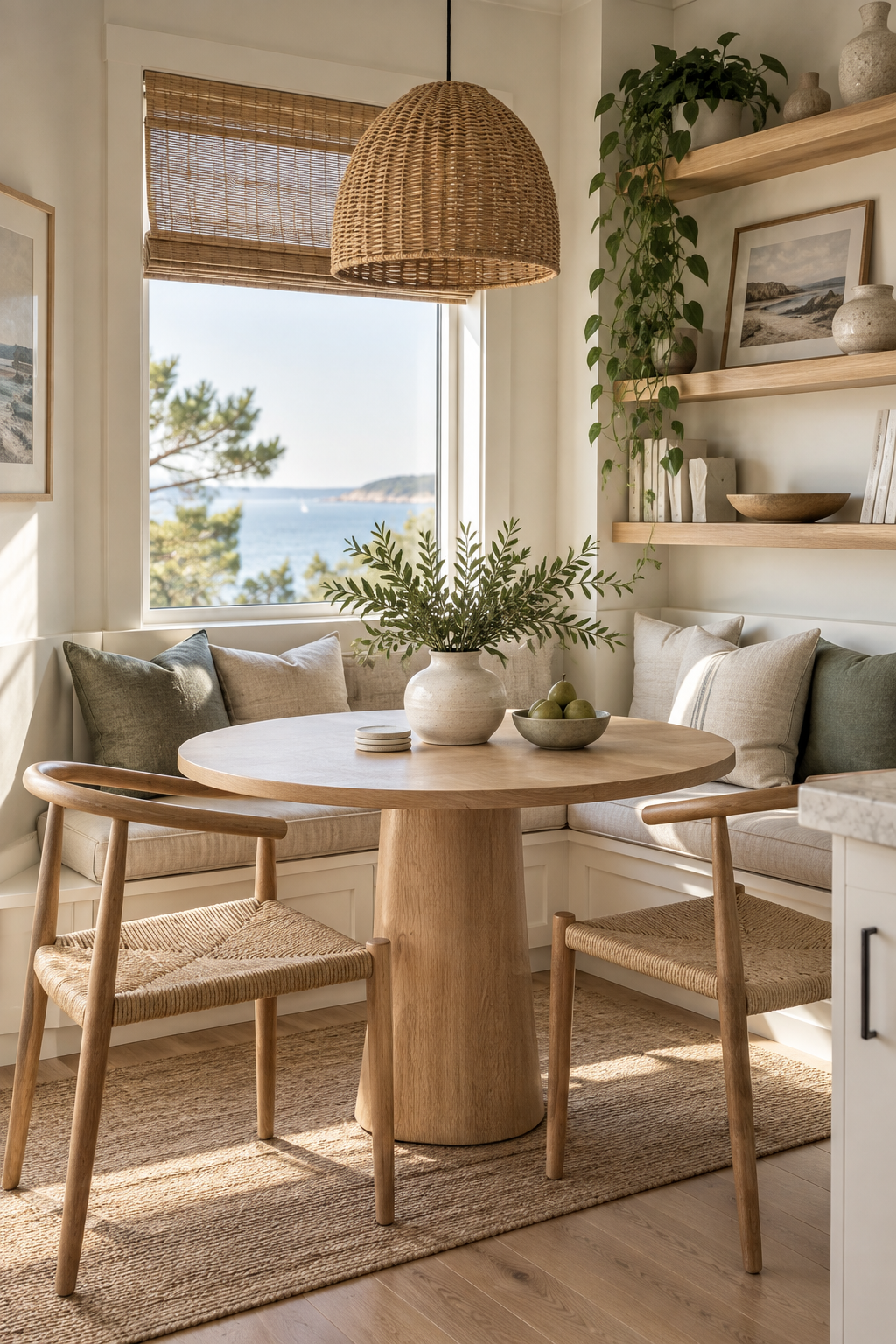
Start with create a Coastal Dining Nook with Pale Wood as the focal decision for this area. Consider the room from the doorway and check the scale against nearby furniture, windows and walking paths. Build the look with natural wood, woven upholstery, linen, ceramic and softly aged metal; repeating only two or three finishes keeps the composition cohesive and lets the featured detail remain clear.
Keep the palette grounded in warm oak, cream, soft taupe, muted green and small accents of black. Vary height and texture rather than adding unnecessary objects, and make sure chairs, doors, drawers and everyday routines still work comfortably. Finish by viewing the arrangement in daylight and evening light, then remove one competing accessory if the scene feels busy. This practical edit helps the idea look collected, photogenic and realistic in an everyday home.
22. Style a Warm Minimalist Dining Corner
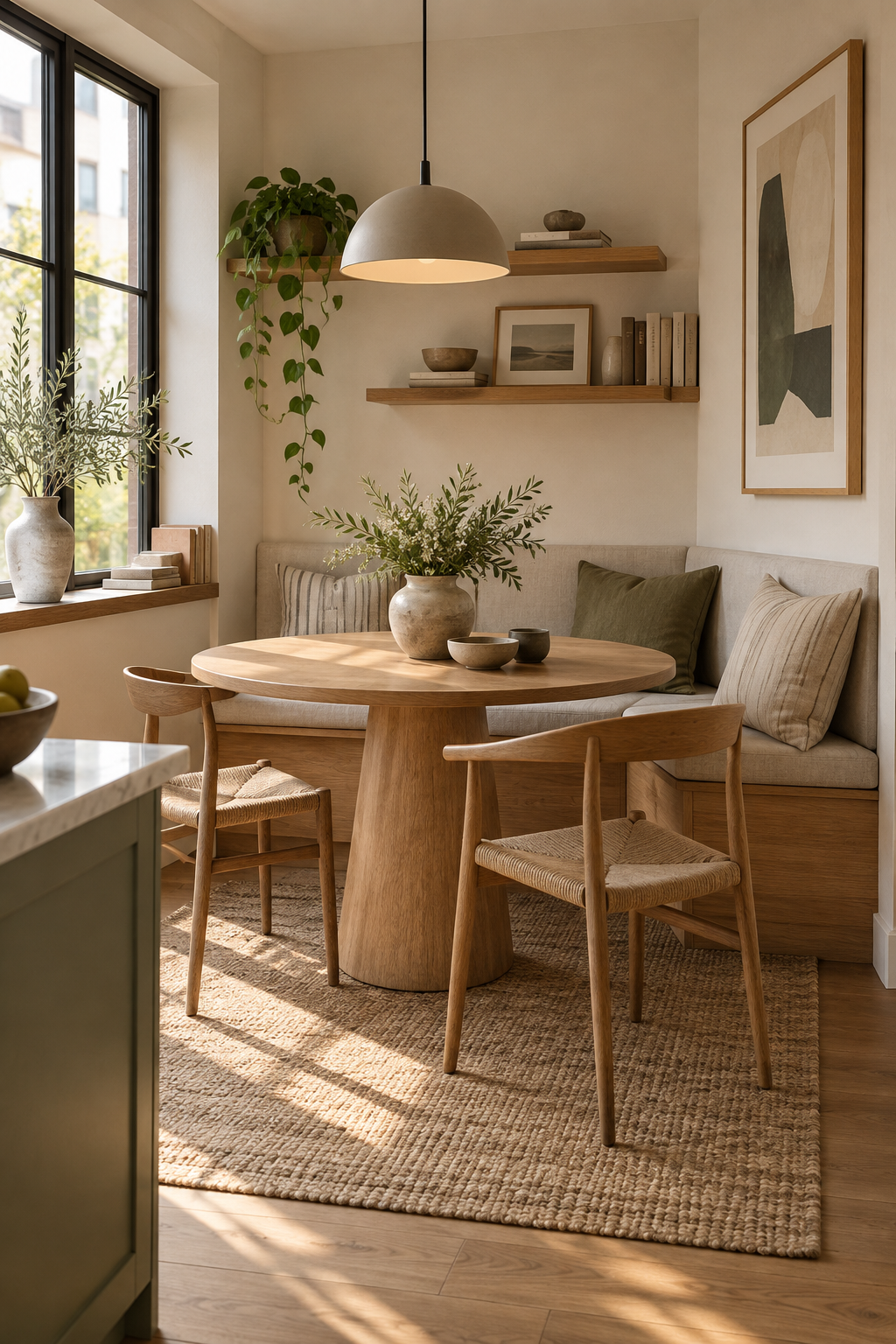
Create style a Warm Minimalist Dining Corner as the focal decision for this area. Consider the room from the doorway and check the scale against nearby furniture, windows and walking paths. Build the look with natural wood, woven upholstery, linen, ceramic and softly aged metal; repeating only two or three finishes keeps the composition cohesive and lets the featured detail remain clear.
Keep the palette grounded in warm oak, cream, soft taupe, muted green and small accents of black. Vary height and texture rather than adding unnecessary objects, and make sure chairs, doors, drawers and everyday routines still work comfortably. Finish by viewing the arrangement in daylight and evening light, then remove one competing accessory if the scene feels busy. This practical edit helps the idea look collected, photogenic and realistic in an everyday home.
23. Add Vintage Character with Mismatched Chairs
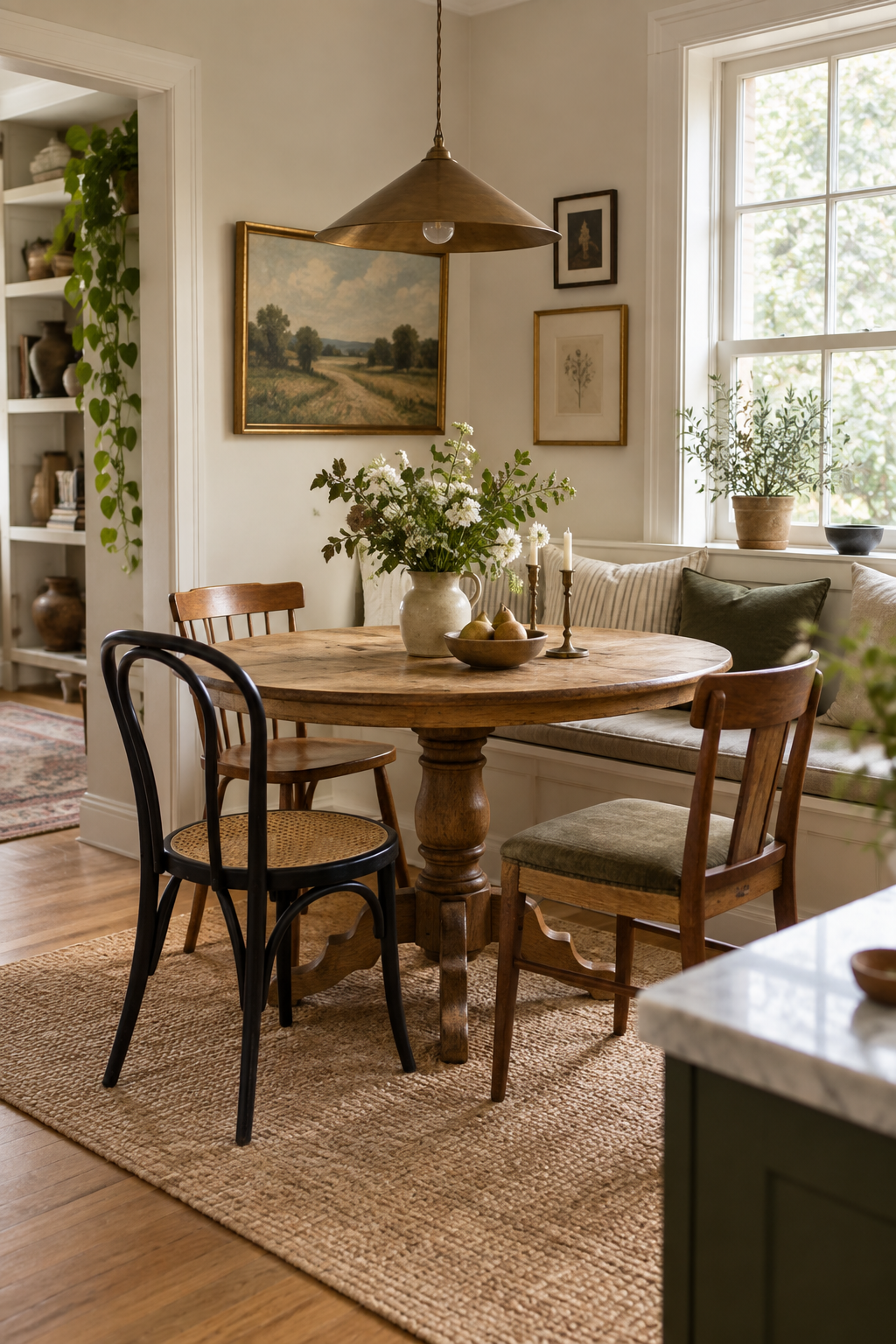
Use add Vintage Character with Mismatched Chairs as the focal decision for this area. Consider the room from the doorway and check the scale against nearby furniture, windows and walking paths. Build the look with natural wood, woven upholstery, linen, ceramic and softly aged metal; repeating only two or three finishes keeps the composition cohesive and lets the featured detail remain clear.
Keep the palette grounded in warm oak, cream, soft taupe, muted green and small accents of black. Vary height and texture rather than adding unnecessary objects, and make sure chairs, doors, drawers and everyday routines still work comfortably. Finish by viewing the arrangement in daylight and evening light, then remove one competing accessory if the scene feels busy. This practical edit helps the idea look collected, photogenic and realistic in an everyday home.
24. Use Bold Color in a Tiny Dining Nook
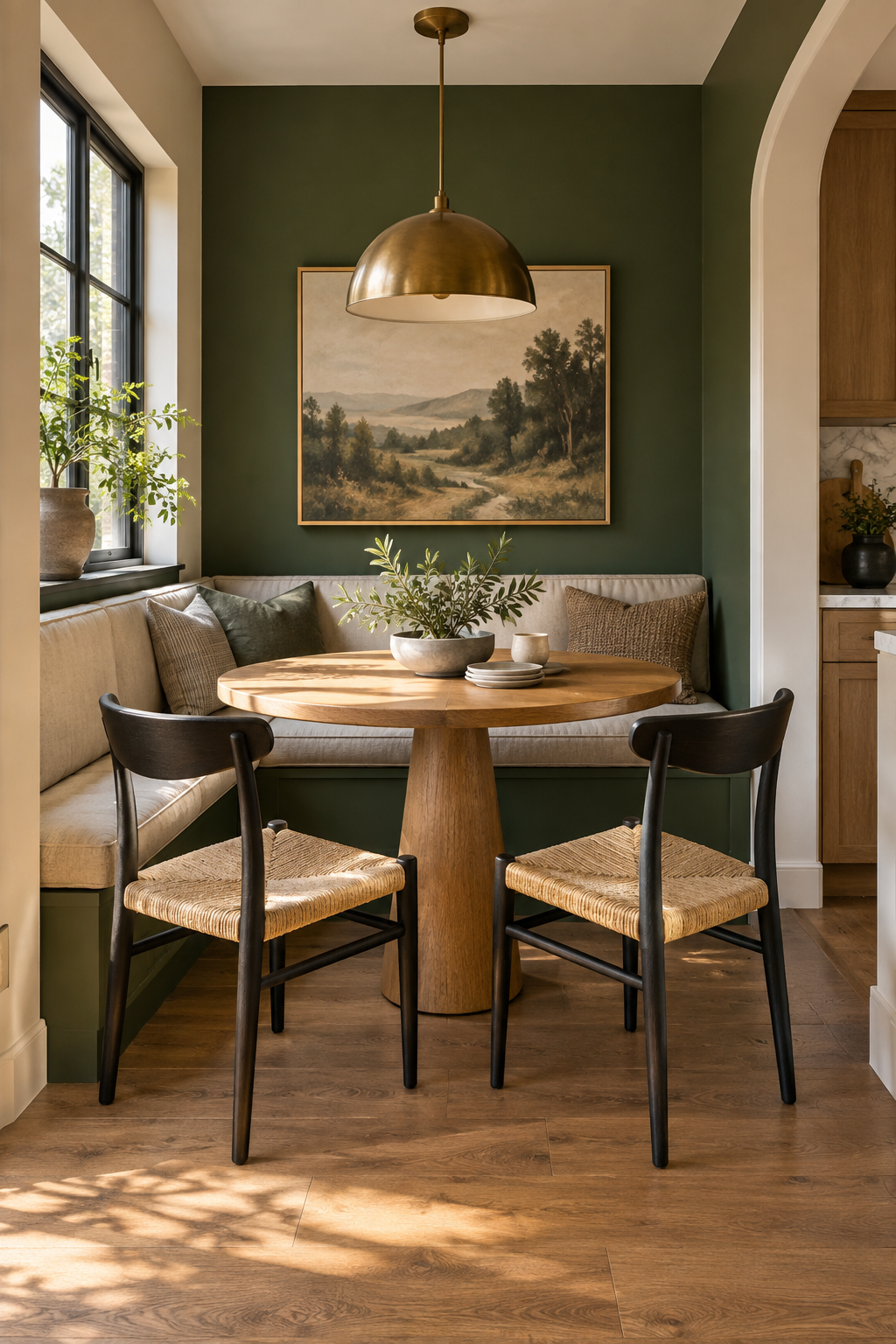
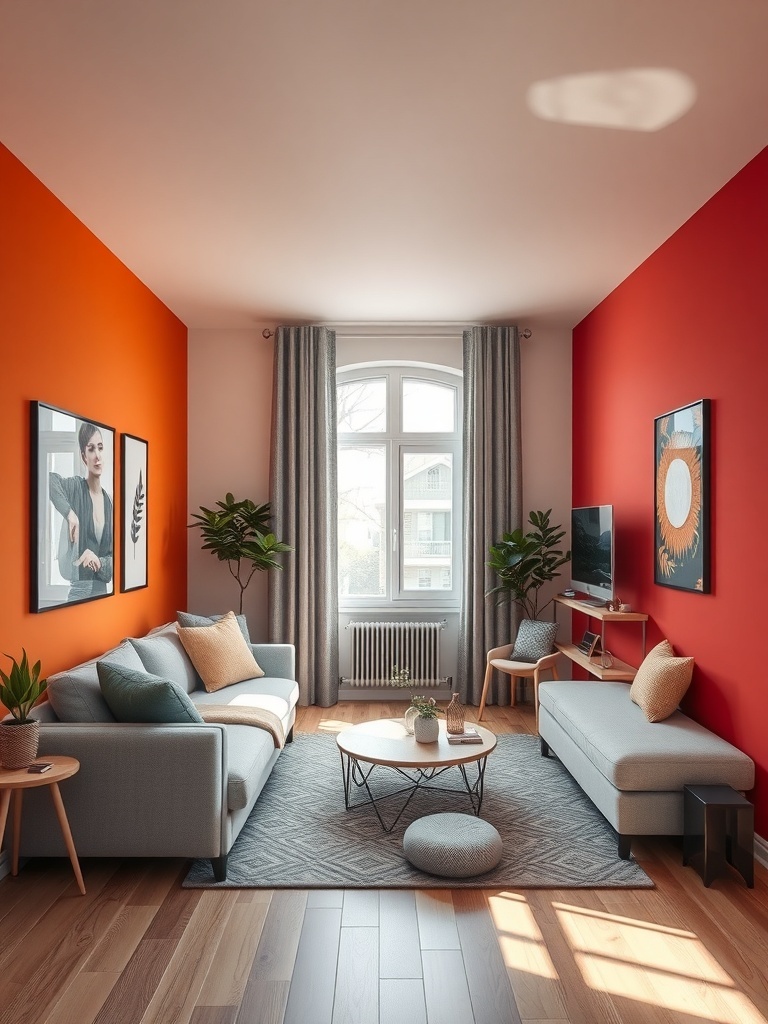
Layer use Bold Color in a Tiny Dining Nook as the focal decision for this area. Consider the room from the doorway and check the scale against nearby furniture, windows and walking paths. Build the look with natural wood, woven upholstery, linen, ceramic and softly aged metal; repeating only two or three finishes keeps the composition cohesive and lets the featured detail remain clear.
Keep the palette grounded in warm oak, cream, soft taupe, muted green and small accents of black. Vary height and texture rather than adding unnecessary objects, and make sure chairs, doors, drawers and everyday routines still work comfortably. Finish by viewing the arrangement in daylight and evening light, then remove one competing accessory if the scene feels busy. This practical edit helps the idea look collected, photogenic and realistic in an everyday home.
25. Create a Family-Friendly Compact Banquette
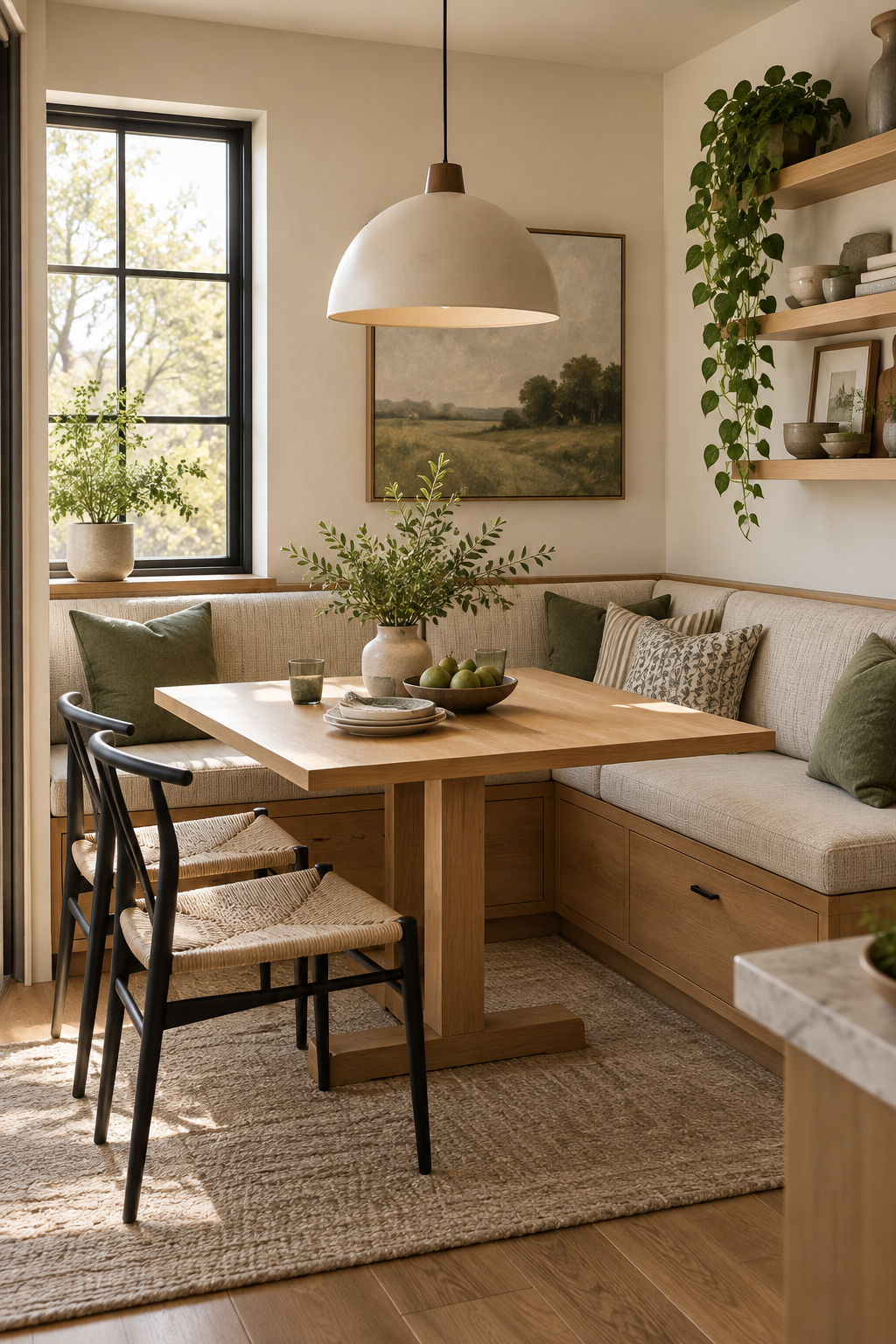
Choose create a Family-Friendly Compact Banquette as the focal decision for this area. Consider the room from the doorway and check the scale against nearby furniture, windows and walking paths. Build the look with natural wood, woven upholstery, linen, ceramic and softly aged metal; repeating only two or three finishes keeps the composition cohesive and lets the featured detail remain clear.
Keep the palette grounded in warm oak, cream, soft taupe, muted green and small accents of black. Vary height and texture rather than adding unnecessary objects, and make sure chairs, doors, drawers and everyday routines still work comfortably. Finish by viewing the arrangement in daylight and evening light, then remove one competing accessory if the scene feels busy. This practical edit helps the idea look collected, photogenic and realistic in an everyday home.
26. Add Layered Lighting for Evening Meals
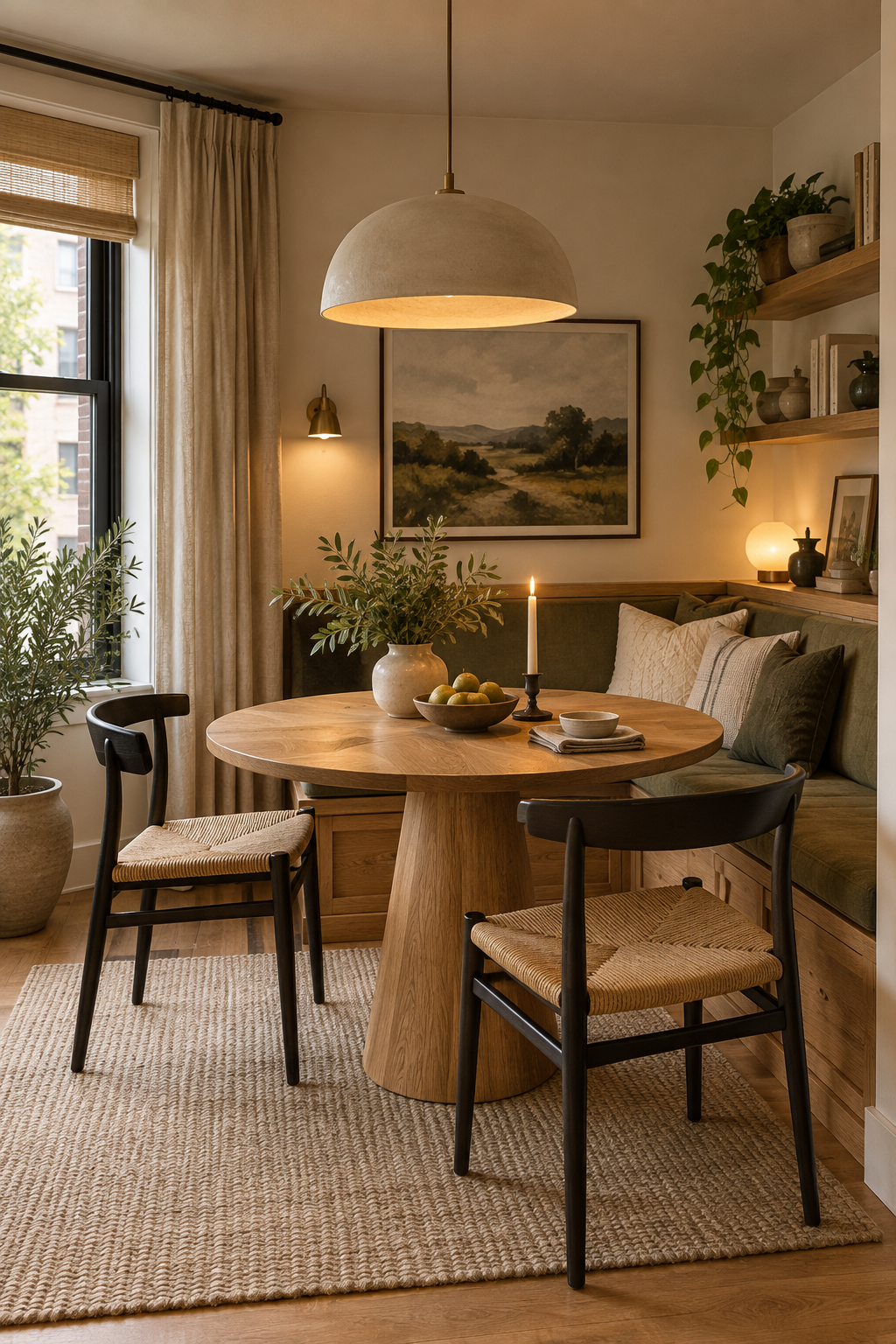
Bring in add Layered Lighting for Evening Meals as the focal decision for this area. Consider the room from the doorway and check the scale against nearby furniture, windows and walking paths. Build the look with natural wood, woven upholstery, linen, ceramic and softly aged metal; repeating only two or three finishes keeps the composition cohesive and lets the featured detail remain clear.
Keep the palette grounded in warm oak, cream, soft taupe, muted green and small accents of black. Vary height and texture rather than adding unnecessary objects, and make sure chairs, doors, drawers and everyday routines still work comfortably. Finish by viewing the arrangement in daylight and evening light, then remove one competing accessory if the scene feels busy. This practical edit helps the idea look collected, photogenic and realistic in an everyday home.
27. Finish with Art and a Simple Centerpiece
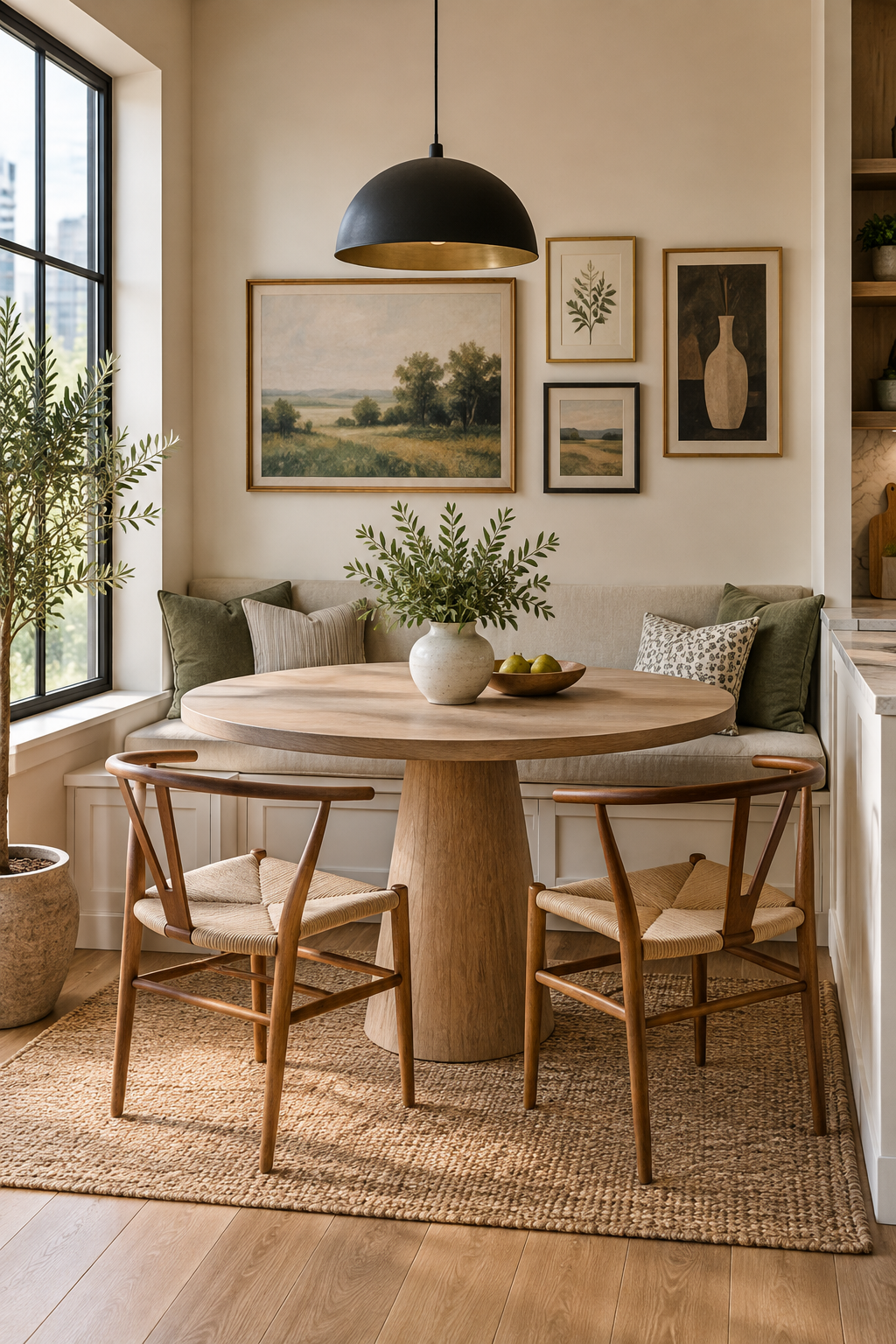
Define the room with finish with Art and a Simple Centerpiece as the focal decision for this area. Consider the room from the doorway and check the scale against nearby furniture, windows and walking paths. Build the look with natural wood, woven upholstery, linen, ceramic and softly aged metal; repeating only two or three finishes keeps the composition cohesive and lets the featured detail remain clear.
Keep the palette grounded in warm oak, cream, soft taupe, muted green and small accents of black. Vary height and texture rather than adding unnecessary objects, and make sure chairs, doors, drawers and everyday routines still work comfortably. Finish by viewing the arrangement in daylight and evening light, then remove one competing accessory if the scene feels busy. This practical edit helps the idea look collected, photogenic and realistic in an everyday home.
Final Styling Notes
A successful small dining nook scheme begins with function and proportion. Choose the ideas that suit the architecture and routines of your home instead of applying every detail at once. Repeating a small palette and a few tactile materials creates continuity while allowing personal pieces to remain visible.
Save your favorite images before shopping, measure the available space and reuse items you already own where possible. Thoughtful editing usually creates a more convincing result than adding more decor, especially in compact rooms or highly themed seasonal spaces.