Vintage kitchen style feels convincing when useful objects, honest materials and pieces from different decades appear to have gathered naturally over time. The goal is not to recreate a museum set. It is to give an everyday kitchen warmth, patina and personality while keeping counters workable and storage practical.
Use the collection below as a flexible design guide. Select the ideas that support how the kitchen is cooked in, cleaned and shared; a few connected choices create more character than many unrelated accessories.
1. Display Ironstone on Open Shelves
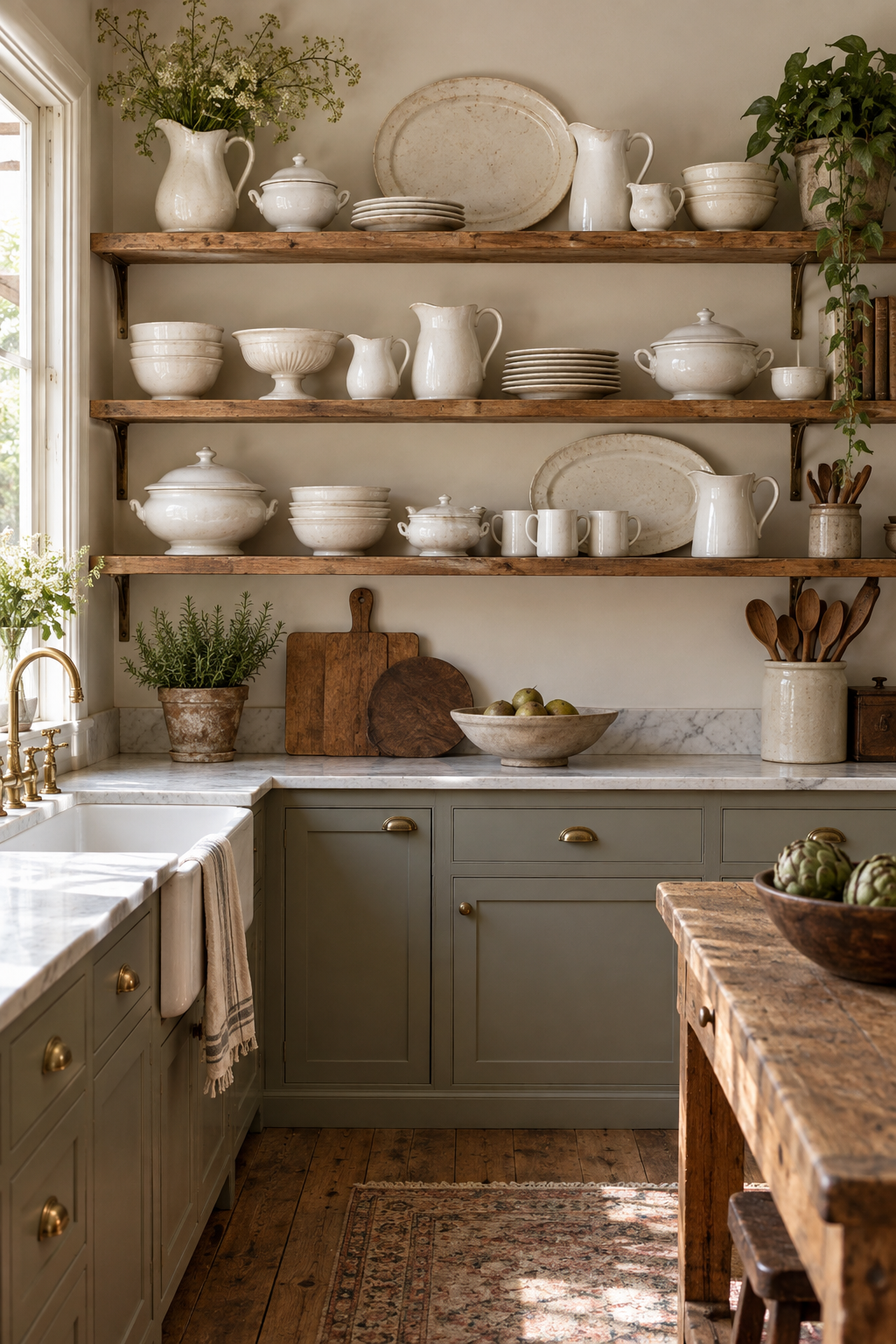
Begin with display ironstone on open shelves as one intentional layer in the room rather than an isolated decorative gesture. Check its scale against the cabinetry, worktop and nearest light source. Materials with visible grain, subtle variation or gentle patina give the feature depth, while a limited palette keeps the kitchen restful. Leave the main preparation zone clear and repeat only one related tone or texture elsewhere for continuity.
Measure doors, drawers and walking paths before buying or installing anything. Place fragile collections away from steam and heavy-use zones, and choose washable textiles or wipeable finishes near food preparation. Photograph the kitchen from its entrance to test the overall balance. If several accents compete at once, remove the weakest one; useful negative space is what allows the strongest material, color or vintage detail to feel special.
2. Hang Antique Copper Pans
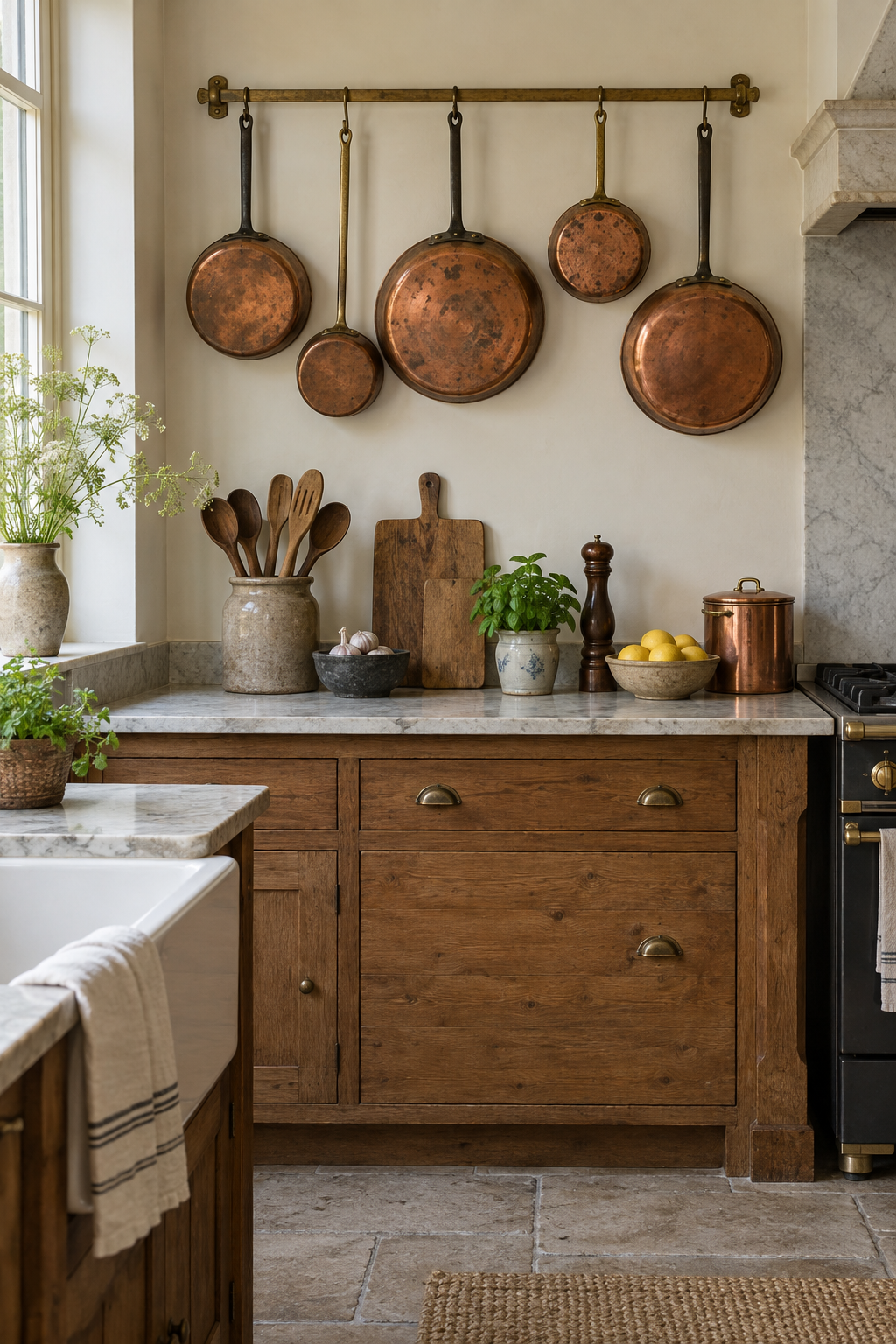
Build the room around hang antique copper pans as one intentional layer in the room rather than an isolated decorative gesture. Check its scale against the cabinetry, worktop and nearest light source. Materials with visible grain, subtle variation or gentle patina give the feature depth, while a limited palette keeps the kitchen restful. Leave the main preparation zone clear and repeat only one related tone or texture elsewhere for continuity.
Measure doors, drawers and walking paths before buying or installing anything. Place fragile collections away from steam and heavy-use zones, and choose washable textiles or wipeable finishes near food preparation. Photograph the kitchen from its entrance to test the overall balance. If several accents compete at once, remove the weakest one; useful negative space is what allows the strongest material, color or vintage detail to feel special.
3. Add a Vintage Worktable as an Island
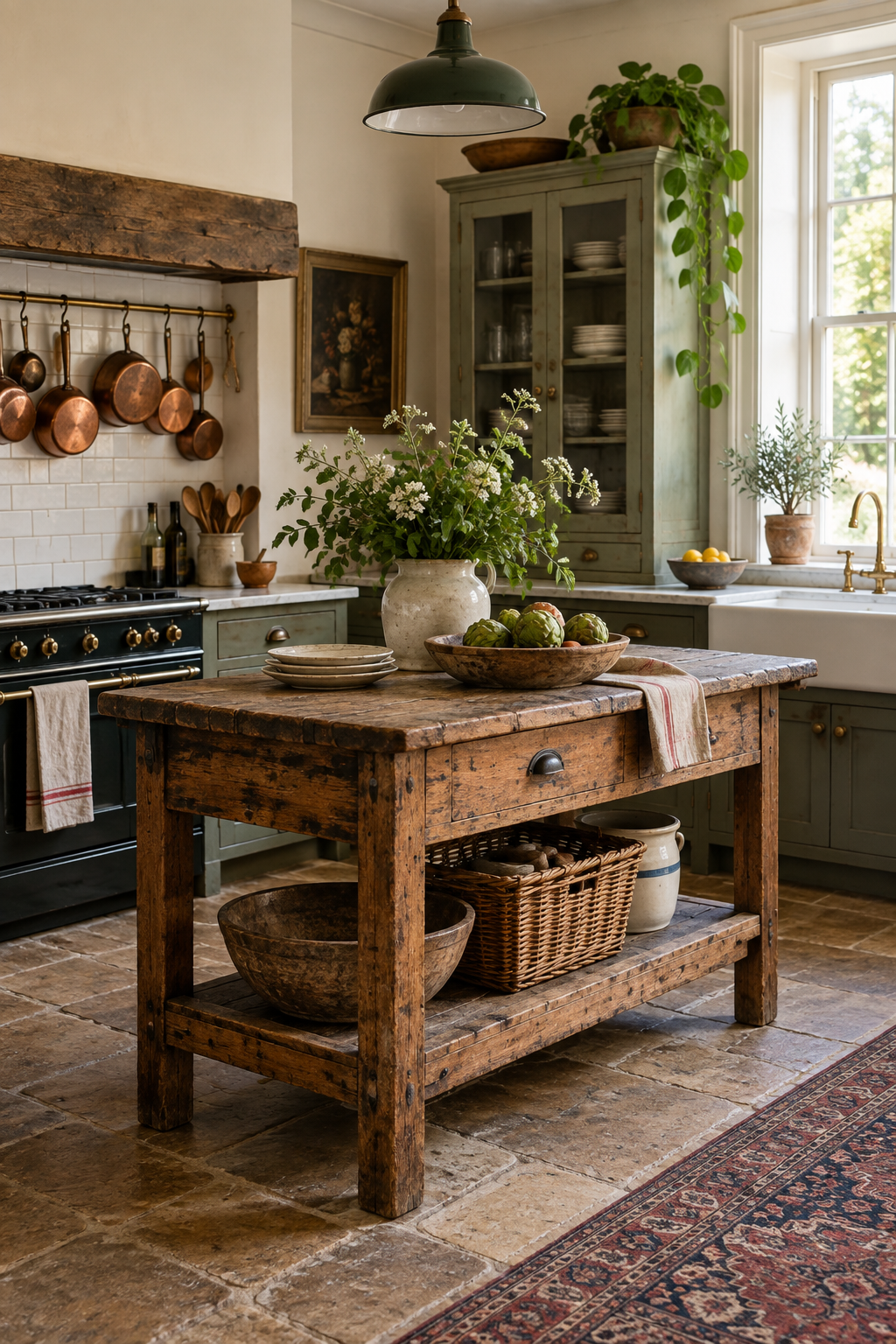
Try add a vintage worktable as an island as one intentional layer in the room rather than an isolated decorative gesture. Check its scale against the cabinetry, worktop and nearest light source. Materials with visible grain, subtle variation or gentle patina give the feature depth, while a limited palette keeps the kitchen restful. Leave the main preparation zone clear and repeat only one related tone or texture elsewhere for continuity.
Measure doors, drawers and walking paths before buying or installing anything. Place fragile collections away from steam and heavy-use zones, and choose washable textiles or wipeable finishes near food preparation. Photograph the kitchen from its entrance to test the overall balance. If several accents compete at once, remove the weakest one; useful negative space is what allows the strongest material, color or vintage detail to feel special.
4. Choose a Freestanding Glass-Front Cabinet
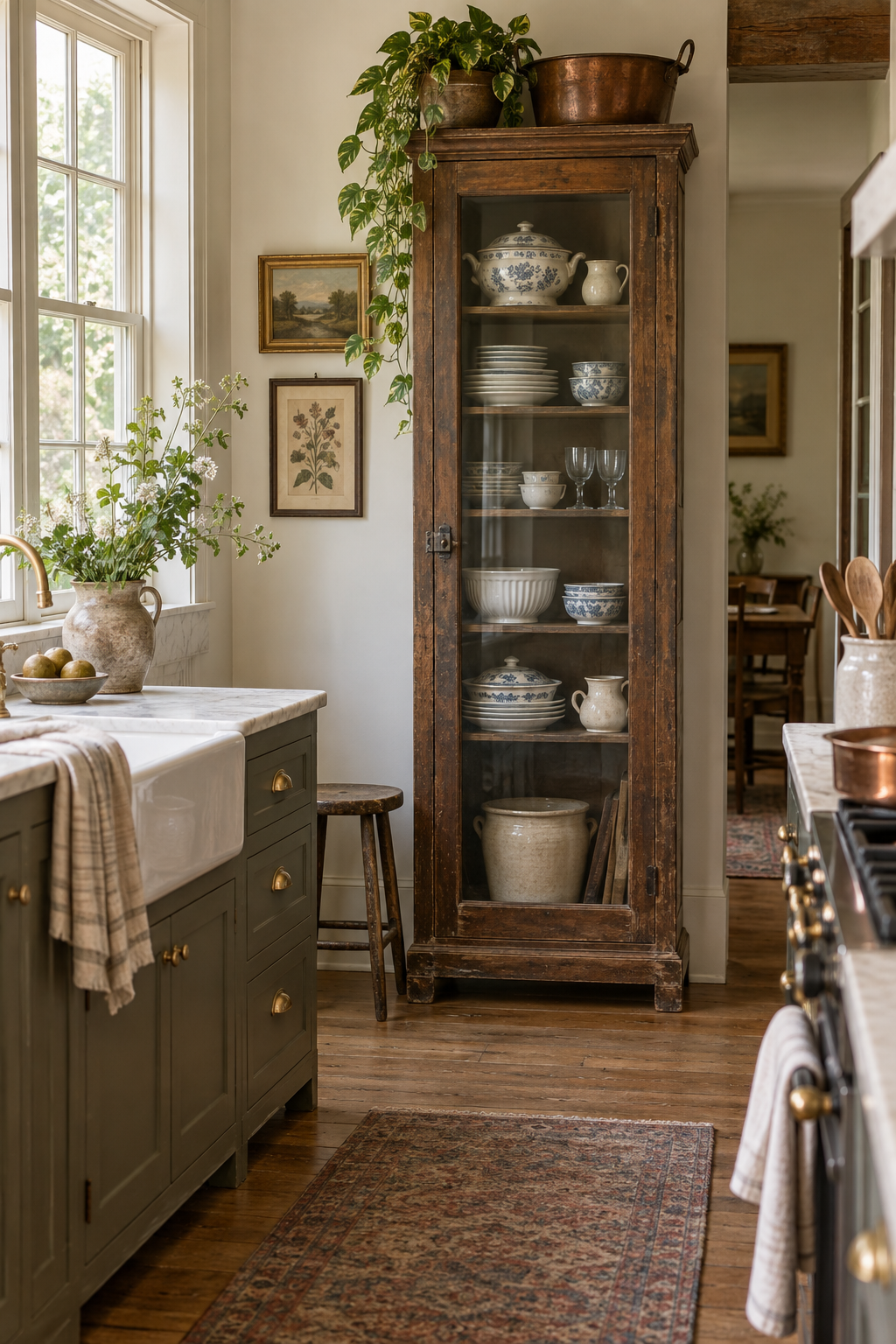
Use choose a freestanding glass-front cabinet as one intentional layer in the room rather than an isolated decorative gesture. Check its scale against the cabinetry, worktop and nearest light source. Materials with visible grain, subtle variation or gentle patina give the feature depth, while a limited palette keeps the kitchen restful. Leave the main preparation zone clear and repeat only one related tone or texture elsewhere for continuity.
Measure doors, drawers and walking paths before buying or installing anything. Place fragile collections away from steam and heavy-use zones, and choose washable textiles or wipeable finishes near food preparation. Photograph the kitchen from its entrance to test the overall balance. If several accents compete at once, remove the weakest one; useful negative space is what allows the strongest material, color or vintage detail to feel special.
5. Style a Traditional Plate Rack
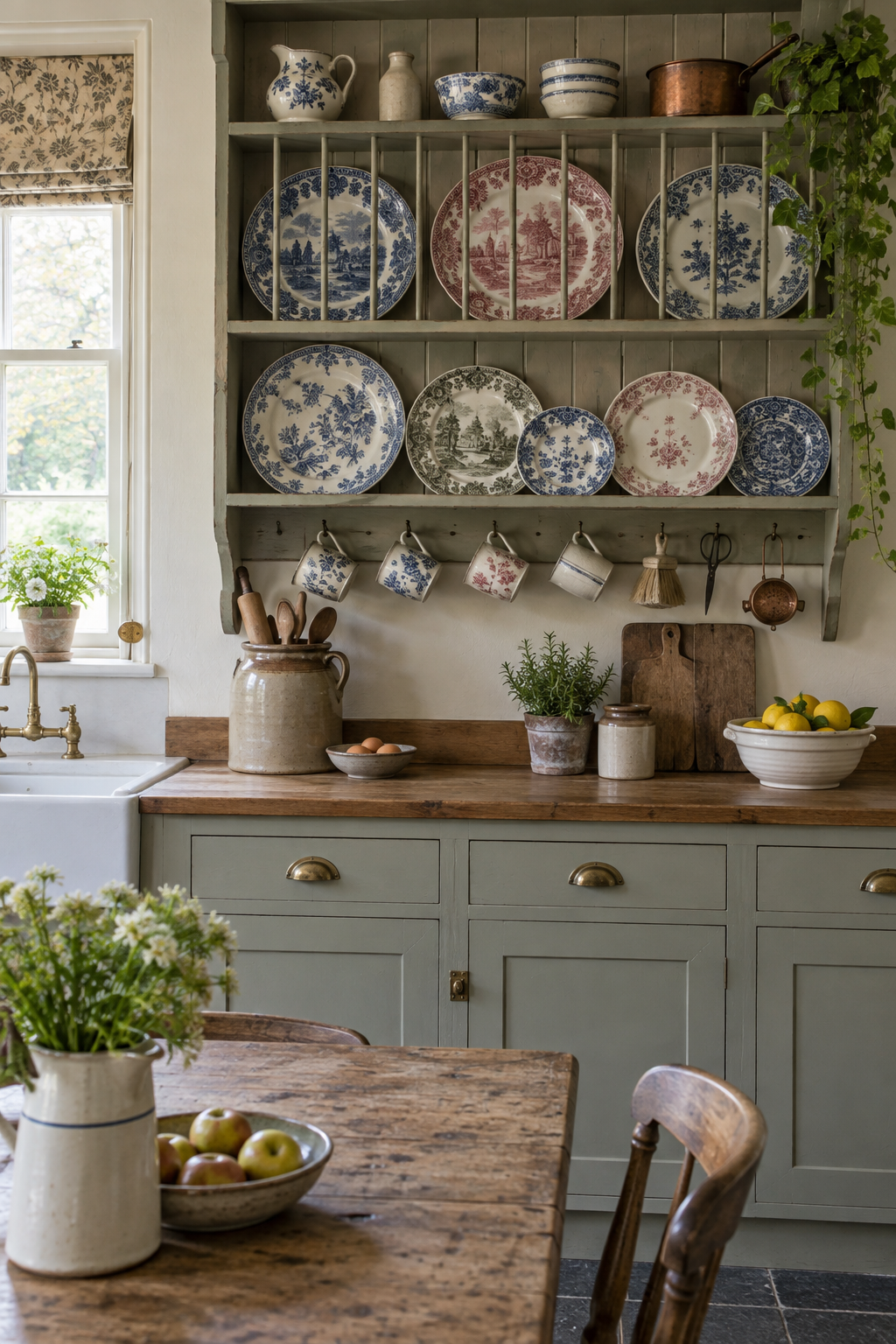
Introduce style a traditional plate rack as one intentional layer in the room rather than an isolated decorative gesture. Check its scale against the cabinetry, worktop and nearest light source. Materials with visible grain, subtle variation or gentle patina give the feature depth, while a limited palette keeps the kitchen restful. Leave the main preparation zone clear and repeat only one related tone or texture elsewhere for continuity.
Measure doors, drawers and walking paths before buying or installing anything. Place fragile collections away from steam and heavy-use zones, and choose washable textiles or wipeable finishes near food preparation. Photograph the kitchen from its entrance to test the overall balance. If several accents compete at once, remove the weakest one; useful negative space is what allows the strongest material, color or vintage detail to feel special.
6. Use Café Curtains with a Small Floral Print
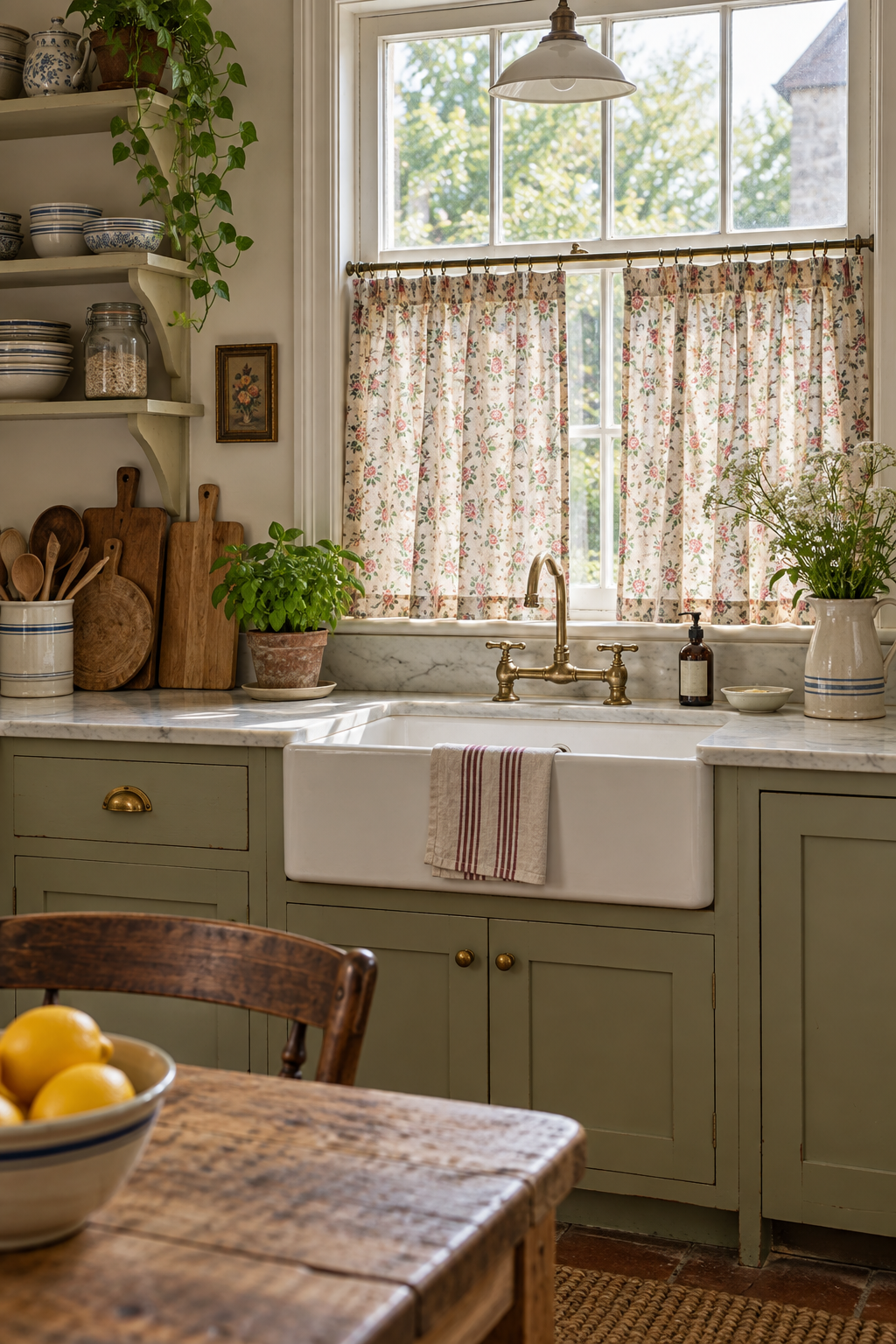
Create use café curtains with a small floral print as one intentional layer in the room rather than an isolated decorative gesture. Check its scale against the cabinetry, worktop and nearest light source. Materials with visible grain, subtle variation or gentle patina give the feature depth, while a limited palette keeps the kitchen restful. Leave the main preparation zone clear and repeat only one related tone or texture elsewhere for continuity.
Measure doors, drawers and walking paths before buying or installing anything. Place fragile collections away from steam and heavy-use zones, and choose washable textiles or wipeable finishes near food preparation. Photograph the kitchen from its entrance to test the overall balance. If several accents compete at once, remove the weakest one; useful negative space is what allows the strongest material, color or vintage detail to feel special.
7. Bring In a Faded Runner Rug
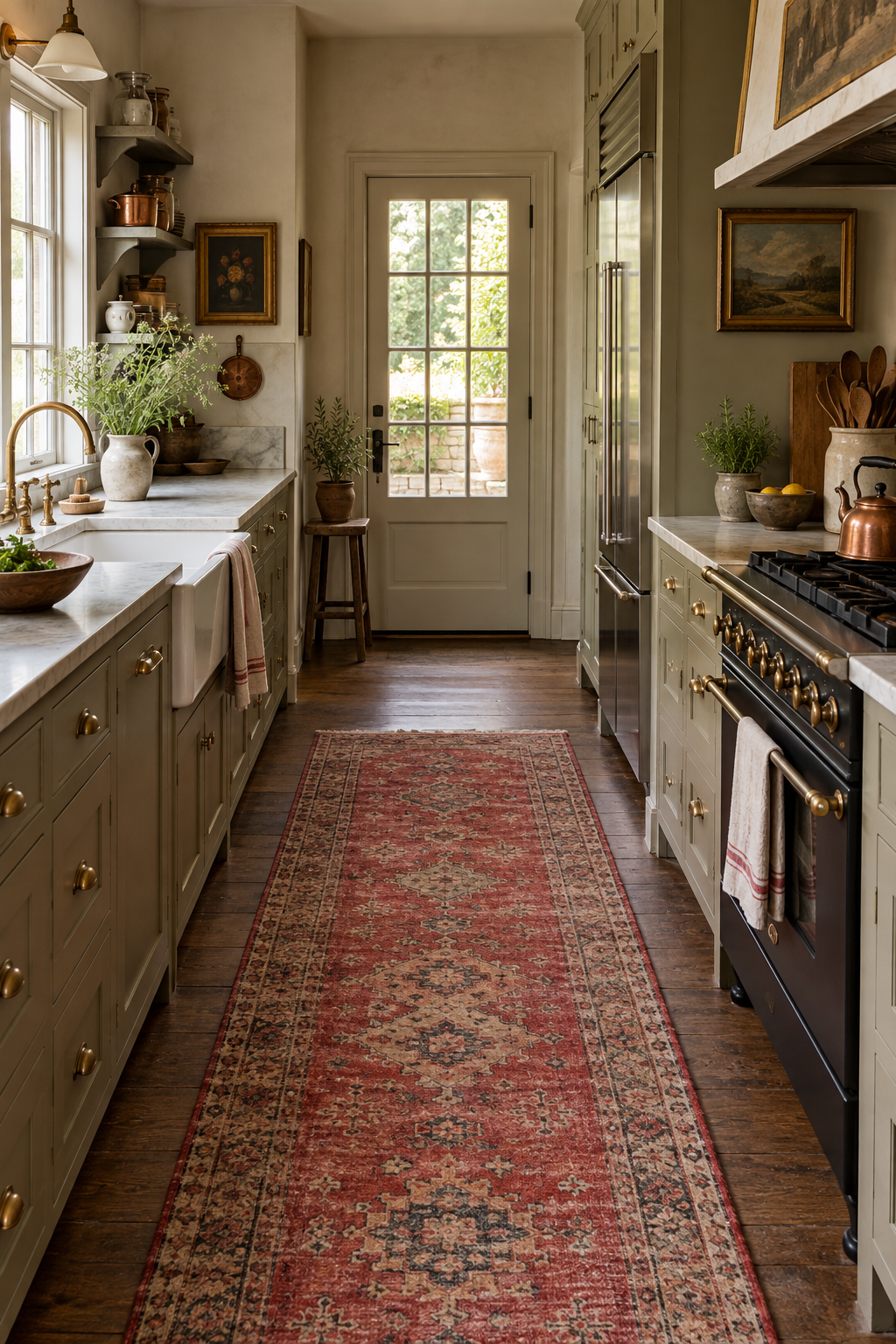
Balance bring in a faded runner rug as one intentional layer in the room rather than an isolated decorative gesture. Check its scale against the cabinetry, worktop and nearest light source. Materials with visible grain, subtle variation or gentle patina give the feature depth, while a limited palette keeps the kitchen restful. Leave the main preparation zone clear and repeat only one related tone or texture elsewhere for continuity.
Measure doors, drawers and walking paths before buying or installing anything. Place fragile collections away from steam and heavy-use zones, and choose washable textiles or wipeable finishes near food preparation. Photograph the kitchen from its entrance to test the overall balance. If several accents compete at once, remove the weakest one; useful negative space is what allows the strongest material, color or vintage detail to feel special.
8. Install Aged Brass Hardware
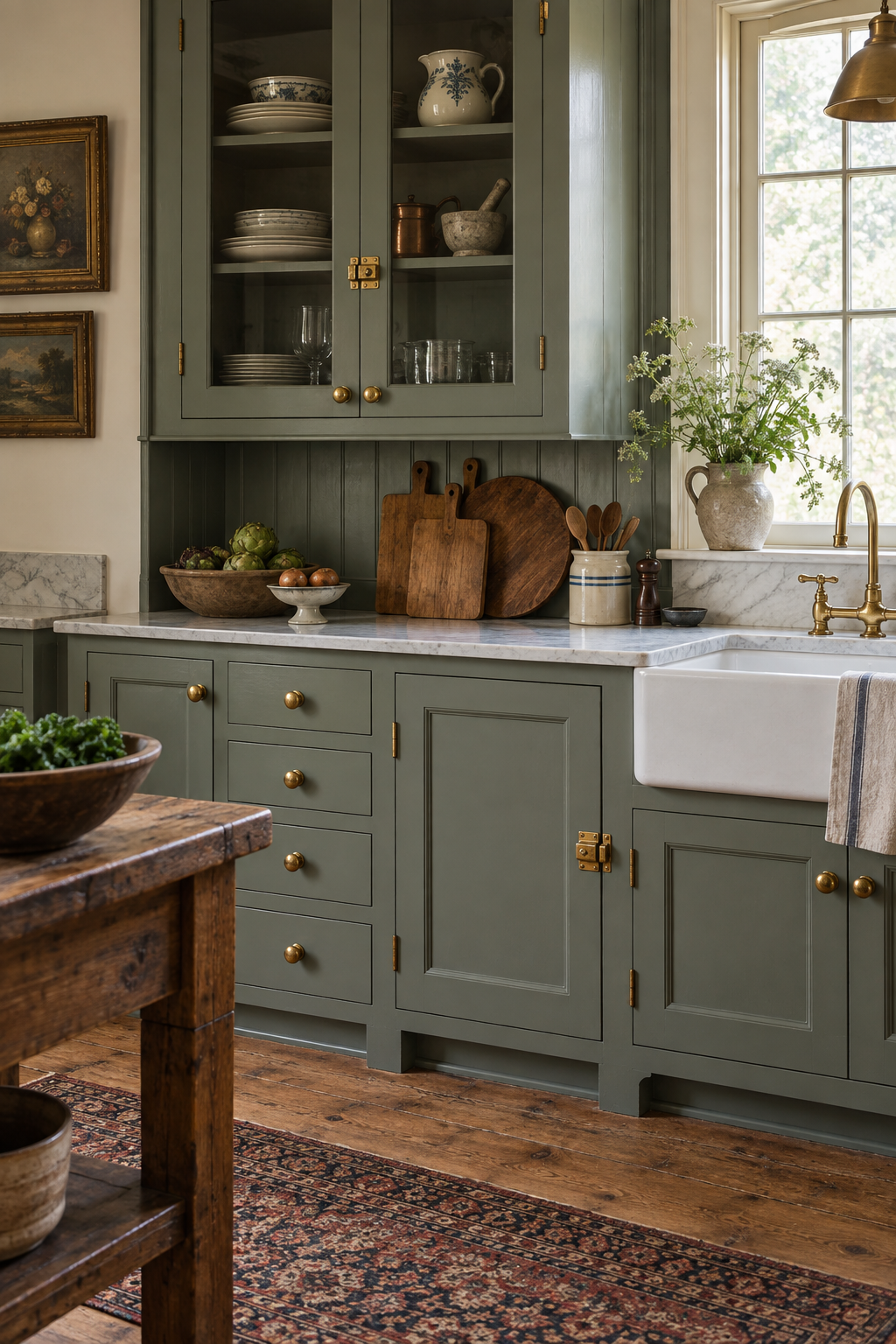
Highlight install aged brass hardware as one intentional layer in the room rather than an isolated decorative gesture. Check its scale against the cabinetry, worktop and nearest light source. Materials with visible grain, subtle variation or gentle patina give the feature depth, while a limited palette keeps the kitchen restful. Leave the main preparation zone clear and repeat only one related tone or texture elsewhere for continuity.
Measure doors, drawers and walking paths before buying or installing anything. Place fragile collections away from steam and heavy-use zones, and choose washable textiles or wipeable finishes near food preparation. Photograph the kitchen from its entrance to test the overall balance. If several accents compete at once, remove the weakest one; useful negative space is what allows the strongest material, color or vintage detail to feel special.
9. Display Wooden Cutting Boards
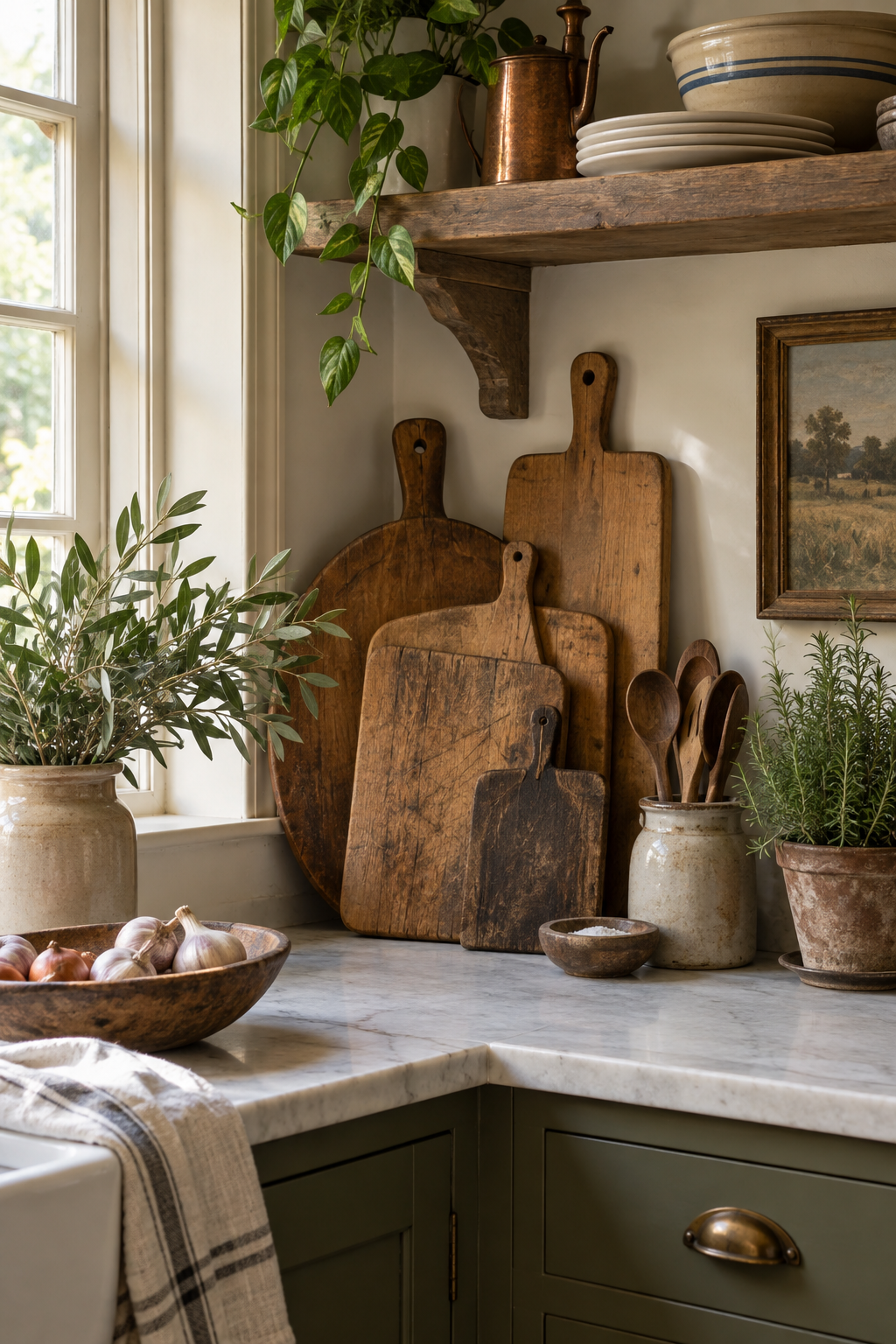
Refresh display wooden cutting boards as one intentional layer in the room rather than an isolated decorative gesture. Check its scale against the cabinetry, worktop and nearest light source. Materials with visible grain, subtle variation or gentle patina give the feature depth, while a limited palette keeps the kitchen restful. Leave the main preparation zone clear and repeat only one related tone or texture elsewhere for continuity.
Measure doors, drawers and walking paths before buying or installing anything. Place fragile collections away from steam and heavy-use zones, and choose washable textiles or wipeable finishes near food preparation. Photograph the kitchen from its entrance to test the overall balance. If several accents compete at once, remove the weakest one; useful negative space is what allows the strongest material, color or vintage detail to feel special.
10. Add a Schoolhouse Pendant
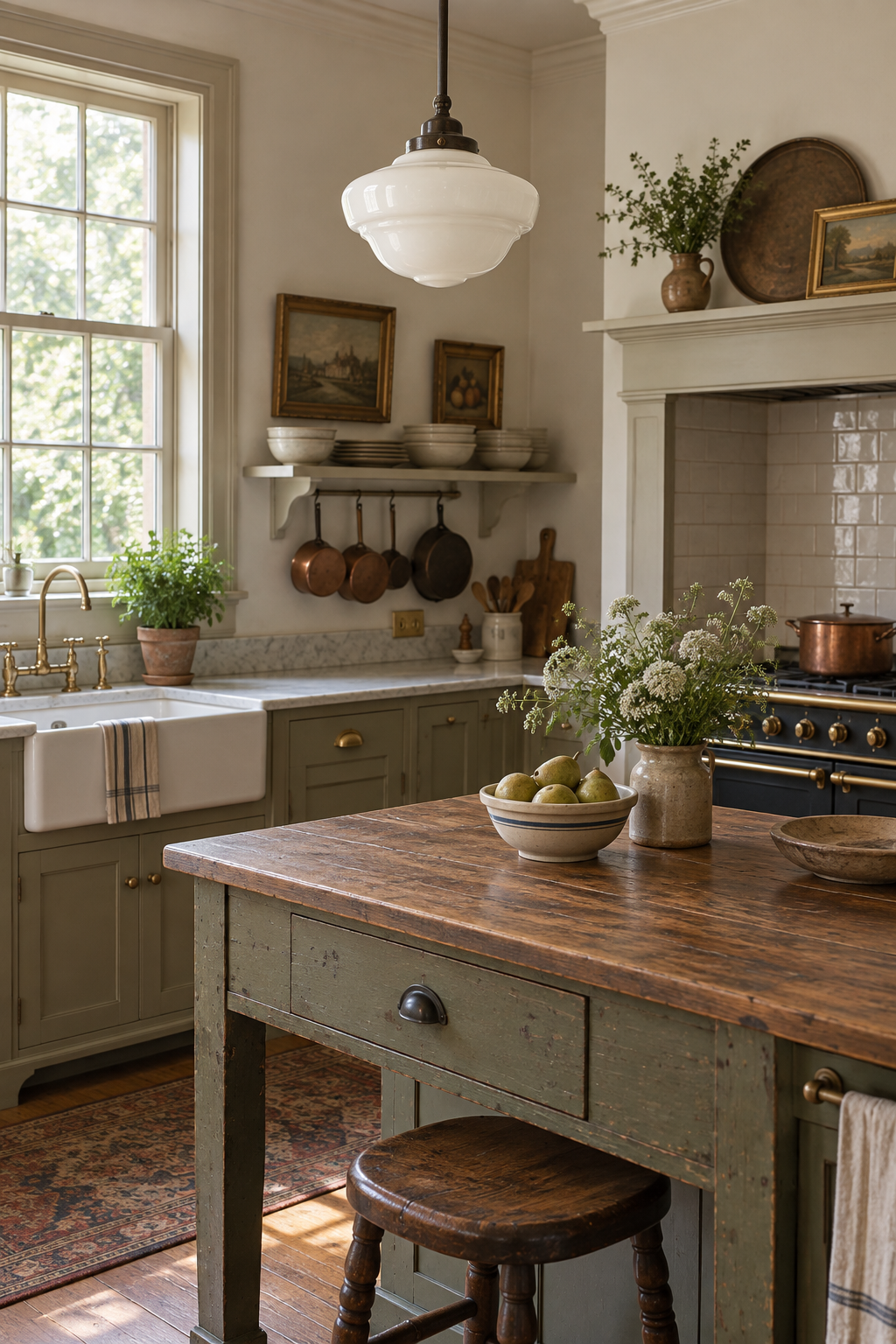
Ground the space with add a schoolhouse pendant as one intentional layer in the room rather than an isolated decorative gesture. Check its scale against the cabinetry, worktop and nearest light source. Materials with visible grain, subtle variation or gentle patina give the feature depth, while a limited palette keeps the kitchen restful. Leave the main preparation zone clear and repeat only one related tone or texture elsewhere for continuity.
Measure doors, drawers and walking paths before buying or installing anything. Place fragile collections away from steam and heavy-use zones, and choose washable textiles or wipeable finishes near food preparation. Photograph the kitchen from its entrance to test the overall balance. If several accents compete at once, remove the weakest one; useful negative space is what allows the strongest material, color or vintage detail to feel special.
11. Use a Stoneware Crock for Utensils
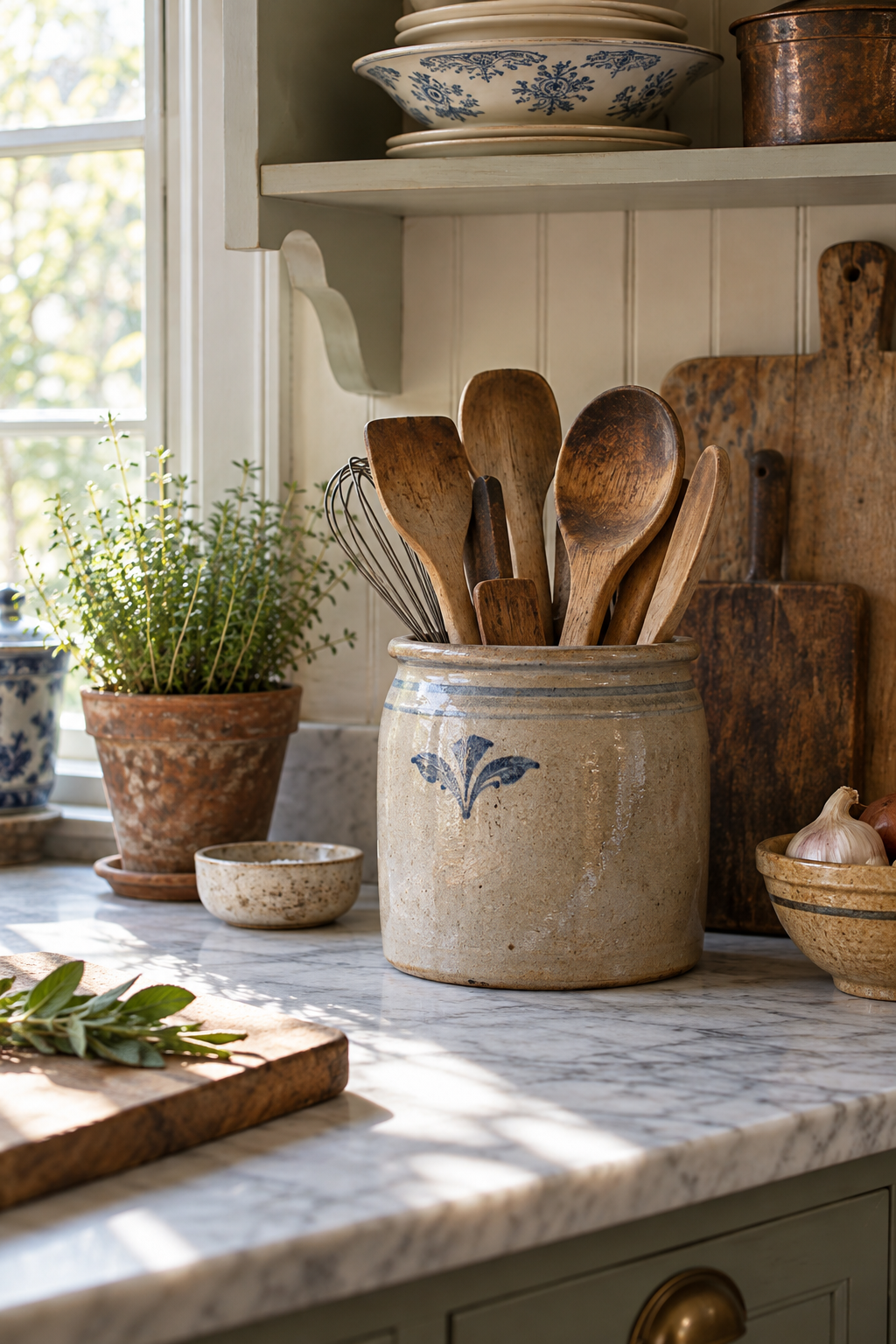
Make room for use a stoneware crock for utensils as one intentional layer in the room rather than an isolated decorative gesture. Check its scale against the cabinetry, worktop and nearest light source. Materials with visible grain, subtle variation or gentle patina give the feature depth, while a limited palette keeps the kitchen restful. Leave the main preparation zone clear and repeat only one related tone or texture elsewhere for continuity.
Measure doors, drawers and walking paths before buying or installing anything. Place fragile collections away from steam and heavy-use zones, and choose washable textiles or wipeable finishes near food preparation. Photograph the kitchen from its entrance to test the overall balance. If several accents compete at once, remove the weakest one; useful negative space is what allows the strongest material, color or vintage detail to feel special.
12. Create a Collected Mug Rail
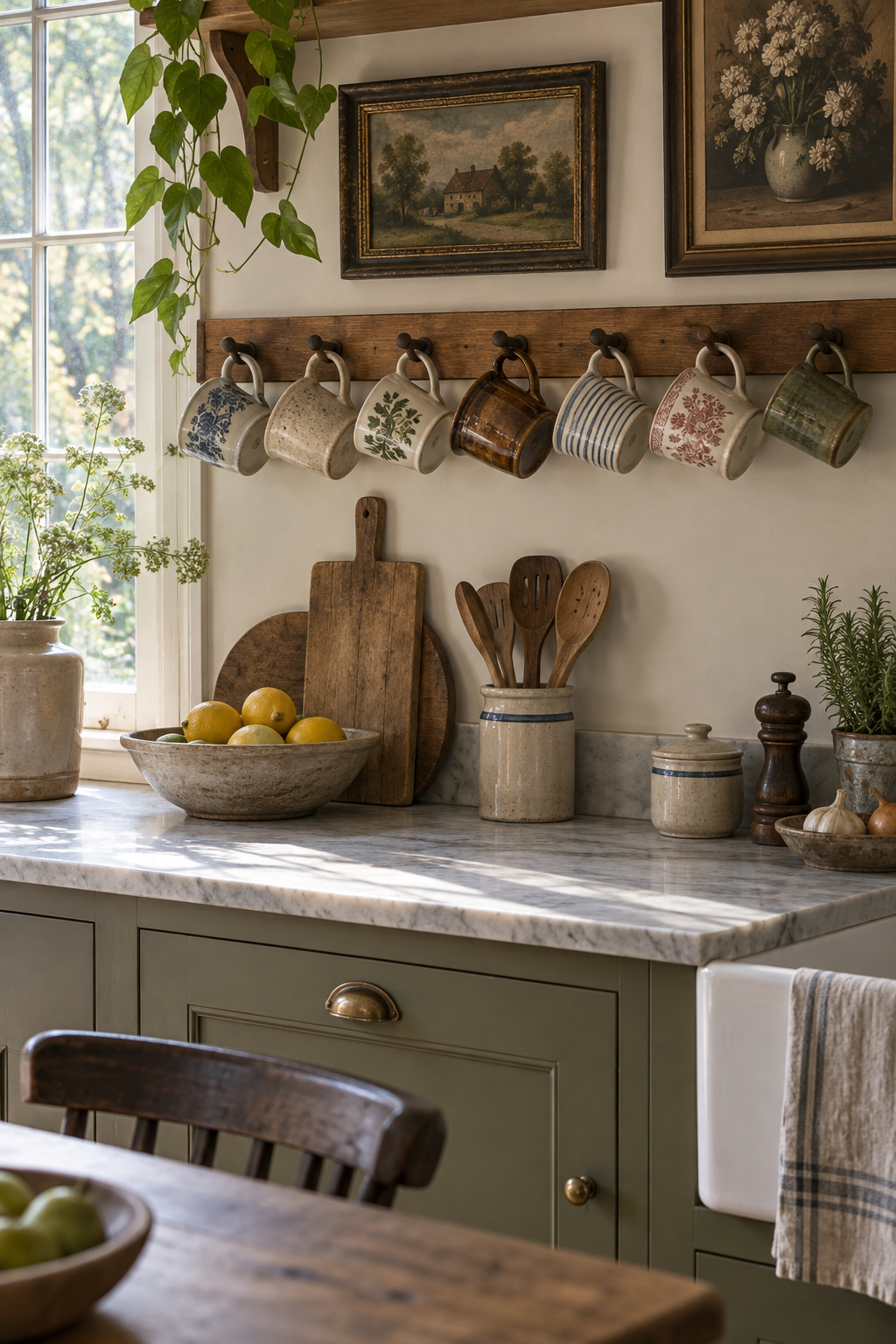
Layer create a collected mug rail as one intentional layer in the room rather than an isolated decorative gesture. Check its scale against the cabinetry, worktop and nearest light source. Materials with visible grain, subtle variation or gentle patina give the feature depth, while a limited palette keeps the kitchen restful. Leave the main preparation zone clear and repeat only one related tone or texture elsewhere for continuity.
Measure doors, drawers and walking paths before buying or installing anything. Place fragile collections away from steam and heavy-use zones, and choose washable textiles or wipeable finishes near food preparation. Photograph the kitchen from its entrance to test the overall balance. If several accents compete at once, remove the weakest one; useful negative space is what allows the strongest material, color or vintage detail to feel special.
13. Mix Mismatched Dining Chairs
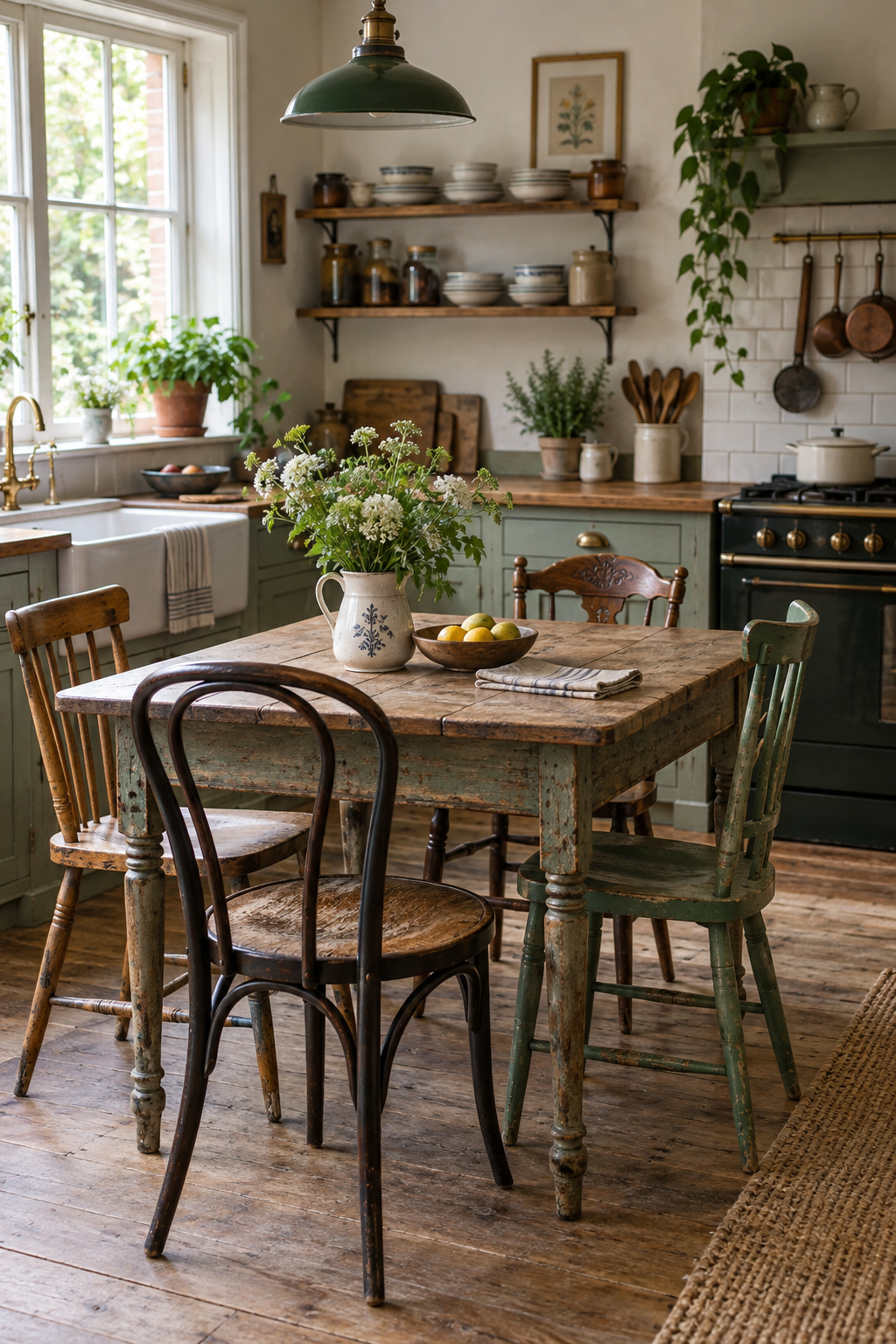
Pair neutrals with mix mismatched dining chairs as one intentional layer in the room rather than an isolated decorative gesture. Check its scale against the cabinetry, worktop and nearest light source. Materials with visible grain, subtle variation or gentle patina give the feature depth, while a limited palette keeps the kitchen restful. Leave the main preparation zone clear and repeat only one related tone or texture elsewhere for continuity.
Measure doors, drawers and walking paths before buying or installing anything. Place fragile collections away from steam and heavy-use zones, and choose washable textiles or wipeable finishes near food preparation. Photograph the kitchen from its entrance to test the overall balance. If several accents compete at once, remove the weakest one; useful negative space is what allows the strongest material, color or vintage detail to feel special.
14. Frame Botanical Prints
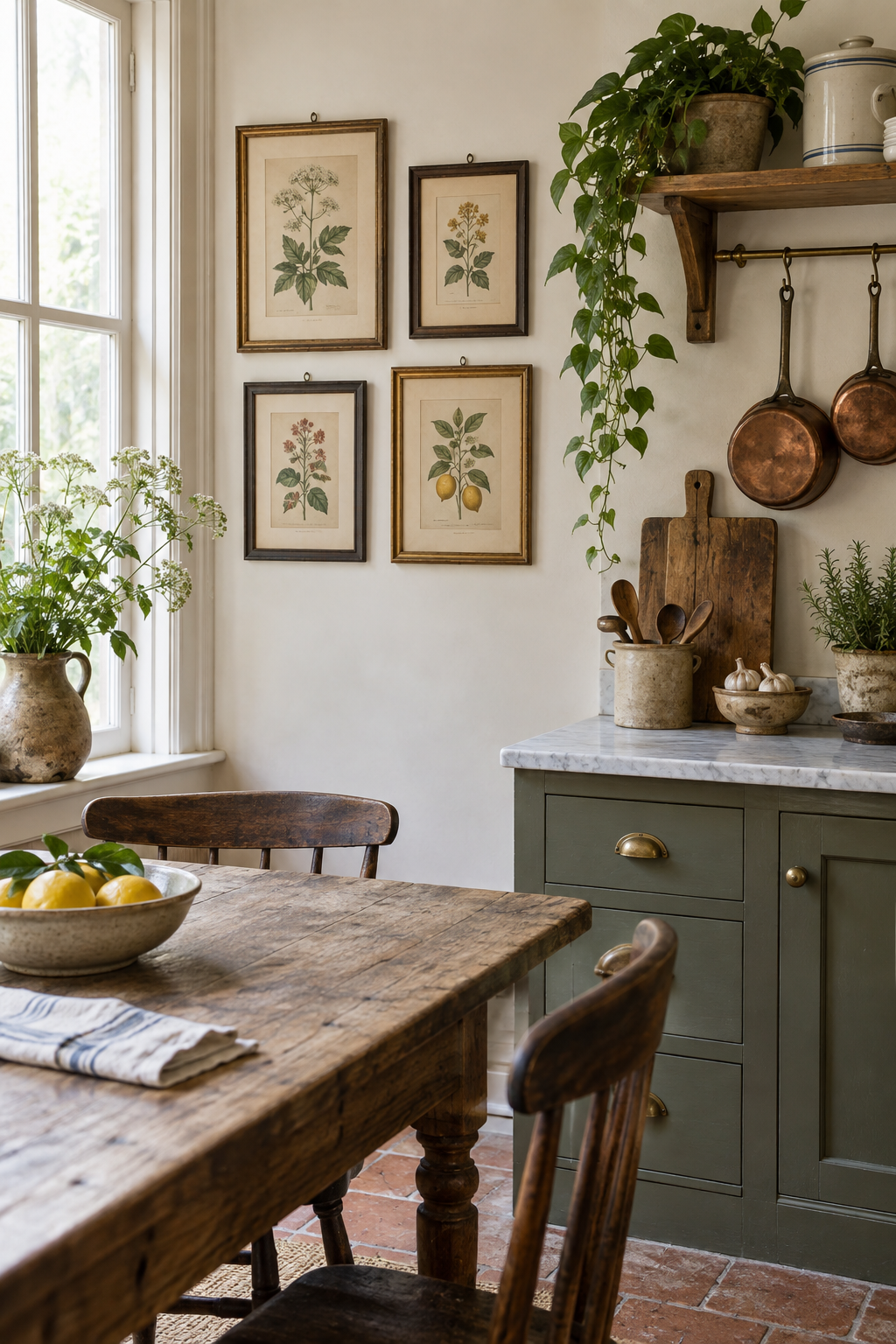
Give the kitchen character through frame botanical prints as one intentional layer in the room rather than an isolated decorative gesture. Check its scale against the cabinetry, worktop and nearest light source. Materials with visible grain, subtle variation or gentle patina give the feature depth, while a limited palette keeps the kitchen restful. Leave the main preparation zone clear and repeat only one related tone or texture elsewhere for continuity.
Measure doors, drawers and walking paths before buying or installing anything. Place fragile collections away from steam and heavy-use zones, and choose washable textiles or wipeable finishes near food preparation. Photograph the kitchen from its entrance to test the overall balance. If several accents compete at once, remove the weakest one; useful negative space is what allows the strongest material, color or vintage detail to feel special.
15. Store Dry Goods in Glass Jars
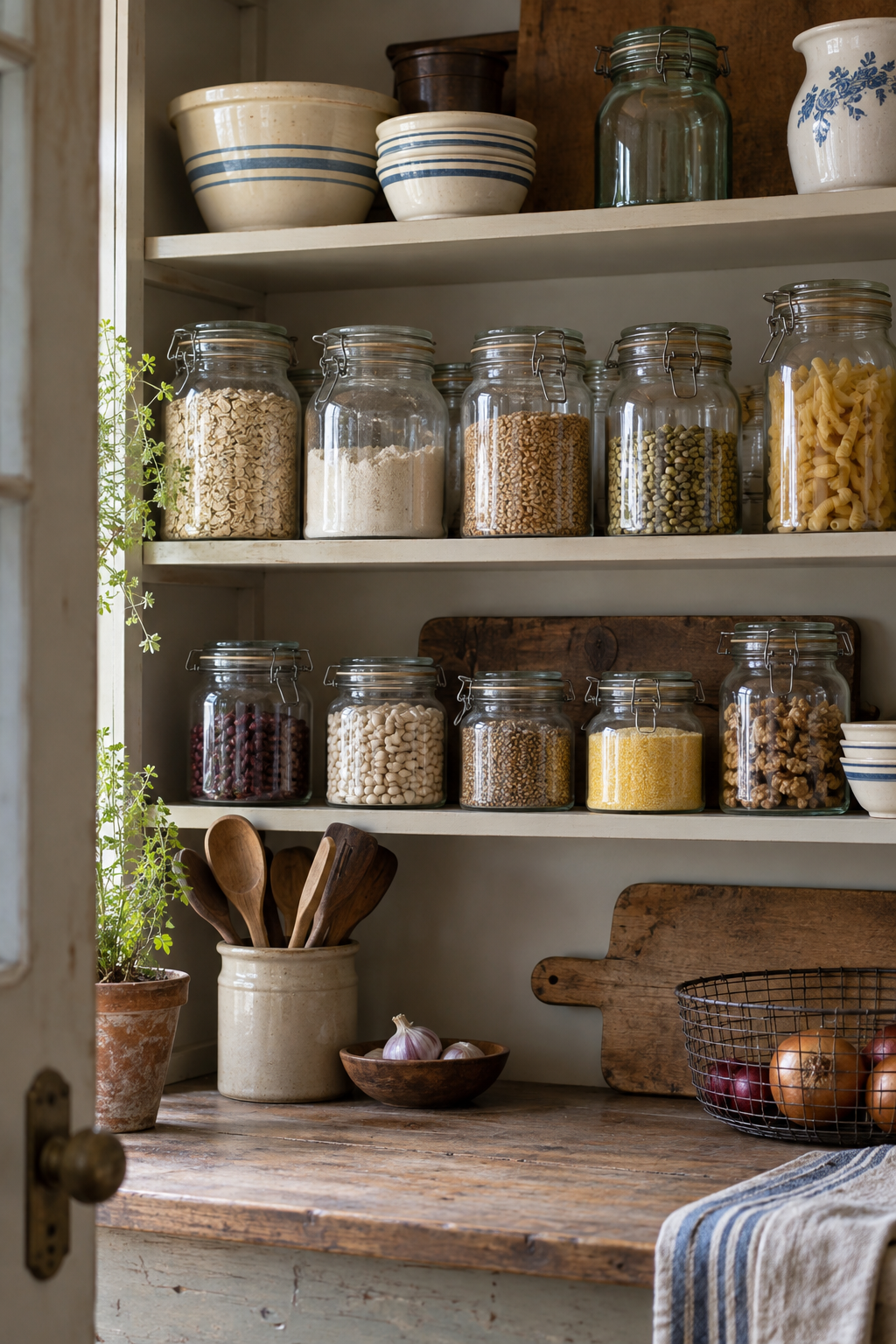
Keep the look practical with store dry goods in glass jars as one intentional layer in the room rather than an isolated decorative gesture. Check its scale against the cabinetry, worktop and nearest light source. Materials with visible grain, subtle variation or gentle patina give the feature depth, while a limited palette keeps the kitchen restful. Leave the main preparation zone clear and repeat only one related tone or texture elsewhere for continuity.
Measure doors, drawers and walking paths before buying or installing anything. Place fragile collections away from steam and heavy-use zones, and choose washable textiles or wipeable finishes near food preparation. Photograph the kitchen from its entrance to test the overall balance. If several accents compete at once, remove the weakest one; useful negative space is what allows the strongest material, color or vintage detail to feel special.
16. Add a Retro Wall Clock
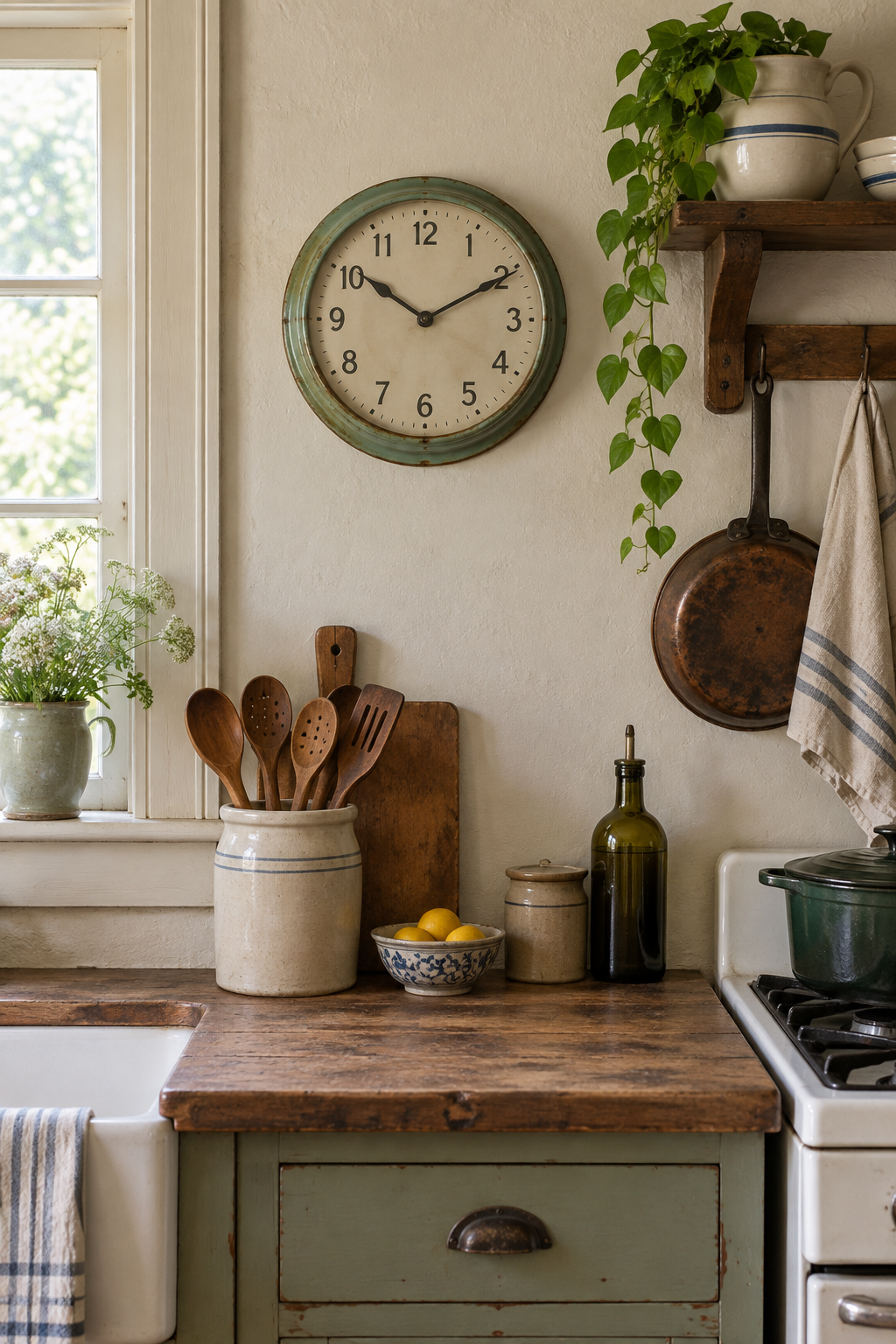
Save add a retro wall clock as one intentional layer in the room rather than an isolated decorative gesture. Check its scale against the cabinetry, worktop and nearest light source. Materials with visible grain, subtle variation or gentle patina give the feature depth, while a limited palette keeps the kitchen restful. Leave the main preparation zone clear and repeat only one related tone or texture elsewhere for continuity.
Measure doors, drawers and walking paths before buying or installing anything. Place fragile collections away from steam and heavy-use zones, and choose washable textiles or wipeable finishes near food preparation. Photograph the kitchen from its entrance to test the overall balance. If several accents compete at once, remove the weakest one; useful negative space is what allows the strongest material, color or vintage detail to feel special.
17. Use Enamelware as Practical Decor
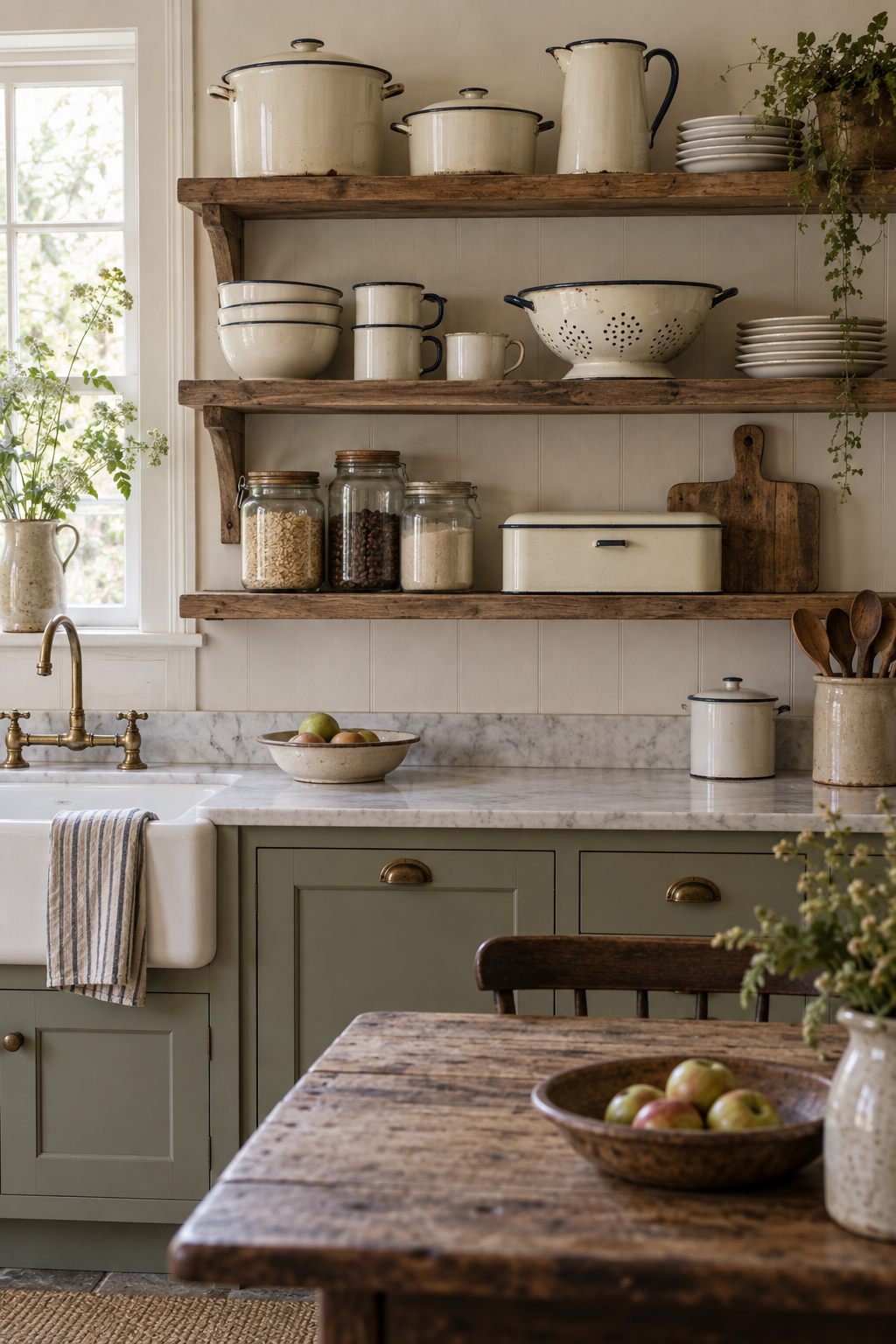
Plan use enamelware as practical decor as one intentional layer in the room rather than an isolated decorative gesture. Check its scale against the cabinetry, worktop and nearest light source. Materials with visible grain, subtle variation or gentle patina give the feature depth, while a limited palette keeps the kitchen restful. Leave the main preparation zone clear and repeat only one related tone or texture elsewhere for continuity.
Measure doors, drawers and walking paths before buying or installing anything. Place fragile collections away from steam and heavy-use zones, and choose washable textiles or wipeable finishes near food preparation. Photograph the kitchen from its entrance to test the overall balance. If several accents compete at once, remove the weakest one; useful negative space is what allows the strongest material, color or vintage detail to feel special.
18. Choose a Vintage-Inspired Faucet
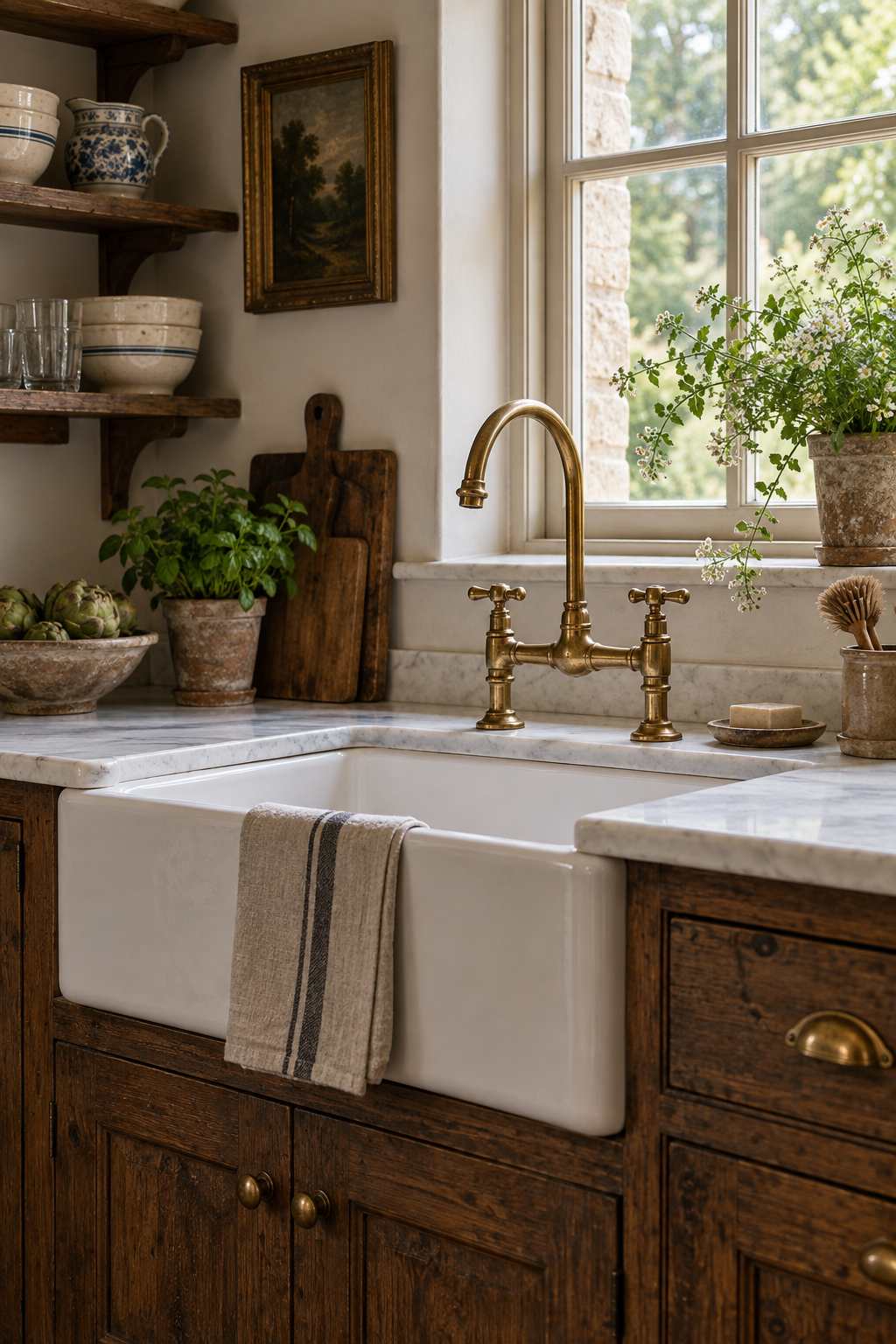
Choose choose a vintage-inspired faucet as one intentional layer in the room rather than an isolated decorative gesture. Check its scale against the cabinetry, worktop and nearest light source. Materials with visible grain, subtle variation or gentle patina give the feature depth, while a limited palette keeps the kitchen restful. Leave the main preparation zone clear and repeat only one related tone or texture elsewhere for continuity.
Measure doors, drawers and walking paths before buying or installing anything. Place fragile collections away from steam and heavy-use zones, and choose washable textiles or wipeable finishes near food preparation. Photograph the kitchen from its entrance to test the overall balance. If several accents compete at once, remove the weakest one; useful negative space is what allows the strongest material, color or vintage detail to feel special.
19. Introduce Gingham in Small Doses
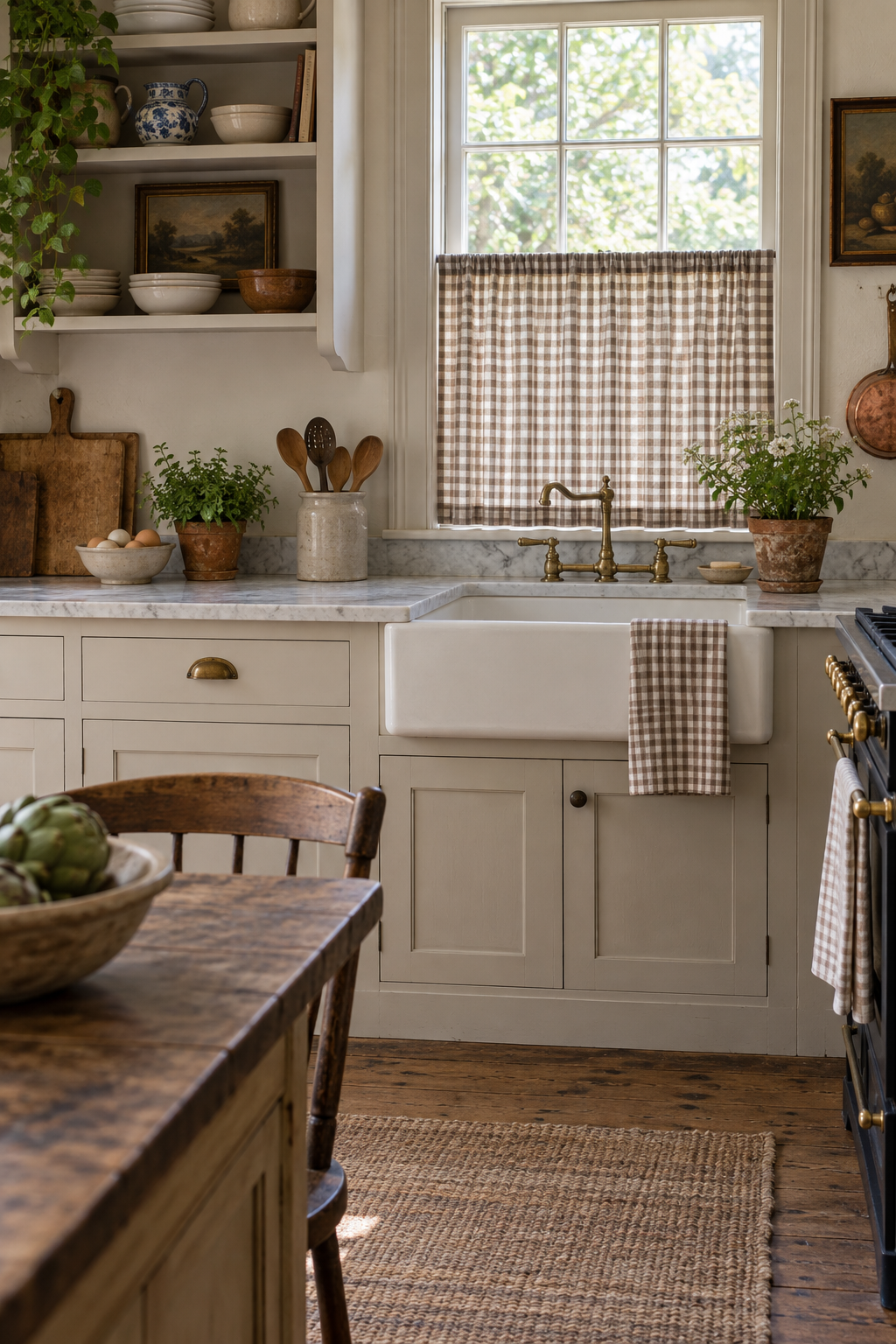
Style introduce gingham in small doses as one intentional layer in the room rather than an isolated decorative gesture. Check its scale against the cabinetry, worktop and nearest light source. Materials with visible grain, subtle variation or gentle patina give the feature depth, while a limited palette keeps the kitchen restful. Leave the main preparation zone clear and repeat only one related tone or texture elsewhere for continuity.
Measure doors, drawers and walking paths before buying or installing anything. Place fragile collections away from steam and heavy-use zones, and choose washable textiles or wipeable finishes near food preparation. Photograph the kitchen from its entrance to test the overall balance. If several accents compete at once, remove the weakest one; useful negative space is what allows the strongest material, color or vintage detail to feel special.
20. Style an Old Wooden Stool
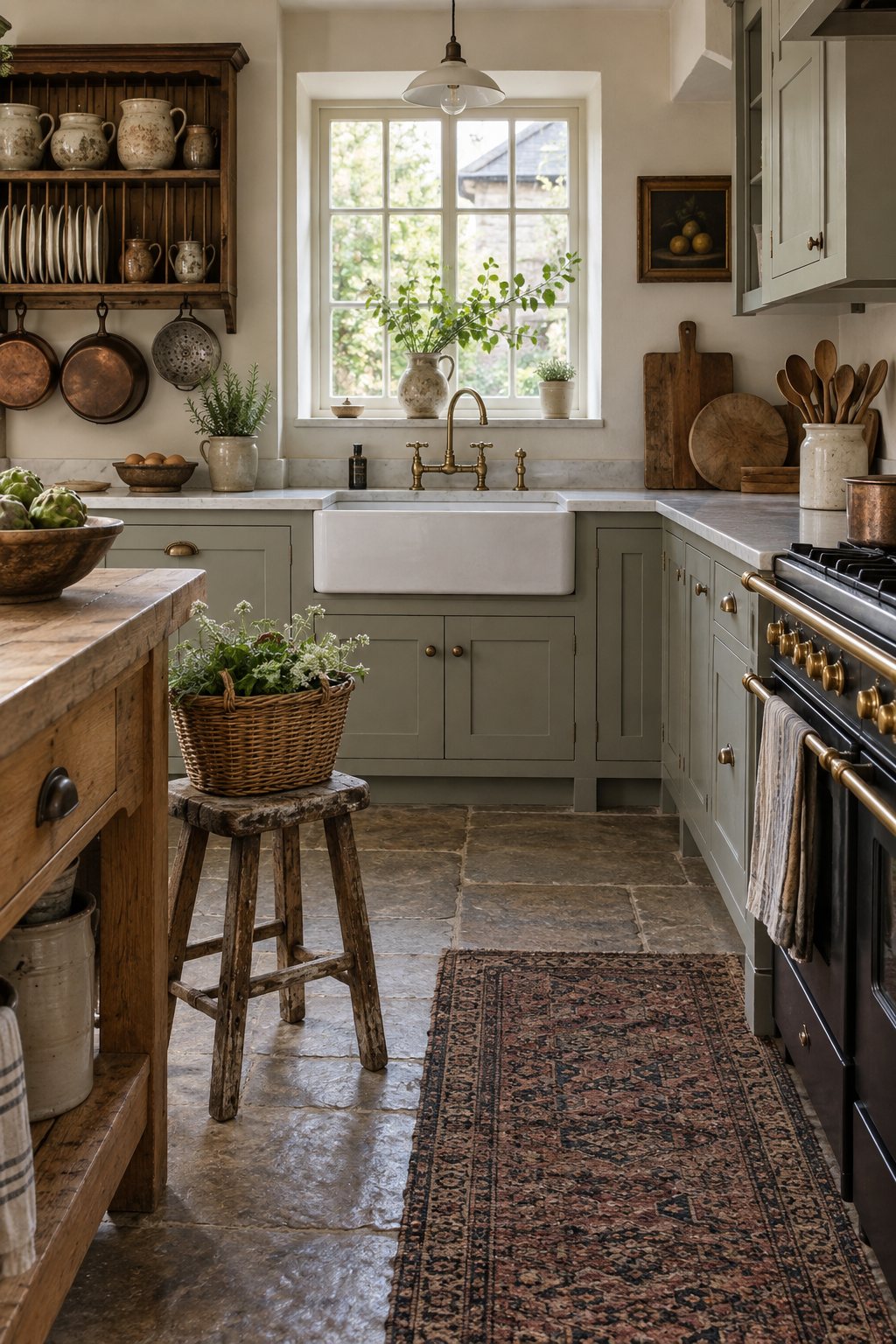
Finish with style an old wooden stool as one intentional layer in the room rather than an isolated decorative gesture. Check its scale against the cabinetry, worktop and nearest light source. Materials with visible grain, subtle variation or gentle patina give the feature depth, while a limited palette keeps the kitchen restful. Leave the main preparation zone clear and repeat only one related tone or texture elsewhere for continuity.
Measure doors, drawers and walking paths before buying or installing anything. Place fragile collections away from steam and heavy-use zones, and choose washable textiles or wipeable finishes near food preparation. Photograph the kitchen from its entrance to test the overall balance. If several accents compete at once, remove the weakest one; useful negative space is what allows the strongest material, color or vintage detail to feel special.
21. Add Character with a Butcher Block
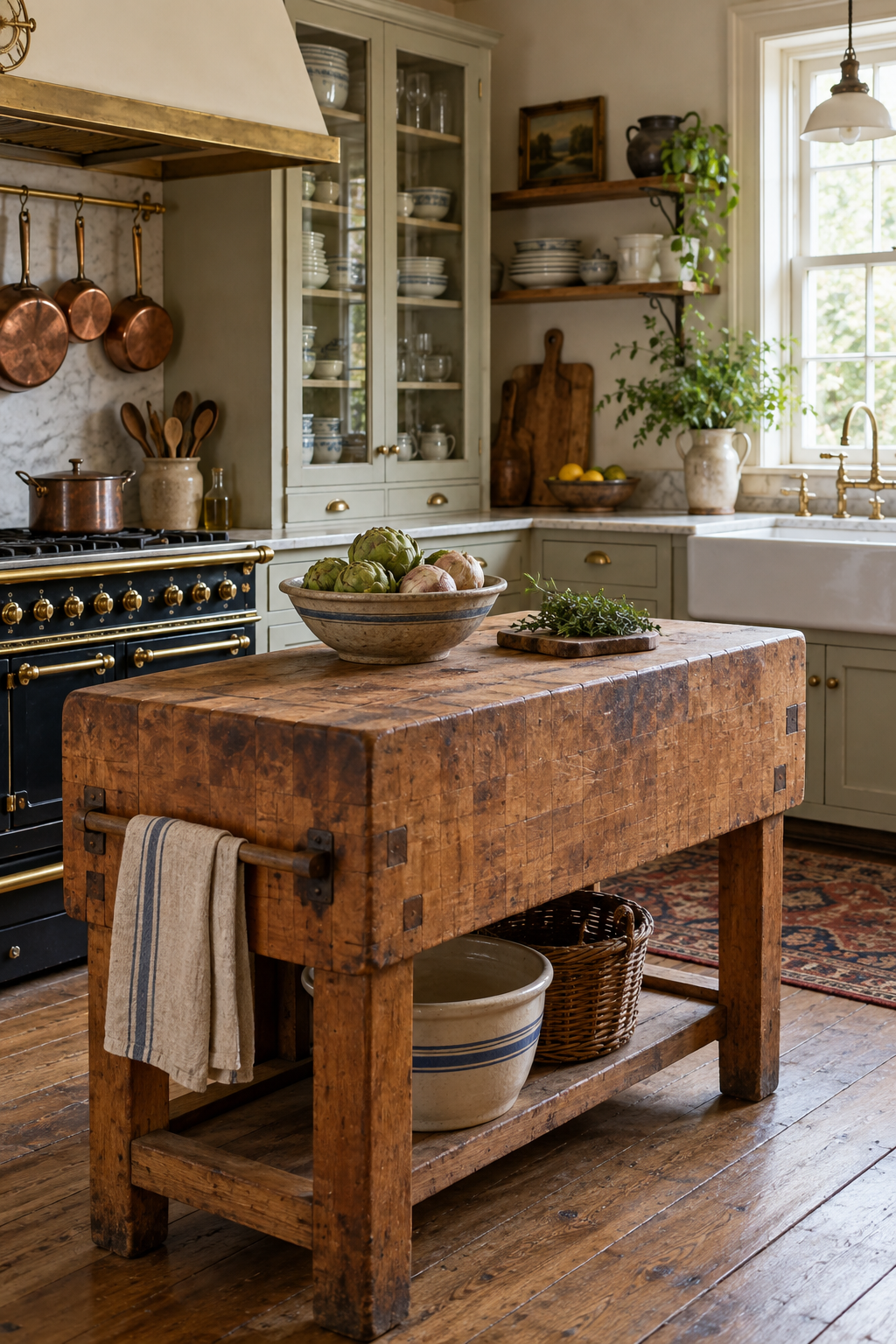
Begin with add character with a butcher block as one intentional layer in the room rather than an isolated decorative gesture. Check its scale against the cabinetry, worktop and nearest light source. Materials with visible grain, subtle variation or gentle patina give the feature depth, while a limited palette keeps the kitchen restful. Leave the main preparation zone clear and repeat only one related tone or texture elsewhere for continuity.
Measure doors, drawers and walking paths before buying or installing anything. Place fragile collections away from steam and heavy-use zones, and choose washable textiles or wipeable finishes near food preparation. Photograph the kitchen from its entrance to test the overall balance. If several accents compete at once, remove the weakest one; useful negative space is what allows the strongest material, color or vintage detail to feel special.
22. Display Cookbooks on a Small Shelf
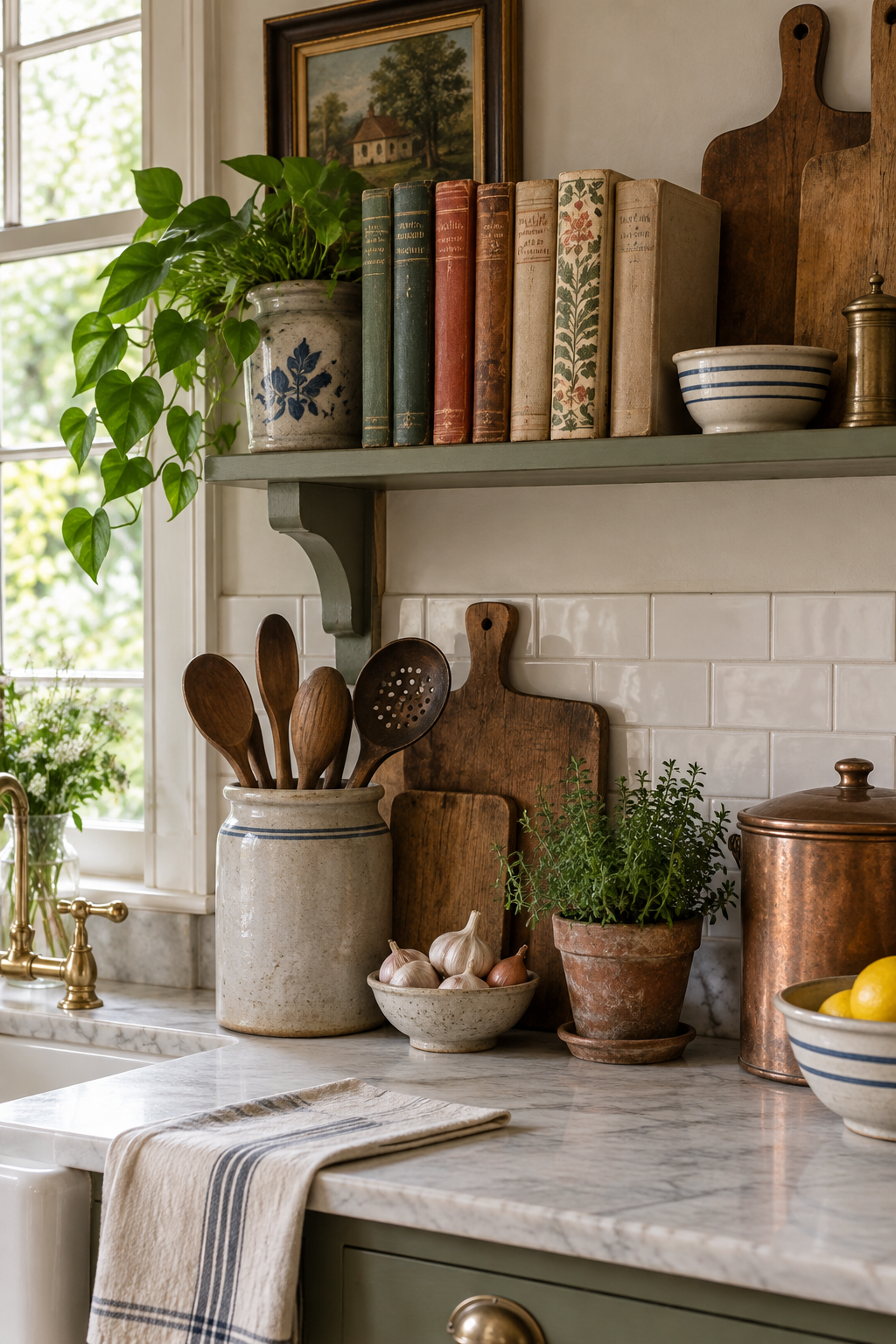
Build the room around display cookbooks on a small shelf as one intentional layer in the room rather than an isolated decorative gesture. Check its scale against the cabinetry, worktop and nearest light source. Materials with visible grain, subtle variation or gentle patina give the feature depth, while a limited palette keeps the kitchen restful. Leave the main preparation zone clear and repeat only one related tone or texture elsewhere for continuity.
Measure doors, drawers and walking paths before buying or installing anything. Place fragile collections away from steam and heavy-use zones, and choose washable textiles or wipeable finishes near food preparation. Photograph the kitchen from its entrance to test the overall balance. If several accents compete at once, remove the weakest one; useful negative space is what allows the strongest material, color or vintage detail to feel special.
23. Use Salvaged Hooks for Aprons
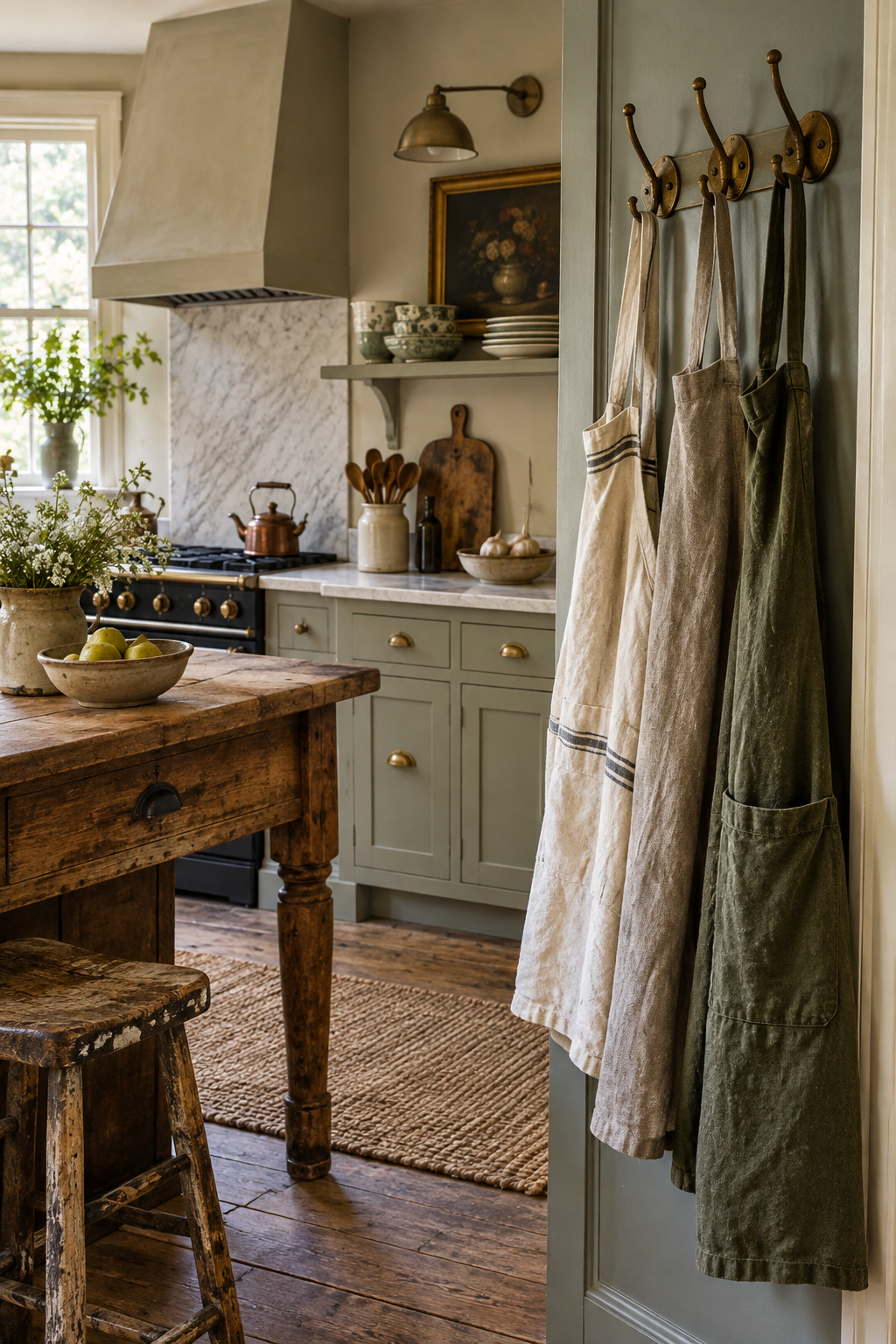
Try use salvaged hooks for aprons as one intentional layer in the room rather than an isolated decorative gesture. Check its scale against the cabinetry, worktop and nearest light source. Materials with visible grain, subtle variation or gentle patina give the feature depth, while a limited palette keeps the kitchen restful. Leave the main preparation zone clear and repeat only one related tone or texture elsewhere for continuity.
Measure doors, drawers and walking paths before buying or installing anything. Place fragile collections away from steam and heavy-use zones, and choose washable textiles or wipeable finishes near food preparation. Photograph the kitchen from its entrance to test the overall balance. If several accents compete at once, remove the weakest one; useful negative space is what allows the strongest material, color or vintage detail to feel special.
24. Bring In a Painted Pantry Cupboard
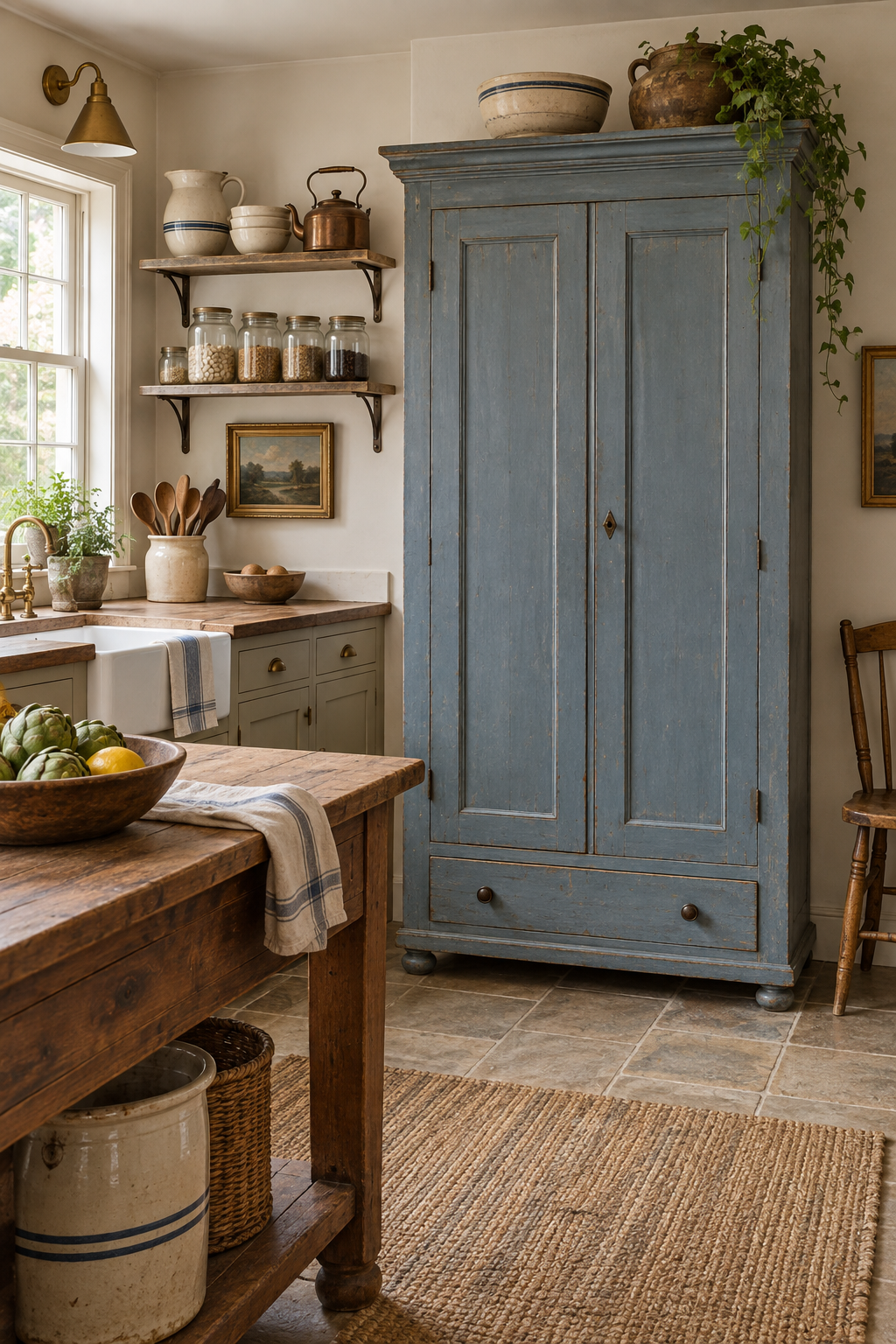
Use bring in a painted pantry cupboard as one intentional layer in the room rather than an isolated decorative gesture. Check its scale against the cabinetry, worktop and nearest light source. Materials with visible grain, subtle variation or gentle patina give the feature depth, while a limited palette keeps the kitchen restful. Leave the main preparation zone clear and repeat only one related tone or texture elsewhere for continuity.
Measure doors, drawers and walking paths before buying or installing anything. Place fragile collections away from steam and heavy-use zones, and choose washable textiles or wipeable finishes near food preparation. Photograph the kitchen from its entrance to test the overall balance. If several accents compete at once, remove the weakest one; useful negative space is what allows the strongest material, color or vintage detail to feel special.
25. Layer Pottery in Earthy Tones
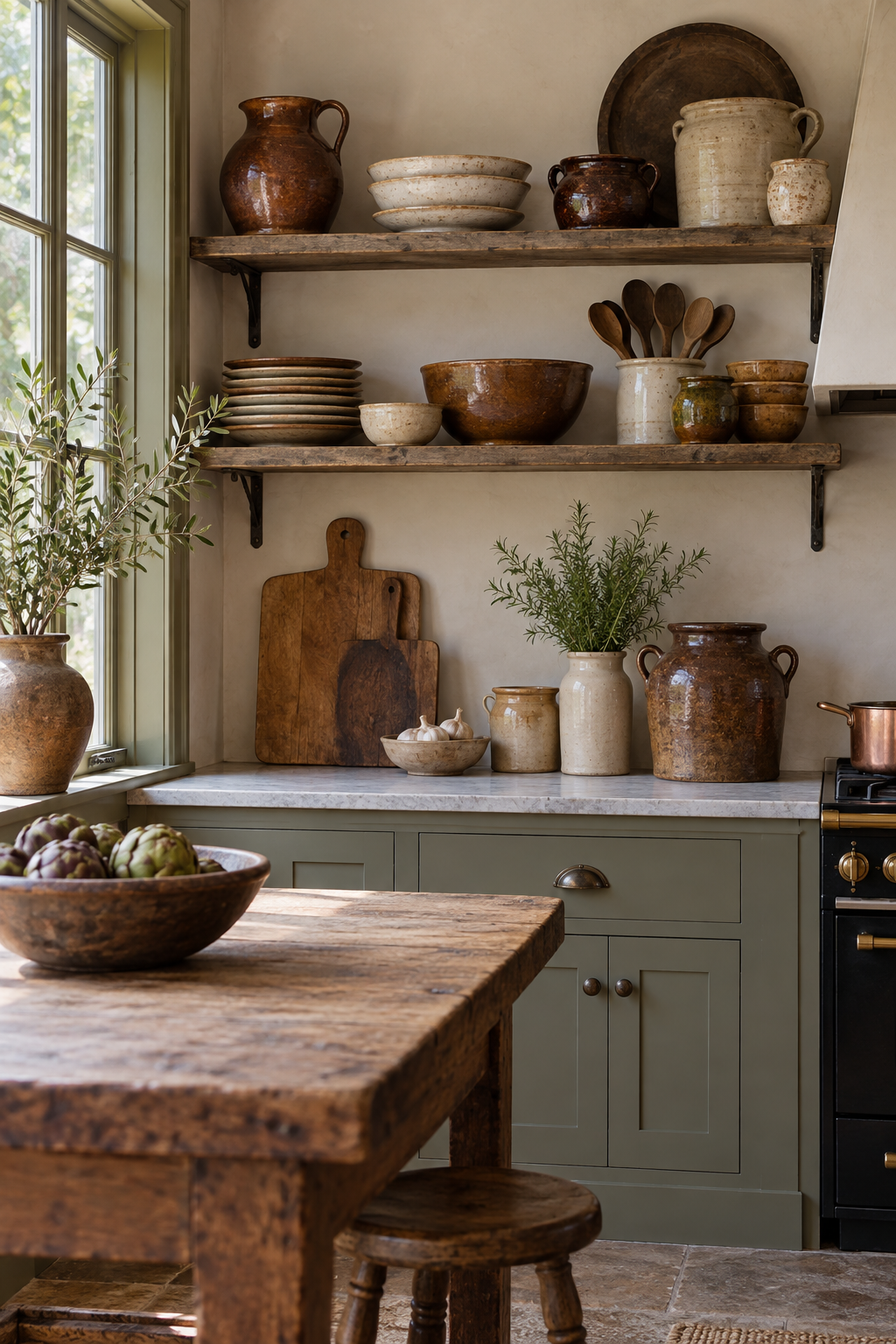
Introduce layer pottery in earthy tones as one intentional layer in the room rather than an isolated decorative gesture. Check its scale against the cabinetry, worktop and nearest light source. Materials with visible grain, subtle variation or gentle patina give the feature depth, while a limited palette keeps the kitchen restful. Leave the main preparation zone clear and repeat only one related tone or texture elsewhere for continuity.
Measure doors, drawers and walking paths before buying or installing anything. Place fragile collections away from steam and heavy-use zones, and choose washable textiles or wipeable finishes near food preparation. Photograph the kitchen from its entrance to test the overall balance. If several accents compete at once, remove the weakest one; useful negative space is what allows the strongest material, color or vintage detail to feel special.
26. Create a Breakfast Nook with Vintage Charm
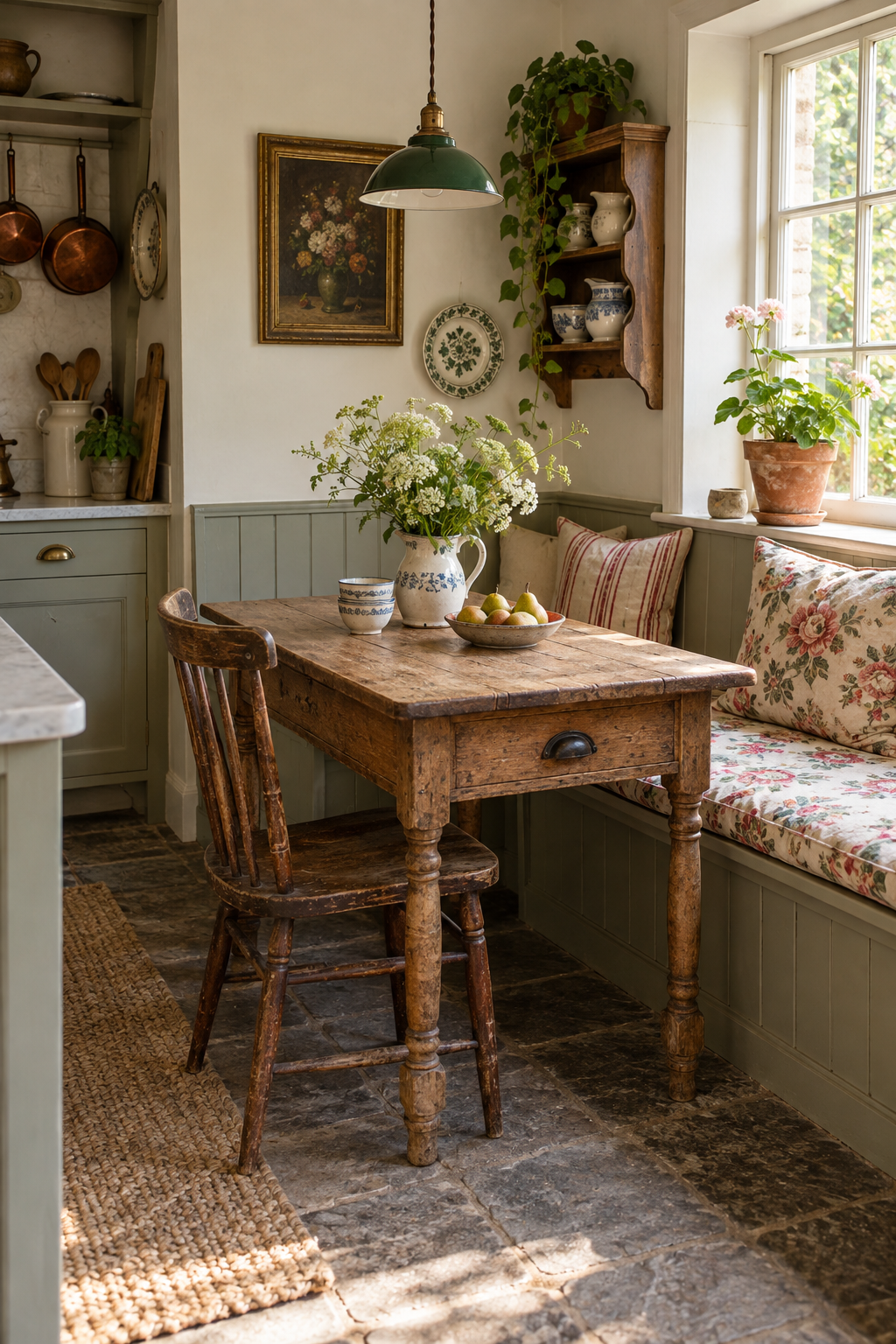
Create create a breakfast nook with vintage charm as one intentional layer in the room rather than an isolated decorative gesture. Check its scale against the cabinetry, worktop and nearest light source. Materials with visible grain, subtle variation or gentle patina give the feature depth, while a limited palette keeps the kitchen restful. Leave the main preparation zone clear and repeat only one related tone or texture elsewhere for continuity.
Measure doors, drawers and walking paths before buying or installing anything. Place fragile collections away from steam and heavy-use zones, and choose washable textiles or wipeable finishes near food preparation. Photograph the kitchen from its entrance to test the overall balance. If several accents compete at once, remove the weakest one; useful negative space is what allows the strongest material, color or vintage detail to feel special.
27. Balance Patina with Clear Work Surfaces
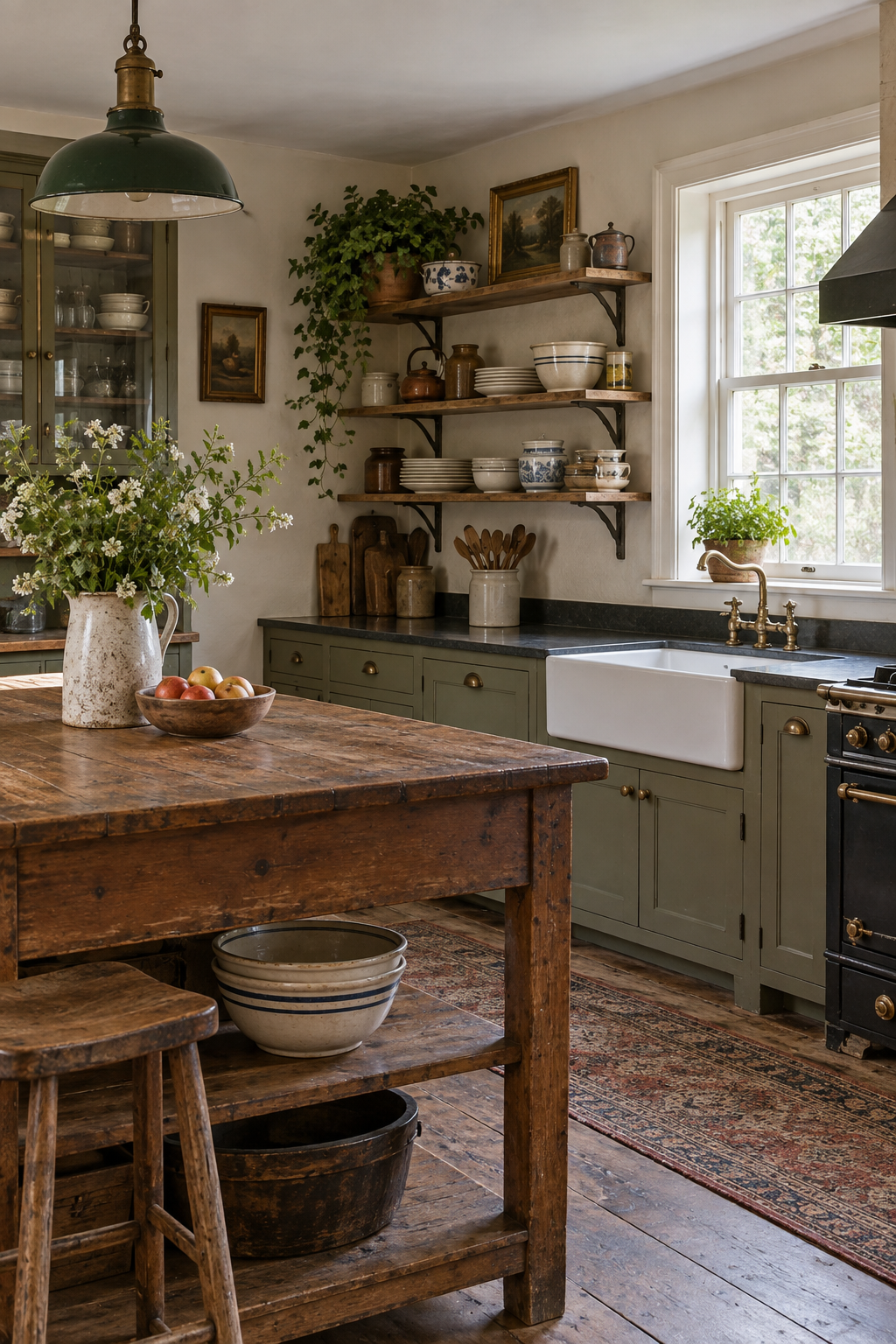
Balance balance patina with clear work surfaces as one intentional layer in the room rather than an isolated decorative gesture. Check its scale against the cabinetry, worktop and nearest light source. Materials with visible grain, subtle variation or gentle patina give the feature depth, while a limited palette keeps the kitchen restful. Leave the main preparation zone clear and repeat only one related tone or texture elsewhere for continuity.
Measure doors, drawers and walking paths before buying or installing anything. Place fragile collections away from steam and heavy-use zones, and choose washable textiles or wipeable finishes near food preparation. Photograph the kitchen from its entrance to test the overall balance. If several accents compete at once, remove the weakest one; useful negative space is what allows the strongest material, color or vintage detail to feel special.
Final Styling Notes
The most enduring kitchen schemes connect beauty with routine. Keep daily tools within reach, protect working surfaces and allow natural materials to show their character without filling every shelf. Repeat the strongest finish or color at different heights, then stop before the room loses clarity. This final edit makes the kitchen feel settled, personal and practical.