A small laundry room works best when every shelf, basket and work surface supports the order in which laundry actually happens. The goal is not to fill every wall with storage. It is to keep detergent close to the washer, create a clear place for sorting and folding, and prevent temporary piles from taking over the floor.
These small laundry room organization ideas cover closets, utility rooms, pass-through spaces and compact corners. Each solution considers moisture, appliance ventilation, door clearance and realistic household routines, so the finished room can look calm without becoming difficult to use.
1. Build Storage All the Way to the Ceiling
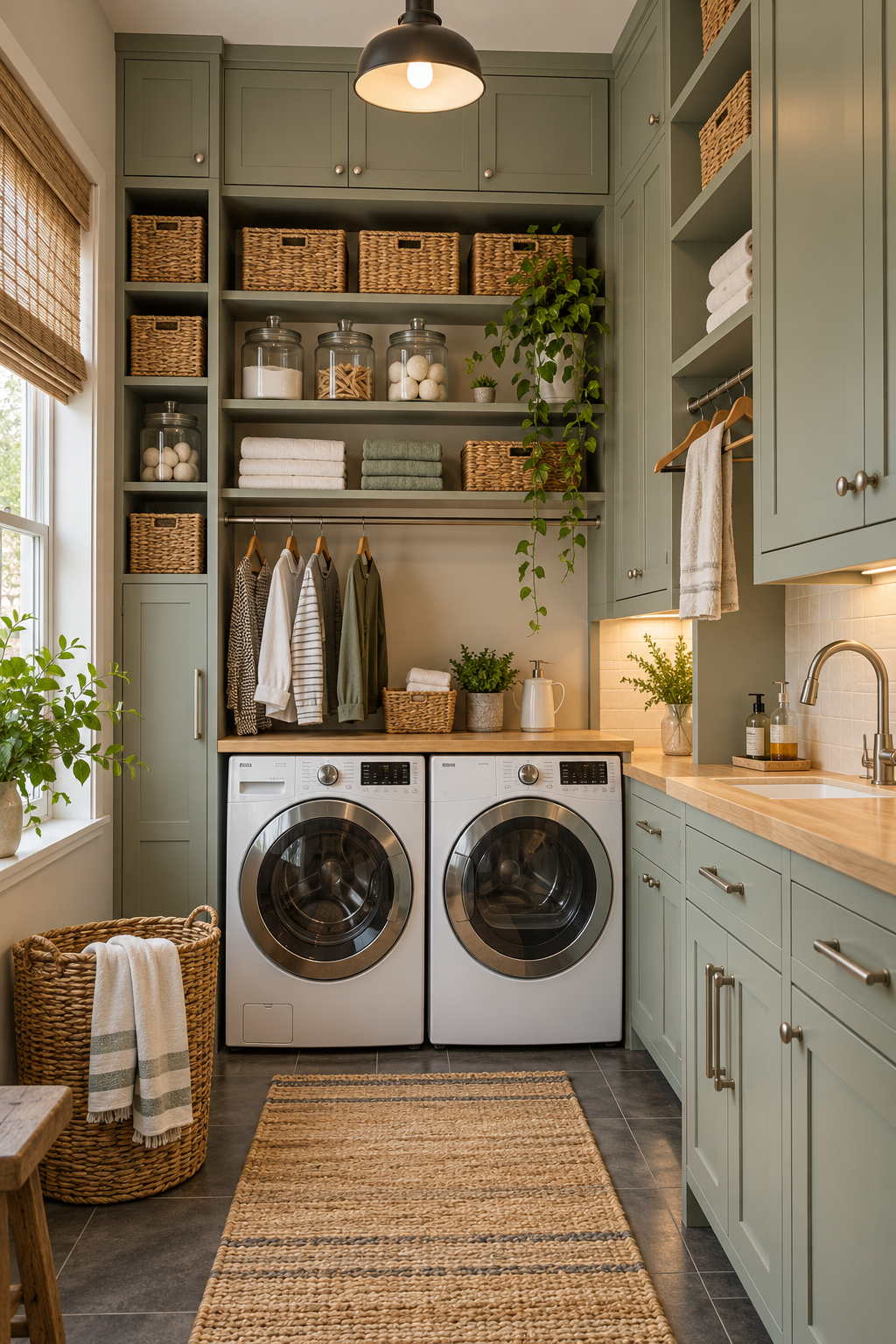
Make build storage all the way to the ceiling part of the room’s workflow instead of treating it as decoration. Measure appliance depth, lid clearance and service access before fixing anything to the wall. Build the solution with painted cabinetry, sealed wood, woven baskets, glass jars, washable textiles and durable metal hardware, repeating only a few finishes so a compact room does not feel visually crowded.
Keep the palette grounded in warm white, pale oak, soft sage, brushed nickel and charcoal accents. Allow frequently handled pieces to remain visible, but hide bulk refills, mismatched packaging and rarely used equipment behind a door or inside a labeled basket. Review the setup after two laundry cycles and adjust shelf height or container placement if the system creates an extra step.
2. Install a Counter above Front-Loading Machines
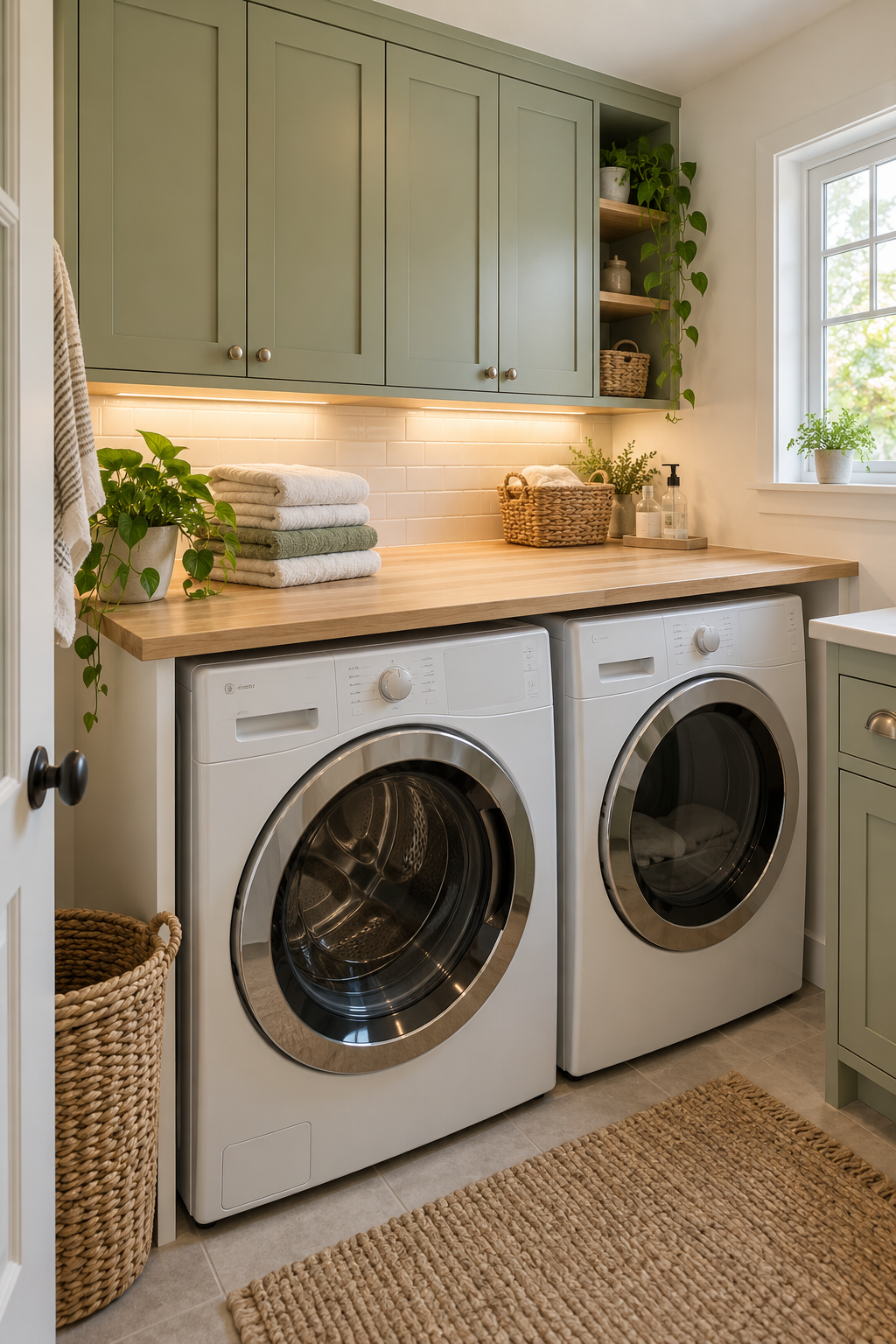
Make install a counter above front-loading machines part of the room’s workflow instead of treating it as decoration. Keep the items used every week within comfortable reach and move occasional supplies higher. Build the solution with painted cabinetry, sealed wood, woven baskets, glass jars, washable textiles and durable metal hardware, repeating only a few finishes so a compact room does not feel visually crowded.
Keep the palette grounded in warm white, pale oak, soft sage, brushed nickel and charcoal accents. Allow frequently handled pieces to remain visible, but hide bulk refills, mismatched packaging and rarely used equipment behind a door or inside a labeled basket. Review the setup after two laundry cycles and adjust shelf height or container placement if the system creates an extra step.
3. Use a Slim Rolling Cart between Appliances
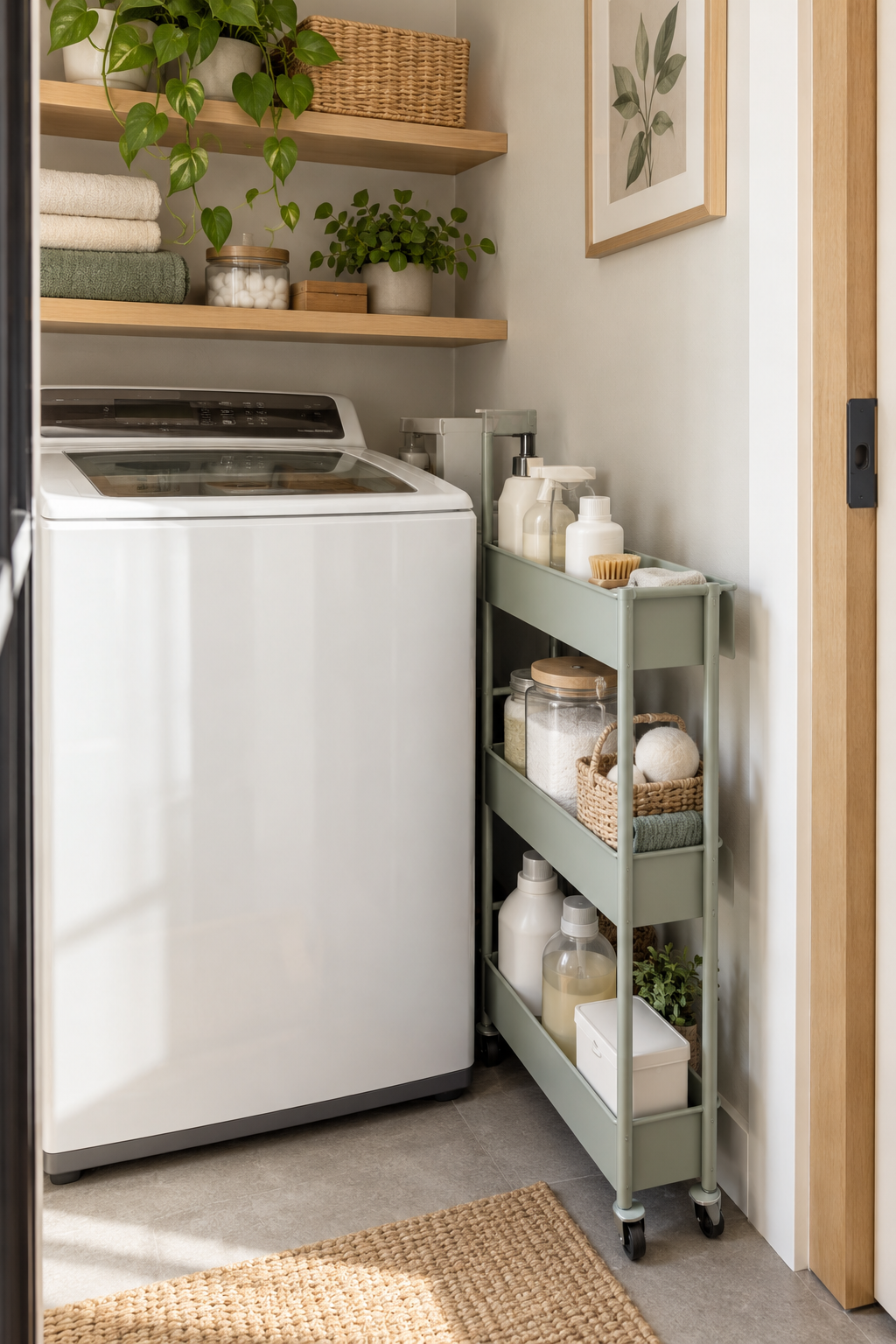
Make use a slim rolling cart between appliances part of the room’s workflow instead of treating it as decoration. Choose containers that can be wiped clean and leave air space around machines and plumbing. Build the solution with painted cabinetry, sealed wood, woven baskets, glass jars, washable textiles and durable metal hardware, repeating only a few finishes so a compact room does not feel visually crowded.
Keep the palette grounded in warm white, pale oak, soft sage, brushed nickel and charcoal accents. Allow frequently handled pieces to remain visible, but hide bulk refills, mismatched packaging and rarely used equipment behind a door or inside a labeled basket. Review the setup after two laundry cycles and adjust shelf height or container placement if the system creates an extra step.
4. Add Closed Cabinets for Visual Calm
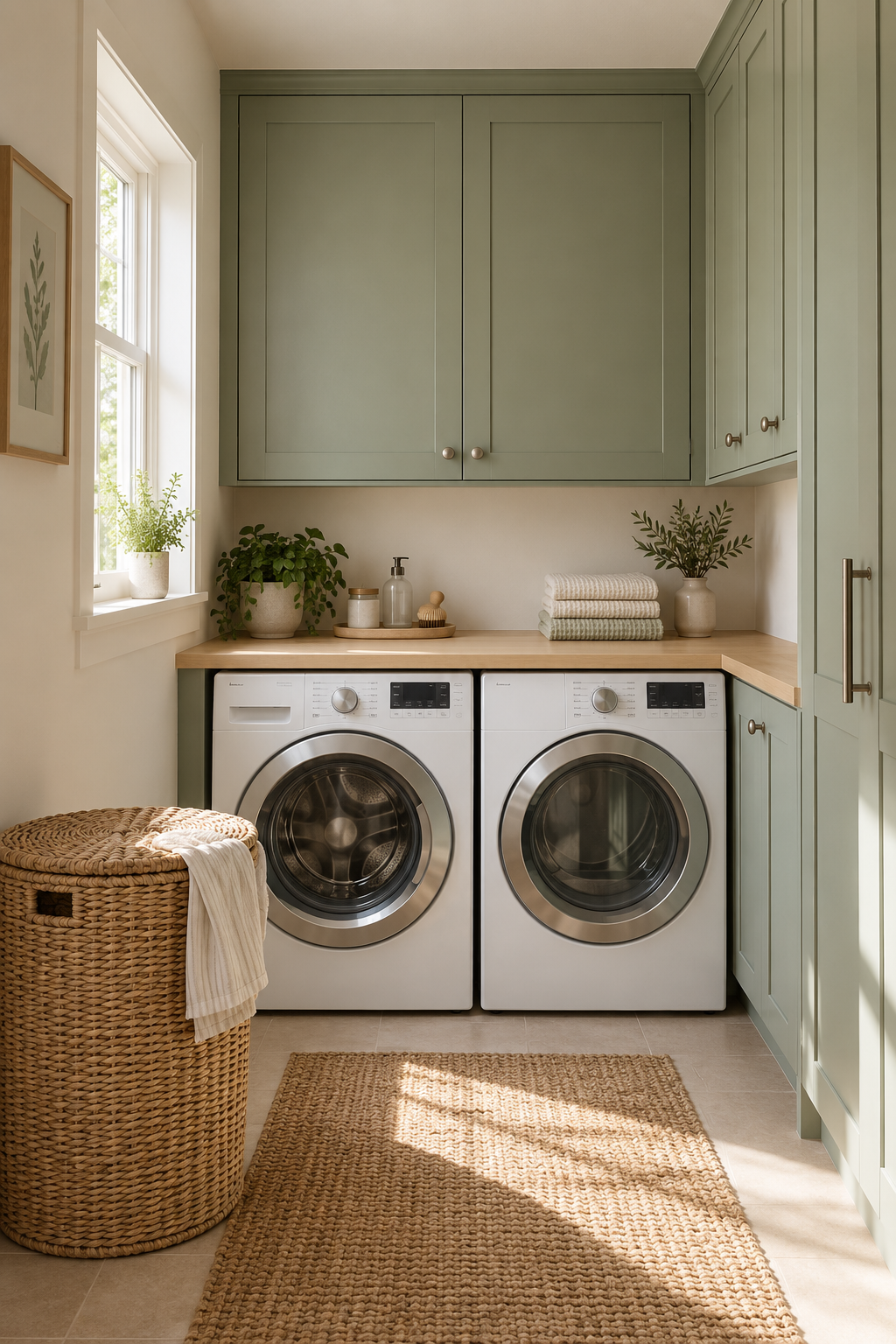
Make add closed cabinets for visual calm part of the room’s workflow instead of treating it as decoration. Test the layout with a full basket in your hands so narrow circulation points become obvious. Build the solution with painted cabinetry, sealed wood, woven baskets, glass jars, washable textiles and durable metal hardware, repeating only a few finishes so a compact room does not feel visually crowded.
Keep the palette grounded in warm white, pale oak, soft sage, brushed nickel and charcoal accents. Allow frequently handled pieces to remain visible, but hide bulk refills, mismatched packaging and rarely used equipment behind a door or inside a labeled basket. Review the setup after two laundry cycles and adjust shelf height or container placement if the system creates an extra step.
5. Mount Open Shelves for Everyday Supplies
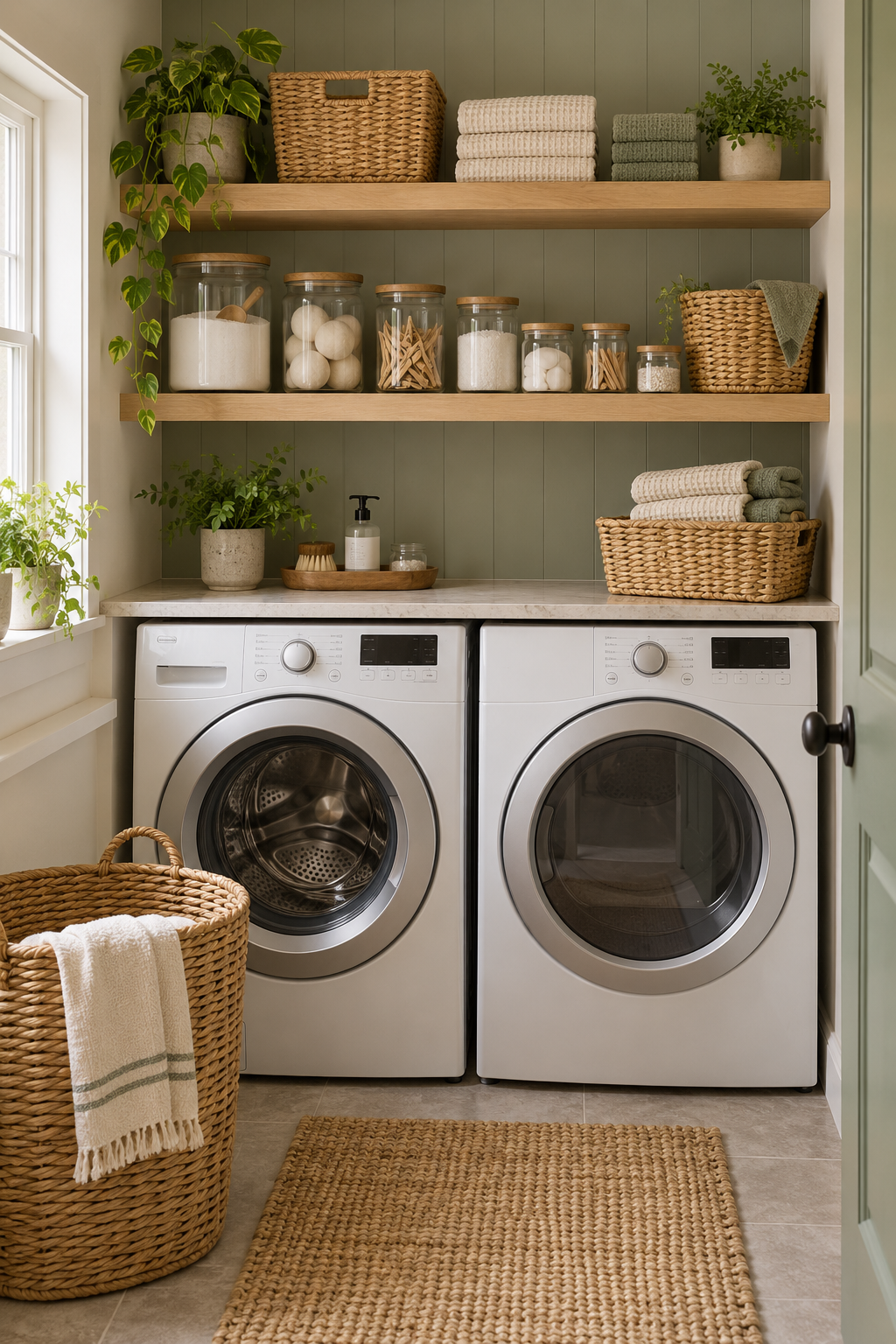
Make mount open shelves for everyday supplies part of the room’s workflow instead of treating it as decoration. Use one consistent label style and group supplies by task rather than by package size. Build the solution with painted cabinetry, sealed wood, woven baskets, glass jars, washable textiles and durable metal hardware, repeating only a few finishes so a compact room does not feel visually crowded.
Keep the palette grounded in warm white, pale oak, soft sage, brushed nickel and charcoal accents. Allow frequently handled pieces to remain visible, but hide bulk refills, mismatched packaging and rarely used equipment behind a door or inside a labeled basket. Review the setup after two laundry cycles and adjust shelf height or container placement if the system creates an extra step.
6. Create a Wall-Mounted Drying Rack
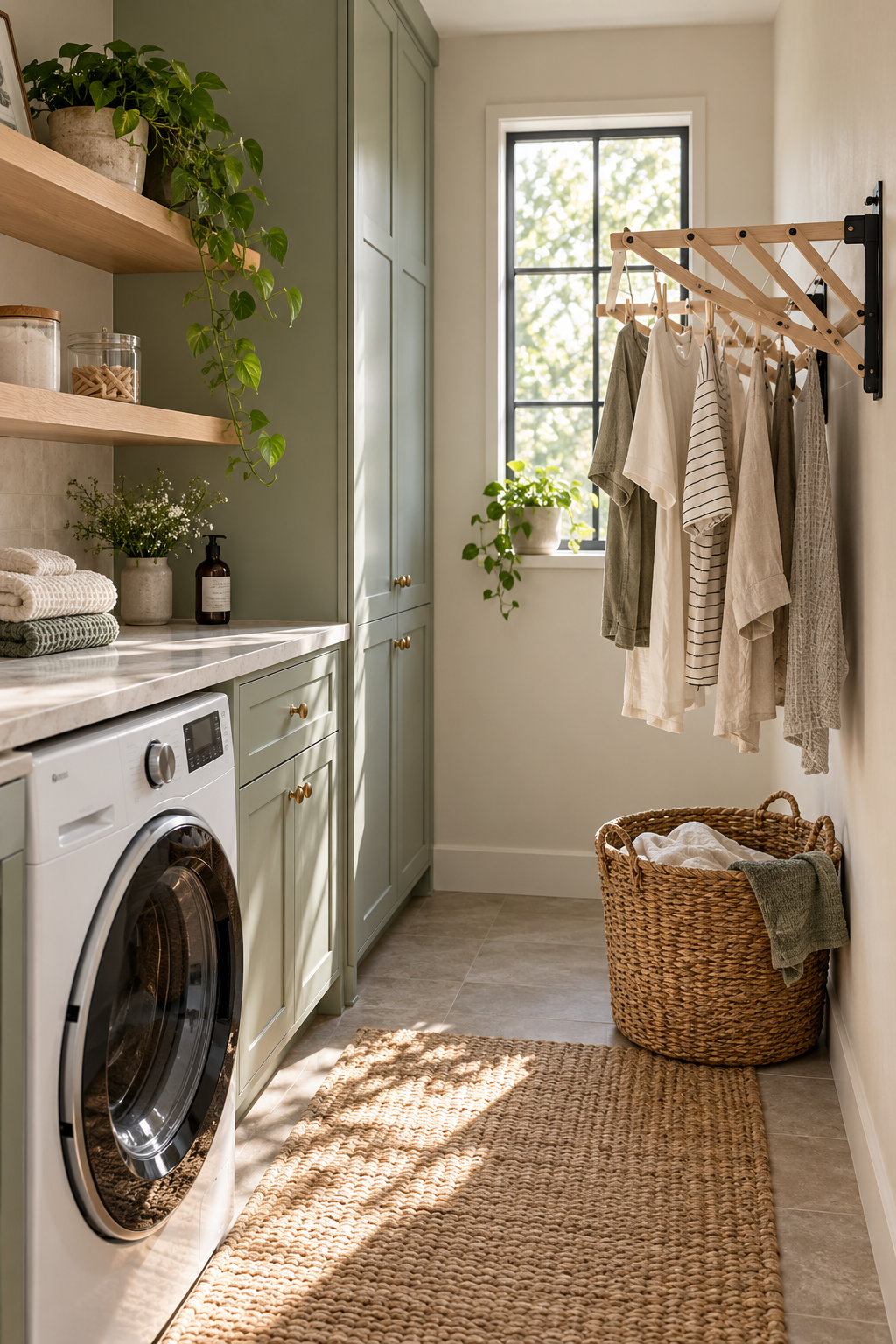
Make create a wall-mounted drying rack part of the room’s workflow instead of treating it as decoration. Measure appliance depth, lid clearance and service access before fixing anything to the wall. Build the solution with painted cabinetry, sealed wood, woven baskets, glass jars, washable textiles and durable metal hardware, repeating only a few finishes so a compact room does not feel visually crowded.
Keep the palette grounded in warm white, pale oak, soft sage, brushed nickel and charcoal accents. Allow frequently handled pieces to remain visible, but hide bulk refills, mismatched packaging and rarely used equipment behind a door or inside a labeled basket. Review the setup after two laundry cycles and adjust shelf height or container placement if the system creates an extra step.
7. Use Matching Baskets with Clear Labels
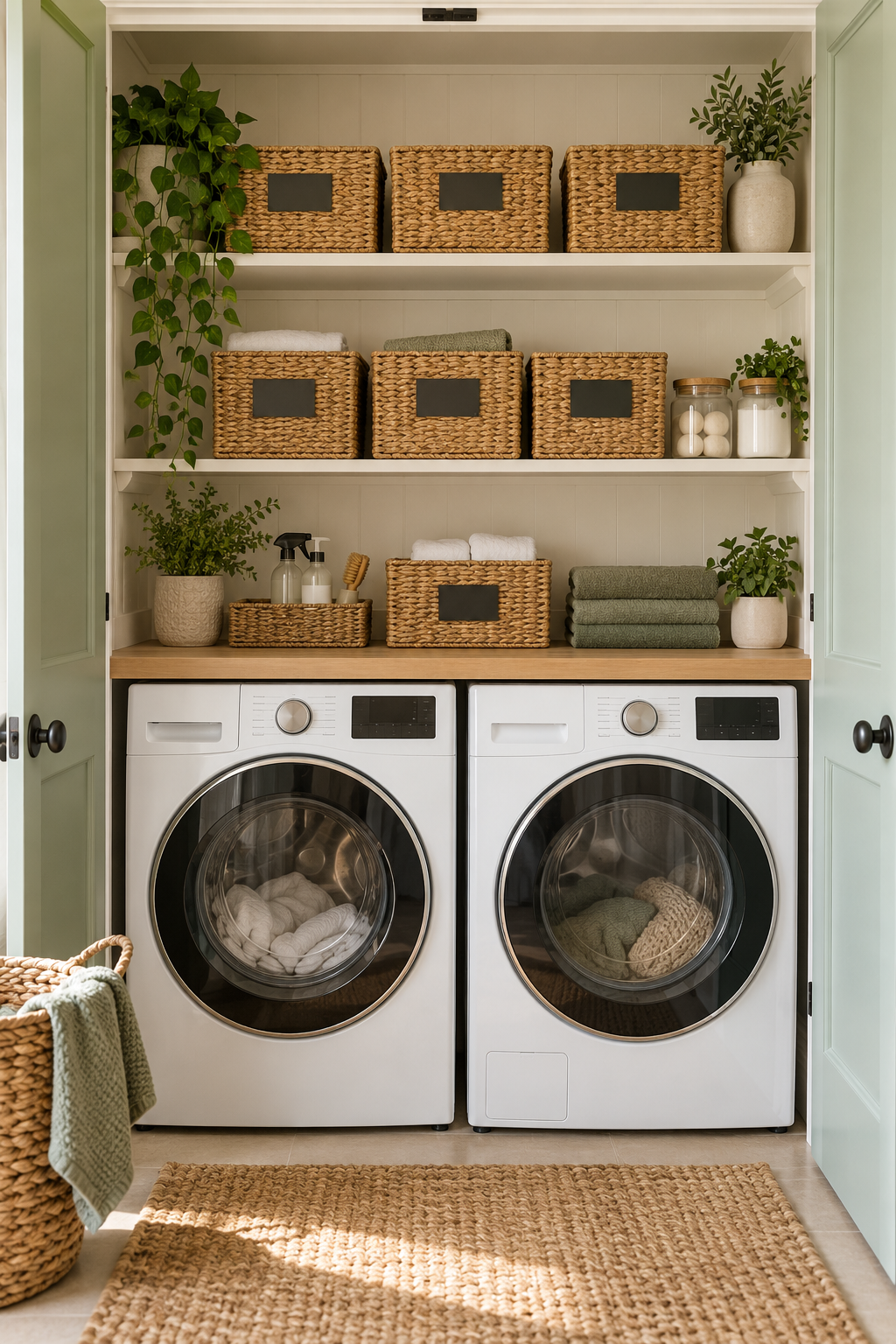
Make use matching baskets with clear labels part of the room’s workflow instead of treating it as decoration. Keep the items used every week within comfortable reach and move occasional supplies higher. Build the solution with painted cabinetry, sealed wood, woven baskets, glass jars, washable textiles and durable metal hardware, repeating only a few finishes so a compact room does not feel visually crowded.
Keep the palette grounded in warm white, pale oak, soft sage, brushed nickel and charcoal accents. Allow frequently handled pieces to remain visible, but hide bulk refills, mismatched packaging and rarely used equipment behind a door or inside a labeled basket. Review the setup after two laundry cycles and adjust shelf height or container placement if the system creates an extra step.
8. Add a Hanging Rail beneath a Shelf
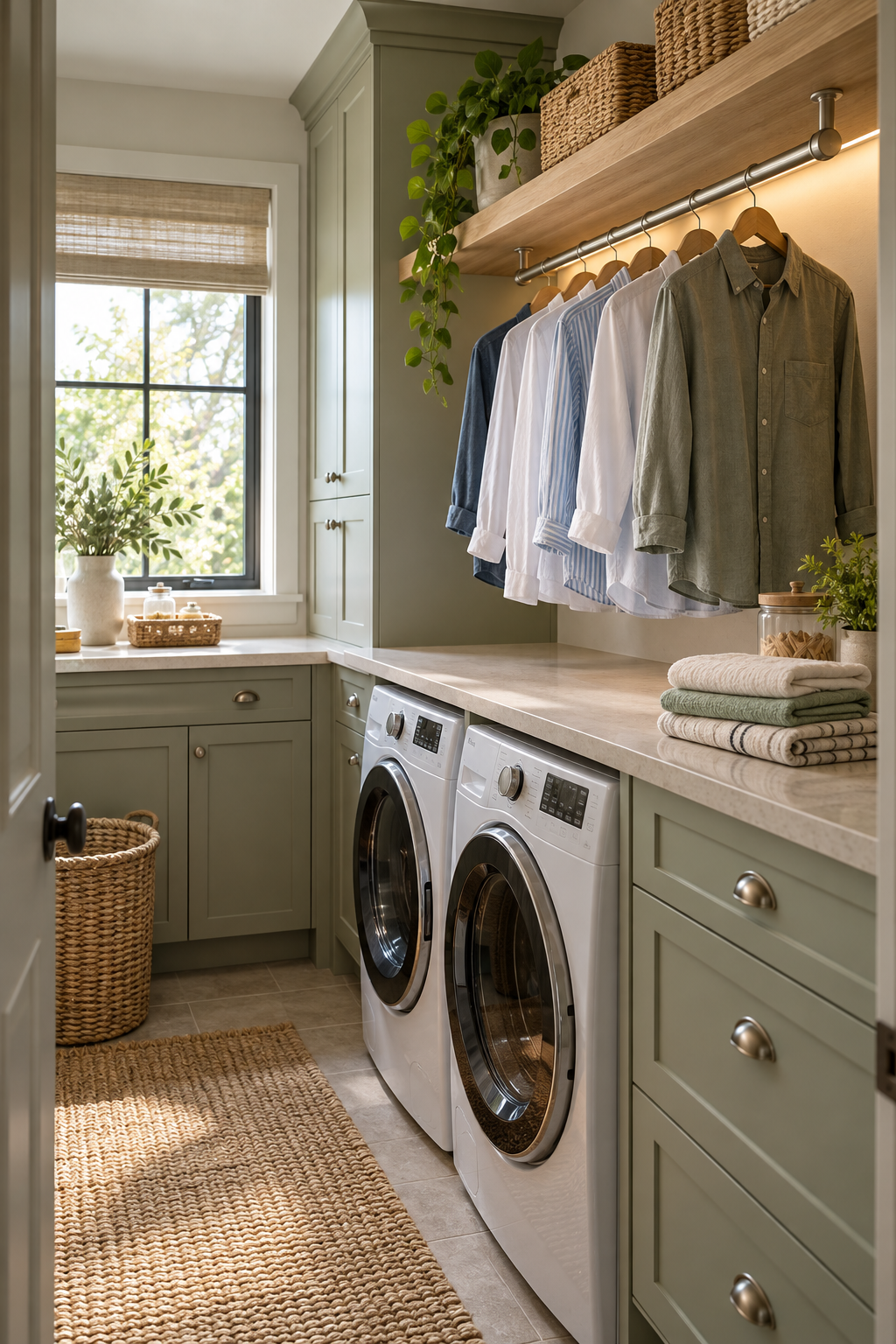
Make add a hanging rail beneath a shelf part of the room’s workflow instead of treating it as decoration. Choose containers that can be wiped clean and leave air space around machines and plumbing. Build the solution with painted cabinetry, sealed wood, woven baskets, glass jars, washable textiles and durable metal hardware, repeating only a few finishes so a compact room does not feel visually crowded.
Keep the palette grounded in warm white, pale oak, soft sage, brushed nickel and charcoal accents. Allow frequently handled pieces to remain visible, but hide bulk refills, mismatched packaging and rarely used equipment behind a door or inside a labeled basket. Review the setup after two laundry cycles and adjust shelf height or container placement if the system creates an extra step.
9. Turn the Door into Extra Storage
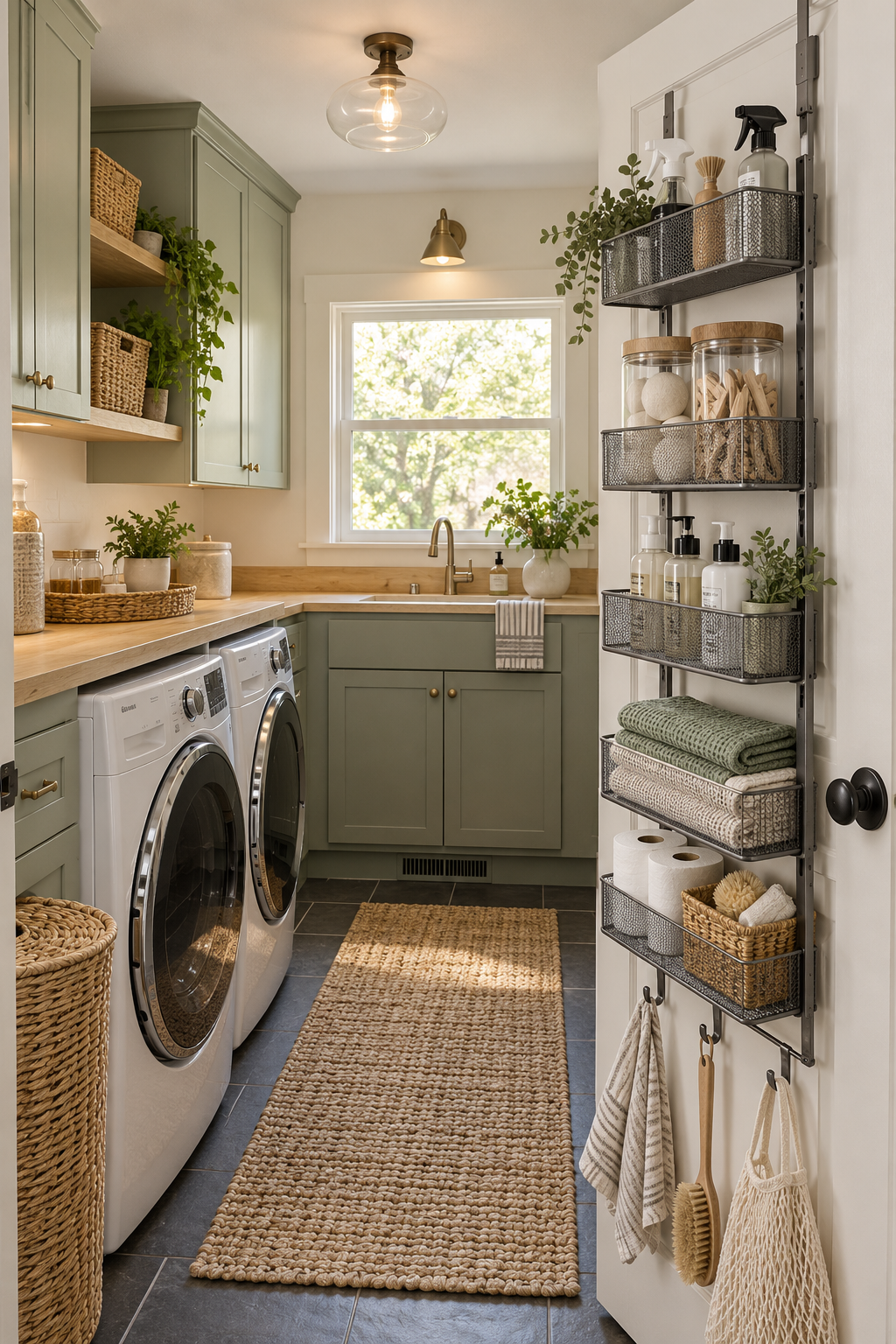
Make turn the door into extra storage part of the room’s workflow instead of treating it as decoration. Test the layout with a full basket in your hands so narrow circulation points become obvious. Build the solution with painted cabinetry, sealed wood, woven baskets, glass jars, washable textiles and durable metal hardware, repeating only a few finishes so a compact room does not feel visually crowded.
Keep the palette grounded in warm white, pale oak, soft sage, brushed nickel and charcoal accents. Allow frequently handled pieces to remain visible, but hide bulk refills, mismatched packaging and rarely used equipment behind a door or inside a labeled basket. Review the setup after two laundry cycles and adjust shelf height or container placement if the system creates an extra step.
10. Create a Dedicated Stain-Treatment Station
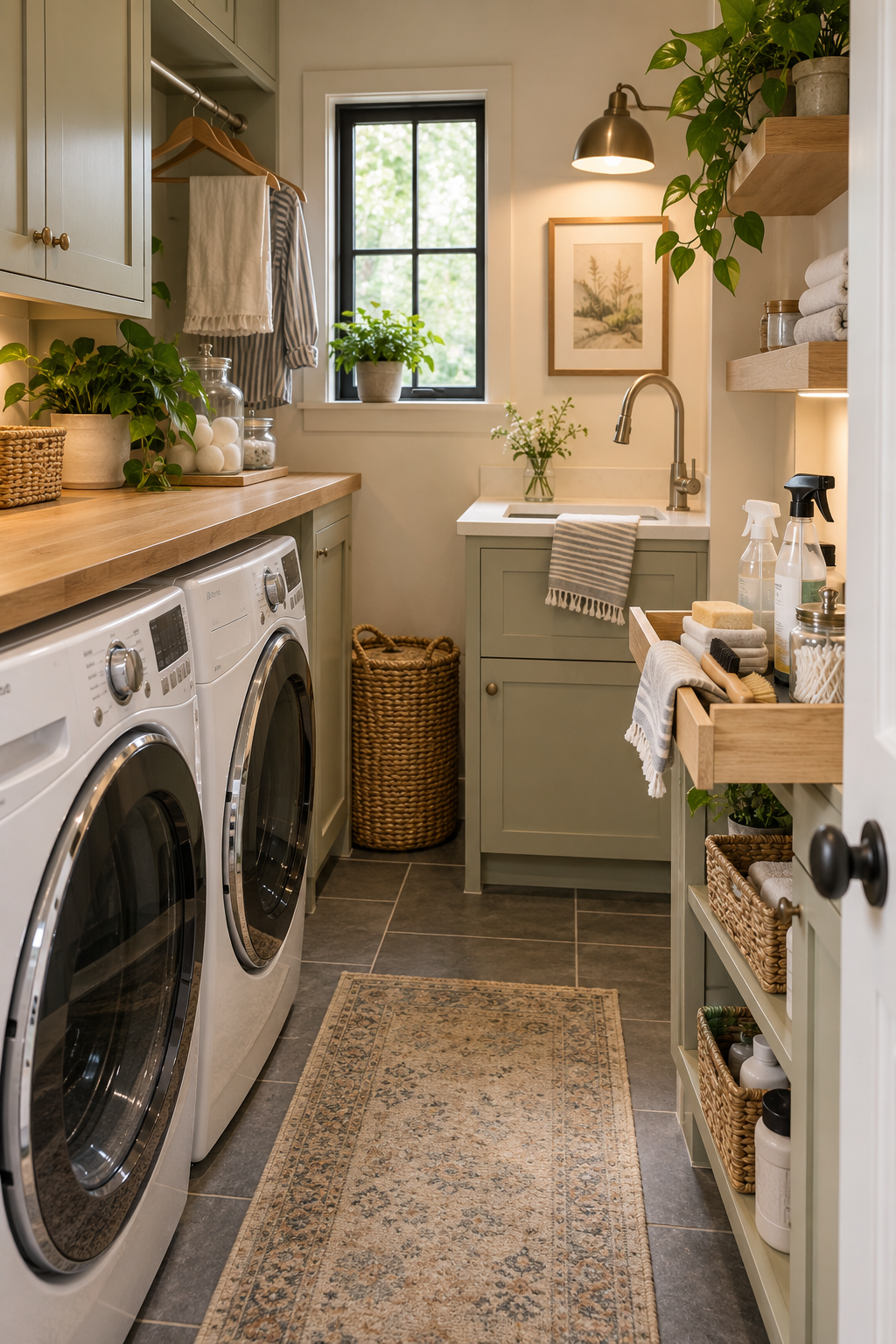
Make create a dedicated stain-treatment station part of the room’s workflow instead of treating it as decoration. Use one consistent label style and group supplies by task rather than by package size. Build the solution with painted cabinetry, sealed wood, woven baskets, glass jars, washable textiles and durable metal hardware, repeating only a few finishes so a compact room does not feel visually crowded.
Keep the palette grounded in warm white, pale oak, soft sage, brushed nickel and charcoal accents. Allow frequently handled pieces to remain visible, but hide bulk refills, mismatched packaging and rarely used equipment behind a door or inside a labeled basket. Review the setup after two laundry cycles and adjust shelf height or container placement if the system creates an extra step.
11. Store Detergent in Easy-Pour Containers
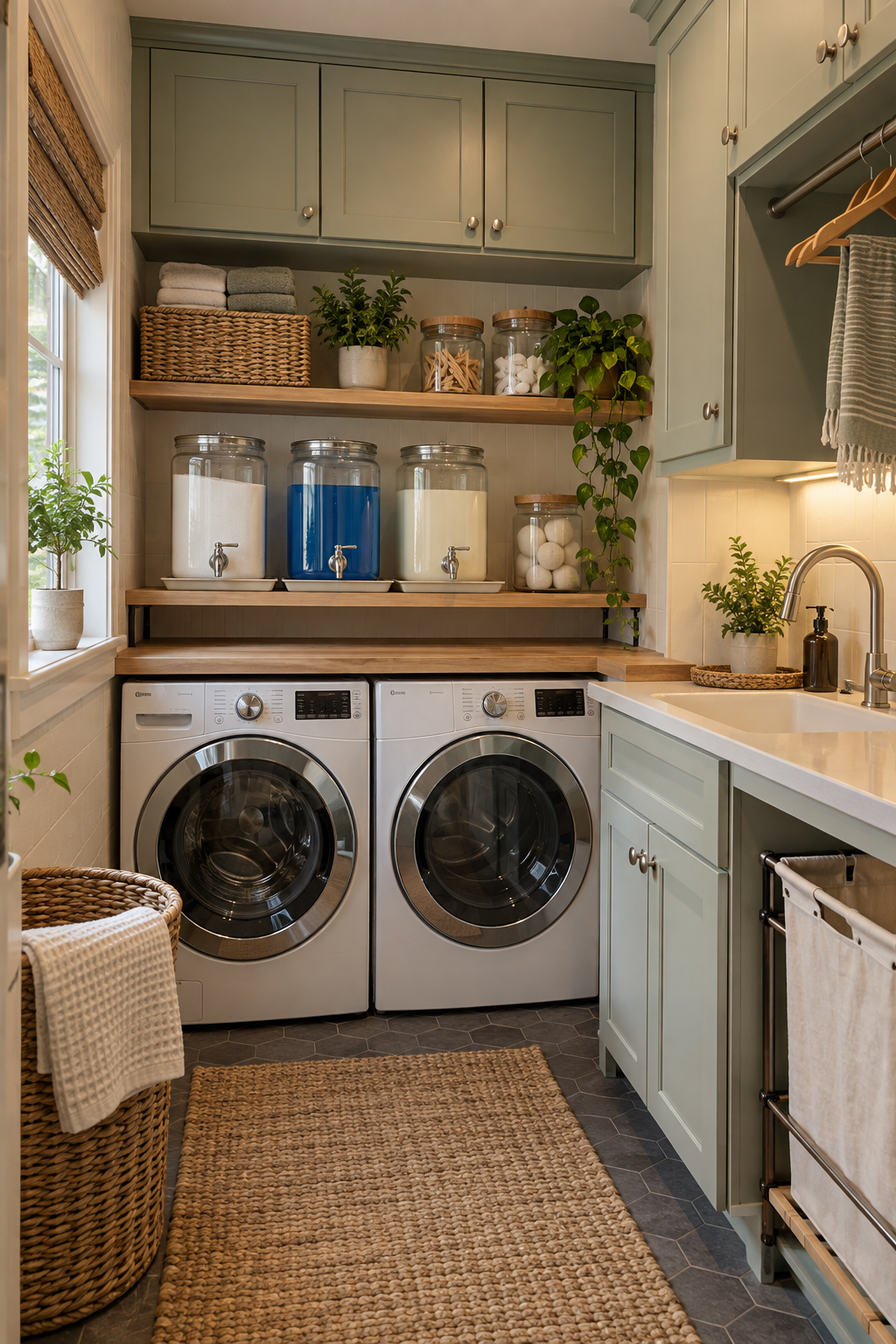
Make store detergent in easy-pour containers part of the room’s workflow instead of treating it as decoration. Measure appliance depth, lid clearance and service access before fixing anything to the wall. Build the solution with painted cabinetry, sealed wood, woven baskets, glass jars, washable textiles and durable metal hardware, repeating only a few finishes so a compact room does not feel visually crowded.
Keep the palette grounded in warm white, pale oak, soft sage, brushed nickel and charcoal accents. Allow frequently handled pieces to remain visible, but hide bulk refills, mismatched packaging and rarely used equipment behind a door or inside a labeled basket. Review the setup after two laundry cycles and adjust shelf height or container placement if the system creates an extra step.
12. Use Pull-Out Hampers for Sorting
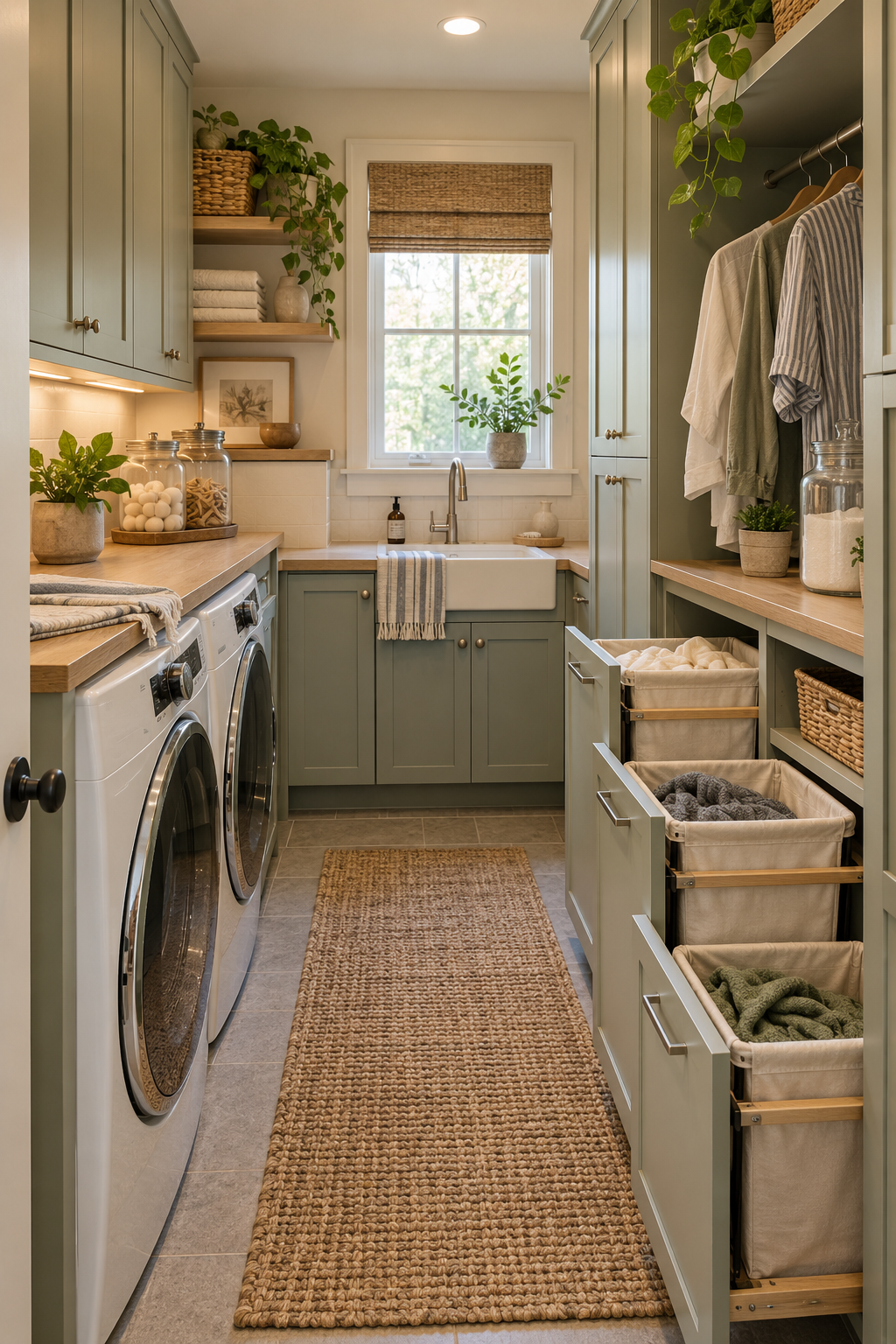
Make use pull-out hampers for sorting part of the room’s workflow instead of treating it as decoration. Keep the items used every week within comfortable reach and move occasional supplies higher. Build the solution with painted cabinetry, sealed wood, woven baskets, glass jars, washable textiles and durable metal hardware, repeating only a few finishes so a compact room does not feel visually crowded.
Keep the palette grounded in warm white, pale oak, soft sage, brushed nickel and charcoal accents. Allow frequently handled pieces to remain visible, but hide bulk refills, mismatched packaging and rarely used equipment behind a door or inside a labeled basket. Review the setup after two laundry cycles and adjust shelf height or container placement if the system creates an extra step.
13. Add a Fold-Down Ironing Board
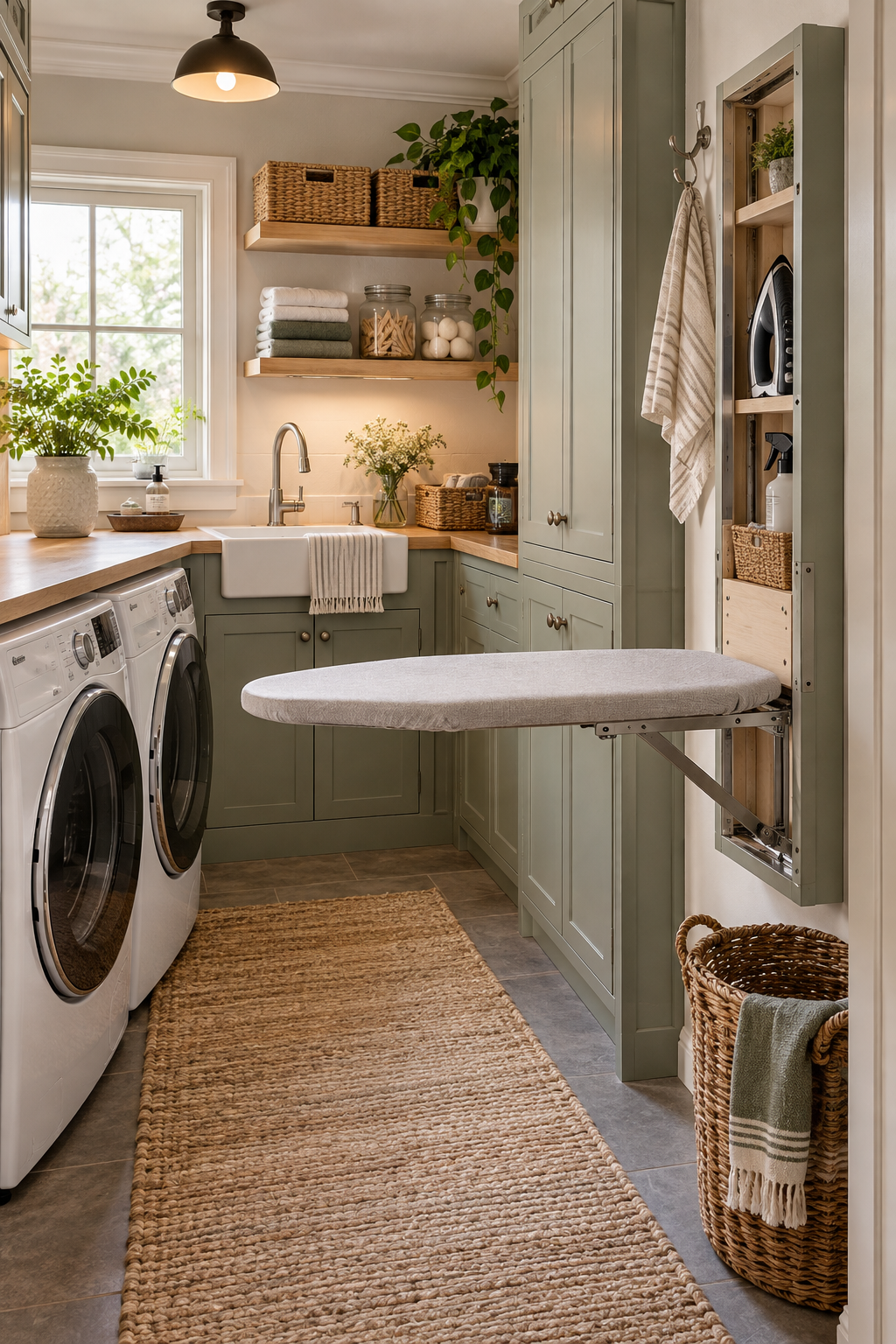
Make add a fold-down ironing board part of the room’s workflow instead of treating it as decoration. Choose containers that can be wiped clean and leave air space around machines and plumbing. Build the solution with painted cabinetry, sealed wood, woven baskets, glass jars, washable textiles and durable metal hardware, repeating only a few finishes so a compact room does not feel visually crowded.
Keep the palette grounded in warm white, pale oak, soft sage, brushed nickel and charcoal accents. Allow frequently handled pieces to remain visible, but hide bulk refills, mismatched packaging and rarely used equipment behind a door or inside a labeled basket. Review the setup after two laundry cycles and adjust shelf height or container placement if the system creates an extra step.
14. Create a Compact Folding Zone
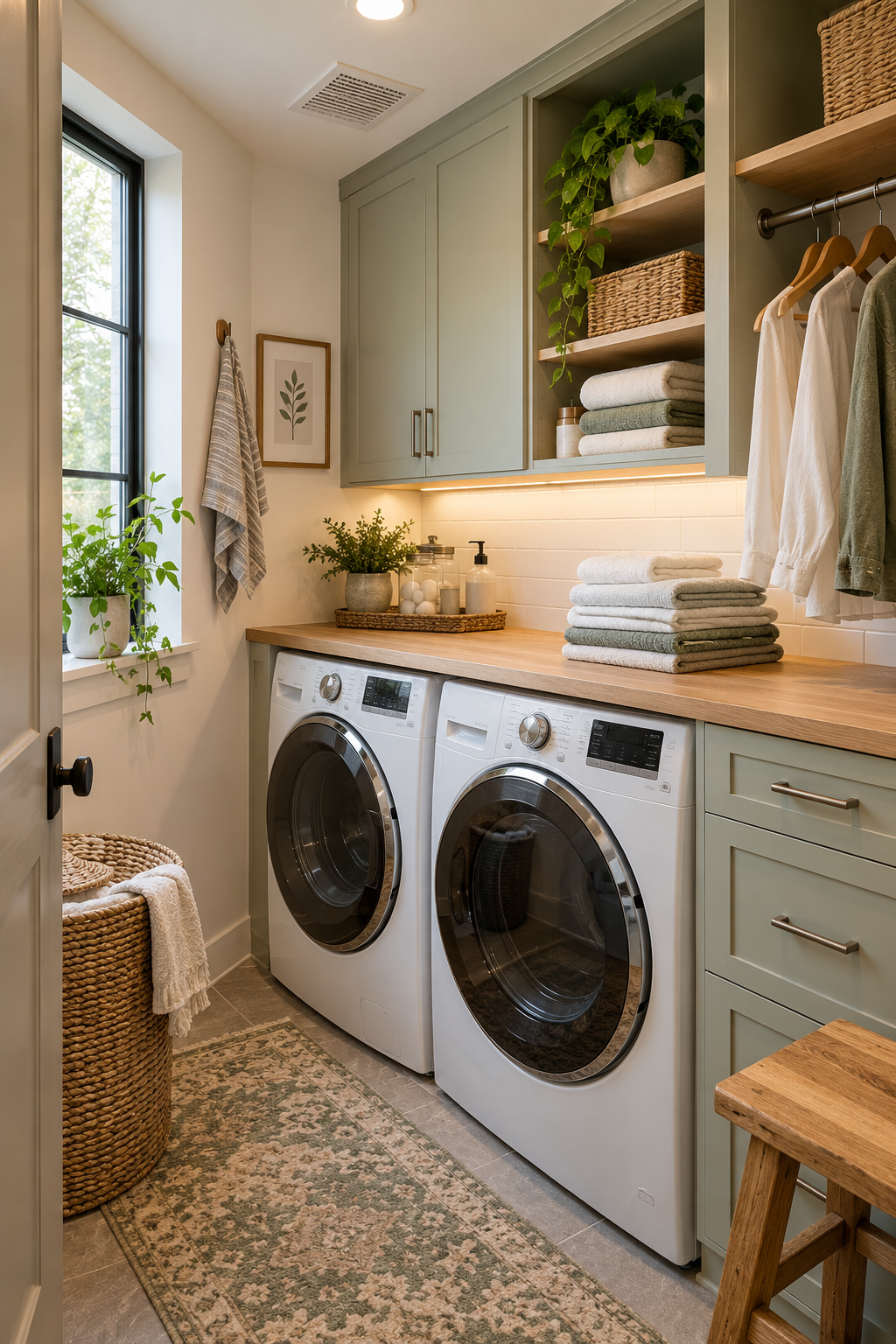
Make create a compact folding zone part of the room’s workflow instead of treating it as decoration. Test the layout with a full basket in your hands so narrow circulation points become obvious. Build the solution with painted cabinetry, sealed wood, woven baskets, glass jars, washable textiles and durable metal hardware, repeating only a few finishes so a compact room does not feel visually crowded.
Keep the palette grounded in warm white, pale oak, soft sage, brushed nickel and charcoal accents. Allow frequently handled pieces to remain visible, but hide bulk refills, mismatched packaging and rarely used equipment behind a door or inside a labeled basket. Review the setup after two laundry cycles and adjust shelf height or container placement if the system creates an extra step.
15. Install Pegboard for Flexible Tool Storage
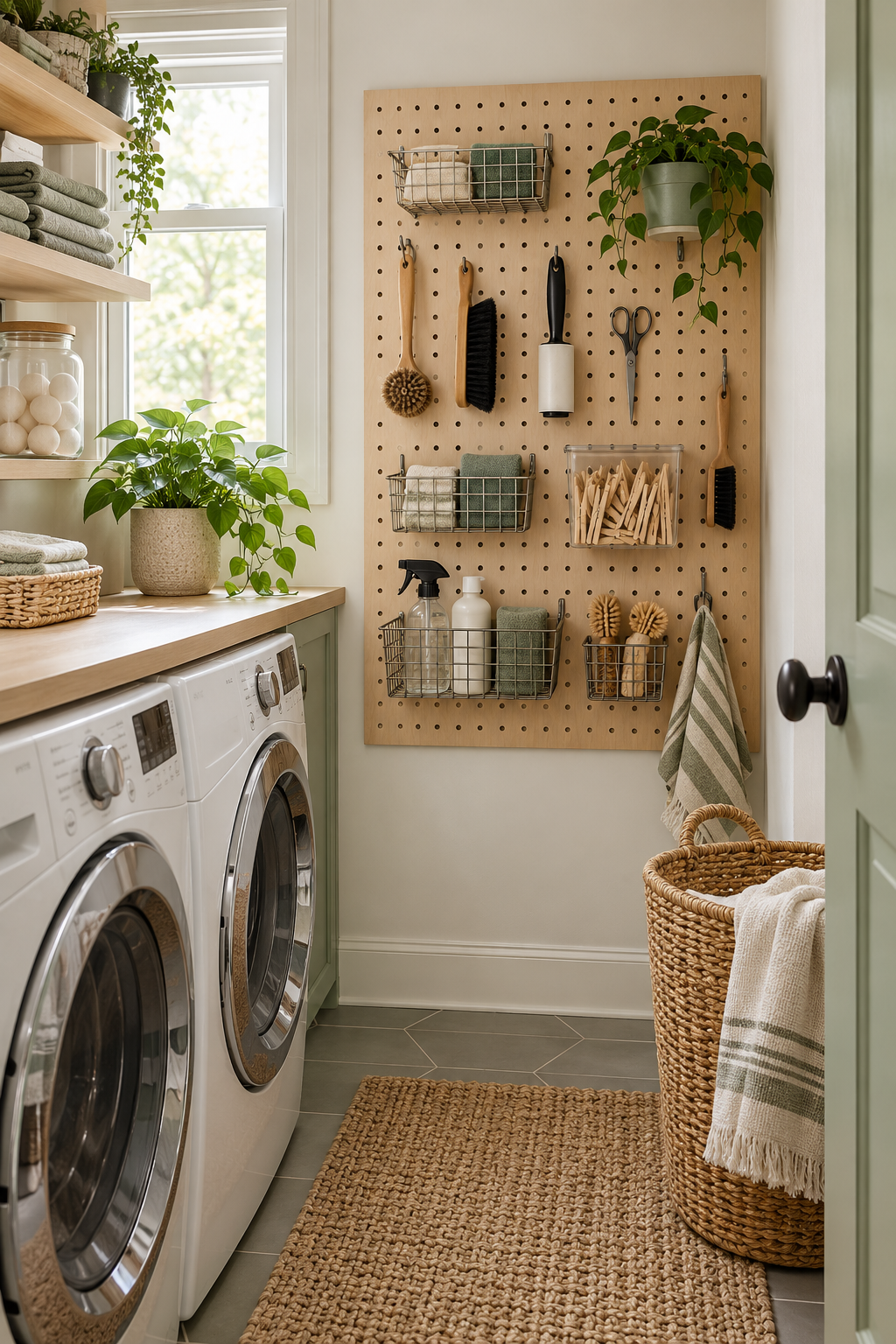
Make install pegboard for flexible tool storage part of the room’s workflow instead of treating it as decoration. Use one consistent label style and group supplies by task rather than by package size. Build the solution with painted cabinetry, sealed wood, woven baskets, glass jars, washable textiles and durable metal hardware, repeating only a few finishes so a compact room does not feel visually crowded.
Keep the palette grounded in warm white, pale oak, soft sage, brushed nickel and charcoal accents. Allow frequently handled pieces to remain visible, but hide bulk refills, mismatched packaging and rarely used equipment behind a door or inside a labeled basket. Review the setup after two laundry cycles and adjust shelf height or container placement if the system creates an extra step.
16. Use a Sink Cabinet Efficiently
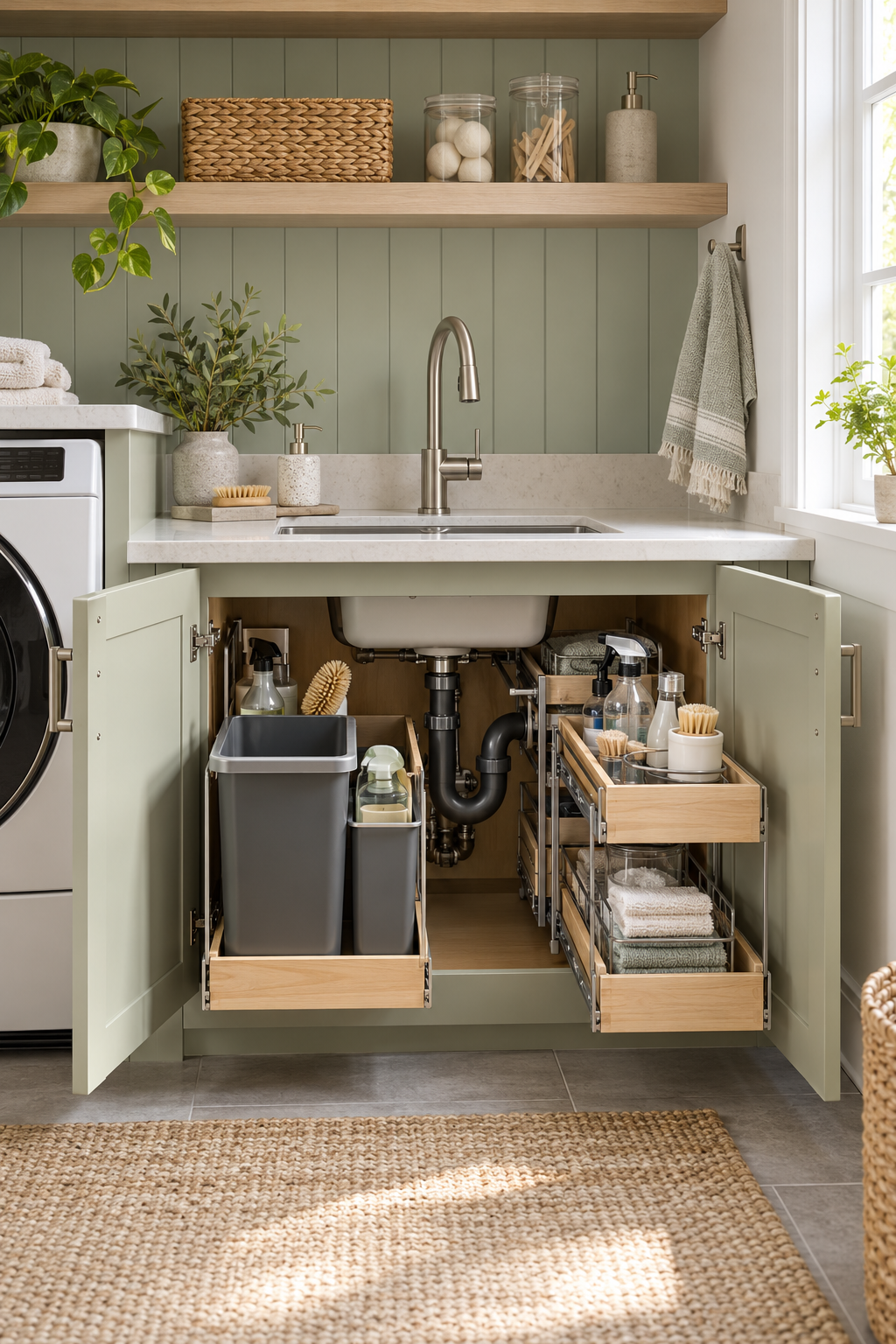
Make use a sink cabinet efficiently part of the room’s workflow instead of treating it as decoration. Measure appliance depth, lid clearance and service access before fixing anything to the wall. Build the solution with painted cabinetry, sealed wood, woven baskets, glass jars, washable textiles and durable metal hardware, repeating only a few finishes so a compact room does not feel visually crowded.
Keep the palette grounded in warm white, pale oak, soft sage, brushed nickel and charcoal accents. Allow frequently handled pieces to remain visible, but hide bulk refills, mismatched packaging and rarely used equipment behind a door or inside a labeled basket. Review the setup after two laundry cycles and adjust shelf height or container placement if the system creates an extra step.
17. Add a Lost-Sock Basket
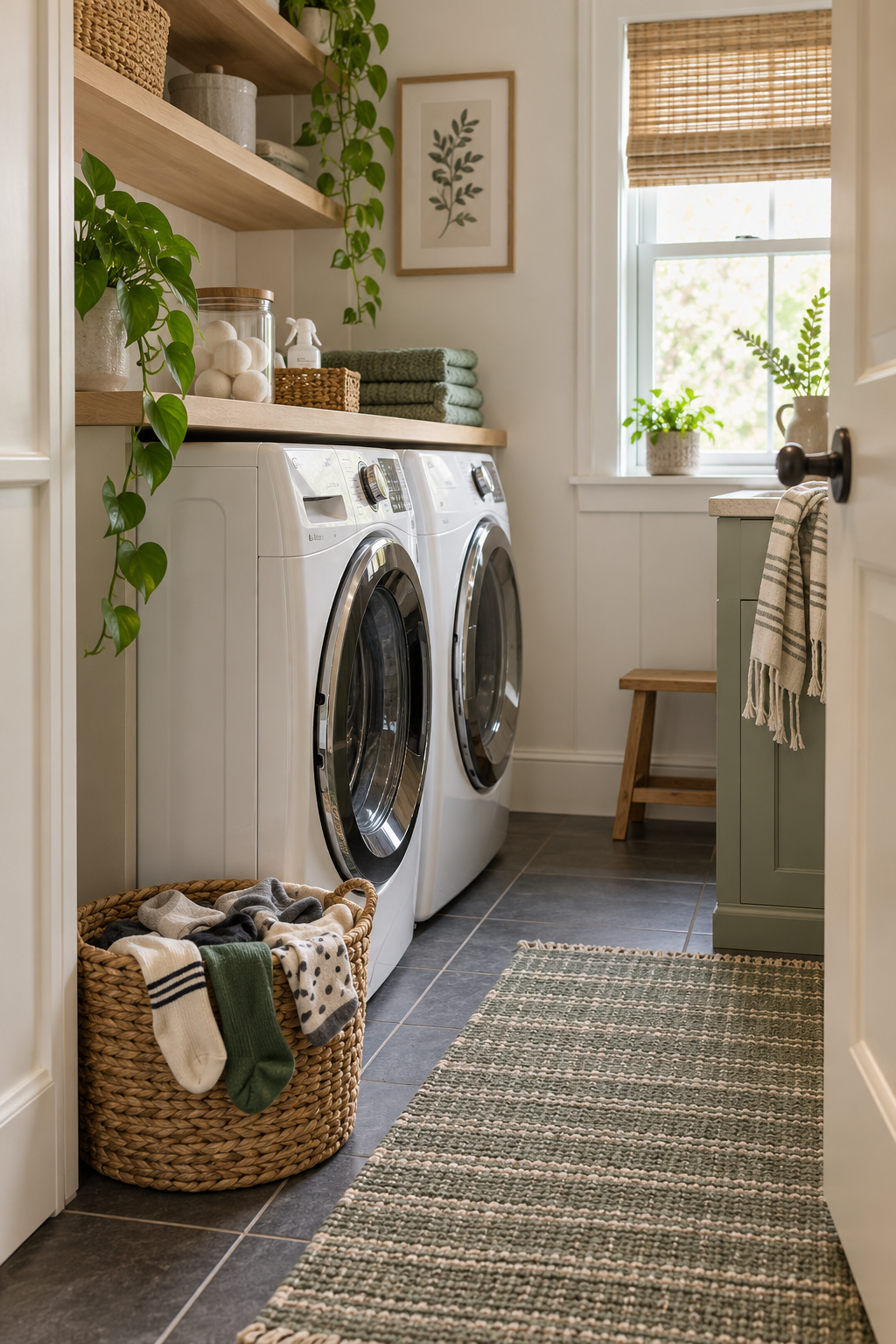
Make add a lost-sock basket part of the room’s workflow instead of treating it as decoration. Keep the items used every week within comfortable reach and move occasional supplies higher. Build the solution with painted cabinetry, sealed wood, woven baskets, glass jars, washable textiles and durable metal hardware, repeating only a few finishes so a compact room does not feel visually crowded.
Keep the palette grounded in warm white, pale oak, soft sage, brushed nickel and charcoal accents. Allow frequently handled pieces to remain visible, but hide bulk refills, mismatched packaging and rarely used equipment behind a door or inside a labeled basket. Review the setup after two laundry cycles and adjust shelf height or container placement if the system creates an extra step.
18. Create Separate Zones for Each Laundry Step
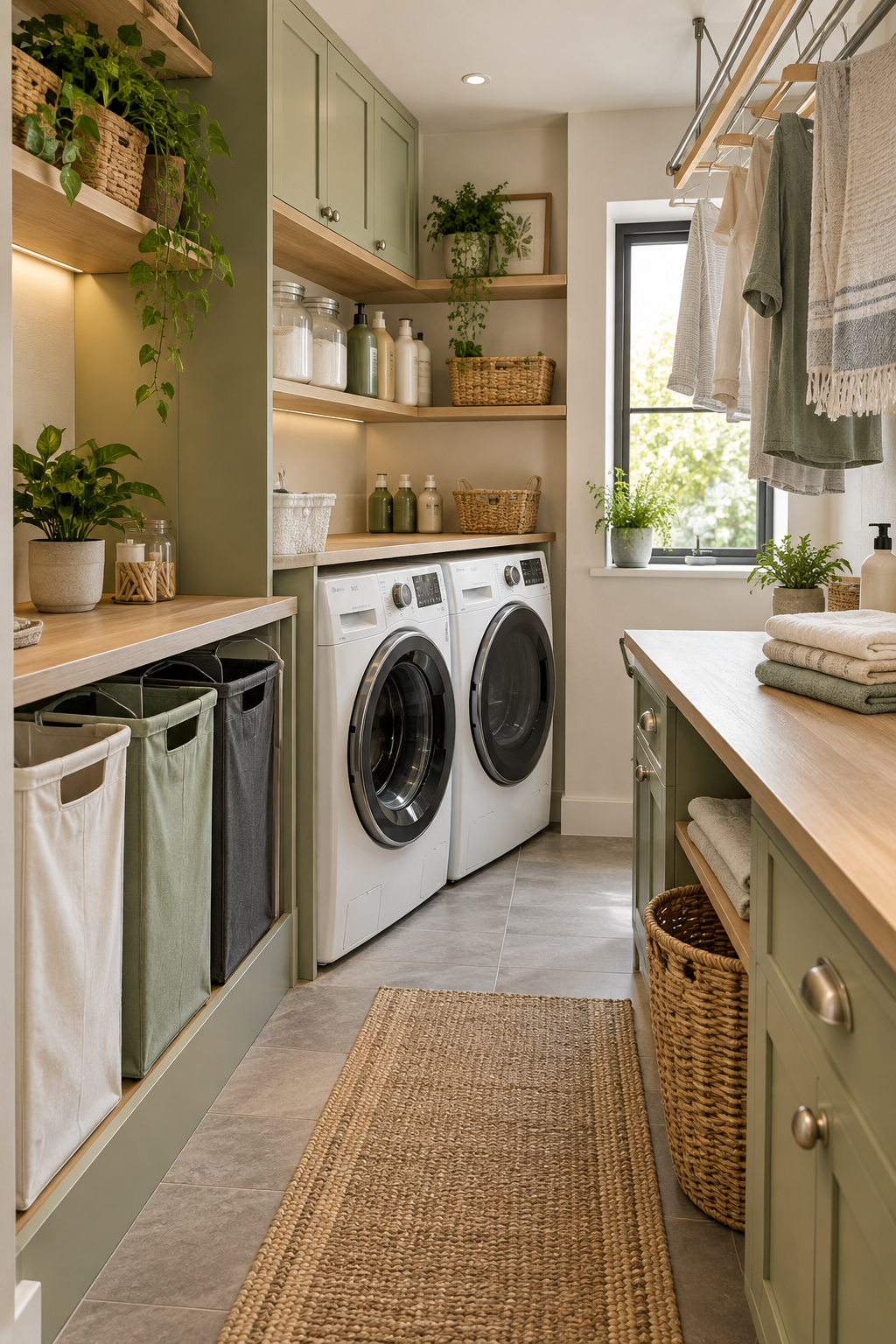
Make create separate zones for each laundry step part of the room’s workflow instead of treating it as decoration. Choose containers that can be wiped clean and leave air space around machines and plumbing. Build the solution with painted cabinetry, sealed wood, woven baskets, glass jars, washable textiles and durable metal hardware, repeating only a few finishes so a compact room does not feel visually crowded.
Keep the palette grounded in warm white, pale oak, soft sage, brushed nickel and charcoal accents. Allow frequently handled pieces to remain visible, but hide bulk refills, mismatched packaging and rarely used equipment behind a door or inside a labeled basket. Review the setup after two laundry cycles and adjust shelf height or container placement if the system creates an extra step.
19. Use Magnetic Storage beside the Washer
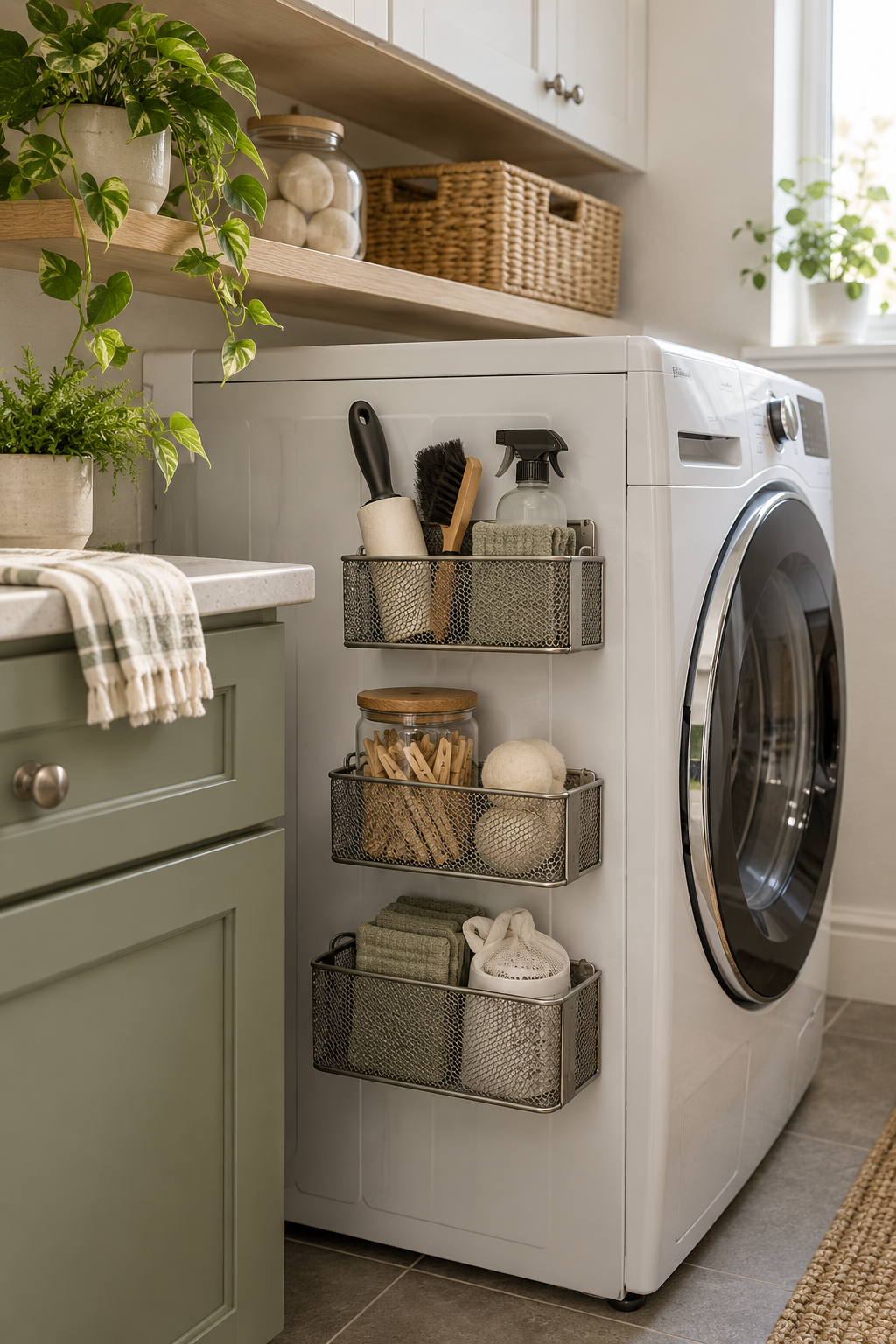
Make use magnetic storage beside the washer part of the room’s workflow instead of treating it as decoration. Test the layout with a full basket in your hands so narrow circulation points become obvious. Build the solution with painted cabinetry, sealed wood, woven baskets, glass jars, washable textiles and durable metal hardware, repeating only a few finishes so a compact room does not feel visually crowded.
Keep the palette grounded in warm white, pale oak, soft sage, brushed nickel and charcoal accents. Allow frequently handled pieces to remain visible, but hide bulk refills, mismatched packaging and rarely used equipment behind a door or inside a labeled basket. Review the setup after two laundry cycles and adjust shelf height or container placement if the system creates an extra step.
20. Add Task Lighting beneath Shelves
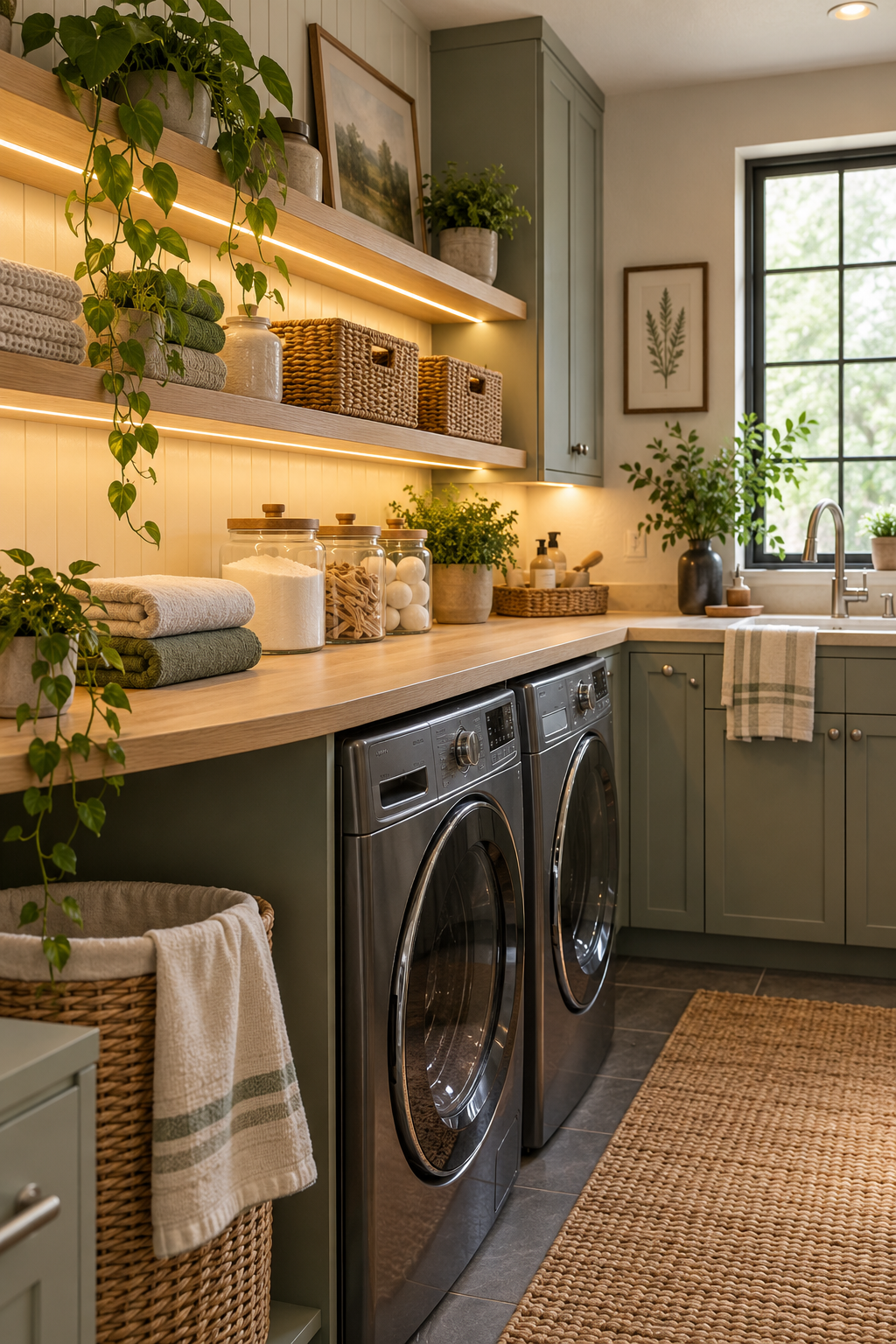
Make add task lighting beneath shelves part of the room’s workflow instead of treating it as decoration. Use one consistent label style and group supplies by task rather than by package size. Build the solution with painted cabinetry, sealed wood, woven baskets, glass jars, washable textiles and durable metal hardware, repeating only a few finishes so a compact room does not feel visually crowded.
Keep the palette grounded in warm white, pale oak, soft sage, brushed nickel and charcoal accents. Allow frequently handled pieces to remain visible, but hide bulk refills, mismatched packaging and rarely used equipment behind a door or inside a labeled basket. Review the setup after two laundry cycles and adjust shelf height or container placement if the system creates an extra step.
21. Choose Moisture-Resistant Materials
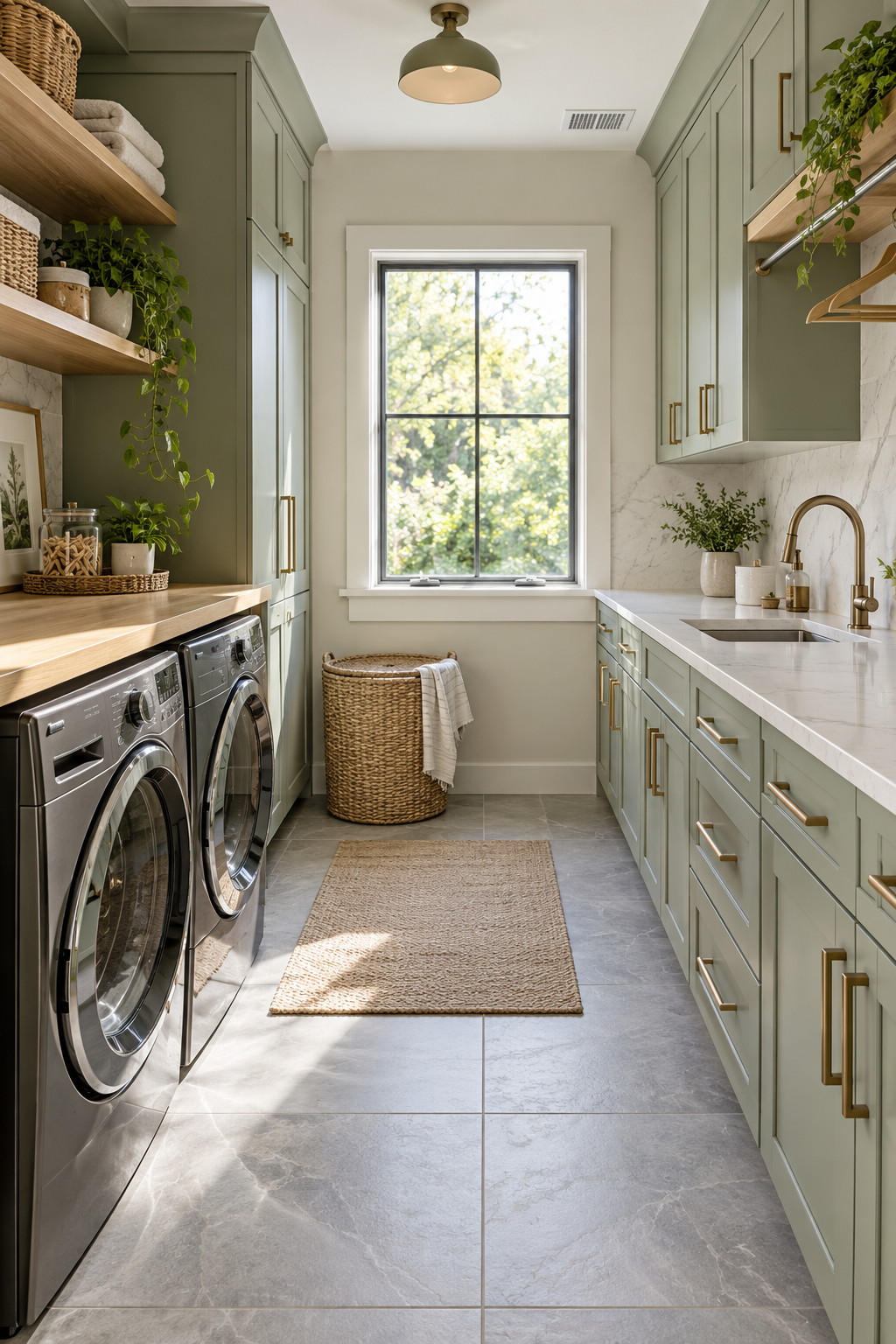
Make choose moisture-resistant materials part of the room’s workflow instead of treating it as decoration. Measure appliance depth, lid clearance and service access before fixing anything to the wall. Build the solution with painted cabinetry, sealed wood, woven baskets, glass jars, washable textiles and durable metal hardware, repeating only a few finishes so a compact room does not feel visually crowded.
Keep the palette grounded in warm white, pale oak, soft sage, brushed nickel and charcoal accents. Allow frequently handled pieces to remain visible, but hide bulk refills, mismatched packaging and rarely used equipment behind a door or inside a labeled basket. Review the setup after two laundry cycles and adjust shelf height or container placement if the system creates an extra step.
22. Hide Utility Connections with Removable Panels
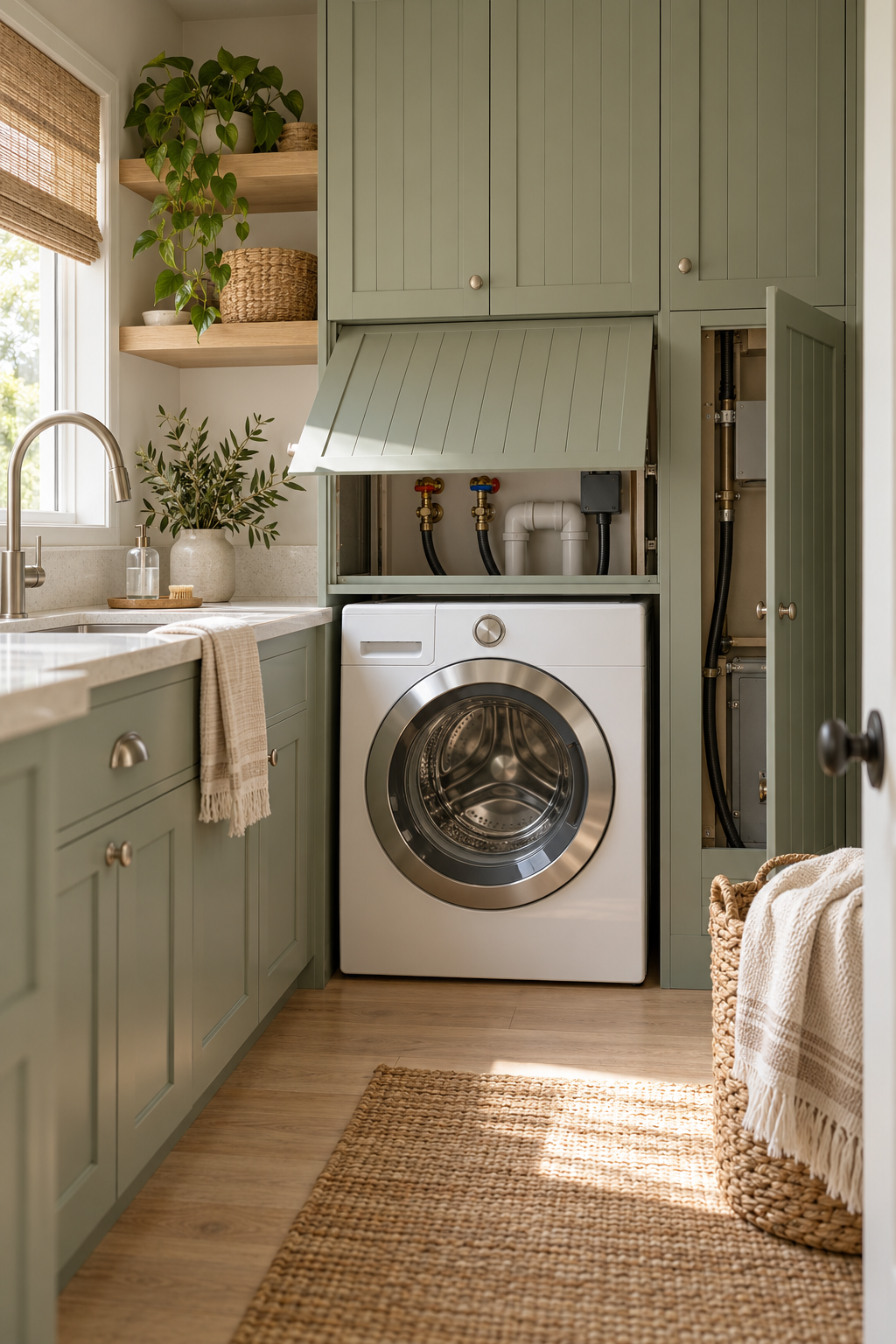
Make hide utility connections with removable panels part of the room’s workflow instead of treating it as decoration. Keep the items used every week within comfortable reach and move occasional supplies higher. Build the solution with painted cabinetry, sealed wood, woven baskets, glass jars, washable textiles and durable metal hardware, repeating only a few finishes so a compact room does not feel visually crowded.
Keep the palette grounded in warm white, pale oak, soft sage, brushed nickel and charcoal accents. Allow frequently handled pieces to remain visible, but hide bulk refills, mismatched packaging and rarely used equipment behind a door or inside a labeled basket. Review the setup after two laundry cycles and adjust shelf height or container placement if the system creates an extra step.
23. Create a Pet-Care Station
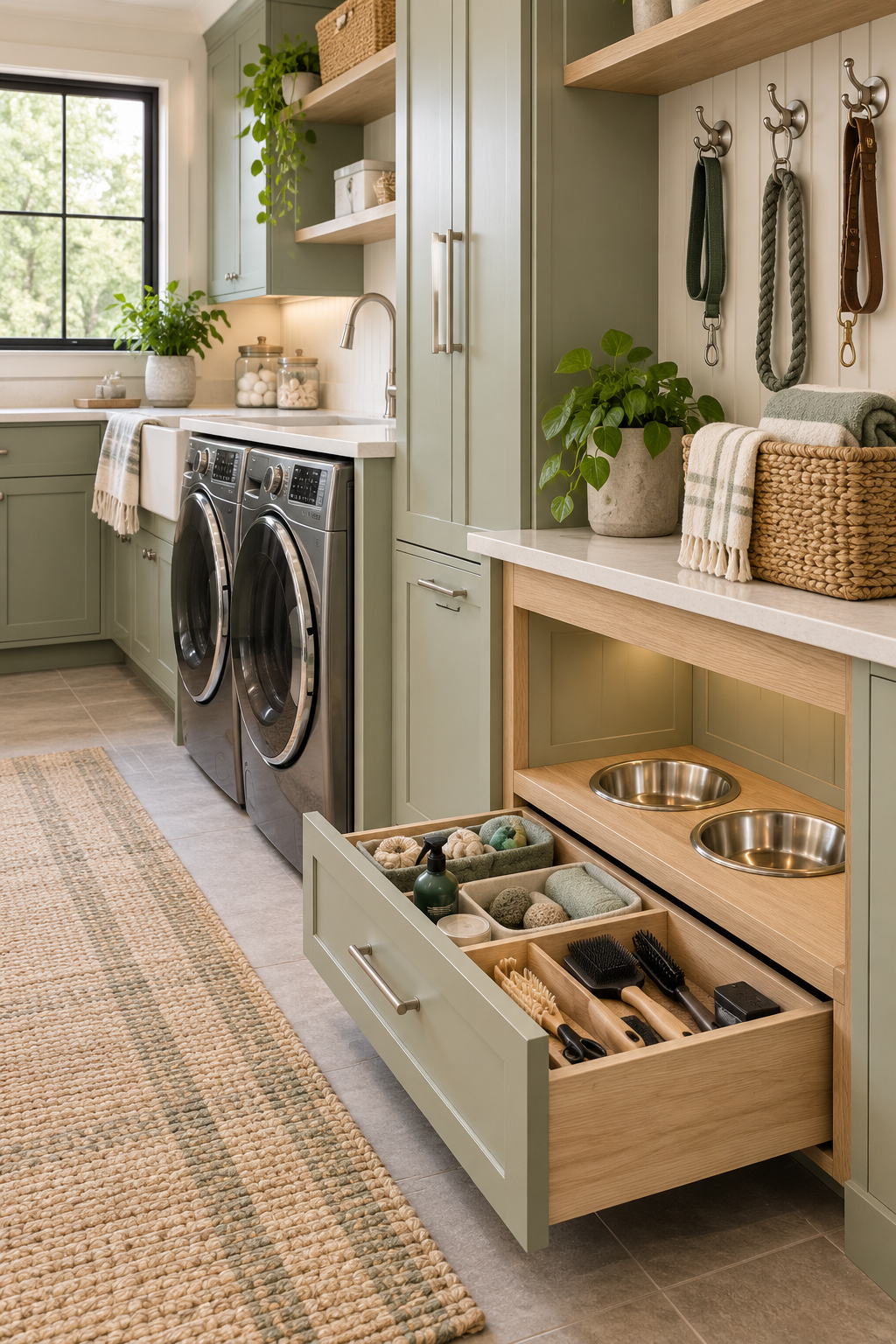
Make create a pet-care station part of the room’s workflow instead of treating it as decoration. Choose containers that can be wiped clean and leave air space around machines and plumbing. Build the solution with painted cabinetry, sealed wood, woven baskets, glass jars, washable textiles and durable metal hardware, repeating only a few finishes so a compact room does not feel visually crowded.
Keep the palette grounded in warm white, pale oak, soft sage, brushed nickel and charcoal accents. Allow frequently handled pieces to remain visible, but hide bulk refills, mismatched packaging and rarely used equipment behind a door or inside a labeled basket. Review the setup after two laundry cycles and adjust shelf height or container placement if the system creates an extra step.
24. Add a Cleaning-Supply Caddy
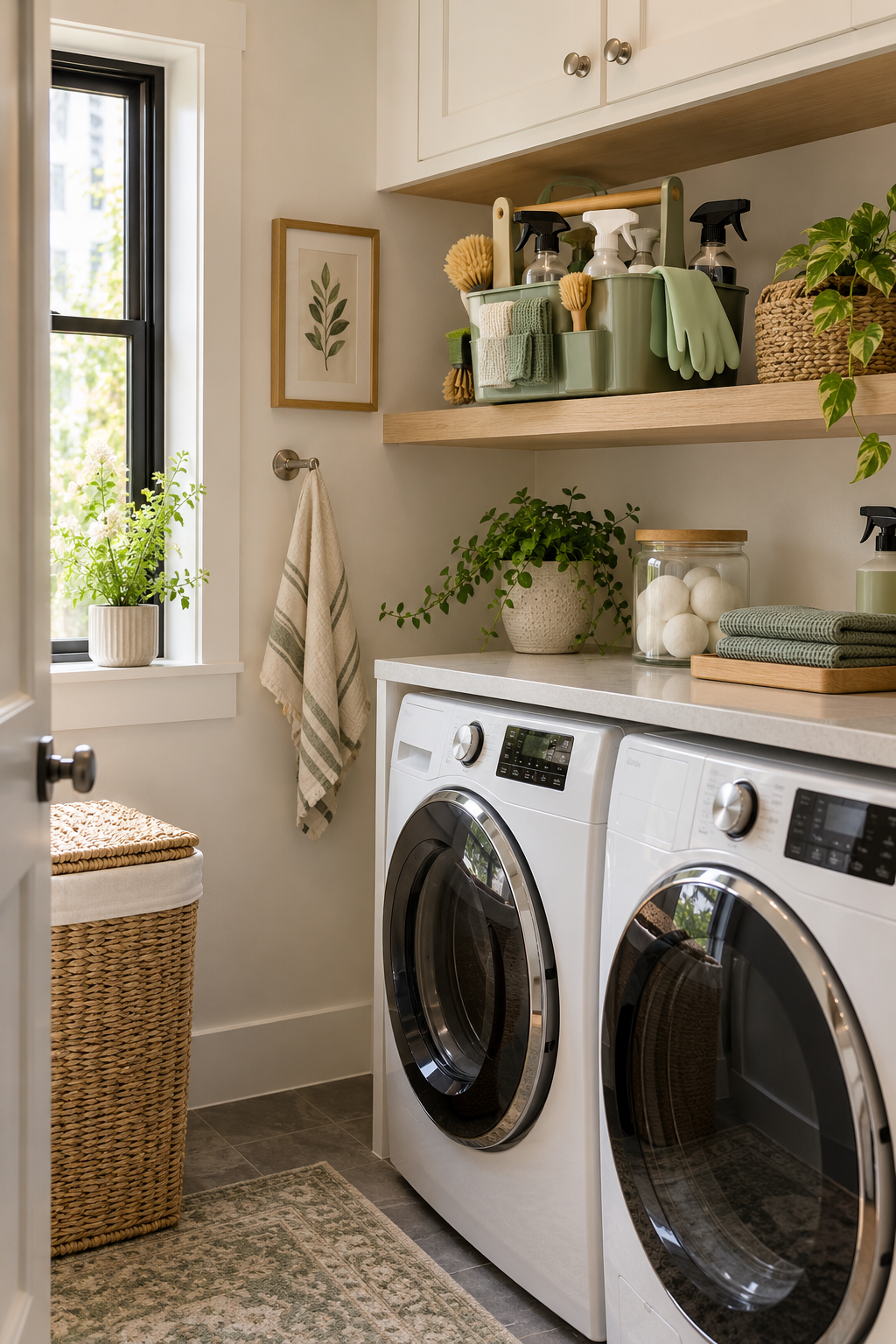
Make add a cleaning-supply caddy part of the room’s workflow instead of treating it as decoration. Test the layout with a full basket in your hands so narrow circulation points become obvious. Build the solution with painted cabinetry, sealed wood, woven baskets, glass jars, washable textiles and durable metal hardware, repeating only a few finishes so a compact room does not feel visually crowded.
Keep the palette grounded in warm white, pale oak, soft sage, brushed nickel and charcoal accents. Allow frequently handled pieces to remain visible, but hide bulk refills, mismatched packaging and rarely used equipment behind a door or inside a labeled basket. Review the setup after two laundry cycles and adjust shelf height or container placement if the system creates an extra step.
25. Use Color Coding for Family Laundry
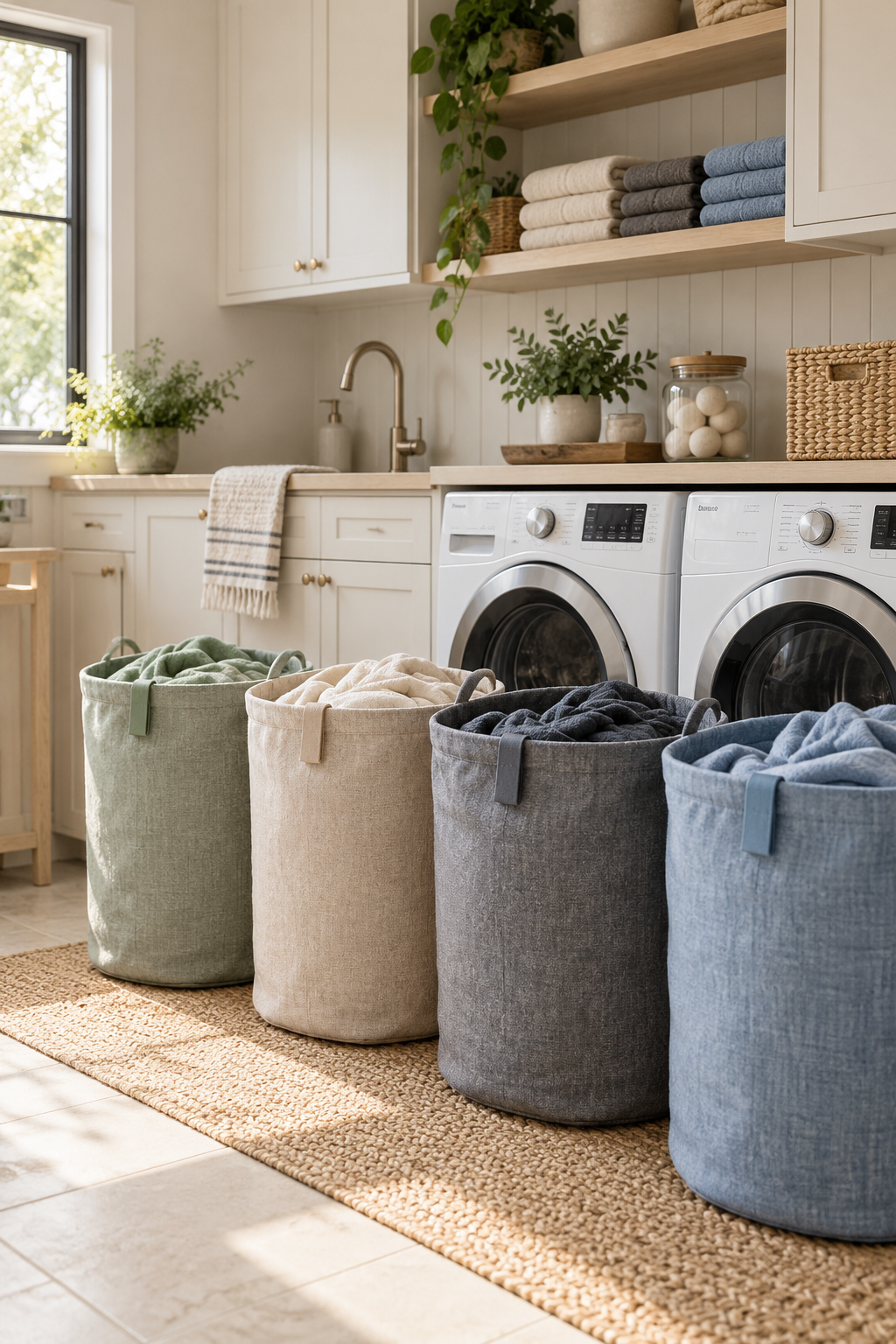
Make use color coding for family laundry part of the room’s workflow instead of treating it as decoration. Use one consistent label style and group supplies by task rather than by package size. Build the solution with painted cabinetry, sealed wood, woven baskets, glass jars, washable textiles and durable metal hardware, repeating only a few finishes so a compact room does not feel visually crowded.
Keep the palette grounded in warm white, pale oak, soft sage, brushed nickel and charcoal accents. Allow frequently handled pieces to remain visible, but hide bulk refills, mismatched packaging and rarely used equipment behind a door or inside a labeled basket. Review the setup after two laundry cycles and adjust shelf height or container placement if the system creates an extra step.
26. Build a Narrow Linen Tower
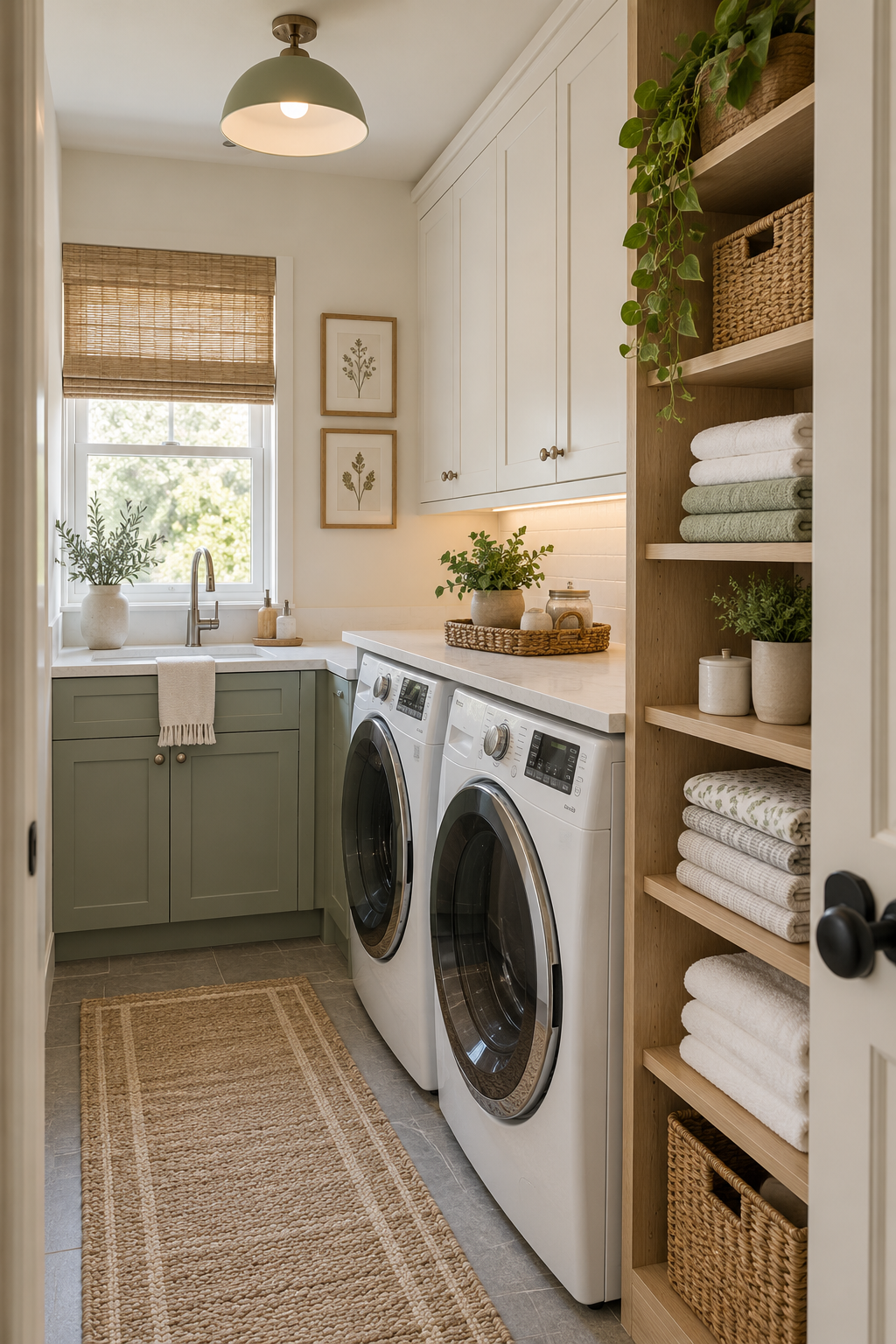
Make build a narrow linen tower part of the room’s workflow instead of treating it as decoration. Measure appliance depth, lid clearance and service access before fixing anything to the wall. Build the solution with painted cabinetry, sealed wood, woven baskets, glass jars, washable textiles and durable metal hardware, repeating only a few finishes so a compact room does not feel visually crowded.
Keep the palette grounded in warm white, pale oak, soft sage, brushed nickel and charcoal accents. Allow frequently handled pieces to remain visible, but hide bulk refills, mismatched packaging and rarely used equipment behind a door or inside a labeled basket. Review the setup after two laundry cycles and adjust shelf height or container placement if the system creates an extra step.
27. Add a Shelf above Top-Loading Machines
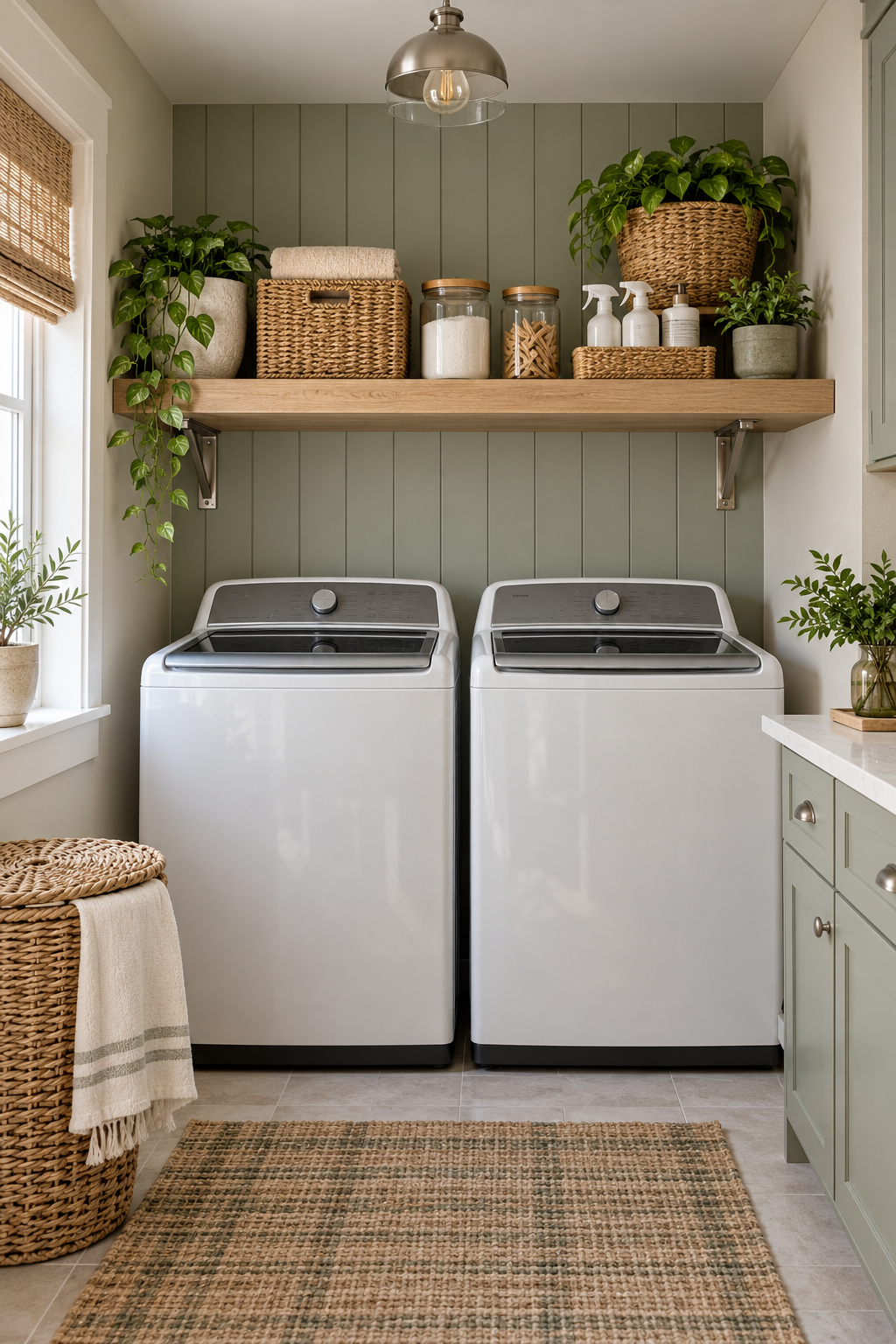
Make add a shelf above top-loading machines part of the room’s workflow instead of treating it as decoration. Keep the items used every week within comfortable reach and move occasional supplies higher. Build the solution with painted cabinetry, sealed wood, woven baskets, glass jars, washable textiles and durable metal hardware, repeating only a few finishes so a compact room does not feel visually crowded.
Keep the palette grounded in warm white, pale oak, soft sage, brushed nickel and charcoal accents. Allow frequently handled pieces to remain visible, but hide bulk refills, mismatched packaging and rarely used equipment behind a door or inside a labeled basket. Review the setup after two laundry cycles and adjust shelf height or container placement if the system creates an extra step.
28. Create a Drop Zone for Empty Pockets
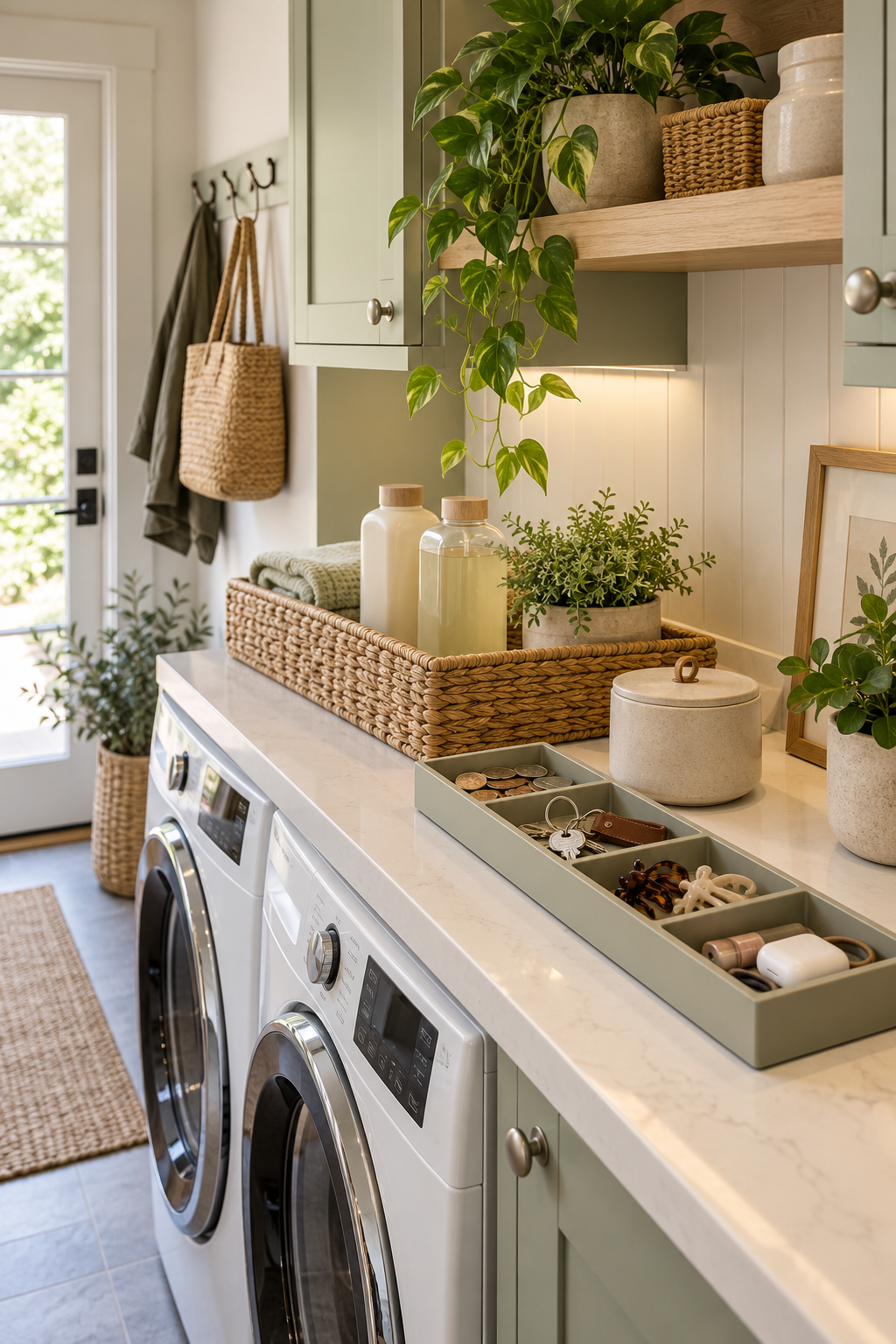
Make create a drop zone for empty pockets part of the room’s workflow instead of treating it as decoration. Choose containers that can be wiped clean and leave air space around machines and plumbing. Build the solution with painted cabinetry, sealed wood, woven baskets, glass jars, washable textiles and durable metal hardware, repeating only a few finishes so a compact room does not feel visually crowded.
Keep the palette grounded in warm white, pale oak, soft sage, brushed nickel and charcoal accents. Allow frequently handled pieces to remain visible, but hide bulk refills, mismatched packaging and rarely used equipment behind a door or inside a labeled basket. Review the setup after two laundry cycles and adjust shelf height or container placement if the system creates an extra step.
29. Use Vertical Dividers for Boards and Racks
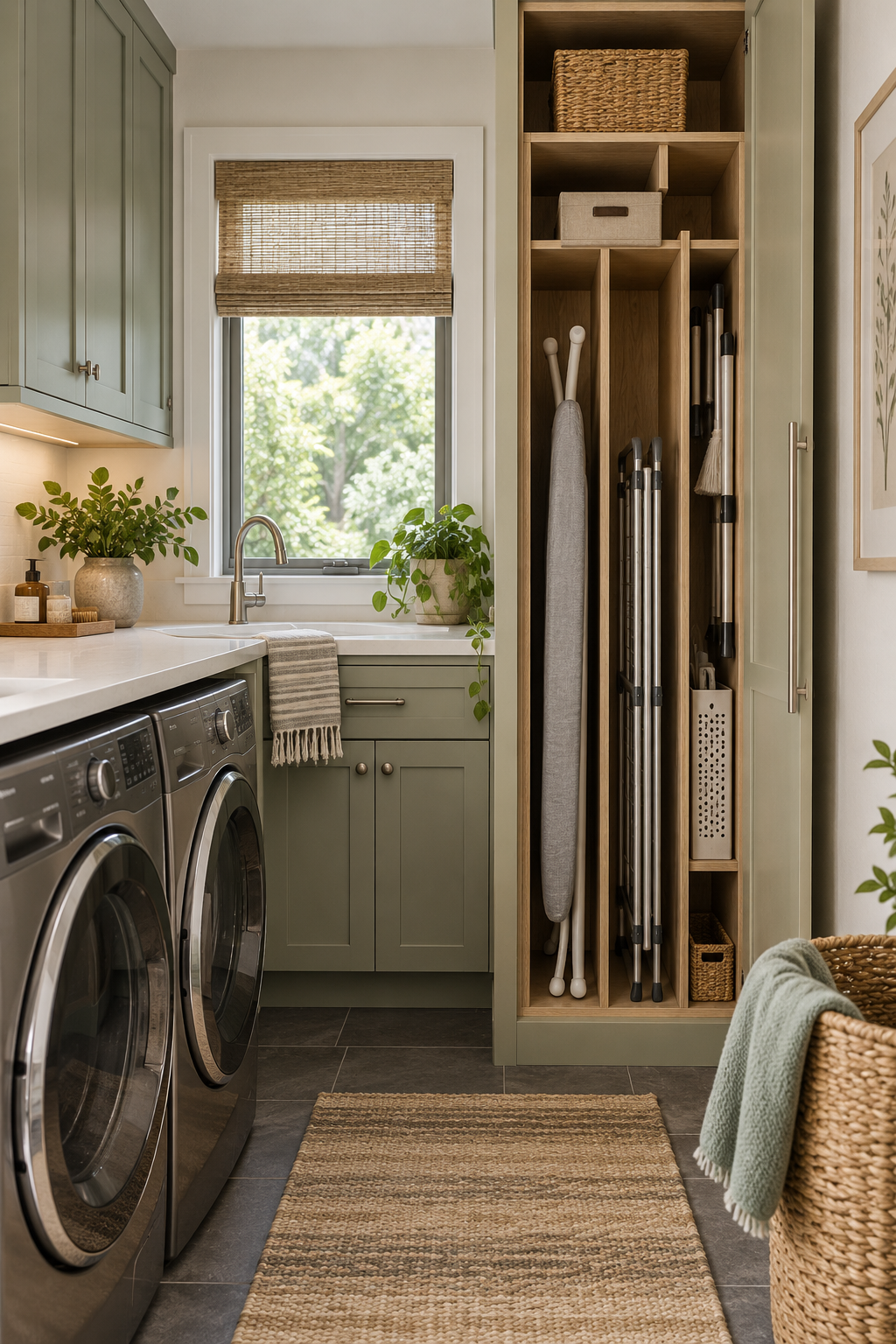
Make use vertical dividers for boards and racks part of the room’s workflow instead of treating it as decoration. Test the layout with a full basket in your hands so narrow circulation points become obvious. Build the solution with painted cabinetry, sealed wood, woven baskets, glass jars, washable textiles and durable metal hardware, repeating only a few finishes so a compact room does not feel visually crowded.
Keep the palette grounded in warm white, pale oak, soft sage, brushed nickel and charcoal accents. Allow frequently handled pieces to remain visible, but hide bulk refills, mismatched packaging and rarely used equipment behind a door or inside a labeled basket. Review the setup after two laundry cycles and adjust shelf height or container placement if the system creates an extra step.
30. Keep the Floor Clear for Easier Cleaning
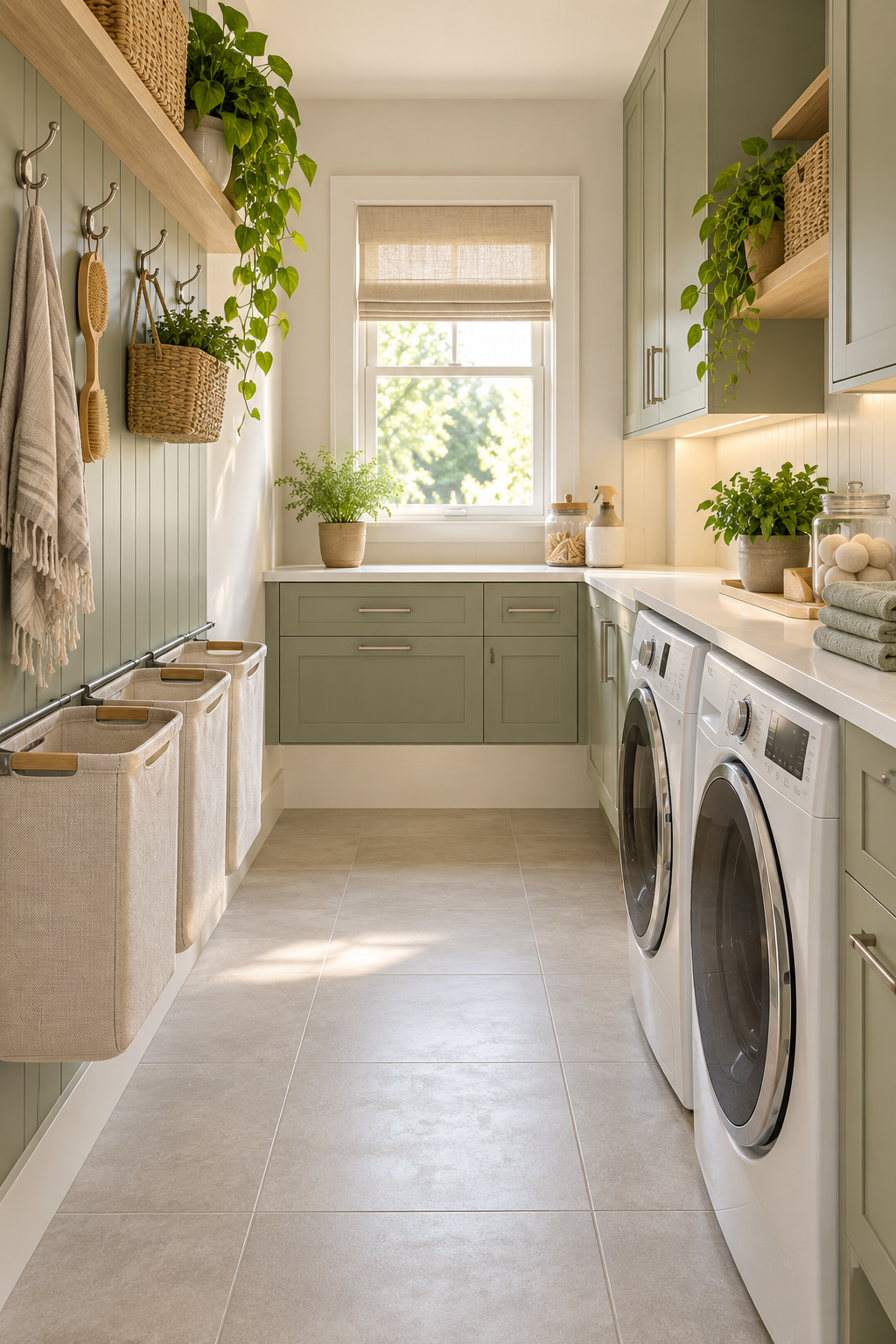
Make keep the floor clear for easier cleaning part of the room’s workflow instead of treating it as decoration. Use one consistent label style and group supplies by task rather than by package size. Build the solution with painted cabinetry, sealed wood, woven baskets, glass jars, washable textiles and durable metal hardware, repeating only a few finishes so a compact room does not feel visually crowded.
Keep the palette grounded in warm white, pale oak, soft sage, brushed nickel and charcoal accents. Allow frequently handled pieces to remain visible, but hide bulk refills, mismatched packaging and rarely used equipment behind a door or inside a labeled basket. Review the setup after two laundry cycles and adjust shelf height or container placement if the system creates an extra step.
31. Finish with a Weekly Reset System
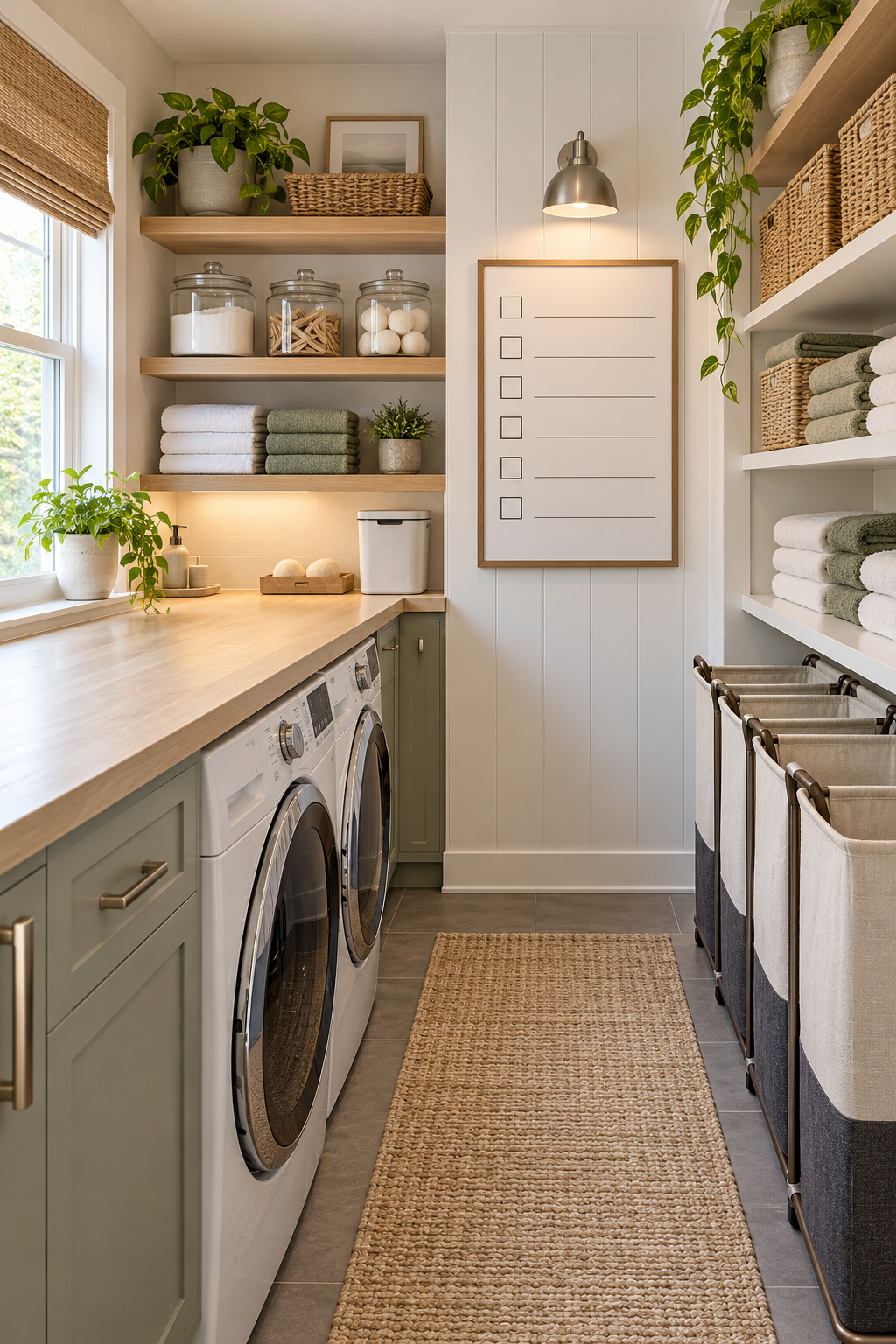
Make finish with a weekly reset system part of the room’s workflow instead of treating it as decoration. Measure appliance depth, lid clearance and service access before fixing anything to the wall. Build the solution with painted cabinetry, sealed wood, woven baskets, glass jars, washable textiles and durable metal hardware, repeating only a few finishes so a compact room does not feel visually crowded.
Keep the palette grounded in warm white, pale oak, soft sage, brushed nickel and charcoal accents. Allow frequently handled pieces to remain visible, but hide bulk refills, mismatched packaging and rarely used equipment behind a door or inside a labeled basket. Review the setup after two laundry cycles and adjust shelf height or container placement if the system creates an extra step.
How to Keep a Small Laundry Room Organized
Choose one reset time each week to return supplies, empty lint containers and move clean laundry out of the room. Keep only the current detergent and stain products at hand; store refills together so you can see what you already own. A simple routine protects the visual calm created by shelves and cabinets.
Before buying organizers, measure the room and note heat, water and electrical access. Storage should never block shutoff valves, vents or appliance service panels. The strongest small laundry rooms are safe and easy to maintain first, then attractive.