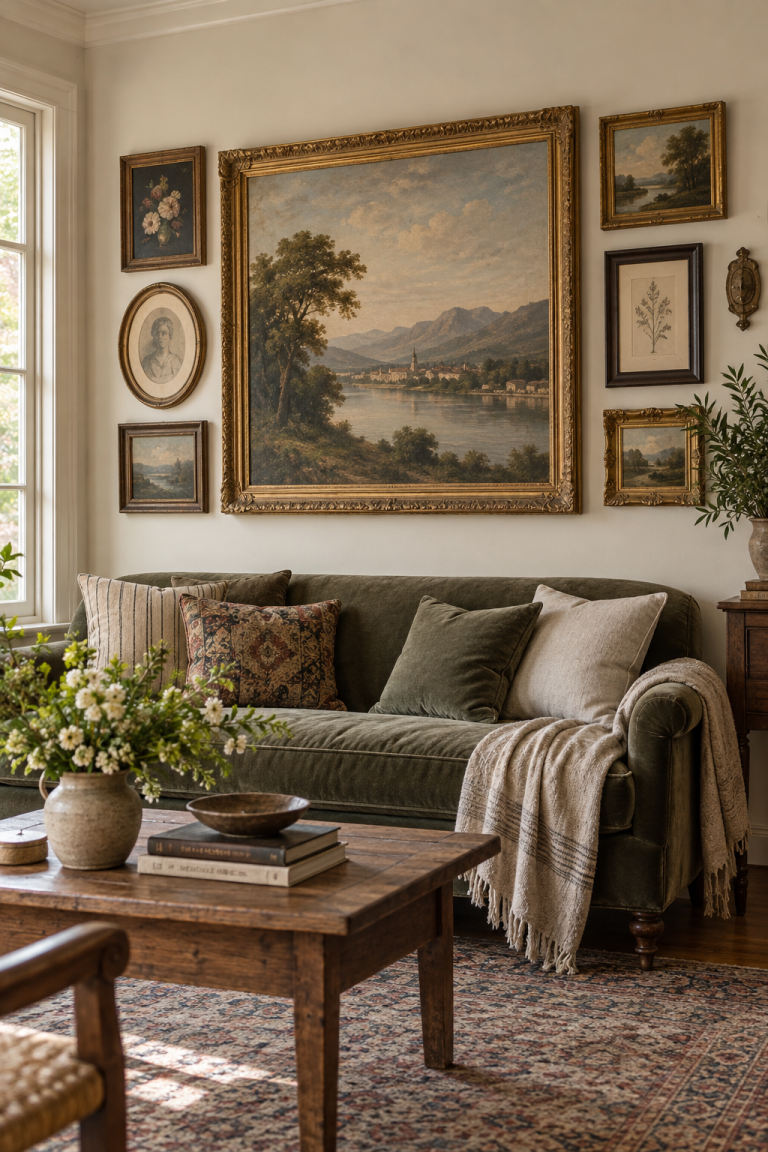
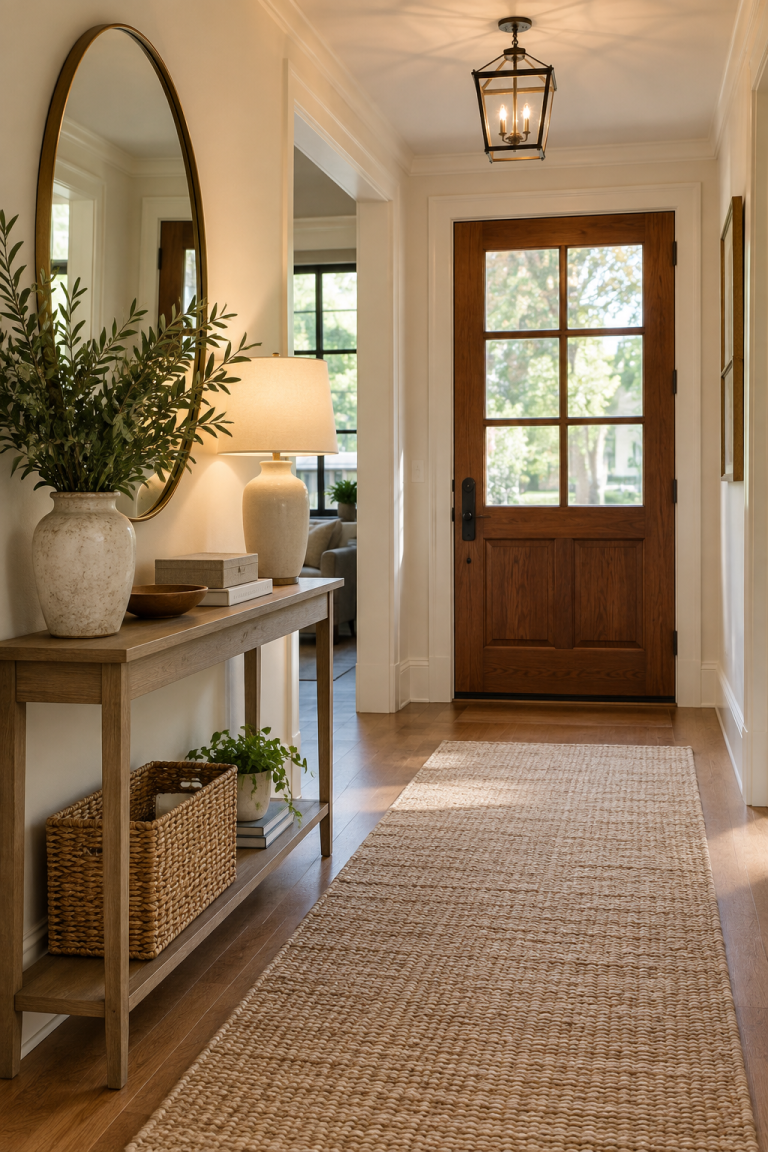
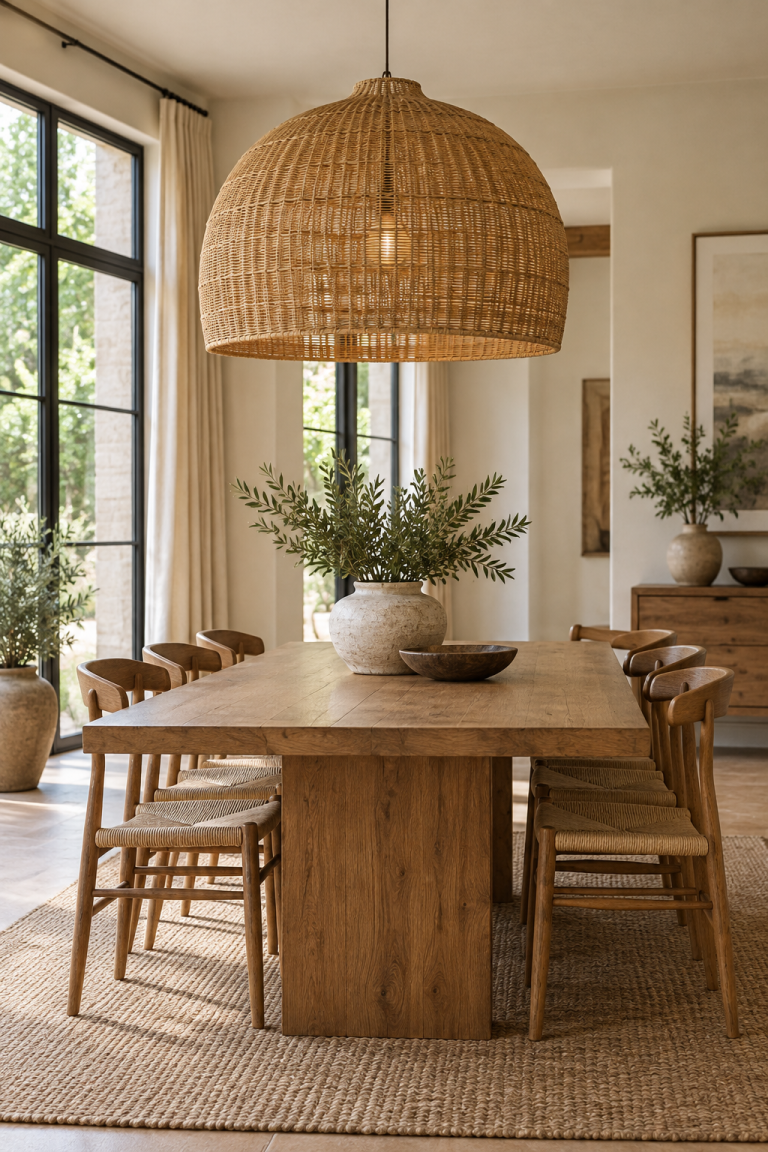
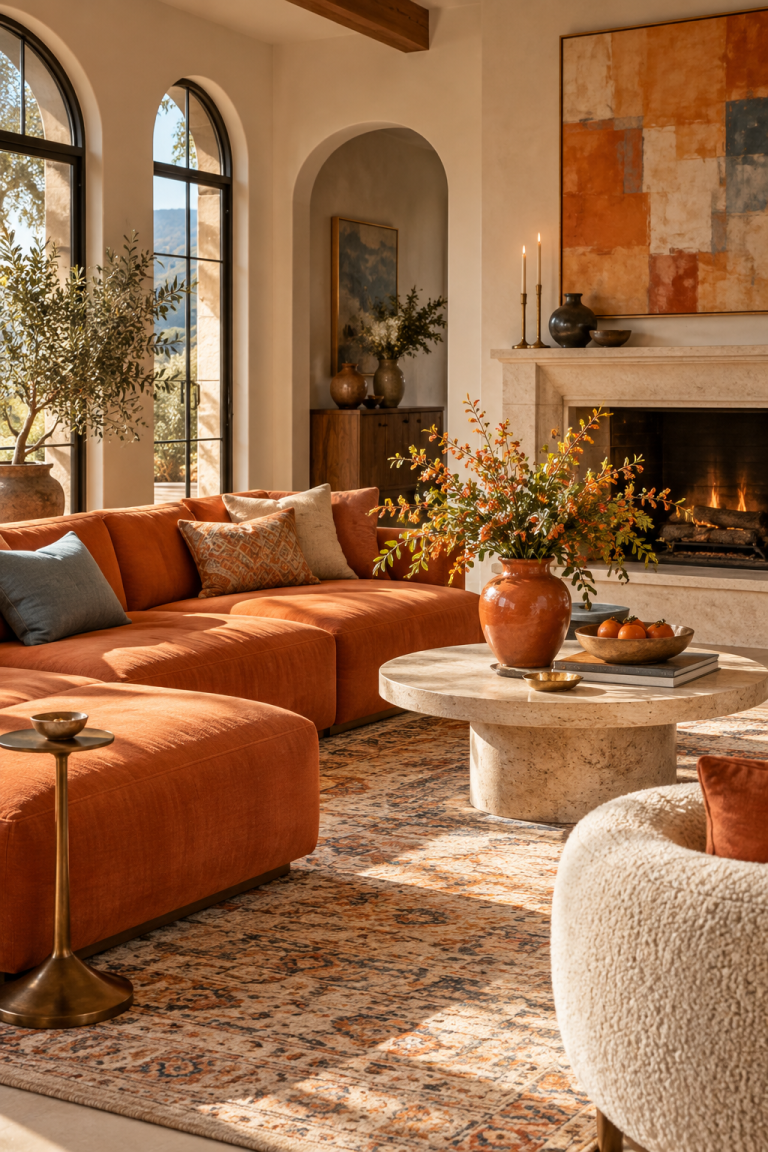
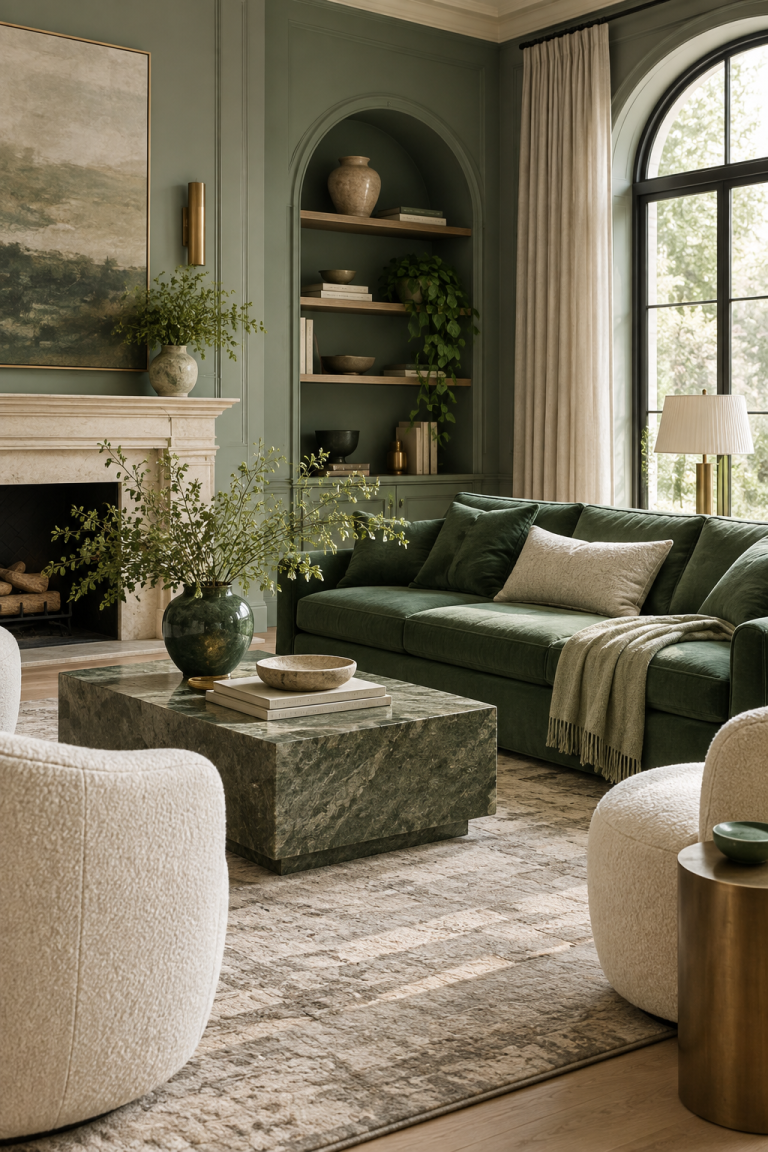
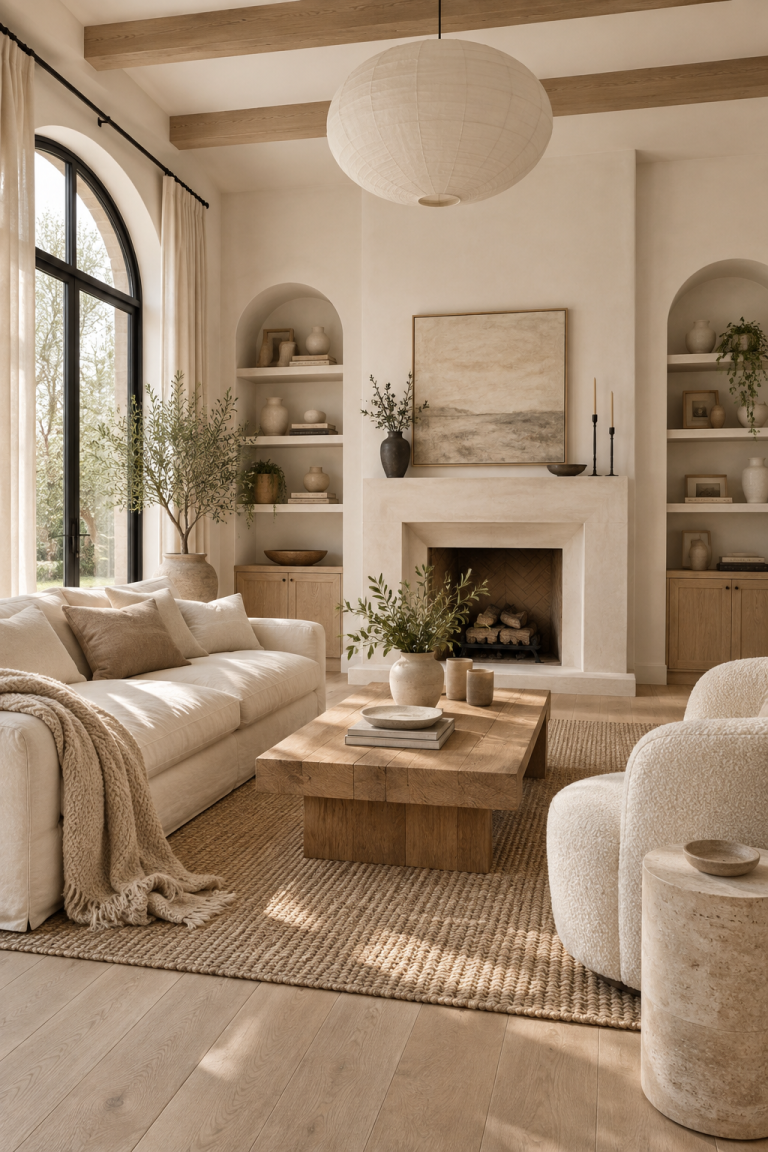
A successful reading nook does not require a spare room. It needs a supportive seat, light where you actually read, a place for a drink or book, and enough visual separation to make pausing feel natural. Small homes often contain overlooked corners that can provide all four. These cozy reading nook ideas turn windows, landings, bedrooms, bookcases and awkward alcoves into inviting retreats while protecting circulation and storage.
The ideas below move from quick styling changes to more architectural-looking solutions. Use them as a menu rather than a checklist: two or three well-connected decisions will usually improve a room more than many unrelated purchases.
1. Claim a Bright Corner beside the Window
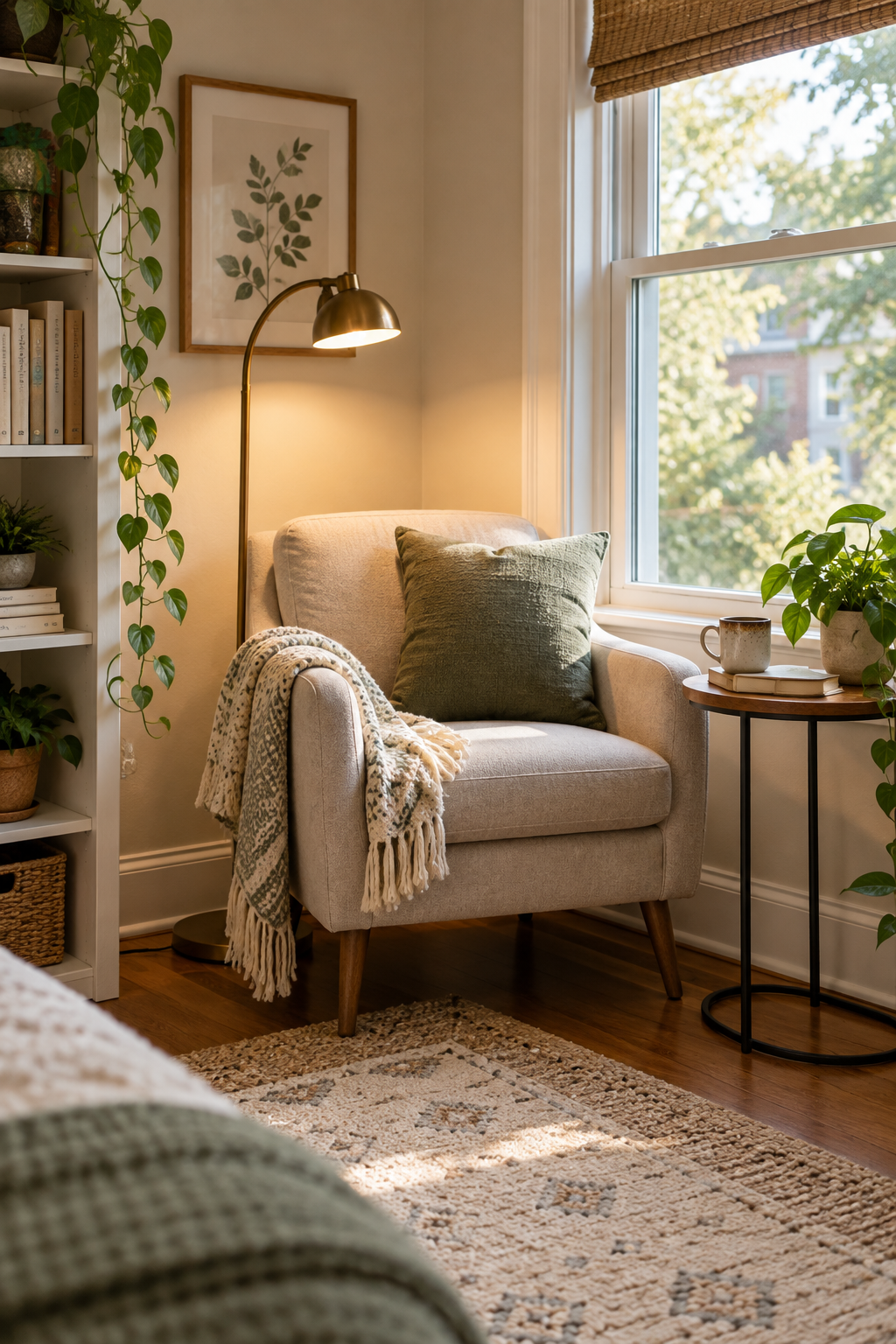
Begin by treating the accent as a deliberate focal point rather than filling every available surface. For claim a bright corner beside the window, choose proportions that relate to the nearest furniture instead of buying by impulse. Keep the surrounding palette edited so the eye understands where to land. Texture matters as much as color: linen, wool, wood, matte metal and softly reflective finishes prevent the arrangement from feeling flat. The goal is a finished reading nook moment that looks intentional from across the room and remains useful at close range.
Before committing, map the footprint with painter’s tape and view it in morning and evening light. Leave walking paths, drawers, doors and outlets fully functional. If the room is small, select one hero element and let secondary details repeat its shape or tone quietly. This approach reduces clutter, makes future changes easier and helps affordable pieces appear more cohesive. Photograph the result from the doorway; anything that competes with the main idea can usually be removed or relocated.
2. Build a Window Seat with Hidden Storage
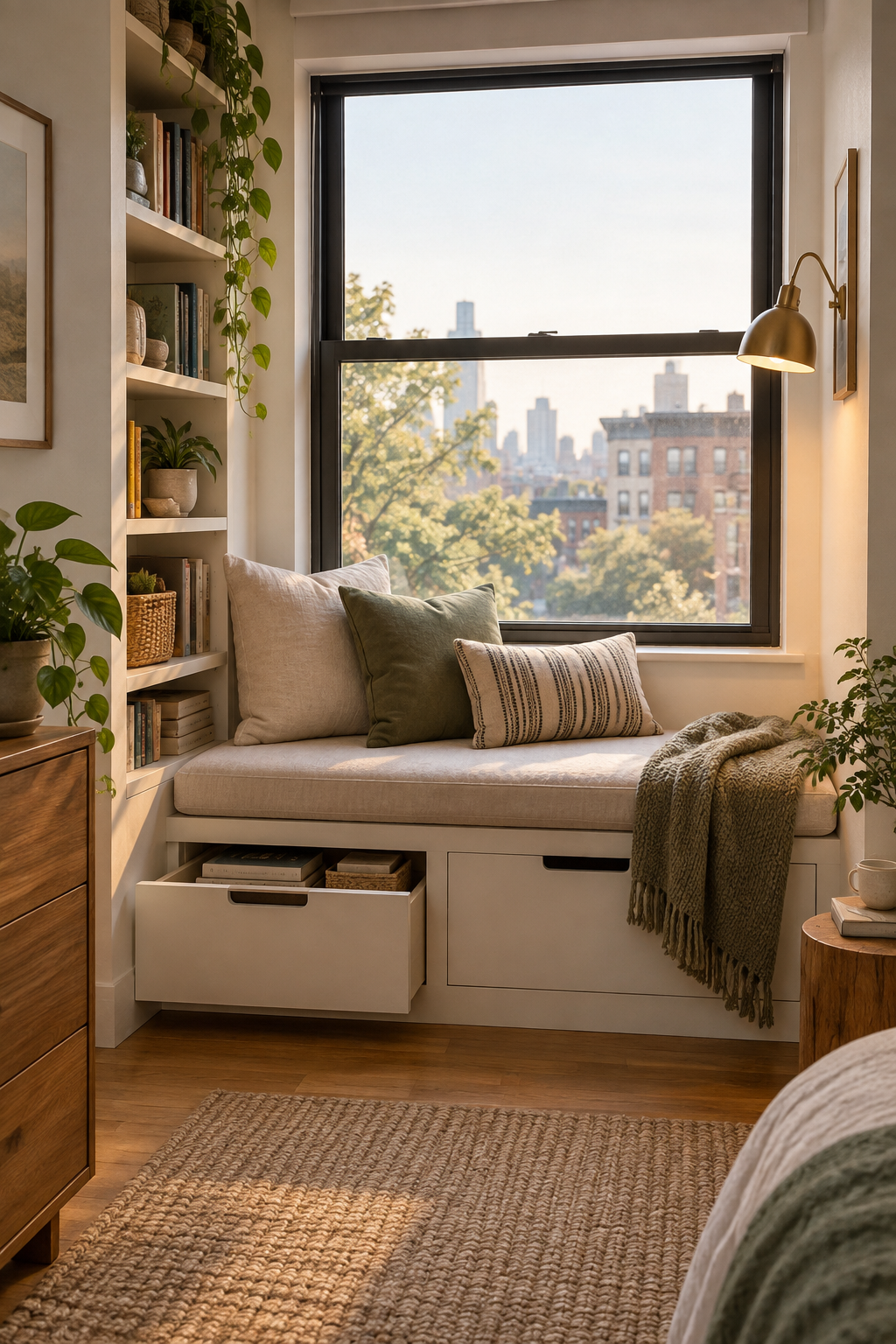
Scale is the detail that makes this idea look considered in a compact home. For build a window seat with hidden storage, choose proportions that relate to the nearest furniture instead of buying by impulse. Keep the surrounding palette edited so the eye understands where to land. Texture matters as much as color: linen, wool, wood, matte metal and softly reflective finishes prevent the arrangement from feeling flat. The goal is a finished reading nook moment that looks intentional from across the room and remains useful at close range.
Before committing, map the footprint with painter’s tape and view it in morning and evening light. Leave walking paths, drawers, doors and outlets fully functional. If the room is small, select one hero element and let secondary details repeat its shape or tone quietly. This approach reduces clutter, makes future changes easier and helps affordable pieces appear more cohesive. Photograph the result from the doorway; anything that competes with the main idea can usually be removed or relocated.
3. Tuck a Reading Chair beside a Bookcase
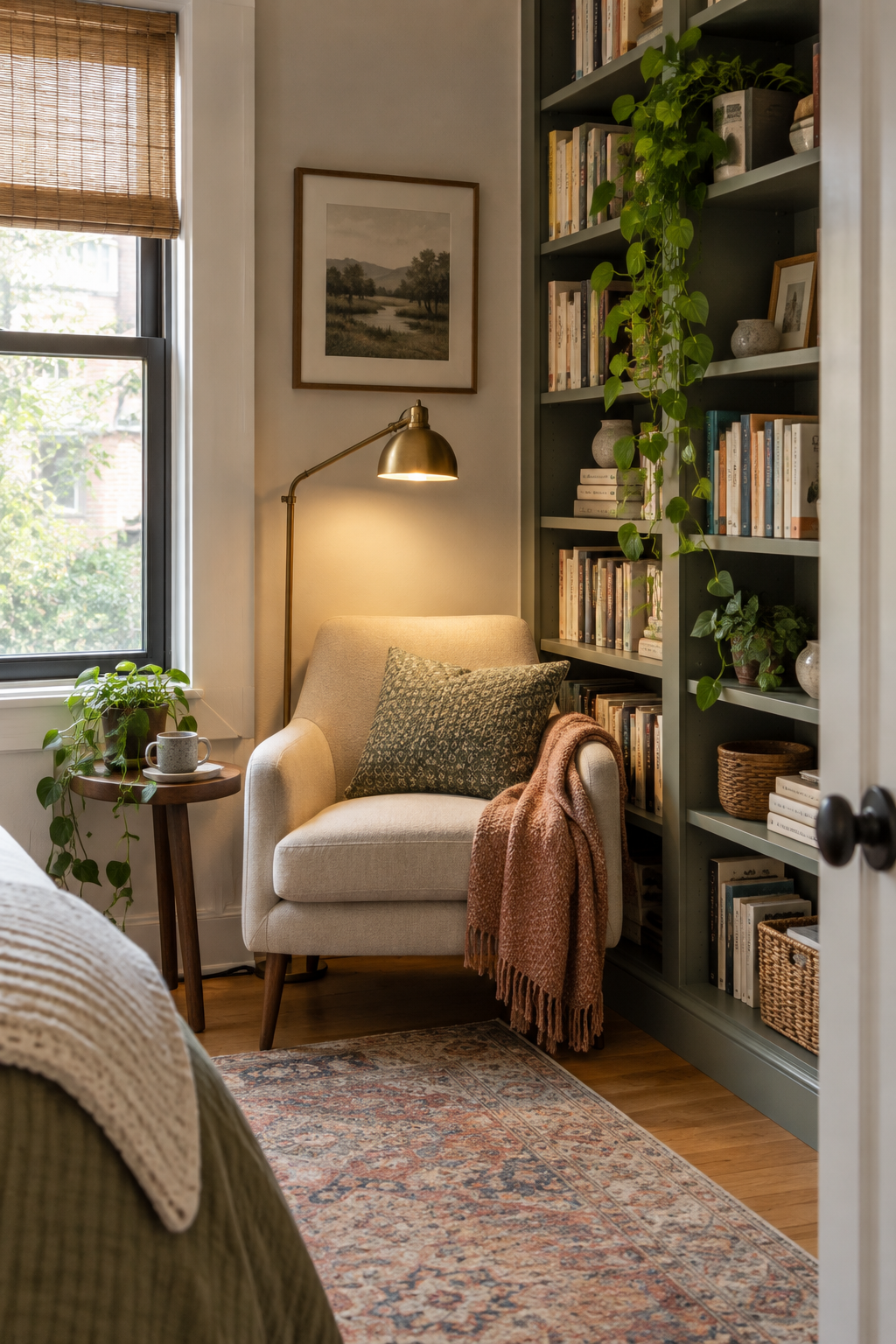
The most polished version combines visual impact with a practical everyday purpose. For tuck a reading chair beside a bookcase, choose proportions that relate to the nearest furniture instead of buying by impulse. Keep the surrounding palette edited so the eye understands where to land. Texture matters as much as color: linen, wool, wood, matte metal and softly reflective finishes prevent the arrangement from feeling flat. The goal is a finished reading nook moment that looks intentional from across the room and remains useful at close range.
Before committing, map the footprint with painter’s tape and view it in morning and evening light. Leave walking paths, drawers, doors and outlets fully functional. If the room is small, select one hero element and let secondary details repeat its shape or tone quietly. This approach reduces clutter, makes future changes easier and helps affordable pieces appear more cohesive. Photograph the result from the doorway; anything that competes with the main idea can usually be removed or relocated.
4. Use a Floor Cushion for a Flexible Nook
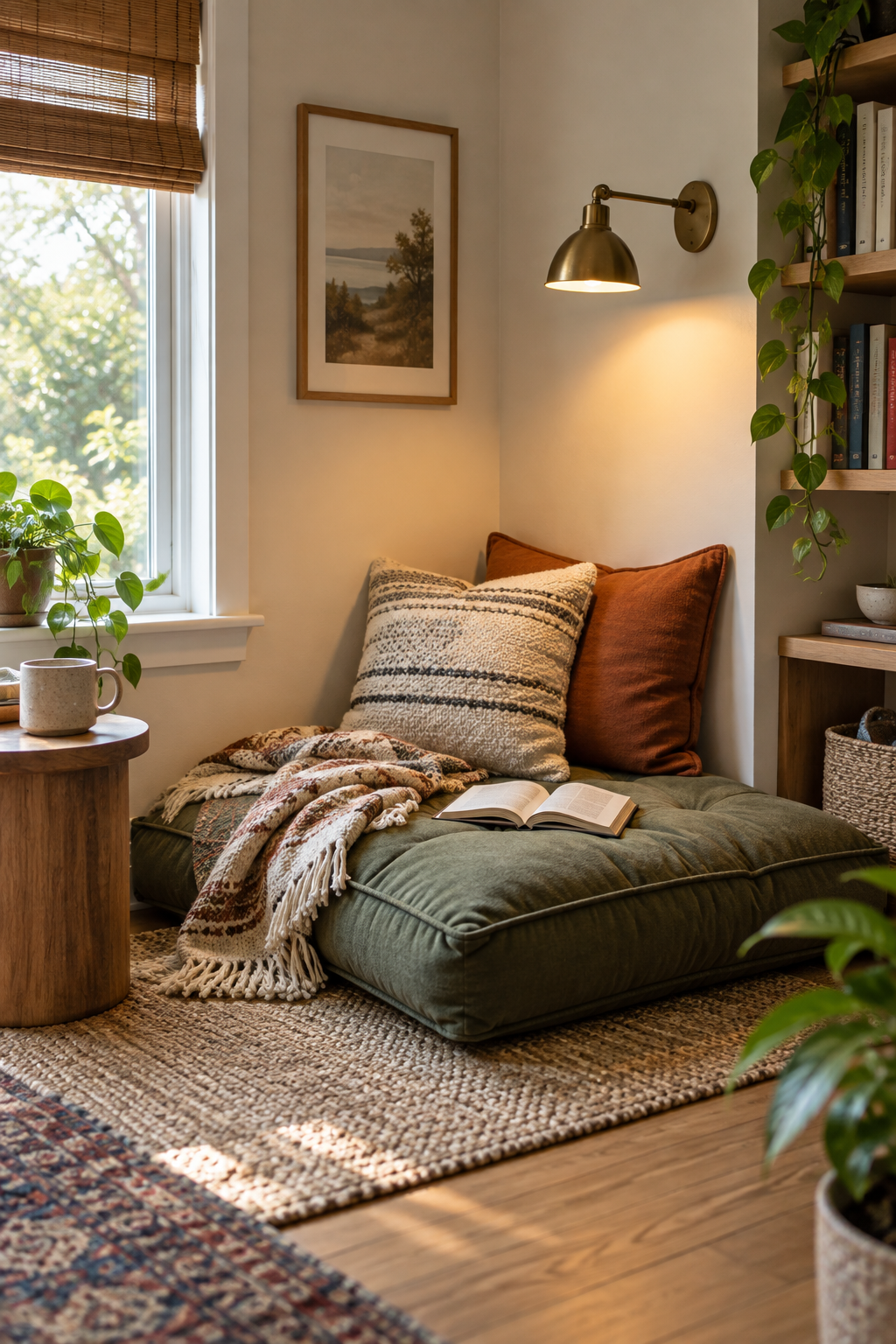
A restrained installation keeps the result flexible, calm and easy to maintain. For use a floor cushion for a flexible nook, choose proportions that relate to the nearest furniture instead of buying by impulse. Keep the surrounding palette edited so the eye understands where to land. Texture matters as much as color: linen, wool, wood, matte metal and softly reflective finishes prevent the arrangement from feeling flat. The goal is a finished reading nook moment that looks intentional from across the room and remains useful at close range.
Before committing, map the footprint with painter’s tape and view it in morning and evening light. Leave walking paths, drawers, doors and outlets fully functional. If the room is small, select one hero element and let secondary details repeat its shape or tone quietly. This approach reduces clutter, makes future changes easier and helps affordable pieces appear more cohesive. Photograph the result from the doorway; anything that competes with the main idea can usually be removed or relocated.
5. Create a Bedroom Reading Corner
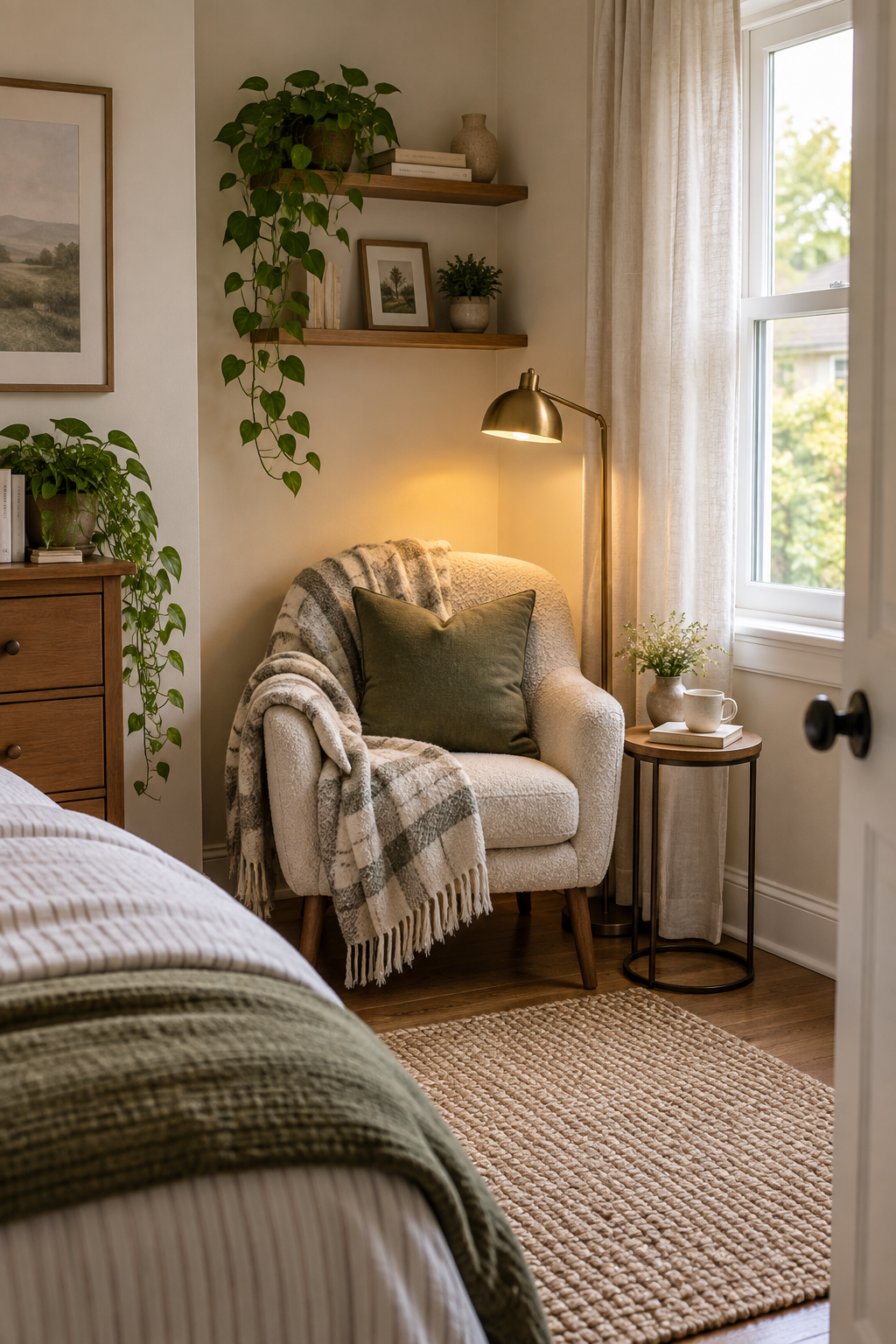
Use the surrounding neutral materials to give this feature enough breathing room. For create a bedroom reading corner, choose proportions that relate to the nearest furniture instead of buying by impulse. Keep the surrounding palette edited so the eye understands where to land. Texture matters as much as color: linen, wool, wood, matte metal and softly reflective finishes prevent the arrangement from feeling flat. The goal is a finished reading nook moment that looks intentional from across the room and remains useful at close range.
Before committing, map the footprint with painter’s tape and view it in morning and evening light. Leave walking paths, drawers, doors and outlets fully functional. If the room is small, select one hero element and let secondary details repeat its shape or tone quietly. This approach reduces clutter, makes future changes easier and helps affordable pieces appear more cohesive. Photograph the result from the doorway; anything that competes with the main idea can usually be removed or relocated.
6. Turn an Empty Landing into a Library Pause
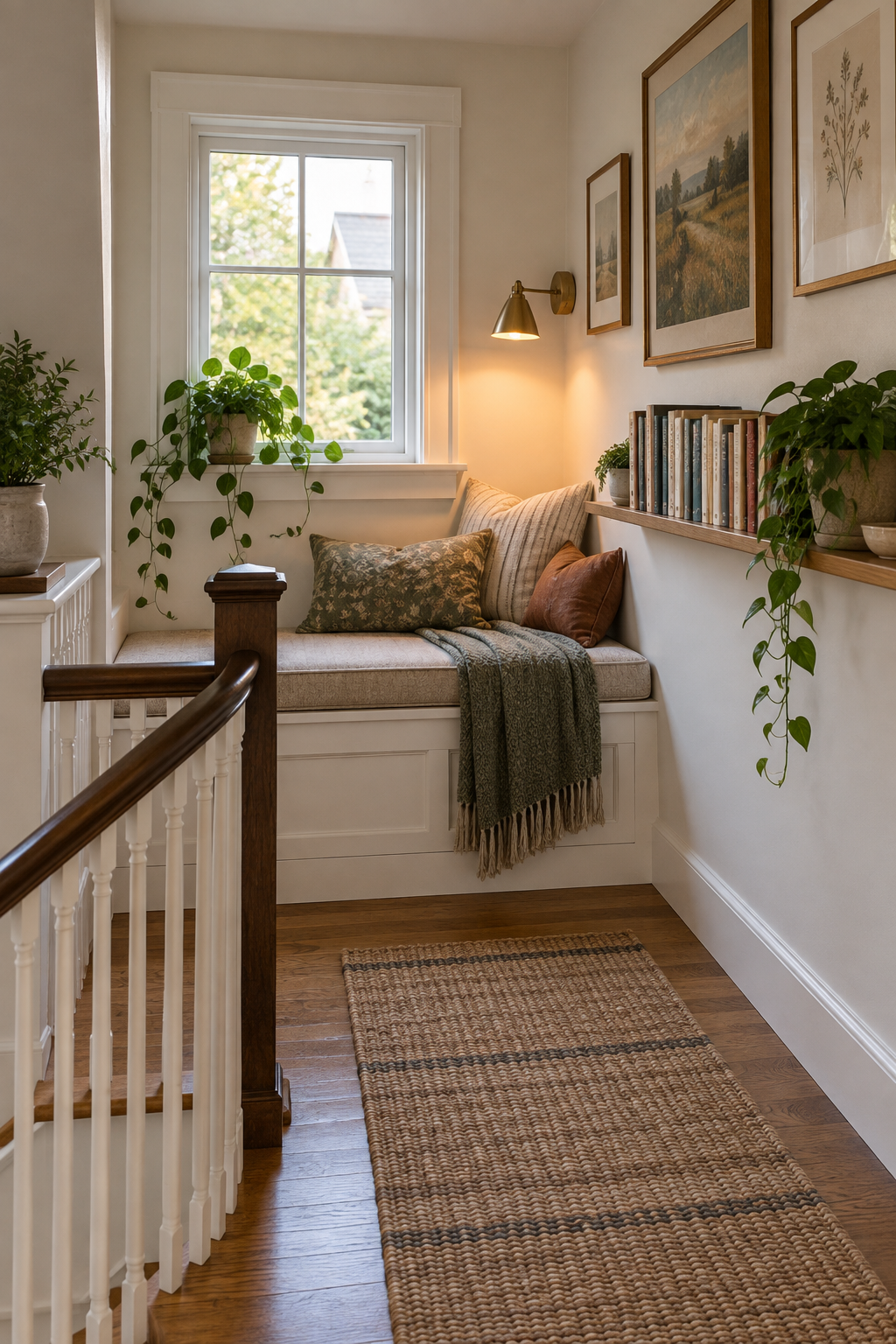
Begin by treating the accent as a deliberate focal point rather than filling every available surface. For turn an empty landing into a library pause, choose proportions that relate to the nearest furniture instead of buying by impulse. Keep the surrounding palette edited so the eye understands where to land. Texture matters as much as color: linen, wool, wood, matte metal and softly reflective finishes prevent the arrangement from feeling flat. The goal is a finished reading nook moment that looks intentional from across the room and remains useful at close range.
Before committing, map the footprint with painter’s tape and view it in morning and evening light. Leave walking paths, drawers, doors and outlets fully functional. If the room is small, select one hero element and let secondary details repeat its shape or tone quietly. This approach reduces clutter, makes future changes easier and helps affordable pieces appear more cohesive. Photograph the result from the doorway; anything that competes with the main idea can usually be removed or relocated.
7. Float Shelves above a Low Lounge Chair
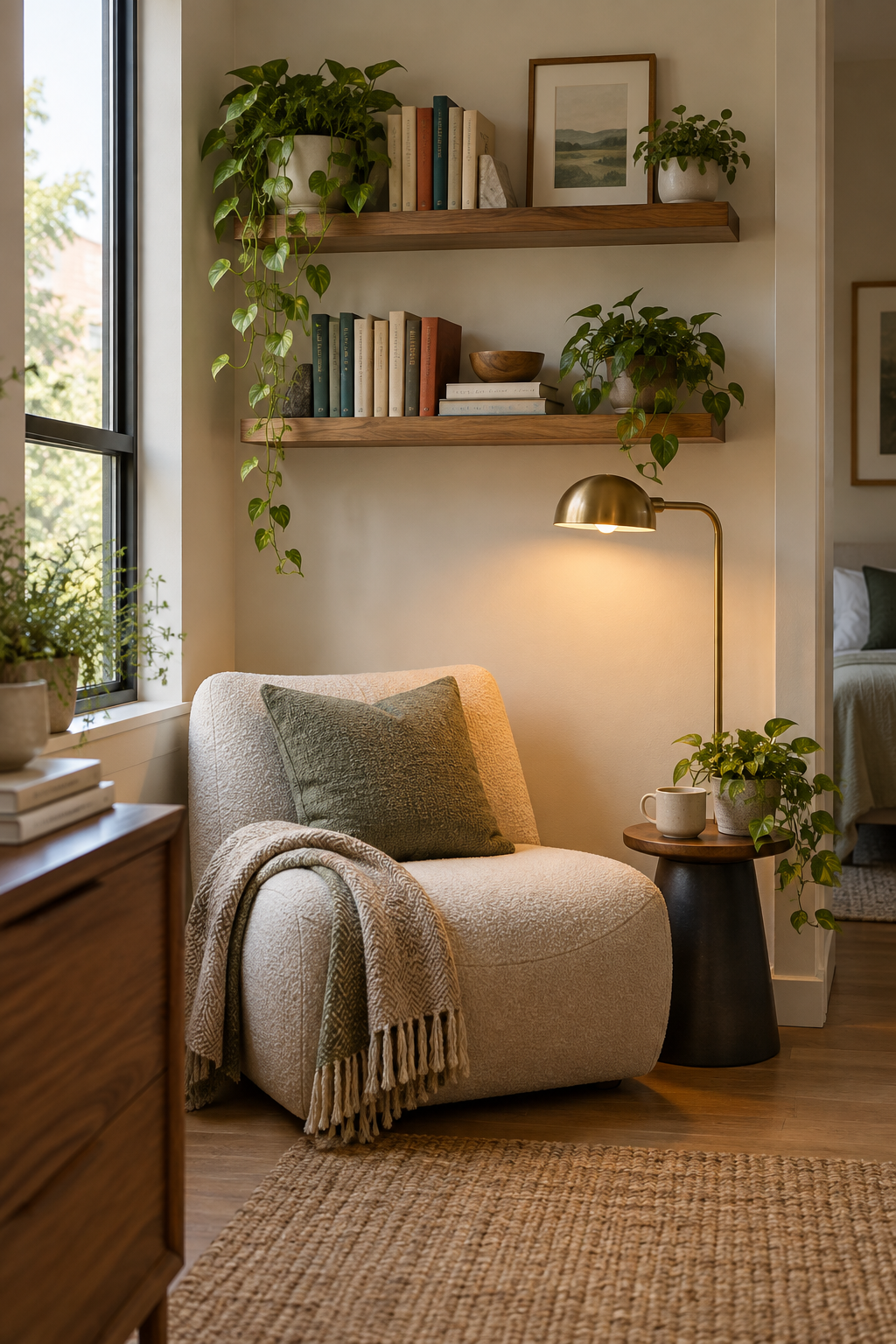
Scale is the detail that makes this idea look considered in a compact home. For float shelves above a low lounge chair, choose proportions that relate to the nearest furniture instead of buying by impulse. Keep the surrounding palette edited so the eye understands where to land. Texture matters as much as color: linen, wool, wood, matte metal and softly reflective finishes prevent the arrangement from feeling flat. The goal is a finished reading nook moment that looks intentional from across the room and remains useful at close range.
Before committing, map the footprint with painter’s tape and view it in morning and evening light. Leave walking paths, drawers, doors and outlets fully functional. If the room is small, select one hero element and let secondary details repeat its shape or tone quietly. This approach reduces clutter, makes future changes easier and helps affordable pieces appear more cohesive. Photograph the result from the doorway; anything that competes with the main idea can usually be removed or relocated.
8. Choose a Swivel Chair for Multiuse Rooms
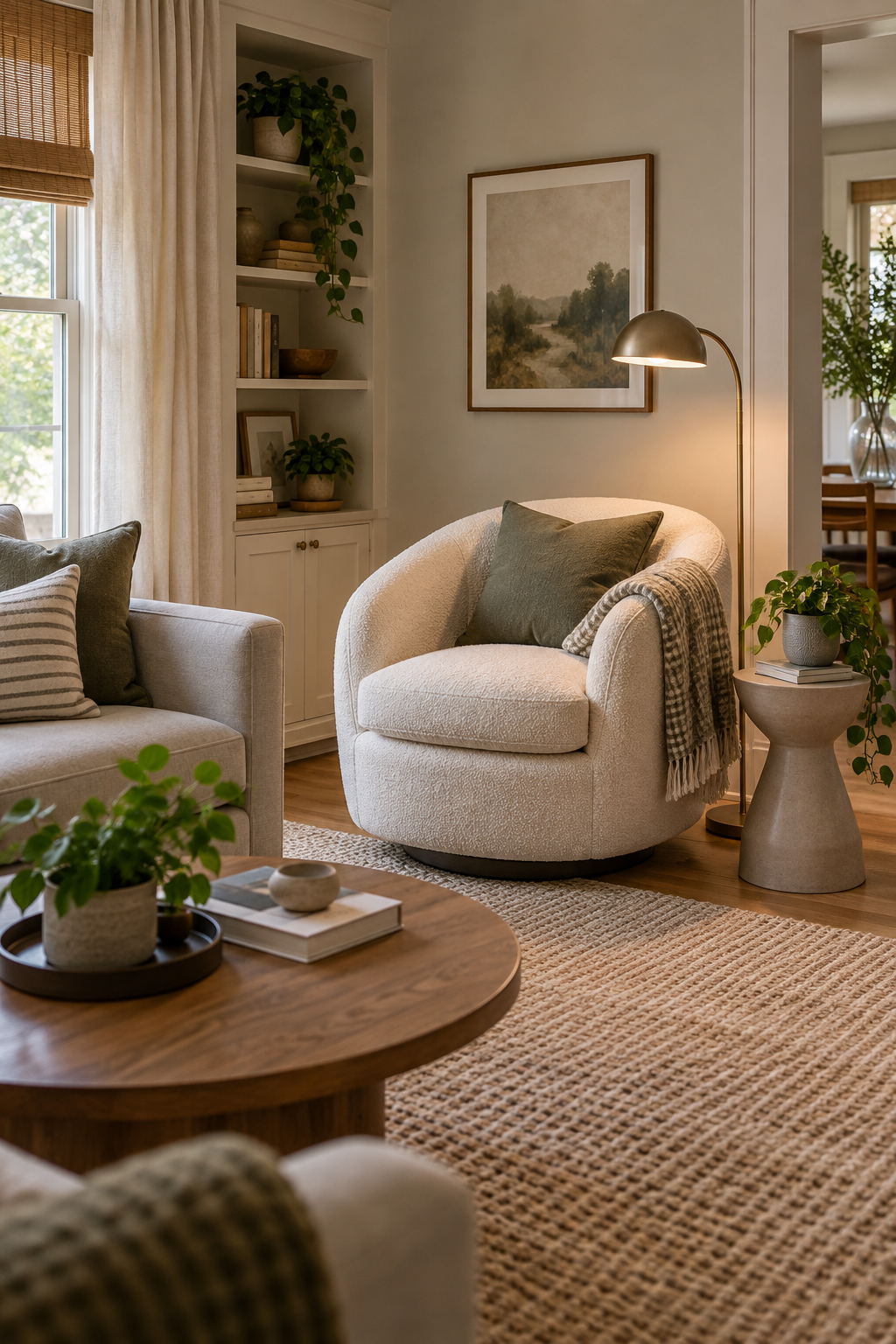
The most polished version combines visual impact with a practical everyday purpose. For choose a swivel chair for multiuse rooms, choose proportions that relate to the nearest furniture instead of buying by impulse. Keep the surrounding palette edited so the eye understands where to land. Texture matters as much as color: linen, wool, wood, matte metal and softly reflective finishes prevent the arrangement from feeling flat. The goal is a finished reading nook moment that looks intentional from across the room and remains useful at close range.
Before committing, map the footprint with painter’s tape and view it in morning and evening light. Leave walking paths, drawers, doors and outlets fully functional. If the room is small, select one hero element and let secondary details repeat its shape or tone quietly. This approach reduces clutter, makes future changes easier and helps affordable pieces appear more cohesive. Photograph the result from the doorway; anything that competes with the main idea can usually be removed or relocated.
9. Add a Wall-Mounted Sconce to Save Floor Space
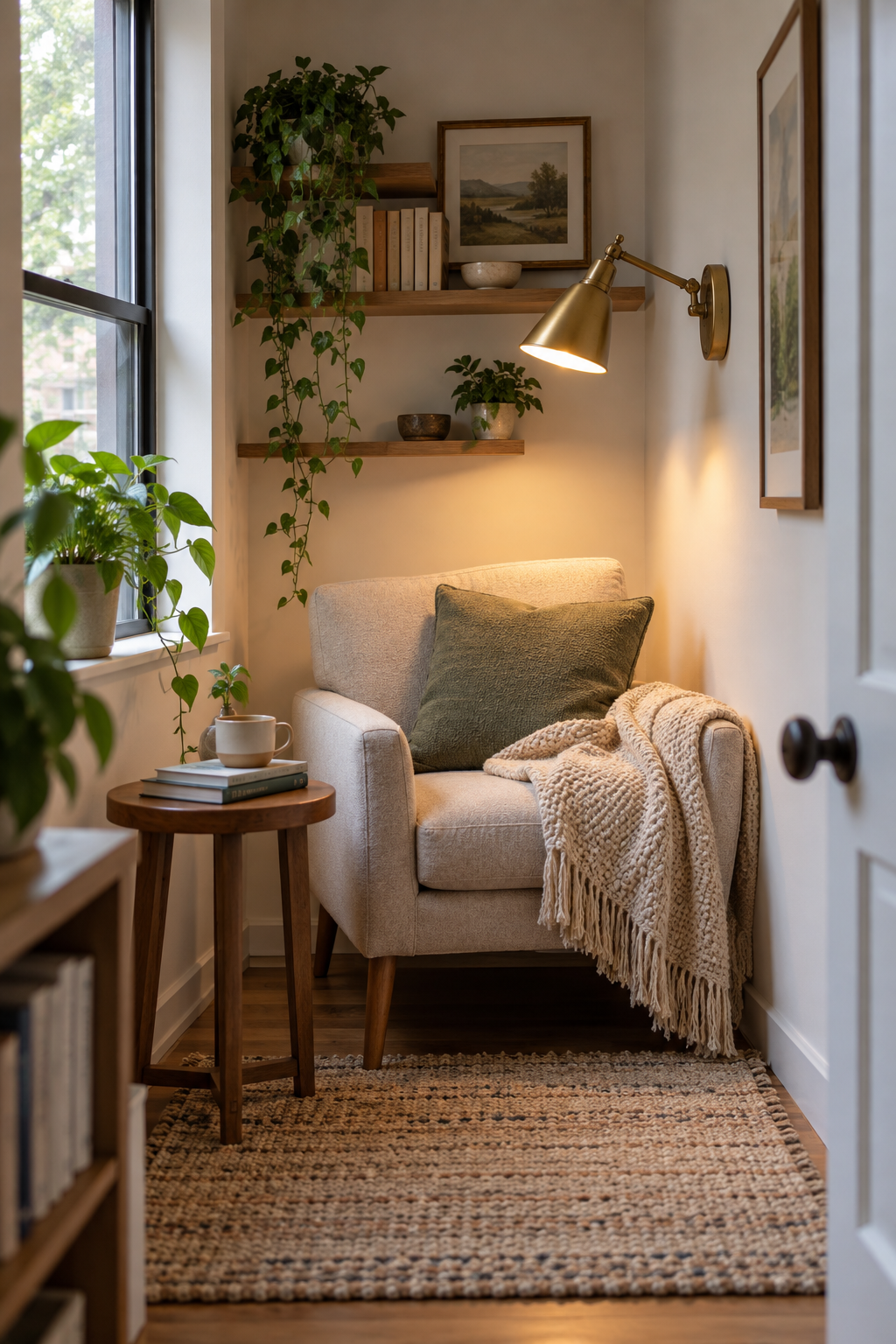
A restrained installation keeps the result flexible, calm and easy to maintain. For add a wall-mounted sconce to save floor space, choose proportions that relate to the nearest furniture instead of buying by impulse. Keep the surrounding palette edited so the eye understands where to land. Texture matters as much as color: linen, wool, wood, matte metal and softly reflective finishes prevent the arrangement from feeling flat. The goal is a finished reading nook moment that looks intentional from across the room and remains useful at close range.
Before committing, map the footprint with painter’s tape and view it in morning and evening light. Leave walking paths, drawers, doors and outlets fully functional. If the room is small, select one hero element and let secondary details repeat its shape or tone quietly. This approach reduces clutter, makes future changes easier and helps affordable pieces appear more cohesive. Photograph the result from the doorway; anything that competes with the main idea can usually be removed or relocated.
10. Use a C-Shaped Table for Books and Tea
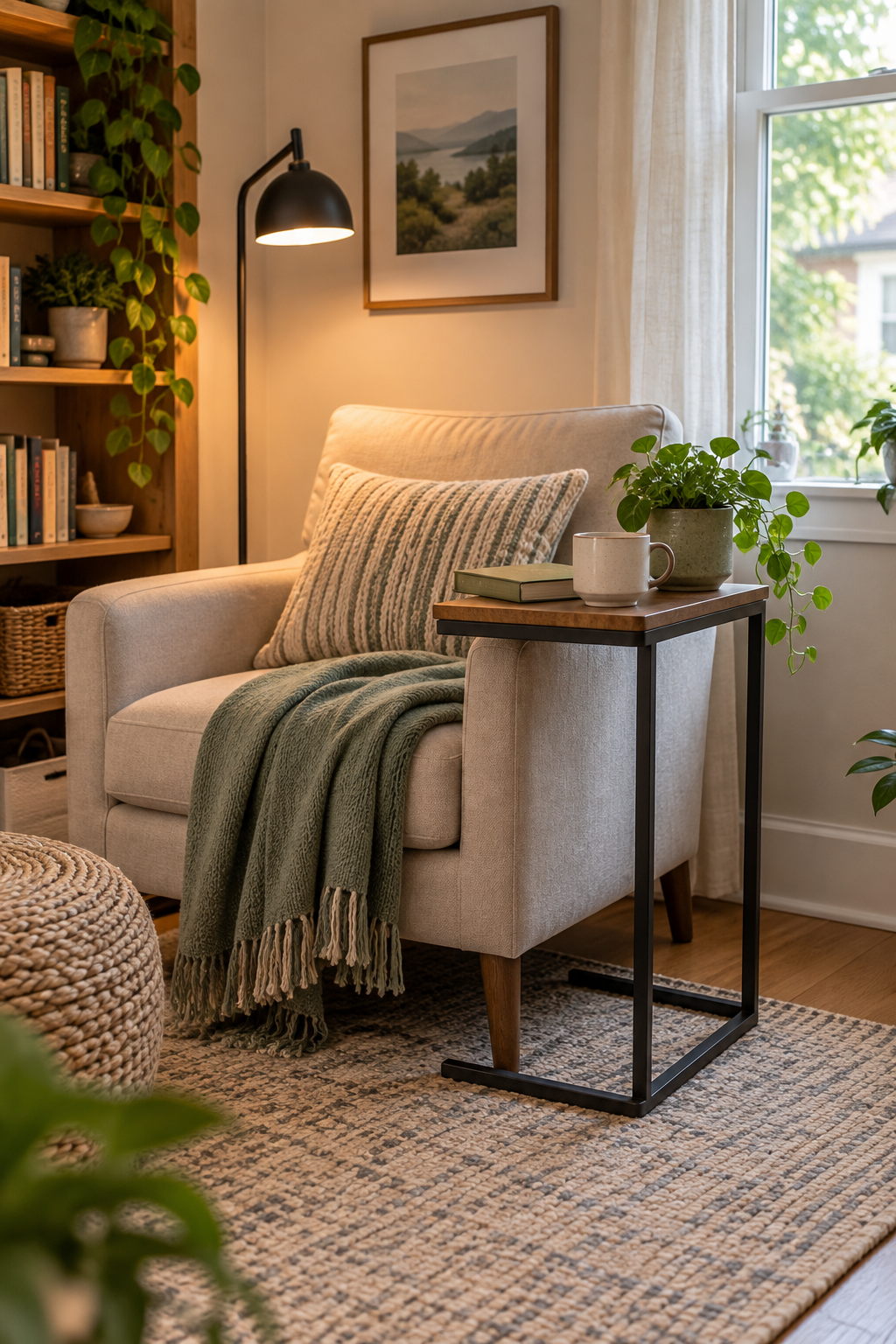
Use the surrounding neutral materials to give this feature enough breathing room. For use a c-shaped table for books and tea, choose proportions that relate to the nearest furniture instead of buying by impulse. Keep the surrounding palette edited so the eye understands where to land. Texture matters as much as color: linen, wool, wood, matte metal and softly reflective finishes prevent the arrangement from feeling flat. The goal is a finished reading nook moment that looks intentional from across the room and remains useful at close range.
Before committing, map the footprint with painter’s tape and view it in morning and evening light. Leave walking paths, drawers, doors and outlets fully functional. If the room is small, select one hero element and let secondary details repeat its shape or tone quietly. This approach reduces clutter, makes future changes easier and helps affordable pieces appear more cohesive. Photograph the result from the doorway; anything that competes with the main idea can usually be removed or relocated.
11. Layer a Rug to Define the Nook
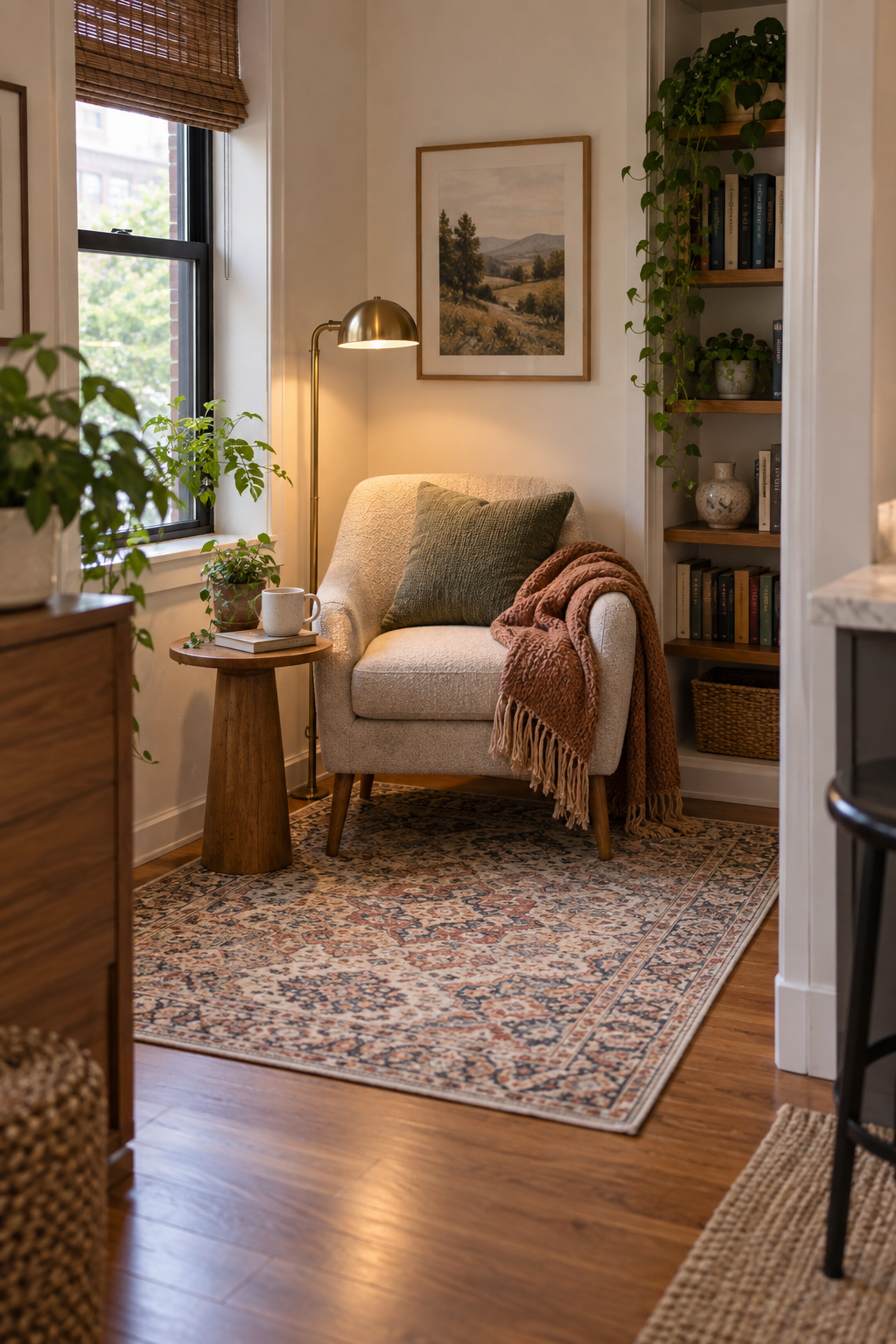
Begin by treating the accent as a deliberate focal point rather than filling every available surface. For layer a rug to define the nook, choose proportions that relate to the nearest furniture instead of buying by impulse. Keep the surrounding palette edited so the eye understands where to land. Texture matters as much as color: linen, wool, wood, matte metal and softly reflective finishes prevent the arrangement from feeling flat. The goal is a finished reading nook moment that looks intentional from across the room and remains useful at close range.
Before committing, map the footprint with painter’s tape and view it in morning and evening light. Leave walking paths, drawers, doors and outlets fully functional. If the room is small, select one hero element and let secondary details repeat its shape or tone quietly. This approach reduces clutter, makes future changes easier and helps affordable pieces appear more cohesive. Photograph the result from the doorway; anything that competes with the main idea can usually be removed or relocated.
12. Hang Curtains around an Alcove
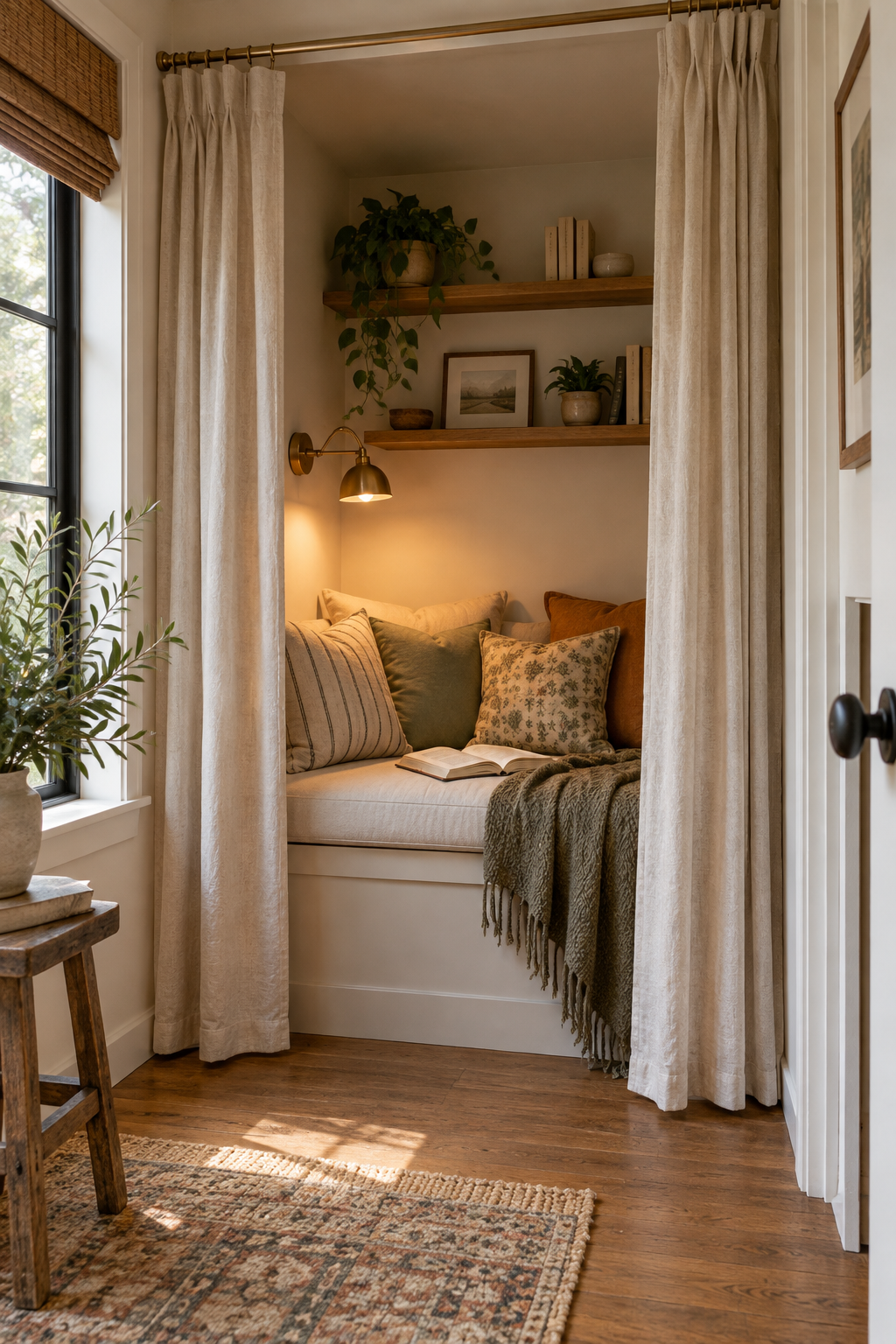
Scale is the detail that makes this idea look considered in a compact home. For hang curtains around an alcove, choose proportions that relate to the nearest furniture instead of buying by impulse. Keep the surrounding palette edited so the eye understands where to land. Texture matters as much as color: linen, wool, wood, matte metal and softly reflective finishes prevent the arrangement from feeling flat. The goal is a finished reading nook moment that looks intentional from across the room and remains useful at close range.
Before committing, map the footprint with painter’s tape and view it in morning and evening light. Leave walking paths, drawers, doors and outlets fully functional. If the room is small, select one hero element and let secondary details repeat its shape or tone quietly. This approach reduces clutter, makes future changes easier and helps affordable pieces appear more cohesive. Photograph the result from the doorway; anything that competes with the main idea can usually be removed or relocated.
13. Transform a Closet into a Reading Hideaway
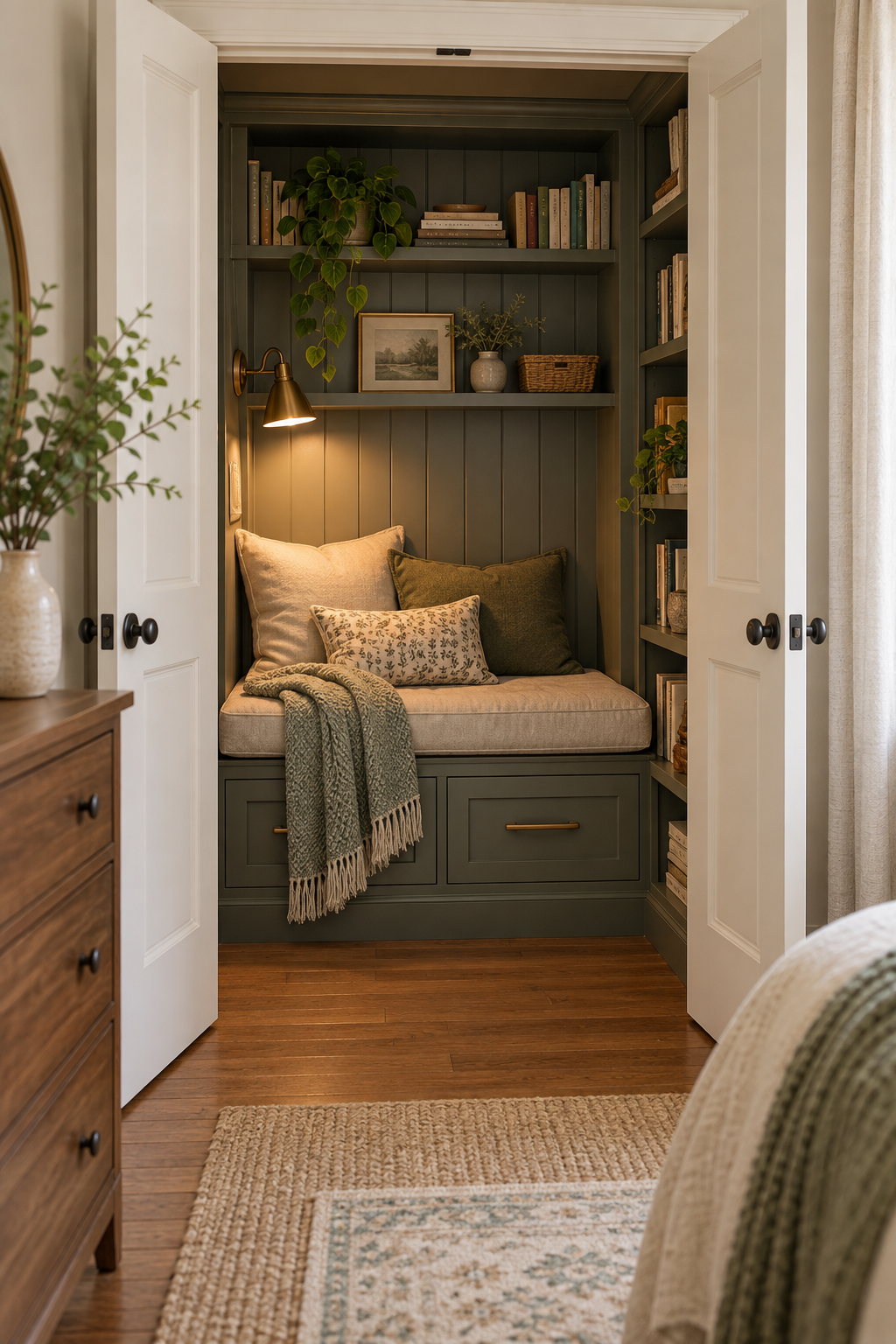
The most polished version combines visual impact with a practical everyday purpose. For transform a closet into a reading hideaway, choose proportions that relate to the nearest furniture instead of buying by impulse. Keep the surrounding palette edited so the eye understands where to land. Texture matters as much as color: linen, wool, wood, matte metal and softly reflective finishes prevent the arrangement from feeling flat. The goal is a finished reading nook moment that looks intentional from across the room and remains useful at close range.
Before committing, map the footprint with painter’s tape and view it in morning and evening light. Leave walking paths, drawers, doors and outlets fully functional. If the room is small, select one hero element and let secondary details repeat its shape or tone quietly. This approach reduces clutter, makes future changes easier and helps affordable pieces appear more cohesive. Photograph the result from the doorway; anything that competes with the main idea can usually be removed or relocated.
14. Style a Daybed as a Reading Retreat
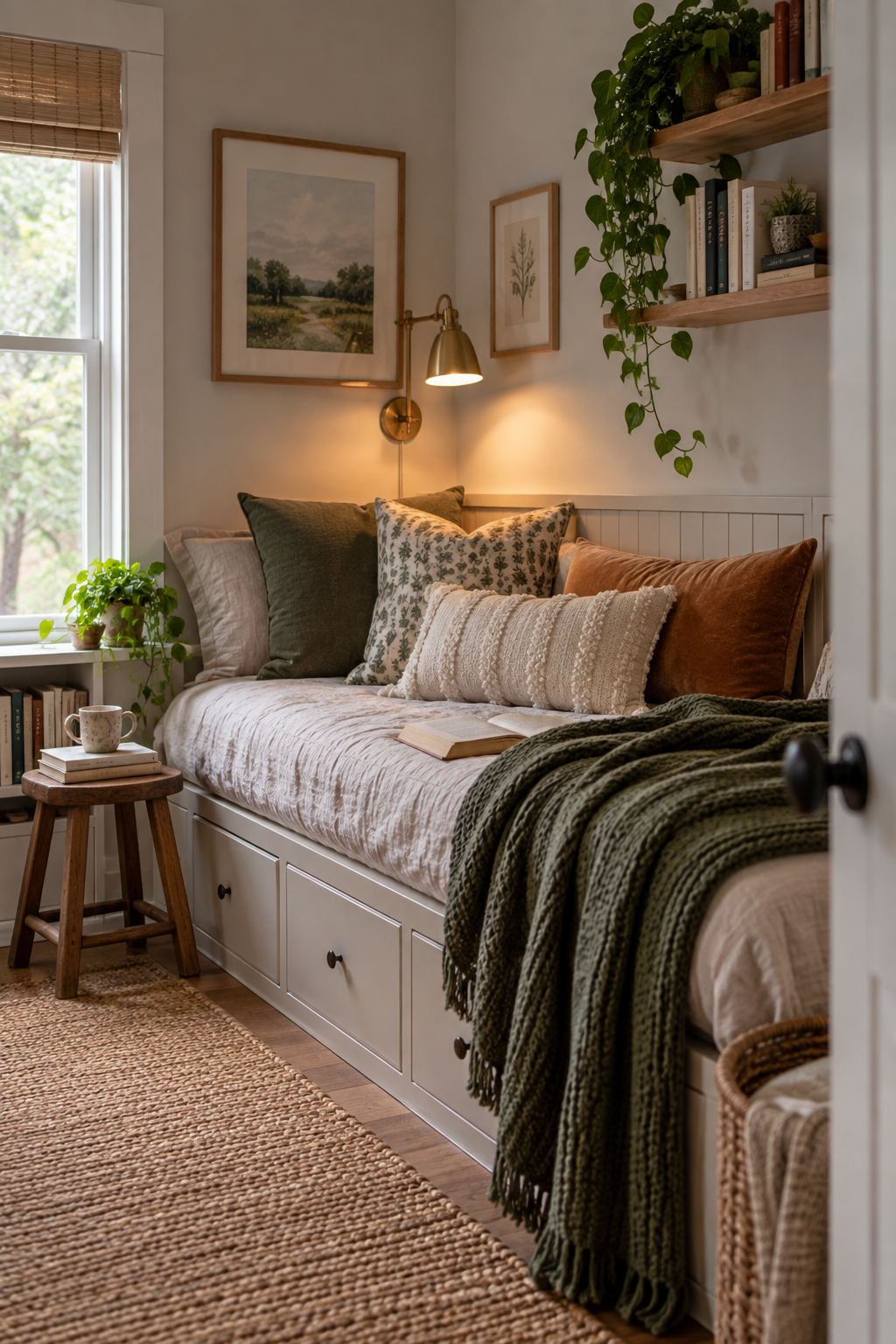
A restrained installation keeps the result flexible, calm and easy to maintain. For style a daybed as a reading retreat, choose proportions that relate to the nearest furniture instead of buying by impulse. Keep the surrounding palette edited so the eye understands where to land. Texture matters as much as color: linen, wool, wood, matte metal and softly reflective finishes prevent the arrangement from feeling flat. The goal is a finished reading nook moment that looks intentional from across the room and remains useful at close range.
Before committing, map the footprint with painter’s tape and view it in morning and evening light. Leave walking paths, drawers, doors and outlets fully functional. If the room is small, select one hero element and let secondary details repeat its shape or tone quietly. This approach reduces clutter, makes future changes easier and helps affordable pieces appear more cohesive. Photograph the result from the doorway; anything that competes with the main idea can usually be removed or relocated.
15. Create a Built-In Nook between Cabinets
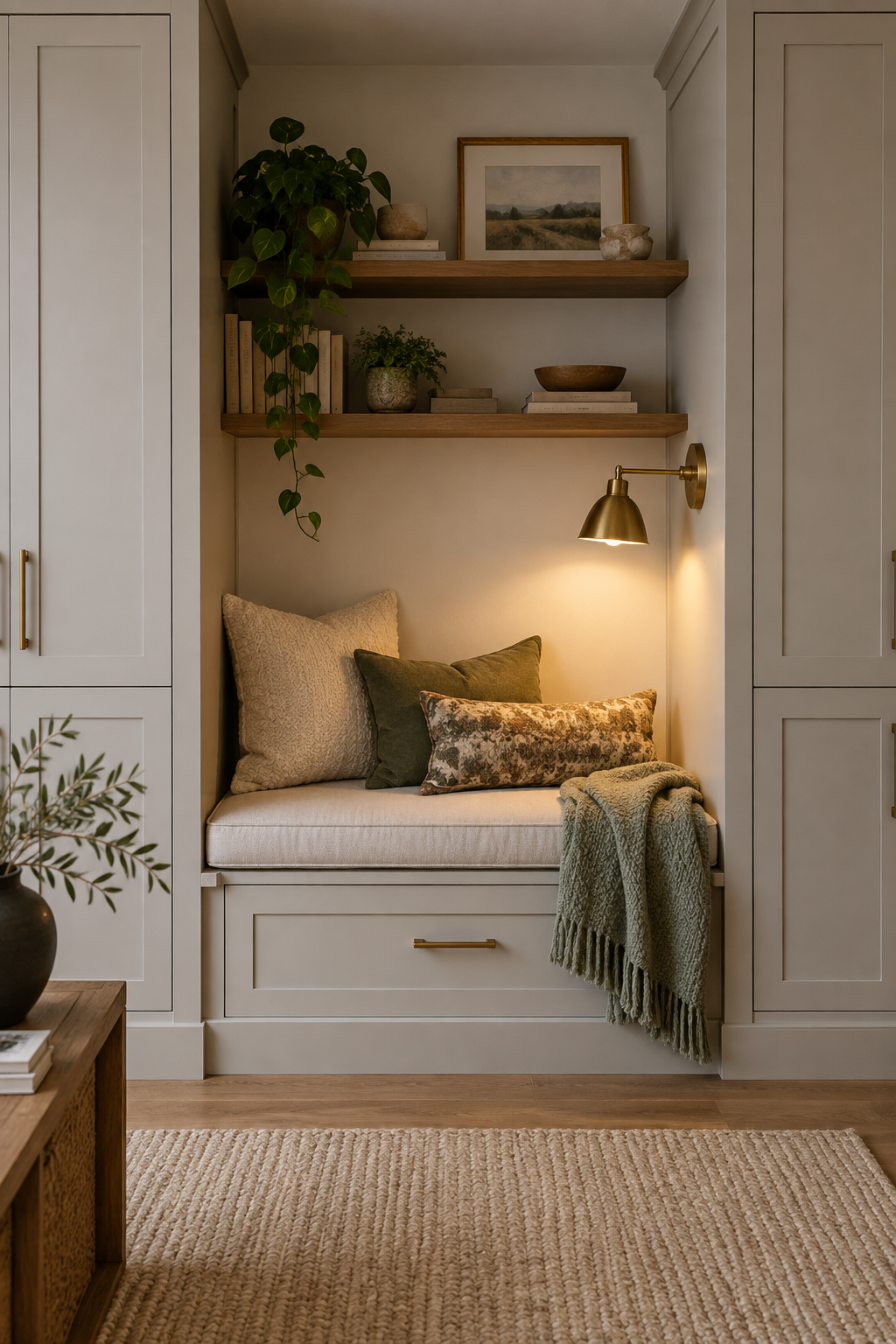
Use the surrounding neutral materials to give this feature enough breathing room. For create a built-in nook between cabinets, choose proportions that relate to the nearest furniture instead of buying by impulse. Keep the surrounding palette edited so the eye understands where to land. Texture matters as much as color: linen, wool, wood, matte metal and softly reflective finishes prevent the arrangement from feeling flat. The goal is a finished reading nook moment that looks intentional from across the room and remains useful at close range.
Before committing, map the footprint with painter’s tape and view it in morning and evening light. Leave walking paths, drawers, doors and outlets fully functional. If the room is small, select one hero element and let secondary details repeat its shape or tone quietly. This approach reduces clutter, makes future changes easier and helps affordable pieces appear more cohesive. Photograph the result from the doorway; anything that competes with the main idea can usually be removed or relocated.
16. Use a Narrow Bench in a Hallway
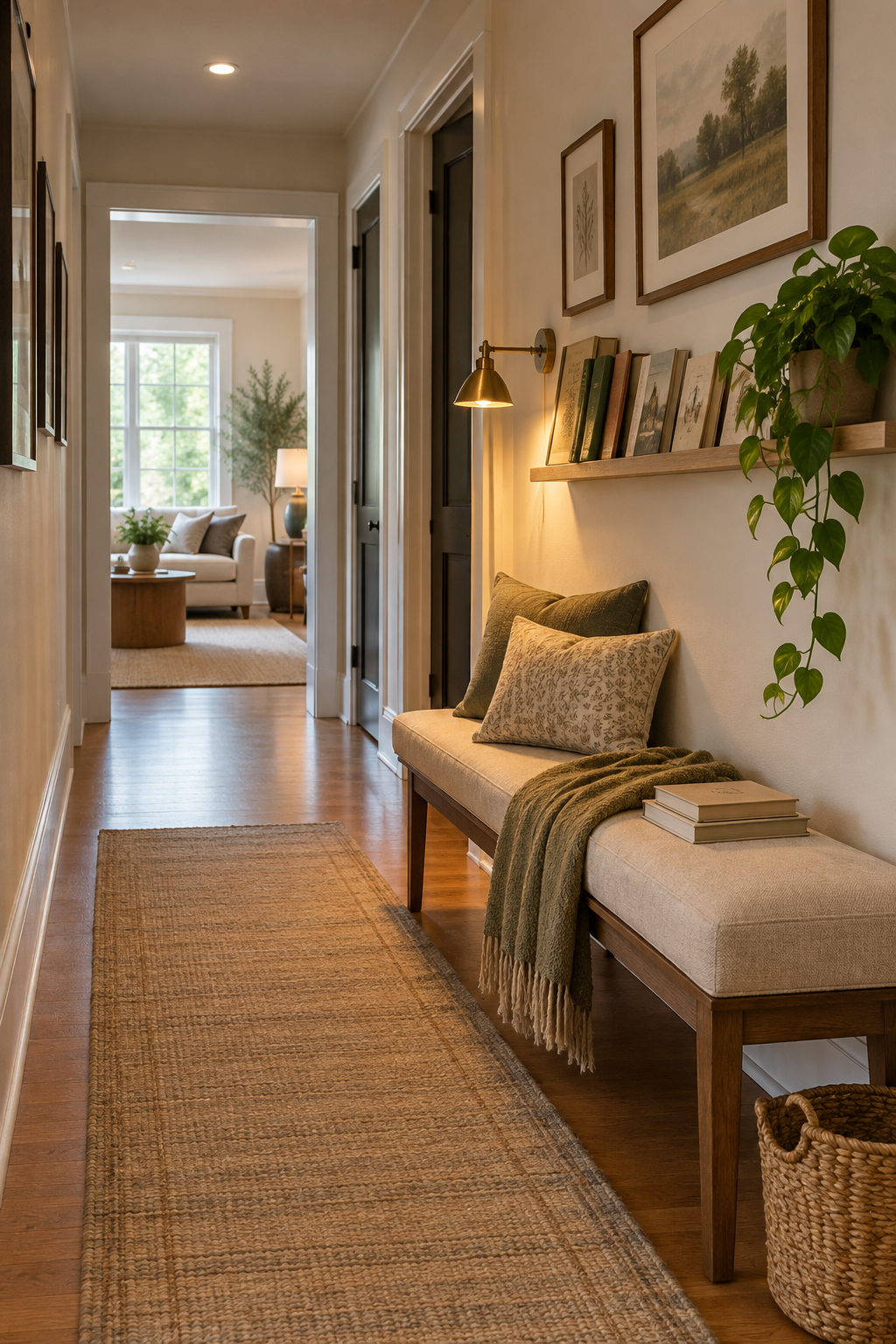
Begin by treating the accent as a deliberate focal point rather than filling every available surface. For use a narrow bench in a hallway, choose proportions that relate to the nearest furniture instead of buying by impulse. Keep the surrounding palette edited so the eye understands where to land. Texture matters as much as color: linen, wool, wood, matte metal and softly reflective finishes prevent the arrangement from feeling flat. The goal is a finished reading nook moment that looks intentional from across the room and remains useful at close range.
Before committing, map the footprint with painter’s tape and view it in morning and evening light. Leave walking paths, drawers, doors and outlets fully functional. If the room is small, select one hero element and let secondary details repeat its shape or tone quietly. This approach reduces clutter, makes future changes easier and helps affordable pieces appear more cohesive. Photograph the result from the doorway; anything that competes with the main idea can usually be removed or relocated.
17. Make the Most of an Under-Stair Corner
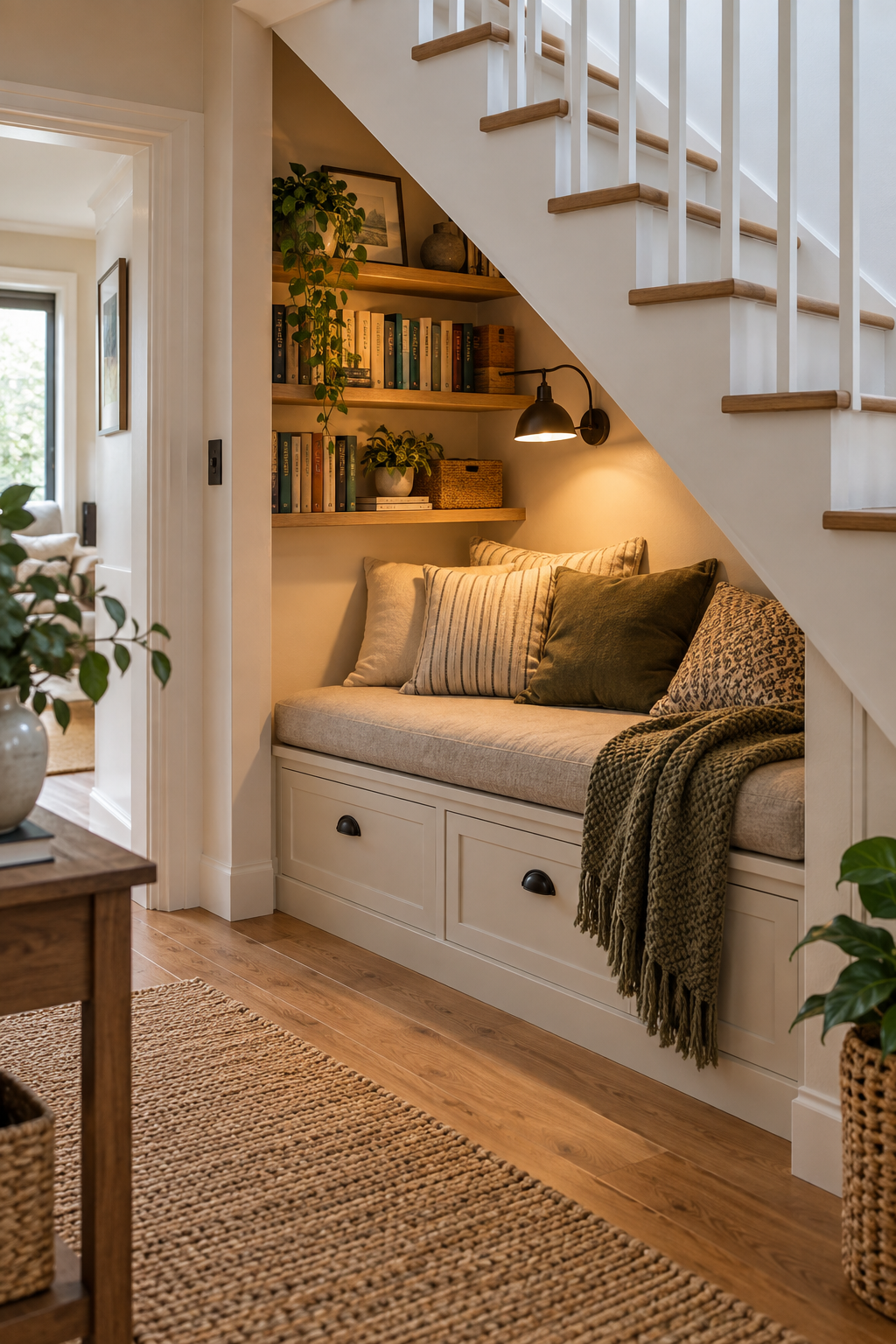
Scale is the detail that makes this idea look considered in a compact home. For make the most of an under-stair corner, choose proportions that relate to the nearest furniture instead of buying by impulse. Keep the surrounding palette edited so the eye understands where to land. Texture matters as much as color: linen, wool, wood, matte metal and softly reflective finishes prevent the arrangement from feeling flat. The goal is a finished reading nook moment that looks intentional from across the room and remains useful at close range.
Before committing, map the footprint with painter’s tape and view it in morning and evening light. Leave walking paths, drawers, doors and outlets fully functional. If the room is small, select one hero element and let secondary details repeat its shape or tone quietly. This approach reduces clutter, makes future changes easier and helps affordable pieces appear more cohesive. Photograph the result from the doorway; anything that competes with the main idea can usually be removed or relocated.
18. Add a Canopy for a Soft Enclosed Feeling
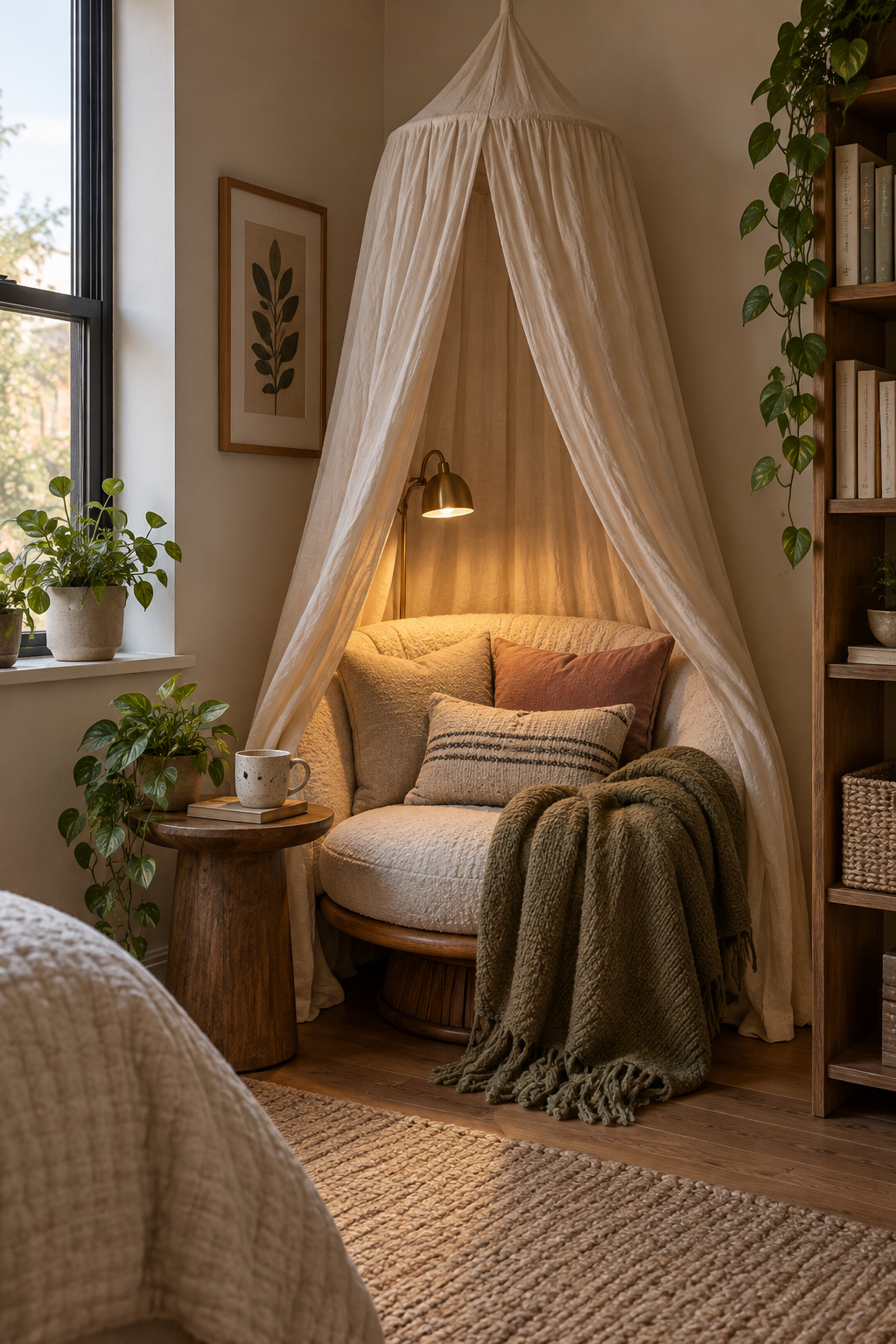
The most polished version combines visual impact with a practical everyday purpose. For add a canopy for a soft enclosed feeling, choose proportions that relate to the nearest furniture instead of buying by impulse. Keep the surrounding palette edited so the eye understands where to land. Texture matters as much as color: linen, wool, wood, matte metal and softly reflective finishes prevent the arrangement from feeling flat. The goal is a finished reading nook moment that looks intentional from across the room and remains useful at close range.
Before committing, map the footprint with painter’s tape and view it in morning and evening light. Leave walking paths, drawers, doors and outlets fully functional. If the room is small, select one hero element and let secondary details repeat its shape or tone quietly. This approach reduces clutter, makes future changes easier and helps affordable pieces appear more cohesive. Photograph the result from the doorway; anything that competes with the main idea can usually be removed or relocated.
19. Pair a Rocking Chair with a Footstool
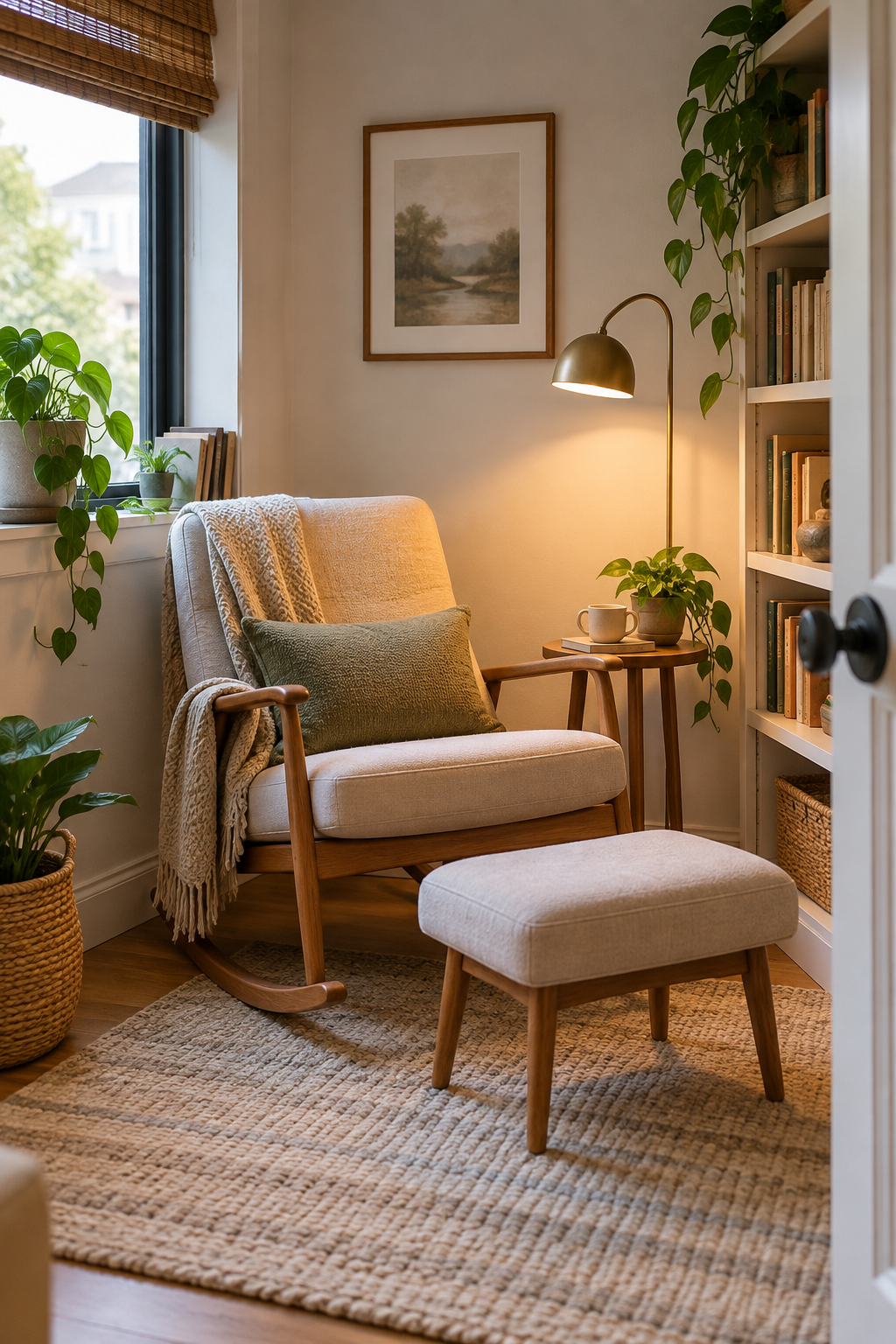
A restrained installation keeps the result flexible, calm and easy to maintain. For pair a rocking chair with a footstool, choose proportions that relate to the nearest furniture instead of buying by impulse. Keep the surrounding palette edited so the eye understands where to land. Texture matters as much as color: linen, wool, wood, matte metal and softly reflective finishes prevent the arrangement from feeling flat. The goal is a finished reading nook moment that looks intentional from across the room and remains useful at close range.
Before committing, map the footprint with painter’s tape and view it in morning and evening light. Leave walking paths, drawers, doors and outlets fully functional. If the room is small, select one hero element and let secondary details repeat its shape or tone quietly. This approach reduces clutter, makes future changes easier and helps affordable pieces appear more cohesive. Photograph the result from the doorway; anything that competes with the main idea can usually be removed or relocated.
20. Use a Chaise in a Long Narrow Room
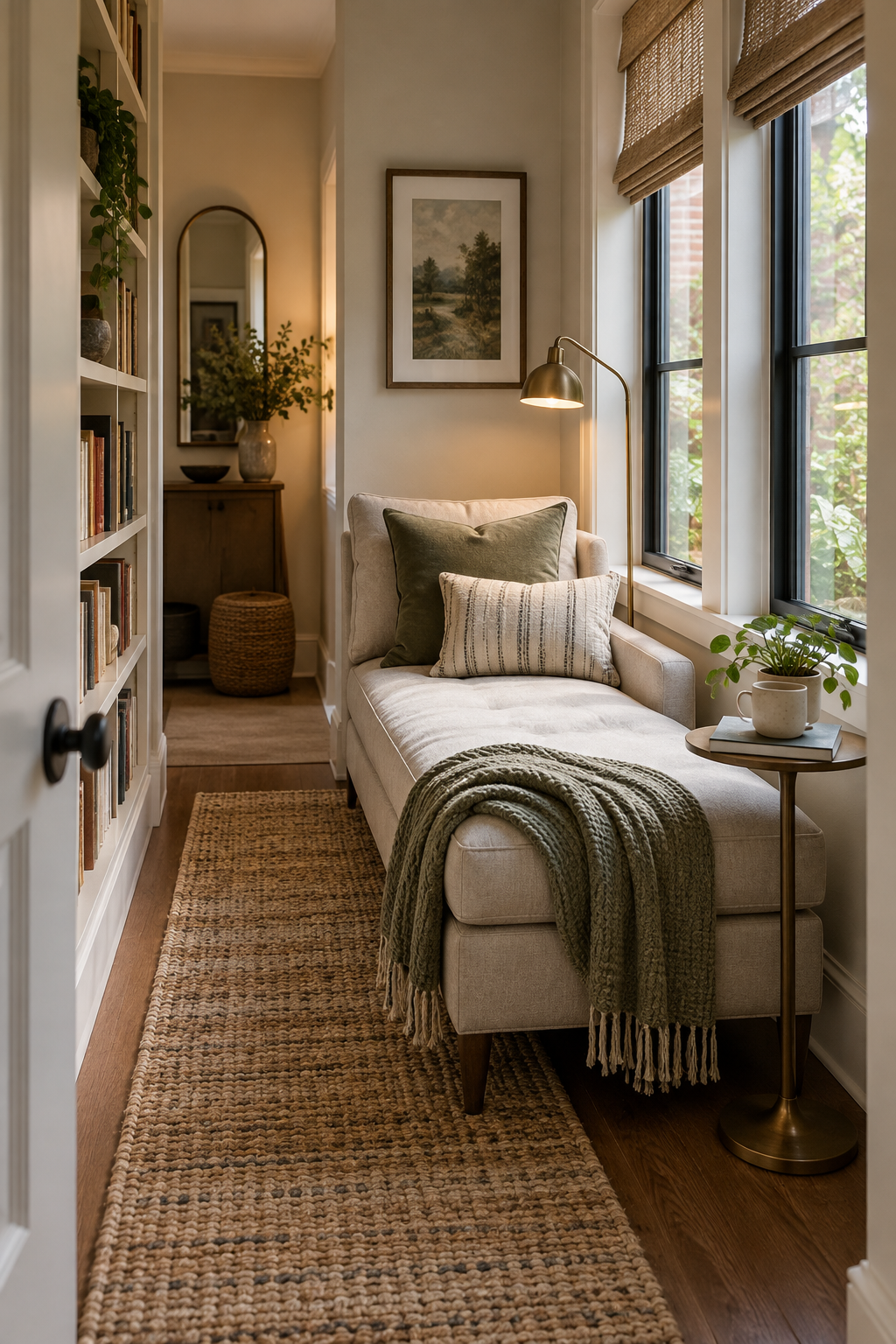
Use the surrounding neutral materials to give this feature enough breathing room. For use a chaise in a long narrow room, choose proportions that relate to the nearest furniture instead of buying by impulse. Keep the surrounding palette edited so the eye understands where to land. Texture matters as much as color: linen, wool, wood, matte metal and softly reflective finishes prevent the arrangement from feeling flat. The goal is a finished reading nook moment that looks intentional from across the room and remains useful at close range.
Before committing, map the footprint with painter’s tape and view it in morning and evening light. Leave walking paths, drawers, doors and outlets fully functional. If the room is small, select one hero element and let secondary details repeat its shape or tone quietly. This approach reduces clutter, makes future changes easier and helps affordable pieces appear more cohesive. Photograph the result from the doorway; anything that competes with the main idea can usually be removed or relocated.
21. Create a Reading Nook behind the Sofa
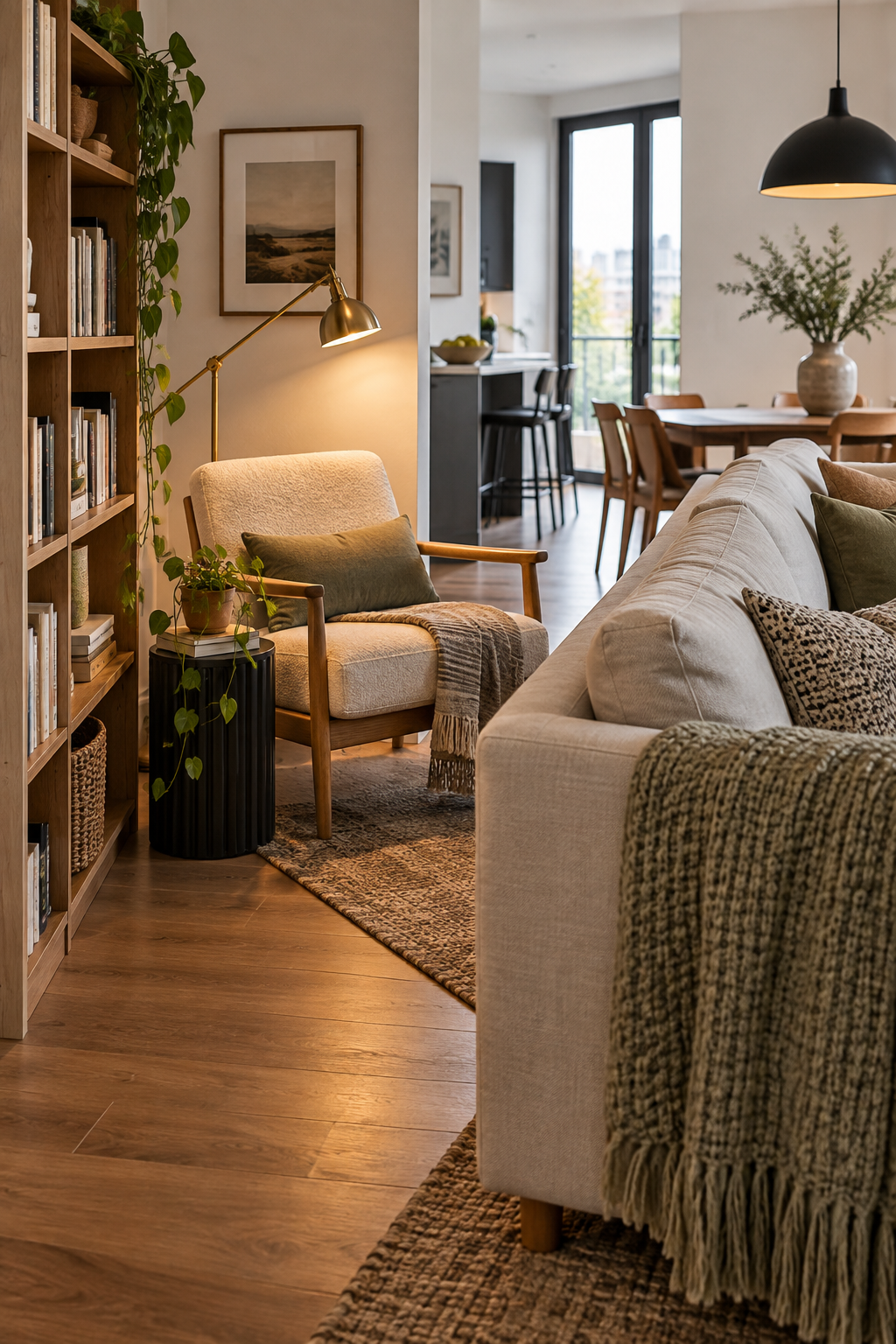
Begin by treating the accent as a deliberate focal point rather than filling every available surface. For create a reading nook behind the sofa, choose proportions that relate to the nearest furniture instead of buying by impulse. Keep the surrounding palette edited so the eye understands where to land. Texture matters as much as color: linen, wool, wood, matte metal and softly reflective finishes prevent the arrangement from feeling flat. The goal is a finished reading nook moment that looks intentional from across the room and remains useful at close range.
Before committing, map the footprint with painter’s tape and view it in morning and evening light. Leave walking paths, drawers, doors and outlets fully functional. If the room is small, select one hero element and let secondary details repeat its shape or tone quietly. This approach reduces clutter, makes future changes easier and helps affordable pieces appear more cohesive. Photograph the result from the doorway; anything that competes with the main idea can usually be removed or relocated.
22. Turn a Bay Window into a Book-Lined Seat
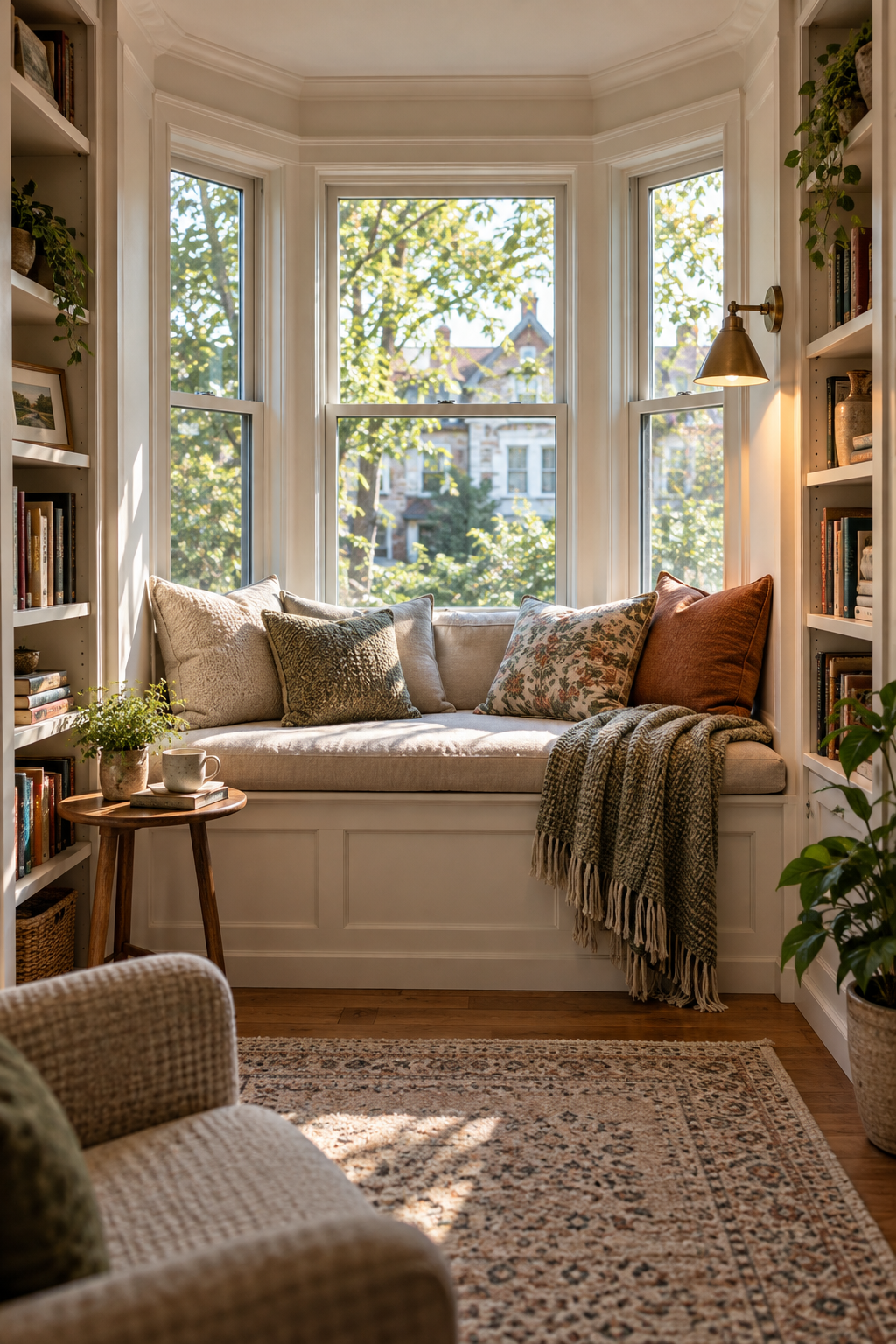
Scale is the detail that makes this idea look considered in a compact home. For turn a bay window into a book-lined seat, choose proportions that relate to the nearest furniture instead of buying by impulse. Keep the surrounding palette edited so the eye understands where to land. Texture matters as much as color: linen, wool, wood, matte metal and softly reflective finishes prevent the arrangement from feeling flat. The goal is a finished reading nook moment that looks intentional from across the room and remains useful at close range.
Before committing, map the footprint with painter’s tape and view it in morning and evening light. Leave walking paths, drawers, doors and outlets fully functional. If the room is small, select one hero element and let secondary details repeat its shape or tone quietly. This approach reduces clutter, makes future changes easier and helps affordable pieces appear more cohesive. Photograph the result from the doorway; anything that competes with the main idea can usually be removed or relocated.
23. Add Warm Wood for a Library Mood
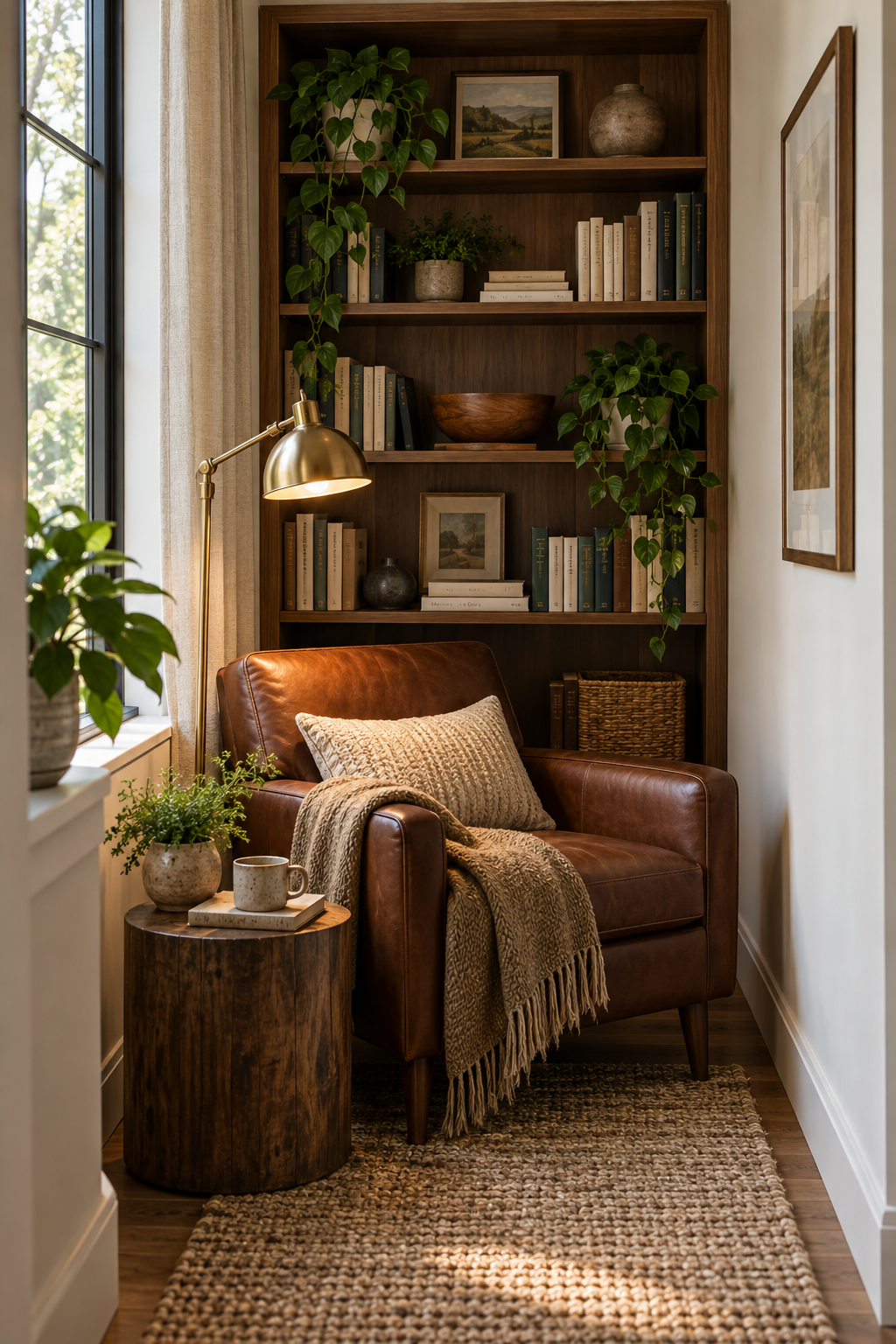
The most polished version combines visual impact with a practical everyday purpose. For add warm wood for a library mood, choose proportions that relate to the nearest furniture instead of buying by impulse. Keep the surrounding palette edited so the eye understands where to land. Texture matters as much as color: linen, wool, wood, matte metal and softly reflective finishes prevent the arrangement from feeling flat. The goal is a finished reading nook moment that looks intentional from across the room and remains useful at close range.
Before committing, map the footprint with painter’s tape and view it in morning and evening light. Leave walking paths, drawers, doors and outlets fully functional. If the room is small, select one hero element and let secondary details repeat its shape or tone quietly. This approach reduces clutter, makes future changes easier and helps affordable pieces appear more cohesive. Photograph the result from the doorway; anything that competes with the main idea can usually be removed or relocated.
24. Use Light Colors to Enlarge the Corner
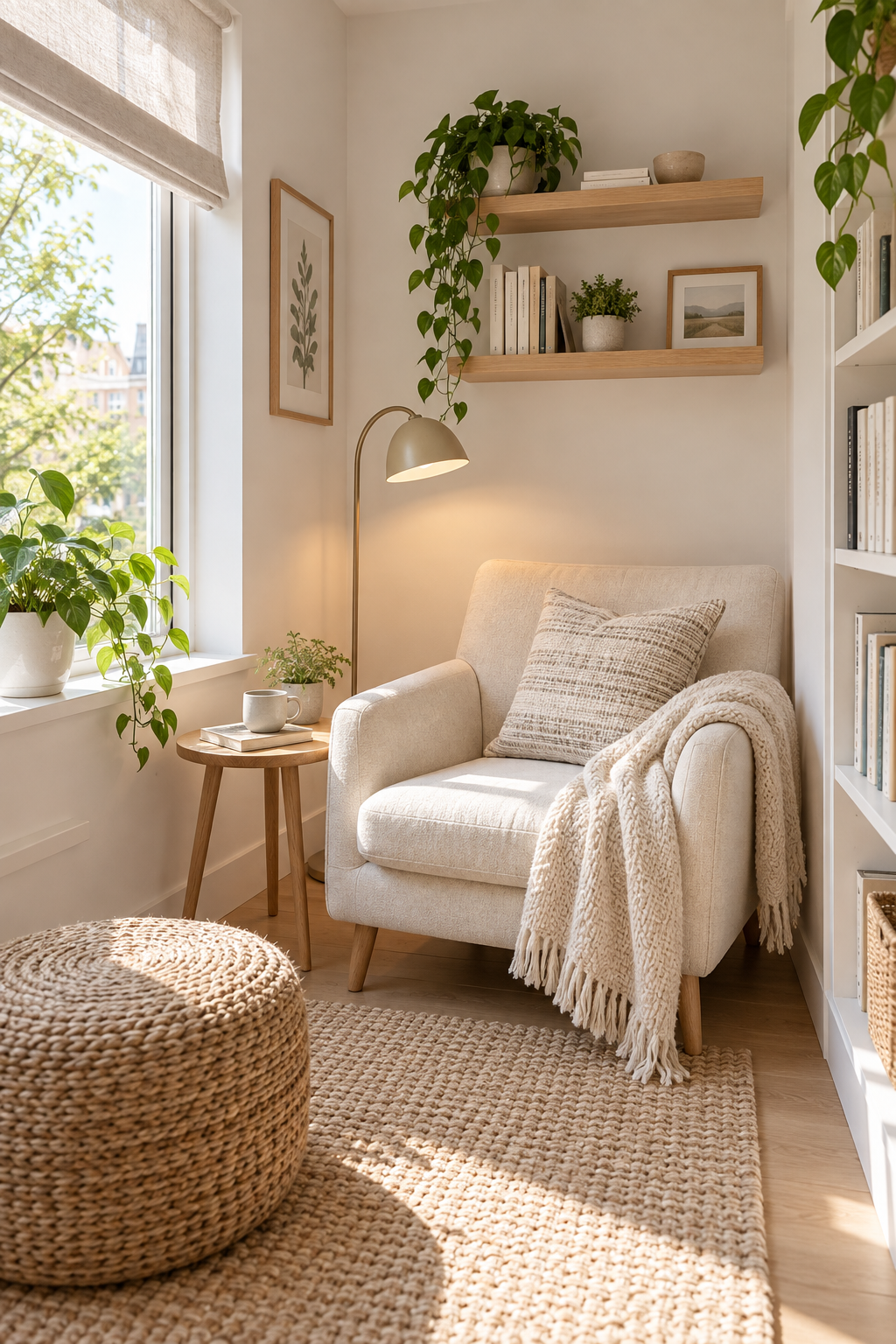
A restrained installation keeps the result flexible, calm and easy to maintain. For use light colors to enlarge the corner, choose proportions that relate to the nearest furniture instead of buying by impulse. Keep the surrounding palette edited so the eye understands where to land. Texture matters as much as color: linen, wool, wood, matte metal and softly reflective finishes prevent the arrangement from feeling flat. The goal is a finished reading nook moment that looks intentional from across the room and remains useful at close range.
Before committing, map the footprint with painter’s tape and view it in morning and evening light. Leave walking paths, drawers, doors and outlets fully functional. If the room is small, select one hero element and let secondary details repeat its shape or tone quietly. This approach reduces clutter, makes future changes easier and helps affordable pieces appear more cohesive. Photograph the result from the doorway; anything that competes with the main idea can usually be removed or relocated.
25. Try Moody Color in a Tiny Alcove
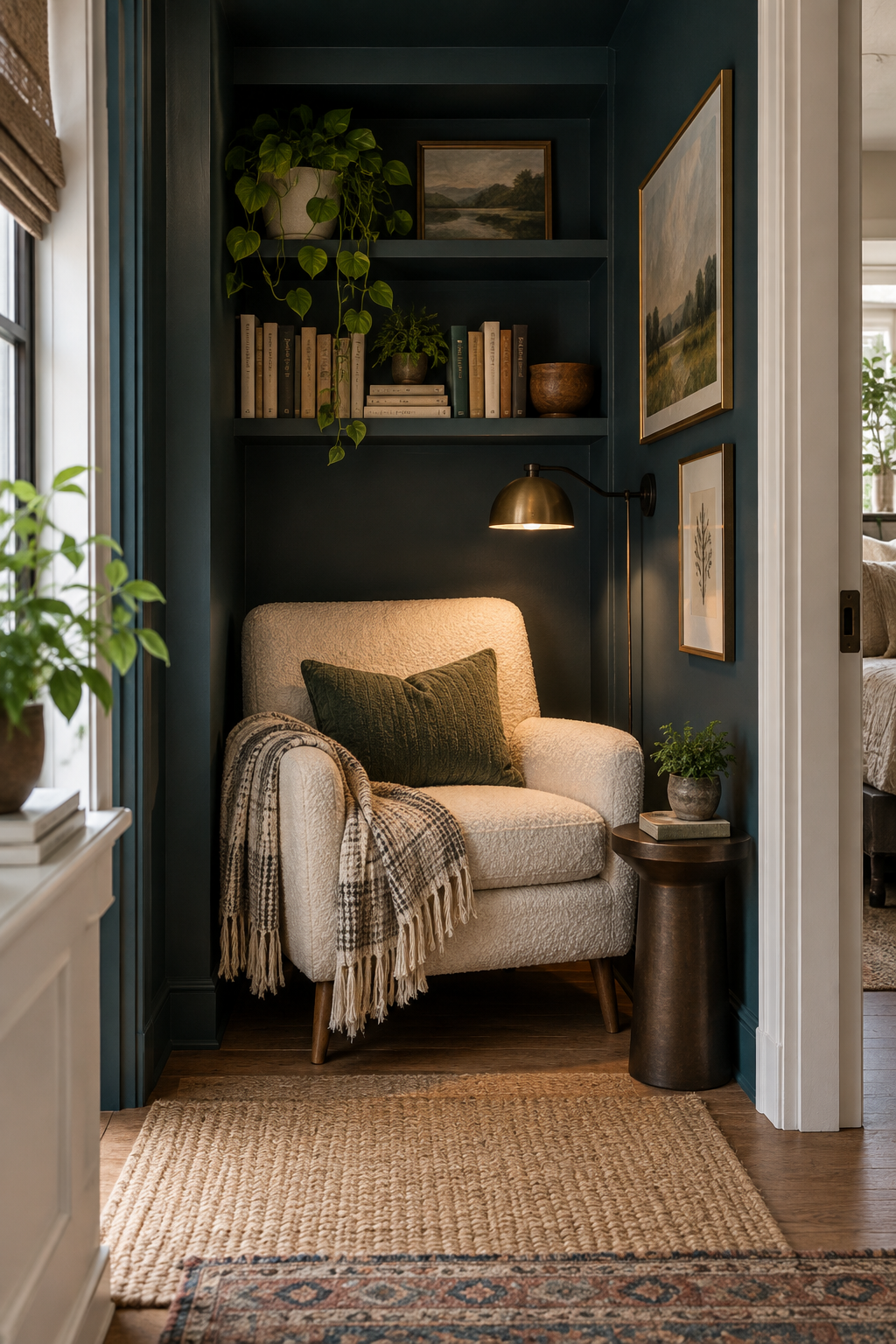
Use the surrounding neutral materials to give this feature enough breathing room. For try moody color in a tiny alcove, choose proportions that relate to the nearest furniture instead of buying by impulse. Keep the surrounding palette edited so the eye understands where to land. Texture matters as much as color: linen, wool, wood, matte metal and softly reflective finishes prevent the arrangement from feeling flat. The goal is a finished reading nook moment that looks intentional from across the room and remains useful at close range.
Before committing, map the footprint with painter’s tape and view it in morning and evening light. Leave walking paths, drawers, doors and outlets fully functional. If the room is small, select one hero element and let secondary details repeat its shape or tone quietly. This approach reduces clutter, makes future changes easier and helps affordable pieces appear more cohesive. Photograph the result from the doorway; anything that competes with the main idea can usually be removed or relocated.
26. Include a Basket for Current Reads
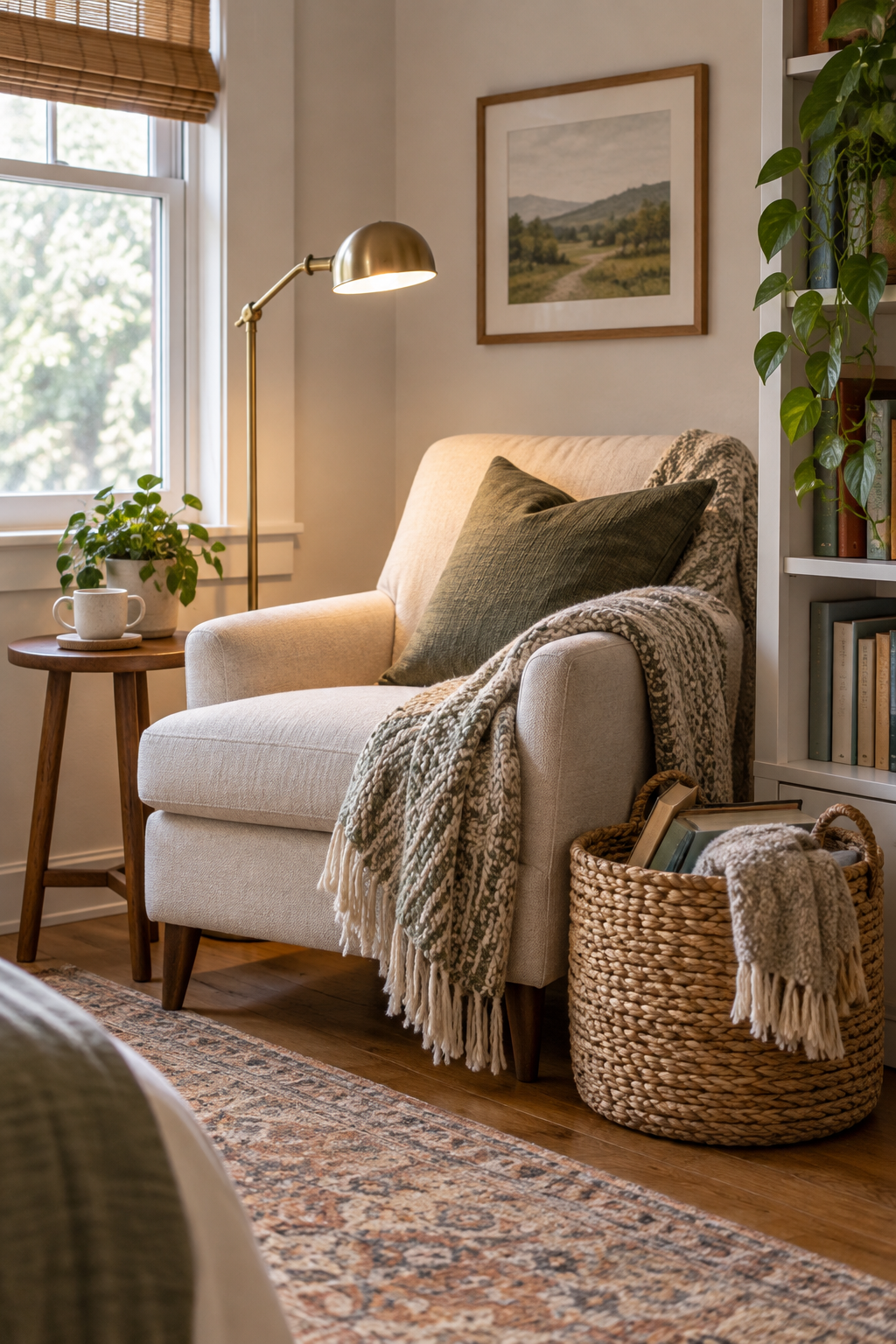
Begin by treating the accent as a deliberate focal point rather than filling every available surface. For include a basket for current reads, choose proportions that relate to the nearest furniture instead of buying by impulse. Keep the surrounding palette edited so the eye understands where to land. Texture matters as much as color: linen, wool, wood, matte metal and softly reflective finishes prevent the arrangement from feeling flat. The goal is a finished reading nook moment that looks intentional from across the room and remains useful at close range.
Before committing, map the footprint with painter’s tape and view it in morning and evening light. Leave walking paths, drawers, doors and outlets fully functional. If the room is small, select one hero element and let secondary details repeat its shape or tone quietly. This approach reduces clutter, makes future changes easier and helps affordable pieces appear more cohesive. Photograph the result from the doorway; anything that competes with the main idea can usually be removed or relocated.
27. Make a Two-Person Reading Nook
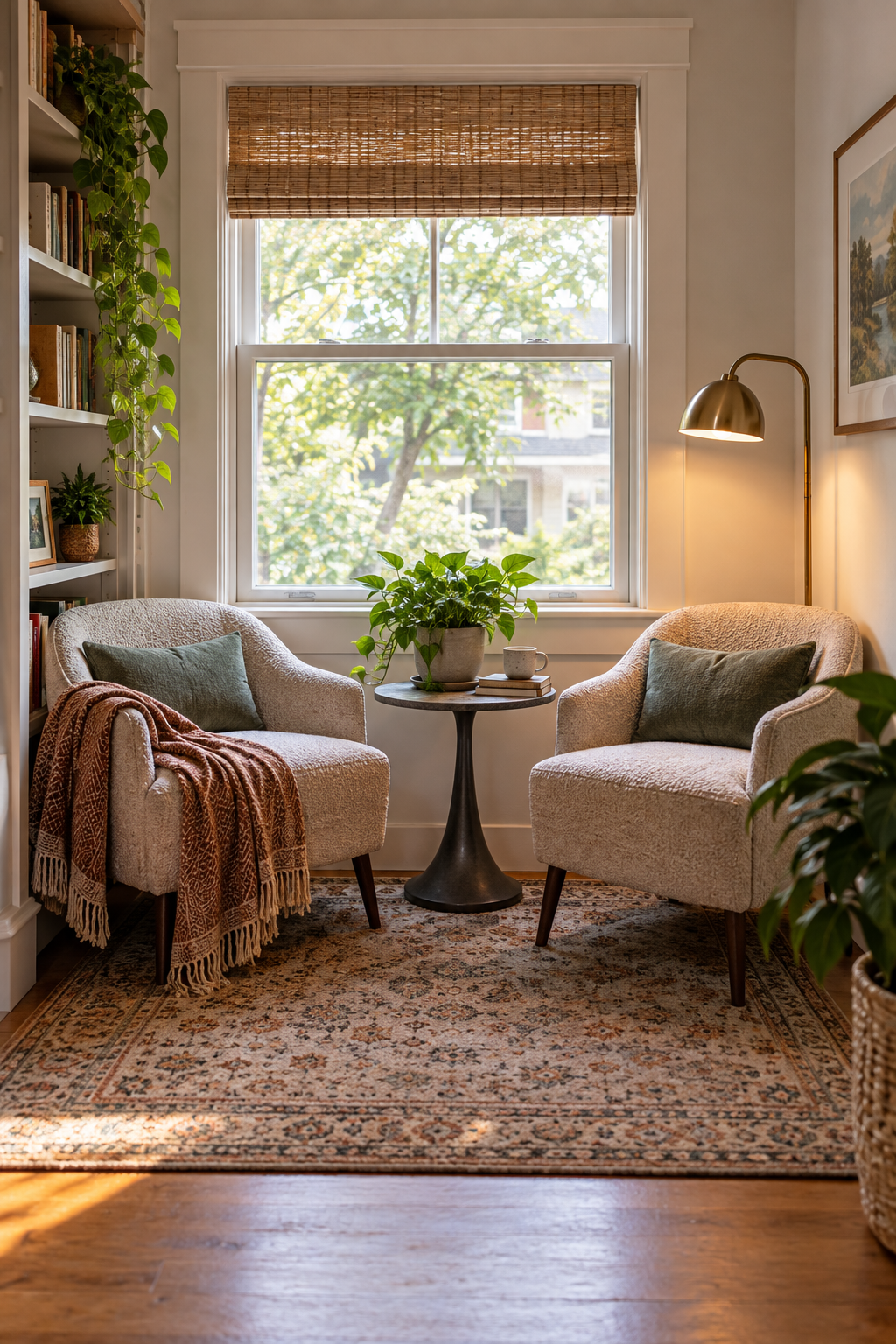
Scale is the detail that makes this idea look considered in a compact home. For make a two-person reading nook, choose proportions that relate to the nearest furniture instead of buying by impulse. Keep the surrounding palette edited so the eye understands where to land. Texture matters as much as color: linen, wool, wood, matte metal and softly reflective finishes prevent the arrangement from feeling flat. The goal is a finished reading nook moment that looks intentional from across the room and remains useful at close range.
Before committing, map the footprint with painter’s tape and view it in morning and evening light. Leave walking paths, drawers, doors and outlets fully functional. If the room is small, select one hero element and let secondary details repeat its shape or tone quietly. This approach reduces clutter, makes future changes easier and helps affordable pieces appear more cohesive. Photograph the result from the doorway; anything that competes with the main idea can usually be removed or relocated.
28. Finish with Personal but Uncluttered Details
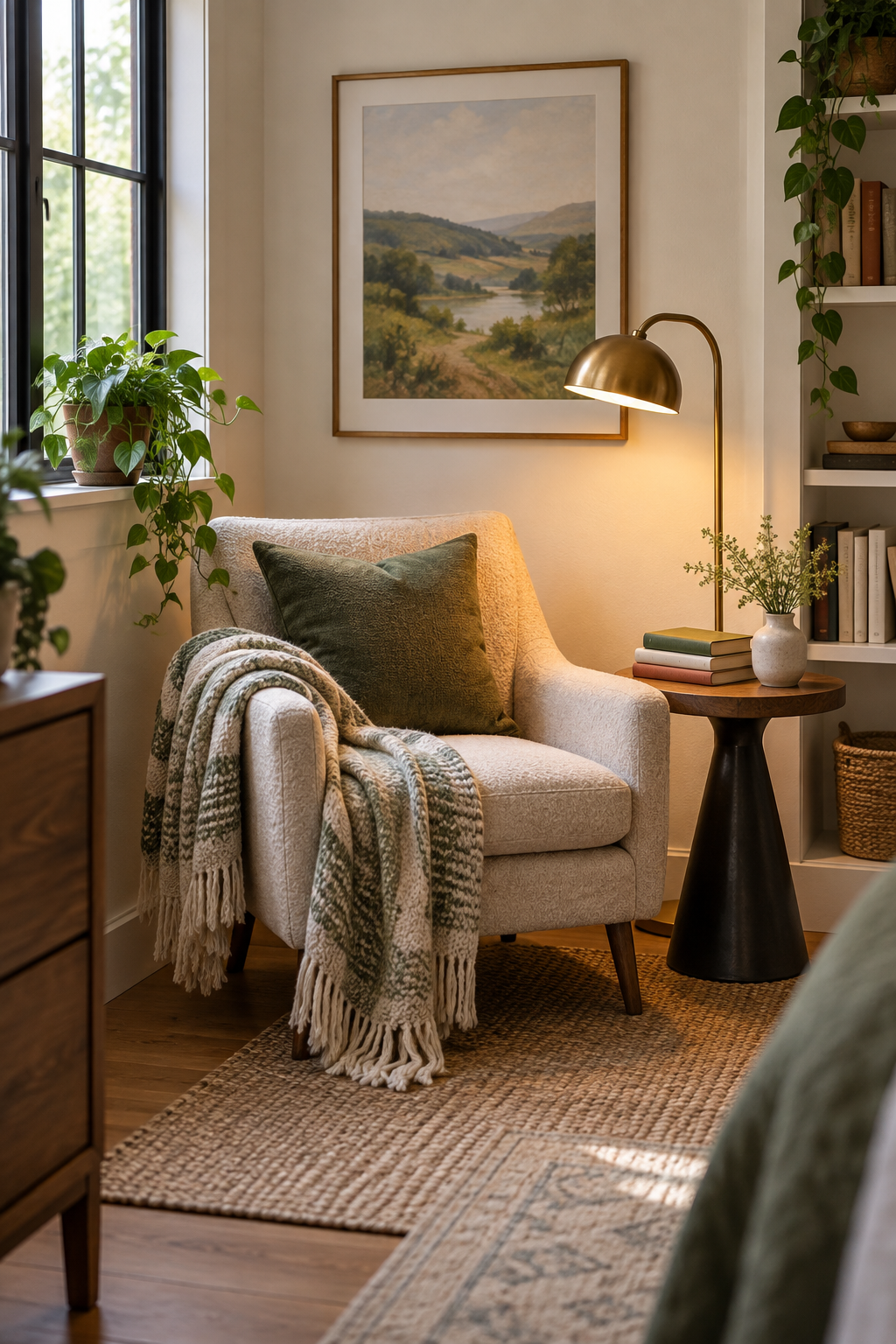
The most polished version combines visual impact with a practical everyday purpose. For finish with personal but uncluttered details, choose proportions that relate to the nearest furniture instead of buying by impulse. Keep the surrounding palette edited so the eye understands where to land. Texture matters as much as color: linen, wool, wood, matte metal and softly reflective finishes prevent the arrangement from feeling flat. The goal is a finished reading nook moment that looks intentional from across the room and remains useful at close range.
Before committing, map the footprint with painter’s tape and view it in morning and evening light. Leave walking paths, drawers, doors and outlets fully functional. If the room is small, select one hero element and let secondary details repeat its shape or tone quietly. This approach reduces clutter, makes future changes easier and helps affordable pieces appear more cohesive. Photograph the result from the doorway; anything that competes with the main idea can usually be removed or relocated.
Final Styling Notes
A cohesive home is built through repetition, editing and realistic maintenance. Step back after each change, keep the useful surfaces clear and repeat only the strongest material or color in two or three places. Save measurements and photographs before purchasing, and favor pieces that can adapt when the room, season or address changes. The best result will not look like a collection of separate tips. It will feel comfortable, personal and naturally connected to the way the home is used.