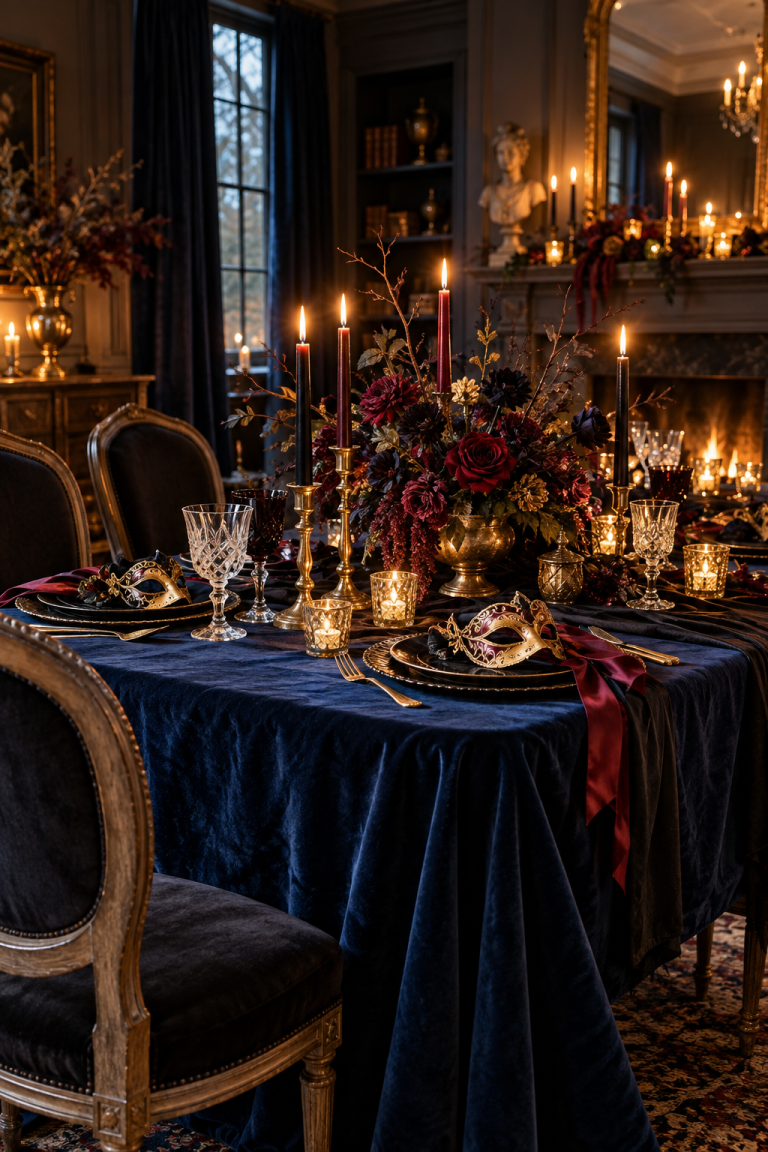
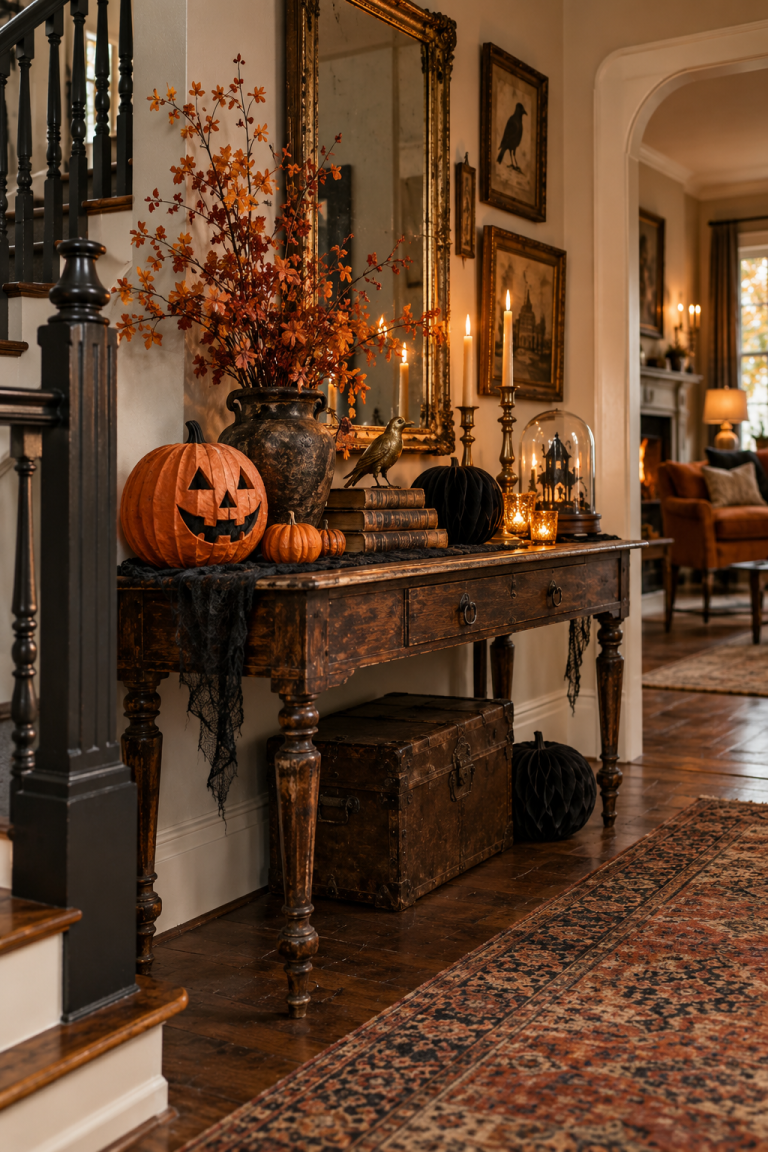
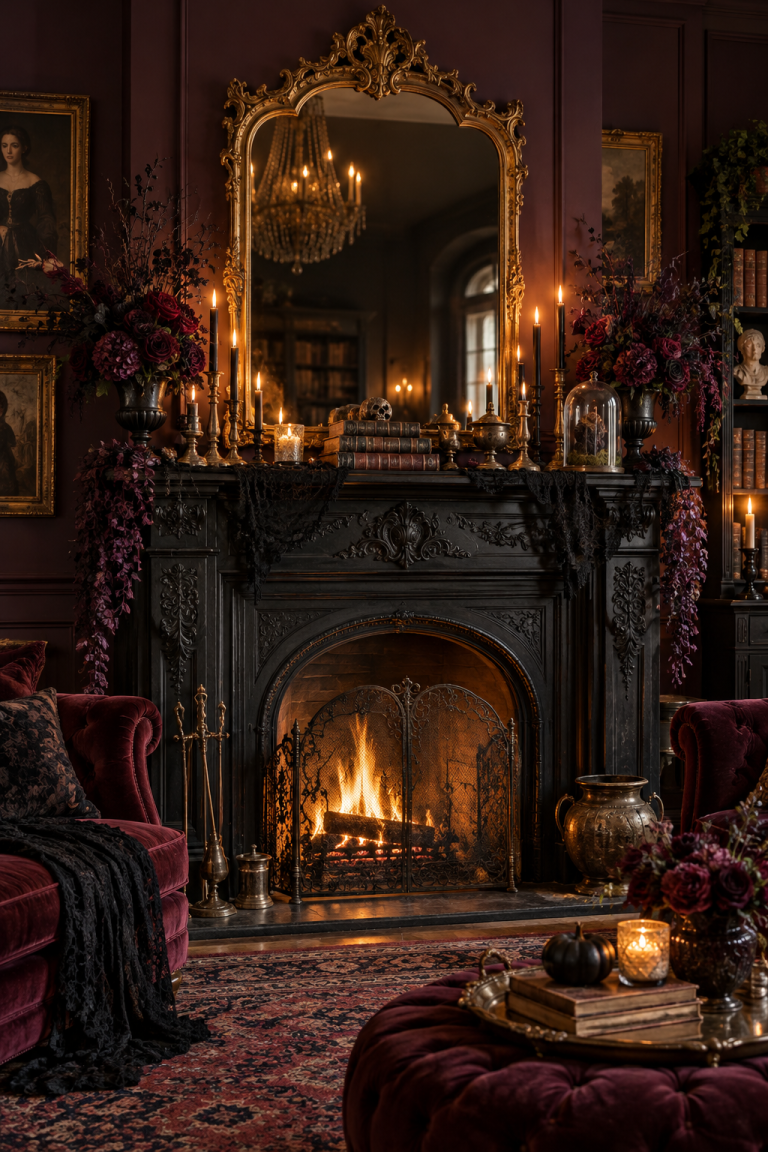
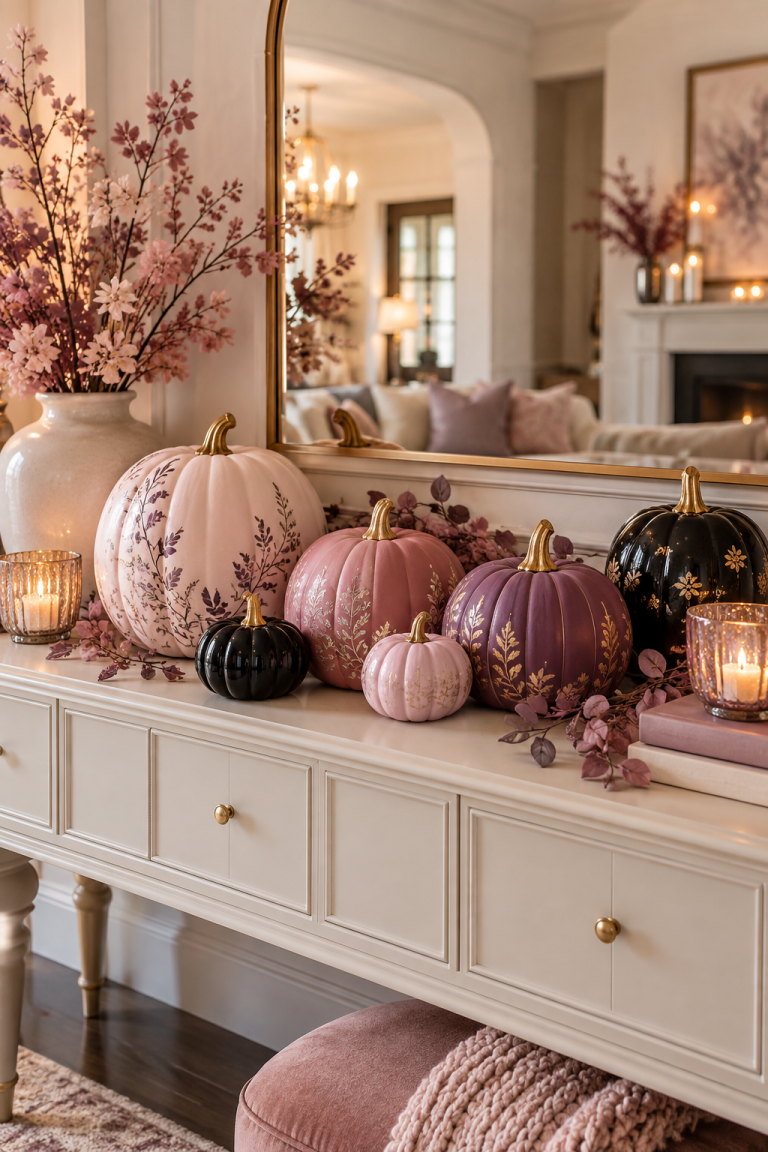
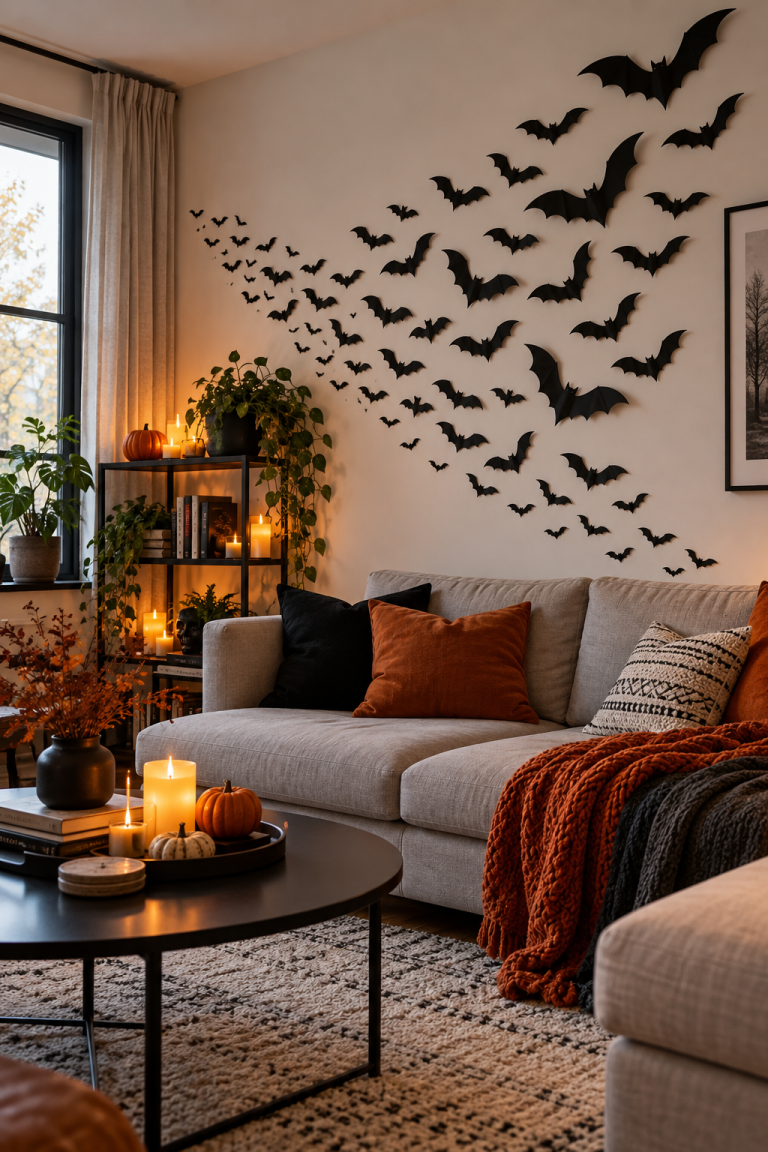
Halloween decorating is most convincing when it tells one clear visual story. Witchy Kitchen Decor Ideas for a Magical Halloween Home explores a focused look instead of scattering unrelated props through every room. A controlled palette, repeated materials and careful lighting make even playful decorations feel deliberate, while practical placement keeps the home comfortable for everyday life.
The ideas below are designed for real rooms, realistic budgets and Pinterest-friendly results. Adapt the scale to your home, reuse pieces you already own and leave safe clearance around flames, heat sources, exits and walkways. Each section includes a styling direction and a practical way to translate the photograph into an achievable setup.
1. Create an Herbalist’s Open Shelf
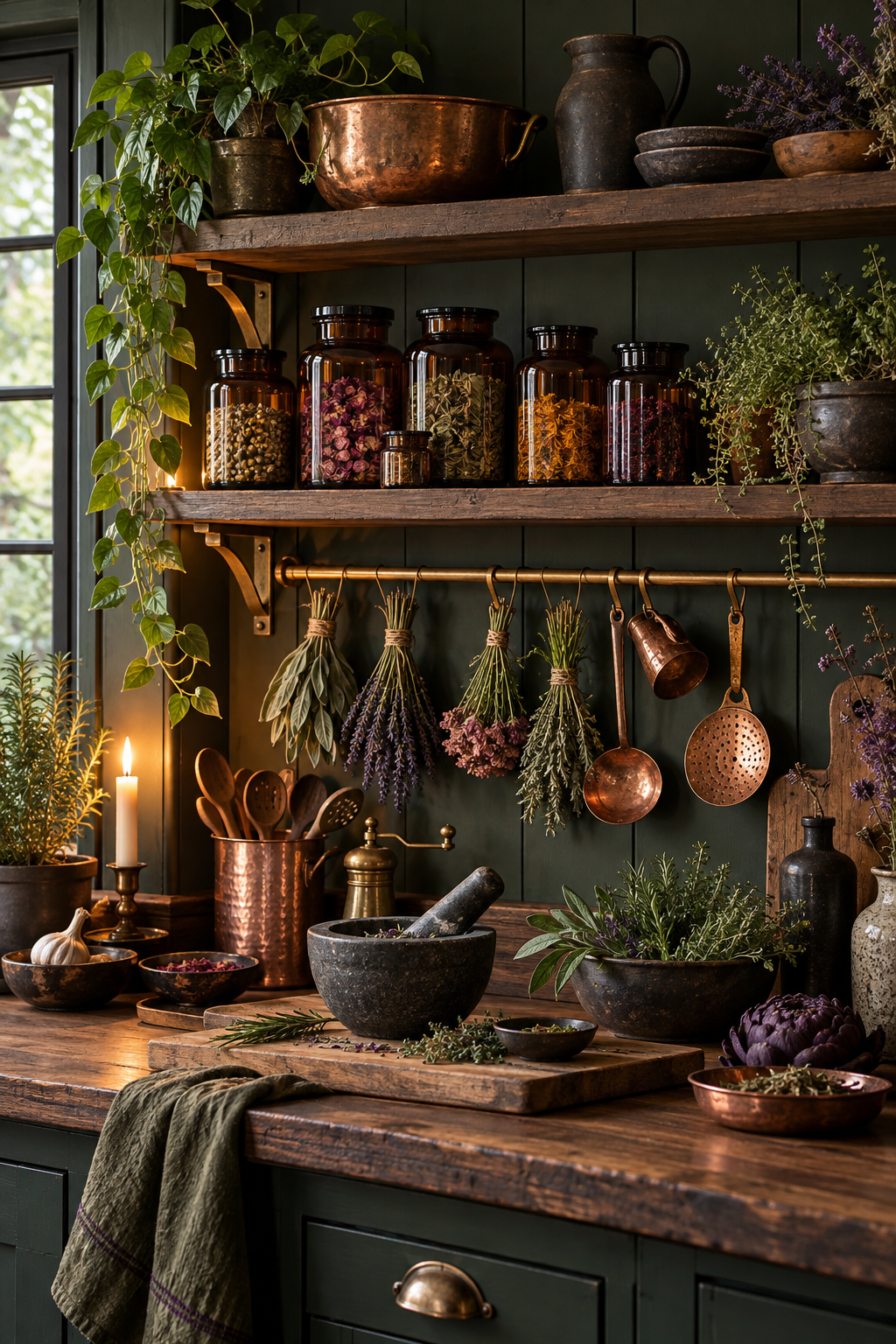
To create an Herbalist’s Open Shelf, start with one dominant object and support it with two quieter details. Work within forest green, charcoal, aubergine, copper and herbaceous brown, then introduce copper cookware, dark wood, dried herbs, amber jars, stoneware and linen to give the scene texture and age. The arrangement adds a clear focal point. Leave a little negative space around the focal point; this helps the eye understand the idea immediately and prevents a seasonal display from looking like storage.
Measure the available surface before choosing props, and keep doors, walkways and vents clear. Photograph the finished area in soft side light, then remove anything that competes with the main feature. For a smaller home, reduce the number of objects rather than shrinking every object. One readable silhouette and a warm pool of light usually create more impact than many tiny accessories.
2. Hang Dried Herbs from a Rail
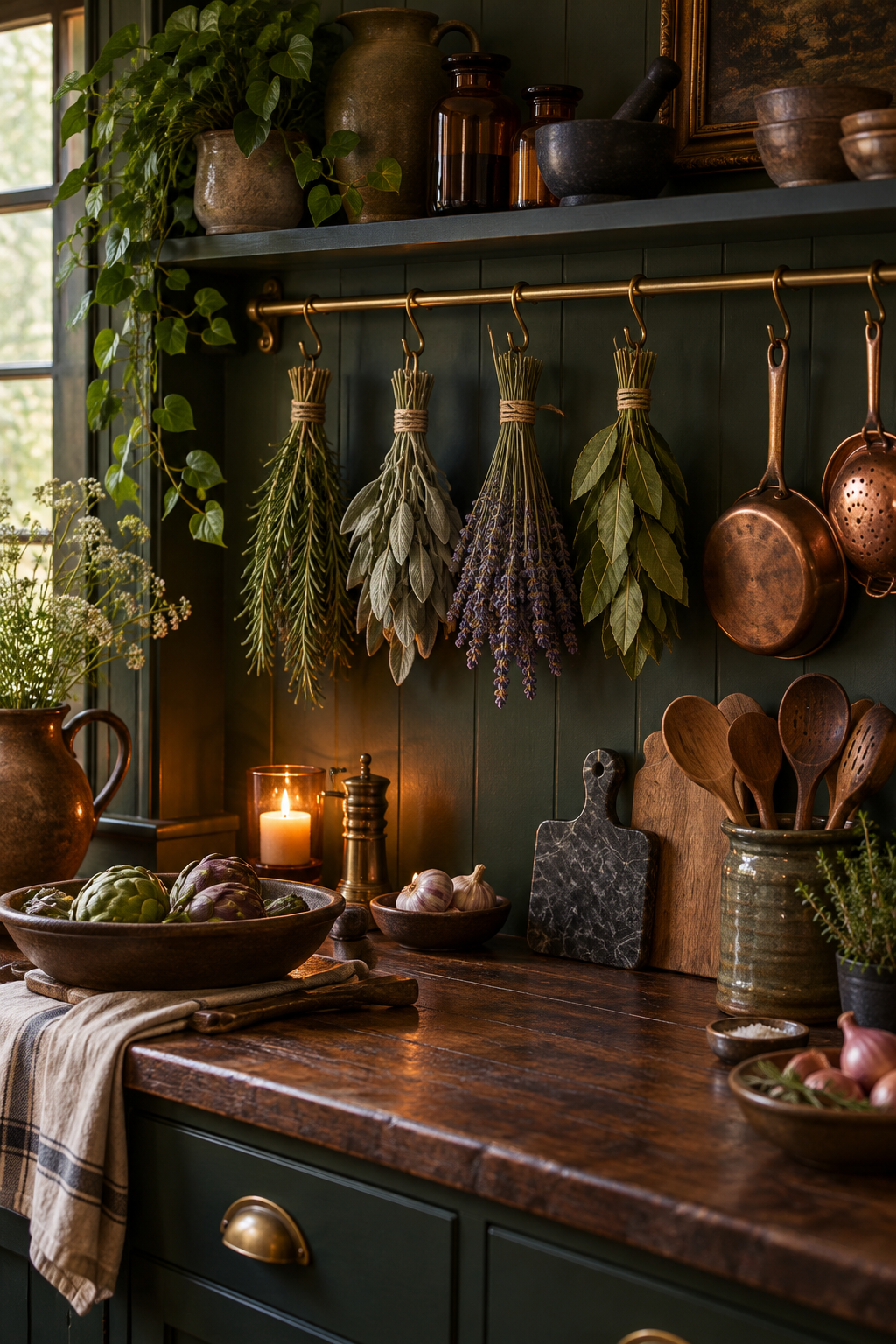
To hang Dried Herbs from a Rail, start with one dominant object and support it with two quieter details. Work within forest green, charcoal, aubergine, copper and herbaceous brown, then introduce copper cookware, dark wood, dried herbs, amber jars, stoneware and linen to give the scene texture and age. The arrangement creates depth without crowding the room. Leave a little negative space around the focal point; this helps the eye understand the idea immediately and prevents a seasonal display from looking like storage.
Group objects in odd numbers and vary their height so the arrangement reads clearly from across the room. Photograph the finished area in soft side light, then remove anything that competes with the main feature. For a smaller home, reduce the number of objects rather than shrinking every object. One readable silhouette and a warm pool of light usually create more impact than many tiny accessories.
3. Label a Set of Pantry Potions
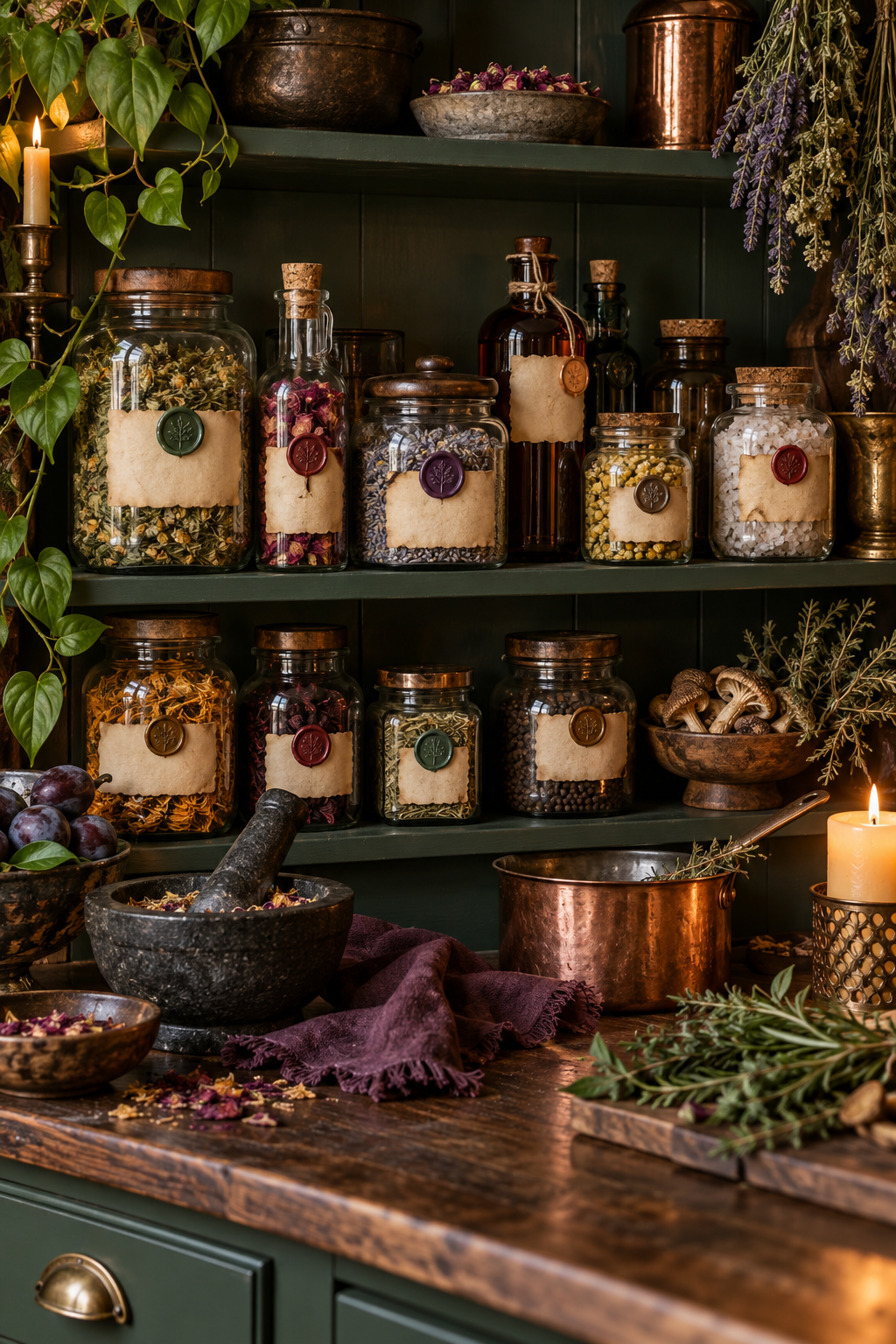
To label a Set of Pantry Potions, start with one dominant object and support it with two quieter details. Work within forest green, charcoal, aubergine, copper and herbaceous brown, then introduce copper cookware, dark wood, dried herbs, amber jars, stoneware and linen to give the scene texture and age. The arrangement photographs beautifully in vertical compositions. Leave a little negative space around the focal point; this helps the eye understand the idea immediately and prevents a seasonal display from looking like storage.
Use removable fixings where possible and test painted finishes in an inconspicuous area. Photograph the finished area in soft side light, then remove anything that competes with the main feature. For a smaller home, reduce the number of objects rather than shrinking every object. One readable silhouette and a warm pool of light usually create more impact than many tiny accessories.
4. Style a Copper Cauldron Centerpiece
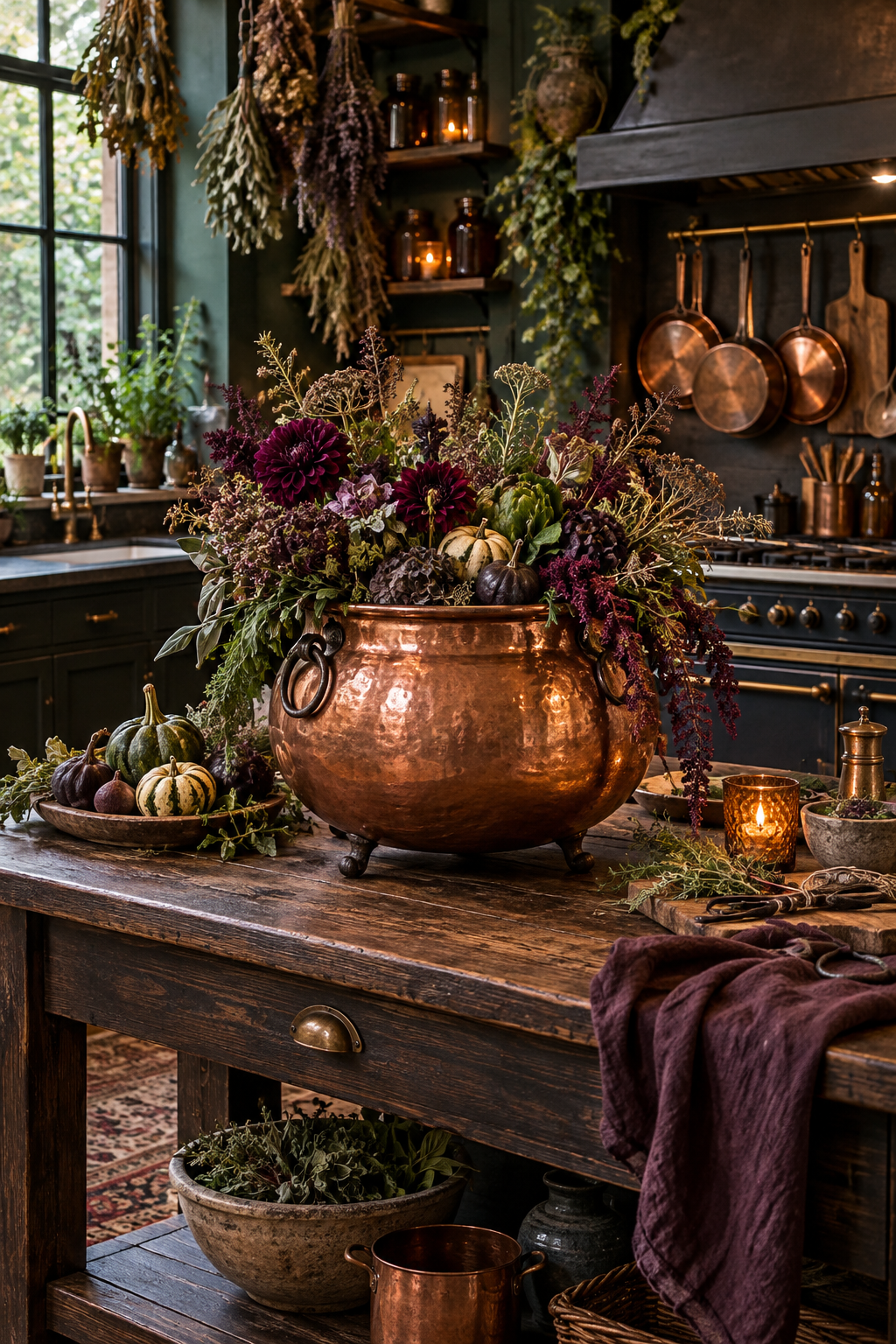
To style a Copper Cauldron Centerpiece, start with one dominant object and support it with two quieter details. Work within forest green, charcoal, aubergine, copper and herbaceous brown, then introduce copper cookware, dark wood, dried herbs, amber jars, stoneware and linen to give the scene texture and age. The arrangement keeps the seasonal story cohesive. Leave a little negative space around the focal point; this helps the eye understand the idea immediately and prevents a seasonal display from looking like storage.
Repeat two or three materials elsewhere in the room so the idea feels intentional rather than isolated. Photograph the finished area in soft side light, then remove anything that competes with the main feature. For a smaller home, reduce the number of objects rather than shrinking every object. One readable silhouette and a warm pool of light usually create more impact than many tiny accessories.
5. Build a Magical Tea Station
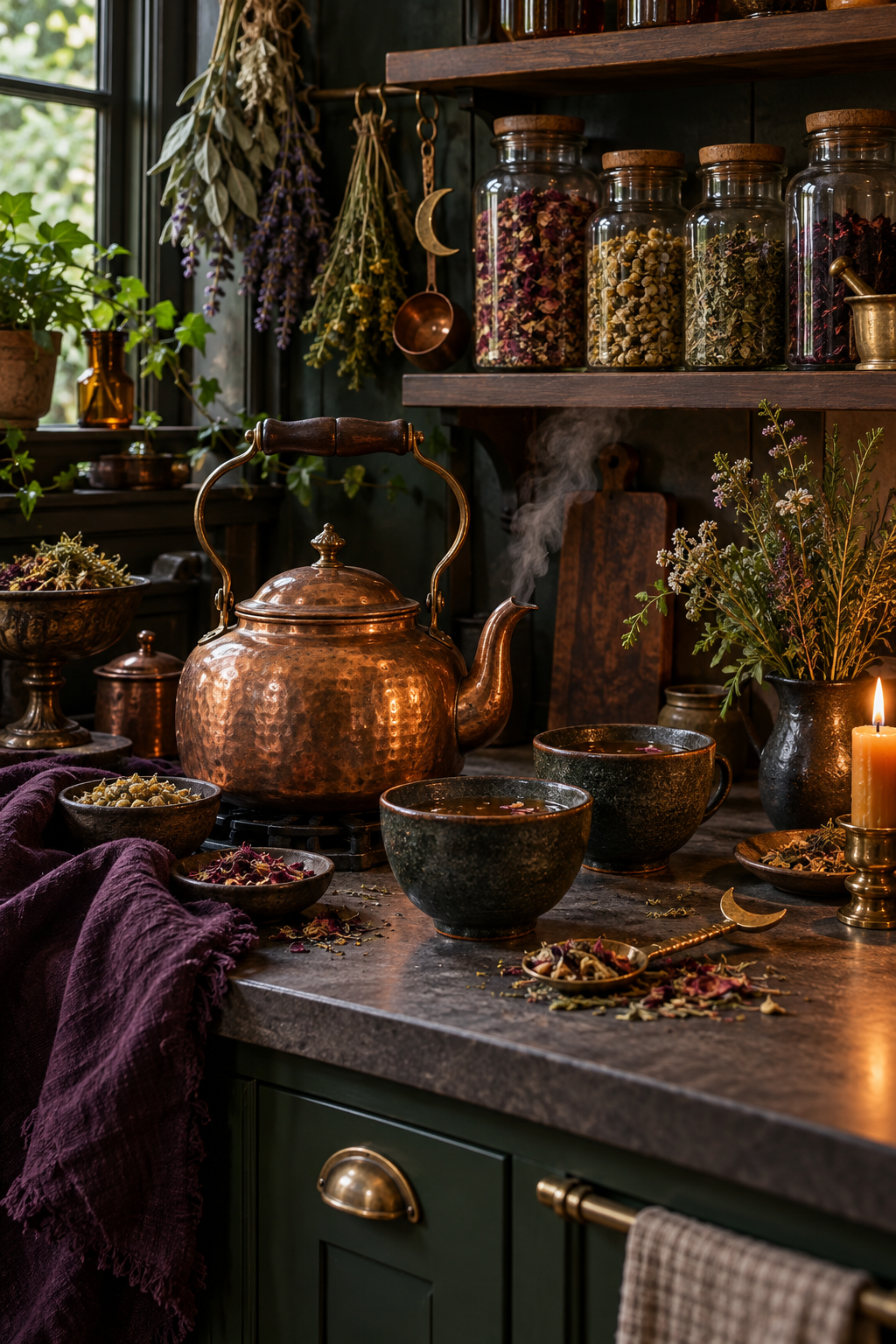
To build a Magical Tea Station, start with one dominant object and support it with two quieter details. Work within forest green, charcoal, aubergine, copper and herbaceous brown, then introduce copper cookware, dark wood, dried herbs, amber jars, stoneware and linen to give the scene texture and age. The arrangement works with pieces you can reuse next year. Leave a little negative space around the focal point; this helps the eye understand the idea immediately and prevents a seasonal display from looking like storage.
Choose battery-operated lighting near fabric, paper, children or pets, and follow every manufacturer safety instruction. Photograph the finished area in soft side light, then remove anything that competes with the main feature. For a smaller home, reduce the number of objects rather than shrinking every object. One readable silhouette and a warm pool of light usually create more impact than many tiny accessories.
6. Display Mortar-and-Pestle Sets
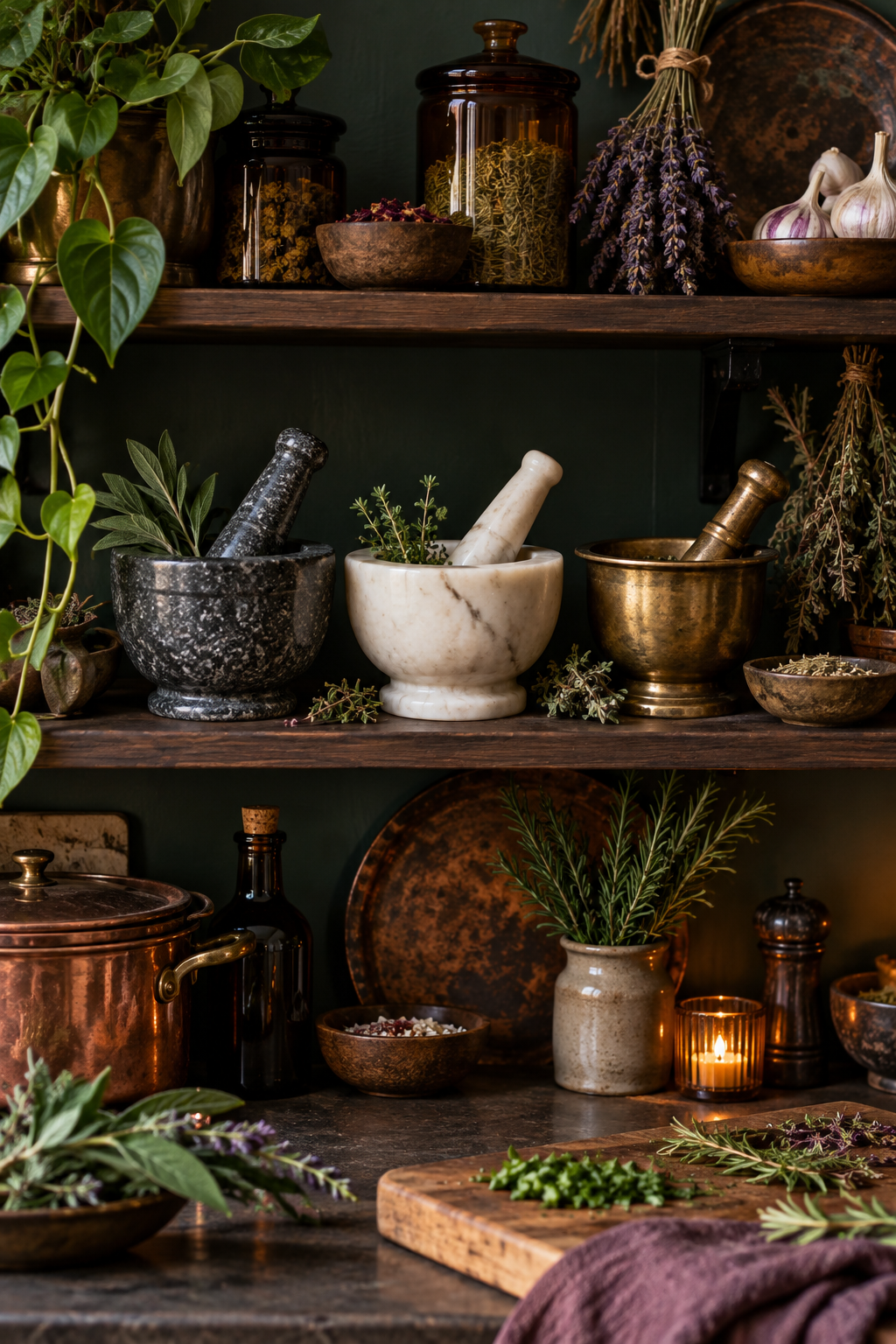
To display Mortar-and-Pestle Sets, start with one dominant object and support it with two quieter details. Work within forest green, charcoal, aubergine, copper and herbaceous brown, then introduce copper cookware, dark wood, dried herbs, amber jars, stoneware and linen to give the scene texture and age. The arrangement adds a clear focal point. Leave a little negative space around the focal point; this helps the eye understand the idea immediately and prevents a seasonal display from looking like storage.
Measure the available surface before choosing props, and keep doors, walkways and vents clear. Photograph the finished area in soft side light, then remove anything that competes with the main feature. For a smaller home, reduce the number of objects rather than shrinking every object. One readable silhouette and a warm pool of light usually create more impact than many tiny accessories.
7. Add Moon-Phase Kitchen Art
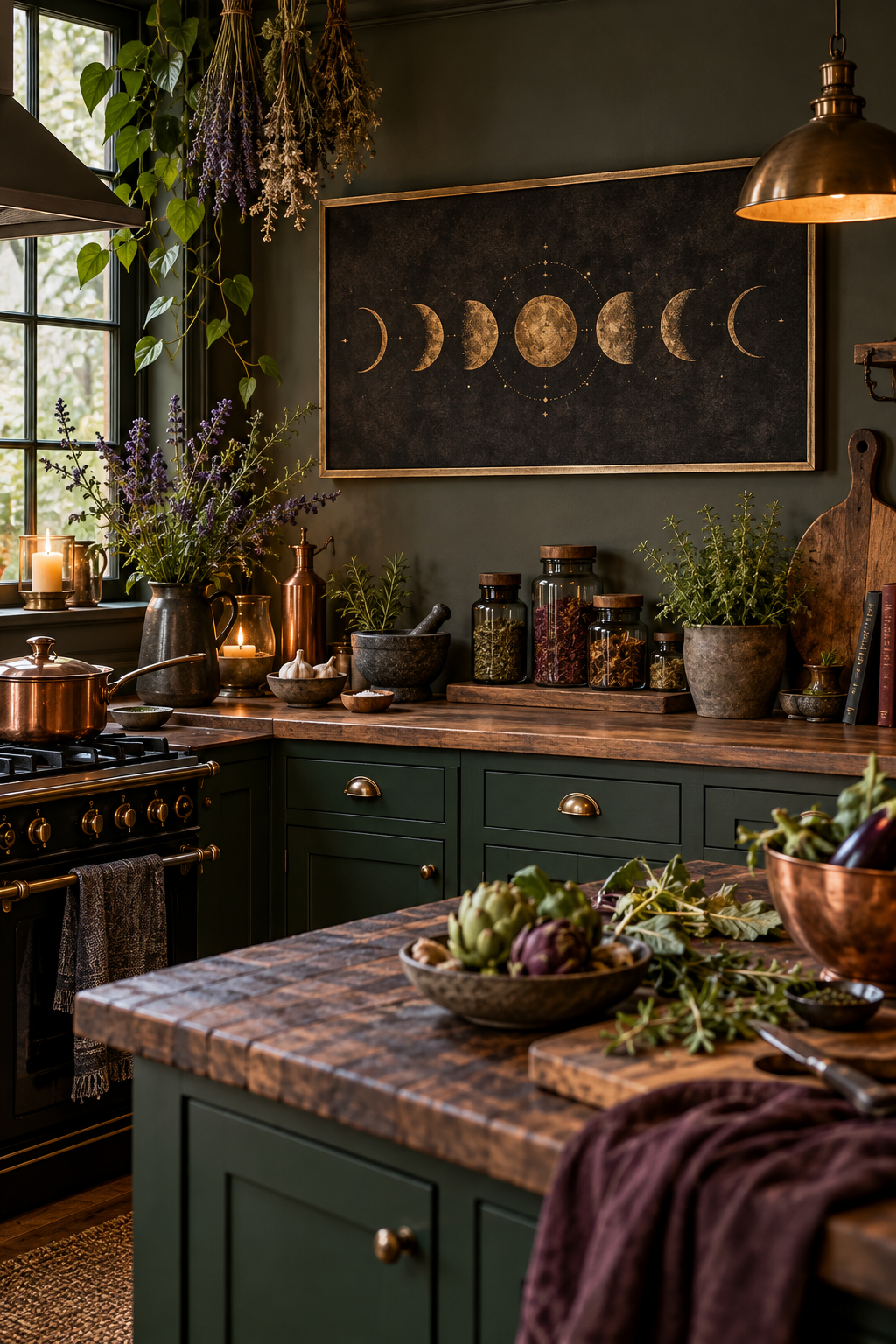
To add Moon-Phase Kitchen Art, start with one dominant object and support it with two quieter details. Work within forest green, charcoal, aubergine, copper and herbaceous brown, then introduce copper cookware, dark wood, dried herbs, amber jars, stoneware and linen to give the scene texture and age. The arrangement creates depth without crowding the room. Leave a little negative space around the focal point; this helps the eye understand the idea immediately and prevents a seasonal display from looking like storage.
Group objects in odd numbers and vary their height so the arrangement reads clearly from across the room. Photograph the finished area in soft side light, then remove anything that competes with the main feature. For a smaller home, reduce the number of objects rather than shrinking every object. One readable silhouette and a warm pool of light usually create more impact than many tiny accessories.
8. Create a Witchy Spice Drawer
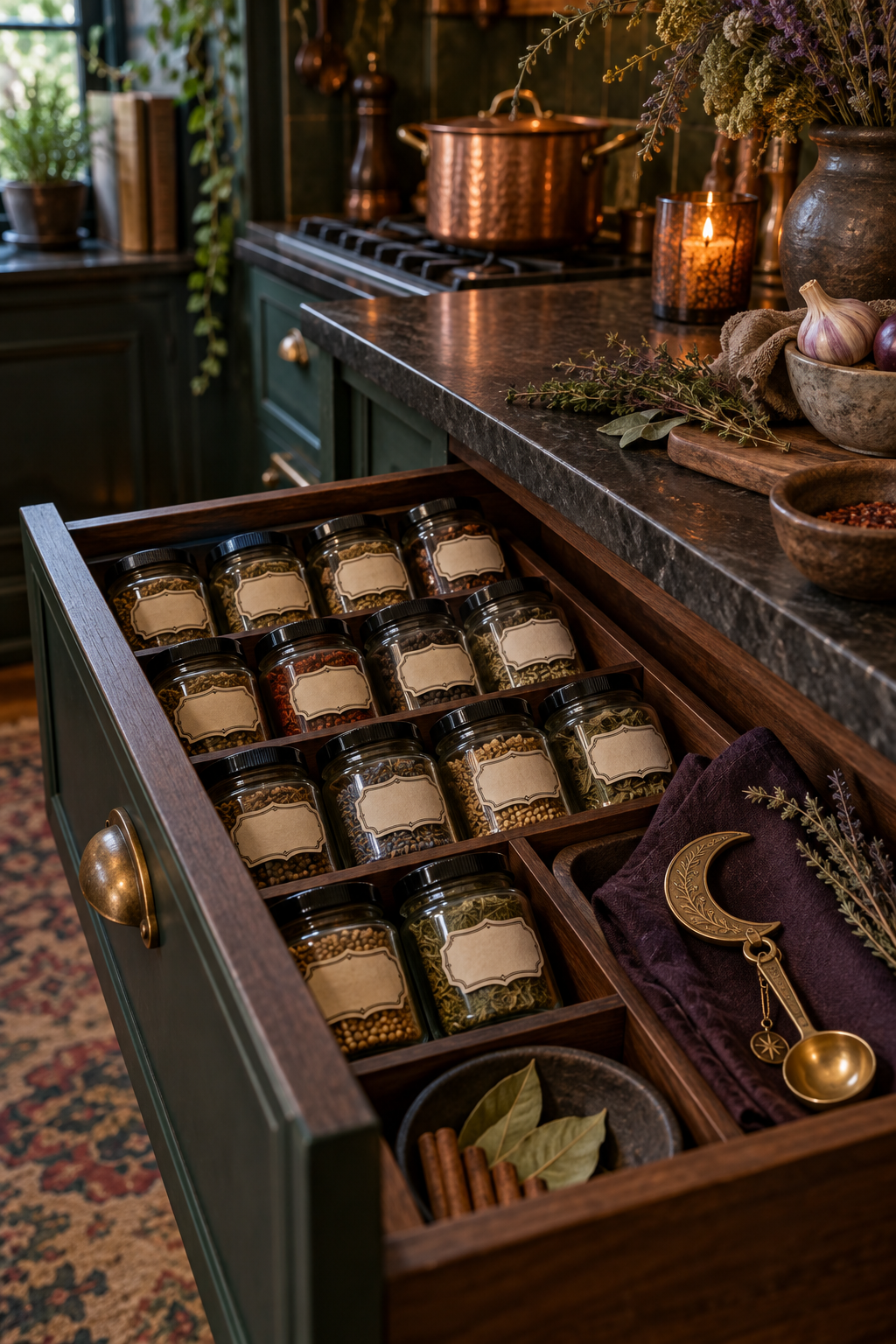
To create a Witchy Spice Drawer, start with one dominant object and support it with two quieter details. Work within forest green, charcoal, aubergine, copper and herbaceous brown, then introduce copper cookware, dark wood, dried herbs, amber jars, stoneware and linen to give the scene texture and age. The arrangement photographs beautifully in vertical compositions. Leave a little negative space around the focal point; this helps the eye understand the idea immediately and prevents a seasonal display from looking like storage.
Use removable fixings where possible and test painted finishes in an inconspicuous area. Photograph the finished area in soft side light, then remove anything that competes with the main feature. For a smaller home, reduce the number of objects rather than shrinking every object. One readable silhouette and a warm pool of light usually create more impact than many tiny accessories.
9. Use Amber Glass Soap Bottles
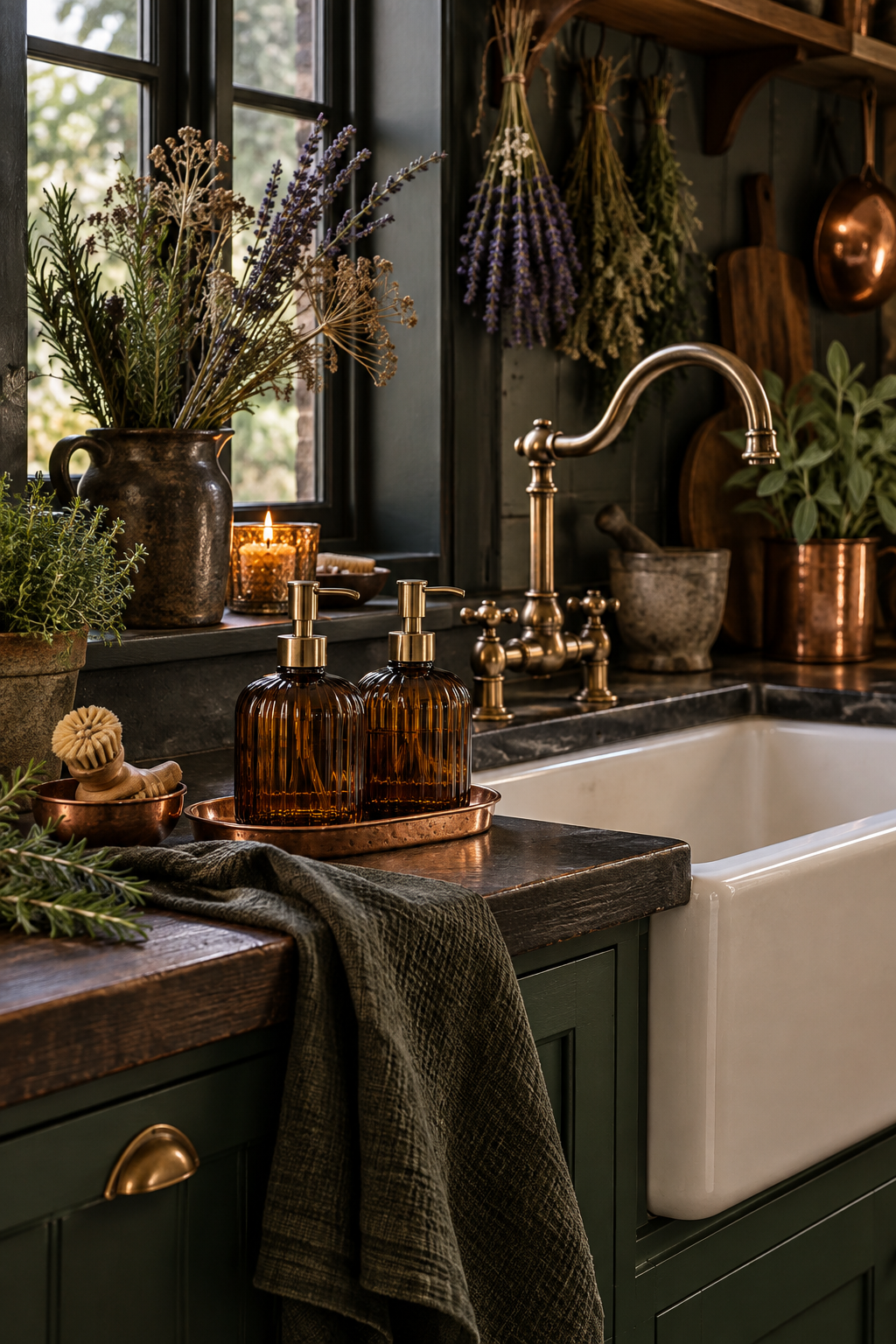
To use Amber Glass Soap Bottles, start with one dominant object and support it with two quieter details. Work within forest green, charcoal, aubergine, copper and herbaceous brown, then introduce copper cookware, dark wood, dried herbs, amber jars, stoneware and linen to give the scene texture and age. The arrangement keeps the seasonal story cohesive. Leave a little negative space around the focal point; this helps the eye understand the idea immediately and prevents a seasonal display from looking like storage.
Repeat two or three materials elsewhere in the room so the idea feels intentional rather than isolated. Photograph the finished area in soft side light, then remove anything that competes with the main feature. For a smaller home, reduce the number of objects rather than shrinking every object. One readable silhouette and a warm pool of light usually create more impact than many tiny accessories.
10. Style a Dark Cottage Countertop
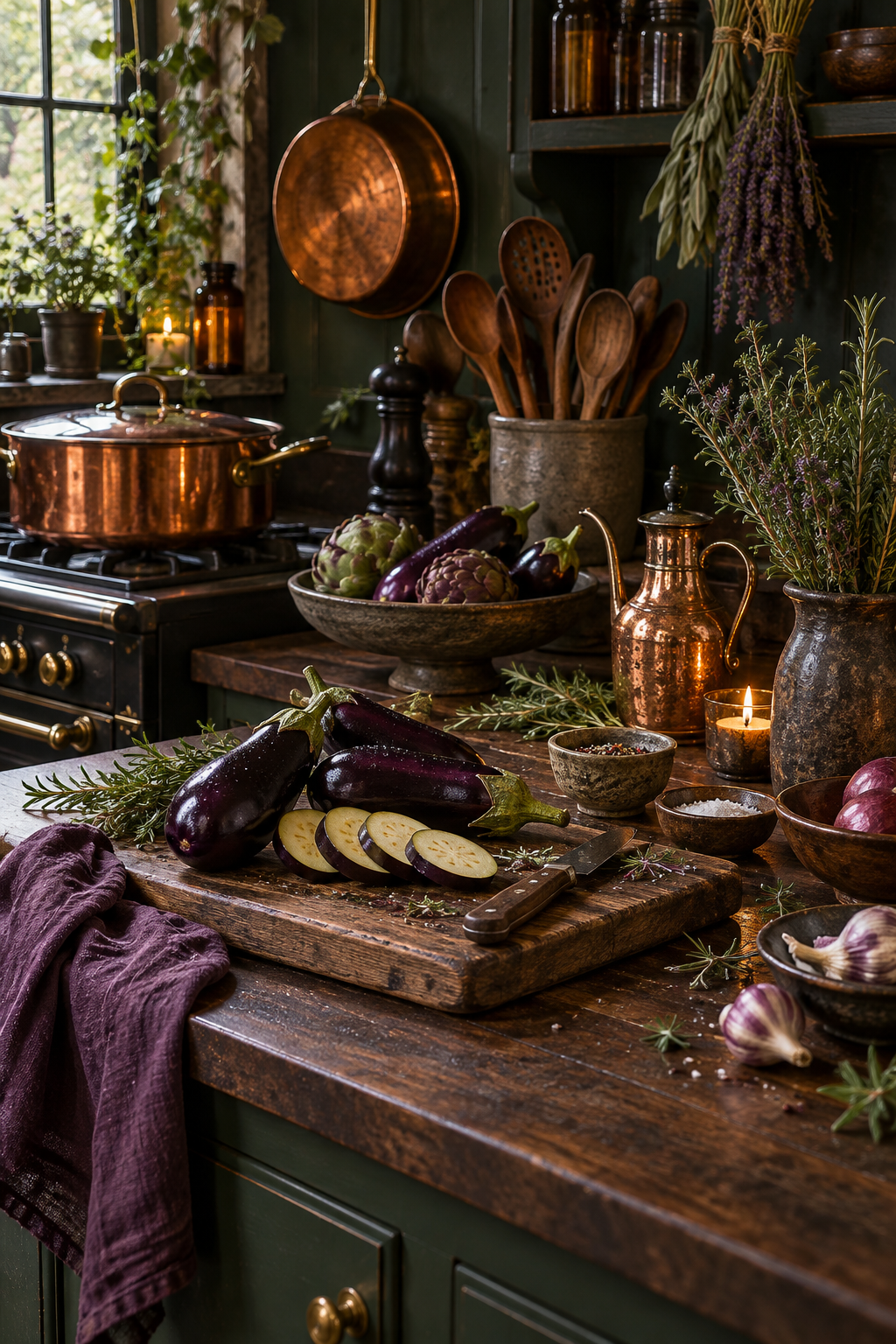
To style a Dark Cottage Countertop, start with one dominant object and support it with two quieter details. Work within forest green, charcoal, aubergine, copper and herbaceous brown, then introduce copper cookware, dark wood, dried herbs, amber jars, stoneware and linen to give the scene texture and age. The arrangement works with pieces you can reuse next year. Leave a little negative space around the focal point; this helps the eye understand the idea immediately and prevents a seasonal display from looking like storage.
Choose battery-operated lighting near fabric, paper, children or pets, and follow every manufacturer safety instruction. Photograph the finished area in soft side light, then remove anything that competes with the main feature. For a smaller home, reduce the number of objects rather than shrinking every object. One readable silhouette and a warm pool of light usually create more impact than many tiny accessories.
11. Hang Mini Brooms from Hooks
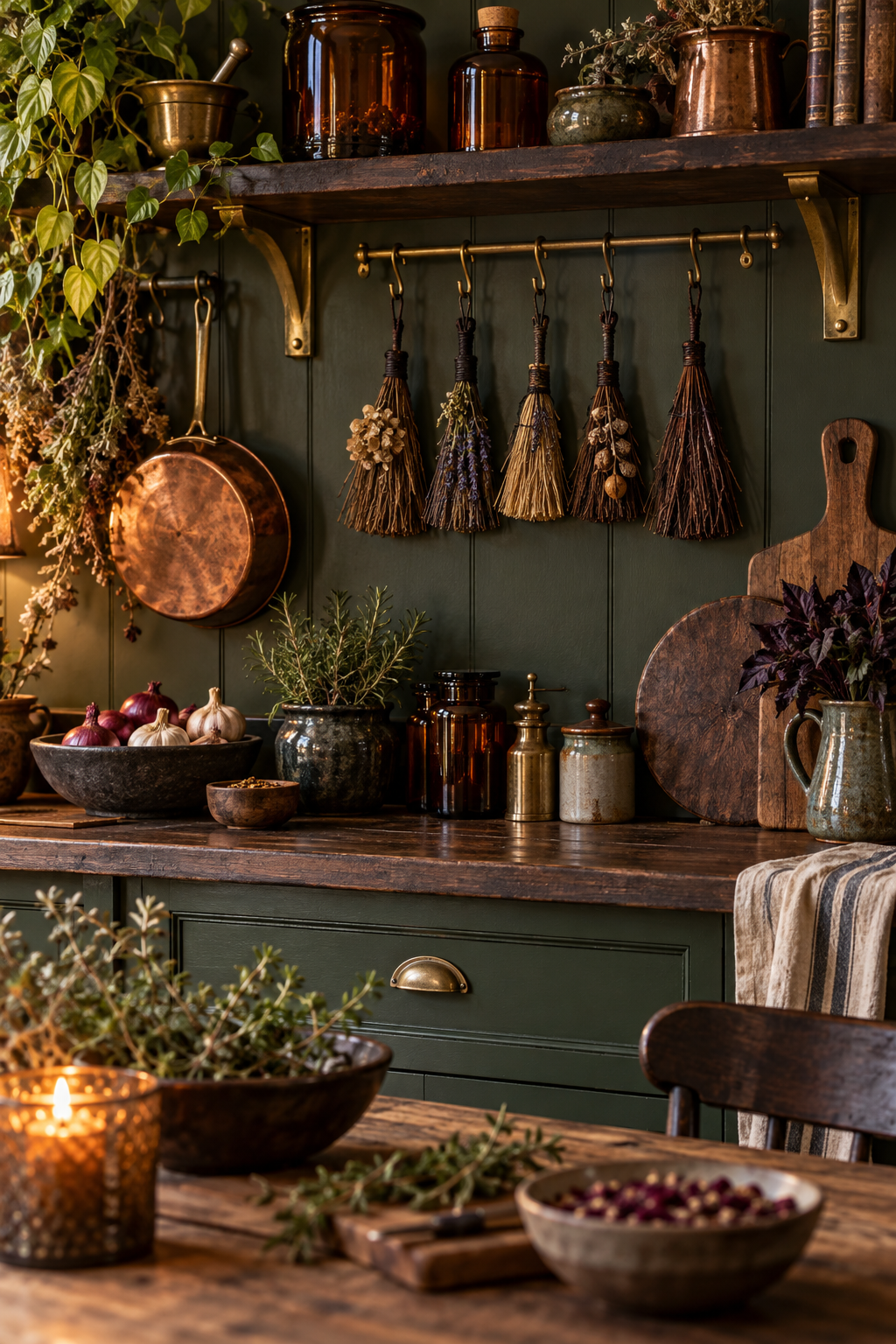
To hang Mini Brooms from Hooks, start with one dominant object and support it with two quieter details. Work within forest green, charcoal, aubergine, copper and herbaceous brown, then introduce copper cookware, dark wood, dried herbs, amber jars, stoneware and linen to give the scene texture and age. The arrangement adds a clear focal point. Leave a little negative space around the focal point; this helps the eye understand the idea immediately and prevents a seasonal display from looking like storage.
Measure the available surface before choosing props, and keep doors, walkways and vents clear. Photograph the finished area in soft side light, then remove anything that competes with the main feature. For a smaller home, reduce the number of objects rather than shrinking every object. One readable silhouette and a warm pool of light usually create more impact than many tiny accessories.
12. Create a Seasonal Baking Station
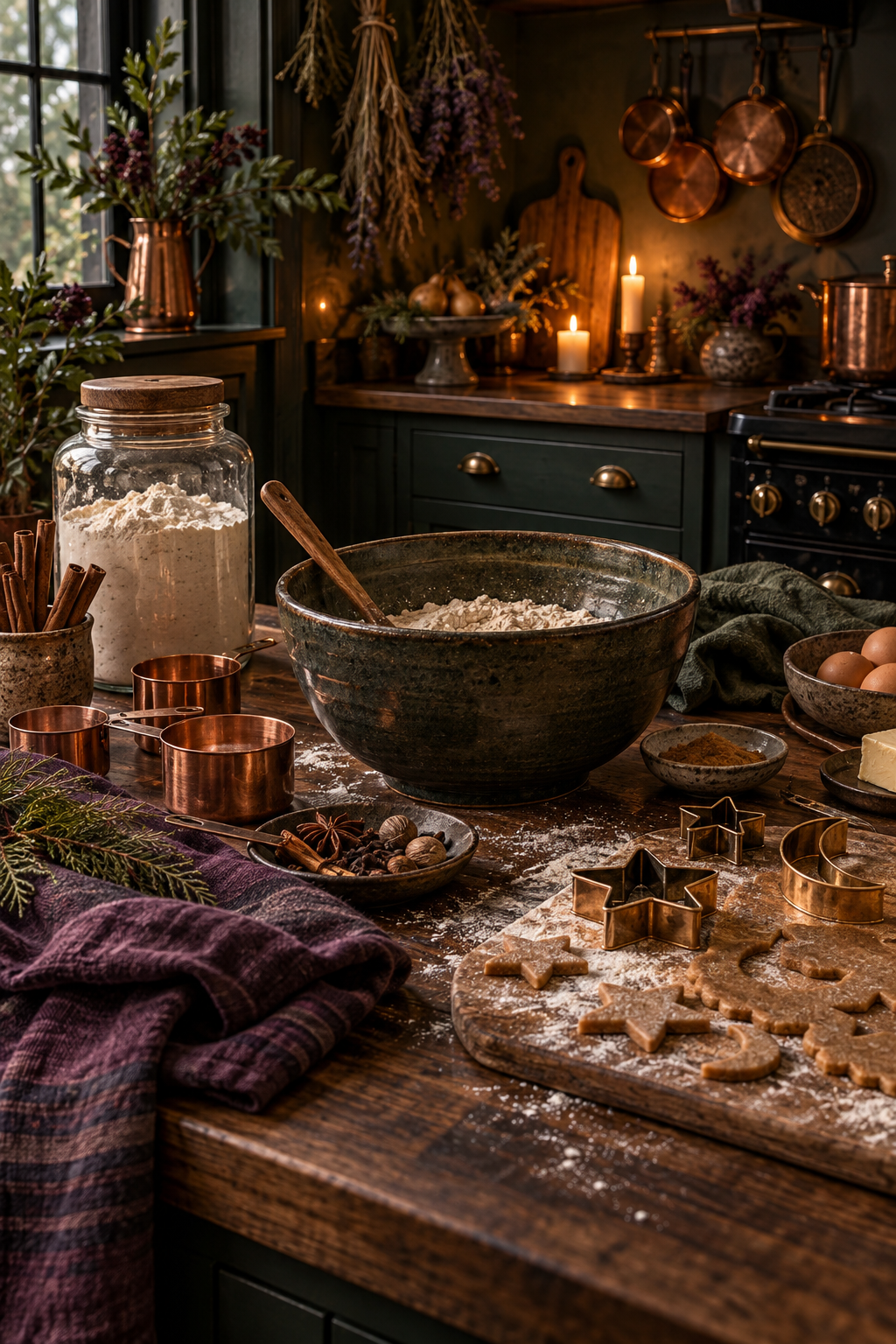
To create a Seasonal Baking Station, start with one dominant object and support it with two quieter details. Work within forest green, charcoal, aubergine, copper and herbaceous brown, then introduce copper cookware, dark wood, dried herbs, amber jars, stoneware and linen to give the scene texture and age. The arrangement creates depth without crowding the room. Leave a little negative space around the focal point; this helps the eye understand the idea immediately and prevents a seasonal display from looking like storage.
Group objects in odd numbers and vary their height so the arrangement reads clearly from across the room. Photograph the finished area in soft side light, then remove anything that competes with the main feature. For a smaller home, reduce the number of objects rather than shrinking every object. One readable silhouette and a warm pool of light usually create more impact than many tiny accessories.
13. Display Black Stoneware on Open Shelves
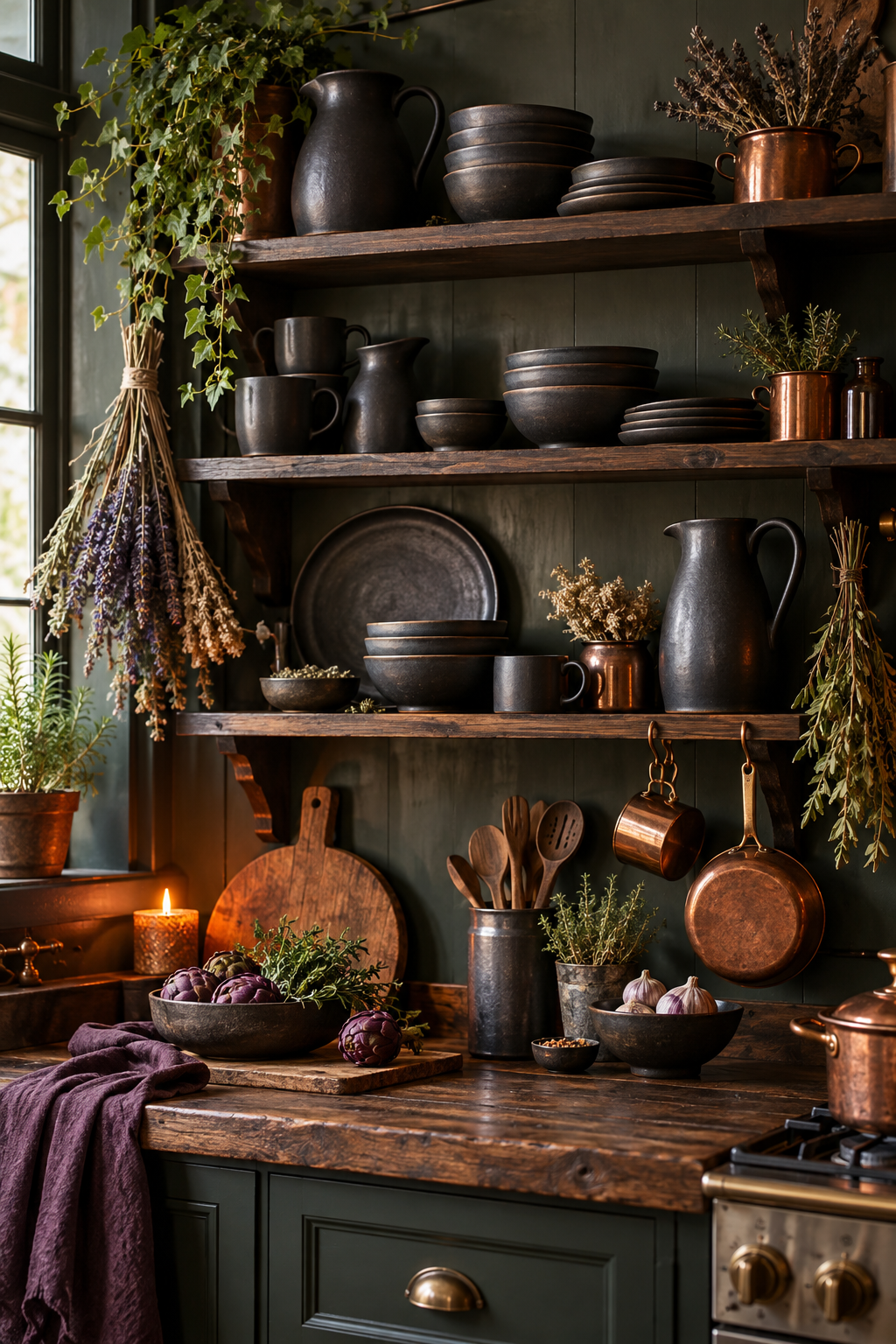
To display Black Stoneware on Open Shelves, start with one dominant object and support it with two quieter details. Work within forest green, charcoal, aubergine, copper and herbaceous brown, then introduce copper cookware, dark wood, dried herbs, amber jars, stoneware and linen to give the scene texture and age. The arrangement photographs beautifully in vertical compositions. Leave a little negative space around the focal point; this helps the eye understand the idea immediately and prevents a seasonal display from looking like storage.
Use removable fixings where possible and test painted finishes in an inconspicuous area. Photograph the finished area in soft side light, then remove anything that competes with the main feature. For a smaller home, reduce the number of objects rather than shrinking every object. One readable silhouette and a warm pool of light usually create more impact than many tiny accessories.
14. Turn the Island into an Apothecary Table
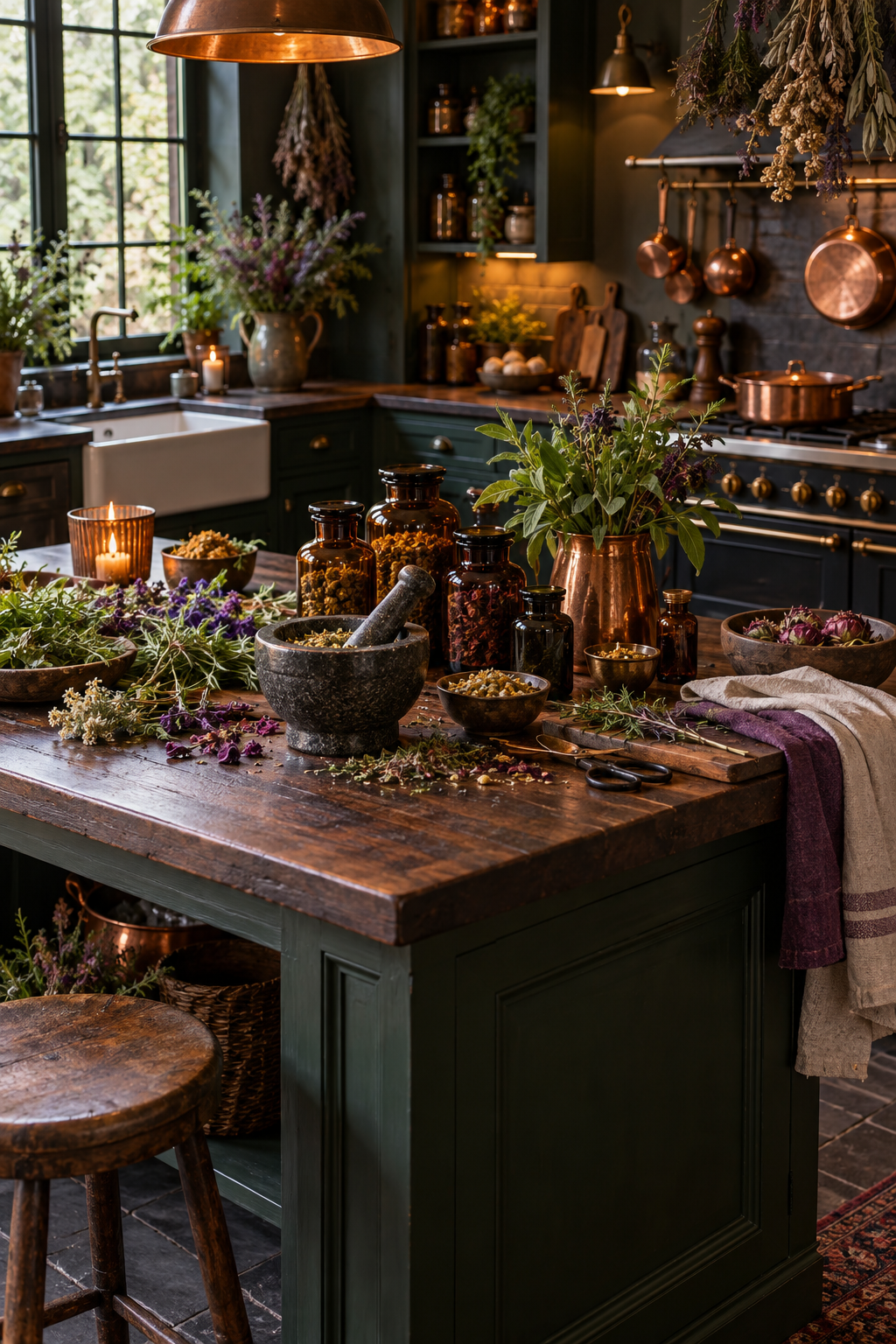
To turn the Island into an Apothecary Table, start with one dominant object and support it with two quieter details. Work within forest green, charcoal, aubergine, copper and herbaceous brown, then introduce copper cookware, dark wood, dried herbs, amber jars, stoneware and linen to give the scene texture and age. The arrangement keeps the seasonal story cohesive. Leave a little negative space around the focal point; this helps the eye understand the idea immediately and prevents a seasonal display from looking like storage.
Repeat two or three materials elsewhere in the room so the idea feels intentional rather than isolated. Photograph the finished area in soft side light, then remove anything that competes with the main feature. For a smaller home, reduce the number of objects rather than shrinking every object. One readable silhouette and a warm pool of light usually create more impact than many tiny accessories.
15. Add Botanical Prints in Dark Frames
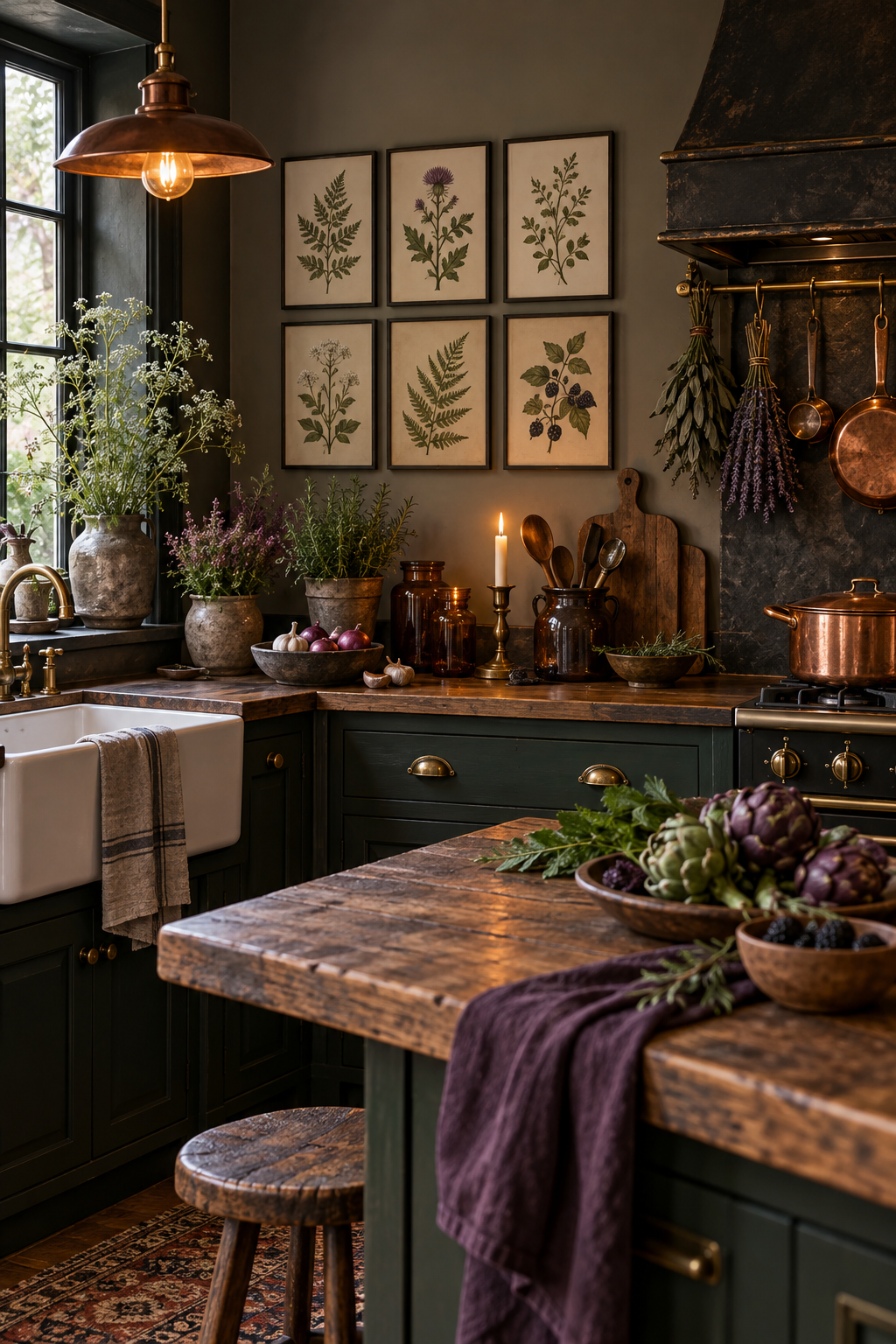
To add Botanical Prints in Dark Frames, start with one dominant object and support it with two quieter details. Work within forest green, charcoal, aubergine, copper and herbaceous brown, then introduce copper cookware, dark wood, dried herbs, amber jars, stoneware and linen to give the scene texture and age. The arrangement works with pieces you can reuse next year. Leave a little negative space around the focal point; this helps the eye understand the idea immediately and prevents a seasonal display from looking like storage.
Choose battery-operated lighting near fabric, paper, children or pets, and follow every manufacturer safety instruction. Photograph the finished area in soft side light, then remove anything that competes with the main feature. For a smaller home, reduce the number of objects rather than shrinking every object. One readable silhouette and a warm pool of light usually create more impact than many tiny accessories.
16. Make a Garlic-and-Herb Door Swag
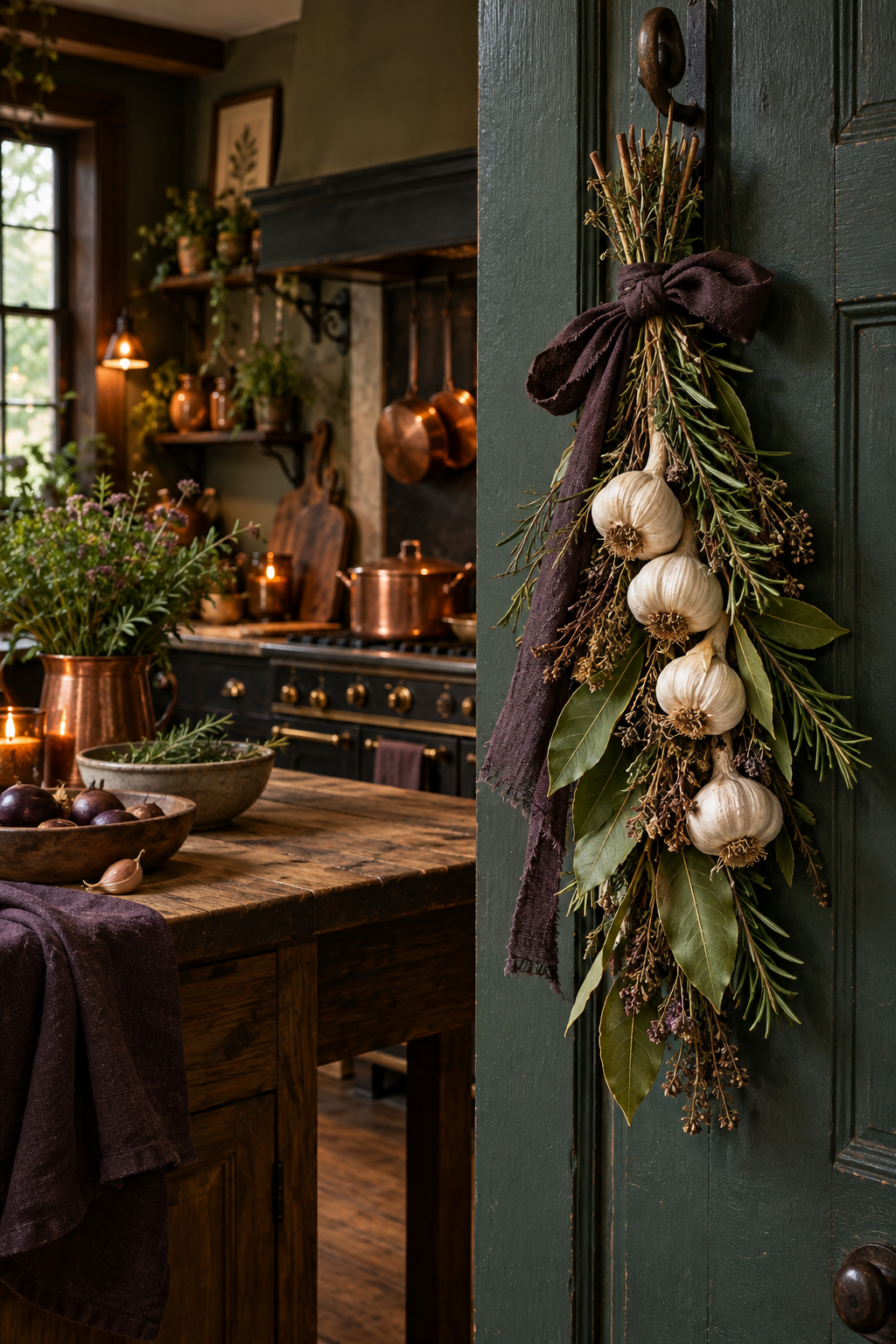
To make a Garlic-and-Herb Door Swag, start with one dominant object and support it with two quieter details. Work within forest green, charcoal, aubergine, copper and herbaceous brown, then introduce copper cookware, dark wood, dried herbs, amber jars, stoneware and linen to give the scene texture and age. The arrangement adds a clear focal point. Leave a little negative space around the focal point; this helps the eye understand the idea immediately and prevents a seasonal display from looking like storage.
Measure the available surface before choosing props, and keep doors, walkways and vents clear. Photograph the finished area in soft side light, then remove anything that competes with the main feature. For a smaller home, reduce the number of objects rather than shrinking every object. One readable silhouette and a warm pool of light usually create more impact than many tiny accessories.
17. Use Vintage Copper Molds
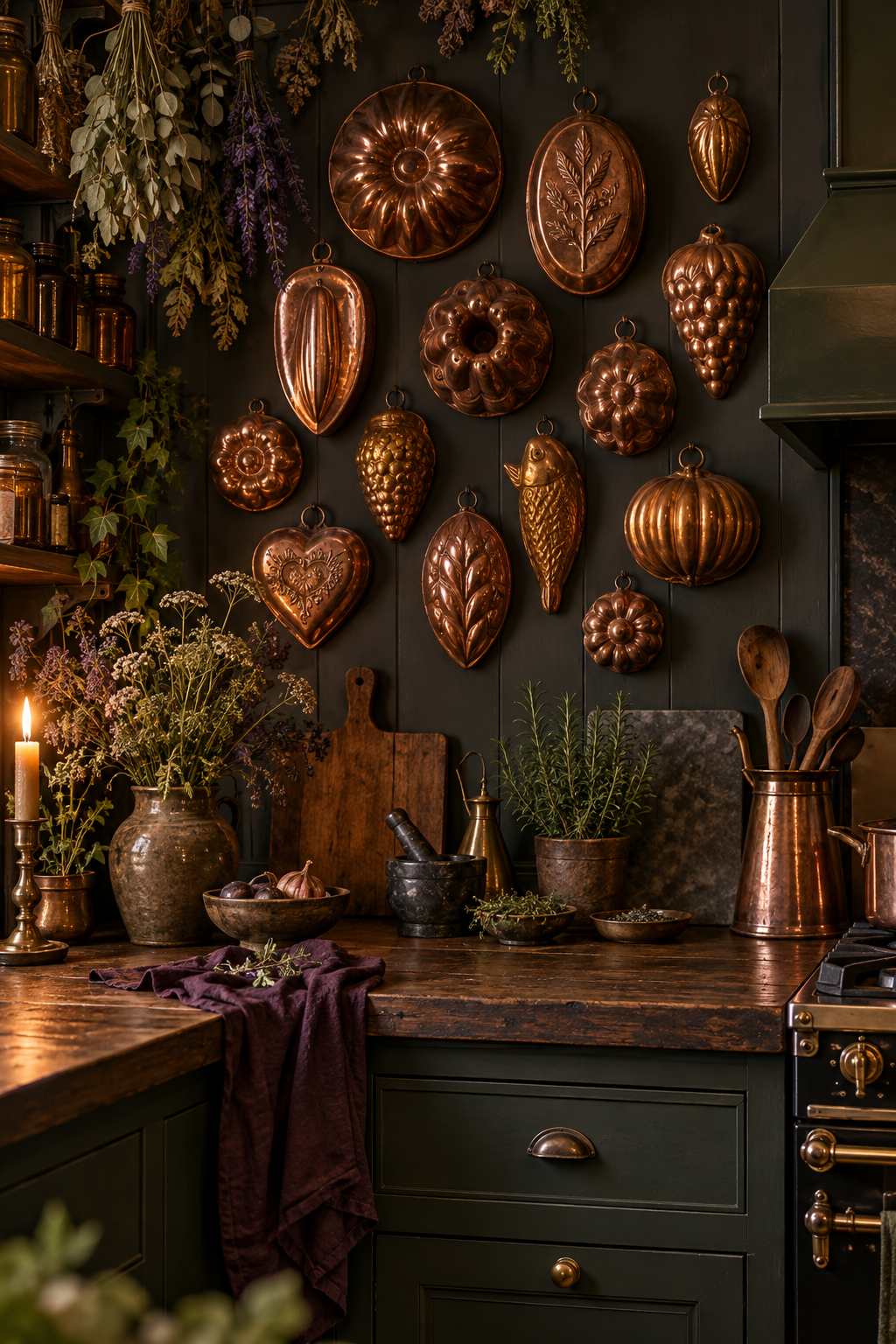
To use Vintage Copper Molds, start with one dominant object and support it with two quieter details. Work within forest green, charcoal, aubergine, copper and herbaceous brown, then introduce copper cookware, dark wood, dried herbs, amber jars, stoneware and linen to give the scene texture and age. The arrangement creates depth without crowding the room. Leave a little negative space around the focal point; this helps the eye understand the idea immediately and prevents a seasonal display from looking like storage.
Group objects in odd numbers and vary their height so the arrangement reads clearly from across the room. Photograph the finished area in soft side light, then remove anything that competes with the main feature. For a smaller home, reduce the number of objects rather than shrinking every object. One readable silhouette and a warm pool of light usually create more impact than many tiny accessories.
18. Create a Crystal-and-Candle Windowsill
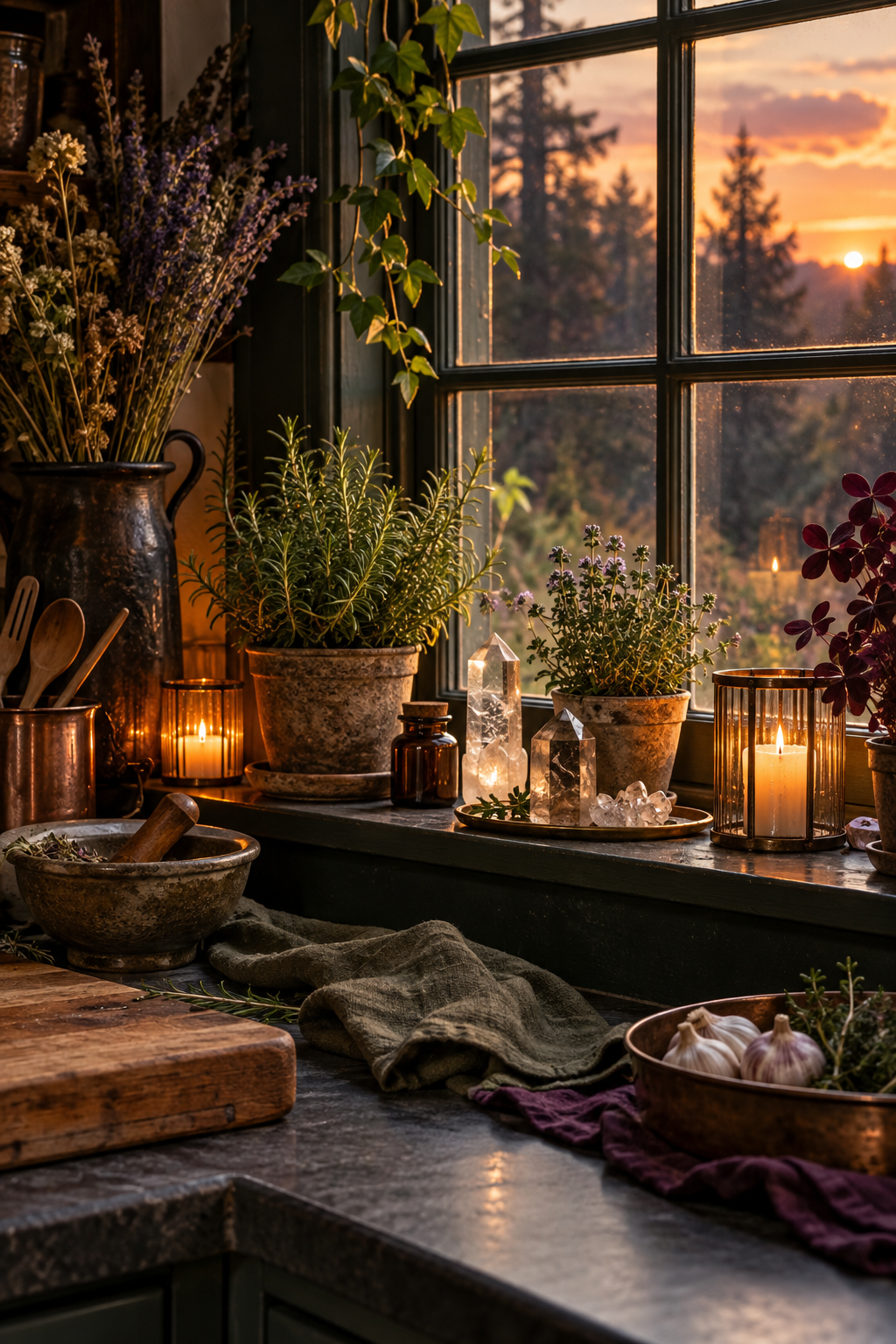
To create a Crystal-and-Candle Windowsill, start with one dominant object and support it with two quieter details. Work within forest green, charcoal, aubergine, copper and herbaceous brown, then introduce copper cookware, dark wood, dried herbs, amber jars, stoneware and linen to give the scene texture and age. The arrangement photographs beautifully in vertical compositions. Leave a little negative space around the focal point; this helps the eye understand the idea immediately and prevents a seasonal display from looking like storage.
Use removable fixings where possible and test painted finishes in an inconspicuous area. Photograph the finished area in soft side light, then remove anything that competes with the main feature. For a smaller home, reduce the number of objects rather than shrinking every object. One readable silhouette and a warm pool of light usually create more impact than many tiny accessories.
19. Style a Midnight Breakfast Nook
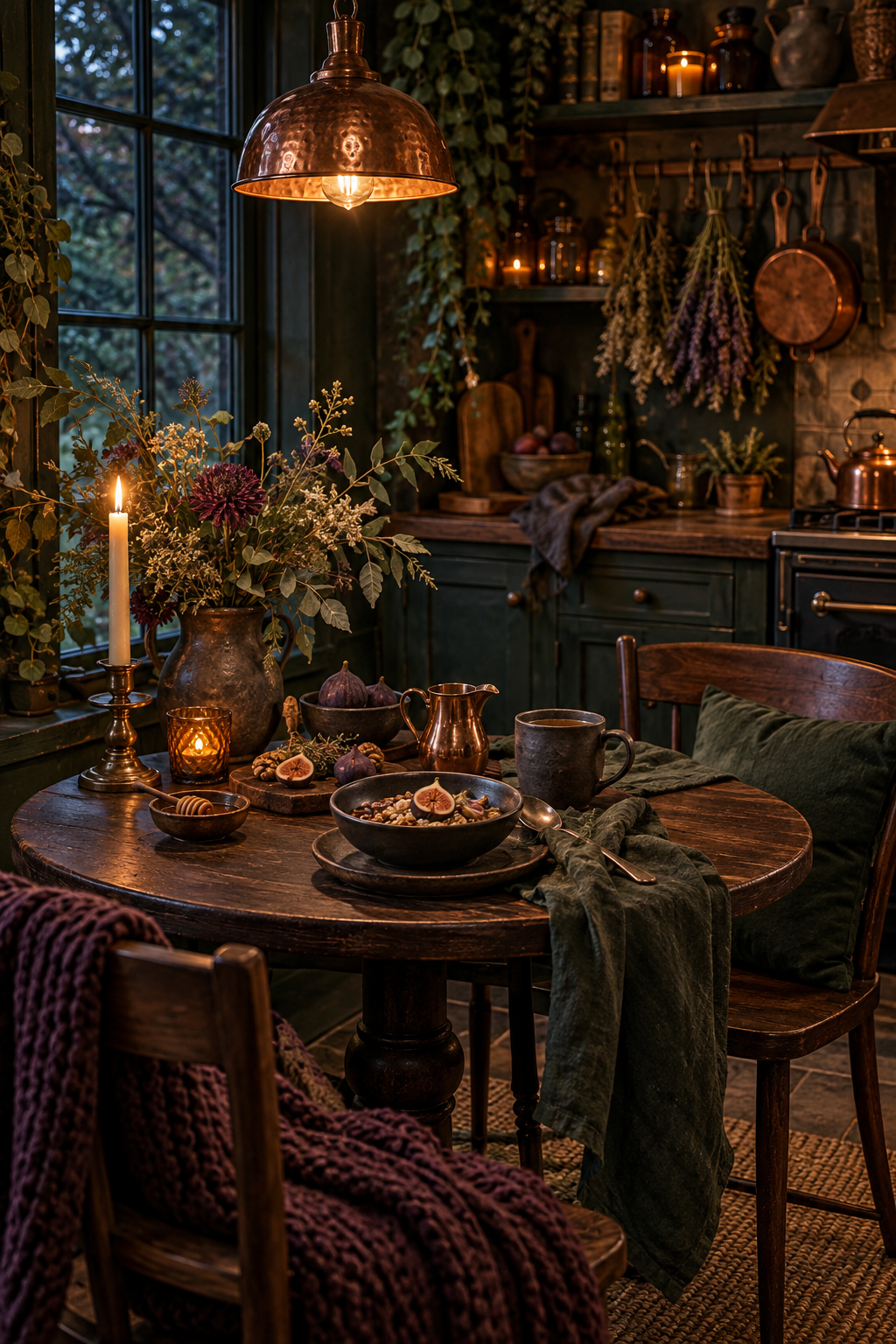
To style a Midnight Breakfast Nook, start with one dominant object and support it with two quieter details. Work within forest green, charcoal, aubergine, copper and herbaceous brown, then introduce copper cookware, dark wood, dried herbs, amber jars, stoneware and linen to give the scene texture and age. The arrangement keeps the seasonal story cohesive. Leave a little negative space around the focal point; this helps the eye understand the idea immediately and prevents a seasonal display from looking like storage.
Repeat two or three materials elsewhere in the room so the idea feels intentional rather than isolated. Photograph the finished area in soft side light, then remove anything that competes with the main feature. For a smaller home, reduce the number of objects rather than shrinking every object. One readable silhouette and a warm pool of light usually create more impact than many tiny accessories.
20. Add a Cauldron-Shaped Dutch Oven
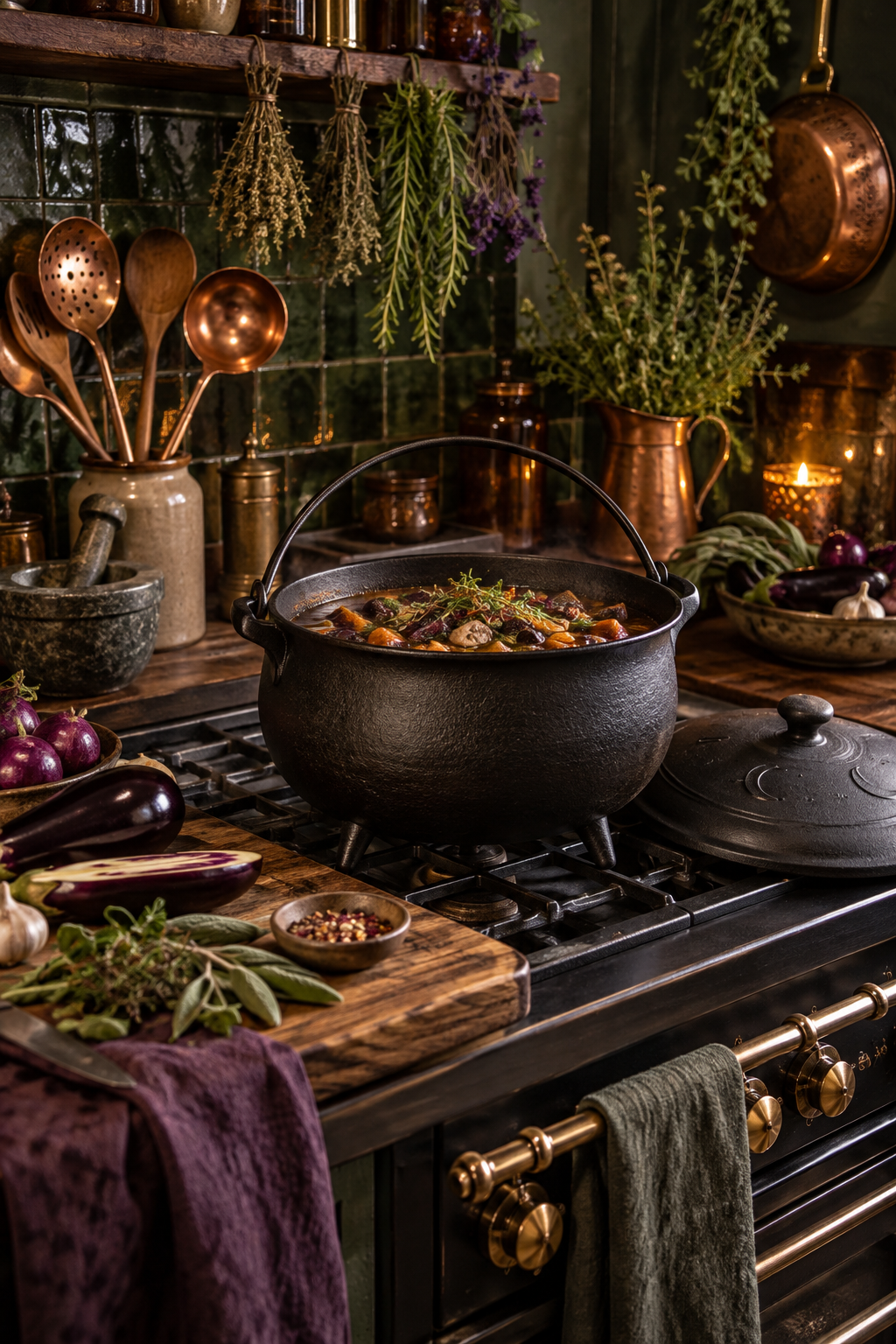
To add a Cauldron-Shaped Dutch Oven, start with one dominant object and support it with two quieter details. Work within forest green, charcoal, aubergine, copper and herbaceous brown, then introduce copper cookware, dark wood, dried herbs, amber jars, stoneware and linen to give the scene texture and age. The arrangement works with pieces you can reuse next year. Leave a little negative space around the focal point; this helps the eye understand the idea immediately and prevents a seasonal display from looking like storage.
Choose battery-operated lighting near fabric, paper, children or pets, and follow every manufacturer safety instruction. Photograph the finished area in soft side light, then remove anything that competes with the main feature. For a smaller home, reduce the number of objects rather than shrinking every object. One readable silhouette and a warm pool of light usually create more impact than many tiny accessories.
21. Build a Witch’s Recipe Book Stand
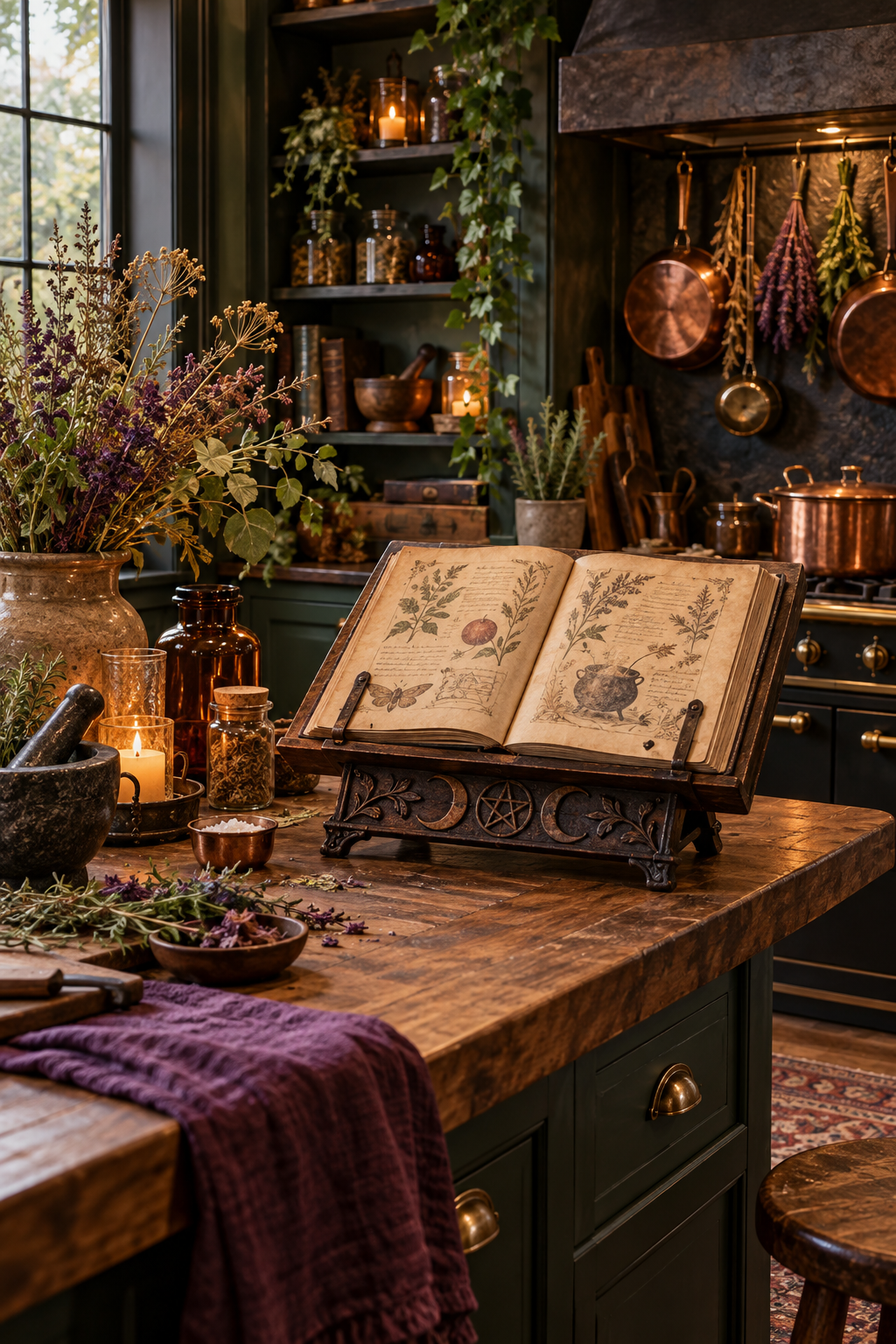
To build a Witch’s Recipe Book Stand, start with one dominant object and support it with two quieter details. Work within forest green, charcoal, aubergine, copper and herbaceous brown, then introduce copper cookware, dark wood, dried herbs, amber jars, stoneware and linen to give the scene texture and age. The arrangement adds a clear focal point. Leave a little negative space around the focal point; this helps the eye understand the idea immediately and prevents a seasonal display from looking like storage.
Measure the available surface before choosing props, and keep doors, walkways and vents clear. Photograph the finished area in soft side light, then remove anything that competes with the main feature. For a smaller home, reduce the number of objects rather than shrinking every object. One readable silhouette and a warm pool of light usually create more impact than many tiny accessories.
22. Use Moody Plaid Kitchen Linens
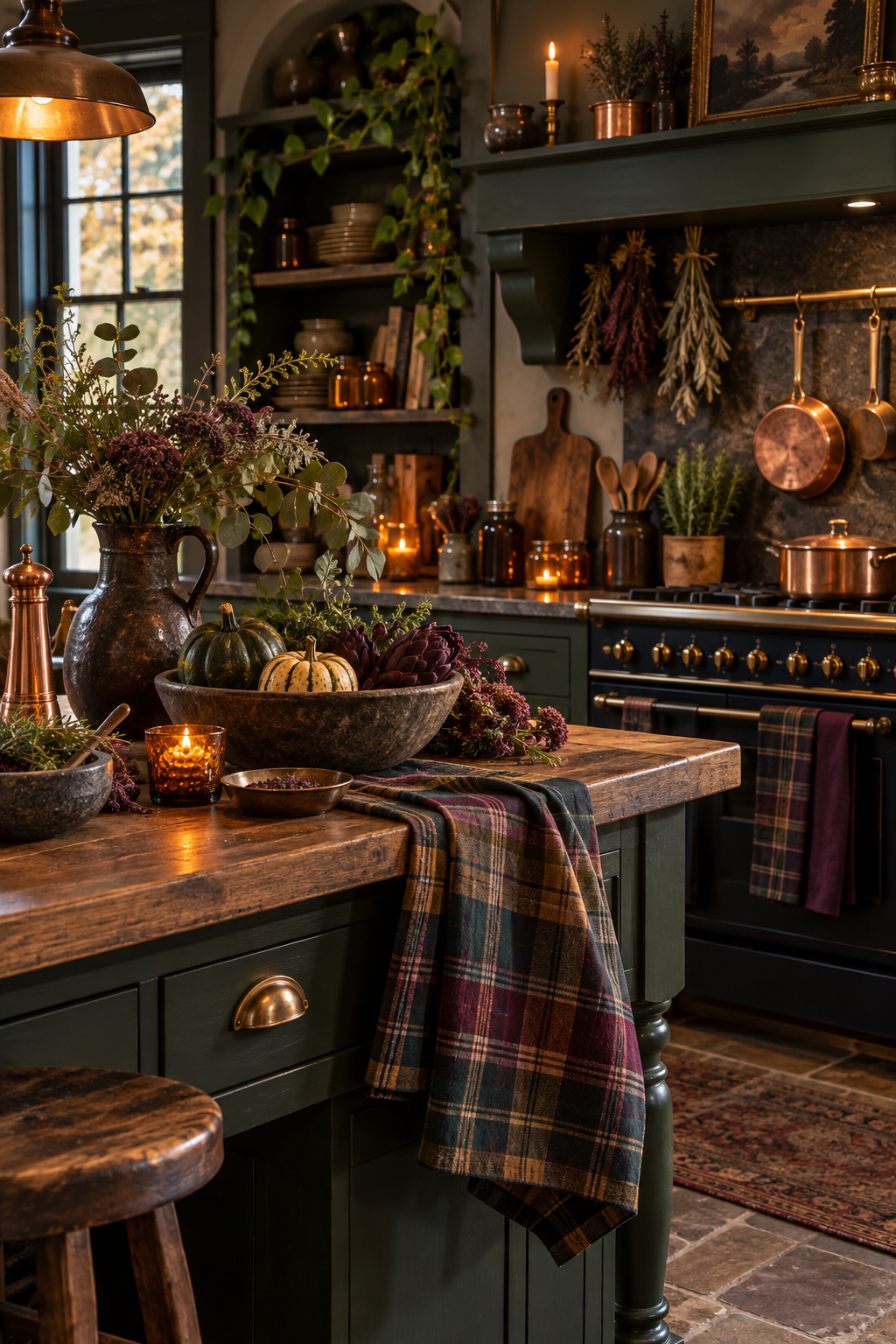
To use Moody Plaid Kitchen Linens, start with one dominant object and support it with two quieter details. Work within forest green, charcoal, aubergine, copper and herbaceous brown, then introduce copper cookware, dark wood, dried herbs, amber jars, stoneware and linen to give the scene texture and age. The arrangement creates depth without crowding the room. Leave a little negative space around the focal point; this helps the eye understand the idea immediately and prevents a seasonal display from looking like storage.
Group objects in odd numbers and vary their height so the arrangement reads clearly from across the room. Photograph the finished area in soft side light, then remove anything that competes with the main feature. For a smaller home, reduce the number of objects rather than shrinking every object. One readable silhouette and a warm pool of light usually create more impact than many tiny accessories.
23. Create a Magical Coffee Corner
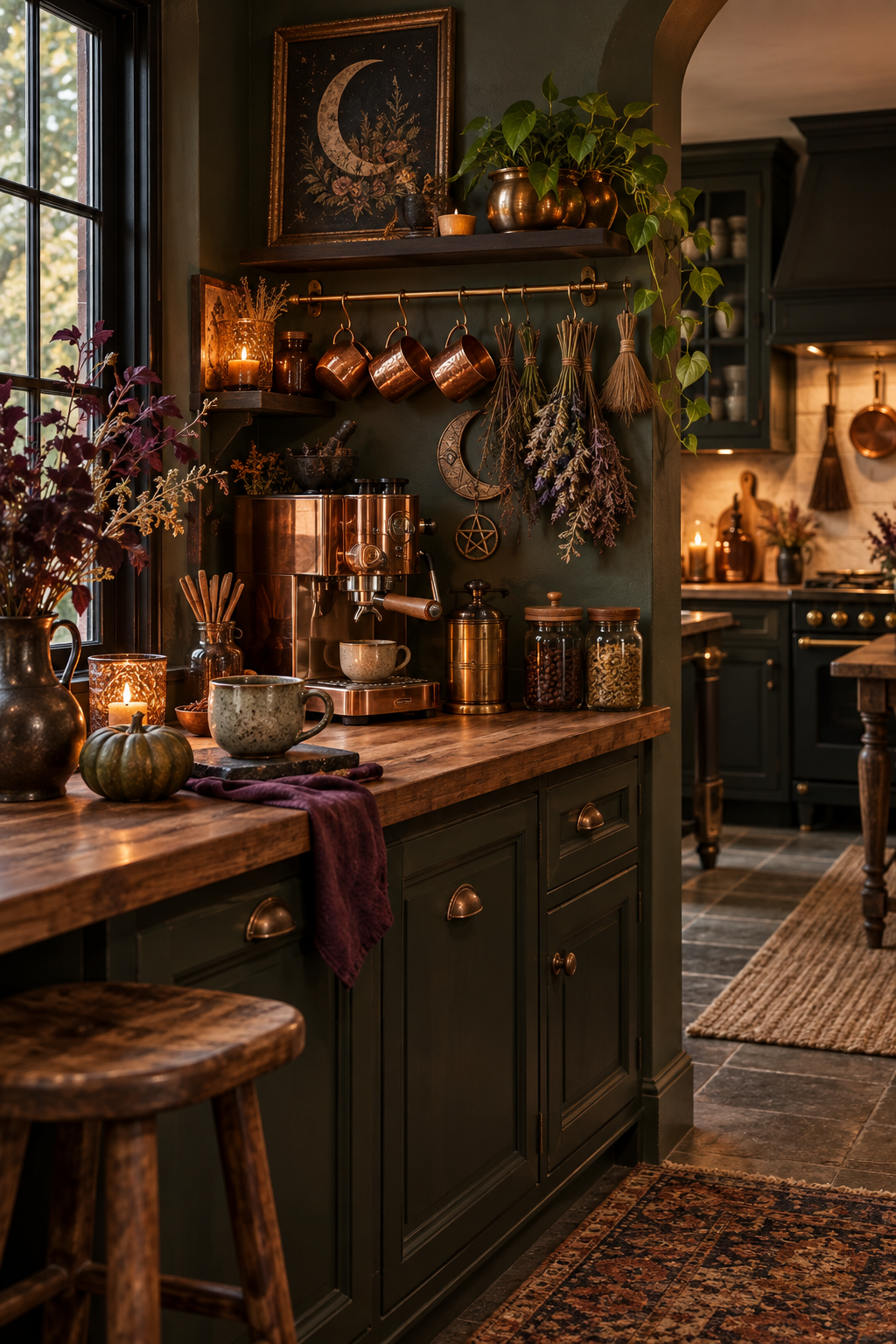
To create a Magical Coffee Corner, start with one dominant object and support it with two quieter details. Work within forest green, charcoal, aubergine, copper and herbaceous brown, then introduce copper cookware, dark wood, dried herbs, amber jars, stoneware and linen to give the scene texture and age. The arrangement photographs beautifully in vertical compositions. Leave a little negative space around the focal point; this helps the eye understand the idea immediately and prevents a seasonal display from looking like storage.
Use removable fixings where possible and test painted finishes in an inconspicuous area. Photograph the finished area in soft side light, then remove anything that competes with the main feature. For a smaller home, reduce the number of objects rather than shrinking every object. One readable silhouette and a warm pool of light usually create more impact than many tiny accessories.
24. Add Forest-Inspired Foraged Details
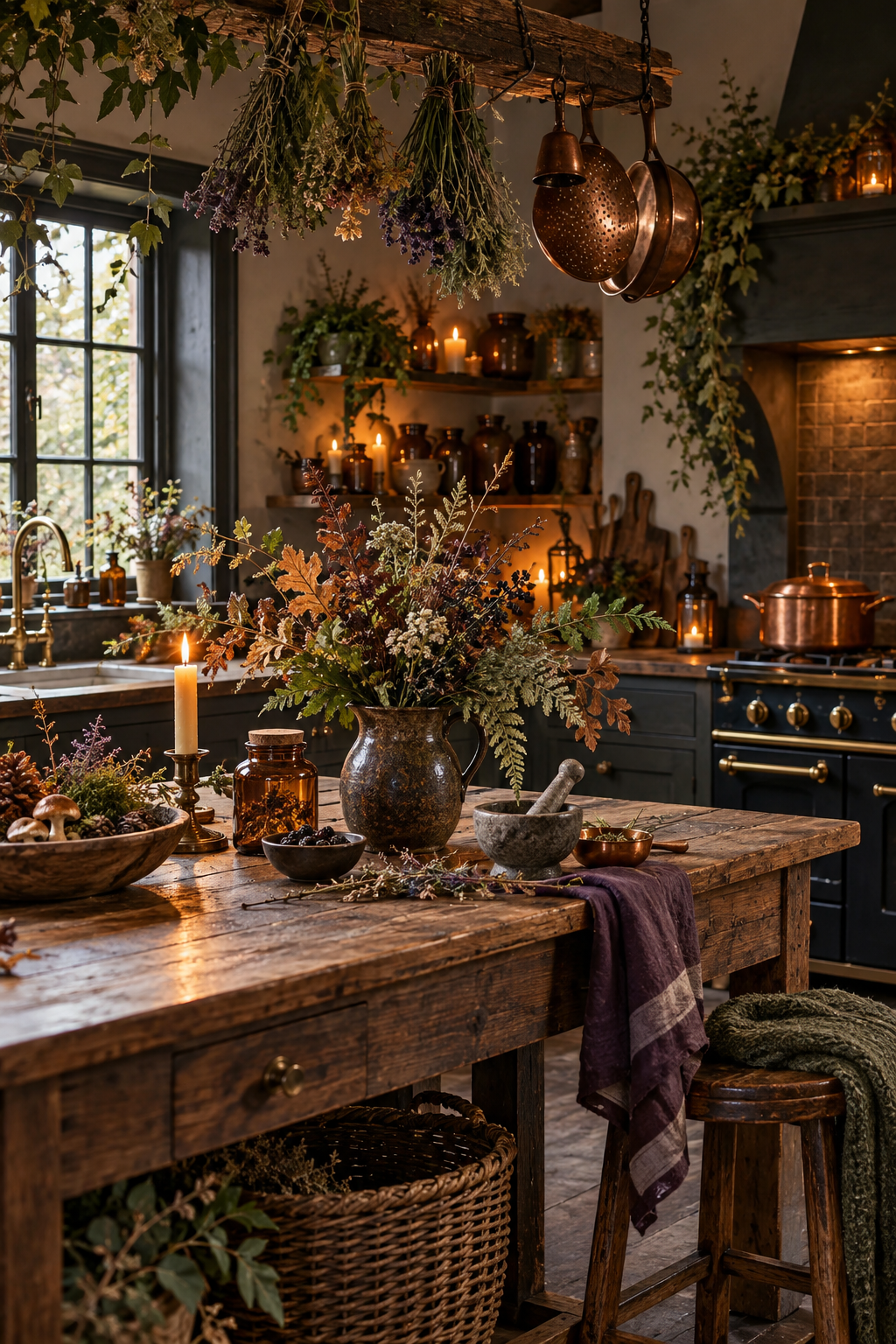
To add Forest-Inspired Foraged Details, start with one dominant object and support it with two quieter details. Work within forest green, charcoal, aubergine, copper and herbaceous brown, then introduce copper cookware, dark wood, dried herbs, amber jars, stoneware and linen to give the scene texture and age. The arrangement keeps the seasonal story cohesive. Leave a little negative space around the focal point; this helps the eye understand the idea immediately and prevents a seasonal display from looking like storage.
Repeat two or three materials elsewhere in the room so the idea feels intentional rather than isolated. Photograph the finished area in soft side light, then remove anything that competes with the main feature. For a smaller home, reduce the number of objects rather than shrinking every object. One readable silhouette and a warm pool of light usually create more impact than many tiny accessories.
25. Finish with Safe Under-Cabinet Glow
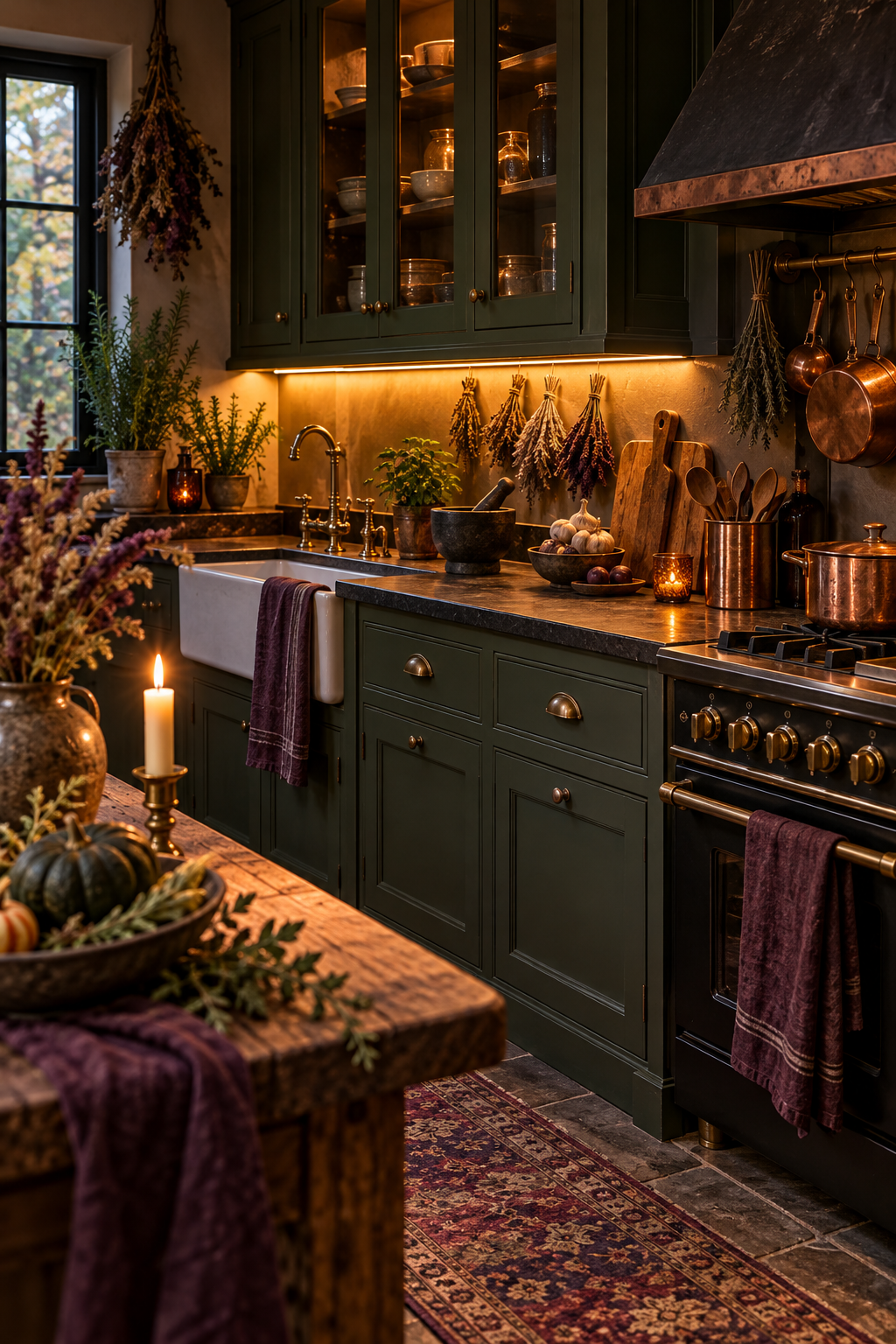
To finish with Safe Under-Cabinet Glow, start with one dominant object and support it with two quieter details. Work within forest green, charcoal, aubergine, copper and herbaceous brown, then introduce copper cookware, dark wood, dried herbs, amber jars, stoneware and linen to give the scene texture and age. The arrangement works with pieces you can reuse next year. Leave a little negative space around the focal point; this helps the eye understand the idea immediately and prevents a seasonal display from looking like storage.
Choose battery-operated lighting near fabric, paper, children or pets, and follow every manufacturer safety instruction. Photograph the finished area in soft side light, then remove anything that competes with the main feature. For a smaller home, reduce the number of objects rather than shrinking every object. One readable silhouette and a warm pool of light usually create more impact than many tiny accessories.
How to Keep the Look Cohesive
A strong Halloween room does not need to contain every seasonal symbol. Choose the ideas that suit your architecture, repeat the same palette in nearby areas and edit the display after sunset when the lighting effect becomes clear. Store delicate pieces by material and photograph the finished setup before packing it away; the image becomes a useful map when you decorate next year.