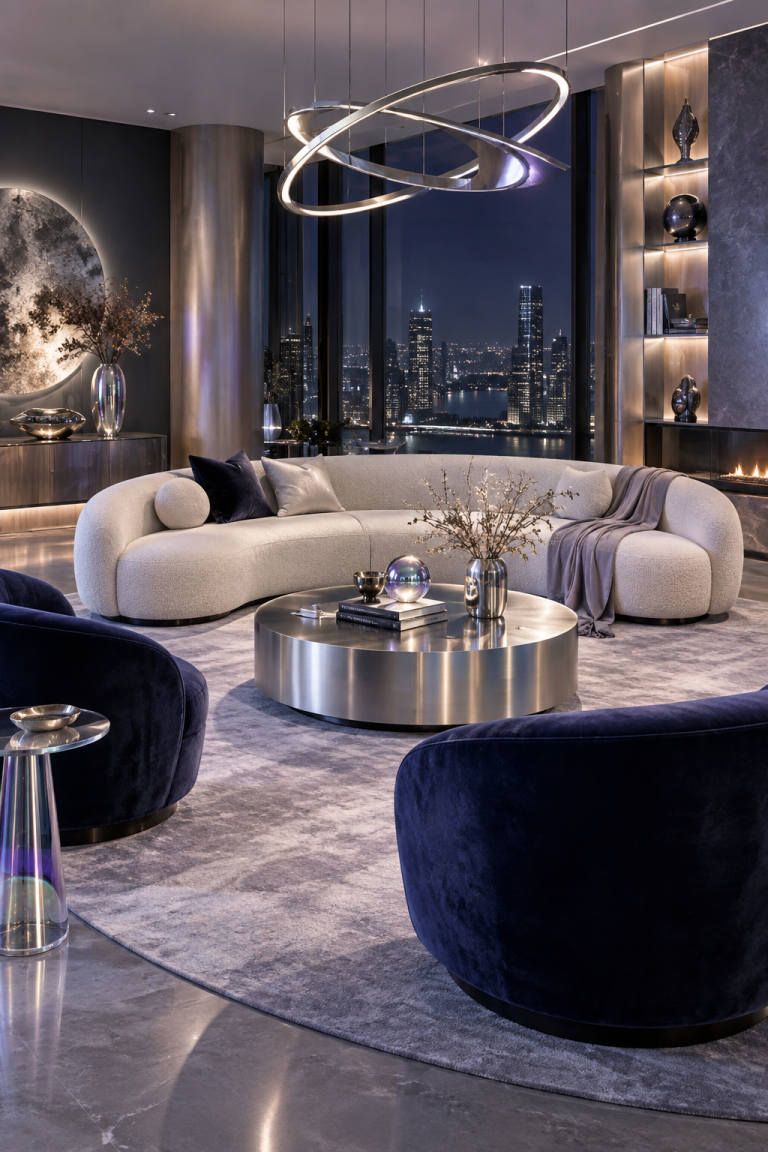
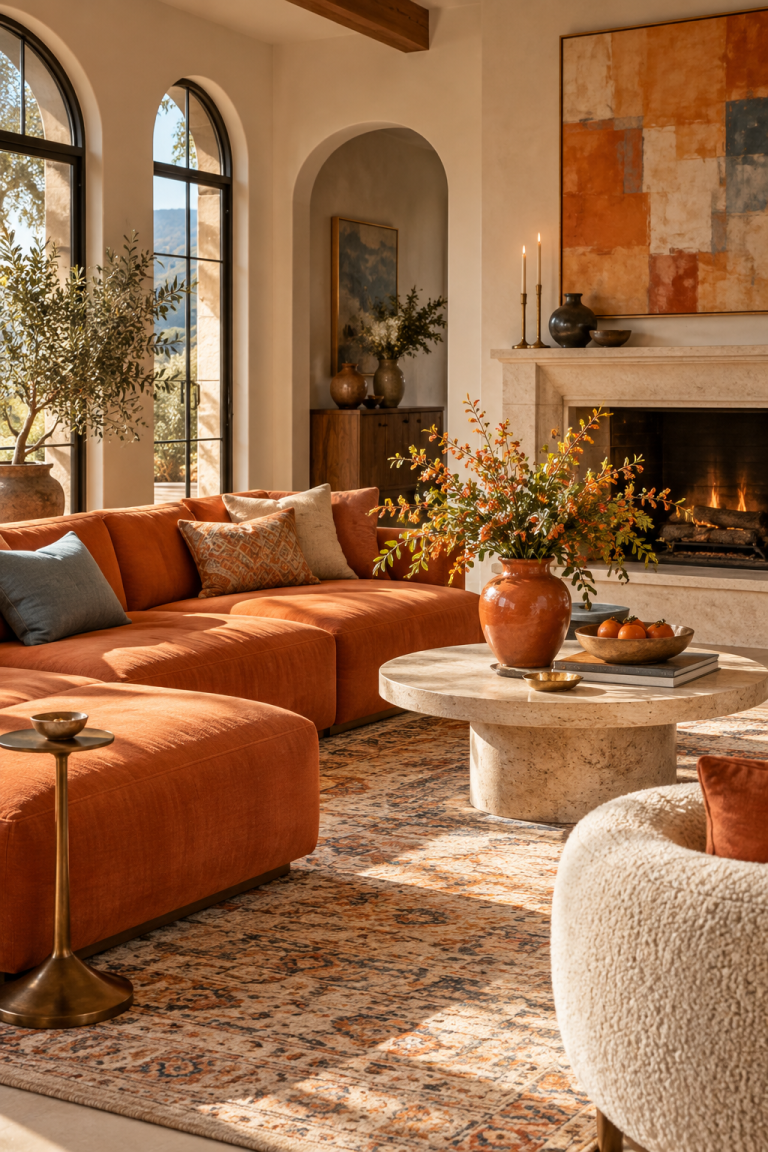
A neutral room can be calm, flexible and timeless, but it sometimes needs one confident note to feel memorable. Red supplies that energy in remarkably small doses. From earthy brick and oxblood to tomato, cherry and garnet, the right shade can sharpen beige, warm gray, cream, black and natural wood without overwhelming them. These red accent decor ideas focus on controlled placement, useful objects and repeatable color relationships so the finished space feels intentional rather than themed.
The ideas below move from quick styling changes to more architectural-looking solutions. Use them as a menu rather than a checklist: two or three well-connected decisions will usually improve a room more than many unrelated purchases.
1. Anchor the Sofa with One Red Statement Pillow
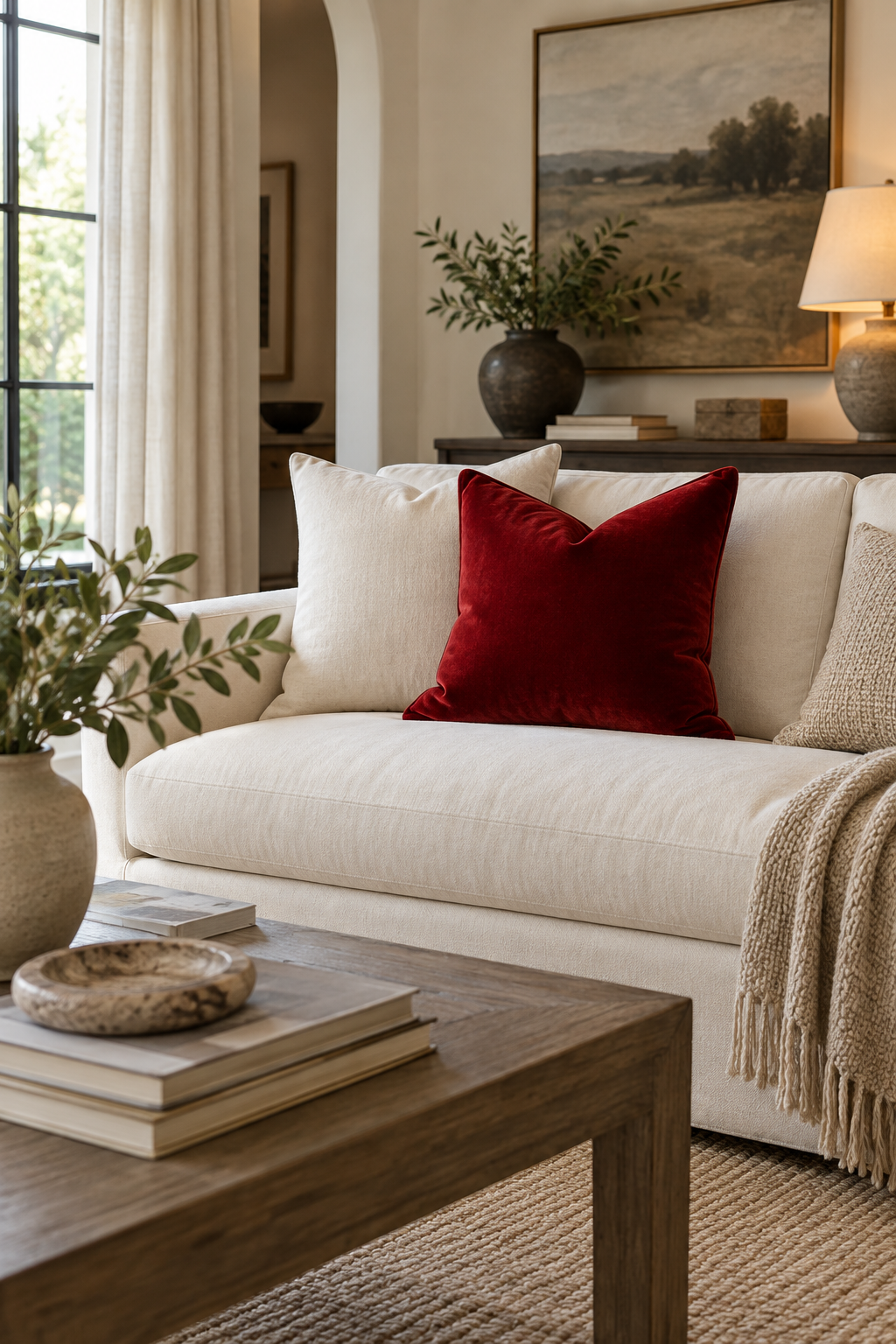
Begin by treating the accent as a deliberate focal point rather than filling every available surface. For anchor the sofa with one red statement pillow, choose proportions that relate to the nearest furniture instead of buying by impulse. Keep the surrounding palette edited so the eye understands where to land. Texture matters as much as color: linen, wool, wood, matte metal and softly reflective finishes prevent the arrangement from feeling flat. The goal is a finished red accent moment that looks intentional from across the room and remains useful at close range.
Before committing, map the footprint with painter’s tape and view it in morning and evening light. Leave walking paths, drawers, doors and outlets fully functional. If the room is small, select one hero element and let secondary details repeat its shape or tone quietly. This approach reduces clutter, makes future changes easier and helps affordable pieces appear more cohesive. Photograph the result from the doorway; anything that competes with the main idea can usually be removed or relocated.
2. Repeat Red in a Balanced Pillow Pair
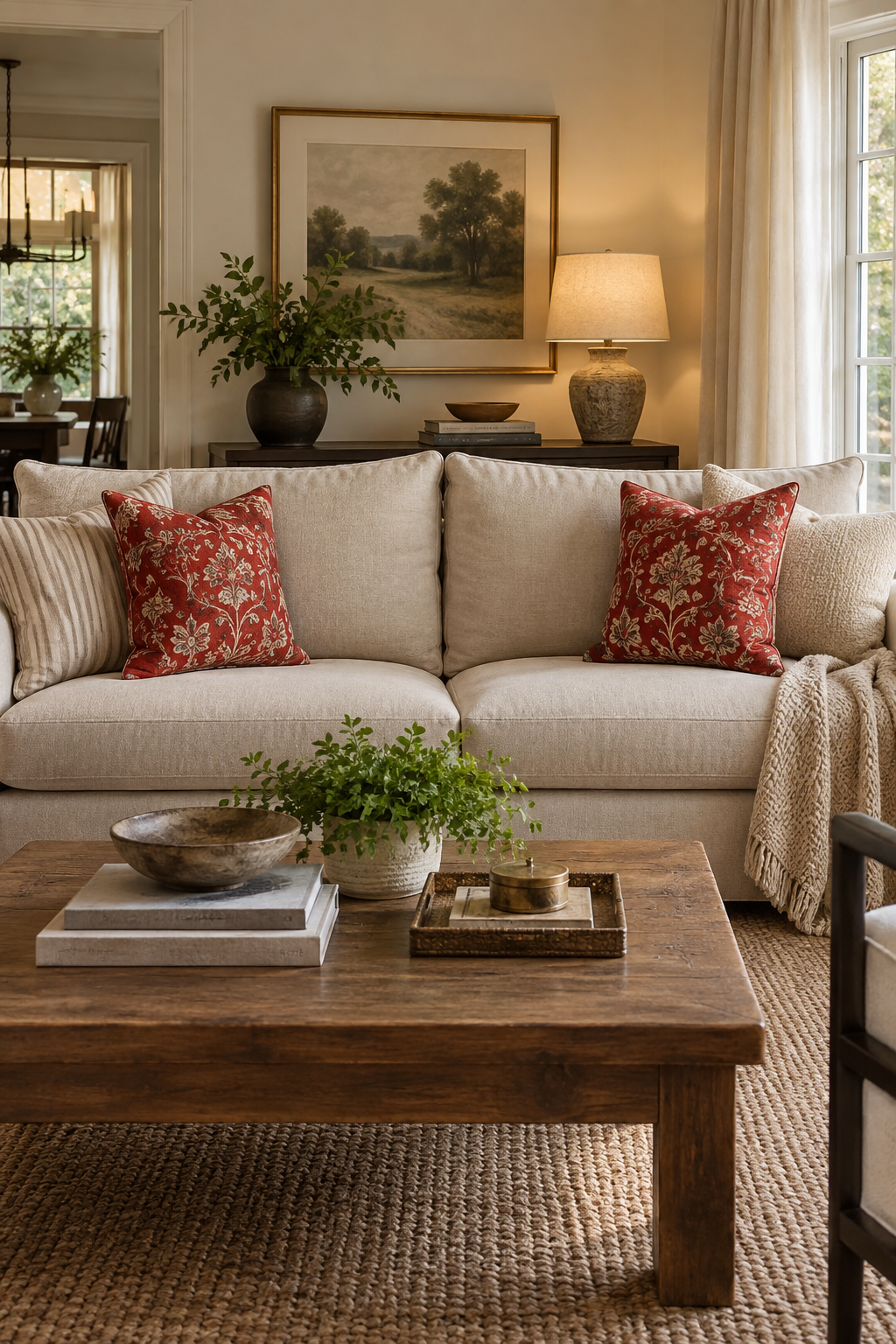
Scale is the detail that makes this idea look considered in a compact home. For repeat red in a balanced pillow pair, choose proportions that relate to the nearest furniture instead of buying by impulse. Keep the surrounding palette edited so the eye understands where to land. Texture matters as much as color: linen, wool, wood, matte metal and softly reflective finishes prevent the arrangement from feeling flat. The goal is a finished red accent moment that looks intentional from across the room and remains useful at close range.
Before committing, map the footprint with painter’s tape and view it in morning and evening light. Leave walking paths, drawers, doors and outlets fully functional. If the room is small, select one hero element and let secondary details repeat its shape or tone quietly. This approach reduces clutter, makes future changes easier and helps affordable pieces appear more cohesive. Photograph the result from the doorway; anything that competes with the main idea can usually be removed or relocated.
3. Wake Up a Neutral Room with a Red Accent Chair
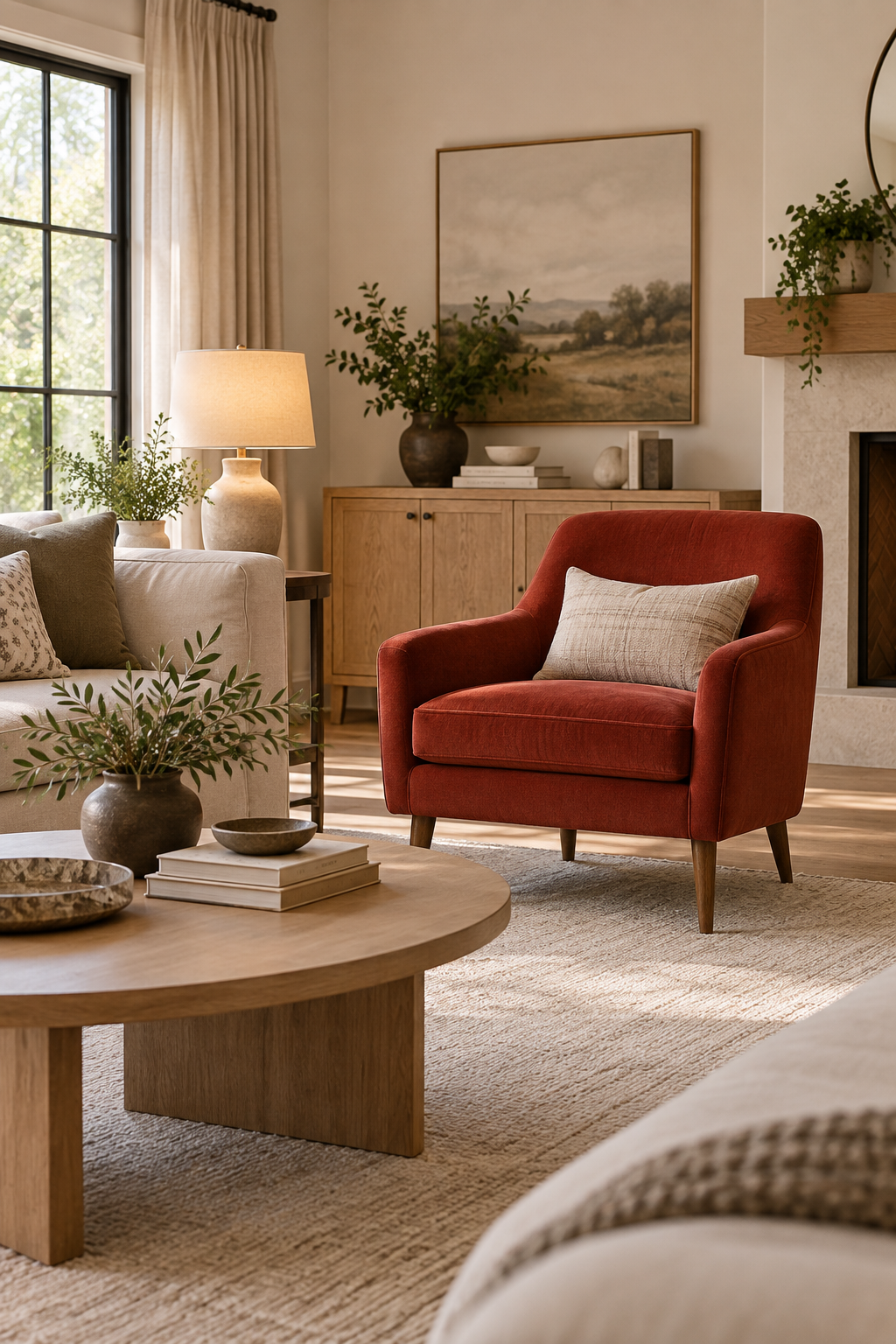
The most polished version combines visual impact with a practical everyday purpose. For wake up a neutral room with a red accent chair, choose proportions that relate to the nearest furniture instead of buying by impulse. Keep the surrounding palette edited so the eye understands where to land. Texture matters as much as color: linen, wool, wood, matte metal and softly reflective finishes prevent the arrangement from feeling flat. The goal is a finished red accent moment that looks intentional from across the room and remains useful at close range.
Before committing, map the footprint with painter’s tape and view it in morning and evening light. Leave walking paths, drawers, doors and outlets fully functional. If the room is small, select one hero element and let secondary details repeat its shape or tone quietly. This approach reduces clutter, makes future changes easier and helps affordable pieces appear more cohesive. Photograph the result from the doorway; anything that competes with the main idea can usually be removed or relocated.
4. Use a Cherry Red Side Table as Functional Color
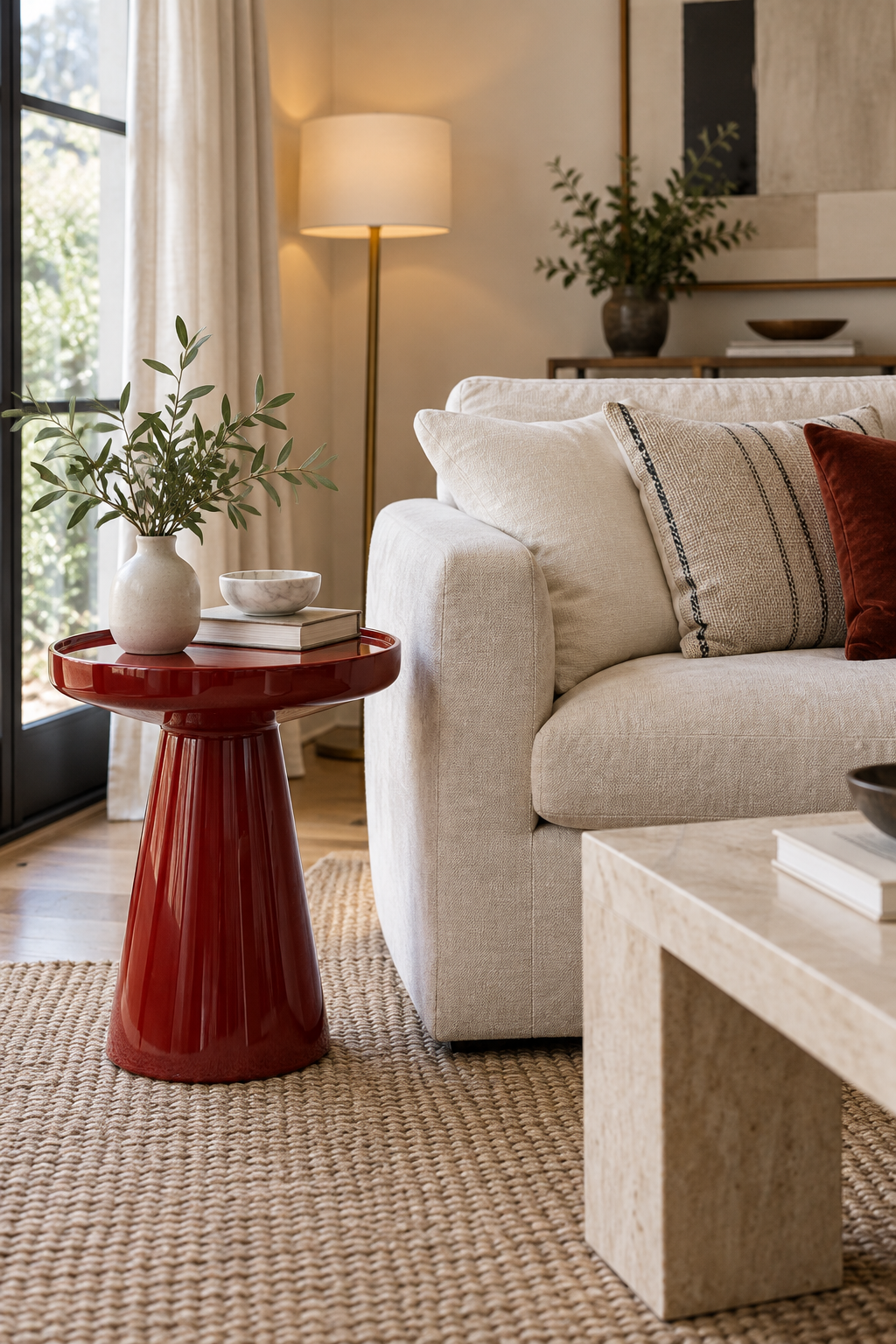
A restrained installation keeps the result flexible, calm and easy to maintain. For use a cherry red side table as functional color, choose proportions that relate to the nearest furniture instead of buying by impulse. Keep the surrounding palette edited so the eye understands where to land. Texture matters as much as color: linen, wool, wood, matte metal and softly reflective finishes prevent the arrangement from feeling flat. The goal is a finished red accent moment that looks intentional from across the room and remains useful at close range.
Before committing, map the footprint with painter’s tape and view it in morning and evening light. Leave walking paths, drawers, doors and outlets fully functional. If the room is small, select one hero element and let secondary details repeat its shape or tone quietly. This approach reduces clutter, makes future changes easier and helps affordable pieces appear more cohesive. Photograph the result from the doorway; anything that competes with the main idea can usually be removed or relocated.
5. Frame Neutral Art with a Slim Red Border
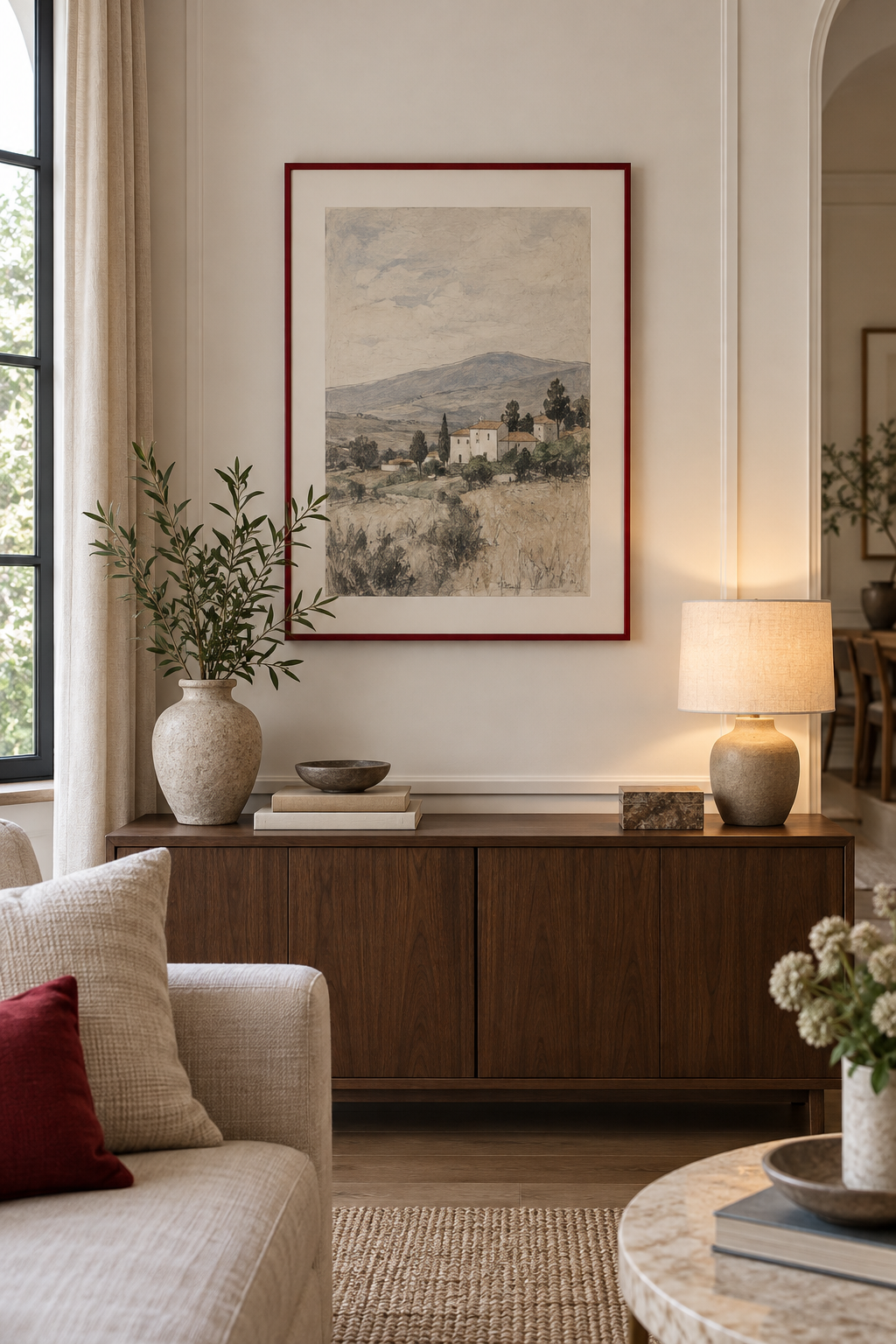
Use the surrounding neutral materials to give this feature enough breathing room. For frame neutral art with a slim red border, choose proportions that relate to the nearest furniture instead of buying by impulse. Keep the surrounding palette edited so the eye understands where to land. Texture matters as much as color: linen, wool, wood, matte metal and softly reflective finishes prevent the arrangement from feeling flat. The goal is a finished red accent moment that looks intentional from across the room and remains useful at close range.
Before committing, map the footprint with painter’s tape and view it in morning and evening light. Leave walking paths, drawers, doors and outlets fully functional. If the room is small, select one hero element and let secondary details repeat its shape or tone quietly. This approach reduces clutter, makes future changes easier and helps affordable pieces appear more cohesive. Photograph the result from the doorway; anything that competes with the main idea can usually be removed or relocated.
6. Style a Red Ceramic Lamp on a Pale Console
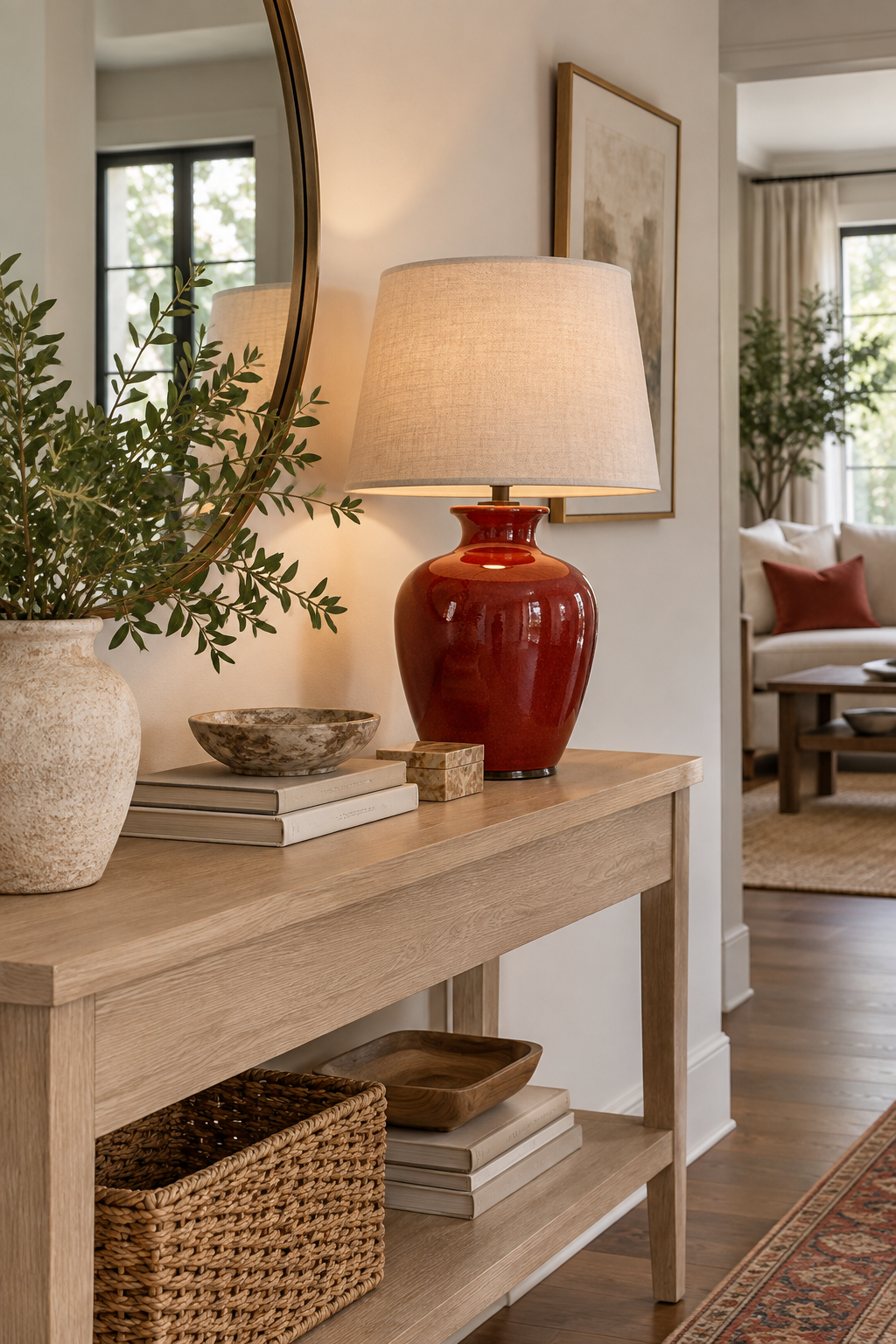
Begin by treating the accent as a deliberate focal point rather than filling every available surface. For style a red ceramic lamp on a pale console, choose proportions that relate to the nearest furniture instead of buying by impulse. Keep the surrounding palette edited so the eye understands where to land. Texture matters as much as color: linen, wool, wood, matte metal and softly reflective finishes prevent the arrangement from feeling flat. The goal is a finished red accent moment that looks intentional from across the room and remains useful at close range.
Before committing, map the footprint with painter’s tape and view it in morning and evening light. Leave walking paths, drawers, doors and outlets fully functional. If the room is small, select one hero element and let secondary details repeat its shape or tone quietly. This approach reduces clutter, makes future changes easier and helps affordable pieces appear more cohesive. Photograph the result from the doorway; anything that competes with the main idea can usually be removed or relocated.
7. Layer a Vintage Red Rug beneath Simple Furniture
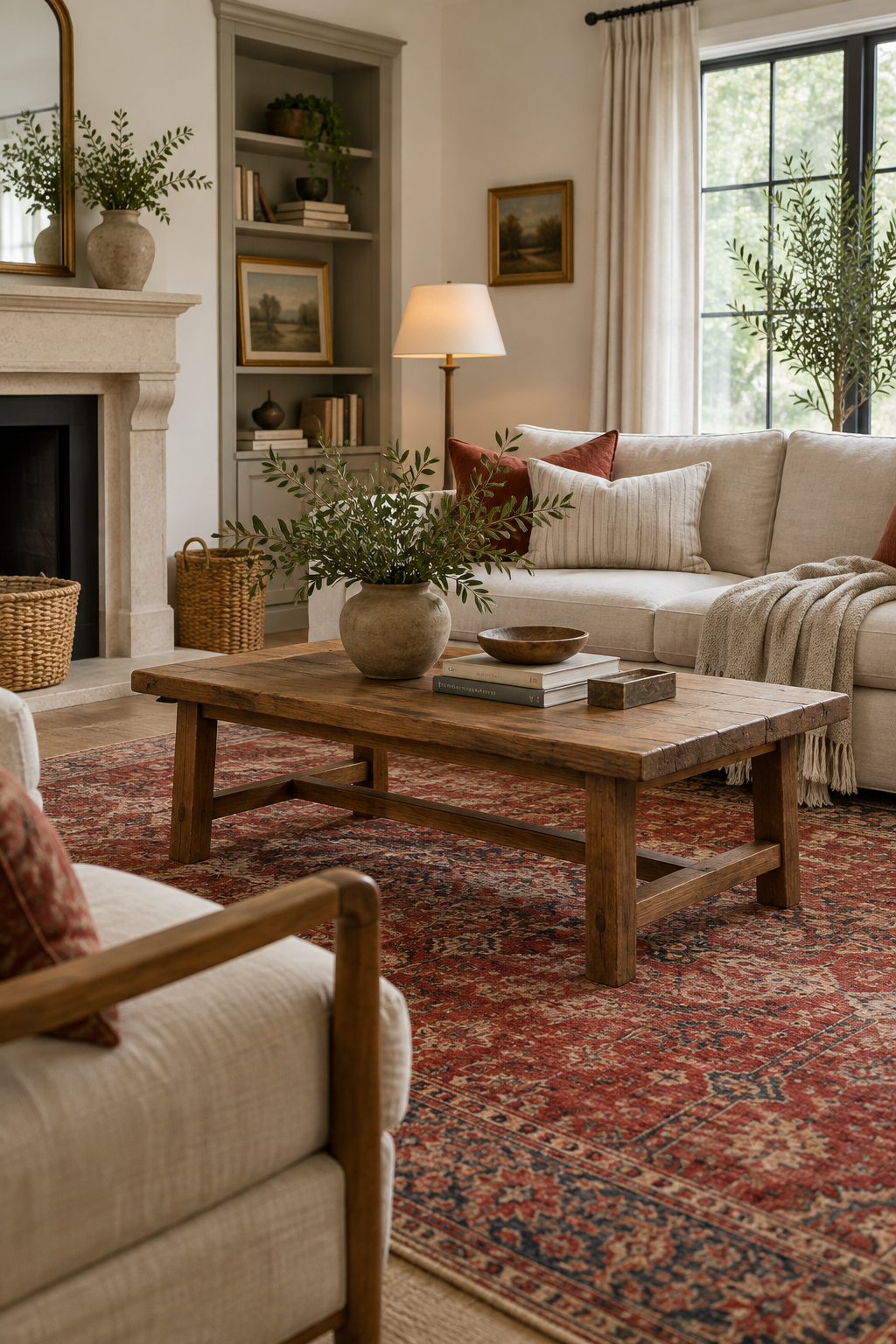
Scale is the detail that makes this idea look considered in a compact home. For layer a vintage red rug beneath simple furniture, choose proportions that relate to the nearest furniture instead of buying by impulse. Keep the surrounding palette edited so the eye understands where to land. Texture matters as much as color: linen, wool, wood, matte metal and softly reflective finishes prevent the arrangement from feeling flat. The goal is a finished red accent moment that looks intentional from across the room and remains useful at close range.
Before committing, map the footprint with painter’s tape and view it in morning and evening light. Leave walking paths, drawers, doors and outlets fully functional. If the room is small, select one hero element and let secondary details repeat its shape or tone quietly. This approach reduces clutter, makes future changes easier and helps affordable pieces appear more cohesive. Photograph the result from the doorway; anything that competes with the main idea can usually be removed or relocated.
8. Add a Red Throw for Soft Seasonal Energy
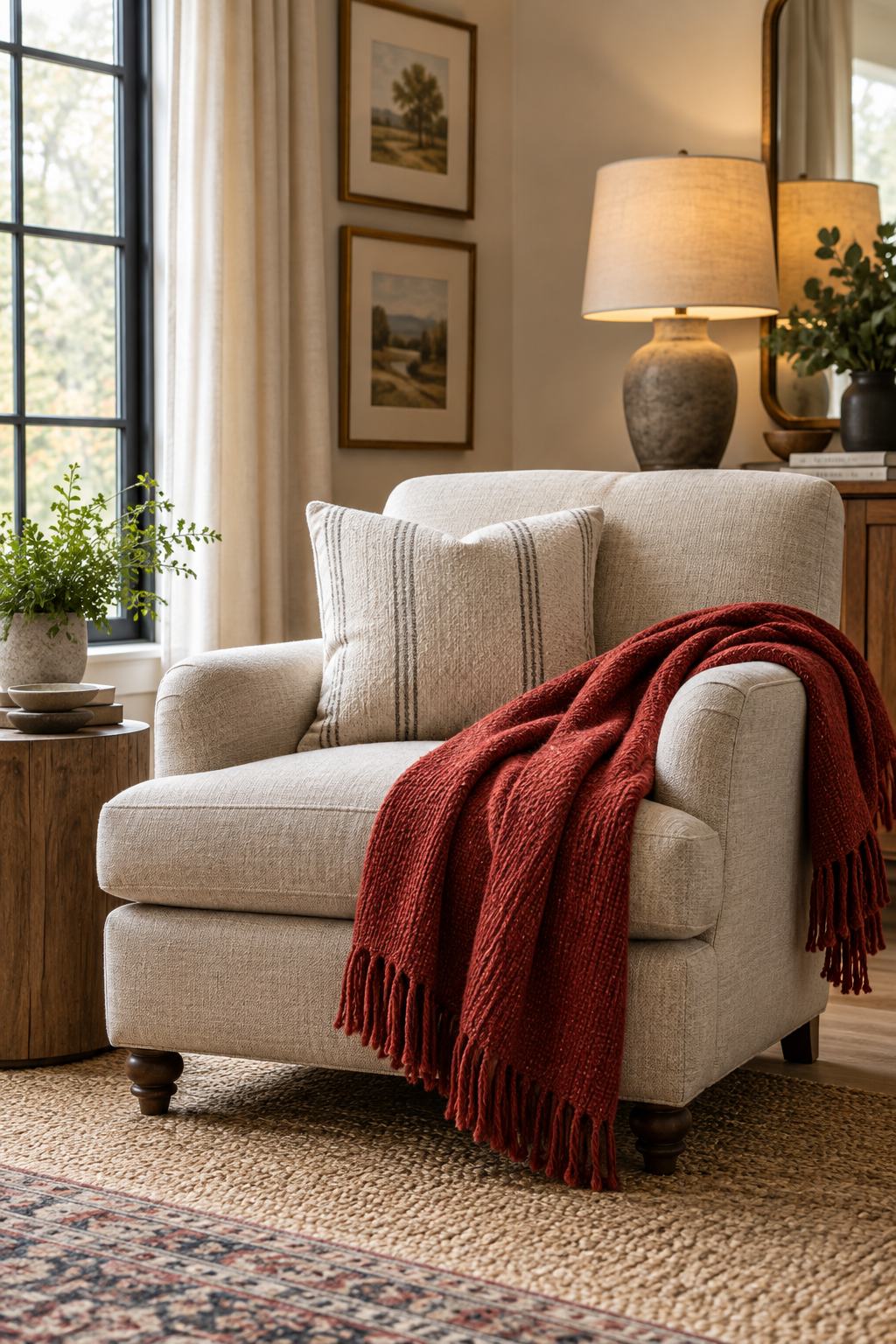
The most polished version combines visual impact with a practical everyday purpose. For add a red throw for soft seasonal energy, choose proportions that relate to the nearest furniture instead of buying by impulse. Keep the surrounding palette edited so the eye understands where to land. Texture matters as much as color: linen, wool, wood, matte metal and softly reflective finishes prevent the arrangement from feeling flat. The goal is a finished red accent moment that looks intentional from across the room and remains useful at close range.
Before committing, map the footprint with painter’s tape and view it in morning and evening light. Leave walking paths, drawers, doors and outlets fully functional. If the room is small, select one hero element and let secondary details repeat its shape or tone quietly. This approach reduces clutter, makes future changes easier and helps affordable pieces appear more cohesive. Photograph the result from the doorway; anything that competes with the main idea can usually be removed or relocated.
9. Paint an Interior Door in Deep Oxblood
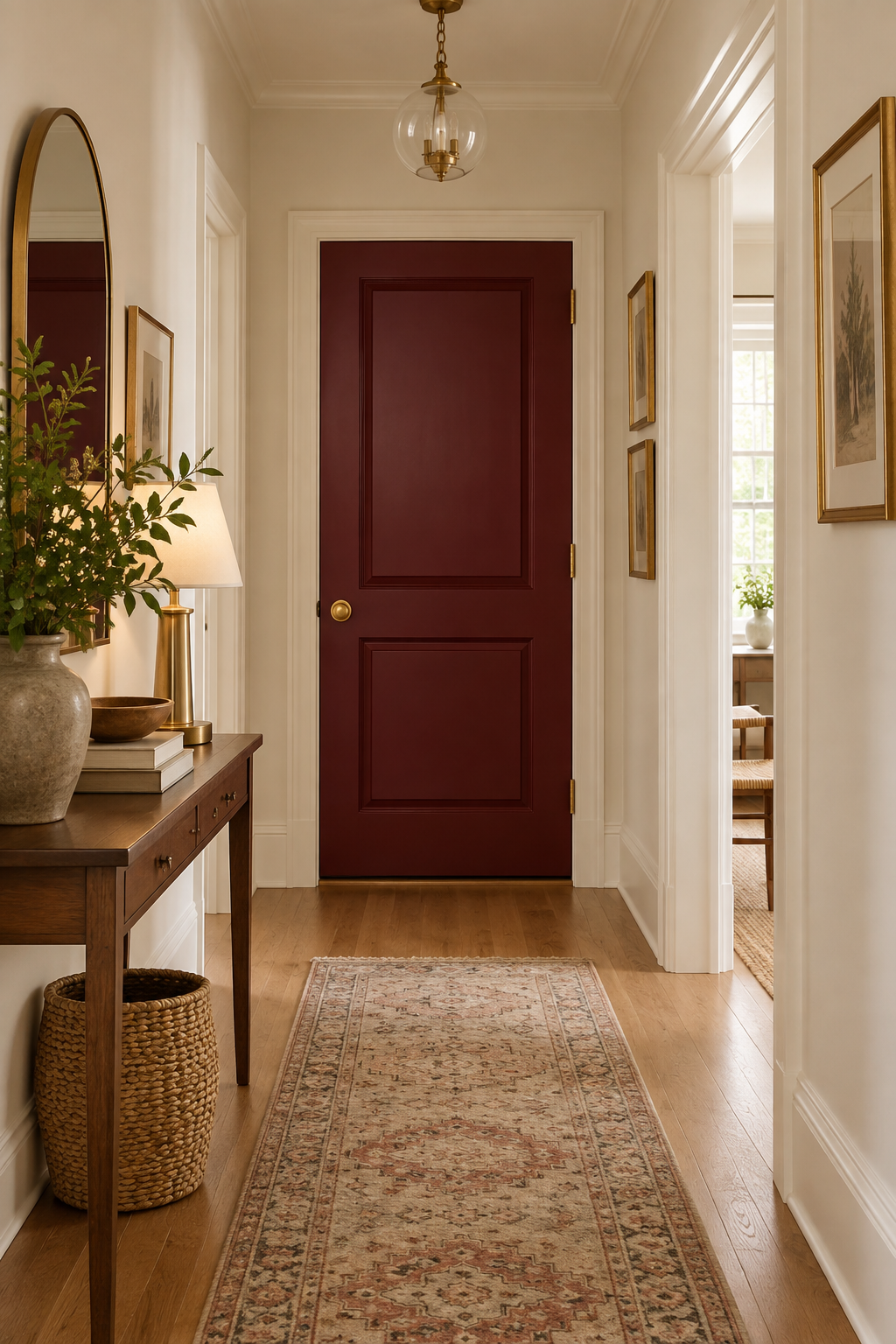
A restrained installation keeps the result flexible, calm and easy to maintain. For paint an interior door in deep oxblood, choose proportions that relate to the nearest furniture instead of buying by impulse. Keep the surrounding palette edited so the eye understands where to land. Texture matters as much as color: linen, wool, wood, matte metal and softly reflective finishes prevent the arrangement from feeling flat. The goal is a finished red accent moment that looks intentional from across the room and remains useful at close range.
Before committing, map the footprint with painter’s tape and view it in morning and evening light. Leave walking paths, drawers, doors and outlets fully functional. If the room is small, select one hero element and let secondary details repeat its shape or tone quietly. This approach reduces clutter, makes future changes easier and helps affordable pieces appear more cohesive. Photograph the result from the doorway; anything that competes with the main idea can usually be removed or relocated.
10. Create Focus with Red Dining Chairs
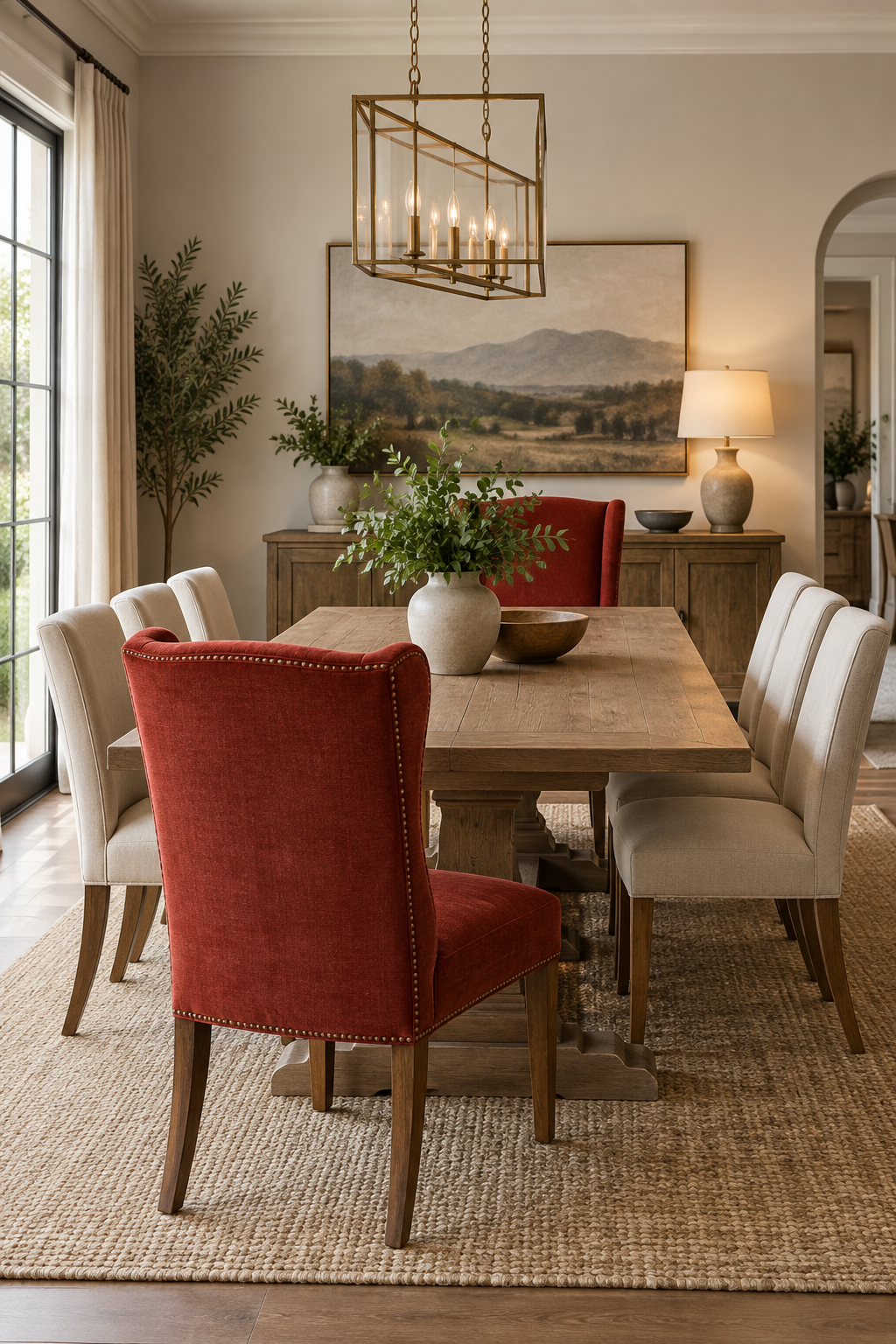
Use the surrounding neutral materials to give this feature enough breathing room. For create focus with red dining chairs, choose proportions that relate to the nearest furniture instead of buying by impulse. Keep the surrounding palette edited so the eye understands where to land. Texture matters as much as color: linen, wool, wood, matte metal and softly reflective finishes prevent the arrangement from feeling flat. The goal is a finished red accent moment that looks intentional from across the room and remains useful at close range.
Before committing, map the footprint with painter’s tape and view it in morning and evening light. Leave walking paths, drawers, doors and outlets fully functional. If the room is small, select one hero element and let secondary details repeat its shape or tone quietly. This approach reduces clutter, makes future changes easier and helps affordable pieces appear more cohesive. Photograph the result from the doorway; anything that competes with the main idea can usually be removed or relocated.
11. Display Red Books in a Curated Shelf Stack
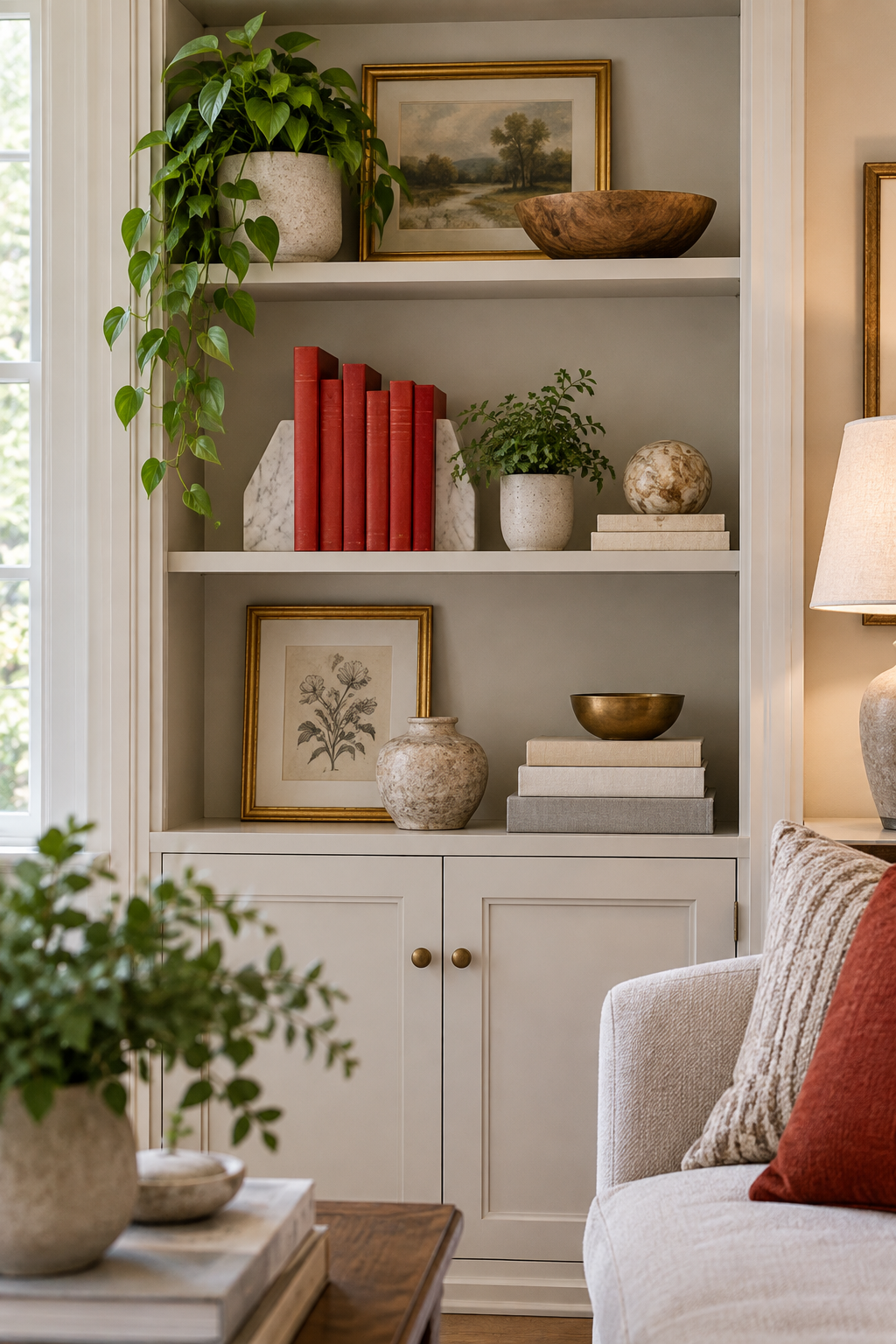
Begin by treating the accent as a deliberate focal point rather than filling every available surface. For display red books in a curated shelf stack, choose proportions that relate to the nearest furniture instead of buying by impulse. Keep the surrounding palette edited so the eye understands where to land. Texture matters as much as color: linen, wool, wood, matte metal and softly reflective finishes prevent the arrangement from feeling flat. The goal is a finished red accent moment that looks intentional from across the room and remains useful at close range.
Before committing, map the footprint with painter’s tape and view it in morning and evening light. Leave walking paths, drawers, doors and outlets fully functional. If the room is small, select one hero element and let secondary details repeat its shape or tone quietly. This approach reduces clutter, makes future changes easier and helps affordable pieces appear more cohesive. Photograph the result from the doorway; anything that competes with the main idea can usually be removed or relocated.
12. Bring Red to the Coffee Table with Lacquered Trays
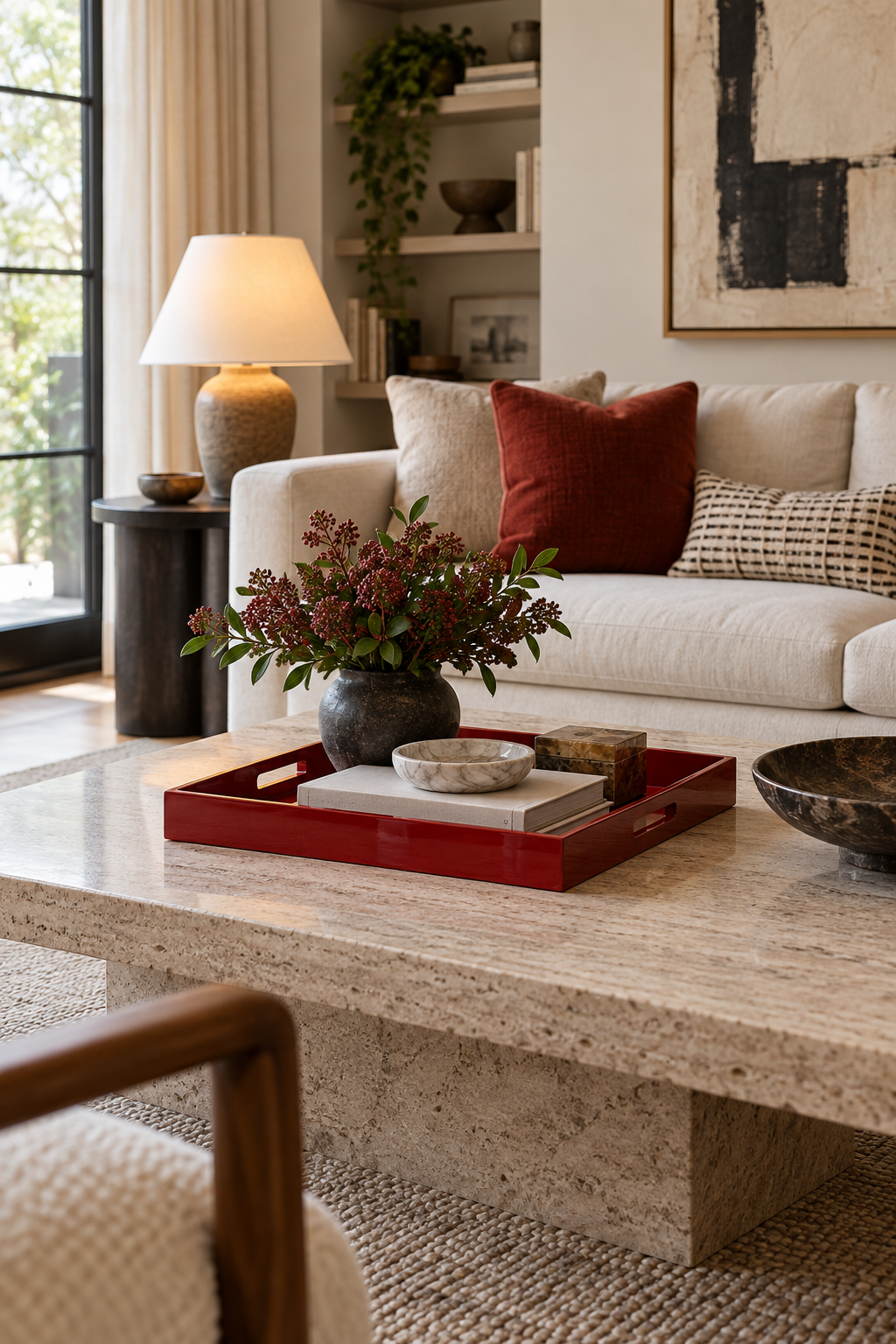
Scale is the detail that makes this idea look considered in a compact home. For bring red to the coffee table with lacquered trays, choose proportions that relate to the nearest furniture instead of buying by impulse. Keep the surrounding palette edited so the eye understands where to land. Texture matters as much as color: linen, wool, wood, matte metal and softly reflective finishes prevent the arrangement from feeling flat. The goal is a finished red accent moment that looks intentional from across the room and remains useful at close range.
Before committing, map the footprint with painter’s tape and view it in morning and evening light. Leave walking paths, drawers, doors and outlets fully functional. If the room is small, select one hero element and let secondary details repeat its shape or tone quietly. This approach reduces clutter, makes future changes easier and helps affordable pieces appear more cohesive. Photograph the result from the doorway; anything that competes with the main idea can usually be removed or relocated.
13. Choose Garnet Curtains for a Cocooning Effect
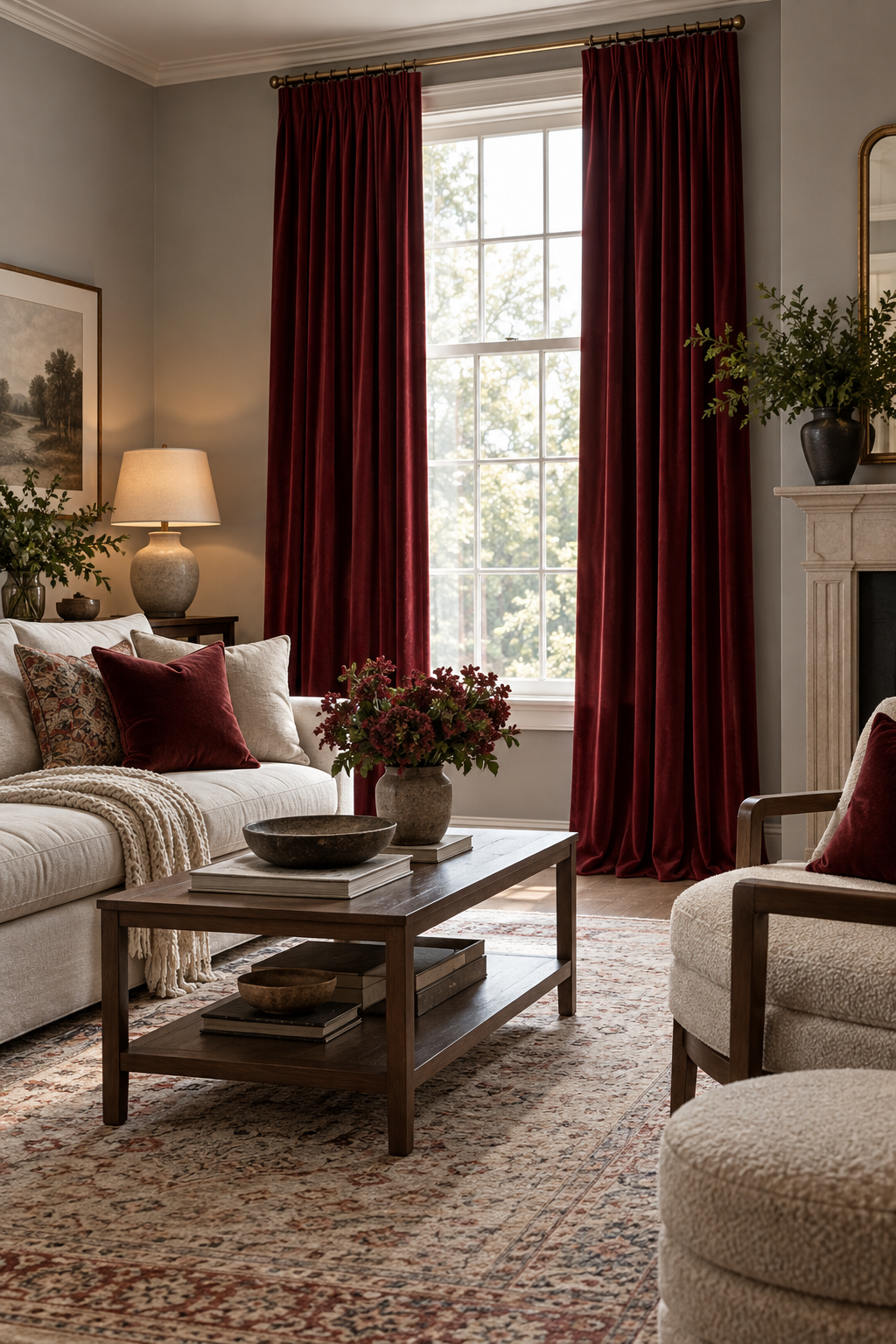
The most polished version combines visual impact with a practical everyday purpose. For choose garnet curtains for a cocooning effect, choose proportions that relate to the nearest furniture instead of buying by impulse. Keep the surrounding palette edited so the eye understands where to land. Texture matters as much as color: linen, wool, wood, matte metal and softly reflective finishes prevent the arrangement from feeling flat. The goal is a finished red accent moment that looks intentional from across the room and remains useful at close range.
Before committing, map the footprint with painter’s tape and view it in morning and evening light. Leave walking paths, drawers, doors and outlets fully functional. If the room is small, select one hero element and let secondary details repeat its shape or tone quietly. This approach reduces clutter, makes future changes easier and helps affordable pieces appear more cohesive. Photograph the result from the doorway; anything that competes with the main idea can usually be removed or relocated.
14. Introduce Red through Striped Textiles
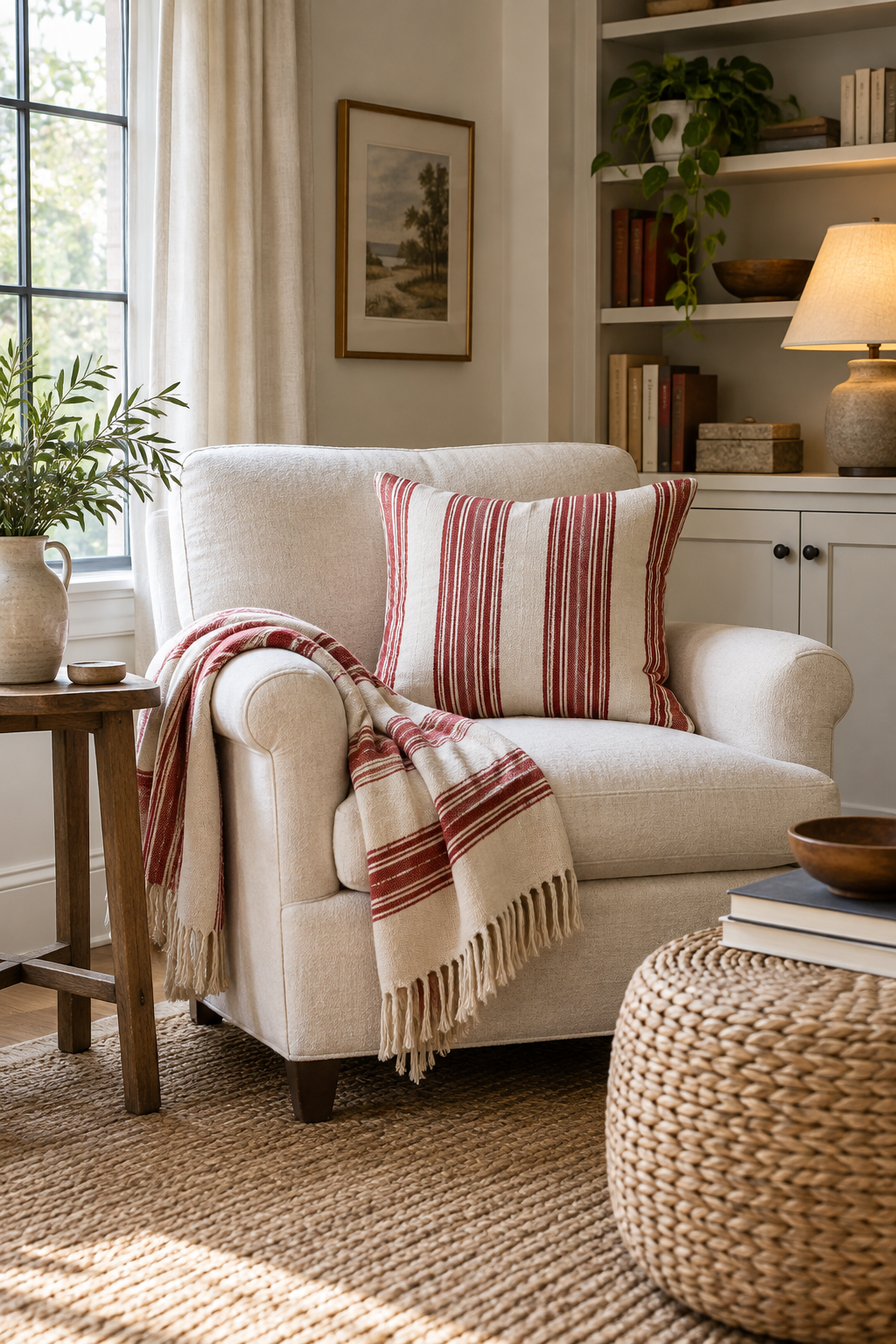
A restrained installation keeps the result flexible, calm and easy to maintain. For introduce red through striped textiles, choose proportions that relate to the nearest furniture instead of buying by impulse. Keep the surrounding palette edited so the eye understands where to land. Texture matters as much as color: linen, wool, wood, matte metal and softly reflective finishes prevent the arrangement from feeling flat. The goal is a finished red accent moment that looks intentional from across the room and remains useful at close range.
Before committing, map the footprint with painter’s tape and view it in morning and evening light. Leave walking paths, drawers, doors and outlets fully functional. If the room is small, select one hero element and let secondary details repeat its shape or tone quietly. This approach reduces clutter, makes future changes easier and helps affordable pieces appear more cohesive. Photograph the result from the doorway; anything that competes with the main idea can usually be removed or relocated.
15. Use Red Kitchen Stools against White Cabinets
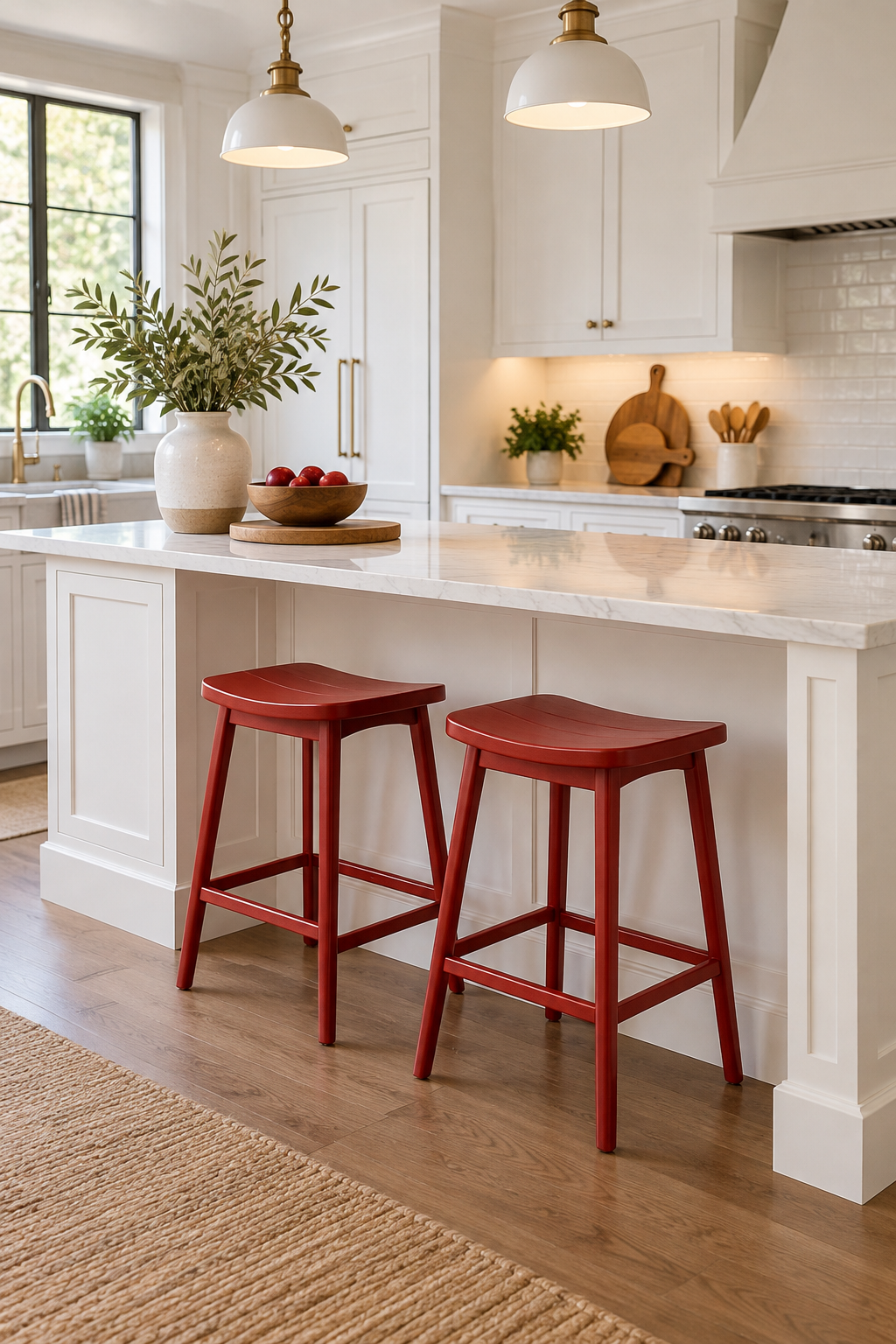
Use the surrounding neutral materials to give this feature enough breathing room. For use red kitchen stools against white cabinets, choose proportions that relate to the nearest furniture instead of buying by impulse. Keep the surrounding palette edited so the eye understands where to land. Texture matters as much as color: linen, wool, wood, matte metal and softly reflective finishes prevent the arrangement from feeling flat. The goal is a finished red accent moment that looks intentional from across the room and remains useful at close range.
Before committing, map the footprint with painter’s tape and view it in morning and evening light. Leave walking paths, drawers, doors and outlets fully functional. If the room is small, select one hero element and let secondary details repeat its shape or tone quietly. This approach reduces clutter, makes future changes easier and helps affordable pieces appear more cohesive. Photograph the result from the doorway; anything that competes with the main idea can usually be removed or relocated.
16. Add Tomato Red Accessories to Open Shelving
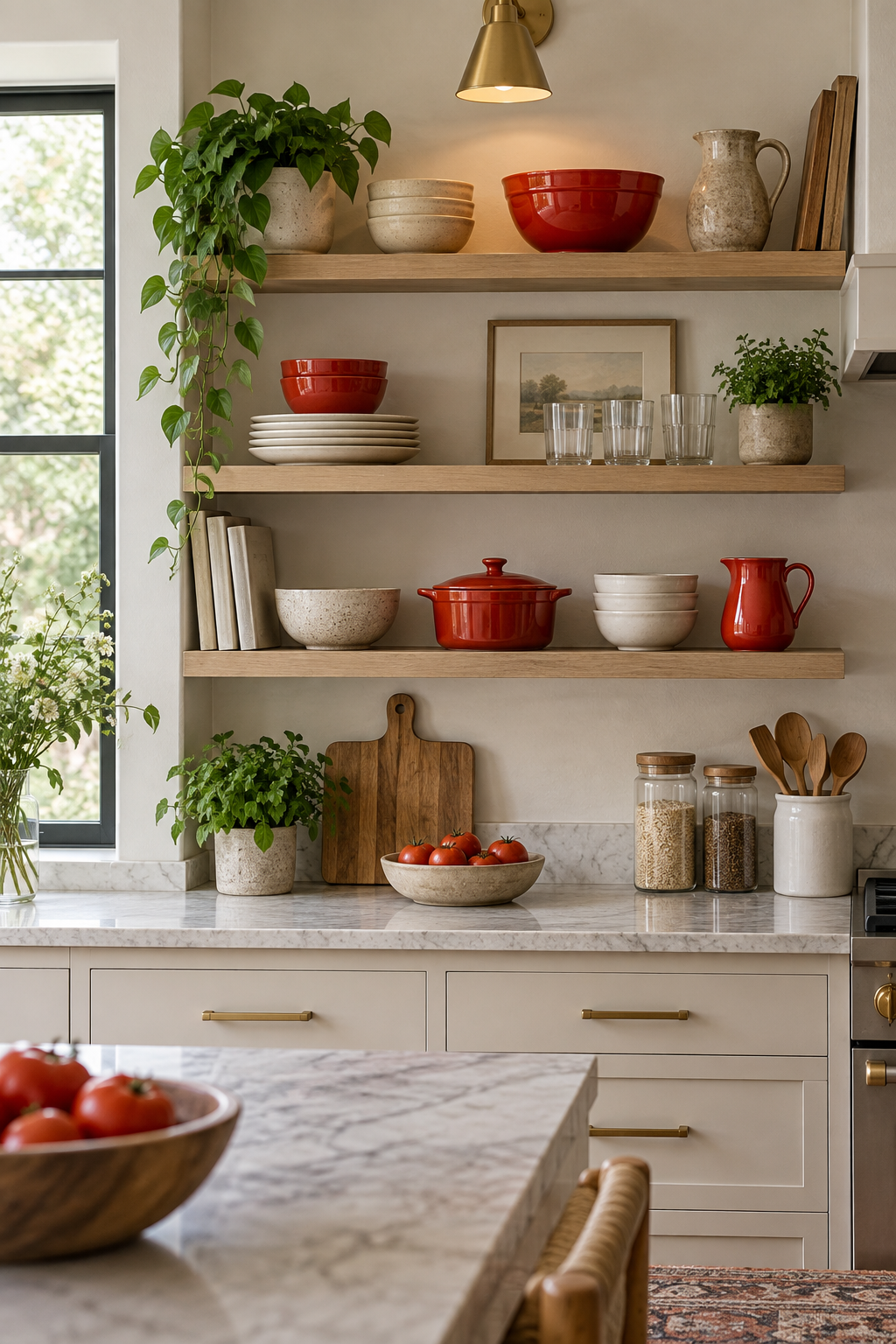
Begin by treating the accent as a deliberate focal point rather than filling every available surface. For add tomato red accessories to open shelving, choose proportions that relate to the nearest furniture instead of buying by impulse. Keep the surrounding palette edited so the eye understands where to land. Texture matters as much as color: linen, wool, wood, matte metal and softly reflective finishes prevent the arrangement from feeling flat. The goal is a finished red accent moment that looks intentional from across the room and remains useful at close range.
Before committing, map the footprint with painter’s tape and view it in morning and evening light. Leave walking paths, drawers, doors and outlets fully functional. If the room is small, select one hero element and let secondary details repeat its shape or tone quietly. This approach reduces clutter, makes future changes easier and helps affordable pieces appear more cohesive. Photograph the result from the doorway; anything that competes with the main idea can usually be removed or relocated.
17. Make a Red Headboard the Bedroom Hero
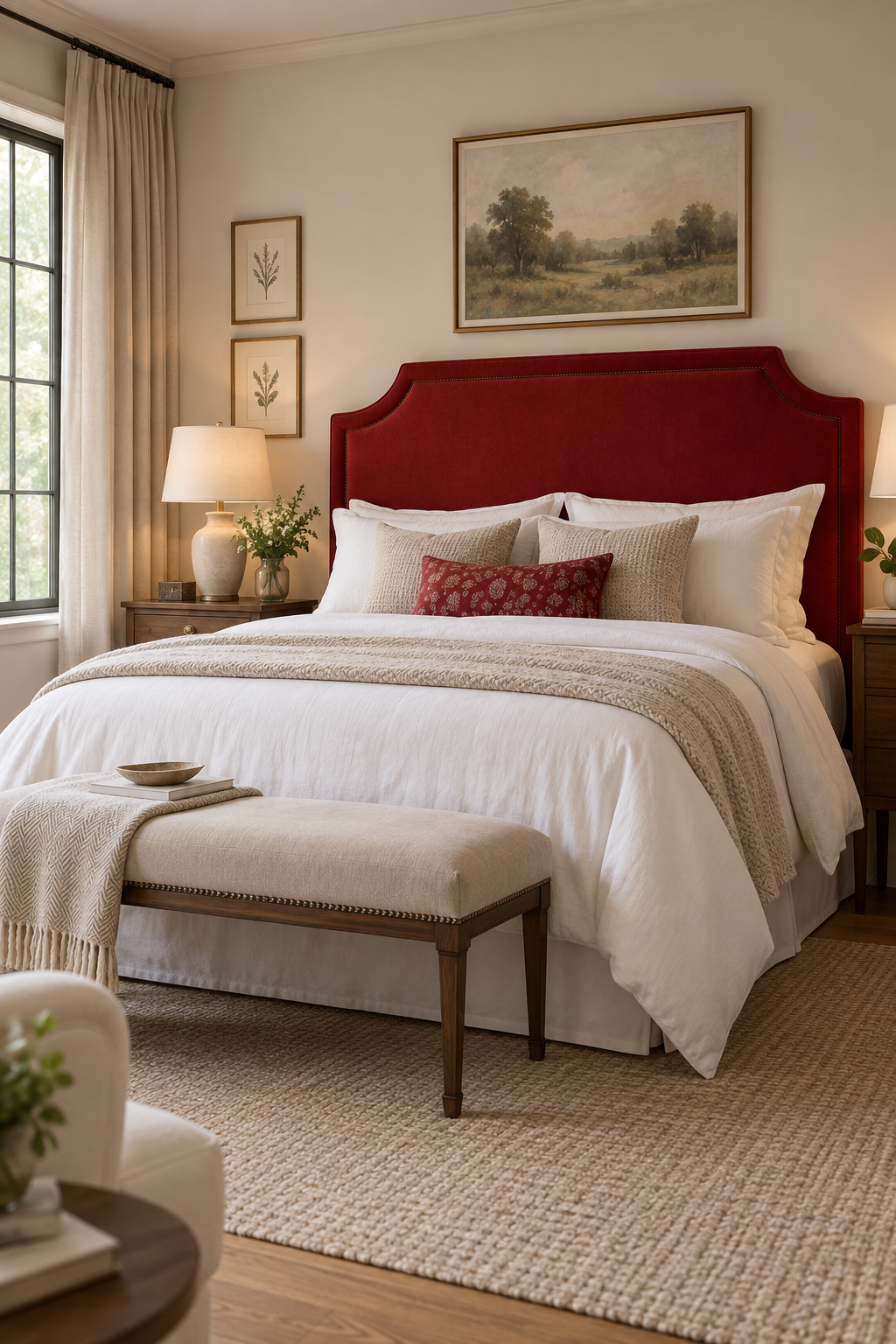
Scale is the detail that makes this idea look considered in a compact home. For make a red headboard the bedroom hero, choose proportions that relate to the nearest furniture instead of buying by impulse. Keep the surrounding palette edited so the eye understands where to land. Texture matters as much as color: linen, wool, wood, matte metal and softly reflective finishes prevent the arrangement from feeling flat. The goal is a finished red accent moment that looks intentional from across the room and remains useful at close range.
Before committing, map the footprint with painter’s tape and view it in morning and evening light. Leave walking paths, drawers, doors and outlets fully functional. If the room is small, select one hero element and let secondary details repeat its shape or tone quietly. This approach reduces clutter, makes future changes easier and helps affordable pieces appear more cohesive. Photograph the result from the doorway; anything that competes with the main idea can usually be removed or relocated.
18. Layer Burgundy Bedding over Crisp Neutrals
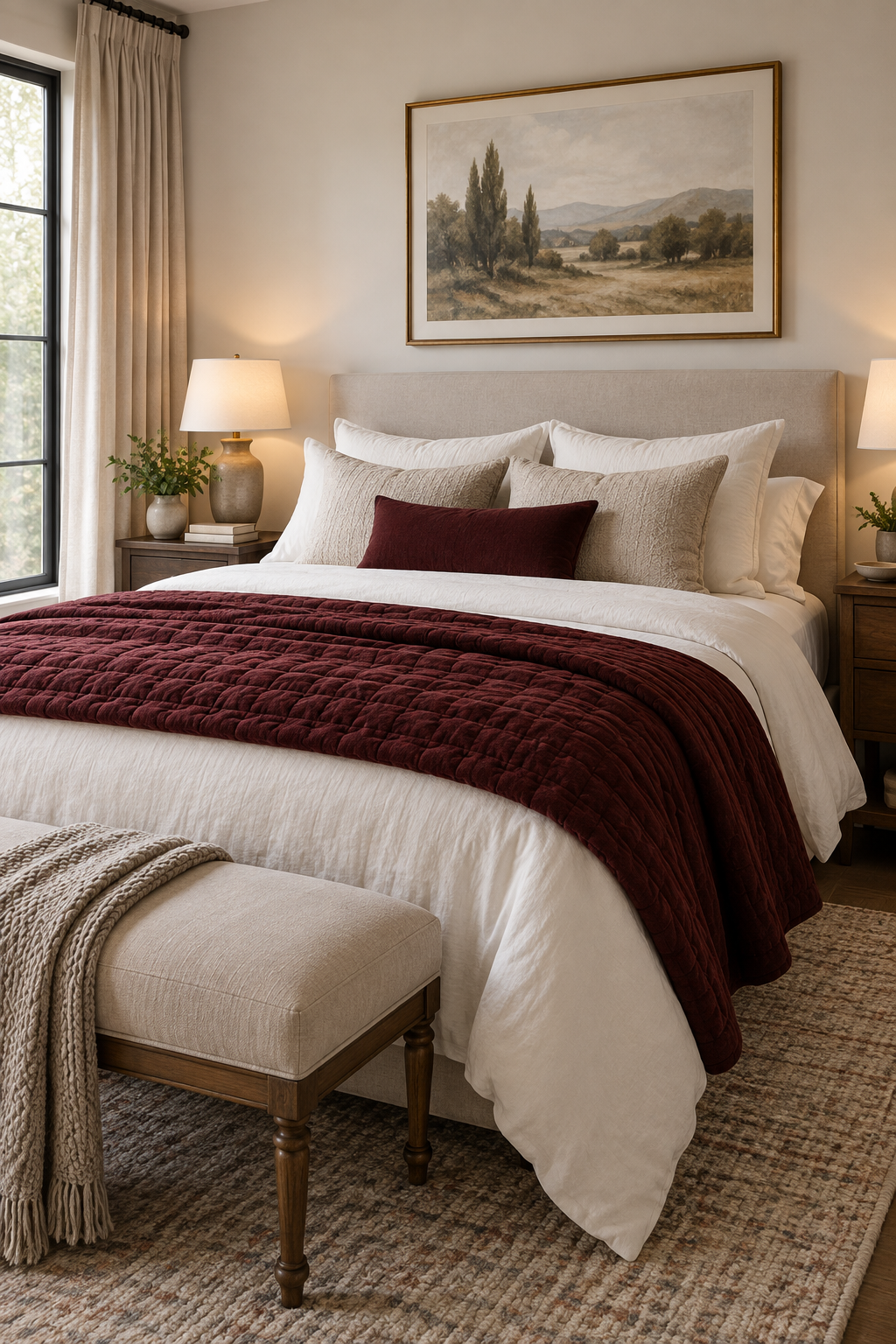
The most polished version combines visual impact with a practical everyday purpose. For layer burgundy bedding over crisp neutrals, choose proportions that relate to the nearest furniture instead of buying by impulse. Keep the surrounding palette edited so the eye understands where to land. Texture matters as much as color: linen, wool, wood, matte metal and softly reflective finishes prevent the arrangement from feeling flat. The goal is a finished red accent moment that looks intentional from across the room and remains useful at close range.
Before committing, map the footprint with painter’s tape and view it in morning and evening light. Leave walking paths, drawers, doors and outlets fully functional. If the room is small, select one hero element and let secondary details repeat its shape or tone quietly. This approach reduces clutter, makes future changes easier and helps affordable pieces appear more cohesive. Photograph the result from the doorway; anything that competes with the main idea can usually be removed or relocated.
19. Energize the Entryway with a Red Bench
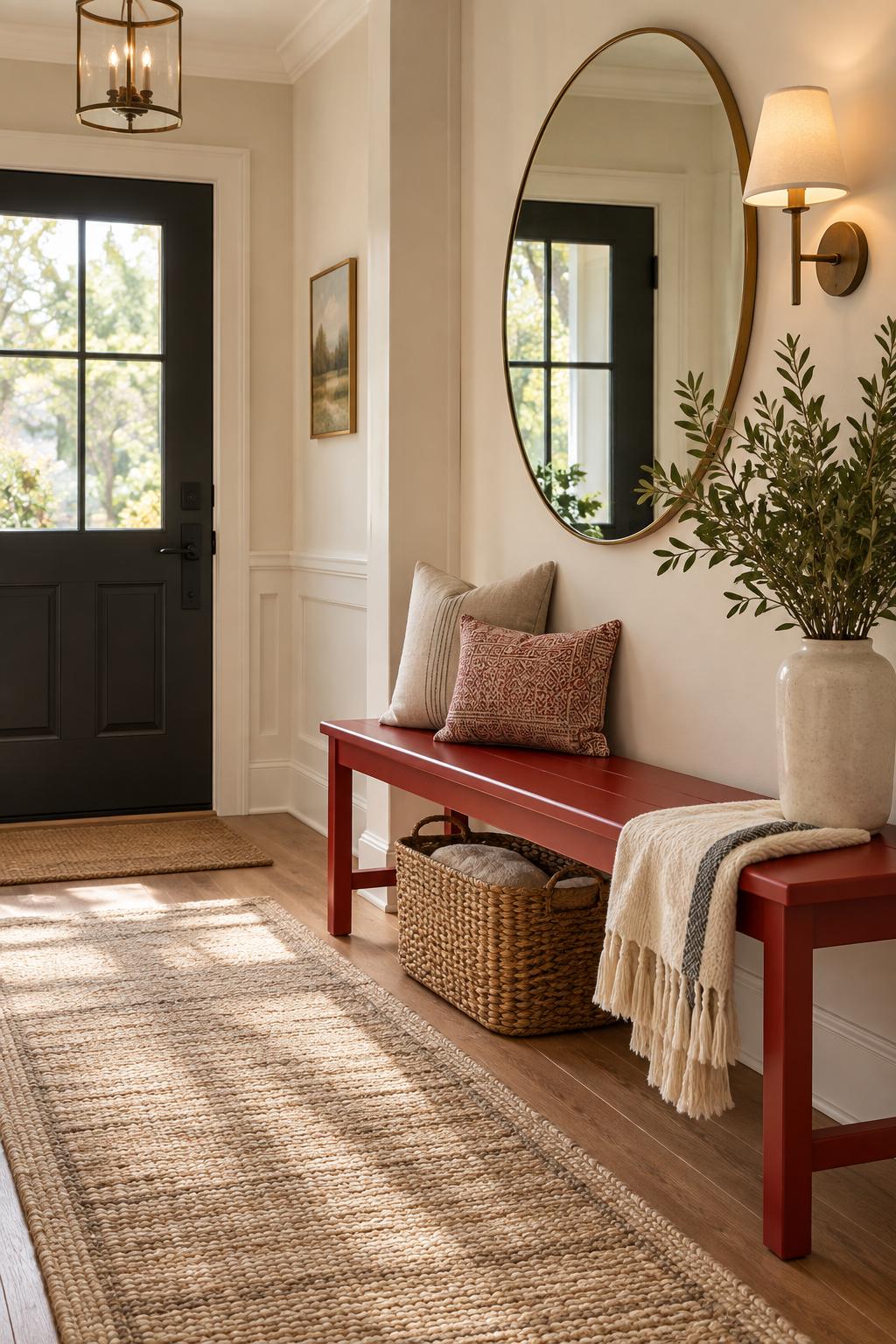
A restrained installation keeps the result flexible, calm and easy to maintain. For energize the entryway with a red bench, choose proportions that relate to the nearest furniture instead of buying by impulse. Keep the surrounding palette edited so the eye understands where to land. Texture matters as much as color: linen, wool, wood, matte metal and softly reflective finishes prevent the arrangement from feeling flat. The goal is a finished red accent moment that looks intentional from across the room and remains useful at close range.
Before committing, map the footprint with painter’s tape and view it in morning and evening light. Leave walking paths, drawers, doors and outlets fully functional. If the room is small, select one hero element and let secondary details repeat its shape or tone quietly. This approach reduces clutter, makes future changes easier and helps affordable pieces appear more cohesive. Photograph the result from the doorway; anything that competes with the main idea can usually be removed or relocated.
20. Turn a Red Mirror into a Graphic Focal Point
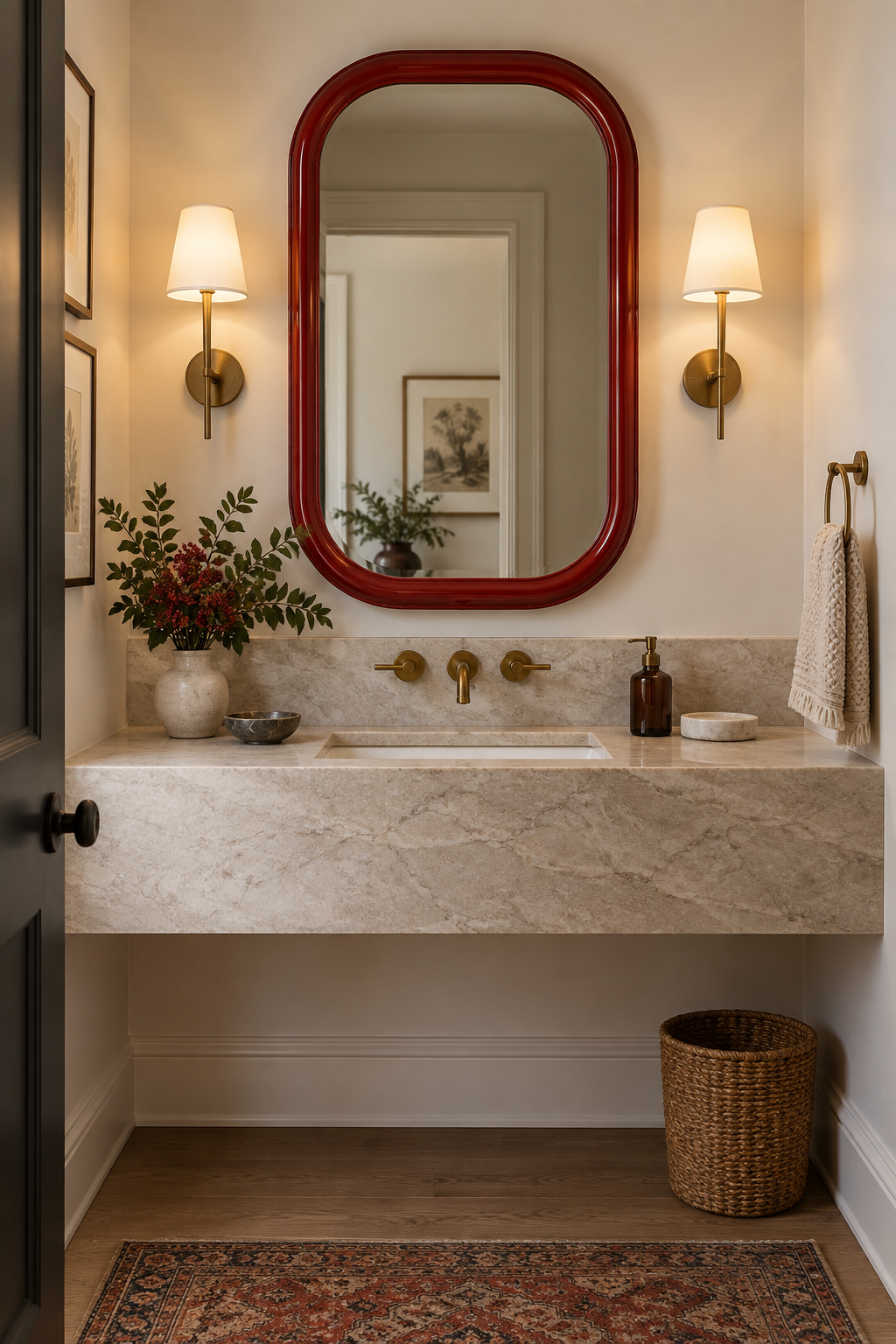
Use the surrounding neutral materials to give this feature enough breathing room. For turn a red mirror into a graphic focal point, choose proportions that relate to the nearest furniture instead of buying by impulse. Keep the surrounding palette edited so the eye understands where to land. Texture matters as much as color: linen, wool, wood, matte metal and softly reflective finishes prevent the arrangement from feeling flat. The goal is a finished red accent moment that looks intentional from across the room and remains useful at close range.
Before committing, map the footprint with painter’s tape and view it in morning and evening light. Leave walking paths, drawers, doors and outlets fully functional. If the room is small, select one hero element and let secondary details repeat its shape or tone quietly. This approach reduces clutter, makes future changes easier and helps affordable pieces appear more cohesive. Photograph the result from the doorway; anything that competes with the main idea can usually be removed or relocated.
21. Use Brick Red Tile in a Small Defined Zone
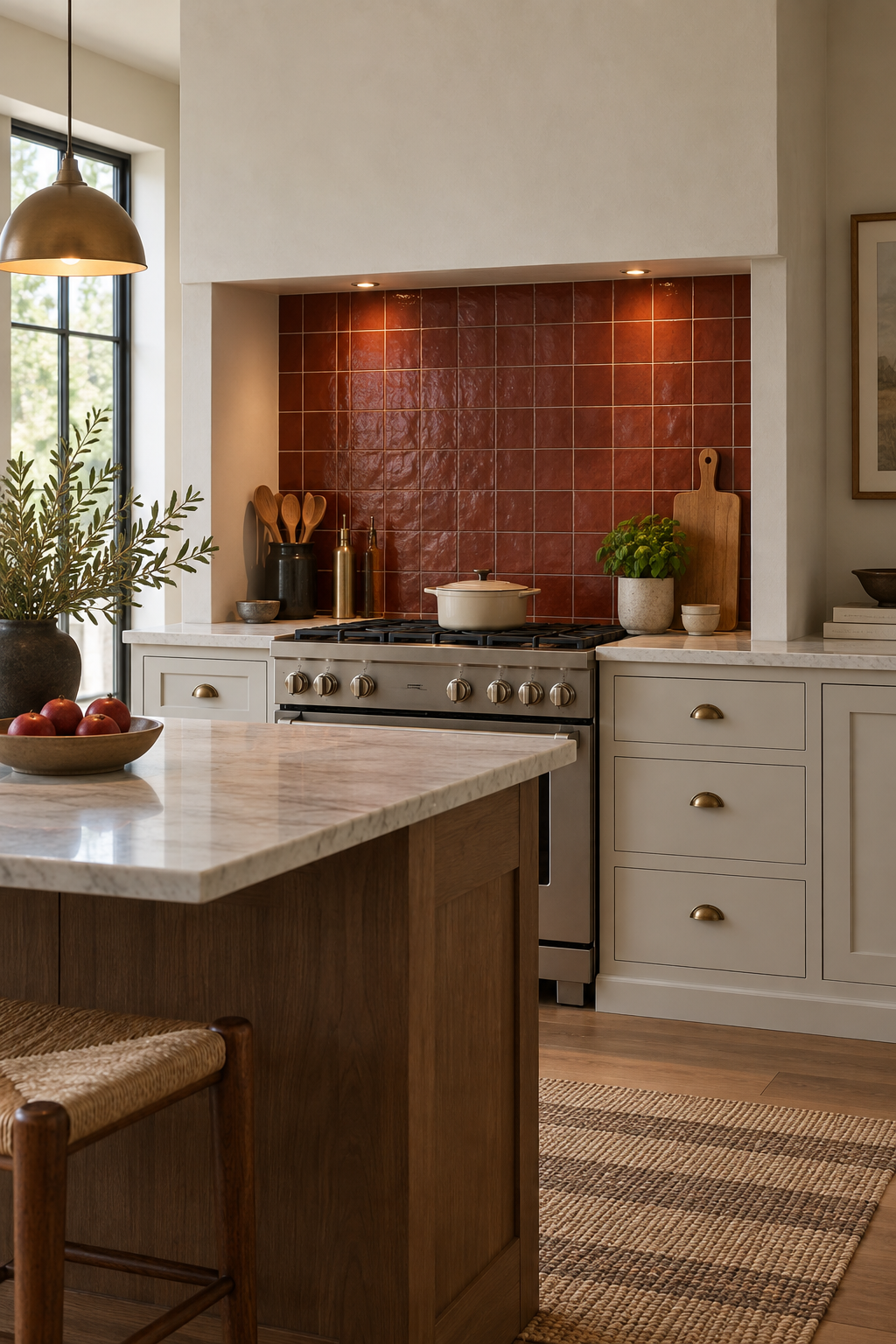
Begin by treating the accent as a deliberate focal point rather than filling every available surface. For use brick red tile in a small defined zone, choose proportions that relate to the nearest furniture instead of buying by impulse. Keep the surrounding palette edited so the eye understands where to land. Texture matters as much as color: linen, wool, wood, matte metal and softly reflective finishes prevent the arrangement from feeling flat. The goal is a finished red accent moment that looks intentional from across the room and remains useful at close range.
Before committing, map the footprint with painter’s tape and view it in morning and evening light. Leave walking paths, drawers, doors and outlets fully functional. If the room is small, select one hero element and let secondary details repeat its shape or tone quietly. This approach reduces clutter, makes future changes easier and helps affordable pieces appear more cohesive. Photograph the result from the doorway; anything that competes with the main idea can usually be removed or relocated.
22. Pair Red Glass with Warm Wood
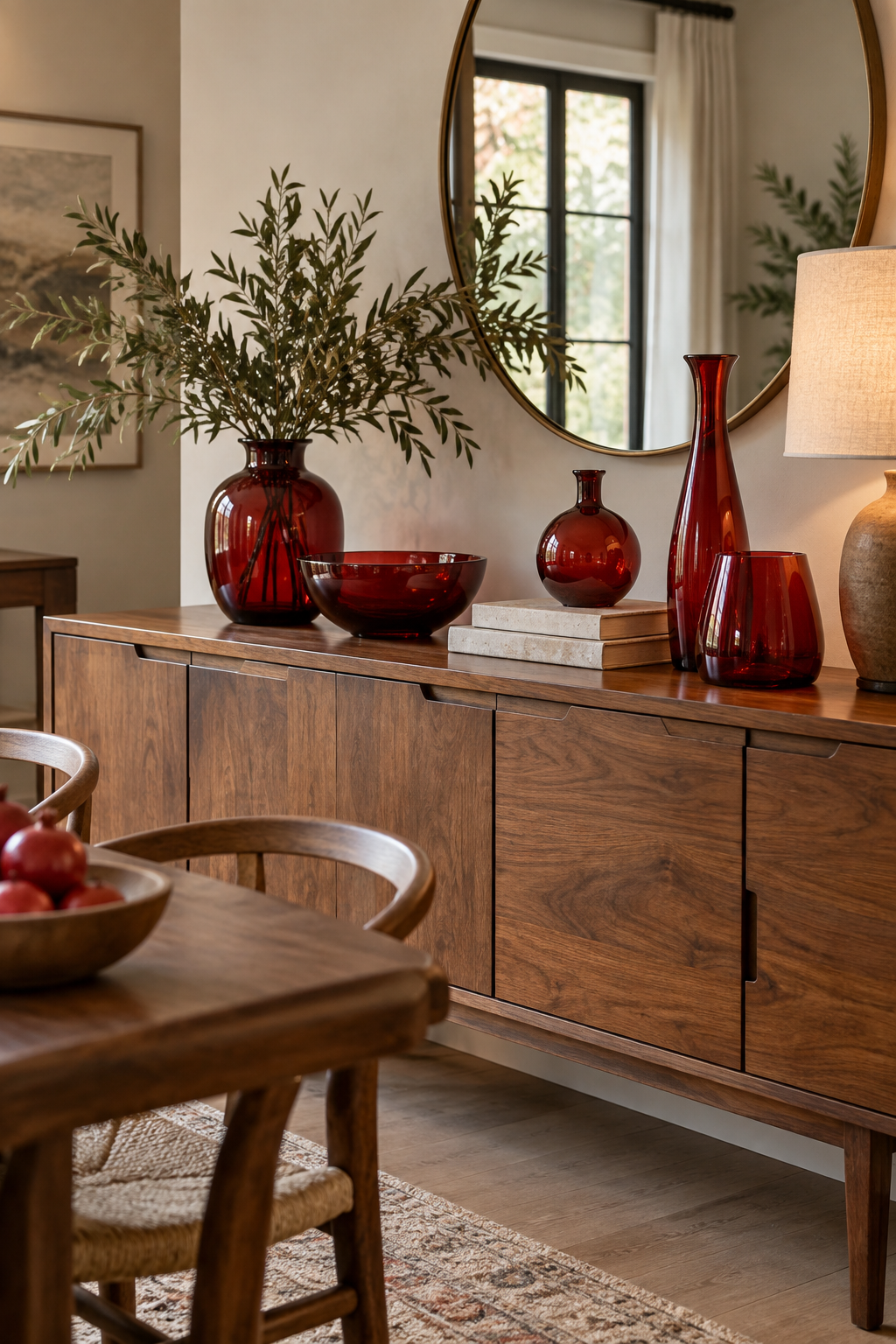
Scale is the detail that makes this idea look considered in a compact home. For pair red glass with warm wood, choose proportions that relate to the nearest furniture instead of buying by impulse. Keep the surrounding palette edited so the eye understands where to land. Texture matters as much as color: linen, wool, wood, matte metal and softly reflective finishes prevent the arrangement from feeling flat. The goal is a finished red accent moment that looks intentional from across the room and remains useful at close range.
Before committing, map the footprint with painter’s tape and view it in morning and evening light. Leave walking paths, drawers, doors and outlets fully functional. If the room is small, select one hero element and let secondary details repeat its shape or tone quietly. This approach reduces clutter, makes future changes easier and helps affordable pieces appear more cohesive. Photograph the result from the doorway; anything that competes with the main idea can usually be removed or relocated.
23. Add a Red Desk Lamp to a Quiet Workspace
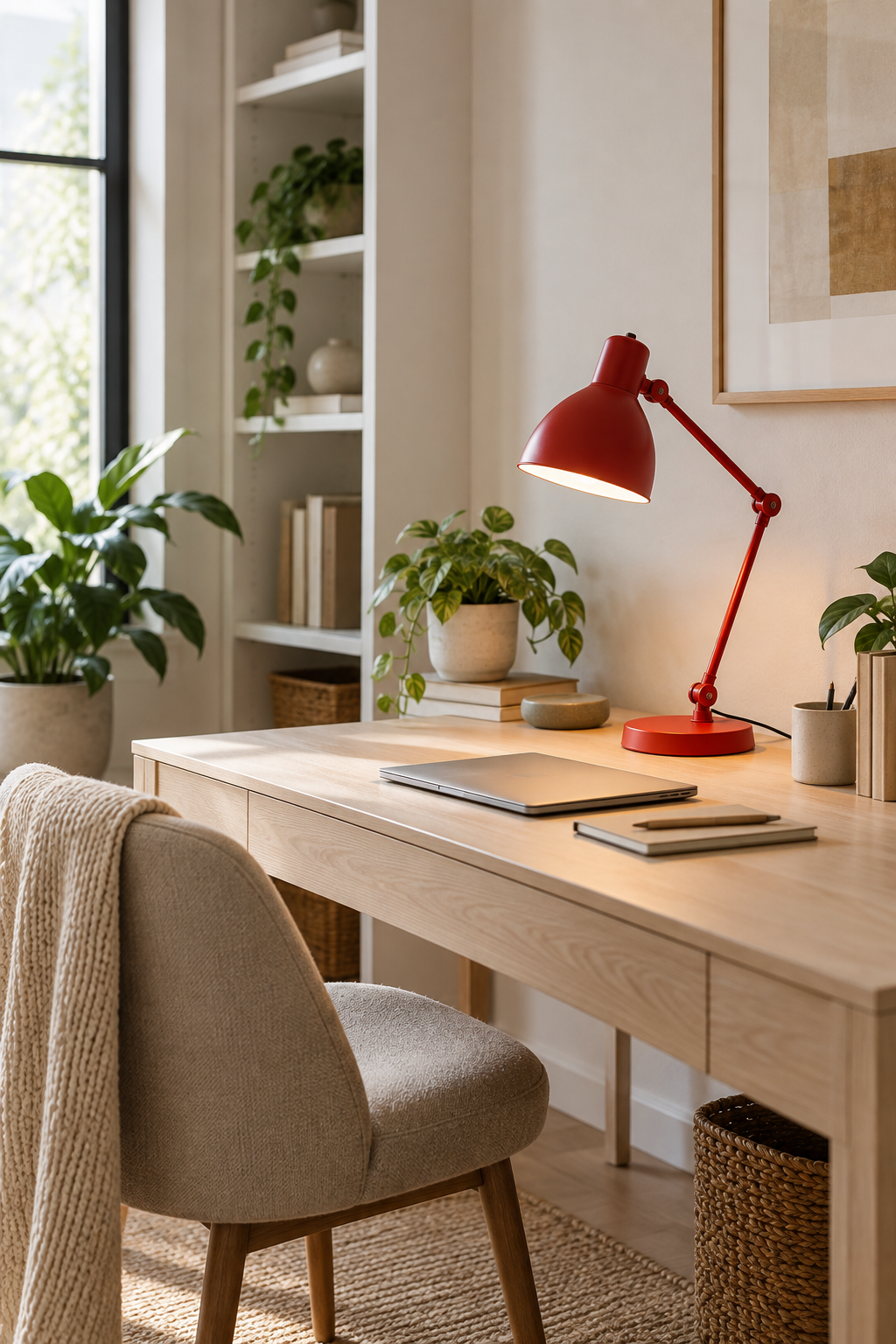
The most polished version combines visual impact with a practical everyday purpose. For add a red desk lamp to a quiet workspace, choose proportions that relate to the nearest furniture instead of buying by impulse. Keep the surrounding palette edited so the eye understands where to land. Texture matters as much as color: linen, wool, wood, matte metal and softly reflective finishes prevent the arrangement from feeling flat. The goal is a finished red accent moment that looks intentional from across the room and remains useful at close range.
Before committing, map the footprint with painter’s tape and view it in morning and evening light. Leave walking paths, drawers, doors and outlets fully functional. If the room is small, select one hero element and let secondary details repeat its shape or tone quietly. This approach reduces clutter, makes future changes easier and helps affordable pieces appear more cohesive. Photograph the result from the doorway; anything that competes with the main idea can usually be removed or relocated.
24. Style Red Flowers as a Temporary Accent
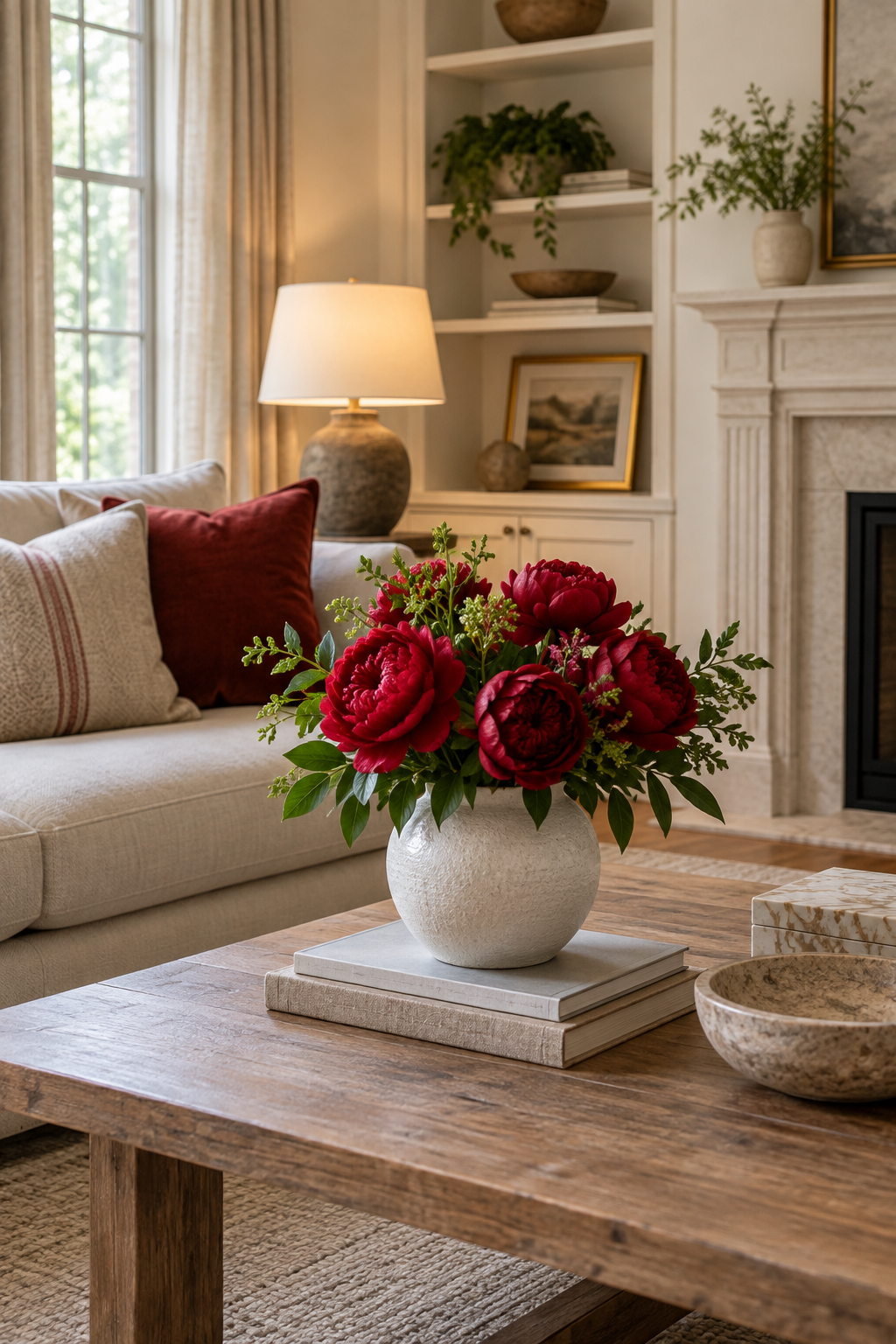
A restrained installation keeps the result flexible, calm and easy to maintain. For style red flowers as a temporary accent, choose proportions that relate to the nearest furniture instead of buying by impulse. Keep the surrounding palette edited so the eye understands where to land. Texture matters as much as color: linen, wool, wood, matte metal and softly reflective finishes prevent the arrangement from feeling flat. The goal is a finished red accent moment that looks intentional from across the room and remains useful at close range.
Before committing, map the footprint with painter’s tape and view it in morning and evening light. Leave walking paths, drawers, doors and outlets fully functional. If the room is small, select one hero element and let secondary details repeat its shape or tone quietly. This approach reduces clutter, makes future changes easier and helps affordable pieces appear more cohesive. Photograph the result from the doorway; anything that competes with the main idea can usually be removed or relocated.
25. Outline a Niche with Muted Red Paint
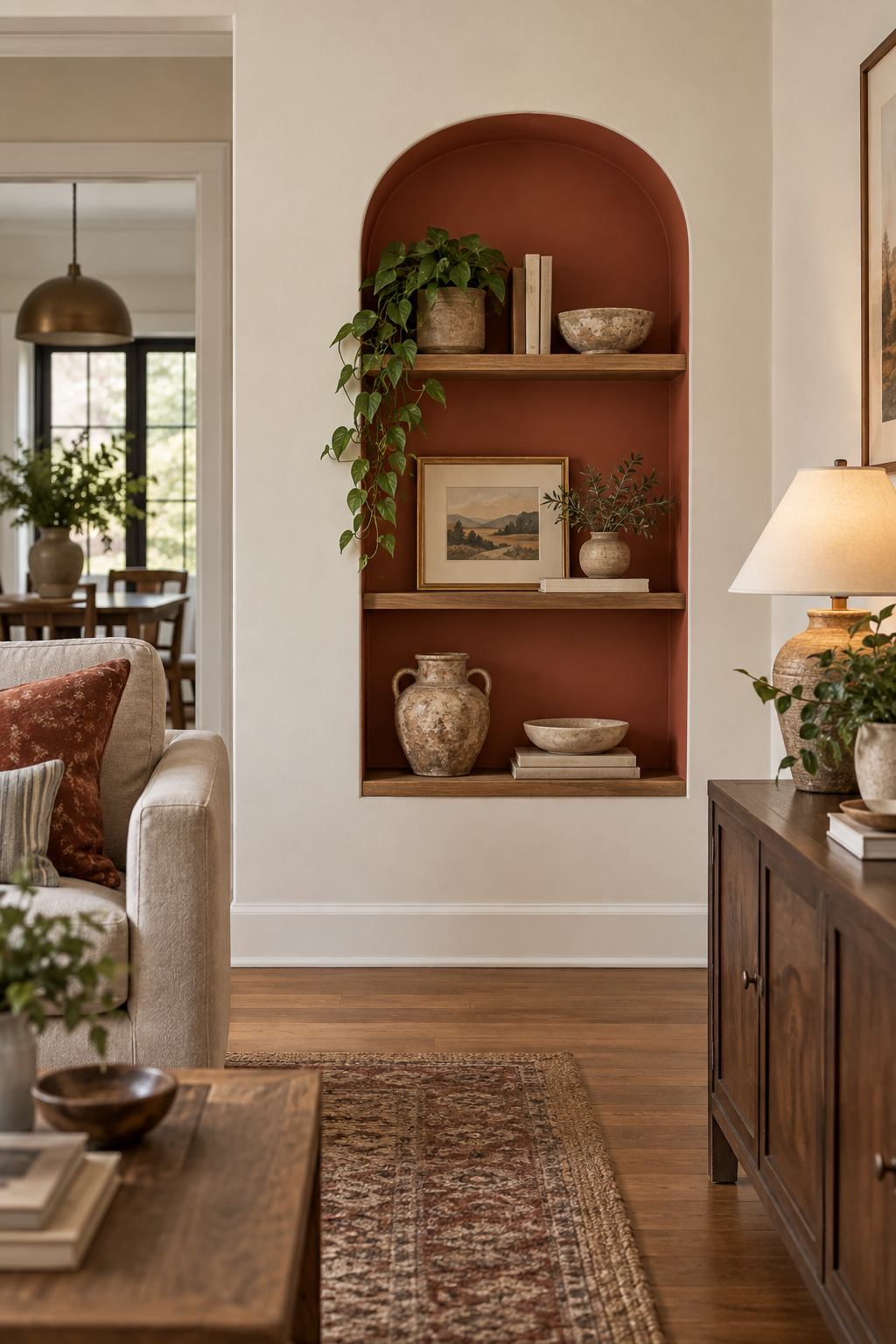
Use the surrounding neutral materials to give this feature enough breathing room. For outline a niche with muted red paint, choose proportions that relate to the nearest furniture instead of buying by impulse. Keep the surrounding palette edited so the eye understands where to land. Texture matters as much as color: linen, wool, wood, matte metal and softly reflective finishes prevent the arrangement from feeling flat. The goal is a finished red accent moment that looks intentional from across the room and remains useful at close range.
Before committing, map the footprint with painter’s tape and view it in morning and evening light. Leave walking paths, drawers, doors and outlets fully functional. If the room is small, select one hero element and let secondary details repeat its shape or tone quietly. This approach reduces clutter, makes future changes easier and helps affordable pieces appear more cohesive. Photograph the result from the doorway; anything that competes with the main idea can usually be removed or relocated.
26. Combine Red with Black for Modern Contrast
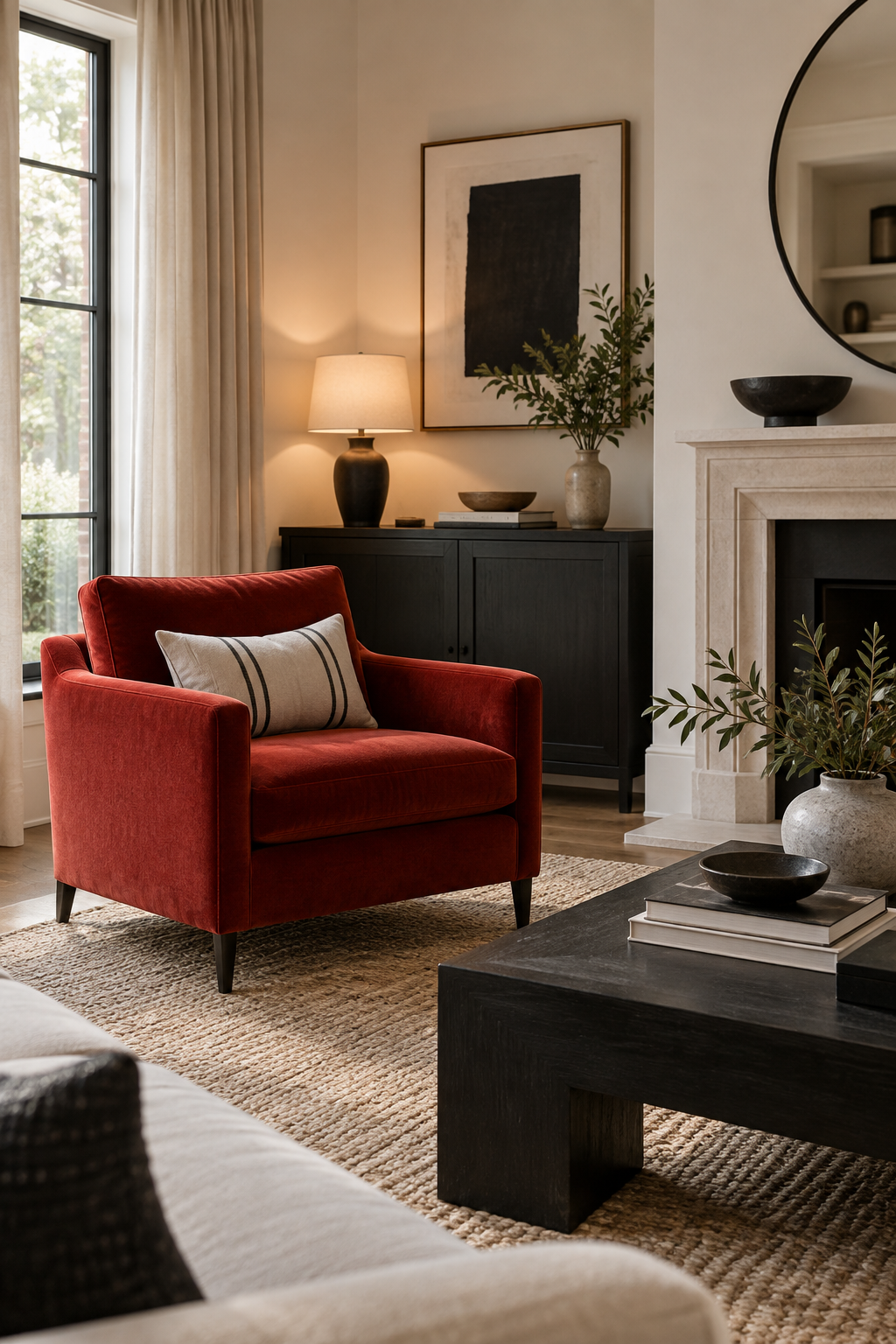
Begin by treating the accent as a deliberate focal point rather than filling every available surface. For combine red with black for modern contrast, choose proportions that relate to the nearest furniture instead of buying by impulse. Keep the surrounding palette edited so the eye understands where to land. Texture matters as much as color: linen, wool, wood, matte metal and softly reflective finishes prevent the arrangement from feeling flat. The goal is a finished red accent moment that looks intentional from across the room and remains useful at close range.
Before committing, map the footprint with painter’s tape and view it in morning and evening light. Leave walking paths, drawers, doors and outlets fully functional. If the room is small, select one hero element and let secondary details repeat its shape or tone quietly. This approach reduces clutter, makes future changes easier and helps affordable pieces appear more cohesive. Photograph the result from the doorway; anything that competes with the main idea can usually be removed or relocated.
27. Build a Whole-Room Red Accent Rhythm
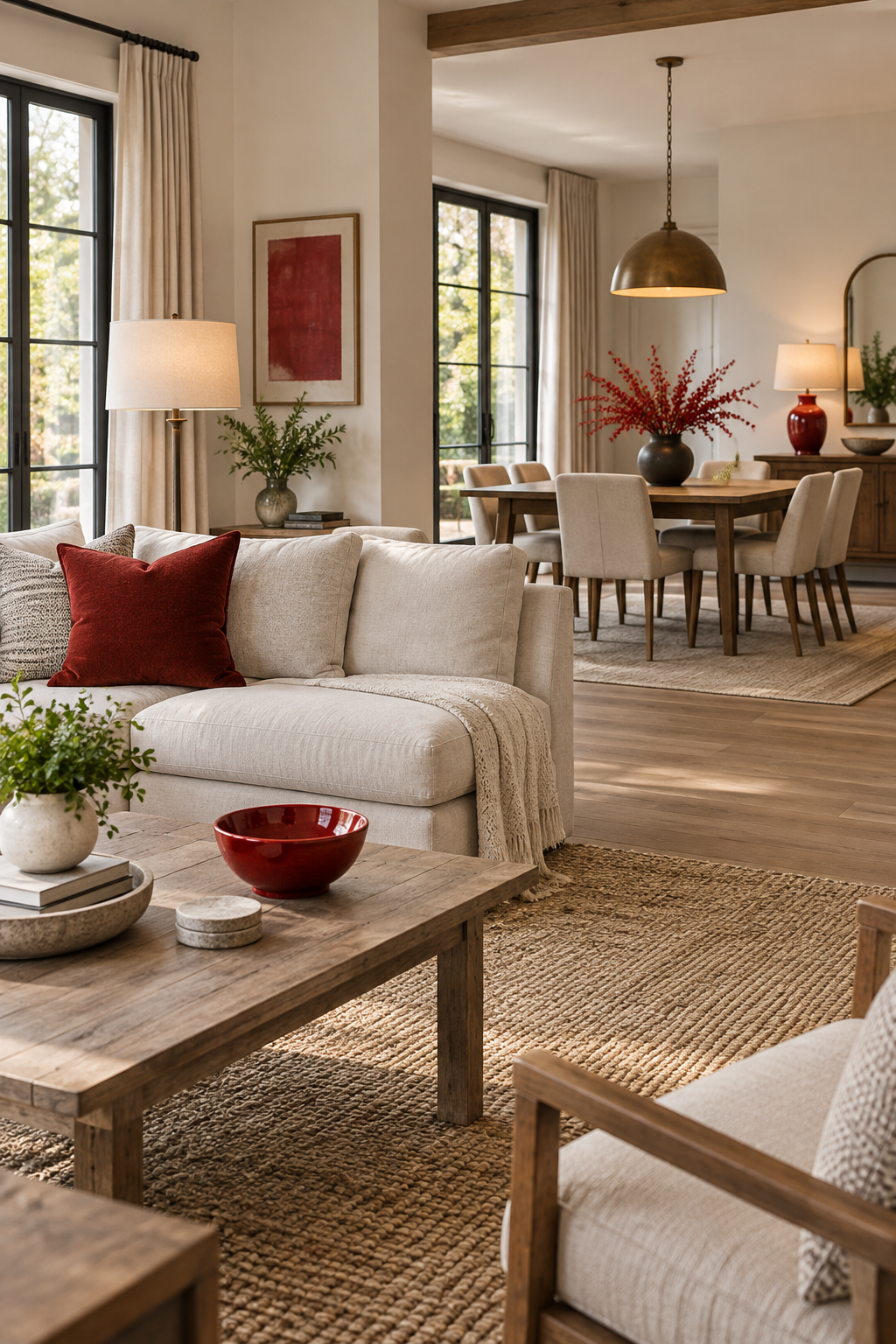
Scale is the detail that makes this idea look considered in a compact home. For build a whole-room red accent rhythm, choose proportions that relate to the nearest furniture instead of buying by impulse. Keep the surrounding palette edited so the eye understands where to land. Texture matters as much as color: linen, wool, wood, matte metal and softly reflective finishes prevent the arrangement from feeling flat. The goal is a finished red accent moment that looks intentional from across the room and remains useful at close range.
Before committing, map the footprint with painter’s tape and view it in morning and evening light. Leave walking paths, drawers, doors and outlets fully functional. If the room is small, select one hero element and let secondary details repeat its shape or tone quietly. This approach reduces clutter, makes future changes easier and helps affordable pieces appear more cohesive. Photograph the result from the doorway; anything that competes with the main idea can usually be removed or relocated.
Final Styling Notes
A cohesive home is built through repetition, editing and realistic maintenance. Step back after each change, keep the useful surfaces clear and repeat only the strongest material or color in two or three places. Save measurements and photographs before purchasing, and favor pieces that can adapt when the room, season or address changes. The best result will not look like a collection of separate tips. It will feel comfortable, personal and naturally connected to the way the home is used.